

Reverse Index
Referencing “On the Pillar-Keepers of the Glass Skull Stacks”
Every codex entry that links to On the Pillar-Keepers of the Glass Skull Stacks. 14 entries.
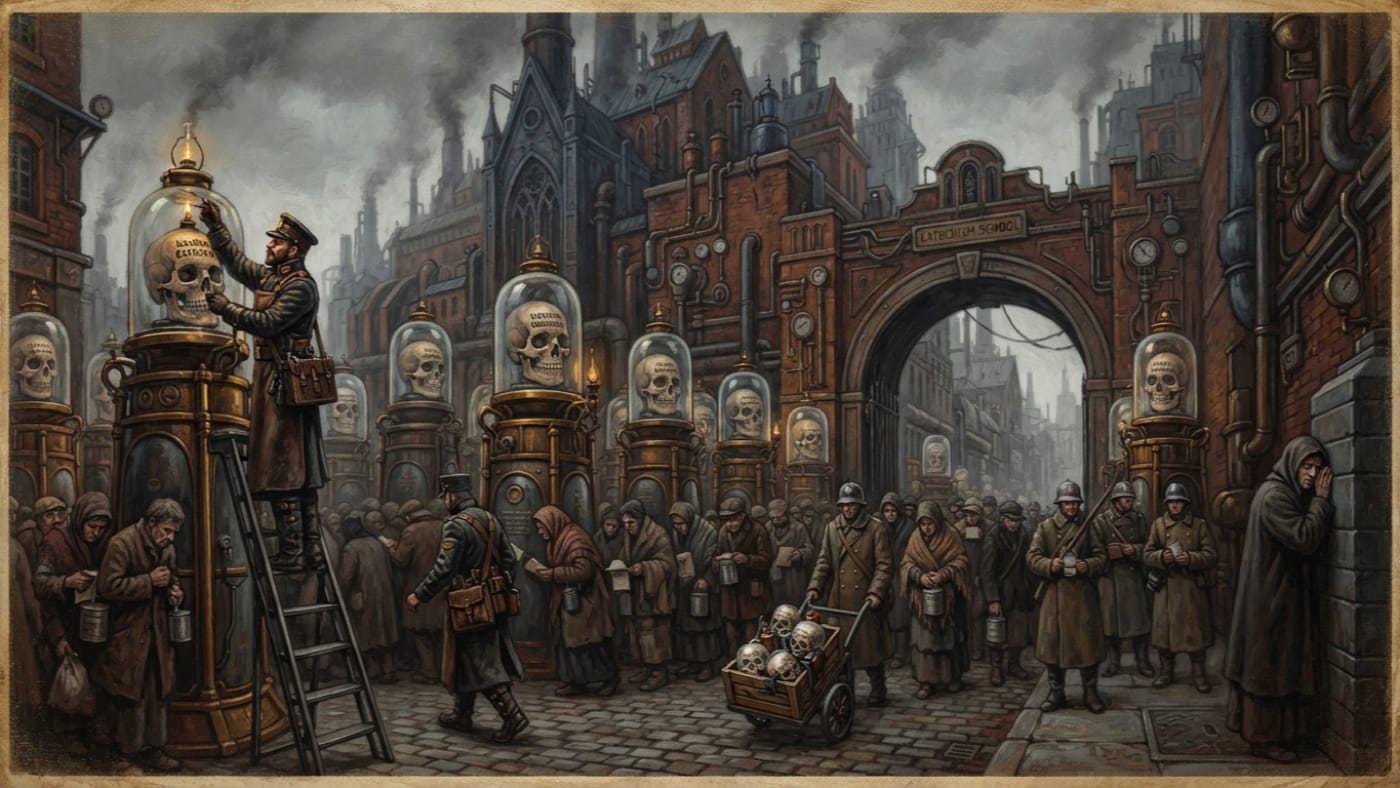
Bureau of Civic Doctrine
A name shall be legible; the hand that inks it need not be seen
The Bureau makes condemned names legible in glass and keeps them lit. Its Pillar-Keepers serve Visibility Standard 7c; the names are audited, the hands that maintain them are not.
Codex Ref. VIII.2.14-143

Catechism Schools
The child enters unformed; the school returns property
The Synod's parish and ward school system, where Creed, arithmetic, maps, loyalty trials, and entrance Glass Skull Stacks turn children into obedient instruments with names attached.
Codex Ref. VIII.8.01-001

Civic Doctrine
A sentence in the ledger becomes a lesson in the street
A recorded sentence becomes compulsory street instruction: condemned names lit in Glass Skull Stacks, maintained by Pillar-Keepers and challenged by Mercy Cult blanks. The citizen need only pass beneath.
Codex Ref. XIII.1.07-201

Glass Skull Stacks
The name goes up; the city learns to look
The Synod's municipal deterrence pylons hold condemned names in hollow glass crania, lit nightly for the street. Glass, ink and iron do the warning; Pillar-Keepers keep the sentence legible.
Codex Ref. V.2.08-001

Glass-Listener
The Synod has found a use for ruined ears
A Pillar-Keeper whose disciplined glass-speech detects cracks, sealed names and counterfeit pins. The Synod calls the affliction folklore, sends the worker into sealed yards and pays the old wage.
Codex Ref. XII.30.04-001

Glass-Speech
The city enters through the ear and leaves as obedience
Occupational condition of long-service Pillar-Keepers, beginning in tone, advancing into condemned names, and ending when the city speaks through the worker it has damaged.
Codex Ref. XIII.1.43-001
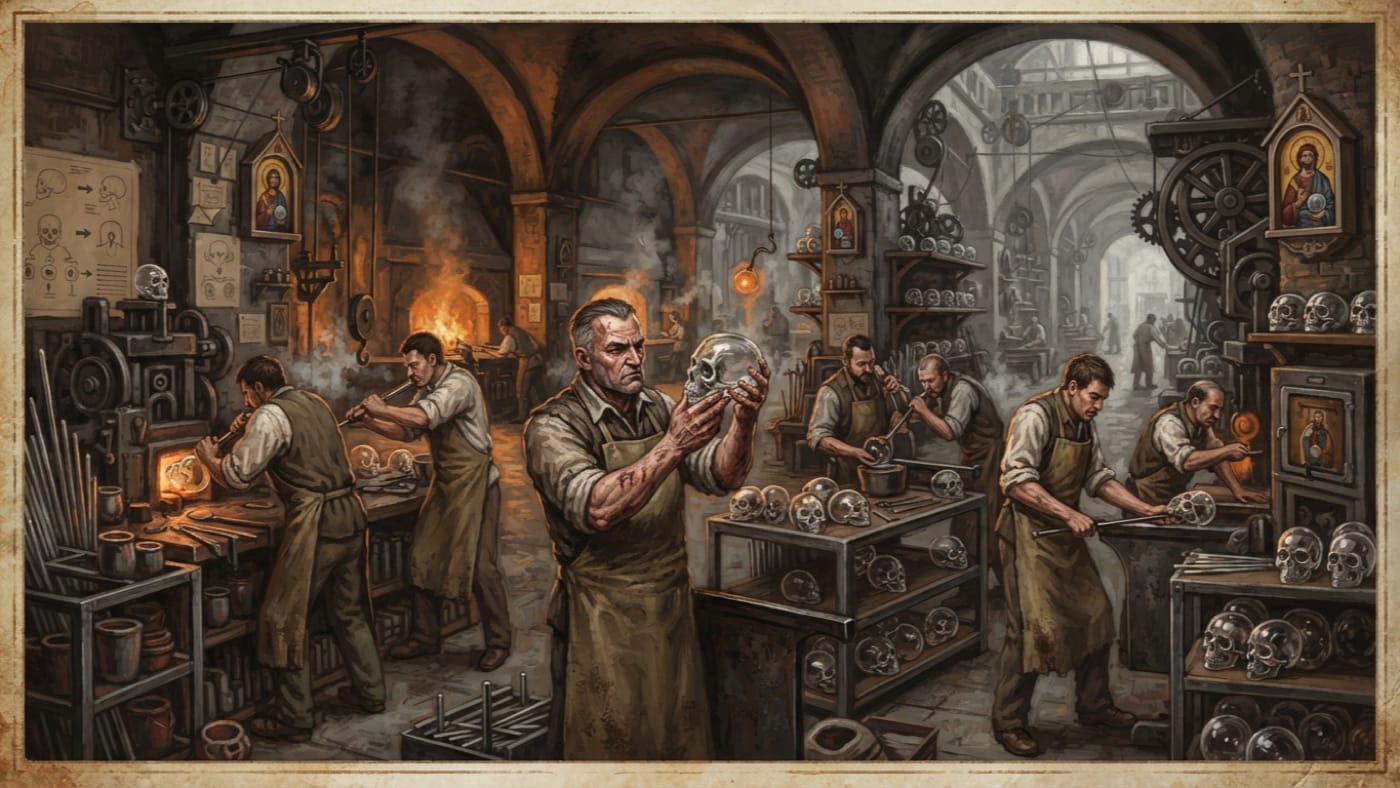
Glasswright
They cast the vessel; others supply the sentence
Licensed glasswrights cast the hollow skulls through which the Synod displays its sentences. Saint Velek blesses the furnace; Purity asks who supplied the glass when a name begins to sing.
Codex Ref. XII.30.02-001

Ledger Laws
Mercy measured by the ladle, sanctioned by the noose
The Ledger Laws made mercy countable after the Broth Riots: every bowl, bandage, draught, confession, death, and useful pity entered the record before it dared call itself compassion.
Codex Ref. XIII.1.89-112

Listening Glass
The glass returns a sound; the offices return a sentence
Keeper lore credits Saint Velek with glass that holds and returns sound. A Velek cup may yield a condemned name, an inquisitor's business, or the Listener's own confession. Engineering denies the technique.
Codex Ref. XIII.1.43-002

Mercy Cults (Stack Vandals)
The blank is a mouth, and mercy requires licence
Indigenous Synod parish heresies that vandalise Glass Skull Stacks with wrapped hammers, prayer-strips, and blank skulls, arguing that public condemnation steals the Creator's final judgement.
Codex Ref. XI.1.07-001
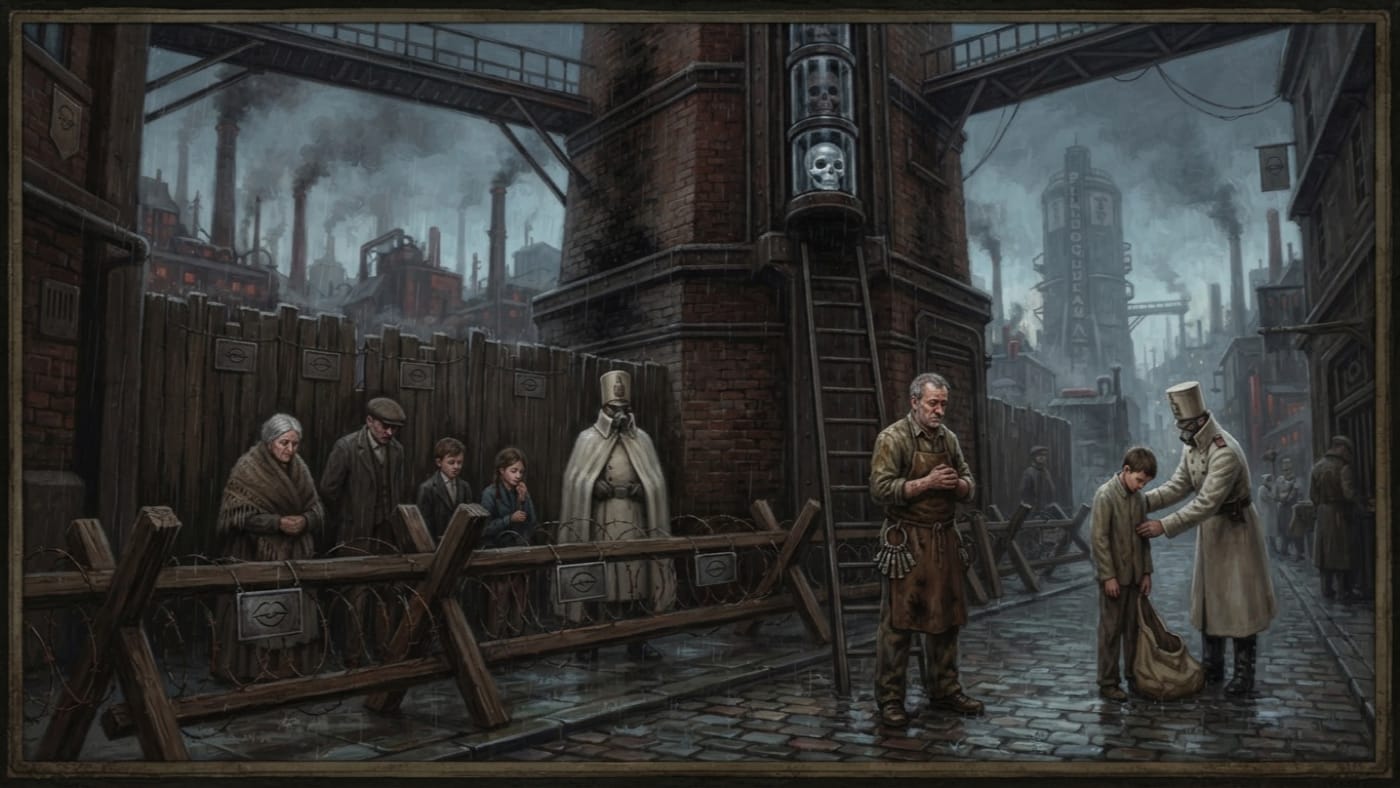
Open Mouth Response Protocol
A whole skull, an absent name, a theological emergency
The A.S. 201 survey of the Clearance Tertius extract: blank skulls, detained Keepers, separated households and a maintenance explanation. The name is restored; the full procedure remains withheld.
Codex Ref. XIII.1.44-001

Pillars of Glass, Zaragoza
Transparent cruelty, polished daily for the improvement of the crowd
Zaragoza's punishment plaza of glass columns, where condemned bodies stand magnified into civic lessons and the Ash-Rain still leaves pale residue on Purity's proudest transparent cruelty.
Codex Ref. II.1.06-001

Saint Velek the Clear-Eyed
Sight and sentence, lens and burn
Ratified patron of Pillar-Keepers and severe glasswrights, Saint Velek gives Glass Skull Stack maintenance a face, a thumbprint, and a saintly excuse for sounds after Vespers.
Codex Ref. III.2.01-068

The Broth Riots
The hungry asked for food and received laws
The Broth Riots of A.S. 112 began with thin soup and ended with rifles, saints, Ledger Laws, and the Synod's discovery that hunger becomes obedient once measured.
Codex Ref. VII.8.10-112