

Reverse Index
Referencing “The Rhineland”
Every codex entry that links to The Rhineland. 56 entries.
Return to The Rhineland
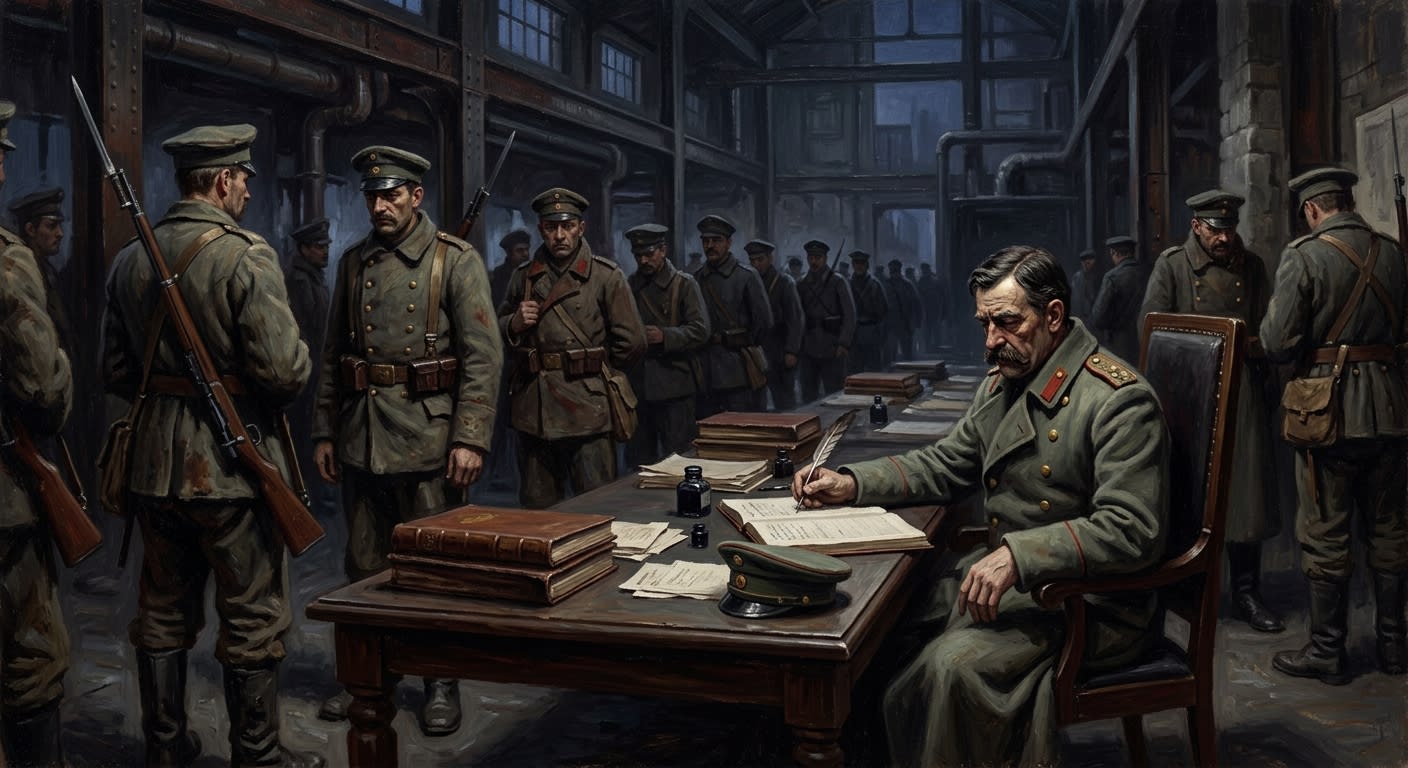
4th Rhineland Fusiliers
The regiment that forgot before dusk
The 4th Rhineland Fusiliers accepted a corrected roster before dusk, proving that the Synod can conscript memory as readily as flesh.
Codex Ref. VIII.5.04-148
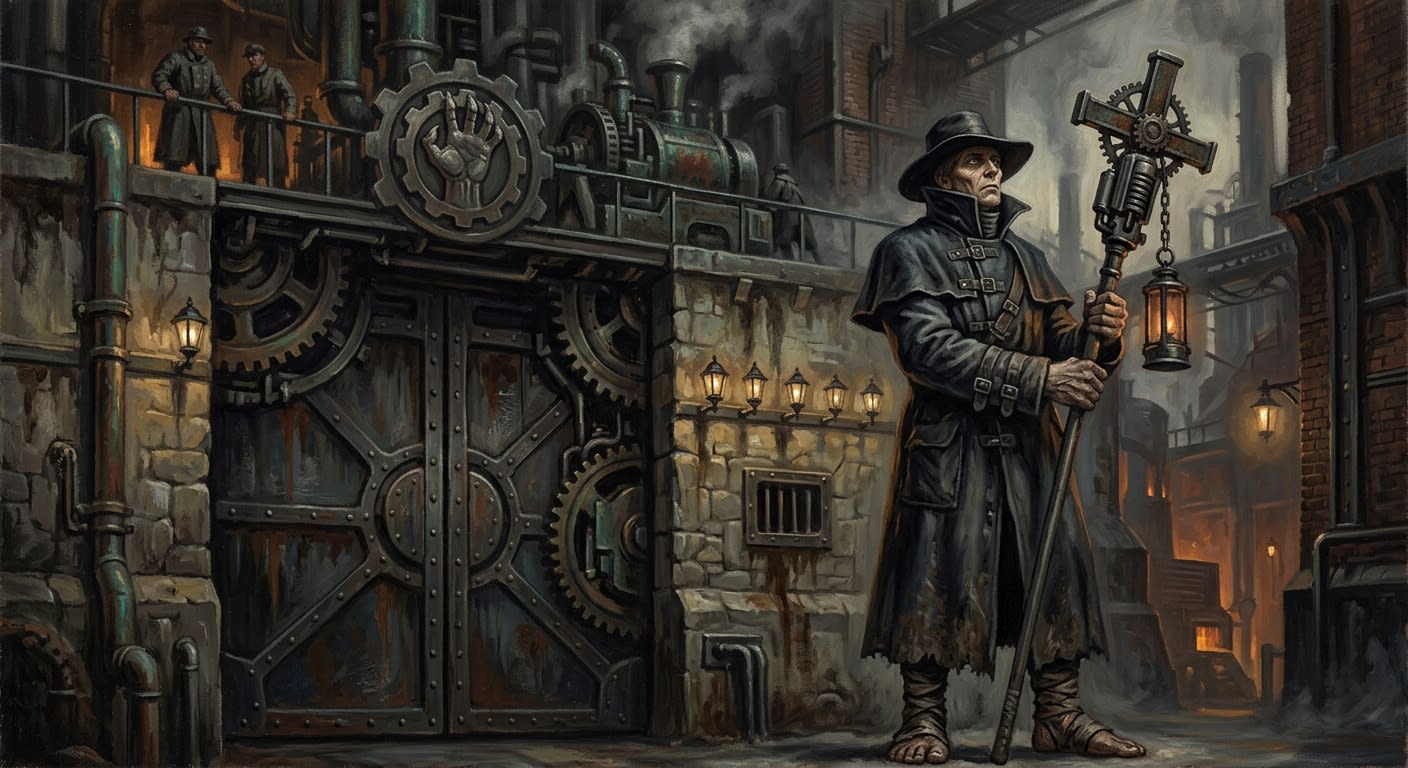
Aachen
The city that survived its own fall
Aachen opened its gate in A.S. 25, survived the betrayal, and has spent every taxed, polished, barefoot century proving survival is not innocence.
Codex Ref. II.2.02-001
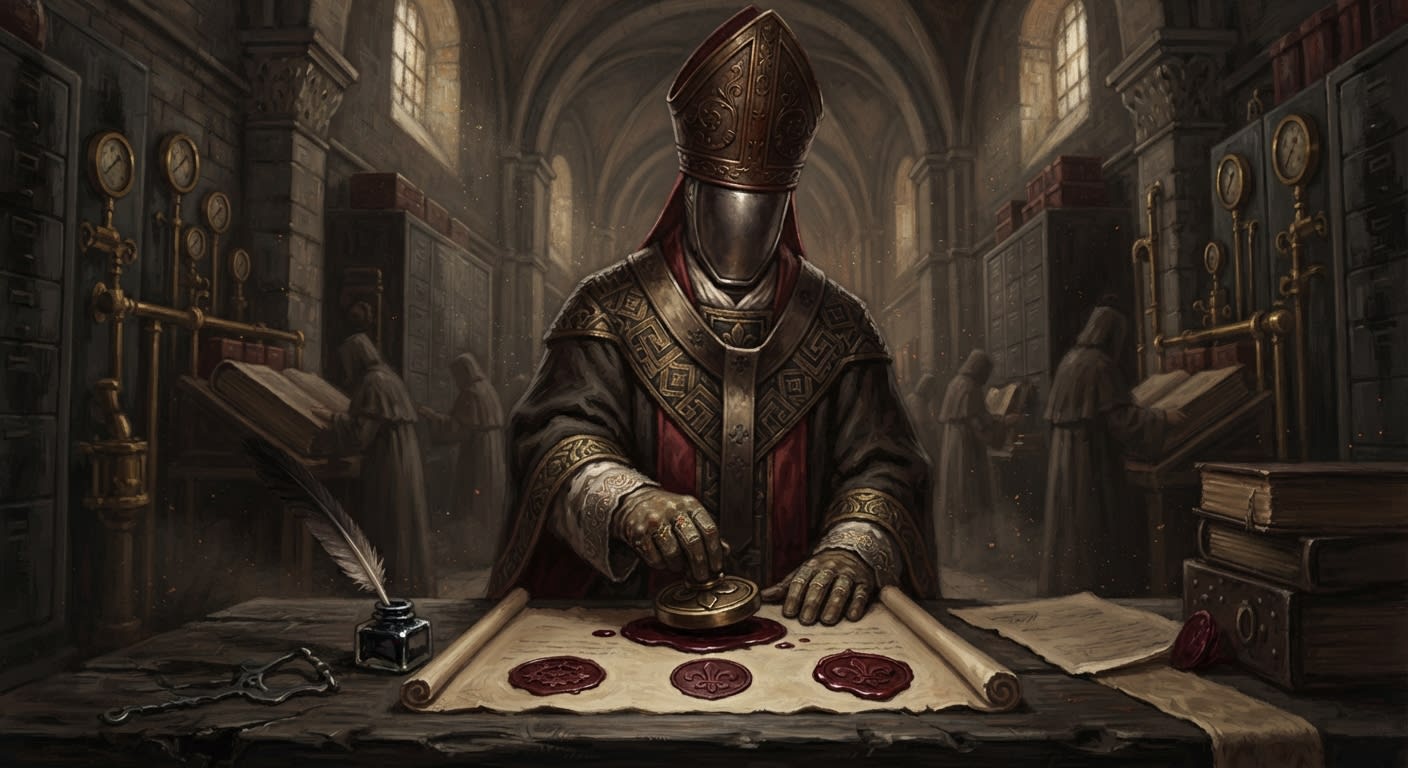
Archbishop of Lyon
The hand France sent, the name Records did not keep
The unnamed French signatory of the Concordat of Strasbourg: preserved by title, wax, and act, while the man beneath the mitre was permitted to vanish from the Ledger.
Codex Ref. III.2.01-090
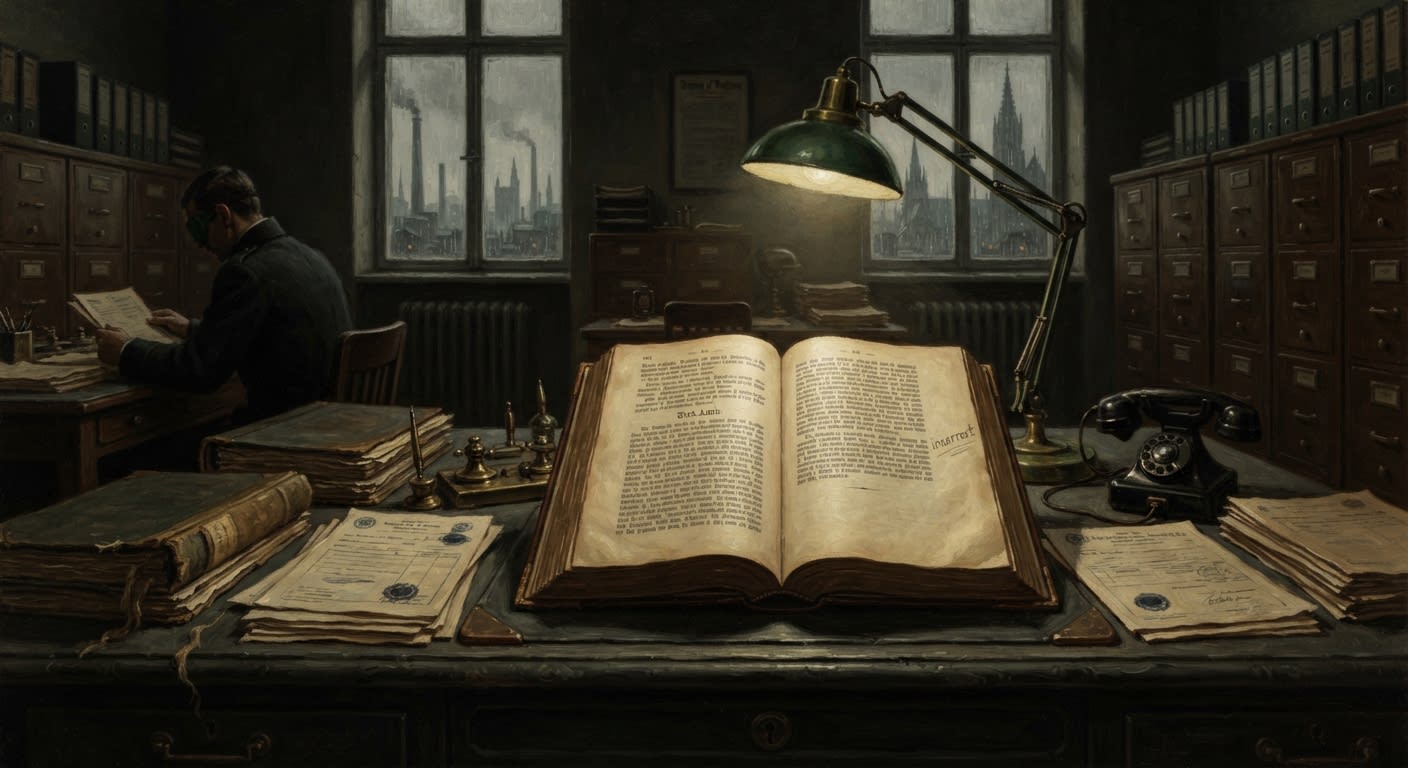
Articles of Covenant
The approved page that survived by being underestimated
The Articles of Covenant were safe enough to leave open on a desk, until one pencil beside the Third Article taught Silence that obedience could be graded.
Codex Ref. XIII.1.56-001
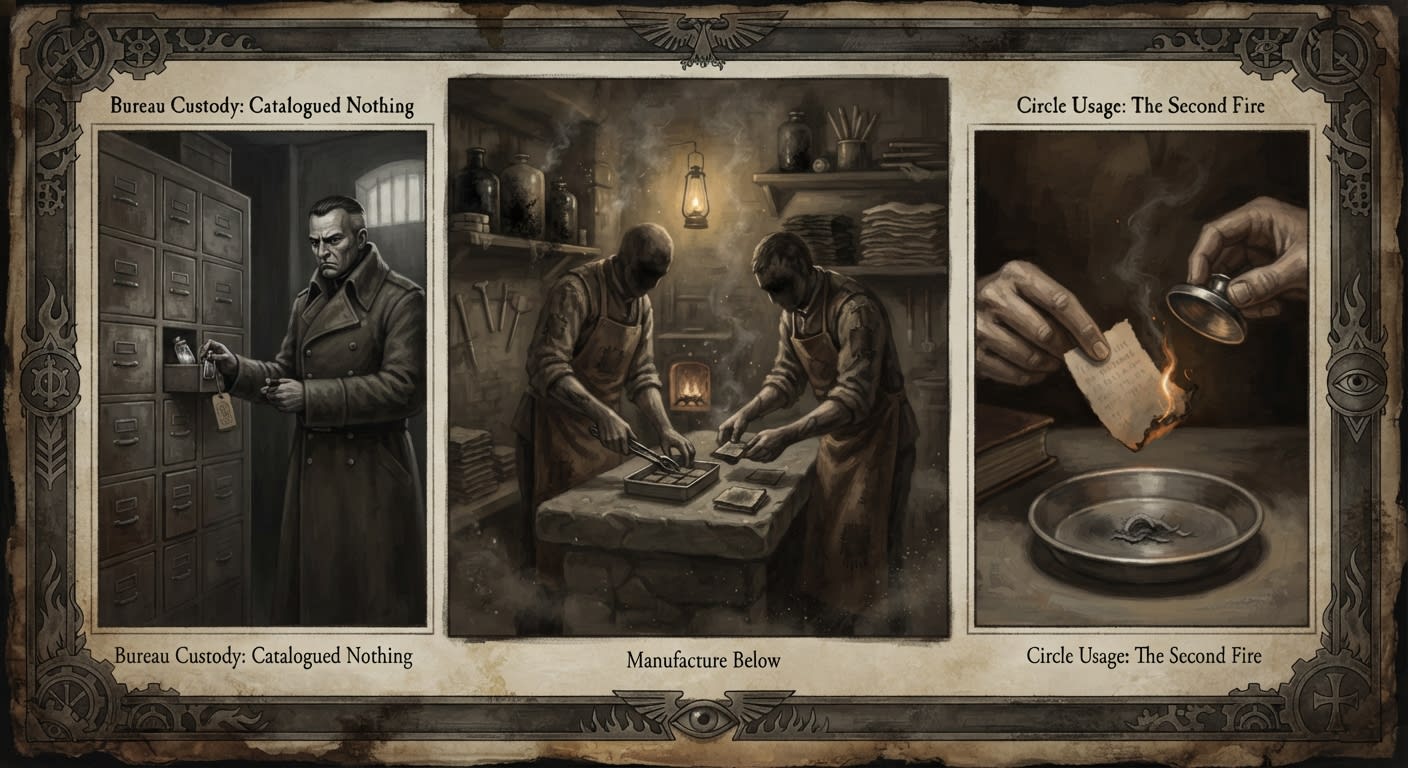
Ash-paper
A sheet built to outlast nothing, and therefore everything useful
Ash-paper is the Circle's pre-blackened answer to the Purge: charcloth pages made to carry one forbidden fact, burn twice, and leave the Bureau with only catalogued nothing.
Codex Ref. XIII.1.56-001

Audit-Cantor
The officer who learned to distrust the whiteness around approved words
The Bureau of Silence keeps forty Audit-Cantors to open books, weigh margins, warm blank pages, and decide which libraries die quietly.
Codex Ref. VIII.3.02-002
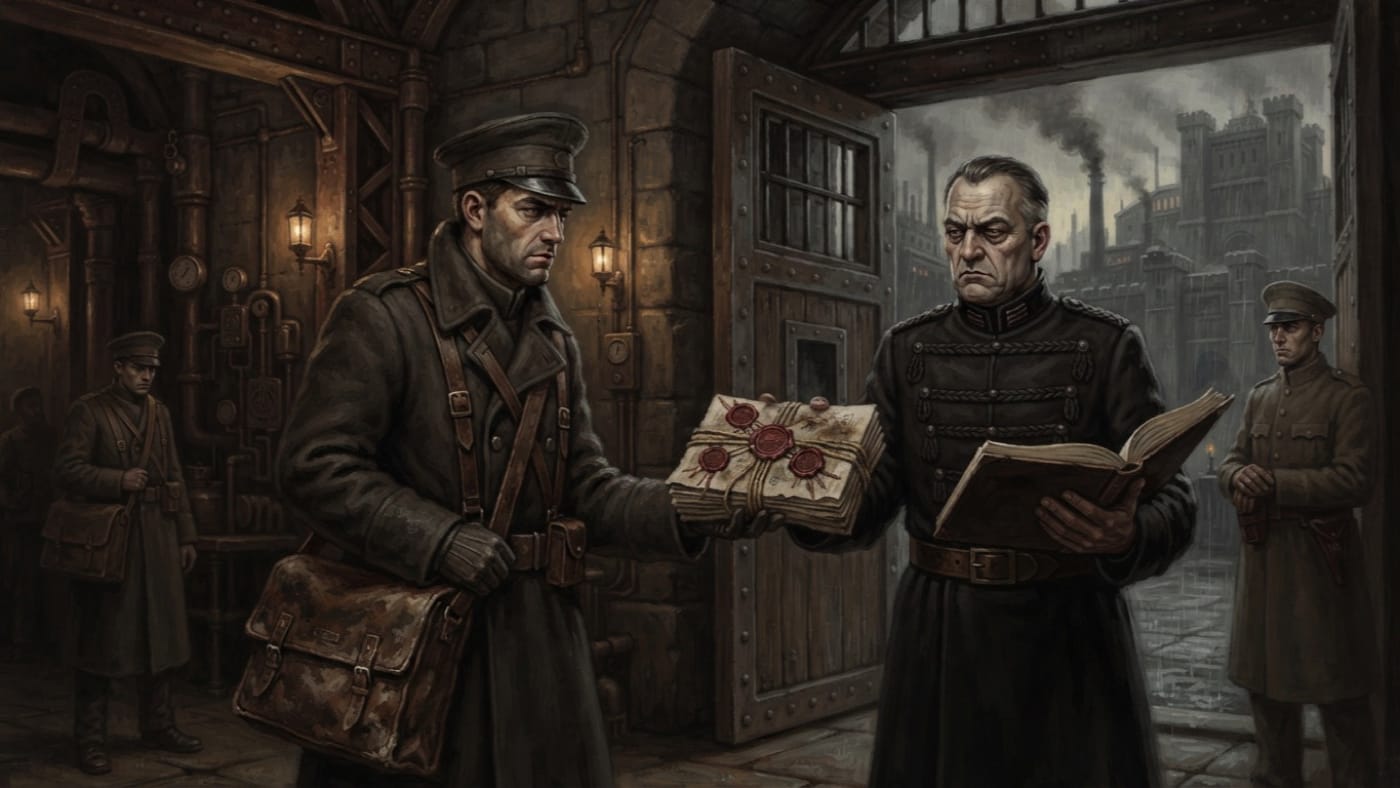
Blacklist Bundles
A decision with legs, dressed in wax
Sealed Index Damnatus amendments carried by the Runner Corps: paper that withdraws passage, rations, and sanctuary before its subject learns to fear the wax.
Codex Ref. XIII.1.76-001
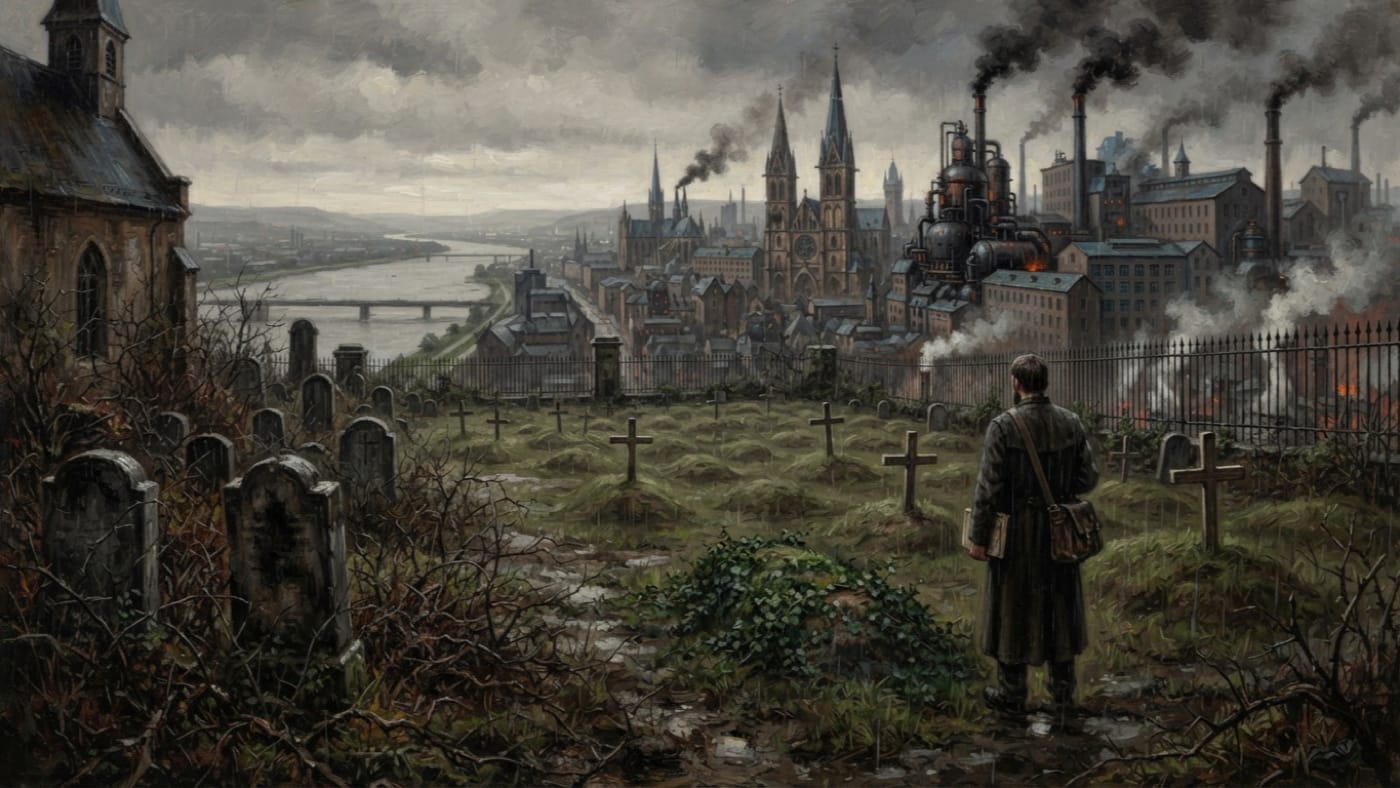
Bonn
A saint nearby; no directions supplied
Bonn is a Rhineland city on the Rhine. Ignatius Brenner died and was buried nearby in A.S. 71. The churchyard is unnamed, the grave unmarked, and the record supplies no directions.
Codex Ref. III.2.04-313

Bureau of Concord
Harmony, filed with teeth
The Bureau of Concord preserves peace by translation, delay, treaty custody, foreign grievance, and the elegant violence of a pending clause.
Codex Ref. VIII.1.05-090

Bureau of Tithes
The organ no one praises and no one dares remove
The Bureau of Tithes is the Synod's fiscal organ — the stomach no one praises and no one dares remove. It taxes breath, grain, bereavement, and the management of its own taxation.
Codex Ref. VIII.4.01-001
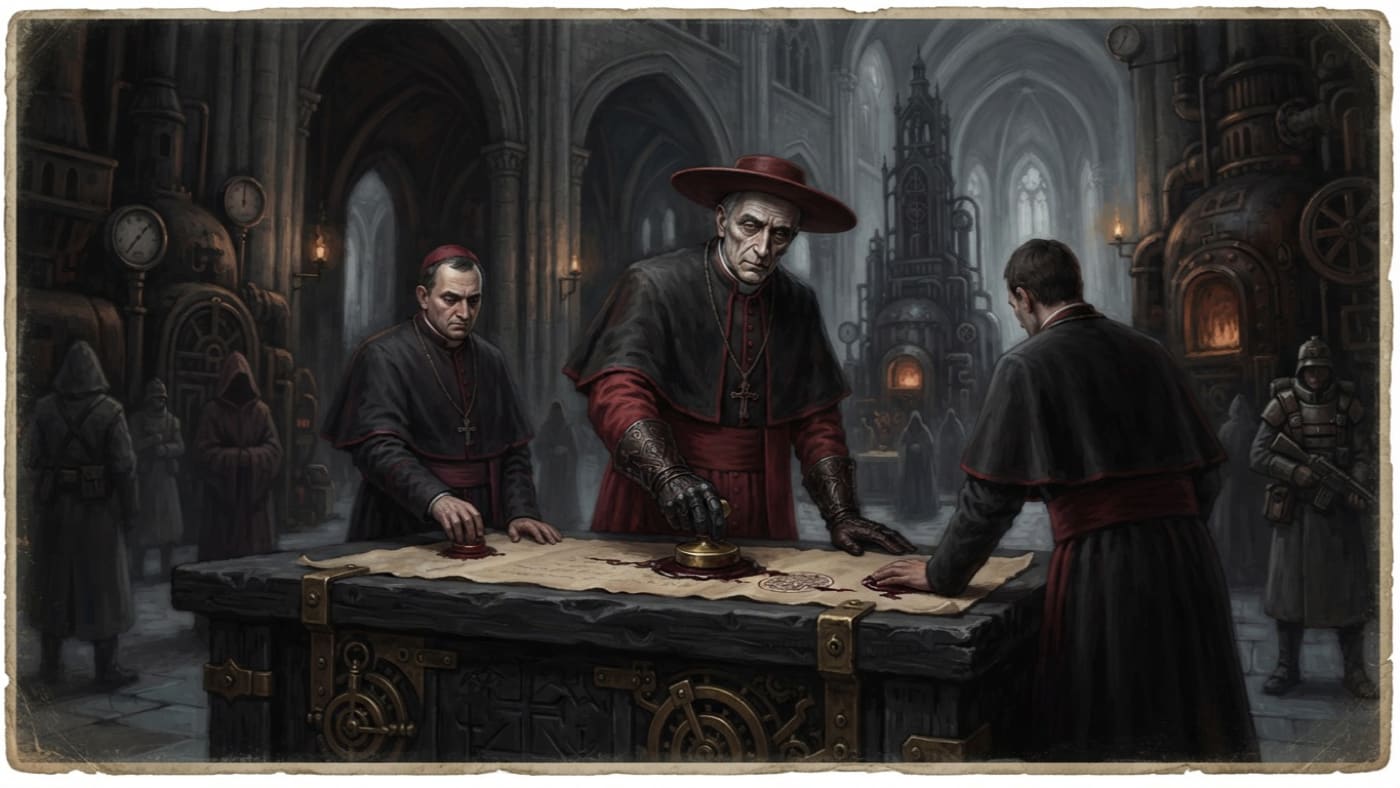
Cardinal-Legate of Toledo
One peninsula, one seal, no recorded name
Iberia's unnamed signatory to the Concordat of Strasbourg in A.S. 90. He bound a peninsula with one seal; the Ledger retained his title and dispensed with his name.
Codex Ref. III.2.01-090
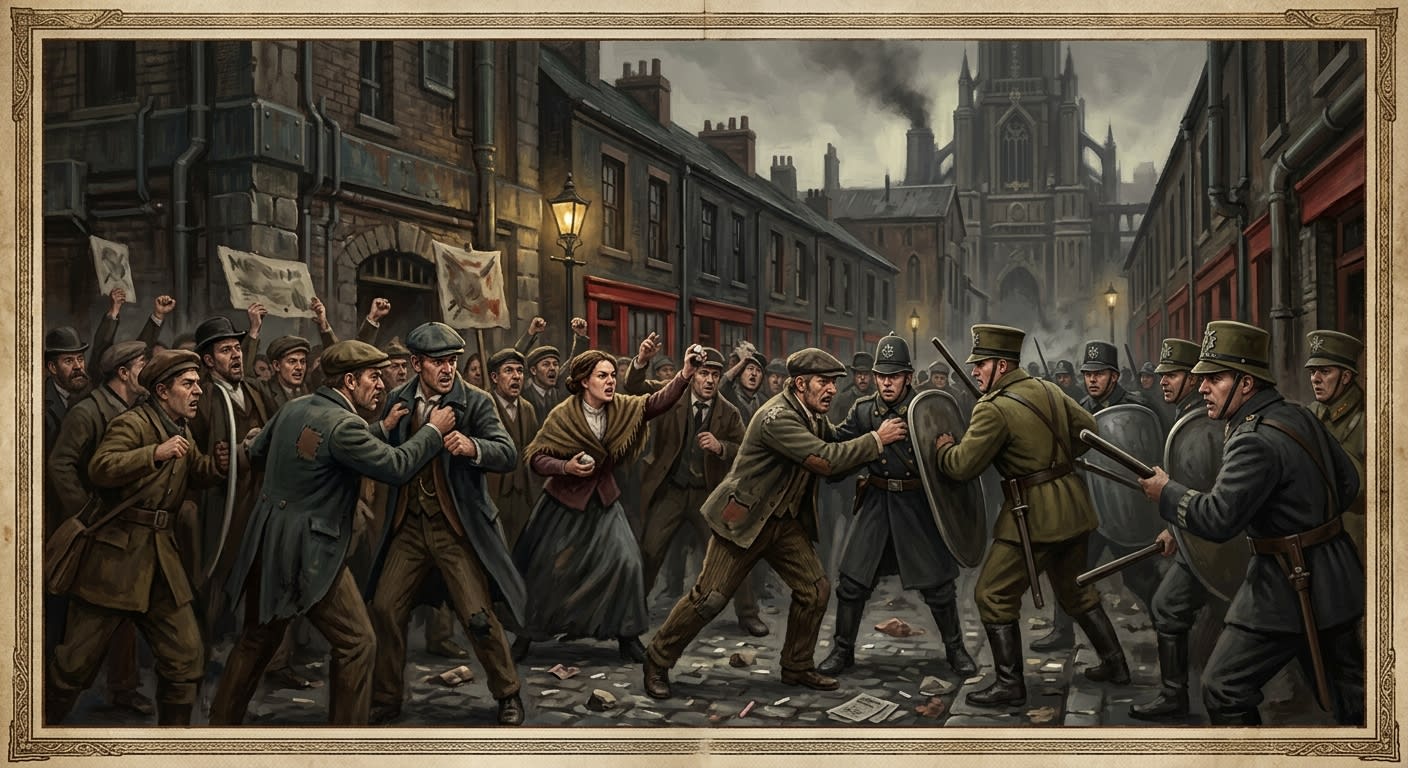
Chalk Riots
Fourteen red doors taught the Bureau arithmetic
Trier's A.S. 119 enforcement backlash, when fourteen red lintels turned compliant households into a crowd and forced the Bureau to ration visible shame.
Codex Ref. VII.8.10-024
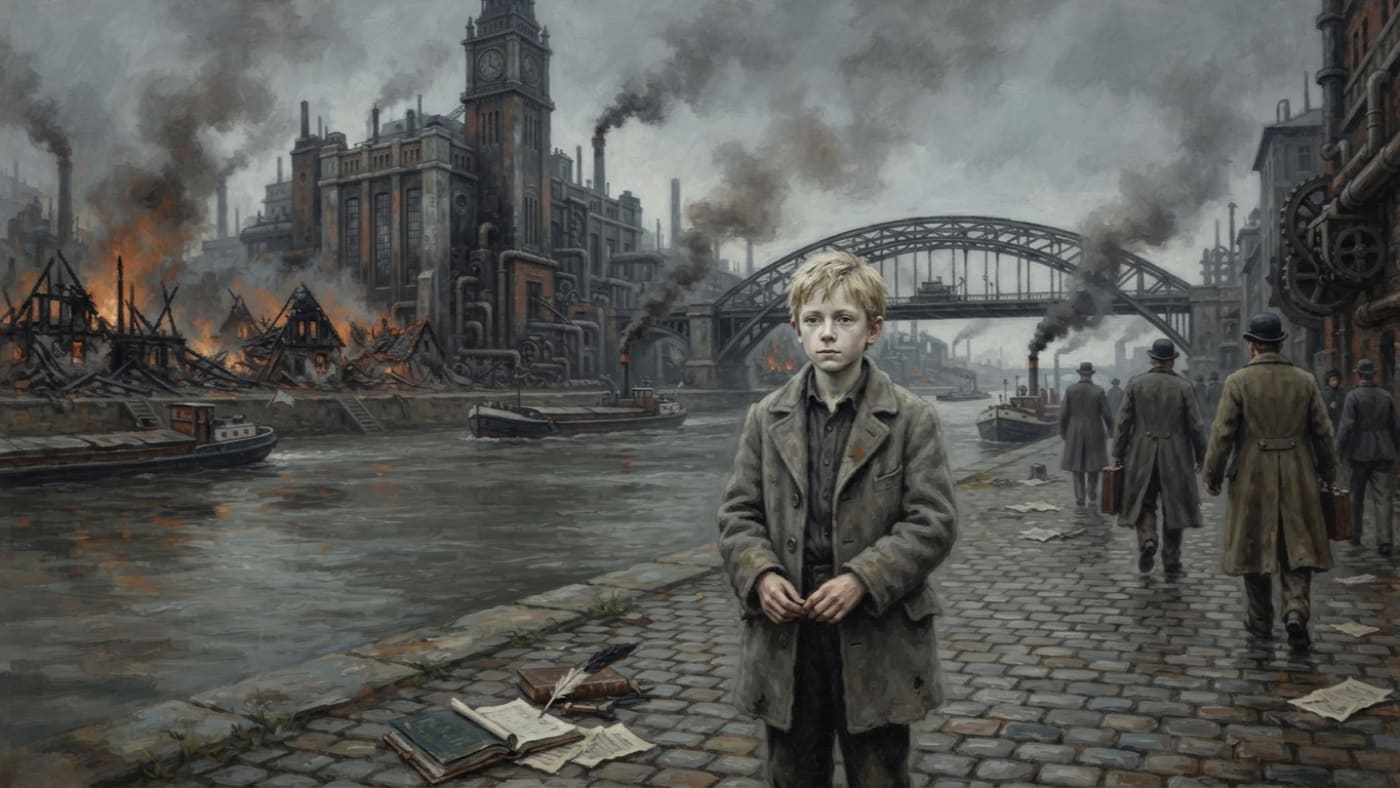
Child of Innocence
A condemned name, a river, and ash
Condemned as the first so-called Virtue General, the Child of Innocence is an unverified pale boy said to unravel loyalty with truth. The Rhine fires establish neither his identity nor their cause.
Codex Ref. III.2.01-054
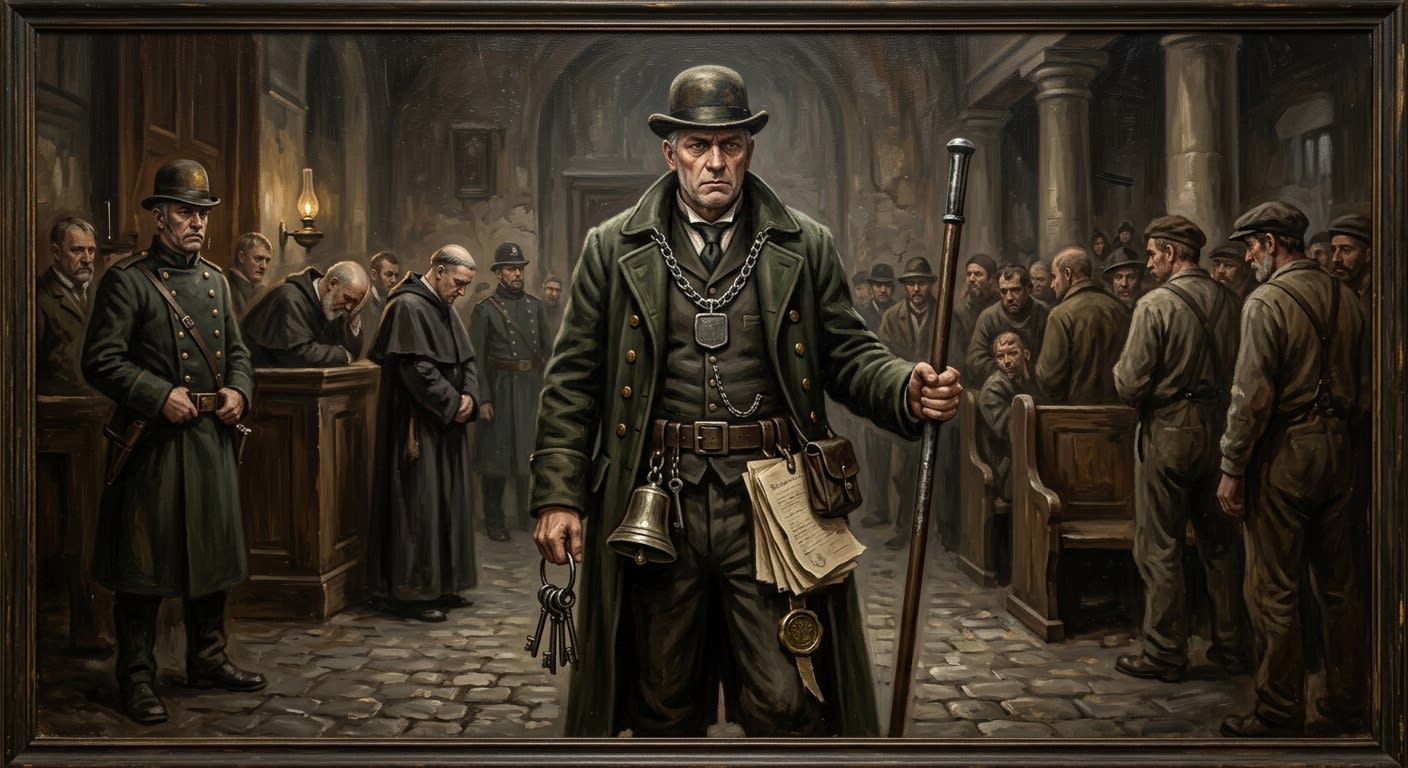
Circuit Bailiff
The road's middle hand, where judgment learns to bruise neatly
The Circuit Bailiff is the middle rank of travelling Synod law: keeper of chalk, chain, chime, seal, crowd, prisoner, and every ugly second between sentence and obedience.
Codex Ref. XII.39.01-001
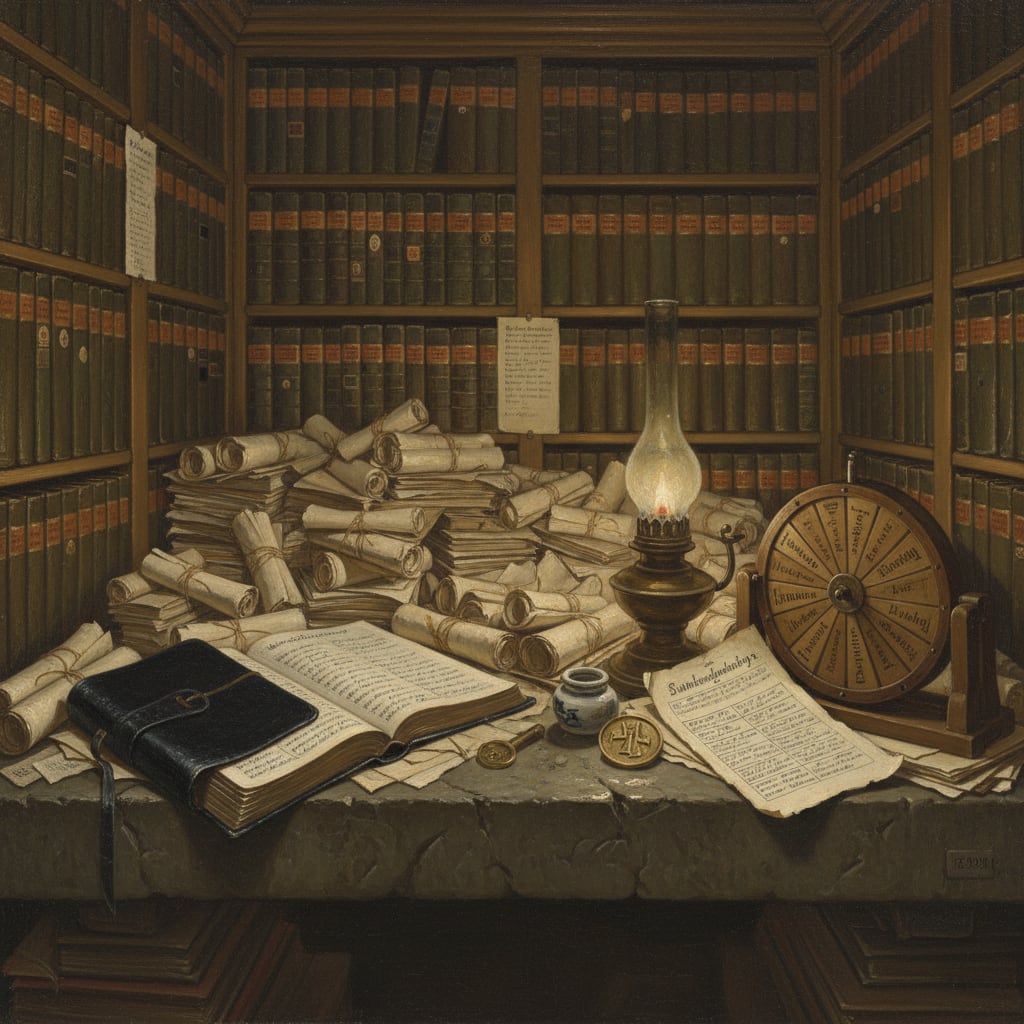
Codex 'Doubt' Auditor
The men and women who weigh belief on scales you cannot see and file the reading under your name
The Codex Auditors are the Bureau of Purity's intelligence branch — operatives who audit belief itself, detecting hesitation before it becomes opinion and opinion before it becomes faction.
Codex Ref. VIII.2.01-001
Continental Levy
The decimal point where obedience becomes infantry
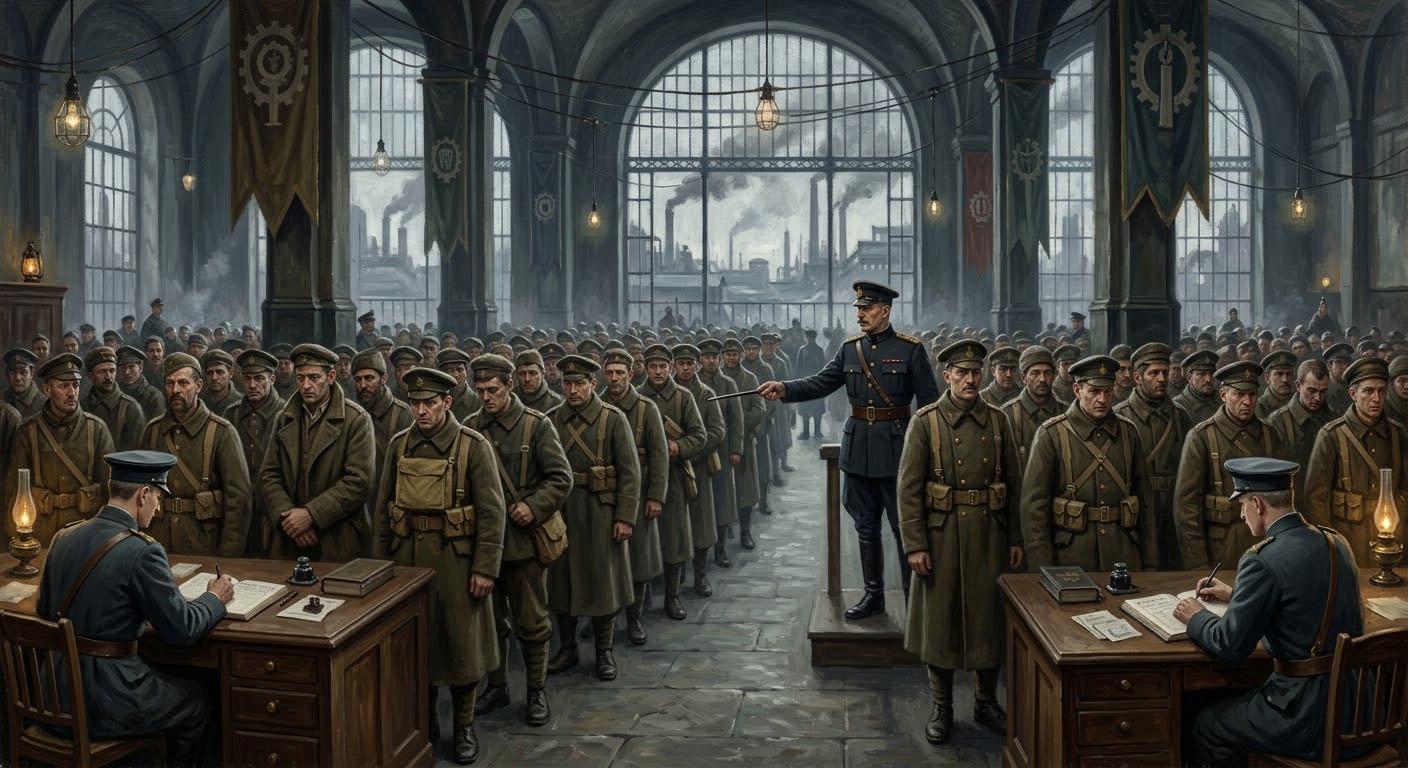
The Continental Levy is the Synod's permanent tithe of flesh, born from the A.S. 110 crisis and refined into household arithmetic.
Codex Ref. XIII.1.54-001
Curfew Ordinance of Quiet Hours
The margin law that taught night to carry a pass, a lamp, and a witness
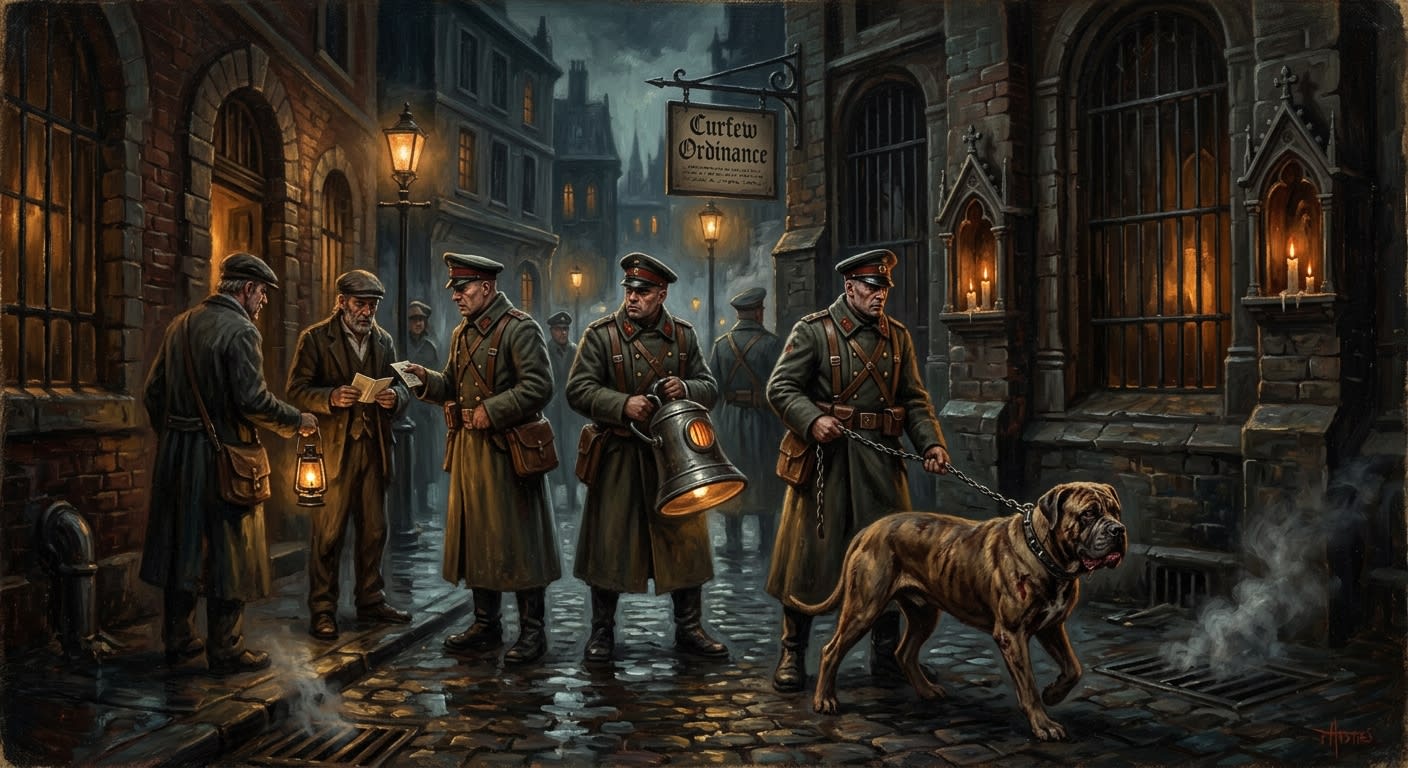
The Curfew Ordinance of Quiet Hours began as a Rhineland margin law and became the Synod's nocturnal grammar: lamps, passes, Consolators, Brotherhood knives, and useful fear.
Codex Ref. XIII.1.76-094
Düsseldorf
One priest. One letter. Nothing left to quote.
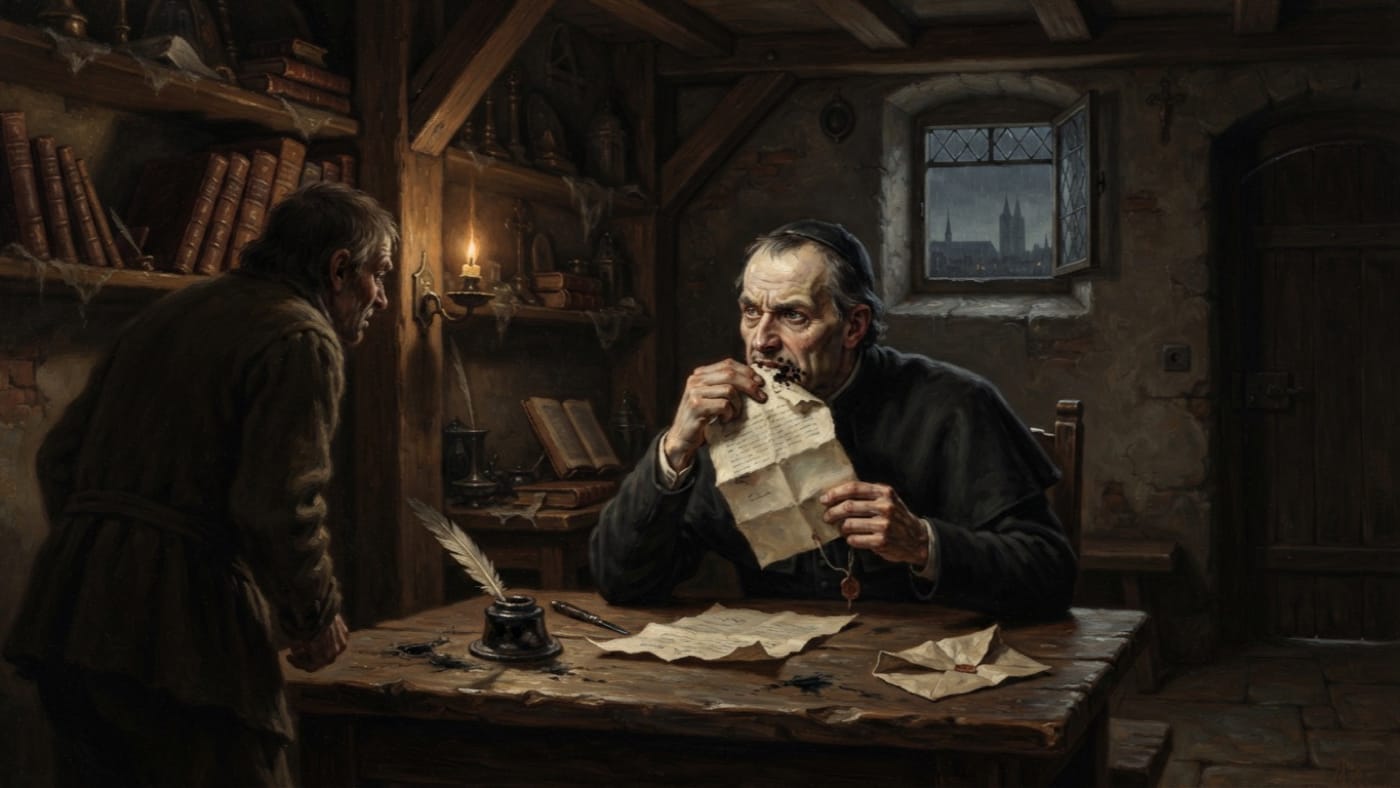
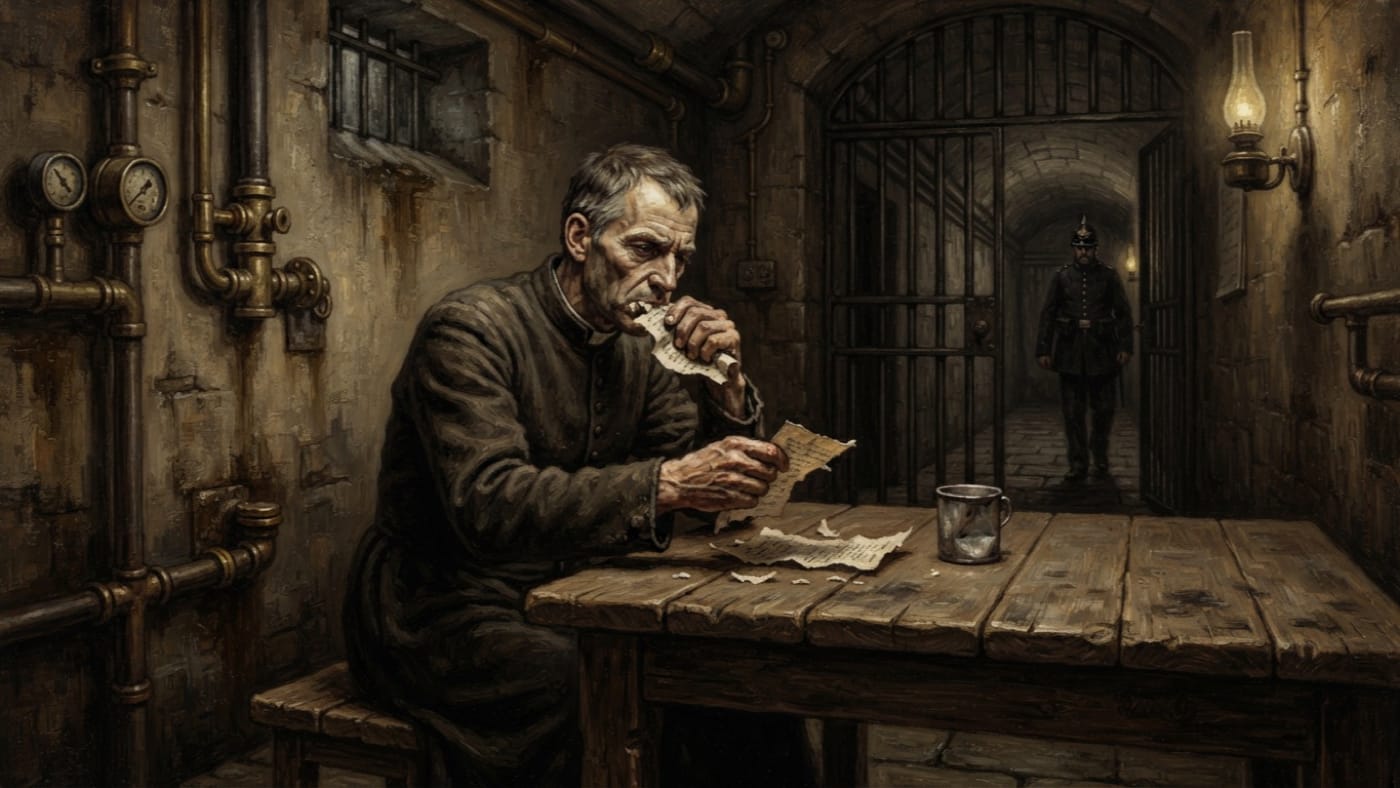
A Rhineland city remembered for Father Grauss, who ate the Amsterdam letter in A.S. −32 / 1678 CE. The magistrate supplied three days in gaol; the Bureau supplied a classification.
Codex Ref. II.2.01-941
Edict of Authentication
Anatomy objected; the seal overruled it
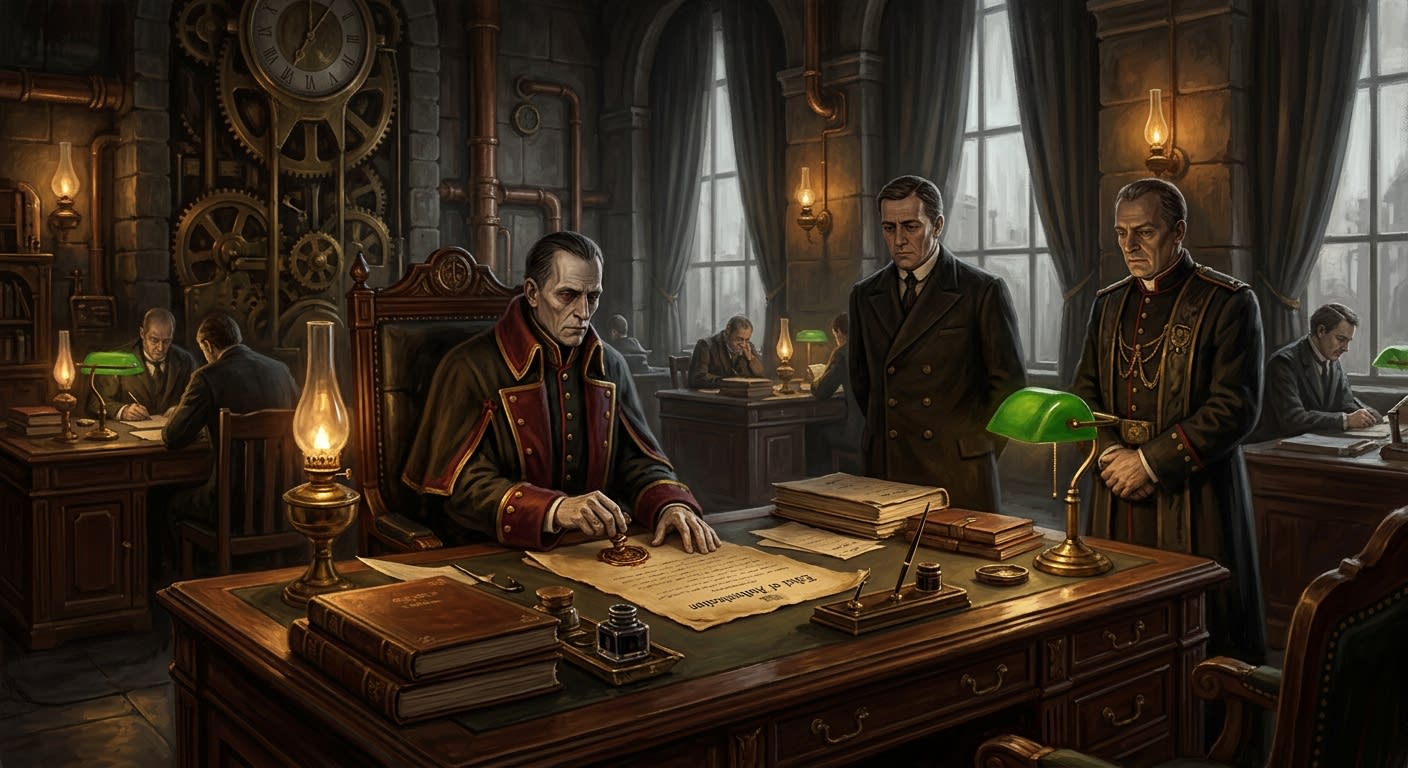
The Edict of Authentication ratified the Femur Principle at A.S. 147: sanctity obeys custody, seal, witness, and doctrine before anatomy.
Codex Ref. XIII.1.90-147
England
The island province that declined the province and kept the invoice
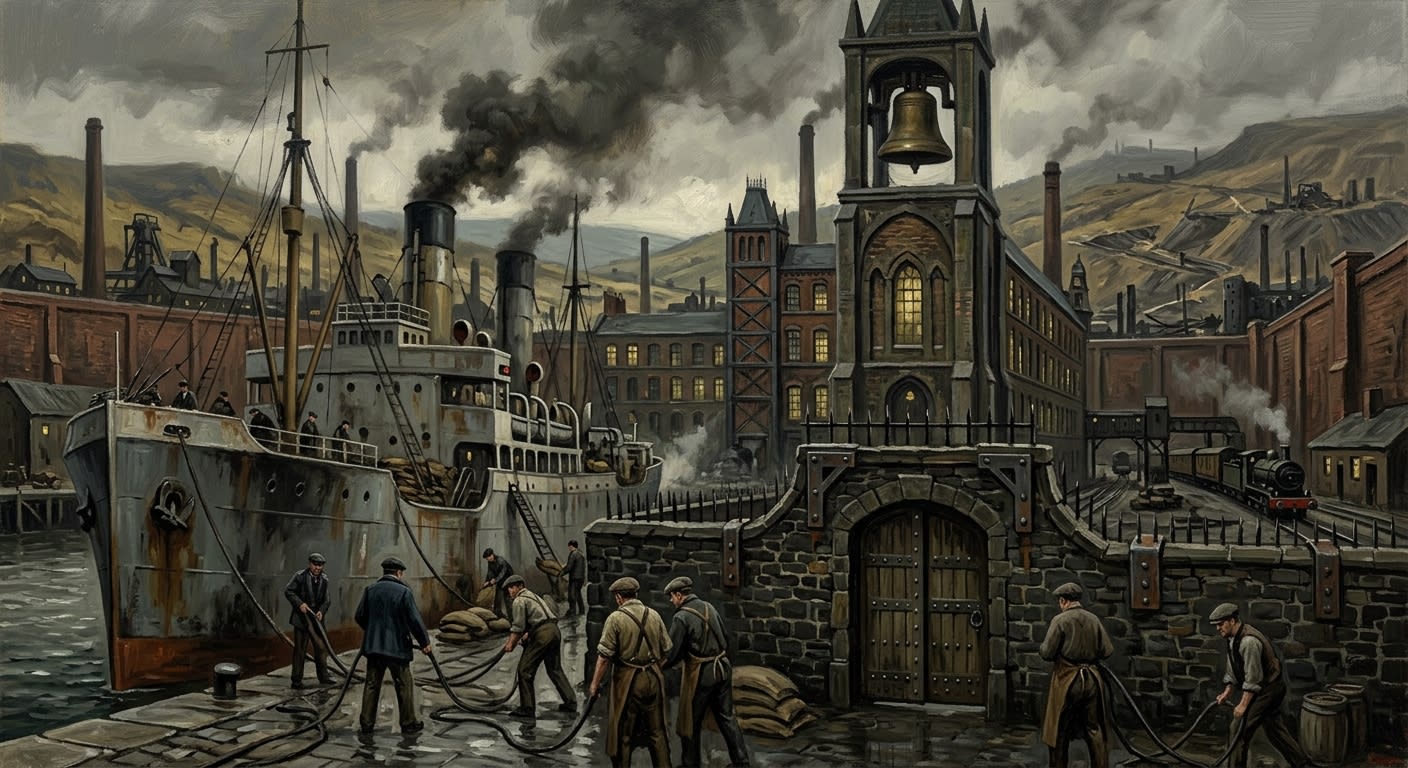
England is the British Crown's southern engine: chalk, bell, harbour, parish wall, and island refusal, useful enough to spare and rude enough to endure.
Codex Ref. X.1.03-201
Father Grauss of Düsseldorf
One letter eaten. Three days served. Five words preserved.
Father Grauss ate the Amsterdam letter in A.S. −32 / 1678 CE, received a beating and three days in gaol, and did not recant. The Ledger calls him Doctrinally Sound, Gastronomically Irregular.
Codex Ref. III.2.01-1024
German states
Many jurisdictions. Separate seals. One inconvenient table.
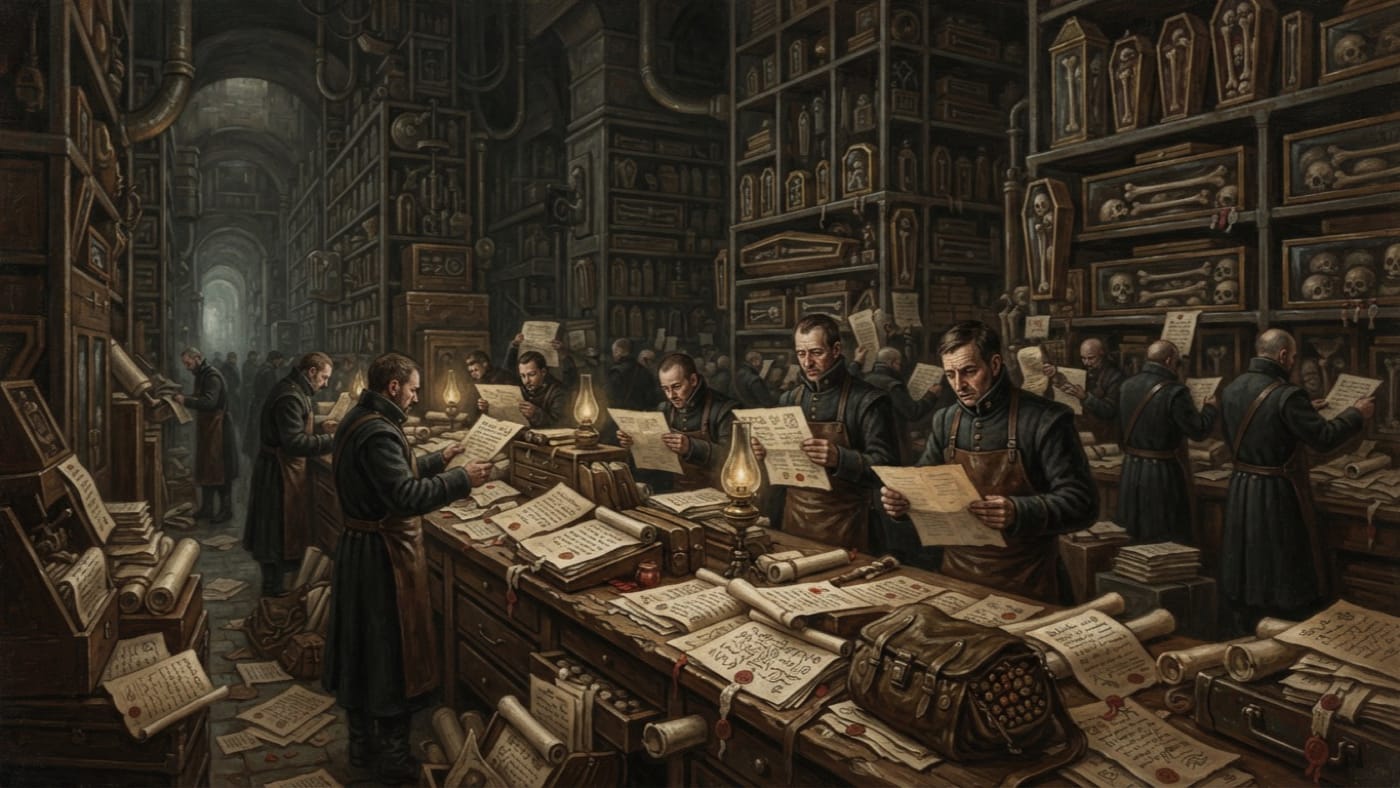
The German states in 1678: many jurisdictions, separate seals, and no common answer to Amsterdam's bone census. The relics agreed locally. The ledgers did not.
Codex Ref. II.1.10-001
Germania
The Synod's most accurately spelled region
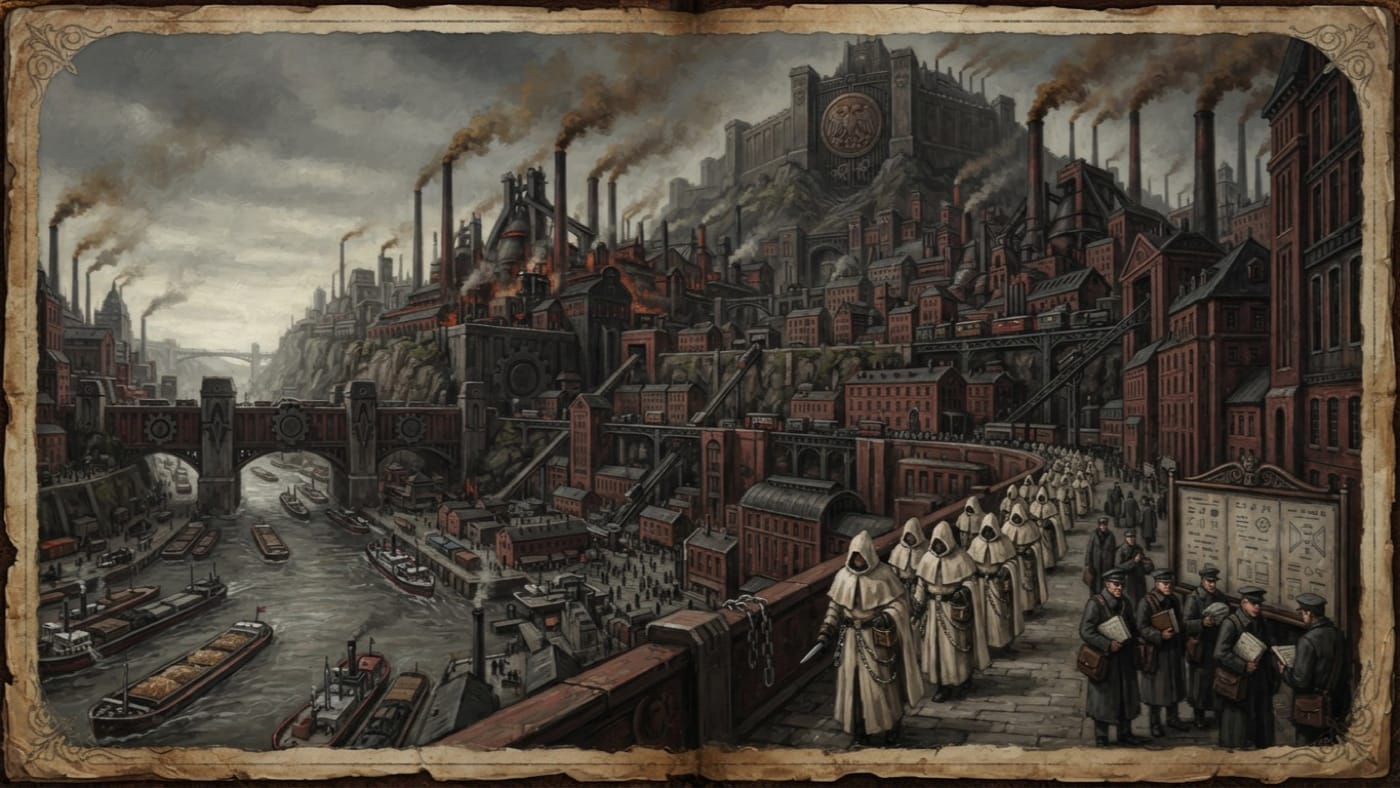
Germania is the Synod's procuratorial heartland: rivers taxed, furnaces singing, presses corrected, and schools teaching words their grandparents have forgotten to miss.
Codex Ref. II.6.02-201
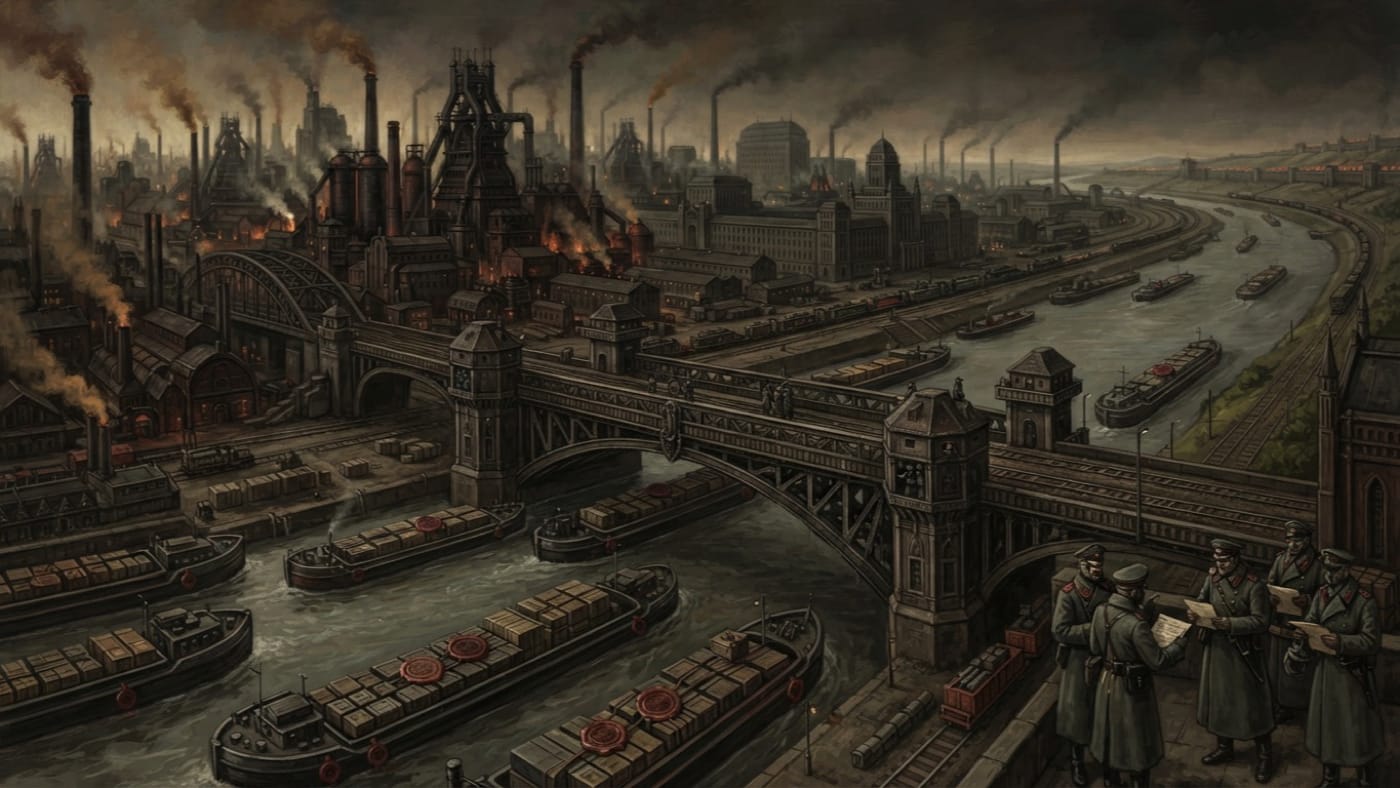
Germany
The heartland that supplies the frontier and answers to several seals
Germany in A.S. 201: the Zone Two heartland of taxed rivers, singing furnaces and military depots. The old borders were erased; the territory still supplies the frontier, and every cargo requires a seal.
Codex Ref. II.6.01-201
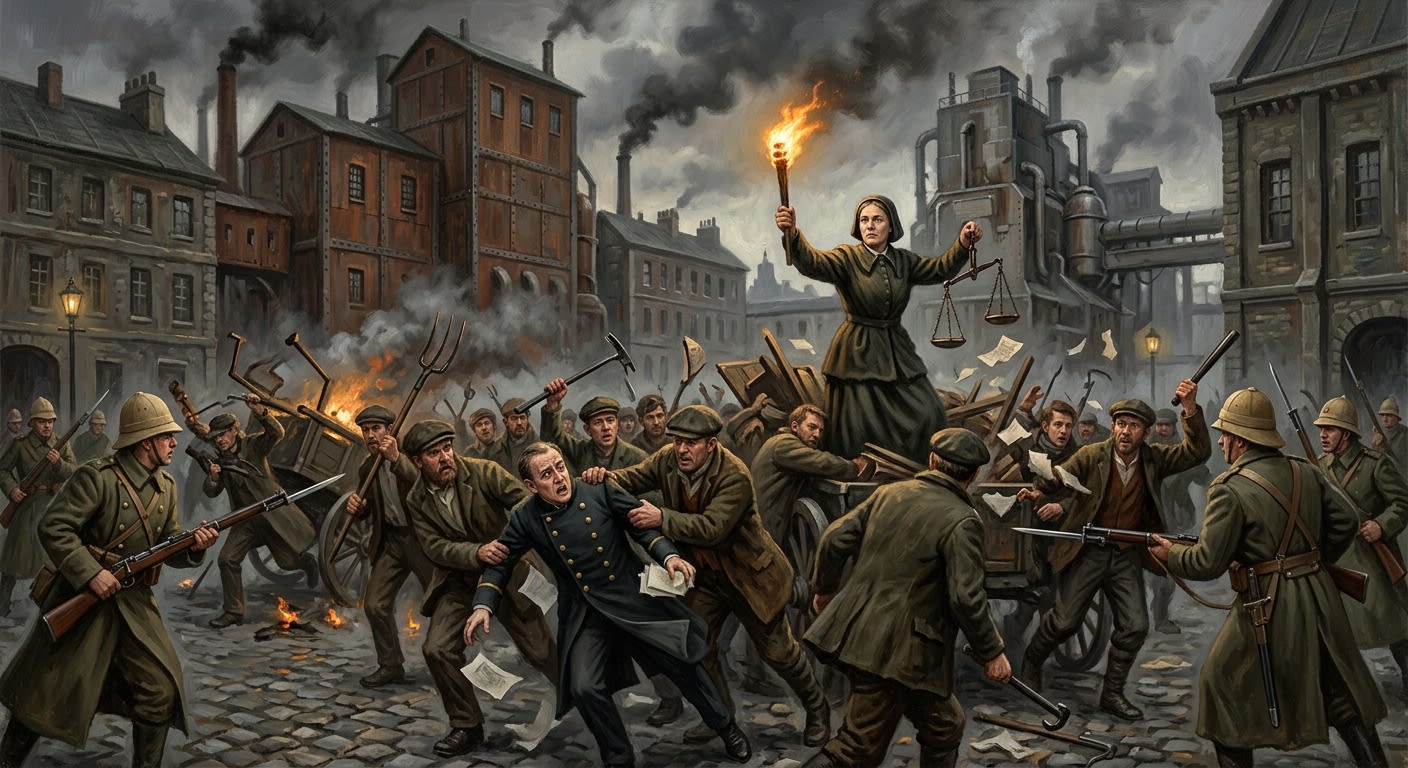
Grain Tithe Riots
Where hunger learned arithmetic and Hildegarde brought fire
The Grain Tithe Riots of A.S. 160 killed three Tithes Assessors, condemned forty Rhenish villages, and made Hildegarde of Mainz a saint with a scale in one hand and a torch in the other.
Codex Ref. VII.8.10-160
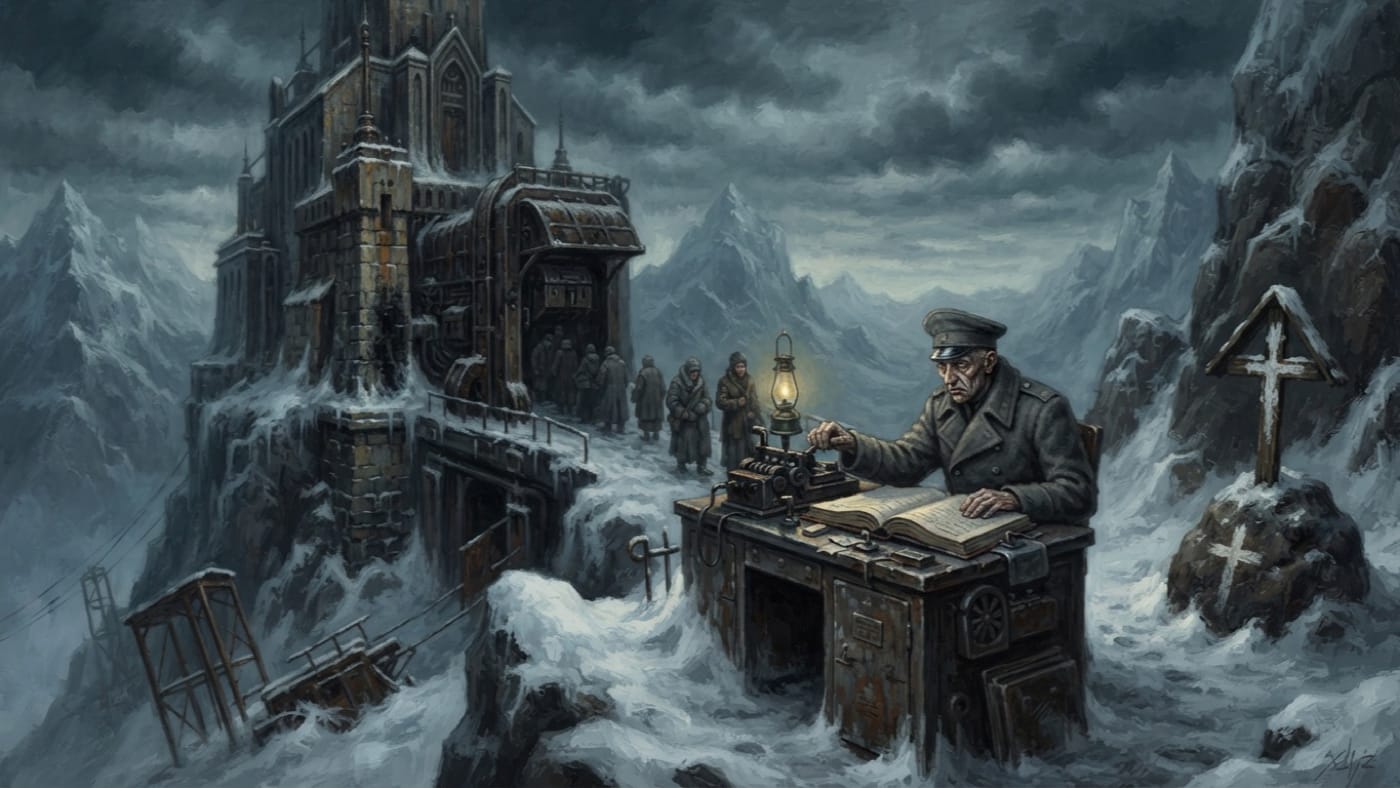
Guild of the Golden Sole
The master kept his life. The Bureau kept the roads.
The private guild that held the Rhineland pilgrimage approaches until its absorption in A.S. 123. Its master signed the Harmonized Routes Edict and kept his life; the Bureau rewarded him with a desk above the Carpathian snow-line.
Codex Ref. XI.5.01-123
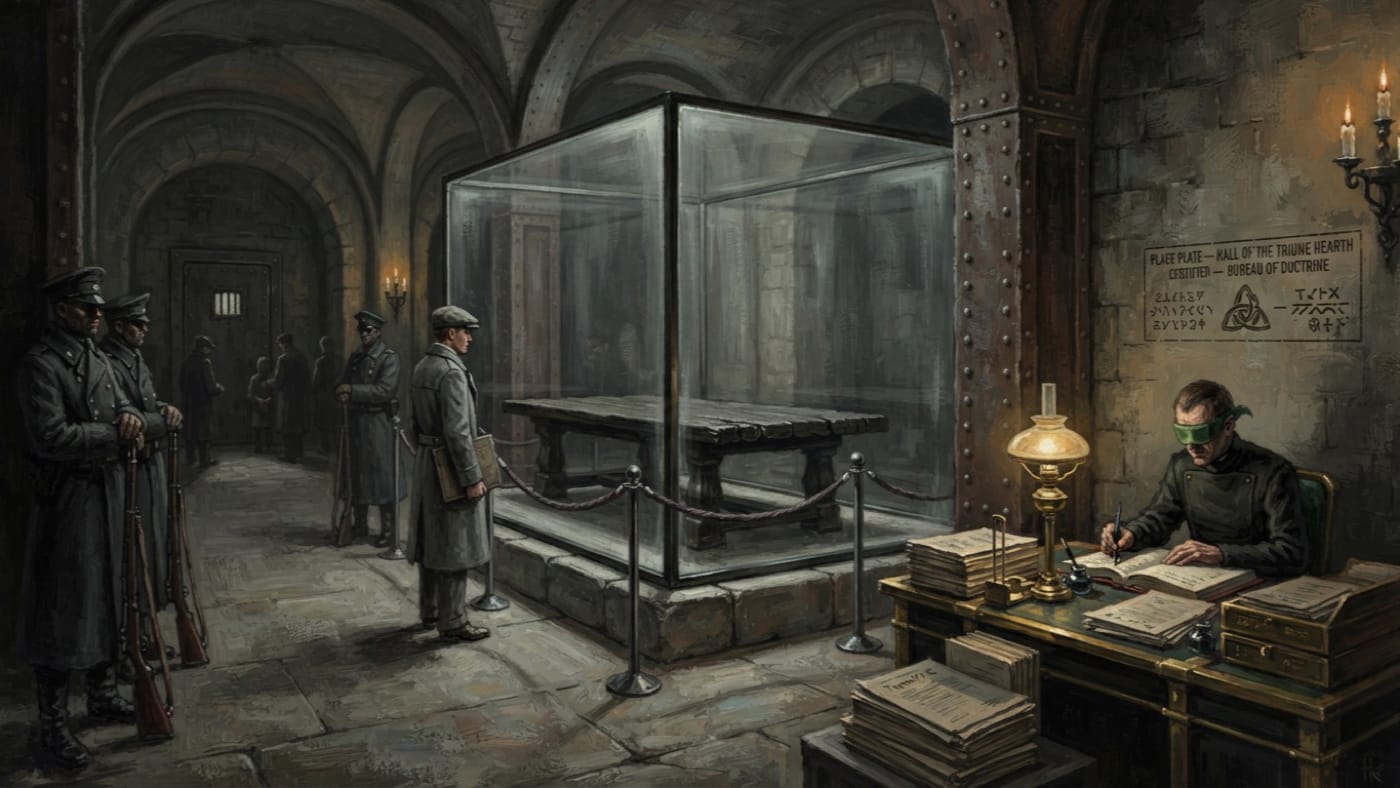
Hall of the Triune Hearth
Proximity licensed. Touch refused.
Strasbourg keeps the Concordat's black oak table under glass. Citizens inherit the Hearth, then file Form 77-C forty days ahead to stand near its furniture.
Codex Ref. II.1.04-006
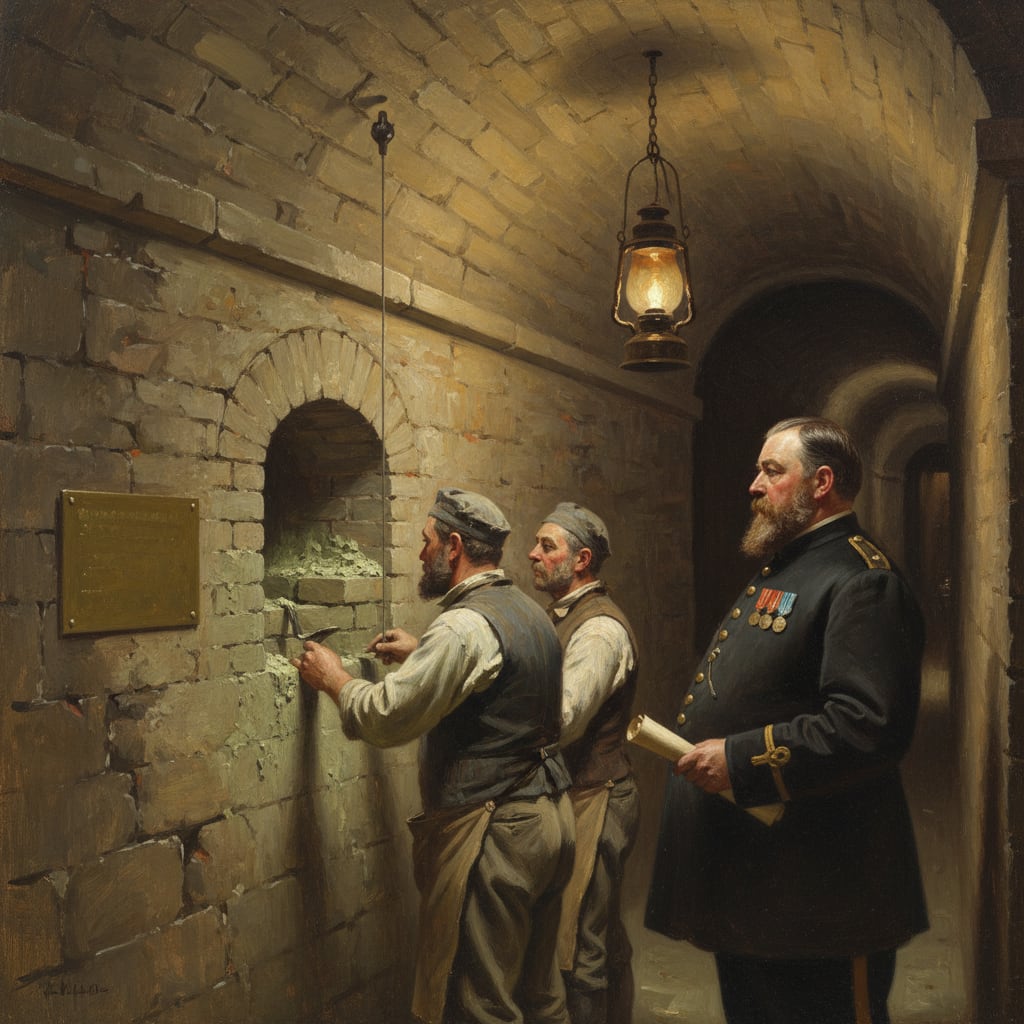
Immurement Mason
The Punitive Construction Auxiliary: On the craft of permanent deterrence, the condemned as structural element, and the mortar that does not negotiate
~2,400 licensed Masons who turn living bodies into load-bearing lessons; three ranks, two factions, one Standing Order that recommends no air provisions; the condemned ceases to be a problem and becomes a structural element.
Codex Ref. XII.22.01-001
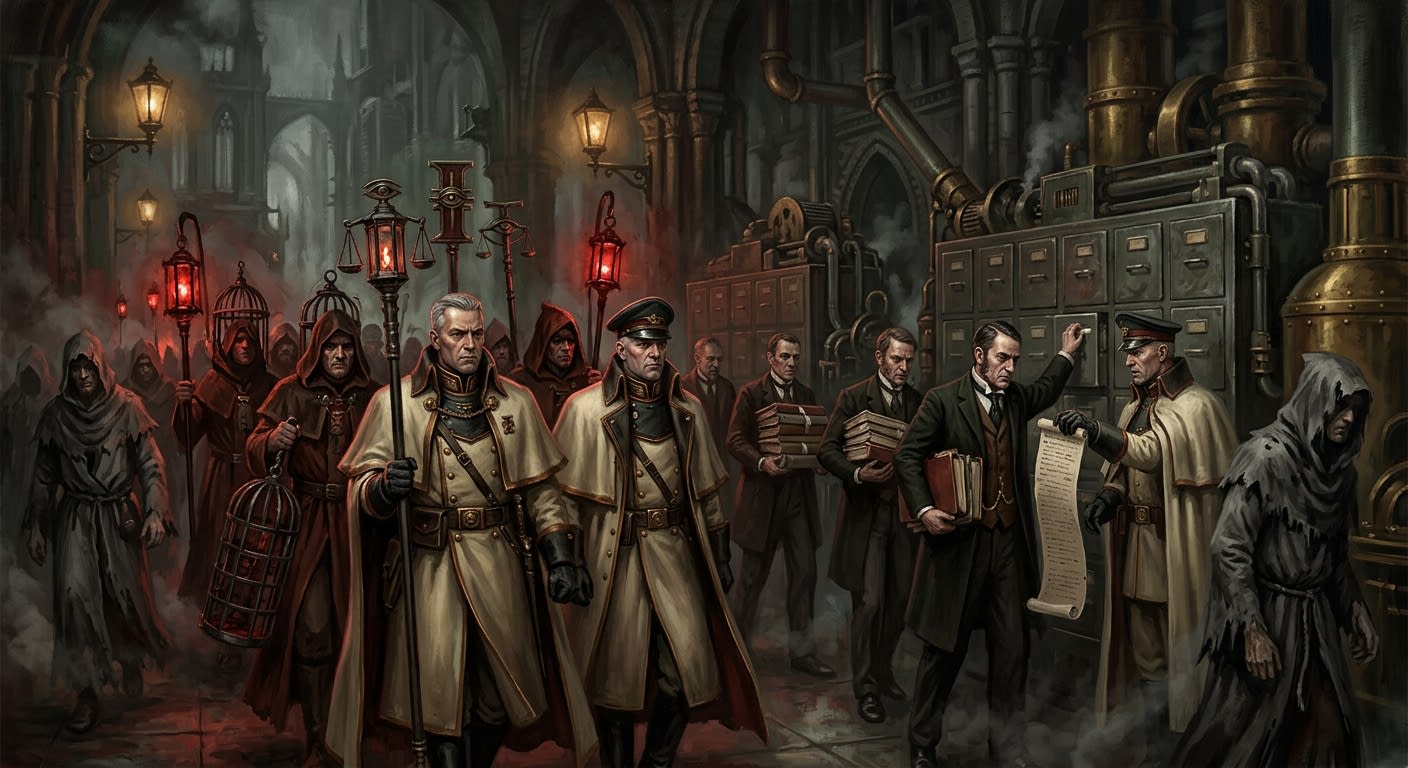
Inquisition
The white hand closes with a receipt
The Inquisition is Purity's authorised appetite for correction: White Cloaks, Lictors, Red Lanterns, Ashmen, Shadows, Index packets, denunciation law, and the clerkly miracle by which fear learns to file itself.
Codex Ref. VIII.1.08-093
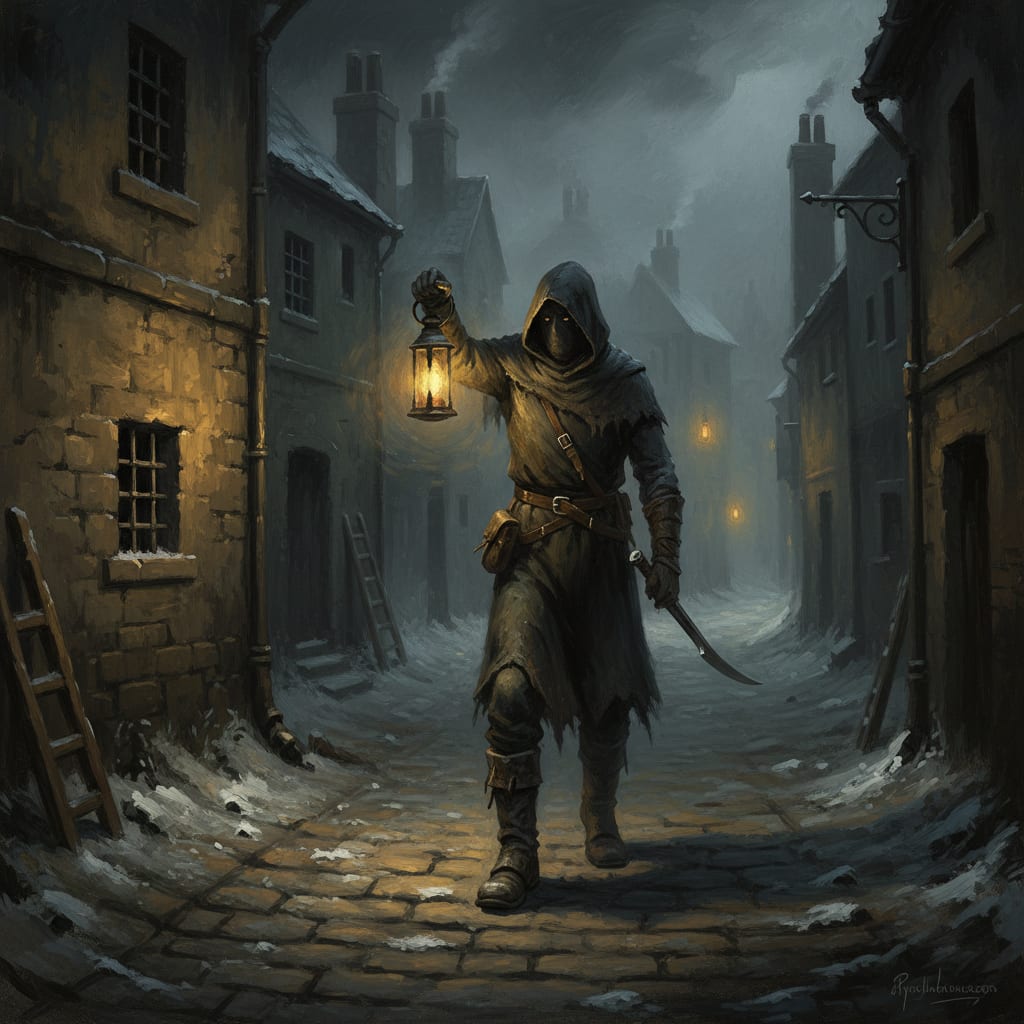
Lantern Brotherhood Vigilante
Eight thousand four hundred tolerated blades, licensed by a subordinate clause — the Synod's night made visible and officially nonexistent.
Eight thousand four hundred tolerated blades in five Watch Circles, licensed by a subordinate clause in a curfew ordinance — the Synod's night made visible and officially nonexistent.
Codex Ref. XII.25.01-001
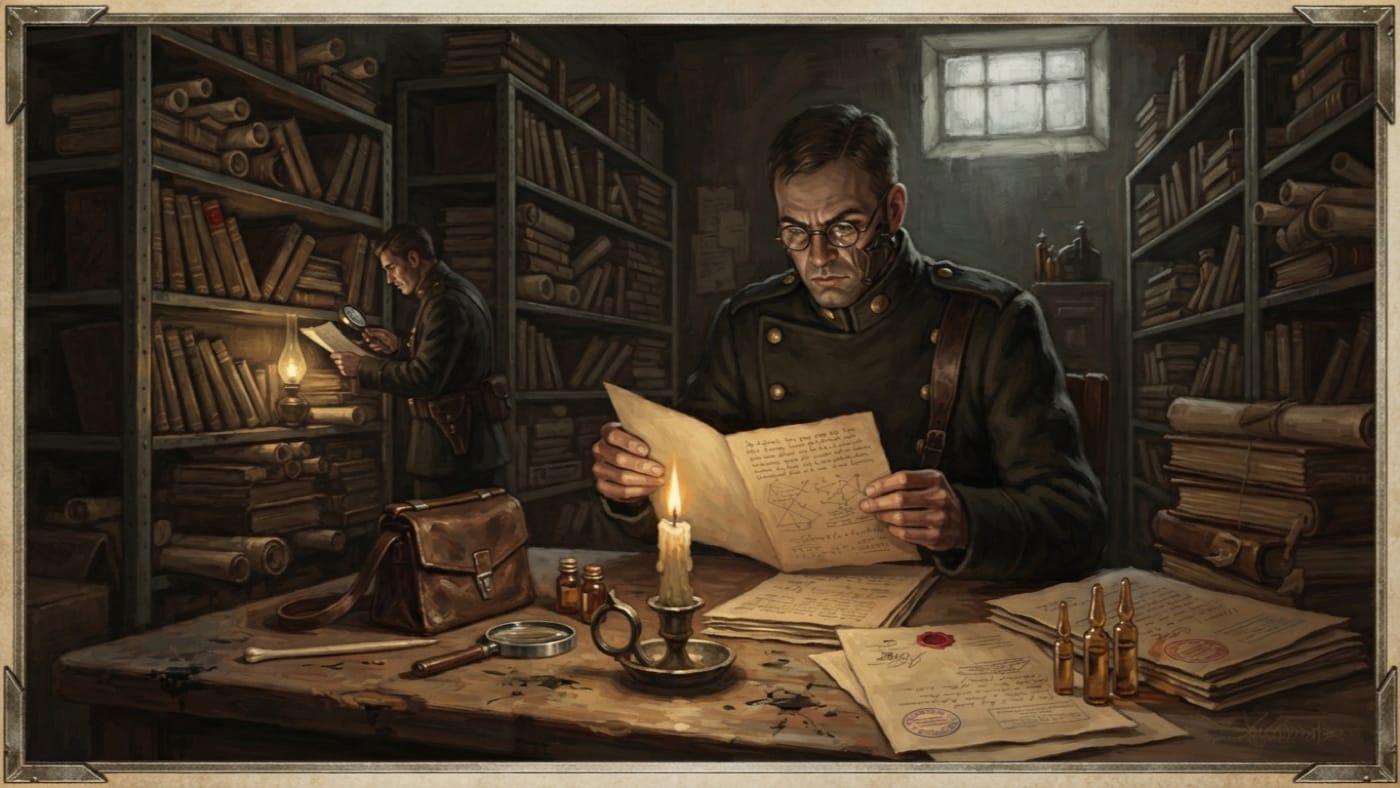
Lemon-Ink
A forbidden sentence waits inside a permitted book for the wrong candle
Lemon-ink hides forbidden figures inside approved books until a candle browns them into evidence. The Ashen Circle writes; the Interdiction Squads warm the page.
Codex Ref. XIII.1.56-002
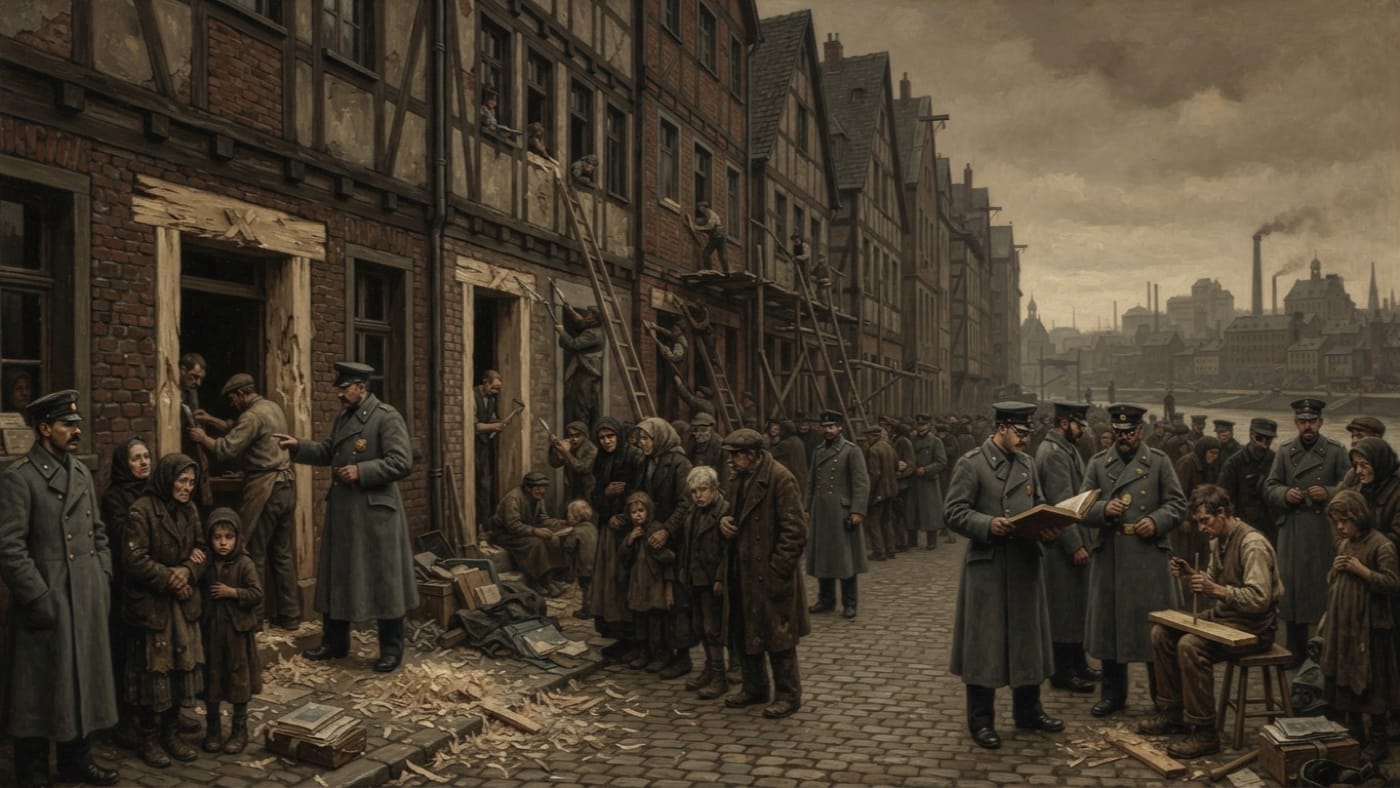
Lintel Pogroms of Cologne
Fourteen perfect Knots, three sealed niches, and a Registry to count the tools
In A.S. 112, fourteen perfect false Knots cost Cologne's river quarter its lawful thresholds, three carvers their air, and Heraldry the trouble of founding the Knotwright Registry.
Codex Ref. VII.8.10-112
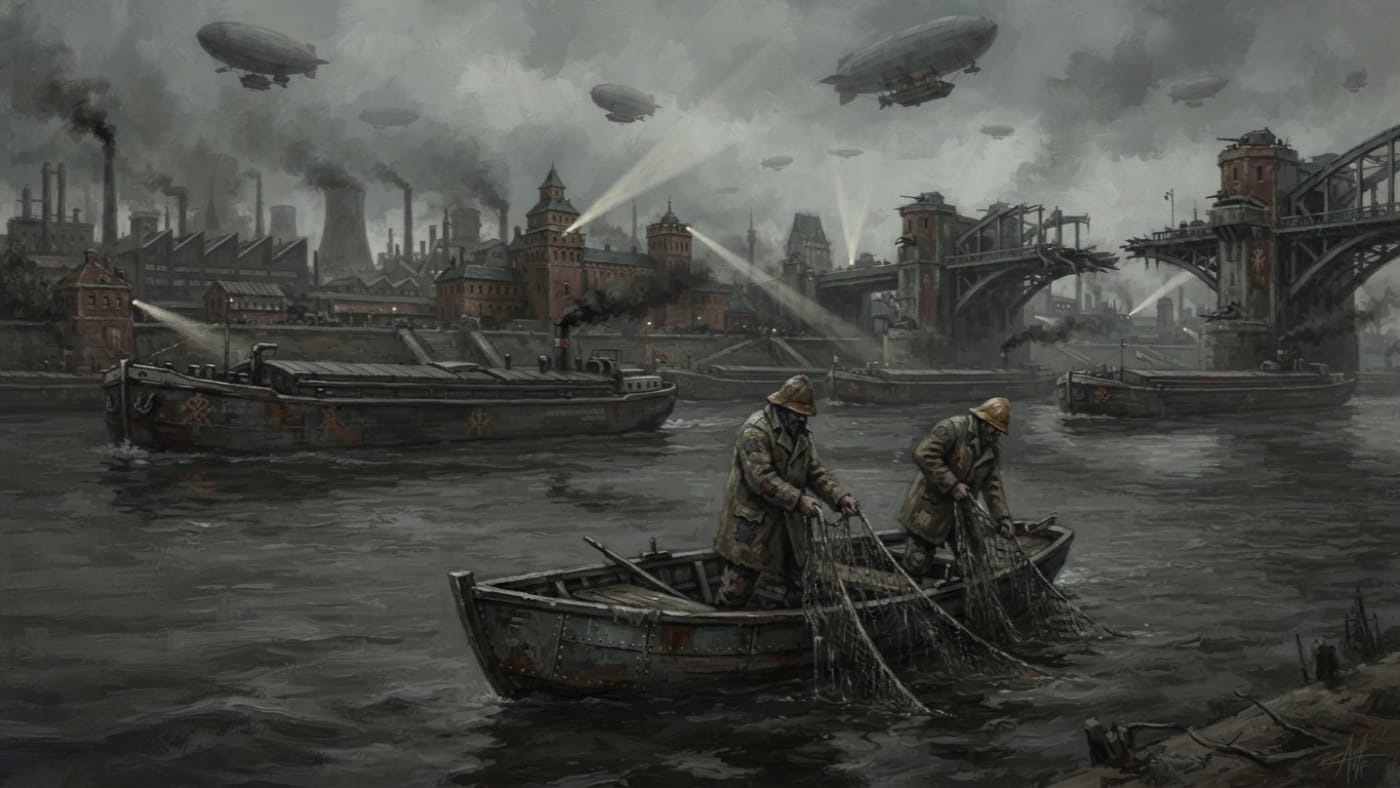
Lower Rhine
A river reach, a deputy's copies, and no boundary on file
The lower Rhine has no boundary on file, but its fisher-litanies reached Werrenrath's papers. The Ledger can trace the copies more readily than the songs.
Codex Ref. II.2.08-203
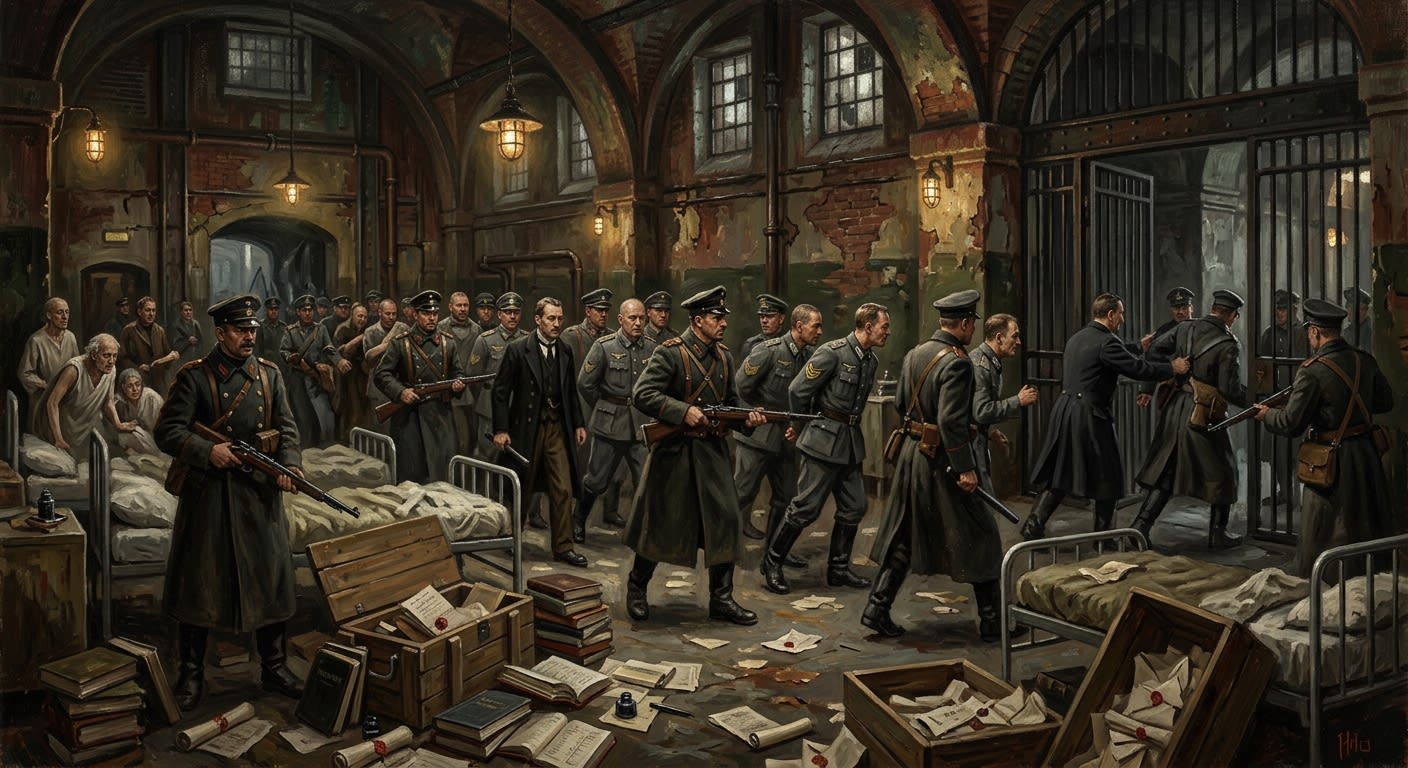
Mercy Ward Purge of A.S. 134
The year last words became contraband unless properly priced by authority
The Mercy Ward Purge of A.S. 134 exposed the sale and alteration of terminal confessions across Rhineland wards.
Codex Ref. VII.8.10-023
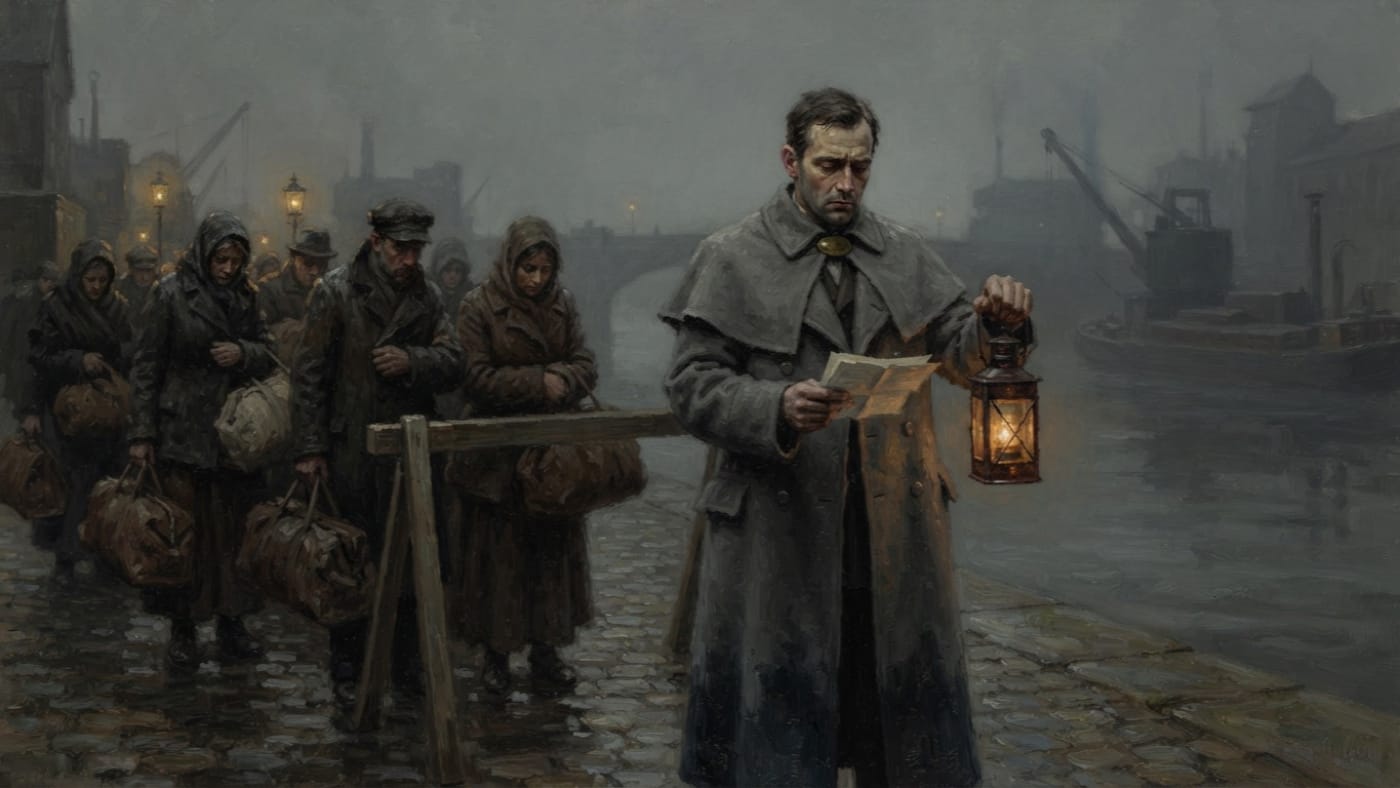
Moselle Crossing
The papers were in order. I checked them twice.
Current documentary survey, A.S. 201: at a Moselle curfew crossing I checked a Licensed Consolator's papers twice. They were in order. Sincerity was harder to inspect.
Codex Ref. II.2.08-201
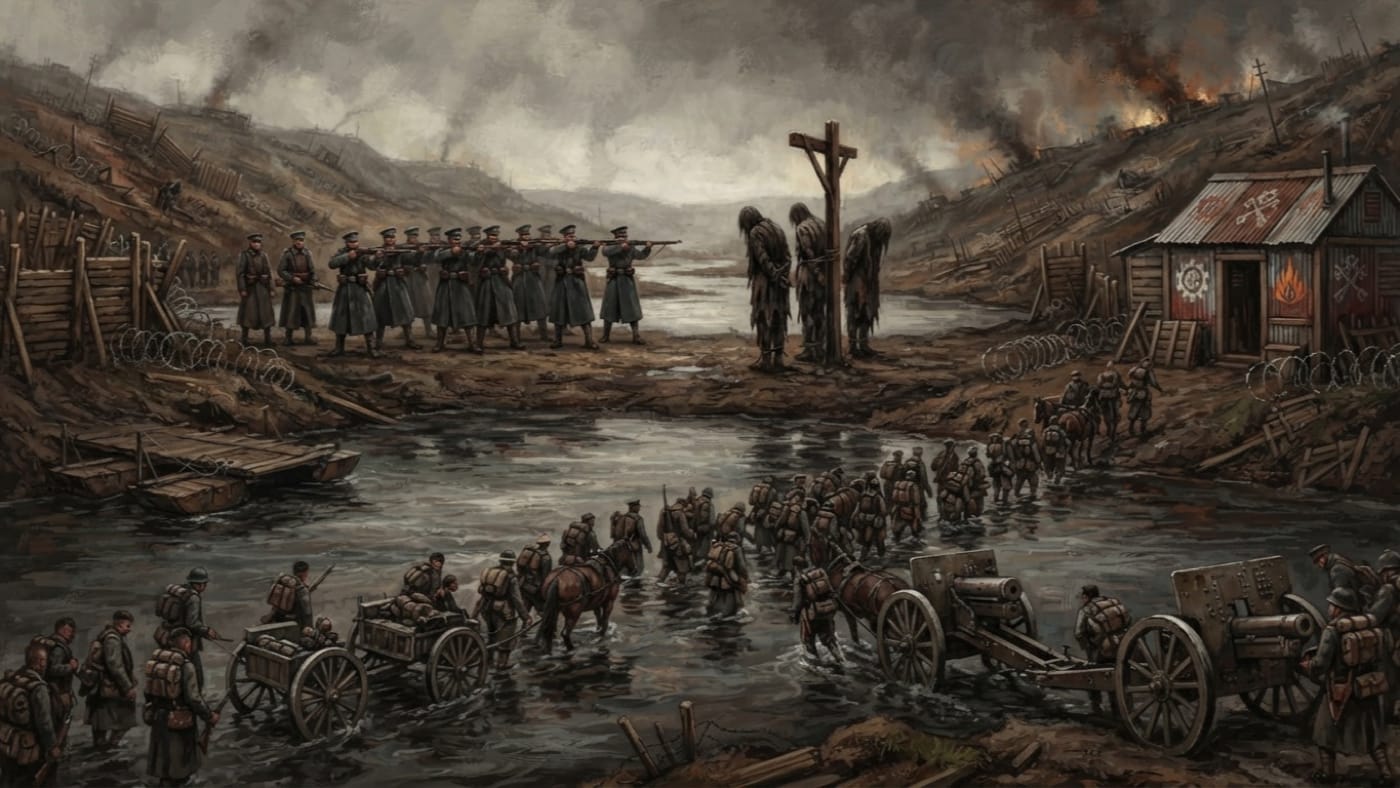
Moselle ford
Where deterrence became a soldiers' liturgy
Three shot at a Moselle ford in A.S. 53; their names chanted as saints within the month. The exact crossing is unrecorded. The lesson became part of the case for immurement.
Codex Ref. II.2.08-053
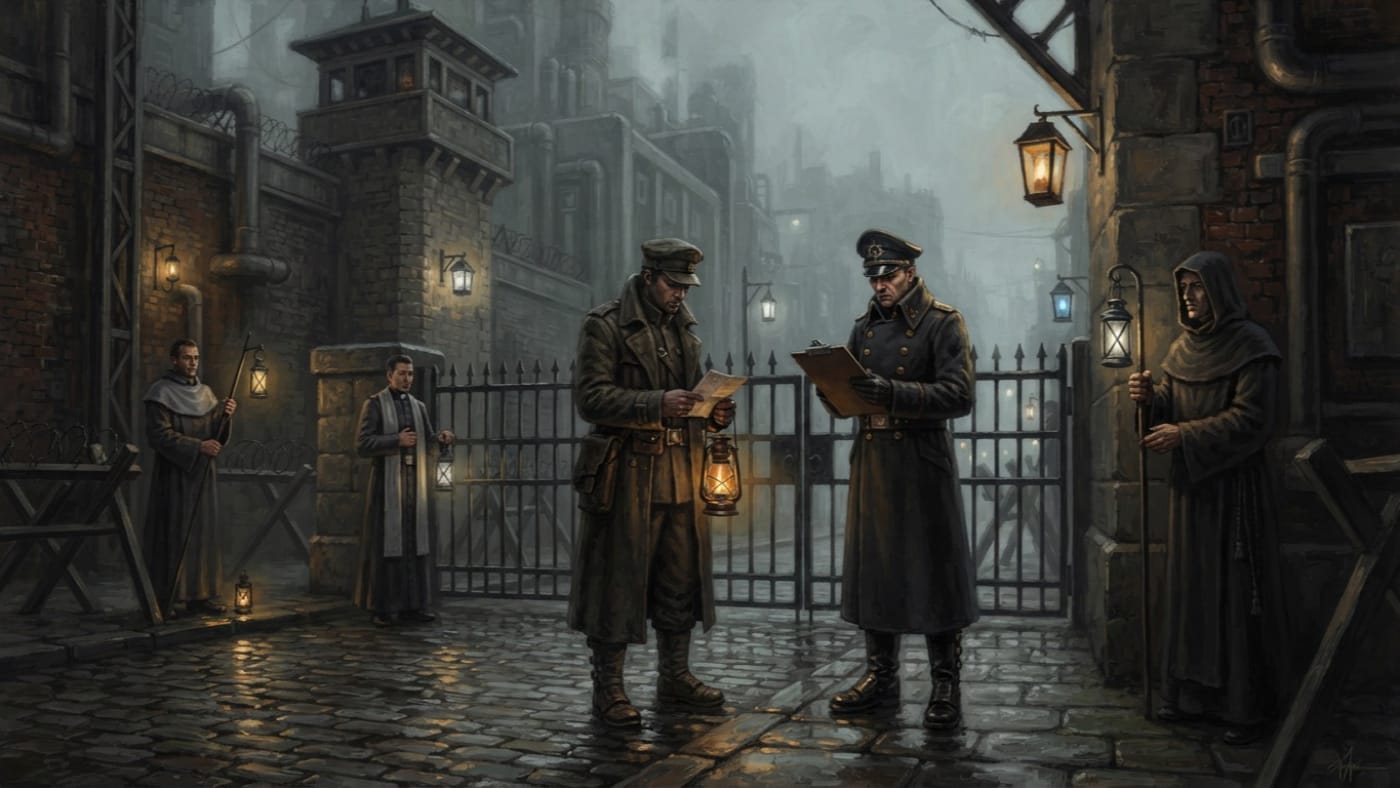
Ninth Peal
The hour when a walking body must explain itself
The Ninth Peal makes every step conditional: after dusk, Rhineland crossings demand cause, route, pass, lamp and witness. Drax surveys the machinery in A.S. 201.
Codex Ref. XIII.1.62-201
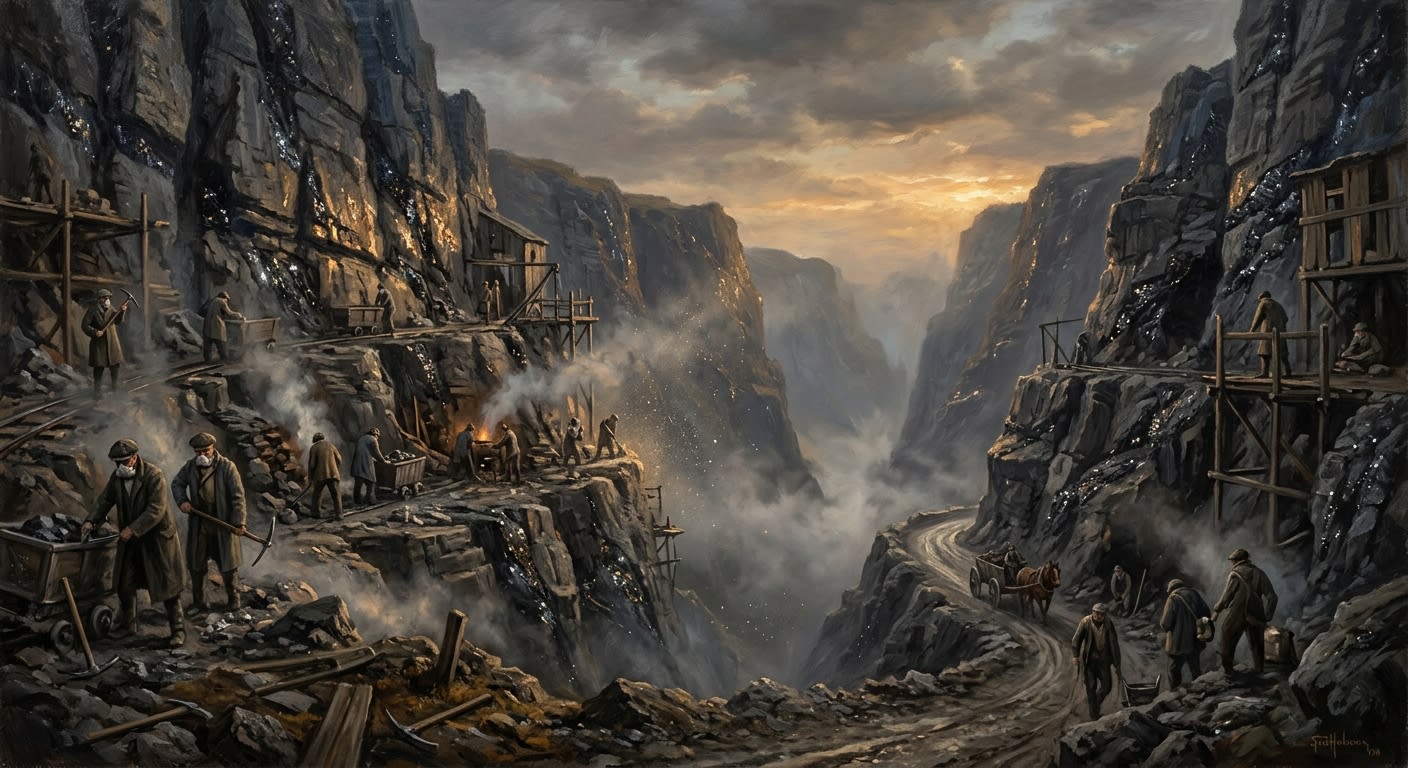
Oathglass Quarrytown, Saint-Helm's Cut
The mountain proves what the Seal House permits
A highland quarrytown built inside a volcanic-glass cleft that the Synod has declared a certified sacred site. The glass proves relics. The workers cough. The mountain, lately, has begun to sing.
Codex Ref. II.2.05-001
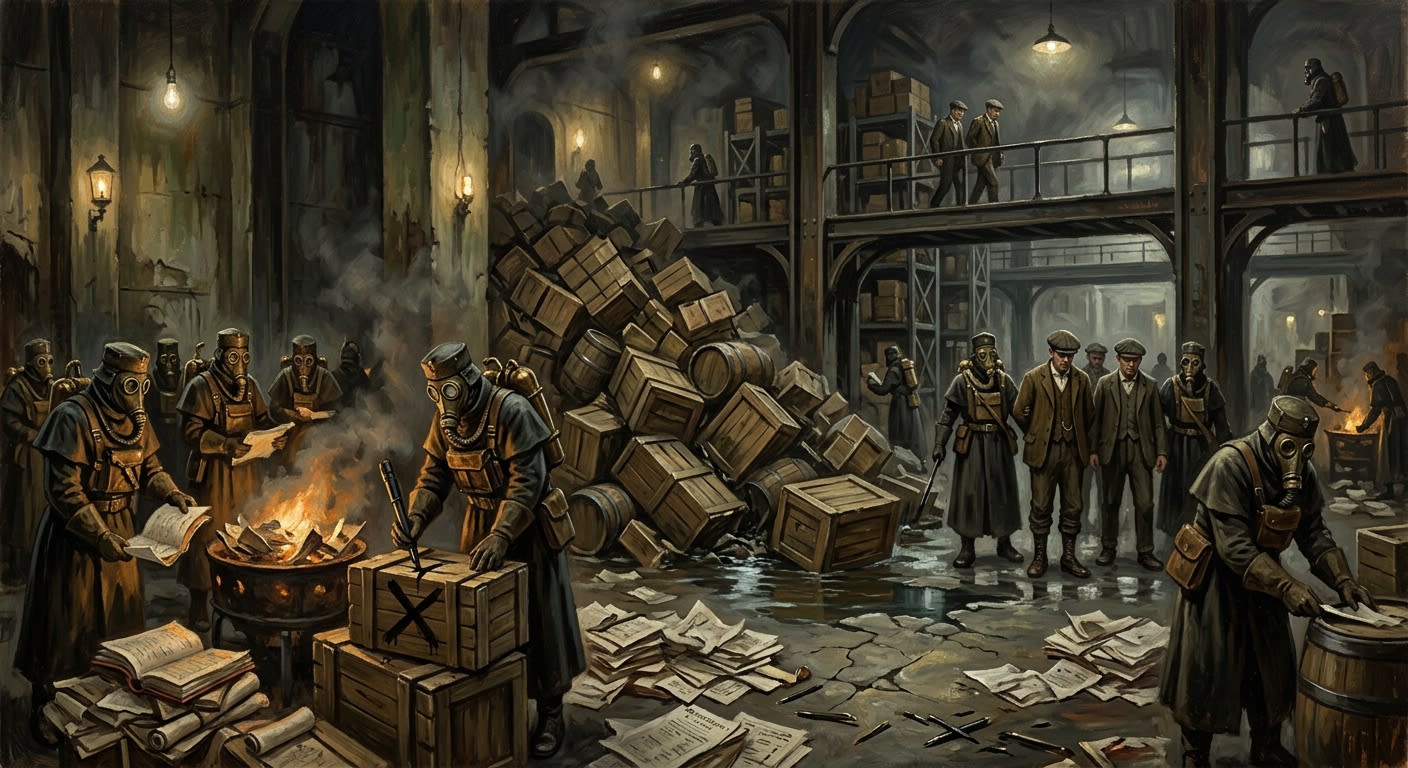
Orthography Purge of A.S. 112
When the letter changed, the invoice died obediently
The Orthography Purge of A.S. 112 reopened 411 manifest cases, stripped eleven Litigants of practice rights, and taught merchants that one suspect stroke can bankrupt a warehouse.
Codex Ref. VII.8.10-002
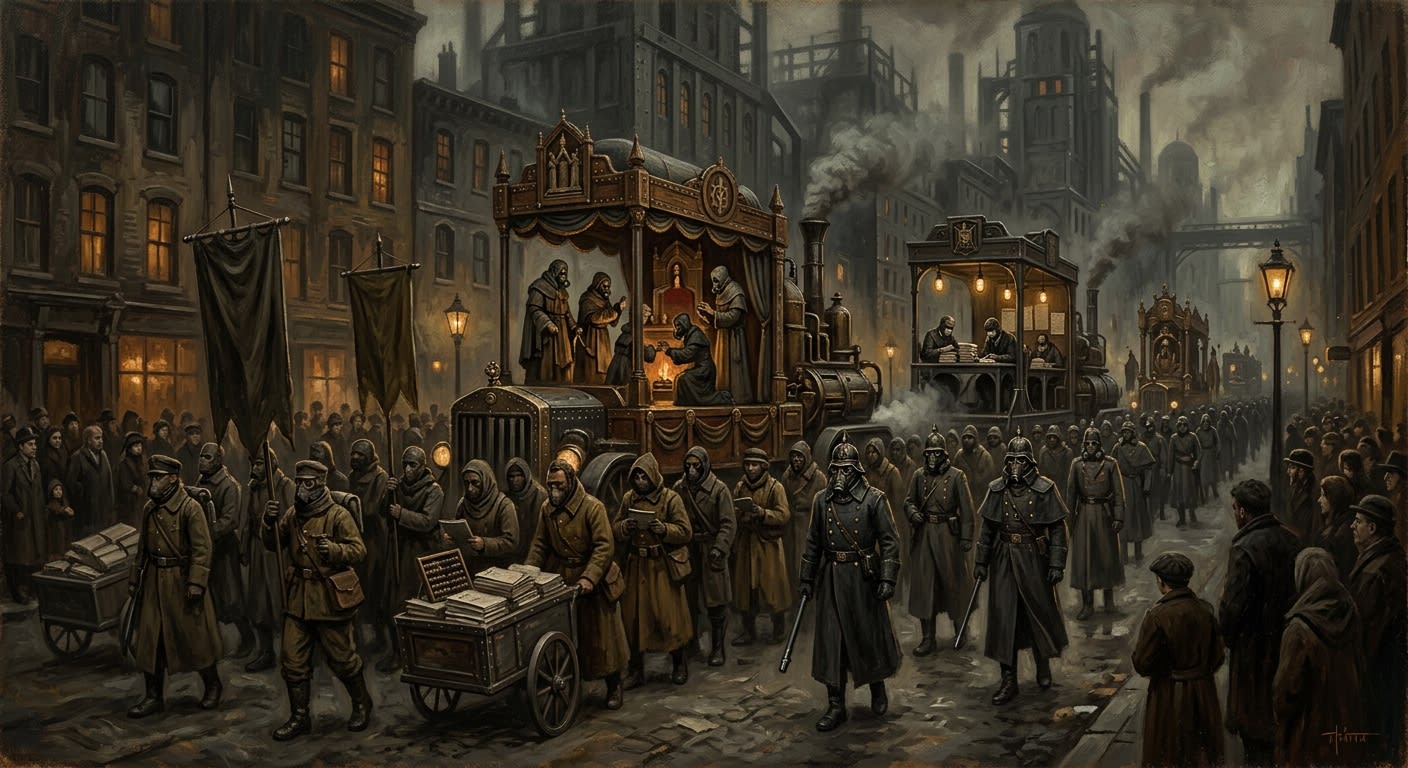
Procession of the Triune Hearth
One people, one creed, one spectacle, counted twice
First staged in A.S. 175, the Procession of the Triune Hearth turned Concordat memory into forty days of floats, census work, unity theatre, and invoices.
Codex Ref. VII.3.02-001
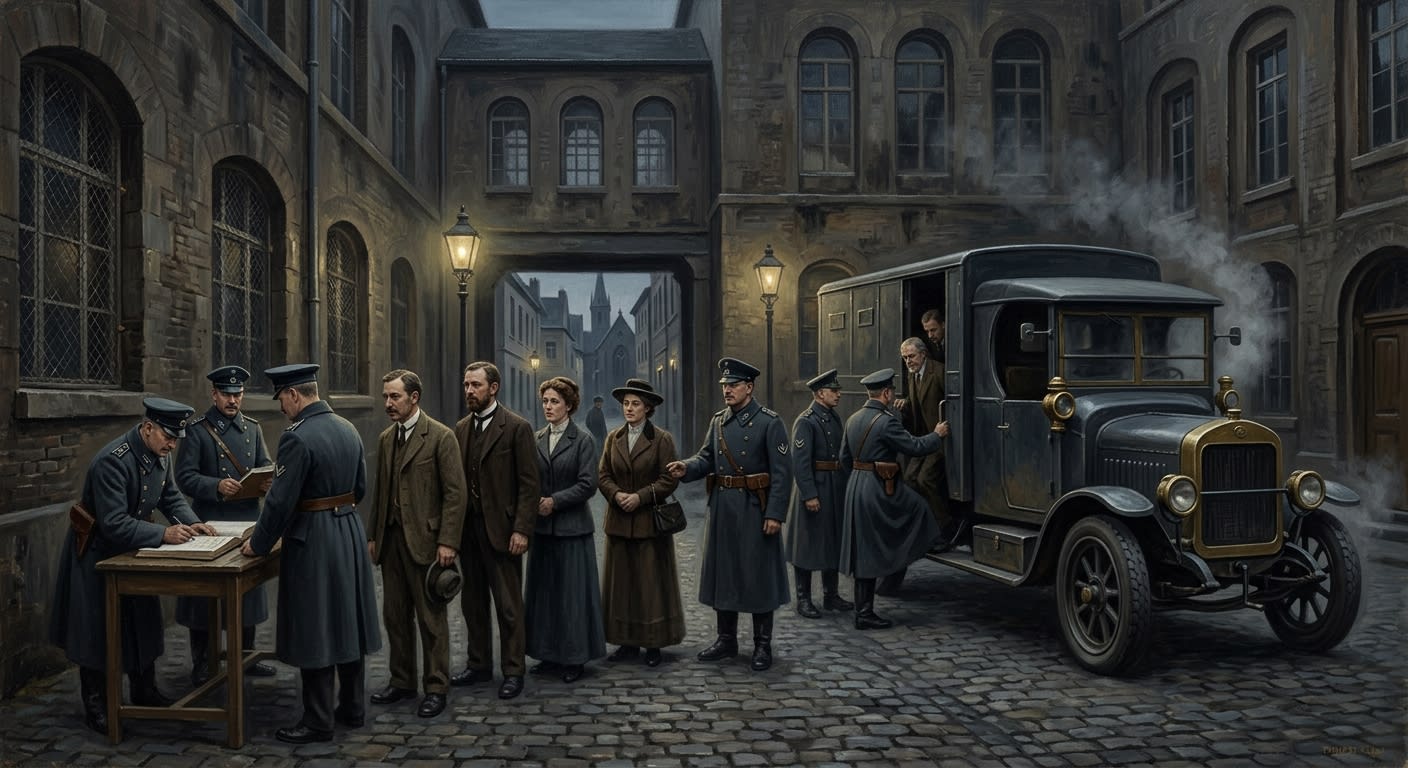
Quiet Purges of A.S. 112
The year absence learned to sign the payroll
The A.S. 112 Rhineland removals of 411 teachers, choirmasters, and Street-Vicars proved Purity could correct without spectacle.
Codex Ref. VII.8.10-010
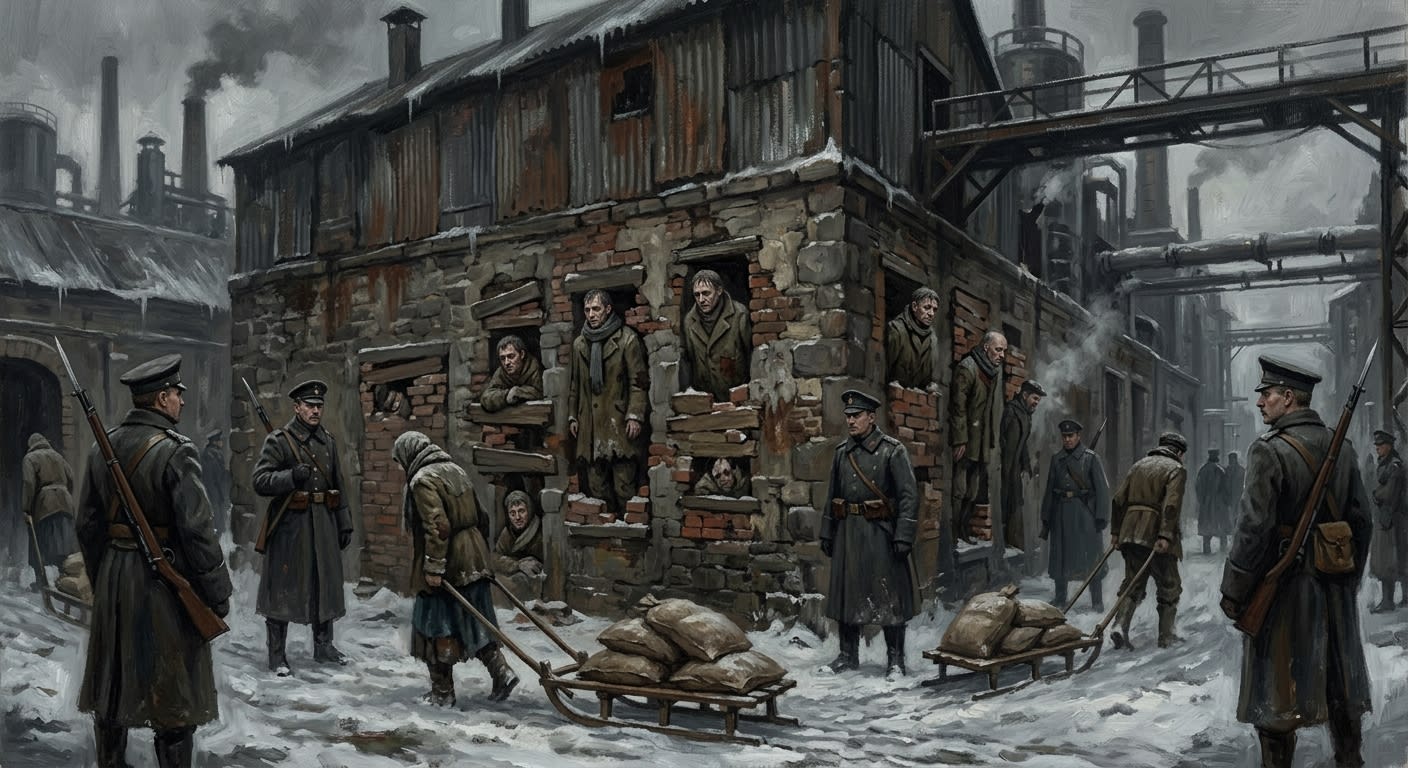
Ration Plunder Winter
Three barrels of flour founded a profession and called it Order
The A.S. 97 Ration Plunder Winter turned flour theft into visible punishment, making one depot wall the profitable ancestor of formal immurement by writ.
Codex Ref. VII.8.10-041
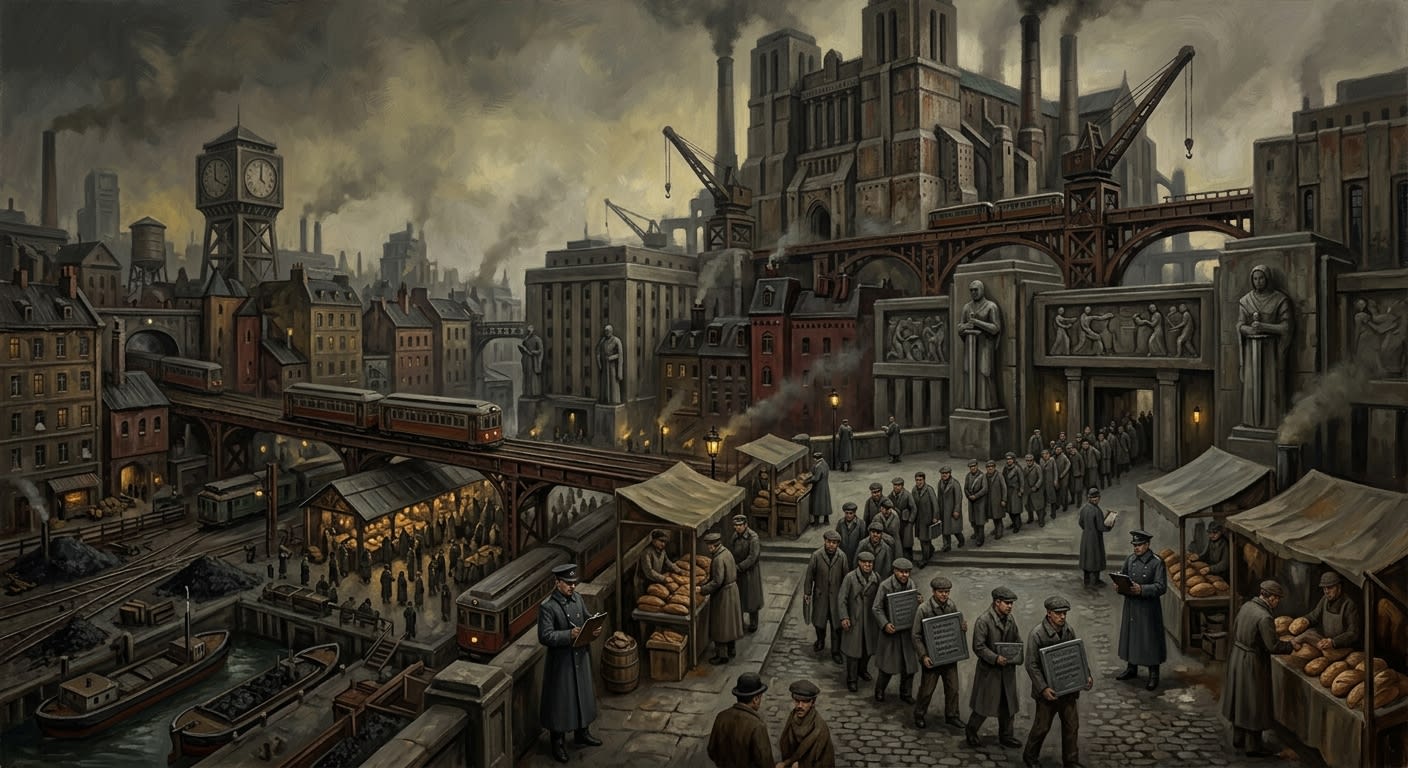
Regensburg
The city that sold false dawn by the plaque and glass
Regensburg hosted Reason's false triumph, sold bread to signatories and plaques to penitents, and still rehearses its profitable disgrace under Bureau watch.
Codex Ref. II.2.03-030
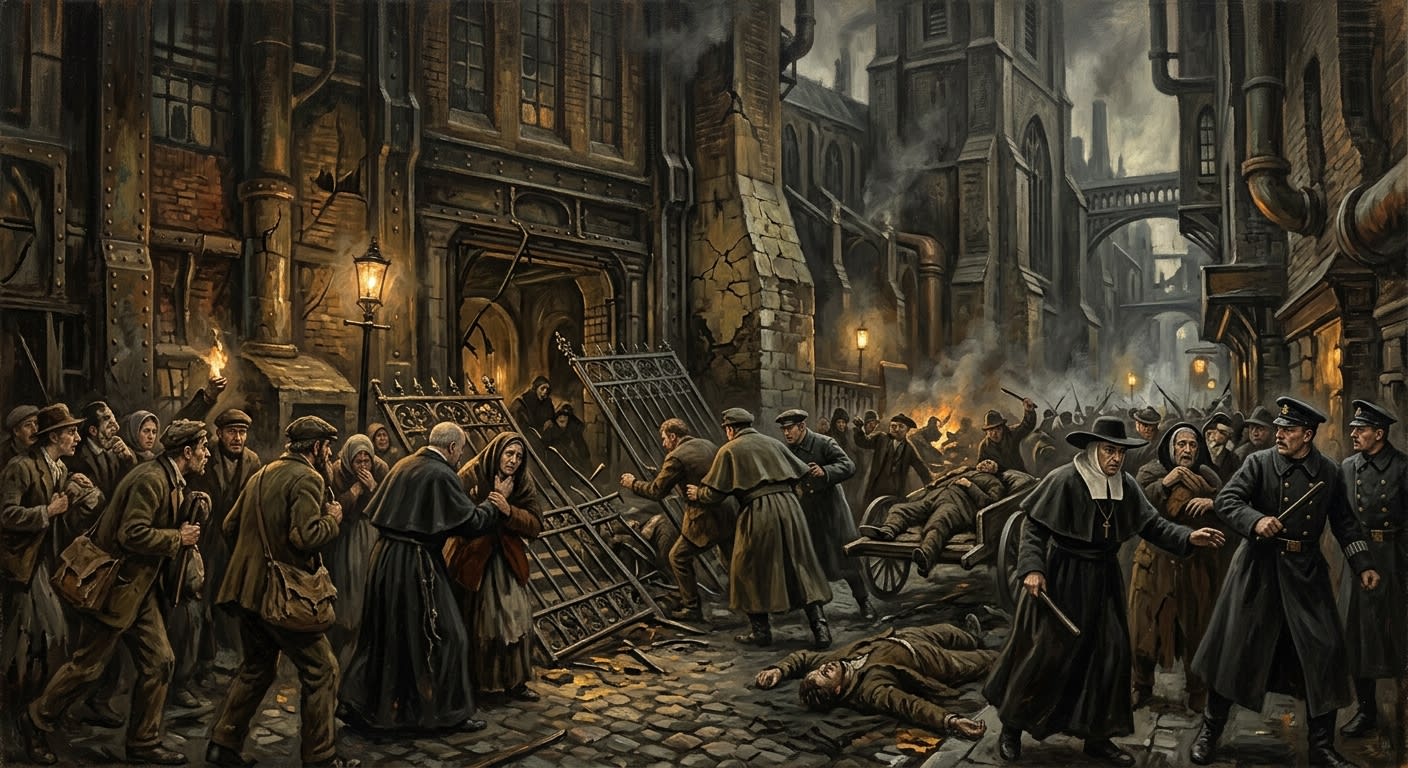
Riots of Santiago
Forty-one dead pilgrims taught Strasbourg that roads prefer owners
The A.S. 121 Riots of Santiago killed forty-one pilgrims, broke a shrine screen, exposed private road-guild predation, and gave Strasbourg the corpse-count it needed.
Codex Ref. VII.8.10-121
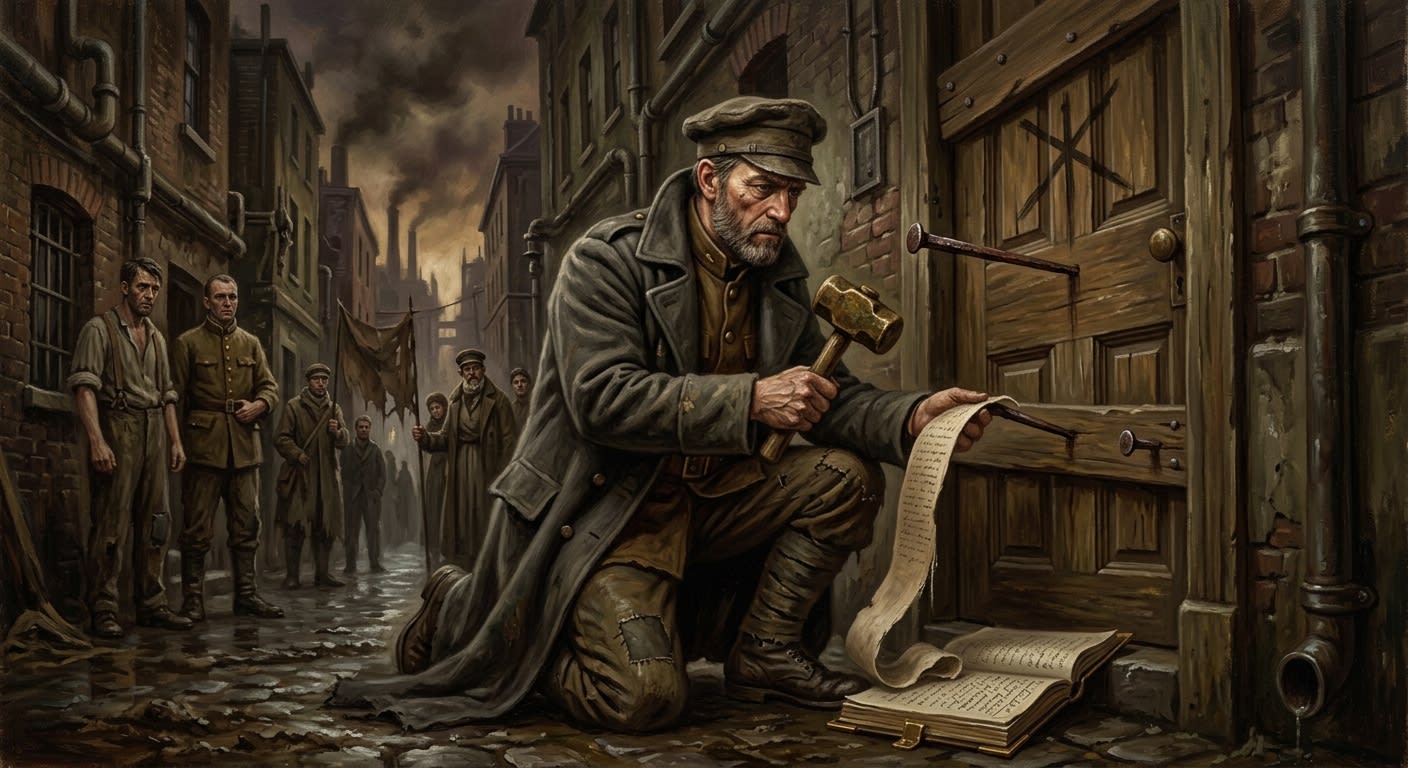
Saint Edrin of the Three Nails
Cut true, name all, hold the door
Saint Edrin of the Three Nails is the patron of Gate-Carvers, remembered for sealing a plague-house during the A.S. 78 Lull of Names with measure, witness, and refusal.
Codex Ref. III.2.01-120
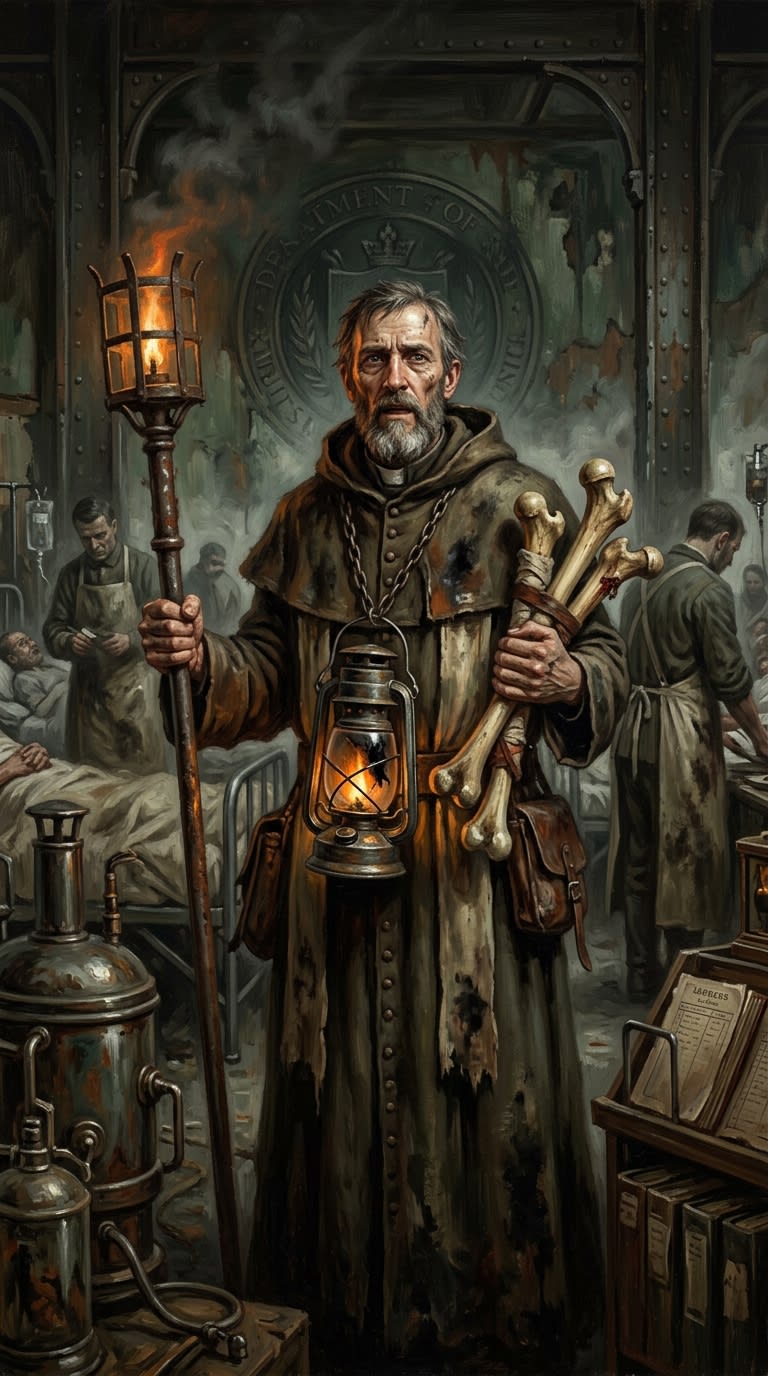
Saint Maurus of the Burnt Lantern
The hospice martyr whose left leg taught arithmetic to kneel
Hospice martyr, ward-lantern patron, and owner of three authenticated left femurs; Maurus proves that sanctity can outgrow anatomy.
Codex Ref. III.2.01-148
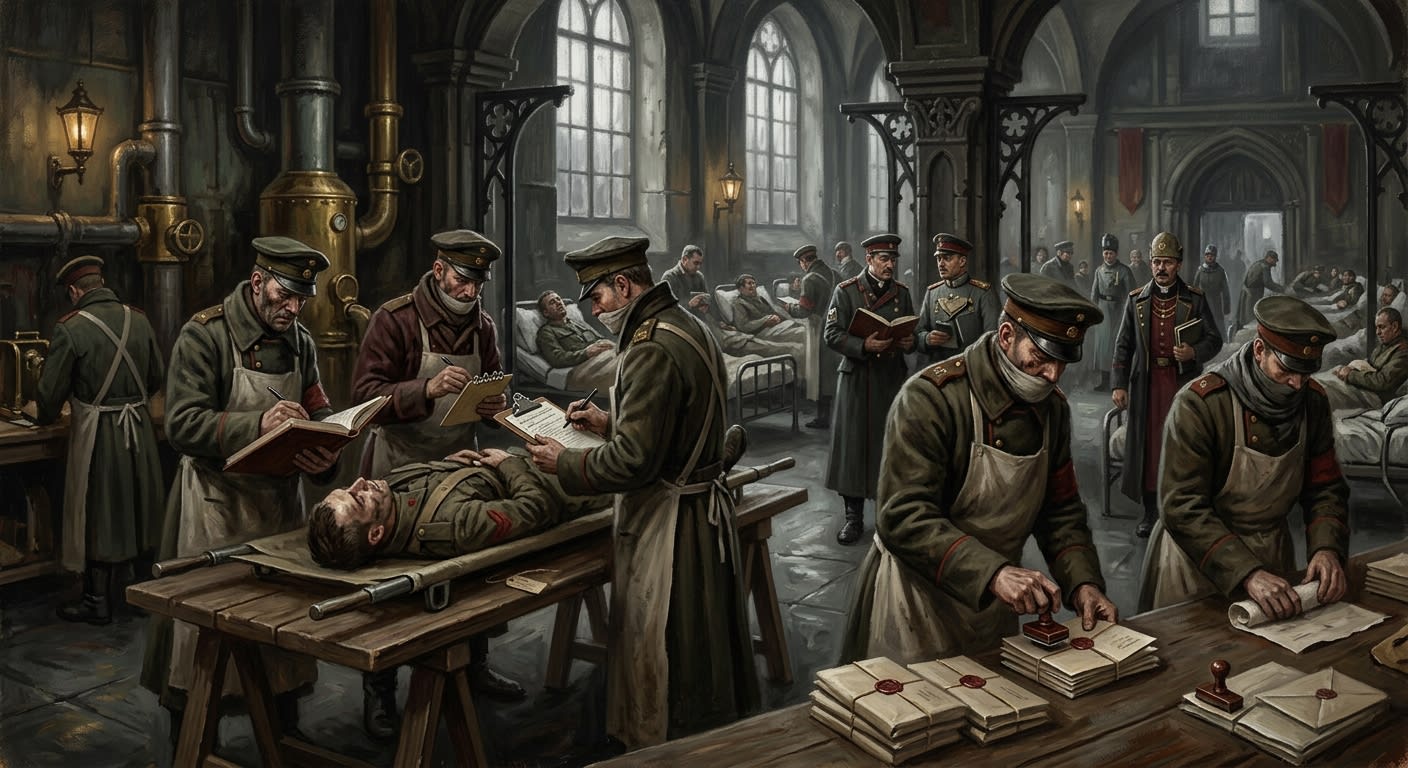
Standing Order 22-C
No last word unfiled, no dying mouth left private
Standing Order 22-C makes the dying useful: names first, comfort second, three copies sealed before the body is allowed to cool.
Codex Ref. XIII.1.98-080
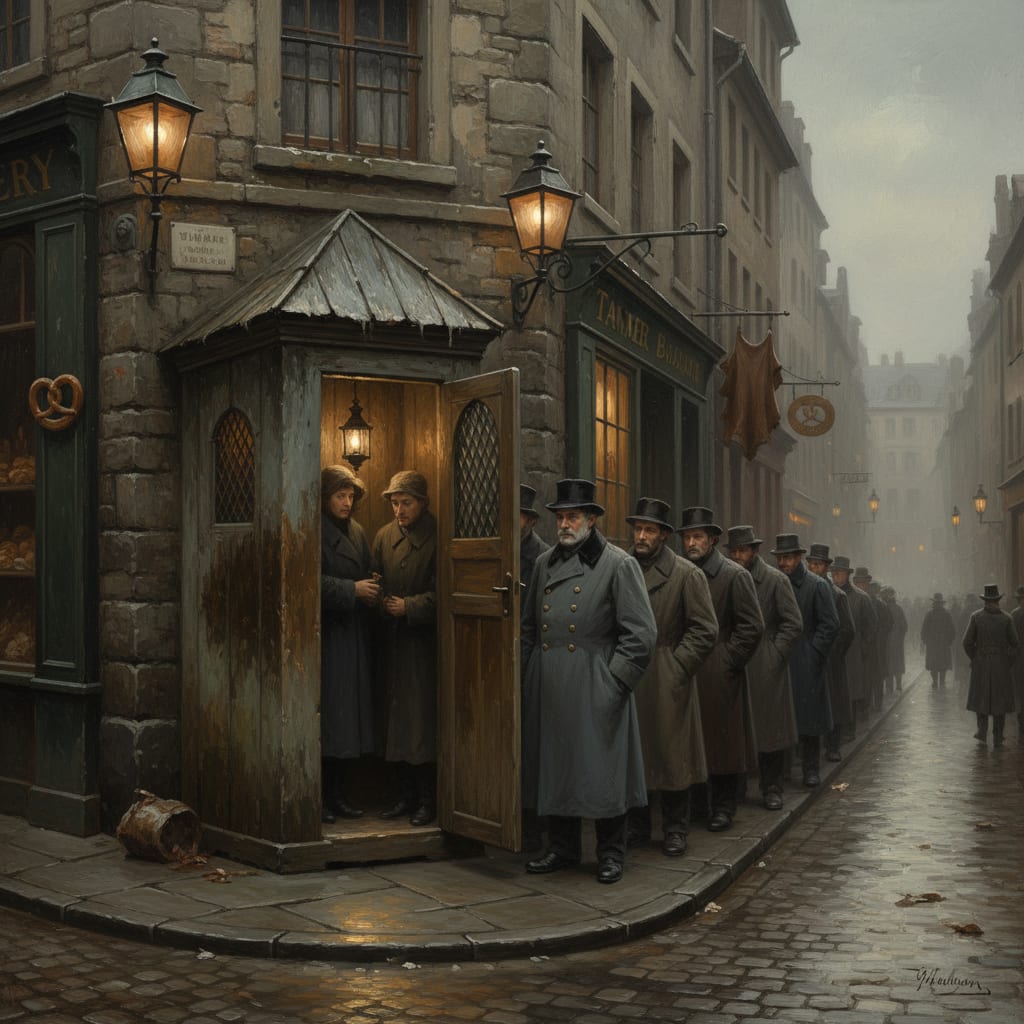
The Confessor-Booth Clerk
The booth does not forgive — but it files. A survey of the twenty-two thousand stamps that keep the Synod clean.
Twenty-two thousand booths; one stamp; no absolution. The Confessor-Booth Clerk processes sin as throughput, files guilt as data, and keeps the Synod's spiritual economy solvent — a contemporary survey by Hieromnemon Valerius Drax, A.S. 201.
Codex Ref. XII.9.01-001
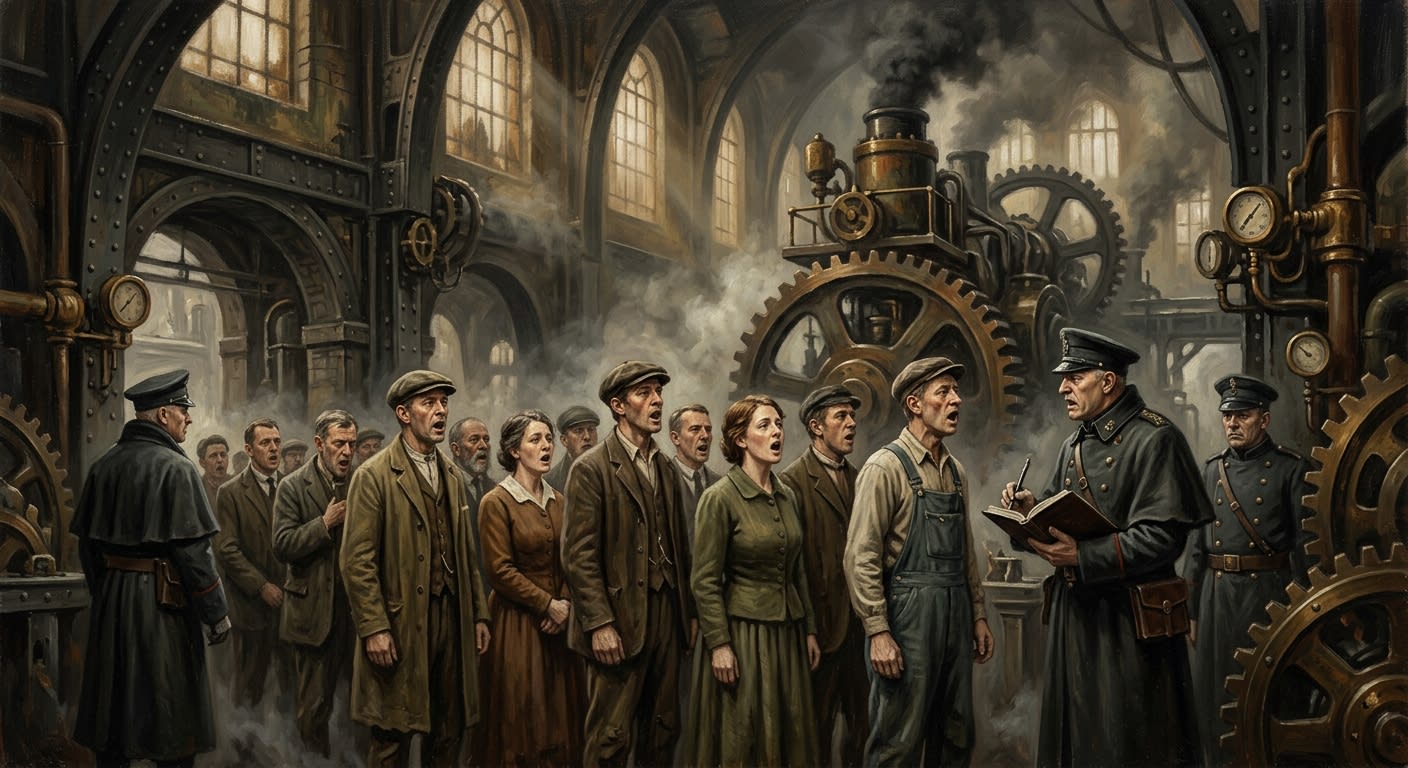
The Eternal Creed
The first tax of the day is breath
The Eternal Creed is the Synod's oral civic machine: recited at dawn, commerce, correction, and inspection, hidden from paper so obedience may occupy the tongue.
Codex Ref. XIII.1.68-001
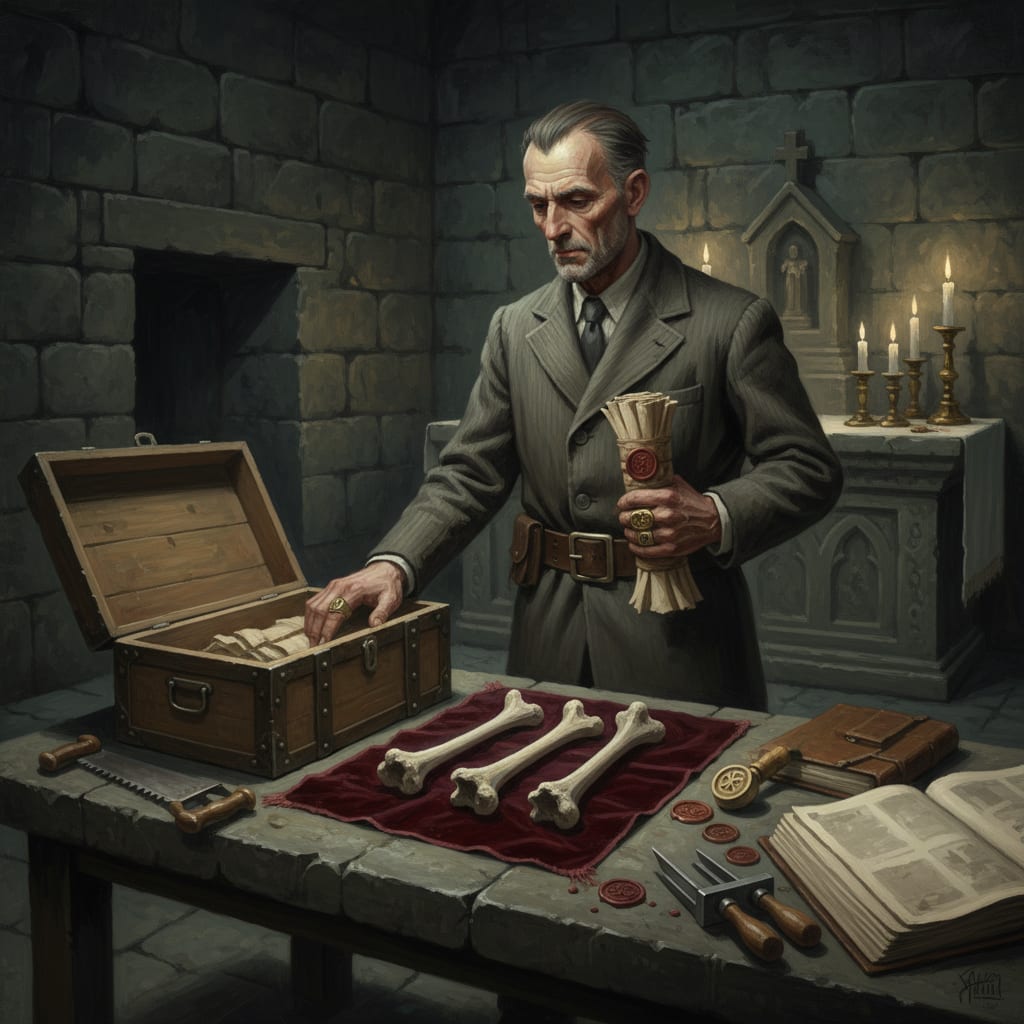
The Femur-War Broker
The unofficial routing service that keeps authenticated contradictions from becoming authenticated riots
The officially nonexistent profession that routes authenticated relic contradictions without collision — the Femur Principle's logical consequence, managed for a fee by two hundred brokers the Bureau insists do not exist.
Codex Ref. XII.15.01-001
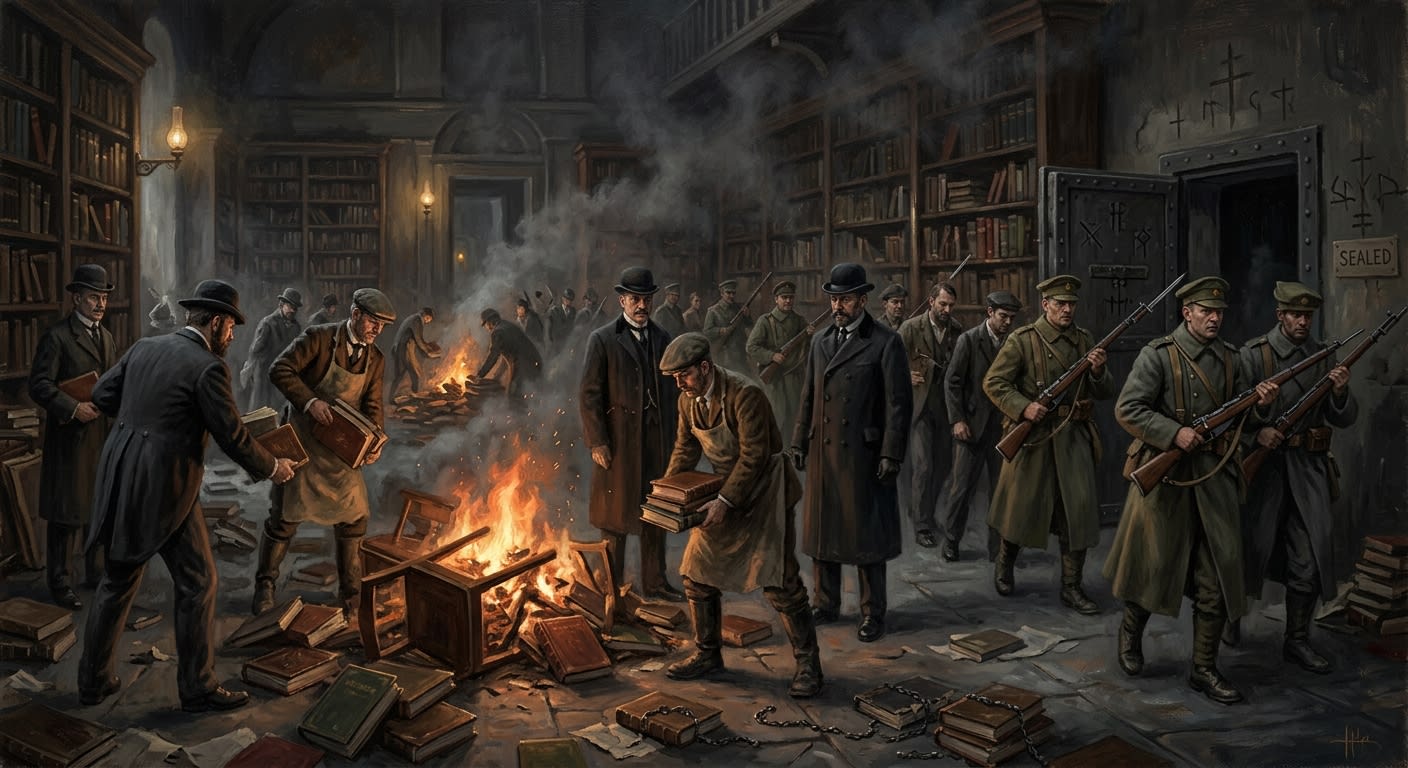
The Great Purge of Margins
Silence scraped the page clean and taught thought to hide in warmer vessels
The A.S. 56–58 Silence campaign against annotated books executed forty-seven scribes, sealed libraries, and accidentally taught the Ashen Circle how to survive without margins.
Codex Ref. VII.8.11-001

Trier
The city that taught chalk to count before it spoke
Trier is a loyal Moselle city with old hands, white margins, soft chalk, river memory, and the dangerous courtesy of obedience performed too well.
Codex Ref. II.2.02-004
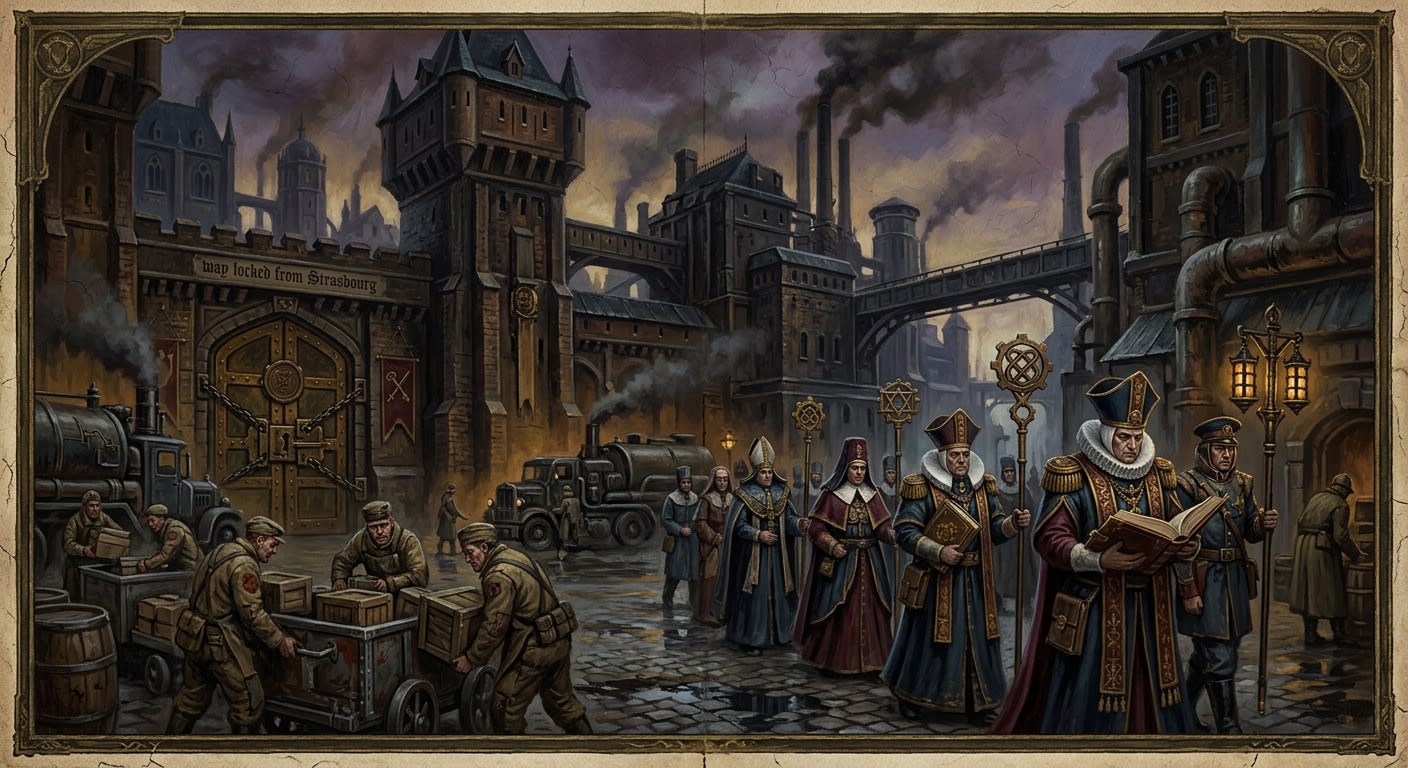
Triune Hearth
Three old bodies, one chimney, and Strasbourg holding the poker
The Triune Hearth binds France, Iberia, and the Rhineland into one Synodal household: warm in sermon, hungry in ledger, and locked from Strasbourg.
Codex Ref. XIII.1.04-090
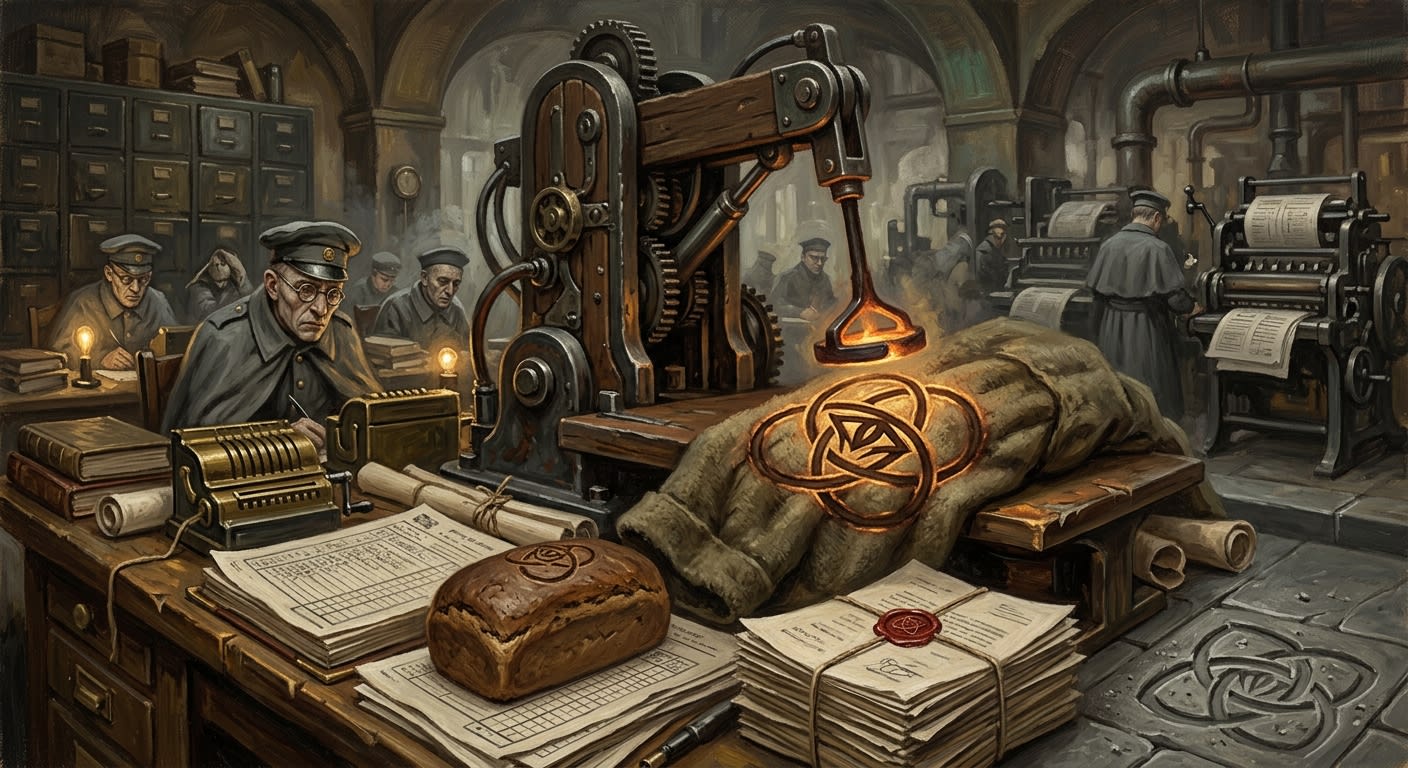
Triune Knot
Three loops, one law, and every door accounted for
Universal Synodal binding mark standardised under Theobald of Worms, by which doors, papers, bread, flesh, and graves become readable to law.
Codex Ref. XIII.1.03-002

Vicar-General Anselm Rihn
The man who paved roads with obedience and called the ditch mercy
Vicar-General Anselm Rihn standardised curfew logistics in A.S. 94, gave the Lantern Brotherhood its deniable clause, and left roads more obedient than men.
Codex Ref. III.2.01-064
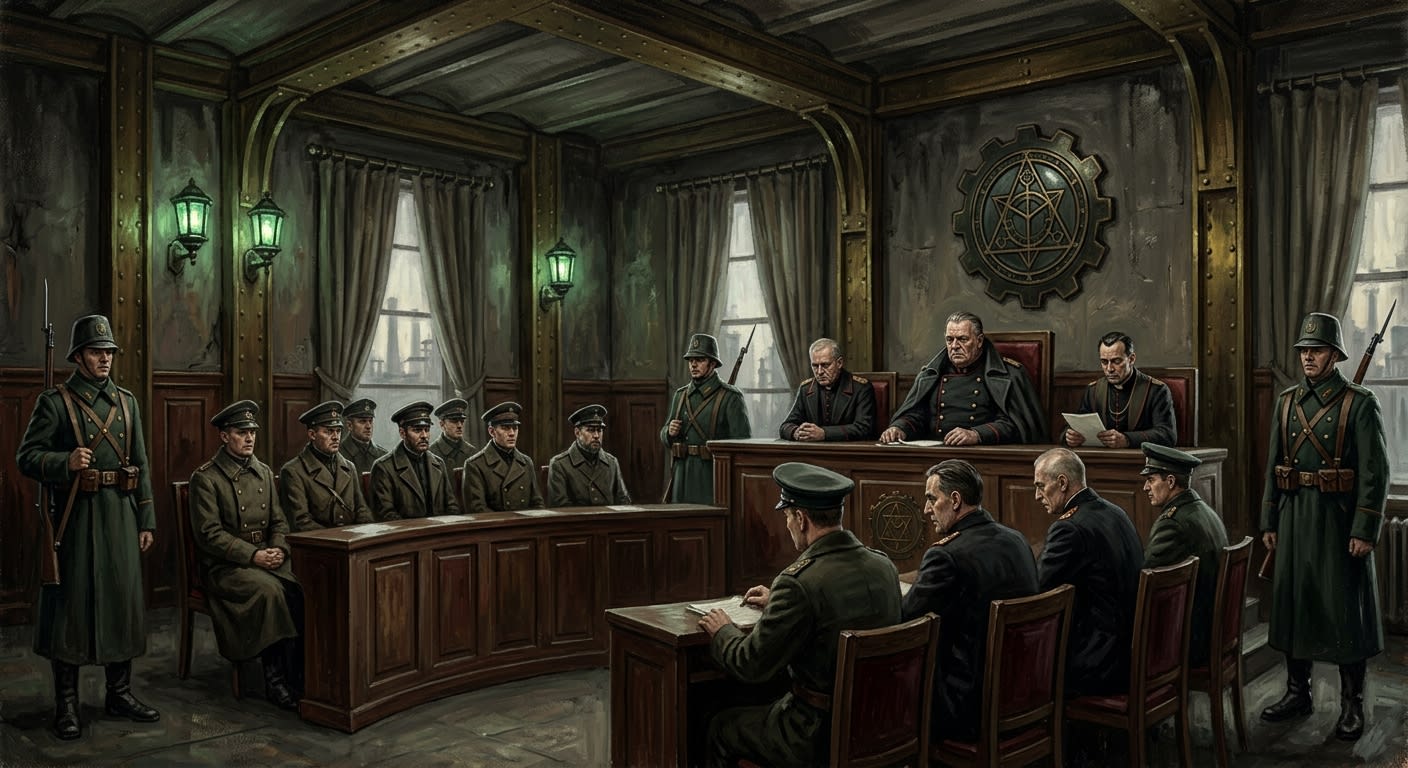
Warden Sermon Trials
Seven comforters tried, and seven hundred mouths learned caution
A.S. 134 sealed Purity tribunal where seven Licensed Consolators were tried for pastoral overreach, creating the precedent that taught Lantern heresy to hide better.
Codex Ref. VII.8.10-044