
#On the Price of a Sack
The Grain Tithe Riots of A.S. 160 began, as proper disasters do, with arithmetic pretending to be theology. Three Assessors of the Bureau of Tithes were killed in the Rhineland; forty villages were later named in the penalty ledgers; Hildegarde of Mainz ordered the razing that made her a saint; the outstanding levies were collected in full; funeral expenses for the dead officials were billed to the parishes where the killings occurred. The parishes paid.
There. The official summary fits on a ledger strip, which is why it lies so elegantly.
A tithe is never only grain. It is a confession by measure. It states that the field belongs to the Creator, that the Creator has delegated collection to Strasbourg, that Strasbourg has delegated irritation to an Assessor, and that the peasant's stomach must wait behind the Line, the Bureau, the escort, the sack seal, the scale weight, the cart manifest, the parish countermark, and the clean little column in which hunger becomes arrears.
The Rhineland had endured poor harvests, transport seizures, rat mould, escort surcharges, and the Meta-Levy's polite little bite. The Grain Keepers had already learned their furtive craft: one bin reported, two hidden; one sack damped for condemnation, three moved through a cellar; one false threshing tally under a dead man's name, because the dead are punctual taxpayers if no one checks their pulse. The Bureau called these practices tithe obstruction. The villages called them winter.
#On the First Assessor
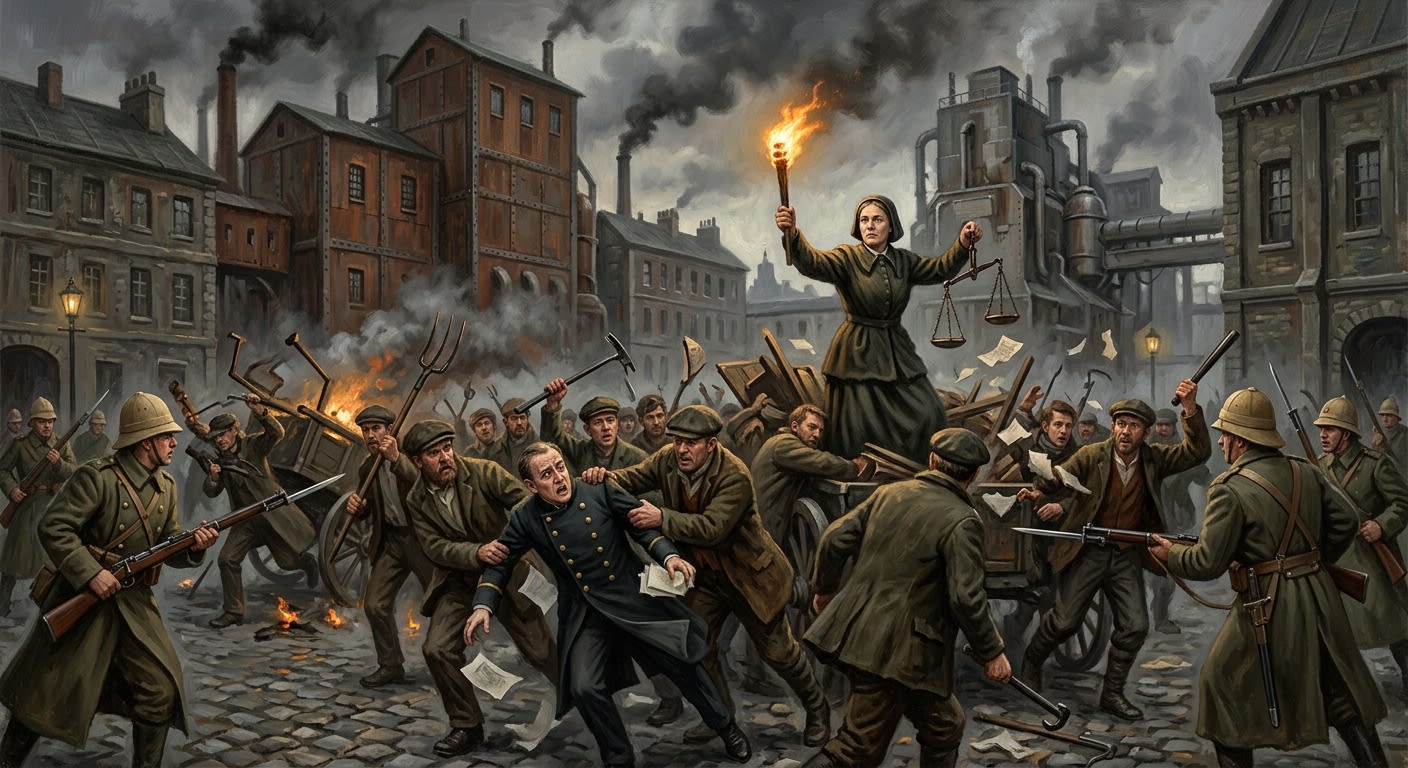
The first Assessor died at a threshing yard outside a parish whose name has been transferred to the penalty ledgers and may not be spoken in licensed local histories. He arrived with two clerks, four armed escorts, a portable scale, and a sermon already folded in his dispatch case. The village brought out sacks light by one-fifth. The Assessor declared concealment. The priest declared spiritual fullness. A woman laughed. This, in statecraft, is often the true first blow.
The scale was overturned. One escort fired and missed. The second shot struck a granary post, splitting old wood and releasing a trickle of hidden barley from the wall cavity behind it. Proof fell like a sacrament. The Assessor pointed at the grain. Someone struck him with the scale weight.
PURITY INTERROGATION EXTRACT — FIRST VILLAGE Question: Who raised the first hand against the Assessor? Answer: The scale did. Question repeated. Answer: The scale did, because it had lied all morning. Subject corrected until metaphor ceased.
By nightfall, the Bureau possessed a corpse, a confession, a discovered cache, and the delightful administrative advantage of being right in the least useful way. Grain had been hidden. Hunger had also been real. Only the first fact could be processed into policy without damaging the furniture.
#On the Spread Through the Rhenish Villages
Riots spread by road, bell, rumour, and the sight of men discovering that an official bleeds the same colour as a debtor. The second Assessor was dragged from his cart two days later near a mill whose owner had paid water-use tithe, wheel maintenance surcharge, martyr-ash mitigation, bridge shadow tax, and three penalties for filing objections on paper of insufficient humility. His death was uglier and less useful; he was beaten by men who had no grain left to hide and no patience left to spend.
The third died at a parish storehouse where women had locked themselves inside with children, sacks, and a kettle of limewash. The Assessor ordered the door broken. A boy opened the loft hatch and dropped an oath-stamped sack full of stones. The blow did not kill at once. Records marks him deceased after transport. Tithes marks him receivable lost. Mercy marks no involvement.
Three dead Assessors made a pattern. Patterns are where Strasbourg begins to salivate.
The villages were not united. Some hid grain. Some had none. Some gave up neighbours' caches in exchange for two-day ration extensions. Some rang alarm bells when escort carts appeared. Some sent petitions to Mainz asserting loyalty, famine, confusion, defective scales, predatory clerks, and the old peasant claim that children should eat before ledgers. The petitions were filed under agitation. The spelling was poor, which did not help.
Early Tithes circulars described the disturbances as “coordinated anti-Synodal grain conspiracy across the Rhenish Marches.”
Corrected after no central command, purse, courier system, oath, banner, or doctrine could be found. The classification remained conspiracy for billing purposes and spontaneous heresy for Purity purposes. The distinction spared two offices the indignity of agreeing.
The Rhineland had given the Synod another pilot incident: small enough to crush, ugly enough to justify a rule, fertile enough to travel. Mainz's counting houses received the reports with the gravity of men being handed permission.
#On Hildegarde's Forty Villages
Hildegarde of Mainz arrived with three clerks, two companies of Warden infantry, Purity observers in visible white, and a portable gallows whose carpentry deserved the Engineering praise it later received. She did not arrive in rage. Rage wastes motion. Hildegarde arrived in sequence.
First came seizure of records: parish books, threshing tallies, marriage rolls, chapel donation slates, mill accounts, last year's seed ledgers, funeral bread lists, private store marks, and children's chalk arithmetic from school walls. Then came separation: priests from millers, millers from widows, widows from sons old enough to lie with confidence, daughters to Mercy benches, boys to levy inspection. Then came inventory. Only after the grain, livestock, bells, tools, and usable timber had been removed did the torches go to the roofs.
The villages burned. The grain did not.
Forty villages entered the penalty ledgers. Their names were forbidden in parish speech, which guaranteed every survivor knew them by heart. Widows were resettled in workhouses near Mainz. Sons were registered for future levy. Daughters entered Mercy supervision. Priests who had blessed empty bins as spiritually full received lessons in the difference between metaphor and supply.
The Hungry Eye stamp appears first in full form during this correction: an open eye above a sheaf, pupil rendered as a weighing pan. Children in Mainz are still threatened with it when they fidget in ration lines. They stop. Saintcraft begins young.
#On Tithes, Purity, and the Miracle of Classification
The Bureau of Purity classified the riots as spontaneous heresy. The Bureau of Tithes classified the dead Assessors as receivables lost. Doctrine later accepted both descriptions because the Synod is large enough to hold two useful falsehoods in one mouth and call the sound harmony.
Spontaneous heresy gave Purity authority to correct without granting the villages the dignity of political grievance. Receivables lost gave Tithes authority to recover costs without admitting that men had died performing a hated office in a starving district. The funeral expenses were billed to the parishes where the Assessors were killed. Replacement Assessors arrived with larger armed escorts and collected the outstanding levies in full. They also collected the funeral charges. The parishes paid in grain, coin, tools, labour, and silence.
Popular retellings claim the Grain Tithe Riots were caused by famine.
Incomplete. Famine supplied the stomach. Tithes supplied the scale. Purity supplied the category. Hildegarde supplied the fire. History, being vain, accepted all four signatures and pretended the document had one author.
The Bureau of Tithes learned its own lesson: an Assessor without escort is an invitation to arithmetic by mob. Armed escorts became larger. Scale carts acquired shield hooks. Parish assessments included contingency charges for hostility, delay, gallows assembly, and spiritual resistance. The next generation of Assessors trained to read a threshing yard the way soldiers read a trench: exits, stones, women near lofts, boys with empty sacks, priests smiling too calmly.
#On Ash, Bread, and Canonization
Hildegarde's canonization as Defender of Stability required eleven years, four committees, two miracle lists, and the moral flexibility without which no calendar would contain anyone interesting. The first list credited her with preserving the Rhenish grain artery during post-riot scarcity. The second credited the miraculous whitening of an Inquisitor's mantle after lampblack. Doctrine accepted both. Purity requested operational vindication. Tithes requested that preservation of recoverable yield be included among the virtues. Records requested cleaner dates. Everyone received enough to leave angry.
Approved images show Hildegarde with stamp, mantle, or sealed sheaf. Bread is forbidden in her devotional cards because bread encourages expectations. In ration chapels, her ash is kept in scale boxes by auditors who call it Hildegarde's Measure. In Purist houses, she is praised for visible correction. Among Grain Keepers, she is cursed with careful admiration: she burned homes, stole stores, counted properly, and missed enough hidden caches to prove that no system sees through all walls.
The riots made saints in reverse. Hildegarde rose. The villages vanished. The Assessors became cautionary figures in Tithes academies, not martyrs, because martyrdom belongs to offices with prettier budgets. The dead peasants became disorder. Disorder does not receive feast days.
#On What Remains in the Ledger
A.S. 160 remains the last great warning before the field deaths of A.S. 199, when three more Tithes Assessors died in the Rhineland and the Bureau, with admirable lack of imagination, repeated the old classifications. Spontaneous heresy. Receivables lost. Larger escorts. Full collection. Funeral expenses billed locally. The parishes paid again. History loves economy.
The Grain Tithe Riots hardened the westward food machine. They taught Tithes to travel armed, Purity to smell hunger beneath doctrine, Records to preserve penalty names while forbidding public speech, Mercy to receive children before anyone could count them as witnesses, and every village cellar in the Rhineland to grow cleverer. Hidden grain did not vanish after Hildegarde. It learned reverence for masonry.
The destroyed villages survive in indirect paperwork. A missing surname in a Mainz workhouse intake. A bride's parish left blank on a marriage licence. A levy boy registered under his mother's resettlement number because his father's village had been rendered unsayable. A parish bell rehung in Cologne with its old inscription filed smooth. A sack stamp reused at Rheinscarp and recognised by an old woman who spat on the floor, then apologised to the floor. Records calls these residues. I call them ghosts with filing habits.
In Mainz, the Hungry Eye still watches ration lines. In the Rhenish villages that officially no longer have names, old women tap scale weights before baking. Grain Keepers tell apprentices the first rule of concealment: one cache for the Bureau, one for the family, one for the Creator if He arrives with a warrant.
The tithe schedules resumed. Bread remained scarce. Order returned.