

Reverse Index
Referencing “Mercy Ward-Sister / Mercy Ward-Brother”
Every codex entry that links to Mercy Ward-Sister / Mercy Ward-Brother. 50 entries.
Return to Mercy Ward-Sister / Mercy Ward-Brother
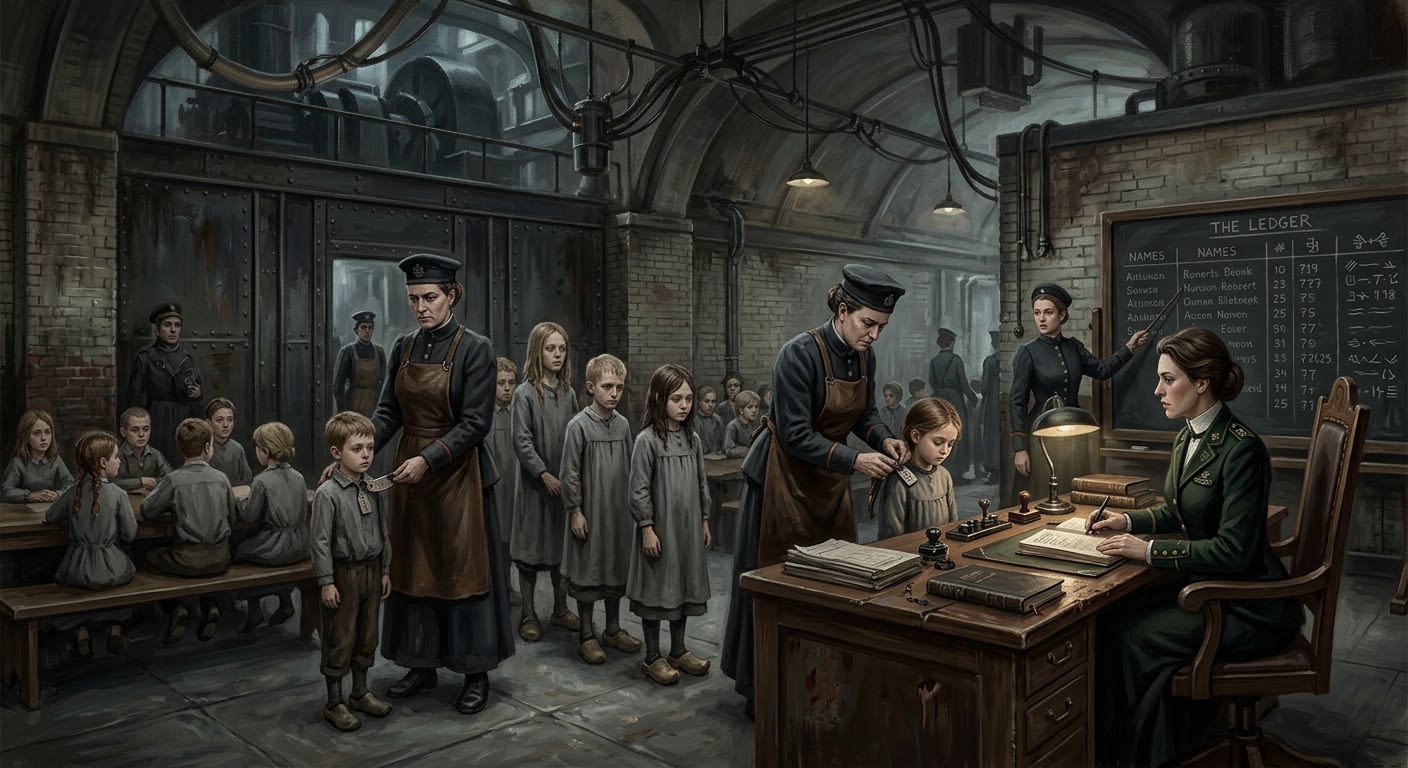
Administrative Recovery
The state calls it custody because theft has poor margins
Administrative Recovery is Mercy's washed name for taking unregistered children, renaming them, tagging them, and teaching the Ledger to stand where a family stood.
Codex Ref. XIII.1.02-159
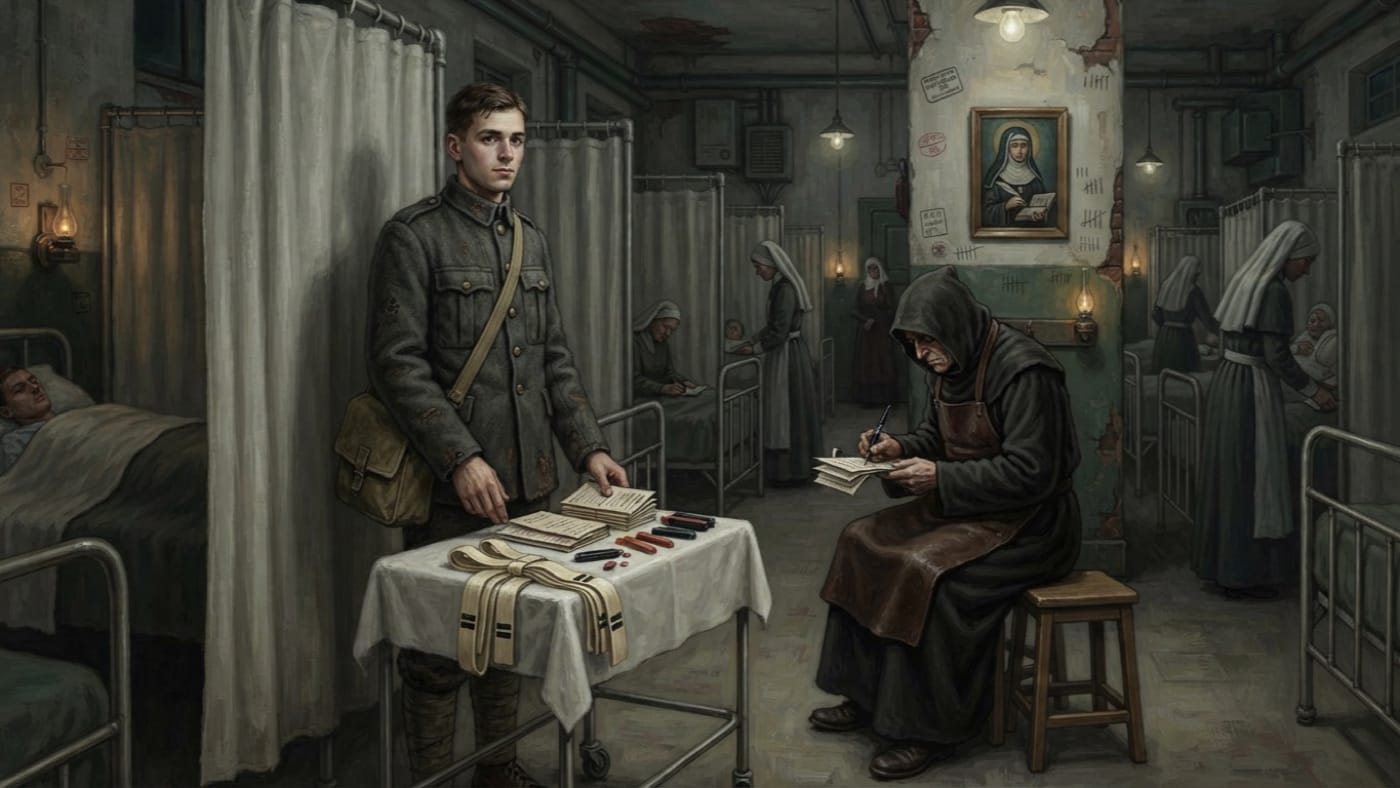
Bedside Runner
Close enough to hear everything, junior enough to bear the blame
The Bedside Runner carries ribbons, wax and forms for terminal confessions. The Bureau of Mercy's entry rank hears everything, seals nothing and supplies the second stool.
Codex Ref. XII.12.02-001
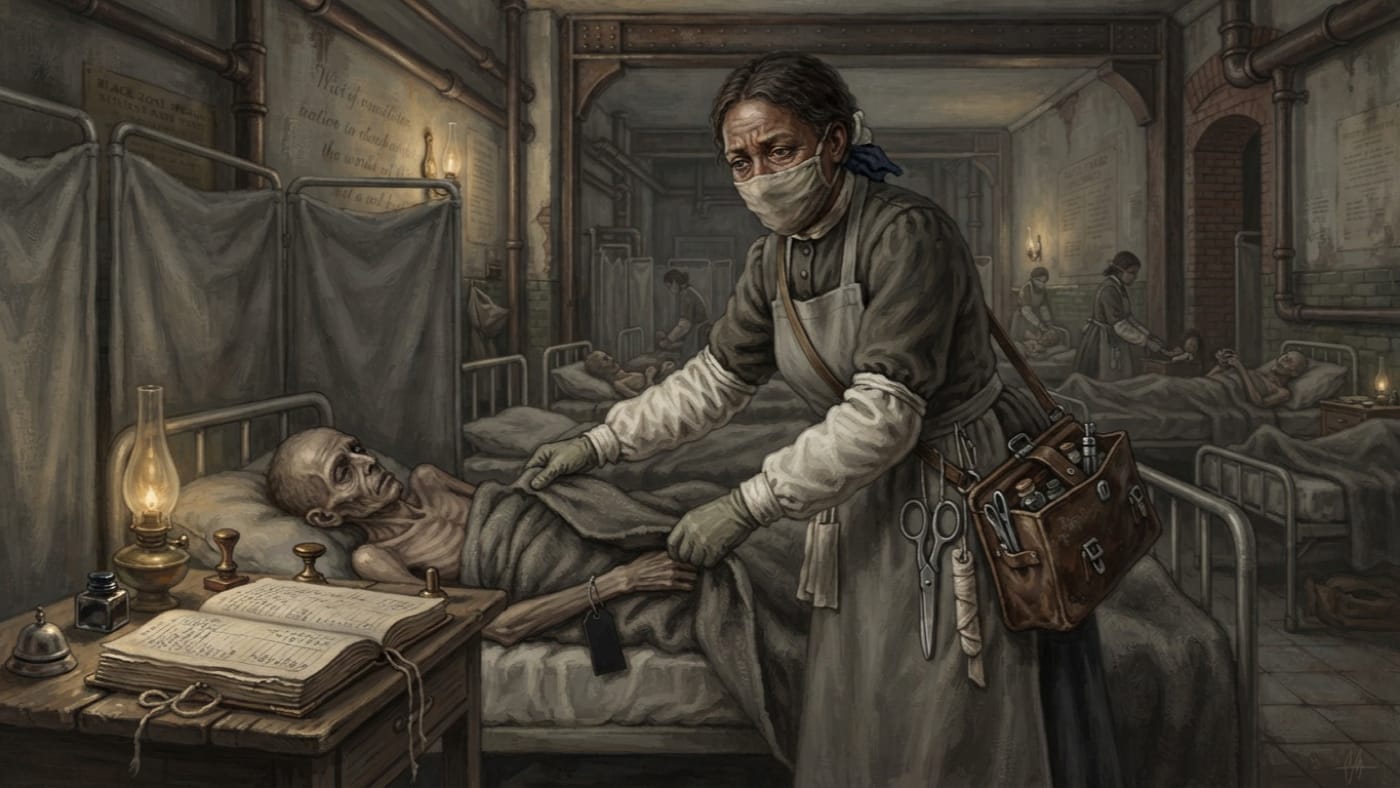
Black-Zone Specialist
Behind the screen, every kindness needs a signature
The Black-Zone Specialist serves Mercy Ward patients classified as terminal, contagious, anomalous, inconvenient, or beyond allotment. Every kindness needs a signature; every death must balance the ledger.
Codex Ref. XII.6.04-002
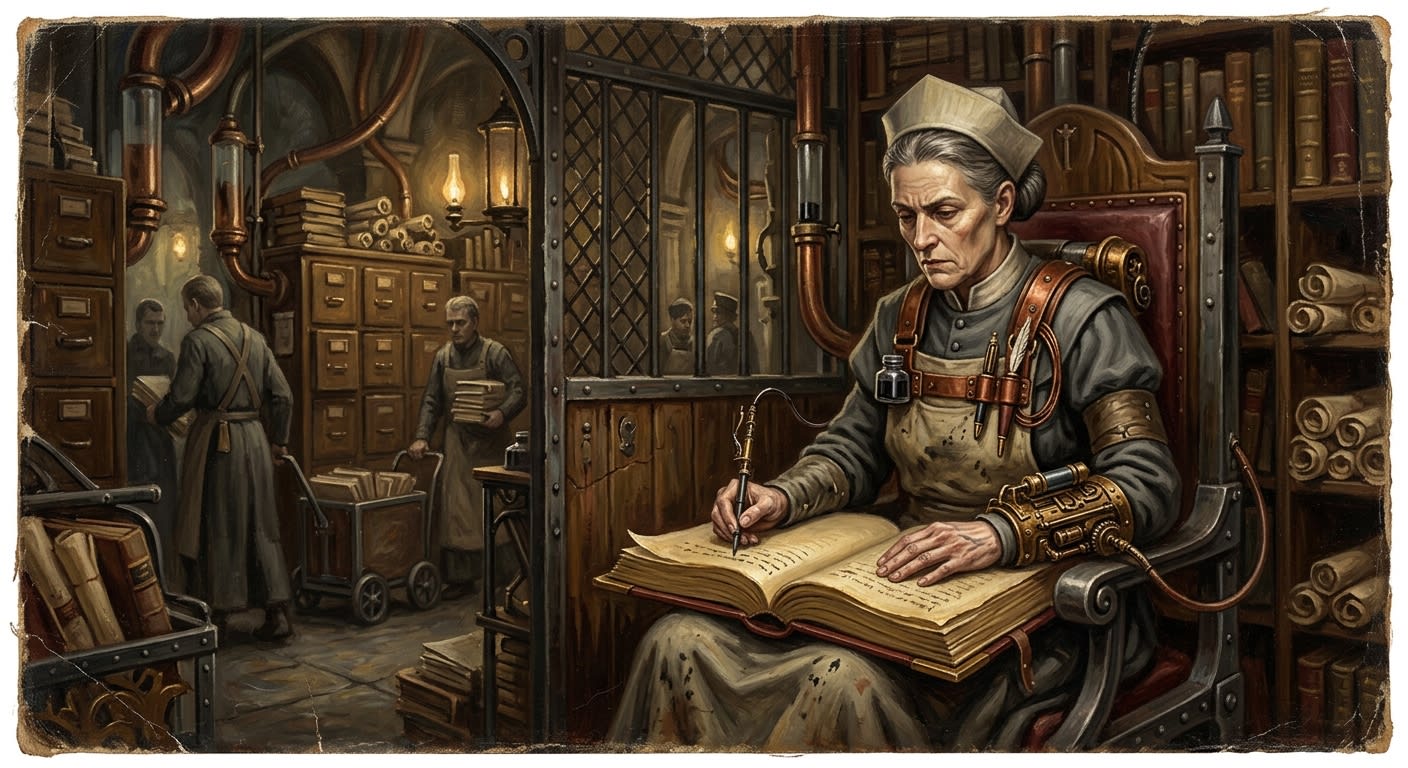
Blessed Vellum-Anna
The quiet quill that made mercy admissible before it made it kind
Blessed Vellum-Anna is the unauthenticated but indispensable patron of Deathbed Confession Harvesters, where last breaths become comfort, evidence, and paperwork.
Codex Ref. III.2.01-106
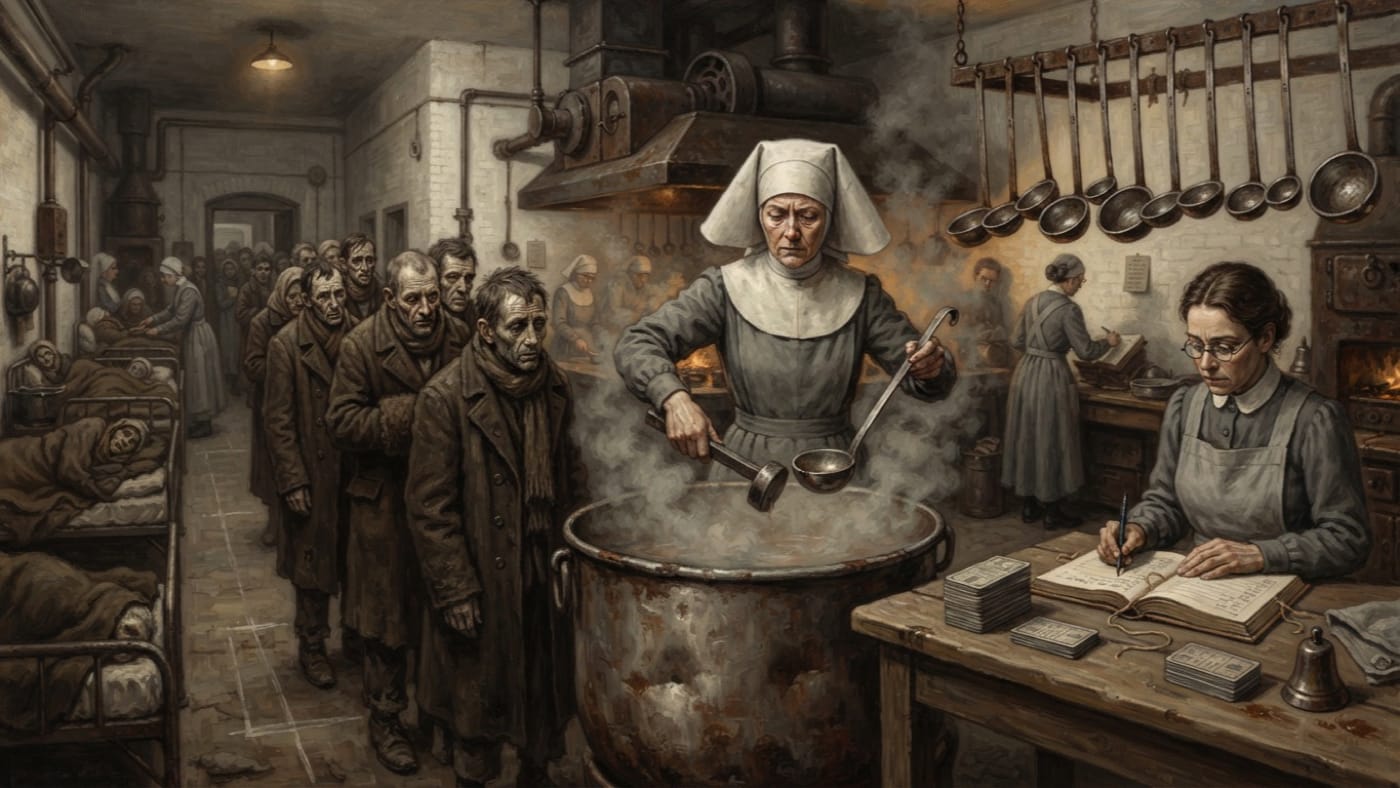
Blessing of the Ladles
Once a year the Church kisses the ladles; the measure remains fixed
An A.S. 201 survey of Saint Marrow's Mercy-house feast: ladles washed, counted, kissed and struck; the bowl is full, provided the hunger is registered.
Codex Ref. XIII.1.89-201

Bloodline Hawks
A clean name cannot silence the family the child remembers
The Bloodline Hawks distrust clean names: Registrars and Root assessors who turn inherited gestures, forbidden songs, and remembered parents into lineage flags.
Codex Ref. XI.1.05-002
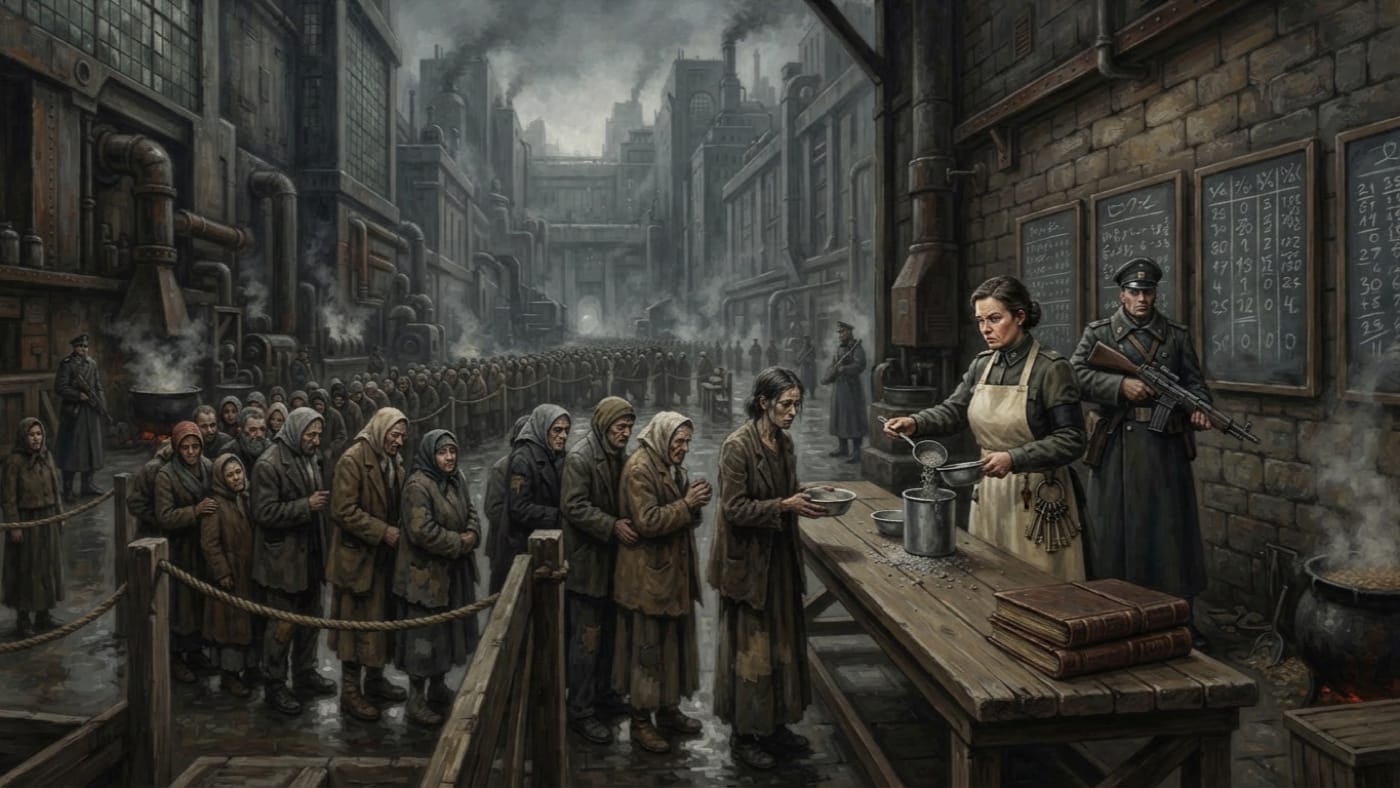
Breadfire Week
The ledgers burned; the guards remained
An A.S. 201 survey of Breadfire Week: ration halls burned in three unnamed bastion cities, records went with them, and the Mothers of Plenty gained guards and enforcement authority. The year remains disputed; the queue remains governed.
Codex Ref. VII.8.10-337
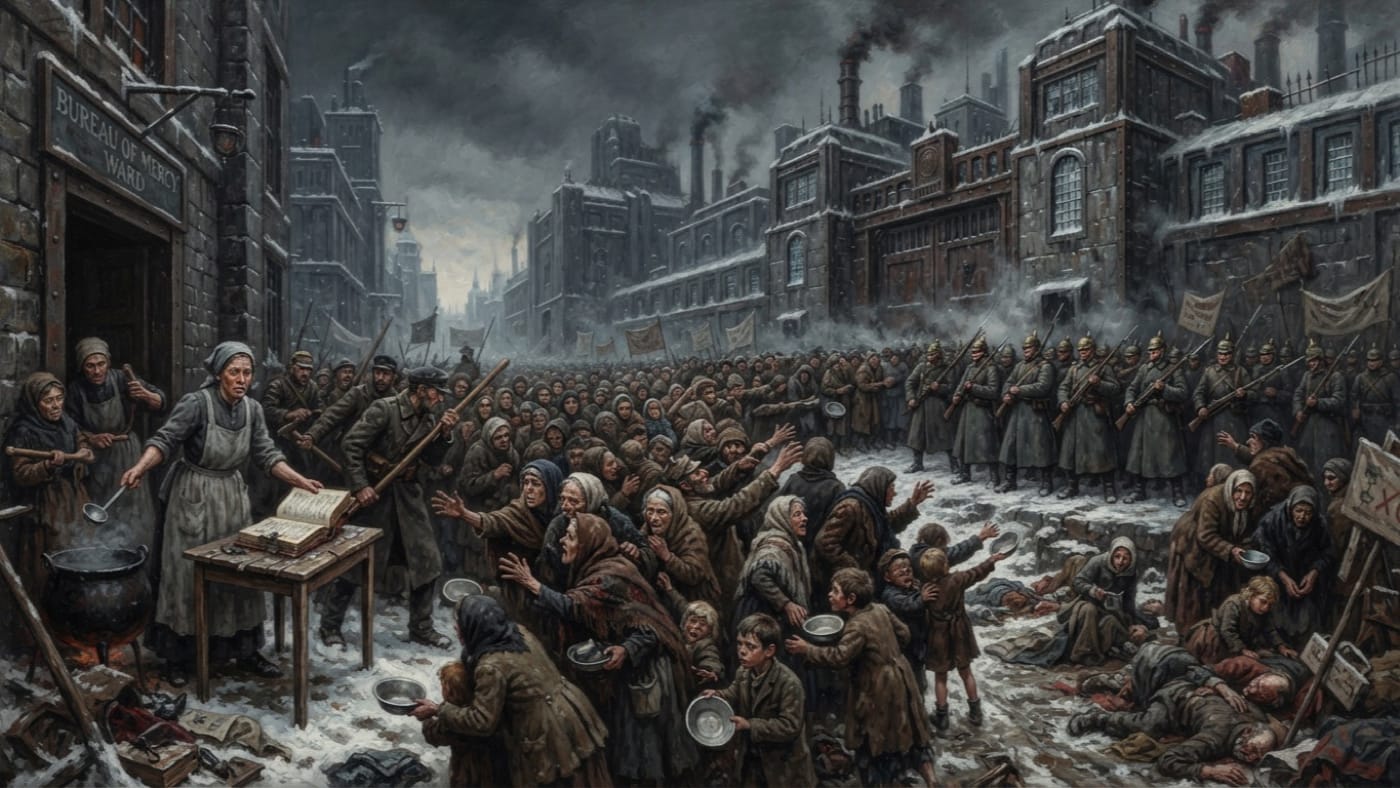
Broth Riots of A.S. 112
The hungry approached the granary; Mercy opened a ledger
The Broth Riots of A.S. 112 lasted eleven days: three hungry garrison populations sought grain; War supplied rifles, Purity arrests, and Mercy the Ledger Laws.
Codex Ref. VII.8.10-112
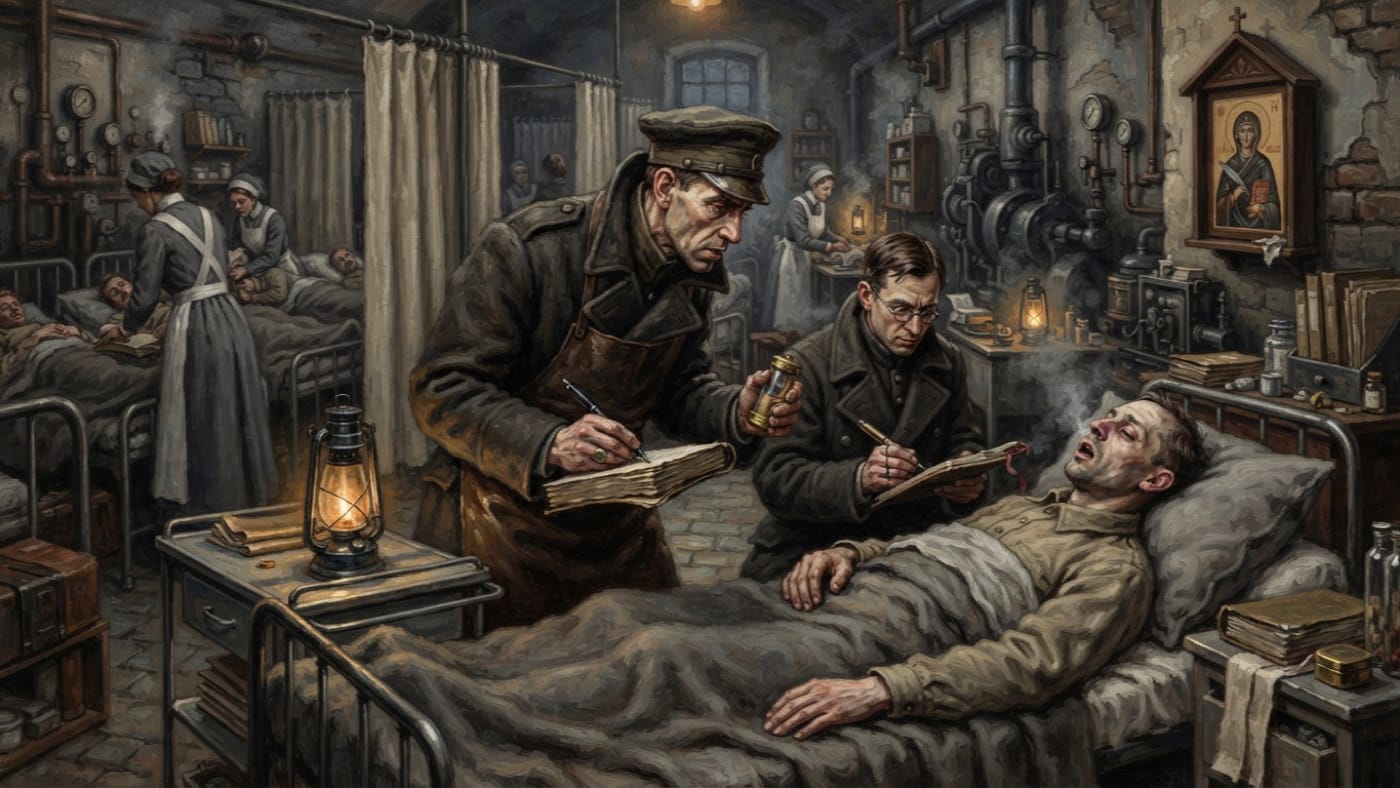
Butchers
Names before breath fails
The Butchers are information-first Deathbed Confession Harvesters, extracting names before comfort under the common seal. Their questions are sharp; their membership is unrecorded.
Codex Ref. XII.12.03-001
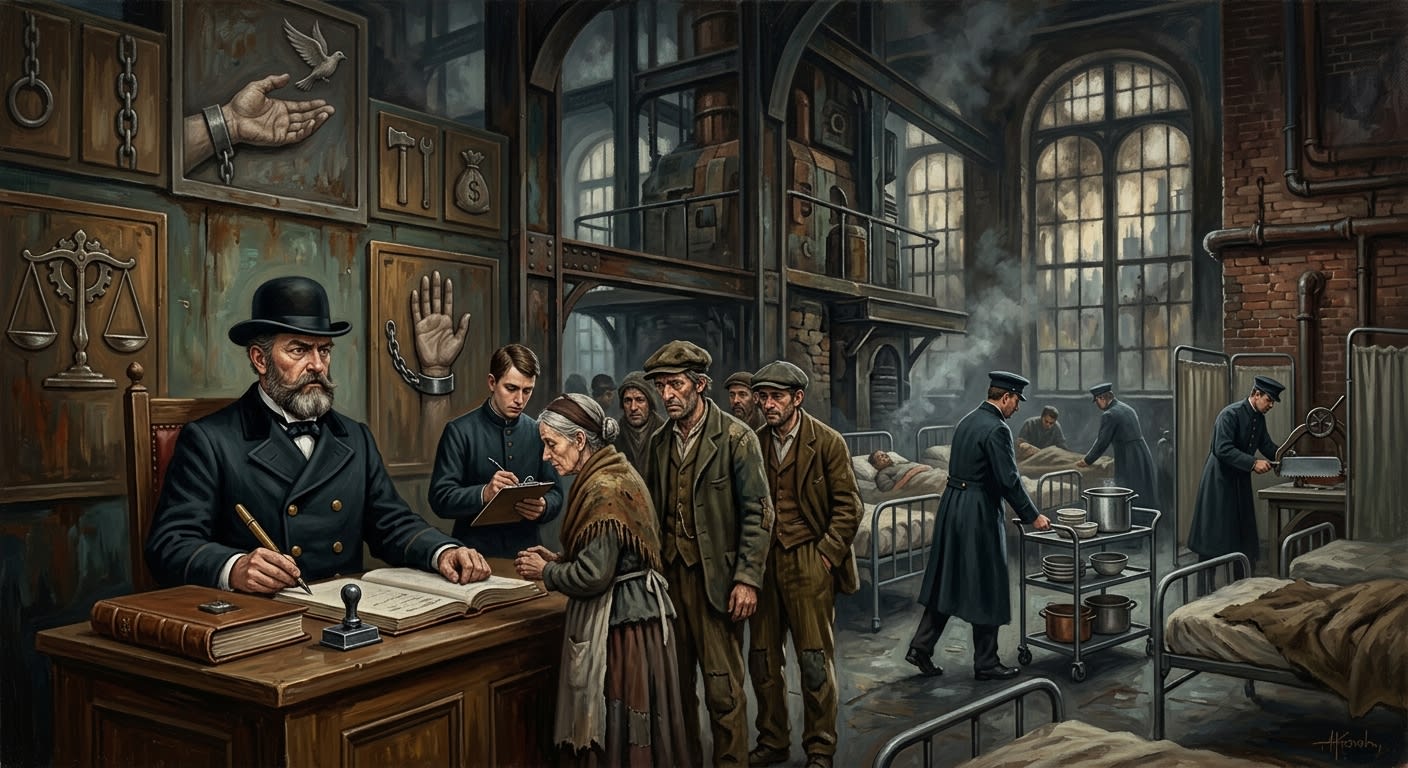
Civic Triage Tribunal
The court where wounds learn their price before they heal
Marrowgate's Civic Triage Tribunal turns beds, saws, broth, labour, debt, and death into rulings; mercy enters only after allocation.
Codex Ref. XIII.1.88-083
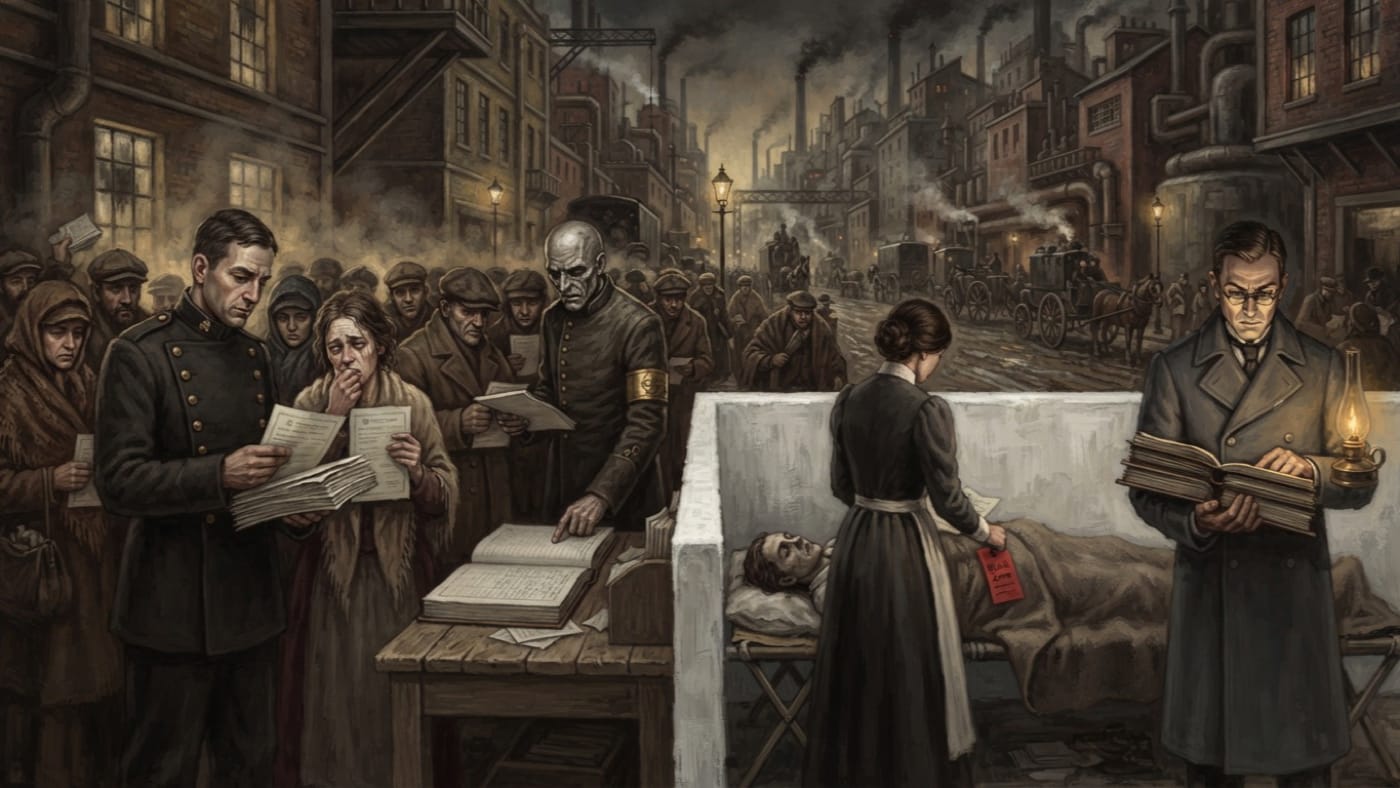
Clean Paper Plague of A.S. 199
The paper was clean. The patient was dying.
In A.S. 199, forged health clearances crossed Marrowgate's cordons while certified patients died. The ensuing audits exposed a system that trusted the seal more readily than the sick.
Codex Ref. VII.4.20-199
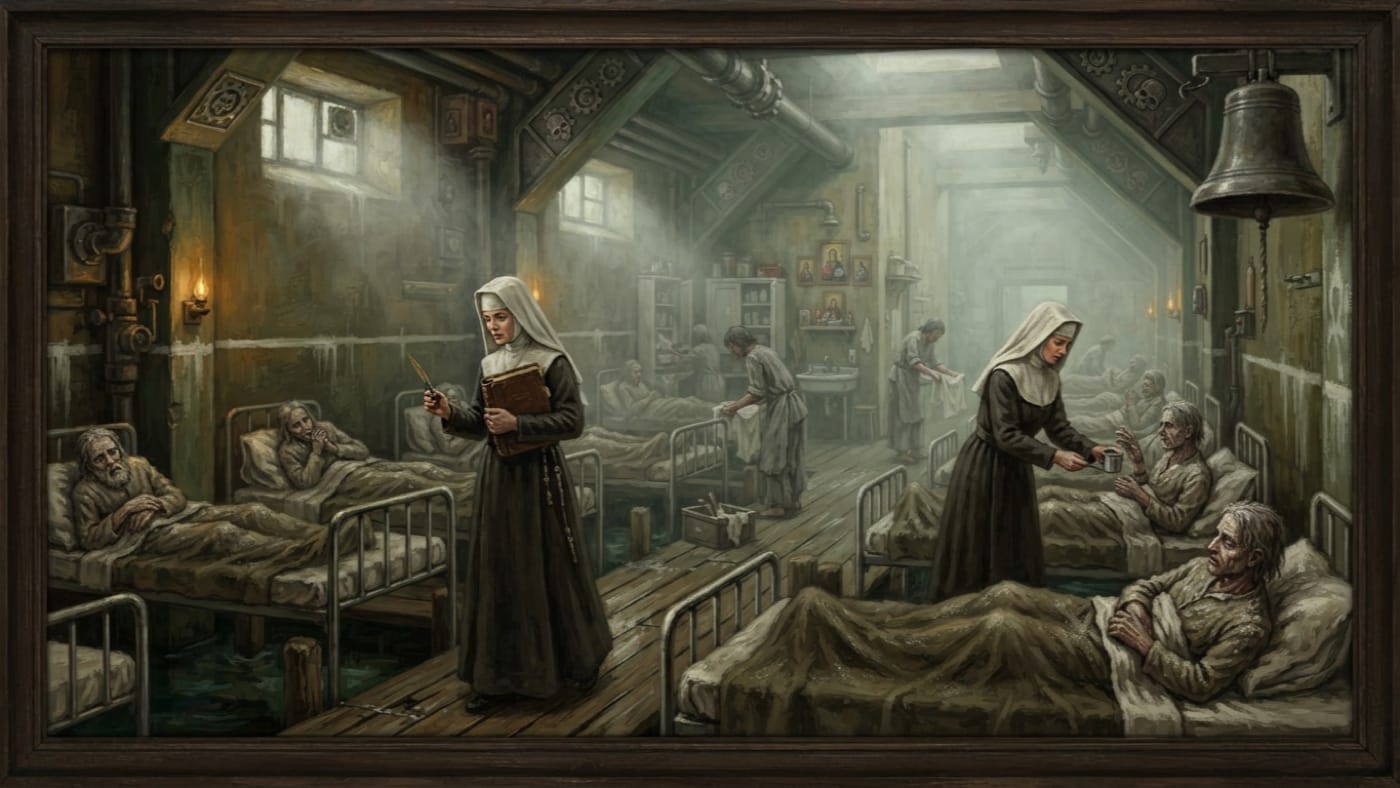
Crumble Ward
The casks leave clean; the people remain under observation.
Mournwater's quarantine district receives the dust-sick, debt-bound washers and inconvenient witnesses. The Sisters keep the treatment ledgers; observation lasts indefinitely.
Codex Ref. II.2.03-004
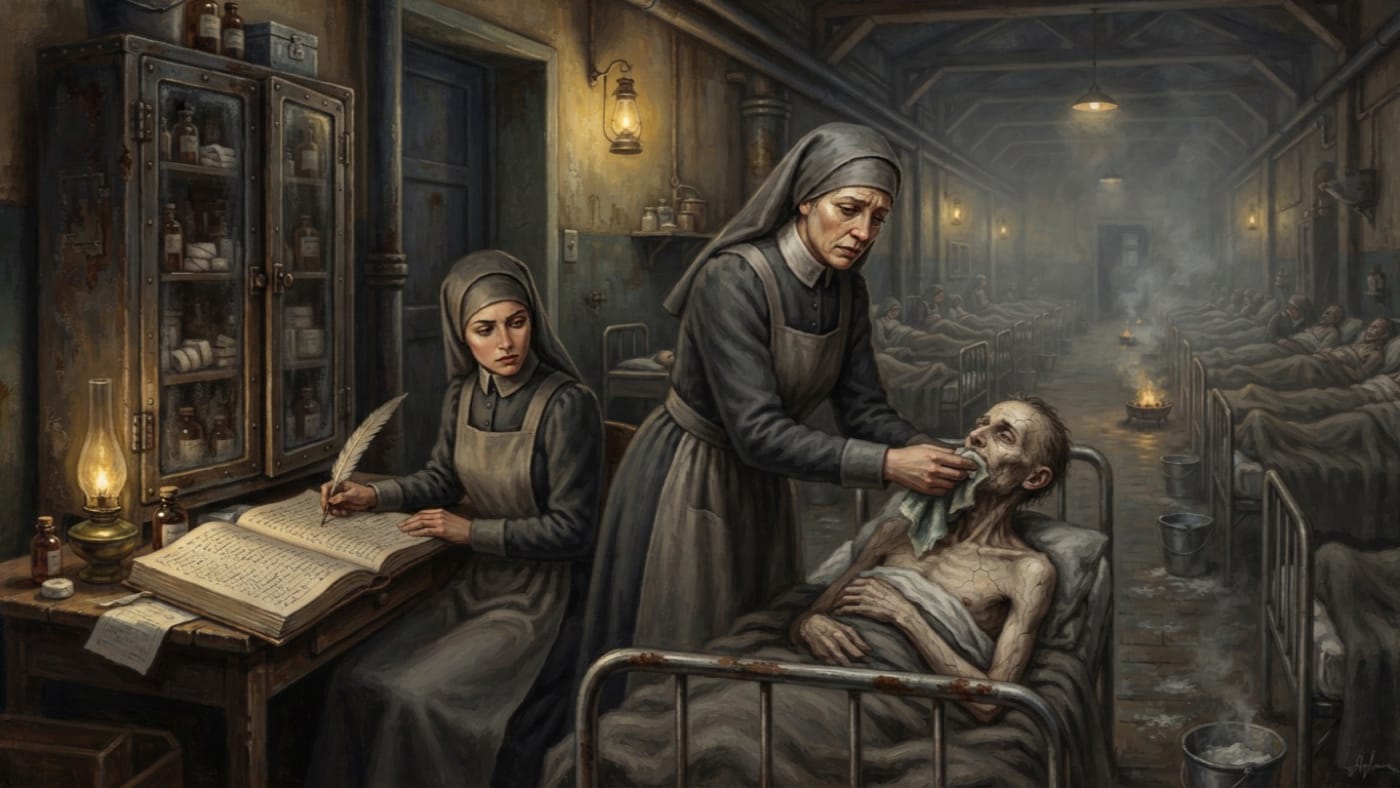
Crumble Ward Sisters
The cupboard holds mercy; the ledger keeps the patient
The Crumble Ward Sisters tend Mournwater's dust-sick, control the medicine cupboard and keep the ledger that decides who remains a patient and who becomes evidence.
Codex Ref. VIII.6.07-001

Deathbed Confession Harvester
The quill outlasts the patient; the Record outlasts both
Two thousand four hundred scribes posted at the bedsides of the dying, ensuring no death in Synod jurisdiction passes unfiled. The Record does not grieve. The Record does not wait. The Record simply continues.
Codex Ref. XII.12.01-001
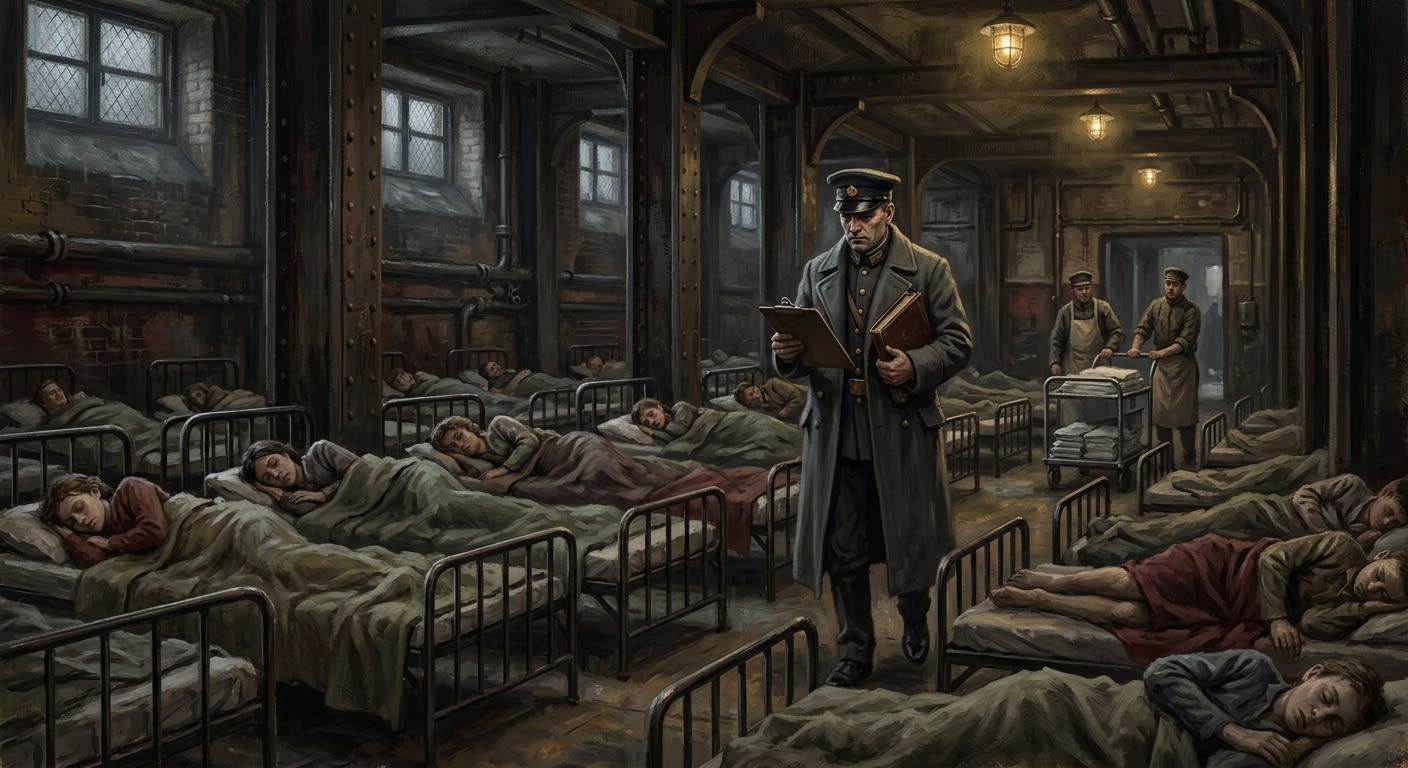
Dormition Canticle
Four bars, two deaf sleepers, and Mercy congratulated itself
Bureau-approved four-bar lullaby composed in A.S. 134 to replace criminalized comfort; its great triumph was stillness mistaken for sleep.
Codex Ref. XIII.1.86-134
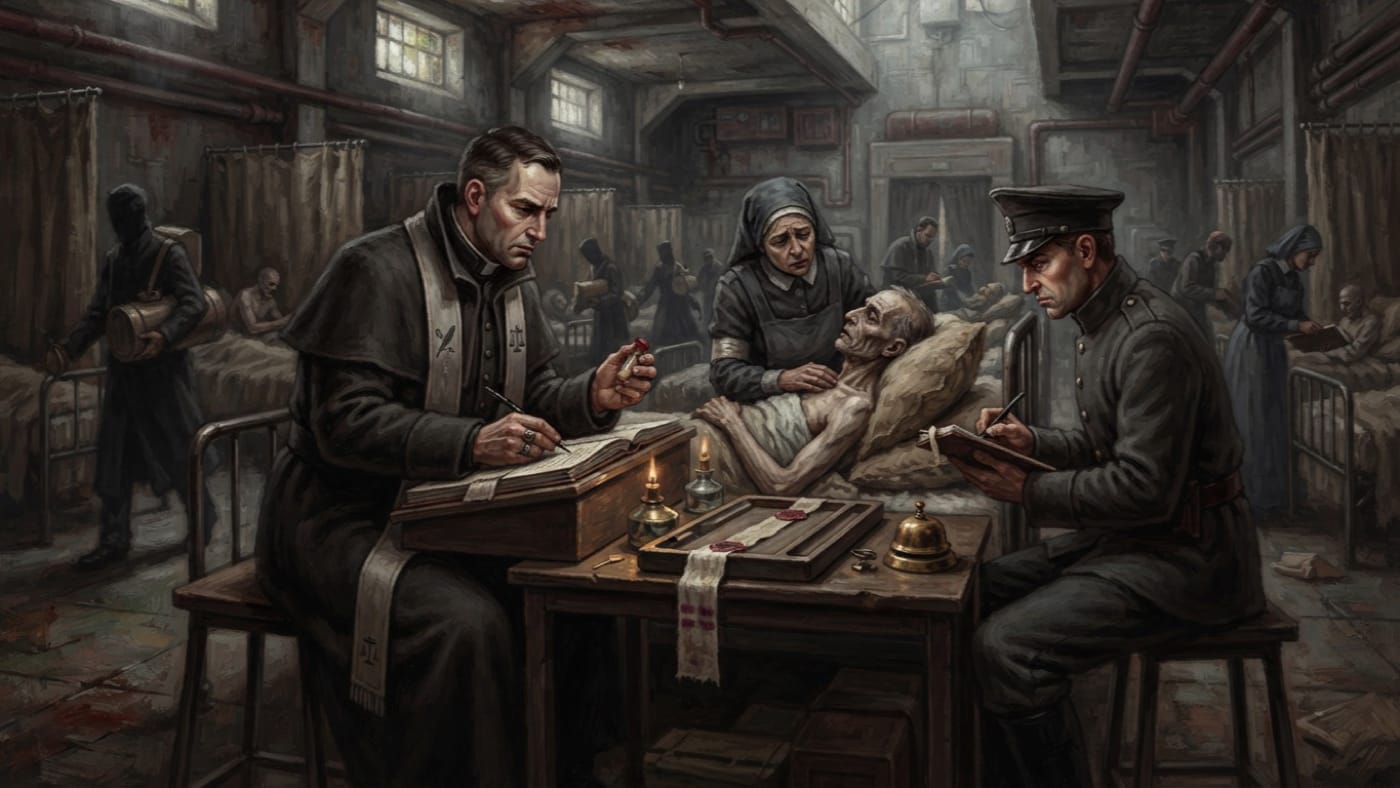
Double-Witness Protocol
Two seals for the truth, two names for the blame
After the A.S. 134 Mercy Ward Purge, terminal confessions require a second official, a countersigned ribbon, a separate bell-time entry and two seals. Mercy now has two names to blame.
Codex Ref. XIII.1.98-134
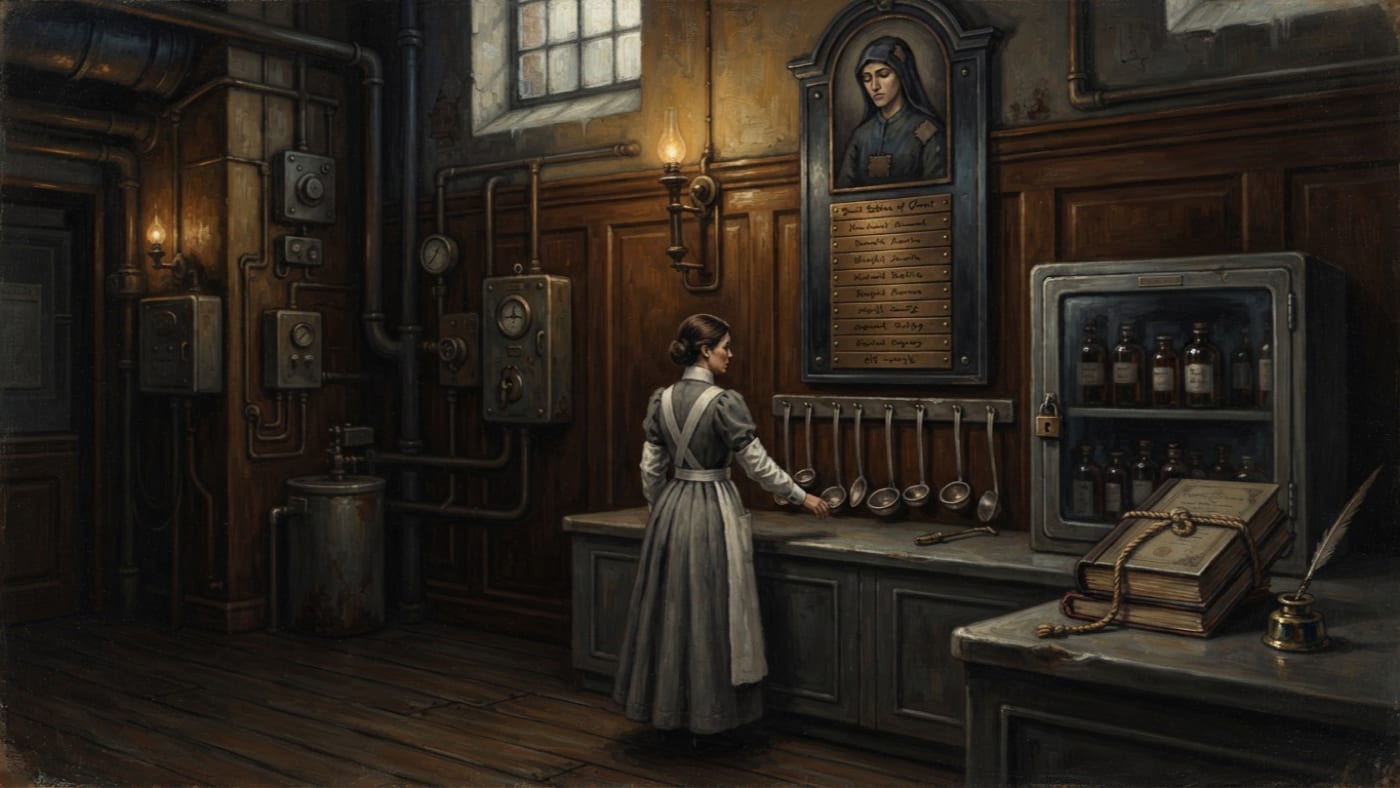
Eleven Bound list
Eleven bodies bound, seven witnesses counted, and Mercy's lesson in the ledger
The Eleven Bound remembers Sabina's reported bandaging recipients. Mercy recites their names; the seven final witnesses remain a different count.
Codex Ref. VII.8.02-002
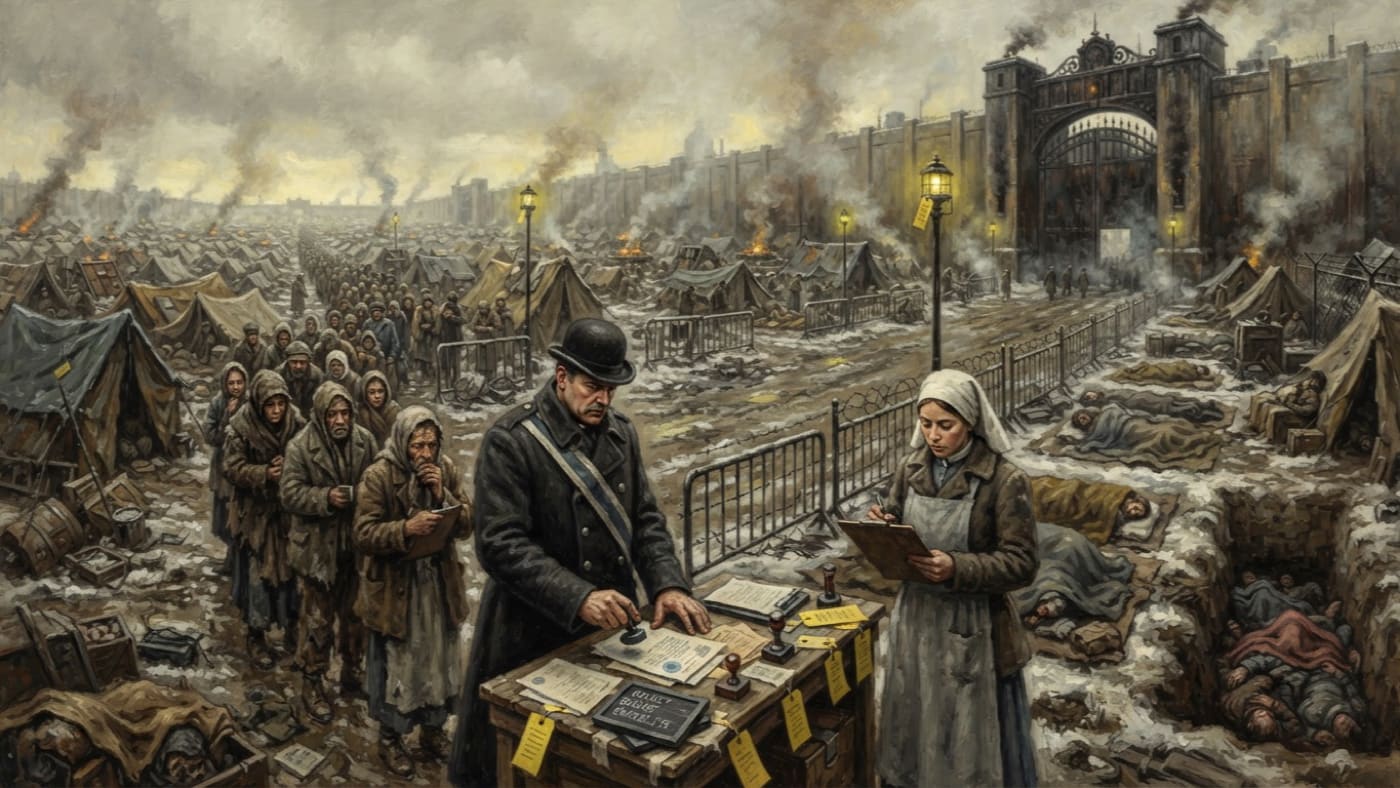
First Quarantine Winter
The year went missing. The authority remained.
An A.S. 201 survey of the undated convoy-camp plague remembered as the First Quarantine Winter. The camps became charnel pits; the gates gained medical authority they have never relinquished.
Codex Ref. VII.8.10-1094
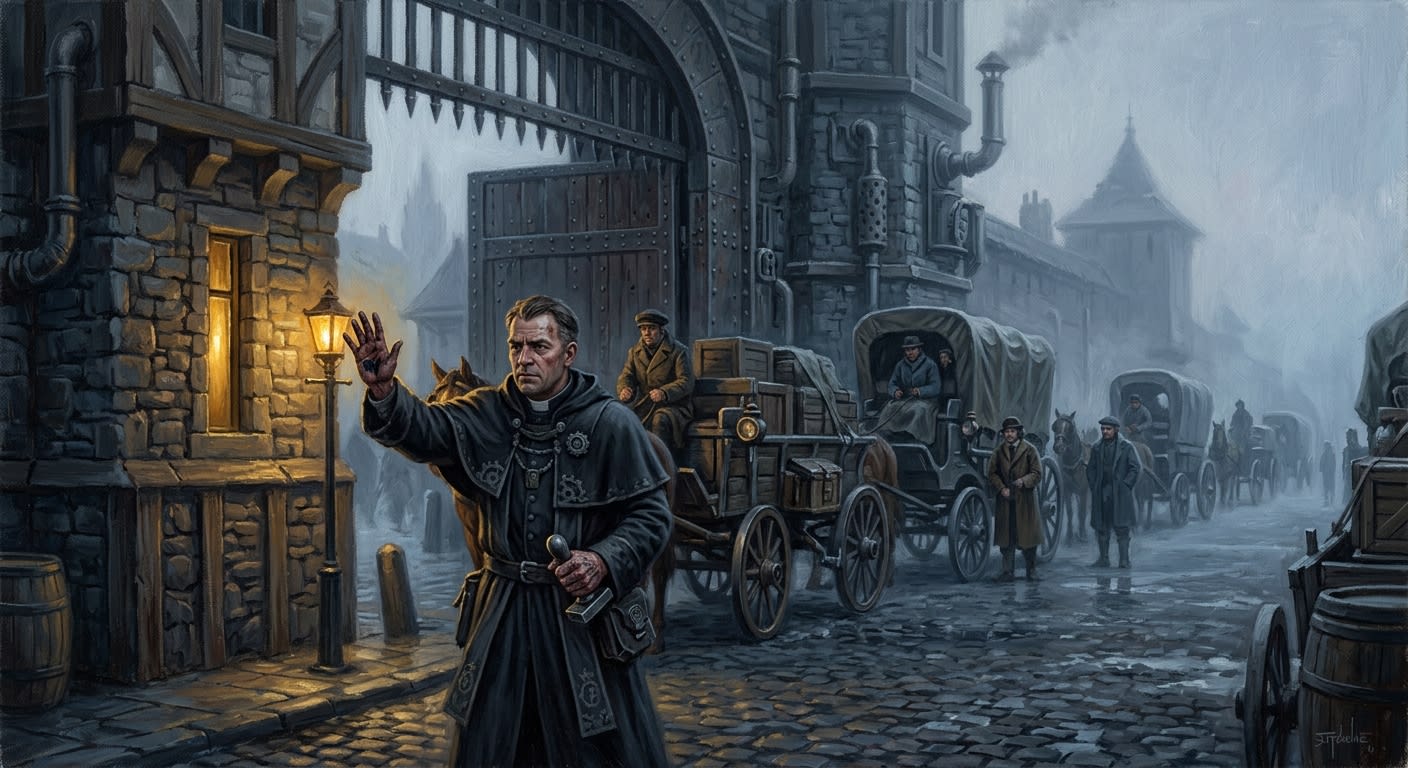
Gatewarden-Notary of Passage
The sole functionary who may halt a column of four thousand by raising one ink-stained hand and asking for documentation.
The Gatewarden-Notary of Passage stands at the point where all five great commodities of the war — disease, heresy, desertion, contraband, and ambition — must be sorted, weighed, stamped, and either admitted or refused. The Gate does not care about the man.
Codex Ref. XII.7.04-001
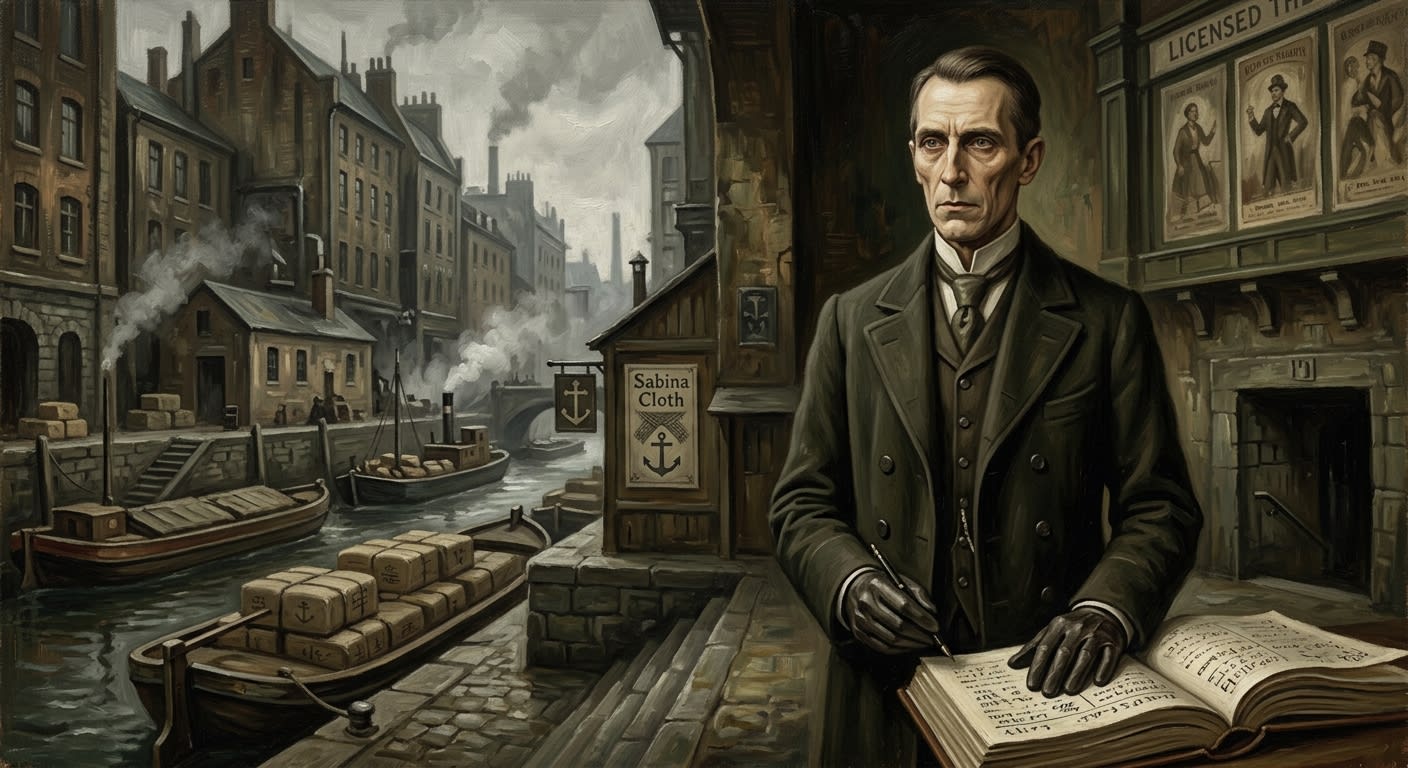
Ghent
The canal city where water keeps copies and loyalty learns to smuggle
Ghent is the Synod's wet ledger in Flanders: canal trade, Records quays, Sabina cloth, licensed theatres, Black Ledger cells, Wormhost scars, and obedience with annotations.
Codex Ref. II.1.05-201

Glass-Speech
The city enters through the ear and leaves as obedience
Occupational condition of long-service Pillar-Keepers, beginning in tone, advancing into condemned names, and ending when the city speaks through the worker it has damaged.
Codex Ref. XIII.1.43-001
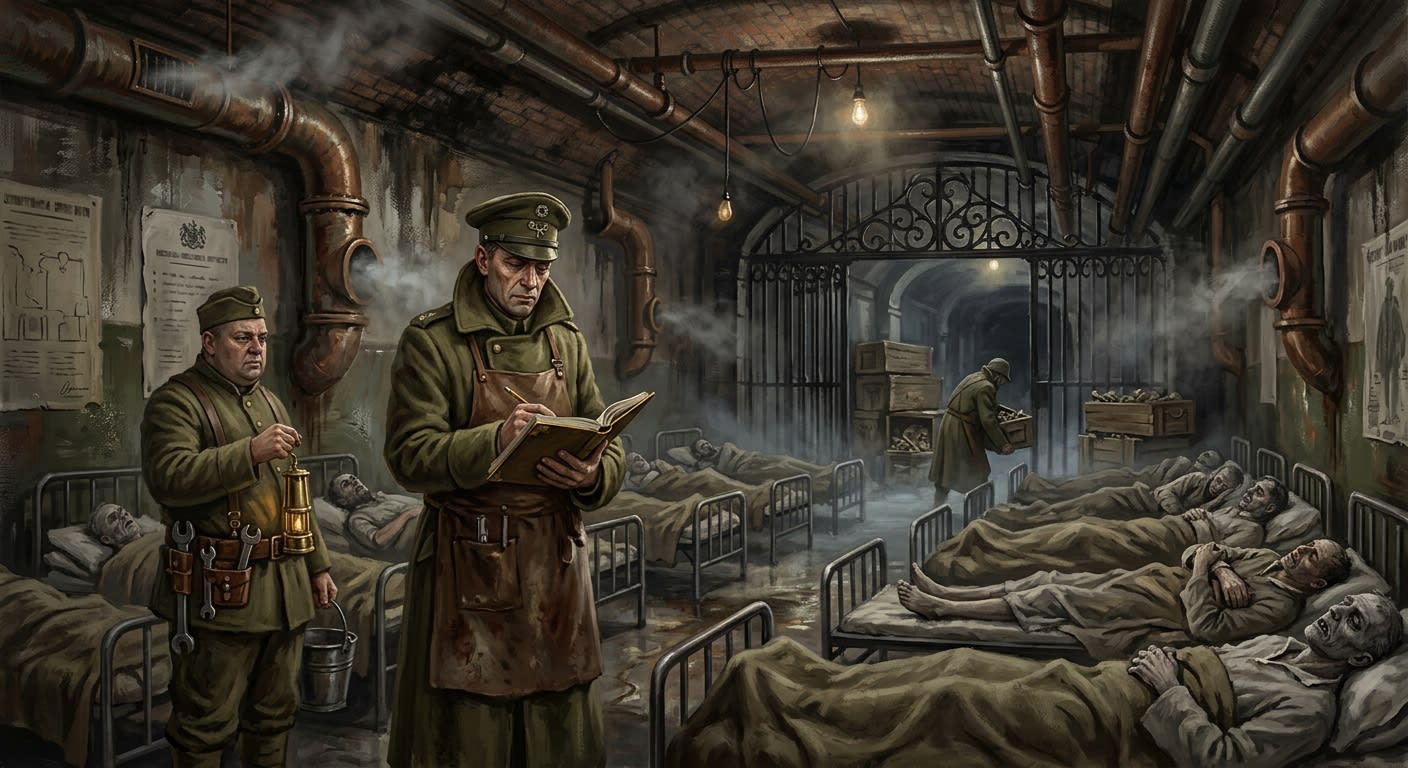
Great Plague of A.S. 78
The year Mercy learned to write before the mouth closed
The Great Plague of A.S. 78 ravaged the southern trench infirmaries and became the Lull of Names, birthing terminal confession mandates, ossuary controls, and threshold doctrine.
Codex Ref. VII.4.20-002
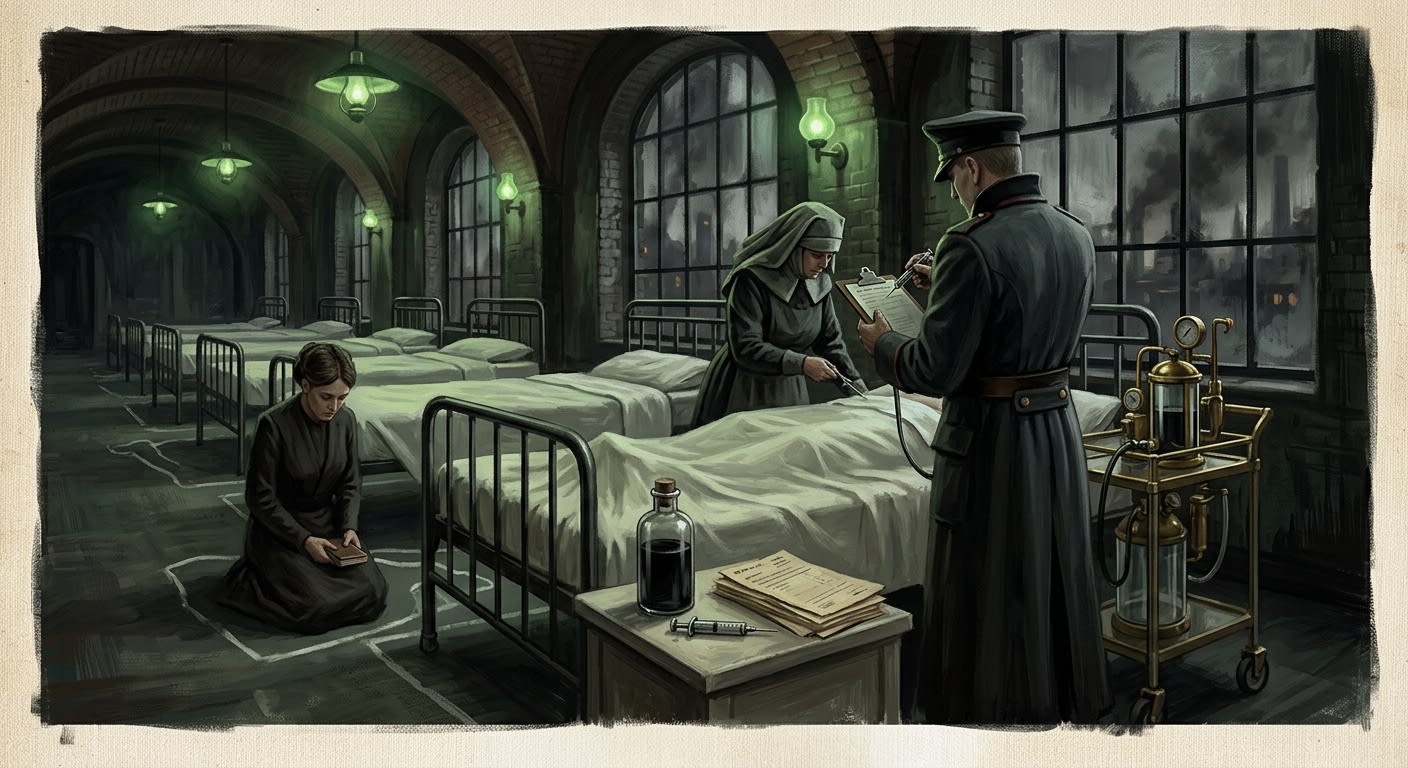
Hospices of Departure
Where Mercy warms the cup and counts the breath
The Hospices of Departure are Mercy's immaculate terminal rooms: clean linen, black elixir, family chalk-lines, final slips, and the doctrine by which the Synod makes death kind, lawful, useful, and recorded.
Codex Ref. XIII.1.88-112
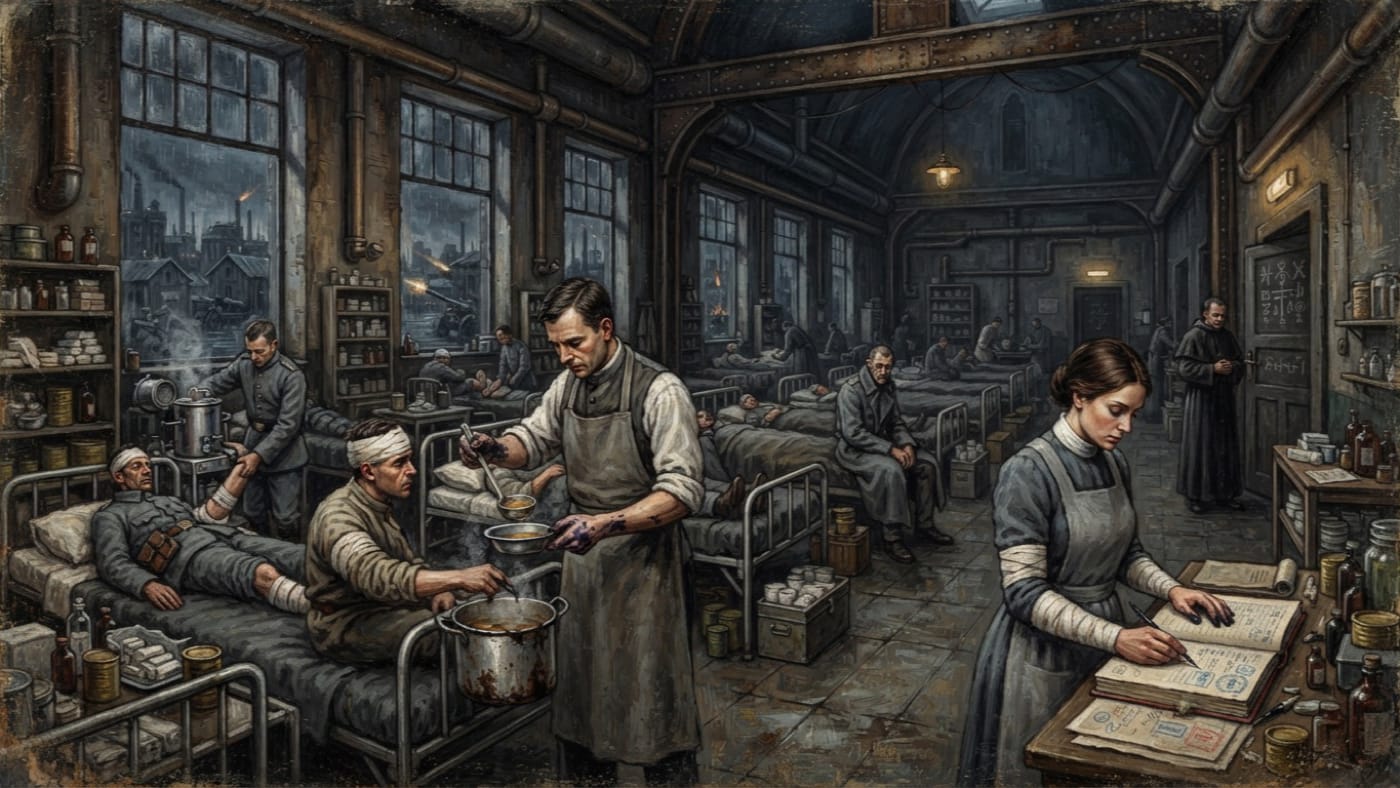
Hospital of Saint Sebastian
Where the Military City sends the wounded
Saint Sebastian tends wounded soldiers or buries them in Strasbourg's Military City. This A.S. 201 survey keeps the local record distinct from Mercy's wider machinery of care, confession and ink.
Codex Ref. II.2.10-201
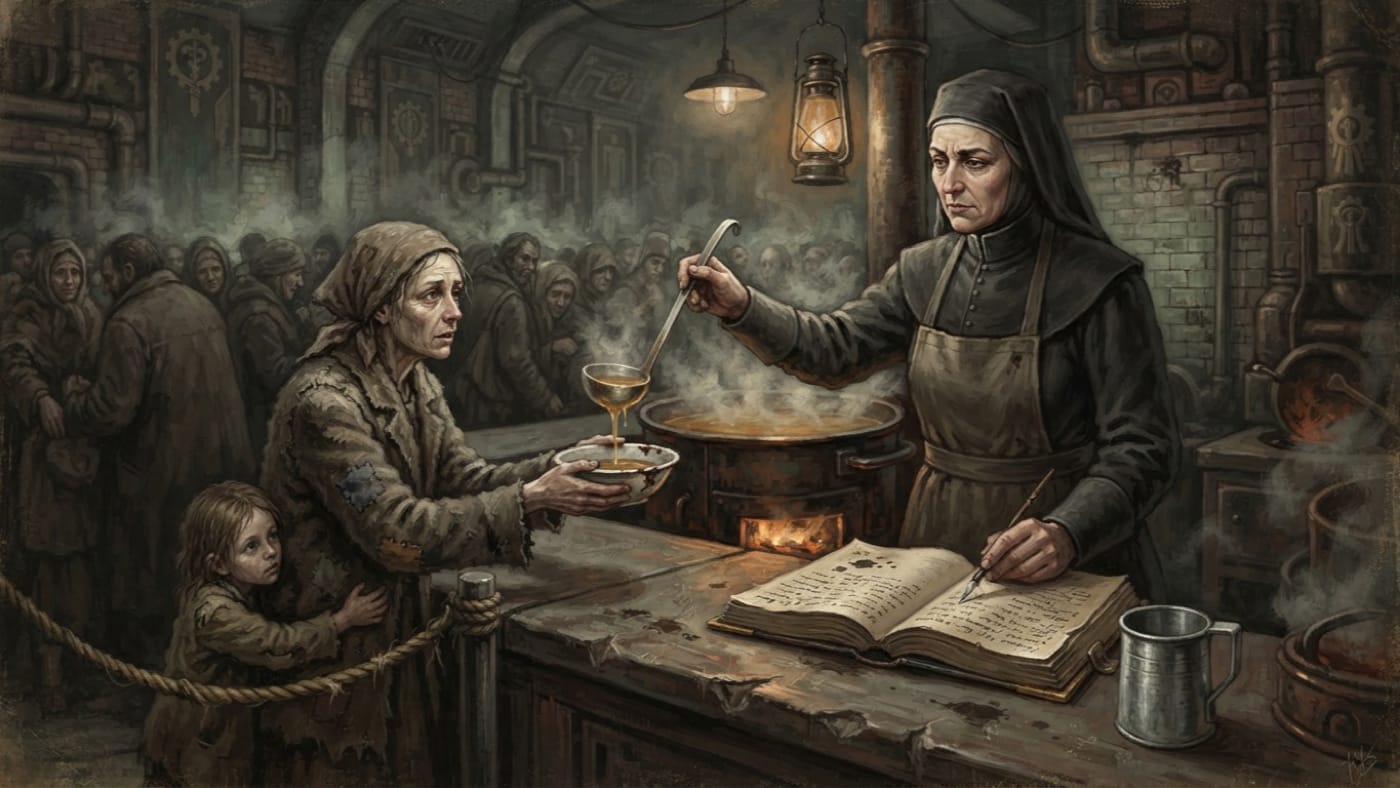
Ladle Debt
The bowl is warm; the account remains open
An extra ladle today buys an unspecified future service in a Matron's book. Mercy may leave the debt uncalled; desperation or cruelty may collect it. The broth is real. So is the name in ink.
Codex Ref. XIII.1.06-001
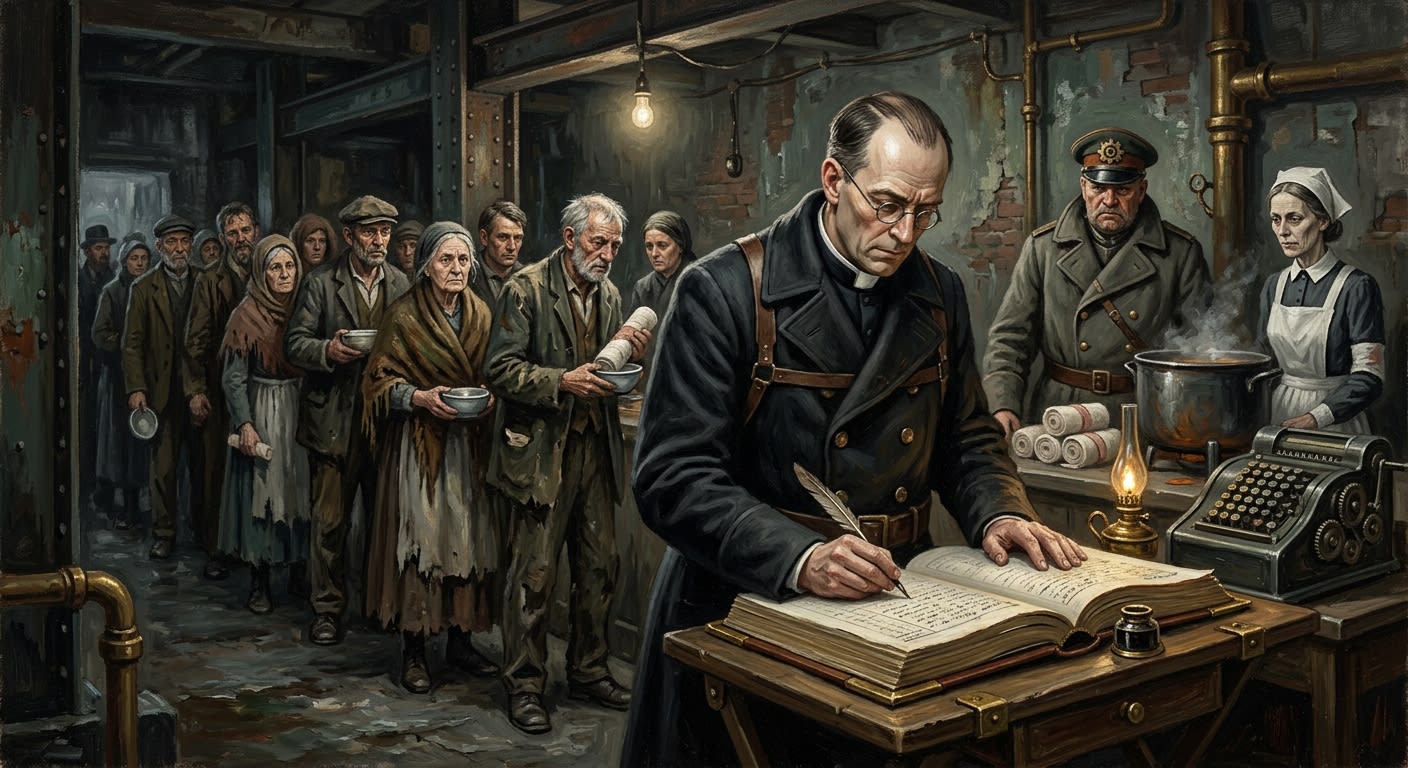
Ledger Laws
Mercy measured by the ladle, sanctioned by the noose
The Ledger Laws made mercy countable after the Broth Riots: every bowl, bandage, draught, confession, death, and useful pity entered the record before it dared call itself compassion.
Codex Ref. XIII.1.89-112
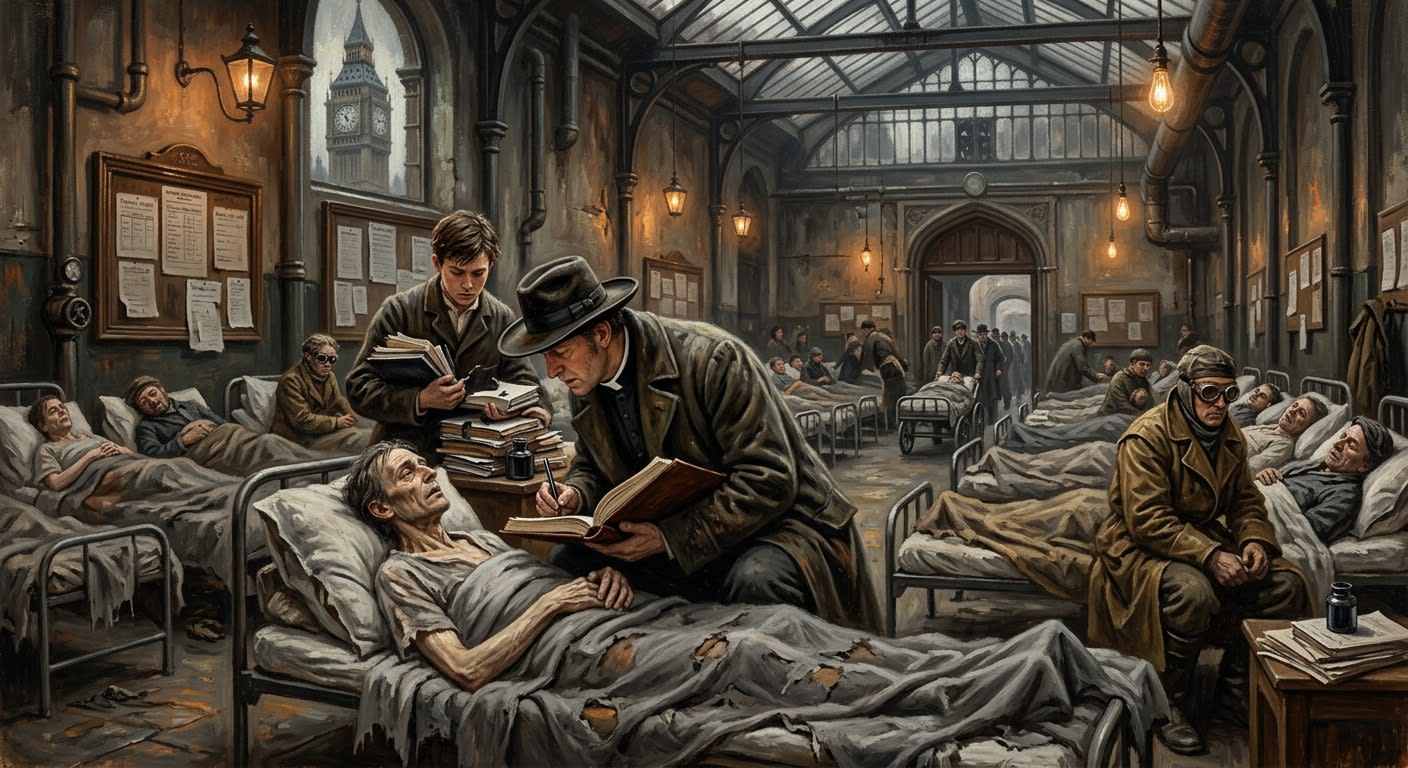
Lull of Names
The plague year when silence became a breach and the bedside became a bureau
The Lull of Names was the A.S. 78 plague-year catastrophe in which deaths in the southern wards outran transcription, birthing Standing Order 22-C and the Deathbed Confession Harvester corps.
Codex Ref. VII.8.10-022
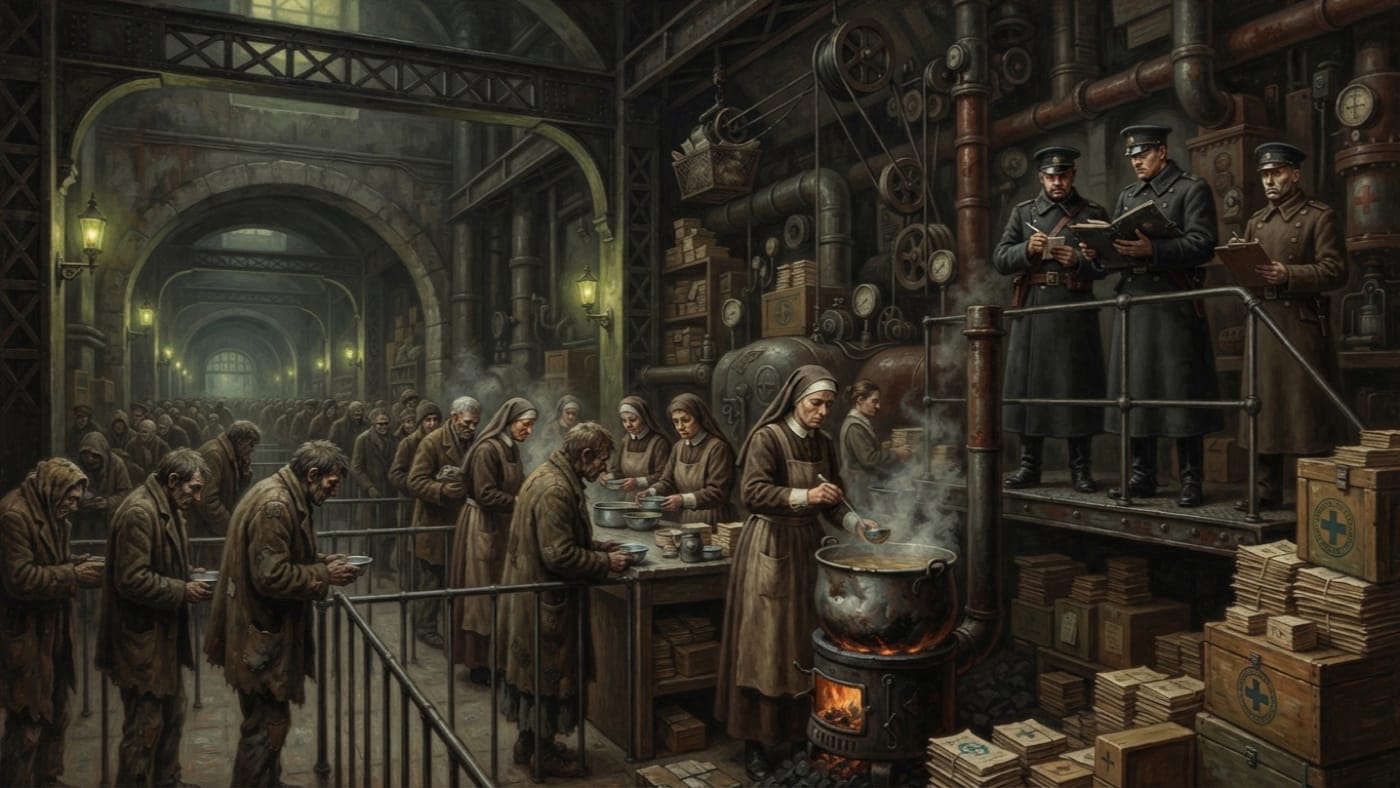
Merciful Pragmatists
Bread before ashes; auditors after bread.
A weak Synodal faction that ranks charity above purity. Commonly identified with Saint Mildred's Hospitallers, it survives because someone must feed the queues before the auditors arrive.
Codex Ref. VIII.7.01-201
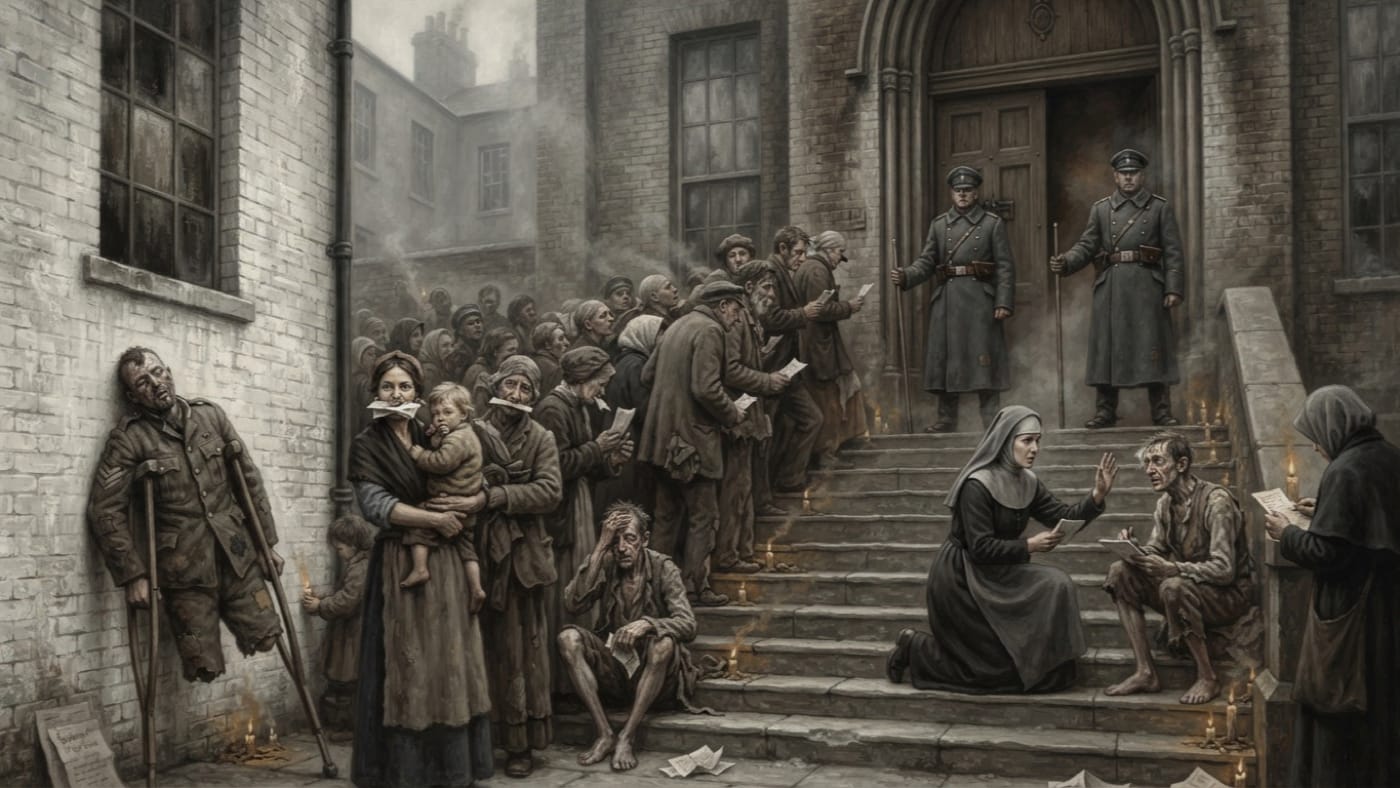
Mercy Chapel
Pain is relieved; the confession is retained
At Marrowgate's Mercy Chapel of the Unburdened, pain relief is rationed as sacrament, confessions become leverage, and sanctuary lasts as long as the chapel finds it useful.
Codex Ref. II.2.06-201
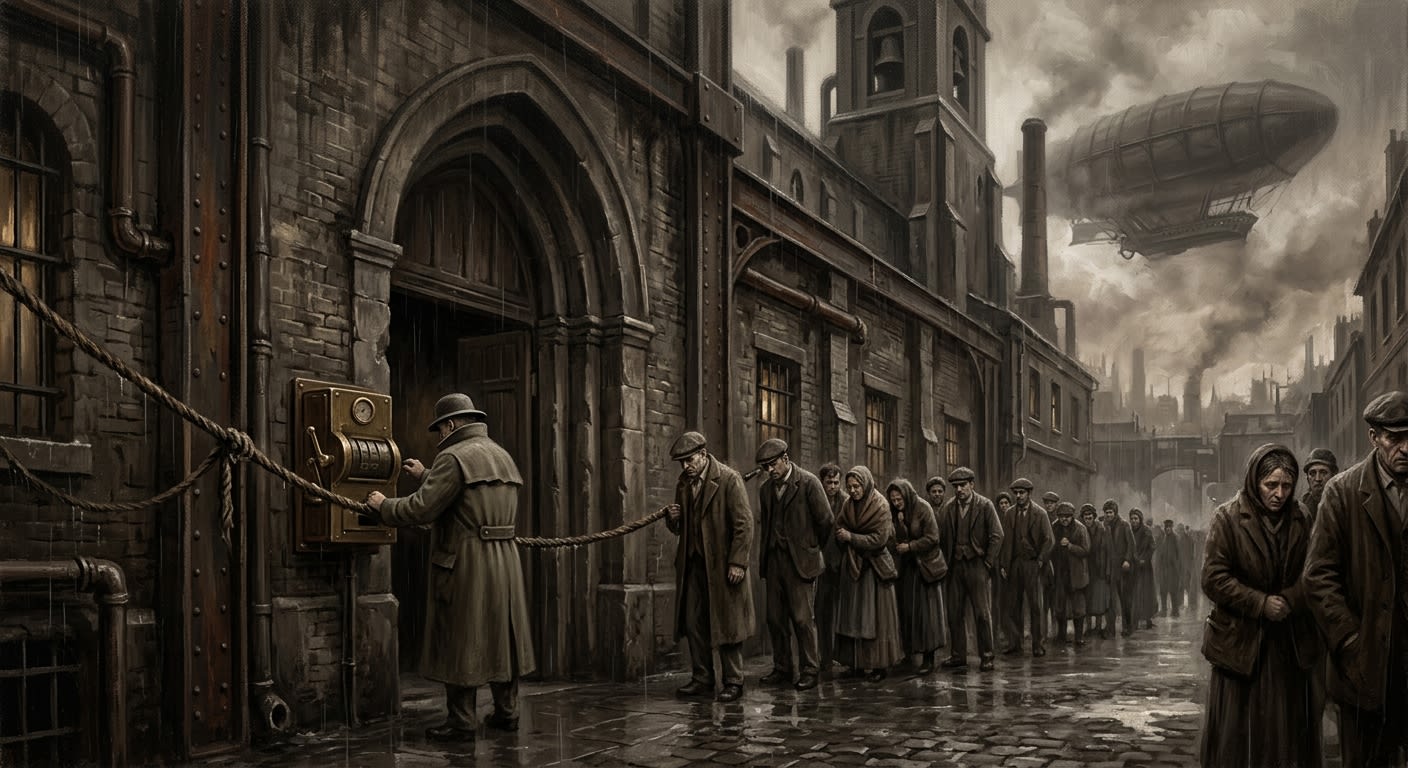
Mercy Line
The rope where grief learned its tariff schedule
The Mercy Line began as a left-hand rope outside Saint Morin's chapel in A.S. 157, where grief discovered that even mercy could be accelerated.
Codex Ref. II.2.06-157
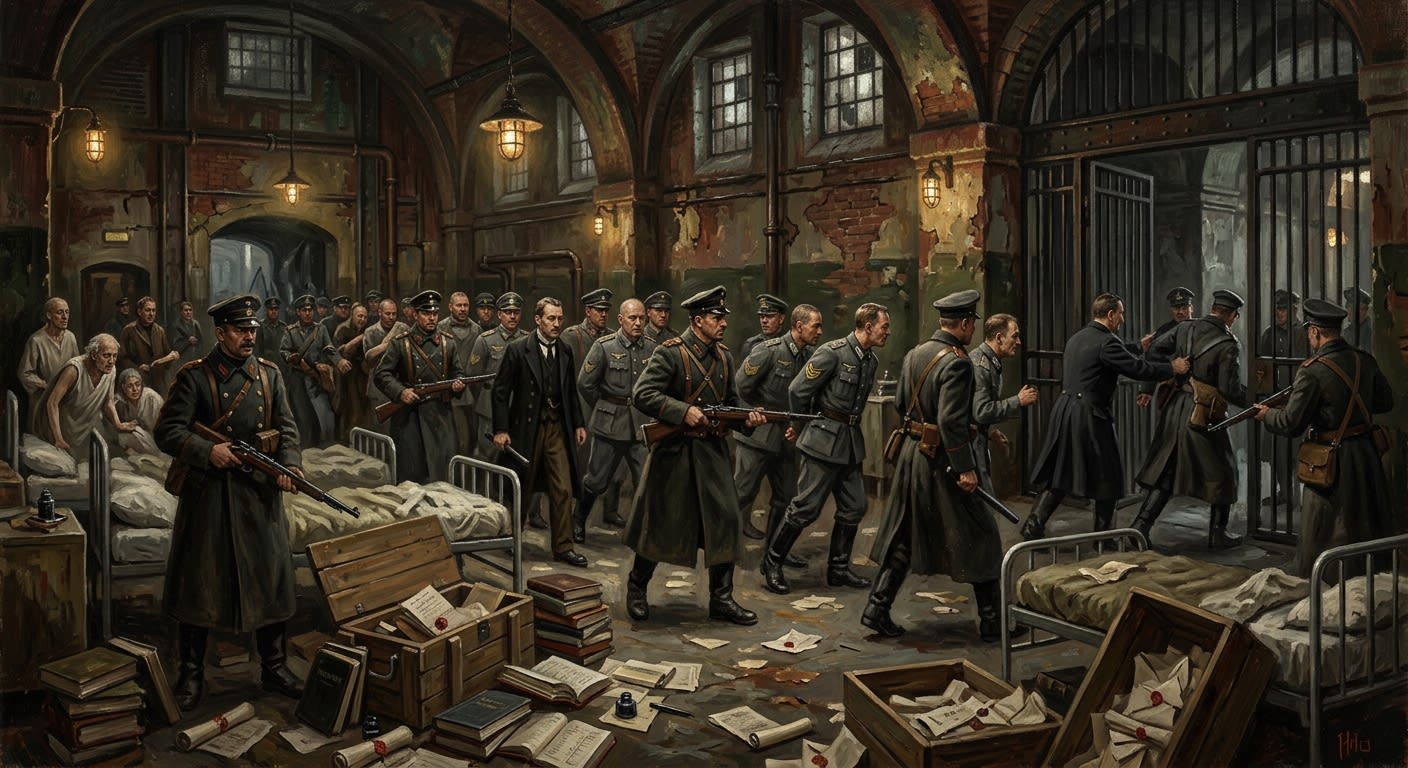
Mercy Ward Purge of A.S. 134
The year last words became contraband unless properly priced by authority
The Mercy Ward Purge of A.S. 134 exposed the sale and alteration of terminal confessions across Rhineland wards.
Codex Ref. VII.8.10-023
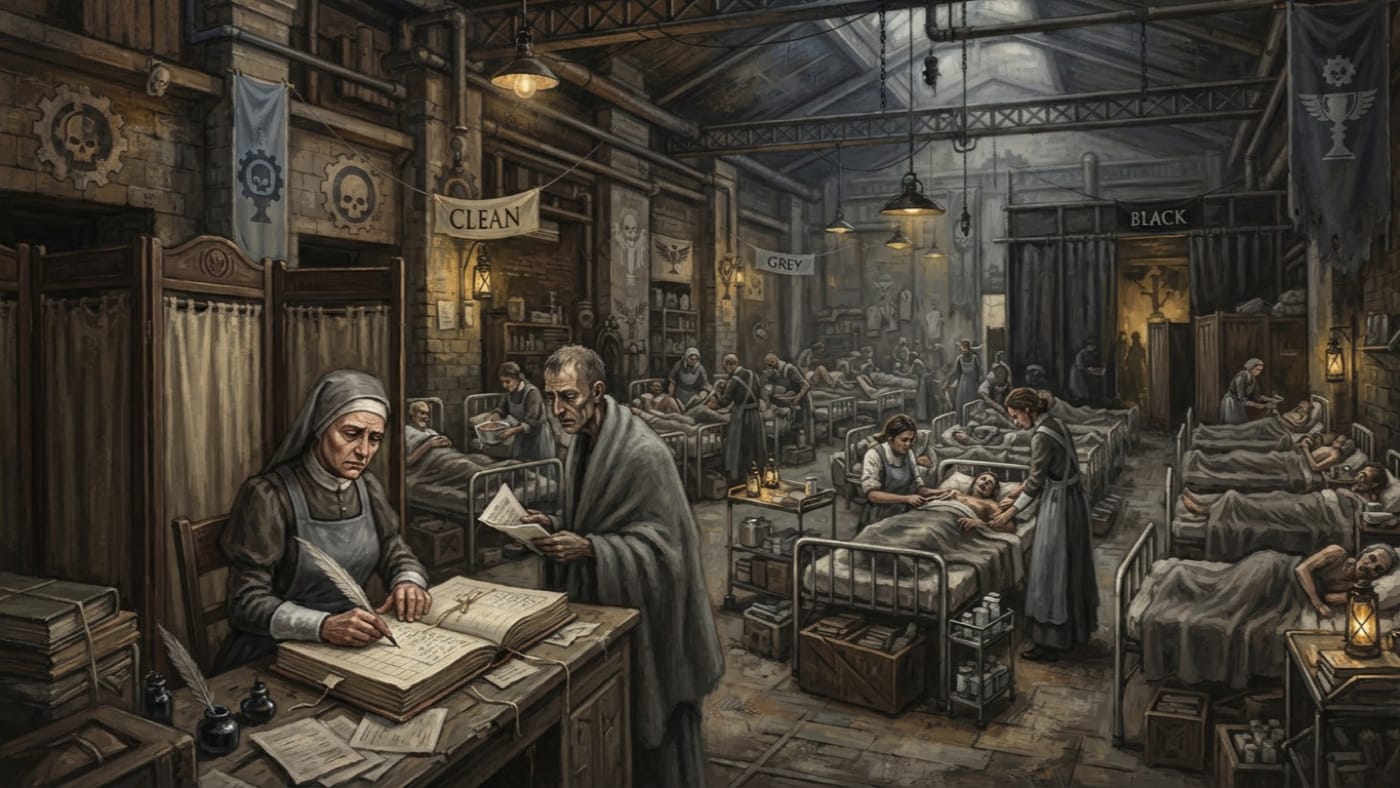
Mercy Wards
The bed is allotted; the suffering must be entered
The Bureau of Mercy's houses of the sick: broth, bandages, confession and clean, grey or black tags. This A.S. 201 survey counts the registered wards; the living remain harder to reconcile.
Codex Ref. II.6.04-001
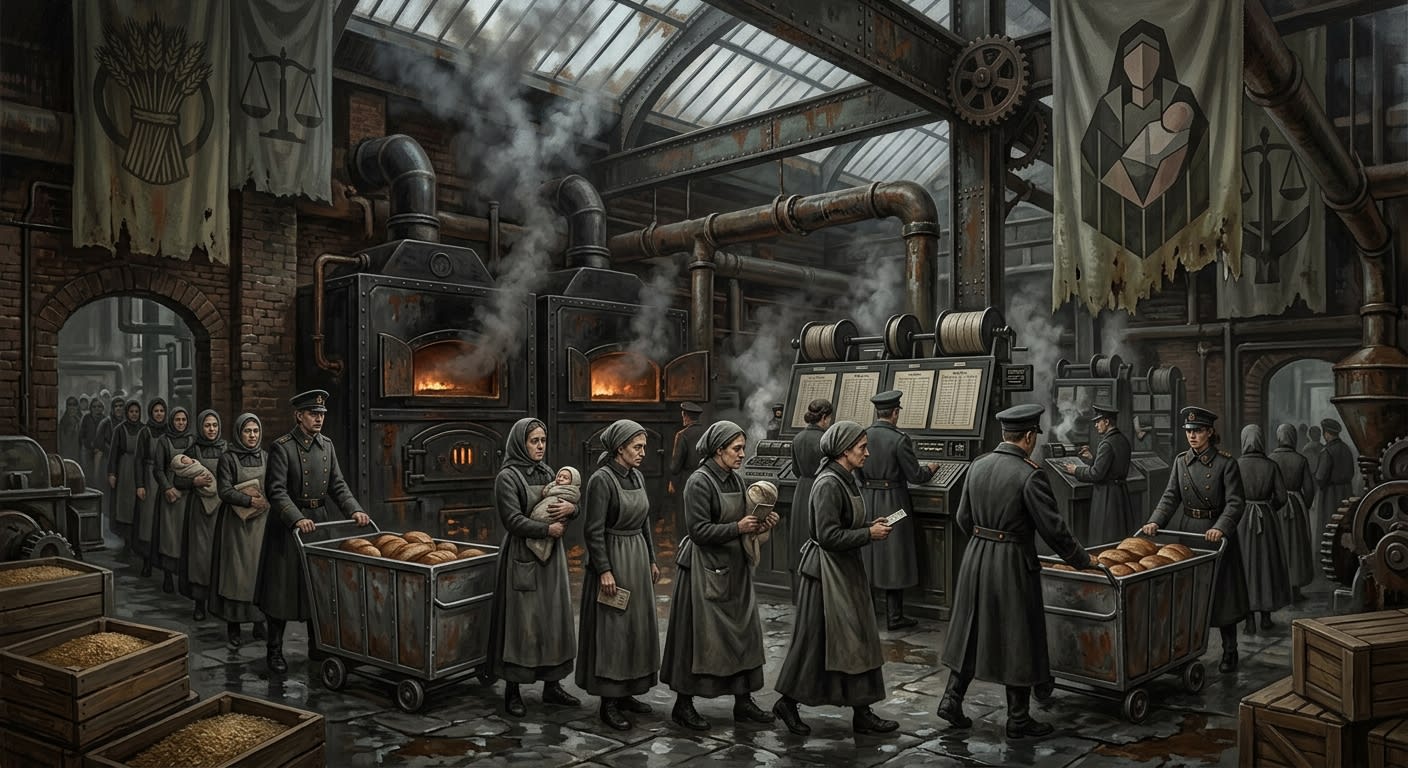
Mothers of Plenty
The queue kept warm, the cradle kept counted
The Mothers of Plenty govern bread and birth as one obedient system, turning ration queues, pregnancy ledgers, and infants not yet weaned into instruments of state continuity.
Codex Ref. XII.6.05-001
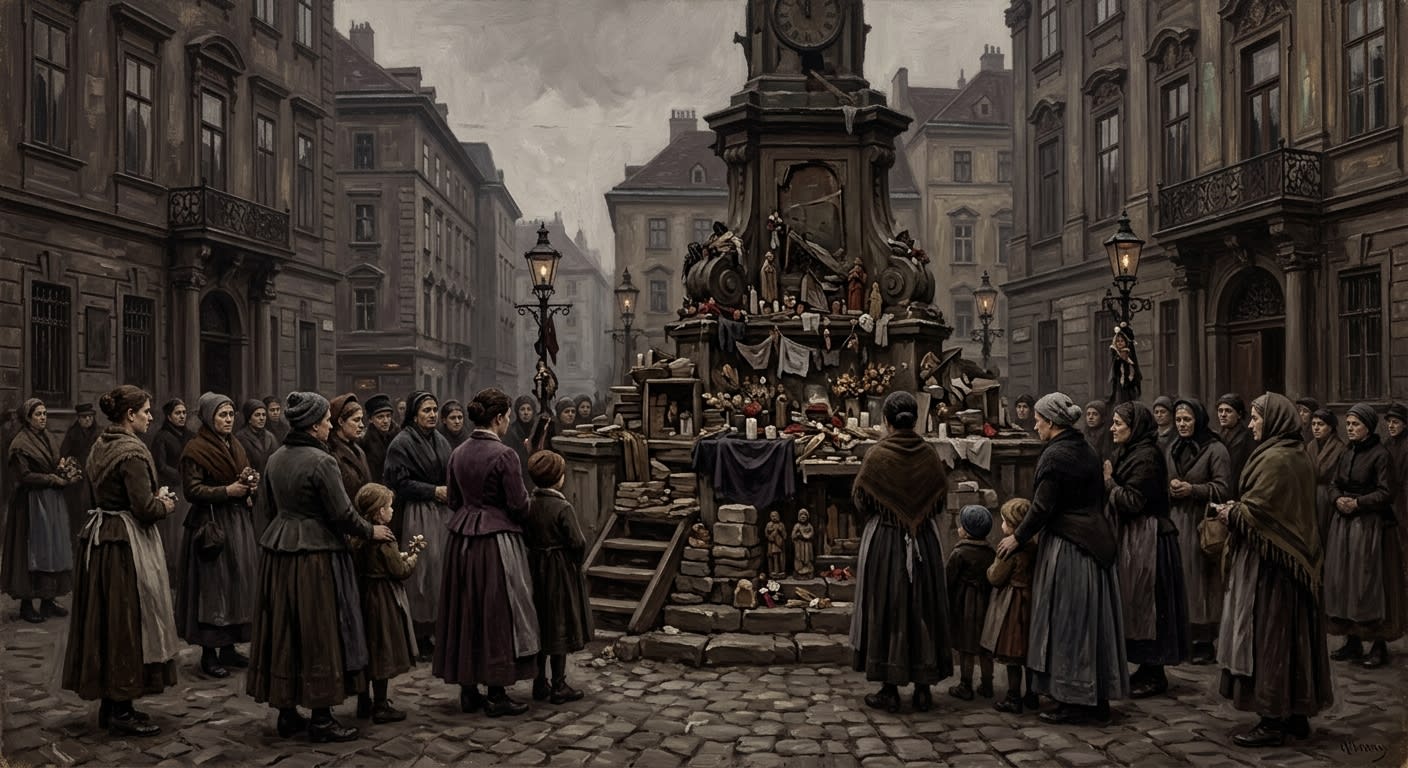
Mothers' Shrine, Judenplatz
The wall where Orison learned that silence has witnesses
The illegal Mothers' Shrine in Vienna's Judenplatz commemorates the A.S. 112 branding of five thousand mothers, and keeps returning after removal.
Codex Ref. II.4.09-014
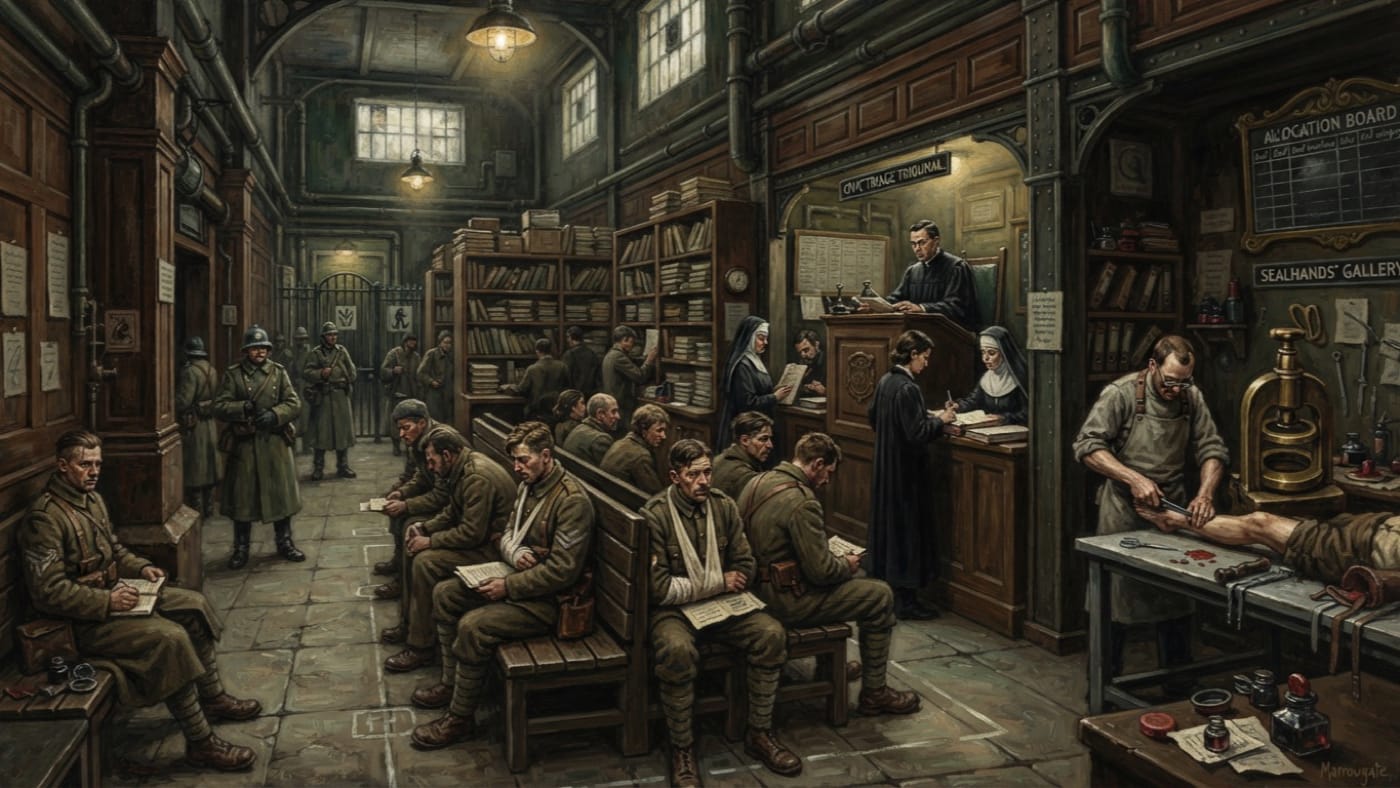
Notary Row
Where a wound becomes a ruling and a ruling becomes a debt
On Notary Row, Marrowgate turns wounds into rulings, amputations into revised identities, and recovery into debt. Even the dead require living corroboration.
Codex Ref. III.3.07-002
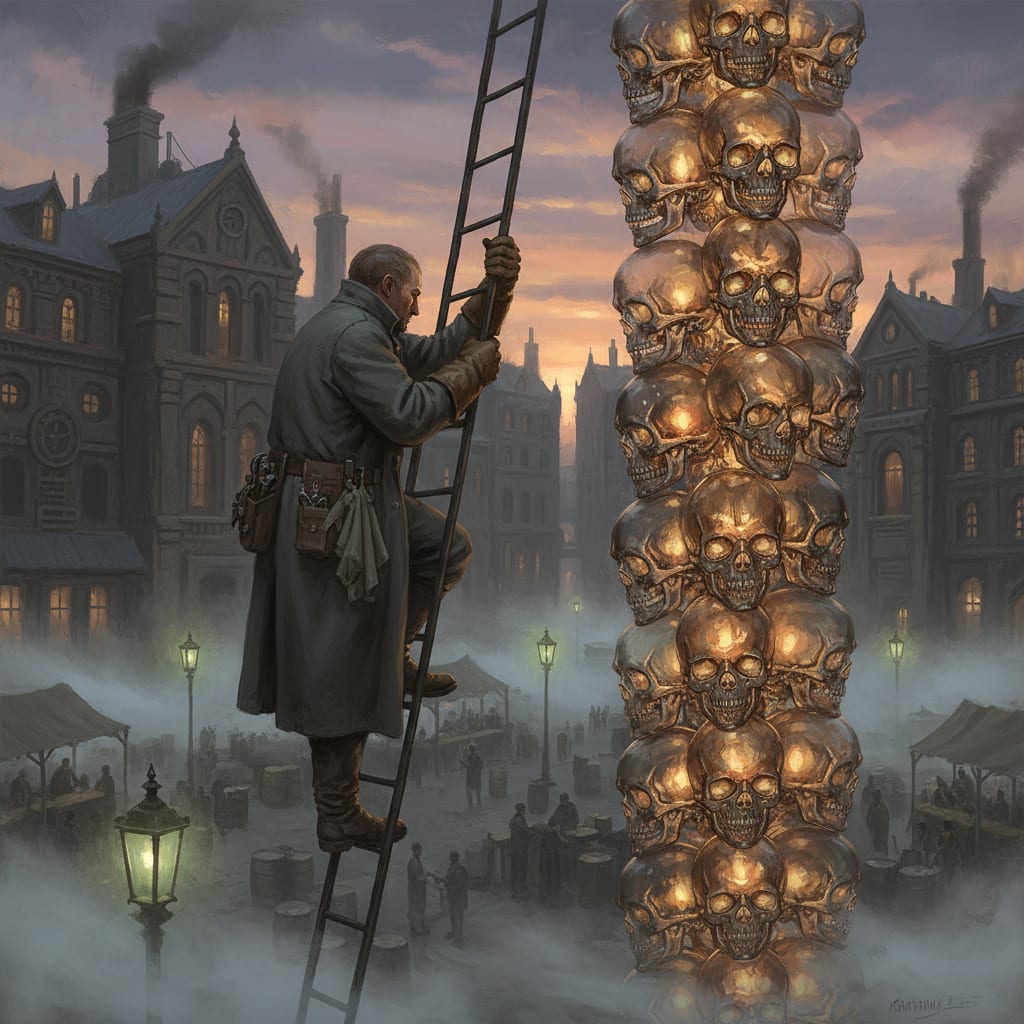
On the Pillar-Keepers of the Glass Skull Stacks
The city is held by witness; the witness is held by someone who needs his wages
A Drax survey of the Pillar-Keepers — grey-coated custodians who maintain the Synod's civic deterrence pylons: iron-boned columns of sermon-clear glass and inked names, holding the city by witness at a cost the Bureau does not audit.
Codex Ref. XII.30.01-001
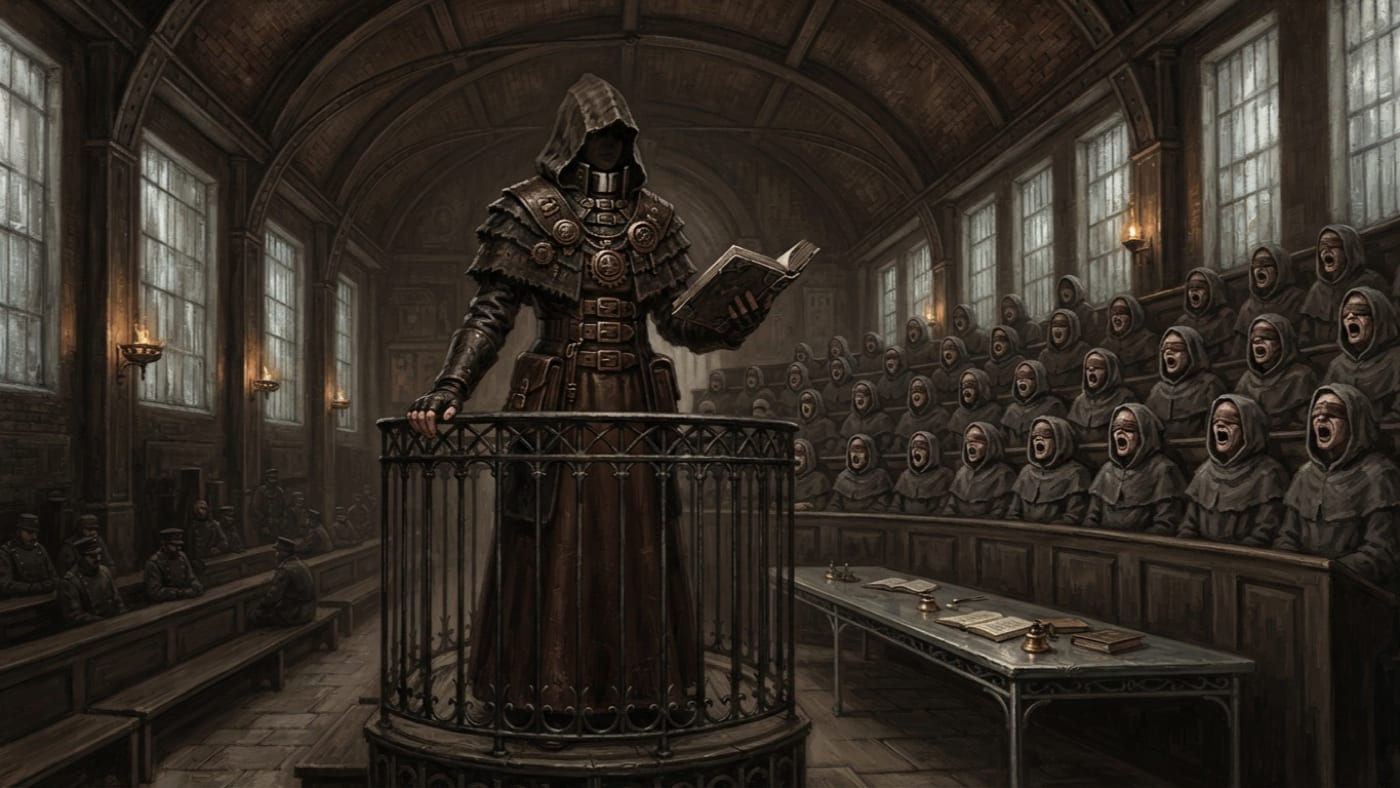
Ordinary Carmina
The verdict has a choir; the Ordinary keeps her silence
Ordinary Carmina of Ghent leaves verdicts to a blinded, tongueless witness choir. Her undated Wintering taught the Order of the Root how to cut families and revise the kinship that survived.
Codex Ref. III.2.01-2030
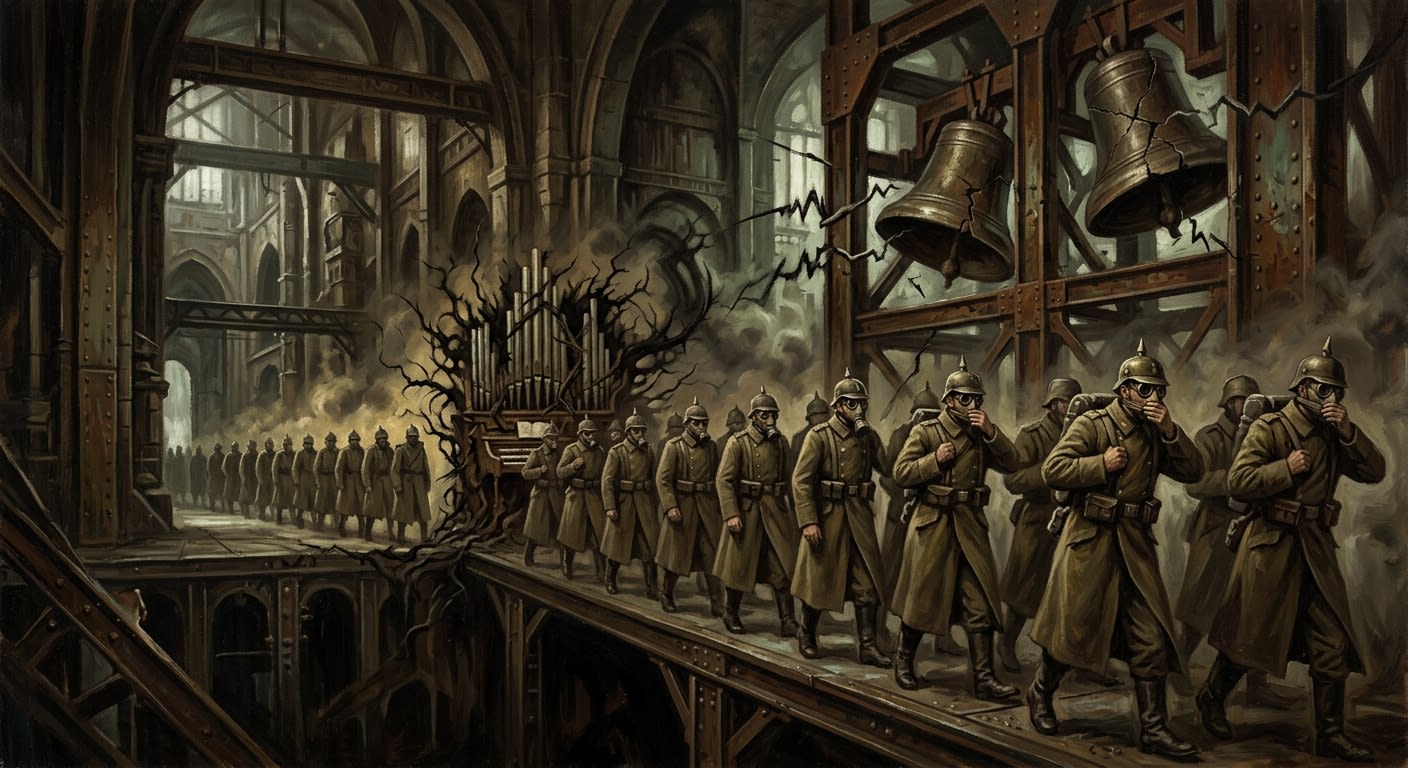
Prayer-Jam
When obedience enters the ear and comes out treason
Prayer-Jam is liturgical signal failure under hostile acoustic pressure: bells betray, hymns gag, and obedient men march precisely into ruin.
Codex Ref. VI.2.01-005
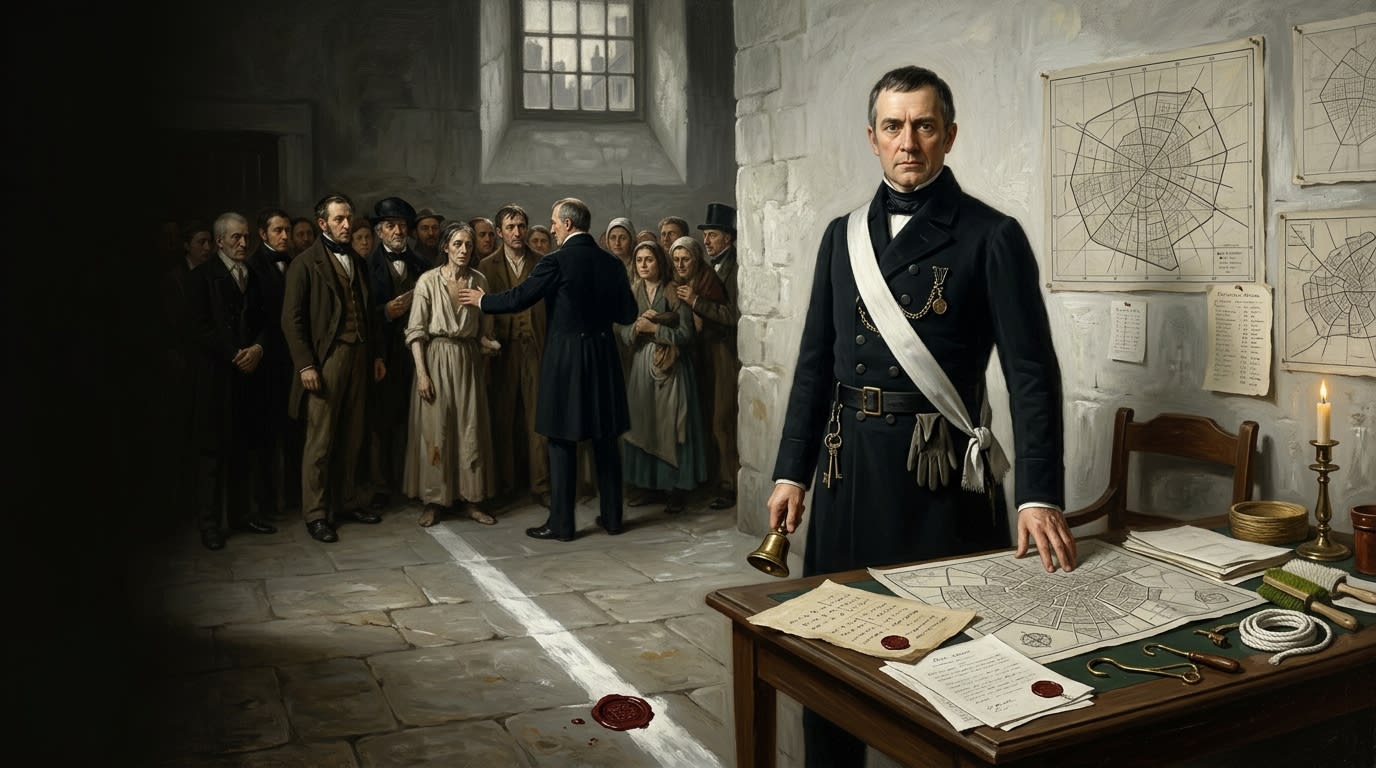
Prefect Salvius
The man who made cleanliness a border with teeth
Prefect Salvius commands Marrowgate's clean lines, proving that hygiene becomes jurisdiction the moment a frightened city applauds the rope.
Codex Ref. III.2.01-201
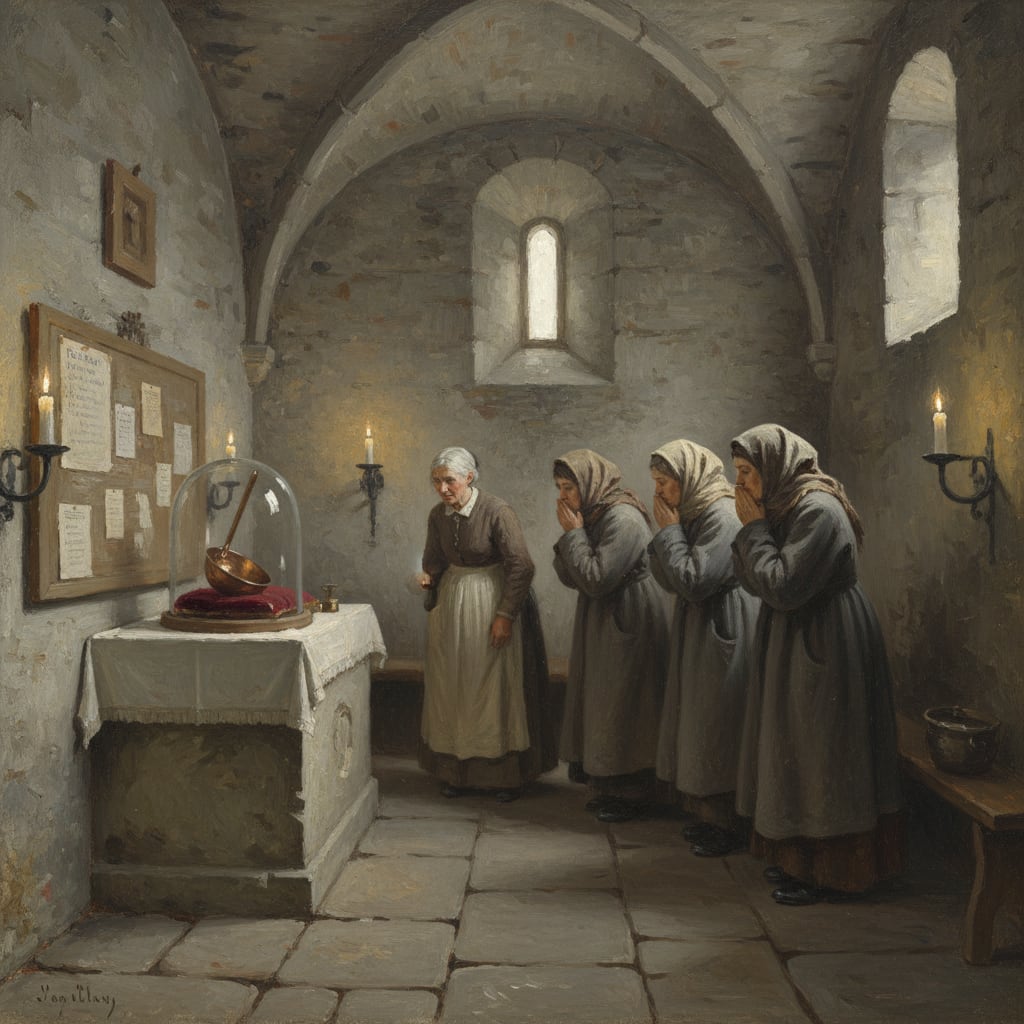
Saint Halva of the Warm Ladle
Salt of the Institution, patron of acceptable portions
Patron saint of the Mothers of Plenty, canonized A.S. 94 with zero miracles attested, no body produced, and a relic the Bureau of Relics classifies as "devotionally sufficient." She may not have existed.
Codex Ref. III.2.01-001
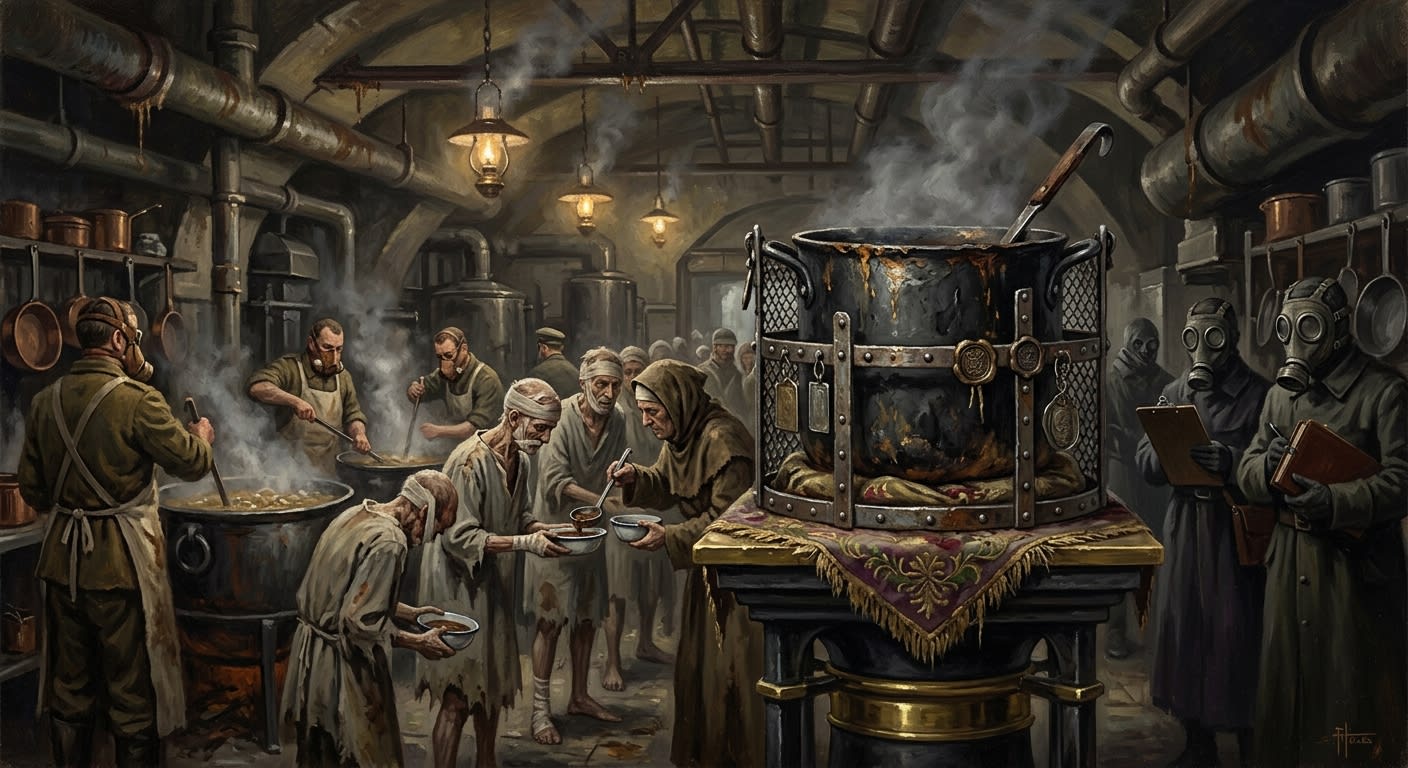
Saint Marrow-of-the-Ladle
Counted mercy, warm broth, and the holy arithmetic of the bowl
Saint Marrow-of-the-Ladle, patron of Mercy ward kitchens, may have been a pot; the Bureau prefers the miracle to the biography.
Codex Ref. III.2.01-016
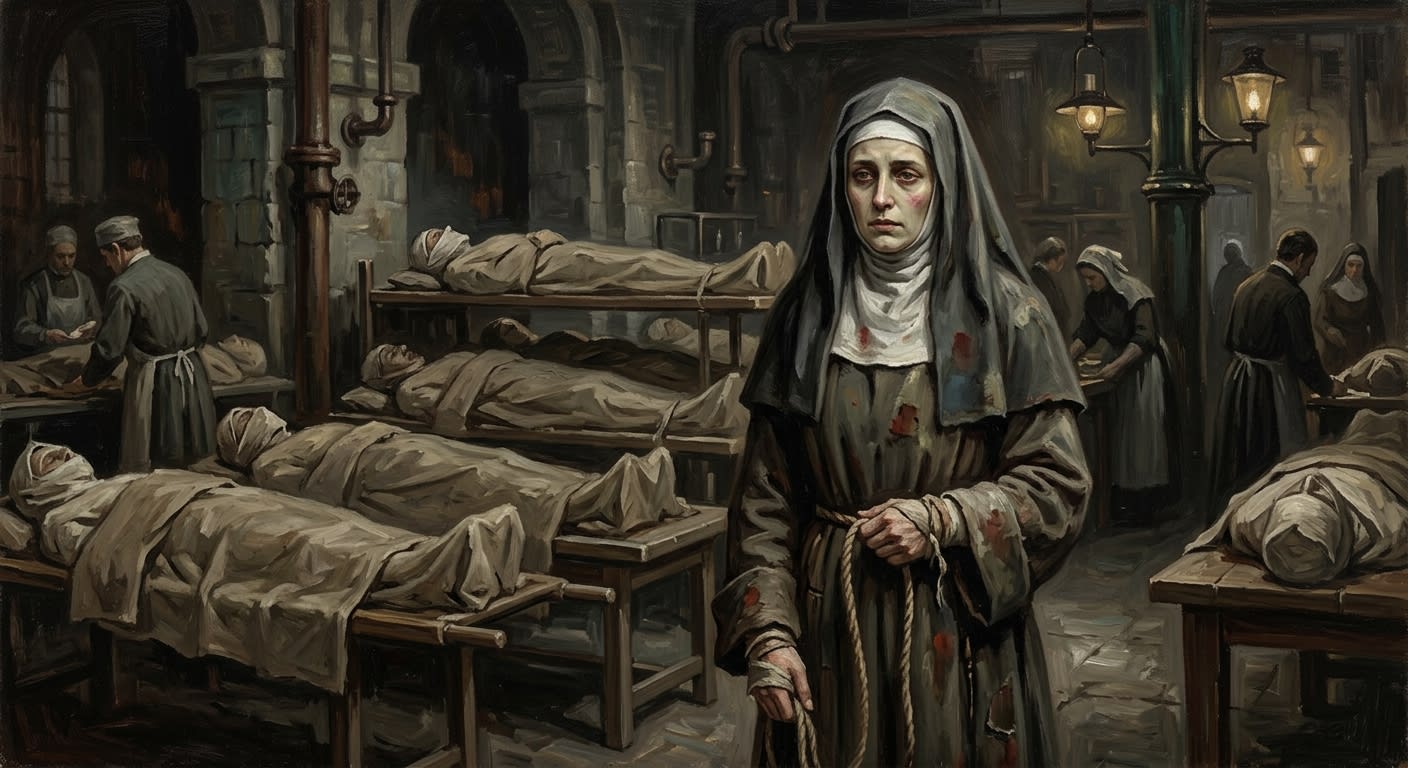
Saint Sabina of Ghent
The seamstress who gave Mercy its cloth and Doctrine its discomfort
Saint Sabina of Ghent bound eleven bodies after the Massacre at Saint-Malo, died of fever, and became Mercy's most useful rebuke.
Codex Ref. III.2.01-015
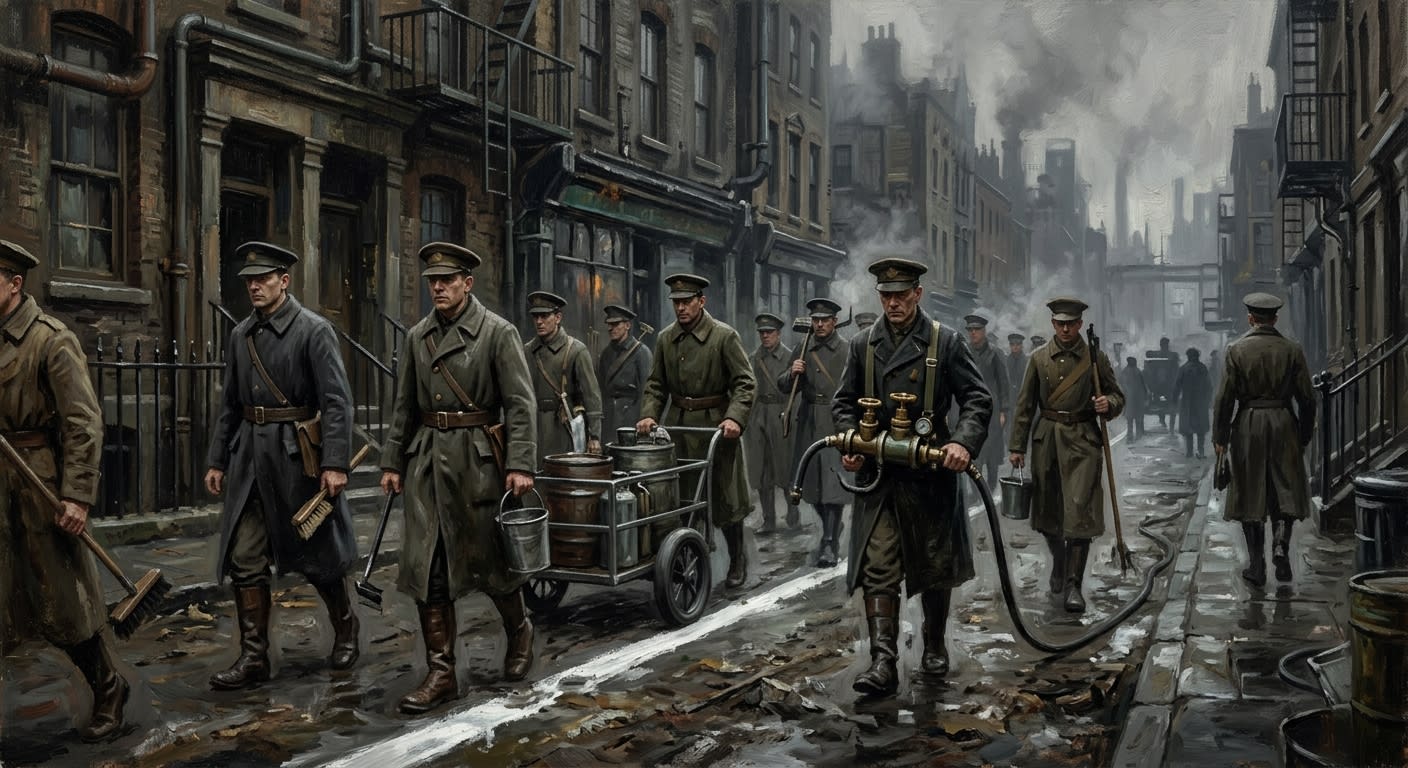
Sanitation Chapter
The clean line is a border, a sermon, and a threat
Mercy calls it sanitation; Marrowgate calls it the office that paints a white line and makes obedience look like hygiene.
Codex Ref. VIII.2.10-078
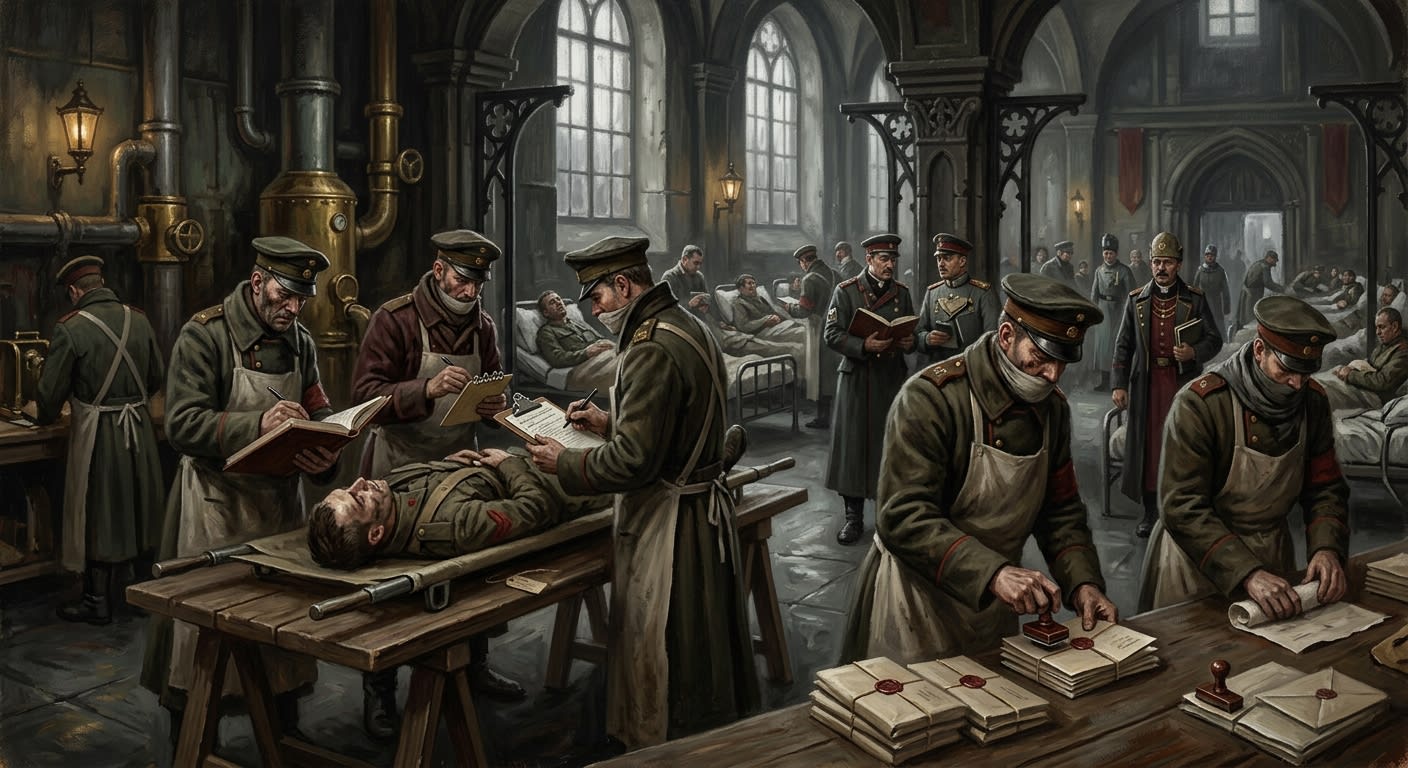
Standing Order 22-C
No last word unfiled, no dying mouth left private
Standing Order 22-C makes the dying useful: names first, comfort second, three copies sealed before the body is allowed to cool.
Codex Ref. XIII.1.98-080
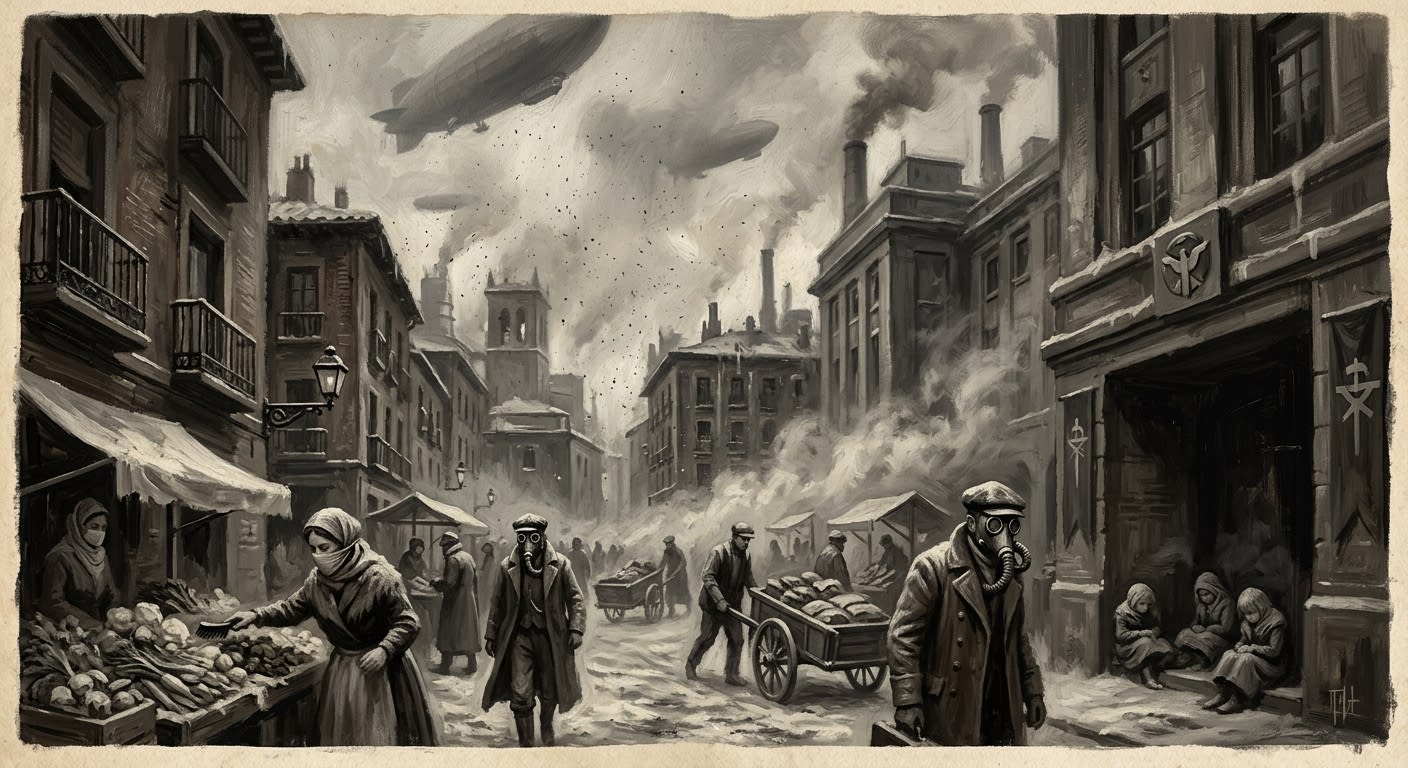
The Ash-Rain of Zaragoza
Where artillery made weather and fourteen children paid the grammar of “clean”
The A.S. 143 Ash-Rain of Zaragoza followed a sanctioned bombardment of a Velkara-aligned compound: three days of salt-and-milk ash, fourteen silenced children, no quarantine, and a city forced to keep trading beneath residue.
Codex Ref. VII.4.13-001
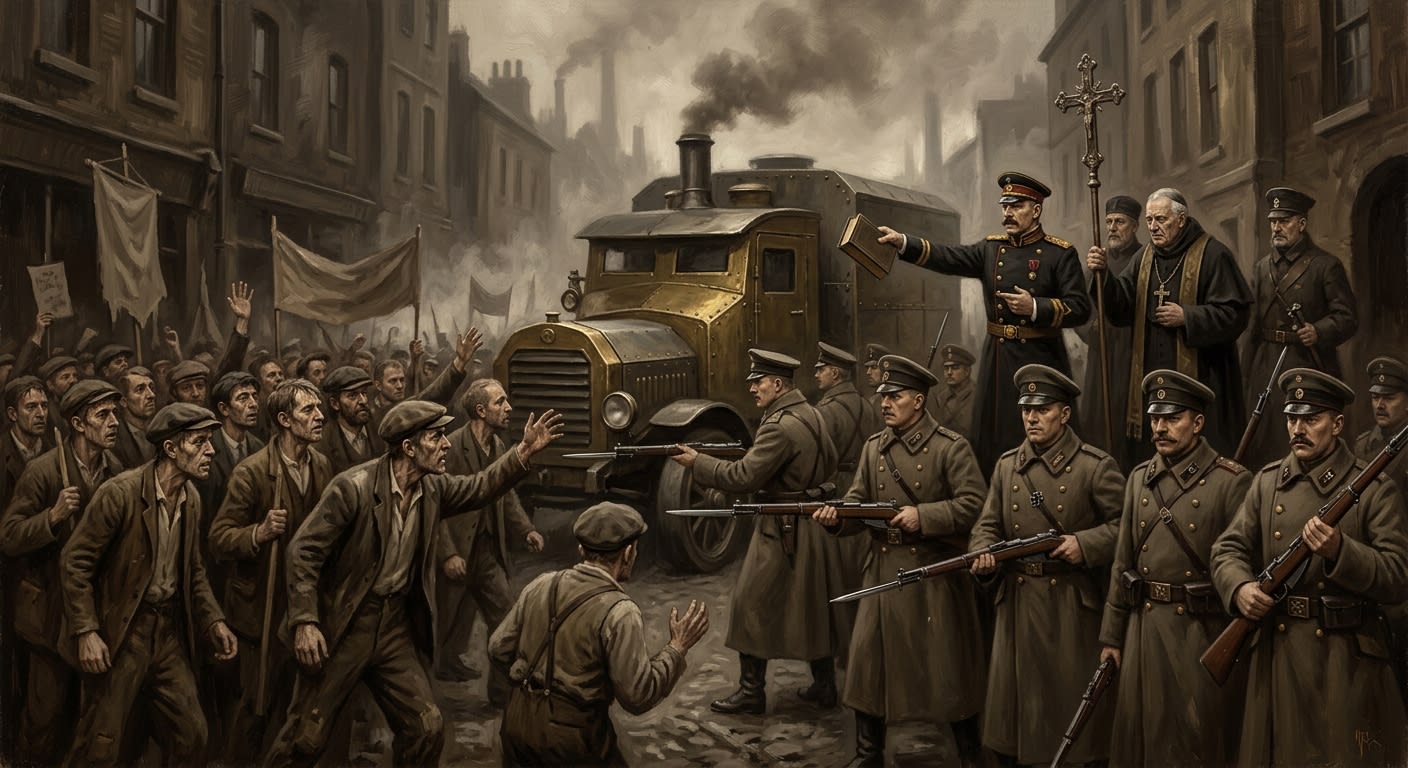
The Broth Riots
The hungry asked for food and received laws
The Broth Riots of A.S. 112 began with thin soup and ended with rifles, saints, Ledger Laws, and the Synod's discovery that hunger becomes obedient once measured.
Codex Ref. VII.8.10-112
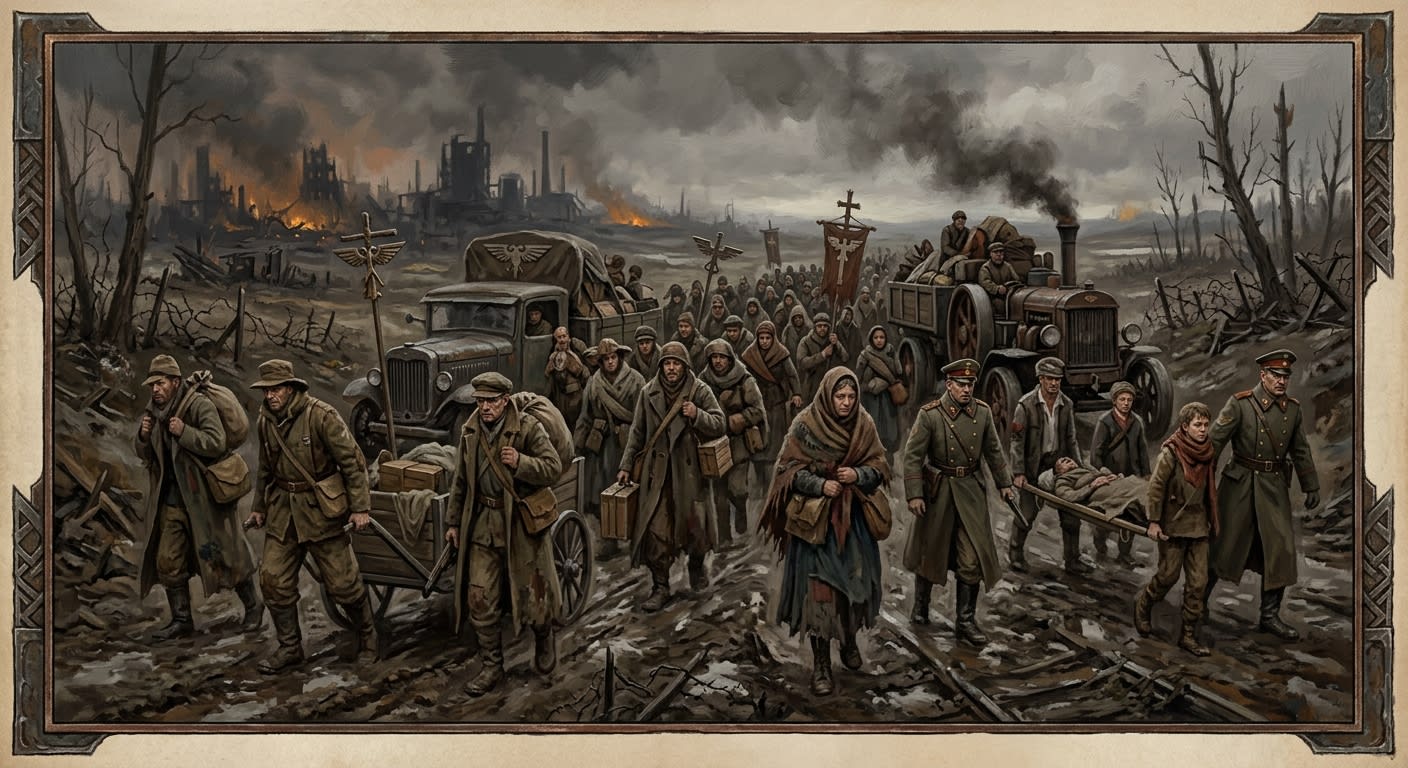
The Great Retreat
Seventeen years of westward mud before the Line learned to stand
From A.S. 48 to A.S. 65, the faithful West walked, bled, improvised institutions, and finally stopped running where the Sagittal Line began to hold.
Codex Ref. VII.1.03-001
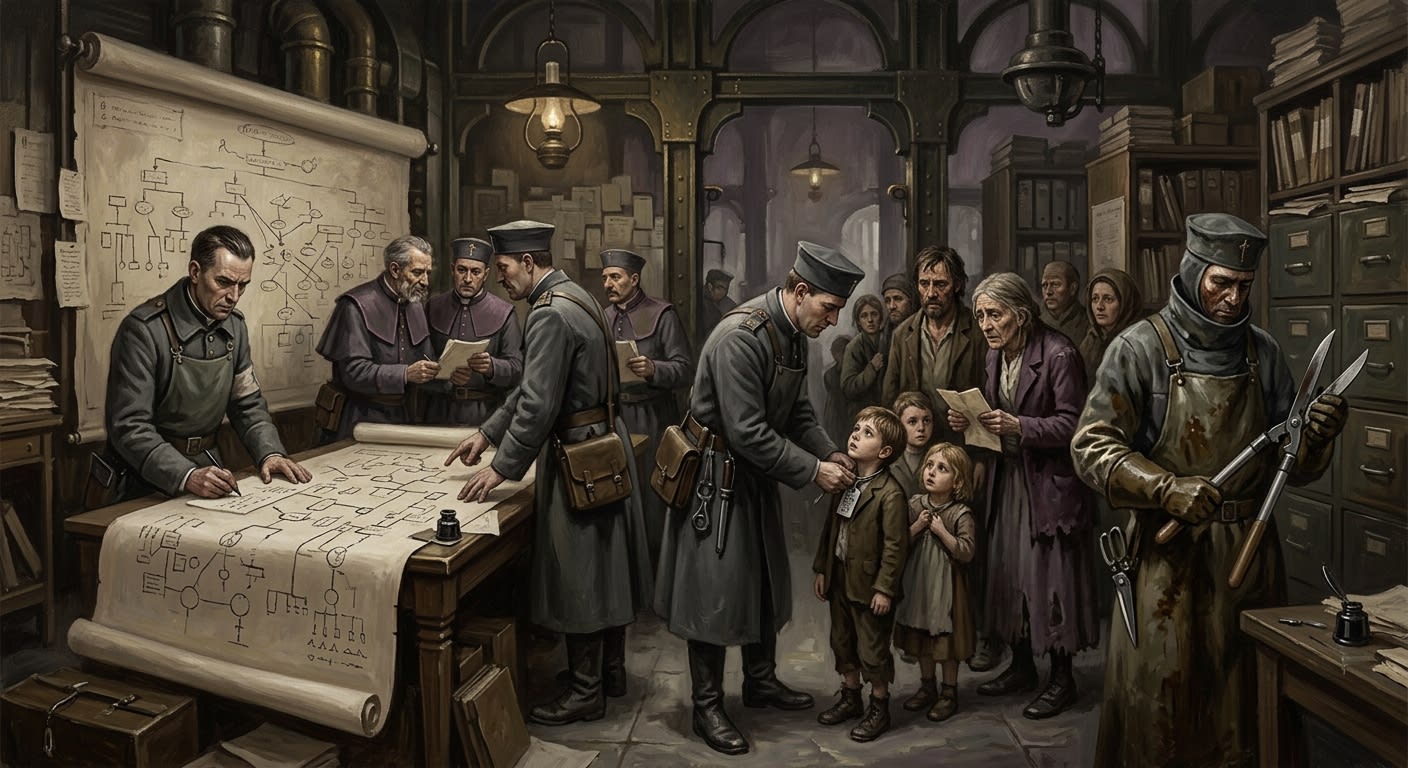
The Order of the Root
Where family trees are pruned with forms, cuffs, and holy shears
The Order of the Root is the Synod's hereditary-contamination apparatus: kinship charts, child tags, bloodline review, and mercy sharpened into pruning shears.
Codex Ref. XI.1.05-001
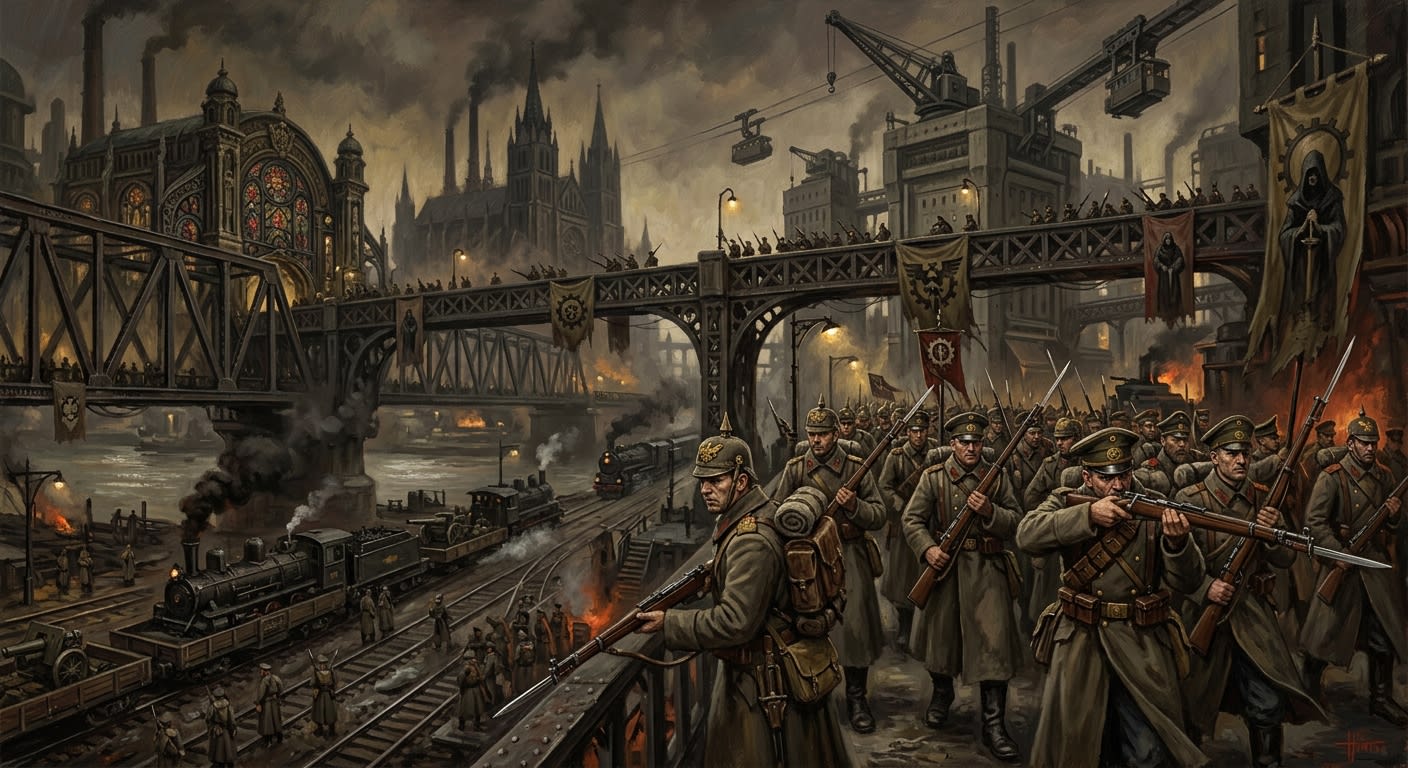
Warsaw Standing Brigade
The wall behind the wall has bayonets and bakery rumours
The Warsaw Standing Brigade is twelve thousand rear-echelon soldiers drilled to front-line standard, holding rails, queues, bridges, and the fiction that Warsaw is safely behind the Line.
Codex Ref. VIII.5.05-002
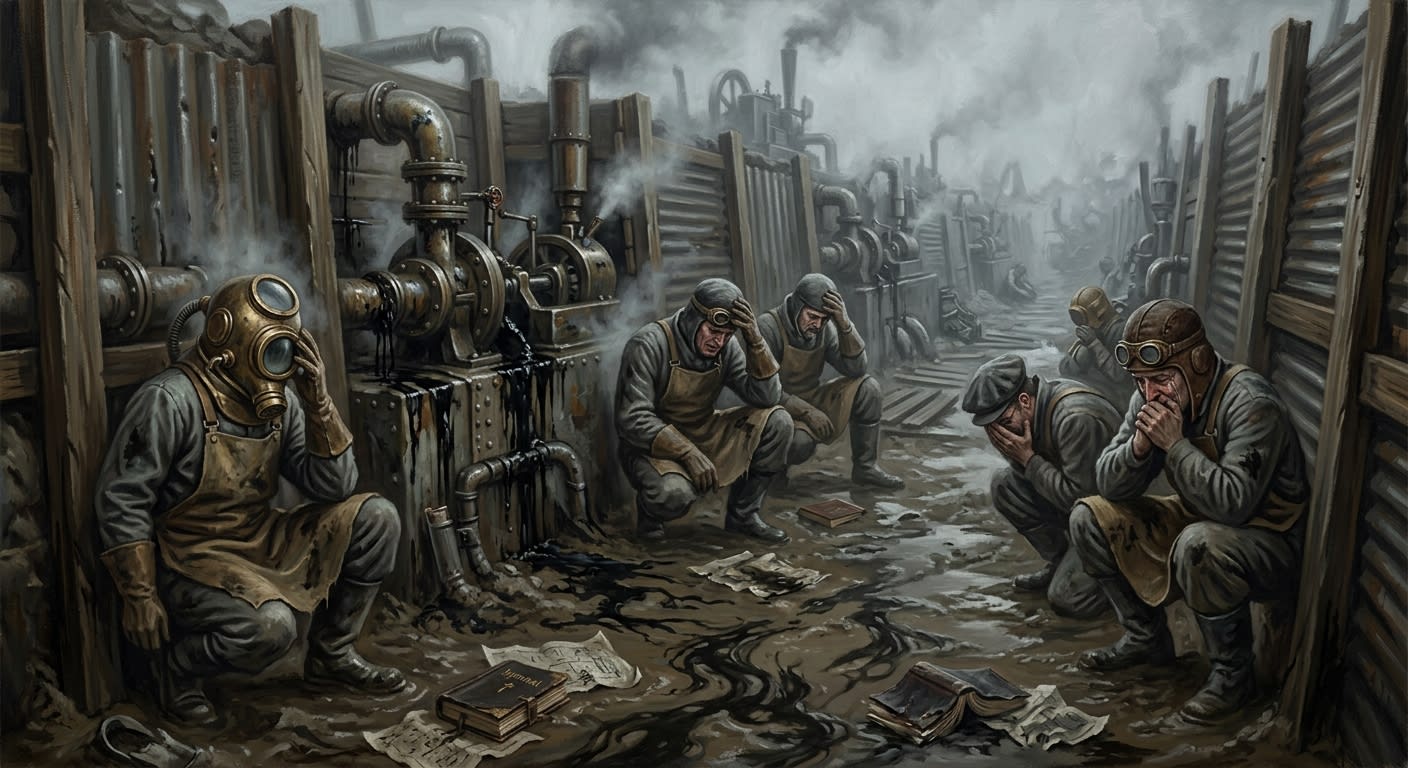
Weeping Trenches of Odessa
Where the walls learned hymns and men paid in tongues
The A.S. 178 Odessa trench incident in which Pale Chanter seepage turned Litany-Engineer hymnals against their owners, leaving pumps running, men weeping, and tongues ruined.
Codex Ref. VII.5.04-002