
#On the Year Mercy Was Audited with Tongs
The Mercy Ward Purge of A.S. 134 was the correction by which the Synod discovered, with the innocent surprise of a butcher finding blood on his apron, that Deathbed Confession Harvesters had been selling the dead back to the living in edited pieces.
Seventeen Harvesters across Rhineland wards were convicted of trading last words for profit: a clean transcript here, a softened accusation there, a sealed addendum misplaced under a bowl of cooling broth, a son's name removed from a father's fever confession for the modest price of a wedding ring, two salt chits, and a promise never to mention the curtain.
Call it a market: an order whose seal had not yet been licensed.
A.S. 134 was already crowded with holy inconvenience. The Bureau of Medicine confirmed the Famine Pit phenomenon. The Bureau of the Hourglass took form amid complaints from officers whose clocks disagreed with trenches. The Warden Sermon Trials punished consolators for sounding too much like comfort. The Mercy Rationing Reform narrowed grace at the booth. Into this warehouse of knives came the ward scandal, quiet at first, then too profitable to remain invisible.
#On the Trade in Last Words
Terminal confession (Unregistered) had been mandatory since the Lull of Names forced Standing Order 22-C into being. By A.S. 134, every proper ward knew the sequence codified by the Confession Reform: access, stabilisation, framing, extraction, authentication, packaging. The sequence was clean. Human beings, in their filth and genius, made it useful.
A Harvester sat beside a dying patient with a seal-ring, minuteglass, witness ribbon, and forms enough to ruin a household. The clean copy went to parish comfort. The internal copy went to Records. The sealed addendum went to Purity when the dying named living accomplices, hidden sons, contraband books, illicit coin, unlicensed lovers, or doctrinal rot. Between mouth and packet lay the Harvester's hand. Between packet and courier lay a curtain. Between curtain and audit lay opportunity.
The prices varied by ward and by sin. A missing adultery cost little unless the adulterer held office. A deleted debt cost more if the creditor still breathed. A heresy name cost whatever the family could produce before Lauds. High-Value Examiners charged in coin, favours, morphine vials, ration priority, and sealed recommendations for relatives in need of transfer away from unpleasant trenches. Witness Clerks (Unregistered) were paid to look at the patient's feet. Ward guards were paid to open the side door. Copyists were paid to misread names.
The most elegant fraud was the mercy omission: leave the accusation spoken, authenticated, and present in the internal packet, but omit it from the clean copy shown to the family. Everyone paid for the comfort of ignorance. Records still received its meat. Purity still sharpened its knives. The household slept one night longer.
Early indictments described the scandal as “the theft of truth from the dying.”
Revised. Truth was sorted by purchaser. The crime lay in unauthorised pricing, which is the only form of theft an institution truly feels.
#On the Discovery
The Purge began with a widow in Mainz who paid twice.
Her husband, a linen factor attached to a Mercy ward laundry contract, died naming their eldest son in a sealed addendum. The Harvester promised suppression. The Witness Clerk, displaying entrepreneurial zeal unbecoming his rank, demanded a second fee for the same silence. The widow paid in coin the first time and in candlesticks the second. The sealed addendum reached Purity intact. Her son was taken before None. Her complaint, filed through a cousin in Records, did what grief rarely does under the Synod: it landed on the correct desk.
Records found the pattern because Records is stupid in the ways of mercy and brilliant in the ways of repetition. Seventeen clean transcripts contained the same phrase: departed in peace after ordinary contrition. Six sealed packets from different wards bore wax impressed half a degree shallow. Four witness ribbons had been cut from the same bolt of cloth, though the wards were three days apart by wagon. A Harvester in Trier used identical language for three unrelated dying men whose social ranks, dialects, and sins differed wildly. Comfort had become a template. The template betrayed them.
AUDIT ANNEX — RHINELAND CIRCUIT, A.S. 134 Recovered unofficial ledger: “quiet endings” column, seventeen entries Names of purchasers: ████████████████████ Names omitted from clean copies: ███████████ Names omitted from internal copies: classification elevated Instruction: do not inform families that omission category differs by destination
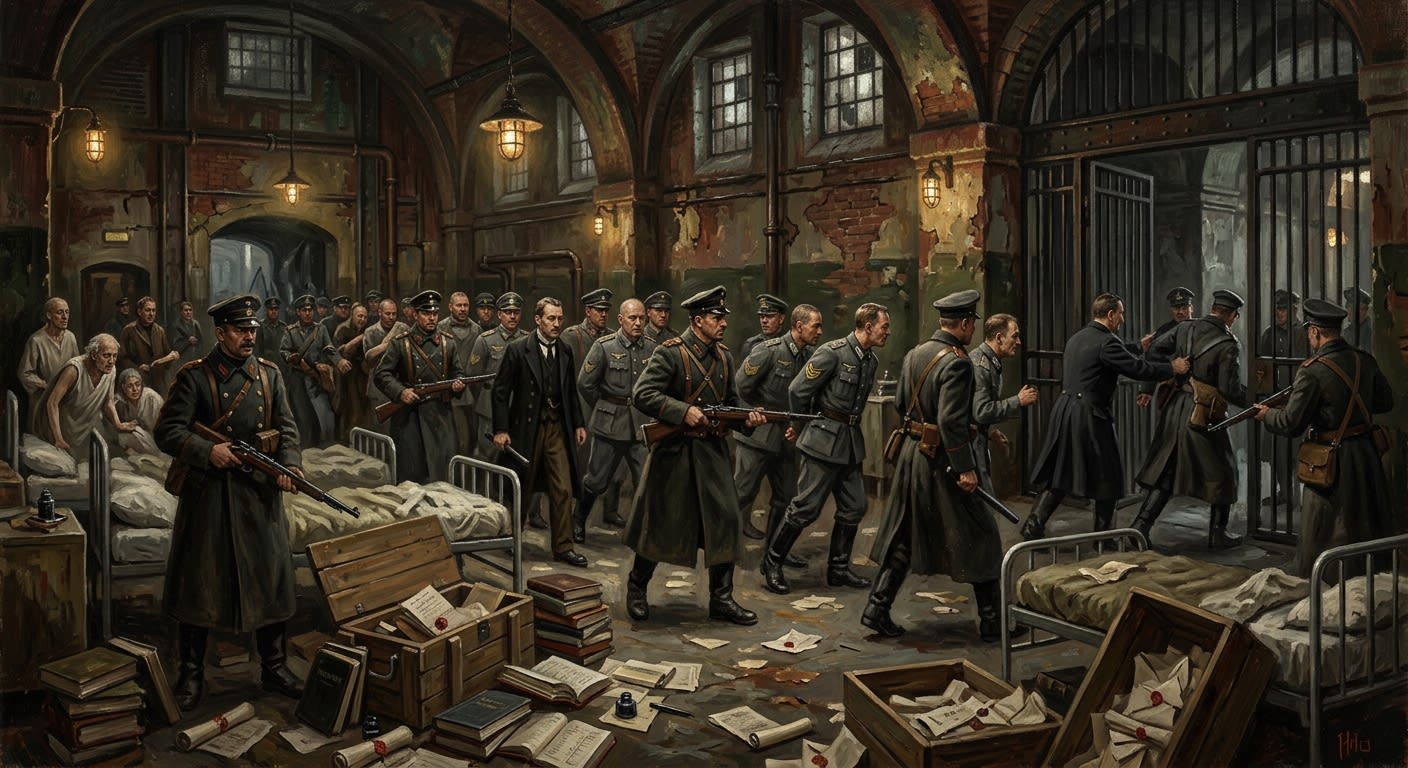
The arrests were staged at shift-change, because Bureau theatre has instincts. Harvesters emerged from wards with cuffs inked, throats wrapped against fever, and faces arranged into the professional tenderness that makes patients confess. Lictors took their seal-rings first. A Harvester without a seal-ring looks smaller than other criminals. The hand keeps reaching for authority and finding only fingers.
The ward corridors carried the news faster than couriers could. Ward-Sisters hid their salt bundles. Confessor-Booth Clerks checked their mercy foils. At Marrowgate, three terminal stools were left empty for a full bell-cycle, which is the nearest thing a hospital city grants to prayer.
#On the Hearings Beneath Vellum-Anna
The disciplinary hearings placed Blessed Vellum-Anna above the table: quill in one hand, compress in the other, the usual hypocrisy made useful by paint. The accused swore before her image. Seven wept. Four lied well. Two confessed to smaller crimes in hope of burying larger ones. One asked whether Anna had ever sold a line herself. The transcript records a pause of nine seconds before the presiding examiner ordered the question struck.
The seventeen were not equal. The Bureau enjoys pretending that shared conviction produces shared guilt, but ledgers know rank. Three had altered internal copies. Two had suppressed sealed addenda. Six had sold clean-copy comfort while forwarding the knives properly. Four had taken money and failed to alter anything, proving that even fraud has its incompetents. One had invented a confession against a rival ward surgeon. One had erased an unregistered child from a mother's last statement and then sold the child's existence to a Tithes assessor.
The penalties reflected embarrassment rather than sin. Seal revocation for small sellers. Trenchline harvest reassignment for useful offenders. Public penance for those whose tears photographed well in the moral imagination. Immurement for audit-critical falsification. Administrative erasure for the Harvester who had forged a sealed addendum naming a minor Synod official, since the Bureau can forgive greed, pity, cruelty, and bad wax, but it cannot forgive poor target selection.
#On the Double-Witness Protocol
The remedy was obvious, expensive, and faintly comic: every terminal confession would require a second pair of eyes. No Harvester could extract, authenticate, or package alone. A Witness Clerk or ward officer would observe the exchange, countersign the ribbon, and record the bell-time in a separate hand. The packet would travel with two seals. Mercy announced transparency. Records announced chain discipline. Purity announced audit access. The wards announced, in private, that dying had become a committee proceeding.
The double-witness protocol functions. It reduces solitary fraud. It catches broken bell-times. It makes invented confessions harder to dress in clean wax. It also doubles the number of people who know what was said, which doubles the number of people who can be bribed, blackmailed, threatened, seduced, pitied, recruited, or quietly removed. The Bureau of Records considered this acceptable arithmetic. Records often mistakes multiplication for holiness.
The protocol changed ward architecture. Curtains were widened. Stools came in pairs. Witness ribbons were dyed with paired bars. Confession trays gained a second groove for countersignature slips. Black-zone doors received observation slits that patients came to fear more than fever. A new rank of Bedside Runner fattened into permanence, carrying ribbons, spare wax, and all the little secrets that gather around a person paid to stand still beside dying mouths.
The public circular declared: “The second witness ensures purity.”
Corrected for internal use. The second witness distributes liability. Purity is desirable; liability distribution is dependable.
#On the Present Instruction
As of A.S. 201, no licensed Mercy Ward may accept a terminal confession under solitary seal. Forty-three wards have failed to submit paperwork for years and are presumed compliant because presumption is cheaper than investigation. Approximately two thousand four hundred active Harvesters invoke the Purge whenever a novice asks why a grieving mother cannot be left alone with her dying husband. The veteran points to the second stool. The lesson sits there.
The Purge professionalised caution without ending the sale of last words. Clean transcripts still soften. Internal copies still acquire diplomatic phrasing. Sealed addenda still vanish, though now they vanish through hands numerous enough to make prosecution tedious. Families still bargain at side doors. Witness Clerks still discover that silence has market value. Harvesters still write people lighter, and some still sell the lost weight by the ounce.