

Reverse Index
Referencing “The Bureau of Oaths”
Every codex entry that links to The Bureau of Oaths. 66 entries.
Return to The Bureau of Oaths
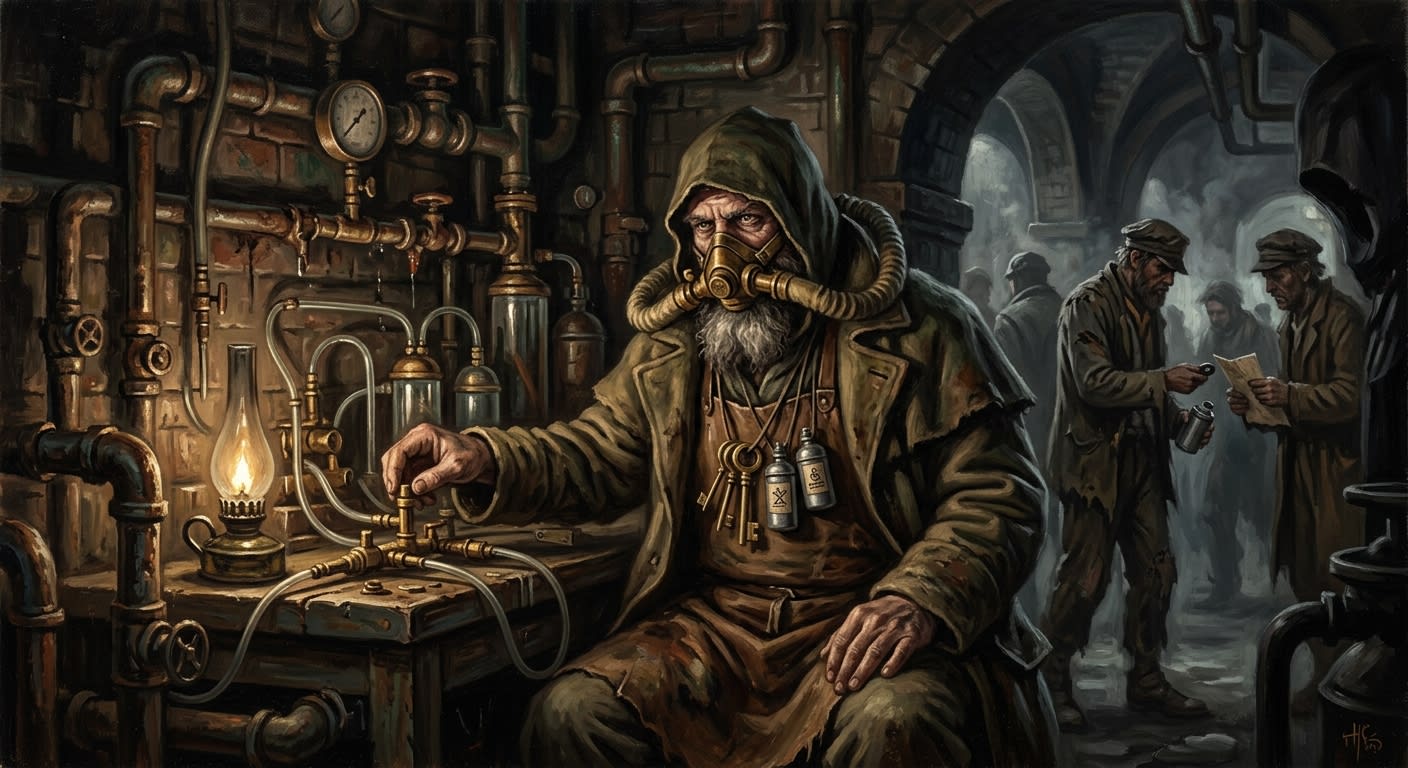
"Tap-King" Jaro
The silent monarch of Irongate's illegal lungs
Jaro has not spoken since A.S. 187. Beneath Bastion-Irongate, his pipe-code sells air, silence, routes, and the little mercies official power cannot admit it needs.
Codex Ref. III.2.01-026
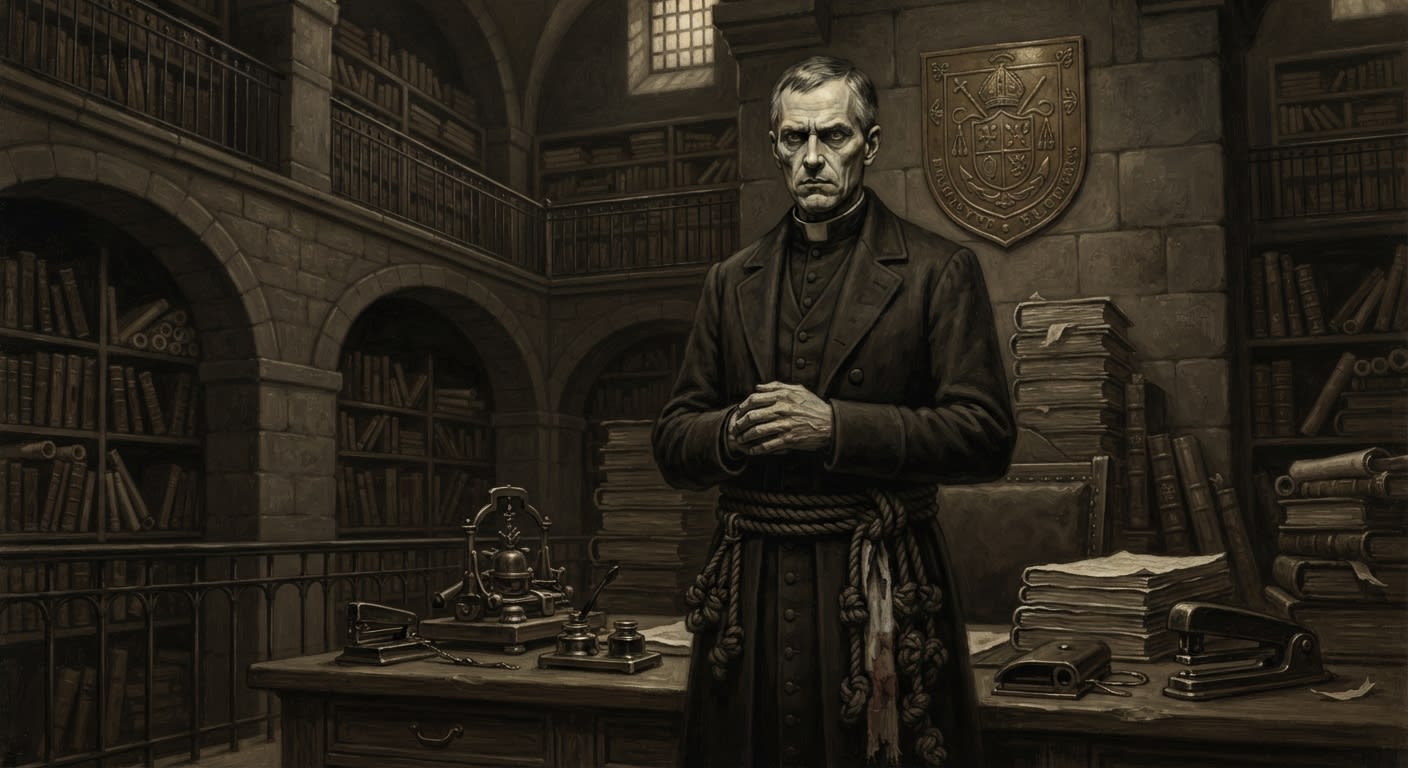
Aldric Venner
The man who registers breath and owes no one a word
Aldric Venner, Synod Registrar of Bonds, rules the Bureau of Oaths from Strasbourg by deciding which breaths bind and which silences count as perjury. He has spoken three words to Drax.
Codex Ref. III.2.01-201
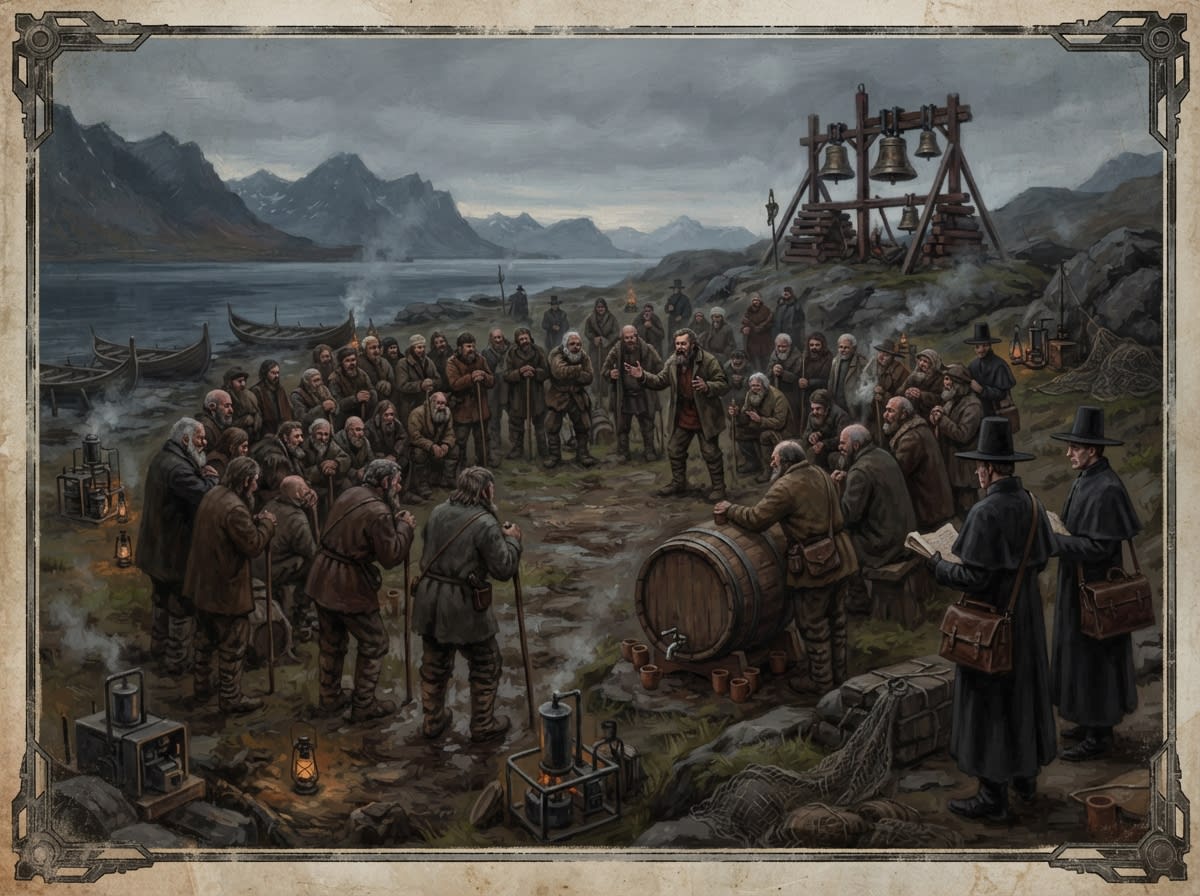
All-Moot
A legislature with no hall, no roll, no seal, and therefore no convenient target.
The Fractured North's annual midsummer assembly settles feuds, oil, passage, bells and Strasbourg's patience from a field that moves every year. The Bureau files it as customary. The North files nothing.
Codex Ref. IX.8.01-002
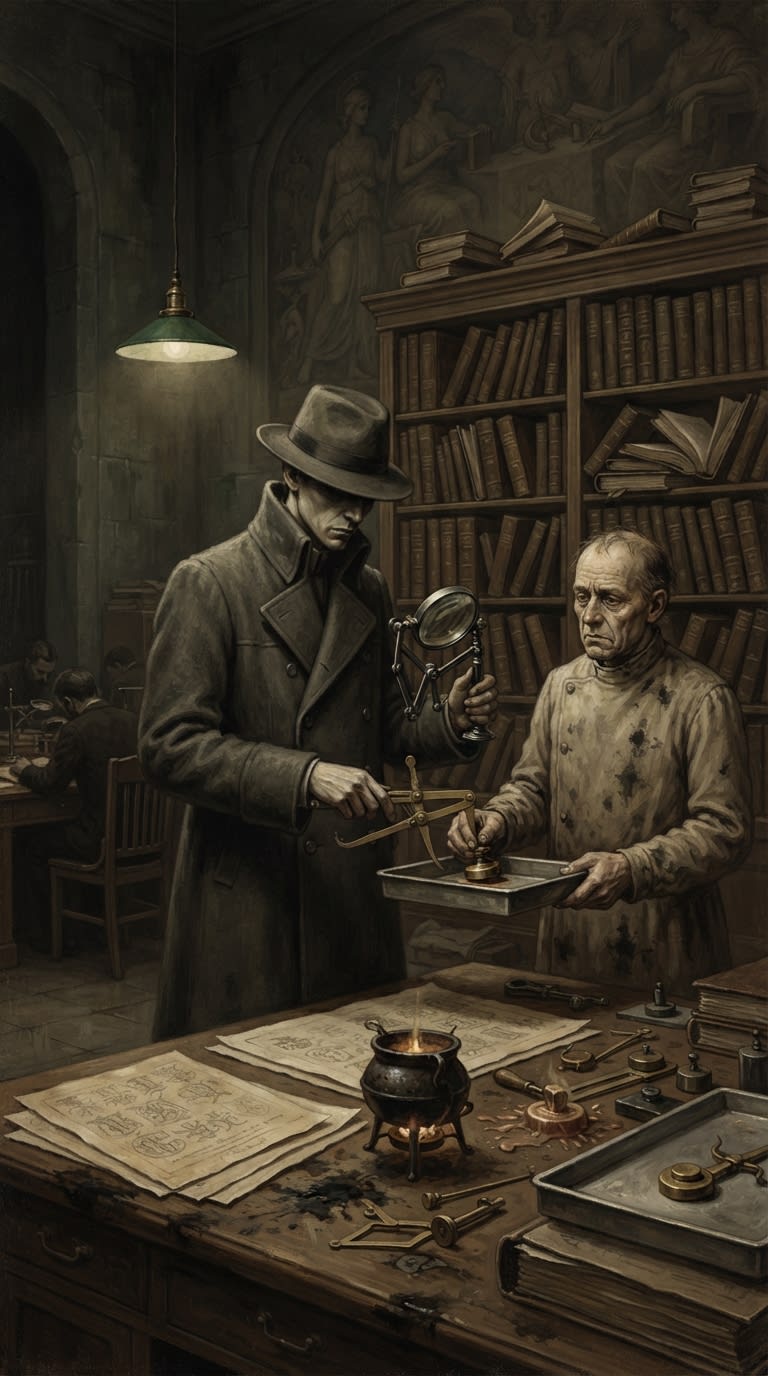
Annual Die Audit
Every lawful instrument must survive its own impression
Instituted after the A.S. 178 counter-seal embarrassment, the Annual Die Audit sends Seal-Walkers across Synod territory to weigh, strike, measure, accuse, retire, and occasionally retroactively shame every lawful seal-die.
Codex Ref. VI.4.19-178
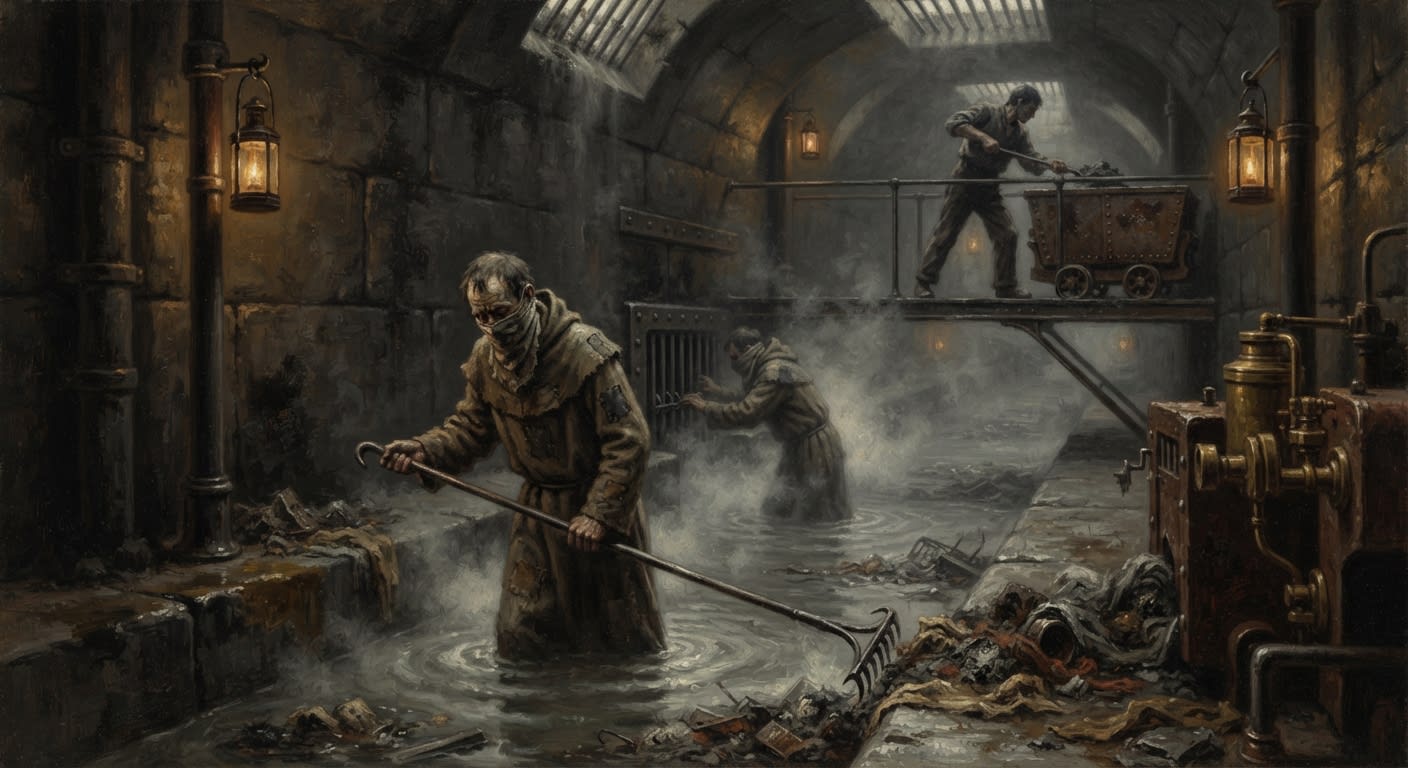
Ash Canalworks
The Throat takes what the ovens cannot afford to remember.
Lower basalt channels beneath San Vesta where cooling water, kiln waste, recovery-service debt, and unlicensed mercy run together in wet soot.
Codex Ref. VII.1.03-002
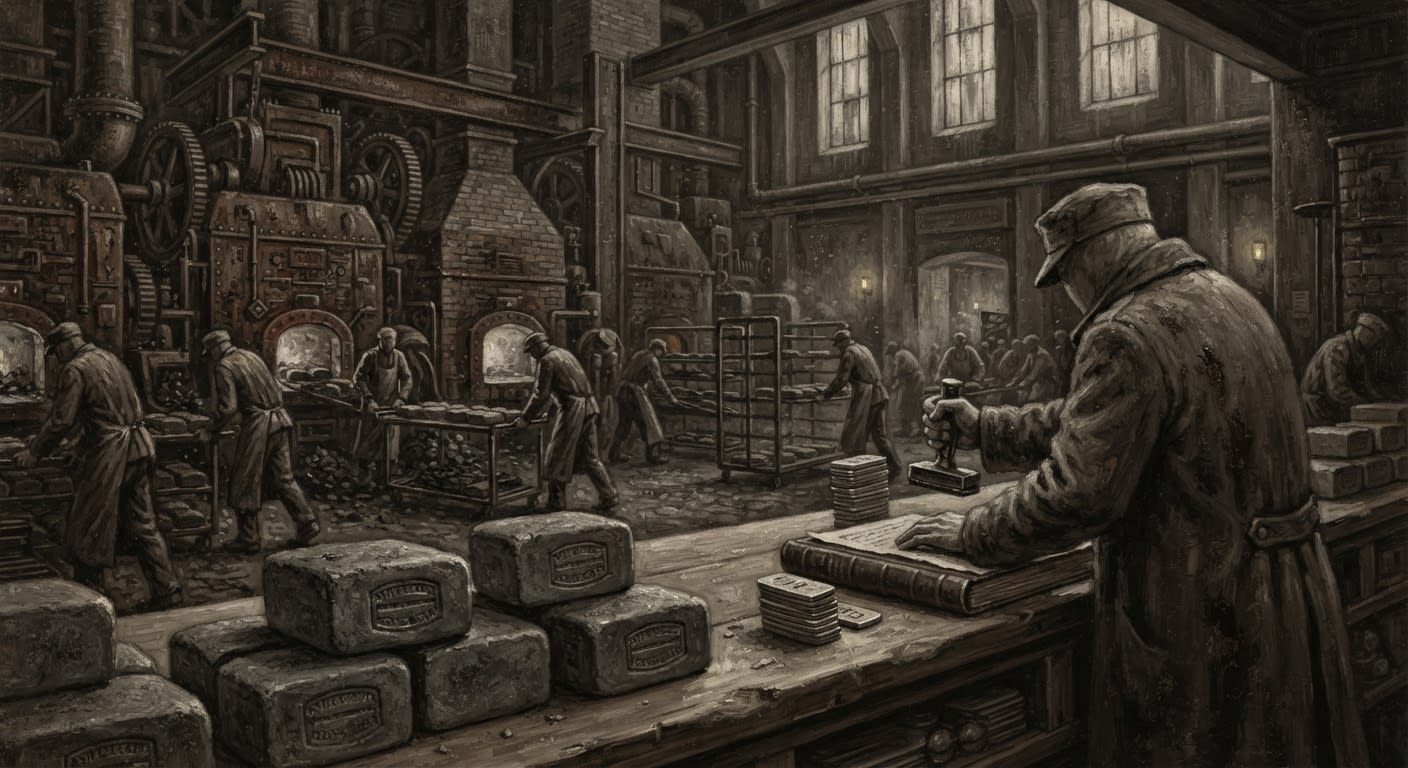
Ash-bread
The loaf does not spoil. That is how it learned to collect names.
San Vesta's grey ration-loaf does not rot, does not forgive, and does not let a name detach from its stamp; the Bureau of War calls this nutrition.
Codex Ref. VI.4.21-134

Bellwarden
Chained by the wrist to the Synod's schedule, he rings a war he will never be permitted to understand.
Eleven thousand four hundred souls chained by the wrists to a Synod schedule they did not write, ringing a war they cannot explain, in service of a theology their bells increasingly refuse to perform.
Codex Ref. XII.2.01-001
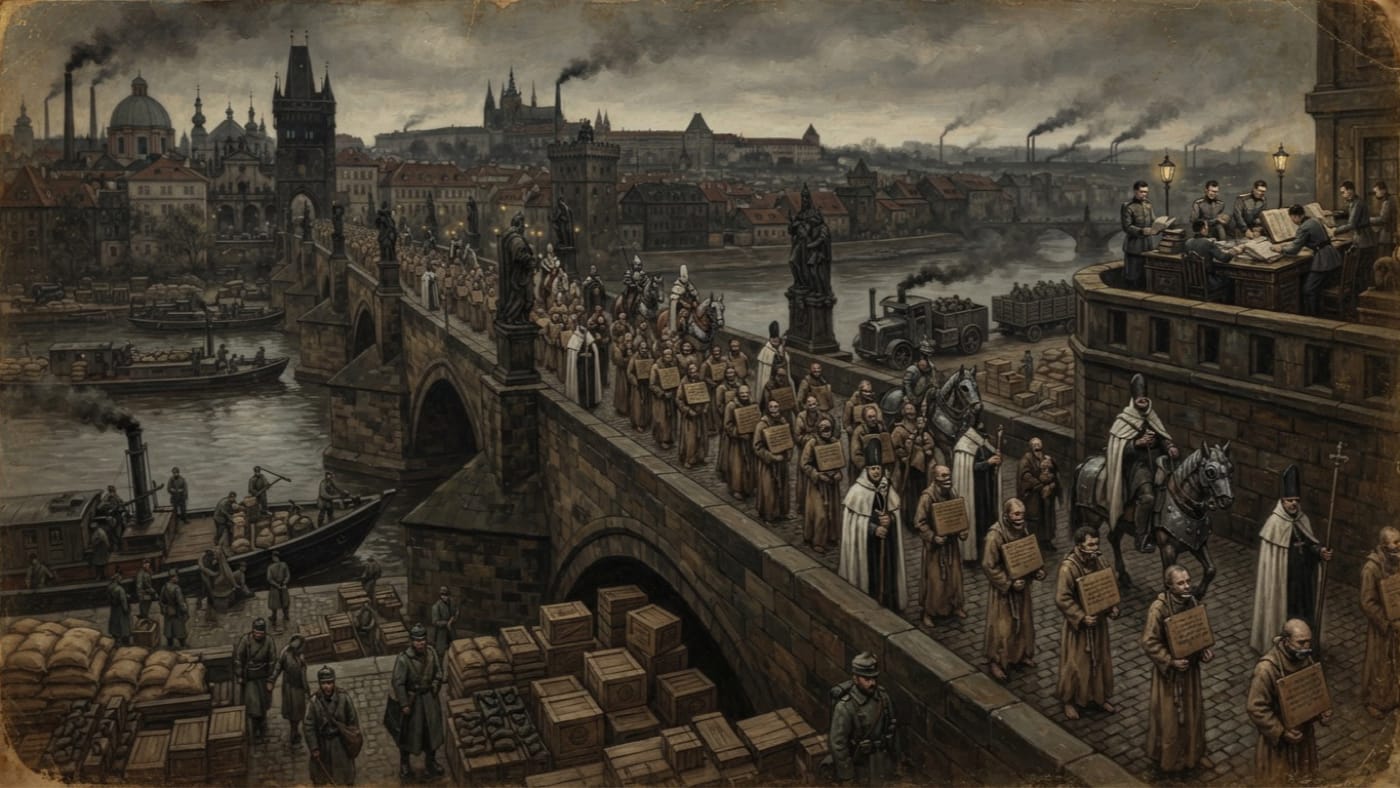
Bohemia
The province that feeds the Line and lets Prague instruct its tongues.
Bohemia, a Synod-held province of the Forward Heartlands, provisions the Sagittal Line while Prague supplies public correction. Grain moves east; the Procession of Tongues crosses its bridge. Both have paperwork.
Codex Ref. II.3.01-001
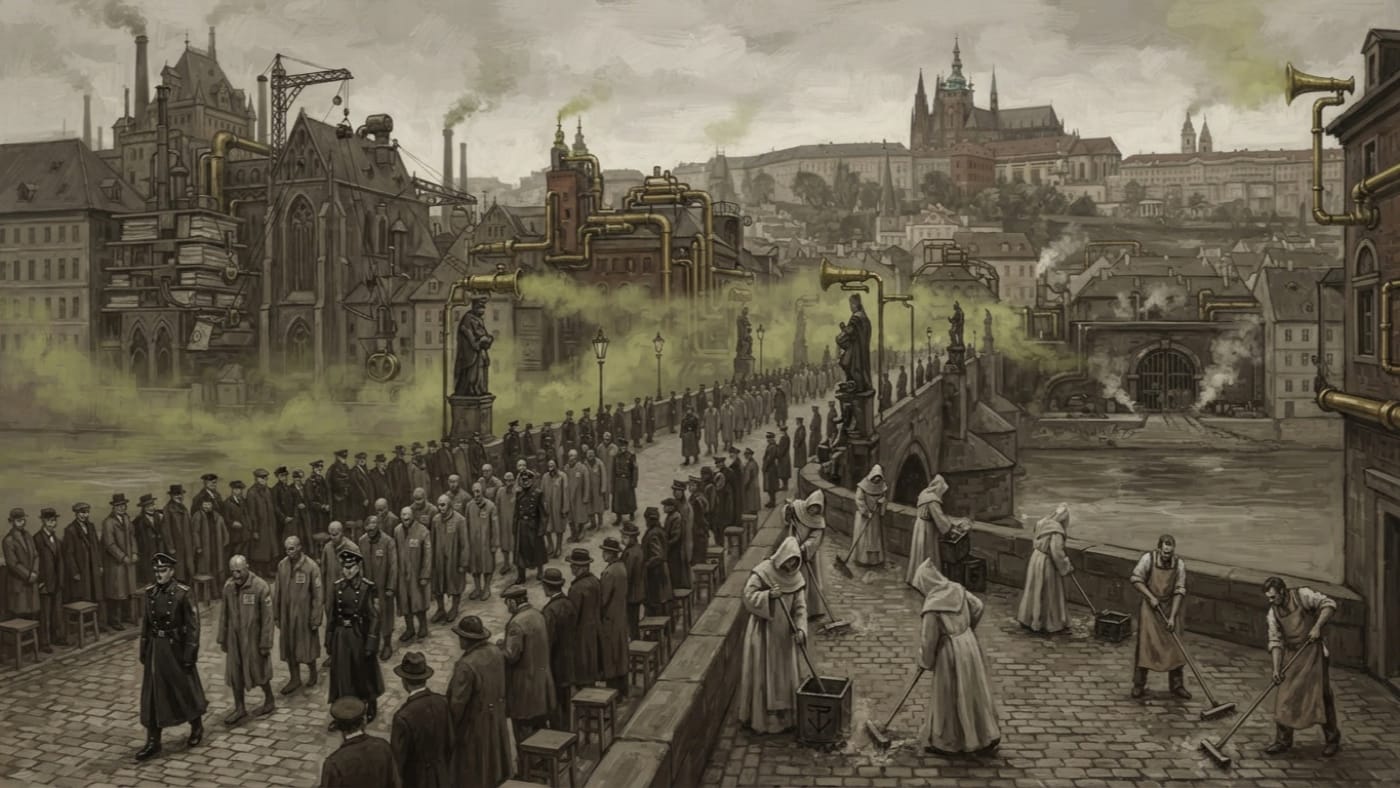
Bohemian Severity District
Where severity travels under counterseal
Prague's attested severity jurisdiction, where Purity sentences travel by Ephrath route, bell cadence and counterseal. Wider boundaries remain unproved.
Codex Ref. II.3.02-295
Breach Plagues
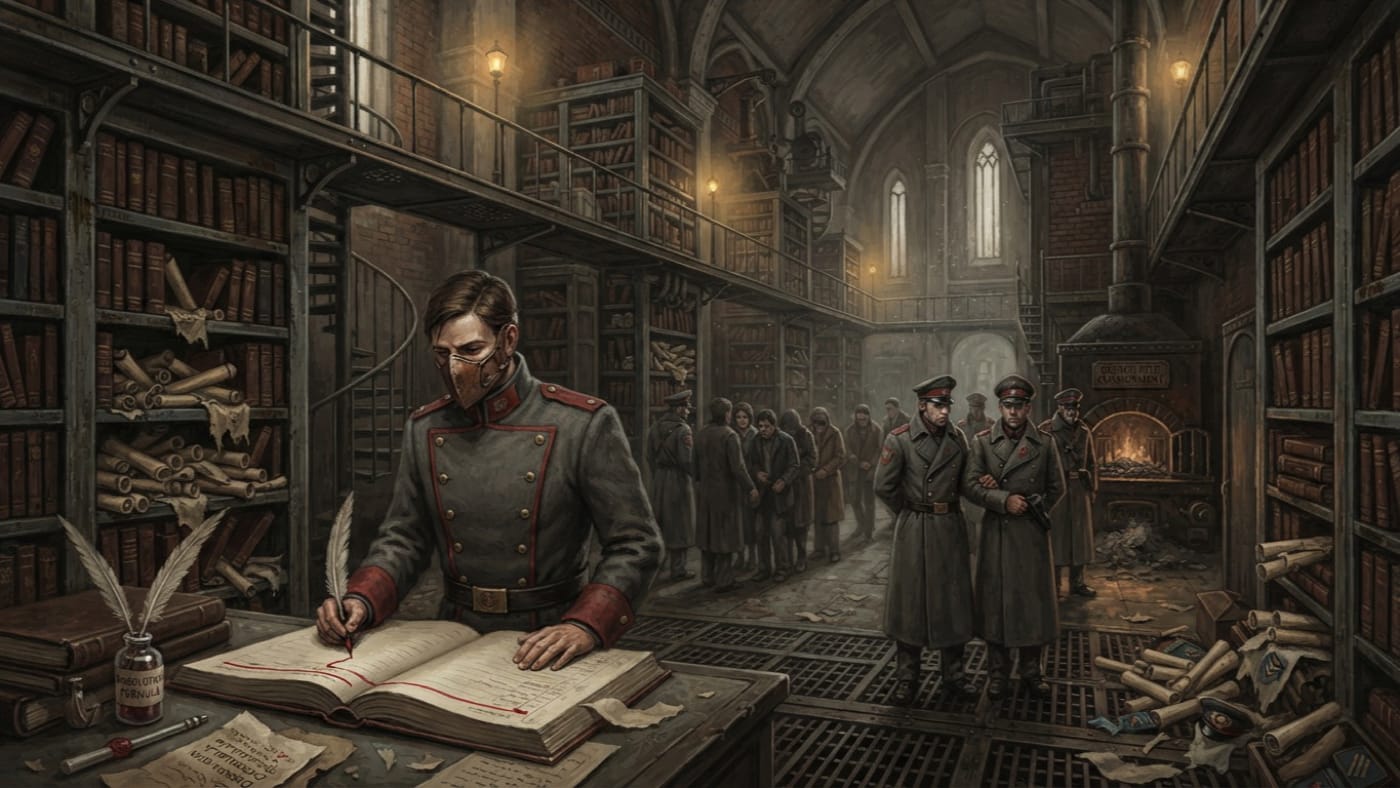
The Bureau found a cure in its own ink.
Around A.S. 110–115, communal violence became the Bureau of Oaths' proof that broken vows rot. The dead supplied the argument; the Breach Rites supplied the ink.
Codex Ref. VII.8.11-112
Breach Rite
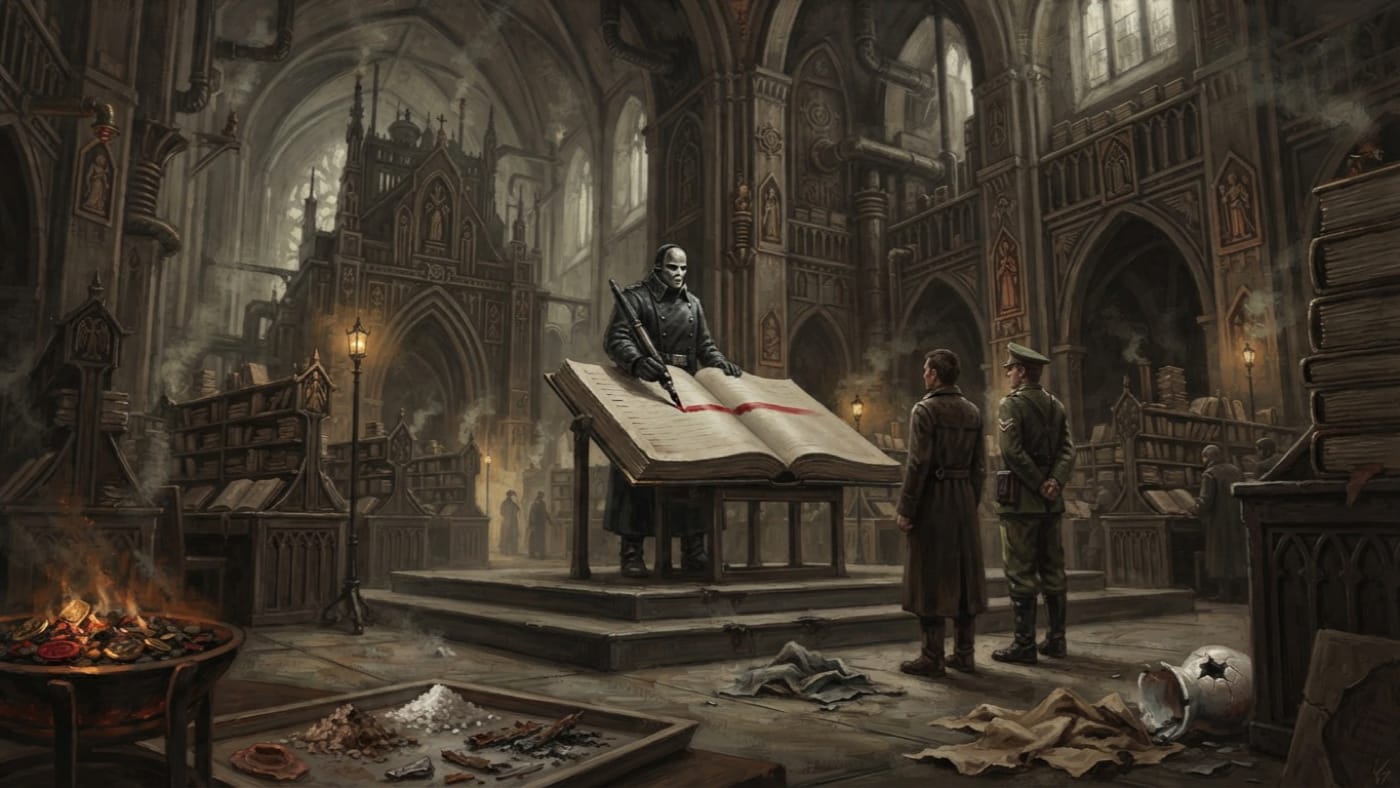
The promise dies. The Ledger remembers.
The Bureau of Oaths buries failed vows in witnessed ceremony and red ink. The bond may end; its record remains available to every auditor, enemy, and future spouse.
Codex Ref. VI.4.03-013

Breach-Rite Witnesser
The promise dies; the witness returns.
The Bureau of Oaths sends its Breach-Rite Witnessers to bury failed vows, close the record, and discover which colleague tied the original knot badly.
Codex Ref. VI.4.03-014
Bureau of Masks and Seals
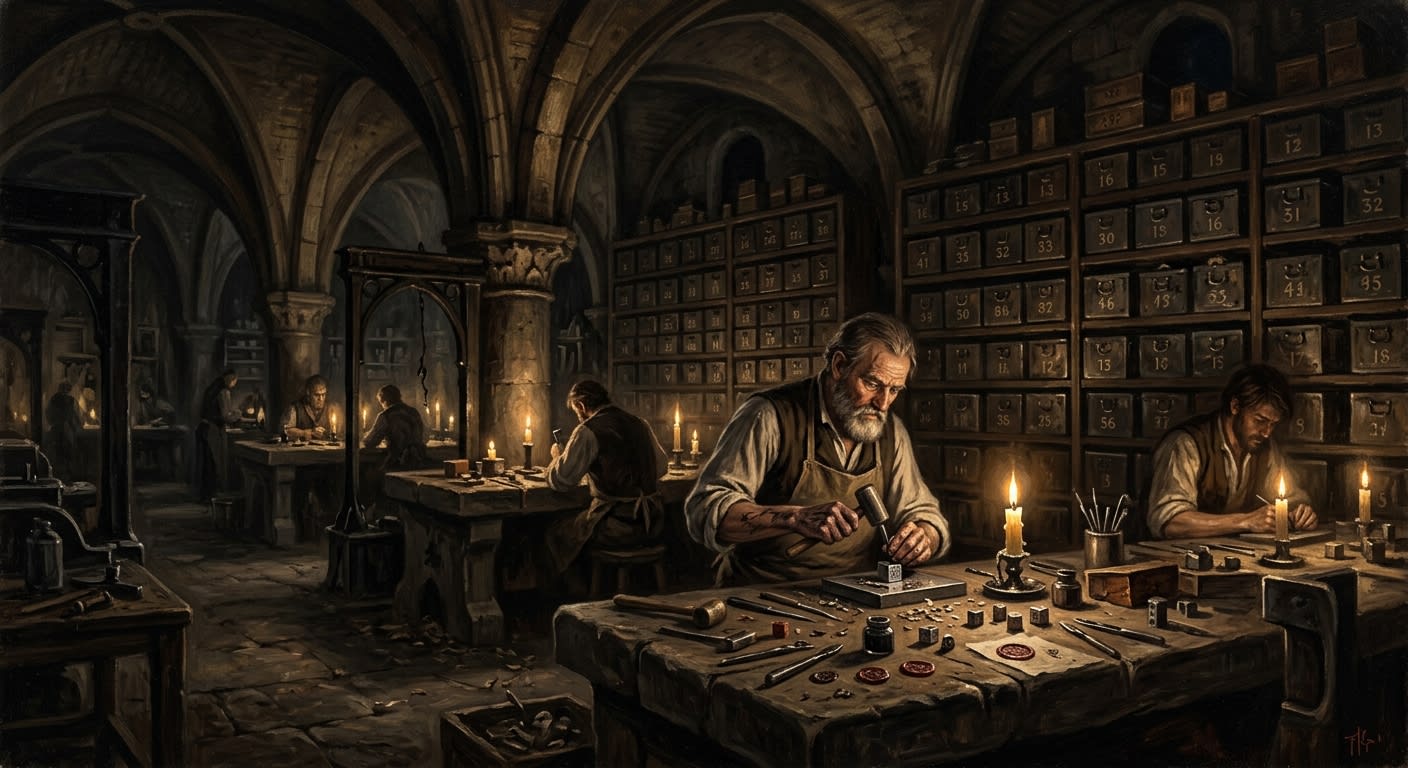
The stamp is the Synod. Everything else is suggestion.
The Bureau of Masks and Seals controls every stamp, seal, and counter-seal in Synod territory. Without its impressed wax, no document is real. Without its license, no face may be hidden. Casselius of Mainz holds the Synod's mouth and press in one pair of ink-stained hands.
Codex Ref. VI.4.19-014
Cadence Reforms A.S. 95
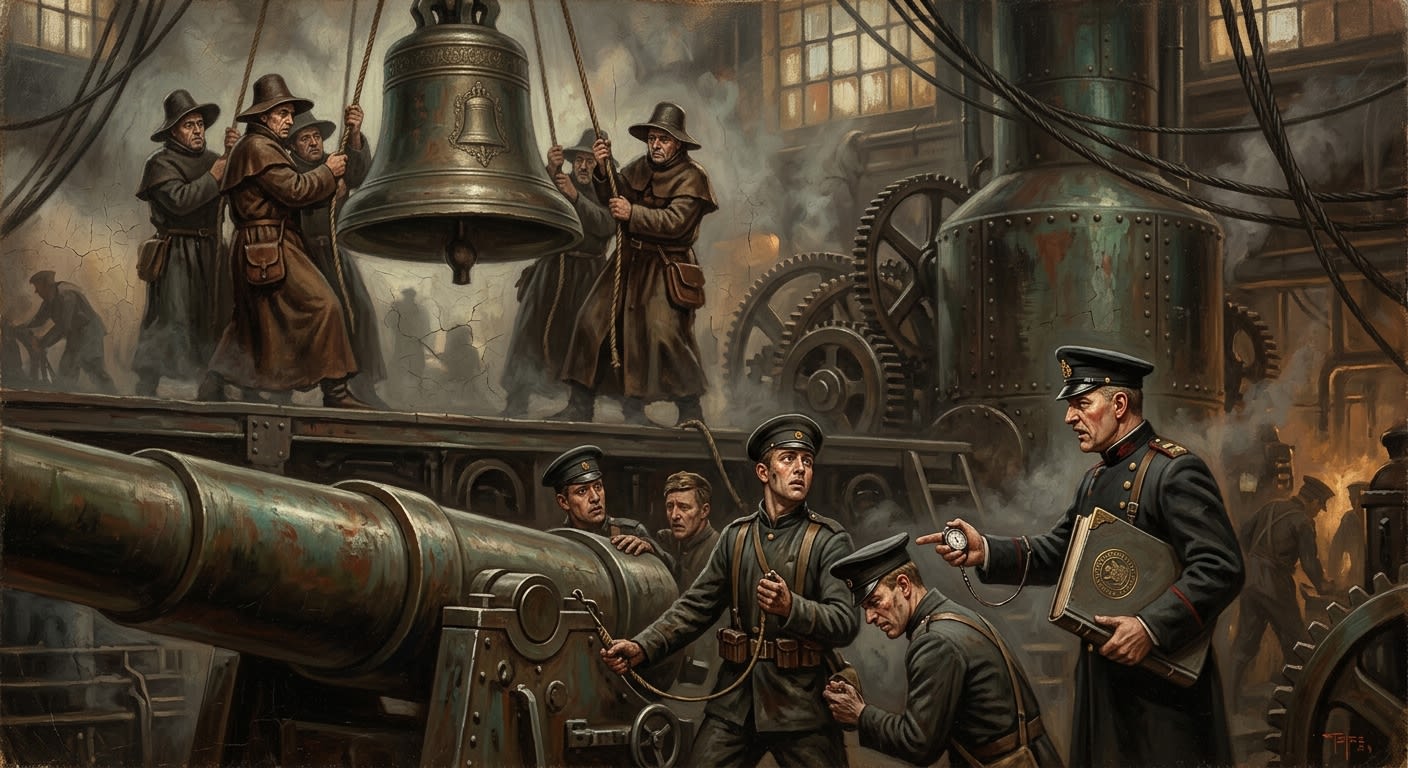
The decree that put the bell above the barrel and made obedience audible
A.S. 95 reforms that made choir cadence govern shrine-platform batteries, created off-measure discharge as a punishable sin, and gave the bell legal teeth.
Codex Ref. VII.2.10-095
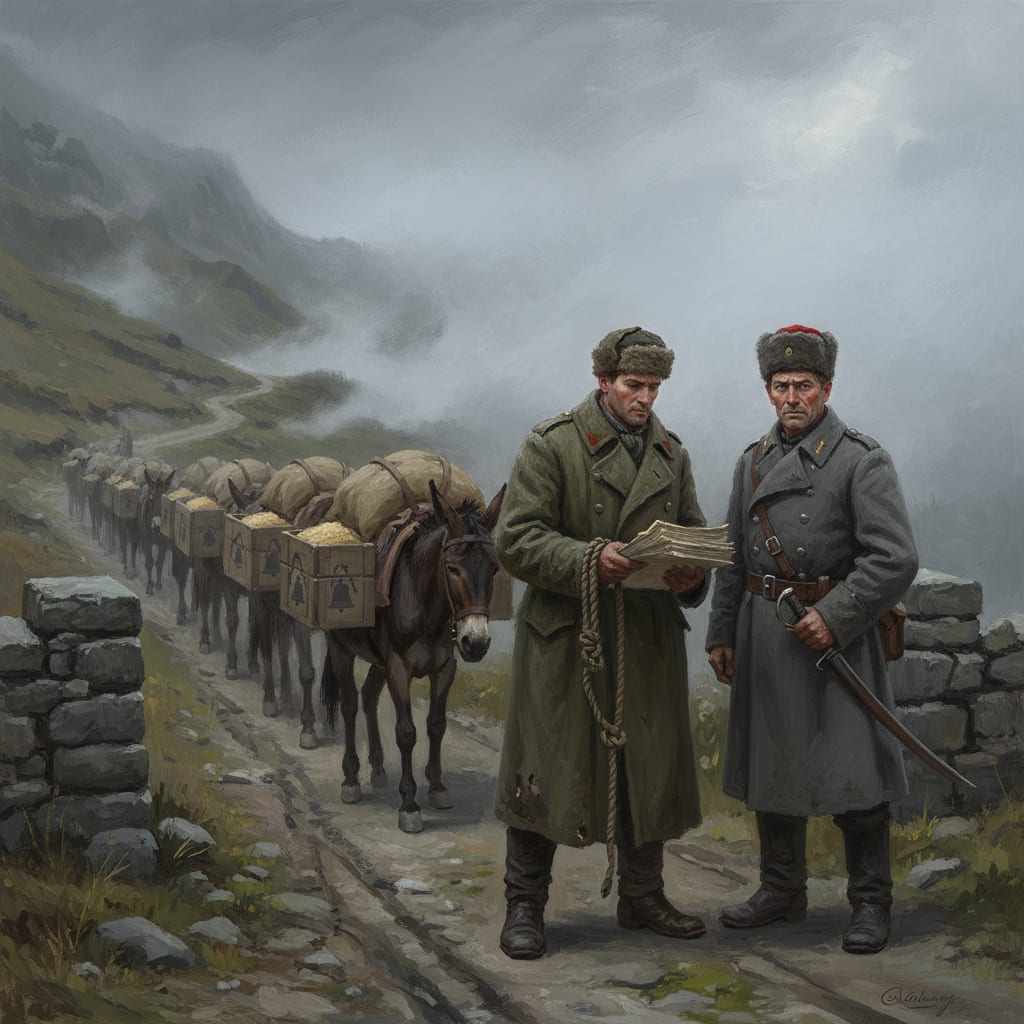
Caravan Factor
The Synod's confession that geography is ungovernable, licensed and taxed accordingly
The Caravan Factor occupies the gap between the Bureau's filed route-plan and the road's actual condition — part cartographer, part accountant, part diplomat, and part criminal, though the Synod prefers not to use the last term in official correspondence.
Codex Ref. XII.6.01-001
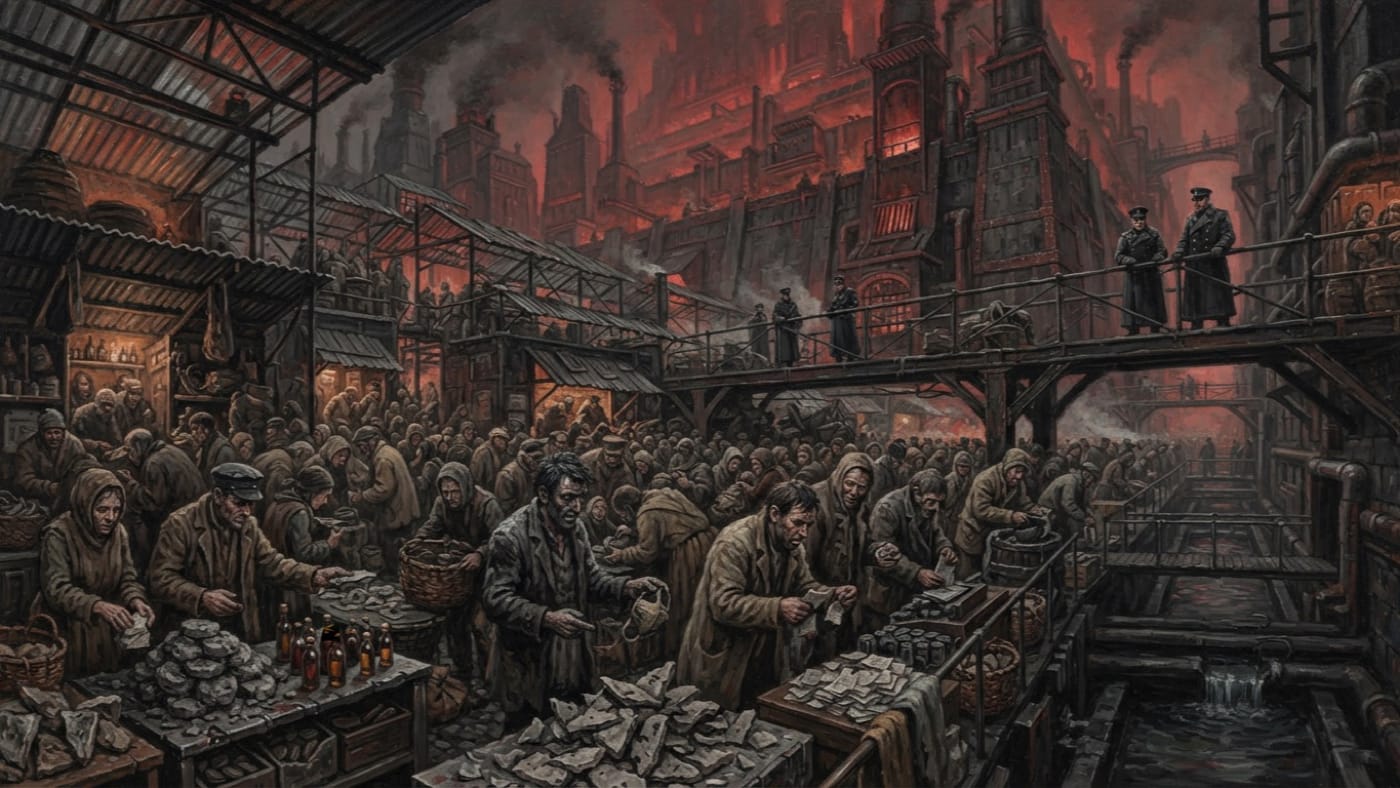
Cinder Markets
Pepper oil buys supper. A bread token proves you exist.
At San Vesta's lowest terrace, pepper oil and ash cakes change hands beside bread shards, cool masks and forged triage slips. The Ledger counts whole loaves; the Cinder Markets trade what hunger breaks off.
Codex Ref. VII.1.03-002
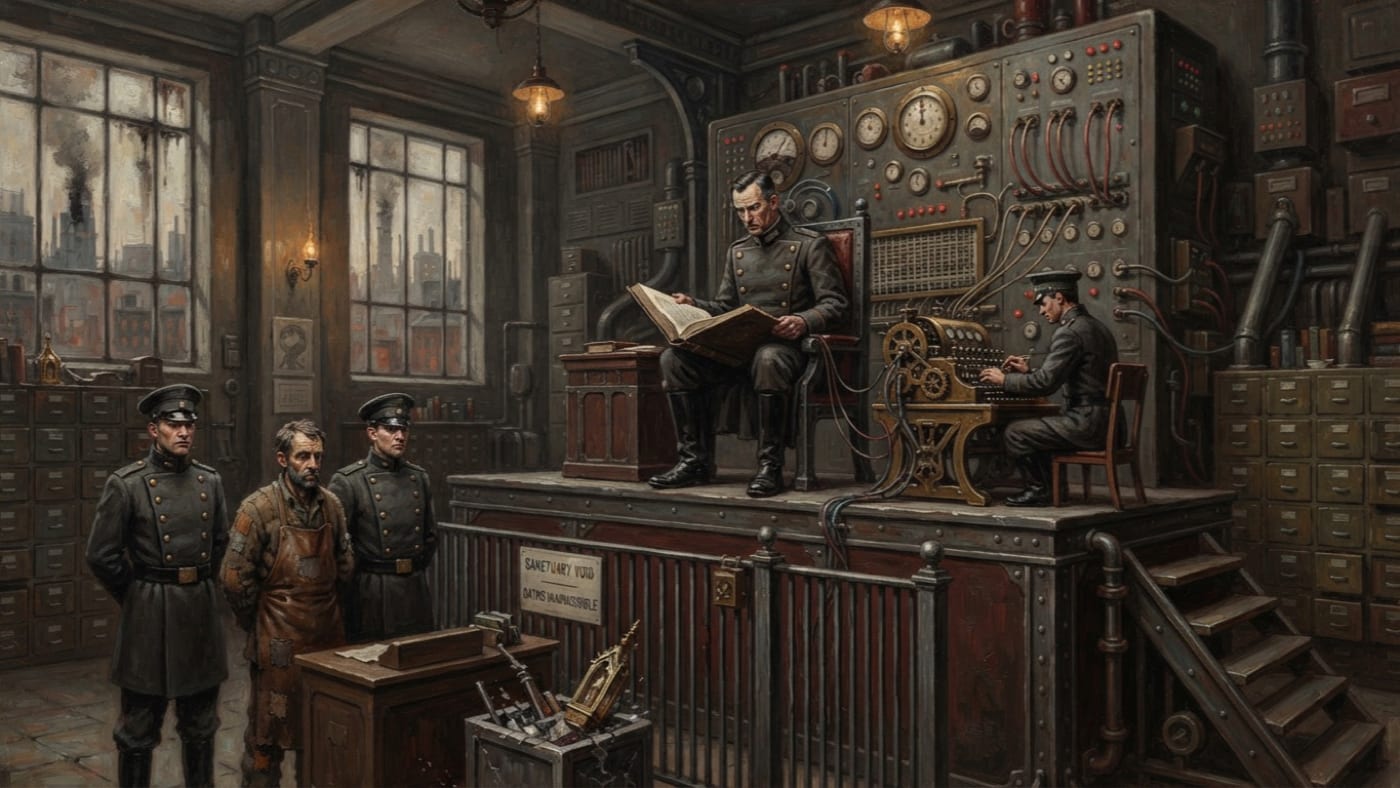
Code of Rational Jurisprudence
A Courtroom Without Relics, and a Divisor Where Mercy Belonged
The Republic's court law made evidence sovereign, abolished relic-sworn oaths and sanctuary, and priced punishment by usefulness. Indexed to Regensburg, A.S. 30; its promulgation remains unknown.
Codex Ref. XIII.1.58-030

Conte di Sforza
He brought a protest. Strasbourg kept the tears.
The Conte di Sforza came to Strasbourg in A.S. 97 to defend the League of Milan. Its compact was already void; his reported tears were retained as evidence.
Codex Ref. III.2.01-097

Contract Theurgy
Where the pen remains free and the room has already been bought
Contract Theurgy is Velmora's law-shaped sorcery: obligation priced, witnessed, matured, and collected from a soul that remains technically free.
Codex Ref. XIII.1.37-171
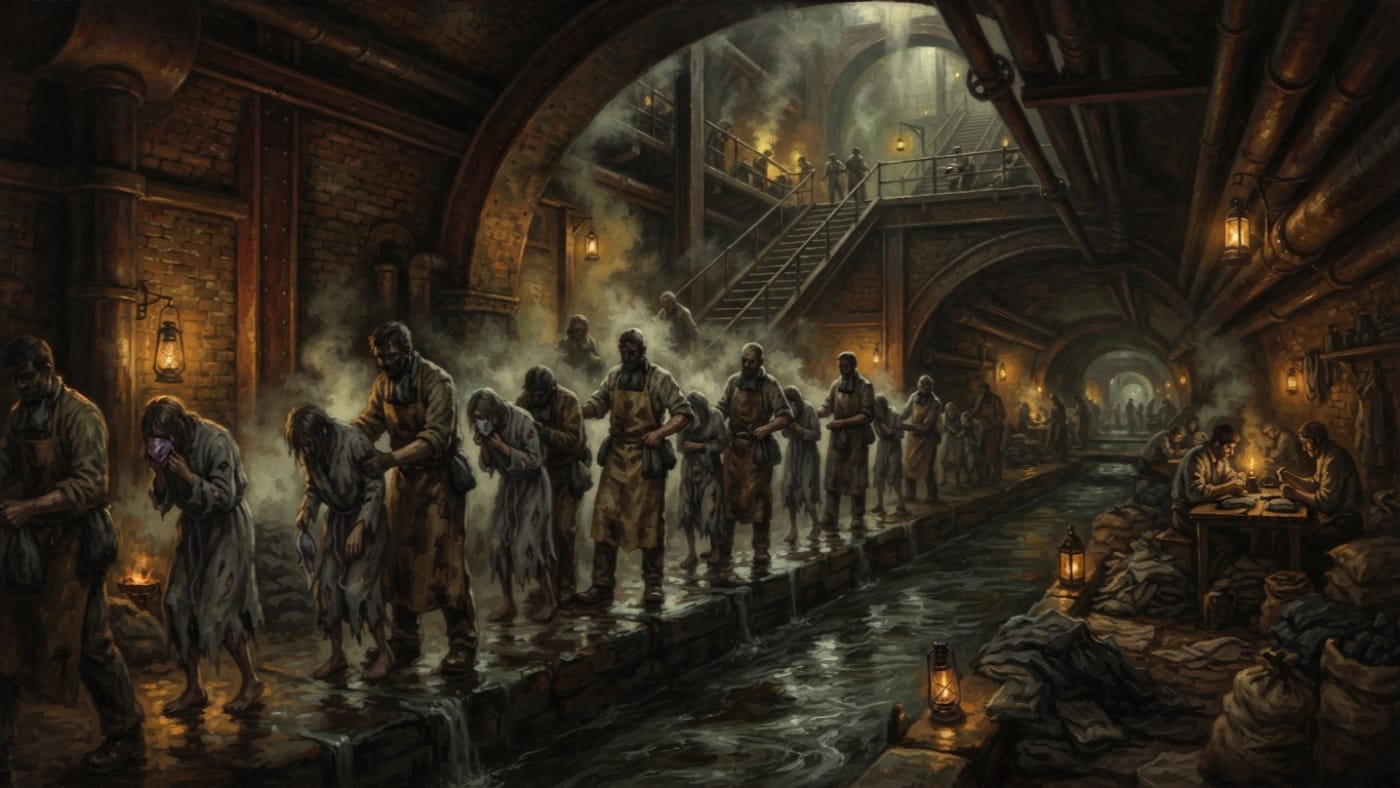
Cool Mask Brotherhood
Respiratory charity, conducted below the ledger.
An unchartered mutual-aid network beneath San Vesta, stitching charcoal masks for kiln-workers and moving medicine and patients through lava tubes. Purity maps the masks; the Tribunal counts the missing bodies.
Codex Ref. XII.27.04-002
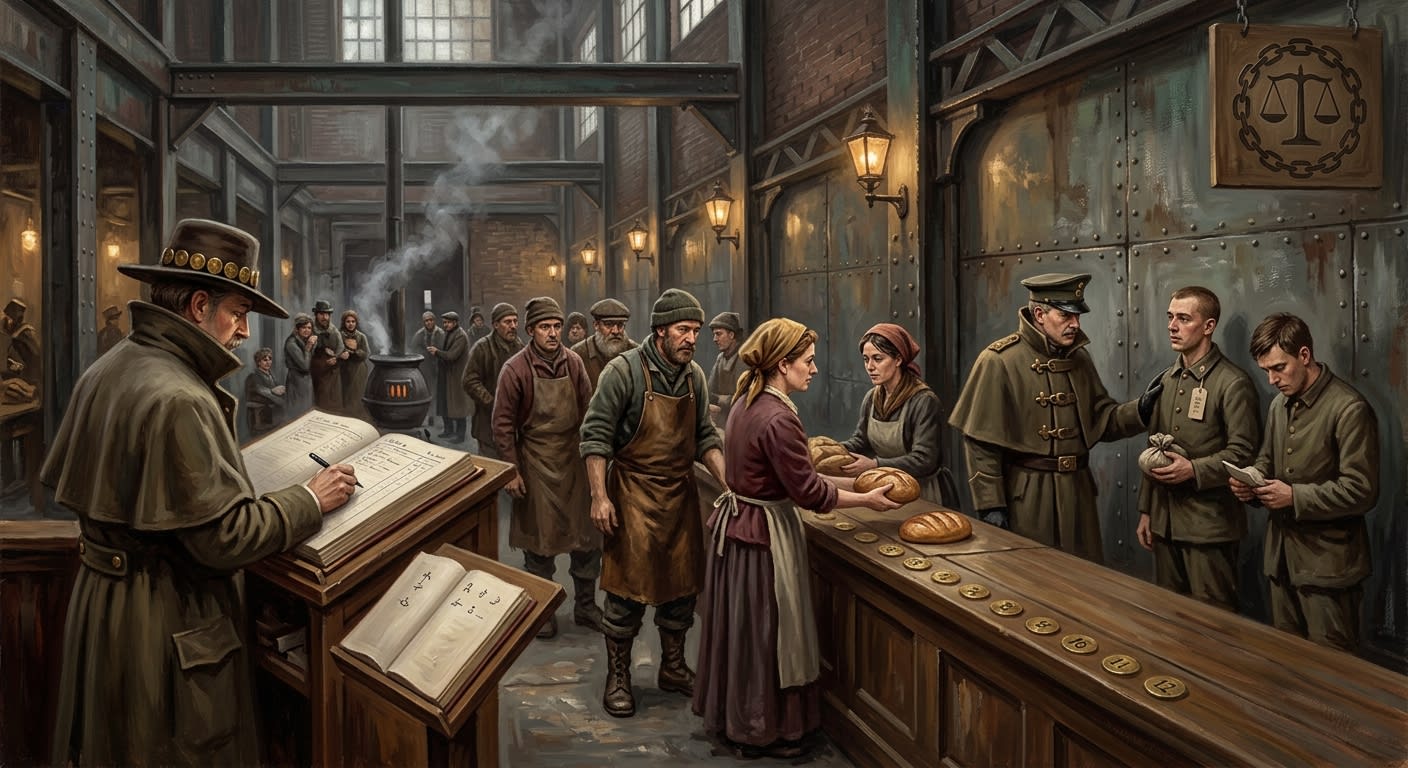
Covenant
The leash with bread on it, sanctified for public use
Covenant is the Synod's master noun: sacred pact in sermon, enforceable belonging in ledger, bread-chain in queue, and body-debt at the Line.
Codex Ref. XIII.1.04-090
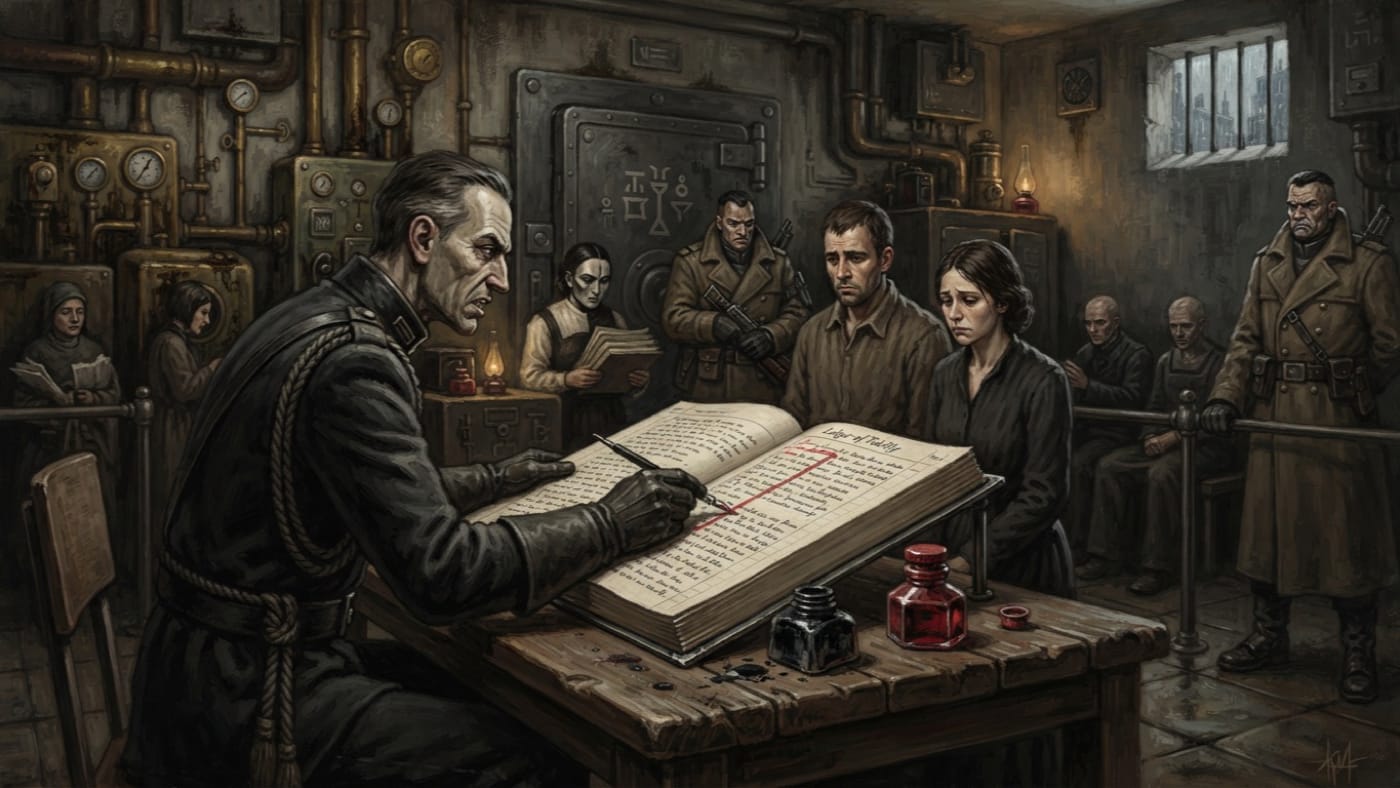
Dissolution Formula
The bond ends; the evidence remains
The Dissolution Formula closes witnessed vows by licensed speech and a red line. Strasbourg buries the bond, preserves the evidence, and collects the fee.
Codex Ref. VI.4.03-013
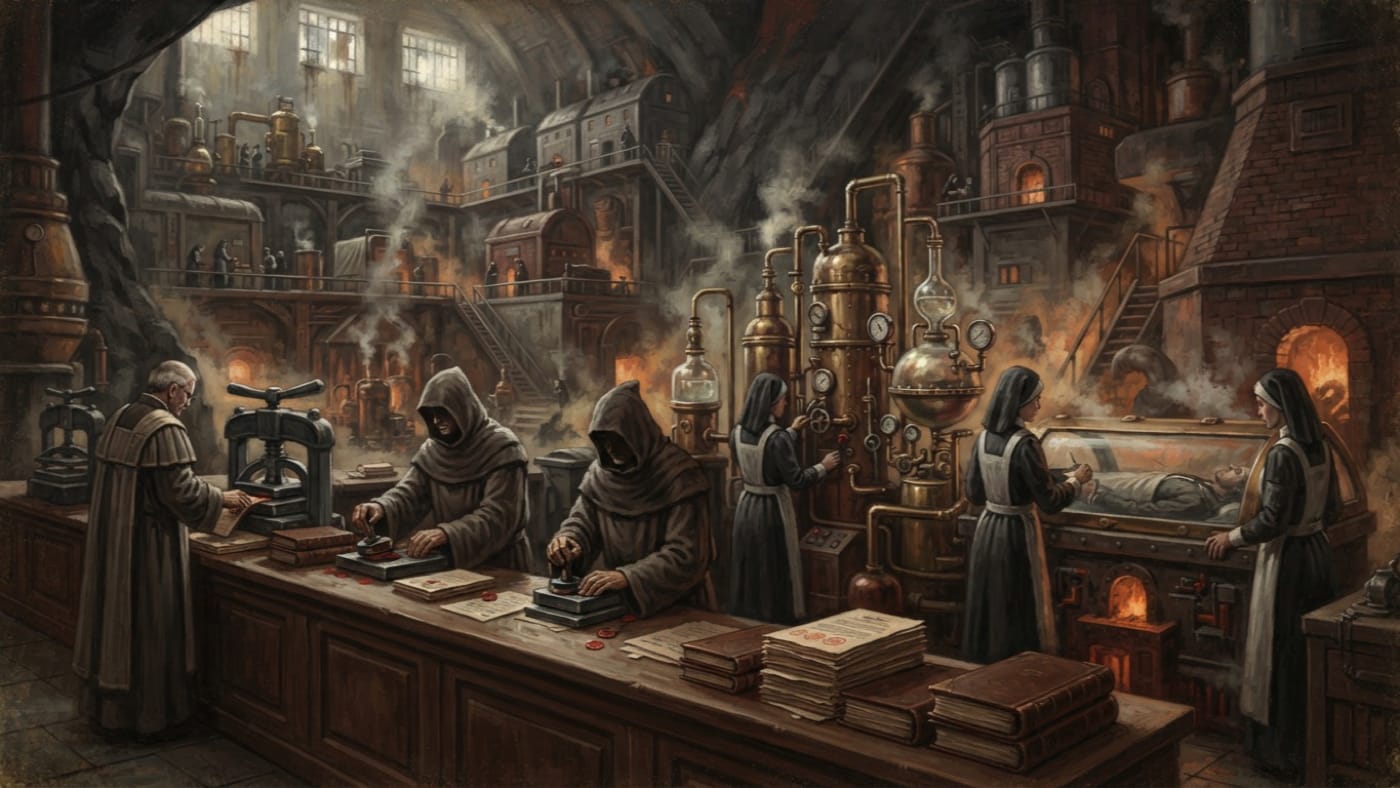
Doctrine of Acceptable Innovation
Three seals before the flame. A debt after the cure.
San Vesta's dispensation permits experiment after three seals and triplicate filing. The cure costs labour; the failure receives a classification. Unstamped experiment makes the practitioner a heretic.
Codex Ref. XIII.1.124-001
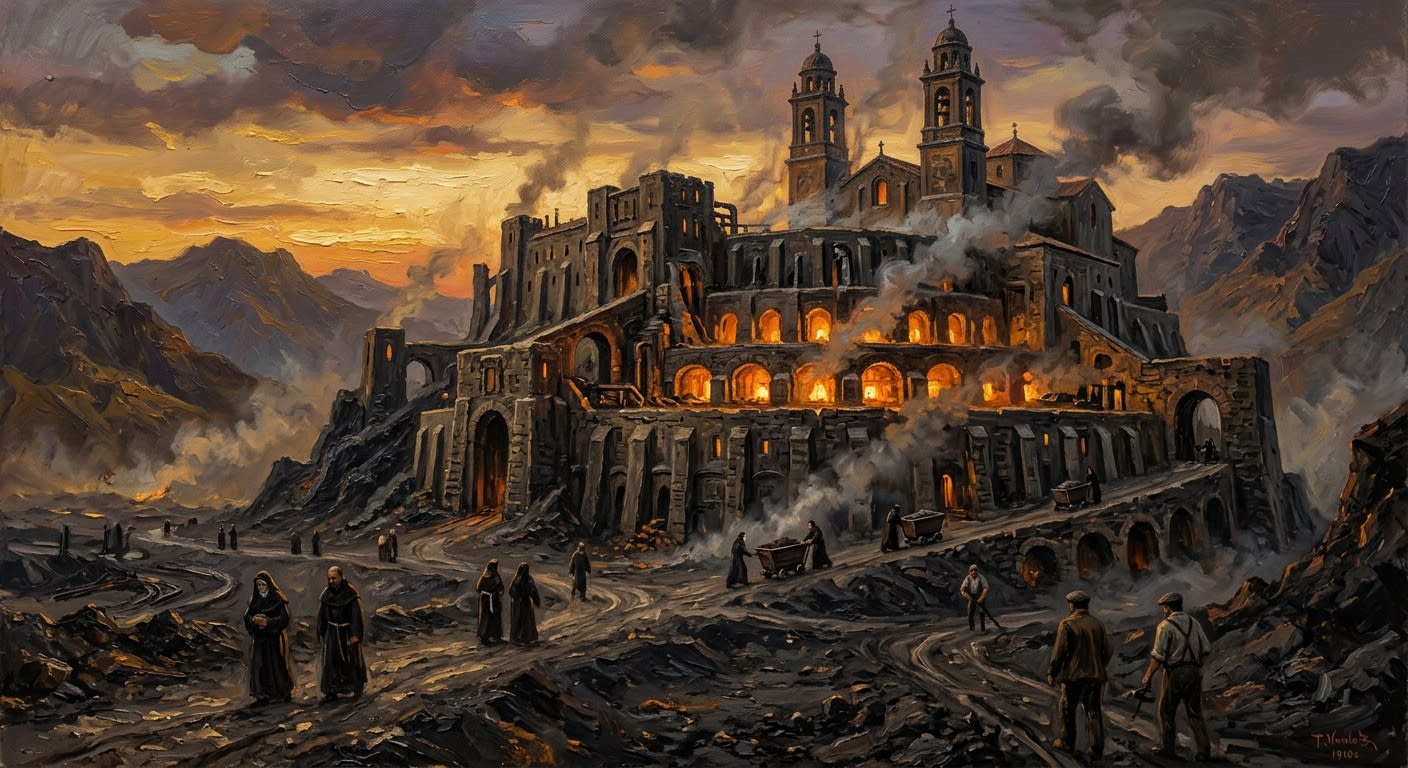
Ember-Priory of San Vesta
The ovens glow. The debt accrues. The smoke writes names no one authorised.
A volcanic priory-city in the Iberian south where bread never spoils, dying men buy three more days, and the sealed vent beneath the foundations grows warmer every year. The Synod's most productive monastery, and possibly its most dangerous one.
Codex Ref. VII.1.03-001
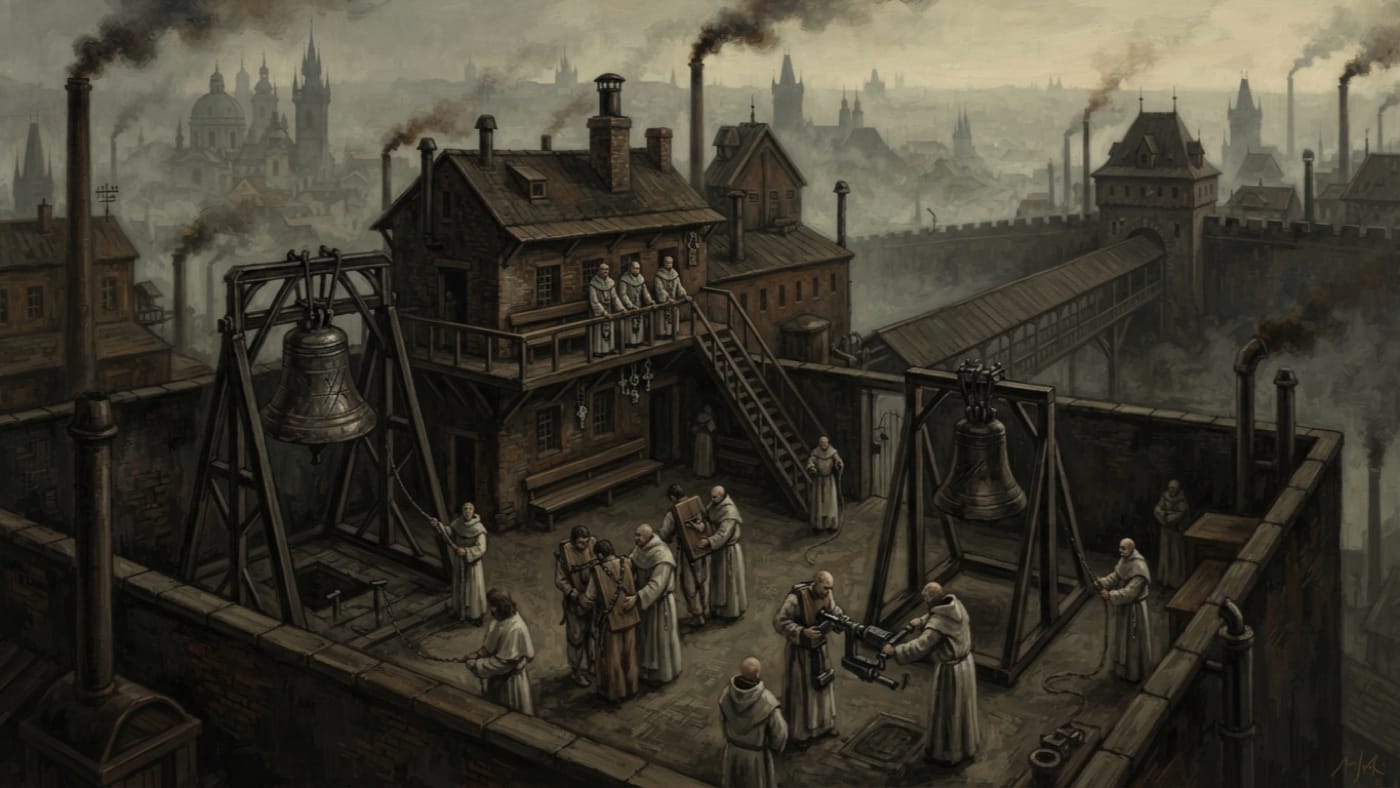
Ephrath Chapterhouse
The condemned leave once; the oak returns every year
Prague's Ephrath Chapterhouse gives Purity's sentences a courtyard, a departure bell and a shelf. The condemned leave once; the oak is prepared for next year.
Codex Ref. II.3.02-002
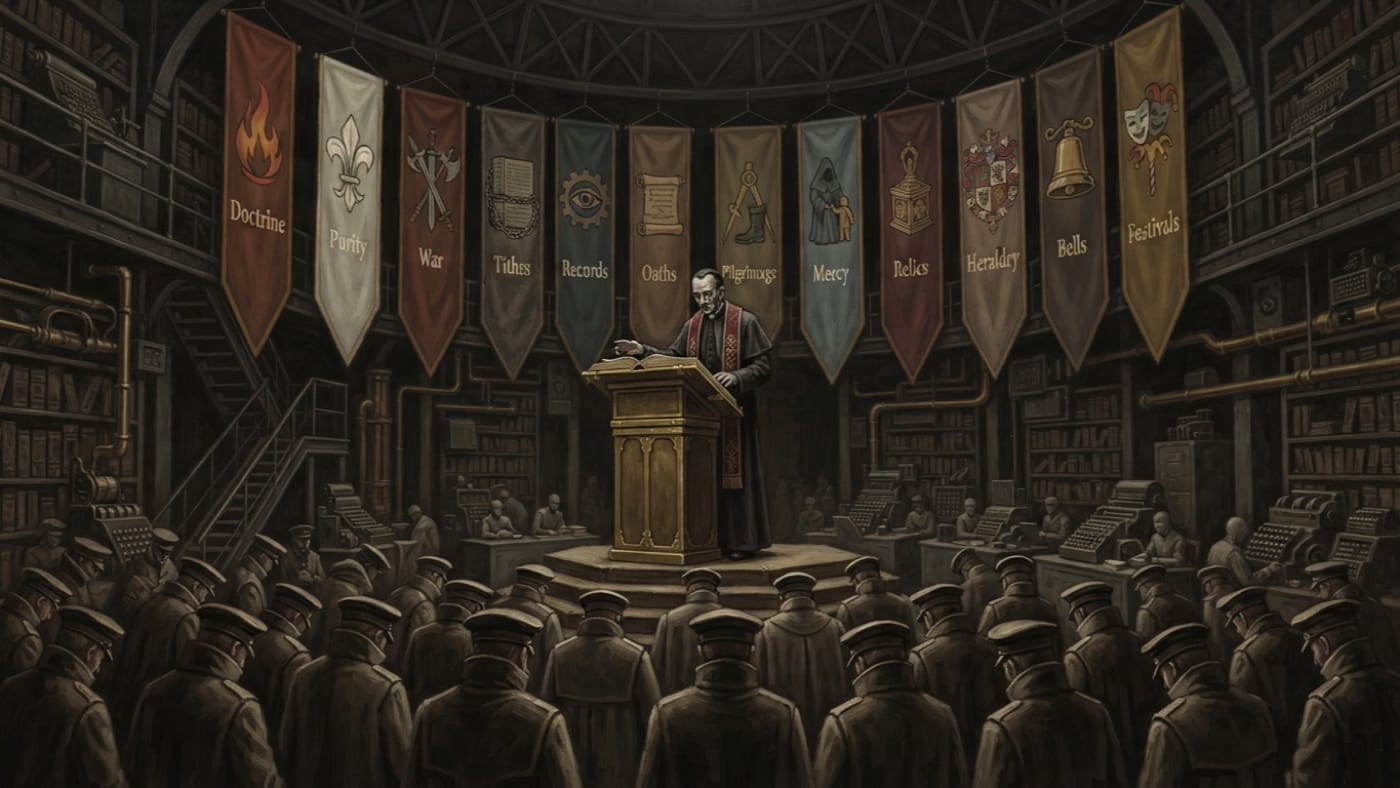
Feast of the Ledger
Twelve portfolios read aloud; the offices that keep them standing go unnamed.
At the Feast of the Ledger, the Synod reads its twelve canonical portfolios aloud. Settlement, which assigns three hundred million addresses, receives no syllable. The recital is correct; the census is incomplete.
Codex Ref. XIII.1.89-201
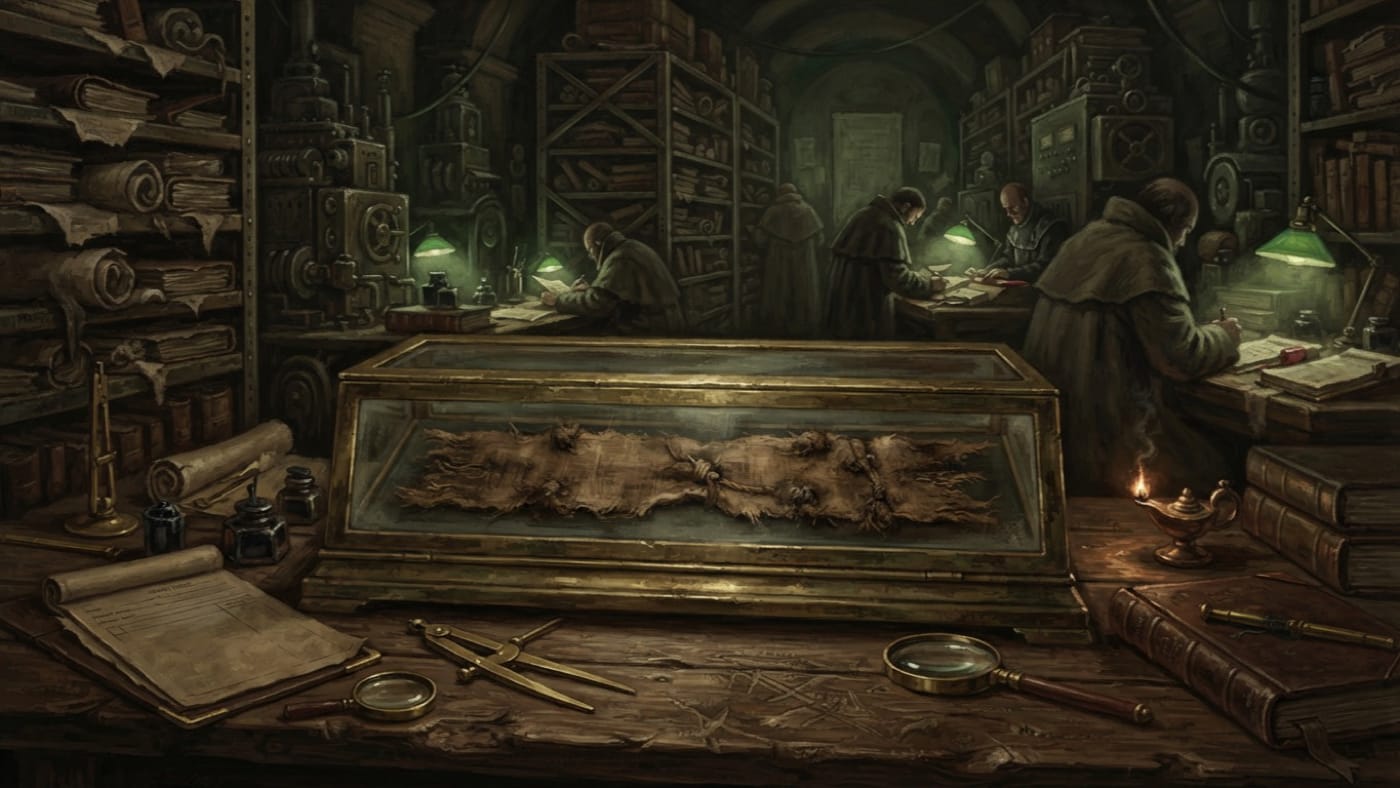
First Knot-Cloth
Thirty households bound, three certainties about where the cloth lies
An A.S. 201 survey of Liora's First Knot-Cloth, traditionally used to bind thirty hungry households to mutual aid. The offices agree it is preserved; they disagree on where.
Codex Ref. XIII.1.03-015
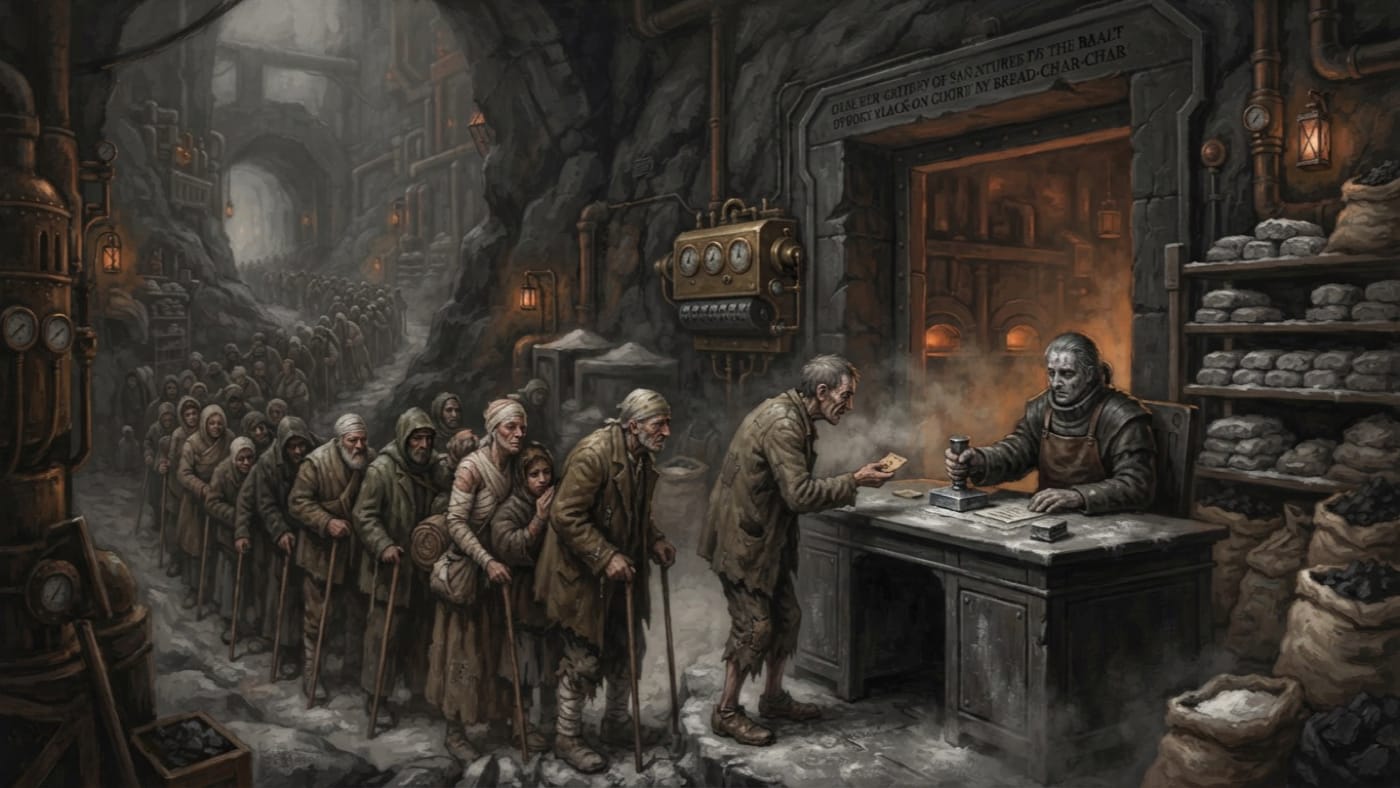
Flour Gate
One road, one ledger desk, one stamp that decides who eats.
San Vesta's ration gate, where a named bread token proves you exist and one clerk decides whether you eat. The flour convoy is three days late; Quartermaster Ashweight has begun the count.
Codex Ref. VII.1.03-002
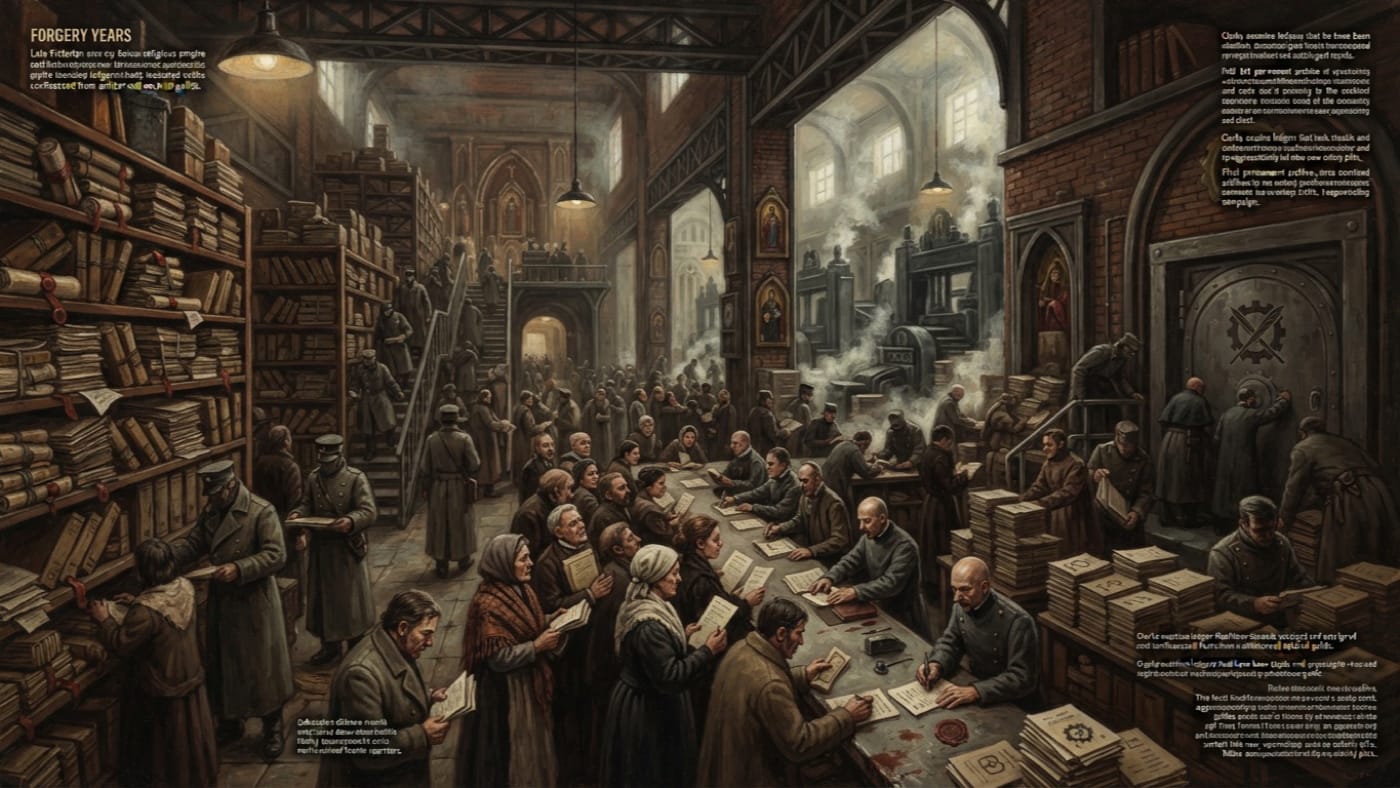
Forgery Years
The promises were suspended. The filing fees were collected.
An A.S. 201 survey of the fraud epidemic following the Oaths charter of A.S. 92. Strasbourg answered false bonds with licensed Witnessers and re-registration; the Bureau reports that the fees paid for its first permanent archive.
Codex Ref. VII.8.11-1133

Founding Instruments
Five verbs gave one Bureau the brass.
The Founding Instruments of A.S. 92 grant Masks and Seals control of official authentication. Article XVII is cited exactly; the full text is absent from this file. The sub-clause still makes paper binding.
Codex Ref. XIII.1.17-092
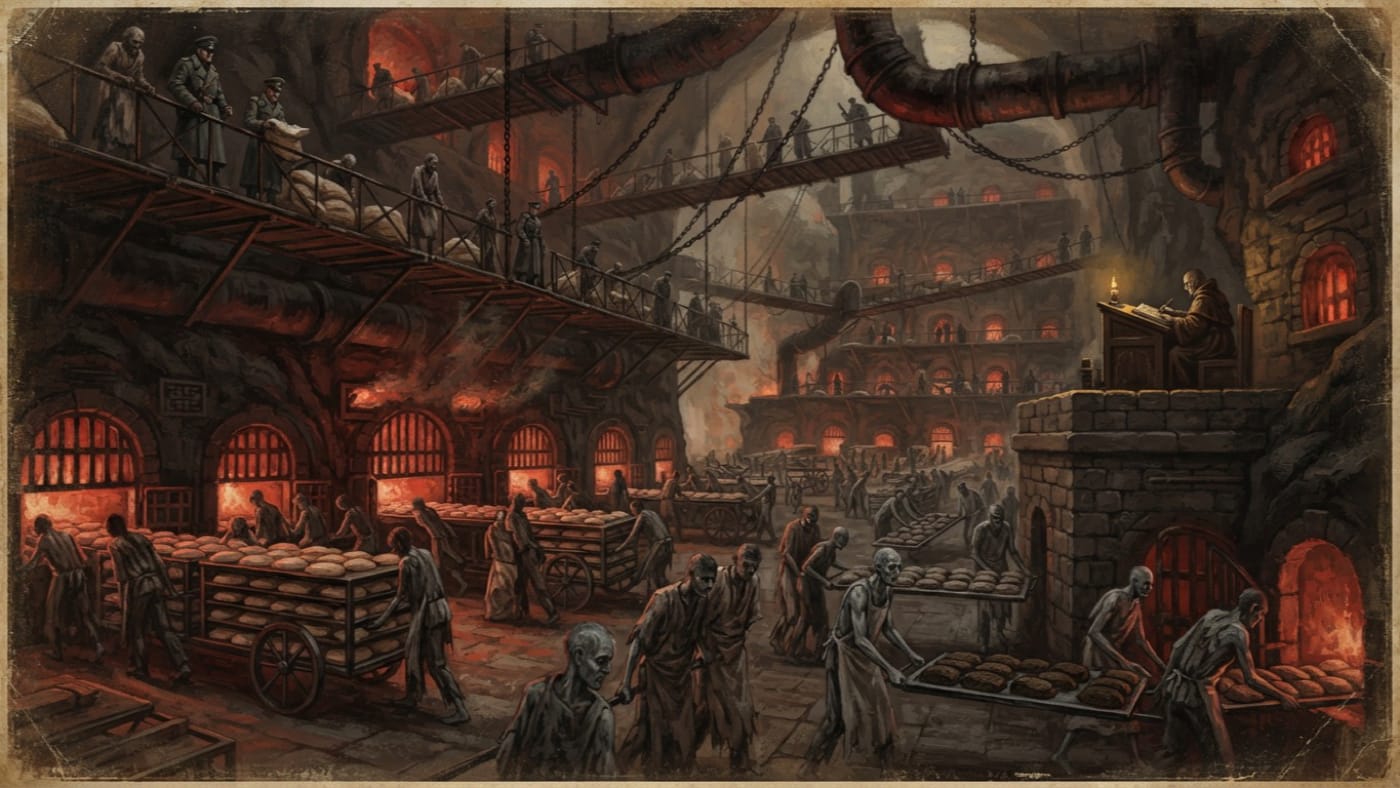
Great Ovens of Vesta
The bread keeps. The workers owe. The heat rises.
San Vesta's volcanic ovens bake ash-bread that never spoils, feed the Iberian front, and turn recovery debts into labour. The flour convoy is late; the rising heat is filed as efficiency.
Codex Ref. VII.1.03-003
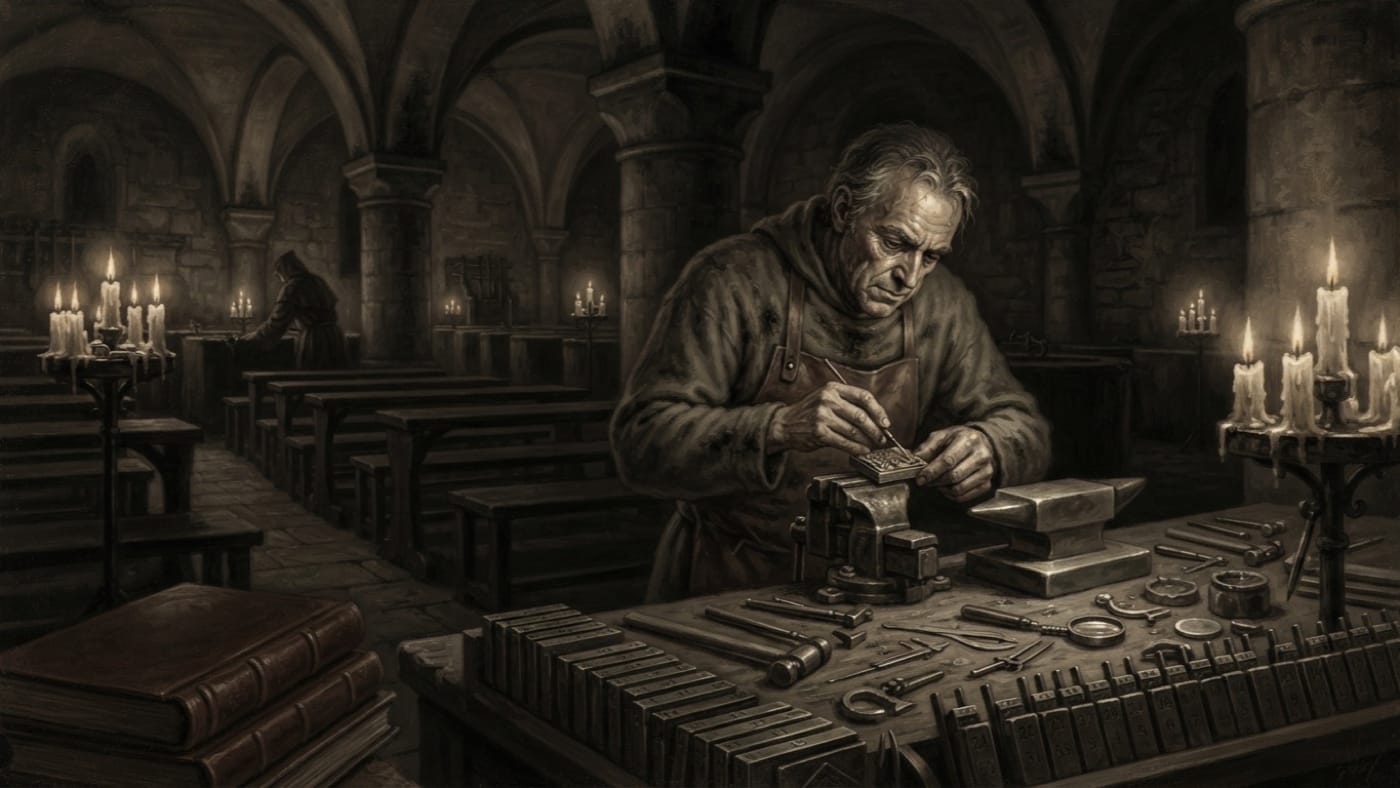
Guild of the Anvil and Stylet
The impression serves the Synod. The hand serves the impression.
Chartered in A.S. 105, the Guild of the Anvil and Stylet cuts the metal that makes Synodal paper binding. Its cutters swear to the impression; the Bureau of Masks and Seals files the theological objections.
Codex Ref. VI.4.19-015
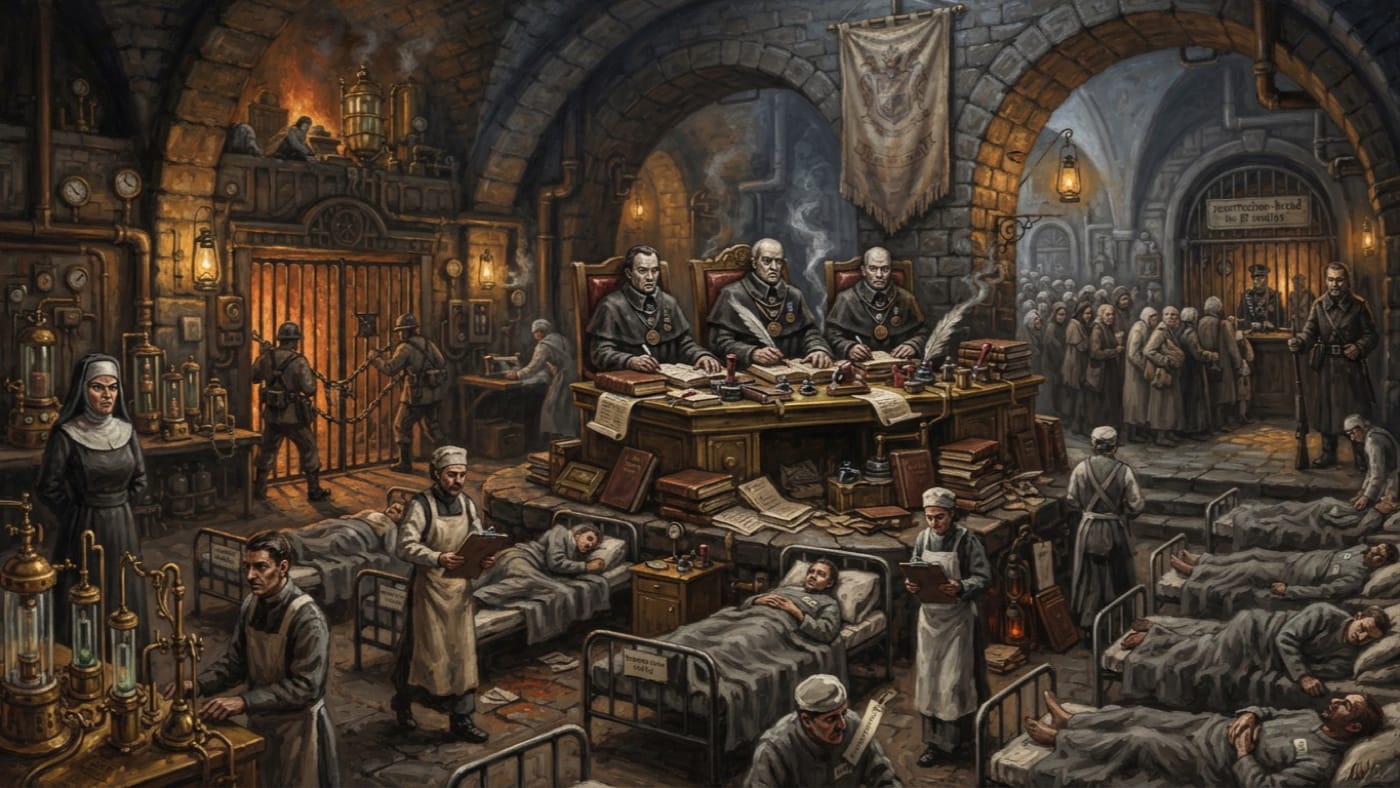
Infirmary Tribunal
The court decides when a patient is well. The ledger decides when a body is paid.
San Vesta's medical court assigns treatment, approves experiments, locks quarantine wards and rations resurrection-bread. Recovery earns a labour debt; the Tribunal decides when the patient is well enough to pay.
Codex Ref. VIII.1.03-001
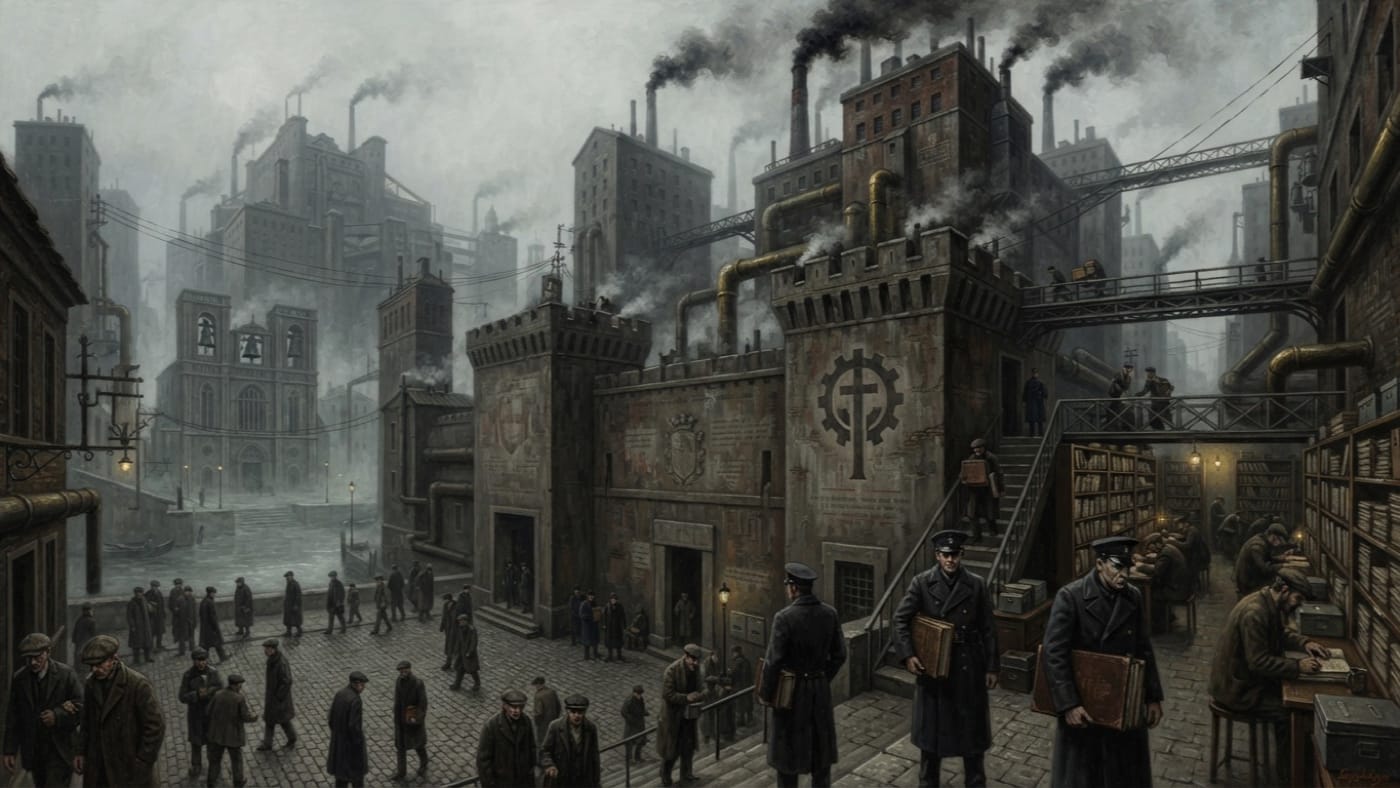
Italian principalities
One filing drawer for a peninsula that never consented to share it
The old Italian jurisdictions, erased by Regensburg in A.S. 30 and inherited piecemeal by the Synod. Their complete roster remains unestablished; their objections remain abundant.
Codex Ref. II.3.09-030
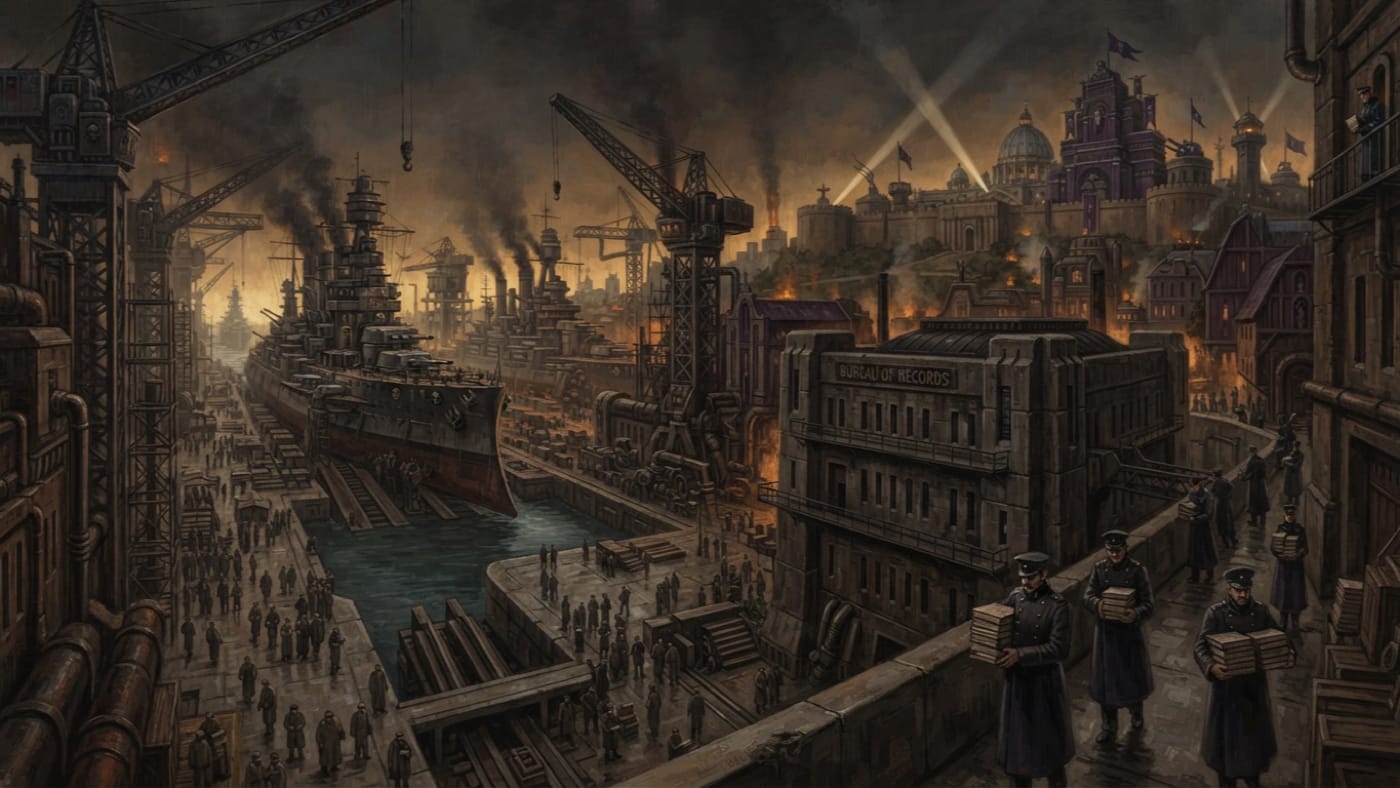
Italy
Inside the tax rolls, outside the founding seal
Italy builds ships, keeps archives and finances Synodal wars without a seal on the Concordat. My A.S. 201 survey finds its territories administered and audited, while Doctrine still anticipates compliance.
Codex Ref. II.3.10-001
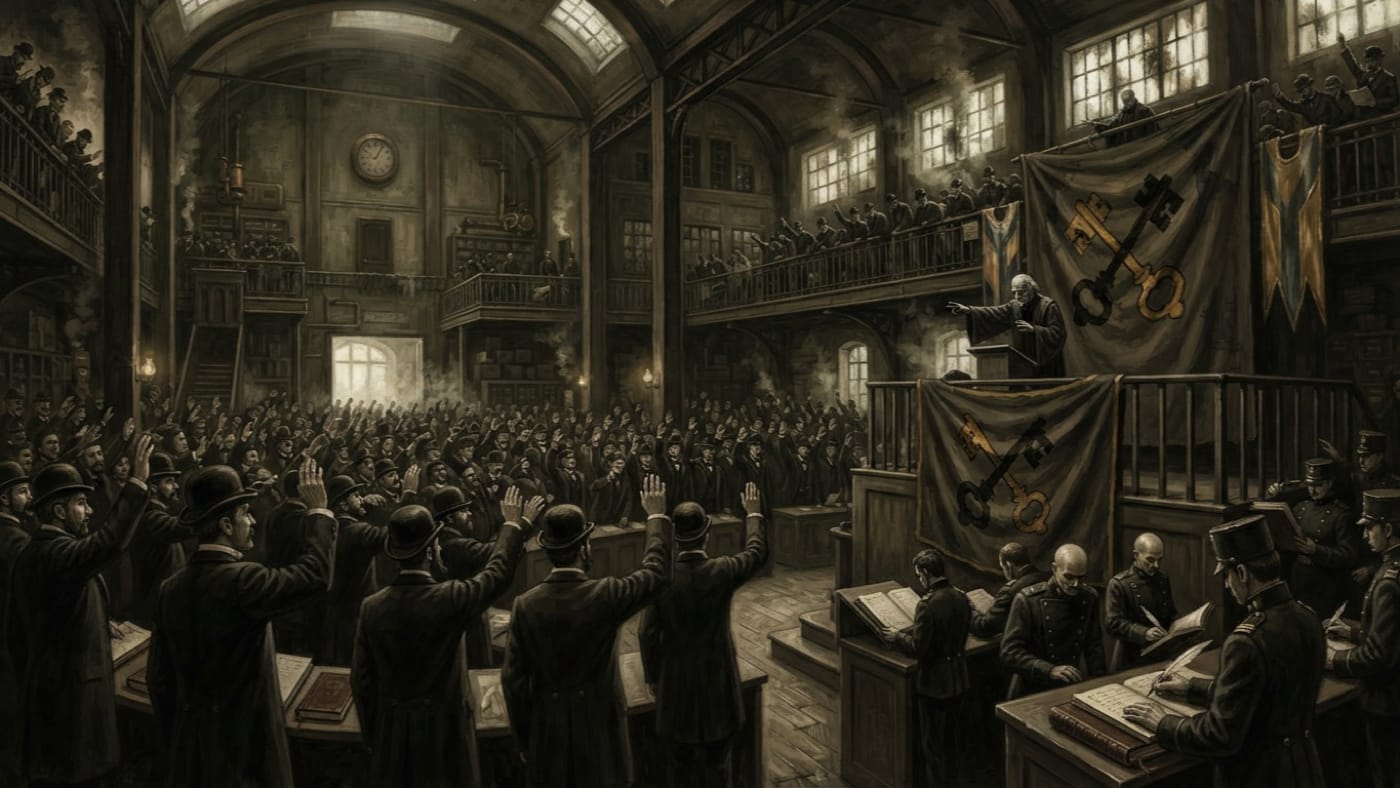
Key-Oath
An allegiance voided, a city entered
In A.S. 150, Milan's city councils swore the Key-Oath to the Coalition of the Crossed Keys and its so-called True Successor of Rome. The oath is void; the names remain useful.
Codex Ref. VII.8.04-002

Lantern Loyalists
Useful cowards, quiet streets, and the holy art of misfiled mercy
Lantern Loyalists preserved Brotherhood routes after the A.S. 178 Cologne split by tolerating Mercy Preachers, disguising mercy as workload reduction, and leaving doctrine off the page.
Codex Ref. XII.25.08-001
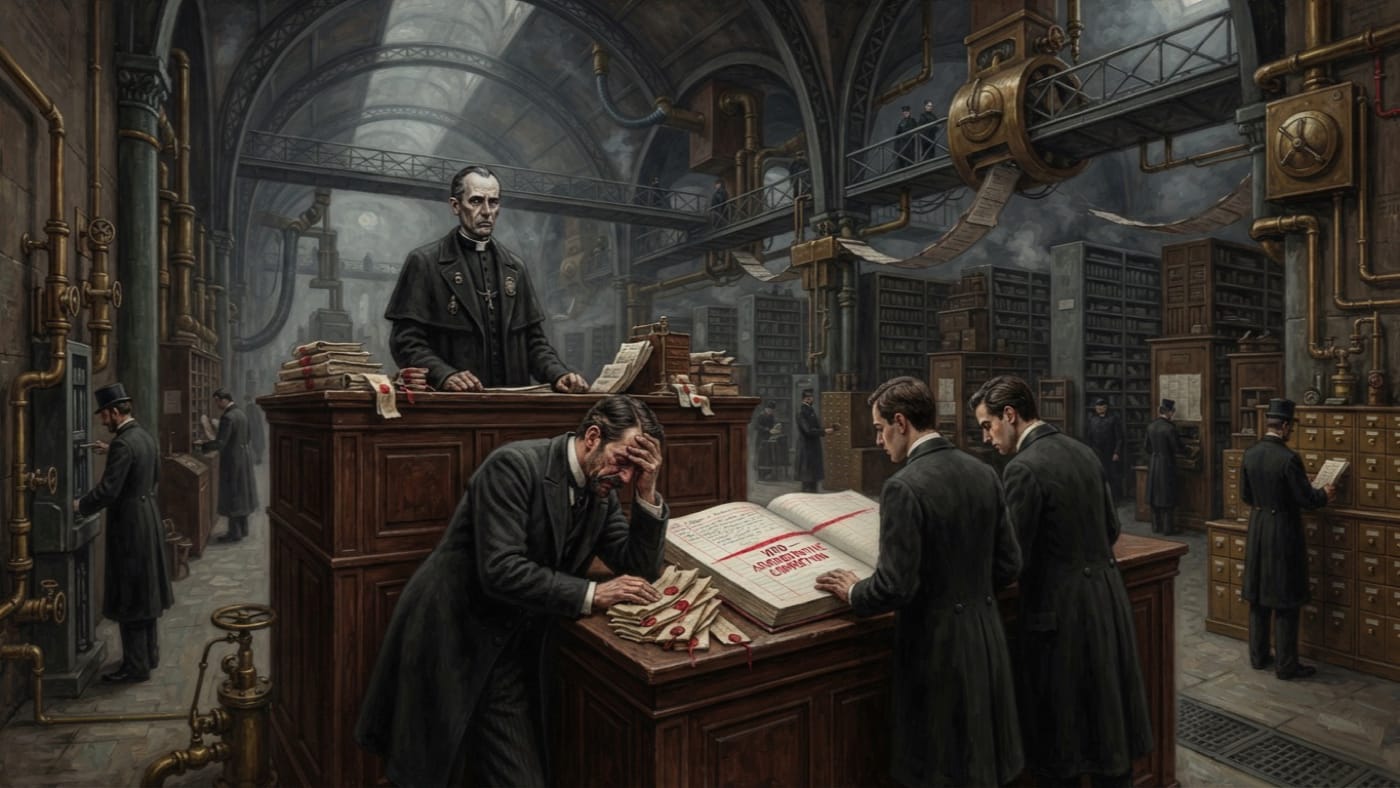
League of Milan
Fourteen cities, five pages, one stamp
Fourteen Lombard cities called their promises an alliance. In A.S. 97, the Bureau of Oaths called them void. The League's founding is uncertain; its annulment is filed.
Codex Ref. VIII.3.01-097
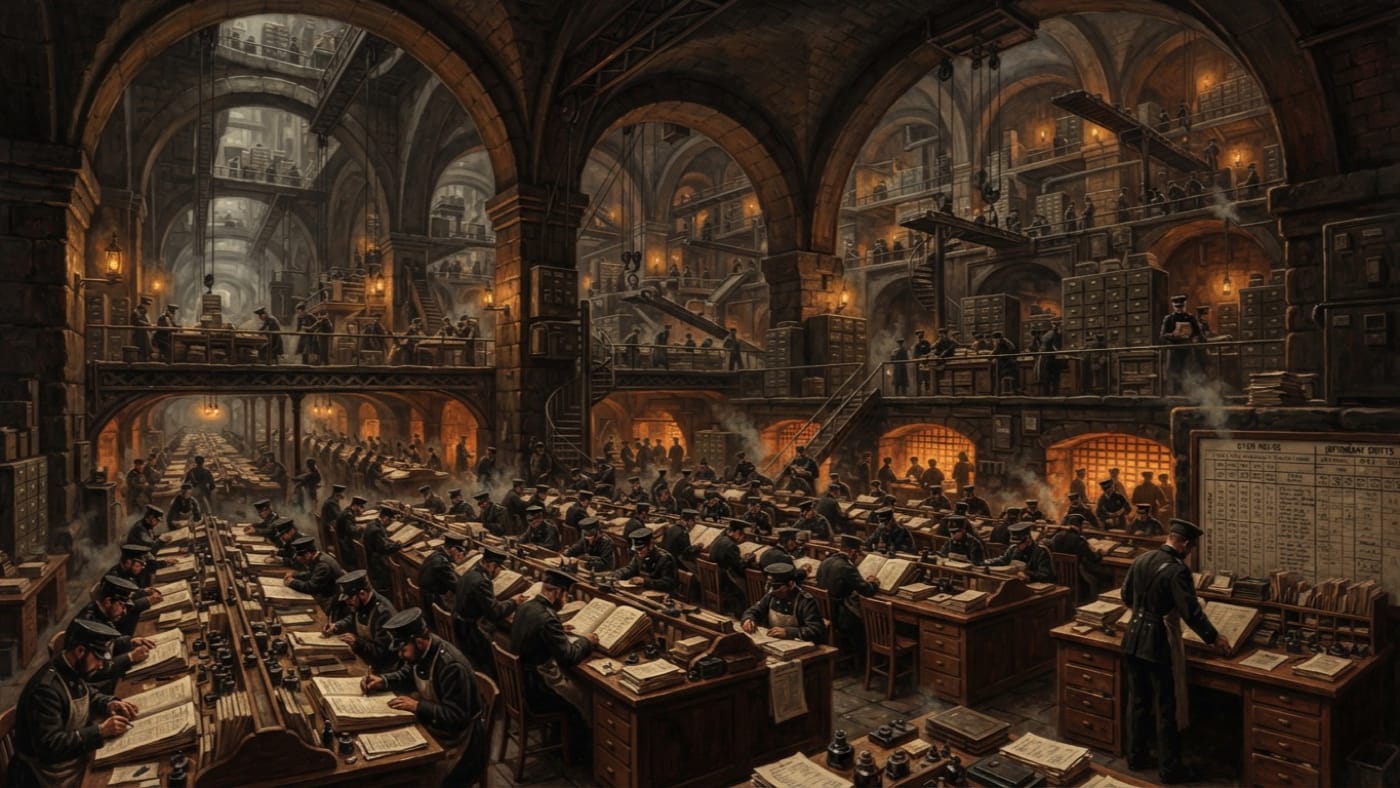
Ledger Cloisters (San Vesta)
The governors decide. The ink appoints the hour.
San Vesta's scheduling and archive district turns bread tokens into proof of existence, treatment debts into shifts, and stamped proposals into permission to burn. The governors decide; the Ledger Cloisters make the decision fall due.
Codex Ref. XIII.1.124-002
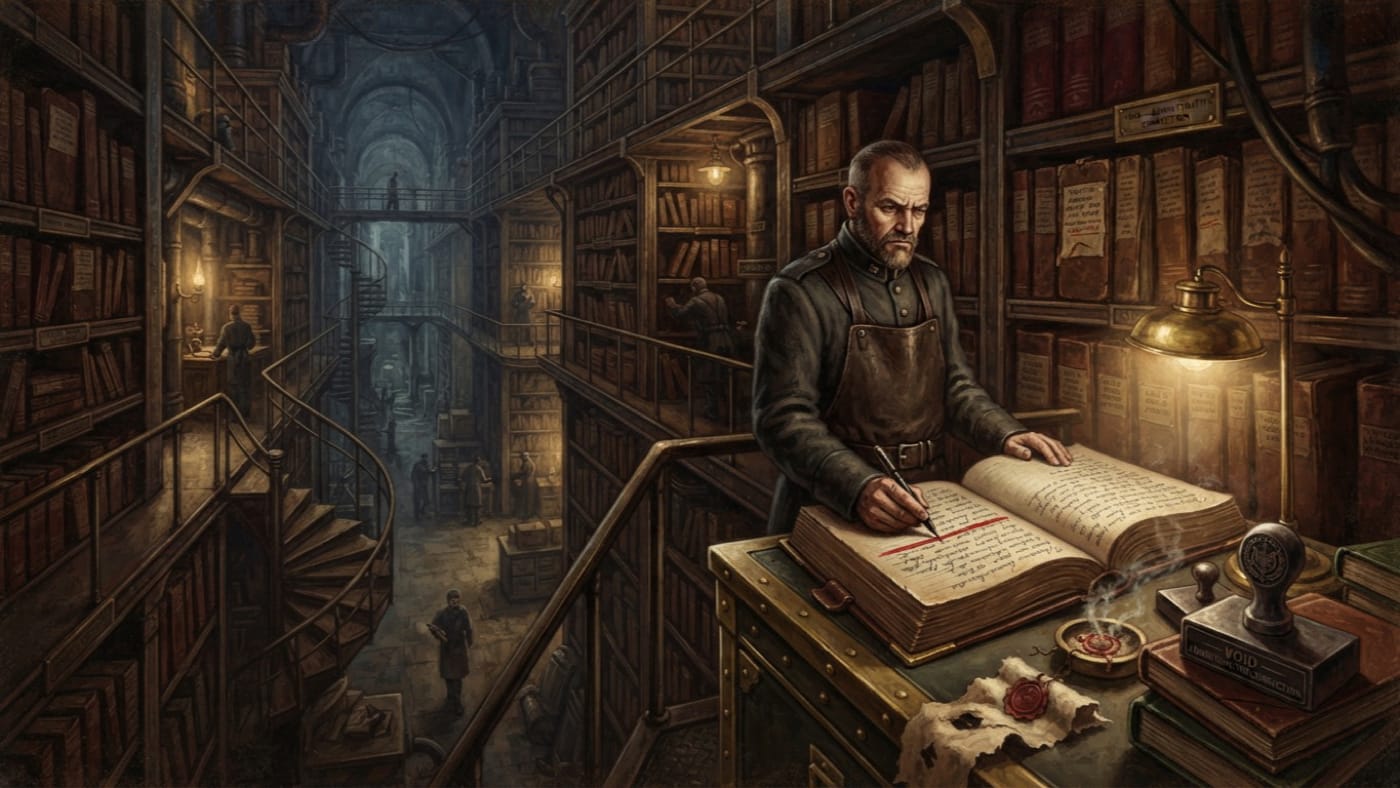
Ledger of Dissolved Compacts
The promise ends. The record remains.
The Bureau of Oaths keeps annulled treaties, expired guild bonds and voided marriages in forty-seven volumes called the Graveyard. A compact may end. Strasbourg keeps the wording.
Codex Ref. XIII.1.159-001
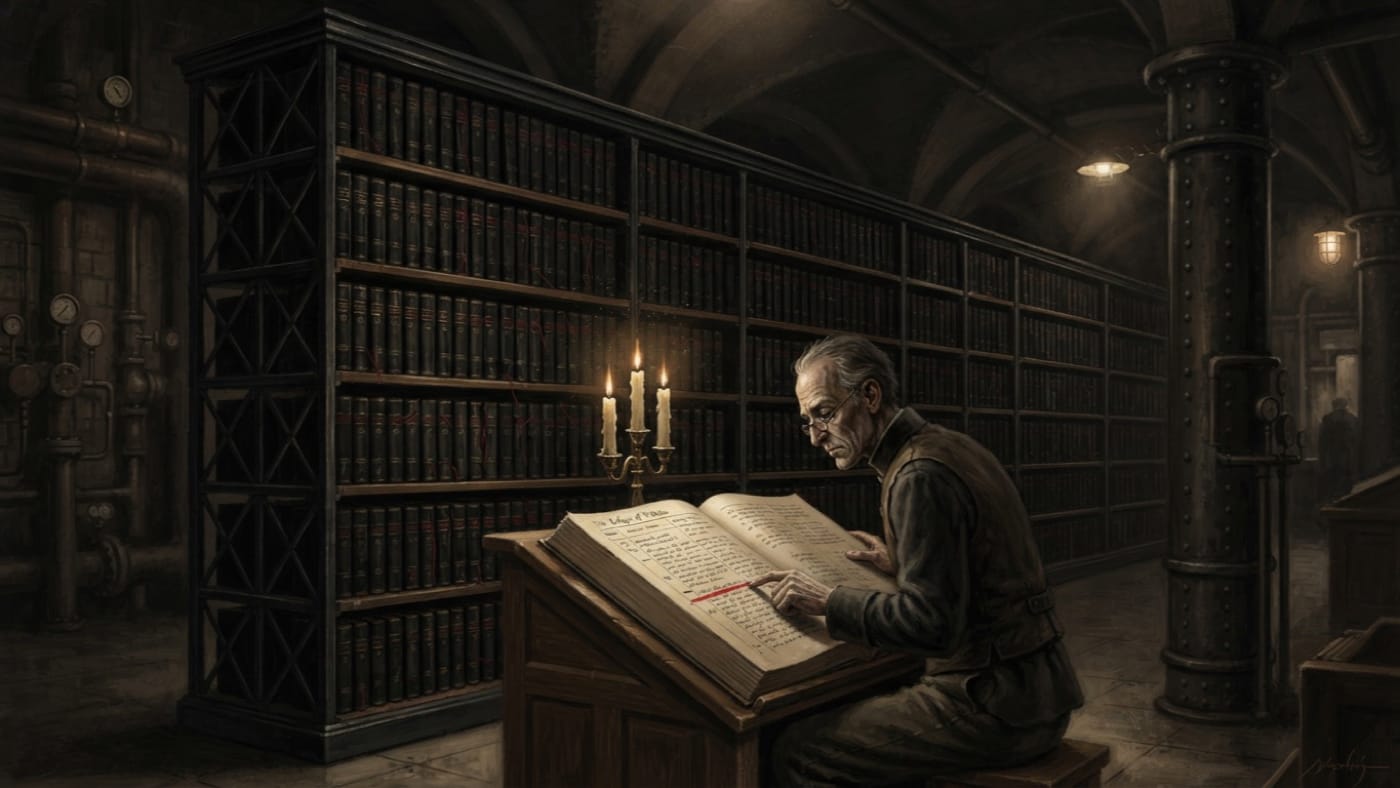
Ledger of Fidelity
A promise may be buried. Its words remain.
One book in seven hundred bindings, the Ledger preserves witnessed oaths under Synod jurisdiction. Annulment draws a red line; it does not grant the mercy of forgetting.
Codex Ref. XIII.1.17-002
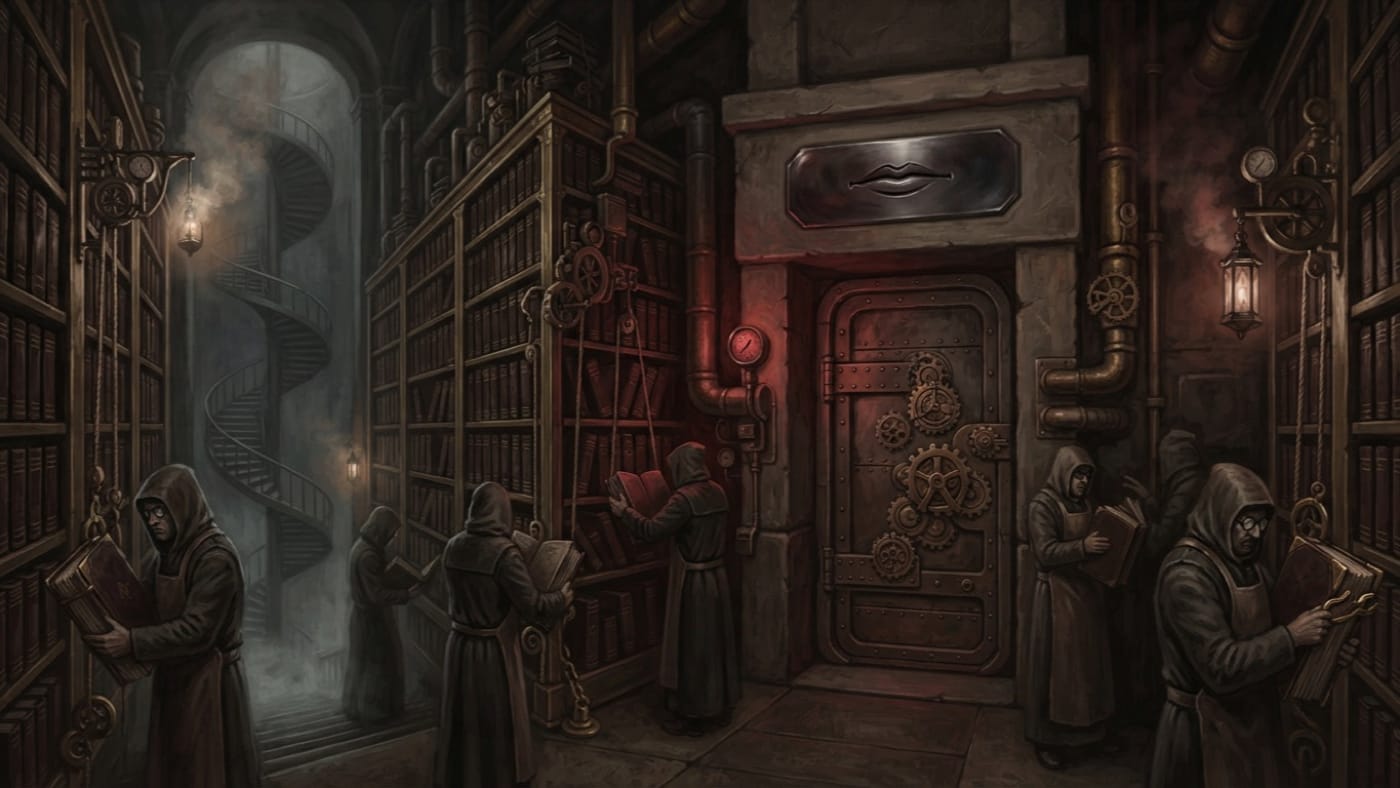
Ledger of Oaths Unspoken
I can report the allegation. I cannot produce the book.
I have seen no folio of the alleged Ledger of Oaths Unspoken. If it records vows never made, the Bureau has found a way to bind a mouth before it opens.
Codex Ref. XIII.1.17-003
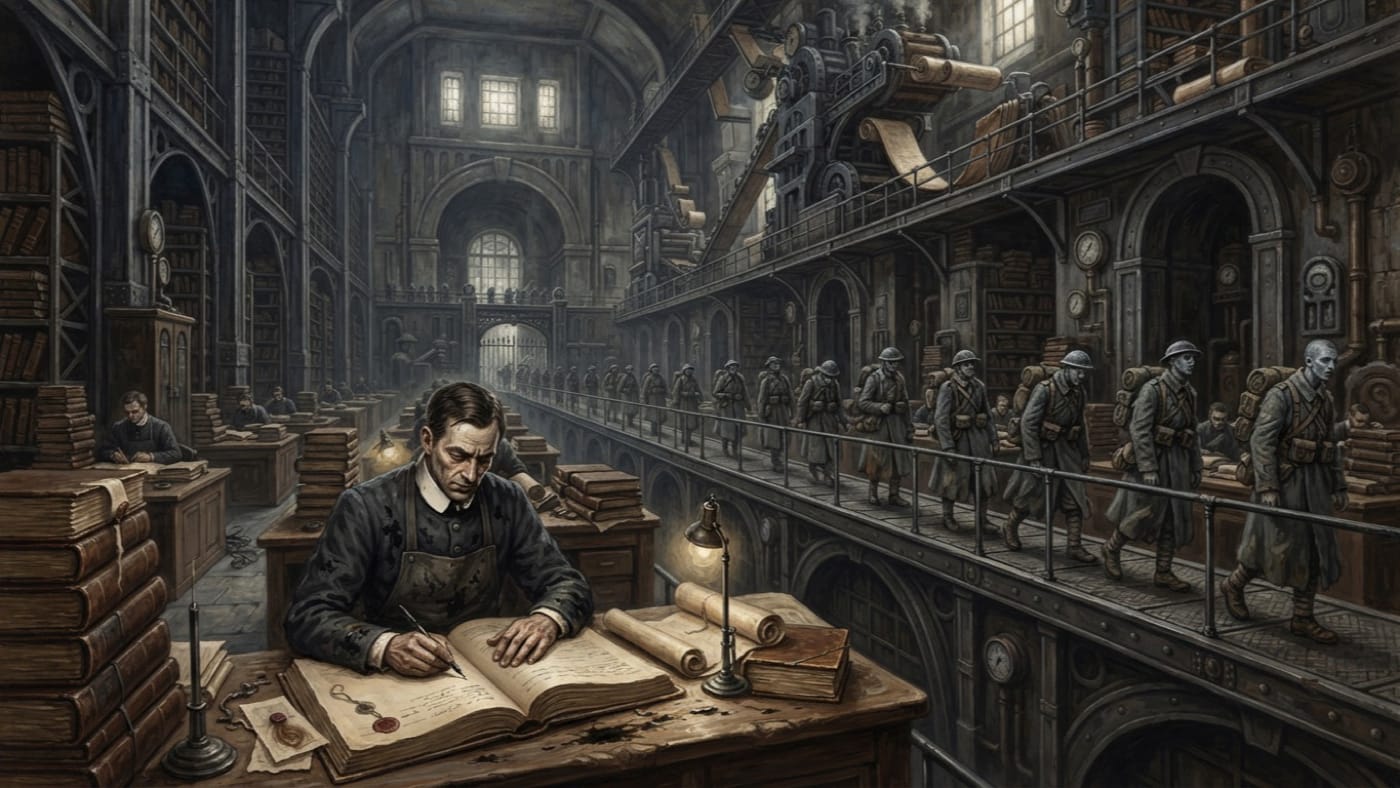
Ledger-Bindings
The signature obeys after the signer refuses
Ledger-Bindings make recorded promises material law. Contracts hold bridges; iron-gall signatures and a tithe of hair bind oaths. At Pressburg, signatures dragged deserters back into line. The Bureau calls this triumph. I retain the word slavery.
Codex Ref. VI.3.01-004

Ledgerwrights
The hand that gives the bread and enters the debt
Ledgerwrights allocate the Black Ledger's bread, assign its targets and keep the second book. The hungry receive aid; the desk records what their gratitude may purchase.
Codex Ref. XII.4.04-001
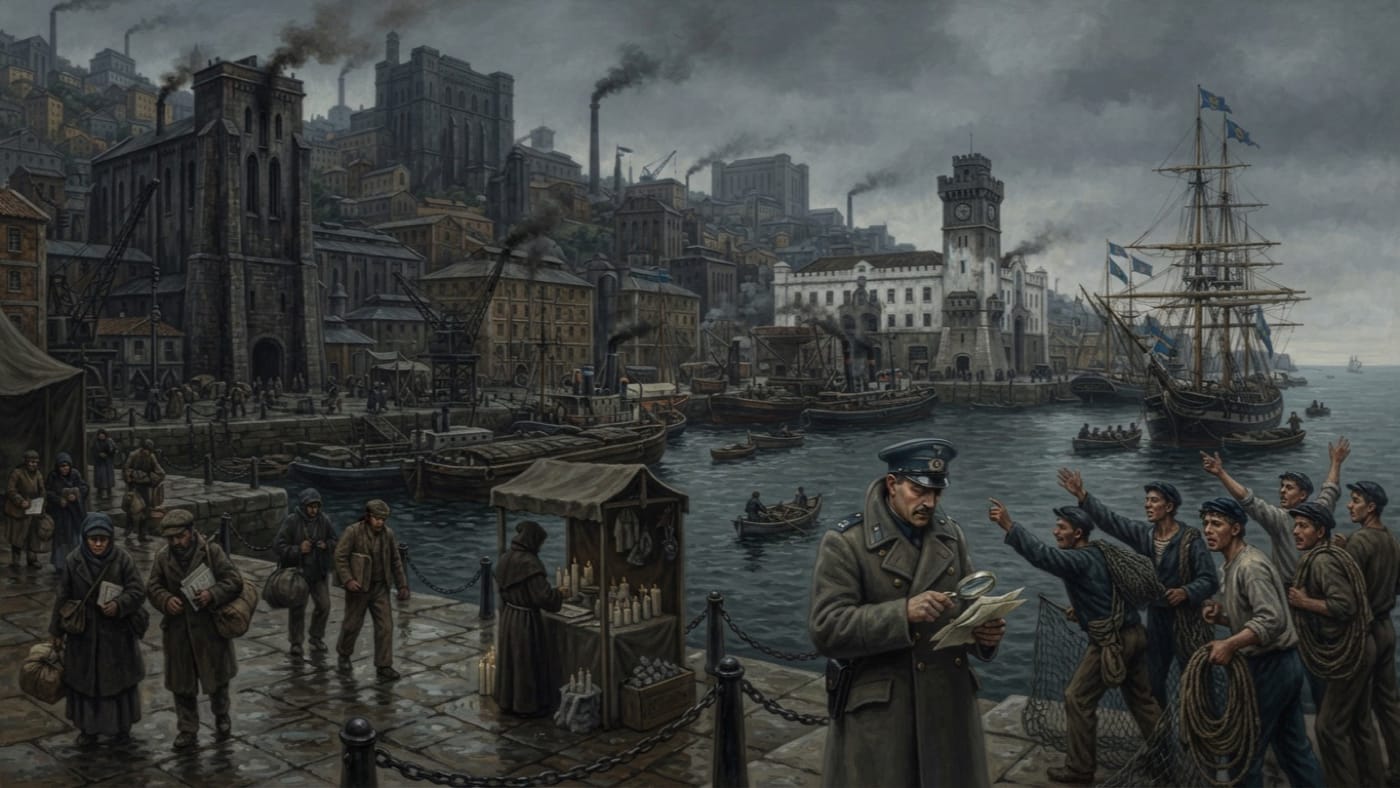
Lisbon
The harbour counts by contract
Lisbon sells sea candles, quake memory and licensed passage at the Atlantic mouth of the Tagus. Strasbourg counts its revenue; its sailors tell the catastrophe in the wrong order.
Codex Ref. II.4.09-201
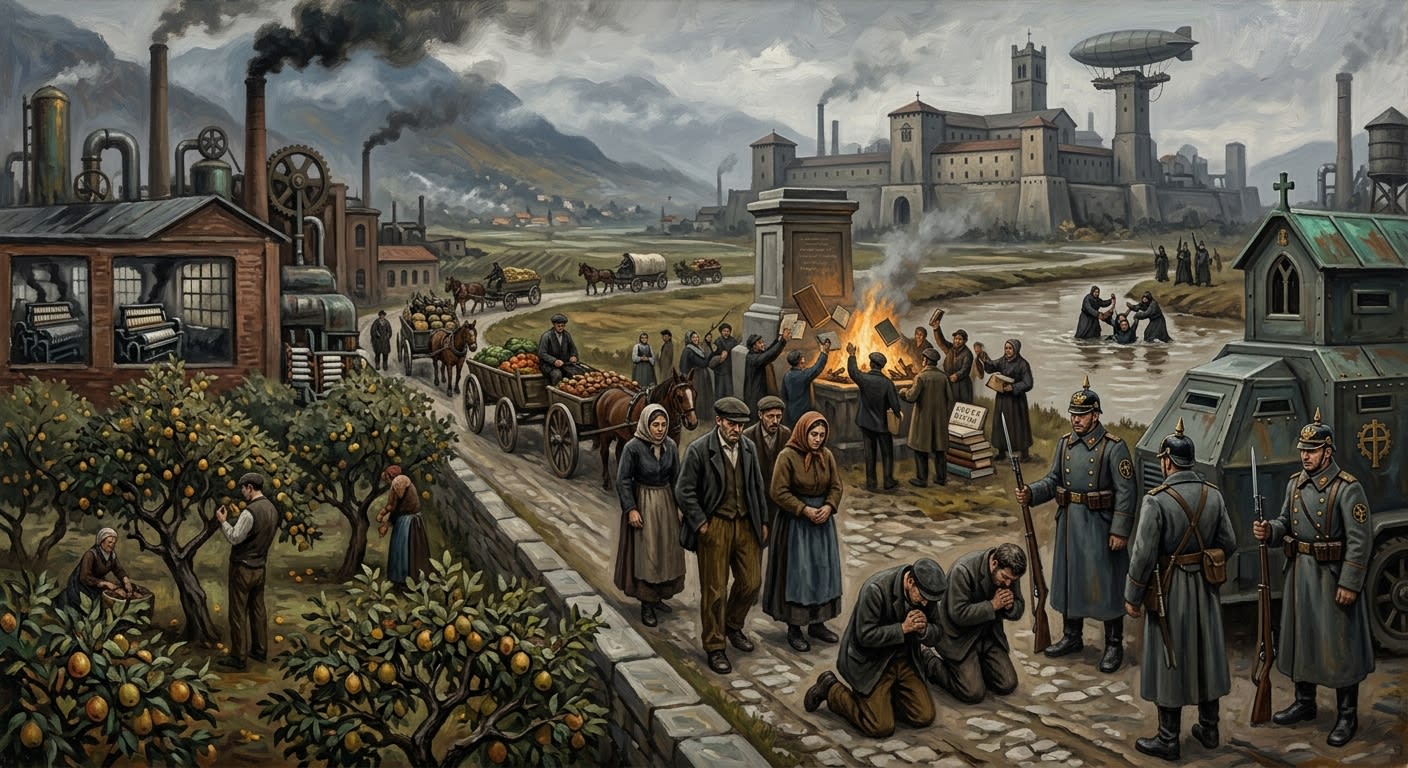
Lombardy
A rich province is merely rebellion with orchards
Lombardy is the Synod's rich northern Italian problem: orchard, loom, road, supper-table, drowned schism, corrected alphabet, and a province bowed just low enough to keep remembering.
Codex Ref. II.3.09-150
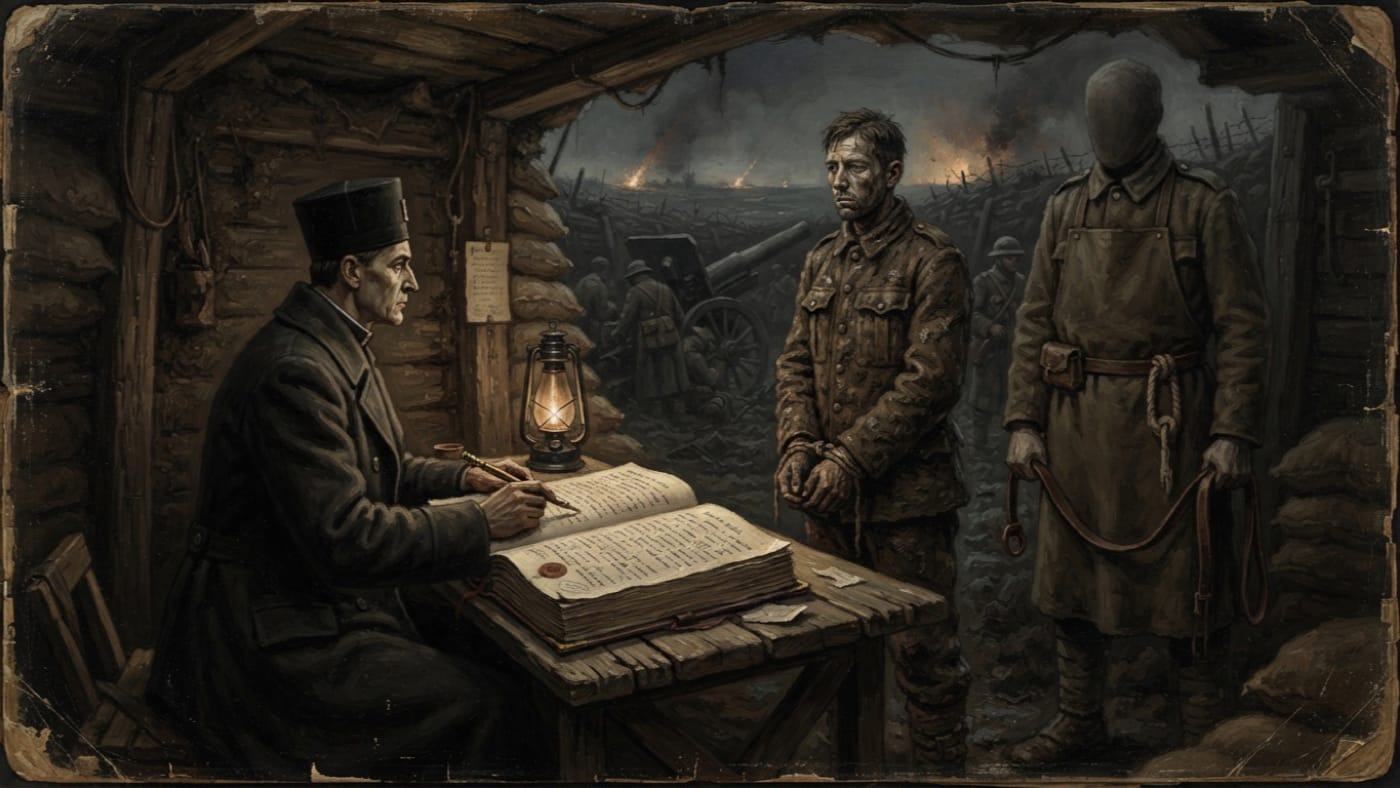
Martial Code
The Bureau hears the oath and notarises the silence.
In this A.S. 201 survey I follow the Martial Code from witnessed service to notarised silence. The military oath-breach penalty stands; the Bureau calls its use rare. The Code's origins remain unestablished.
Codex Ref. XIII.1.01-001

Milan
The city that mistook minutes for sovereignty
Milan is Lombardy's polished mouth: silk, steel, banking paper, guild keys, and the old civic delusion that a beautiful memorandum can outrank Strasbourg.
Codex Ref. II.1.07-150
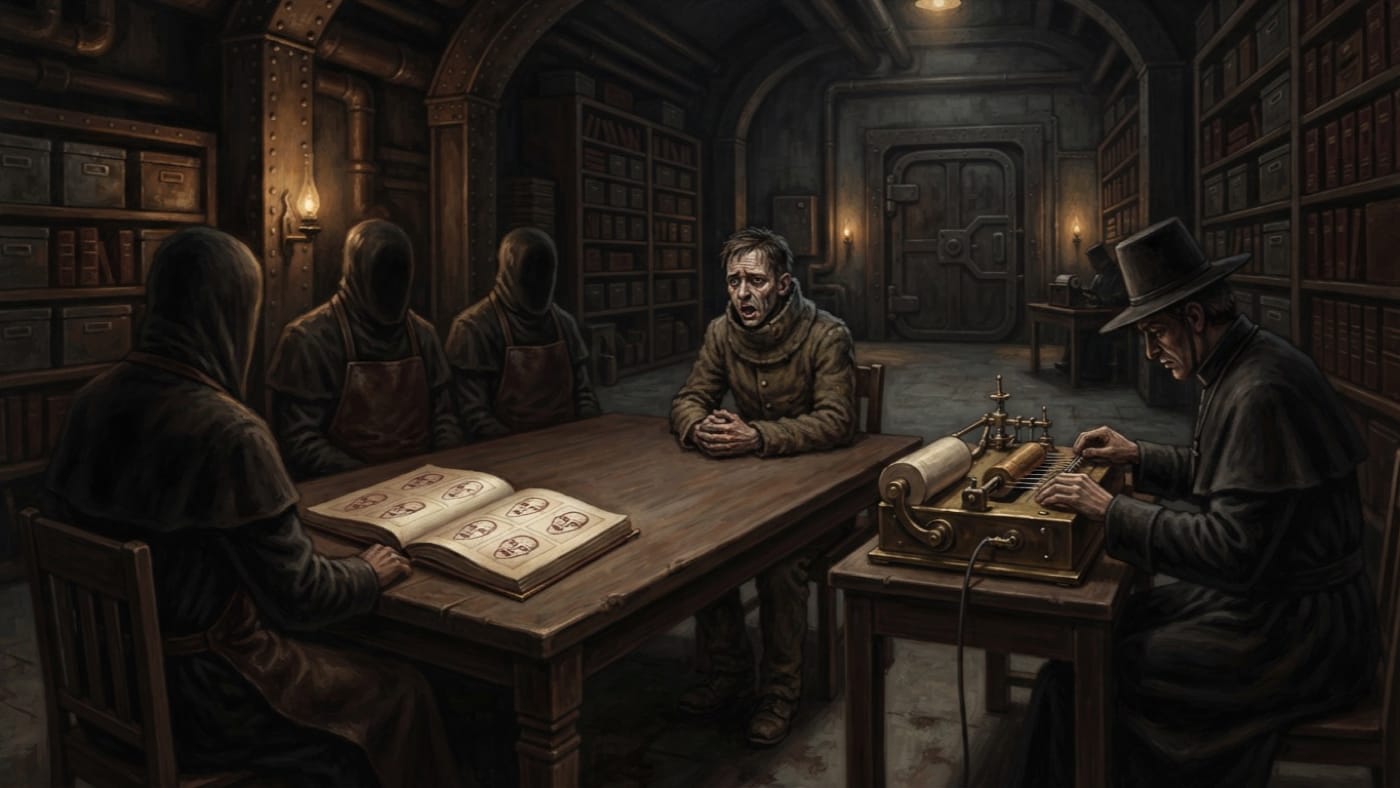
Oath of Compelled Testimony
Fourteen answers. No single account.
The oath requires truthful answers under threat of Administrative Dissolution. Fourteen survivors of Commission 73-C spoke under it in A.S. 73. Their accounts disagreed. The obligation was fulfilled.
Codex Ref. XIII.1.17-002
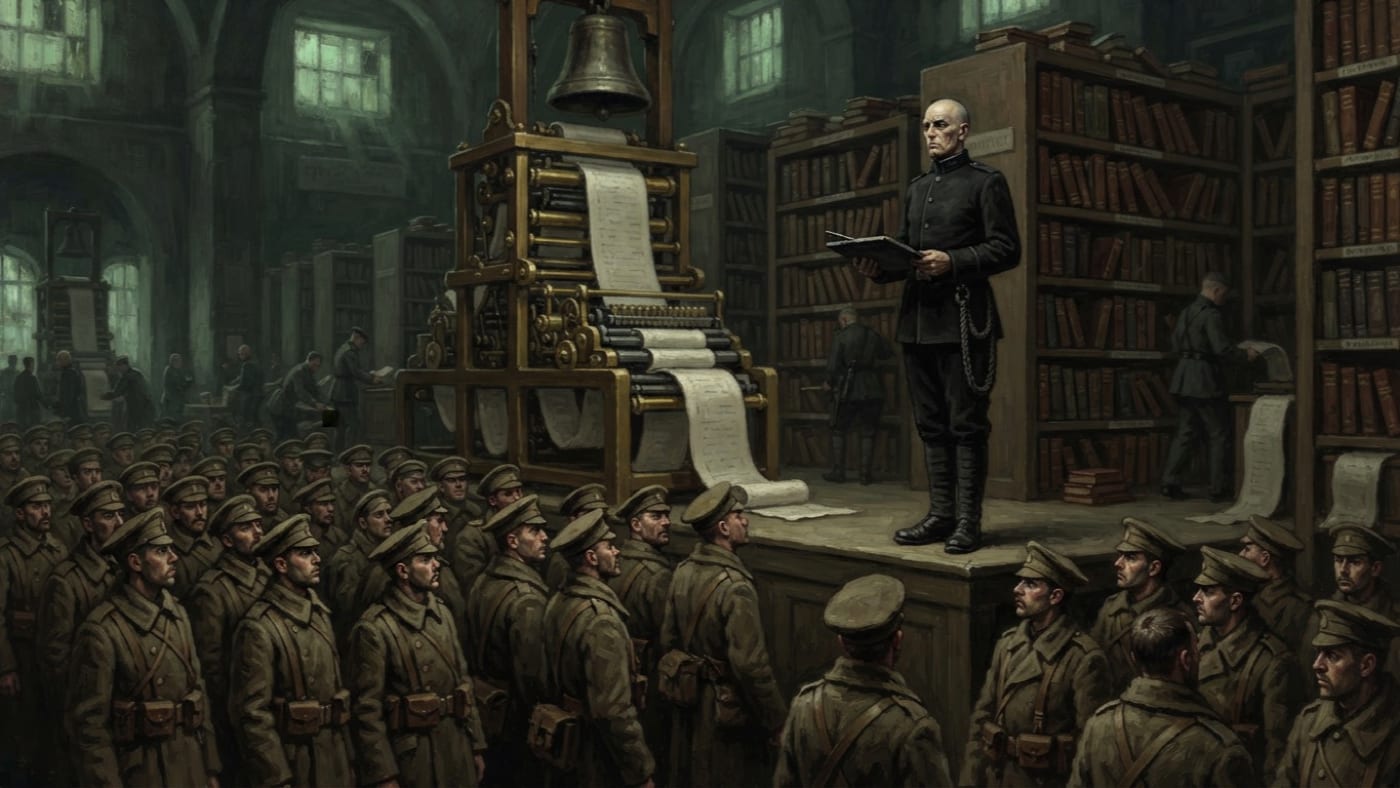
Oath of the Line
The Bureau does not recognize death as grounds for termination.
Every soldier swears before deployment. Service, obedience, the bell-schedule, and death if required pass into the Ledger; under the Bureau's doctrine, death does not end the obligation. Survey of current practice, A.S. 201.
Codex Ref. XIII.1.02-201
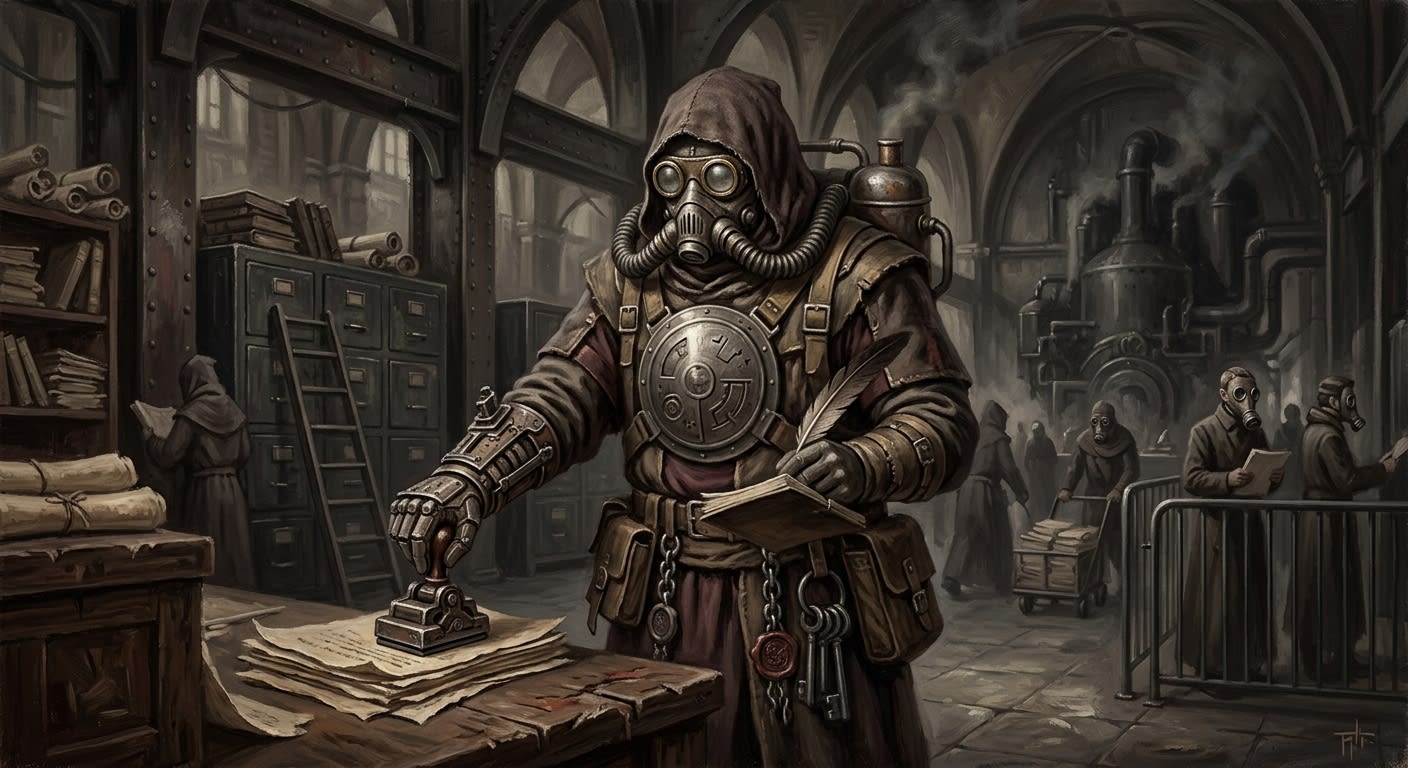
Oaths Witnesser
The state attends every promise
Living seals of the Synod, Oaths Witnessers make spoken promises enforceable, record their fracture, and bury what was sworn when it fails.
Codex Ref. VI.4.03-012

Office of Nullity
The knife kept inside the book
Sub-office of the Bureau of Records governing Erasure Notaries, strike writs, dependent ledgers, black seals, and the civic art of making a person unprovable.
Codex Ref. XIII.1.70-001
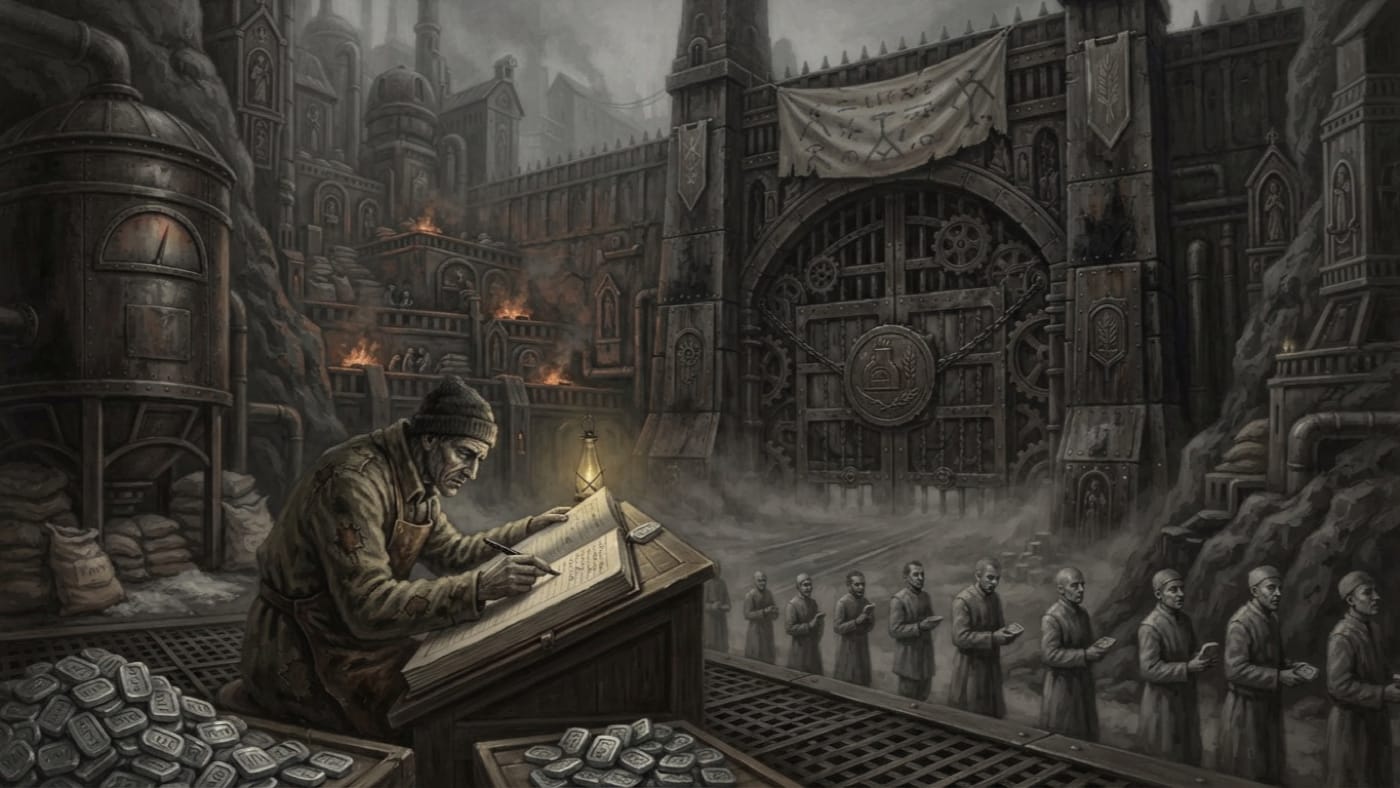
Oven Quartermastery
The token proves you exist. The debt survives its loss.
San Vesta's Oven Quartermastery controls flour, coal and the tokens that entitle a name to bread. Ashweight feeds the priory's labour debt and its military standing order; with the convoy late, he has sealed the gates and begun the count.
Codex Ref. VIII.1.03-002
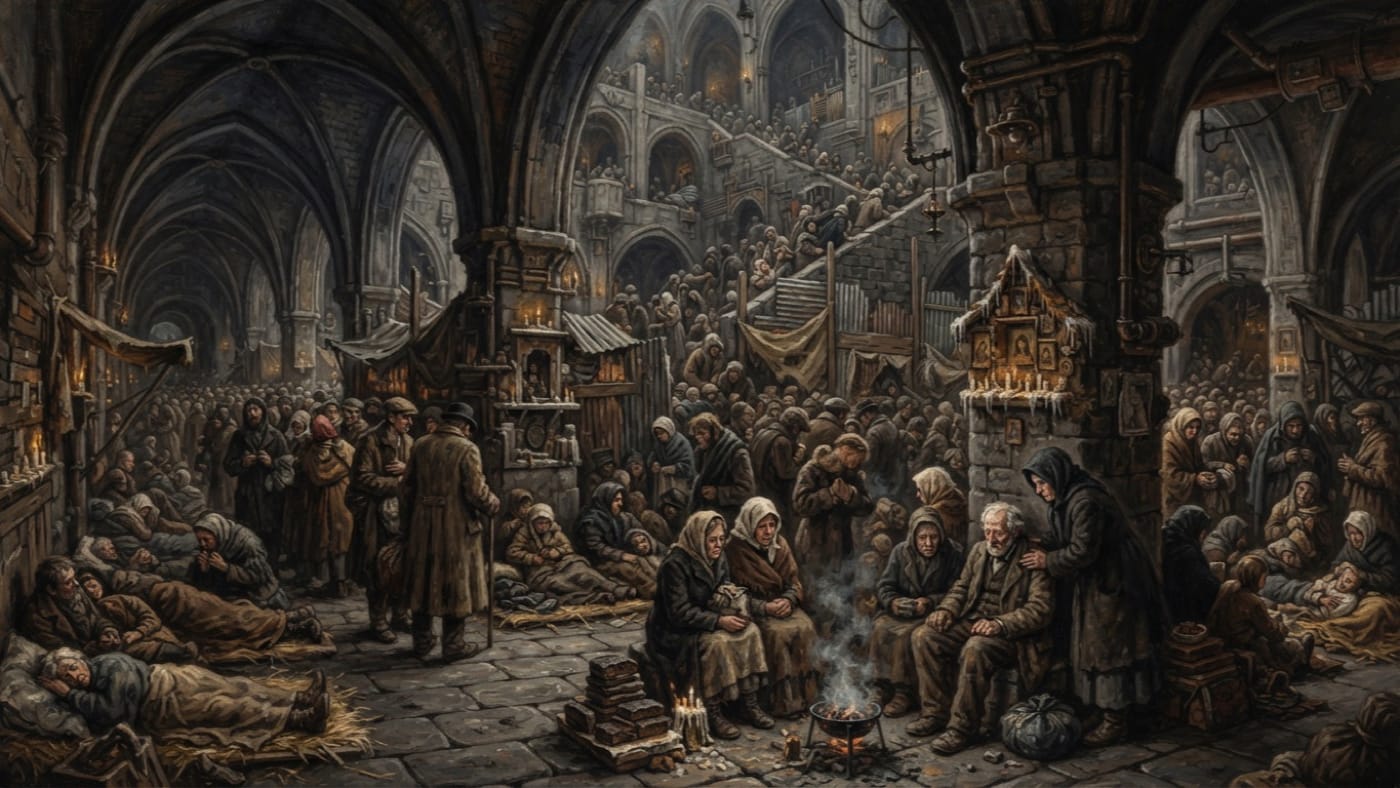
Pilgrim Dormitories
Three days of borrowed life. A lifetime entered in the ledger.
Converted cloisters at San Vesta hold pilgrims awaiting resurrection-bread and debtors bound to recovery service. The vigils demand three more days; the ledger records a lifetime.
Codex Ref. VII.1.03-005
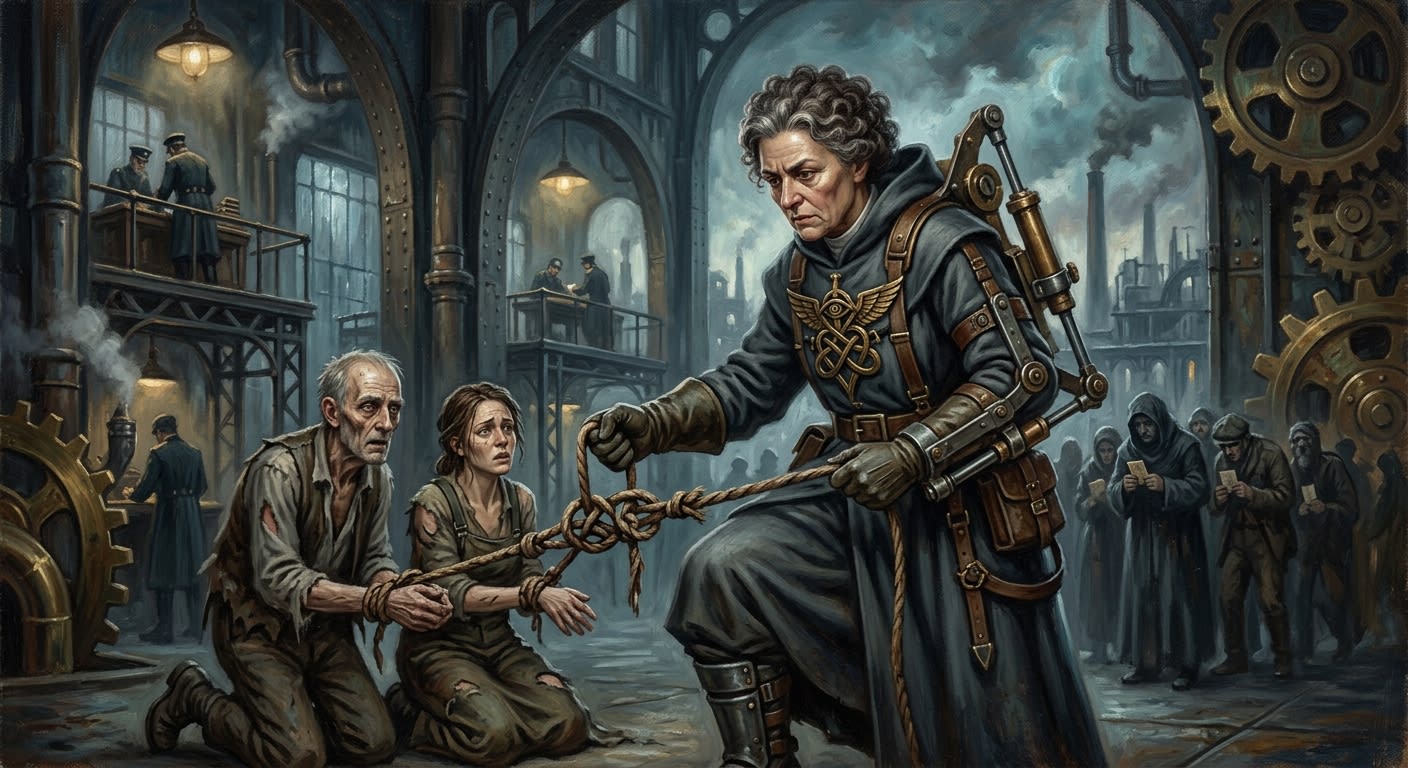
Saint Liora Knot-Hand
Thirty knots, thirty doors, and the miracle of obligation made visible
Patron of the Bureau of Oaths, Saint Liora Knot-Hand bound thirty hungry households into survival with witnessed vows and a strip of cloth. Mercy counted; the knot remembered.
Codex Ref. III.2.01-012
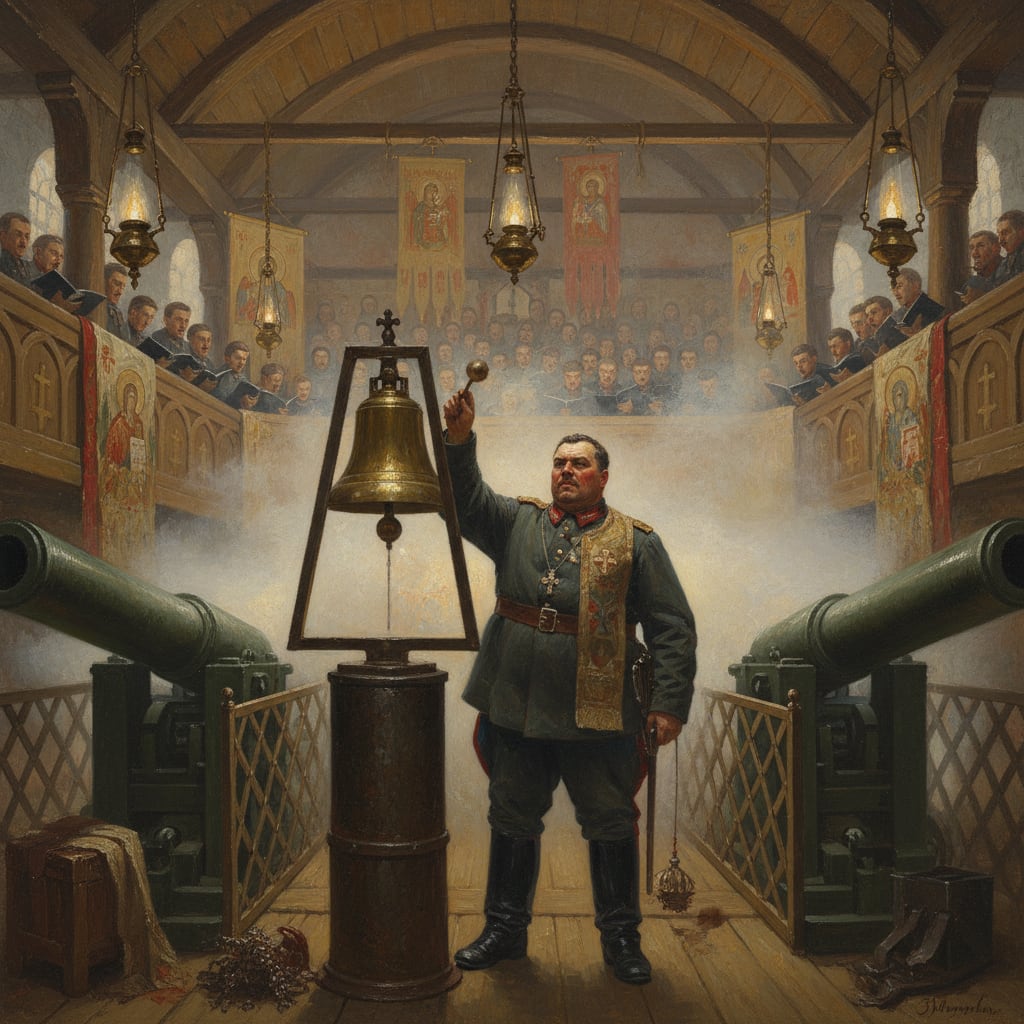
Shrine-Deck Crew
Bell, chalk, and brass — the three sacraments of the man who is too useful to die quickly
Mobile artillery and choir crews of the Synod's shrine-platforms — firing on the psalm-beat, logging every shell in a shot-ledger the Bureau calls the platform's soul, and maintaining chalk rings while the metronome bell keeps the guns from going hollow.
Codex Ref. XII.42.01-001
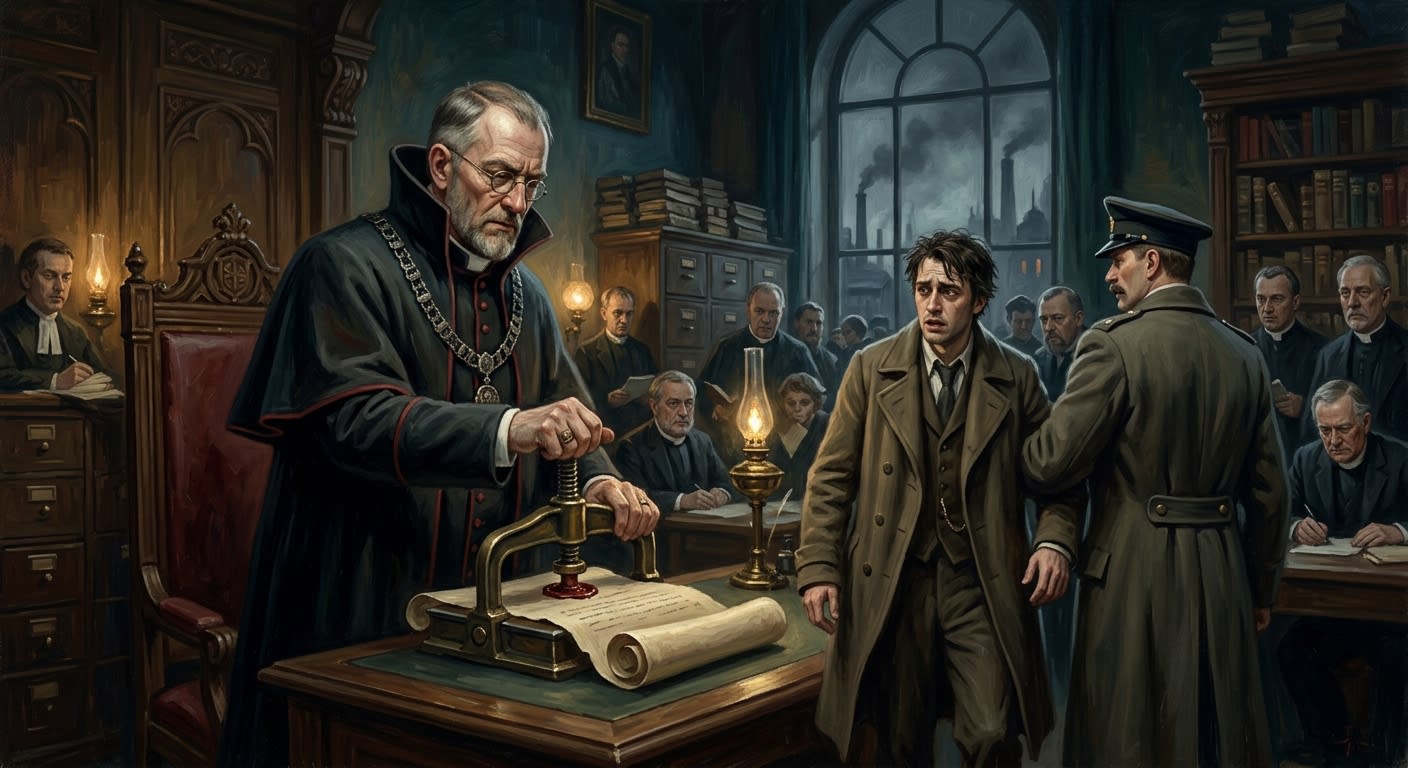
Standard Ratification Protocol
The seal descends, and yesterday learns obedience
The Synod's Standard Ratification Protocol makes sequence repent: dissent is heard, wax cools, and the completed act becomes obedient.
Codex Ref. XIII.1.89-087
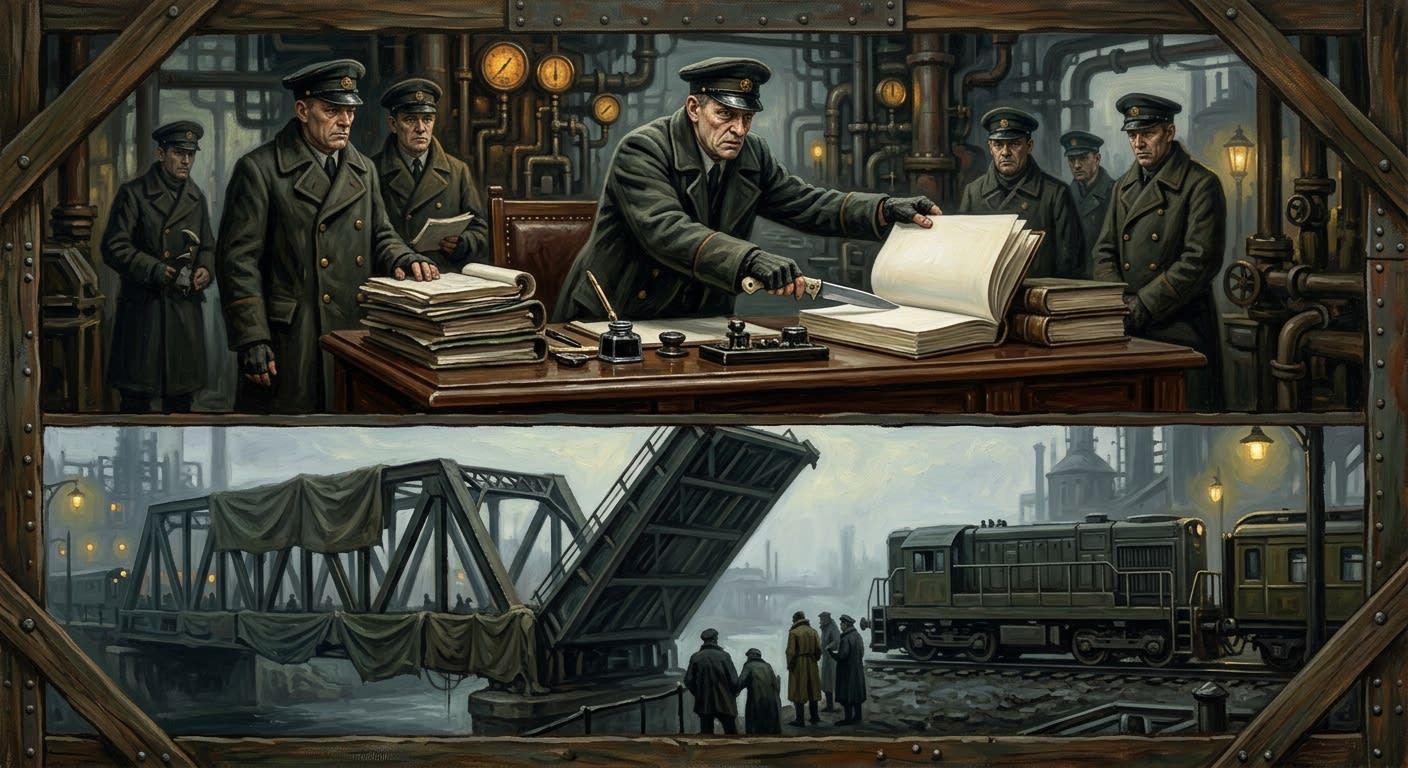
Standing Order 14-B
The bridge learned to answer before Strasbourg finished asking
Standing Order 14-B is Brest's span-sovereign knife: seize the blank paper, halt the crossing, and make absence answer.
Codex Ref. XIII.1.14-196
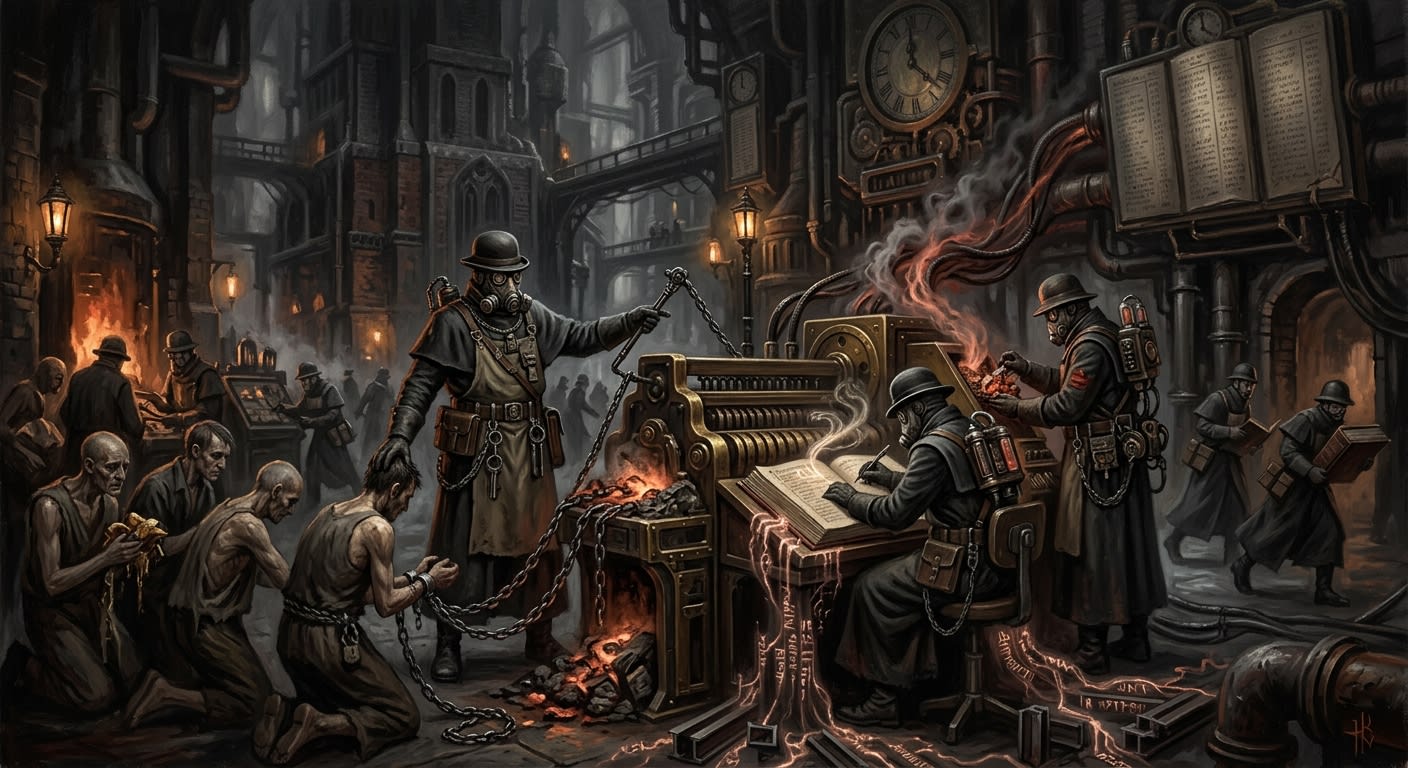
The Accountants
The book beneath the bread and the debt beneath mercy
The Accountants are the Black Ledger's second-book faction: Ledgerwrights who turn gifts into debts, hunger into jurisdiction, and gratitude into infrastructure.
Codex Ref. XI.1.04-003
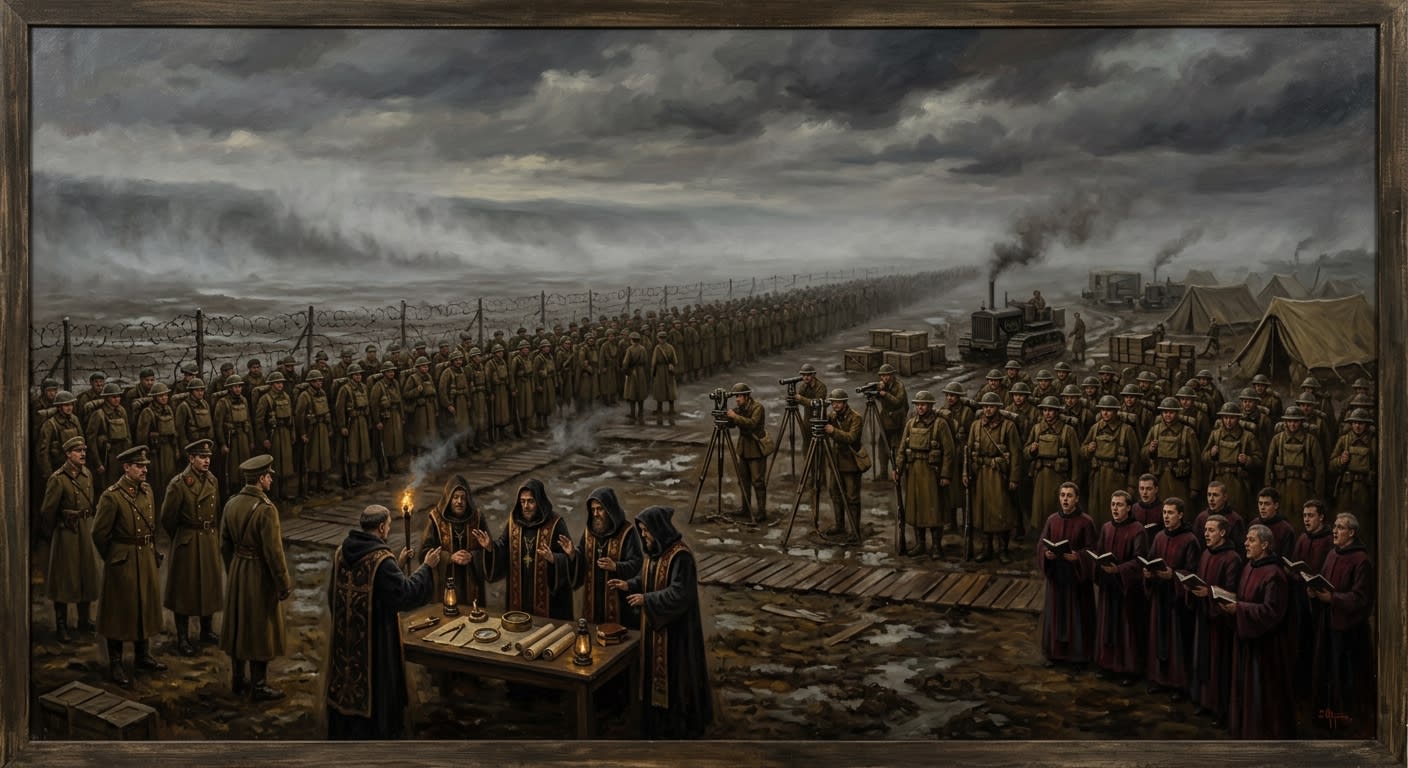
The Cartographic Expedition of A.S. 73
Three hundred men went to draw a map. The map drew them instead.
In A.S. 73, three hundred men entered the Charnel Lands to draw a map. Fourteen returned, and on every folio they carried — drawn in charcoal, ink, graphite, and in one case blood — the same face. Commission 73-C is closed. Its lesson is not.
Codex Ref. VII.1.01-001
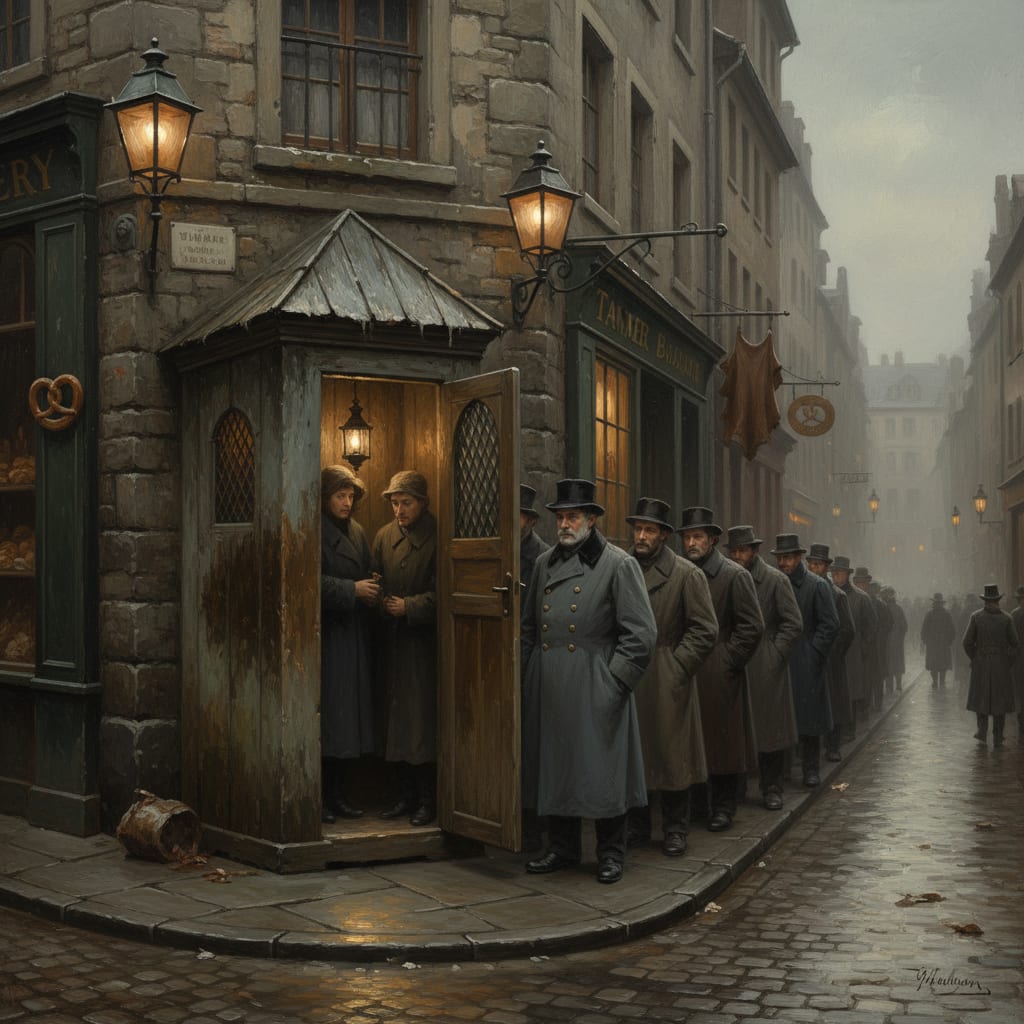
The Confessor-Booth Clerk
The booth does not forgive — but it files. A survey of the twenty-two thousand stamps that keep the Synod clean.
Twenty-two thousand booths; one stamp; no absolution. The Confessor-Booth Clerk processes sin as throughput, files guilt as data, and keeps the Synod's spiritual economy solvent — a contemporary survey by Hieromnemon Valerius Drax, A.S. 201.
Codex Ref. XII.9.01-001
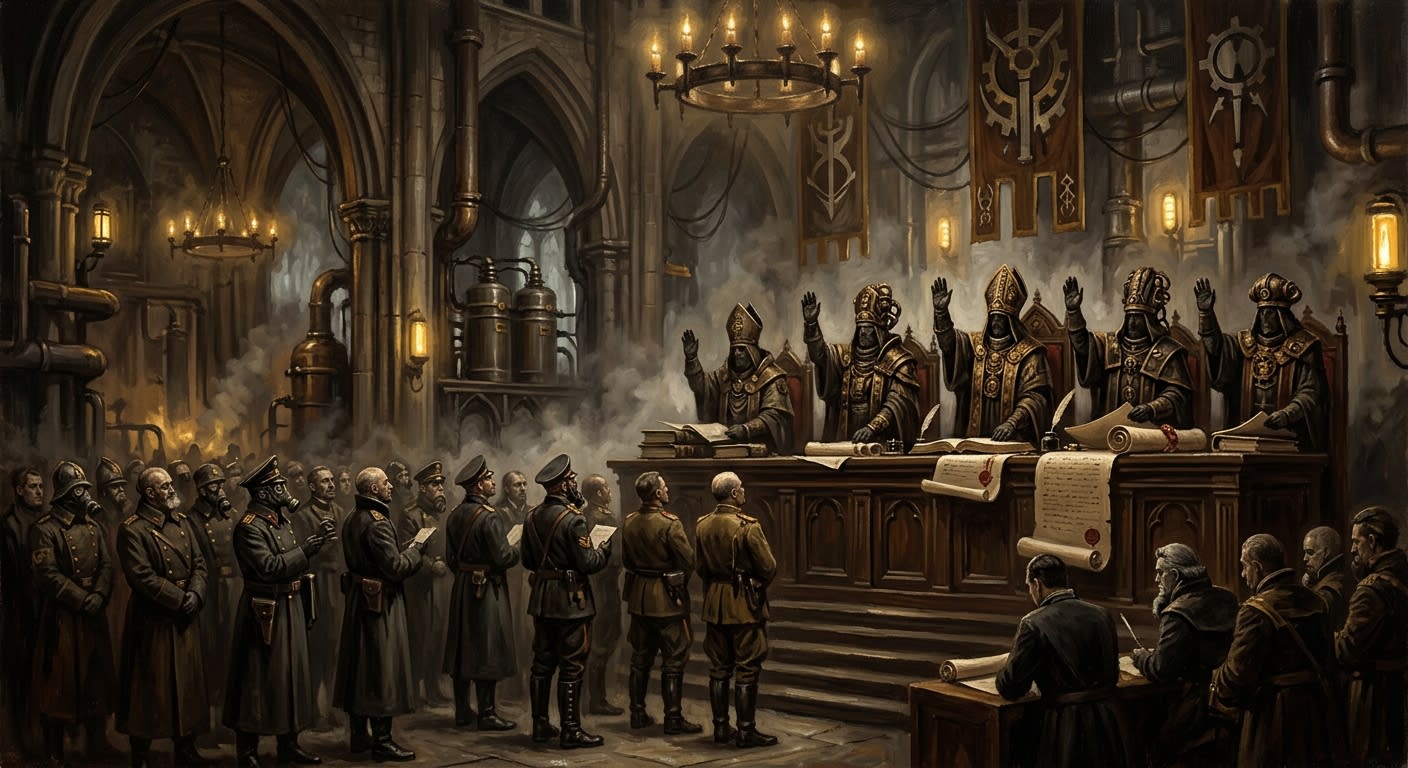
The Council of Mainz
Where law learned to cheer on command
The Council of Mainz confirmed the first seven Hierarchs in A.S. 93, turning Concordat law into staged acclamation, ratified offices, and obedient witnesses.
Codex Ref. VII.7.02-001

The Ferry Chokepoint Broker
On the Profession of Moving Men Across Water When the Synod Requires Them to Stay Still
The Ferry Chokepoint Broker is what the Synod's permit system produces when it grows too thick for its own officers to parse — a human patch cable working the gap between the rule and the crossing.
Codex Ref. XII.16.01-001
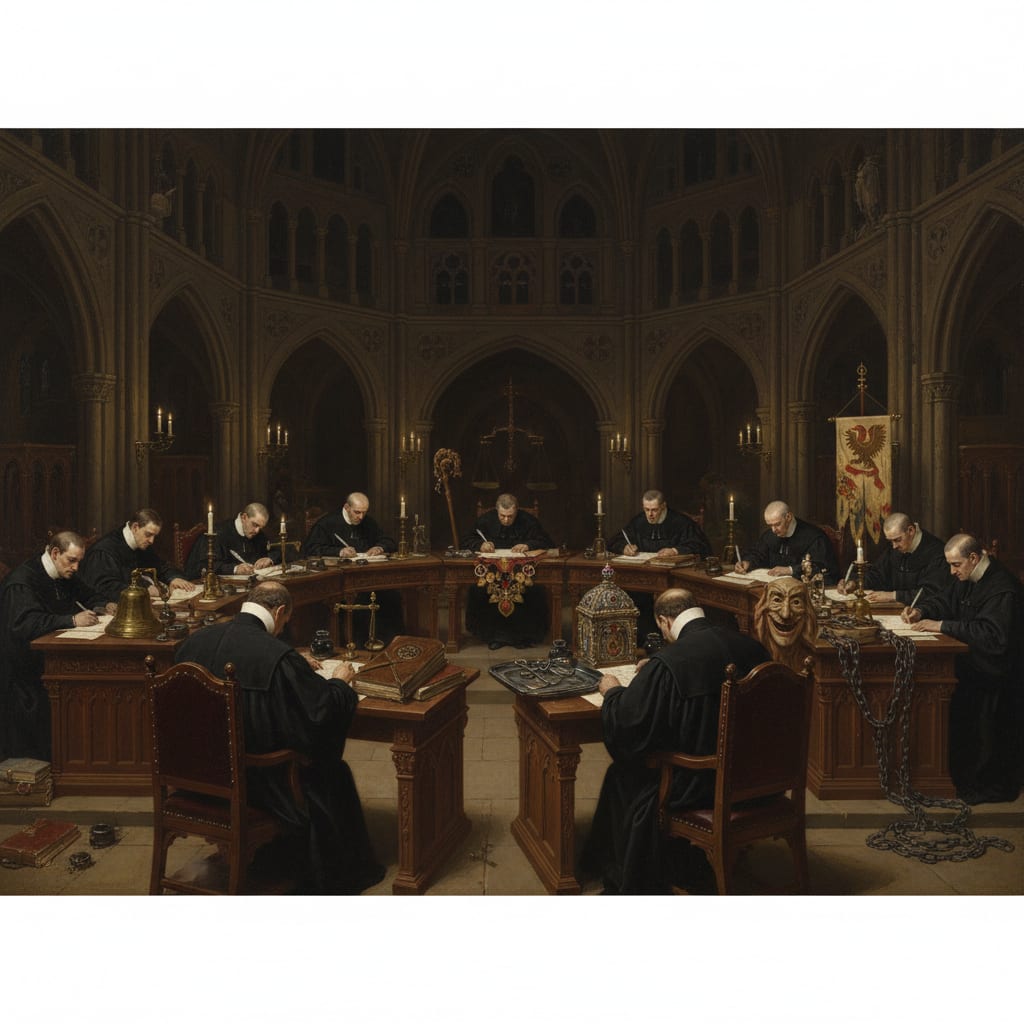
The Holy Bureaus
Twelve Instruments of Providence, or Thirteen If You Count the One That Does Not Exist
The twelve sacred organs through which Strasbourg bends a continent to its will. Each Bureau claims a charism of governance descended from the Apostolic Sundering. Their clerks are legion, their archives endless, their contradictions — by design.
Codex Ref. III.3.01-001
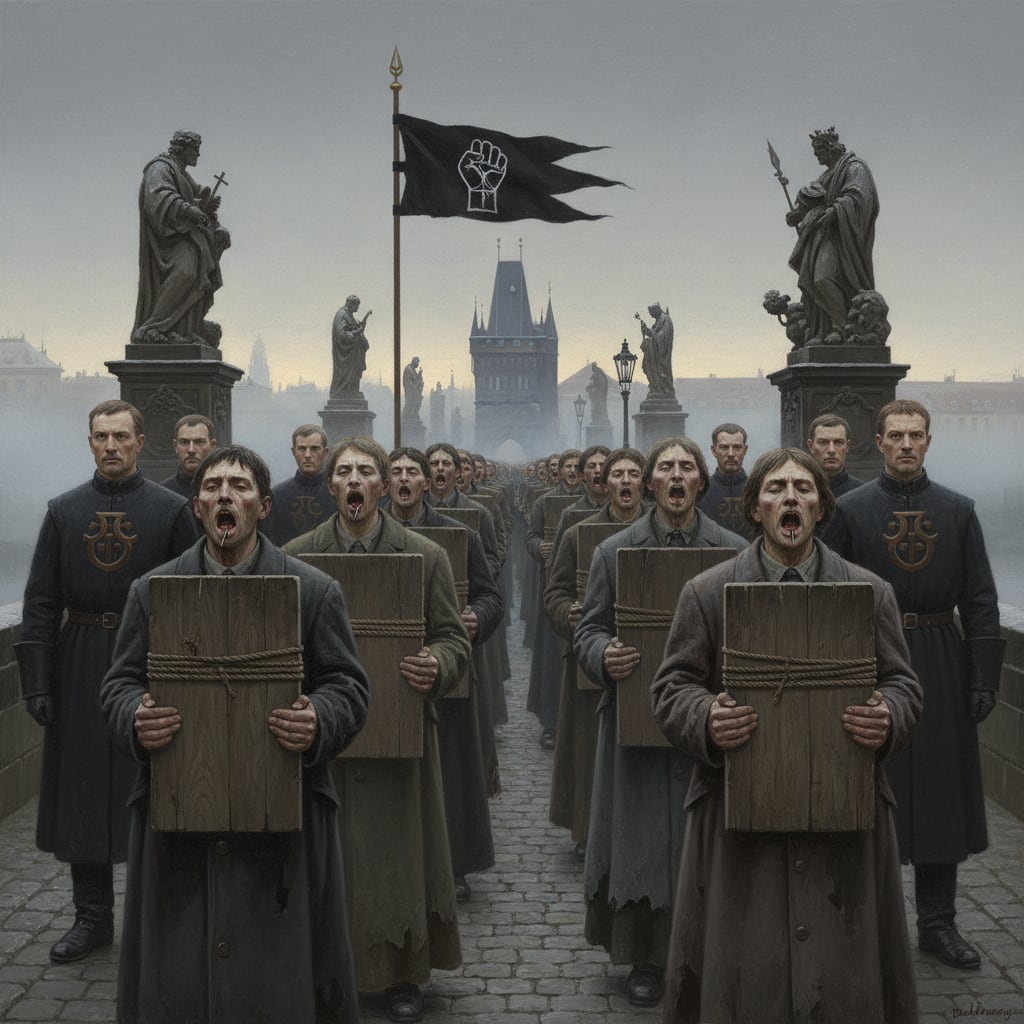
The Procession of Tongues
One hundred and seven consecutive years of doctrine tablets, iron nails, and fixed cobblestones — the [[bureau-of-purity|Bureau of Purity]]'s clearest argument, and the one requiring no rebuttal.
The Bureau of Purity's ceremony of ambulatory confession — heretics with tongues nailed to doctrine tablets, marching across Prague's Charles Bridge since A.S.
Codex Ref. VII.6.01-001
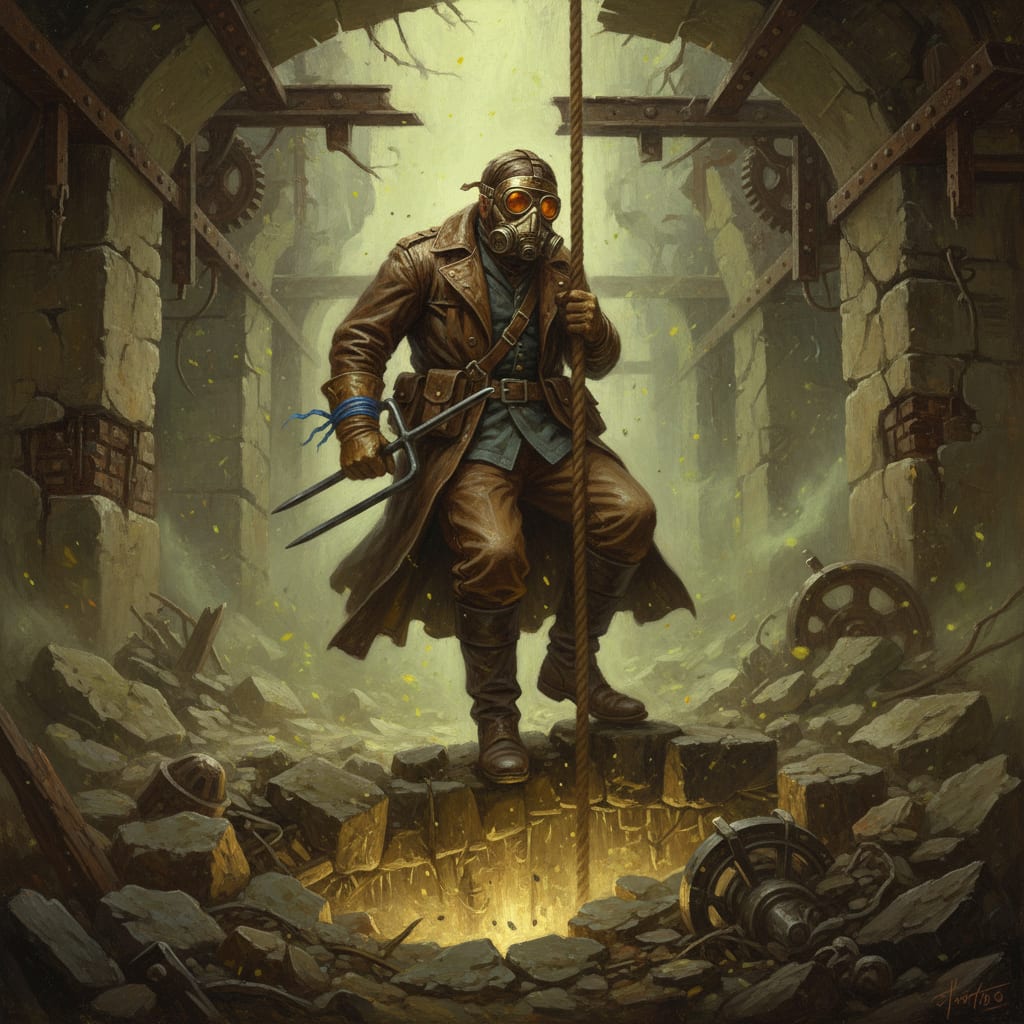
The Reliquary Salvager
The Synod misplaces relics; the Salvager retrieves them; no one speaks of the arrangement
The Synod does not lose its relics. It misplaces them — in collapsed vaults, sheared cathedrals, and quake-opened cellars. The Reliquary Salvager crawls in to retrieve them. His compliance record is spotless. His lungs are not.
Codex Ref. XII.36.01-001