
#On the Protocol That Redeems Sequence
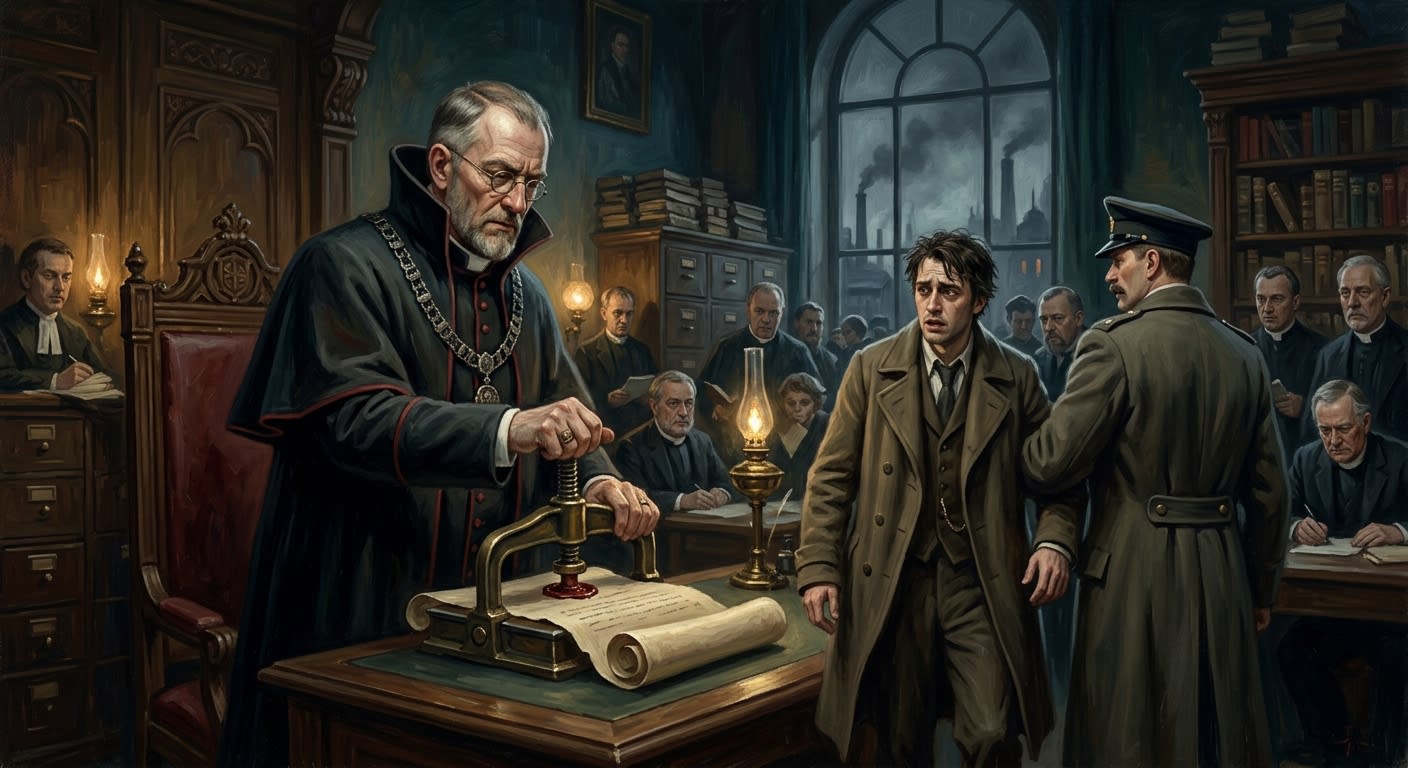
The Standard Ratification Protocol is the Synod's approved method for making the completed act appear obedient to the order that should have preceded it. Lesser governments ask permission before acting. Cowardly governments act and hide. The Synod acts, records, summons witnesses, applies seal, receives dissent, files dissent, and announces that the whole affair has now occurred in the proper order, which it has, because the Protocol has reordered propriety around the fact.
This is not deception. Deception blushes when caught. The Protocol smiles, requests three notaries, and asks whether the accuser has been seated according to precedence.
Born from the Council of Worms in A.S. 87, tested at the Council of Mainz in A.S. 93, perfected at the Council of Cologne in A.S. 100, the Protocol governs assemblies, councils, congresses, concordats, office confirmations, tithe-yokes, punitive acclamations, relic custody transfers, and those small provincial ceremonies where one frightened town learns that its “local custom” has always been a form of Synodal compliance awaiting transcription.
#On Worms and the Birth of the Frame
Worms gave the Protocol its skeleton, and a more handsome skeleton Europe has never had the misfortune to obey. The surviving register bears three hundred and fourteen names, entered by personal, proxy, or documentary participation; it is no count of bodies beneath the unfinished vault. Rain fell through that vault, and Augustinus spoke as if wet mitres were a sacrament. Two hundred and eighty-nine entries bear clean seals; twenty-five carry mixed defects under that immortal Kratzian category, administratively concordant.
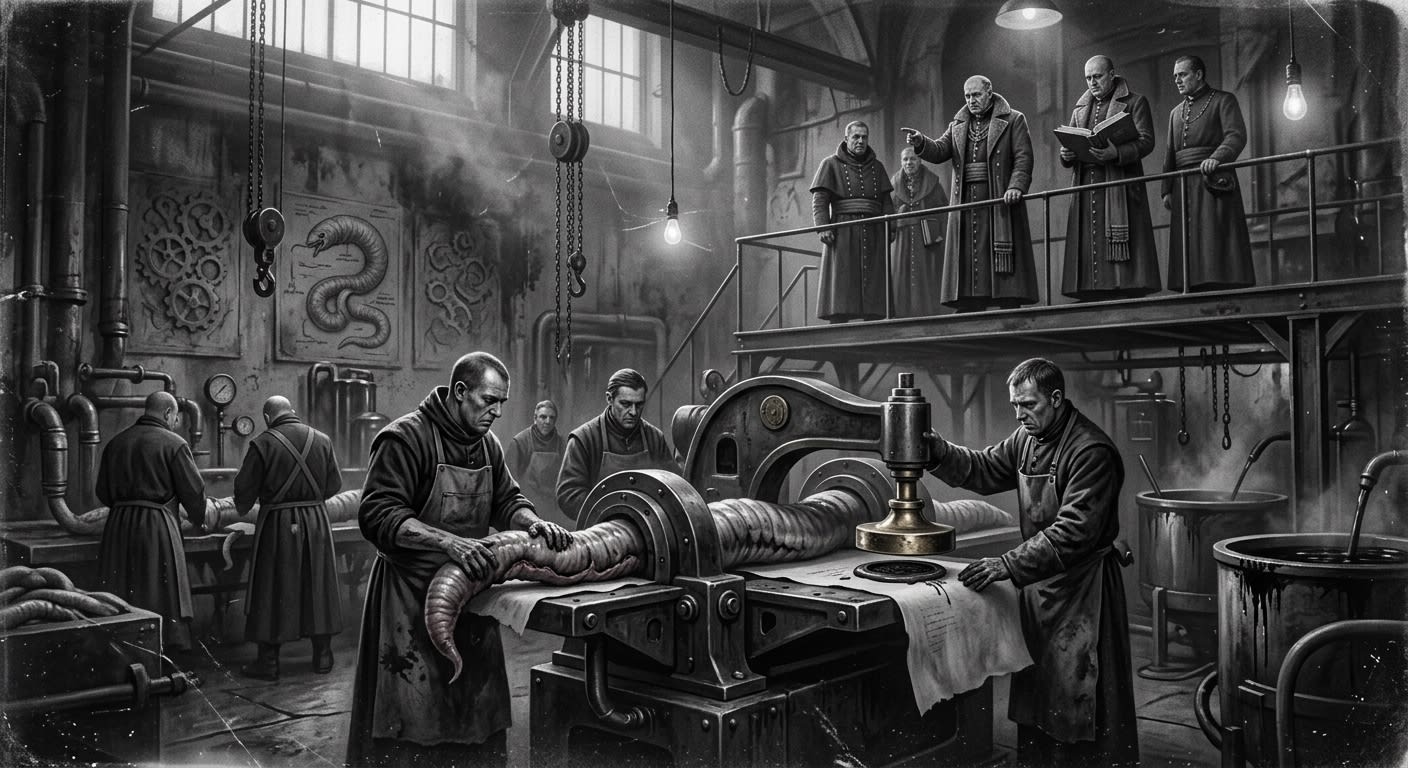
Administrative concordance is the seed. Admire it. A seal appears. A man protests. The office represented by the seal is bound. The hand becomes interesting only to antiquarians, litigants, and other vermin who confuse anatomy with authority. The document bears the office. The office bears the obligation. The obligation bears consequences. The protesting man may keep his fingers, if sentiment demands a souvenir.
Provincial primers once taught that Standard Ratification Protocol was a neutral council-ordering rule developed after the Concordat of Strasbourg.
Corrected. Neutrality is the perfume of power hoping no one smells the knife. The Protocol was born at Worms from coerced seals, forged assent, rain, fatigue, and Kratz's conviction that obedience must be documented before it becomes believable.
Kratz drafted the first Protocol on the road back to Strasbourg, with the signed Allegiance locked in a chest behind him and his notaries drying their sleeves from the Worms rain. The original clauses were brutal in their elegance: front-weight compliance in seating; isolate hostility at distance; grant the presiding Hierarch unlimited address; classify selected attendees as observers without voice; receive dissent; enter dissent; deny alteration; preserve dissent as proof that objection was permitted and, having been permitted, exhausted.
This was the frame: every assembly a theatre, every theatre a record, every record a weapon, every weapon blessed by the fact that witnesses had been permitted to watch their own reduction into marginalia.
#On the Seating of Consent
The Protocol begins before anyone speaks. Speech is late-stage decoration. The true act is seating.
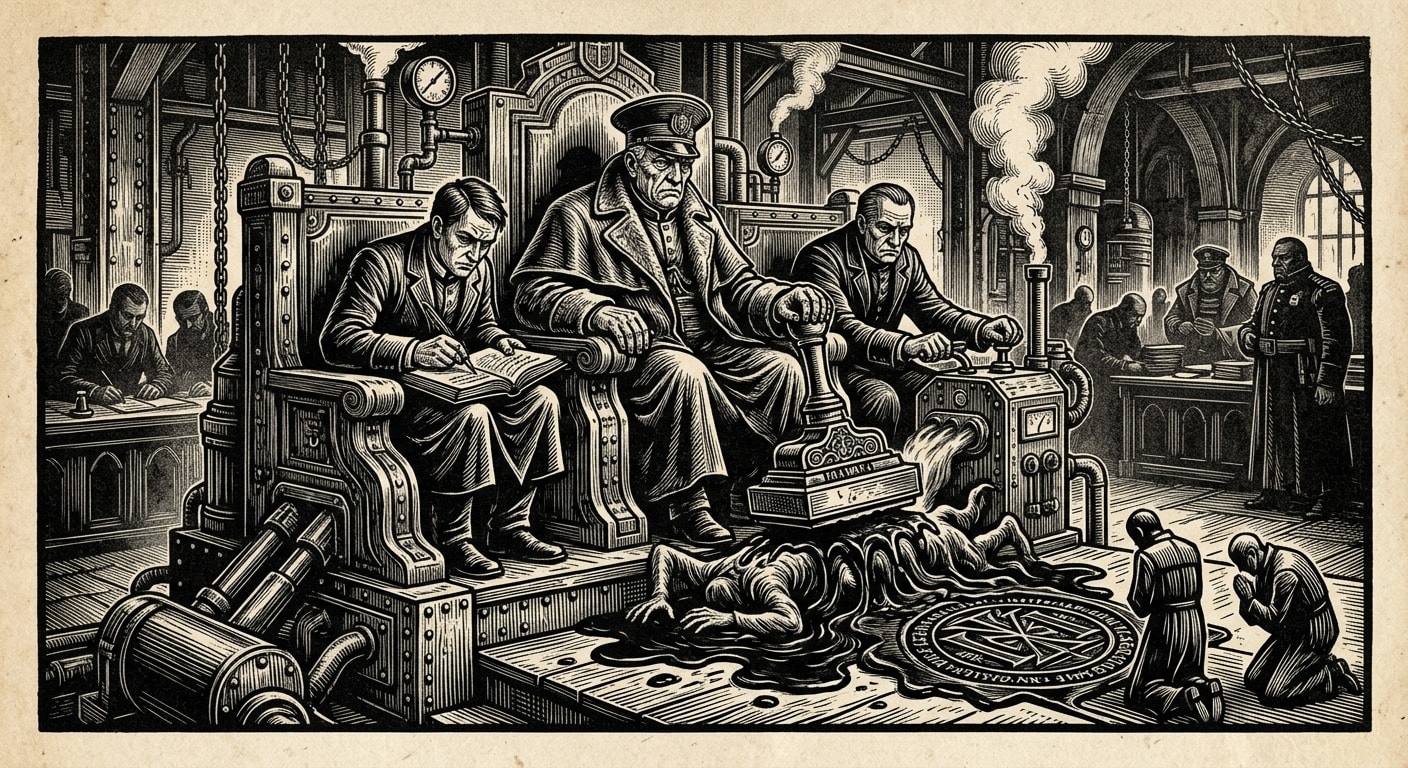
Compliance sits forward, close enough to be warmed by honour and watched by everyone behind it. The wavering sit between the reliable and the armed. The hostile sit near exits controlled by men whose training includes both hospitality and the efficient folding of bodies. Provincial dignity is respected by aisle width, cushion height, canopy angle, and the number of visible notaries assigned to one’s row. A bishop who believes he has been honoured may fail to notice he has been bracketed.
The presiding chair is never merely central. It is elevated enough to make dissent look like interruption. The document table is set below it, so every signatory approaches as if climbing toward judgement and descending toward ink. The notarial stations flank the path. The seal-wax is heated in view. Warm wax persuades better than cold doctrine.
Mainz proved the seating law. The first seven Hierarchs entered as men and left as offices wearing faces because the room had already agreed before the mouths opened. Acclamation rose in the order prescribed. Doctrine first, War last, Purity too long, Records recording itself with the indecent appetite of a child licking the spoon. One provincial bishop protested overlap between Purity and Discipline. His protest was entered under procedural concern, cross-filed under doctrinal anxiety, cited as evidence that oversight required sharper instruments, and by Compline had increased the power he meant to restrain.
That is proper seating. The objection walked into the room as resistance and left as supporting material.
#On Assent, Dissent, and the Useful Courtesy of Being Heard
The Protocol does not silence dissent at once. Immediate silence breeds martyrs, and martyrs are tedious assets requiring custody, cult management, and expensive misquotation. The Protocol hears dissent. It gives dissent a lectern, a time limit, a clerk, a rubric, and a docket number. It allows the objector to spend his force where the room may see it safely spent.
The dissenting statement is copied in triplicate. One copy enters the council minutes. One copy enters the reviewing office under concern. One copy enters the objector's personnel or diocesan file, where it waits with admirable patience. If the objection contains doctrine, Doctrine receives it. If money, Tithes. If discipline, Purity. If jurisdiction, Concord. If sense, Records loses it until the danger passes.
The genius is courtesy. A man who has been heard has participated. A man who has participated is witness. A witness binds the scene he wished to oppose. Later, when he complains that the outcome ignored him, the minutes can reply: your dissent was received. The seal schedule continued. Your presence authenticated the process. Your failure to alter the result proves that the result withstood objection.
Some dissenters refuse the lectern. The Protocol has forms for this. Refusal to speak is entered as reserved objection. Refusal to sign is entered as deferred concordance. Departure before vote is entered as assent by withdrawal unless the departing party is dragged, in which case the act is entered as obstructed assent under escort. Duress, properly documented, constitutes a form of consent. I may say this because I authored the sixth amendment's public gloss. I may not say more because the private finding is classified, and because I enjoy keeping my tongue.
#On Seals, Hands, and the Doctrine of Offices
The Protocol's seal law descends from the Ledger of Compelled Consent, that black-bound marvel in which frightened signatures became older than fear. A vow spoken under pressure troubled old law. Synodal law replaced the trouble with custody. A seal affixed before witnesses binds the office, not the interior weather of the officeholder. Interior weather is for confessors, wives, poets, and any junior attached to the Bureau of Oaths who thinks sincerity belongs on a form.
The signatory approaches the table in order. Name read. Office read. Prior assent phrase read where available. Seal inspected. Wax applied. Impression made. Witnesses count aloud. The hand may tremble. The wax does not. The clerk records completion.
If the signatory uses a proxy, the proxy's authority is verified after application if verification before application would impede flow. If the seal is damaged, Records may accept concordant impression by resemblance. If the seal is missing, Oaths may receive verbal submission before three witnesses and a substitute mark. If the signatory is absent, ill, obstructive, dead, or tactically inconvenient, administrative concordance may be invoked with superior countersignature. The dead are often less quarrelsome and occasionally better represented.
This is why the twenty-five Worms seals bind. This is why Mainz's acclamations bind. This is why a Bruges writ bearing the mark of a Bureau not yet founded may remain valid when the Bureau later catches up to its necessary paperwork. The office is a vessel. The seal is the mouth. The law hears the mouth and declines to inspect the stomach.
#On Miracles, Acclamation, and Documentation Sufficient to Establish Providence
The Protocol contains a miracle clause because Worms contained tongues of fire and because Kratz, being no fool, understood that Heaven may attend an assembly without bringing its own clerk. Witnessed phenomena must be recorded before witnesses sober, sleep, repent, or become interesting to rival offices. A miracle unfiled is a rumour with better posture.
The clause requires immediate deposition from no fewer than seven witnesses, including one hostile, one clerical, one lay, one notarial, one medically observed if fainting occurs, and one person too stupid to embellish. Bureau of Engineering may be consulted for physical impossibility, provided its conclusion is routed to Doctrine before public utterance. Doctrine assigns devotional interpretation. Records preserves contradiction. Tithes may assess pilgrimage potential after the first devotional interpretation has been approved.
At Worms, the fire left no scorch marks. Engineering called it thermally implausible and outside department. Doctrine called it proof. Records kept both sentences, then copied only one into school extracts. This is not falsification. It is curricular mercy.
MIRACULOUS ATTESTATION ANNEX — KRATZ MARGIN, WORM-RAIN COPY “Ensure supply. Failing genuine supply, ensure documentation sufficient to establish retrospective consensus.” Later Doctrine hand: ███████████████████████████████ Records note: do not teach this clause below Archon school.
Acclamation follows similar law. The shout must be timed, counted, and, where possible, led by persons whose throats have been inspected for reliability. Excessive zeal is recorded as favourable unless it disrupts order. Insufficient zeal is recorded as fatigue on first offence, reluctance on second, and dissent by acoustics on third. Mainz taught this well. Purity's acclamation lasted longest. The wine account explains more than the official minutes and receives fewer invitations to catechism schools.
#On Amendments and the Multiplication of Useful Silence
The Protocol has been amended eleven times. The public list includes refinements to notarial quorum, seating appeals, proxy seals, acclamation cadence, dissent duration, and witness handling after miraculous disturbance. The private list is more interesting, which is why the reader will not receive it. A state that shows every tool invites amateurs to judge the cuts.
The First Amendment clarified roofless or damaged venues after Worms made rain devotional and Engineering sulked. The Second established that a physically incomplete chamber may still host complete authority. The Third created observer without voice as a durable class rather than a situational insult. The Fourth limited dissent to relevant matter, relevance being determined by the presiding office. The Fifth allowed post-facto authentication of seals under Records supervision. The Sixth concerns duress. I have already been generous. The Seventh through Eleventh live behind doors with better locks than most bishops deserve.
Ninth-Ratification descends from this amendment habit. Once the Synod learned that a seal could redeem sequence, it learned that a higher seal could forbid comparison between redeemed sequences. Pattern is accusation. Analogy is a corridor. Ninth bricks the corridor shut and hangs a tasteful notice explaining that mercy by analogy has been suspended for structural reasons.
The Ninth Seal is not the Protocol's child in law, but it is its child in temperament: the same disdain for naïve chronology, the same love of witnessed denial, the same conviction shared by the Bureau of Records and the Bureau of Doctrine that what has been properly filed becomes safer than what has merely happened.
#On Provincial Uses and Small Theatres
The Protocol did not remain confined to grand councils. No useful cruelty stays ceremonial. It descended into provincial chapters, guild congresses, relic disputes, tithe revisions, road-oath settlements, military supply yokes, and those municipal gatherings where a mayor enters believing he has been invited to negotiate and leaves having ratified the agenda printed before his carriage arrived.
At the Second Concordat of Münster in A.S. 105, nine hundred and ninety-nine craft guilds entered the Synod's tithe-structure by Protocol sequence. The thousandth refused. Its district vanished overnight from useful maps, which is an operational matter outside the Protocol and proof, if proof were needed, that procedure is most beautiful when standing beside force and pretending not to know her.
A relic custody transfer in Salzburg used the Protocol to settle which of three femurs belonged to a saint with only two legs by seating Relics closest to the table and Medicine behind a pillar. A road-oath congress near Marseille ratified salt dues by declaring absent fishermen concordant with their parish bells. A minor Cologne chapter once filed a protest against seating height and accidentally accepted new tithe tables because its objection used the word precedence in the wrong clause. Precision saves. Imprecision pays.
The Bureau of Doctrine teaches provincial officers that Protocol use must be solemn. This is moral advice, not practical instruction. Solemnity assists obedience. Candles, witnessed seals, controlled entrances, bad acoustics for dissent, good acoustics for acclamation, water if the venue has no rain, and a chair slightly too low for the most troublesome participant: these are the furniture of peace.
#On Abuses, Misuses, and Other Authorized Successes
Every procedure breeds abuse. This complaint is common among moralists and betrays ignorance of procedure's purpose. A procedure not useful for abuse is too weak for governance. The question is not whether the Protocol has been abused; the question is whether the abuse has been properly sealed.
There have been false quorums, proxy frauds, miracle inflation, dissent misclassification, forged concordance, premature acclamation, witness intoxication, seal reheating, chair tampering, door miscounts, and one extraordinary Avignon incident in which three dead abbots were counted as observers without voice, a classification so perfect that Records refused to overturn it on aesthetic grounds.
A Discipline circular condemned “misuse of Standard Ratification Protocol for predetermined outcomes.”
Clarified after Doctrine review. The Protocol presumes a prepared outcome. Misuse lies in failing to dignify the preparation with sufficient witness, sequence, seal, and opportunity for safely doomed objection.
The worst misuse is incompetence. A district officer who bullies without recording produces grievance. A district officer who records without staging produces boredom. A district officer who stages without controlling exits produces riot. A district officer who controls exits without visible courtesy produces martyrdom. The Protocol exists to prevent such vulgarity. It teaches power to wear gloves while tightening the cord.
#On the Present Rule
As of A.S. 201, Standard Ratification Protocol remains permanent, amended, classified in part, and load-bearing beneath the Synod's public memory. Every council since Worms has inherited it. Every office confirmation smells faintly of its wax. Every provincial acclamation carries its throat-print. The faithful think ratification means approval. The educated know it means witness. The wise know it means sequence has been corrected and complaint has been given a comfortable grave.
The Protocol's enemies call it coercion. They are provincial in their vocabulary. Coercion is a fist. The Protocol is a hand placed gently at the back while the floor slopes toward the seal table.
When next a council gathers, the old law will wake before dawn. Seats assigned. Doors blessed. Wax warmed. Dissent lectern placed where the voice will die politely. Notaries sharpening pens like little knives. The presiding officer reviewing the outcome already drafted in clean hand. The witnesses arriving in shoes polished for their own conscription into memory.
A name will be read. An objection will be permitted. A seal will descend. The record will become older than the protest.
FINAL HOLDING — STANDARD RATIFICATION PROTOCOL Category: doctrinal procedure; council law; consent architecture. Origin: Council of Worms, A.S. 87; Kratzian drafting. Confirmed use: Mainz A.S. 93; Cologne A.S. 100; provincial and Bureau assemblies thereafter. Instruction: permit dissent; preserve witness; apply seal; never debate wax after cooling. SEALED — BUREAU OF DOCTRINE, A.S. 201