
#On the Office
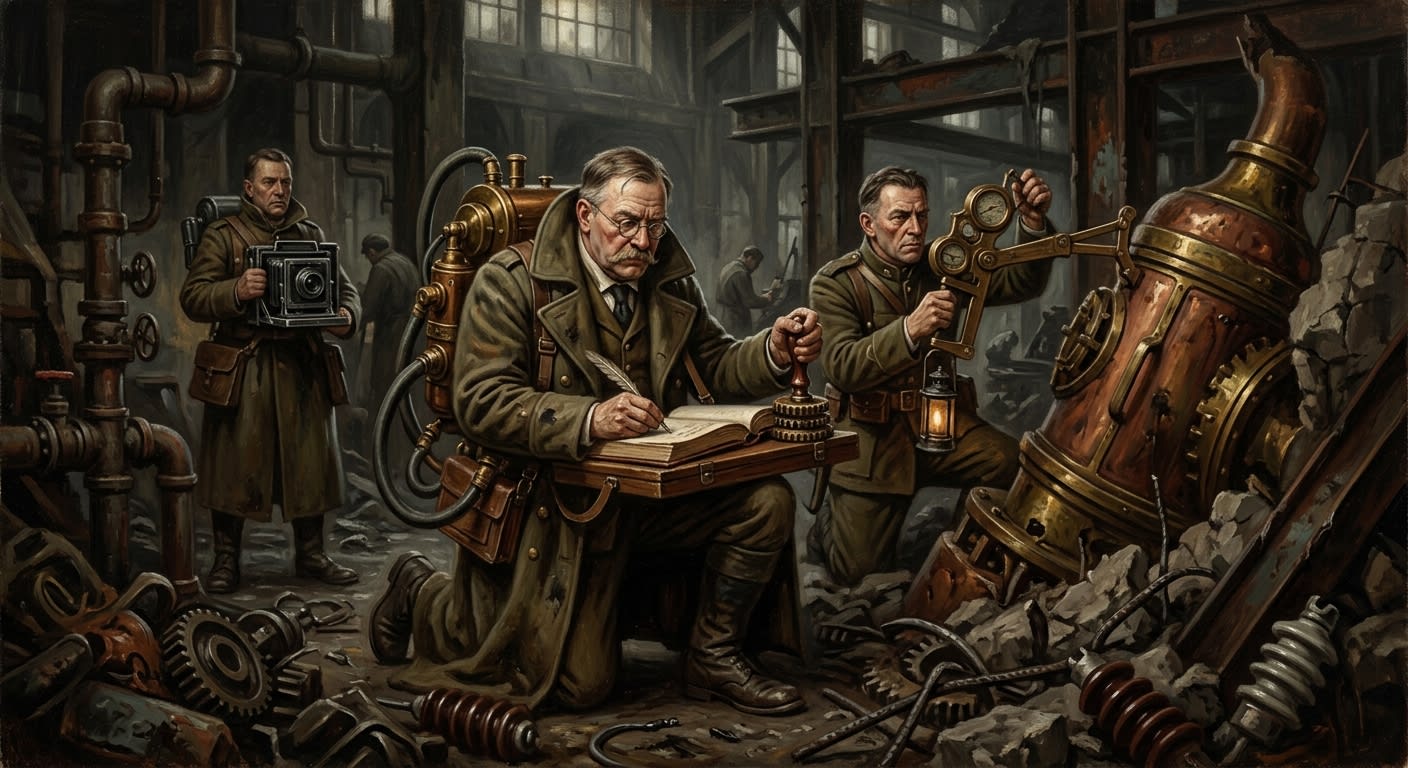
The Contract Sanctifier is the clerk who follows the Reliquary Salvager into the ruin with a seal-box, a chained register, two witnesses, and the serene expression of a man whose profession has confused courage with proximity. He does not lift stone. He does not test the air. He does not press his ear to the wall and listen for saint-bone humming under masonry. His hands remain cleaner than the Salvager’s, which is why the Bureau of Relics trusts them more.
This is unjust. It is also policy.
Contract Sanctifiers were empowered after the Singing Plate Disaster of A.S. 131, when an unquieted icon fragment near Bastion-Przemyśl proved that a sacred object can become lethal while waiting for proper paperwork. The old method required extraction, staging, transport, office receipt, preliminary custody entry, and eventual notarial blessing if no one had died during the delay. The new method carried the notary to the hole.
#On the Rite of Signing
A Sanctifier’s first instrument is the contract, not because contracts are holier than prayer, but because the Synod can audit contracts without kneeling. The field contract names the site, the crew, the object category, the expected custody path, the fee schedule, the hazard class, and the officer who will deny having authorised the operation if the altar begins making weather indoors. A proper contract is written in black ink, amended in red, witnessed in brown, and cursed in whatever language the Salvagers use when the ceiling drops dust into the open folio.
The Sanctifier reads the preamble aloud before the first rope descends. “Sacred matter remains Synodal property.” “Praise requires custody.” “If it sings, it belongs to the Synod.” The Salvagers listen with the reverence men reserve for rain delays before execution. The words matter. A relic lifted under contract enters custody before it enters daylight. A relic lifted without contract enters temptation, which is much the same route with fewer signatures and more corpses.
Early field circulars described the preamble as a devotional comfort to salvage crews.
The preamble is a jurisdictional knife. Comfort was added in sermon copies after three crews objected to being blessed by liability language.
The signing itself is done on a folding board strapped to a tripod. The board has brass feet, so it can stand in mud. The ink is thickened against damp. The wax is blue for licensed salvage, grey for tolerated crews, black for objects whose existence will later surprise their own file. Each Salvager presses thumb or remaining thumb into the witness strip. Missing digits are accommodated by knuckle mark, palm crease, or sworn identification by a crew chief who has not yet been paid enough to lie.
#On Field Authority
The Contract Sanctifier transformed salvage from scramble into sequence. Before him, the first man into the cavity owned the story until someone stronger arrived. After him, the first stamp into the ledger owned the object before anyone touched it. This gave Relics what Relics adores: priority without dirt under the nails.
At a collapse site, the Sanctifier may halt extraction if the object is singing. He may require a Litany-Engineer before movement. He may bind a crew to re-bury do-not-move matter. He may invalidate a tag if the custody number has been tampered with, reheated, washed, scraped, kissed, or improved by a man whose penmanship exceeds his clearance. He may declare a salvage fee forfeit if an object is pocketed, broken, swapped, prayed over by an unauthorised priest, or sold to a shrine-broker with the face of a kindly uncle and the hands of a rat.
The Salvagers hate him because he slows the hand. They need him because he makes the hand payable. Licensed Recoverers call him protection. Shadow Pullers call him a leash with spectacles. Reverents ask him to wait while they sing. Biters ask him to turn around. He writes both requests down, because every faction betrays itself most clearly when irritated.
FIELD INVALIDATION — DANUBE OSSUARY CRAWL, A.S. 144 Crew presented three saint-glass beads under grey contract. Sanctifier observed fourth bead beneath tongue of crewman ███████. Crewman claimed protective custom. Bead produced heat under confession question. Contract suspended; fee voided; tongue retained for examination. Sanctifier promoted one grade after recovery.
#On Purity by Paper
The rise of the Contract Sanctifiers made paperwork its own form of purity. This offended priests, thieves, and philosophers, three classes whose opinions are occasionally charming and rarely useful. The Salvager who sings correctly but files badly remains suspect. The Salvager who files correctly but sings badly remains employable under supervision. The Bureau prefers a flawed rite it can cite to a perfect rite it cannot prove happened.
This is the central blasphemy and the central wisdom of the office. Sanctity without custody becomes rumor. Rumor becomes trade. Trade becomes counterfeit. Counterfeit becomes battlefield failure, shrine riot, chapel delirium, and another committee in Strasbourg with too much tea and no one willing to say that the original sin was lateness.
The Sanctifier’s satchel contains contract leaves, custody ribbons, wax wafers, witness pins, linen object slips, a small bell for declaring silence, and a red cancellation knife used to cut through invalidated forms. The knife is ceremonial. It is also sharp. More than one Salvager has discovered that symbolism can open skin when held by a frightened clerk.
#On Corruption
No office placed between relics and payment remains innocent. The Contract Sanctifier sells speed, classification, witness discretion, and the blessed little pause between discovery and report. He can delay a mark long enough for a crew to “find” an extra bead. He can classify a singing object as safe if the hum is low and the fee high. He can turn a tolerated crew into a licensed crew for one operation by arranging the page so that nobody important notices the fraud until the object is already in Relics custody and too useful to reject.
The Bureau punishes this with magnificence when caught. Public demotion, seal-stripping, wrist branding, vault penance, assignment to damp archives where the ink grows fur. Private tolerance follows where the results are profitable. A corrupt Sanctifier who delivers clean custody is a sinner. A corrupt Sanctifier who loses the object is a heretic. The distinction saves money.
A training pamphlet once claimed that Contract Sanctifiers are “uniquely resistant to bribery by virtue of sacred oath.”
The pamphlet has been withdrawn. The oath remains in force. Bribery continues under improved terminology.
#On the Present Practice
By A.S. 201, no licensed salvage operation near a bastion proceeds without a Contract Sanctifier or a written explanation for his absence, which is the same thing as a confession waiting for a date. At Bastion-Irongate, they travel with quake crews. At Przemyśl, they sit in temporary chapels beside quieting cloth and cough through the dust. At Bastion-Sibiu, where Vera “Iron-Thumb” Malrec’s relic is held, junior Sanctifiers are made to stare at the iron thumb and recite the rule of custody until their embarrassment becomes useful.
They are clerks in mud. They are priests of the payable object. They are the men and women who taught the Synod that a signature, applied quickly enough, can outrun theft, panic, and certain categories of miracle.