
#On the Gorge and Its Nature
"Where the Danube kneels."
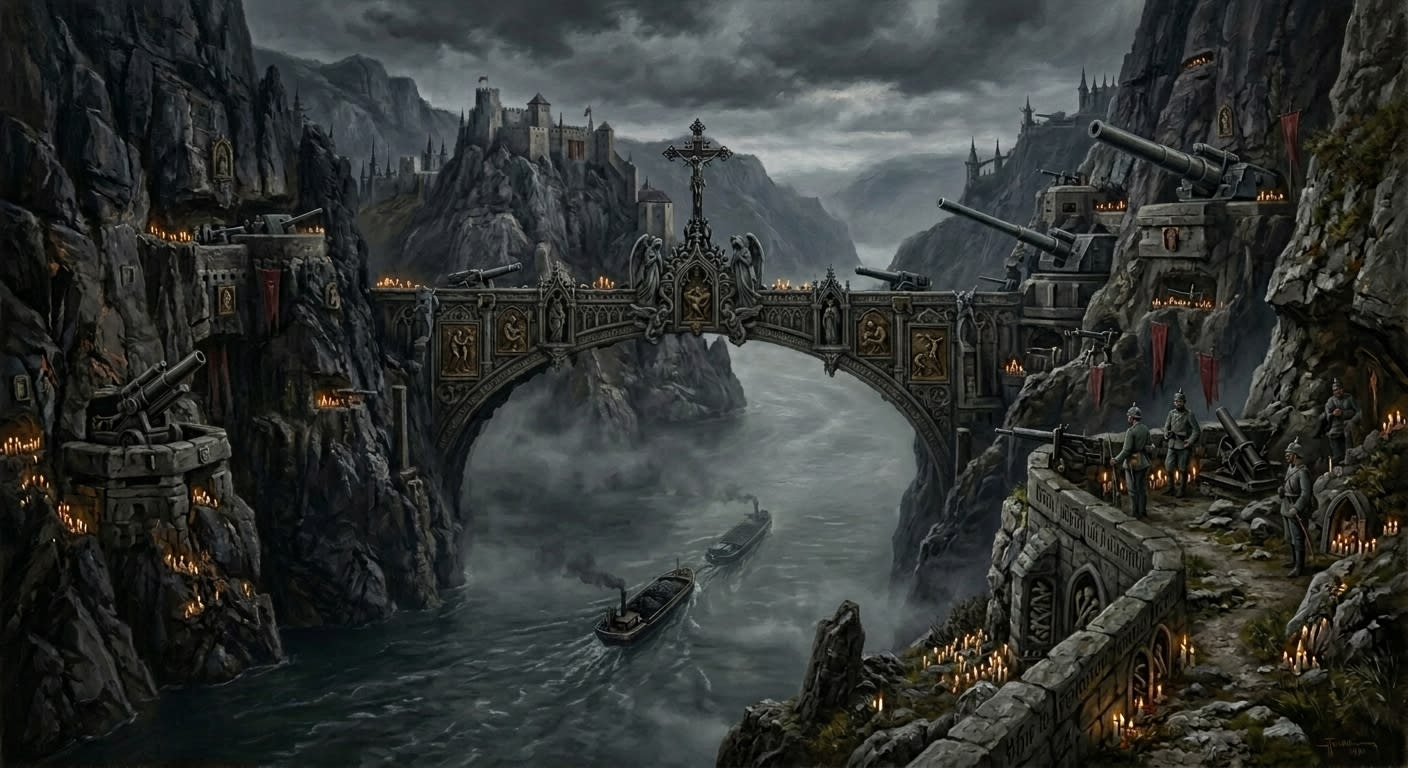
The river is old. The gorge is older. The mountain on either side of the water has been dying for geological ages, splitting apart in a wound three miles long and, at its narrowest, barely wide enough for two barges to pass abreast without scraping their hulls on rock that predates the concept of scripture. Into this wound the Synod has driven an iron stake, and the stake has a name, and the name — stamped on every requisition order, every conscription writ, every sealed report filed under the increasingly strained heading of OPERATIONAL — is Bastion-Irongate.
The Iron Gates were a chokepoint before they were a fortress. Before the Sundering, before the Synod, before the first clerk drew breath and reached for a stamp, the gorge controlled the mid-continental river approach between the Carpathian foothills and the Serbian highlands. Any army moving west along the Danube corridor had to pass through it. Any fleet descending from the upper river had to survive it. The Romans knew this. The Ottomans knew this. The Rationalists knew this, though they preferred to express their knowledge in terms of navigational calculus rather than military candour, which is why they lost.
The Synod's engineers arrived in the decades after the Sundering and found what engineers always find when they arrive at a place the Creator has already fortified: that the Creator's work was adequate in principle but catastrophically under-documented. The gorge walls rose three hundred feet on either side, black Carpathian basalt shot through with iron-bearing seams that made the stone ring when struck with a hammer. The river channel between them was deep, fast, treacherous, and — at the two points the sappers designated Gate One and Gate Two — narrow enough that a chain boom could be strung from cliff to cliff without requiring more than eighty yards of forged links. The first permanent garrison established itself on the southern cliff face in A.S. 67, two years after the Sagittal Line began to solidify from a series of desperate entrenchments into something resembling a continental fortification. The northern cliff face was garrisoned six months later, when the Bureau of Engineering submitted its seventeenth memorandum on the subject and someone in Strasbourg finally read one.
What was built in those first years was crude: gun emplacements carved into living rock, connected by tunnels bored with pneumatic drills and lined with timber shoring that rotted in the river damp within a season. The garrison lost more men to tunnel collapse in the first decade than to any action by the enemy. The enemy, at that point, had not yet arrived in force at the gorge. Morwen — the Weeping Host, Sin-General of Envy — was occupied elsewhere, hollowing out the monasteries of the lower Balkans and stripping the identities of their inhabitants like bark from a birch. She would turn her attention to the Irongate later, when the fortifications had grown beautiful enough to envy.
#On the Gasket Choir
"The mountain sings because it must. So do we."
The name is not metaphorical. It is not a soldiers' joke elevated to tradition by repetition and laziness, though soldiers' jokes have been elevated by worse. The Gasket Choir is an acoustic phenomenon classified by the Bureau of Bells as a Category Three Harmonic Anomaly — meaning, in the Bureau's exacting taxonomy, that the sound is too beautiful to be natural and too useful to be investigated.
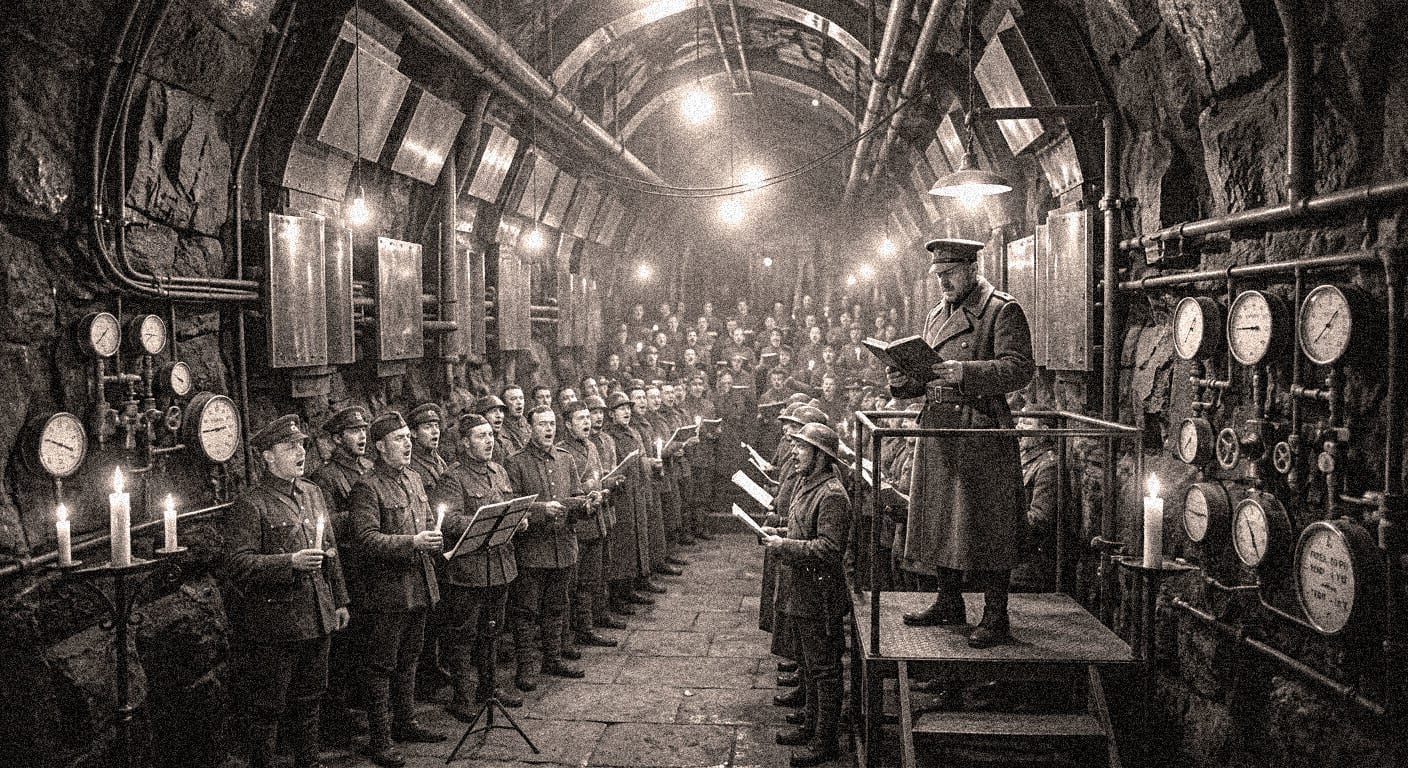
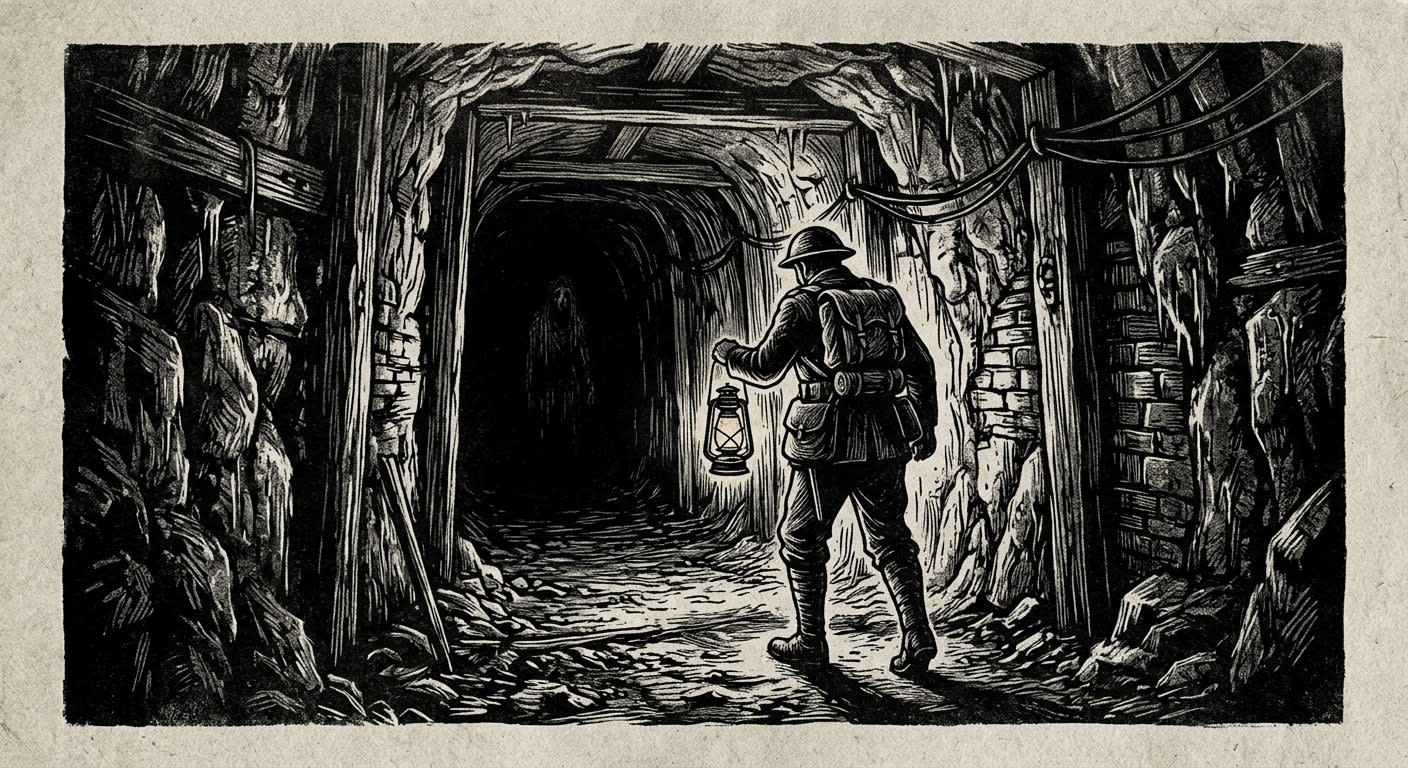
The tunnels are the thing. Over a hundred and fifty years of continuous expansion, the sappers and engineers of four successive garrison commands have bored the cliffs of the Iron Gates into something that resembles, in cross-section, the lung of a vast stone animal. The main bore — the Transit Spine — runs the length of the southern cliff face, a corridor wide enough for a rail cart and high enough for a man on horseback, though horses are forbidden in the tunnels after the Incident of A.S. 141, which involved a spooked gelding, a pressure door, and a quantity of brass fittings that the Bureau of Ordnance has never satisfactorily accounted for. Off the main bore branch five great chambers — the garrison calls them Lungs — each serving a different function: dormitories, infirmaries, foundries, transit staging, and the Choir Nave itself, where the chant crews assemble for their shifts.
The chant crews. This is where the Gasket Choir ceases to be an atmospheric curiosity and becomes a matter of structural survival. The tunnels breathe. Air moves through them in patterns governed by temperature differential, river-spray moisture, barometric pressure, and the sheer cussedness of pneumatic physics in enclosed limestone-and-basalt chambers. The engineers discovered, within the first decade of deep-bore construction, that the mountain's tunnel system was inherently unstable — the micro-seals on the pressure doors, the gaskets that prevented catastrophic air-loss between chambers, the bolts that held the iron ribbing in place against the stone, all of these required constant vibration at specific frequencies to maintain their integrity. Without sound, the seals crept. The gaskets dried and cracked. The bolts worked loose from their housings by increments too small for the eye to detect but sufficient, over the course of a quiet night, to bring down a section of tunnel on the heads of the men sleeping within it.
The Great Hush of A.S. 94 killed three thousand. A freak atmospheric inversion silenced the tunnel-mouths for nine hours. The pressure doors failed in sequence, each collapse sending a shockwave that unseated the next set of gaskets, and by dawn the entire Third Lung had compacted into a mass of stone, iron, and men that the rescue crews did not finish excavating for eleven months. The Bureau of Records logged the casualties. The Bureau of Engineering submitted its report. The Bureau of Doctrine classified the event as "an instructive demonstration of the wages of silence."
After the Great Hush, the chant shifts became mandatory. Twenty-four hours a day, in rotating eight-hour watches, the crews of the Choir Nave sing. Their hymns are calibrated to the resonant frequencies of each chamber's gasket seals — different harmonics for different sections, different tempos for different pressure conditions, the whole system maintained by Choir Magistrates who read pressure gauges the way parish clergy read scripture and who punish deviation from the prescribed stanza with the same ecclesiastical severity. The result is a fortress that must be sung into continued existence, a military installation whose primary defensive capability is choral, and a garrison where the distinction between prayer and structural engineering has been formally abolished.
Earlier reports from the Bureau of Engineering describe the chant system as "supplementary to conventional bracing."
The Bureau has corrected this characterisation. The chant system is not supplementary. It is the bracing. The conventional iron ribbing provides approximately thirty-one percent of the structural load-bearing. The remaining sixty-nine percent is acoustic. The mountain does not need the iron. The mountain needs the sound. The engineers have known this since A.S. 94. They did not volunteer the information. The Bureau of Doctrine has since explained to them the theological implications of withholding truth from the Synod, and the engineers have expressed their contrition in the form of a revised structural assessment and fourteen resignations.
#On the Garrison and Its Disciplines
"You rent a bunk by the hour. You work by the stanza. If your voice goes thin, you lose heat."
Bastion-Irongate holds approximately twenty-two thousand souls in peacetime — the word peacetime being understood, at the gorge, to mean any period during which Morwen's forces are not actively inside the tunnel system. The population swells during convoy surges, when troops and materiel moving between Bastion-Sibiu to the north and Bastion-Shipka to the south must transit through the gorge, and contracts during quarantine lockdowns, which occur with a regularity the Bureau of Records describes as "seasonal" and the garrison describes with language the Bureau would prefer not to transcribe.
The Tunnel Commandant — presently Hadrik Sorn, a man whose sense of humour has been described by subordinates as "cold" and by superiors as "absent" and by Sorn himself as "unnecessary in a man who holds the gate keys" — commands the military garrison and controls the Transit Spine, the pressure doors, and the explosive charges planted at intervals along the main bore for the purpose of compartmental denial. Which is to say: if a section of tunnel is breached by the enemy, Sorn can collapse it, sealing whatever is inside — soldiers, civilians, Morwen's agents, the distinction being, in the chaos of a Mirror Discipline alert, occasionally academic.
The Choir Magistracy — a tribunal clique operating under the spiritual authority of the Synod's Transit and Breath Office — controls what the garrison calls voice-licensing: the system by which every inhabitant of the Irongate is assigned a vocal tier that determines their access to heat, rations, bunks, and the right to remain inside the mountain. A first-tier license permits residence and basic labour. A fifth-tier license permits supervisory chanting and access to the pressure ledger. Below first tier is the unlicensed — those whose voices have given out, whose lungs have thickened with the fine stone dust the garrison calls ice-lung, or who have otherwise lost the ability to contribute to the Choir's acoustic maintenance. The unlicensed are not expelled. They are simply denied heat allocation, which in a tunnel complex carved into a mountain above a river in the Carpathian winter is a distinction without a meaningful difference.
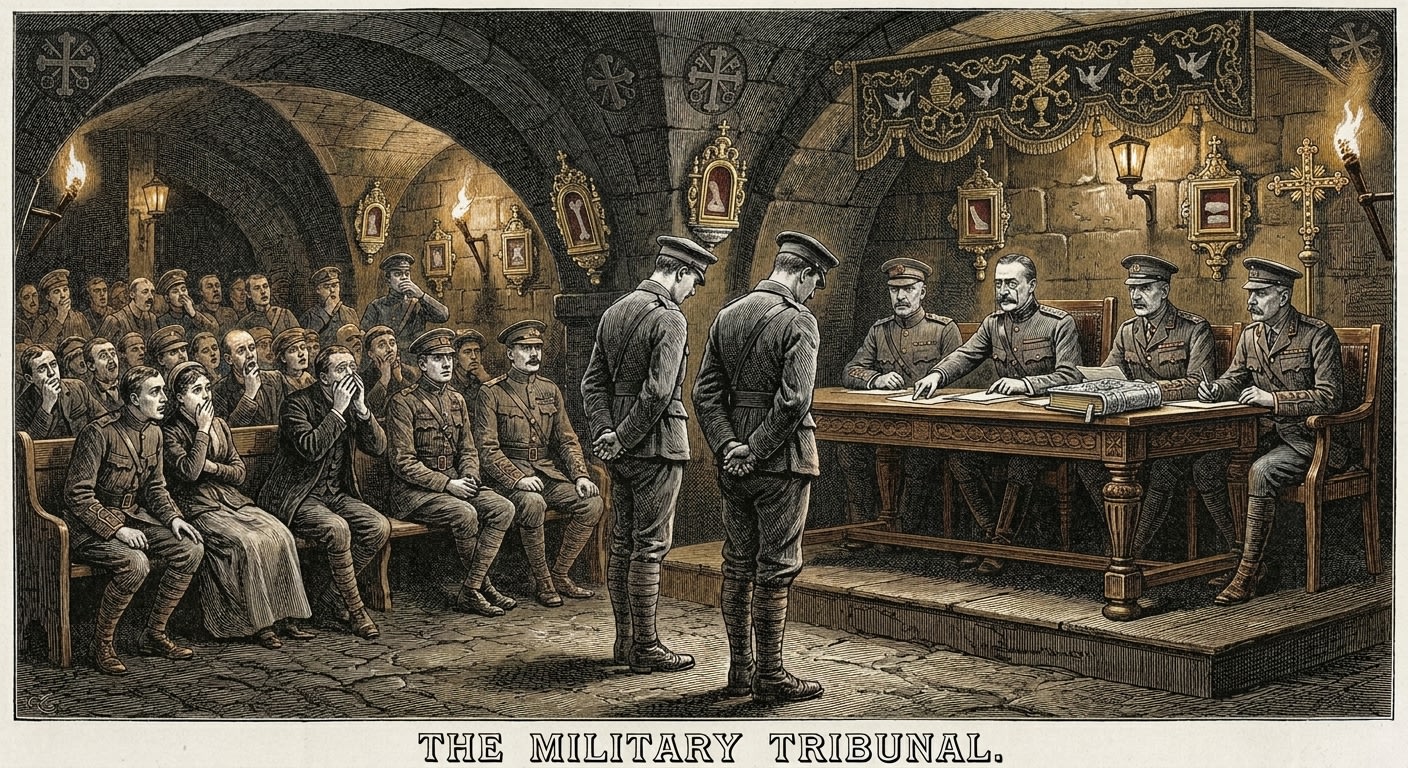
Magistrate Cantor Ys Varr presides over the licensing auditions with the serene precision of a woman who has confused administrative authority with divine mandate and has been rewarded for the confusion with a warm office and an inexhaustible supply of throat lozenges. Her auditions are feared. A worker who fails the stanza test — which involves sustaining a prescribed harmonic at a prescribed volume for a prescribed duration while a pressure gauge is monitored by a Choir Warden whose expression suggests he is measuring not the worker's competence but his remaining utility — loses his tier on the spot. Appeals are heard in the Hush Court, where the magistrates sit on stone benches beneath a ceiling that has been reinforced three times since the Great Hush and where the accused is reminded, before proceedings begin, that silence in a breath line is a capital offence.
The Seal-Broker Lysa Murne runs the Breath Office's permit desk with the soft smile and cast-iron administrative instinct of a woman who understands that in a fortress where air is currency, the person who stamps the permits is the person who decides who breathes. Quarantine clearances, gate passes, convoy manifests, bunk allocations — all of these cross Murne's desk, and all of them emerge bearing her seal, and the seal, as Murne has been known to observe over pine tea in the officers' canteen, is the smallest piece of brass in the Irongate and the heaviest.
#On Morwen's Siege
"She claws at the gorge the way a thief claws at a jewel she can steal but never wear."
The other bastions of the Sagittal Line face enemies that can be mapped. Königsberg faces the Grey — a formless, unnamed pressure from the northeast that the Bureau of Doctrine refuses to classify and therefore cannot be discussed. Przemyśł faces Atheron, the Exalted, whose spires crown every ridge the garrison can see from the wire. Bastion-Sibiu faces Velmora, who bribes what she cannot break and breaks what she cannot buy. Shipka faces Syrion, whose time-fog makes cartography a form of gambling. Constantinople faces Kargath and Maldrake simultaneously, which is, by any honest reckoning, two more Sin-Generals than any fortress should be expected to entertain.
The Irongate faces Morwen. And Morwen does not map.
Her campaign is not a siege in the conventional sense — no batteries, no trenches, no sappers driving mines beneath the walls, no grand assaults against the gate positions. Morwen attacks the Irongate the way rust attacks iron: from within, along the grain, in the places where the metal was already stressed. She sends her forces into the garrison. A sapper reports that his partner has begun speaking in another man's cadence — the phrases correct, the intonation wrong, as though the words had been learned from a transcript rather than a life. A chaplain delivers a sermon he cannot remember writing, and the theology is flawless, and the congregation weeps, and when the chaplain reads the text again in his quarters that evening he finds that the handwriting is his own and the thoughts are a stranger's. A sentry reports that his replacement arrived an hour early, wearing his face.
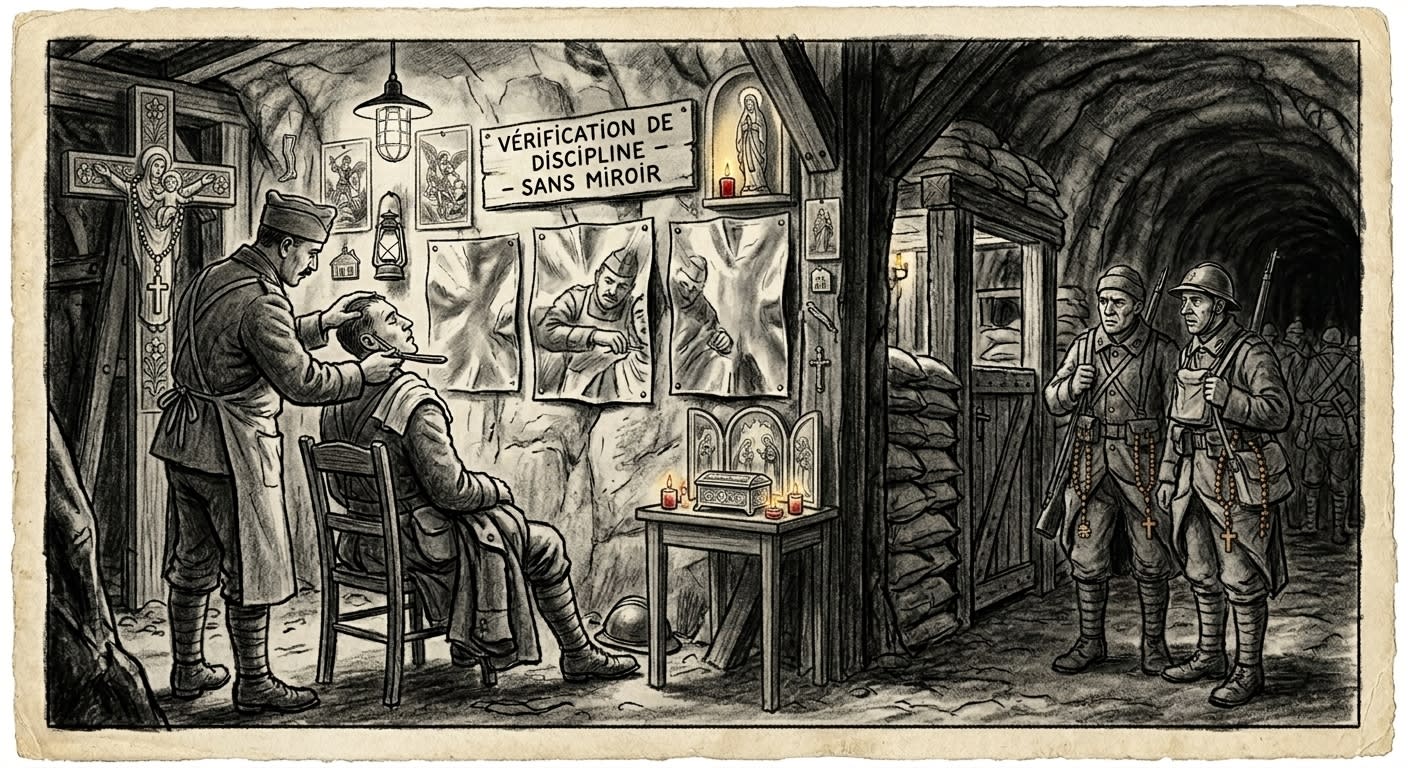
The Bureau of Purity maintains a classified protocol for the Irongate sector. They call it Mirror Discipline. Under its terms, soldiers are forbidden from looking at their own reflections for more than three seconds. Shaving is performed by assigned barbers who work by touch and who are rotated monthly to prevent attachment. Mirrors in the latrines have been replaced with polished tin deliberately warped to distort the image. Reflective surfaces larger than a hand-span within three hundred yards of the perimeter are shattered on sight, and the Bureau of Ordnance has, with the weary thoroughness of an institution that has stopped being surprised, requisitioned forty-seven thousand yards of matte-finish trenchcoat lining since A.S. 195.
The Ledgers of Self are the garrison's primary defence against replacement. The Bureau of Records maintains a personal dossier for every man stationed at the Irongate — appearance, habits, scars, specific sins confessed at the last audit, the names of childhood friends, the particular way the soldier holds his mess-tin. If identity is questioned, consult the Ledger. The Ledger is definitive. The Ledger is also a document, and documents can be altered, and who decides what the "true" entry says when the man standing before the magistrate and the man described in the Ledger are both claiming to be genuine, and both can recite the contents of the dossier, and both have the scar above the left eyebrow, and both remember the name of the dog they had as a child?
The standard resolution protocol, when two versions of the same person are identified within the garrison, is the execution of both. The Bureau of War calls this "efficient." The Bureau of Doctrine calls it "canonical." The chaplains call it "deeply regretted." The soldiers at the Irongate call it "the Twinning" and speak of it the way men speak of weather — as something inevitable, impersonal, and not worth losing sleep over, because sleep at the Irongate is difficult enough without adding existential dread to the list of things that keep the candles burning past curfew.
The Incident at Sector Nineteen, which precipitated the formal adoption of Mirror Discipline in A.S. 193, remains sealed at the fourth ratification. What is permitted here is this: an entire platoon was found at dawn, alive and functioning and correctly uniformed, performing their assigned duties with exemplary discipline. The problem was that the platoon had been dead for three days. The bodies were in the tunnel behind the pressure door marked Sector Nineteen, stacked in the manner prescribed by the Bureau of Rites for battlefield interment. The men at the guard posts were identical to the dead men in every particular. They answered to their names. They knew the passwords. They performed the drills. When confronted, they expressed confusion. They did not resist. They asked, with what every witness described as genuine bewilderment, why they were being arrested when they had done nothing but their duty.
The disposition of the thirty-one men who were not men is ██████████████████████.
#On the Interior Life
"Sing clean, sleep warm."
Life inside the mountain follows a rhythm that is part liturgical, part industrial, and wholly unlike anything experienced at the other bastions of the Line. The day begins with the dawn pressure check — a reading taken from gauges mounted at intervals along the main bore, interpreted by Choir Magistrates as a combination of meteorological data and moral verdict. A falling reading means the seals are stable and the Creator is satisfied. A rising reading means the gaskets are stressed and someone in the garrison has sinned, and the two explanations are treated with equal seriousness, and the response to both is the same: additional chanting.
The districts of the Irongate are arranged along the Transit Spine like organs in a body. The Intake Gateworks, where permits are checked and lungs are tested — a Breath Office clerk holds a candle at arm's length and times how long the applicant can keep the flame bent — gives way to the First Lung, the dormitory vaults where bunks are rented by the hour and warmth is a function of vocal tier. The Choir Nave occupies the central chamber, a cathedral-sized space carved from black basalt and lined with brass acoustic baffles that amplify the chant crews' voices and direct them, through channels cut in the rock, to every gasket seal in the complex. The Valve Quarter, where the foundries forge replacement gaskets and pressure fittings, runs hot — the only warm district that does not require a license, because the work is too dangerous for the licensed to volunteer and too essential for the unlicensed to refuse. Beyond it, the Breatheries — the infirmaries and lung clinics where the stone dust takes its toll — and the Transit Spine itself, where rail carts carry convoys, conscripts, and condemned men through the mountain at speeds the Bureau of Engineering describes as "adequate" and the convoy drivers describe with a single profanity that has achieved, through repetition, the status of a local prayer.
Below all of it, in the crawl-spaces behind the acoustic baffles and the maintenance tunnels that connect the sealed-off remnants of the pre-Hush construction, the Underchords — the Irongate's black market, its smuggling network, its shadow economy of stolen hymn pages and counterfeit license stamps and oxygen bulbs sold at prices that would make Velmora blush. The Underchords are ruled, to the extent that anything in the Underchords can be said to be ruled, by men and women who communicate in tap-codes rather than speech, because speech in the Underchords is dangerous — the wrong harmonic in the wrong corridor can unseat a gasket seal, and an unseated gasket seal in the Underchords means a section of tunnel that the Choir Magistrates will not send a crew to re-pressurize, because the Underchords do not officially exist.
The food is what you would expect in a tunnel carved into a mountain above a river in the Carpathian winter: hot brine broth, bitter bread made from compressed grain bricks that arrive by convoy and are stored in the Valve Quarter because the heat keeps them from freezing solid, and pine tea brewed from needles gathered at the Snowmouth Gate — the outbound exit on the mountain's western face, where the air tastes of pine pitch and gun oil and the world outside the tunnels asserts itself with a brightness that men who have spent months in lamplight find physically painful.
Luxuries exist. Real fat — lard, butter, dripping — is worth more than coin. Citrus peel, when it arrives on the convoys, is traded at rates that the Bureau of Tithes would classify as usurious if the Bureau of Tithes had jurisdiction inside the mountain, which it does not, a jurisdictional gap that every Seal-Broker since A.S. 102 has exploited with cheerful and sustained corruption. Throat lozenges are the garrison's true currency. A man with a clear voice and a full tin of lozenges is wealthy. A man with ice-lung and an empty tin is dead, though the death may take weeks to formalise.
#On the Present Condition
"If the echo answers, don't answer back."
The Irongate endures. This is the official position of the Bureau of Doctrine, the Bureau of War, and the Tunnel Commandant's daily situation report, and it is, in the strictest sense, accurate. The walls have not fallen. The pressure doors hold. The Choir sings. The gasket seals maintain their integrity within tolerances that the Bureau of Engineering describes as "acceptable" and that the Choir Magistrates describe as "God's will" and that the chant crews themselves describe as "Monday."
Morwen has not ceased her campaign. She does not cease campaigns. She corrodes them, the way the river corrodes the gorge walls — imperceptibly, continuously, with a patience that the Bureau of War finds more demoralising than any frontal assault. The garrison rotates on eighteen-month tours, which is long enough for the mountain to enter a man's lungs and short enough — the Bureau hopes, though the Bureau does not use the word hopes in official correspondence — to prevent the mountain from entering his mind. Soldiers who serve at the Irongate are given, upon completion of their tour, a discharge certificate bearing the stamp of the Choir Magistracy and a notation, in the smallest script the Bureau of Records permits, that reads: Identity confirmed as of date of departure. The Bureau accepts no liability for subsequent alterations.
The Counterkey Circle — a heretical cell that teaches forbidden harmonics, silent-sign language, counter-frequencies capable of unseating the gasket seals without sound — has been active in the Underchords since A.S. 198. The Choir Magistrates have responded with increased patrols, additional licensing audits, and the execution of fourteen men whose voices, when tested under duress, produced harmonics inconsistent with their assigned stanza. Whether the fourteen were genuine heretics or merely frightened men whose voices cracked under interrogation is a question the Hush Court has declined to revisit. The Bureau of Doctrine has filed the executions under "preventive maintenance." The pun, if it is a pun, is the Bureau's, and I will not improve upon it.
The lung-rot outbreaks of A.S. 199 have expanded the quarantine powers of the Breath Office to include compulsory isolation of any worker whose breathing test falls below threshold — the candle test, that brutal little metric, that measure of a man's remaining utility expressed in the flicker of a flame. Ward Seven of the Breatheries is full. Ward Eight, which did not exist six months ago, is being carved from the rock behind the Third Lung by crews whose own breath scores are, in the opinion of the Shaft Priory's doctor, insufficiently monitored.
The Dead Gallery — the Underchords' deepest smuggling corridor — is growing. The maps do not match the tunnels. Corridors that the garrison survey measured at forty yards in A.S. 200 now extend to sixty. The walls are damp with something that is not water. The sound, in the Gallery's deepest reaches, behaves incorrectly — a voice thrown down the corridor arrives at the far end before it leaves the speaker's mouth, or does not arrive at all, or arrives in someone else's register. The Bureau of Engineering attributes this to "acoustic refraction in limestone." The garrison attributes it to Morwen. Both explanations produce the same recommendation: do not enter the Dead Gallery alone. Do not speak in the Dead Gallery. And if you hear your own voice answering from the darkness ahead of you — do not answer back.
The Irongate is a fortress that must be sung into existence every hour of every day, garrisoned by men who are forbidden from looking at their own reflections, supplied through a gorge whose beauty is the reason it is under attack, and governed by a bureaucracy that has replaced the distinction between prayer and engineering with a licensing system that determines who deserves to breathe. It is, by any sane assessment, a place that should not function.
It functions. The Choir sings. The gaskets hold. The mountain, for another day, does not remember that it was never meant to be hollow.
The Bureau of Doctrine has reviewed this article and found it accurate. The Bureau of Engineering has reviewed this article and requested seventeen amendments. The Bureau of Bells has reviewed this article and returned it with a hymn written in the margin.
I have kept the hymn. The amendments are under advisement.
Earlier editions of this Codex listed Bastion-Irongate under its deprecated designation, "Bastion-Savoy."
The name has been corrected. The fortress is named for the gorge it guards, which is named for the gates the river forced through the mountain, which are named for the iron in the stone. The stone does not care what the Bureau calls it. The Bureau finds this admirable.