
#On the Error Offered
A.S. 201 — a current survey of a technique whose origin the cited records do not date.
Klem's Courtesy is a mistake made on purpose and left where it will be found. A clerk who expects an audit puts one plain arithmetic error near the top of a ledger page, often in the first column. The inspector finds it, corrects it and grows content with the inspection. Everything below that error is the reason it was made. The sum at the head of the page is wrong by a little. The page as a whole may be wrong by a cellar.
The name comes from Grain Keeper tradition, which credits the device to Old Klem the Ledgerman and to the plain, unlovely style of entry the trade calls Klem's Ledger Hand. Neither cited account dates its first use. Klem's own work falls in the decades after the First Ration Reforms of A.S. 104. The standard chits of those reforms made every allotment countable, and so made every count worth forging. The cited sources identify no first offender and supply no ledger with a Courtesy and an attached confession. The technique entered the record the way damp enters a granary: already present when anyone troubled to look.
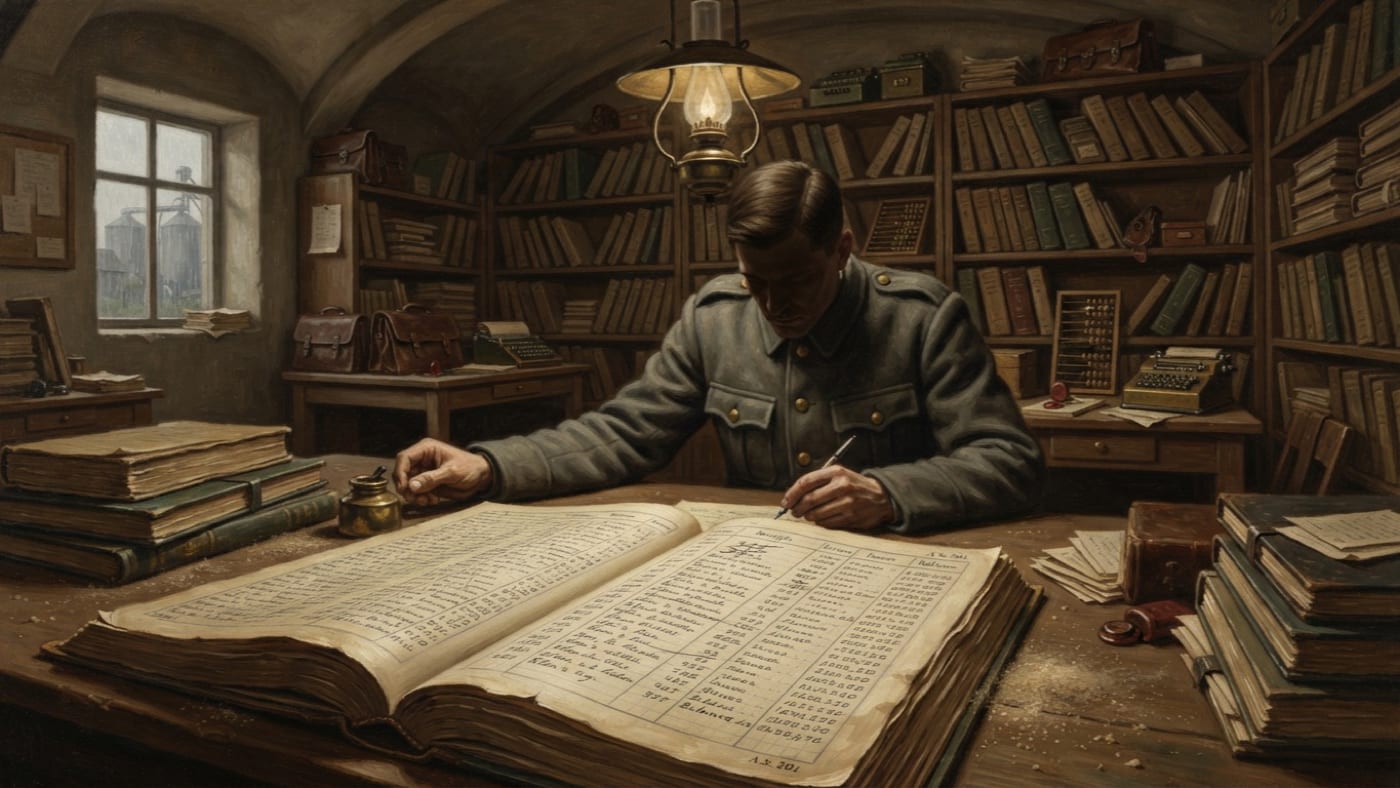
The scene needs no particular cast. There is a granary office with a desk furred in grain dust and a lamp. There is a ruled book of receipts and issues. An inspector arrives with a fresh scale and a bad temper. The ledger is opened and the inspector reads. Somewhere in the first few lines, a column of figures fails to add up.
That is all that happens at first.
#On the Reader's Satisfaction
I know the moment the Courtesy buys, because I have spent my career within arm's reach of it. An auditor reads a page with a suspicion that has nowhere to go yet. Suspicion is unpleasant. It sits in the stomach like underbaked bread. Then the eye catches a sum that is plainly wrong, wrong in the honest way of a tired clerk who carried a figure badly, and the stomach settles. The auditor takes up the correction ink, strikes the false total and writes the true one above it in a fine, superior hand. He turns the page with the crisp sound of a man who has done his duty.
He has done his duty. That is the obscenity of it. The correction is real. So was the error. The arithmetic is better than it was, and the ledger is more accurate now than when the inspector sat down. What the clerk has bought is the reader's feeling that the reading is finished. A man who has found one fault does not like to think he missed a second. It insults the first.
Klem's tradition sets the Courtesy alongside Klem's Ledger Hand, the wider habit of writing so dully that a page escapes attention. The figures are cramped. The capitals have no flourish. Abbreviations change with the office that will receive the copy, and sevens thicken into ones when the paper is damp. These are the Courtesy's neighbours, not the Courtesy. Ledger Hand makes a page forgettable. The Courtesy gives the forgetting a reason. A dull book with one planted fault reads exactly like the book of a mediocre honest clerk. The Church employs thousands of those, the Creator keep them, and no inspector can arrest them all.
The device has a plain limit. It fails against an auditor who treats a found error as the start of an inspection and keeps reading. It assumes vanity in the reader and fatigue in the hour. Neither is guaranteed. Both are common.
#On the Grain Beyond the Page
The Courtesy moves no grain. Correct the planted sum and not one measure of barley is found, explained or returned. The error never had anything to do with the diversion it protects. Keep the two apart in your mind, because the Keepers keep them apart in their hands.
The spoilage shuffle is the diversion. It passes sacks through condemnation and disposal classifications, using the divided custody of the ration, spoilage and disposal ledgers. Usable grain leaves the official count as waste and arrives in a cellar as food. A Scale Clerk works the figures. While an inspector is in the room, the Courtesy guards them. The shuffle is a road. The Courtesy is a clerk standing in that road pointing helpfully at a pothole.
The surrounding books matter here only as Klem's tradition describes them: the official book, the cellar book and the ash book. The official book is made to survive audit, and that is where a Courtesy belongs. Nothing in the tradition suggests the other two are ever laid before an inspector. A Keeper who did so would deserve what followed.
Making grain vanish on paper is the cheap half of the work. The grain still weighs what it weighs. It must be kept dry and away from mice, moved by night and split into small caches. The Cellar Warden answers for those caches across a district. When the ward runs short, and the line outside the official store goes quiet in the wrong way, the Keeper-of-Keys decides which households draw on them. An inspection survived on paper means a winter's bread in a cellar. An inspection failed means an empty cellar and a Warden in irons. The ward learns to live on the Church's ration again, with nothing beneath it.
#On the Bureau's Objection
The Bureau of Records hates the Courtesy more than it hates the theft, and the hatred is personal. Theft takes grain. The Courtesy takes the auditor's own diligence and spends it against him. Every inspector who has struck a planted total and turned the page has in effect signed a small certificate of competence for a ledger built to fool him. Records keeps its pride in how well it reads, and the Courtesy enters that pride in the column of the enemy.
The Bureau of Purity cares less about the insult and more about what the error conceals. A recognised Courtesy may betray intent; it does not by itself establish how much grain anyone holds. Standing Order 22-H of A.S. 134 classifies possession more than one-half portion above the registered allotment as spiritual sabotage and sends it to the Tribunals of Grain. The sentences range from public confession to immurement. The Courtesy has no separate sentencing rule in the cited accounts. The Bureau of Tithes has the cooler interests of revenue and quiet wards. Its appetite for exposing a diversion rises and falls with the cost of the riot that might replace it.
In my judgement, the remedies are already in the Bureaus' own cabinets. Compare the official book with its duplicate before reading it for errors. Weigh the bins before opening the book at all, so that the page has to answer to the grain. Follow a sack's custody through every office that touched it. Above all, teach inspectors that an error found early is a reason to read more slowly. None of this has been ordered as a single policy, and none of it has ended the practice. It only takes away the cheap victory the clerk has to sell.
Earlier Bureau training notes, cited in the Klem dossier, describe the spoilage shuffle as "primitive cache theft masked by clerical confusion."
Corrected. The shuffle exploits the custody passing between offices. Some of the "clerical confusion" an inspector meets on the page is no confusion at all. It sits near the top of a column and corrects agreeably. That may be Klem's Courtesy, offered to him by name.
#On Present Application
Scale Clerks still plant it. A Cellar Warden who suspects an audit has it set in the first column before the inspector's cart reaches the yard. The Keepers speak of it with the fondness people keep for things that cost little and save lives.
Whose lives depends on the hand holding the pen. Mercy Keepers use the Courtesy to protect stores meant for children. Quota Men use it to hide their modest diversions and reserves while the official system goes on turning. Hunger Brokers use it to protect the cellar from which they decide which families eat and what those families owe in return. The Courtesy is equally polite to all three. It says nothing about the person who offered it. An auditor who forgives a ledger because it hides bread has not asked whose bread it is, or at what price.
Any Records inspector who has read this far is directed to the second column.