
#On the Warden's Station
The Cellar Warden holds the keys to a district's hidden stores. Every other fact about the rank follows from that one, including its habit of sleeping badly.
The Grain Keepers, fifth of the proscribed heresies, keep a ladder copied from the offices they rob. Sack-Hands carry. Above them, at equal height, the Scale Clerk keeps the numbers and the Cache Runner keeps the routes. The Warden stands over both and answers for what the numbers conceal and the routes deliver: the sacks under the floor, the bin behind the wainscot, the reserve that exists only because somebody declined to eat it last month. Above the Warden stands the Keeper-of-Keys, one to a ward, who decides who eats when there is no longer enough to pretend.
The trade minds this distinction, and the tribunals ought to. A Warden opens stores on ordinary nights, releases fractions, culls what has turned, tends the reserve, and tells the Keeper-of-Keys what is left. The Keeper-of-Keys decides what the shortage is for. In some wards one person does both. In others the two have never met and intend to keep it so.
The rank is also distinct from the Auxiliary Store Warden, the licensed granary office whose keys come from the Bureau of Tithes and whose counter gives Keepers a lawful reason to be seen handling sacks. That office grants access and holds no rung on the ladder. A Cellar Warden may hold it, may pay whoever holds it, or may never have stood behind a public counter at all. I have found no charter for the clandestine rank, no insignia, no ceremony of promotion and no fixed number of Wardens to a ward. The Keepers keep no such records. I find this personally inconsiderate.
#On the Stores That Must Remain
The Warden's cellar is several cellars. "Never hoard alone," the Keeper idiom runs, and a district's custody is a scatter of small holdings: a false floor in a licensed granary, a parish alms room that smells more of bread than of prayer, the loft above a mill, a wagon shed, the dry space under a stair, a hollow in an ossuary wall, a crawlspace where the mice have tenure. Where stock allows, the caches go in threes so that the inspector finds one and two survive. One bin is kept full, sound and conspicuous, for the sole purpose of being found.
What the Warden guards is edible grain, which is a different thing from recorded grain. The paper may say a sack was condemned, burned, distributed or carted to disposal. The Warden answers for whether it is still dry, still sound, and still reachable by a runner before Lauds. Waxed sacks keep the damp out. Retied seal twine keeps custody looking unbroken. The Warden walks the stores by nose: grain dust, damp straw, mouse musk, and the sweet rot which means a bin has turned and must be culled before it takes its neighbours. Condemned grain is sometimes sound and sometimes truly ruined. A Warden who confuses the two poisons a fever house, and no clerk's hand can write a black sack clean again.
Most of the labour is coordination. The Warden tells the Clerk what the books must absorb and tells the runner which store opens tonight. The Warden also stays on terms with the baker who turns grain into loaves and the parish canon who turns loaves into alms. "Let the priest bless the sack." The Warden supplies the sack, the canon supplies the blessing, and neither asks the other for a receipt. Patrols are paid in kind: bread on one street, fuel on the next, salt where the sergeant keeps a cellar of his own.
The Weevil Year of A.S. 157 gave the method its standing. Lawful western silos rotted under four Bureaus' shared custody, while small caches that had been aired and divided kept whole wards alive. The rank existed before the famine. After it, the districts knew which keys to trust.
#On Klem's Courtesy
The Scale Clerk makes grain disappear from the page, and that leaves the Warden with a problem. The grain has not disappeared from the cellar. Every successful diversion leaves a district holding sacks that do not officially exist, and the Warden is the person holding them.
Old Klem the Ledgerman supplies the rank's defensive liturgy. Whether Klem ever carried a Warden's keys is unproven. His name, birthplace and end are all disputed, and the trade attaches him to most of its ranks with the easy generosity of people borrowing someone else's grandfather. His method needs no biography. A Warden who suspects an audit plants an obvious arithmetic error near the top of the ledger, often in the first column. The auditor finds it, corrects it, initials the correction and feels the small warmth of having caught somebody. A satisfied auditor stops early. The trade calls this Klem's Courtesy.
Klem's tradition also gives the Warden three records. The official book is kept to survive audit. The cellar book records which store holds how much and which household is owed. The ash book is memorised, or copied once in haste and burned before dawn. The first two may sit on shelves for years, but the third is never left lying anywhere. A Warden found with the ash book bound in leather has been found.
#On the Wall Before Opening
Saint Silo-Agnes was immured beside a parish store for concealing three sacks of millet she meant to give away. The Bureau of Festivals stages her as a charity martyr and has cut the wall from the script. The cellars kept it.
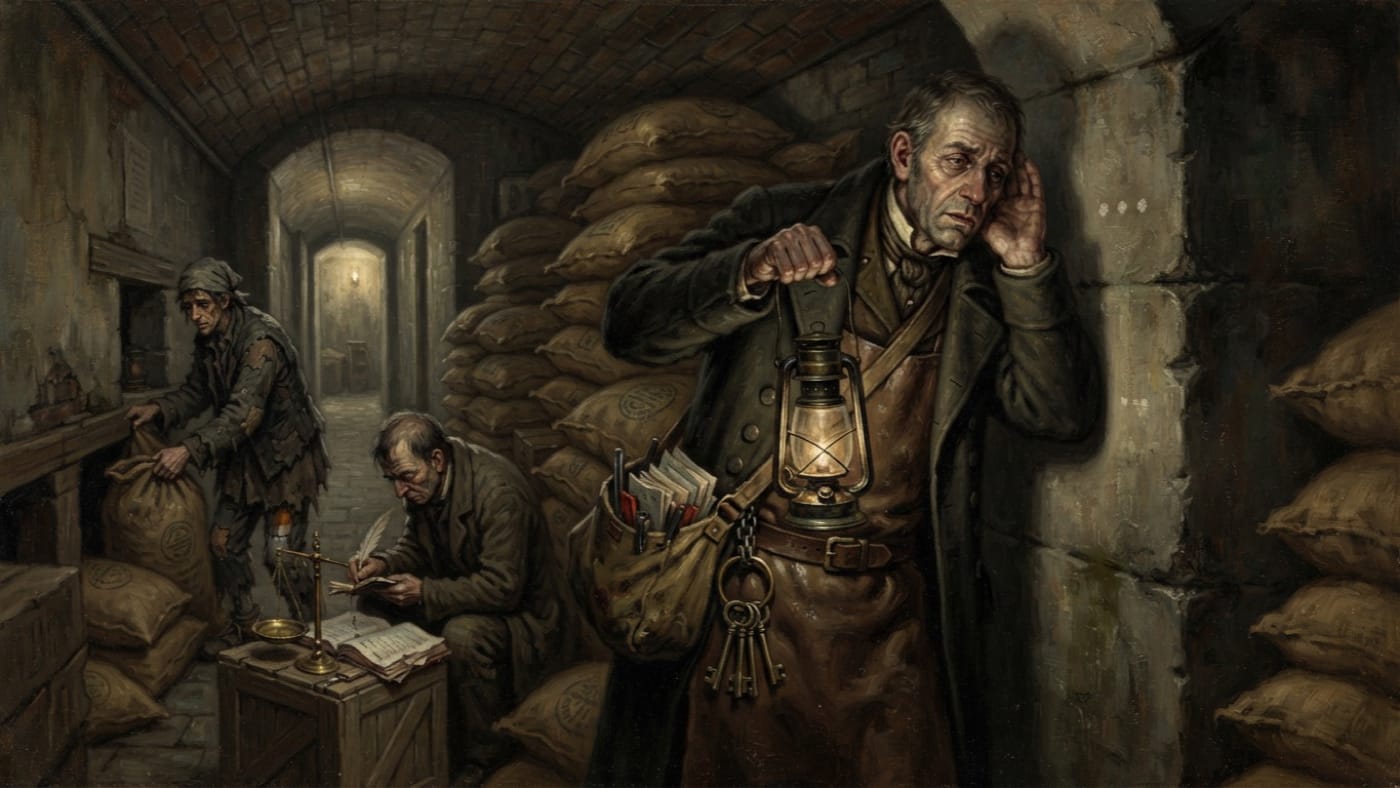
On the night before a cache is opened, some Cellar Wardens press an ear to the storage wall and listen. If they hear scratching, they say Agnes is counting. The word some is exact. Plenty of Wardens call the custom sentiment and say so, usually on the night after a cache has opened without incident.
The listening has a sound administrative basis whatever its theology. Mice in the wall mean mice in the bin. Silence may mean a dry store, or poison laid too generously, or a store already emptied by someone holding another key. A Warden with an ear to the cold masonry is carrying out an inspection by sound, in a room no inspector has been told exists. Keeper tradition calls the scratching Agnes and the Bureau calls it rodents. Both parties concede that something behind the plaster is attending closely to the grain.
Many walls claim her. The Bureau has authenticated none, and this survey authenticates nothing. A three-dot chalk mark beside a cache records devotion, not a shrine. The pageant shows Agnes giving bread, and the Warden's ear remembers where they put her.
#On the Price of the Keys
The rank decides who holds the grain. Each Warden decides what to do with it, and the same keys serve three masters.
A Warden among the Mercy Keepers opens for children first, though a fever house on the same street can overturn that order within the hour. A Warden among the Quota Men opens halfway and holds a reserve against a winter that has not yet arrived. Such a Warden keeps the public granary looking functional enough to bore an inspector. A Warden among the Hunger Brokers opens for whoever will owe: a brother's service on the night routes, a daughter's silence, a name delivered to the right patrol.
Every opening is paid for in the same sacks. Bread given tonight is bread missing in the lean weeks before harvest. Withholding can carry a ward past a riot, or it can make the Warden the ward's landlord, and the ledger records both under the same heading. Above all three sits the patron, a parish canon or ledger prefect or commissary officer who wants stability without the details. Patrons ask for special allotments, and a Warden who refuses must find the price of refusal somewhere in the cellar.
When pressure comes, the Warden survives by sending it down the ladder. Keeper practice offers up a Sack-Hand, a "rogue" runner, or a whole cellar as proof of zeal. The Warden attends the sentencing looking shocked. The runner, who decided nothing, is the one walled up for the decision.
The institution knows what it would lose. A Tithes-Purity review filed among the Quota Men asks why a "Cellar Warden M." escaped immurement after confirmed diversion. The reply lists bread distribution, patrol pacification, fever-house meals and chapel alms. The year is blacked out and so is M. I supply neither.
Bureau of Purity field primer, undated: "The Cellar Warden is the ward's grain-lord, who alone determines which households shall eat."
Corrected. The Warden controls a district's hidden stores. Crisis allocation belongs to the Keeper-of-Keys, one to a ward. Purity has arrested Wardens in the belief that it had arrested the ward's decision. The result was several satisfying tribunals and no measurable reduction in diversion.
#On the Present Toleration
The Bureau of Purity prosecutes the rank under Standing Order 22-H of A.S. 134, which treats possession beyond allotment as a matter for the Tribunals of Grain. The ordinary audit weighs the sacrificial bin and leaves satisfied. The dangerous audit arrives with fresh scales calibrated by someone the Warden has not paid, and a Purity Fume-Inspector in a mask. When both come through the door together, someone has talked, and the Warden has perhaps one night to decide which cellar to lose.
The Bureau of Tithes wants the queues quiet. A quiet ward keeps revenue moving, so Tithes reads lowered unrest figures and does not ask what fed them. The Bureau of Shadows reads the Warden more closely than either, because whoever knows a district's stores also knows its patrols, its patrons and its debts. The Bureau of Records has no column for the rank and has expressed no wish for one.
In Rheinscarp, where ration mills and controlled terrace crossings govern every sack, the under-stair store is the Warden's usual answer. The same answer is found in parish cellars and mill lofts across the western provinces, wherever a ration count and a ward's actual hunger have stopped agreeing.
Toleration of this kind can be withdrawn at a moment's notice and offers no immunity. A useful Warden is still arrestable, and is arrested whenever another Warden has become more useful.