

#On the Compilation and Its Single Witness
Compiled A.S. 201 / 1911 CE, five years after the burst it concerns.
This dossier was compiled in A.S. 201 / 1911 CE from what survives, and what survives of Marn of Lower Rack would fit under a ration bowl. One paragraph in the published survey of the Boiler Commons carries him. I wrote that paragraph. I have now read it again with the cold eye I keep for other men's work, and found it honest, which disappoints me a little.
This is what it records. Marn was a figure of the pipe-alley called Lower Rack. For twelve winters he kept a cracked steam branch working with clamp wire and stolen gasket wax. He was never licensed. When the branch burst in A.S. 196 / 1906 CE, he held a mattress against the split long enough for twenty-seven children to be dragged out of the lower sleep room. The mattress cooked, and so did Marn. According to that account, Ordnance classified him as unlicensed interference with heat infrastructure. The Commons named the branch after him the same night, and its people still touch the pipe where his hands blistered into it.
Everything below is one of three things: that account, the district around it, or a plain statement of where the Ledger runs out.
#On the Station of a Man Without One
Lower Rack is one of the pipe-alleys of the Boiler Commons, the worker belt in the second ring out from Brast's Chrismole Crown. The alleys there are named after bell schedules and racks rather than saints: Red-Three, Kettle Row, Ninth Sleep, Lower Rack. The name tells you what the place was for. It does not tell you where the branch ran, how many racks it fed or who owned the hall it warmed. The record drew no map, and I will not draw one for it.
Marn's station is easiest to state by subtraction. He held no license. He held no Ordnance commission and no repair-crew warrant, and no paper shows him holding any title. The survey puts him among the pipe-lane captains, the men who get recognized wherever Ordnance fails to appoint anyone useful, and calls him the finest of those minor kings. That is my praise, given in a survey, and it should be weighed as praise. As a class, the captains are known for knowing which valve knocks before it bursts and which provost takes broth instead of coin. Whether Marn knew any one of those things is unrecorded. A group portrait does not become a man's service sheet just because he stands near it.
Index referral entered under "Old Marn of Lower Rack."
Corrected. The entry is Marn of Lower Rack. "Old" is the word the Commons account puts in front of his name. It records no age, no birth year and no seniority of office. The pipe-lanes have no elders by appointment. They have whoever has not yet been audited, scalded or promoted.
#On the Twelve Winters
The account measures his work in twelve winters, and that is all it gives. I cannot say which winter came first. The arithmetic tempts every clerk: count back from the burst, assume the winters ran without a gap, assume the last one ended in the burst, and stamp a year. Each of those assumptions is a small forgery. I leave the start blank.
What I can say is what a steam branch meant in that district. Warmth in the Boiler Commons is administered. At the north end, the Heat Allotment Office gives each barrack line a pipe quota according to shift value. A missed bell or a stamp blurred by soot turns into heat debt. Warm chits buy an hour near a pipe, a better bunk, a season in a cubby with a door. Sleep is stacked by warmth and rank, and children sleep under pipes when they are allowed to. In such a place, a cracked branch that gets reported may get shut. A shut branch means a sleep room that stays cold until somebody's paperwork reaches a conclusion. I give this as the condition of the district, not as Marn's reasoning, which nobody wrote down.
The materials are recorded, and they are humble. Clamp wire bound the crack. Gasket wax sealed what the wire could not, and the wax was stolen. The account does not say from whom, and I will not pin the theft on any particular storeroom or broker. After its fashion, the repair held for twelve winters. That says something good about the wire, or something damning about whoever owned the branch and never replaced it. The Ledger does not record which.
The survey also credits him with a devotional hatred of official repair crews. That is my own description of his temperament. It names no crew, no quarrel and no refused inspection. It may stand as character. Nobody is to build an incident on it.
#On the Night of the Burst, A.S. 196
The branch burst in A.S. 196 / 1906 CE. The account gives no month, no bell and no cause. Wire fails, wax softens, iron tires. Any of these could be true, but none is recorded, so I offer none.
There was a lower sleep room, and there were children in it. The split was somewhere a held mattress could cover it, which is all the geometry the record allows. Marn took a mattress and held it against the split. The steam he had kept back for twelve winters came through the crack, and he stood between it and the room for as long as the holding took.
In that time twenty-seven children were dragged out of the lower sleep room. "Dragged" is the account's word, and I keep it, because rescues in the Commons do not go in procession. Who did the dragging is not recorded. What happened to the twenty-seven afterward is not recorded either. I do not have their names, and I would not print them if I did. Children of the Commons have enough ledgers against them already.
The mattress cooked, and so did Marn. That is everything the account says about his body, and I will not improve on it. It describes burns bad enough to be called cooking, bad enough that his hands blistered into the pipe. It does not say he died. It does not say he lived, or that the Ash-Hospice Sisters took him in, or that he was treated, carried off, buried or forgotten. A reader who has already counted him among the dead did so under their own seal, not mine.
#On Two Verdicts Given the Same Night
Two judgments followed, and the account sets them side by side without comment. I will copy its restraint for most of a paragraph.
According to the account, the Bureau of Ordnance classified him as unlicensed interference with heat infrastructure. I have seen no file. I give no case number, charge sheet, hearing or penalty because the account gives none, and a classification is not a trial. It is a drawer. The Ordnance seat at Brast owns a great many drawers. The one for unlicensed hands on its pipes is clearly roomy enough to hold a man who kept the pipe running for twelve winters and then closed the split with his body. By its own lights the classification is accurate: he was unlicensed, he did interfere, and infrastructure was involved. The Bureau's descriptions are seldom false. They are just always incomplete, and always in the direction that suits the Bureau.
The second verdict came from the Commons, which named the branch after him that same night. It was given faster than the first, by people with no letterhead. The account does not give the name in its exact form, and I will not coin one. It records only that people still touch the pipe where his hands blistered into it. As far as the record shows, the touching is the whole rite. No feast, shrine box, relic trade or chapel license appears.
#On What the Ledger Holds
The Ledger holds a name, a place and a trade practiced without a warrant. It holds twelve winters with no first year, the clamp wire and the stolen wax, a burst in A.S. 196, a mattress, twenty-seven children, and two hands blistered into iron. It holds one Ordnance classification and one district's naming, given on the same night and pointing in opposite directions.
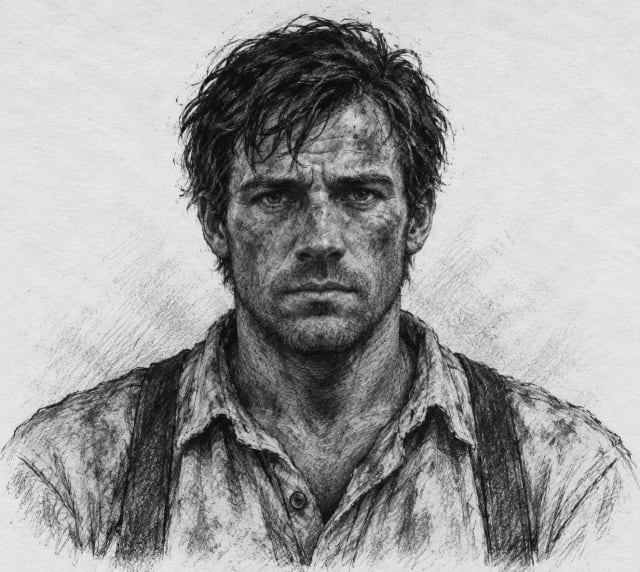
It does not hold his surname, age, family or face. It does not hold any work he did beyond the branch, any cause for the burst, the names of the rescuers, the children's later lives, or Marn's end. The name Marn turns up elsewhere in Synod paperwork, most visibly on Inspector Marn of Cologne. No record connects that man to this one, and I connect nothing until a record has done so first.
Lower Rack is still part of the Commons, under the district conditions of A.S. 201: overfilled, underheated, overpoliced and undercounted. The Chrismole Furnaces still demand hands close to the heat trunks, and the bells still keep their schedule. According to the account, the pipe that carries his name is still touched by those who pass it. I have entered it the way the Commons hands it over: at the pipe, by hand. The Bureau has not yet forbidden that method of filing.