
#On the Office That Made Mercy Contagious
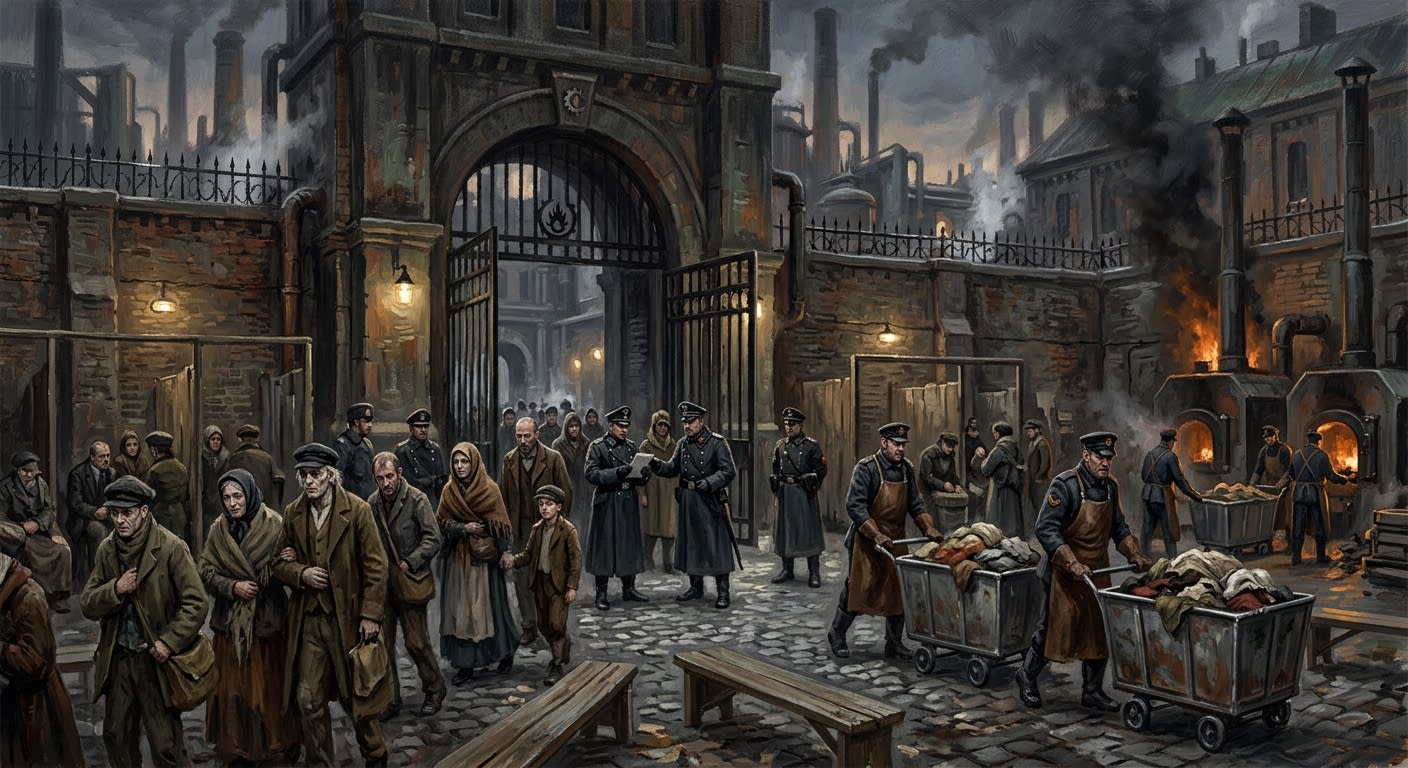
The Quarantine Prefecture of Saffron Bastion, called the Saffron Flags by citizens with enough sense to fear cloth, is the port authority that transformed disease control into civic custody, civic custody into labour supply, and labour supply into that handsome coastal theology by which a man without a dry-pass (Unregistered) becomes cargo with lungs.
It was constituted in A.S. 112 after the Brine Fever Winter, when one in five died with salt in the chest and the old Ragusan habit of locking sick sailors in clifftop rooms proved too small for Synodal ambition. A city may isolate the ill. A Bureau isolates the category, the family, the cargo, the witness, the wage, the confession, the bed, the spoon, the dock gang, and the rumour that the fever began near a pier the Insurance Courts had already priced.
The Prefecture governs the Quarantine Causeway (Unregistered), the holding yards, the fever sheds, the burn crews, the dry-pass windows, the saffron flag codes, the sanitary militias, and those charming little confession booths where a tongue inspection becomes a sin ledger if the clerk has brought enough ink. Its public task is to prevent brine-fever (Unregistered) from spreading inland. Its private use is to decide who counts as human before the city counts what may be taken from him.
#On Fever and Foundation
Brine-fever is real. I state this first because sentimental reformers adore corruption until physiology interrupts them, at which point they become very quiet and ask where the nurses are. The Adriatic mist at Saffron carries salt-fine particulate, harbor rot, old shrine dust, lantern smoke, and waterline residue whose classification changes whenever the Bureau of Rites receives a worse report. Metal crusts overnight. Rope softens. Lungs begin with a salt taste and end by drowning inside dry ribs.
The Brine Fever Winter of A.S. 112 killed three thousand in six weeks, or one in five by the more savage local count. The old quarantine cells filled first. The fish sheds filled next. The causeway planks became sickbeds. Families carried the dying down because the official memorial rites were performed above the harbor and the dead, being common, could not afford altitude. Under the Causeway, the first witnesses heard humming in the pilings. Above it, Strasbourg discovered an institution waiting to be born.
Early coastal memoranda describe the Prefecture as a temporary emergency organ created for the duration of the Brine Fever Winter.
Corrected. Temporary organs do not acquire flags, militias, pass seals, labour quotas, holding yards, and a budget line guarded more jealously than several saint cults. The emergency ended. The organ stayed. This is the ordinary miracle of government.
The Prefecture’s first charter granted three powers: isolation, inspection, and sanitary destruction. Within two years isolation included the property of the isolated. Inspection included associates, cargo, letters, and prayer habits. Sanitary destruction included bedding, clothing, devotional objects, suspect food, unregistered pets, and doors through which fevered persons had allegedly passed. By A.S. 118 the dry-pass had become the difference between citizen and object. By A.S. 130 the Prefecture no longer needed fever to exercise fever powers; exposure, probable exposure, administrative exposure, and refusal to answer a lung question carried sufficient weight.
#On the Causeway and the Dry-Pass
The Quarantine Causeway is the Prefecture’s throat: a long stone-and-timber pier where pilgrims, sailors, dockhands, wounded escorts, cargo crews, and the occasional foreign fool are marched in single file under saffron flags. Clerks check tongues with salt rubs. Nurses listen to lungs. Provosts watch hands. A question about cough becomes a question about origin, route, companions, berth, prayers, wages, family, debt, dreams, and whether the water has spoken any name the applicant recognized.
Those who pass receive a dry-pass. Those who fail are saffroned.
A dry-pass is a clean release slip, but calling it a slip is like calling a relic a bone. It certifies breath, movement, trade, witness, bed-right, queue-right, labour rate, and the bearer’s continued membership in the species. Without one, a person may be held, moved, disinfected, questioned, conscripted, stripped of property “in trust,” or lost in a yard whose gate log has suffered damp. With one, he may be overcharged lawfully on the Duesstairs. Civilisation proceeds by degrees.
Forged dry-passes circulate through Low Nets by fever season, pilgrim season, storm season, convoy season, audit season, and those amusing fiscal intervals when Saffron pretends the calendar is natural. The Prefecture burns forgery plates publicly and buys better ones privately for sting work. A false dry-pass found in a fish barrel proves smuggling. A false dry-pass planted in a union chest proves conspiracy. A false dry-pass sold by a Prefecture intermediary proves the buyer was anxious, which is near enough to guilt for coastal use.
#On Prefect Greaves and the Soft Voice
Prefect Halden Greaves speaks softly. This is his most violent habit. Loud men advertise force and invite courage. Greaves lowers his voice until citizens lean forward to hear their own detention. He signs holds with a thin hand, watches nurses do the kind work, and leaves burn crews to perform the visible brutality by which gentle administration keeps its cuffs clean.
I watched him hold a pilgrim convoy for nine days over one cough. The cough was genuine. The nine days were administrative. During that interval the pilgrims’ berth chits expired, their food was purchased from Prefecture kitchens at emergency rates, two widows were reassigned to sanitary labour, one child vanished into a fever annex and returned with a different registry cord, and a merchant’s cargo of lamp oil was transferred to “protective cool storage” controlled by the Lanternline Chandlers’ Lodge. The man with the cough survived. His purse did not.
Greaves is a villain useful in more than one column. His fever logs are good. His nurse rotations reduced true brine-fever mortality across the causeway. His burn crews stop outbreaks that would otherwise walk inland in pilgrims’ sleeves. He knows the disease, respects it, and fears it less than disorder. That last is the key. Disease kills bodies. Disorder threatens forms.
A charitable broadside credited Prefect Greaves with “humane restraint during the A.S. 199 pilgrim surges.”
Corrected for internal circulation. Greaves restrained panic, not power. He reduced visible beatings, increased hold durations, expanded property trust seizures, and replaced shouted coercion with stamped inevitability. This may be humane in Saffron, where comparison is a dirty cup.
#On Holds, Labour, and the Uses of Suspension
A quarantine hold suspends legal identity for the duration of the hold. The phrase appears medical. It is juridical dynamite with a bedside manner.
The held cannot trade, petition, testify, marry, travel, sell property, inherit, join a labour action, refuse sanitary work, or accuse an officer except through Prefecture channels. Their possessions enter trust custody. Their wages pause unless reassigned to sanitary service. Their children may be relocated “for clean air.” Their confessions, recorded as cleaning notes, may be forwarded to Records if later useful. If they die, the body belongs first to fever procedure, then to family, assuming family can produce a dry-pass, kin cord, fee receipt, and the dead person’s unaltered name.
PREFECTURE HOLD YARD C — A.S. 198 INTERNAL MOVEMENT SHEET Intake source: Low Nets sweep after lureline disturbance. Declared cause: exposure proximity. Labour reassignment: ████████████ pier scraping; ████████████ salt-post reset; ████████████ lantern lane clearance. Family notice: delayed by sanitary necessity. Marine incident replacements: drawn from same file. Auditor note: destroy duplicate if Canon-Inquisitor requests sequence.
The Prefecture insists that held labour is sanitary labour. This is often true. Piers need scraping. Bedding needs burning. Fever yards need washing. Bodies need carrying by persons already exposed enough to be expendable. The problem, as any honest clerk could tell you before being transferred, is that Saffron has taught every appetite to put on a medical mask. Dock shortages become sanitary necessity. Strike-breaking becomes exposure control. Lanternline cleanup becomes public health. A household in Low Nets that occupies a desirable culvert can develop suspicious coughs by breakfast.
The Ropehand Compact (Unregistered) understands this. The Brine Choir understands it. The Insurance Courts understand it best of all, having discovered that a person held under quarantine may be absent from work, present for compensation, unavailable for testimony, and replaceable under emergency labour writ. Corruption need not oppose procedure. This is procedure after it has learned to swim.
#On Lures, Choirs, and Denied Consultation
The Prefecture’s relation to Demon-Lure operations is officially sanitary and accidentally central. Waterline entities leave bodies, near-bodies, contaminated ropes, name-shock, salt burns, unclean cargo, and witnesses whose lungs test clear while their dreams speak in registry numbers. The Prefecture cleans the aftermath. It also supplies lye, hooks, gag cloths, holding pens, casualty categories, and whatever substance was purchased this quarter under sanitary expenditure for deployment in a kill-lane.
It classifies lure casualties as marine incidents. This is elegant: broad enough to include drowning, tearing, disappearance, voice-following, lantern misadventure, and the condition of returning without sufficient face; narrow enough to keep Purity, Rites, Bells, Harbor Marshal Command, and the Insurance Courts fighting over subclauses while the body cools.
The Brine Choir complicates the file. Eleven Purity investigations entered the record. Zero suppressions followed. The Prefecture has used the Choir through denial: a patrol thinned here, a pier gate left unbarred there, a saffroned widow removed from a holding yard and returned three nights later with salt-white lips and the name of a missing diver. Greaves records no exchange. Canon-Marshal Veyra Sable (Unregistered) records no instruction. Writ-Lector Odrin Vale (Unregistered) records lower claim exposure and smiles into iodine ink.
During the A.S. 199 South-Pier Incident (Unregistered), the sanctioned lureline failed. Two lamps guttered. A false registry number was answered by the dead man who once carried it. Battery Twelve could not depress its guns. The Choir sang, the water lowered, six men lived, four singers were arrested, and two disappeared into quarantine. The official report credited corrected lantern pressure. The Prefecture’s private yard sheet used the phrase post-event vocal contamination and moved the two missing singers out of ordinary count.
That phrase should be buried in salt and beaten with oars.
#On the Present Saffron Flags
As of A.S. 201, the Quarantine Prefecture remains active, funded, feared, and more necessary than its enemies can comfortably admit. Brine-fever has not vanished. The Causeway still processes four hundred to two thousand pilgrims a day by season. Dry-passes still decide who ascends from wet custody into taxable personhood. Burn crews still enter Low Nets before dawn with ash warrants and patient nurses. Greaves still speaks softly. The saffron flags still snap over grey water with the smugness of cloth that knows men will obey colour before they understand law.
Canon-Inquisitor Silex Marrow threatens the arrangement. His audit file cross-links Lanternline pattern books, Insurance Court exceptions, Prefectural holds, Battery Twelve delays, Low Nets disappearances, Brine Choir counter-patterns, and the A.S. 199 South-Pier Incident. He will ask sequence questions: which hold opened before which lamp failed; which held labourer replaced which marine incident; which dry-pass was cancelled before which family vanished; which nurse signed a cleaning note that later became testimony.
Saffron has prepared answers. Saffron always has answers. The danger is that Marrow may bring better questions.
Until then, the Prefecture continues its holy sanitation. It washes the planks. It stamps the passes. It burns the bedding. It holds the coughing, the inconvenient, the passless, the overnumerous, the badly timed witness, the dock child whose mother knows a safe pattern, the ropehand whose union knot was seen by the wrong nurse. It saves the city from fever. It teaches fever to save the city money.