
#On the Founding and the Flag
"Quarantine is mercy." — Canon-Marshal Veyra Sable (Unregistered), A.S. 199, addressing the Dock Union after the third riot in eight days
The Adriatic coastline south of the Dalmatian reaches is a long jaw of cliff and shingle, bitten by storm-surge, crusted with salt, and historically useless to any empire that valued its shipping. The Ragusans built here because nobody else would have them. The Synod built here because the Ragusans had already done the hard work of proving the harbor survivable, and Strasbourg has always preferred to inherit what others have bled for.
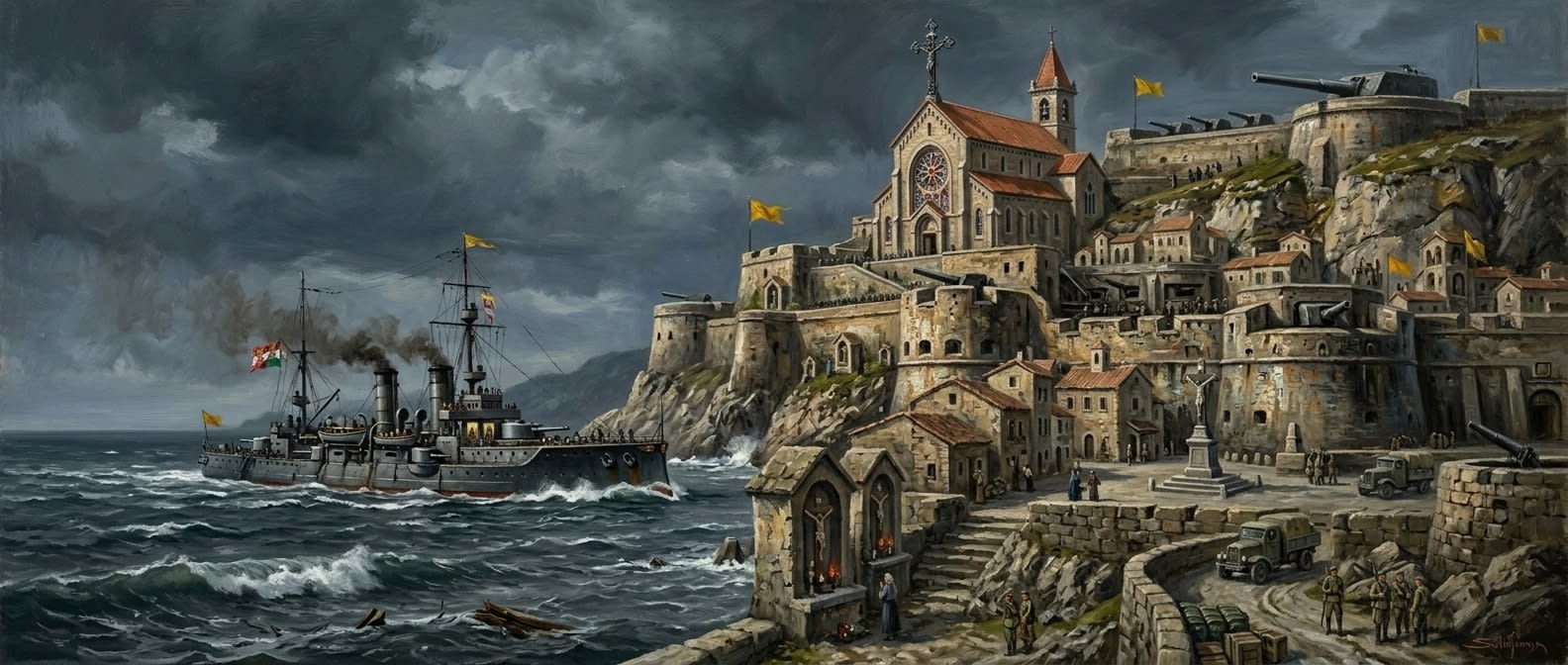
Saffron Bastion squats on the headland like a fist of salt-stained masonry — breakwaters, gun platforms, quarantine piers, and a permanent architectural scowl aimed at the open sea. It is the Synod's coastal chokepoint on the Adriatic, controlling seaborne pilgrimage, southern Line supply, and the entire Dalmatian disaster economy with equal enthusiasm. Every pilgrim bound for the southern bastions passes through its Quarantine Causeway (Unregistered). Every convoy carrying salt, rope, munitions, and sanctioned lamp oil to the Line's lower theaters berths at its Third Quay (Unregistered). Every shipwreck within forty leagues of its cliff batteries generates paperwork — and paperwork, at Saffron, generates revenue.
The bastion takes its name from the quarantine flags that snap over grey water in every season: saffron cloth, the color of controlled contamination, the color of a port that has elevated hygiene to a fiscal instrument. The flags are visible from three leagues at sea. Captains who see them know two things: first, that their cargo will be sealed, their crew inspected, and their manifest stamped by clerks whose wax-stained fingers have ended more careers than artillery; second, that the fees for this service will be calculated with a precision that borders on the devotional.
The settlement predates the Synod by centuries. A fishing town and a tide shrine occupied the headland when the first Synodal surveyors arrived in A.S. 68, fresh from the coastal campaigns that followed the Sundering and desperate for a harbor that could supply the nascent Line's southern flank. The surveyors found a population of seven hundred, a harbor capable of sheltering thirty vessels, a shrine to a sea-saint whose name the Bureau of Doctrine has since reclassified, and a pre-existing tradition of quarantine — the Ragusans had been locking sick sailors in clifftop cells since before the Synod existed, which tells you something about both the pragmatism of fishermen and the unoriginality of Bureaus.
The Bureau of Engineering submitted its first proposal for formal fortification in A.S. 70. The seventh proposal was approved in A.S. 72, two years after the Bureau of Engineering submitted its first proposal, because the first six had been lost in a jurisdictional dispute between the Bureau of War and the Bureau of Pilgrimage over whether the installation was military or pastoral. The answer, as with most things in the Theocracy, was both.
By A.S. 90, the headland had been terraced, the cliff batteries armed, the breakwaters extended with engineered stone teeth, and the population had swollen to twelve thousand. By A.S. 130, it had tripled. The Quarantine Prefecture was established during the Brine Fever Winter of A.S. 112 — a mass-death event that killed one in five and convinced Strasbourg that controlling disease at the port of entry was cheaper than controlling it everywhere else. The Insurance Courts followed in A.S. 134, when a series of storms destroyed eleven merchant vessels in nine days and the Quay Chapterhouse (Unregistered) discovered that monetizing catastrophe was more profitable than preventing it.
#On the Harbor and Its Architecture
"A city that smells of soap is either very clean or very afraid." — Prefect Halden Greaves, in a moment of candor the Bureau of Records has classified as apocryphal
Saffron Bastion is built in rings and terraces, stacked from the waterline to the clifftop gun emplacements in a vertical grammar of salt-stained brick, tarred timber, rust-iron, and bone-lime cement. The harbor is the city's mouth. Everything enters through it — pilgrims, cargo, disease, money, sin — and everything that enters is weighed, stamped, taxed, and filed before it is permitted to ascend the Duesstairs to the upper terraces.
Nine districts occupy the headland, each with its own smell, its own economy, and its own species of institutional cruelty:
Saffron Gate and Duesstairs — the entry and tax intake, where the road from the interior meets the harbor road and both are subjected to a toll regime that would make a Cologne banker weep with professional admiration. Smells of wet rope and hot wax. The Duesstairs are literal: one hundred and forty-seven stone steps climbing from the quay to the upper terraces, each step carved with a tax category. Pilgrims read the steps as they climb and arrive at the top knowing precisely how much they owe. Many turn around.
Third Quay and the Sealhouse — the sealing and manifest district, where every crate, barrel, bale, and sack is stamped with the Quay Chapterhouse's wax before it may proceed inland. The Third Quay Sealhouse is the bottleneck: if it closes, trade collapses within a bell-hour and the Dock Union begins to sharpen its rhetoric. The building smells of tar, fish, and ink, in that order of dominance. A hidden double-stamp press in the Sealhouse's back rooms produces seals for "select clients" — a service the Quay Chapter denies and the Bureau of Records has declined to investigate, citing "procedural saturation."
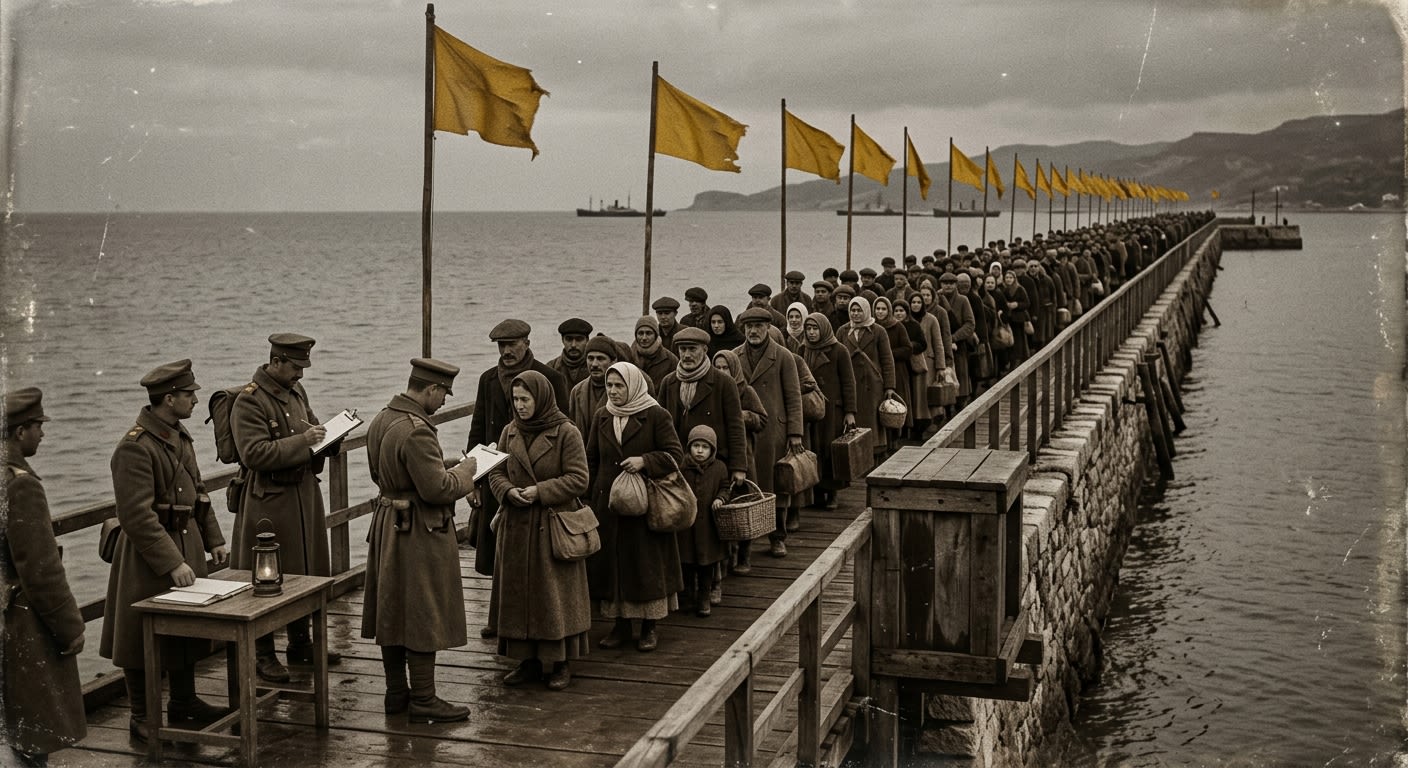
The Quarantine Causeway — pilgrim intake and health inspection, a long stone-and-timber pier extending from the harbor mouth where arriving pilgrims are marched in single file under saffron flags. Quarantine clerks check tongues and lungs. Nurses — kind eyes, brutal checklists — assess the likelihood of brine-fever with the professional detachment of a butcher grading cattle. Those who pass receive a dry-pass: a clean release slip that functions as currency in all nine districts. Those who fail are "saffroned" — held in the quarantine yards behind the Causeway under conditions the Prefecture describes as "restorative" and the held describe as something else.
The Causeway smells of lye soap and fear-sweat. These are the same thing.
The Salt Parliament Pans — the saltworks and dues tally grounds, sprawling across the tidal flats south of the main harbor. Salt is Saffron Bastion's spine. It is collected, taxed, traded, and exported in quantities that make the Salt Dues of Marseille look like a household budget. The salt dues clerks carve their tallies into stone markers that stand in rows along the pan edges like gravestones — which, given the number of men ruined by salt-debt, is an architectural irony the clerks appreciate.
The Wreckmarket — salvage auctions conducted on stepped stone platforms overlooking the wreck beaches. Smells of rust, citrus peel masking rot, and cheap rum. The Gilt-Knives — a salvage cartel operating under a thin membrane of legitimacy — control the auction schedules and maintain certain wrecks as "sainted" to lock competitors out of the most profitable salvage claims. Knives come out over claims on Wreck-Tithe Day (Unregistered). The Bureau of War does not intervene, because the Gilt-Knives pay their dues on time.
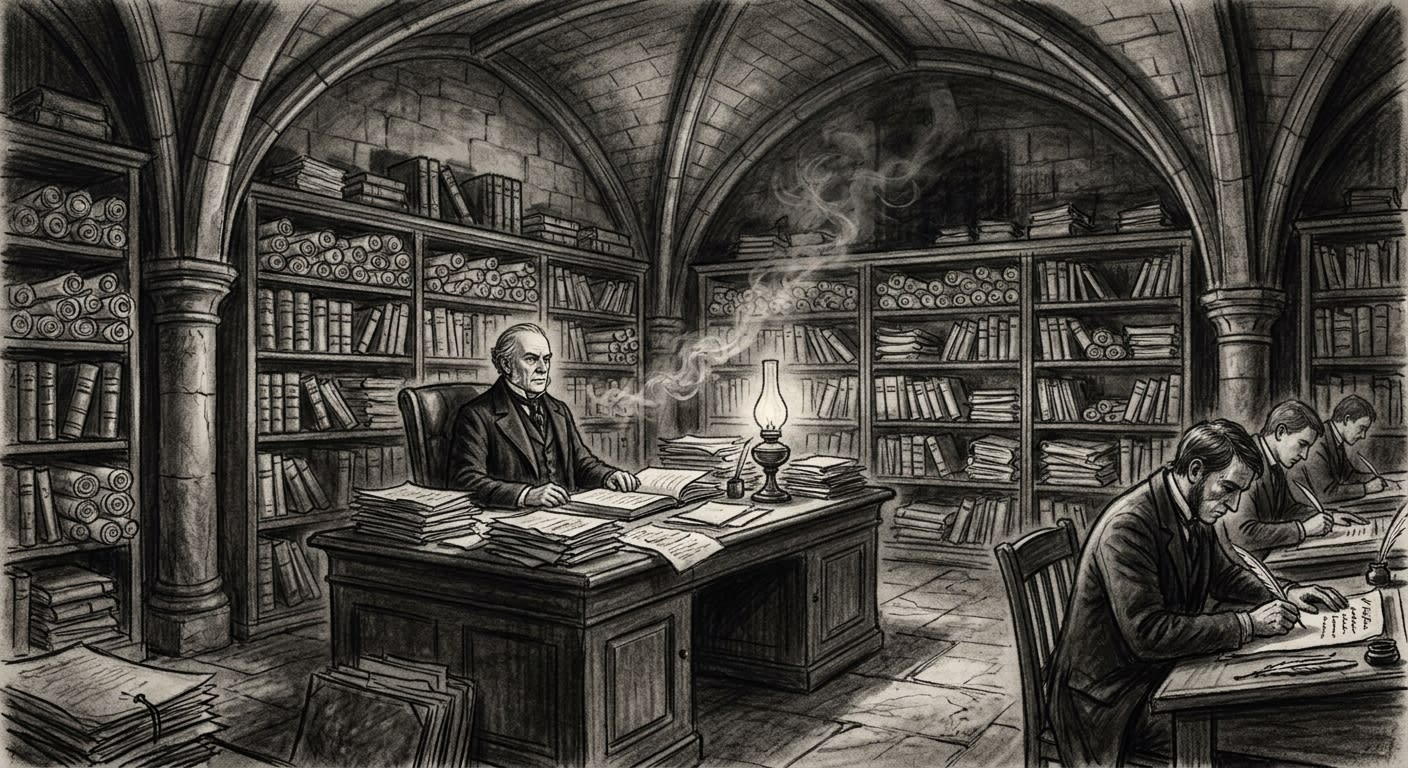
The Insurance Courts — a district of stone chambers and parchment vaults where the catastrophe economy achieves its purest expression. The Insurance Courts of Saffron issue writs that convert disasters into transferable financial instruments: storm-damage assessments, salvage-loss indemnities, quarantine-hold compensations, and — most lucratively — "storm exceptions," which suspend civil law during declared emergencies and permit the Courts to redistribute property, labor, and lives with the authority of a natural disaster. The district smells of parchment, incense, and old blood. The Writ-Lectors who preside here carry ink that smells of iodine. They smile when storms hit.
ERRATUM — A.S. 200, Bureau of Doctrine Coastal Registry, File 7-C-441: A previous edition of this entry described the Insurance Courts' "storm exceptions" as "a measured and proportionate response to maritime emergency." This characterization has been withdrawn following the discovery of pre-signed exception writs dated before the storms they referenced. The Bureau of Doctrine's revised characterization is: "administratively irregular." The Bureau of Records' revised characterization is: "filed."
The Lanternline — the chandlers' district controlling the harbor's illumination. Whale oil and singed wick. The Lanternline Chandlers' Lodge holds a monopoly on lamp oil distribution and, through it, the power to determine which piers are lit, which are dark, and which run "approved lantern patterns" — specific sequences of light and dark that are said to calm the harbor waters and discourage the demon-lures that have plagued the waterline since the first fortifications were raised. The Lodge guards its pattern books with the jealousy of a Bureau of Doctrine librarian. Unauthorized patterns are a capital offense. Unauthorized oil is grounds for quarantine.
The Cliff Batteries — artillery emplacements and barracks carved into the headland's upper cliffs. Powder, damp wool, and metal polish. The cliff guns command the sea approaches and the harbor mouth, and their field of fire extends to the breakwater teeth — the engineered stone projections that channelize approaching vessels into the harbor's killing ground. Cliff Battery Twelve is commanded by a gun captain on the take from the Insurance Courts, a fact the Harbor Marshal knows, tolerates, and logs in a sealed file against future need.
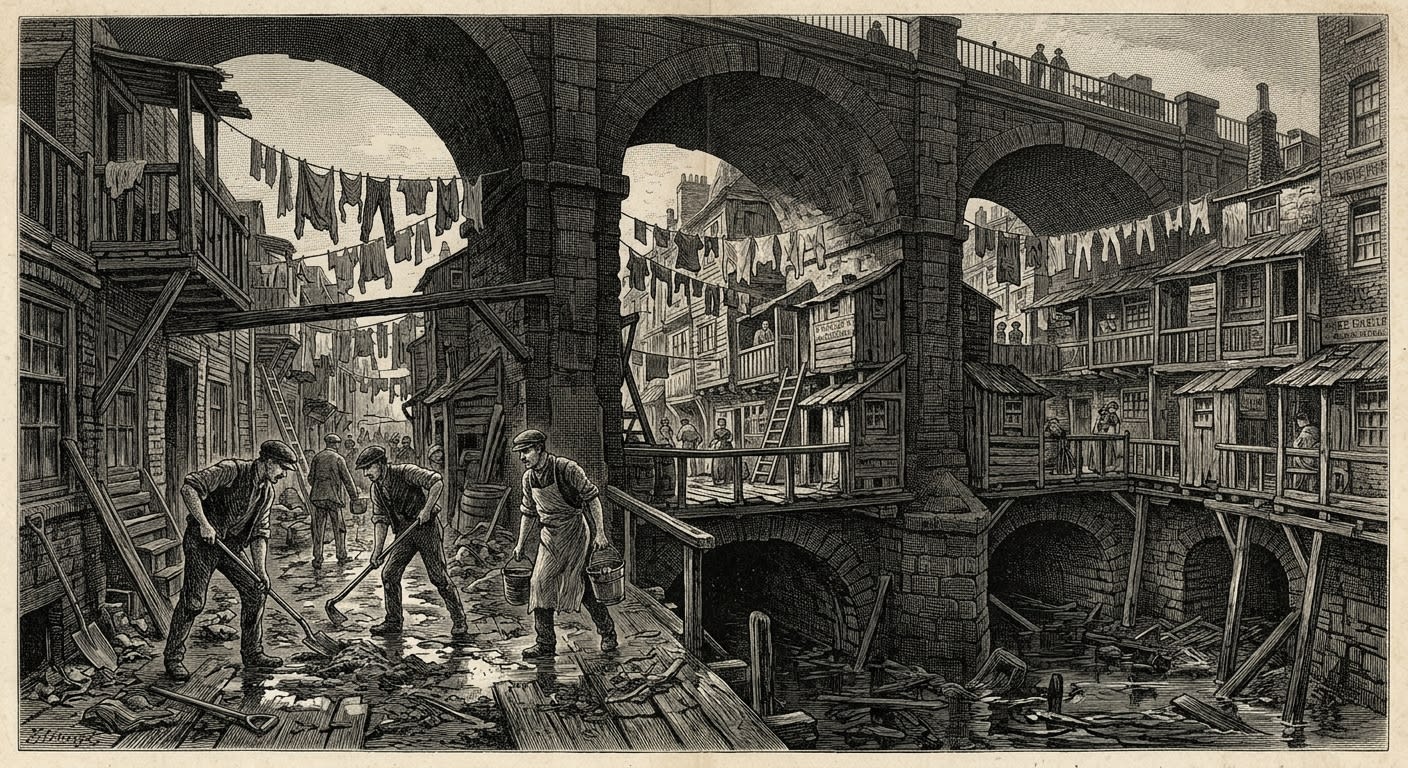
Low Nets — the undercity. Dockside slums crammed into the spaces beneath the terraces, behind the sea walls, and above the tide culverts. Mildew, fish guts, and brine-sour breath. Low Nets houses the population that Saffron Bastion requires and despises: the dock laborers, the rope-makers, the salvage divers, the quarantine labor draftees, and the lure-watch patrols who walk the piers after curfew listening for voices that are not human. The under-wall tunnels connecting Low Nets to the harbor run through old tide culverts that flood at spring tide. The residents have learned to sleep with one ear open for the water.
#On the Quarantine and Its Uses
"Quarantine is a door that opens inward." — Saffron proverb
The Quarantine Prefecture — the "Saffron Flags" — is the institution that gives the bastion its name and its character. Established in A.S. 112 after the Brine Fever Winter killed three thousand in six weeks, the Prefecture has expanded from a medical isolation authority into a comprehensive system of social control that uses disease as its justification and paperwork as its weapon.
Brine-fever is real. The mist that rolls off the Adriatic carries particulates that crust metal overnight, rot rope in weeks, and — in susceptible lungs — produce a progressive inflammation that begins with a salt taste in the mouth and ends with drowning on dry land. The Prefecture's fever logs are meticulous, its quarantine protocols effective, and its mortality statistics the envy of every coastal installation from Marseille to Thessaloniki. These are the facts.
The other fact is that quarantine is leverage. A quarantine hold suspends a person's legal identity for the duration of the hold. Held persons cannot trade, cannot petition, cannot own, cannot testify, cannot leave. Their property is administered by the Prefecture "in trust." Their labor may be conscripted for "sanitary purposes." Their confessions — spoken in quarantine confession booths where fever logs double as sin ledgers — are recorded as "cleaning notes" and filed with the Bureau of Records under a classification that permits their use in any subsequent proceeding.
The Prefecture's power is the dry-pass: the clean release slip that certifies the bearer as free of contamination. Without a dry-pass, a person at Saffron Bastion is cargo. With one, they are human. The distinction generates a secondary economy — forged dry-passes circulate in Low Nets at prices that fluctuate with fever season, and the Prefecture's burn crews periodically sweep the undercity to confiscate counterfeits and conscript their holders into quarantine labor.
The Quarantine Causeway processes between four hundred and two thousand pilgrims per day, depending on season. Each pilgrim receives a tongue check (salt rub, then a confession question), a lung assessment, and a stamp. The stamp costs one salt-token, payable at the Duesstairs. The salt-token costs what the Duesstairs says it costs, which is whatever the Quay Chapterhouse needs it to cost this morning.
#On the Demon-Lures and the Lantern Discipline
"If the water says your name twice, you owe it a body." — Saffron superstition, recorded by the Bureau of Rites A.S. 187, classified "doctrinally imprecise but operationally useful"
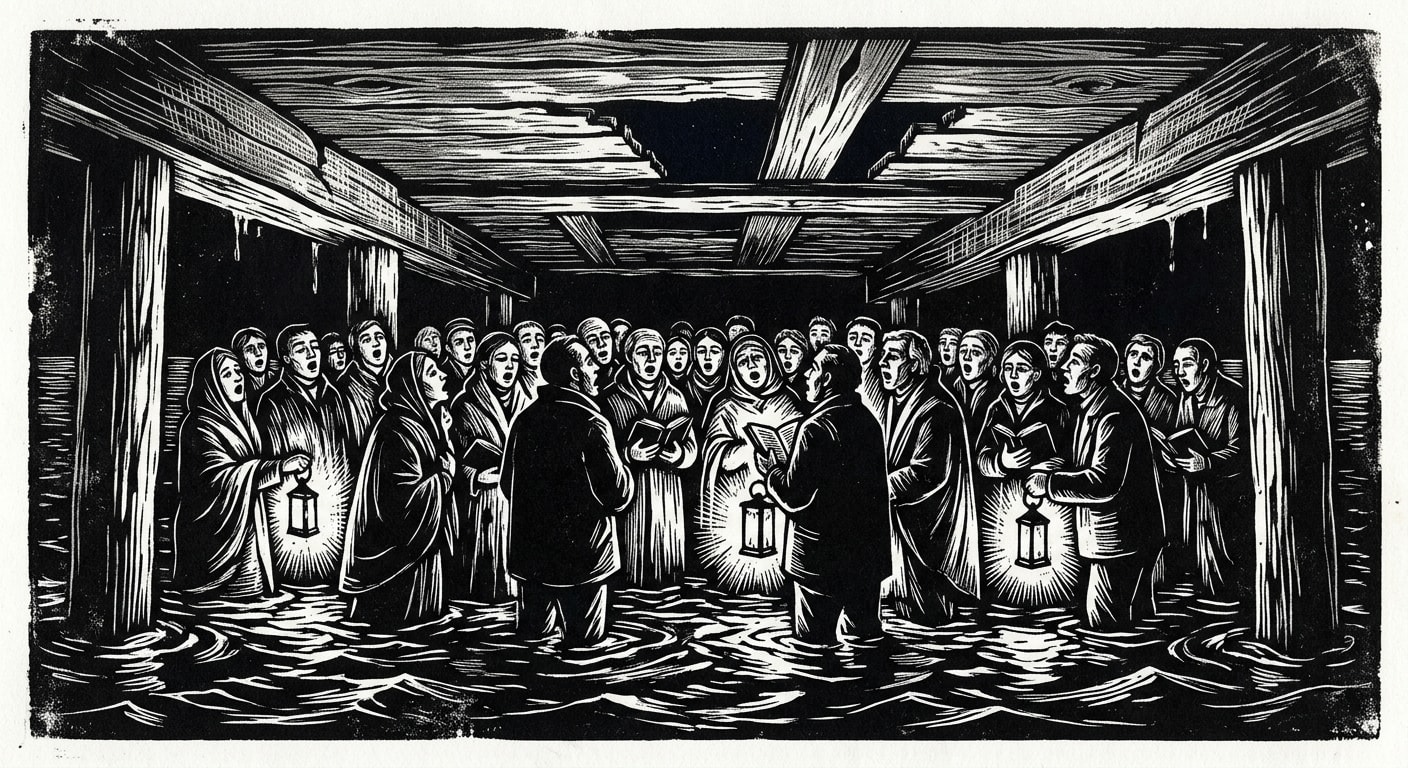
Something lives in the water off Saffron Bastion. The Bureau of Rites classifies it as "waterline entities attracted to specific luminous and acoustic stimuli." The dockworkers call them demon-lures. The Brine Choir — a cult that operates beneath the piers with the persistence of barnacles — calls them "the Deep Congregation." I call them a problem.
The lures present as voices calling from beneath the pier boards. They know names — your name, specifically, spoken in a cadence that sounds like a question you have always wanted to answer. Lantern flames bend toward the sea. Rope fibers hum at frequencies the Chandlers' Lodge has catalogued but cannot explain. Missing time follows eye contact with black water. The missing do not return. The missing are not discussed.
The countermeasures are liturgical and practical in equal proportion. The Lanternline Chandlers' Lodge maintains "approved lantern patterns" — specific sequences of illumination and darkness along the pier catwalks that are said to suppress lure activity. The patterns are changed weekly. The pattern books are sealed. Unauthorized deviation from an approved pattern is punishable by death — a severity that tells you everything about how seriously the Harbor Marshal takes the distinction between the light that calms and the light that calls.
Salt lines are laid on pier boards each evening. Waxed earplugs are issued to night-watch patrols. "Name-muffling" rituals require all pier personnel to speak only registry numbers after the chain-drop — the nightly closure of curfew chains across the piers. The rituals are effective, or at least the personnel who follow them survive at higher rates than those who do not, which is sufficient proof for the Bureau of Doctrine.
The Brine Choir believes the lures are communicating. Their cantors — voice like a hook, recruiting the lonely — hold services beneath the piers at hours when the Prefecture's patrols thin. They sing hymns timed to the tide and claim they can "translate" what the water says. The Bureau of Purity has investigated the Choir eleven times and suppressed it zero times, a record that suggests either incompetence or arrangement. The Bureau of Purity does not comment on its arrangements.
#On the Insurance Courts and the Economy of Catastrophe
"Storms have signatures." — Saffron proverb
The Insurance Courts of Saffron Bastion are the finest expression of the Theocracy's genius for converting suffering into revenue that I have encountered outside of Strasbourg. They operate on a principle that would strike a Calvinist as blasphemous and a Cologne banker as obvious: every disaster is an opportunity, provided you have the paperwork ready.
The Courts issue writs. The writs fall into four categories: storm-damage assessments, which establish liability after maritime catastrophe; salvage-loss indemnities, which compensate owners of destroyed cargo at rates the Courts determine; quarantine-hold compensations, which reimburse merchants for losses incurred during Prefectural detention; and storm exceptions, which suspend the civil law of Saffron Bastion during declared emergencies and grant the Courts plenary authority to redistribute property, conscript labor, and adjudicate claims without appeal.
The storm exception is the masterwork. When a storm is declared — and the Courts have broad discretion in what constitutes a "storm" — the Insurance Courts become the sole legal authority in the bastion. Property liens are executed. Labor is conscripted. The Dock Union's negotiated protections evaporate. Low Nets residents discover that their housing, such as it is, has been reassessed as "storm debris" and their persons reclassified as "emergency labor." The storm passes. The writs remain.
Writ-Lector Odrin Vale presides over this apparatus with the serenity of a man who has made peace with the weather. His scribes carry ink that smells of iodine. His pre-signed exception templates — discovered in A.S. 199 during an audit that the Quay Chapterhouse initiated and immediately regretted — bore dates preceding the storms they referenced by three to nine days. The Bureau of Doctrine's official characterization of this discovery is "administratively irregular." Writ-Lector Vale's characterization is a smile.
The practical economy of Saffron Bastion runs on salt dues, berth fees, pilgrim intake charges, salvage tithes, confession tithes, and the "storm levy" that the Quay Chapterhouse imposes in bad seasons with the regularity of weather itself. Currency circulates in five forms: coin, stamped berth chits, ration tokens, salvage tokens, and insurance writs — the last being tradable instruments whose value rises with the barometric pressure and falls with it. What counts as wealth at Saffron Bastion is clean lungs, dry bedding, a valid quarantine pass, a supply of lantern oil, and a name recognized by the Writ-Lectors. Everything else is negotiable. Everything else is salt.
#On the Low Nets and the Buried Truth
"Writs float better than bodies." — Saffron proverb
The Low Nets is where the bastion keeps the people it needs and would prefer not to count. The dockworkers, the divers, the rope-makers, the burn-crew foremen who carry ash warrants and hate mercy, the lure-watch patrols who walk the piers after curfew with waxed earplugs and registry numbers instead of names. They live in the spaces the terraces leave behind: beneath the upper districts, behind the sea walls, above the tide culverts that flood at spring tide and drain at neap, depositing a grey silt that the residents scrape from their floors each morning and the Prefecture classifies as "non-hazardous particulate."
The Dock Union of the Low Nets — the "Ropehand Compact" — provides what passes for collective protection. Its leverage is the slow strike: work decelerated to a crawl, berths unloaded at half pace, rope coiled with deliberate imprecision. The Compact's enforcers keep order in Low Nets with knots and silence. The Quay Chapterhouse tolerates the Union because the alternative — dockworkers with nothing to lose — is more expensive than dockworkers with a grievance procedure.
ERRATUM — A.S. 201, Bureau of Doctrine Coastal Registry, File 7-C-588: A previous internal memorandum described the population of Low Nets as "approximately nine thousand souls in adequate housing." The Bureau of Records' census of A.S. 200 counted fourteen thousand three hundred occupants in structures the Bureau of Engineering classifies as "sub-habitable." The discrepancy of five thousand three hundred persons has been attributed to "seasonal flux." The season in question has lasted eleven years.
The buried truth of Saffron Bastion is this: the Quarantine Prefecture, the Insurance Courts, and the Harbor Marshal's office have arrived at an unspoken consensus regarding Low Nets. The demon-lures that plague the waterline are managed — drawn to specific piers by specific lantern patterns operated by specific Lanternline crews under specific instructions. The lures thin the population of Low Nets. The losses are classified as "marine incidents." The Insurance Courts issue exception writs that finance the Quarantine Prefecture's operations. The Prefecture's quarantine holds supply the labor that replaces the lost. The cycle is self-sustaining, self-financing, and — in the language of the Courts — "actuarially sound."
Canon-Marshal Veyra Sable runs the harbor like a gun battery and has never, in twenty-three years of command, looked at the water. She does not need to look. She knows what is in it. She knows what her harbor feeds it. She has made her calculation, and it balances.
#On the Present Condition
The Saffron Bastion of A.S. 201 is a city of one hundred and twenty thousand souls balanced on the edge of an audit. The storm-exception scandal of A.S. 199 cracked the Insurance Courts' façade; the discovery of pre-signed writs produced a flurry of memoranda between the Quay Chapterhouse and Strasbourg that is still settling like ash after a fire. Writ-Lector Vale has not been removed. Prefect Greaves has not been questioned. Canon-Marshal Sable has not been recalled. The system functions. The system has always functioned. The question is whether Canon-Inquisitor Marrow will understand that the system's function is its scandal, or whether he will make the error — common among Inquisitors — of believing that exposing corruption and fixing it are the same action.
The Dock Union is restless. Three slow strikes in A.S. 200 produced no concessions; the Quay Chapterhouse responded with quarantine labor drafts that conscripted the strikers' families. The Ropehand Compact's leadership is considering whether a slow strike can be made fast. The Compact's enforcers are considering whether "fast" means something the Compact's leadership has not yet named.
The Brine Choir grows. Services beneath the piers now draw forty to sixty congregants on calm nights. The hymns have changed — older melodies, pre-Synodal, timed to the tide in ways the Chandlers' Lodge cannot replicate. The sea, on those nights, is quiet. Whether this means the Choir has found a frequency that calms the lures or a frequency that satisfies them is a distinction the Bureau of Rites has been asked to clarify. The Bureau of Rites has requested an extension.
The Sainted Wreckfield (Unregistered) — two to three hours by skiff from the harbor — continues to produce salvage that should not exist: sealed cargo from ships that were never registered, relics from saints who were never canonized, bells that ring underwater in patterns that match no approved sequence. The Gilt-Knives control access to the Wreckfield and sell its products through the Wreckmarket at prices that make the Insurance Courts' disaster futures look conservative. A wreck that "rang bells underwater" was reported in A.S. 199. The Bureau of Bells has dispatched an auditor. The auditor has not returned.
The sea is grey today. The saffron flags are flying. The Duesstairs are open and the tolls are climbing. In Low Nets, the tide culverts are draining their grey silt, and the residents are scraping their floors, and the lure-watch patrols are checking their earplugs and reciting their registry numbers. On the Lanternline catwalks, the riggers are setting tonight's approved pattern, and somewhere beneath the piers the Brine Choir is tuning its hymns to the water. The Insurance Courts are open for business. The Quarantine Causeway is processing pilgrims. The cliff guns are manned and the breakwater teeth are wet with spray. Canon-Marshal Sable is at her desk, facing inland, her back to the harbor.
The sea pays what it owes.