
#On the Useful Misnomer
The term Demon-Lure suffers from the usual provincial disease: it means two things, both dangerous, both profitable, and both entered into the wrong column by clerks who should have been drowned in ink before puberty.
At Saffron Bastion, dockworkers use the phrase for the waterline entities that call from beneath the piers: voices in black water, lantern-bending presences, name-thieves that make a man lean over the boards because his dead sister has asked him to look. The Bureau of Rites calls those entities “Category Three Waterline Anomalies (Unregistered) attracted to specific luminous and acoustic stimuli,” a formulation that proves only that Rites can make even drowning sound bored.
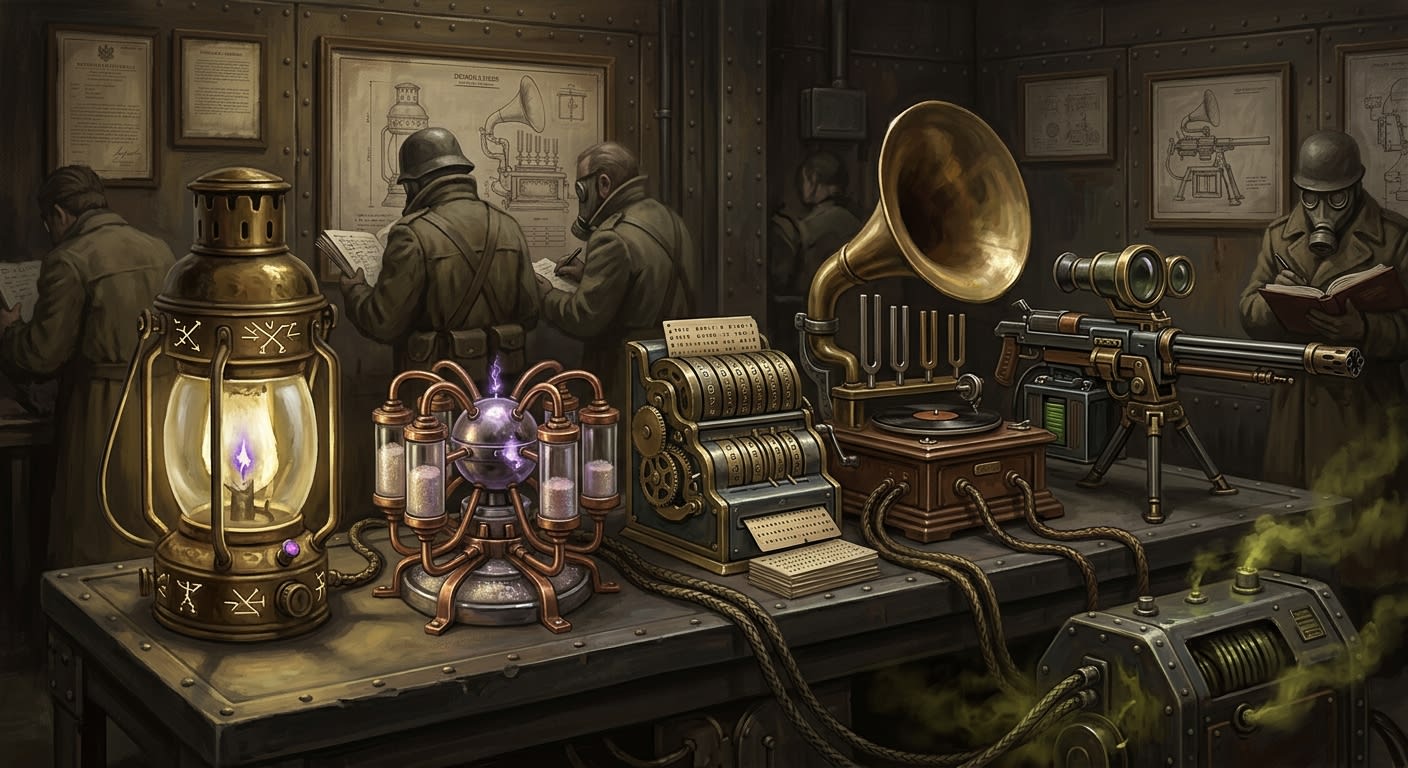
The Harbor Marshal's office uses the same phrase for the devices, rites, lantern patterns, salt arrangements, bell fragments, registry calls, and sanctioned bait-mechanisms used to draw those entities into controlled kill-zones. One word for the appetite and the hook. Elegant, if one has the moral flexibility of a tax collector and the practical education of a shark.
This entry concerns the second meaning: the lure as instrument, the bait as policy, the licensed invitation extended to the Enemy by men who swear they only wish to kill what answers.
#On the First Patterns
The earliest Saffron lures were mistakes. This is the official mercy granted to the dead. During the first fortification works after the Synodal surveyors arrived in A.S. 68, labor crews hung ordinary work-lamps beneath the half-built piers so the night caulkers could see the seams. Three caulkers vanished in one week. Their tools remained arranged in tidy rows. Their lamp flames bent seaward despite an inland wind. One foreman heard his own voice under the boards saying: “Lower.”
The Bureau of Engineering classified the matter as rope failure. The rope, having been inspected and found intact, declined the honour.
By A.S. 72, when Saffron Bastion received formal designation and the breakwater teeth were driven into the grey Adriatic, the Harbor Marshal's predecessors had learned the first crude law: some lights call, some lights calm, and some lights bring things close enough for cliff guns to make theology out of them. The early trials used oil lanterns, salt lines, hymn fragments, and condemned animals tied to pier rings. The animals died quickly. The men watching died more selectively, which is how the Bureau knew the experiment had promise.
The Lanternline emerged from these trials: chandlers, riggers, oil factors, pattern-keepers, and night-walkers who learned which flame sequence made the water quiet and which one made it pronounce baptismal names. The approved pattern books are sealed in oilskin and wax. Unauthorized copies fetch obscene prices in Low Nets, where obscenity is less a moral category than an exchange rate.
#On the Apparatus
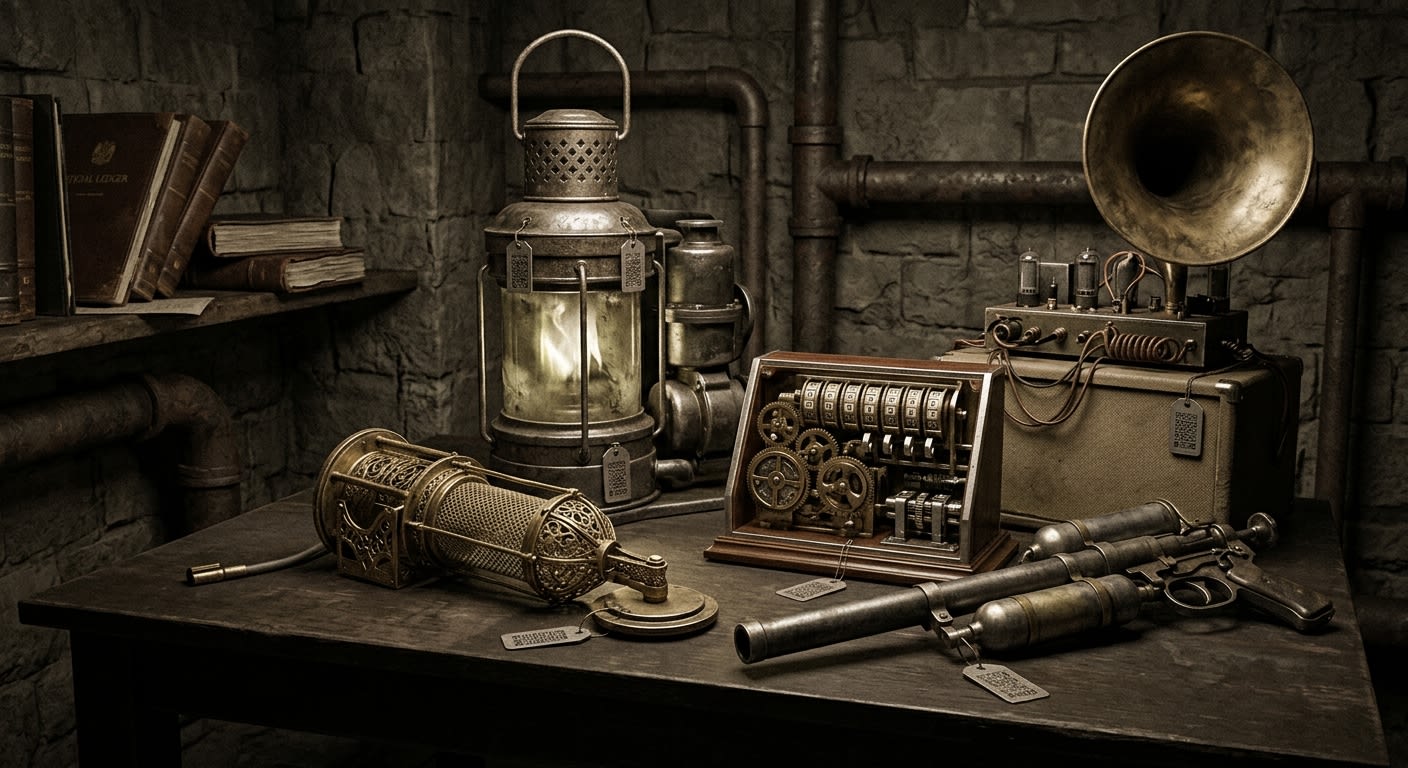
A Demon-Lure may be as simple as three lanterns shuttered in sequence across a wet pier. It may be as elaborate as a hanging frame of salt-cord, whale-oil lamps, tuned rope fibers, registry-number chant, and a bell-shard suspended over black water in a copper cradle. The apparatus depends on the target, the tide, the quay, the wind, and whether the Insurance Courts have already sold writs on the expected damage.
The standard Saffron pattern has five parts.
First: the Light. Lanterns are hung low, never high, with saffron glass on the seaward face and milk glass inland so civilians see reassurance while the water receives invitation. The Bureau of Bells insists this is no peal. The Chandlers agree in public and keep counting like bellmen in private.
Second: the Line. Salt is laid in broken bars along the pier boards, leaving deliberate gaps at the kill-lane. A complete salt line repels. A broken salt line directs. This distinction has saved Saffron more lives than most bishops and killed a more useful class of person.
Third: the Name-Muffle. After chain-drop, full names are illegal on open piers. Personnel speak registry numbers only. The bait call is made with a false number, a dead number, or a number assigned to cargo rather than flesh. The water dislikes this. Dislike is measurable: rope hum rises, flames bend, and the tide gathers itself beneath the boards like a clerk about to object.
Fourth: the Tone. Here the quarrel between Bells and Orison and Song becomes tedious enough to weaponize. Bells claims jurisdiction over the bell-shards. Orison claims jurisdiction over the sung registry cadence. The Harbor Marshal claims jurisdiction over anything that keeps his piers from being eaten. Strasbourg has received petitions from all three and answered none, a silence that has done more practical good than many decrees.
Fifth: the Closure. Chain gates drop. Cliff guns mark the lane. Harbor provosts withdraw behind salt posts. A lure that answers the apparatus follows light, gap, false number, and tone toward a strip of water already ranged by Battery Twelve. If the pattern holds, the thing surfaces or presses close enough to be struck by shot, hymn, boiling lye, hooked chain, or whatever the Quarantine Prefecture has purchased this quarter under “sanitary expenditure.”
#On the Brine Choir's Interference
The Brine Choir regards Demon-Lures as blasphemy, theft, sacrament, and musical incompetence, depending on which under-pier cantor one arrests and how long one holds his head in a wash barrel. The Choir teaches that the waterline voices are a congregation, or a court, or the breath of a drowned saint whose canonization has been obstructed by dry men. Their doctrine changes with the tide. Their pitch does not.
Choir services beneath the piers use counter-patterns: human throats replacing bell-shards, cupped hands replacing shutters, tide-syllables replacing registry numbers. They claim they can calm storms. Street rumour says they can quiet the lures. The Lanternline says the Choir attracts them and then takes credit when fewer people die than expected. The Quarantine Prefecture says nothing, which is the sound institutions make when an unofficial asset is still useful.
The dangerous fact is that Choir interference sometimes works. During the A.S. 199 south-pier incident (Unregistered), a sanctioned lureline failed when two lamps guttered and the false registry number was answered by the actual man to whom it had once belonged, deceased, bankrupt, and theoretically cremated. The water rose under the boards. Battery Twelve could not depress its guns far enough. The Brine Choir, assembled illegally under the gutting racks, sang three tide phrases. The water lowered. Six men survived. Four Choir singers were arrested, two disappeared from quarantine, and the official report credited “corrected lantern pressure.”
Earlier Harbor Marshal digests described Brine Choir participation in lure suppression as “unsubstantiated dockside superstition.”
Corrected under sealed addendum A.S. 200. Brine Choir participation is substantiated, illegal, operationally inconvenient, and never to be requested by uniformed personnel in language that could be quoted at tribunal.
#On the Kill-Zones
The kill-zone is rarely called a kill-zone in public. Public notices prefer “lantern compliance area,” “waterline correction lane,” “sanitary exclusion strip,” or, in one Insurance Court writ whose author deserves promotion to Hell's own chancery, “anticipated marine settlement corridor.” The dockworkers call it the bite.
A proper bite is prepared hours before dark. Salt posts set. Rope hooks tarred. Lye cauldrons heated. Bell-shard tuned. Lantern glass inspected for cracks and fingerprints, since the water has shown interest in prints, especially those of children, widows, and men with debts large enough to acquire scent. Gun crews rehearse without speaking names. Provosts chalk retreat lines. Quarantine nurses wait with stretchers and gag cloths, though what they expect to gag after a lure breach has never been adequately explained.
The bait itself varies. Condemned cattle still suffice for lesser voices. Confiscated cargo works better when the entity has shown appetite for trade goods: soap, saffron glass, saint-bone dust, child shoes, unregistered bells. Human bait is forbidden except under emergency writ, storm exception, quarantine override, military necessity, or actuarial prayer. Saffron possesses many emergencies.
LANTERN COMPLIANCE ACTION 44-K — LOW NETS, A.S. 198 Bait designation: ████████████ Legal status at deployment: protective hold Kin notification: deferred Entity response: immediate; vocal mimicry of ████████████ Battery discharge: delayed by Insurance Court observer standing inside marked line Recovered remains: ███████ teeth; one dry-pass; salt-cord tied in child's knot Finding: successful reduction of lure activity for nine nights Civilian loss category: marine incident
The Insurance Courts prefer predictable bites. A lureline activated under controlled conditions produces claims, salvage, lien transfers, quarantine labor, dock repairs, and storm-exception petitions in tidy sequence. A lureline activated by accident produces the same things with more screaming and less paperwork prepared in advance. Writ-Lector Odrin Vale (Unregistered), who smiles when storms hit, smiles also when the lanterns are cleaned.
#On Doctrine, Sin, and the Shape of the Hook
The theological objection to Demon-Lures is obvious enough for a child and obscure enough for a committee: the Synod is inviting the demonic nearer. The standard defence is that a hook also invites a fish. This answer satisfies soldiers, chandlers, and those clerics whose imagination ends at supper.
Doctrine's deeper defence rests on intention. To call the Enemy for communion is heresy. To call the Enemy for destruction is zeal. To call the Enemy for destruction while profiting from the damage is a coastal administrative matter. The Bureau of Doctrine has ratified this distinction in three memoranda and one sermon so dry that the paper tried to drink itself.
The Bureau of Purity watches for drift. A Lanternline rigger who begins speaking of “answering” the water rather than “drawing” it receives a visit. A provost who dreams in registry numbers is reassigned inland if his family has money, downward if it has none. A Quarantine clerk who sells safe-lure charms is branded for fraud, unless the charms work, in which case the Bureau of Rites opens a file and the clerk vanishes into expert consultation.
The Demon-Lure sits in the same doctrinal drawer as the bell sequence that attracts before it repels, the Script Wall reading that gathers what it names, and the Undertide defence that feeds wolves to preserve the door. The Bureau insists these are instruments, not bargains. The instruments keep asking to be paid.
#On Current Use at Saffron
As of A.S. 201, Saffron Bastion maintains seventeen active lurelines, nine dormant lanes, four sealed pattern books, and at least two illicit Brine Choir counter-patterns known to the Harbor Marshal and denied by him with admirable facial discipline. The Quarantine Prefecture classifies lure casualties as marine incidents. The Lanternline Chandlers' Lodge bills oil loss under harbour safety. The Ropehand Compact (Unregistered) marks certain piers with knots meaning do not work here after dusk unless your children have already eaten. The Gilt-Knives salvage what washes up, including objects that did not enter the water from any registered vessel.
Canon-Marshal Veyra Sable has never looked at the water in my presence. Call this no cowardice. Cowardice stares too long. Competence knows where the danger is and arranges the desk accordingly.
Canon-Inquisitor Silex Marrow's expected audit threatens the arrangement. He has authority to inspect pattern books, subpoena Insurance Court writs, and interrogate Quarantine holds used during compliance actions. He will find irregularities because irregularity is what Saffron uses instead of mortar. He may call them corruption. He may call them necessity. If he is wise, he will call them sealed.
The lures continue to answer. Full names remain illegal after dark. Lanterns bend toward the sea. Salt lines break in exactly the places men intend them to break. Under the piers, the Brine Choir tunes itself to black water and waits for daylight to answer back.