

#On the Municipal Colour
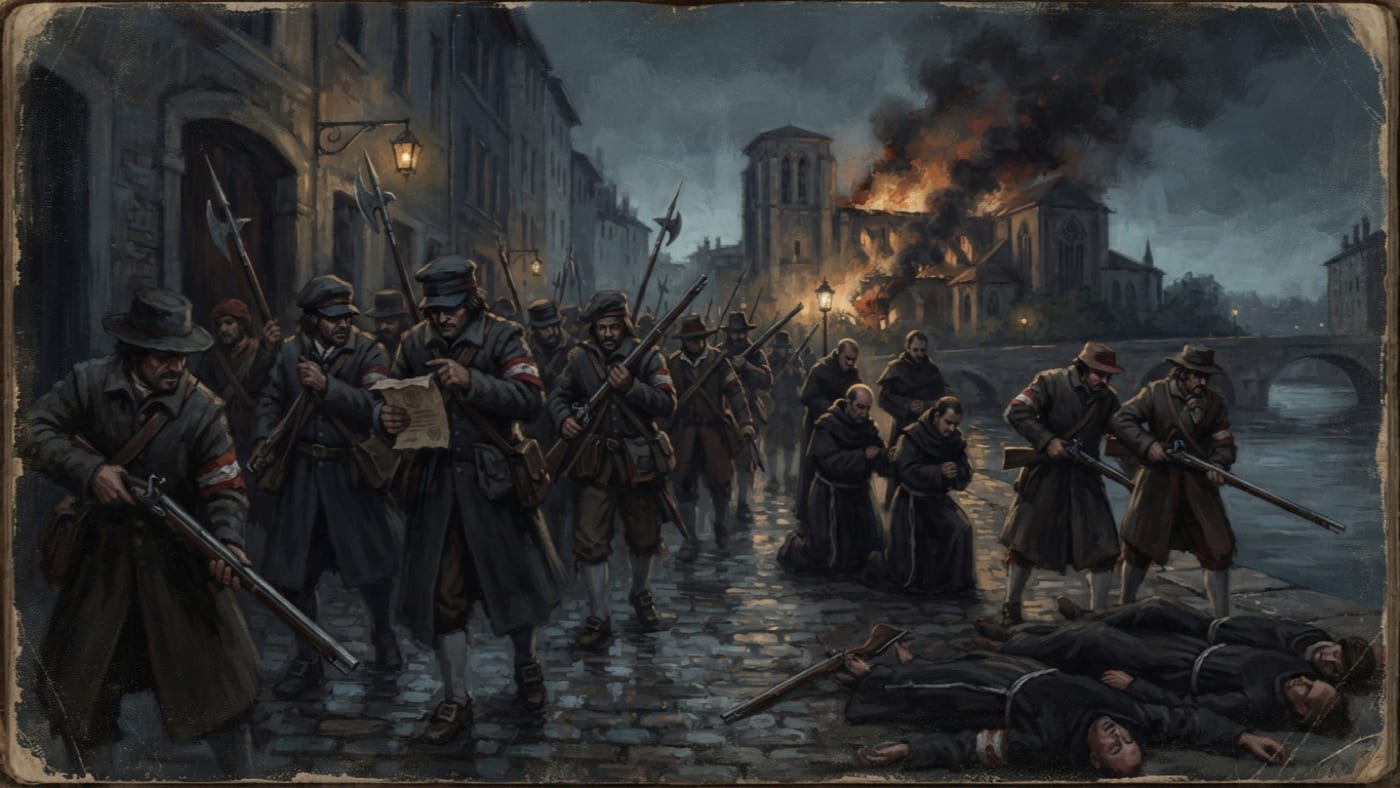
The Republican militias of Lyon were armed men of that city. In –39 A.S., the year the old calendar numbers 1671, they marched on a friary by the Rhône wearing the municipal colour and carrying warrants issued in the city's name. That is the whole of their certified existence. No charter of theirs survives. There is no roster, no captain whose name reached the Ledger, and no seal except the one they borrowed from their town. Students who open this entry expecting a continental brotherhood with drums and a founding oath will be disappointed, and I have no intention of comforting them.
The plural in the title is deliberate. The Codex records militias. It records them at Lyon, and it records them doing one thing. Whatever armed civic bands did in other towns during the preparatory age belongs to other files and other evidence. It will not be smuggled into this one because a reader finds the word convenient.
Their relationship to the city's Republican clubs is close and imprecise. The clubs supplied the vocabulary and the militias supplied the boots. The record does not say whether a given man sat in the club on Tuesday and carried a musket on Thursday. I suspect it often happened. Suspicion is not a roster.
#On the Warrant and Its Bearers
A mob is a crowd that has misplaced its manners. A militia with a civic warrant is more refined and much worse: a crowd that somebody with a desk has handed its manners in writing.
The warrants are the most damning objects in the whole affair, and none of them survives. Their existence is attested. Their wording is lost. We do not know which office drafted them or which hand signed them. We do not know what statute they cited, or whether any statute existed to cite. We know that the men who came to the friary carried them and wore the town's cloth. For the length of one night, that was enough to make butchery look like procedure.
The friars fed dock paupers. They copied penitential psalters, which means they spent their nights asking the Creator's pardon for a city that would shortly need a great deal of it. They sheltered two priests driven out of Vienne by earlier anti-clerical riots. Vienne is the Rhône town south of Lyon, though the Index clerks persist in confusing it with the imperial capital. In the clubs' back rooms, every one of these acts was turned into an offence against the public. The soup became clerical hoarding. The psalters became superstition. The guests became evidence of fraud harboured within the walls. Over all of it lay the phrase I despise above every other in the Rationalist dictionary: civic hygiene.
I cannot produce the council vote, and I will not forge one. The Rationalists forged enough paper for both sides. It is enough that the city lent its colour, the clubs lent their words and the militias lent their hands. Afterward, each party could point at the other two.
#On the Lyonnais Deed
The parent file, The Red Slaughter of Lyon, gives the night in full, and students should read it there. This entry records the deed only as far as it describes the men who did it.
Forty-three friars were burned. Four lay brothers were shot separately, as though the militia had run out of patience before it ran out of men. That makes forty-seven dead of the house, killed two ways in one night. Anyone who writes "forty-seven burned" in an examination will be failed. Anyone who writes "forty-three dead" will be failed more slowly, with remarks.
The sources disagree about the ground where it was done. I refuse to march the friars from one site to another merely to tidy a footnote. The house's name also comes down in competing forms, so this entry calls it what the record can bear: a friary by the river.
The ashes were gathered before dawn and put into the Rhône. Only men who believe a river is a filing cabinet without an index would do such a thing.
For three nights afterward, witnesses on the banks reported psalms rising from the current. Their accounts differ in particulars, as honest accounts do. Rationalist scribes called it echo. The Ledger records the testimony and the three nights. It does not record that any militiaman heard the singing, repented, fled or was struck down. I will not award the river a verdict it never published. The river sang to the city. Whether the city deserved the audience belongs in a separate file.
The killers at Lyon were Parisian agents sent south to stir up the provinces.
Withdrawn. The militias were Lyonnais, under Lyonnais colour, carrying Lyonnais paper. The convenient stranger has been struck from the record. The neighbour stays.
#On the Later Republican Guards
Seven years after Lyon came the Year of Letters, –32 A.S. The quarrel with the Church moved from the quay to the post-bag and learned to wound by correspondence. Forty-nine years after Lyon, in A.S. 10, the Republican Guards fell on the pilgrims at Saint-Malo, and the Atheist Wars began in public.
Anyone with eyes can see the resemblance. Both bodies wore official cloth. Both used the authority of a secular power against the habit and the relic. Both justified themselves with talk of order, hygiene and the public good. A student who sets the Lyon testimony beside the Saint-Malo broadsheets will find the same smug grammar in each.
The connection ends at grammar. No surviving document shows a Lyonnais militiaman enlisting in the Guards. No order passes from one body to the other, and no officer serves in both. Half a century separates them, long enough to put every man on that quay in the ground. The Guards served a Rationalist administration that grew up in the decades afterward. That administration became the Rationalist Republic only at the Treaty of Regensburg in A.S. 30. In 1671 there was no Republic to command anyone. There was a town council, a club, and a gate.
I call the militias precursors, and I mean it. A precursor walks the road ahead of what follows. He need not know what is coming behind him, and he will not be excused for failing to look.
#On the Name in the Ledger
The Ledger holds no dissolution notice for these men, no last muster and no grave. After the one night the record says nothing further of them, and I will not supply what it withholds. What remains is a heading. The Bureau of Doctrine teaches them under that heading in the advanced catechism and in Rationalist precursor studies. They sit beside the clubs whose words they carried, and beside the Rationalists who later polished those words into doctrine.
The city remembers the Slaughter under licence. On the anniversary a procession carries bowls of clean ash from the upper town to the river and comes back empty-handed. Nobody sings at the waterline without a permit from the Bureau of Festivals and a silence waiver from the Bureau of Bells. The friars receive bowls and a procession. The militias receive nothing: no stone, no name, no place in the order of march. Over two centuries, office after office has been allowed to forget everything about those men except what they did. I would have chosen that arrangement myself.