

Reverse Index
Referencing “Saint Sabina of Ghent”
Every codex entry that links to Saint Sabina of Ghent. 30 entries.
Return to Saint Sabina of Ghent
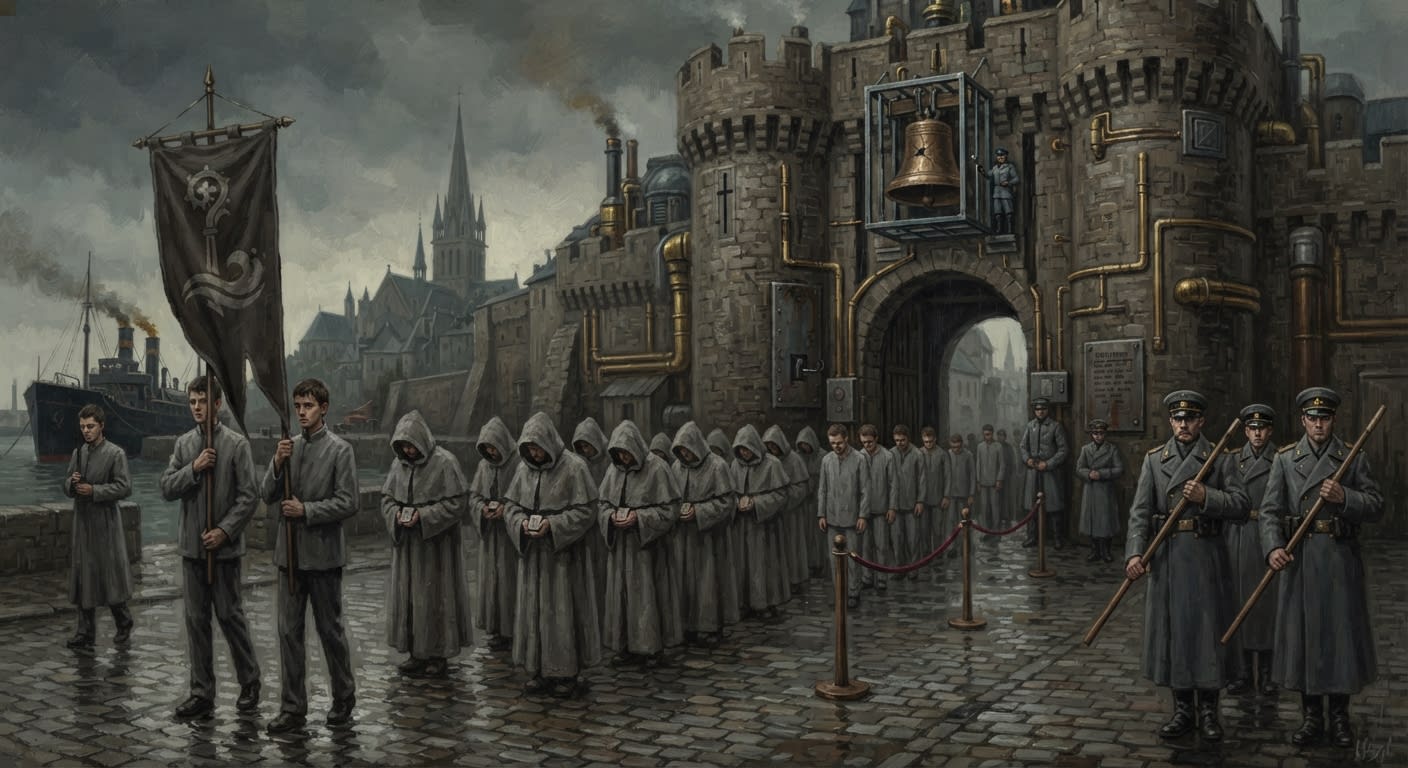
Annual Remembrance of Saint-Malo
Thirty-one tolls, forty-three seconds, and grief under licence
The annual office that makes Saint-Malo's first blood toll thirty-one times, hold forty-three seconds of silence, and remind Brittany that grief is licensed.
Codex Ref. XIII.1.87-011

Blessed Clerk Harlowe “Dry-Ink”
The closed stamp pad by which mercy learned its office hours
Tolerated vocational patron of Confessor-Booth Clerks: a devotionally sufficient blessed whose dry stamp pad sanctifies refused mercy and audit-safe cruelty.
Codex Ref. III.2.01-102
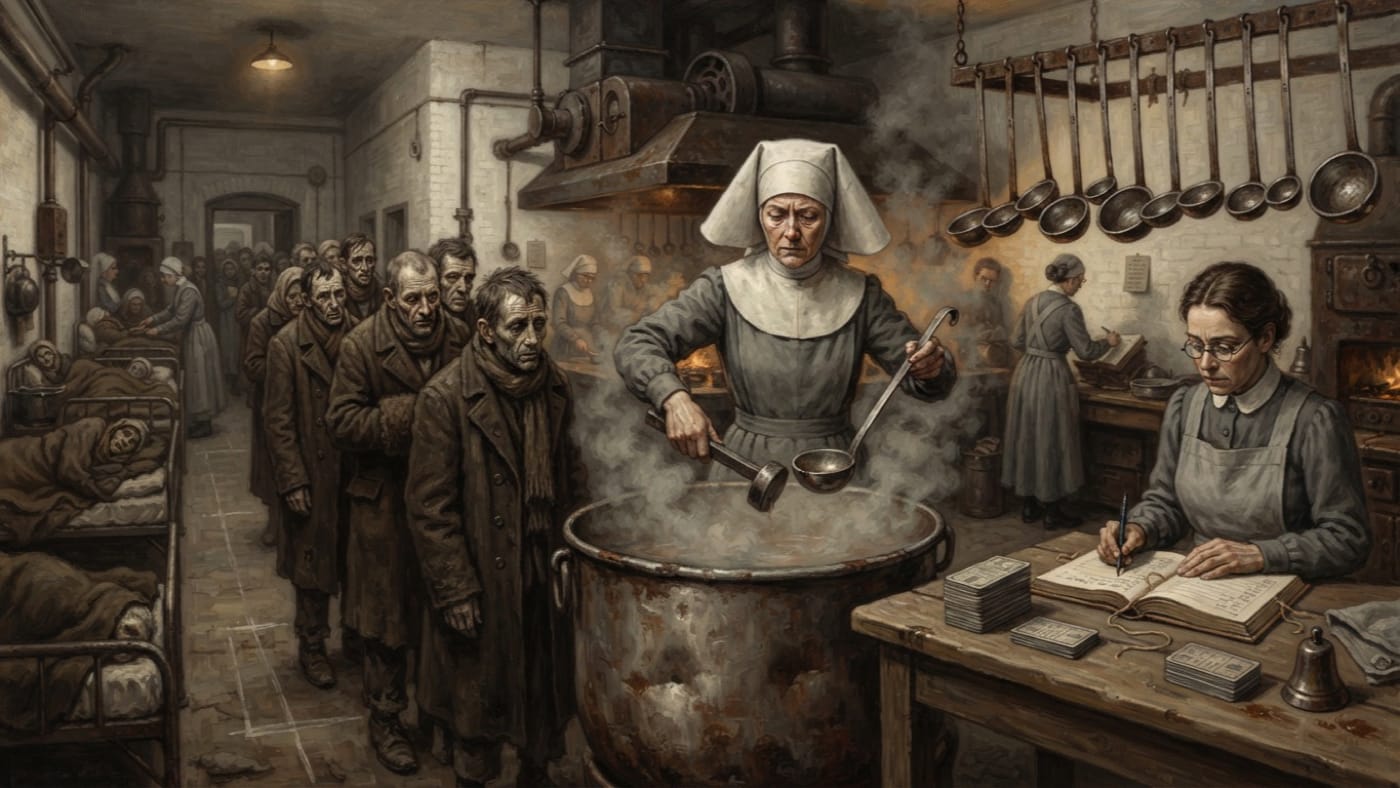
Blessing of the Ladles
Once a year the Church kisses the ladles; the measure remains fixed
An A.S. 201 survey of Saint Marrow's Mercy-house feast: ladles washed, counted, kissed and struck; the bowl is full, provided the hunger is registered.
Codex Ref. XIII.1.89-201
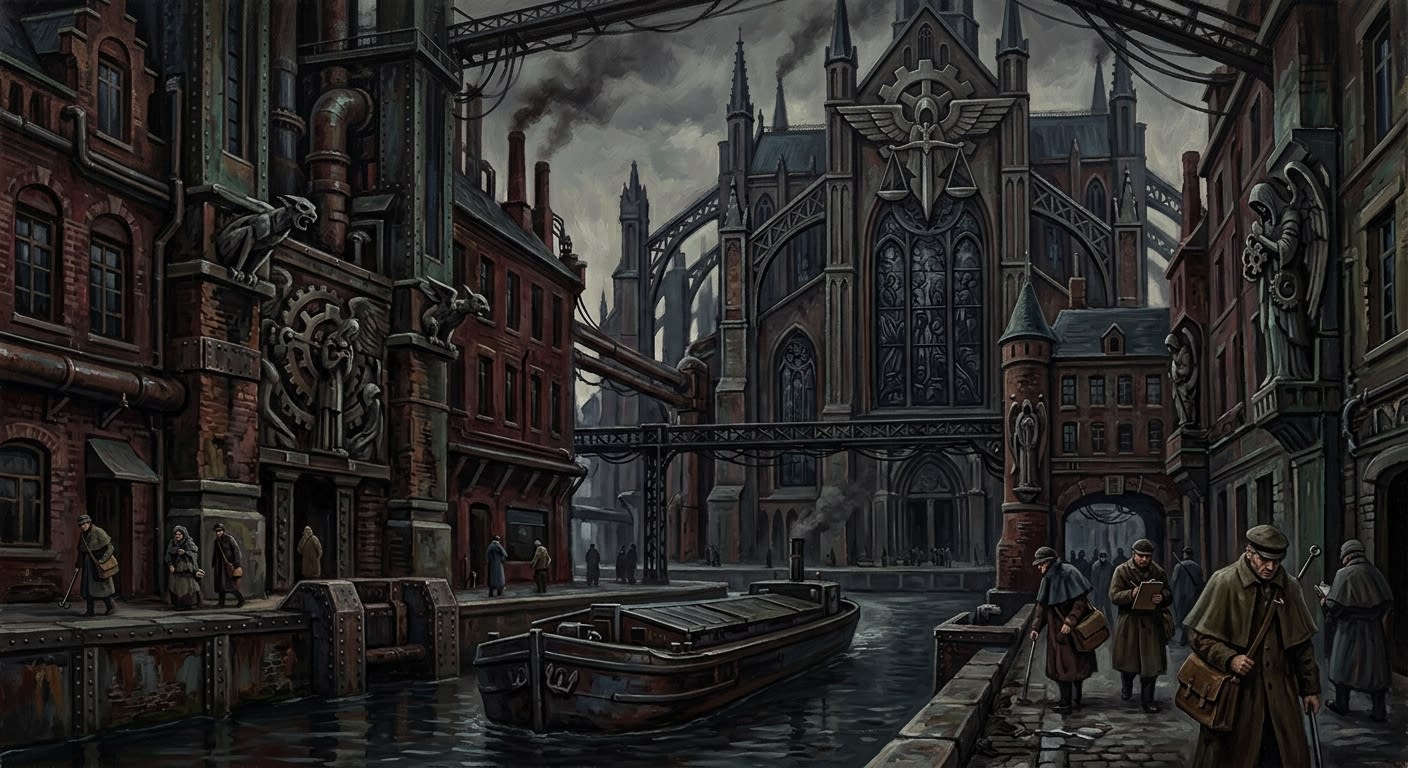
Bruges
Permit prosperity; audit beauty
Bruges is the Synod-held Lowlands city whose canals, colours, grotesques, relic glass, and impossible Tithes seal make beauty a recurring audit problem.
Codex Ref. II.1.04-058
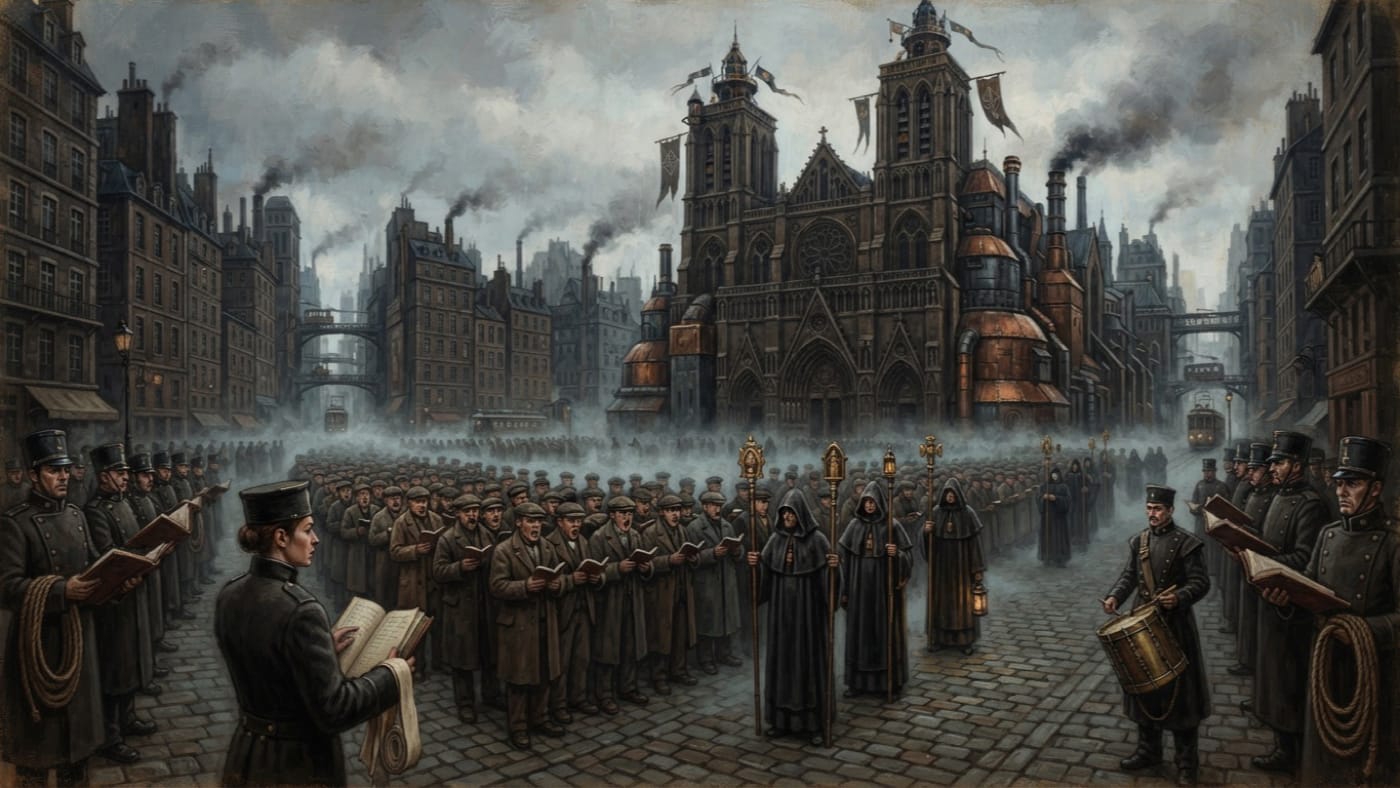
Cathedral of Saint-Jean
Three wards assemble with whole voices; the ledgers are still blank.
Saint-Jean, Lyon's departure station for the annual Procession of Tongues: three wards assemble by parish on Saint Sabina's feast, while their voices are still whole.
Codex Ref. II.1.04-201
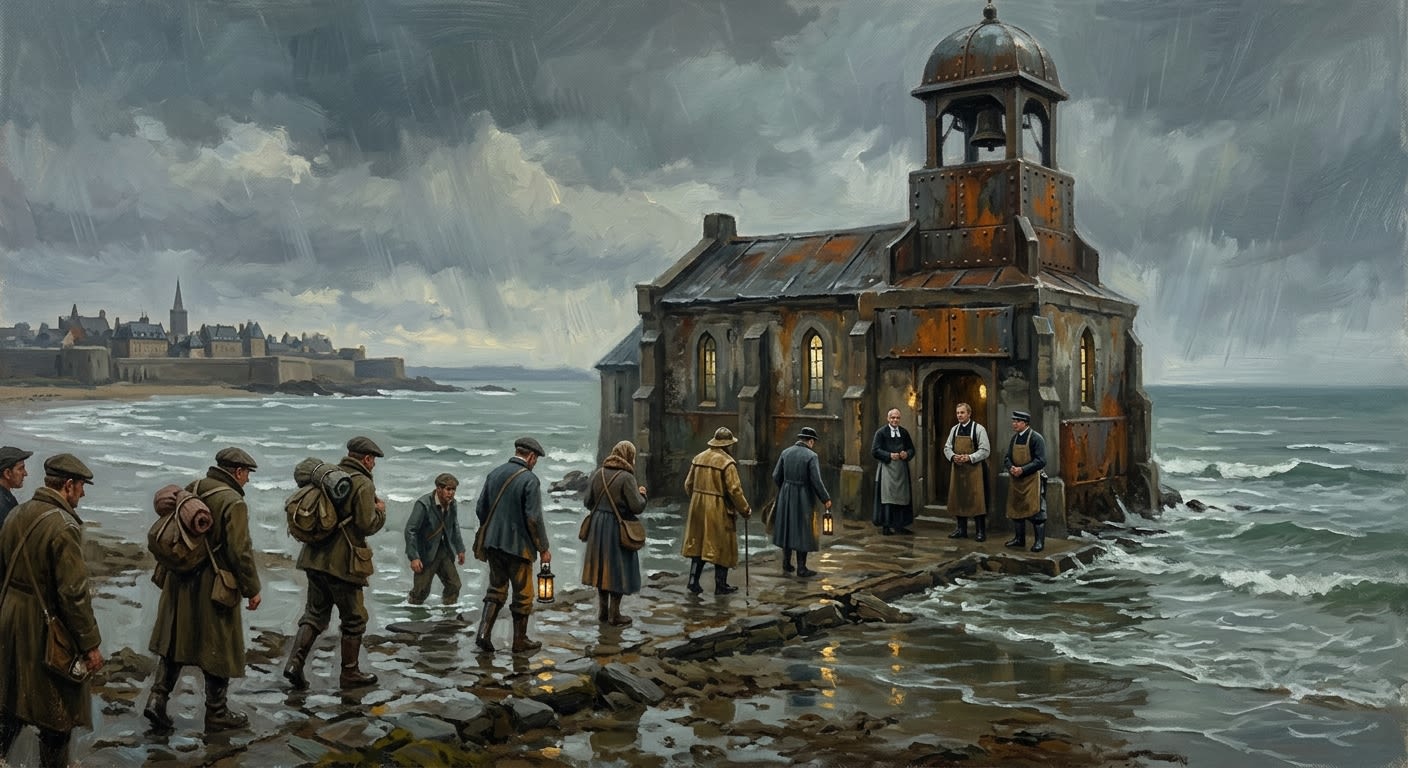
Chapel of the Tide
The shrine built from a journey denied
The Chapel of the Tide is Saint Clement's wet little shrine beyond Saint-Malo, made holy by forty-three pilgrims who were denied arrival and made profitable by everyone after.
Codex Ref. II.1.09-014
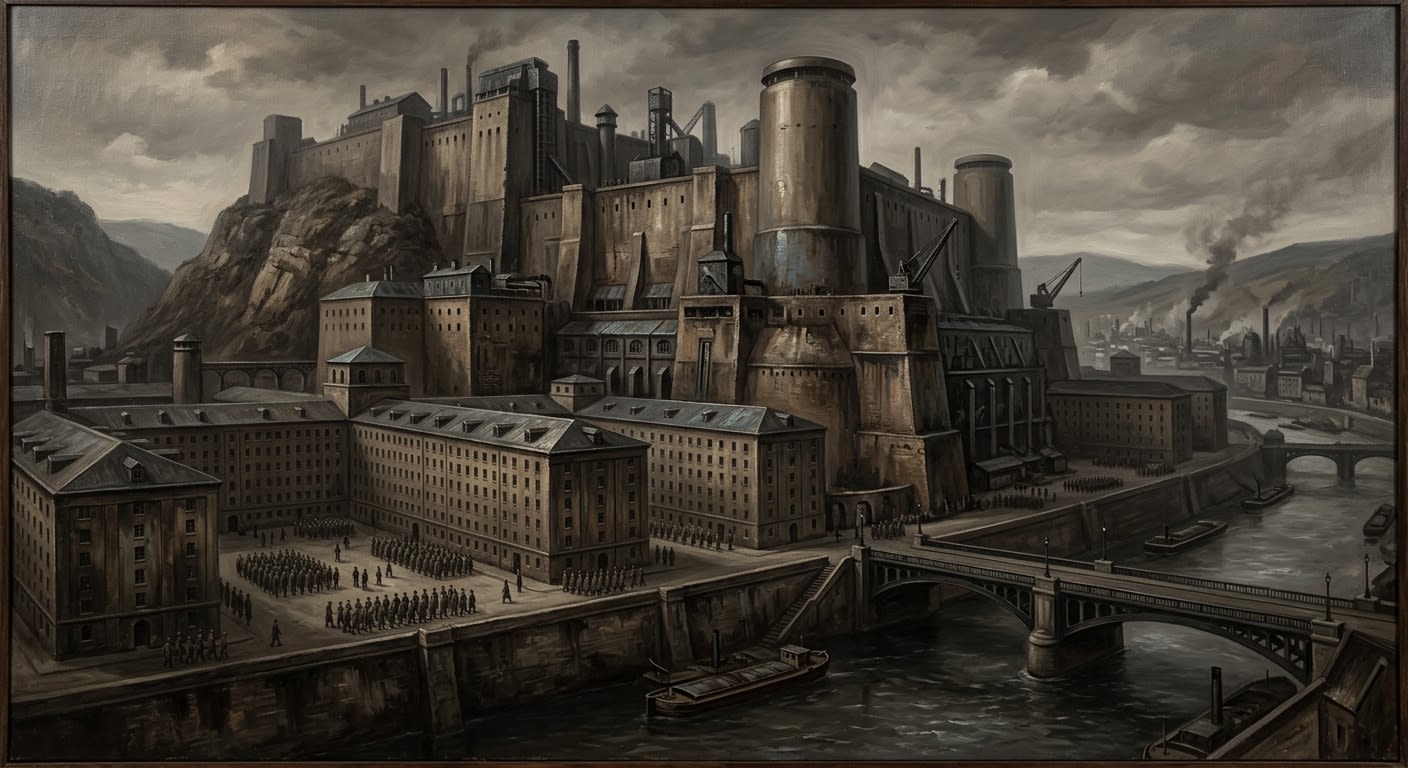
Citadel of Lyon
The hill where maternal invention meets drill tempo
The Citadel of Lyon is the Rhône corridor's catechism-barracks and civic warning, fixed after the Levy protests to train boys and supervise joy.
Codex Ref. II.1.01-004
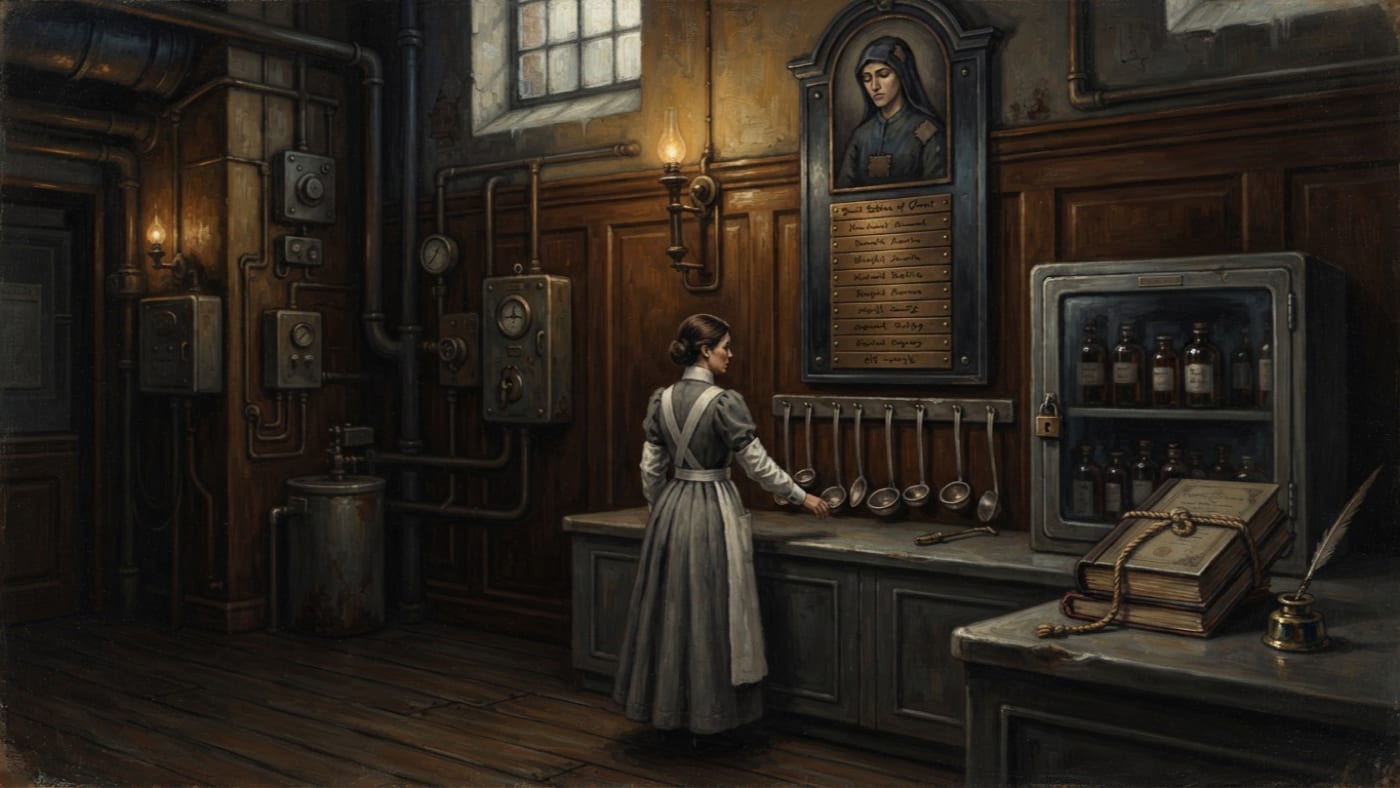
Eleven Bound list
Eleven bodies bound, seven witnesses counted, and Mercy's lesson in the ledger
The Eleven Bound remembers Sabina's reported bandaging recipients. Mercy recites their names; the seven final witnesses remain a different count.
Codex Ref. VII.8.02-002

Father Gaël of Dinan
Four words, one reliquary, and the useful poverty of a man not yet sainted
Father Gaël of Dinan, first named dead of Saint-Malo, survives as four words of custody: brief enough for children, sharp enough for states.
Codex Ref. III.2.01-016
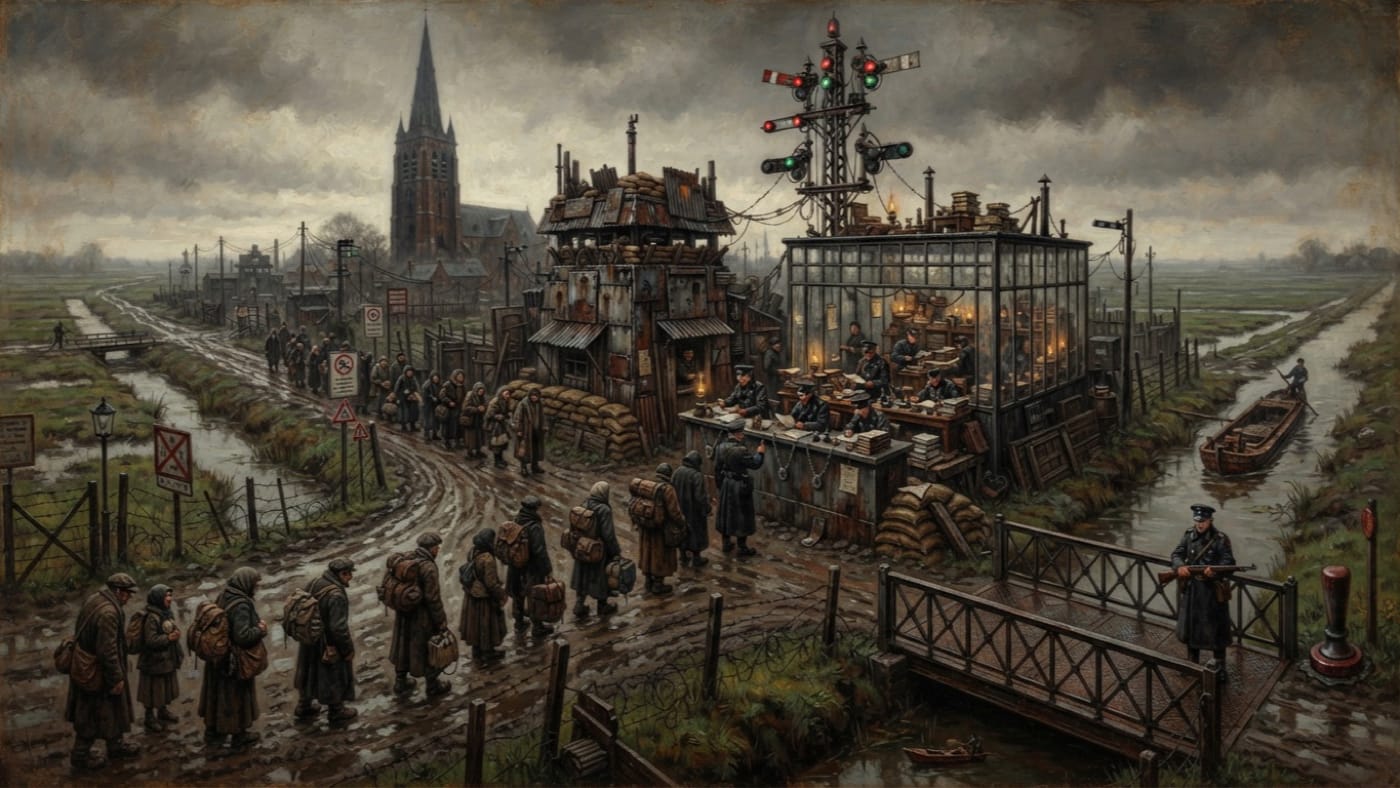
Flanders
Loyal. Damp. Licensed.
Flanders supplies pilgrims from the Synod's damp western parishes. The Brotherhood of the Blessed Foot once charged at the crossroads; the Bureau of Pilgrimage now publishes the fees and charges again for the walk home.
Codex Ref. II.1.07-201
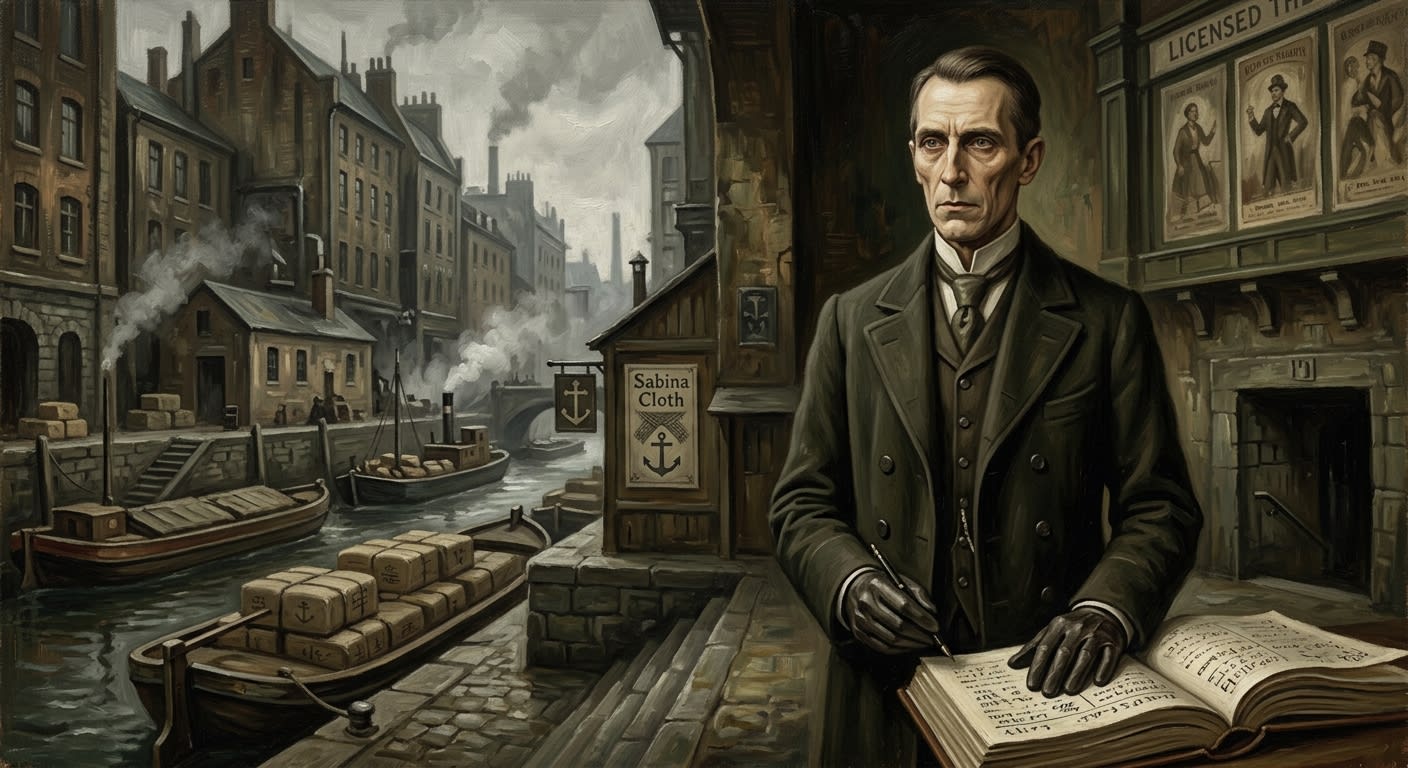
Ghent
The canal city where water keeps copies and loyalty learns to smuggle
Ghent is the Synod's wet ledger in Flanders: canal trade, Records quays, Sabina cloth, licensed theatres, Black Ledger cells, Wormhost scars, and obedience with annotations.
Codex Ref. II.1.05-201
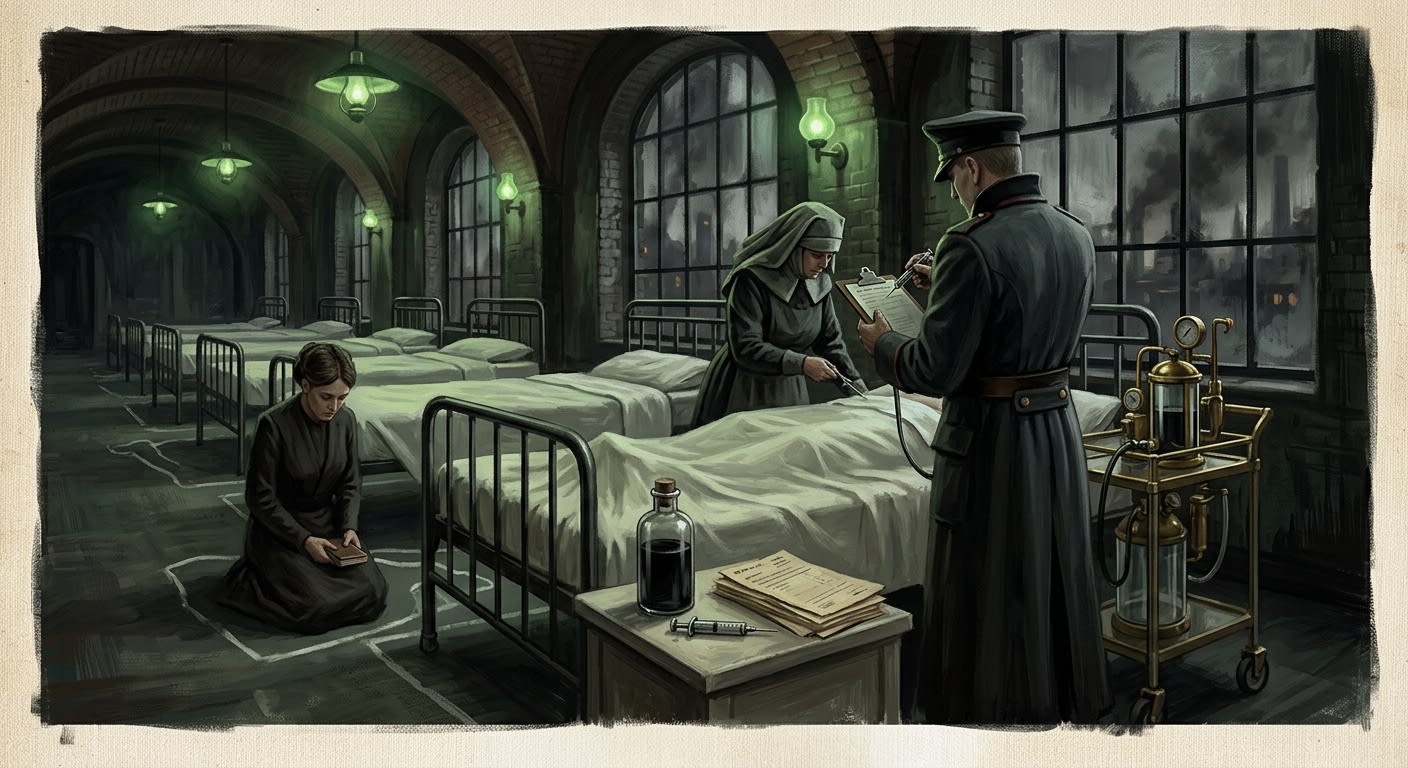
Hospices of Departure
Where Mercy warms the cup and counts the breath
The Hospices of Departure are Mercy's immaculate terminal rooms: clean linen, black elixir, family chalk-lines, final slips, and the doctrine by which the Synod makes death kind, lawful, useful, and recorded.
Codex Ref. XIII.1.88-112
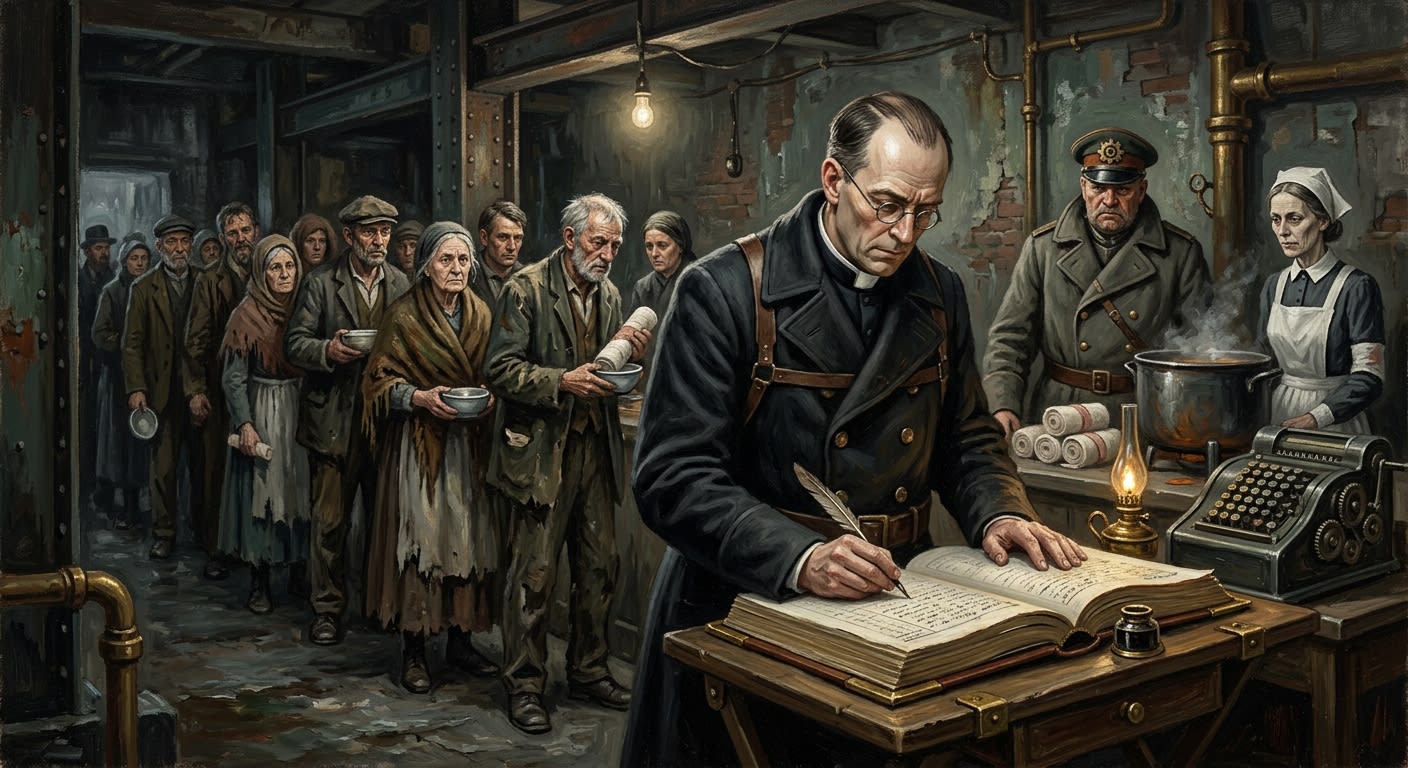
Ledger Laws
Mercy measured by the ladle, sanctioned by the noose
The Ledger Laws made mercy countable after the Broth Riots: every bowl, bandage, draught, confession, death, and useful pity entered the record before it dared call itself compassion.
Codex Ref. XIII.1.89-112
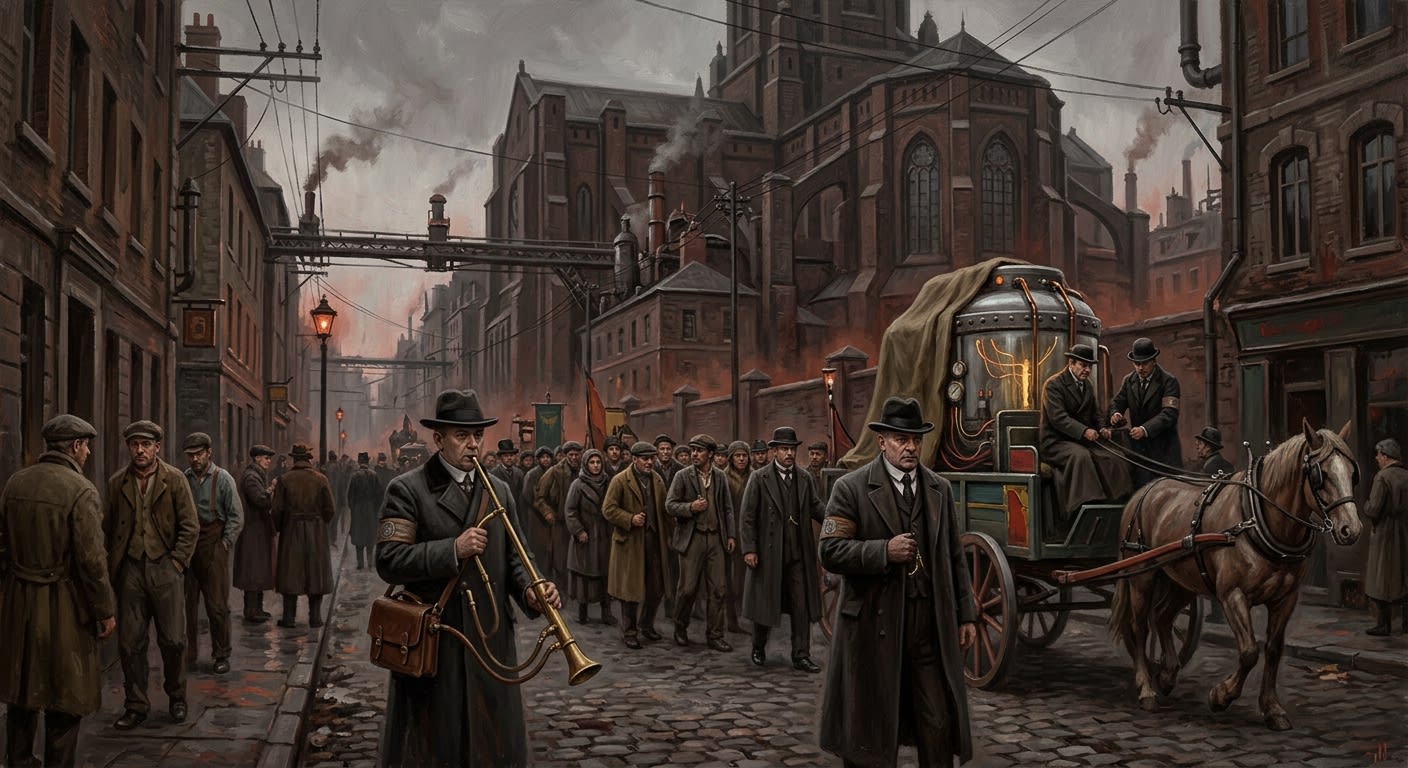
Lyon
The Rhône city where scars learned to sell tickets
Synod-held Lyon is a Rhône city of red ash, whistle-hymnody, Festival supervision, relic volatility, licensed enthusiasm, and profitable repentance.
Codex Ref. II.1.04-001

Martyrology of Saint-Malo
Thirty-one names, forty-three seconds, and a civilization built from first blood
The Martyrology of Saint-Malo counts thirty-one dead, five absences, and every obedience the Synod has purchased with their blood.
Codex Ref. VII.8.02-001
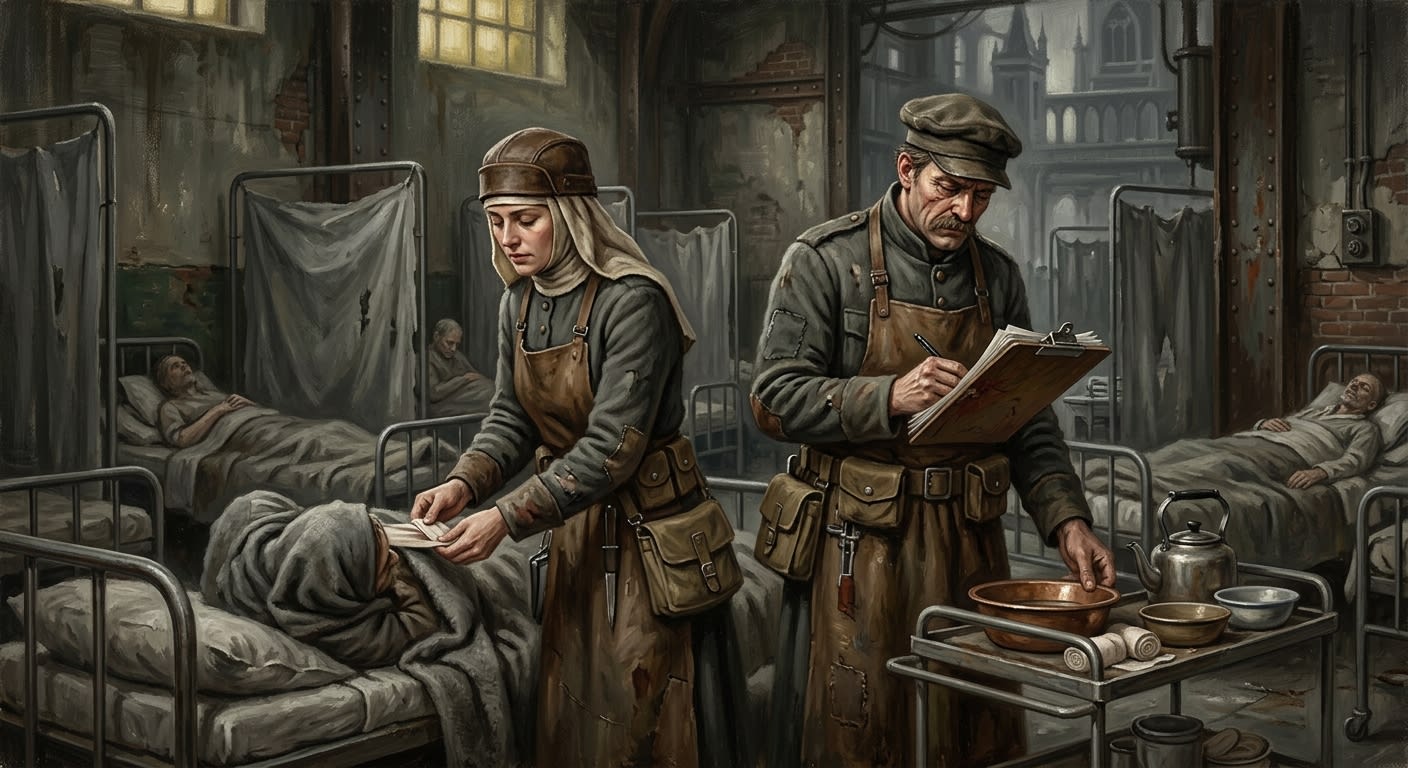
Mercy Ward-Sister / Mercy Ward-Brother
The hand that brings broth also carries the ledger
The Mercy Ward-Sister and Ward-Brother are the Bureau of Mercy's grey-aproned operators of counted compassion, where broth, bandage, confession, and paperwork become one instrument.
Codex Ref. XII.6.04-001
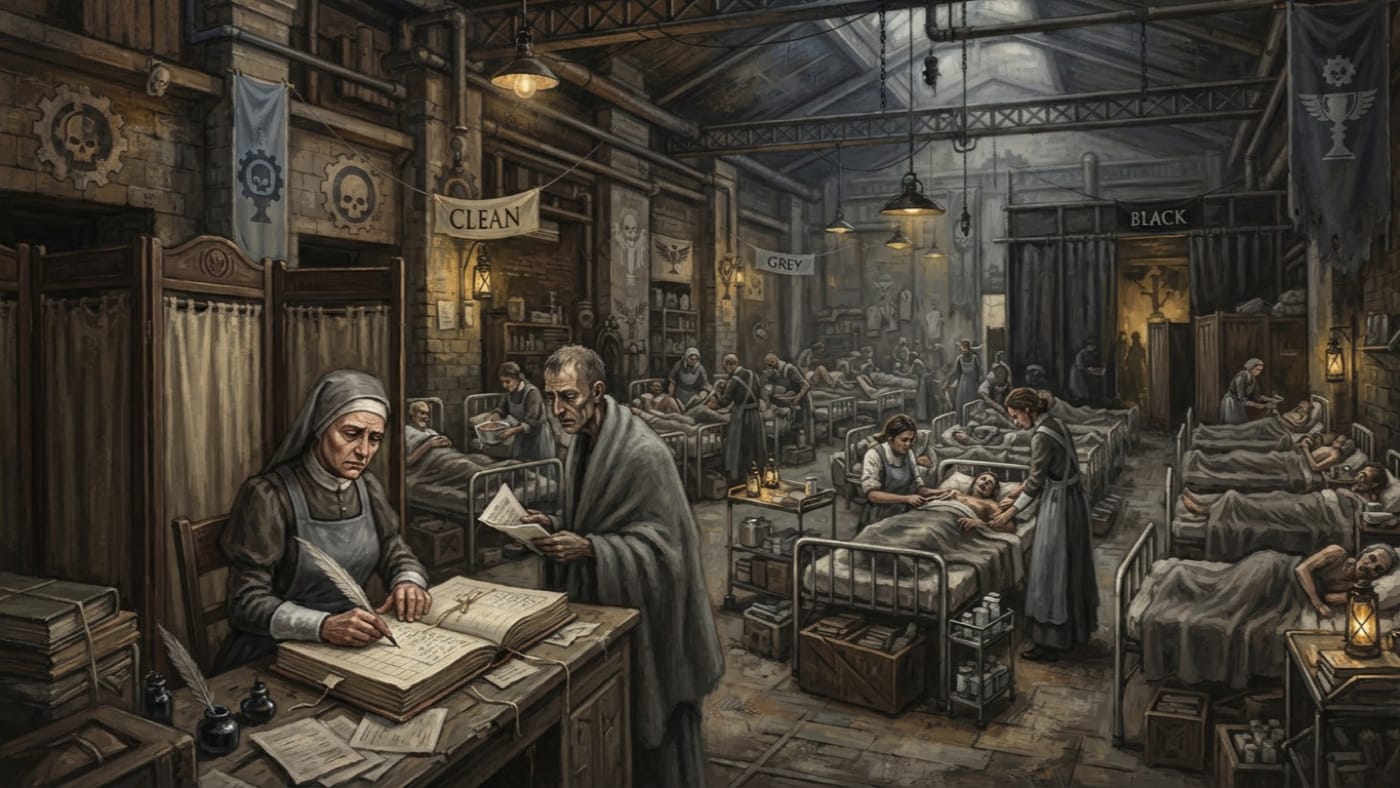
Mercy Wards
The bed is allotted; the suffering must be entered
The Bureau of Mercy's houses of the sick: broth, bandages, confession and clean, grey or black tags. This A.S. 201 survey counts the registered wards; the living remain harder to reconcile.
Codex Ref. II.6.04-001
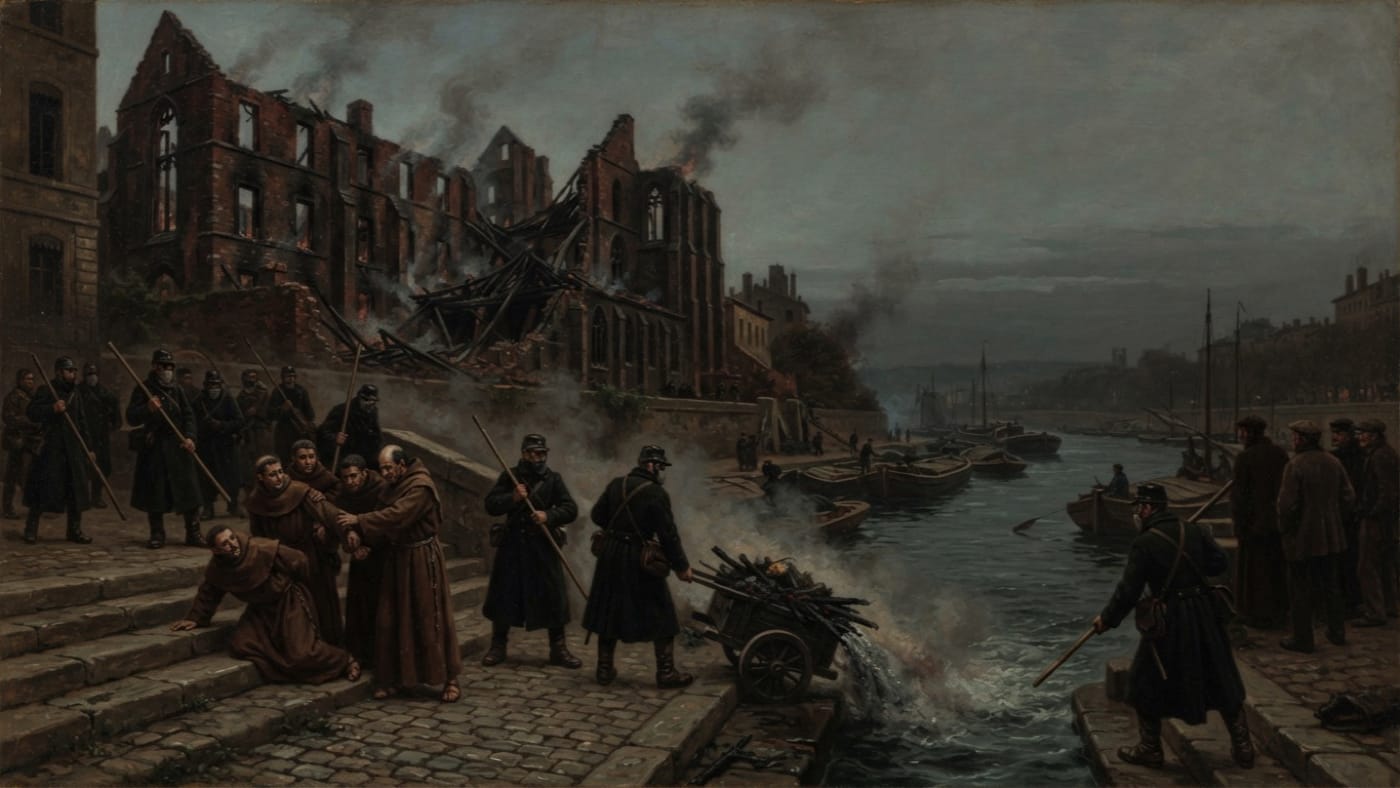
Minor House of Saint Sabina
Three names, one friary, and no proven dedication
The Lyon friary burned in −39 A.S. (1671 CE), remembered under three disputed names. Its brothers fed the docks; the index supplied a saint it could not prove.
Codex Ref. II.1.09-039
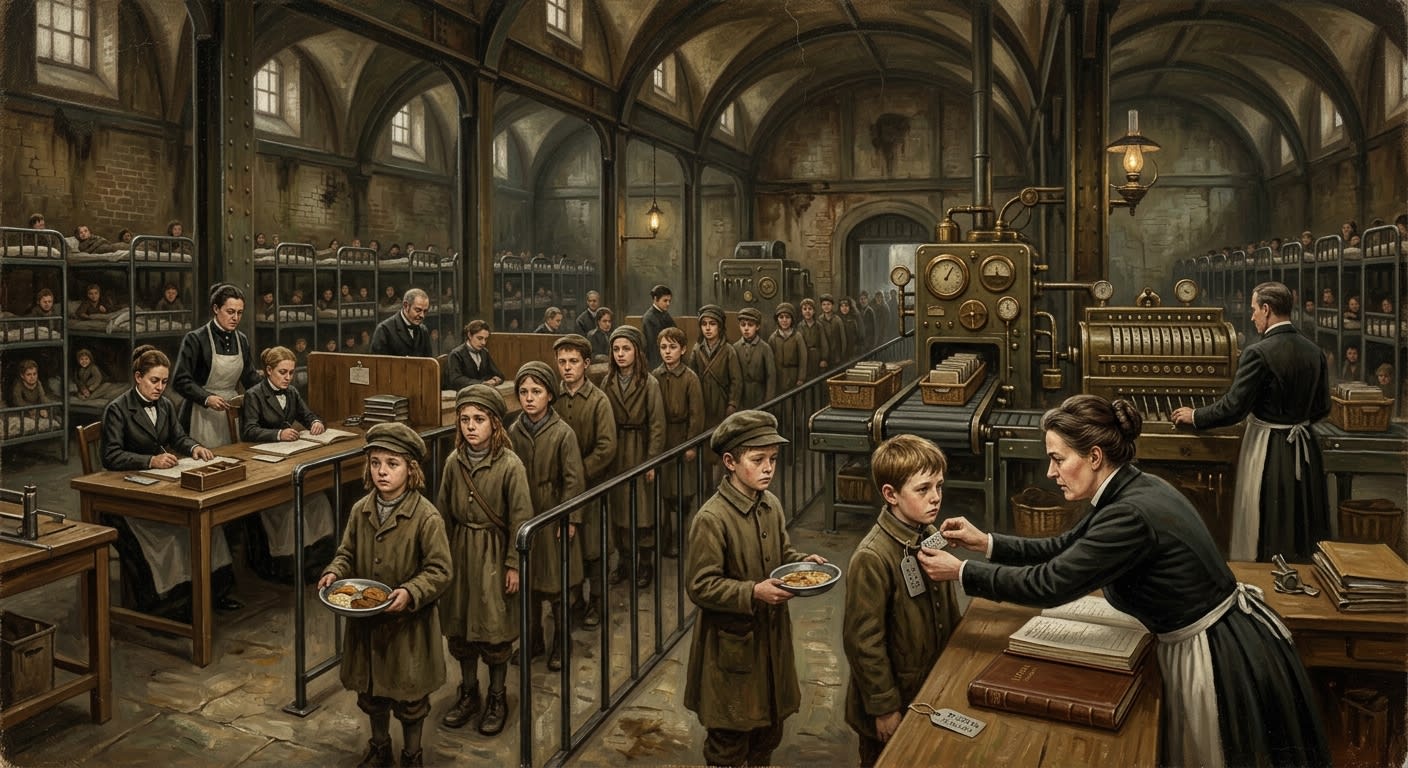
Orphanarii
Mercy with a cot, a tag-punch, and the legal courage to rename a child before breakfast
The Orphanarii are the Synod's state orphanage system: Mercy houses that wash, tag, rename, sort, feed, place, and sometimes erase children until grief becomes legible.
Codex Ref. VIII.2.12-134
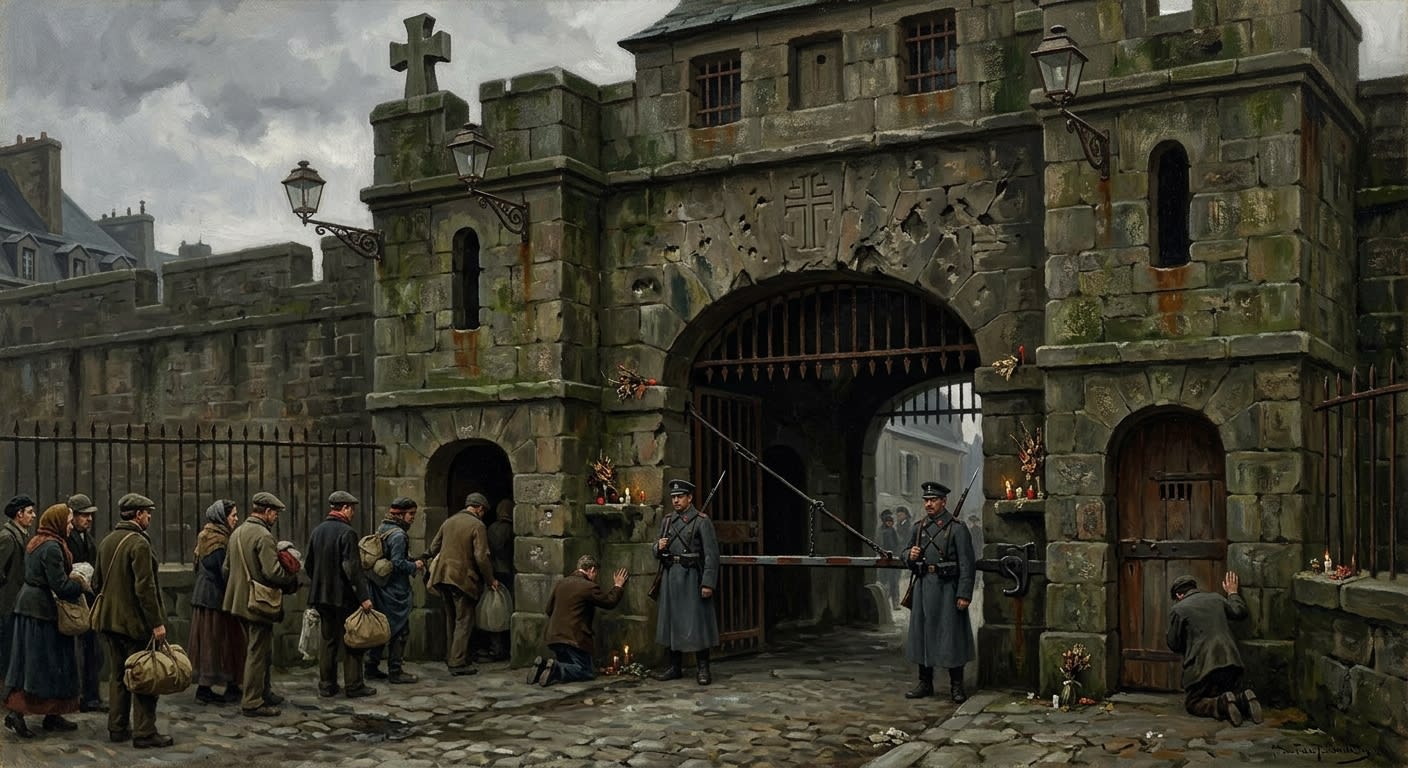
Porte Saint-Vincent
Where stone learned to answer after the thirty-first toll
The Porte Saint-Vincent is Saint-Malo's principal landward gate: toll aperture, atrocity site, pilgrimage wound, and stone witness to the A.S. 10 massacre.
Codex Ref. II.1.09-010
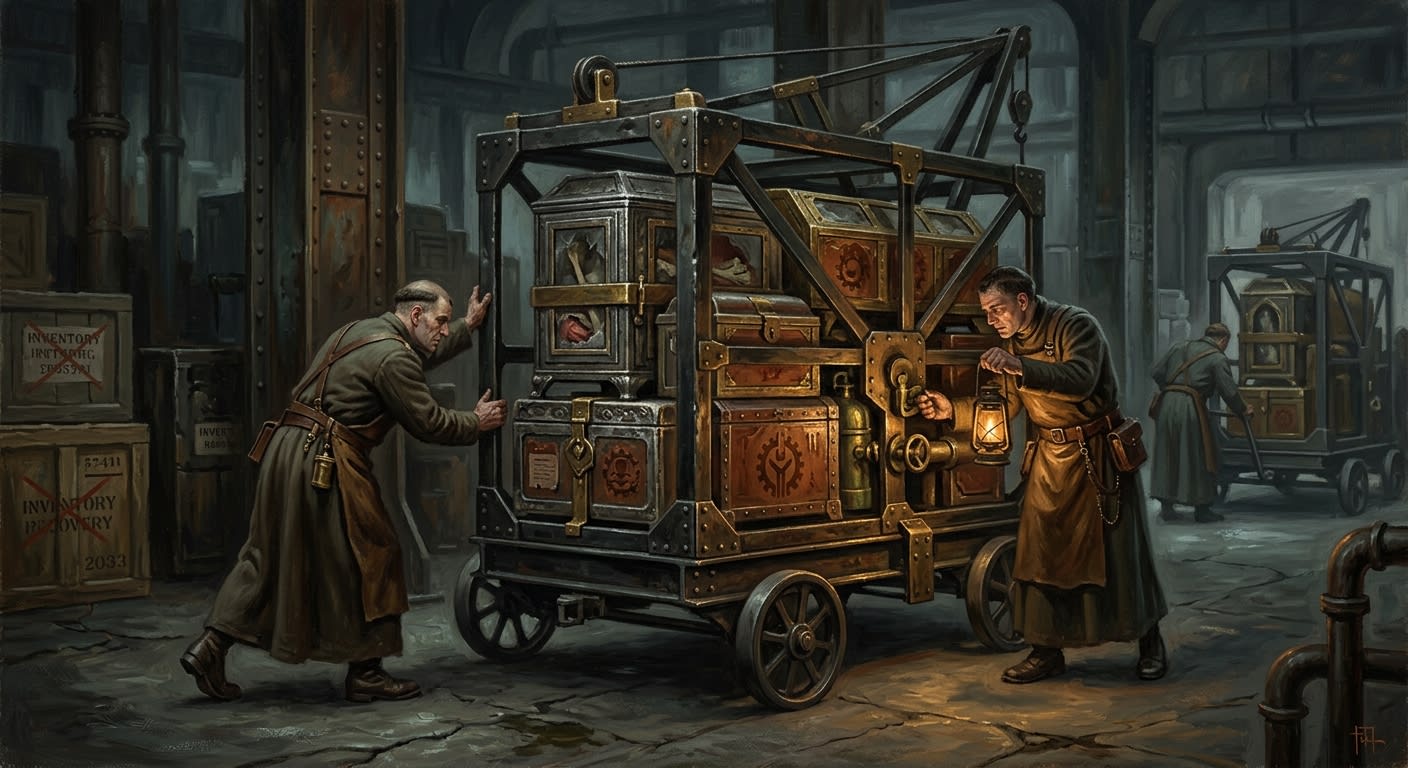
Reliquary of Saint Matthias
A box of bones that taught law to bleed
The Reliquary of Saint Matthias is the Saint-Malo martyr-object: seized as Item 7, recovered from Rationalist custody, and made into portable proof that holy custody is not inventory.
Codex Ref. XIII.1.73-010
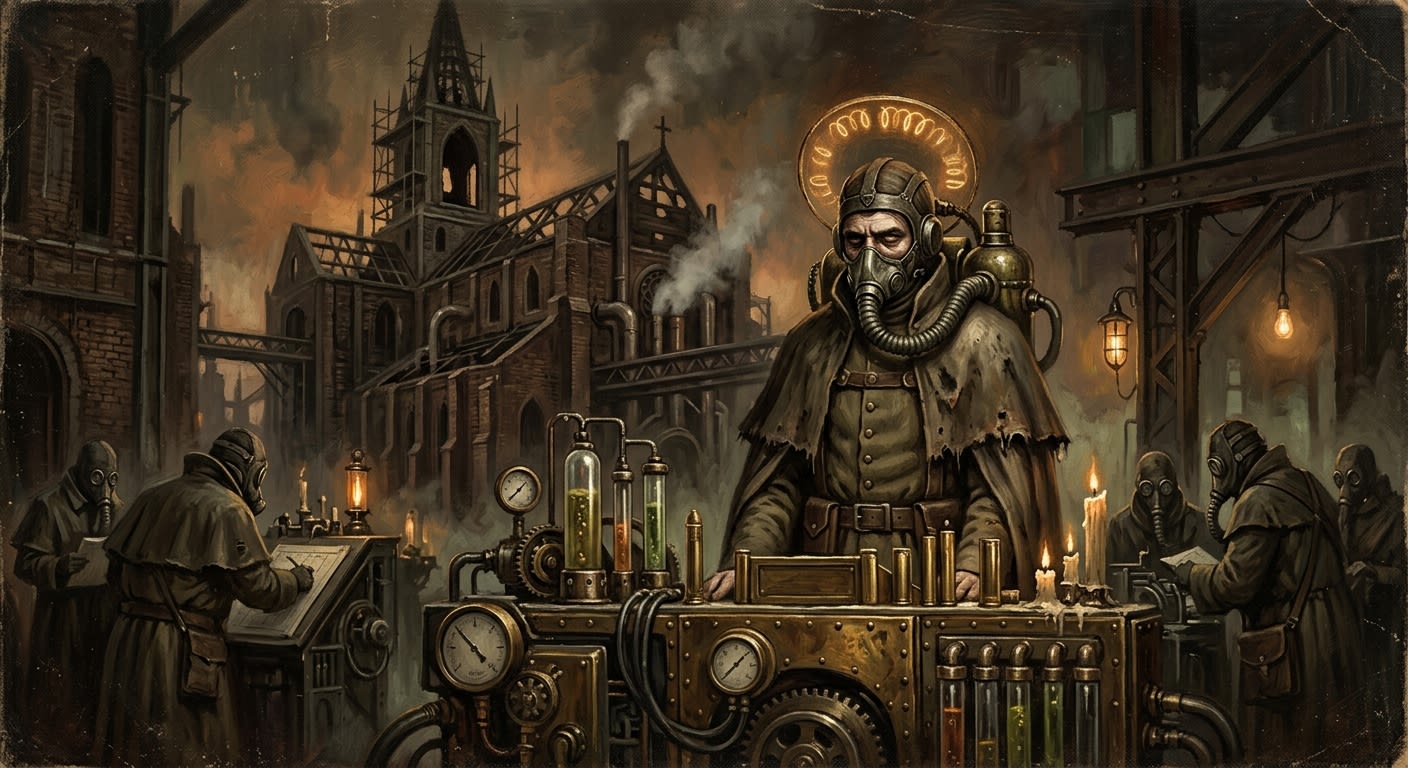
Saint Clement of Brittany
The chapel that received no pilgrims and therefore received a continent
Saint Clement of Brittany became doctrine's perfect destination: a chapel the martyrs never reached, and therefore a wound the Synod could license forever.
Codex Ref. III.2.01-005
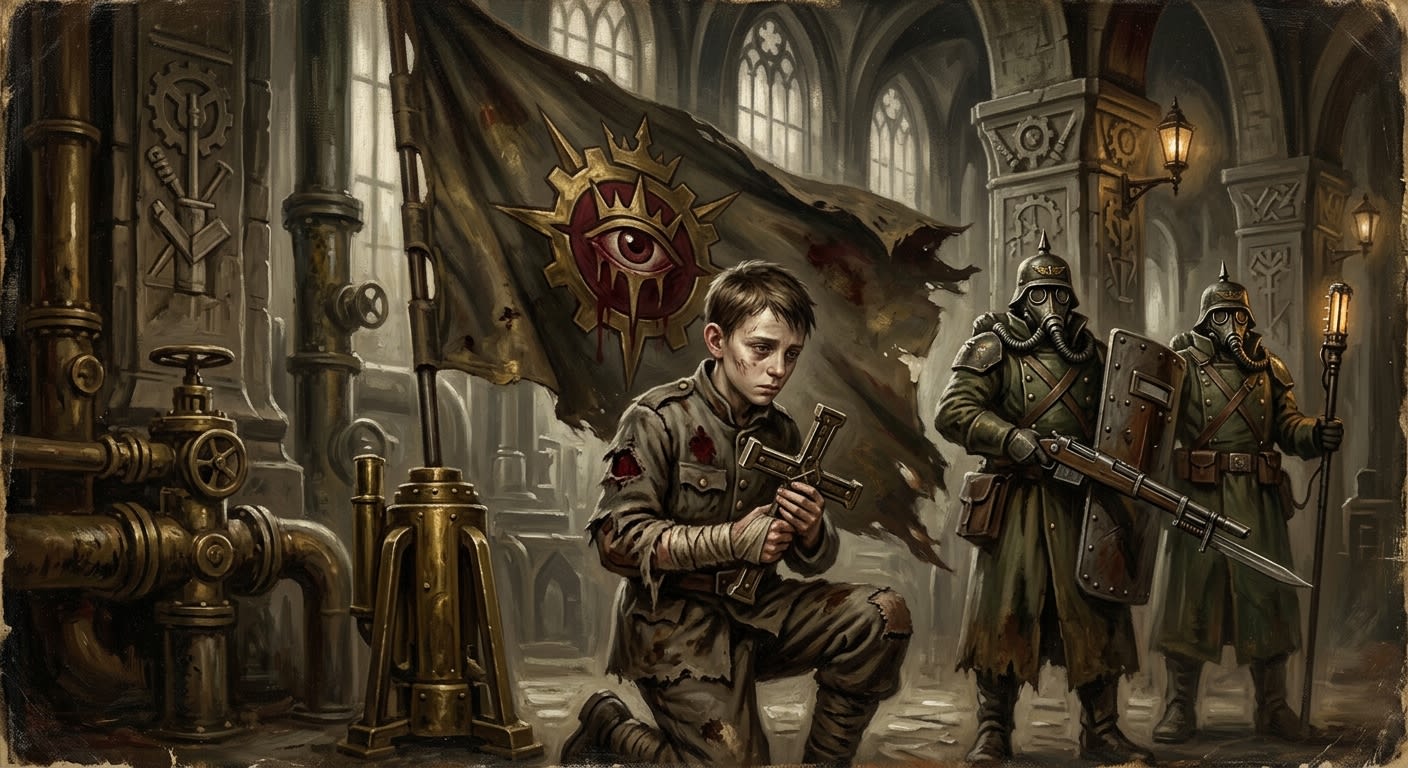
Saint Hermas
The boy who held the banner until the banner held him
Saint Hermas of Dinan was the boy beneath the banner at Saint-Malo: two wounds, one strip of cloth, and a cult made tidy by force.
Codex Ref. III.2.01-006
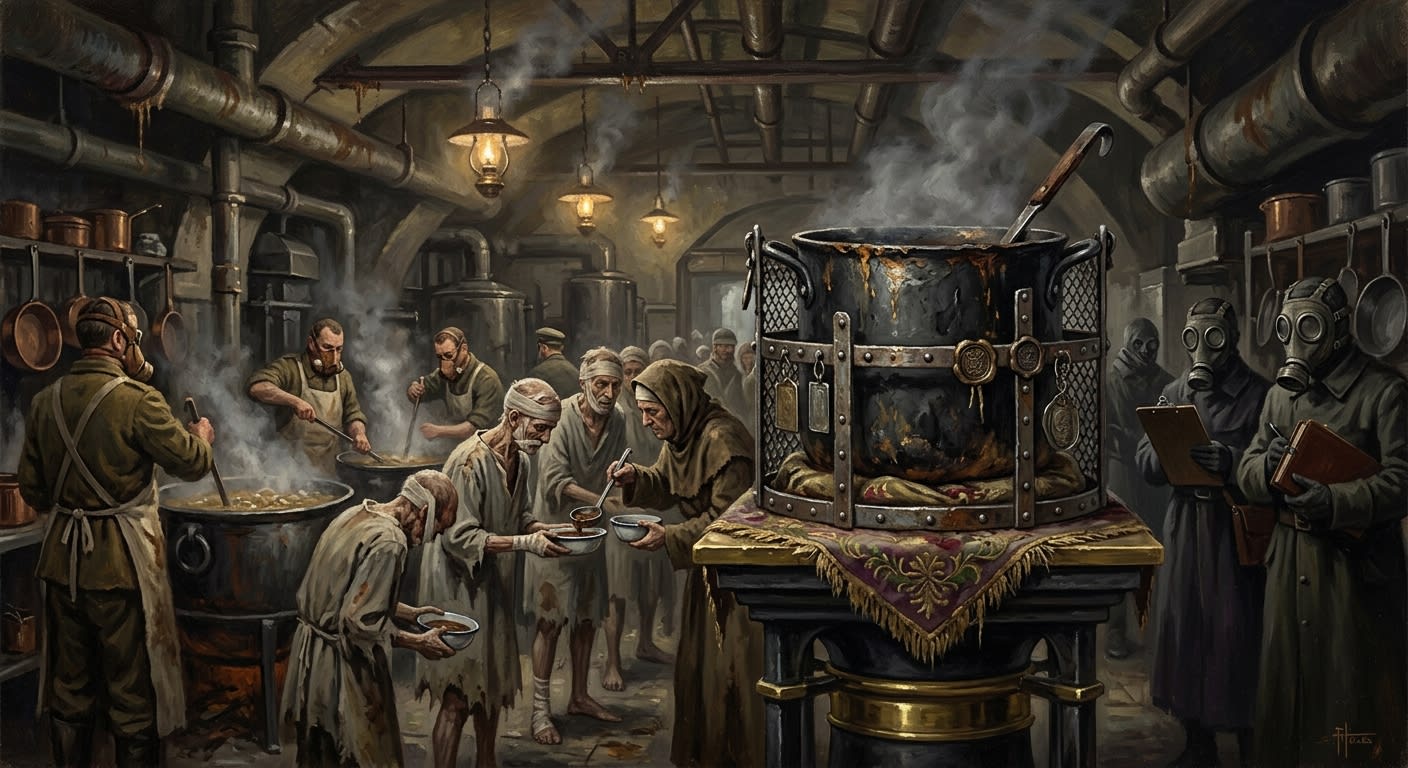
Saint Marrow-of-the-Ladle
Counted mercy, warm broth, and the holy arithmetic of the bowl
Saint Marrow-of-the-Ladle, patron of Mercy ward kitchens, may have been a pot; the Bureau prefers the miracle to the biography.
Codex Ref. III.2.01-016
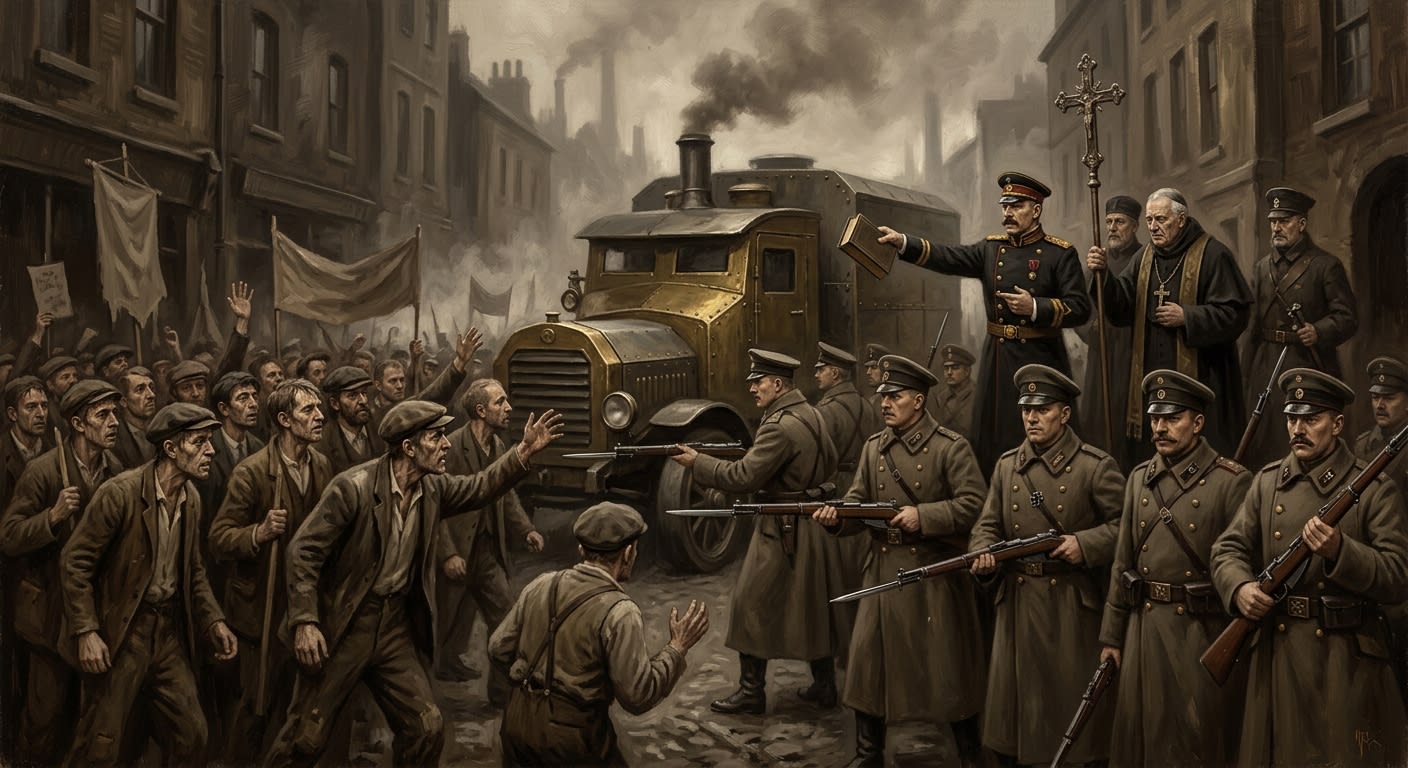
The Broth Riots
The hungry asked for food and received laws
The Broth Riots of A.S. 112 began with thin soup and ended with rifles, saints, Ledger Laws, and the Synod's discovery that hunger becomes obedient once measured.
Codex Ref. VII.8.10-112
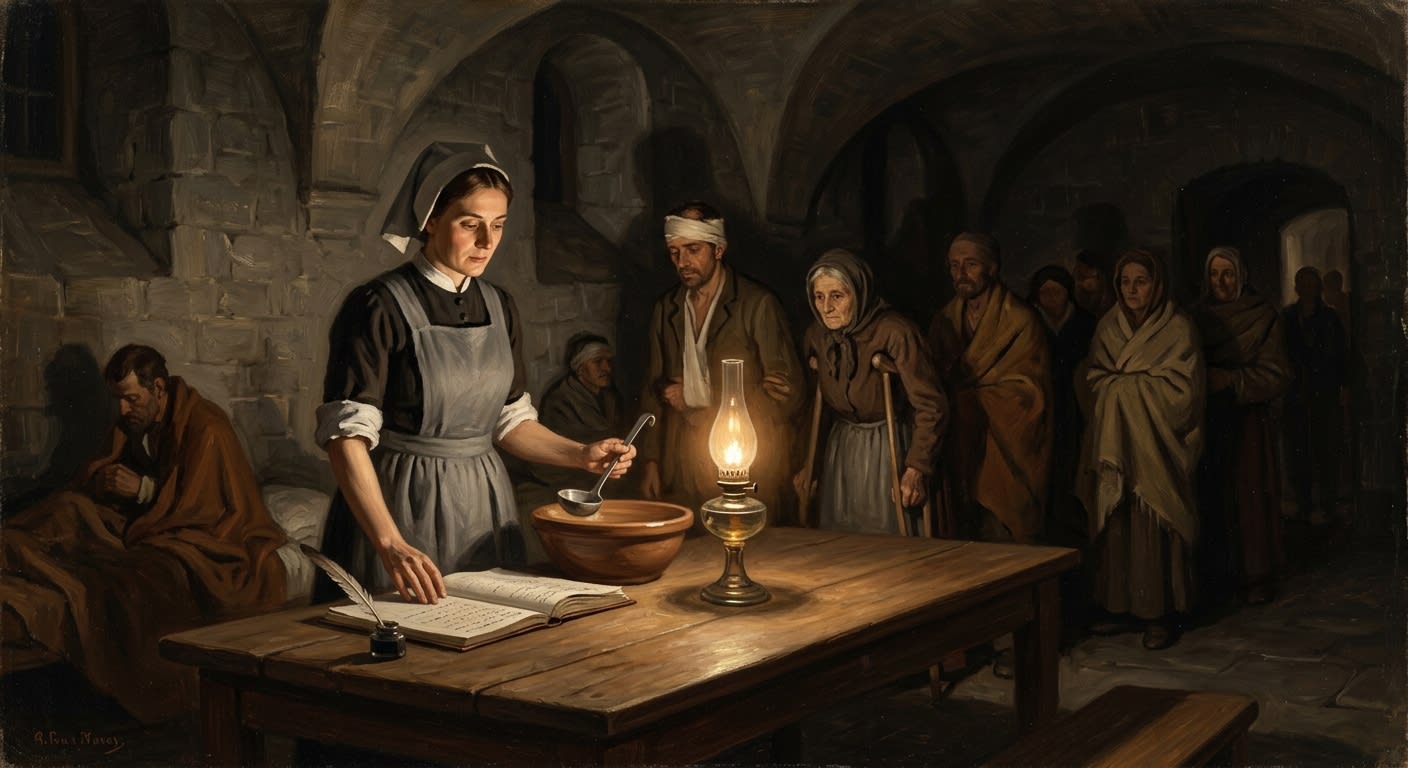
The Bureau of Mercy
Compassion Is a Ration. A Ration Is a Policy. A Policy Is the Synod's Will.
The Bureau of Mercy administers the Synod's hospitals, orphanages, broth-kitchens, and Hospices of Departure — every institution where subjects are at their most vulnerable and therefore most in need of documentation.
Codex Ref. VI.4.12-031
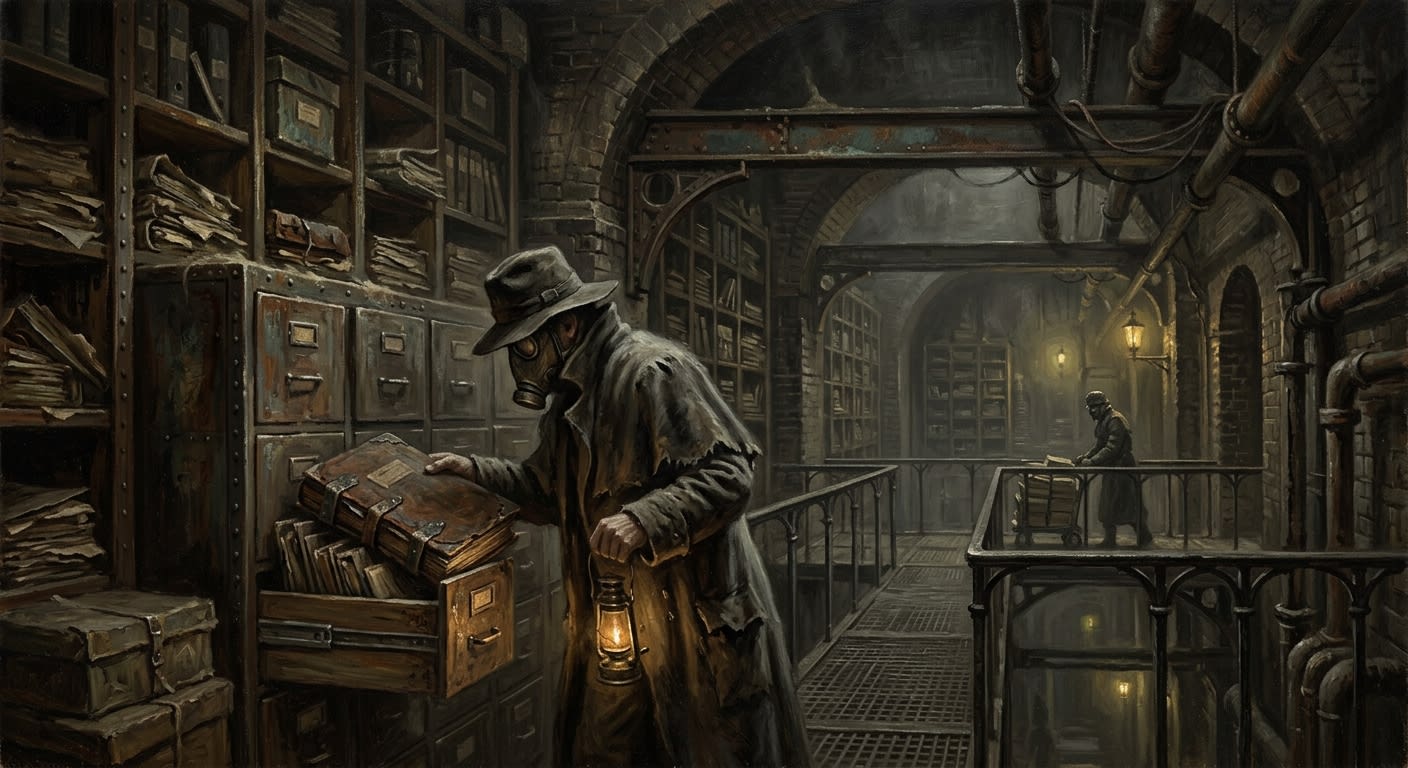
The Codices Obscurae
The books that do not exist have excellent indexing
The Codices Obscurae are denied by every Bureau that matters, which is precisely how a careful reader knows where the bodies are indexed.
Codex Ref. XIII.1.06-001
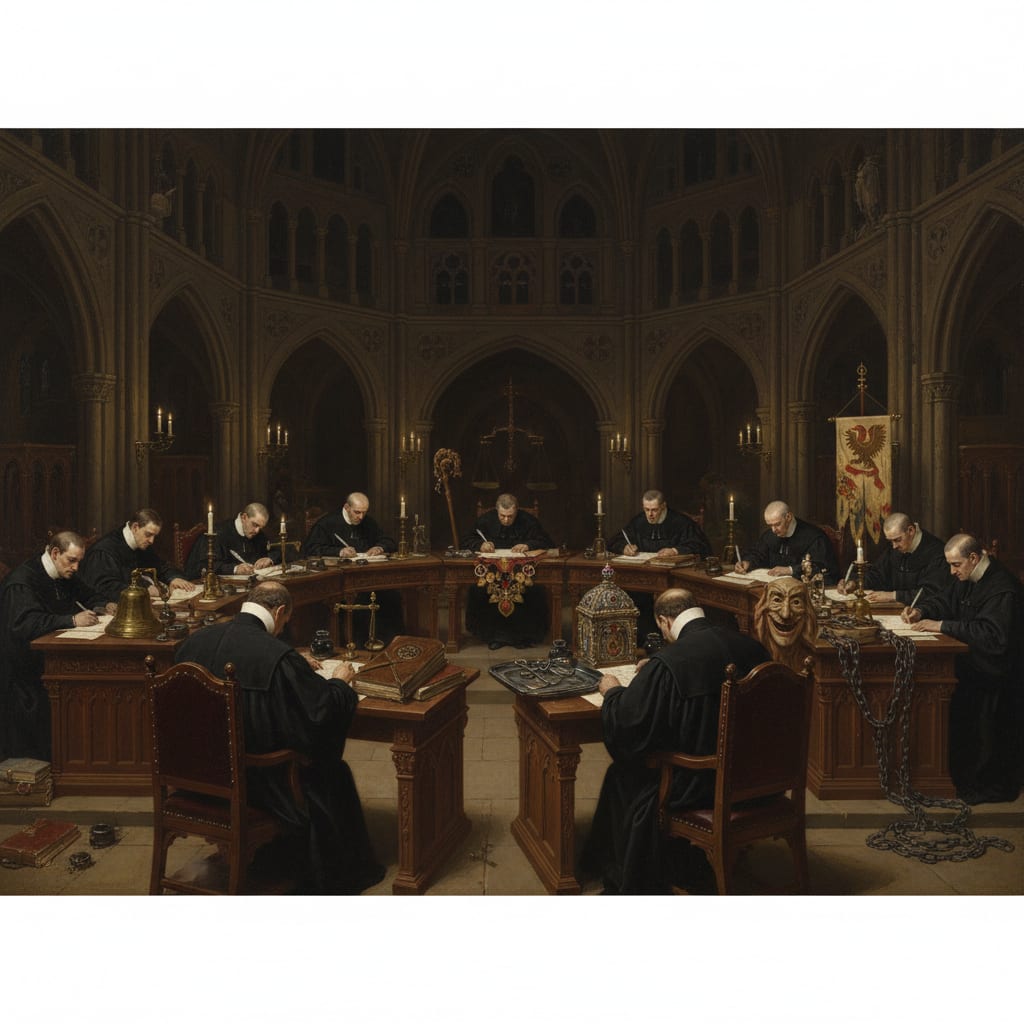
The Holy Bureaus
Twelve Instruments of Providence, or Thirteen If You Count the One That Does Not Exist
The twelve sacred organs through which Strasbourg bends a continent to its will. Each Bureau claims a charism of governance descended from the Apostolic Sundering. Their clerks are legion, their archives endless, their contradictions — by design.
Codex Ref. III.3.01-001
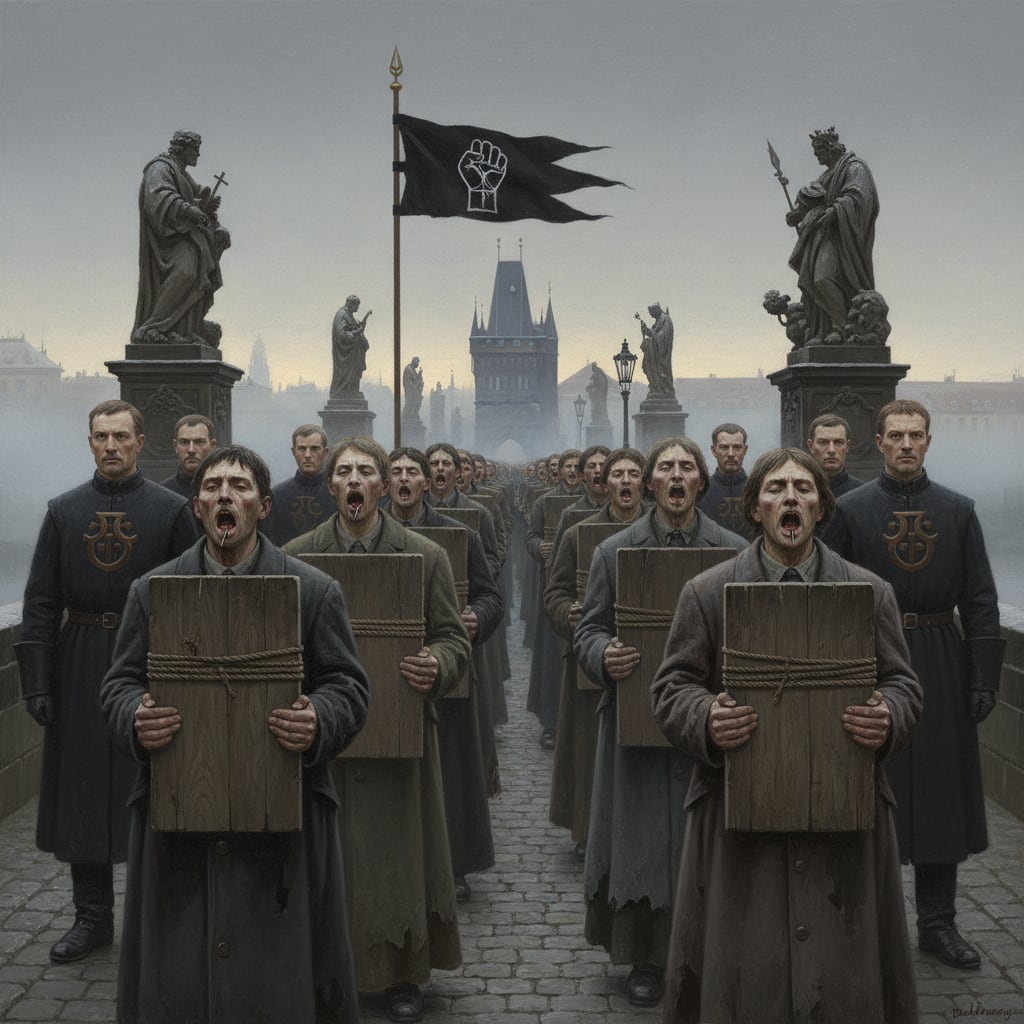
The Procession of Tongues
One hundred and seven consecutive years of doctrine tablets, iron nails, and fixed cobblestones — the [[bureau-of-purity|Bureau of Purity]]'s clearest argument, and the one requiring no rebuttal.
The Bureau of Purity's ceremony of ambulatory confession — heretics with tongues nailed to doctrine tablets, marching across Prague's Charles Bridge since A.S.
Codex Ref. VII.6.01-001
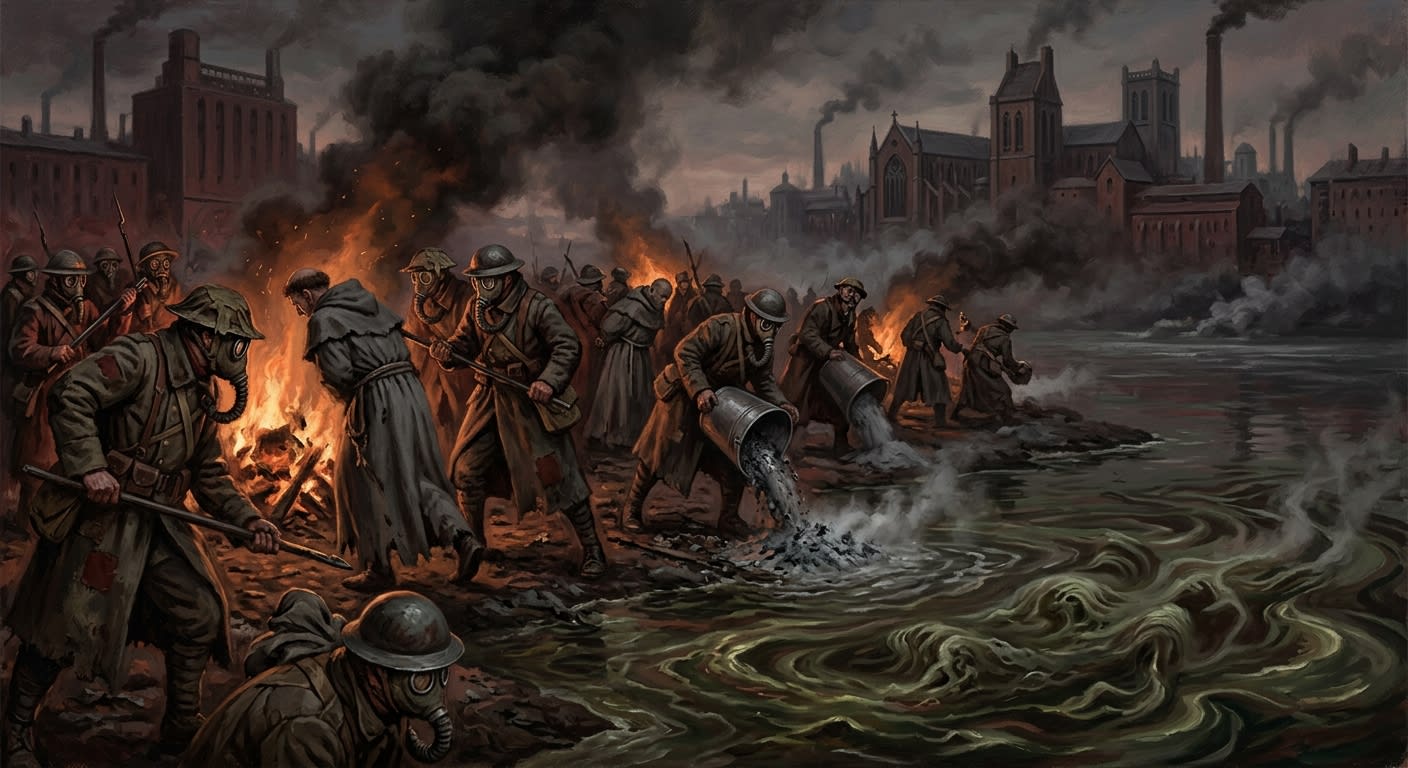
The Red Slaughter of Lyon
The first cut was local, municipal, and entirely pleased with itself
In –39 A.S., Lyonnais militias burned forty-three friars and dumped their ashes into the Rhône; the river answered in psalms, as rivers sometimes improve upon councils.
Codex Ref. VII.8.03-001