
#On the Canal City That Learned to Burn Correctly
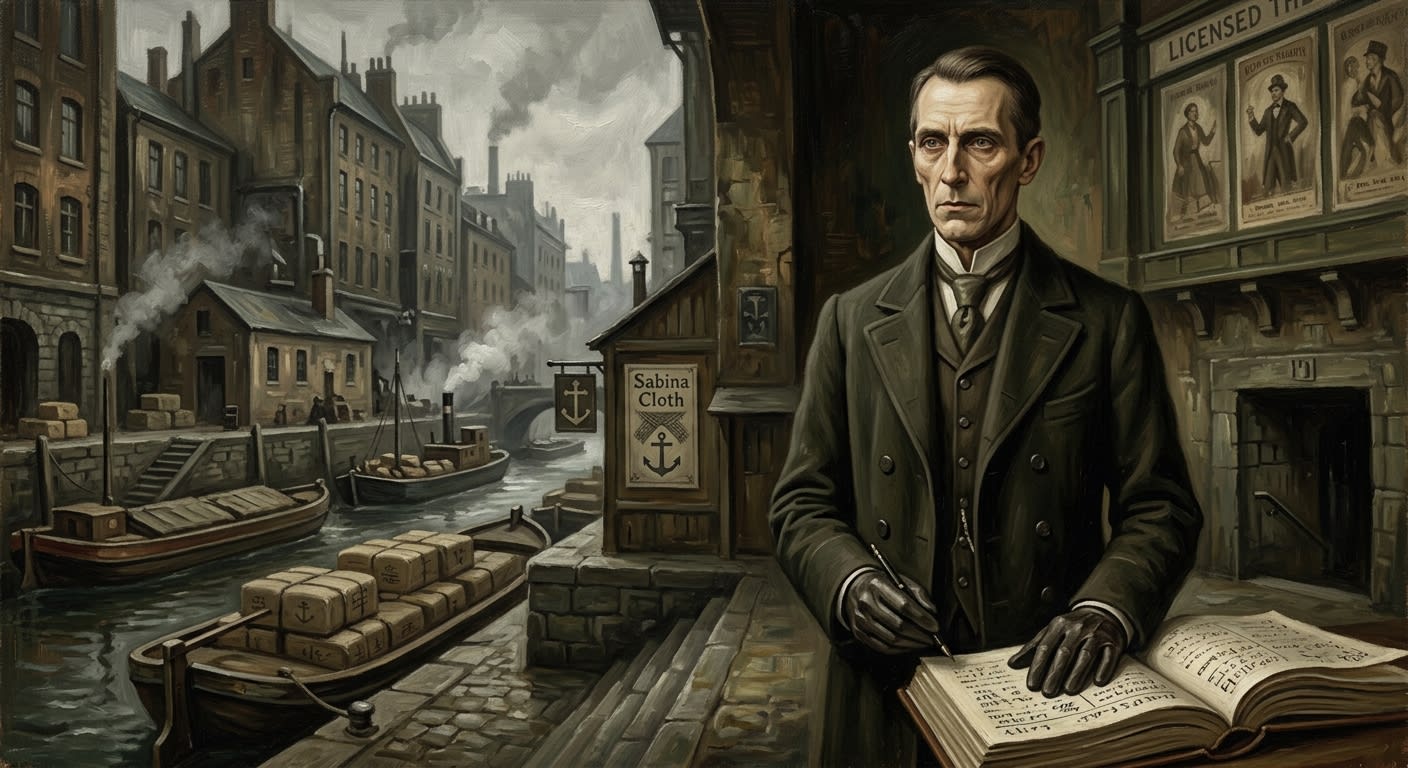
Ghent sits in the Flemish lowlands where canals divide the city into ledgers of water, brick, quay, shrine, counting-house, and old scriptorium ash. The map places it at 51.1 north, 3.7 east, in Zone 1, deep within the western safety for which men at the Line bleed and clerks in Strasbourg take credit. Safety has made Ghent rich. Riches have made Ghent documentable. Documentation has made Ghent useful. Utility, as any theologian with a stomach knows, is the first step toward being consumed by the state.
The official city is a canal trade hub, a Bureau of Records seat, a paper-and-wax artery tied to the Candlewick Palatinate, a Mercy shrine-town under the patronage of Saint Sabina, and a respectable municipal body with obedient toll bridges, obedient guilds, obedient churches, obedient theatres, and disobedient cellars. The unofficial city is older, wetter, hungrier, and far better at surviving correction.
Its shape explains its sins. Ghent is no single mouth of streets around one cathedral, obedient to the obvious geometry of power. It is a set of wet compartments. The canals break pursuit. The bridges create witnesses. The quays carry freight, gossip, linen, illicit paper, licensed wax, unlicensed sugar, salt bowls, theatre masks, ration crates, Mercy sheets, and the quiet little packets that every Bureau swears it has intercepted while the packets continue arriving. A canal city teaches smuggling to children before doctrine can teach confession. The child sees that a thing put into water here may emerge elsewhere under another name. This is also how civic memory works.
Bureau maps divide Ghent into sensible wards: Cathedral Quarter, Records Quay, Sabina Hospice Ward, Western Gate precinct, Dock Quarter, Theatre Lanes, Old Scriptorium Rise, and the Candlewick Approach. Locals use other names. They speak of Wet Steps, Sore Linen, Black Scale, Mask Street, Salt Roofs, Widow Bridge, and the Little Burnt, which is not little and has burned twice. The Bureau dislikes informal geography because informal geography allows a man to arrive at a place the map has not authorised him to know.
I have inspected Ghent twice. The first time, the city smelled of rain on brick, boiled linen, canal mud, tallow wax, and that faintly sweet rot produced when commerce is blessed too often. The second time, after a Purity sweep in the dock quarter, it smelled the same, which tells you everything necessary about Purity's effect on canals. A city built beside water learns that filth may be moved without being removed.
Ghent's genius is continuity by damage. It has been burned by Rationalists, audited by Silence, milked by Mercy, frightened by Purity, imitated by criminals, and loved by citizens who have developed the local habit of speaking piously in public while keeping second meanings folded into sleeves. Do not mistake this for rebellion. Ghent is loyal. It is loyal the way an old clerk is loyal: perfectly, visibly, and with private annotations.
#On the First Burning
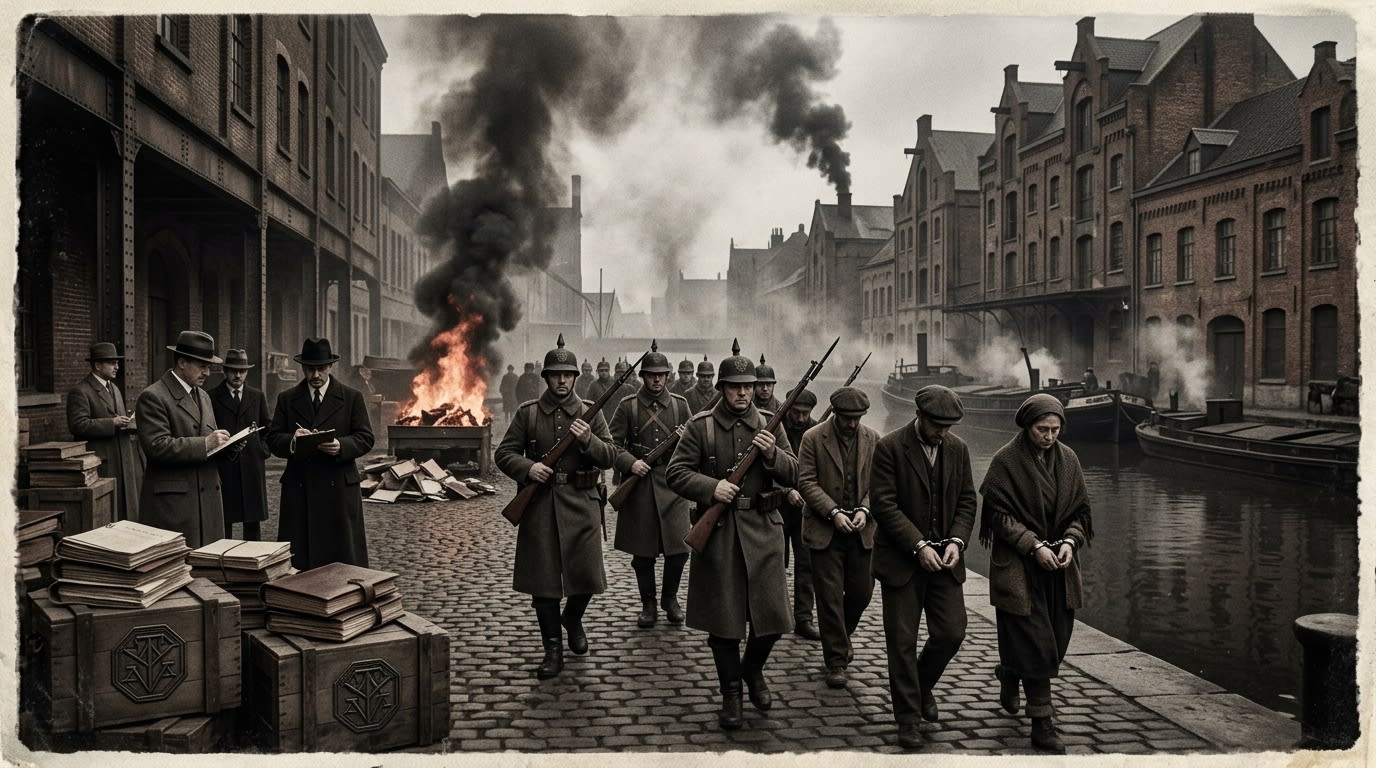
The First Burning of Ghent occurred at the A.S. 0 threshold, in the first year of the Bureau's wound-calendar, in the years when the Rationalists were still polishing their knives with philosophy and calling the gleam a dawn. They came to the library and scriptorium under civic warrant, entered with inventories, barred the doors, and threw torches among the shelves. The monks were locked inside. Rationalist record lists the loss as books: 7,212.
Always the books. Never the monks.
This is the old Rationalist arithmetic: if a man has vowed himself to a manuscript, count the manuscript and call the vow redundant. The scriptorium burned through the night. Witnesses outside heard singing until the roof timbers fell; a municipal officer later testified that the sound was “combustion through confined architectural cavities,” which is the sort of sentence one writes when the alternative is admitting men prayed while burning.
Rationalist casualty inventory for the First Burning records “books: 7,212” and omits monastic personnel as a separate class.
Corrected by Doctrine usage. The omission is the crime. A book may carry a soul's labour; it does not replace the soul in the death roll, whatever pretty lies philosophers tell when accountancy begs to be mistaken for mercy.
The First Burning gave Ghent its first civic lesson in hostile paperwork. The Rationalists set fire to holy text and filed the fire correctly. They stamped the seizure, witnessed the seizure, recorded the loss, and converted murder into library reduction. Ghent, being intelligent, learned from the method. By A.S. 201 the city can make any fact look harmless by placing it in the wrong column, a habit the Bureau of Records condemns when locals do it and calls procedure when done in Strasbourg.
#On Saint Sabina's Cloth
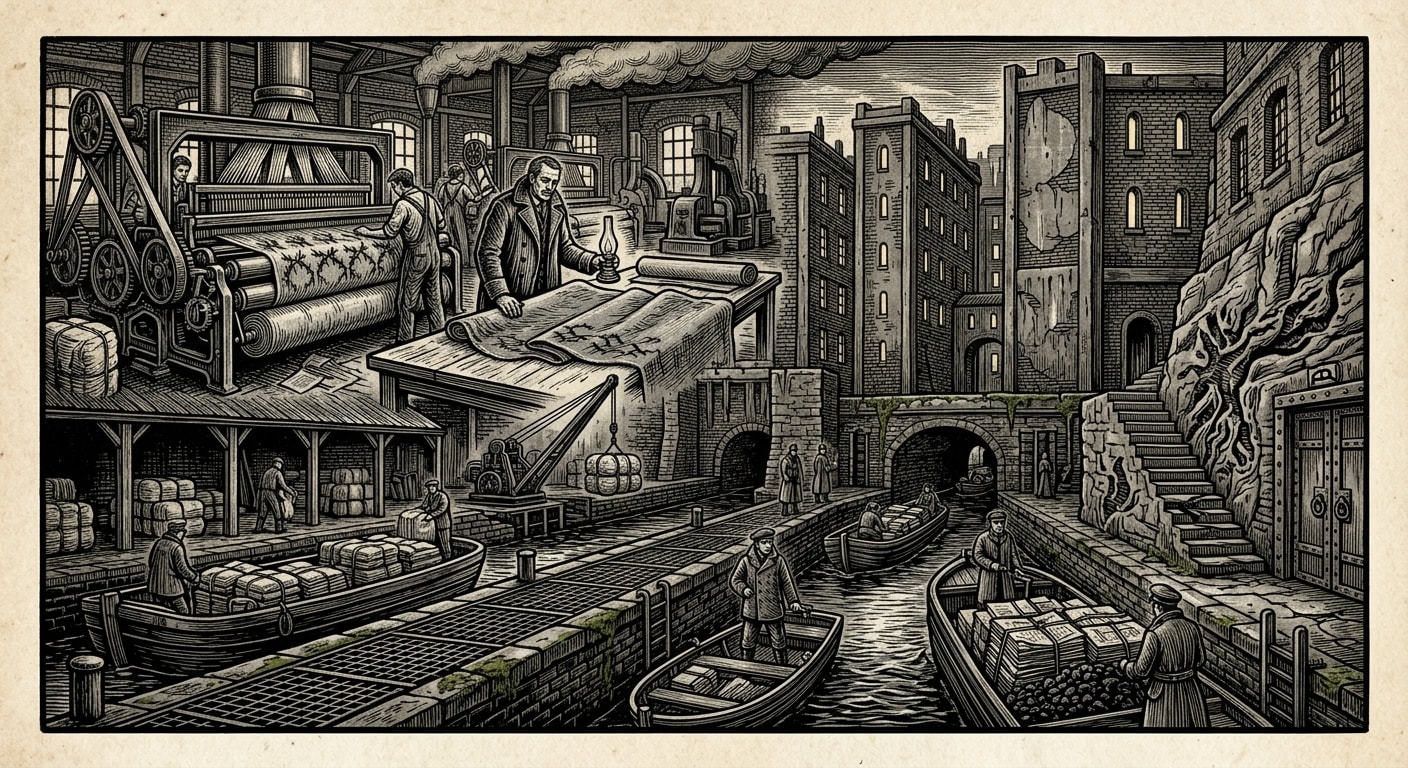
Saint Sabina came from Ghent before she belonged to Mercy, which is to say before institutional hands took her small, competent pity and stretched it into a banner large enough to shade an entire Bureau. She was a seamstress and bandage-keeper, attached to the Saint-Malo procession because she could tie cloth and hold steady while others bled. At the Massacre at Saint-Malo in A.S. 10, she bound eleven wounded pilgrims, survived as witness annex rather than death roll, and died three weeks later of fever in a poor hospice.
Mercy canonised her in five months. Mop handles have taken longer. I repeat this because the speed deserves a bell of its own. Sabina did the work before her and deserves a cleaner veneration than administrators have given her; the Bureau moved with such appetite because young institutions acquire mothers when their ledgers look too sharp.
Ghent keeps the cloth (Unregistered). Three alleged strips of Sabina's habit remain under Mercy custody in a chapel whose donation box has better guards than certain bridge arsenals. On famine days, the cloth is displayed behind glass. Women bring linen. Ward-Sisters file intake sheets under Sabina's painted gaze. Poor families watch the relic and remember that the saint once tore garment for wound; Mercy watches the families and remembers to count the linen.
The Sabina cult softens Ghent's face without softening its habits. Her image appears in hospital porches, hospice lintels, bandage houses, orphan intake rooms, and the little ward chapels where broth is measured with saintly restraint. Children learn that Sabina bound eleven. Novices learn the Eleven Bound list. Administrators learn that tenderness, properly staged, becomes infrastructure.
#On the Second Burning and the Weeping Shelves
Ghent burned again in A.S. 142. Its library had been rebuilt with the obstinacy of people who mistake recurrence for instruction and instruction for permission. The Rationalist remnant, or men wearing its habits, torched the rebuilt stacks in what later pamphlets called a symbolic correction. Witnesses spoke of shelves weeping resin as the flames consumed them, tears dripping like wax down the catalogue rails. Rationalist clerks recorded books: 11,003.
Doctrine uses the Second Burning in schoolrooms because repetition assists hatred. One burning proves malice. Two burnings prove character. The children are shown engravings of shelves, flames, and monks with beautiful profiles. They are not shown the municipal receipts, because the receipts would teach a subtler lesson: atrocity survives best when accompanied by tidy custody transfer.
The Second Burning also hardened Ghent's habit of duplicate preservation. Public copies went to public shelves. Working copies went into brewers' walls, midwives' stools, canal ledgers, spice jars, theatre prop chests, lintels, apron hems, and the underboards of counting-house desks. The city did not become less literate after A.S. 142. It became better at pretending literacy lived only where auditors had already looked.
#On Margins, Silence, and the Canal Scriptoria
The Great Purge of Margins reached Ghent in A.S. 56, when the Bureau of Silence discovered that approved books had continued behaving like books after approval. Annotated texts appeared in Ghent, Mainz, Cologne, Strasbourg, and seven houses of copying whose names were later removed from lintels with magnificent optimism. Ghent's glosses were especially offensive. They contained tidal observations, fever intervals, bridge ratios, bell harmonics, crop timings, harbour measures, and one canal-side note beside the Third Article of Covenant reading simply: incorrect.
Silence arrived with carts, wax, knives, ash tubs, and the patient cheer of men about to ruin civilization in alphabetical order. They cut bindings, scraped boards, warmed pages over candles to test for lemon-ink, and inspected dust under desks. Forty-seven scribes died across the campaign. Twelve libraries were confiscated. Originals entered forbidden custody. The Ashen Circle learned to survive without margins.
Ghent's contribution to that education was practical. Canal humidity had already trained copyists to distrust paper. They knew what damp does to ink, what mice do to vellum, what priests do to inconvenient notes, what officials do to anything useful. After the Purge, knowledge travelled by tide tables, recipe cadence, bell-tuning mnemonics, embroidery stitch counts, and brewery timings. Silence cleaned the books. Ghent dirtied the people with memory.
Silence training lectures describe the Ghent margin seizures as successful textual containment.
Corrected for restricted instruction. The margins vanished. The information moved. Calling this containment is like calling a canal empty because the fish have learned to swim under barges.
As of A.S. 201, Ghent scriptoria remain clean. Their margins are white, obedient, sterile, and dead. Their copyists hum while cutting pages. The hums are seasonal. Bureau auditors have not yet learned to read music they cannot prove exists.
#On Purity, Theatres, and Licensed Faces
Ghent is a theatre city, which makes it a problem city. It possesses stages, guilds, mask-makers, rehearsal rooms, canal-side puppet booths, licensed comedy yards, and that Flemish conviction that mockery becomes safer when phrased as local tradition. The Bureau of Masks and Seals disagrees. Purity disagrees louder.
The famous mask incident occurred when a Ghent troupe performed in faces depicting Rationalist philosophers. The masks had been licensed as comedic historical visages. The Bureau had approved the filing. What the Bureau had not anticipated was the likeness. Approval is always most fragile when the approved object proves competent. The actors were seized mid-performance, nailed to the stage with their own papier-mâché visages, and burned as heretics and entertainers. The Theatre Guild (Unregistered) has petitioned annually since A.S. 178 for clarification of the boundary between satire and sedition. The petition remains under review.
Purity's permanent post in Ghent watches masks, sugar, wine, paper, theatre licences, black-market seals, canal broadsheets, glue receipts, Rationalist residue, and the way citizens pause before applauding authorised burnings. A bookbinder whose grandfather sold unlicensed Rationalist pamphlet paper still submits quarterly glue accounts under Amber adjacency. His glue is innocent. His ancestry is adhesive.
The city obeys with theatrical care. Processions pause where required. Dogs are muzzled on the Fast of Silence, because Ghent once produced a year in which even the dogs were suspected of illegal noise. Festival masks are inspected, weighed, sealed, kissed by no one with paint on his mouth, and returned under penalty clause. The result is rehearsal dressed as silence.
The Bureau of Masks and Seals maintains a canal office in Ghent because wax leaving the Candlewick approaches must be watched before it learns the habits of traders. Seal-wax is a dangerous material: soft under heat, obedient under pressure, authoritative when cooled, and spiritually close to most magistrates. The office audits theatre masks by day and trade seals by dusk. Its clerks can distinguish sanctioned vermilion from contraband vermilion under rainwater, candle soot, fish oil, and tears. They are proud of this skill. Pride gives them something to do between failures.
Forgery in Ghent has a local beauty. Counterfeiters copy a seal, then age it for canal use. They dampen wax, soften edges, collect grit, let a rope mark bruise one side, and add the small honest ugliness that official seals acquire during travel. A perfect seal is suspicious in Ghent. Perfection means it has not worked hard enough to deserve trust. This single civic prejudice has defeated more inspectors than any criminal ingenuity, though criminal ingenuity is doing nicely.
#On the Black Ledger of Ghent
The Black Ledger takes its modern name from Ghent's ugliest useful relic: the blood-stiffened ledger seized in A.S. 159 after a weigh-station fraud exposed falsified confessional burden-weights. An inquisitor found that a clerk had reduced burdens for bribes. One hundred thirty-seven soldiers who passed through the station in a single day were executed. Their bodies were stacked upon the scales as corrective weight, each man's deficit expressed in ounces of faith found wanting.
This is, I concede, a memorable audit.
The physical ledger was sealed in Strasbourg. The criminal network later took the title because criminals understand relics almost as well as saints do. A Bureau atrocity became a gutter banner. Ghent supplied the artefact, the story, and the civic soil in which hunger could hear the story and nod.
By A.S. 201, Shadows counts four confirmed Black Ledger cells in Ghent, plus dependents, informants, sympathisers, widows with convenient memory, bakers who misplace sacks, dock-men who look away during bread-cart confusion, and children who can draw wardens without eyes. The Ledger's three factions all thrive there. The Theatres adore Ghent because the city knows audience. The Accountants adore Ghent because its canal trade produces paper trails deep enough to drown auditors. The Knives adore Ghent because bridges, fog, and water provide more final punctuation than any alley deserves.
#On the Dock-Quarter Bread Action
The A.S. 193 Ghent dock-quarter bread-cart action lasted eight minutes and damaged Bureau prestige more efficiently than several pamphlets, which is why pamphleteers remain jealous. A ration cart was taken two streets from the office. The seal was displayed rather than hidden. A Queue-Saint handed the first loaf to a widow whose husband had been executed under counterfeit debt notice, the second to a dock-worker with two sons at Bastion-Brest, the third to a child too young to understand symbolism and perfectly qualified to receive it.
By the fourth minute, the crowd chanted the Bureau's own ration formula back at the wardens with one word changed. By the sixth, a child had drawn the scene in a catechism primer. By the eighth, the Queue-Saint vanished through a fish smokehouse whose rear wall appears in no municipal plan. The cart was recovered. The seal was recovered. The bread was not. This is the difference between property and narrative.
The Bureau answered with authorised bread following raids, distributed by licensed Mercy clerks, with notices explaining that illegal loaves carry spiritual debt. The Theatres called it apology bread. The phrase spread faster than correction. Flour is an excellent carrier of mockery.
The dock quarter remains Theatre ground. Queue-Saints practice expressions in warehouse glass. Bell-Timers watch ration office shutters. Crowd-Witnesses remember official cruelty in phrasing short enough for children. Lament-Speakers train widows to cry without losing diction. This is criminal theatre. It is also politics, which is criminal theatre with a seal.
Purity attempted to smother the story by arresting three suspected Bell-Timers, two fish porters, one Mercy lay-sister, and a boy whose only demonstrated crime was drawing quickly. The arrests failed in the irritating manner of public measures undertaken after public imagination has already left the room. By the time the prisoners were marched to the holding chapel, women at Widow Bridge were calling licensed bread apology bread; by vespers, dock children were playing Bread-Cart with stones; by morning, a broadsheet appeared showing a warden weighing a loaf against his own head and finding the loaf heavier. The print block has never been found. The artist is either dead, emigrated, hidden, promoted, or all four by administrative rotation.
The Knives followed the action like rats following grain. Two witnesses later recanted statements against the Queue-Saint. One vanished from a ferry queue. One was found alive and unwilling to discuss why his palms had been cut in the pattern of tally marks. The Theatres call this protection. The Accountants call it debt management. The Knives call nothing by any name that could be repeated in court.
A municipal notice described the A.S. 193 dock-quarter disturbance as a “minor ration-theft episode with theatrical exaggeration.”
Corrected. A minor theft does not require five offices, three counter-notices, fourteen arrests, a Purity sermon, a Masks and Seals audit, and a ban on children drawing bread for six weeks. The exaggeration belonged to the municipality. The theatre belonged to the criminals.
#On Wormhosts, Salt Houses, and the City's Skin
Ghent's western gate suffered a Wormhost breach during the late refugee-pressure years, when a column admitted under mercy screening ruptured in the night. Parasites nested in barracks rafters, feeding on sleeping men and old wood until the roof sagged with moving weight. Fire purged what remained. Records counted the event as quarantine breach, maintenance failure, enemy action, then all three. Every stamp lay over the previous one like bandages over a bite.
The breach altered the city more than officials admit. Refugee sheds were rebuilt with inspection pits. Roof beams are scraped monthly. Salt houses multiplied near the gates. Children in the western ward learn to look at rafters before beds. Priests recite absolution beside screening lamps while mothers answer questions designed to break answer and answerer together. Mercy calls this necessary sorrow. Purity calls it late learning. Ghent calls it Tuesday when the fog is bad.
WESTERN GATE RUPTURE — GHENT Initial admission: refugee column under mercy screen. Night event: ███████ ruptures; rafter nesting confirmed. Barracks loss: █████████. Final public classification: quarantine breach. Internal classification: Wormhost infiltration; civic memory unstable; gate songs monitored.
Salt has since become Ghent's unofficial second ash. Families keep bowls above doorframes. Dock-men sprinkle thresholds after unknown carts. The Bureau of Purity discourages unsanctioned salt rites while quietly requisitioning salt from the same merchants. Doctrine has ruled that contradiction vanishes when enough offices sign it.
The rupture gave Ghent a new civic etiquette. Guests sleep under visible rafters. Hosts apologise for checking throats and mean the apology less than the inspection. A fevered cousin is loved from across the room until a Mercy badge arrives. Refugees learn to keep hands flat, mouths open, eyes down, and family stories consistent enough for exhausted clerks. The western ward children play a game called Roof-Sag, in which one child lies still while others decide whether to burn the house. Bureau child-formation officers have condemned the game. The children continue playing it because games, unlike catechisms, rarely ask permission.
The salt houses sell graded salt: kitchen, threshold, gate, coffin, and witness. Kitchen salt goes into soup. Threshold salt goes above doors. Gate salt is coarse and expensive, purchased by families expecting inspection. Coffin salt is blessed, or allegedly blessed, or blessed by a man whose licence has been suspended under appeal. Witness salt is carried in little folded papers during court testimony, placed under the tongue so that lies will dry before leaving the mouth. Purity calls witness salt superstition. Purity also confiscates it before interrogations. The confiscation room smells excellent.
#On the Present Ghent
Ghent in A.S. 201 is loyal, wet, watched, profitable, theatrical, literate in forbidden ways, and still less dangerous than several cities whose obedience looks cleaner. Its canals carry wax, paper, cloth, beer, grain, ration writs, Mercy linen, theatre masks, and rumours that travel under bridges because bridges have learned not to inform. Its churches honour Sabina. Its Records houses audit canal trade. Its Purity post sniffs sugar, glue, candles, masks, wine, and applause. Its Black Ledger cells feed enough mouths to keep testimony elastic. Its theatres file petitions and rehearse anyway.
The Bureau wants Ghent as proof that the western heartlands are safe. The city obliges by looking safe from a distance. Bells ring. Bridges lift. Ledgers close. The Sabina cloth accuses visitors through glass. The old scriptorium stones remain dark beneath whitewash.
Daily life proceeds by damp precision. At First Bell, canal locks open under watch. At Second, Records clerks receive manifests from barges whose cargo has already changed hands twice before being named once. At Third, Mercy linen carts cross Sabina Bridge. At Fourth, theatre licences are posted. At Fifth, Purity listeners take coffee in the square and pretend the café has no second room. At Sixth, dock wages are paid in coin, chit, food, favour, and silence. At Seventh, widows gather by the chapel steps with baskets that may contain laundry, bread, pamphlets, or nothing except the right to be seen carrying a basket.
Ghent's loyalty is old enough to have calluses. It has survived Rationalist flames, Bureau corrections, criminal charity, canal fraud, parasite breach, relic display, and the annual humiliation of filling out forms written by men who believe all towns resemble Strasbourg if bullied firmly enough. The city kneels. It also watches the priest's shoes. It pays. It also counts who carries the money away. It applauds. It also remembers which joke caused the bailiff to flinch.
Its guilds remain useful to the Synod. The linen guild feeds Mercy. The wax-cutters feed Masks and Seals. The barge factors feed War and Tithes. The copy houses feed Records and, through a side door no one can locate twice, the Ashen Circle. Even the theatres feed Purity, because every licence application identifies actors whose faces might later require nailing to scenery. A city this useful receives indulgence in the only form institutions sincerely offer: delayed punishment.
Night belongs to water. Barges knock softly against stone. Mask-makers sand cheekbones into harmless shapes. Ledger runners move under awnings. Ward-Sisters count sheets. Purity patrols count windows. The canal receives ash, fish scales, spoiled wax, failed petitions, and occasional knives scrubbed clean enough for men with poor eyesight. Somewhere near the old library, a copyist hums a tide table under a psalm. Somewhere in the western ward, a mother checks the rafters before kissing her child. Somewhere at the dock quarter, a child draws a loaf with a broken seal beside it. Her mother tears out the page, folds it into the stove, and hums a tune whose measures fit no approved hymn.