

Reverse Index
Referencing “Aachen”
Every codex entry that links to Aachen. 27 entries.
Return to Aachen
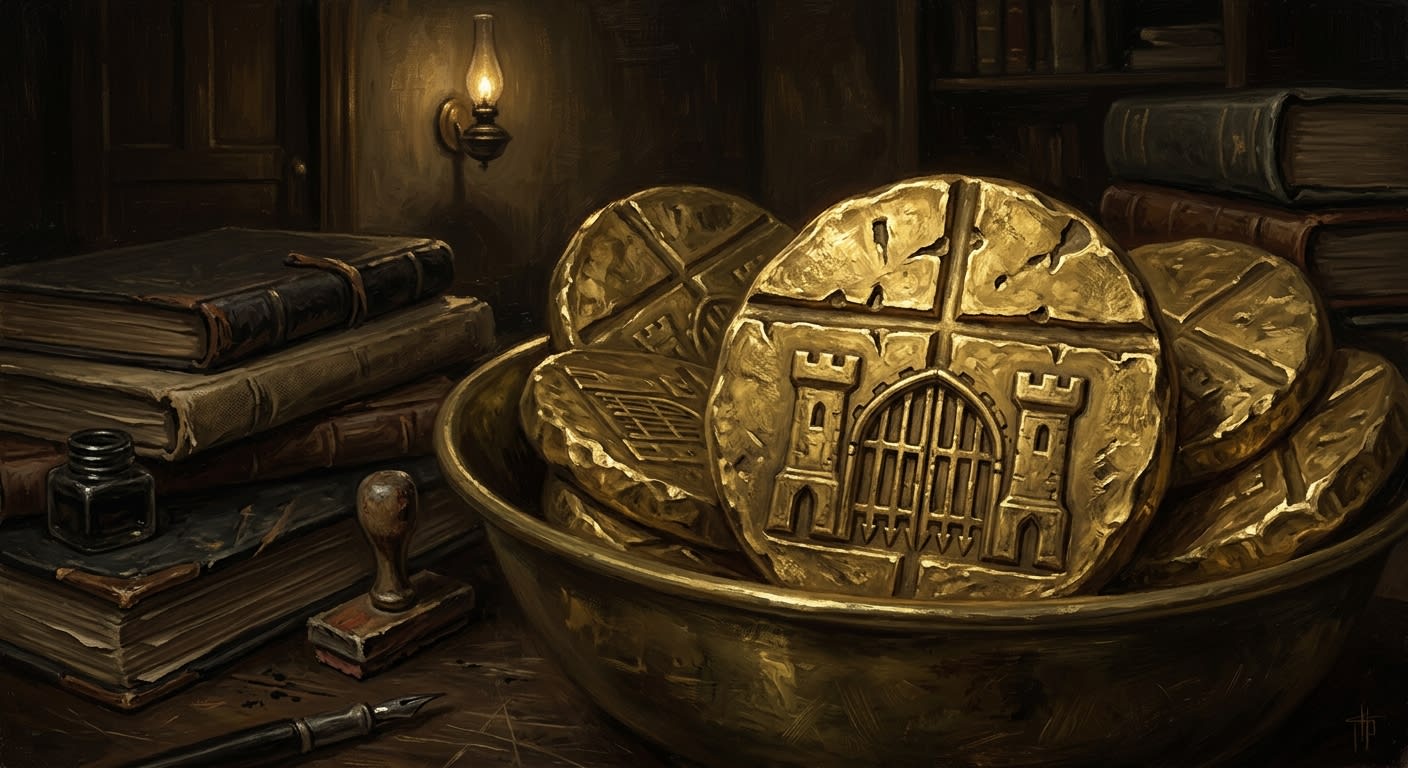
Aachen Gate-Penny
A saint's housing made small enough to buy boot grease
The Aachen gate-penny is reliquary gold made into emergency currency: a closed gate, a cross-groove, and a city’s old betrayal priced by the handful.
Codex Ref. V.2.04-160
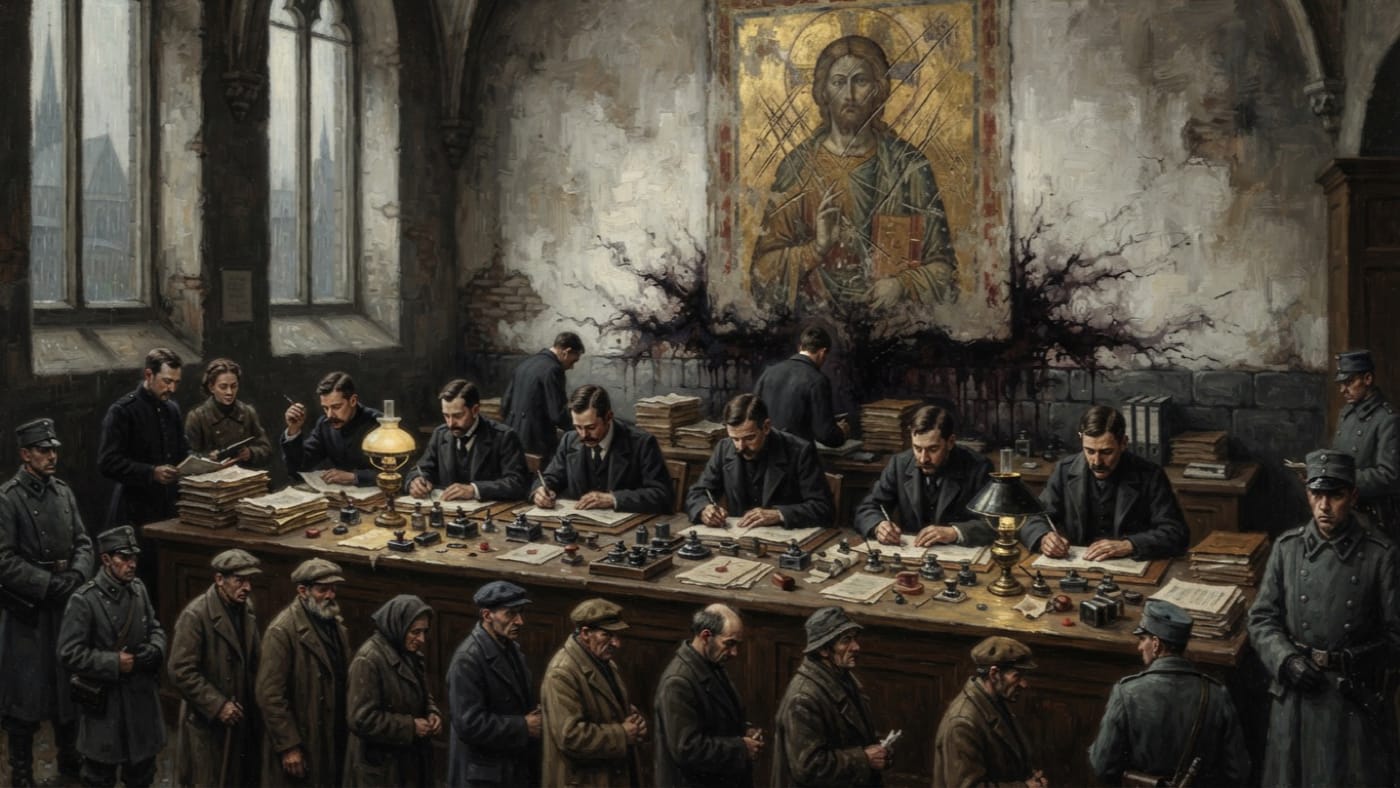
Chapel of the Crowned Seat
Where confiscation acquired a halo
Rationalist clerks signed away Aachen's property beneath a scratched halo. The Chapel of the Crowned Seat's wall darkens every Saint Bartholomew; administration leaves a stain.
Codex Ref. II.2.02-002
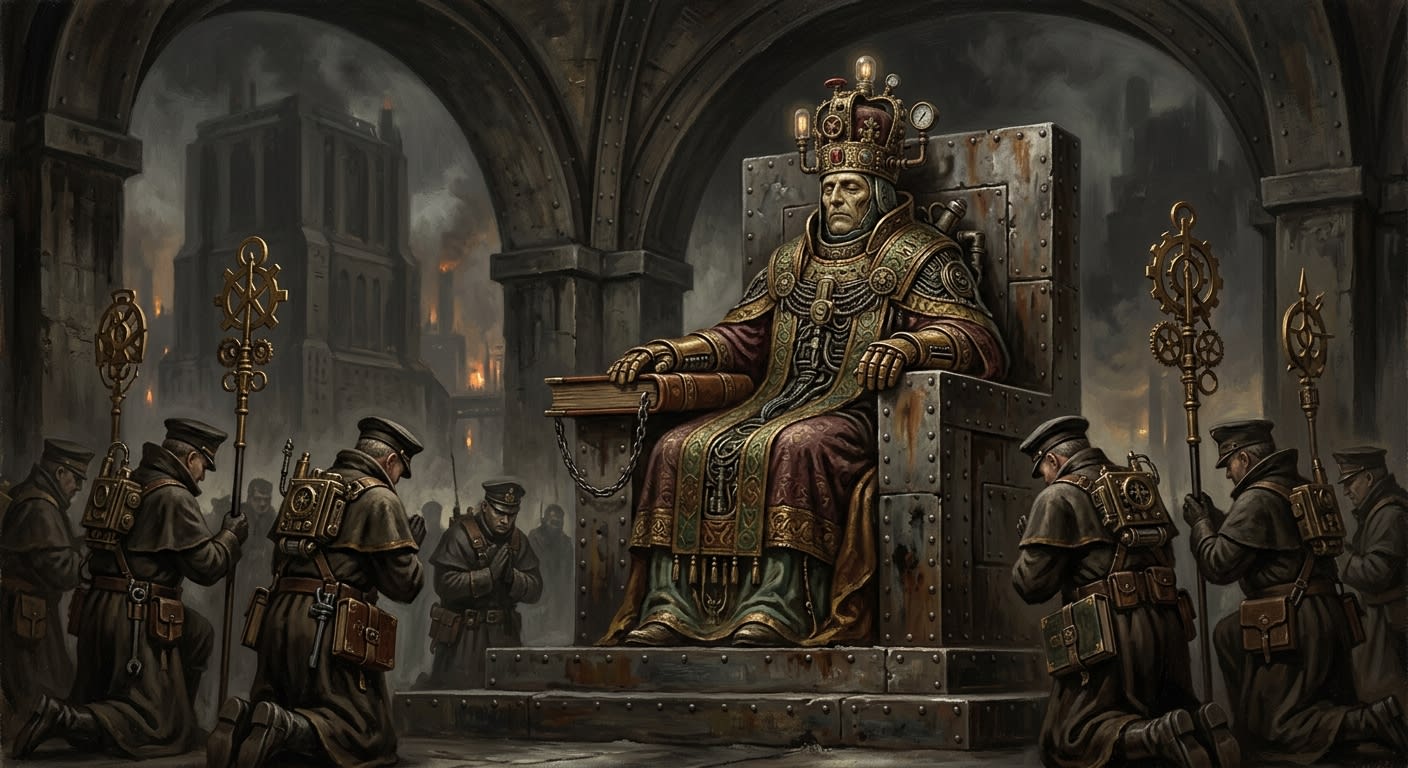
Charlemagne
The dead emperor conscripted as evidence after the gate was sold
Charlemagne is honoured as precursor, not rival: the dead emperor whose Aachen throne survived Guillaume, Verdane, and every provincial fantasy of a crown above the Ledger.
Codex Ref. III.2.01-000
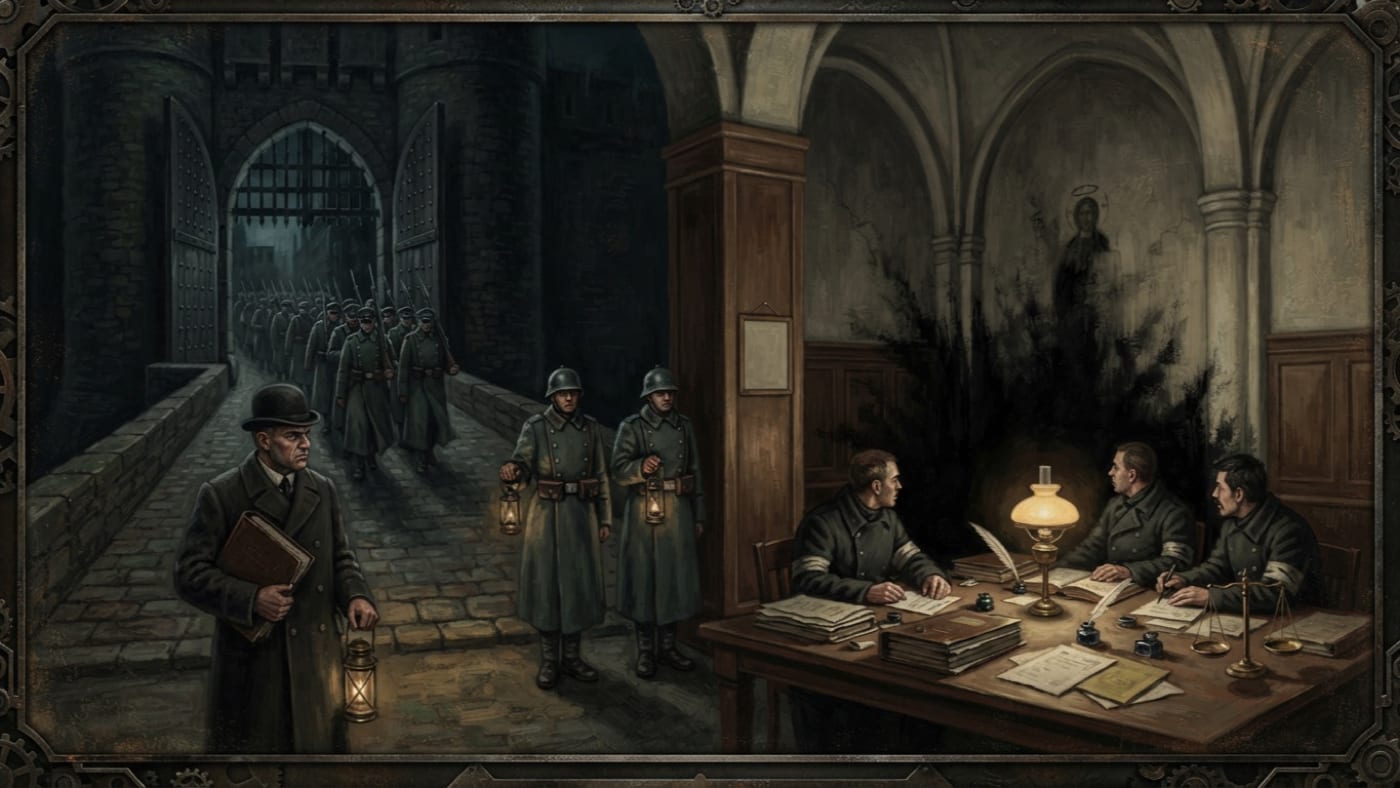
Feast of Saint Bartholomew
One opening, one stain
Aachen opened its western gate at midnight on this feast in A.S. 25. Each year, the former confiscation office turns ink-dark. The Bureau records both occurrences; it has not ruled on the stain.
Codex Ref. VII.8.10-025
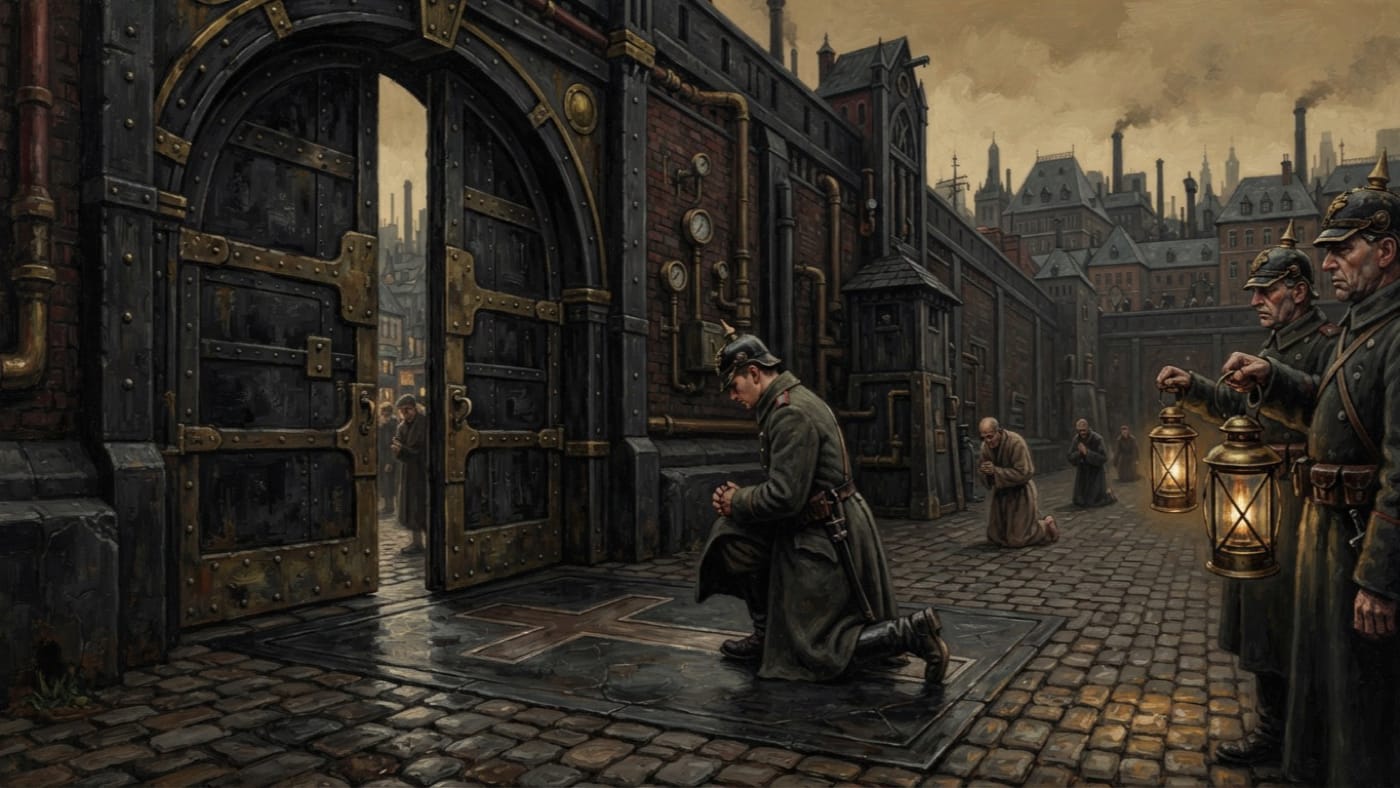
Gate Litany
Forty-seven clauses and no release
At Aachen's western gate, forty-seven clauses turn a recruit's innocence into an obligation. The gate opened in A.S. 25; the knees still answer for it.
Codex Ref. II.2.02-002
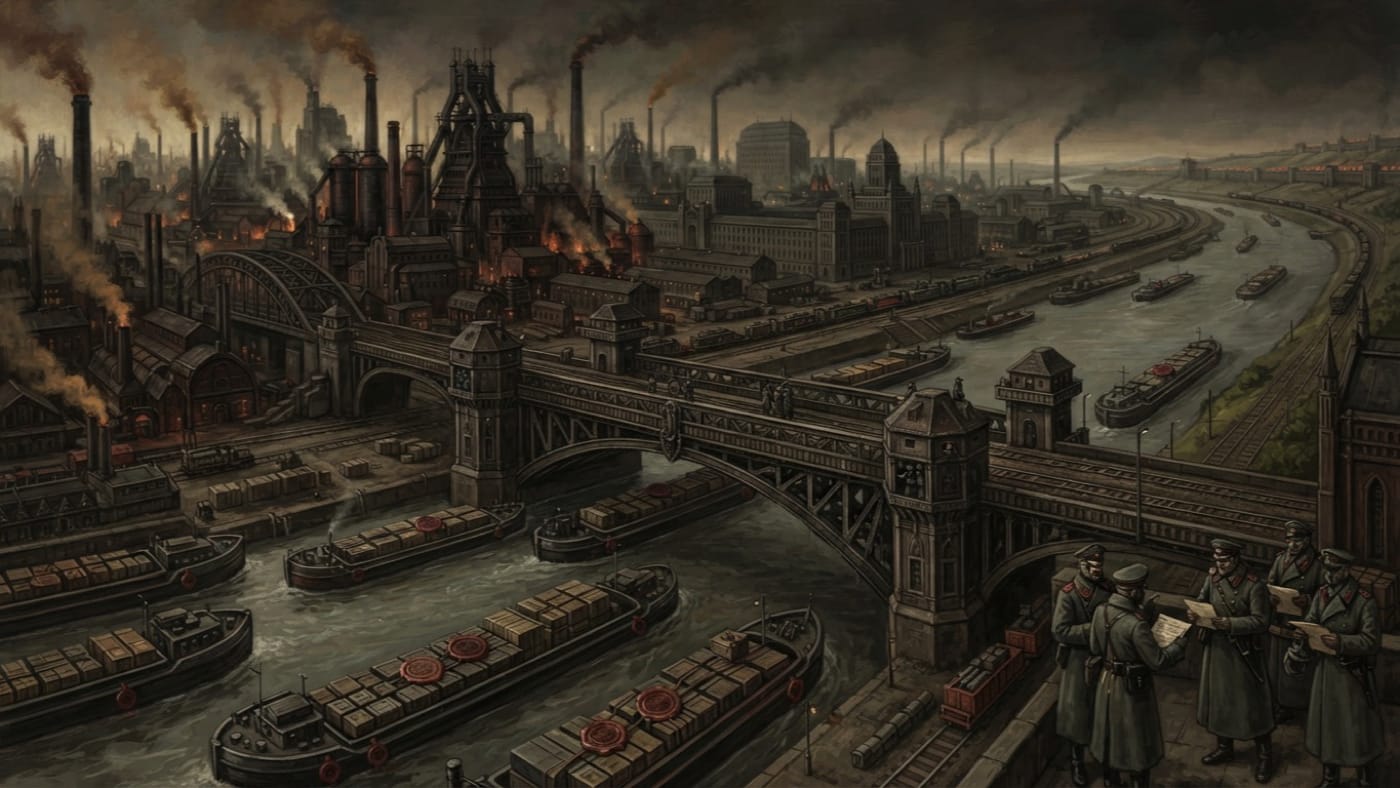
Germany
The heartland that supplies the frontier and answers to several seals
Germany in A.S. 201: the Zone Two heartland of taxed rivers, singing furnaces and military depots. The old borders were erased; the territory still supplies the frontier, and every cargo requires a seal.
Codex Ref. II.6.01-201
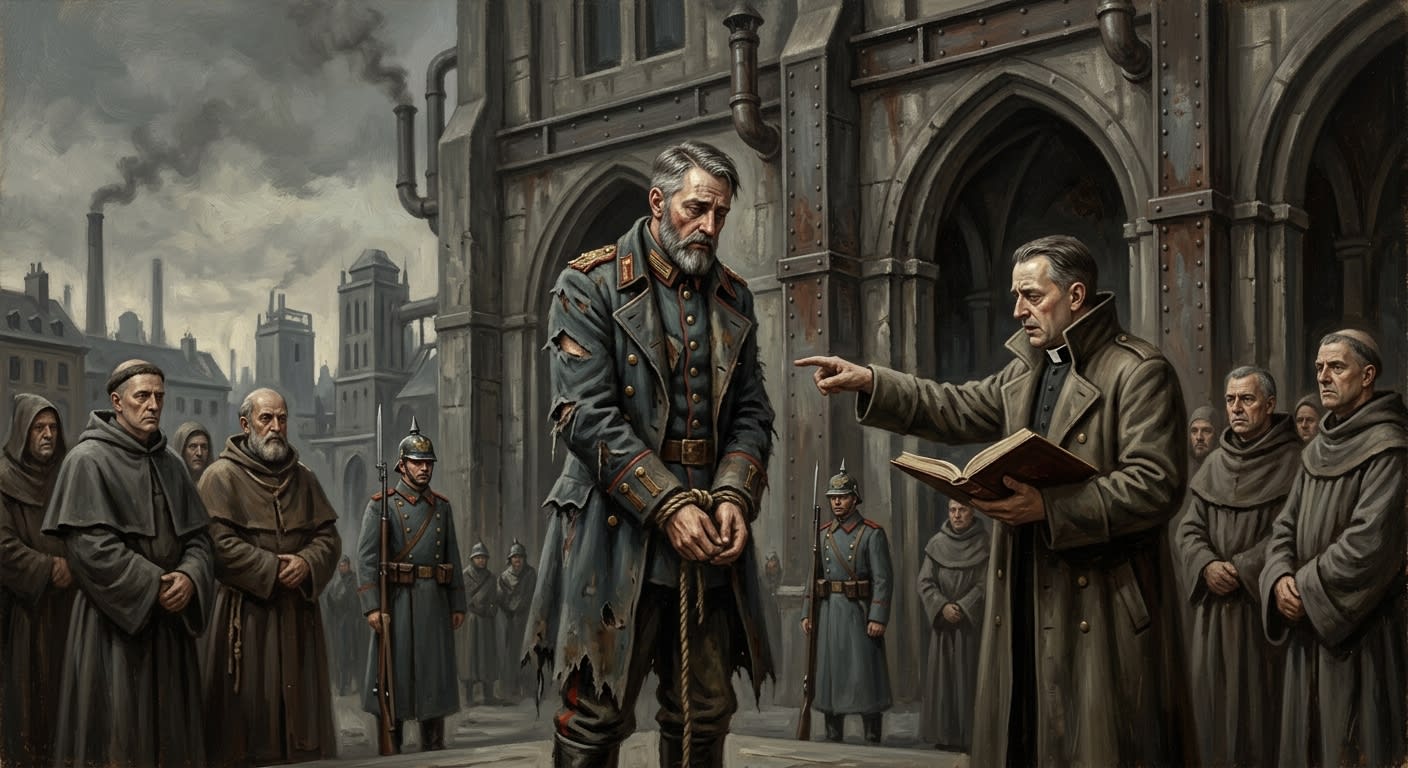
Guillaume of Aachen
The man who opened a gate and was closed by the Ledger
Lord-Protector Guillaume surrendered Aachen in A.S. 25, severed the Rhine approaches, and became the Synod's cleanest lesson in treason, nullity, and administrative damnation.
Codex Ref. III.2.01-123
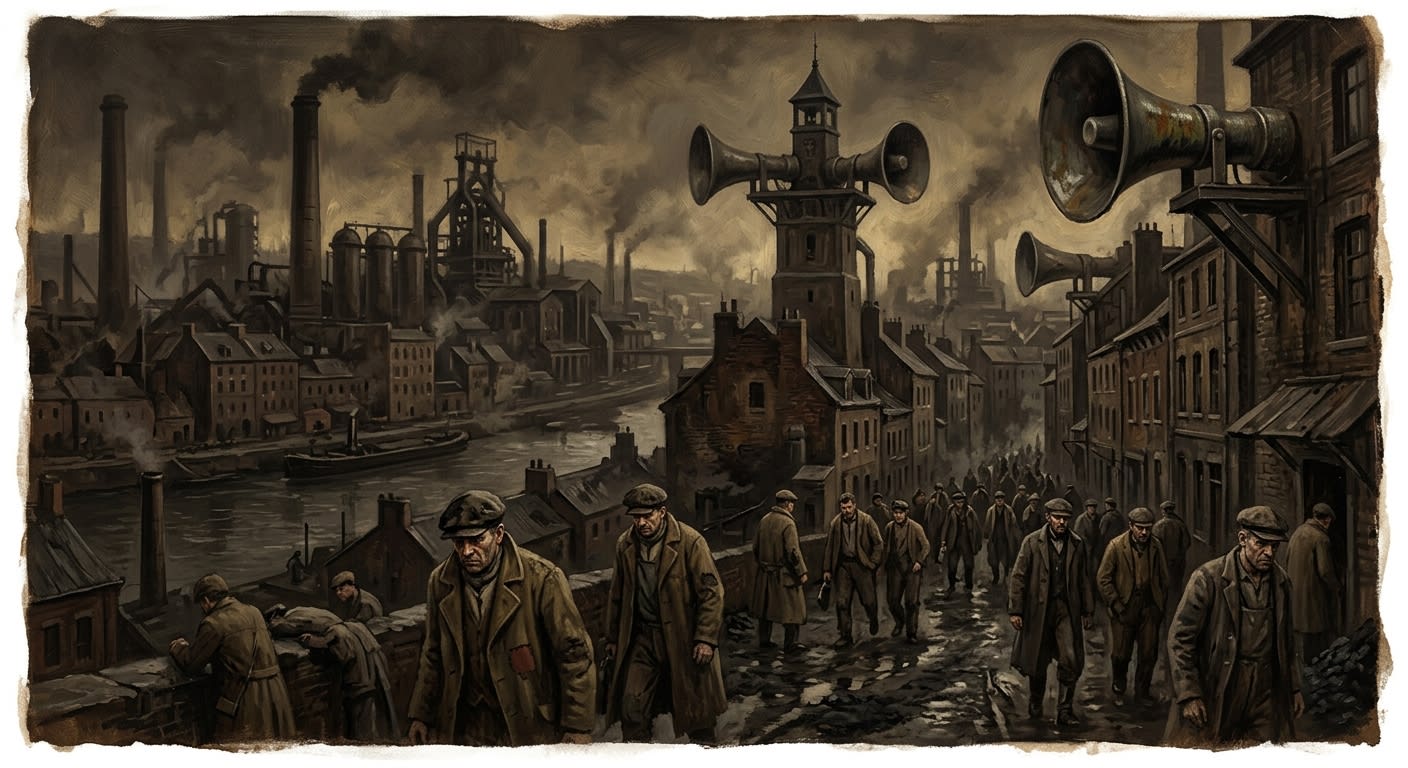
Liège
Where the bell was broken and the horn learned obedience
Liège, soot-black industrial city of the Meuse, lost its shift-bells in A.S. 108 after miners rang survival without licence; the horns remain ugly, lawful, and obeyed.
Codex Ref. II.2.03-108
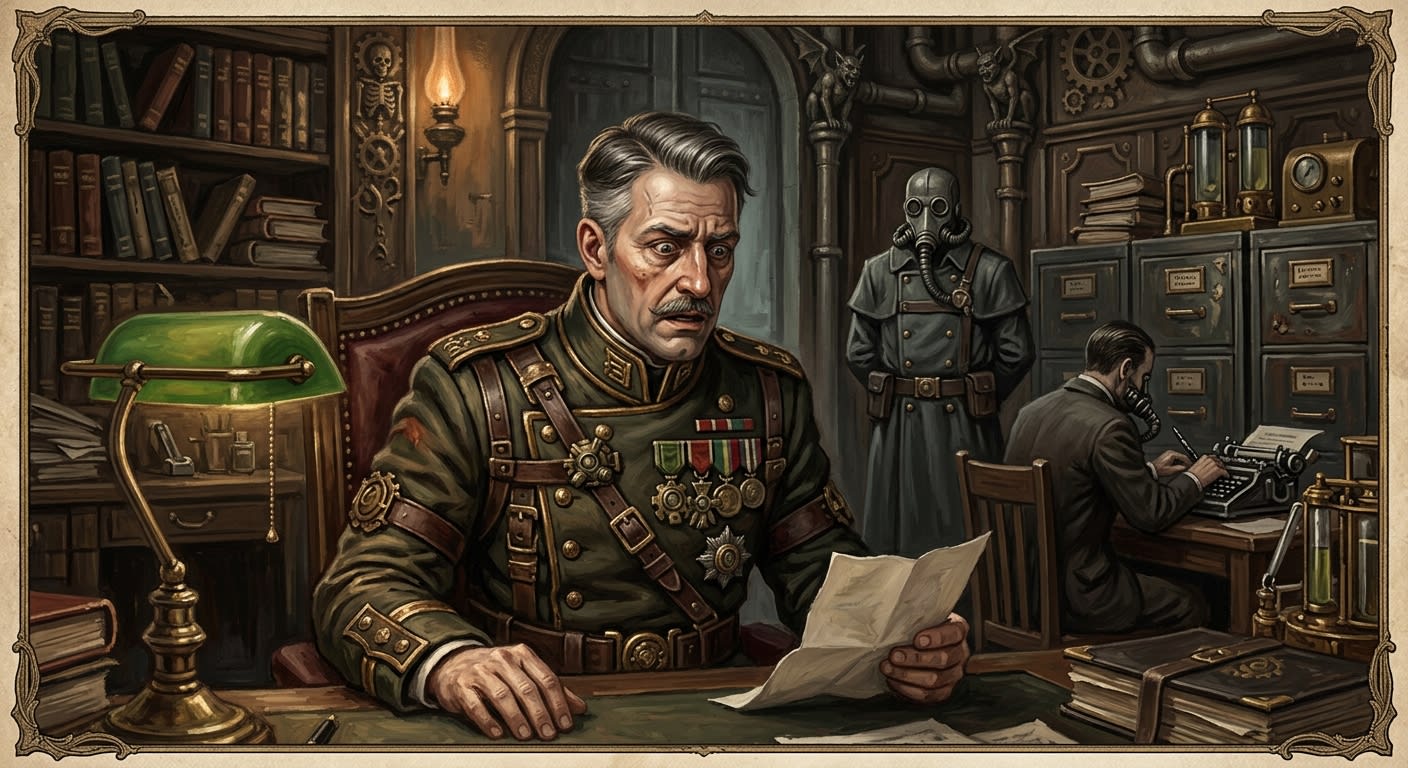
Lord-Protector Guillaume
The gate-seller who mistook a palace for survival
Guillaume sold Aachen for Lowlands dominion, sent a proxy to Regensburg, and learned too late that the Bureau's cleanest executions are grammatical.
Codex Ref. III.2.06-003
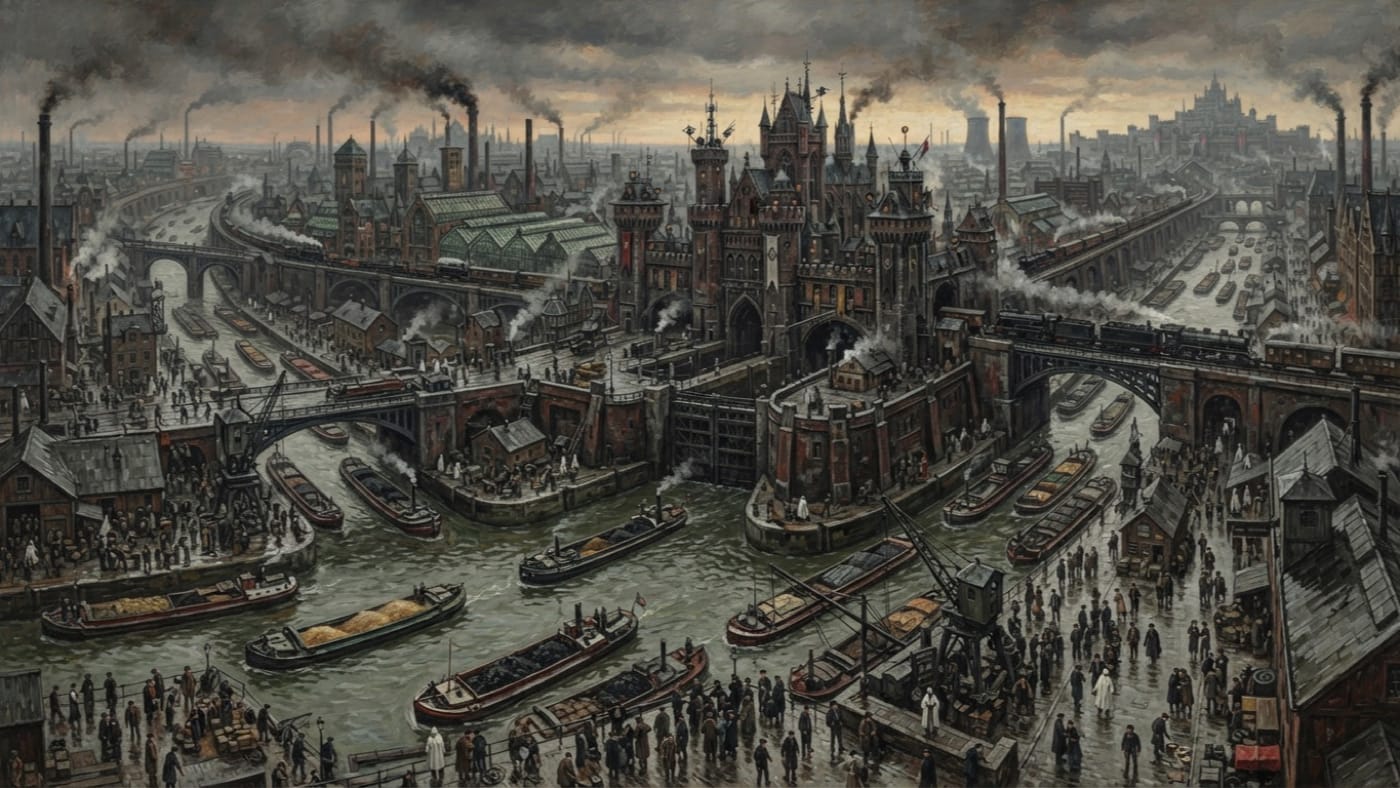
Lowlands
The country promised for a gate
The Synod's Lowlands move grain, cloth and credit through Bruges, Ghent and Antwerp. Guillaume was promised dominion for Aachen's gate; delivery remains uncertified.
Codex Ref. II.1.08-001
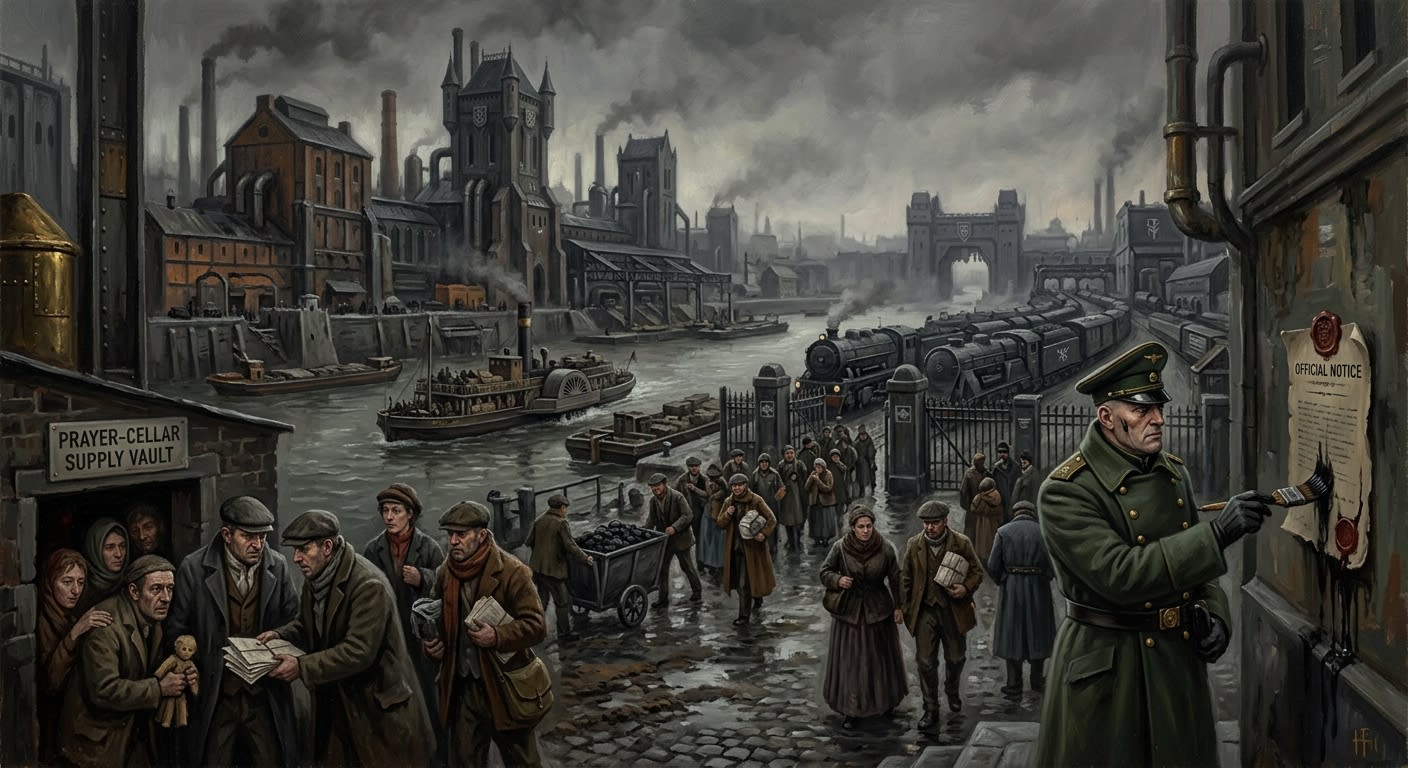
Maastricht
The sleeve beside Aachen's knife
Maastricht survived by adjacency: feeding roads to Aachen, relabelling prayer-cellars, selling shame politely, and teaching Hungry Ink how seals can scream.
Codex Ref. II.1.07-025
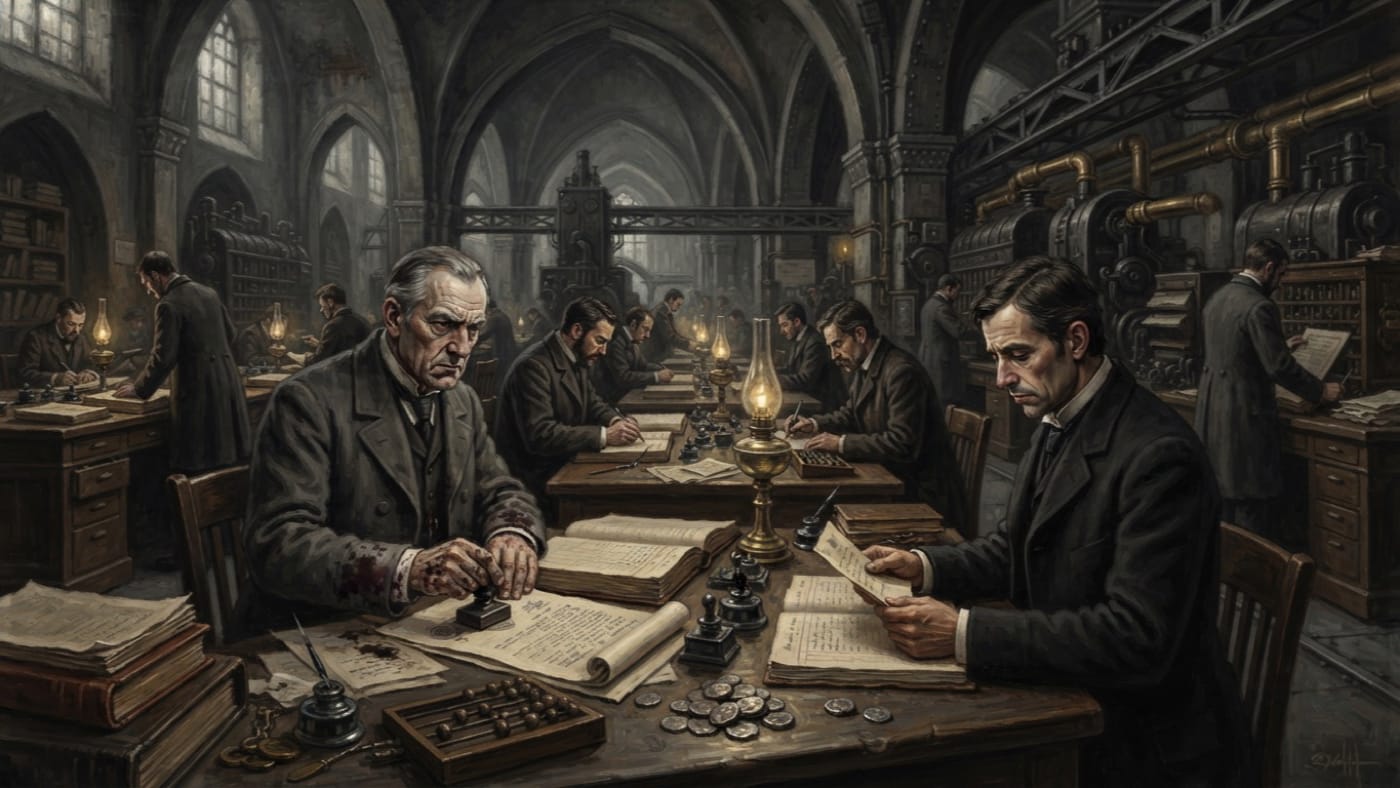
Memory Levy
The receipt closes the payment; Aachen's account stays open
Aachen's merchants pay for a gate they never opened. Tithes enters the memory levy beside ordinary duties, permanent pending moral improvement. A receipt settles payment; it does not absolve the city.
Codex Ref. XIII.1.92-002
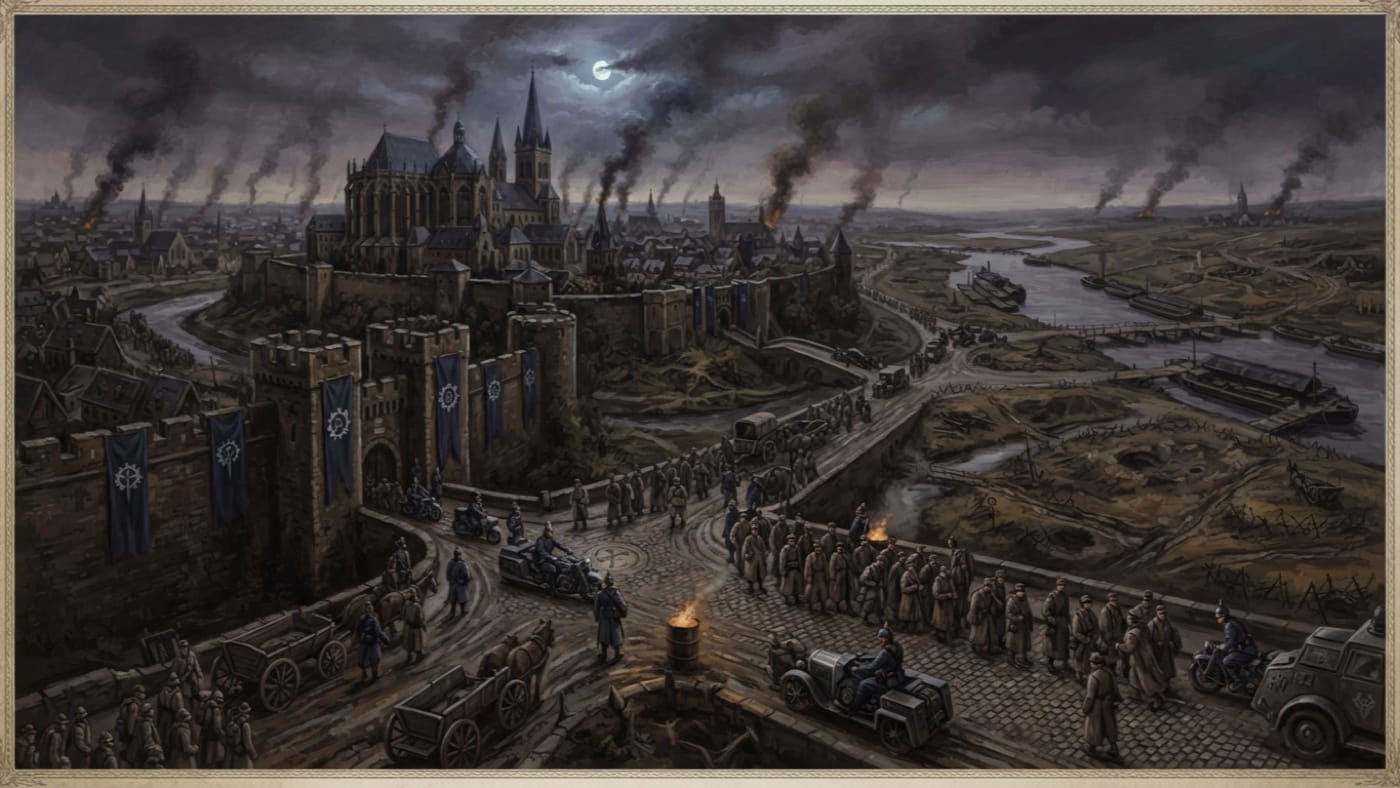
Northern Coalition
The Front Guillaume Sold for a Promise
The faithful's northern command lost its roads, stores and future when Guillaume sold Aachen in A.S. 25. The soldiers owed bread received a lesson in noble honour.
Codex Ref. VIII.6.02-025
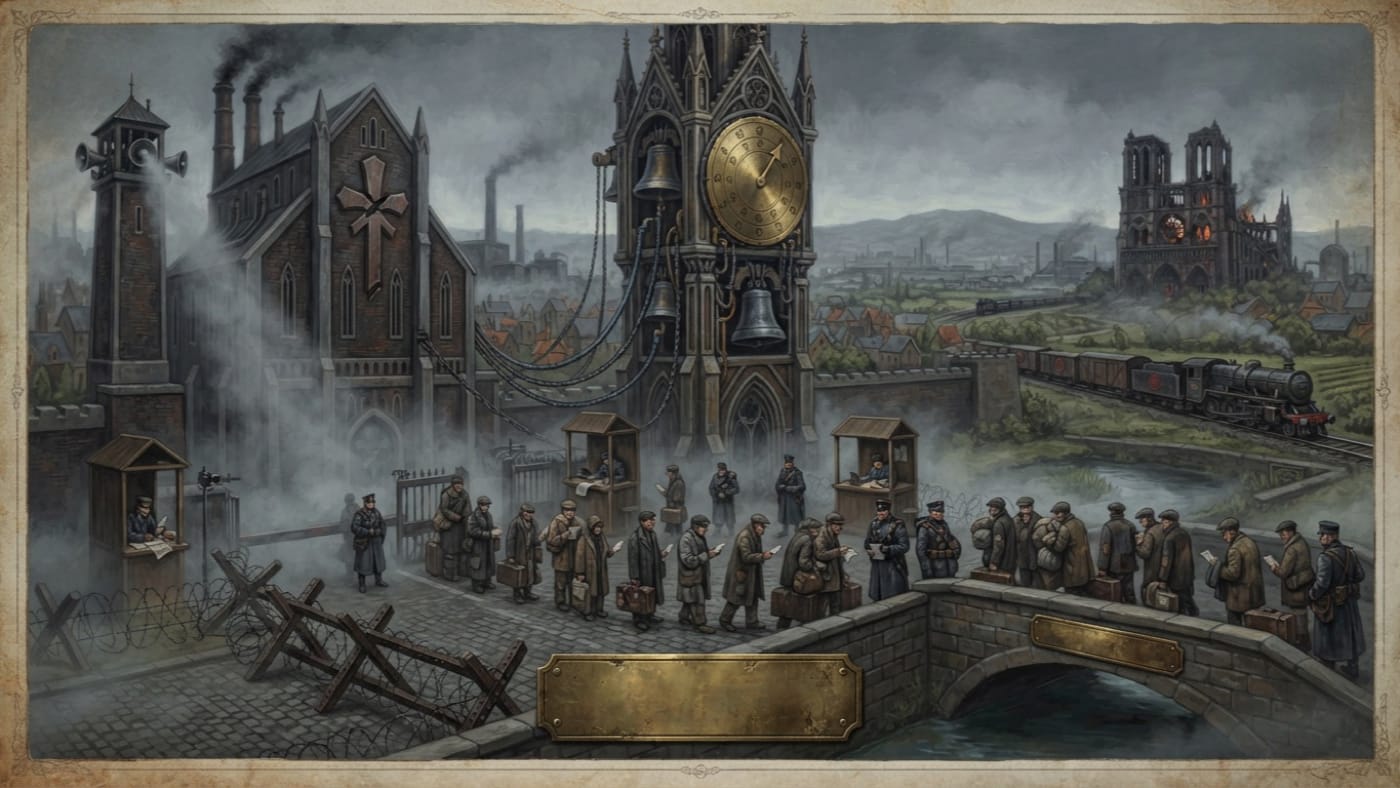
Northern France
Lost through a German gate, recovered parish by parish
Much of northern France fell after Aachen opened in A.S. 25. Recovered parish by parish, the country now pays tithes, carries papers, and calls supervision safety.
Codex Ref. II.1.09-025
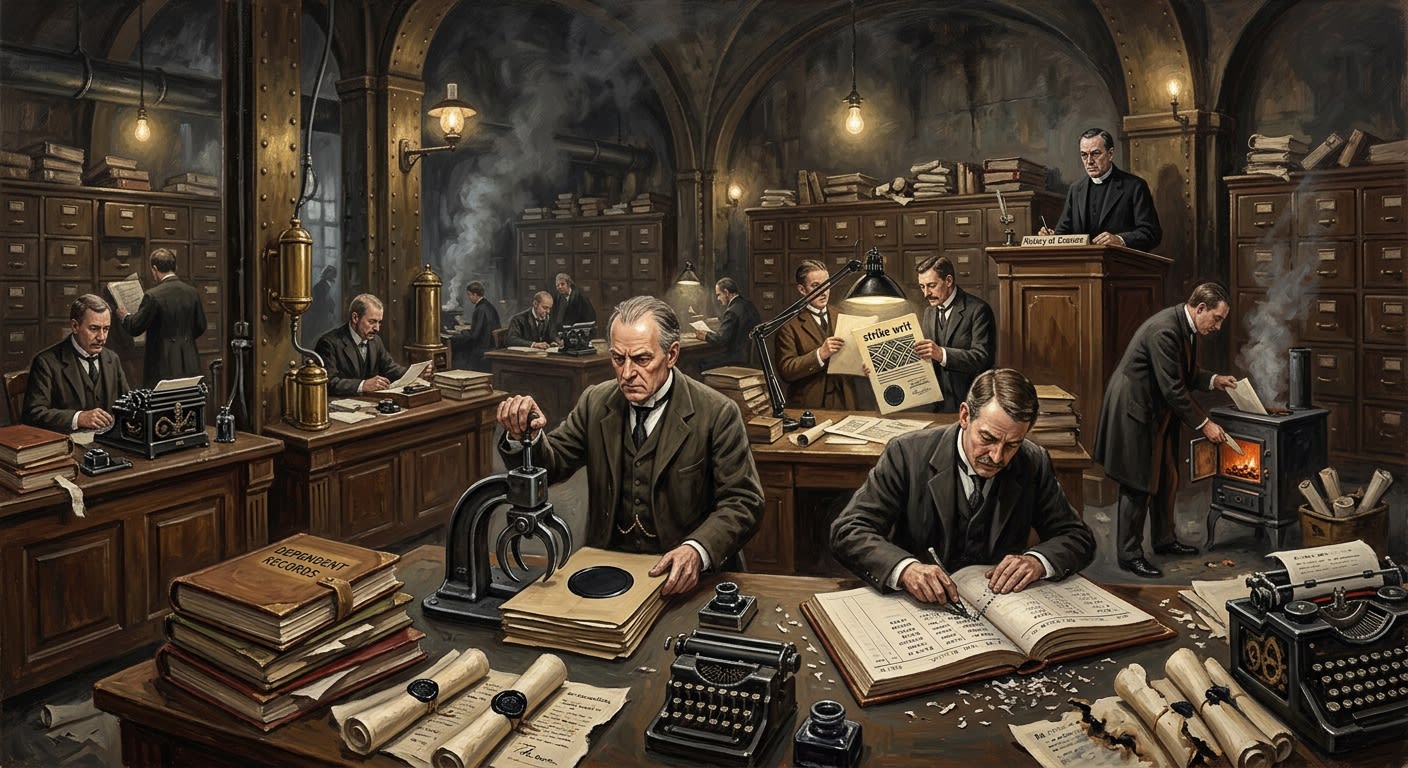
Office of Nullity
The knife kept inside the book
Sub-office of the Bureau of Records governing Erasure Notaries, strike writs, dependent ledgers, black seals, and the civic art of making a person unprovable.
Codex Ref. XIII.1.70-001
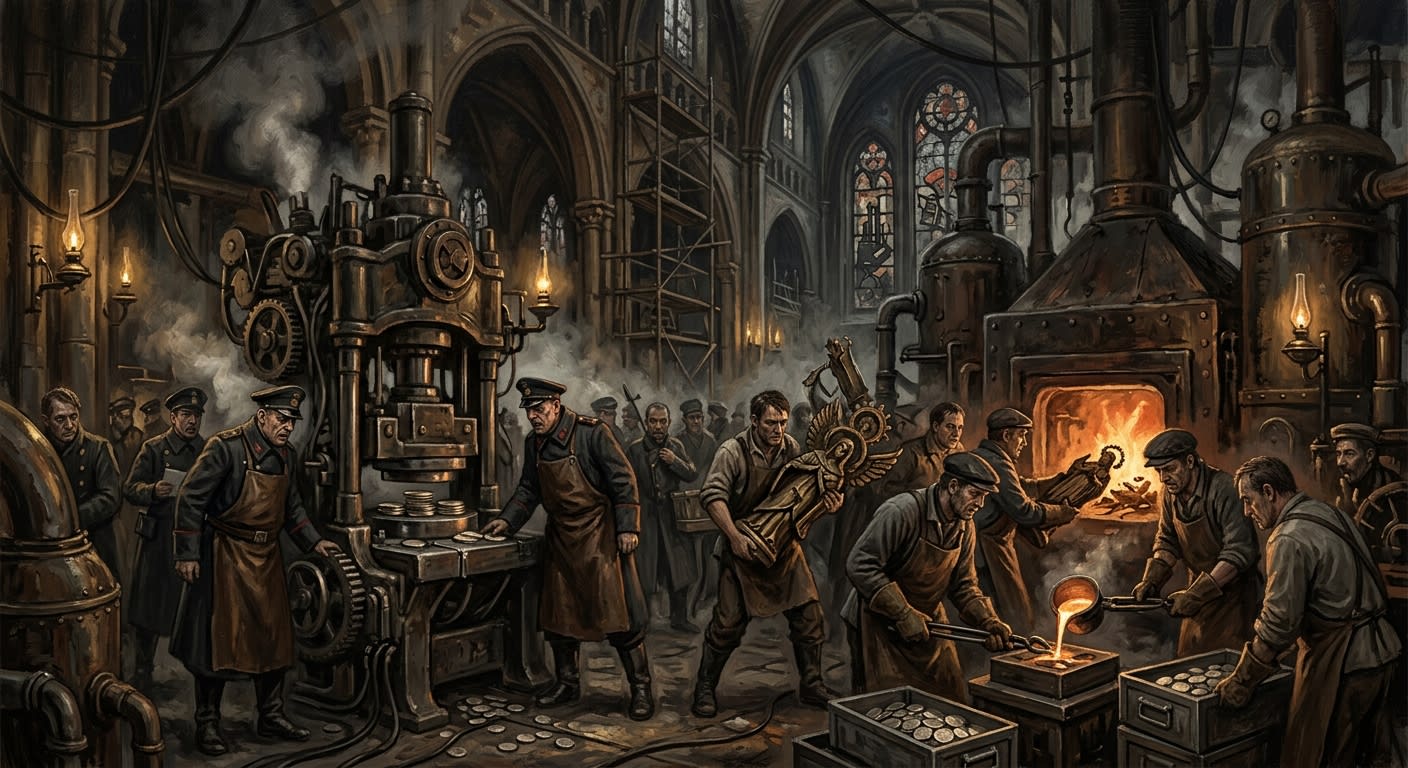
Panic of Wrath's March
Wrath did not enter Aachen; Aachen paid anyway
A.S. 160 gave Aachen no siege, no breach, and no Maldrake at the gate — only fear hot enough for Tithes to melt saints into coin.
Codex Ref. VII.8.10-160
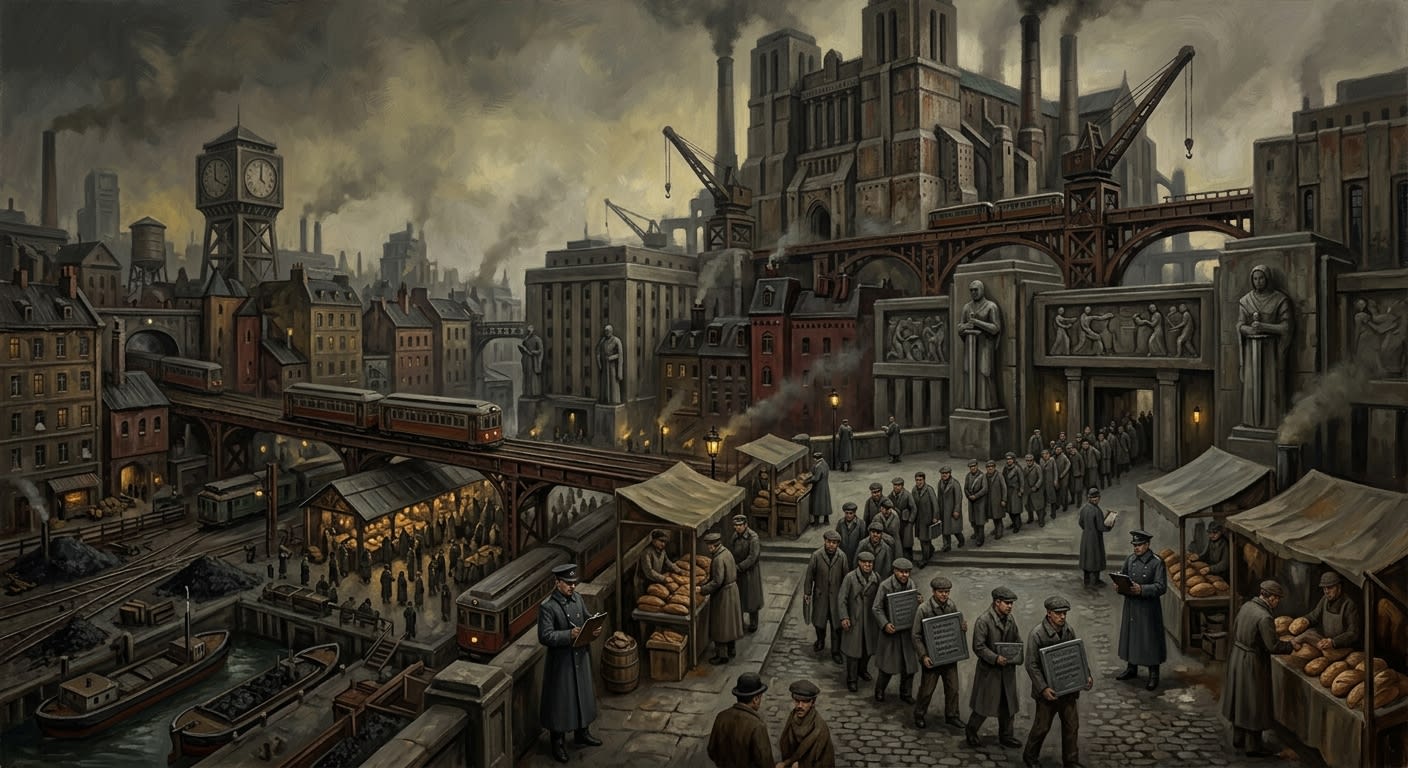
Regensburg
The city that sold false dawn by the plaque and glass
Regensburg hosted Reason's false triumph, sold bread to signatories and plaques to penitents, and still rehearses its profitable disgrace under Bureau watch.
Codex Ref. II.2.03-030
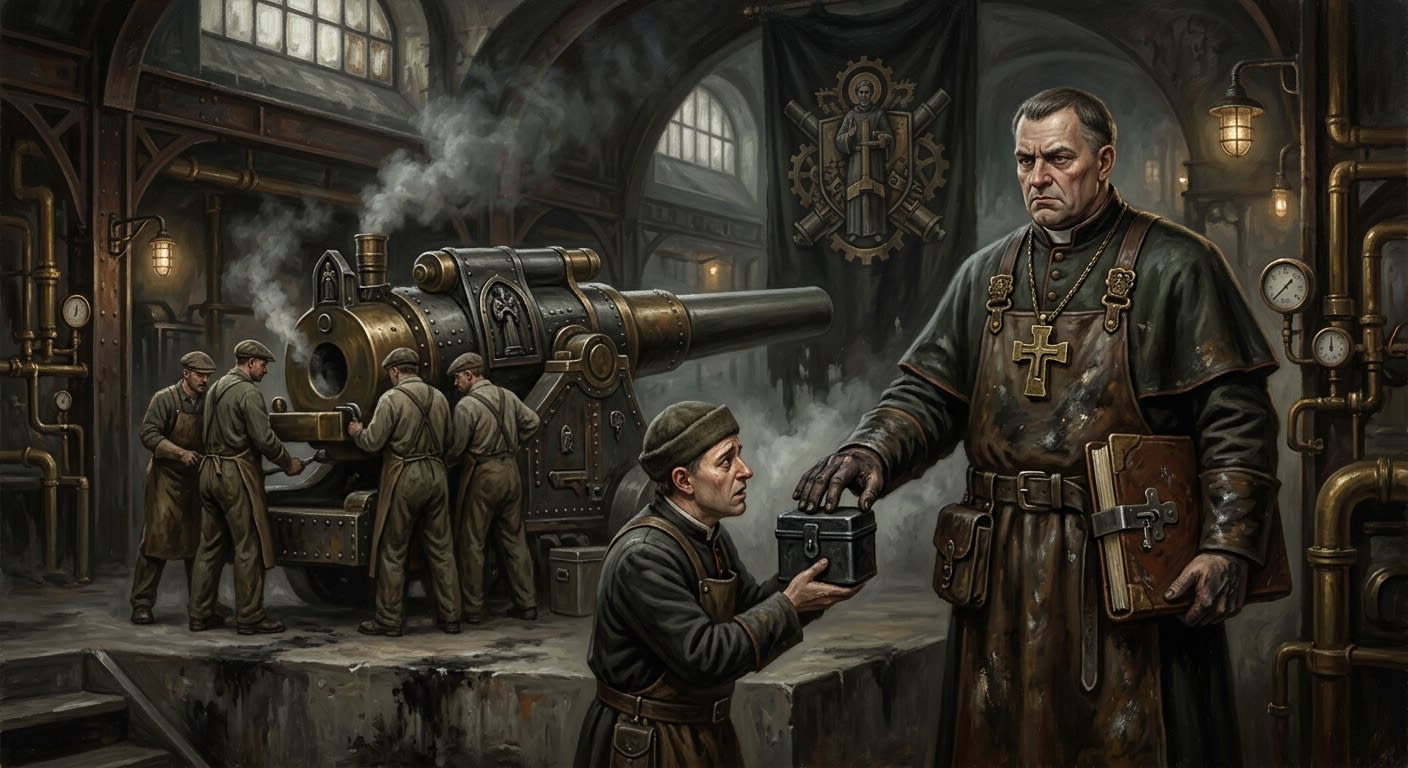
Saint Bartholomew of the Breech
Keep the hinge honest before prayer becomes shrapnel
Saint Bartholomew of the Breech guards shrine-artillery crews, not with comfort, but with latch, ledger, black palm, and the holy refusal of hidden powder.
Codex Ref. III.2.01-070
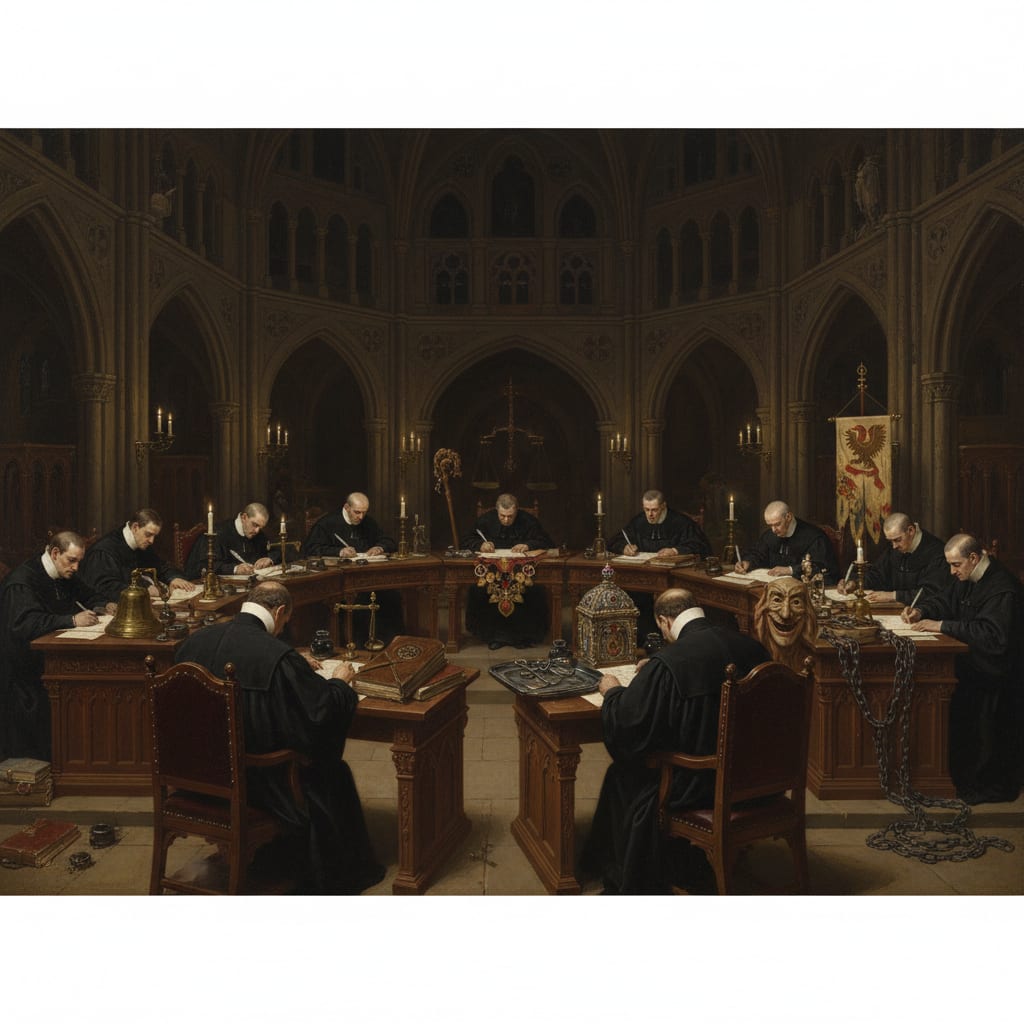
The Holy Bureaus
Twelve Instruments of Providence, or Thirteen If You Count the One That Does Not Exist
The twelve sacred organs through which Strasbourg bends a continent to its will. Each Bureau claims a charism of governance descended from the Apostolic Sundering. Their clerks are legion, their archives endless, their contradictions — by design.
Codex Ref. III.3.01-001
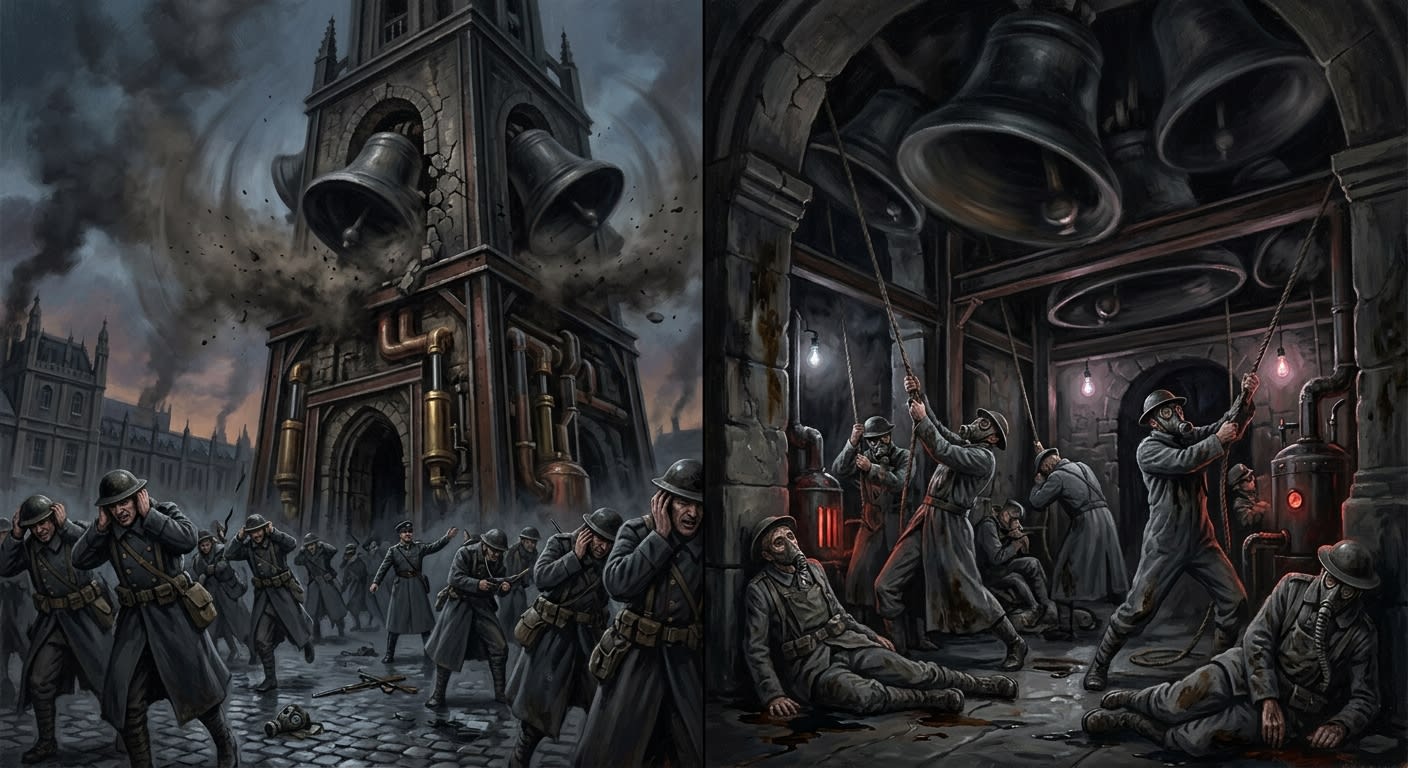
The Miracle of Cologne
When every bell became artillery and bureaucracy was born from the echo
The A.S. 49 Miracle of Cologne drove Maldrake's Wrath vanguard from the cathedral square by nine hours of unscheduled total bell-ringing, cracking stone, killing ringers, and founding the jurisdiction that became the Bureau of Bells.
Codex Ref. VII.4.12-001
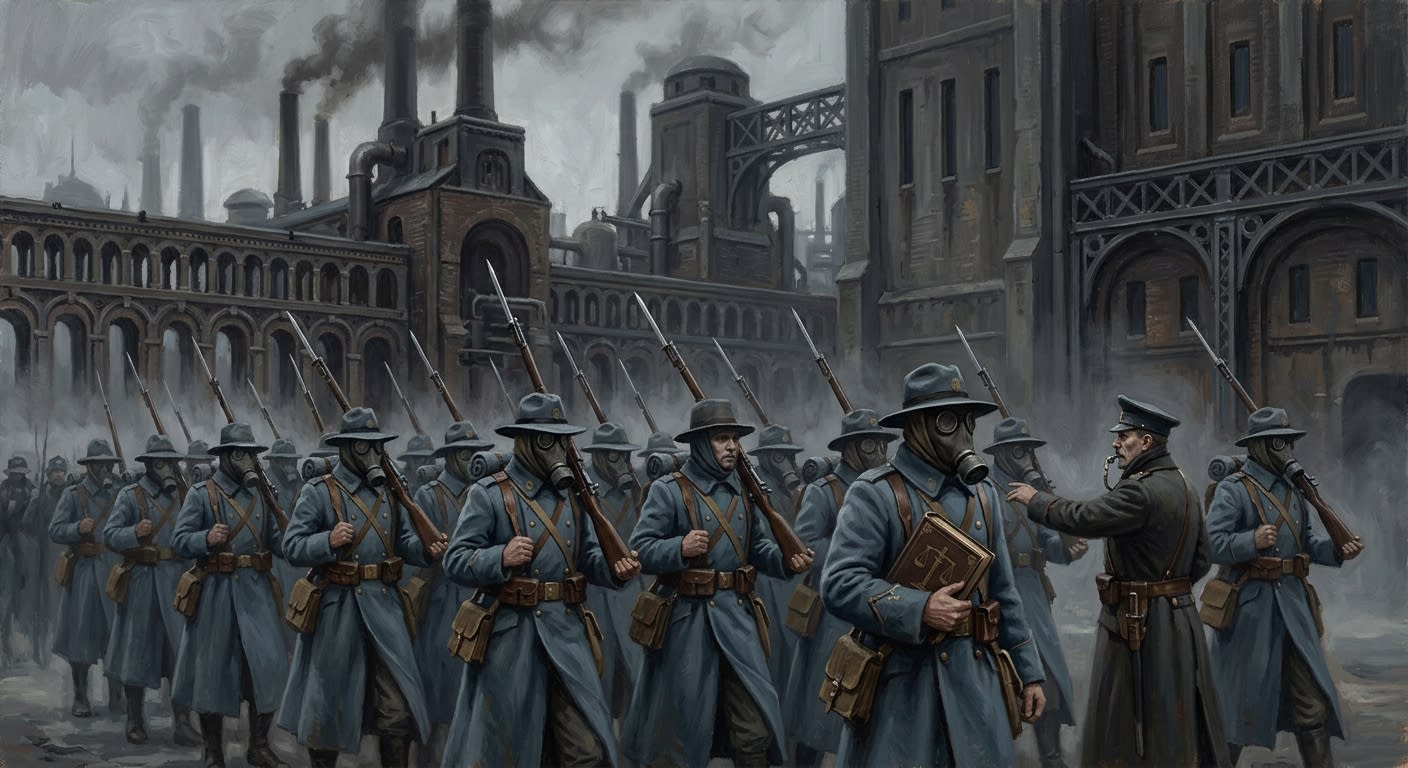
The Republican Guards
The philosophers wrote the sentence; the Guards added punctuation
The Republic's armed hand wore blue-grey, carried law over the heart, and proved that unbelief does not remain in books. It drills.
Codex Ref. I.1.05-001
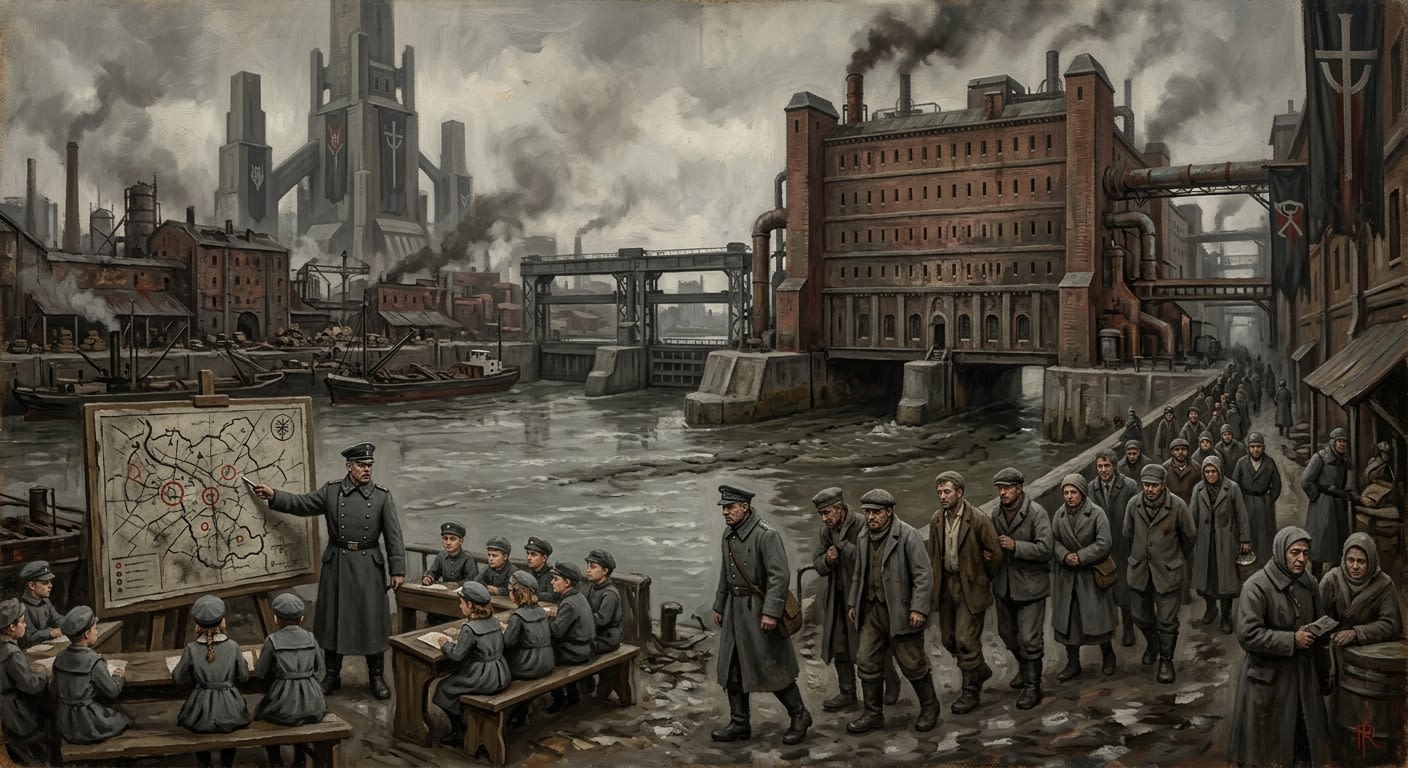
The Rhineland
A province corrected so often it learned to keep the corrections
The Rhineland is the Synod's most corrected province: river belt, market school, scriptorium wound, curfew map, chalk lesson, and loyal suspicion made taxable.
Codex Ref. II.2.09-201
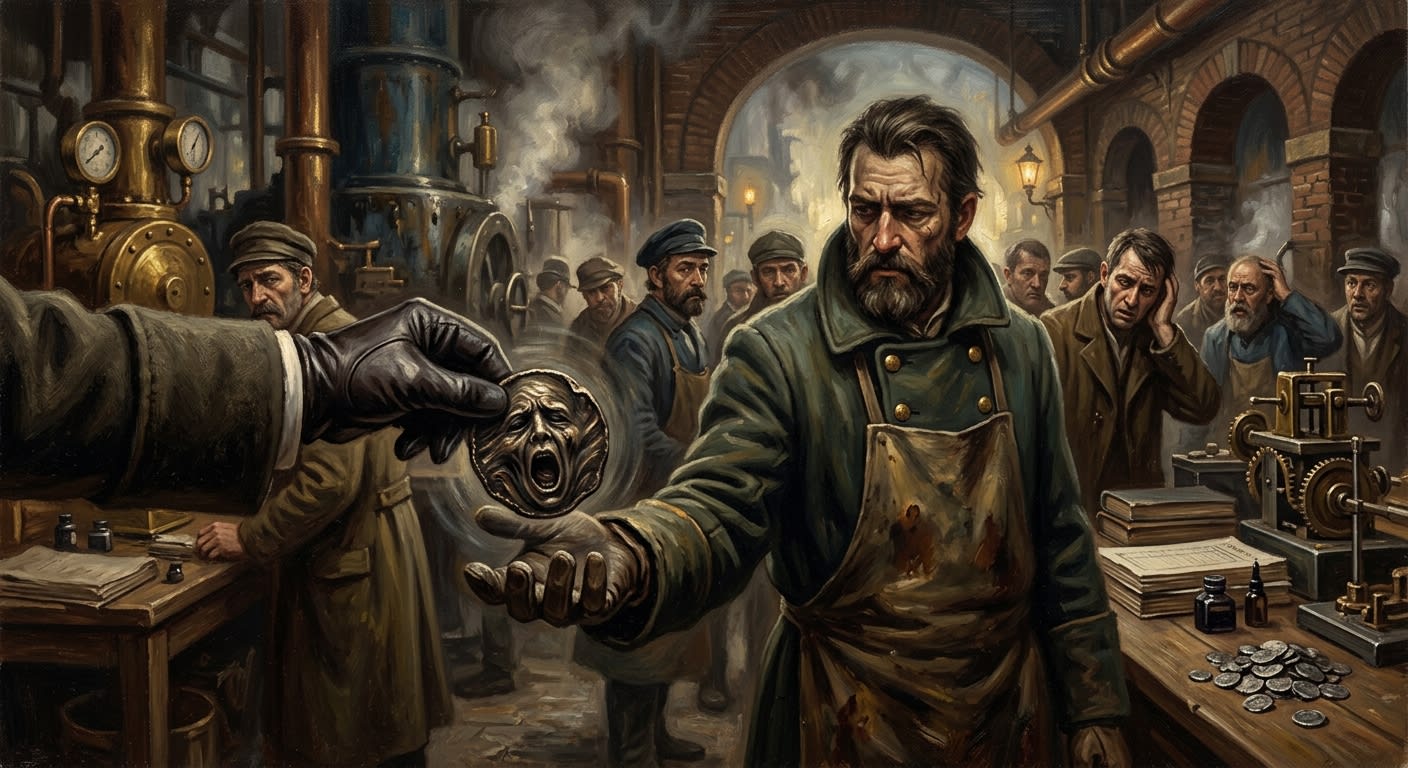
The Screaming Coin
The smallest transaction Hell ever notarised
A coin-like anomaly from Constantinople's Foundry Quarter passes through lawful hands, screams at transfer, and returns after every recorded destruction.
Codex Ref. V.2.01-001
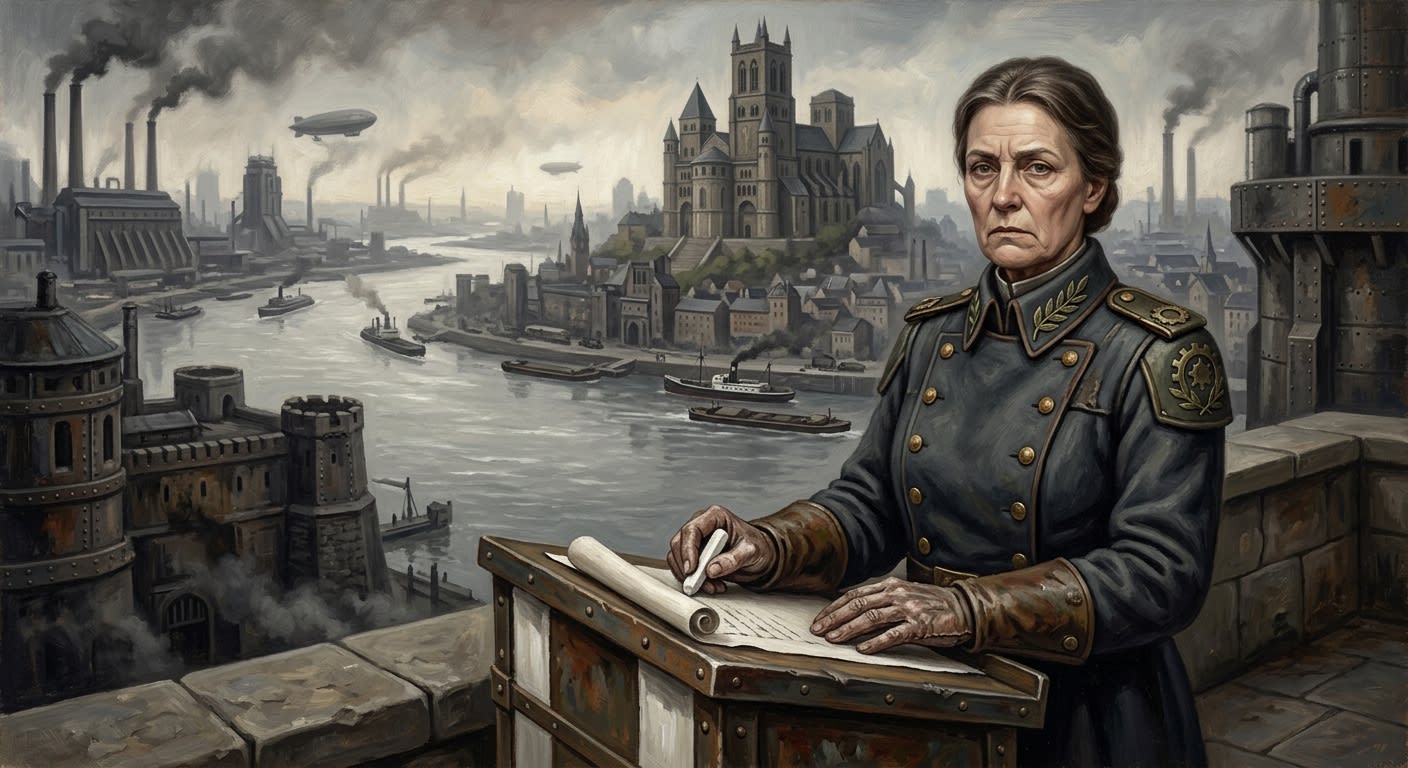
Trier
The city that taught chalk to count before it spoke
Trier is a loyal Moselle city with old hands, white margins, soft chalk, river memory, and the dangerous courtesy of obedience performed too well.
Codex Ref. II.2.02-004
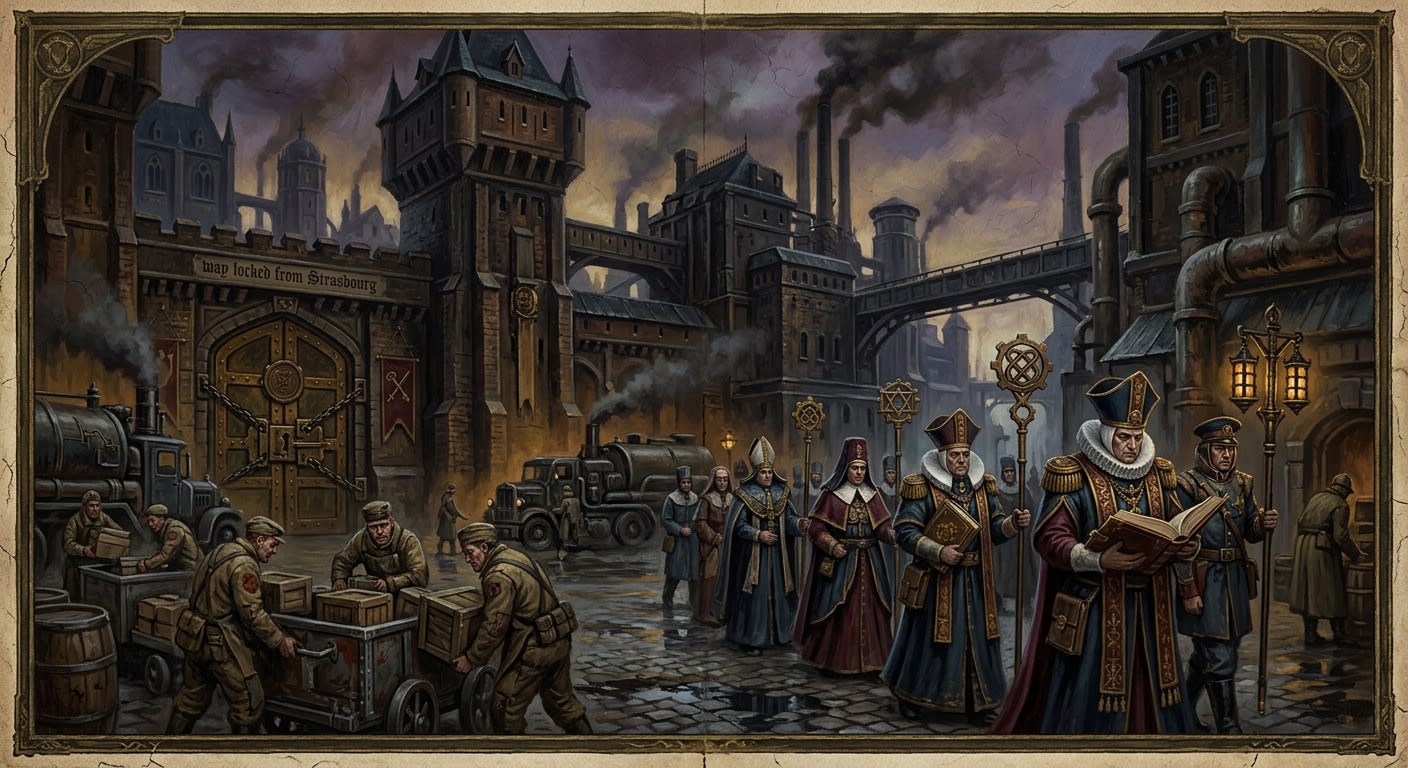
Triune Hearth
Three old bodies, one chimney, and Strasbourg holding the poker
The Triune Hearth binds France, Iberia, and the Rhineland into one Synodal household: warm in sermon, hungry in ledger, and locked from Strasbourg.
Codex Ref. XIII.1.04-090
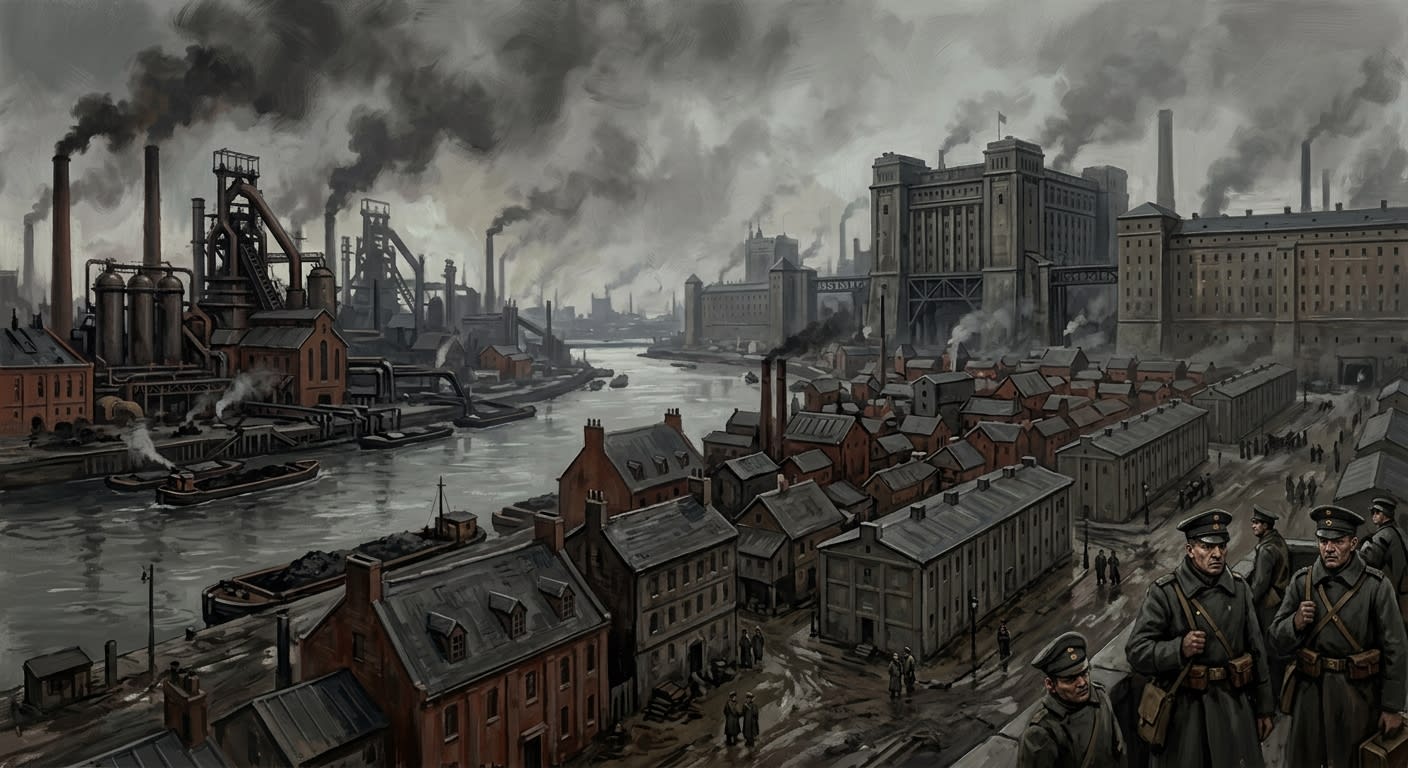
Zone 2
The throat where empire learns to speak in smoke
Zone 2 is the Synod's central throat: Strasbourg's field of authority, Rhine wealth, furnace obedience, catechism-barracks, and useful smoke.
Codex Ref. II.0.04-201
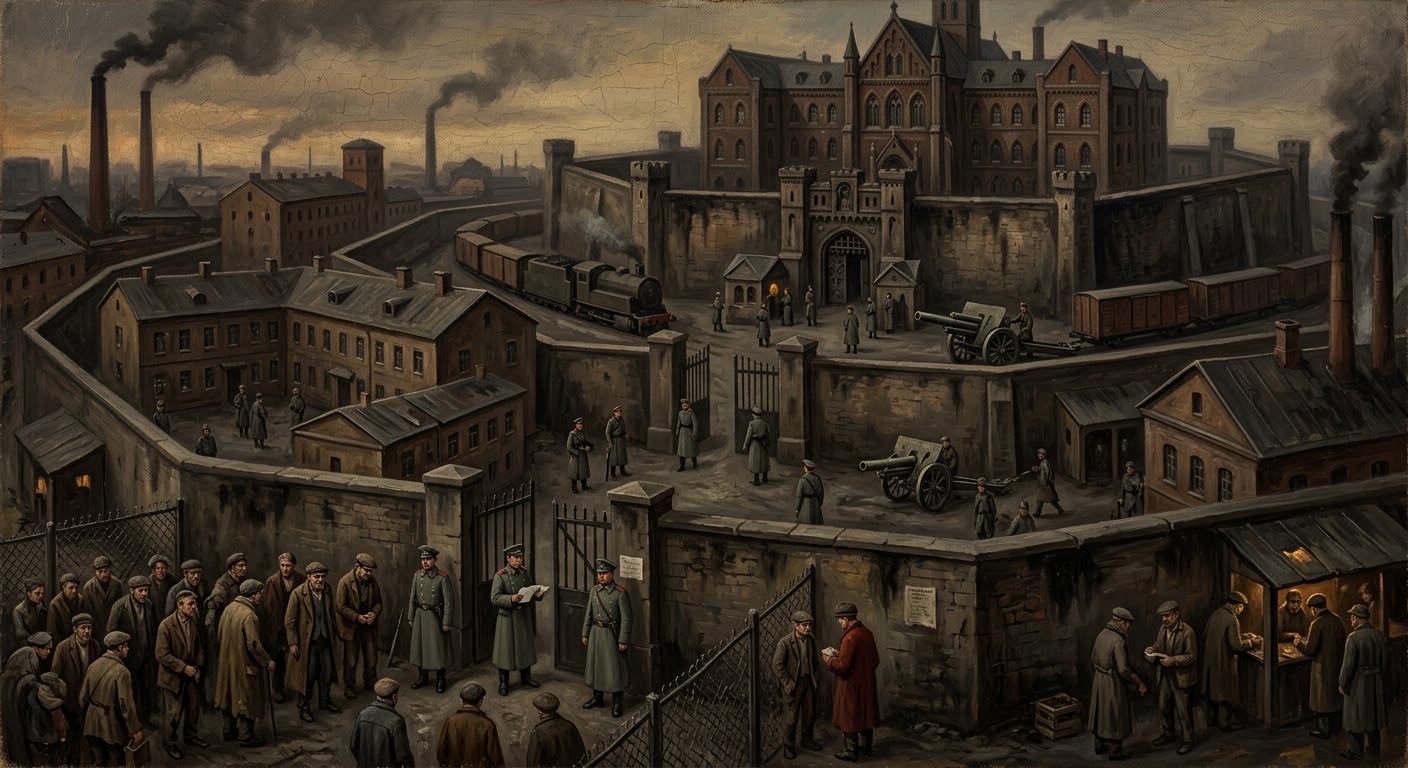
Zones 1 through 5
Five lawful pressures between invoice and mud
Zones 1 through 5 are graded permissions for bread, sons, movement, fear, artillery, and the state’s appetite.
Codex Ref. XIII.1.00-201