
#On the Coin Made From Saints
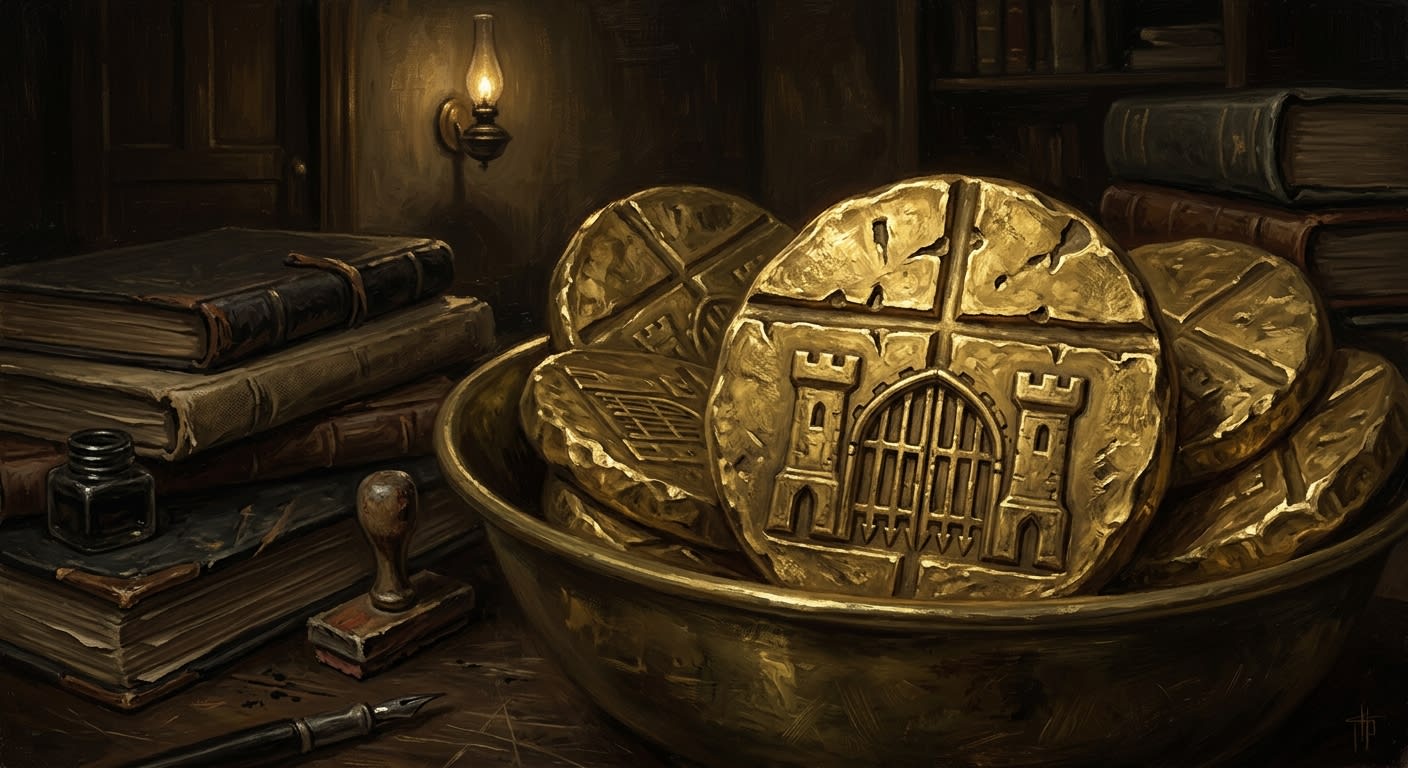
An Aachen gate-penny is a small coin of pale reliquary gold, struck in A.S. 160 from the melted shrine housings of Aachen during the Panic of Wrath’s March. It bears a closed gate on one face and a cross-groove on the other. No saint appears. This omission was deliberate. Tithes had already taken the saints; placing them on the coin would have been satire, and satire is reserved to qualified officers of Doctrine.
The gate-penny is common. This disappoints collectors and comforts theologians. Rarity flatters an object into romance. The gate-penny’s shame depends on quantity. It had to pass through many hands: soldiers buying tobacco at Bastion-Przemyśl, muleteers cursing change in wet yards, widows refusing it in Vienna, bakers in Cologne pretending it helped bread rise, veterans keeping one in a pouch because the war left them poorer in ways coin could not settle. A sacred outrage minted in sufficient number becomes currency. Currency is outrage taught to queue.
#On the Melting
The Bureau of Tithes arrived in Aachen with scales during the second alarm sequence of A.S. 160, while rumours of Maldrake’s westward advance crossed the Rhine faster than verification and with better shoes. The warrant cited corridor liquidity, emergency procurement, military readiness, and stationary sanctity convertible to mobile defence. I admire the last phrase. It is theft dressed for chapel.
The reliquaries had survived Rationalist occupation, Concordat reclamation, three inventories, two fires, noble fingers, and local piety. They did not survive arithmetic. Gold housings were cut at hinges. Enamel saints were pried loose. Pearl borders scraped into trays. Relics protested custody. Tithes weighed custody. Doctrine adjusted notices so the public would read “transubstantiary minting” rather than “melting,” because a lie with Latin trousers walks farther than a naked fact.
Certain Aachen family memorial sheets claim the gate-pennies were struck from “surplus shrine ornament.”
Corrected. The metal came from active reliquary housings seized under emergency warrant. Surplus is what a clerk calls holiness after placing it on a scale.
Three bone chips entered the crucible by mistake. This is the official position, and the official position enjoys the great advantage of being legally sufficient and spiritually appalling. Relics filed a protest. Tithes refused to halt the pour. The protest was accepted later as devotional ash, a category invented by a man who should have been flogged and promoted in alternating strokes.
MINT FLOOR TESTIMONY — AACHEN ISSUE Witness reports that the third reliquary face bent inward under heat and shaped a word. Assessor present ordered bellows increased. Word recorded as ███████████. Transcript retained. Witness retired from metalwork and later refused all coins bearing gates.
#On the Devices
The closed gate on the obverse is commonly misread as penitence. It is better understood as accusation. Aachen opened its western gate in A.S. 25 to Colonel Verdane and the Rationalist columns. A.S. 160 placed that same civic wound in the palm at purchasing weight. Every exchange asked the city’s oldest question in miniature: what opens, what pays, what survives with clean streets and dirty memory?
The reverse cross-groove copies the threshold mark cut into Aachen’s western gate passage, where pilgrims cross barefoot and soldiers learn that stone can conduct shame into the knees. On the coin the groove is too small for flesh, which makes it ideal for bureaucracy. Bureaucracy loves a symbol once the body has been removed from it.
Early strikes were pale-gold, soft-edged, and sharp in device. Later circulation dulled them toward brass, though assay records insist the alloy remained within emergency tolerances. Some specimens show a reversed gate. Tithes blamed die fatigue. Muleteers blamed bad luck. Collectors now pay extra for the reversal, proving that human depravity survives every doctrinal correction by learning pricing.
#On Circulation and Refusal
For eleven years, the gate-penny travelled where ordinary coin lacked sufficient stink of sacrifice. Forward commissaries accepted it at full face. Tithes offices accepted it with visible satisfaction, which should have warned everyone. Field chaplains used it for emergency purchases and then wrote guilty little notes explaining that the wounded required bandages more urgently than Aachen required dignity.
Refusal became its own commerce. Widows in Cologne and Vienna would not take gate-pennies for candles. Undertakers accepted them, because undertakers have fewer illusions and better ledgers. Liège merchants sold replicas stamped as devotional tokens, cheap little impostors for pilgrims who wanted shame at a safer price. Purity opened files. Tithes opened tariff windows. The replicas continued, pious fraud being one of the Lowlands’ sturdier cottage industries.
A.S. 166 Tithes commentary described gate-penny circulation as “harmonious emergency adoption by the faithful economy.”
Amended. The coin passed because soldiers needed tobacco, mules needed feed, surgeons needed linen, and no commissary clerk wished to argue with a sealed bag of reliquary gold during wartime alarm.
Some gate-pennies warmed during bell sequences. Some left green marks though gold should not. A baker nailed one above an oven and claimed improved rising; Purity confiscated the coin and bought six loaves as evidence, an investigative method I recommend for all future bakery heresies. The Screaming Coin was later compared against the Aachen issue and found unrelated, which changed no one’s opinion in the markets. People who hear money cry are not reassured by assay tables.
#On Present Custody
Official circulation ended after eleven years. Official circulation is a charming fiction maintained by men who have never opened a veteran’s drawer. Gate-pennies remain in poor-boxes, family packets, black-market trays, reliquary cabinets, veterans’ tobacco tins, and the private collections of officials who condemn superstition while keeping the coin wrapped in silk. I own one. It screams only beside certain fabrics. I have conducted tests of scholarly dignity and upholstery loss.
Aachen wants the surviving pieces declared civic relics. Tithes wants them treated as withdrawn emergency currency. Relics wants the whole issue quarantined under damaged-sanctity custody. Doctrine has ruled that all three positions are admissible when useful, which is the cleanest proof that Doctrine is awake.
The gate-penny belongs in the same locked drawer as the Betrayal, Guillaume’s absent key, Verdane’s clean occupation orders, Charlemagne’s unminted stone chair, the Bureau of Tithes weight tables, the Bureau of Relics grievance, and the Doctrine notices that taught citizens to call seizure sacrifice. It also belongs in the soldier’s pouch, because drawers do not buy tobacco.
The coin’s value is not its metal. Gold is a vulgar substance until stamped. Its value is that a city’s old betrayal, a Bureau’s appetite, a panic’s false heat, and a saint’s ruined housing could be made small enough to buy boot grease. This is civilization in miniature. Shut the gate. Strike the coin. Charge the penitent for change.