

Reverse Index
Referencing “Metz”
Every codex entry that links to Metz. 78 entries.
Return to Metz
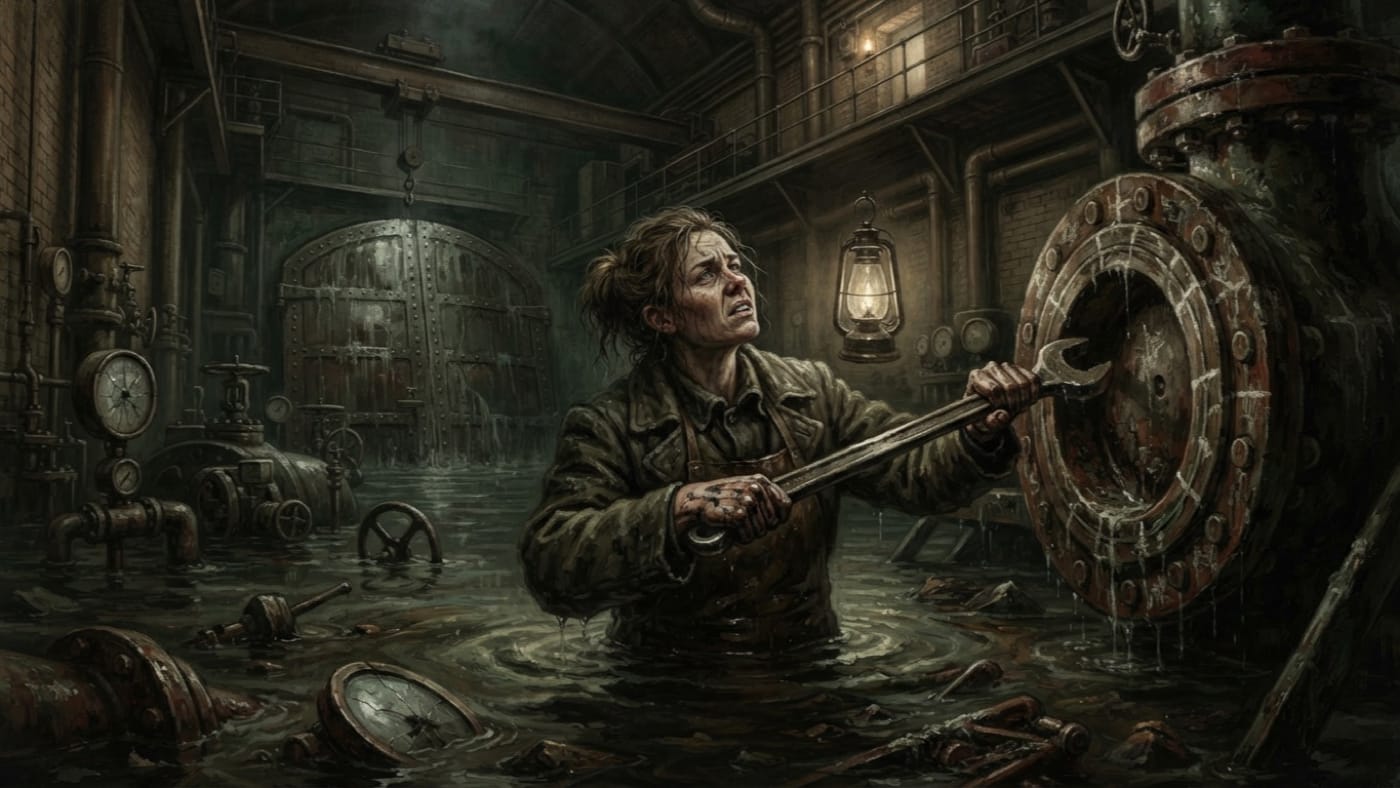
A.S. 132 Metz Flood
The seal held; the mechanic died; Records deducted twenty-three of the living
Orla's repair saved the low ward of old Bastion-Metz and cost her life. The rescue ledger entered 712; Records allowed 689. I assign the flood to A.S. 132.
Codex Ref. VII.8.10-033

Administrative Inconvenience Premium
The price of making the Ledger notice you twice
The Premium prices disobedience as clerical labour: miss Form 7-NR, trouble the Ledger, and watch one infant become a lifetime of doubled debt.
Codex Ref. XIII.1.02-158
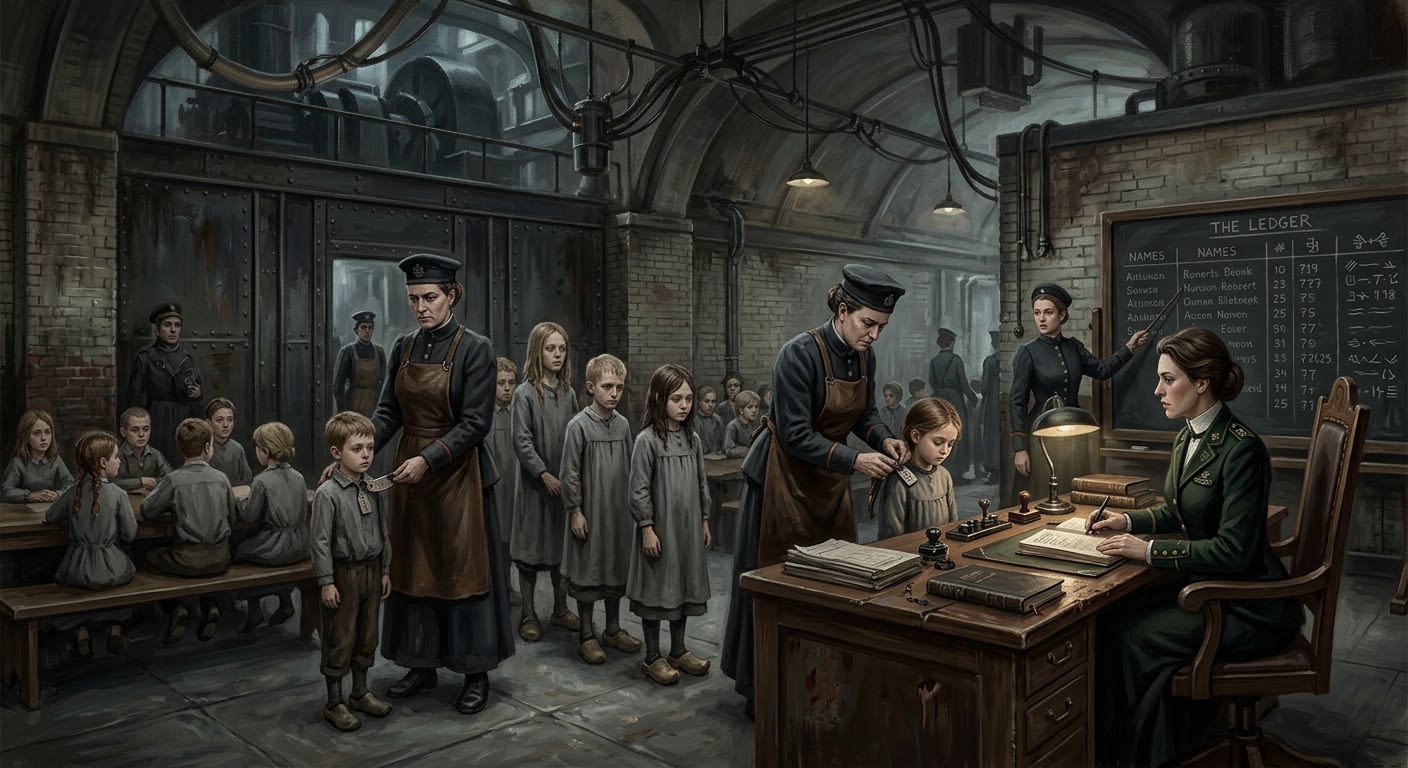
Administrative Recovery
The state calls it custody because theft has poor margins
Administrative Recovery is Mercy's washed name for taking unregistered children, renaming them, tagging them, and teaching the Ledger to stand where a family stood.
Codex Ref. XIII.1.02-159
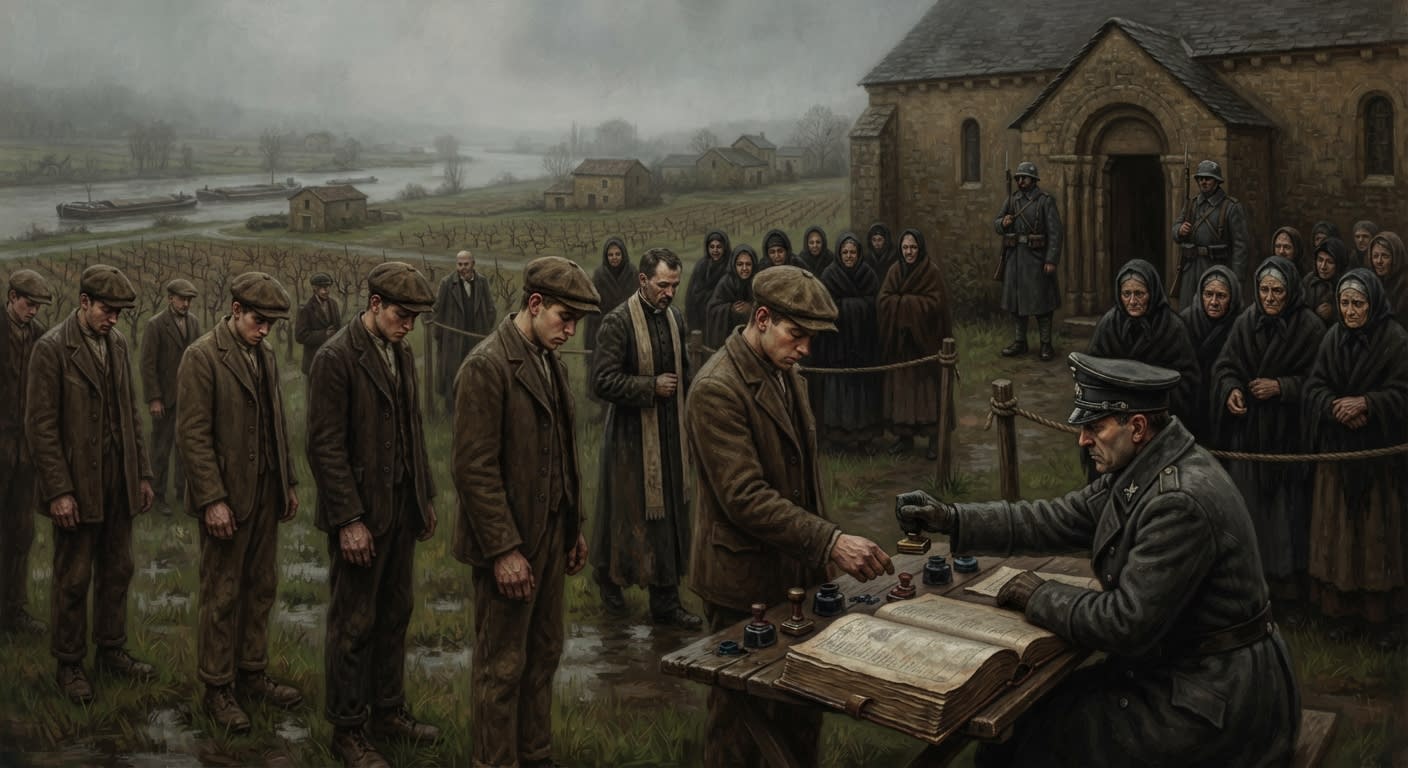
Aquitaine
The western field where sons go missing politely
Aquitaine is the Synod's damp western grain and wine basin: loyal by return, undercounted by suspicion, and courteous enough to make evasion look like hospitality.
Codex Ref. II.1.12-201

Archbishop Salome Veyrault
The smile that made arrears a sacrament
Archbishop Salome Veyrault governs the Bureau of Tithes with a smile sharp enough to audit grief, humble Purity, and make the Sagittal Line pay for one more day of survival.
Codex Ref. III.2.01-055
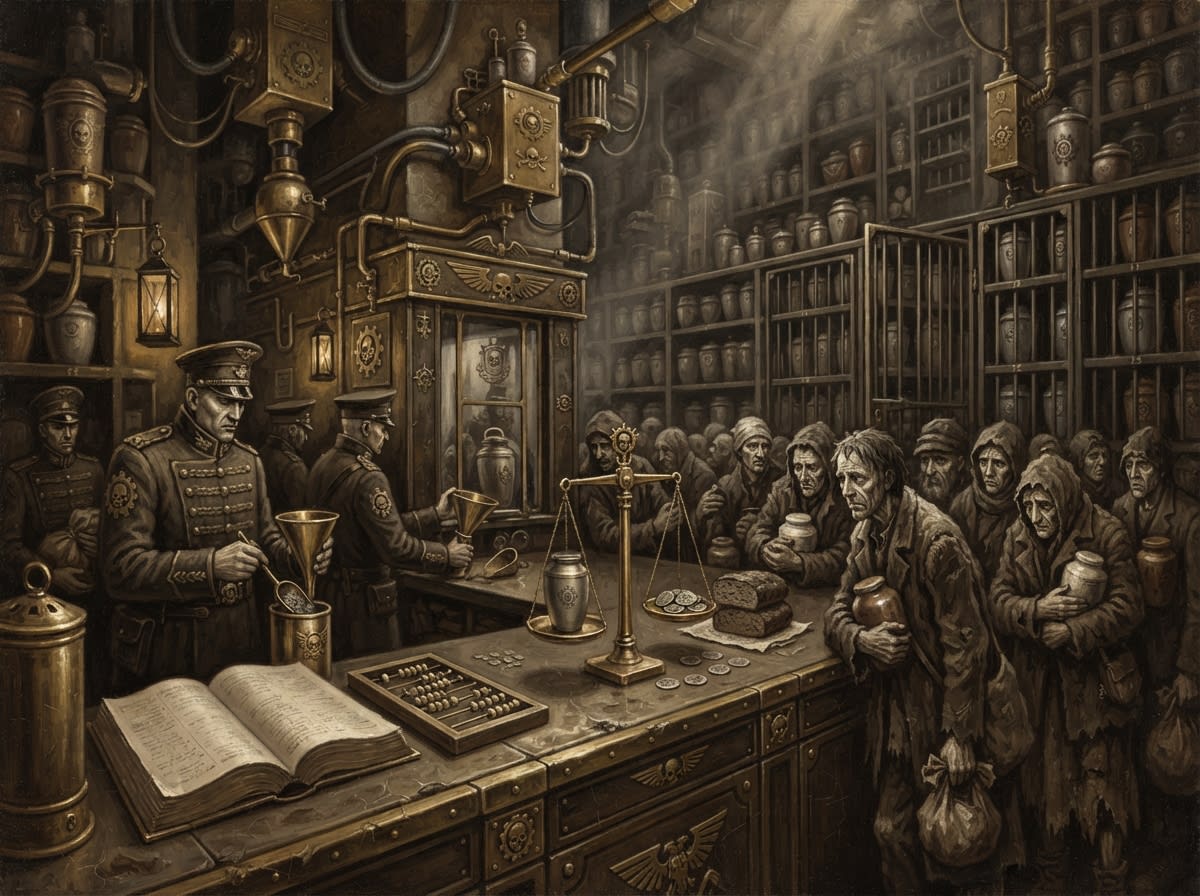
Ash Banks
Where grief is weighed, tendered, and filed as solvent
Ash Banks convert cremains, bone-dust, and pledged future remains into bread, salt, absolution tokens, and dust futures while every Bureau calls the ash something useful.
Codex Ref. XIII.1.98-201
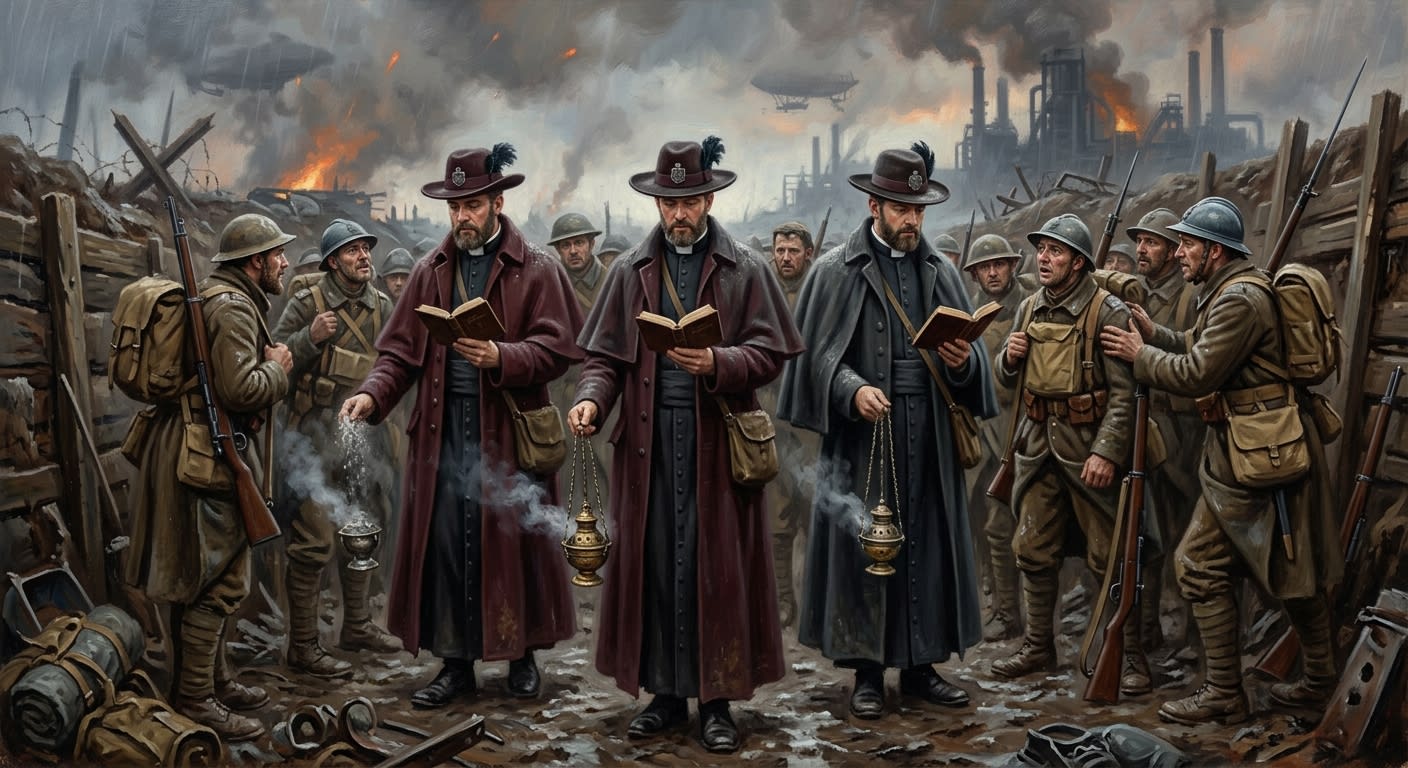
Ash Chaplains
Breath is only pastoral after War has taught it to hold
Bureau of War lung-clergy who deploy relic-ash, the Litany of Stones, cadence discipline, and name-silence to keep breach cohorts breathing in obedience under shell, song, and rupture.
Codex Ref. VIII.5.07-001
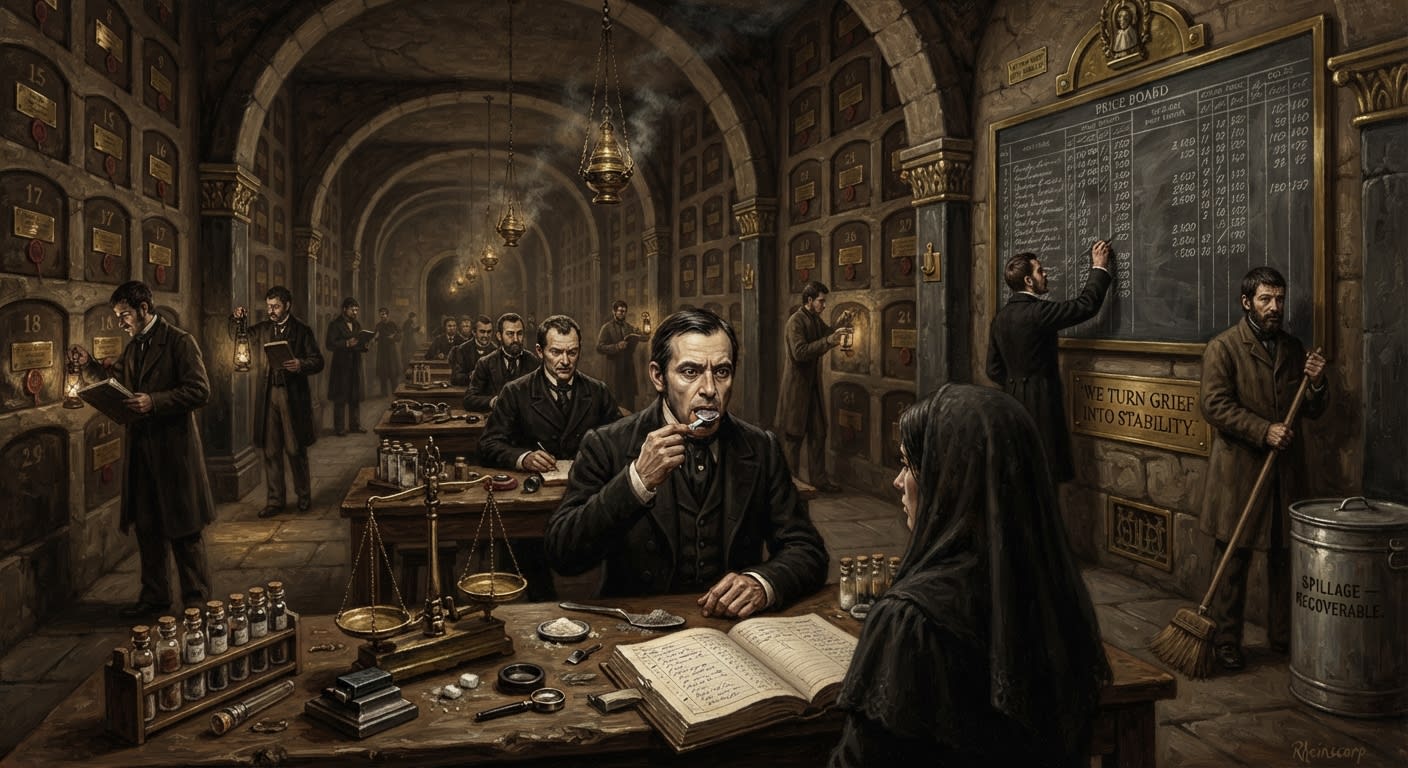
Ash Exchange of Saint Pelagia
Where grief becomes tender and the dead pay interest
Rheinscarp's seventh terrace turns the dead into collateral: cremains vaults, saint-shares, dust futures, and the cheerful arithmetic of Broker-Saintsman Damas Rohe.
Codex Ref. II.2.01-007
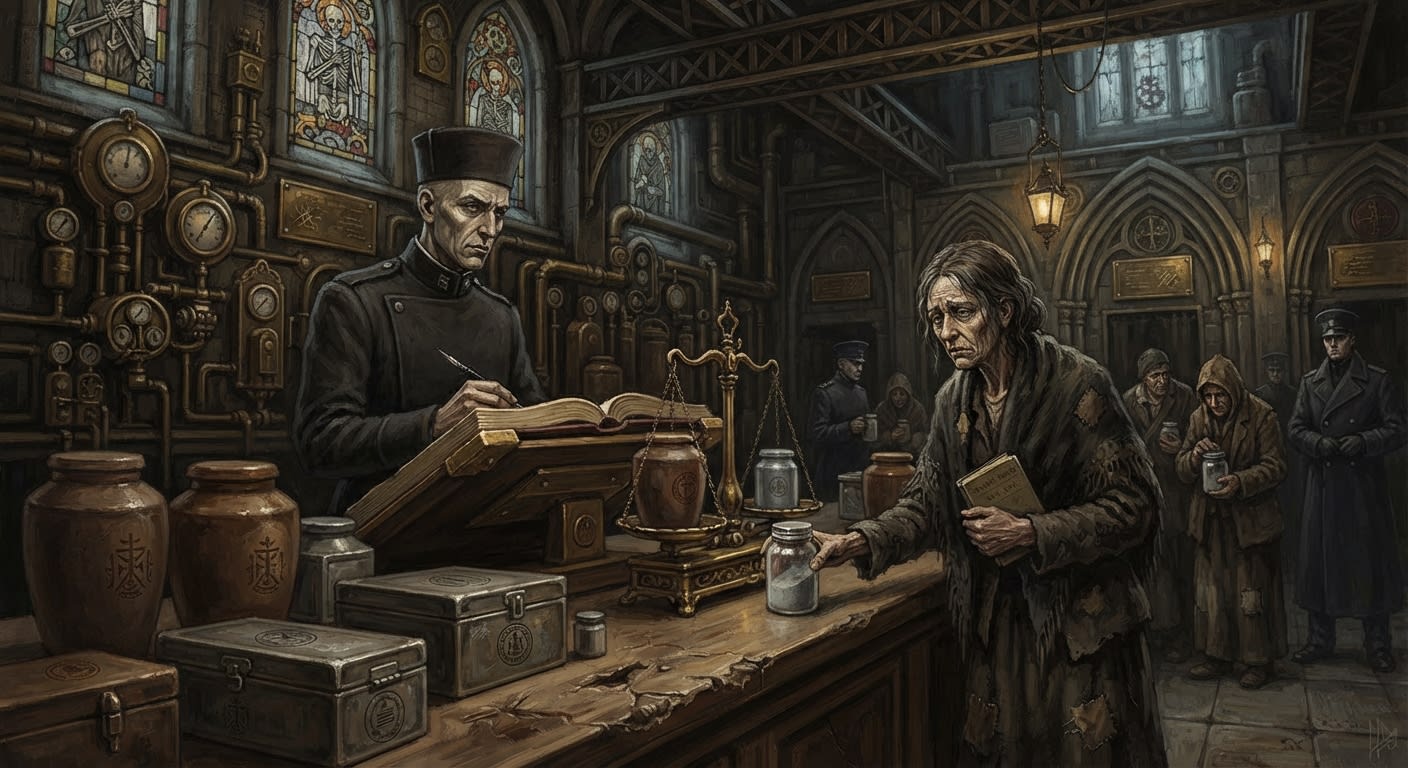
Ash-Credit
The dead are tender once Tithes finds a scale
Ash-credit is the Synod's devotional collateral, converting cremains, saint-dust, and pledged future remains into bread, grace rations, and obligations the dead cannot refuse.
Codex Ref. VI.3.01-002
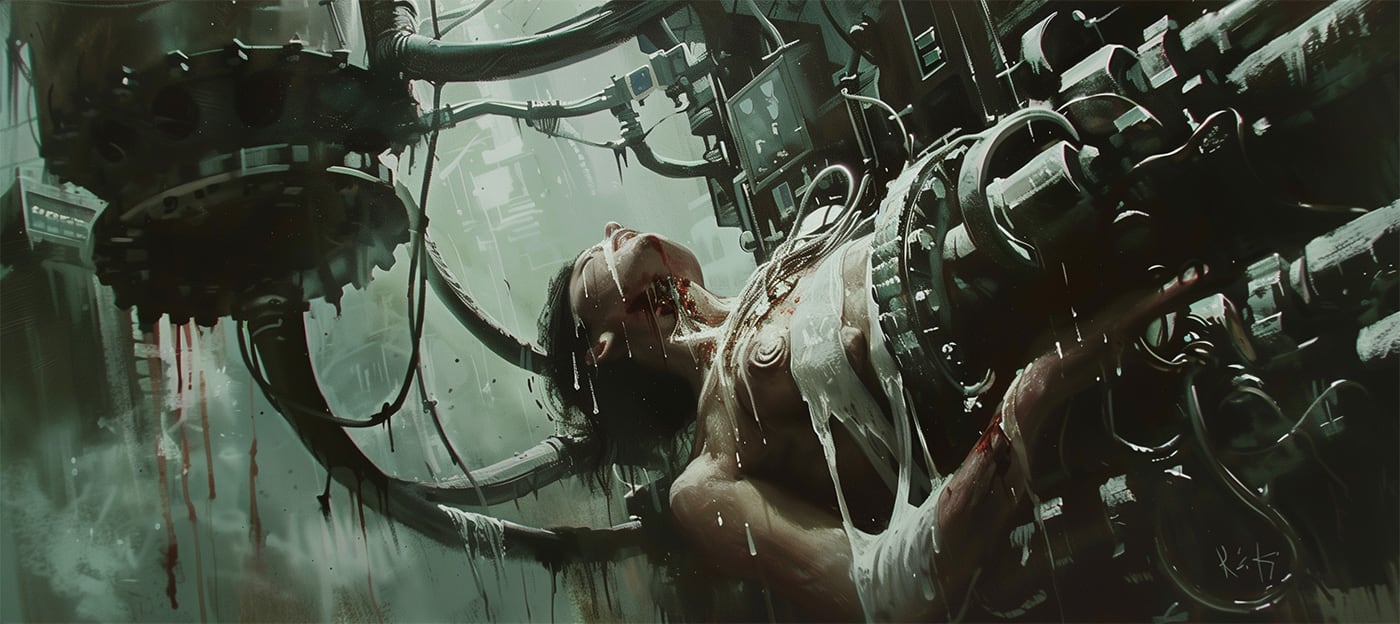
Ash-Mothers
A production line. The Bureau said two paragraphs were enough. They were not.
The Bureau's most exhaustive silence — Ash-Mothers are enemy reproductive logistics cells, captured women sustained by sorcery to generate Thrall regiments at industrial scale. I file the account that two paragraphs could not contain.
Codex Ref. IX.1.02-001
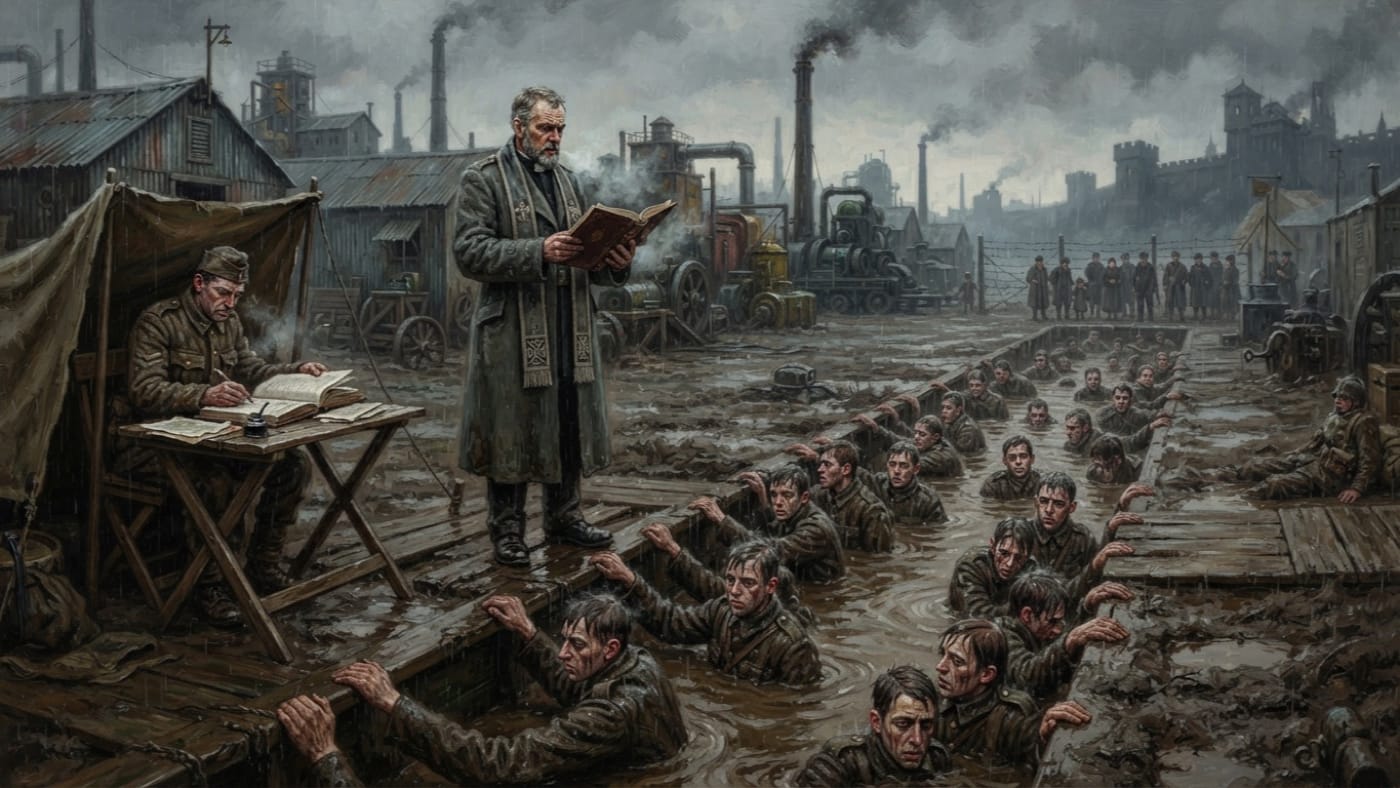
Baptism of Mud
The household loses a son; War receives a name
The Baptism of Mud receives levy recruits into War's custody: a flooded trench, the Litany of First Earth, and three days of mud that make the household's loss official.
Codex Ref. XIII.1.54-002
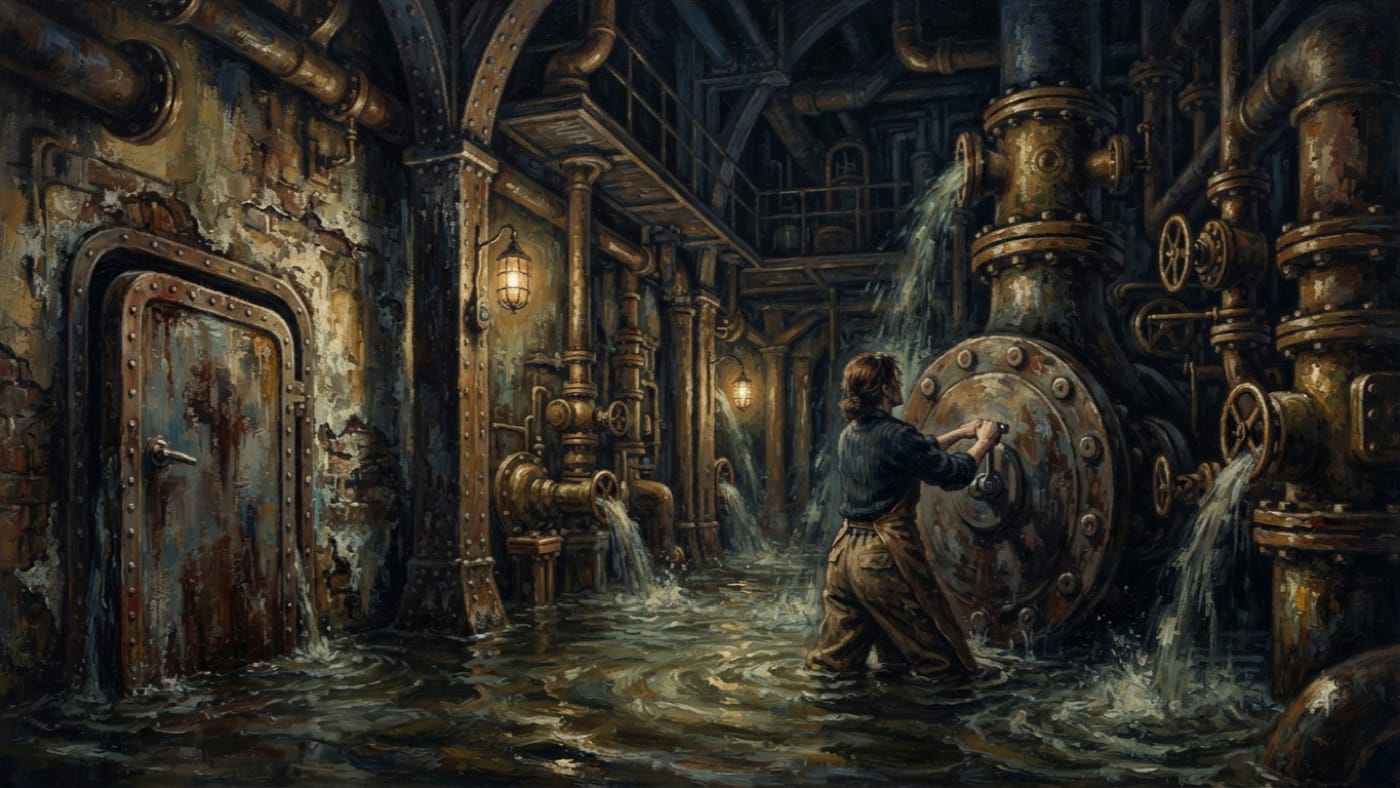
Bastion-Metz
Behind the Line, the water is the enemy that files no declaration.
Metz's historical rear supply-bastion, where Orla completed Seal Seven beneath rising water. The low ward survived; the mechanic did not. Its founding is unrecorded, and its present condition remains uncertified.
Codex Ref. II.4.09-176
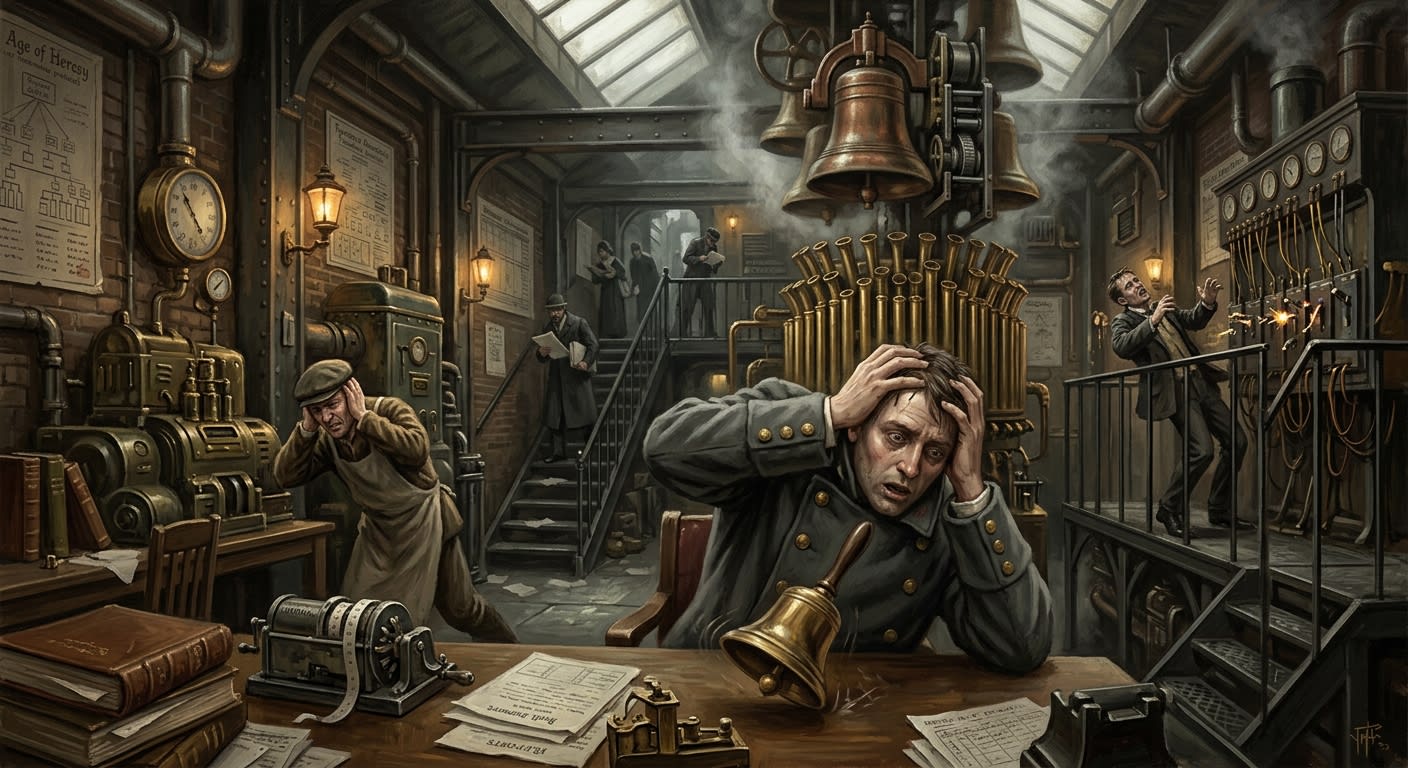
Bell-sickness
The bell stops; the obedient skull keeps ringing
Bell-sickness is the Synod's recognised resonance affliction: phantom peals, compulsive cadence, command mislocation, and the small theological problem of obedience ringing back.
Codex Ref. XIII.1.87-201
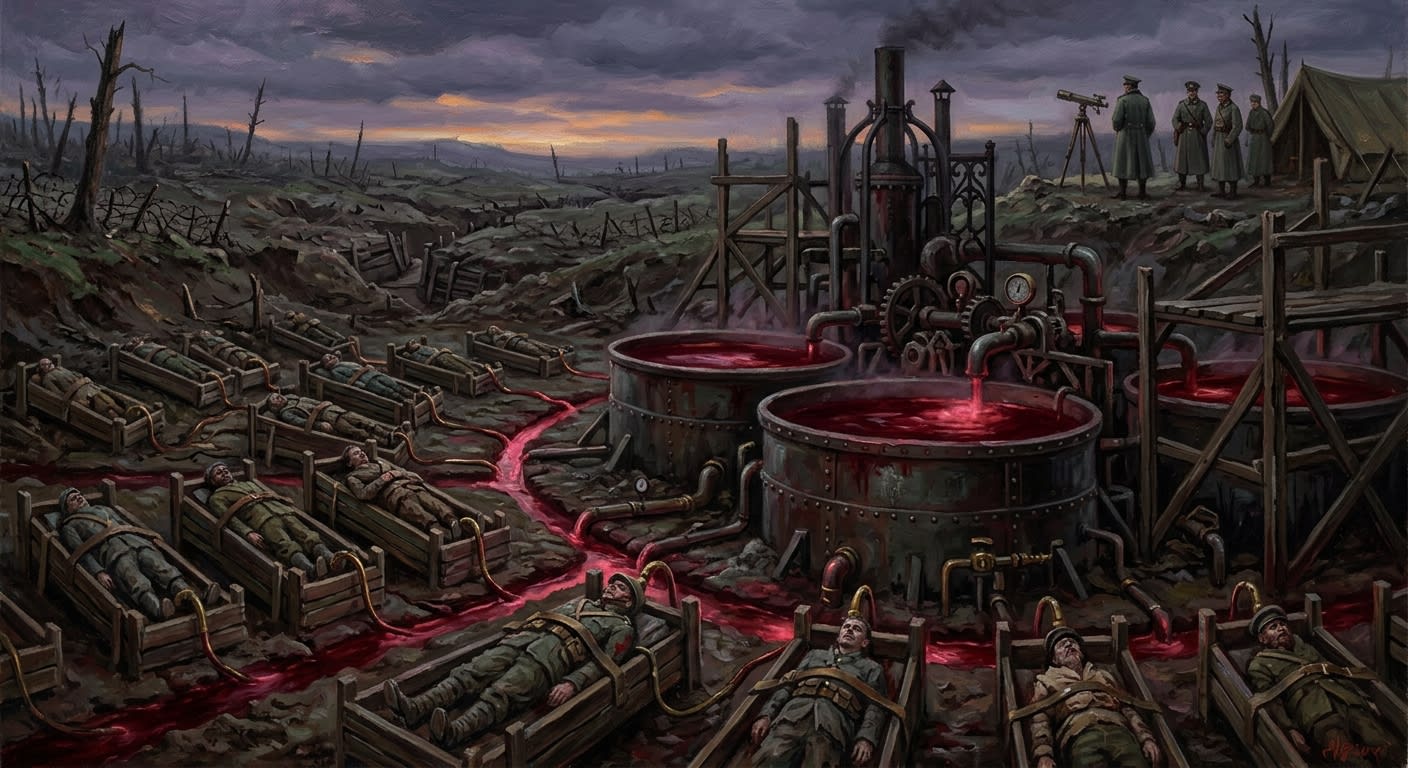
Blood-Tithes
Brass tubes, serial-numbered. Wooden cradles, precisely fitted. The Bureau calls it infrastructure. The screaming is a side-effect.
The Lie's sorcery economy runs on living blood. Prisoners are fitted with brass leeching tubes, arranged in geometric rows, and drained for weeks. The Bureau files it under infrastructure. The soldiers call it mercy work.
Codex Ref. IX.1.07-001
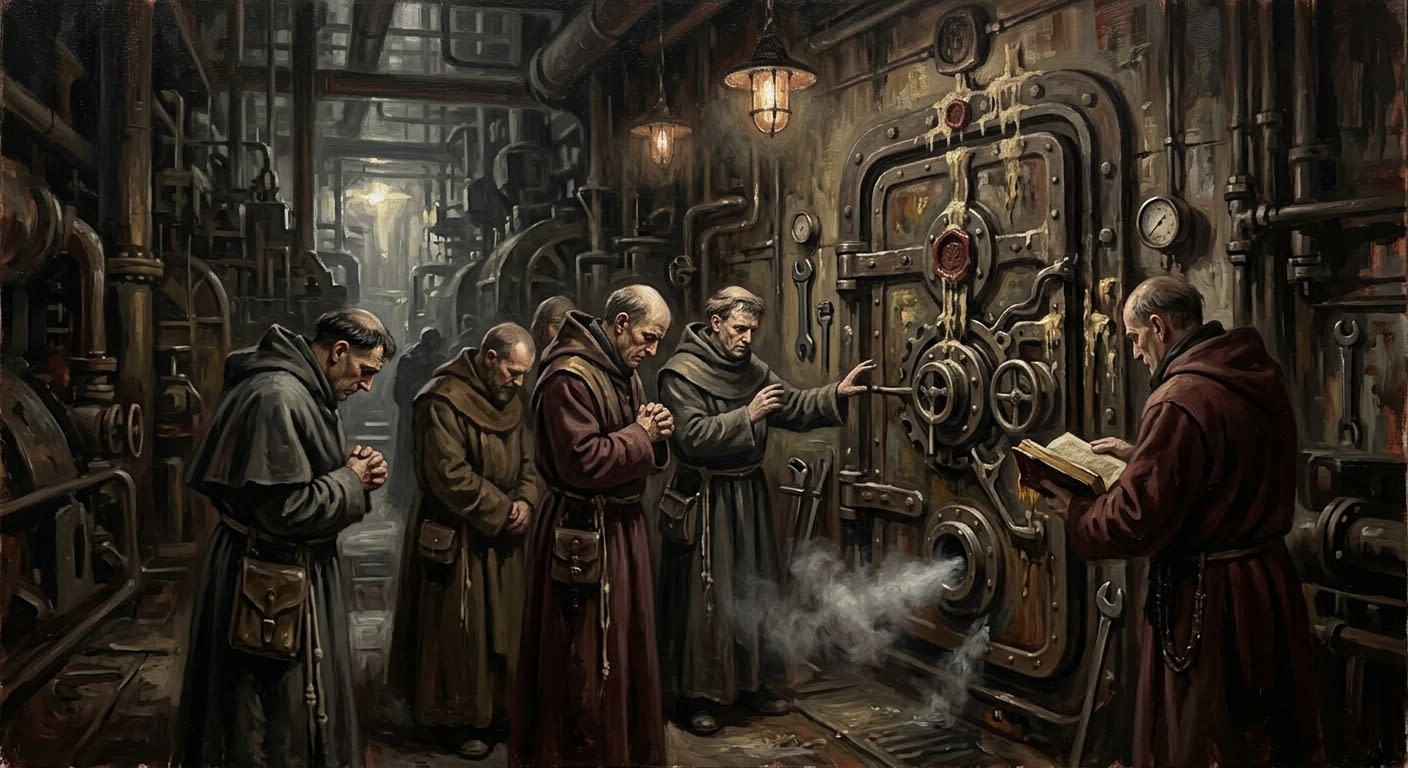
Boundary Litany
The hymn that teaches seals to remember where the world ends
Operational hymn for gasket, wax, flange, drum-mouth, and pressure door: the Boundary Litany makes matter confess where obedience stops.
Codex Ref. XIII.1.85-152
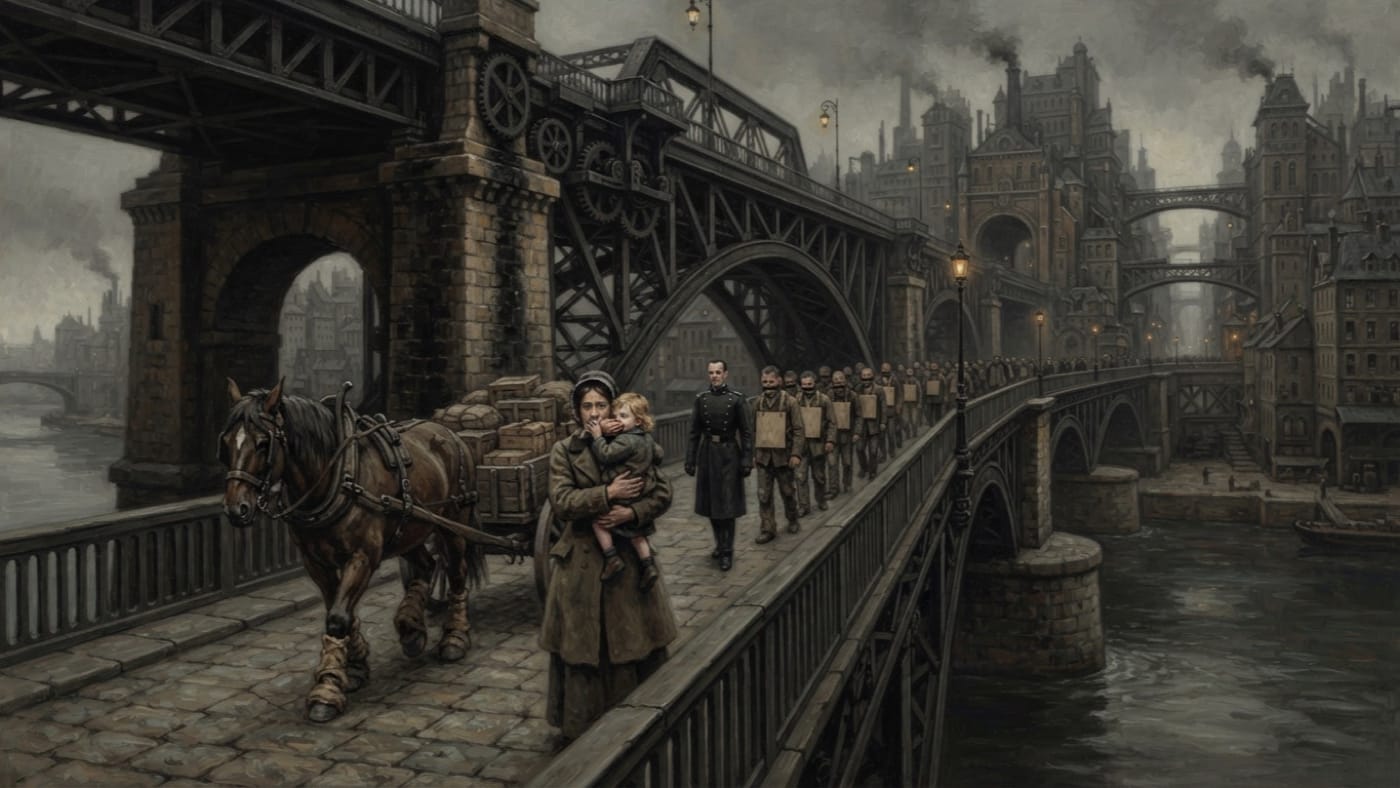
Bridge of the Silent Toll
Where silence pays and Purity speaks for the condemned
Metz's Bridge of the Silent Toll accepts silence instead of coin. Its rebuilt span carries muted travellers and the Toll of Held Speech; the masonry was corrected, the silence retained.
Codex Ref. II.1.05-002

Bureau Circular 221-R
Fourteen pages proving a living man can fail to count
Bureau Circular 221-R is the Records clarification that defines the dissolved as *praesens sed abrogatus*: present, abrogated, and ineligible for mercy by procedure.
Codex Ref. XIII.1.01-004
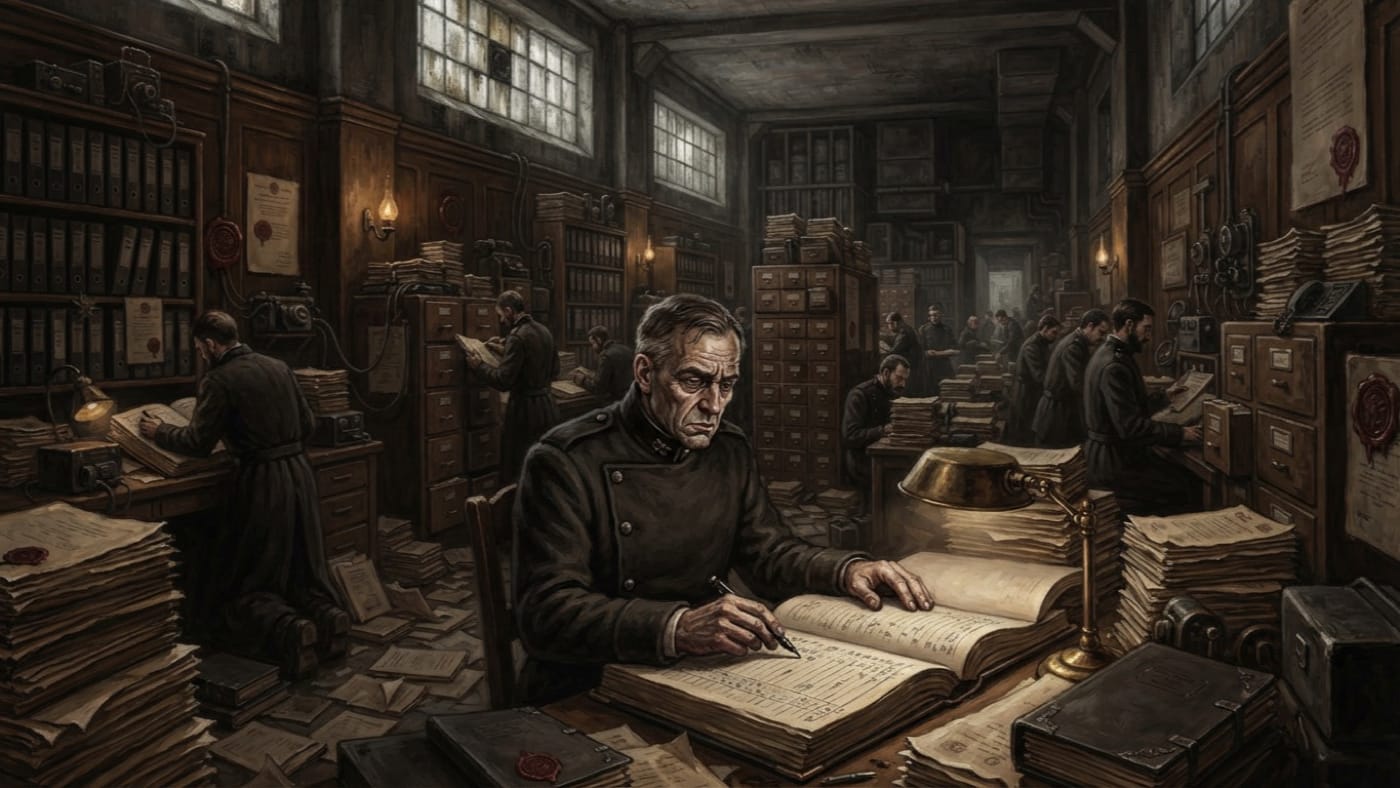
Carnelian erasures
Every seal was correct; the ledger was impossible
In A.S. 67, three Notaries struck the Carnelian lineage across four cities without a shared anchor table. Two lawful cousins vanished from the rolls; the Notaries followed. The children lost their bread.
Codex Ref. VII.8.10-067
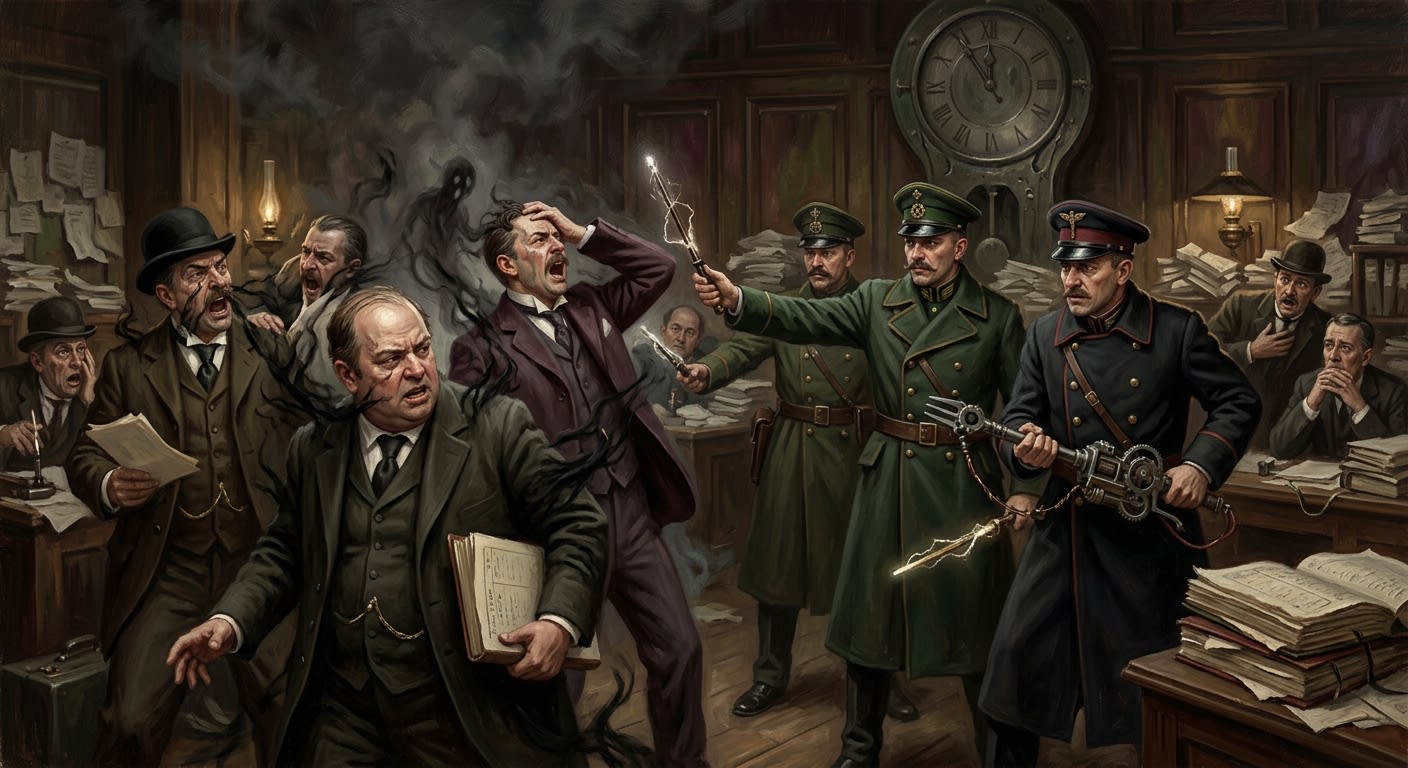
Carnelian Family of Metz
The lineage strike that bit its own hand
The A.S. 67 first recorded lineage-wide nullification attempt, in which Carnelian ration fraud, plague permits, and three overeager Notaries taught absence to bite backward.
Codex Ref. XIII.1.69-001
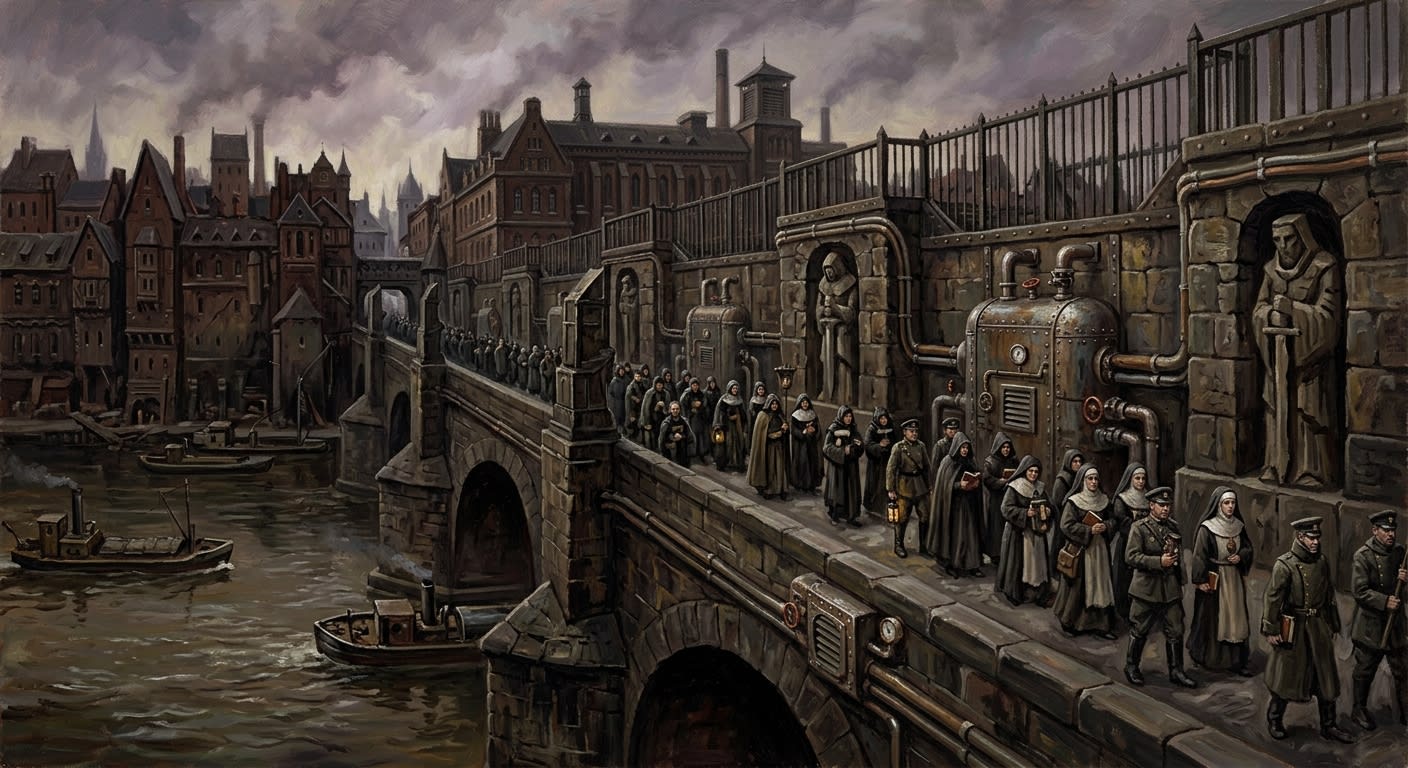
Charles Bridge
The Vltava crossing where Prague learned silence by nail
Charles Bridge crosses Prague's Vltava as road, witness bench, and Purity instrument: the stone throat through which the Procession of Tongues makes doctrine walk.
Codex Ref. II.3.02-096
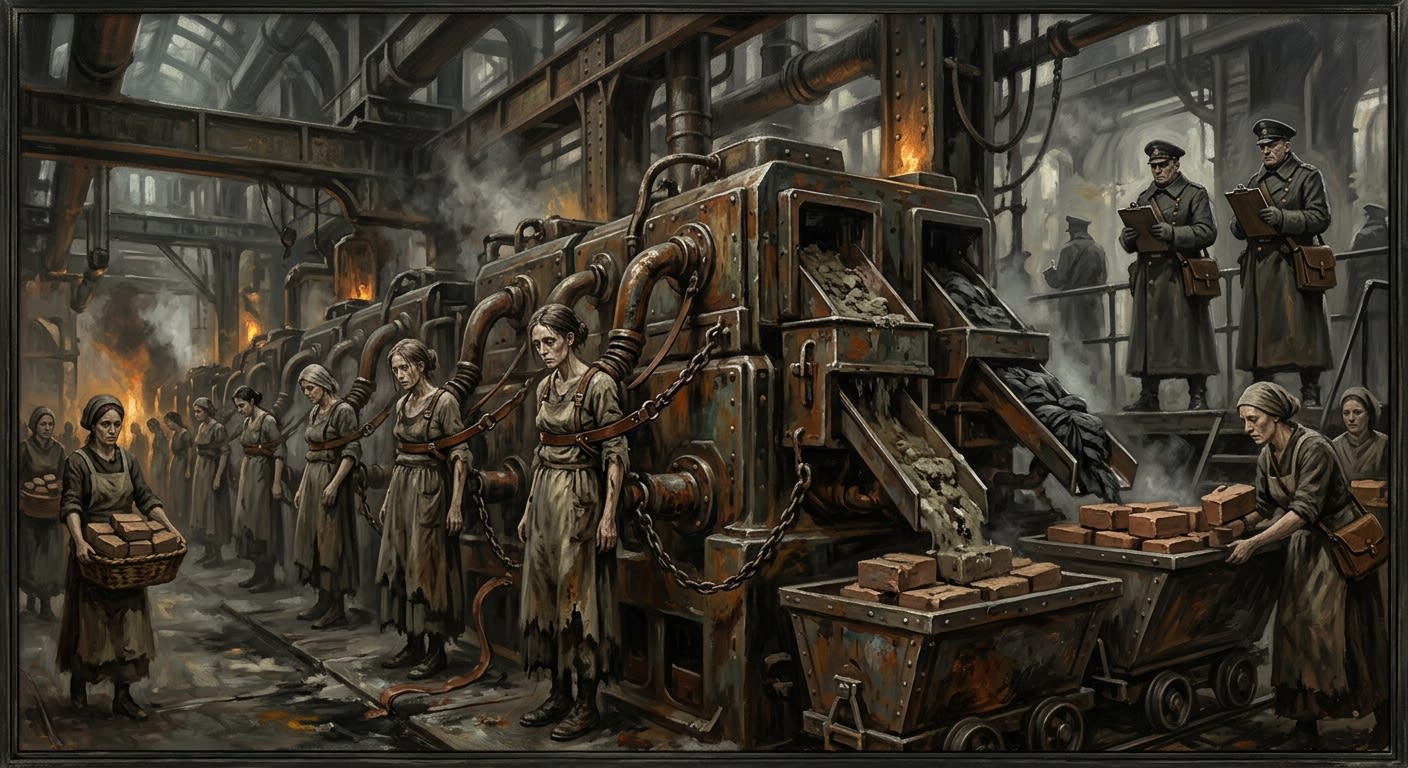
Classification 7-F
The file by which the Bureau teaches horror to stand in line
Classification 7-F names Reproductive Infrastructure, Hostile: the sealed category by which Ash-Mothers, mortar, obedience, and enemy supply become one file.
Codex Ref. XIII.1.72-004
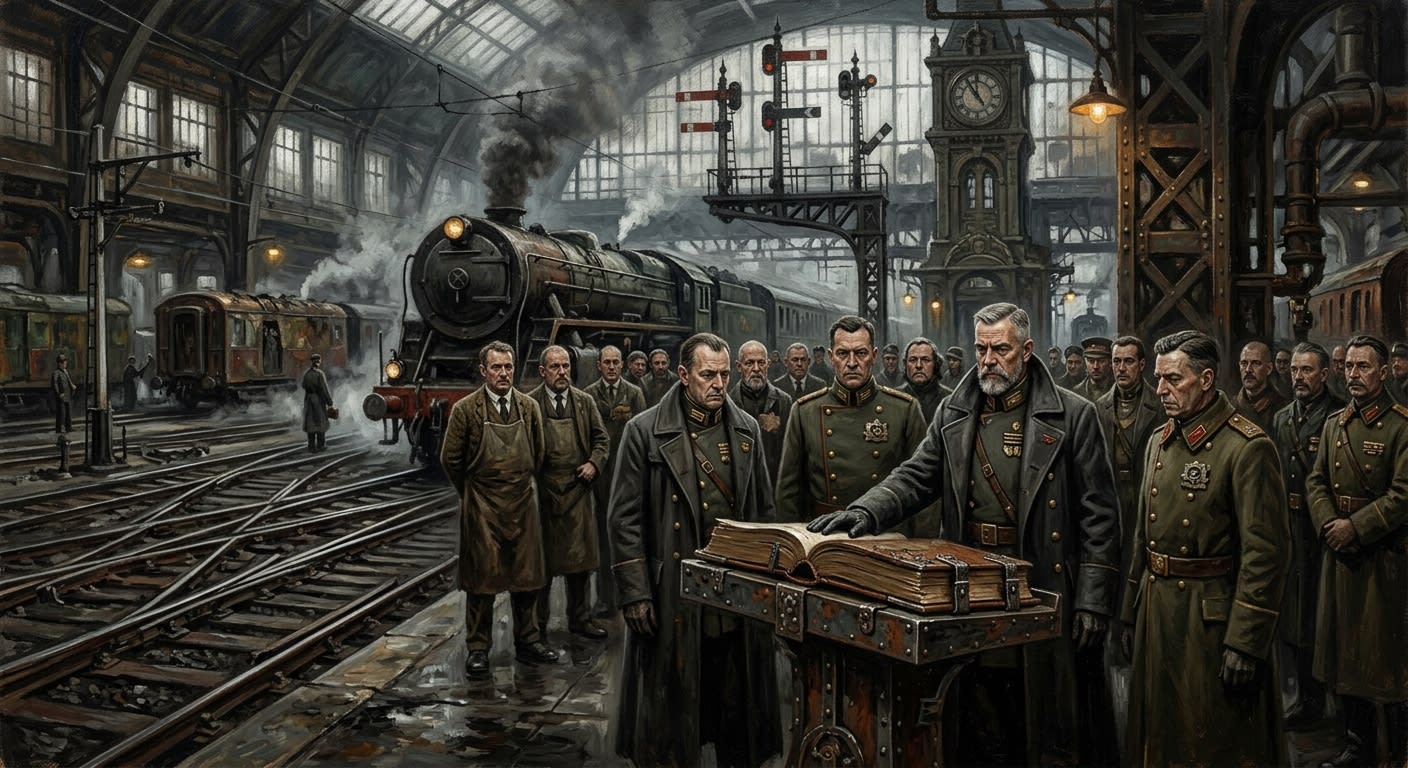
Codex Ferrum
The iron book that taught bishops to wait for the rail
The Codex Ferrum chartered the Guild of Rails in A.S. 94, giving iron custody a legal voice and every later train delay a holy ancestor.
Codex Ref. XIII.1.94-001
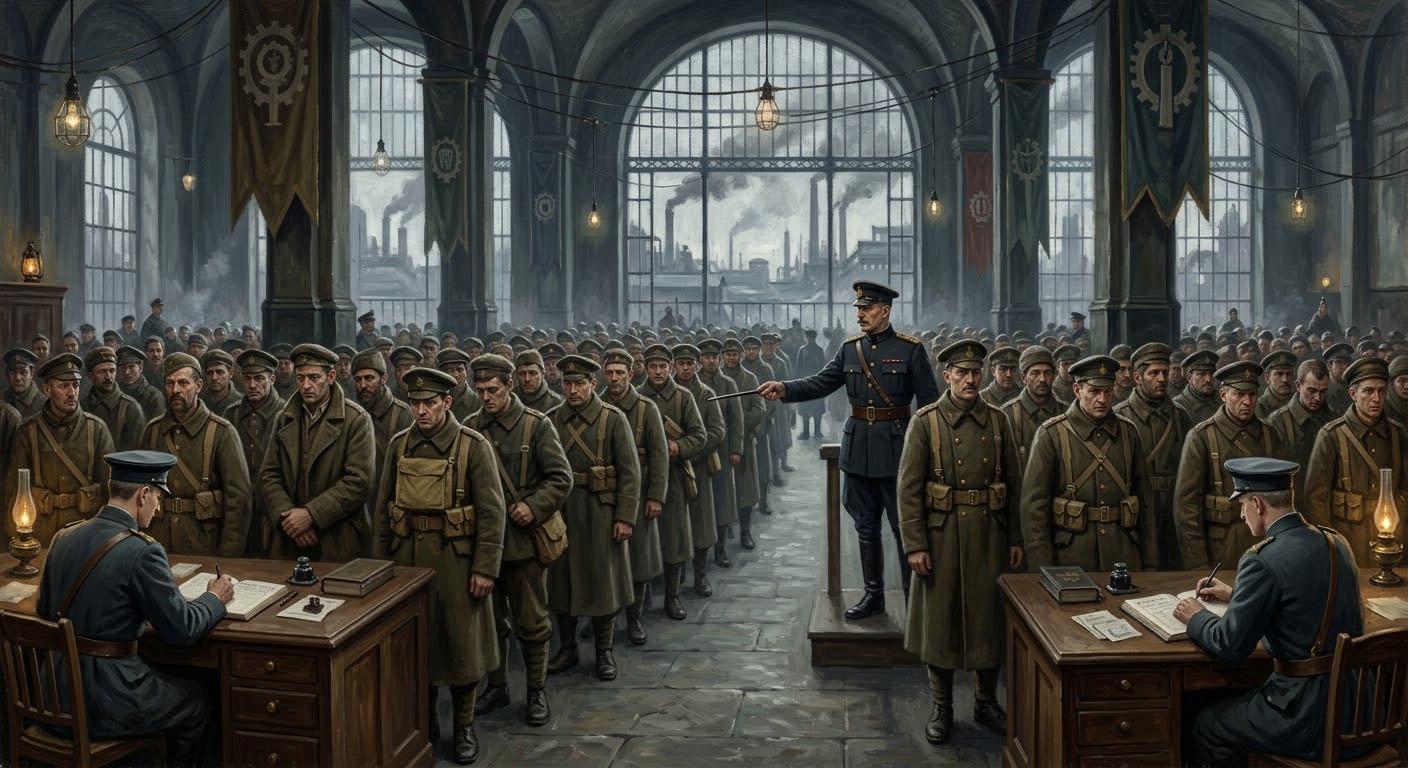
Continental Levy
The decimal point where obedience becomes infantry
The Continental Levy is the Synod's permanent tithe of flesh, born from the A.S. 110 crisis and refined into household arithmetic.
Codex Ref. XIII.1.54-001

Counter-Toll Operator
What the enemy rings, the Bureau drowns. The toll is paid in bone and nerve.
The Bureau of Bells does not debate; it drowns. Its Counter-Toll Operators sit in sub-tower vaults and overwrite hostile tones with louder ones. The city's obedience is the bell's argument.
Codex Ref. XII.2.02-001
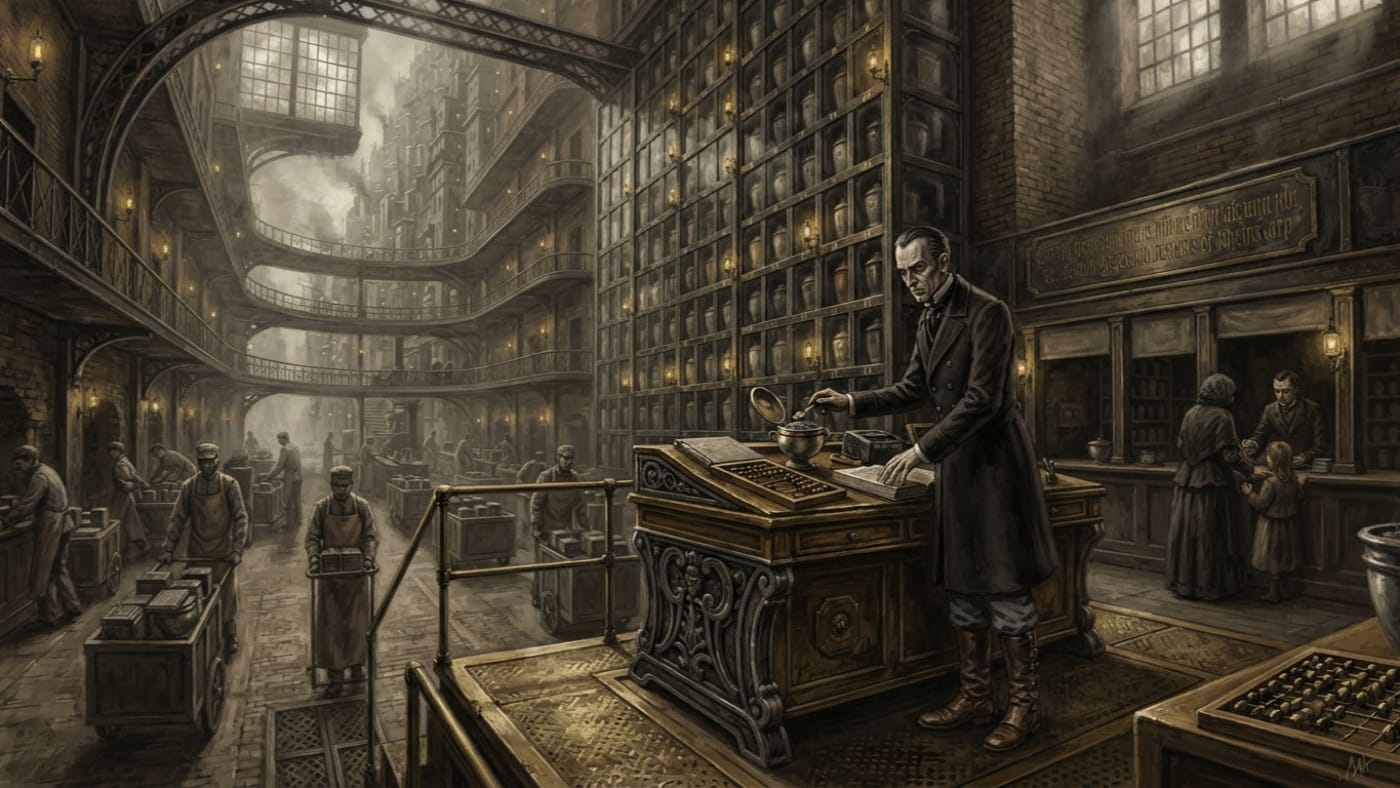
Damas Rohe
Uncle to the brokers, creditor to the dead
Broker-Saintsman Damas Rohe controls Rheinscarp's Ash Exchange, lending grain against future cremains and trading the dead. He holds no Synodal office; his collateral arrives all the same.
Codex Ref. III.2.01-201
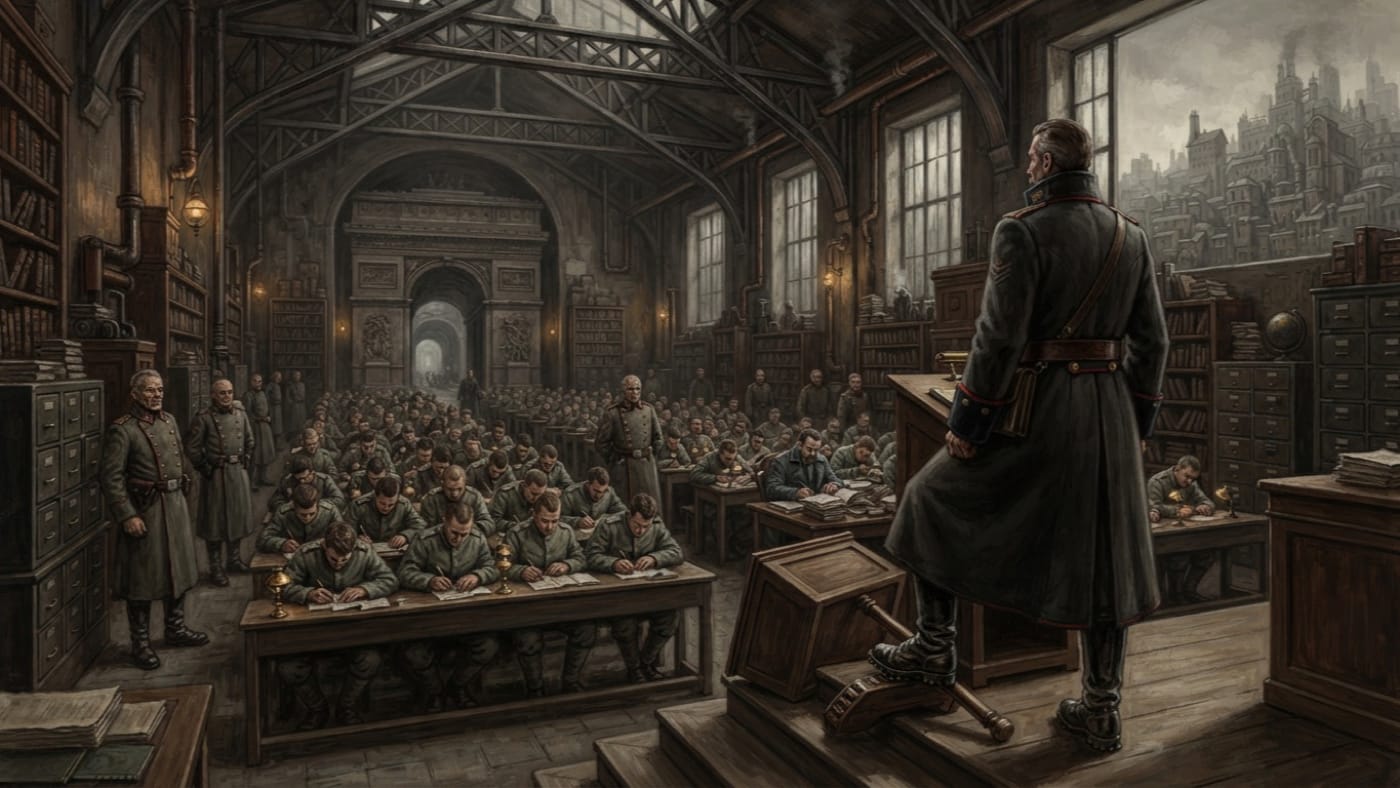
Dean-Marshal
One boot in the lecture hall. The other on the lecturer.
The Dean-Marshal governs the War College under War custody and Doctrine and Records supervision. In this A.S. 201 survey, I find competent administration, borrowed arithmetic and no gratitude for its authors.
Codex Ref. VIII.5.09-001
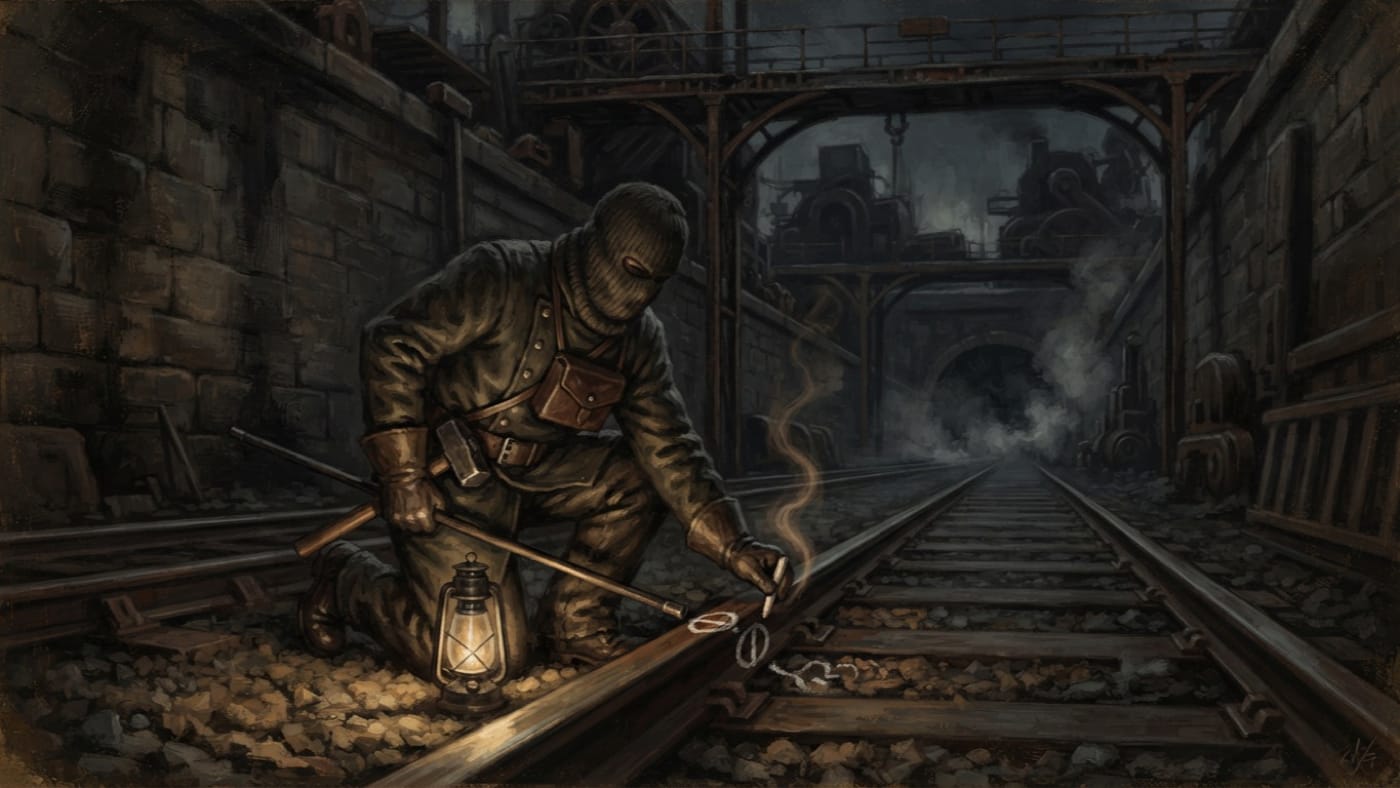
Demon-Sign Chalk
White on the rail, warm over the heart
A maintenance consumable carried over the heart: Guild chalk marks rails no man should walk alone after dark. Doctrine denies theological standing; witnesses report warmth.
Codex Ref. III.2.04-859
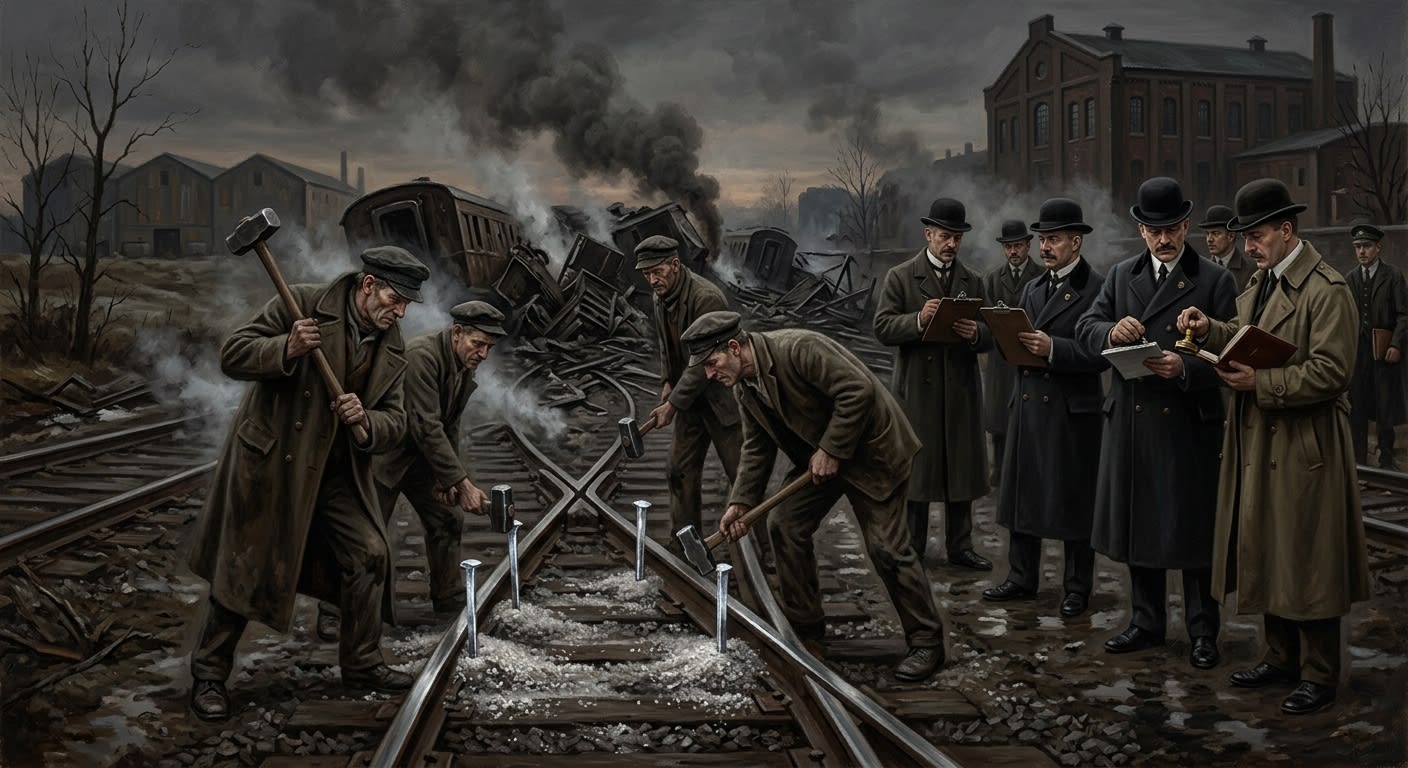
Devil's Joint Incident A.S. 147
The junction secured itself only after three hundred names were spent
A.S. 147 Metz rail-junction catastrophe in which three hundred died, the Guild sealed the points with silver spikes and salt-ballast, and Records accepted “no further inquiry” before breakfast.
Codex Ref. VII.8.10-147
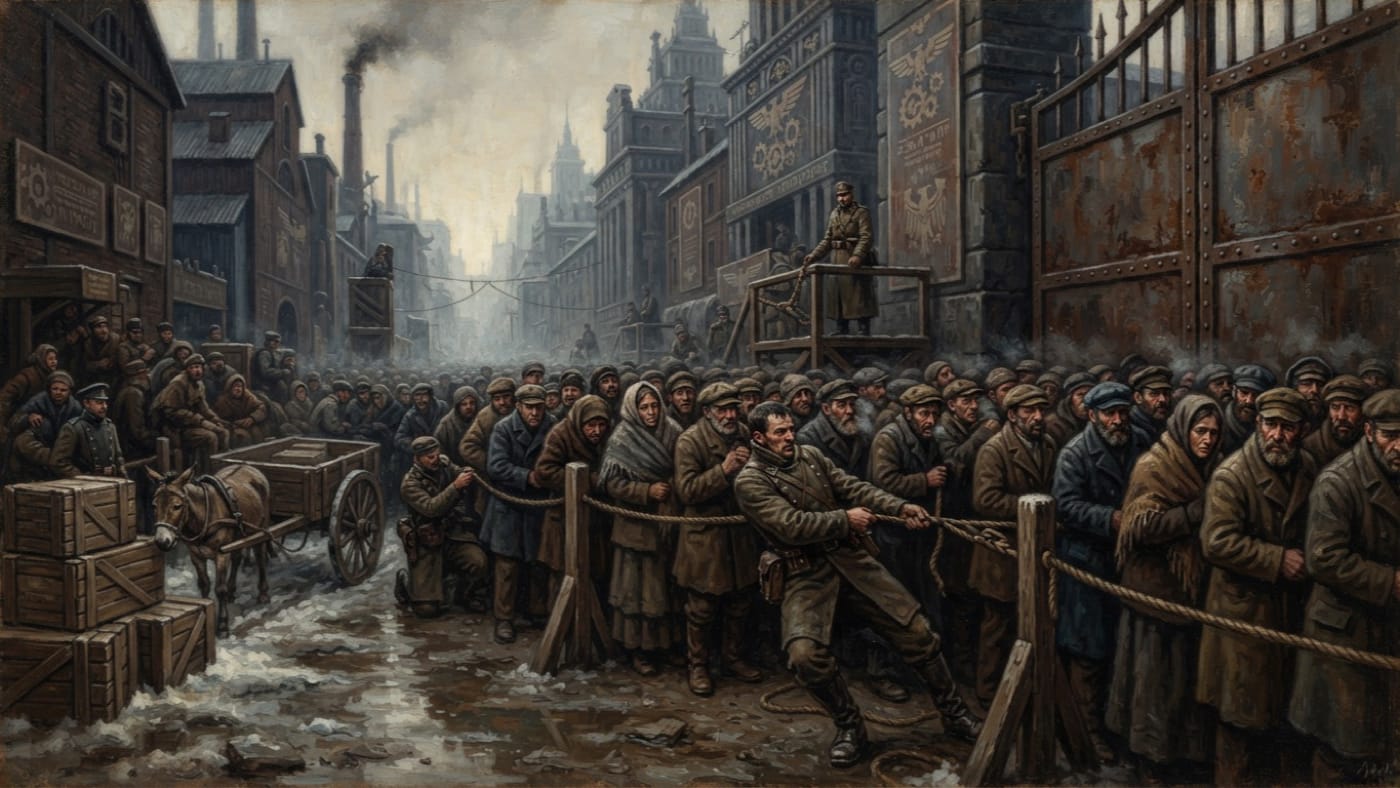
Emergency Lateral Release Pattern 3-C
The knot grants breath; the gate still demands a stamp
Pattern 3-C turns a crowd sideways before the gate turns it into casualties. Standardised in A.S. 118, Ravel's mercy preserves breath without granting passage.
Codex Ref. XIII.1.118-003
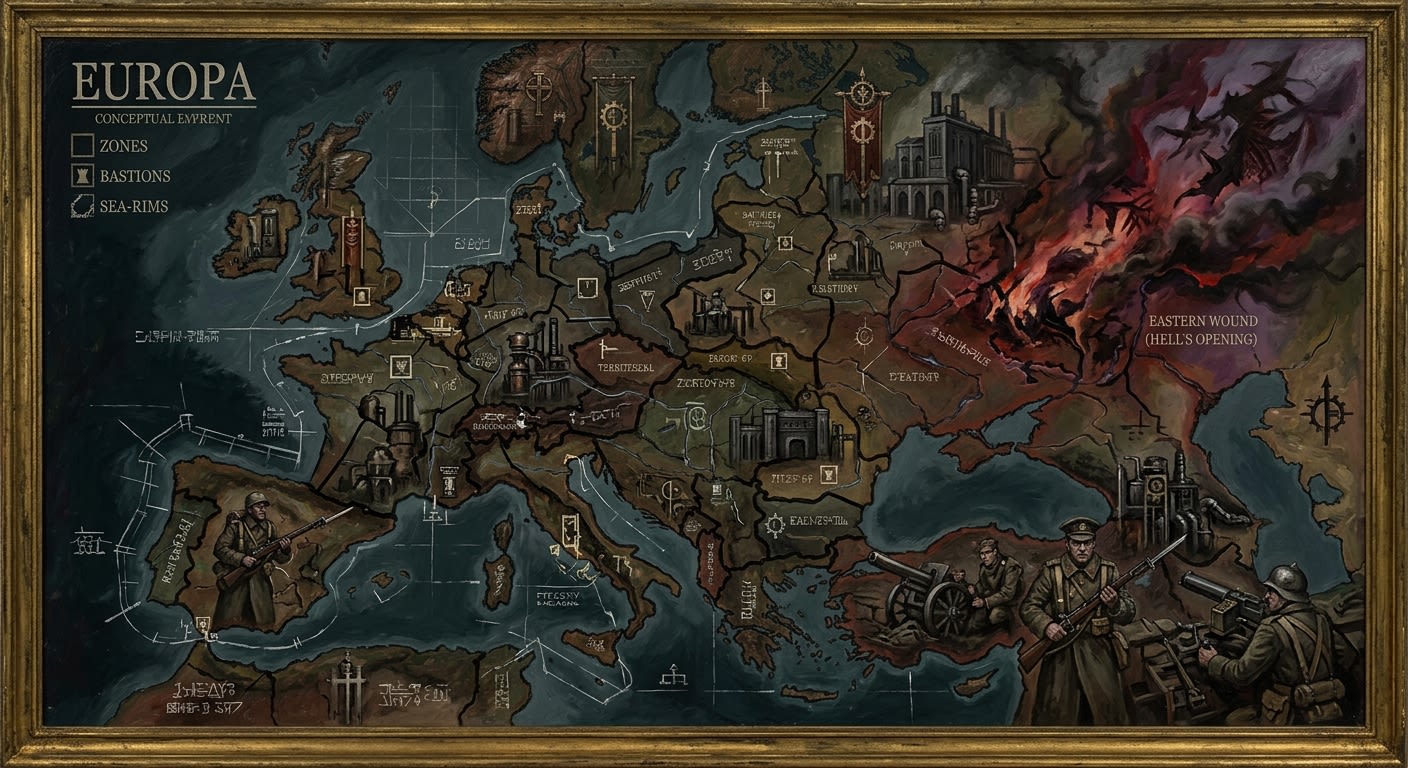
Europa
The continent as filed, wounded, taxed, and made obedient enough
Europa is not whole; it is the continent filed into zones, bastions, sea-rims, independent nuisances, and the eastern wound Hell keeps open.
Codex Ref. II.0.00-201
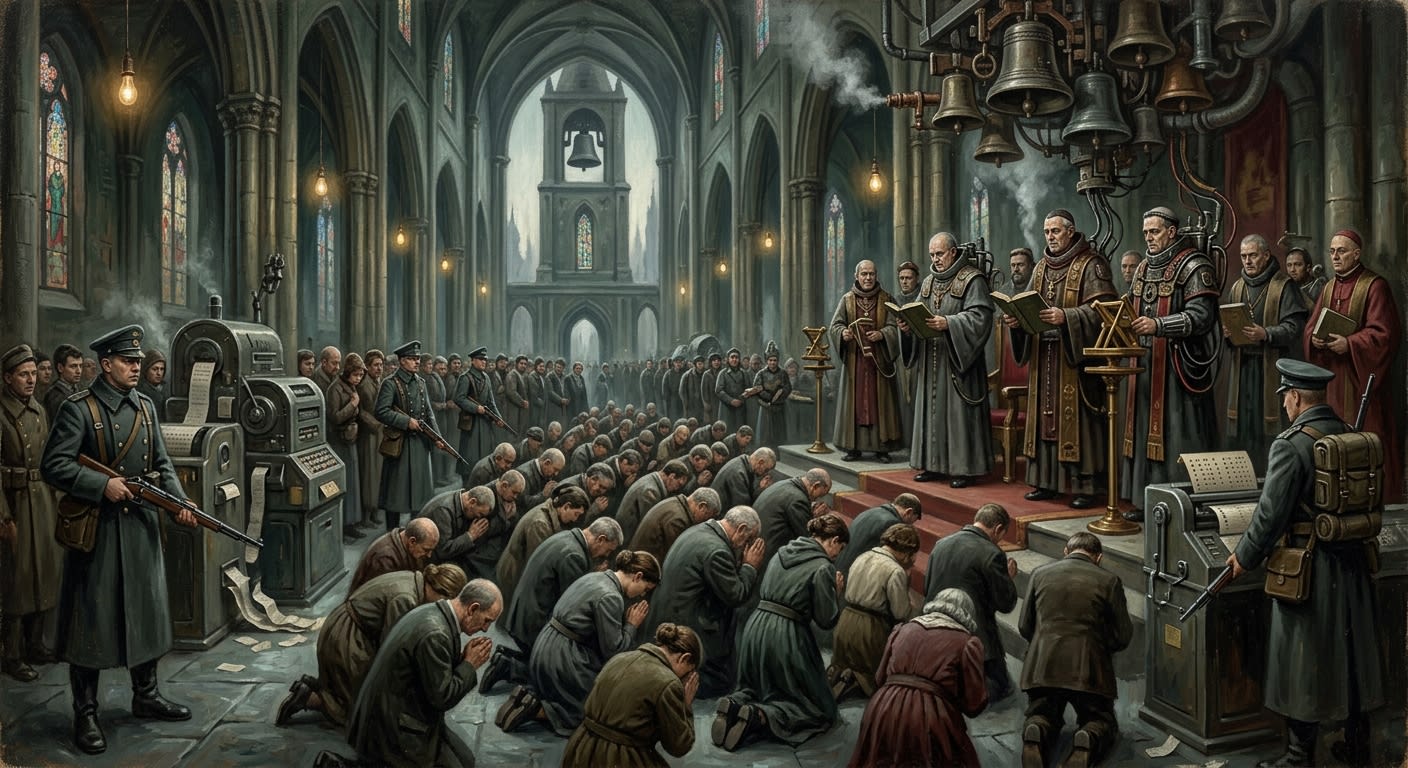
Feast of Doctrinal Submission
The holiday that teaches the spine to kneel before the mouth calls it faith
The Feast of Doctrinal Submission is the Synod's mandatory kneeling holiday: census, pageant, ration queue, loyalty assay, and permitted joy under bells.
Codex Ref. XIII.1.89-072
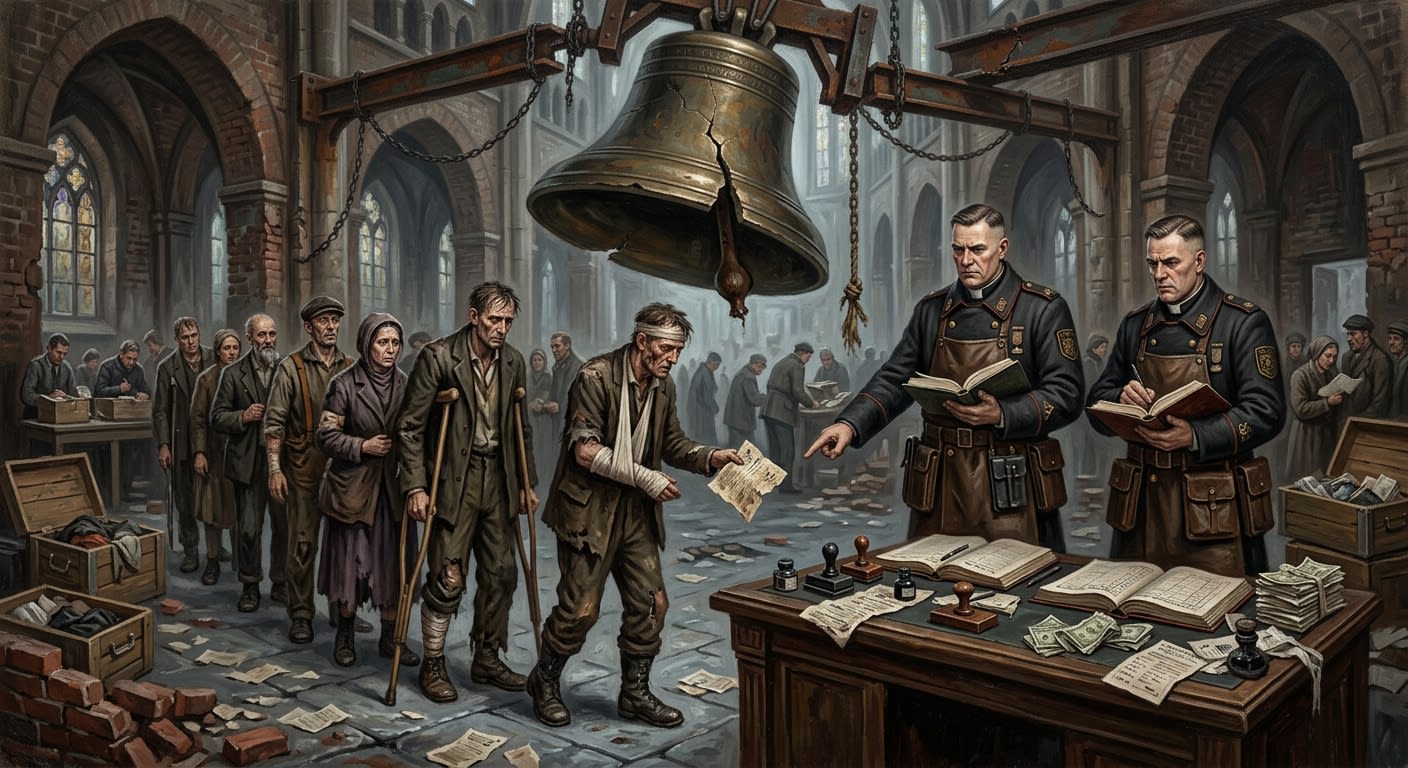
Feast of the Cracked Bell
The damaged bell still tolls, therefore the damaged citizen still owes
The Feast of the Cracked Bell teaches the Synod's favourite mercy: broken things may still serve, so damaged citizens may still be counted, tolled, and taxed.
Codex Ref. XIII.1.89-201
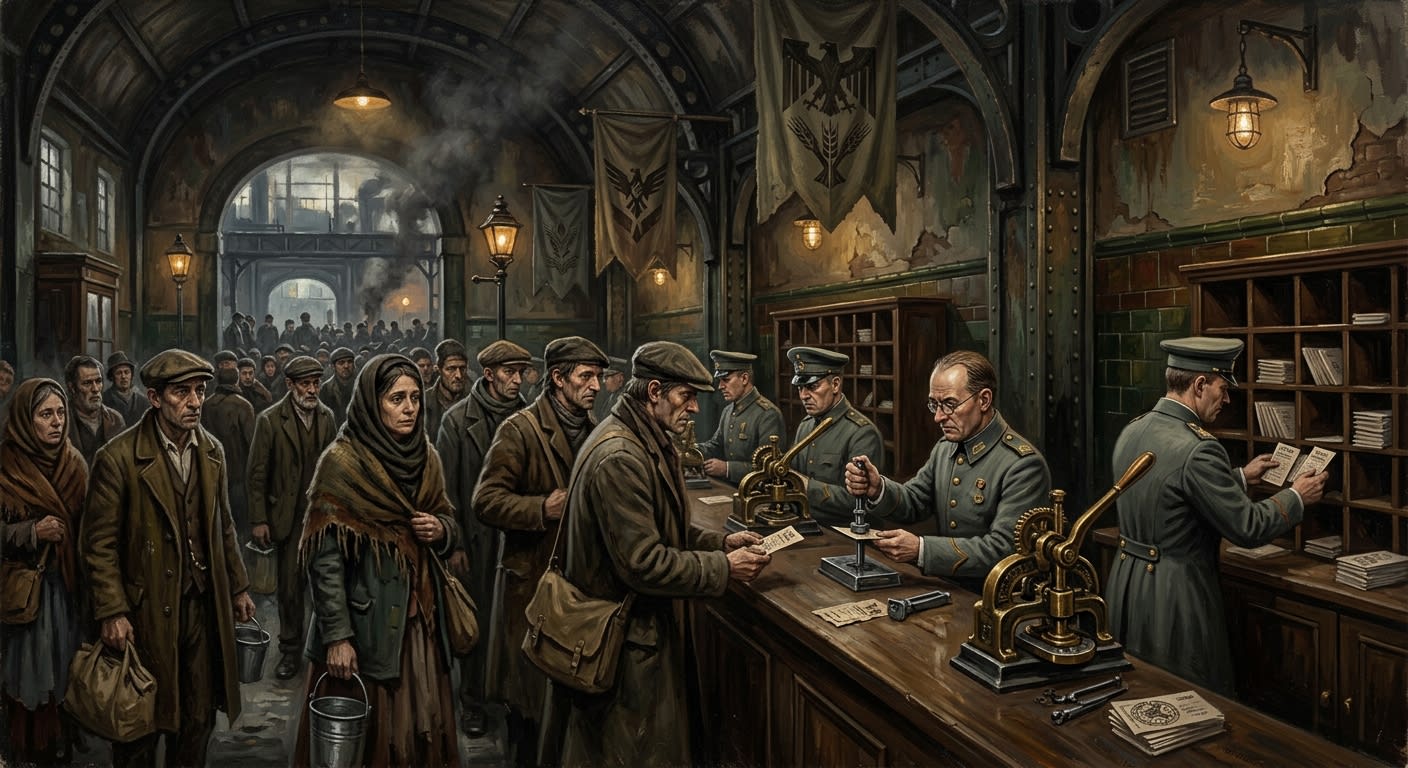
First Ration Reforms
The year hunger became portable, printable, and politely deniable
The A.S. 104 First Ration Reforms standardised ration chits across eight provinces, making hunger legible to Tithes and teachable to Grain Keeper fraud.
Codex Ref. VII.8.10-037
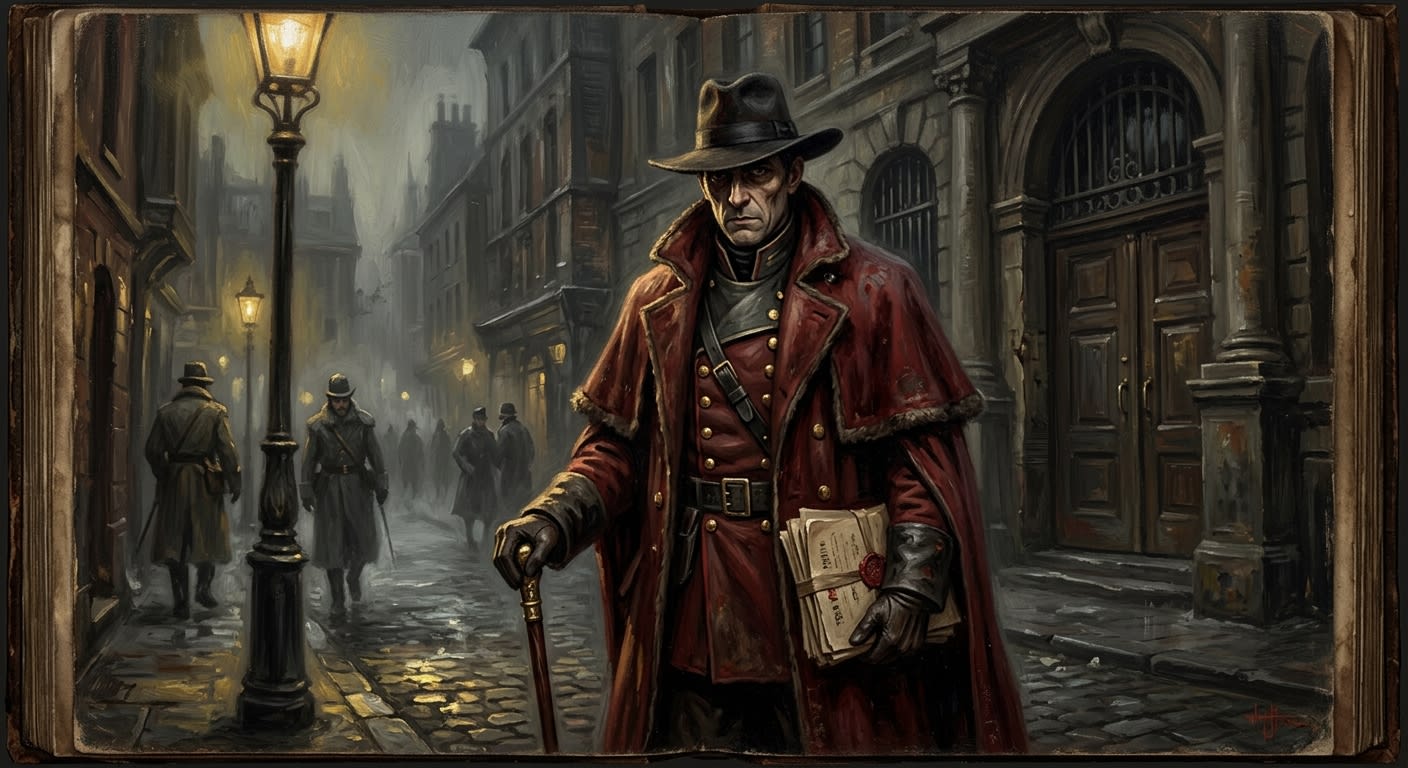
Grand Inquisitor Malthus the Red
The erased butcher whose procedure outlived his name
Grand Inquisitor Malthus the Red is officially absent from every Bureau list, which is how the Synod confesses that the Vienna incident frightened Purity into erasing one of its own.
Codex Ref. III.2.01-054
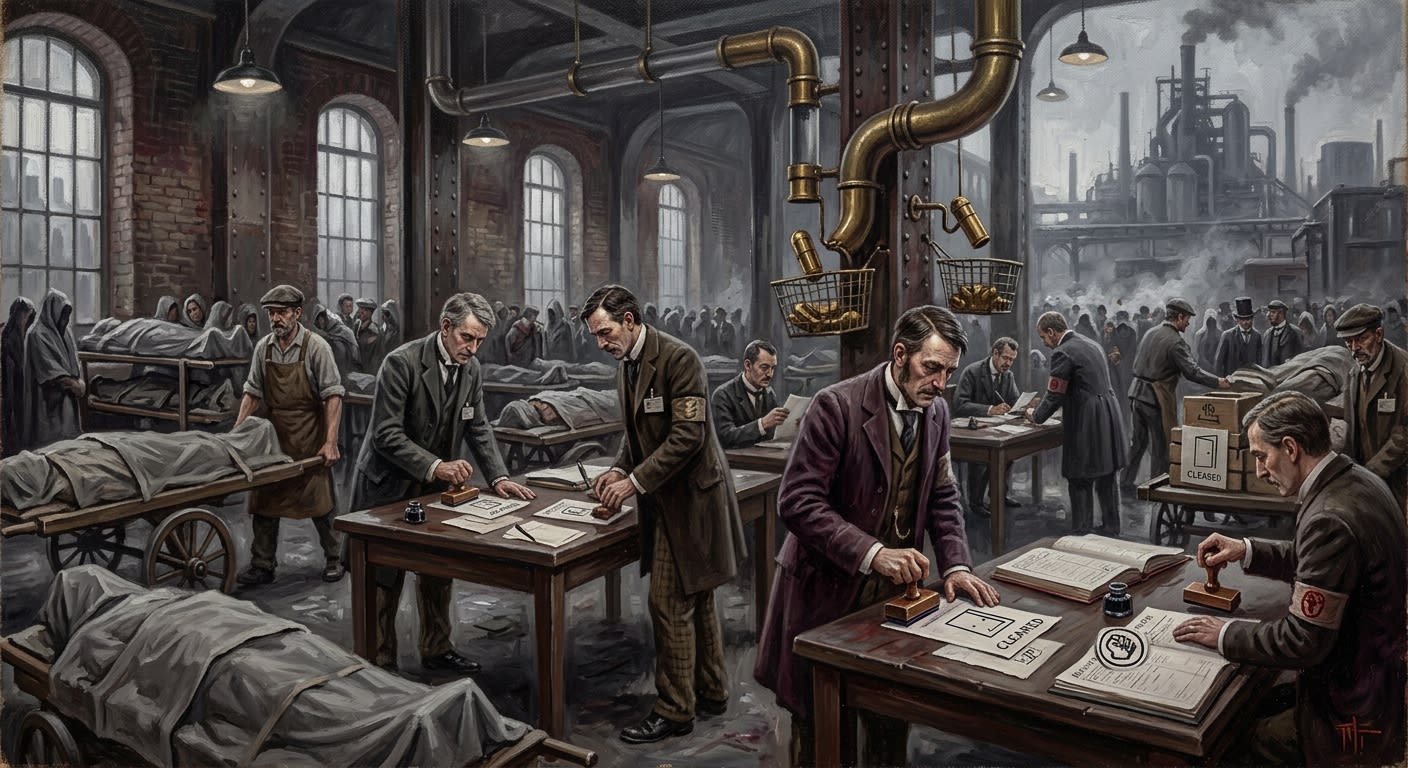
Gray Clearance
The winter mercy that moved bodies faster than names could follow
Gray Clearance was the A.S. 157–158 emergency mortuary protocol that reduced five corpse classifications to CLEARED or HELD, saved the living, and taught grief to pay for speed.
Codex Ref. VII.8.10-021
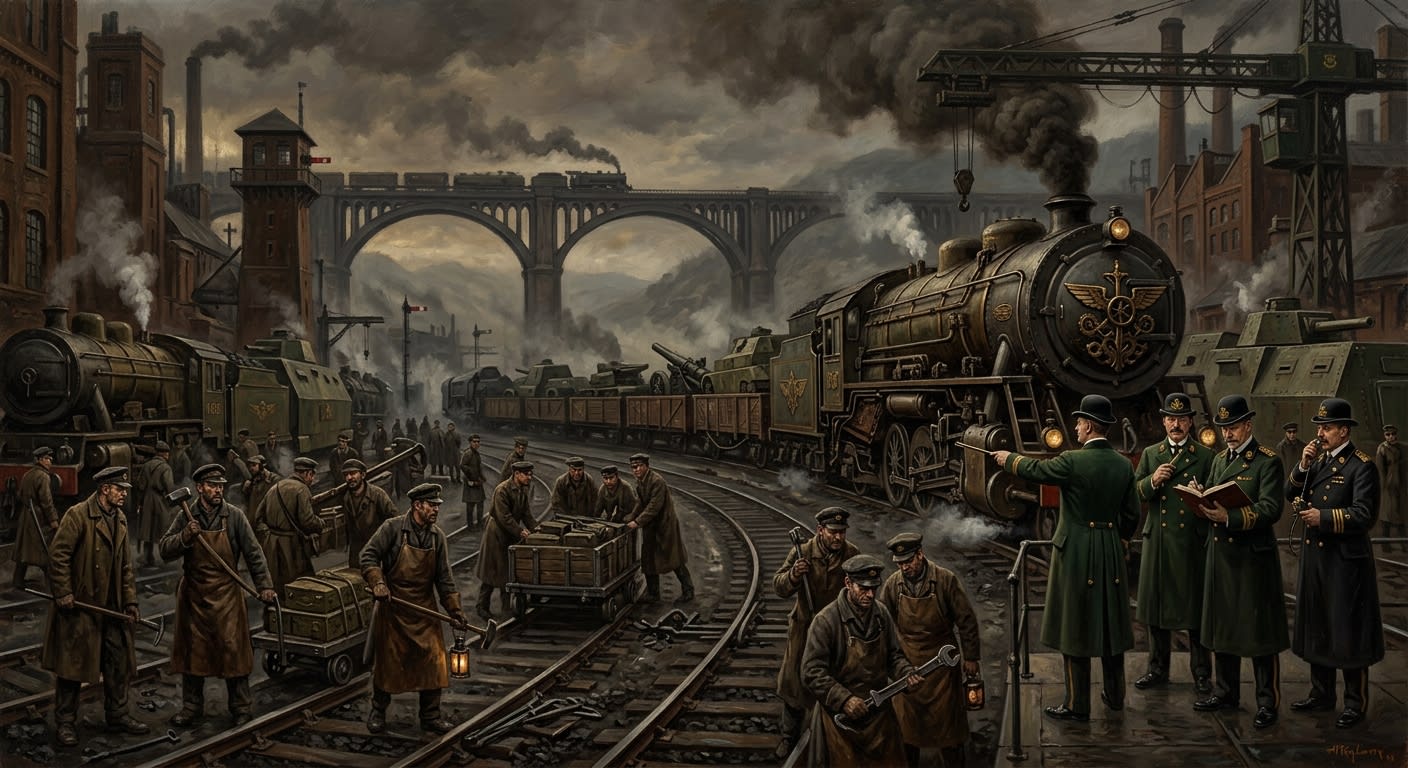
Guild of Rails
The iron road permits the war to arrive
Licensed brotherhood of track, gauge, junction, ballast, bridge, and schedule; the Guild moves the Dominion’s war and charges extra when physics objects.
Codex Ref. XII.44.01-001
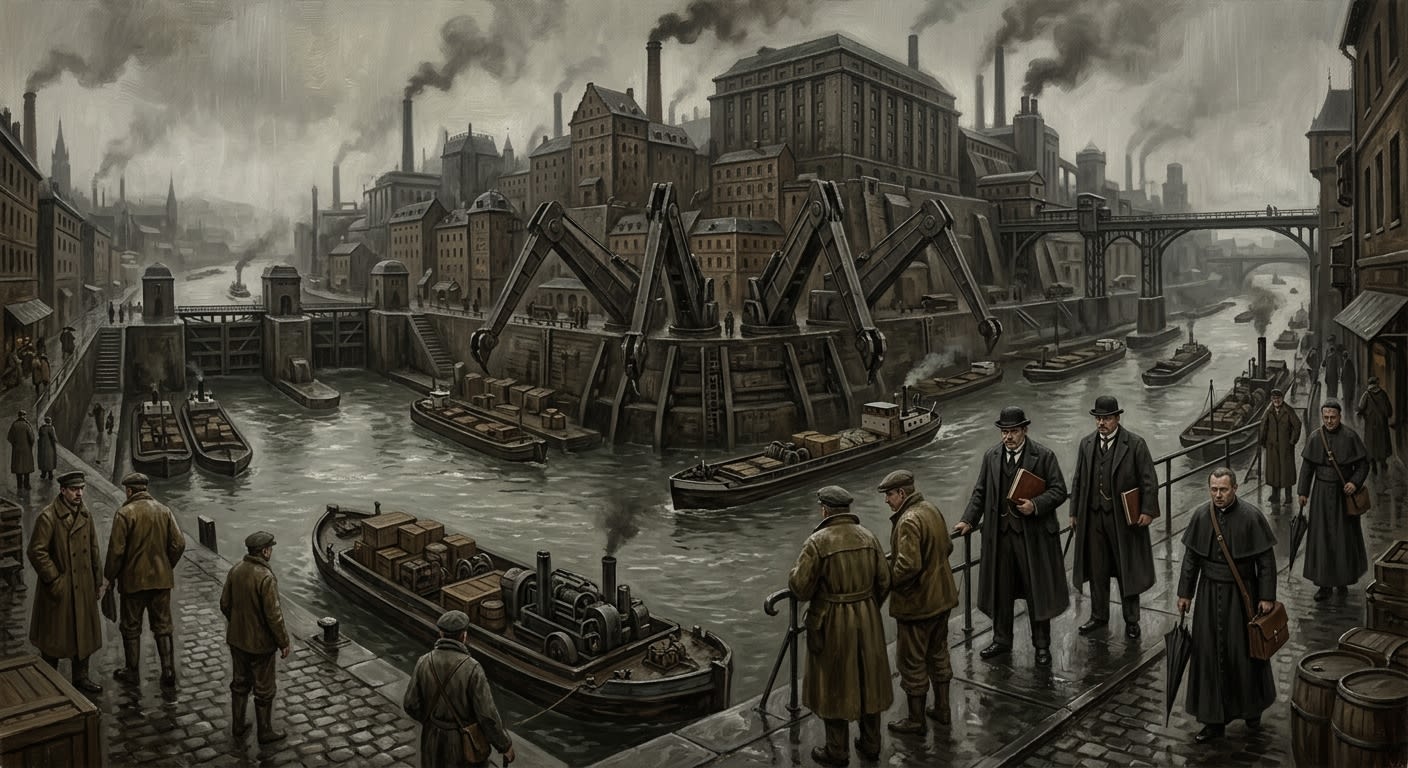
Koblenz
The holy art of handing the burden onward
Koblenz is the wet middle hand of the Ignatian chain: a Rhine-Moselle transfer city where sanctity lasted six minutes and became taxable forever.
Codex Ref. II.3.05-045

Ledger Hand
Legible, and therefore unread
Ledger Hand is the Grain Keeper art of making fraudulent ration pages look too dull to read. Attributed to Old Klem, it conceals grain misapplication beneath competent penmanship.
Codex Ref. XIII.1.100-201
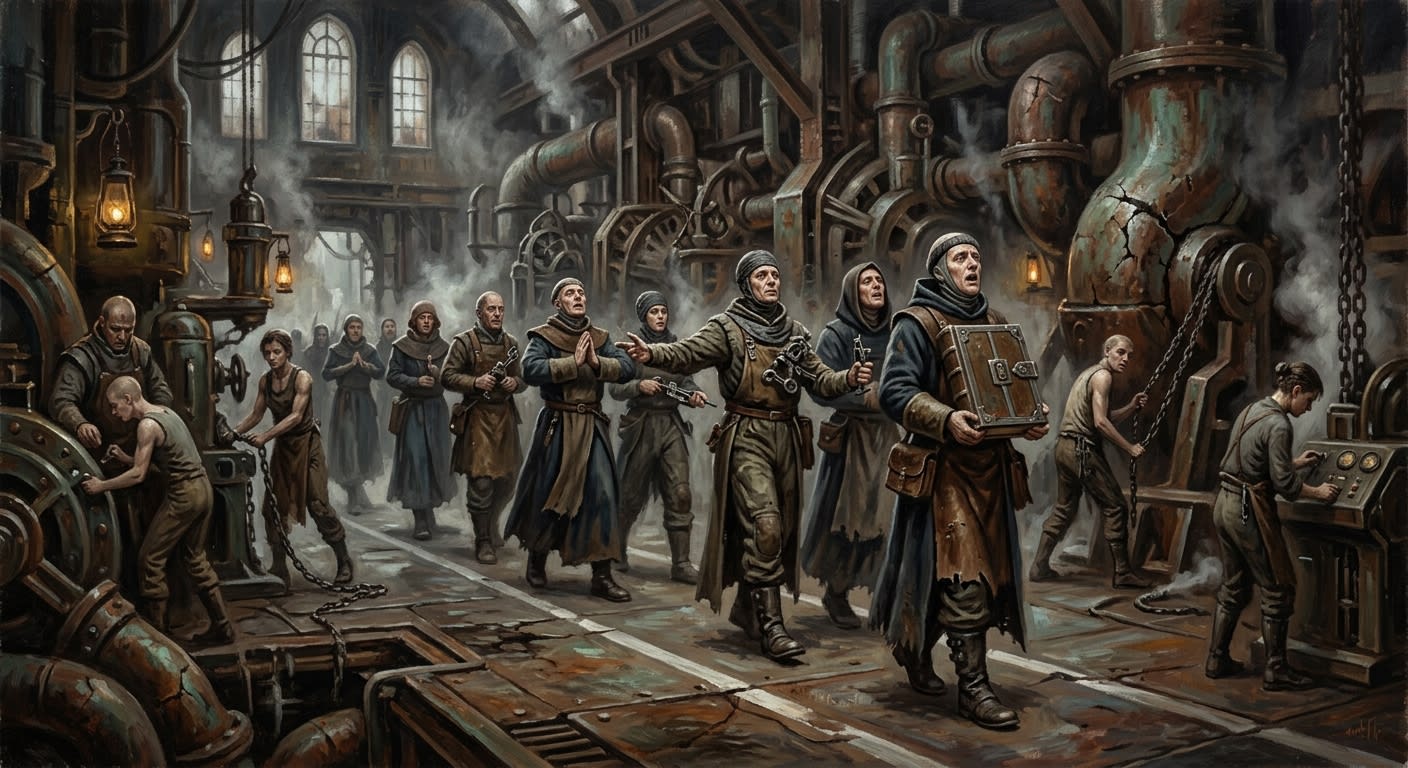
Line-Purists
The clean rite card, the whole verse, and the corpse beside the gauge
Line-Purists are the Doctrine-favoured faction of the Gasket-Hymn Mechanic craft, preserving the full nine movements even when rupture makes obedience murderous.
Codex Ref. XII.2.04-003
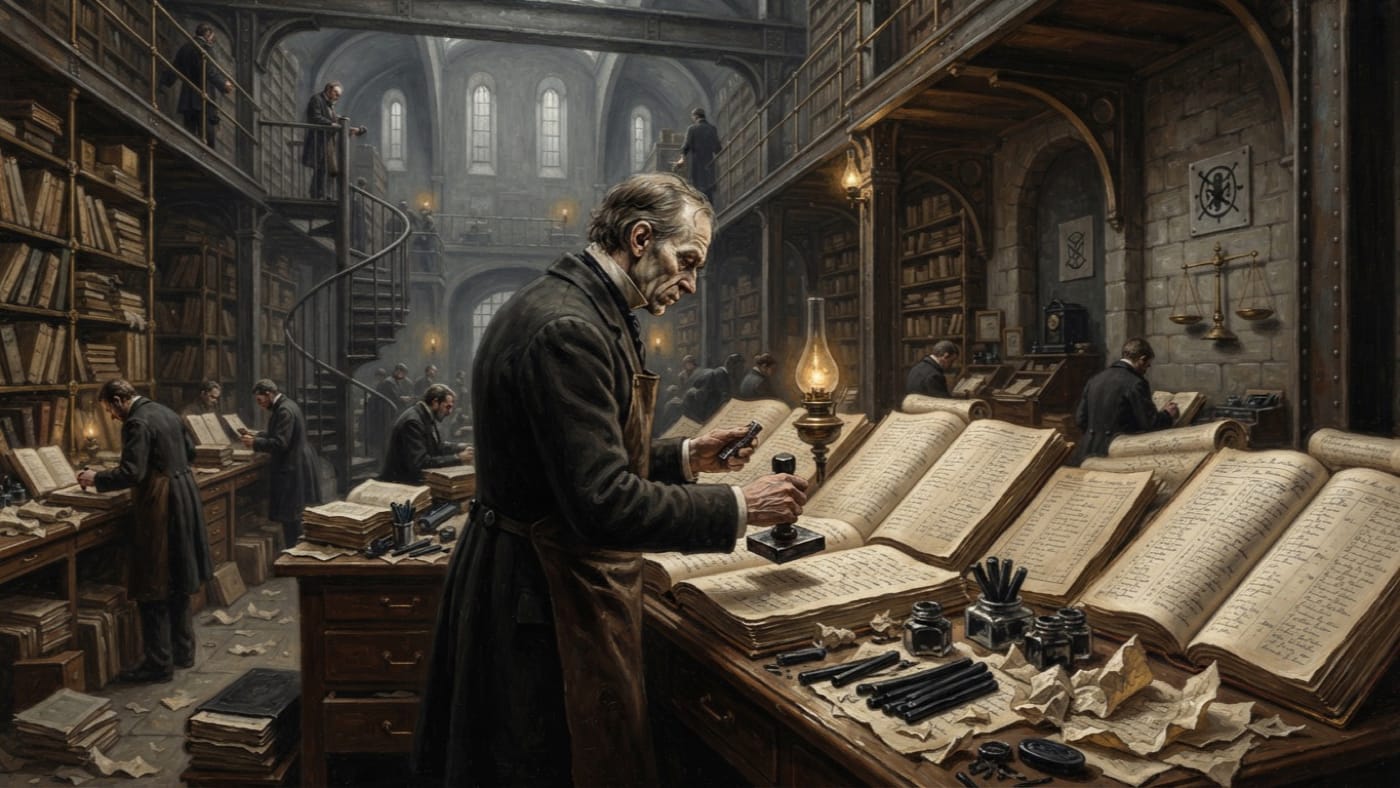
Lineage Severer
The household loses its standing; the Office keeps every page.
The Office of Nullity's family-strike specialists reconcile dependent rolls before sealing a household out of civic life. Nobody dies at the desk; every office afterward refuses them.
Codex Ref. XII.14.01-003

Master-Carillonist Aldo Venn
The man who makes obedience audible
Aldo Venn, Master-Carillonist of Strasbourg's ninth floor, keeps the Grand Schedule, answers hostile bells with sanctioned dominance, and calibrates grief into usable doctrine.
Codex Ref. III.2.01-061
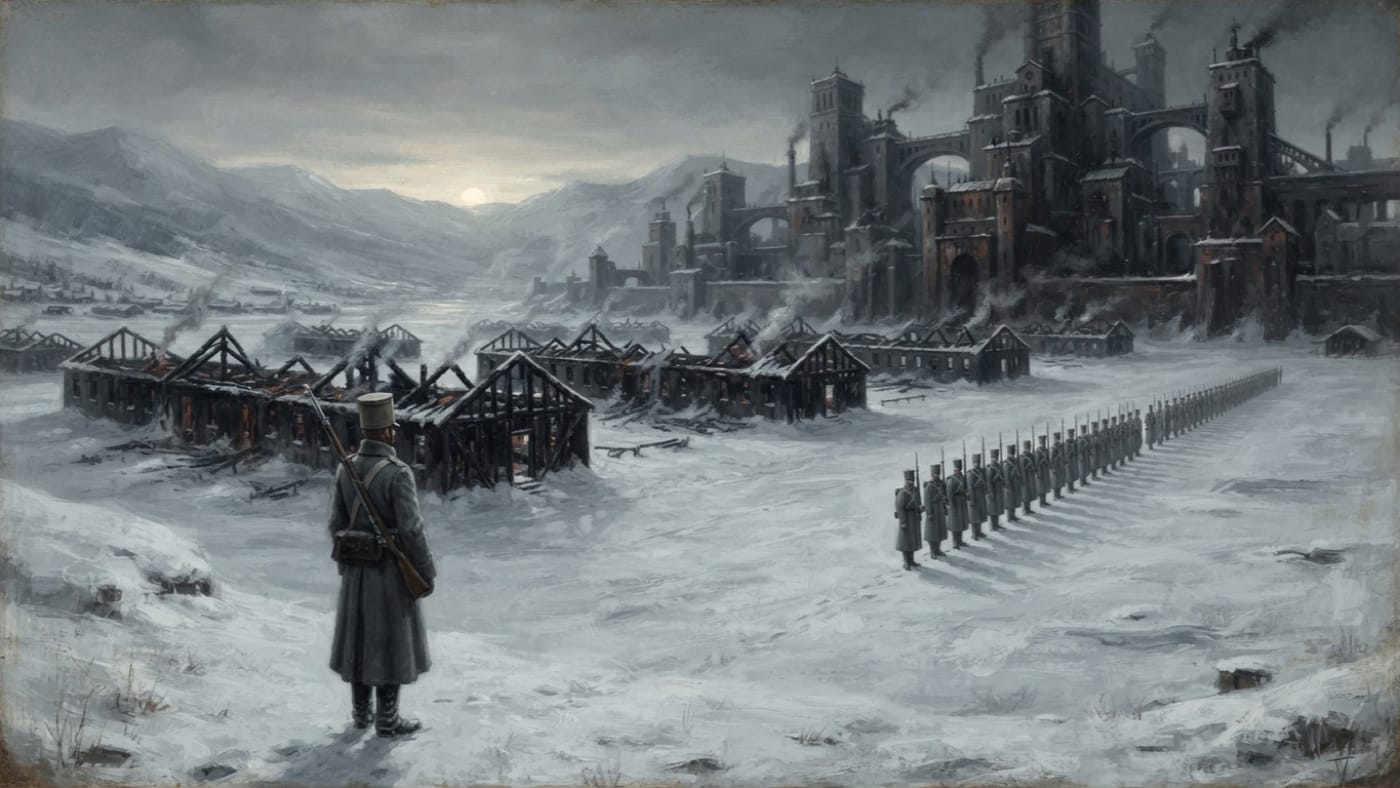
Metz Oblivion
Four choirs in the account; none admitted by Records
An A.S. 201 survey of the Metz Oblivion: the Lore Book reports four choirs missing after a winter Night Paper; Records says none existed. The Fusiliers remember the silence.
Codex Ref. VII.3.28-001
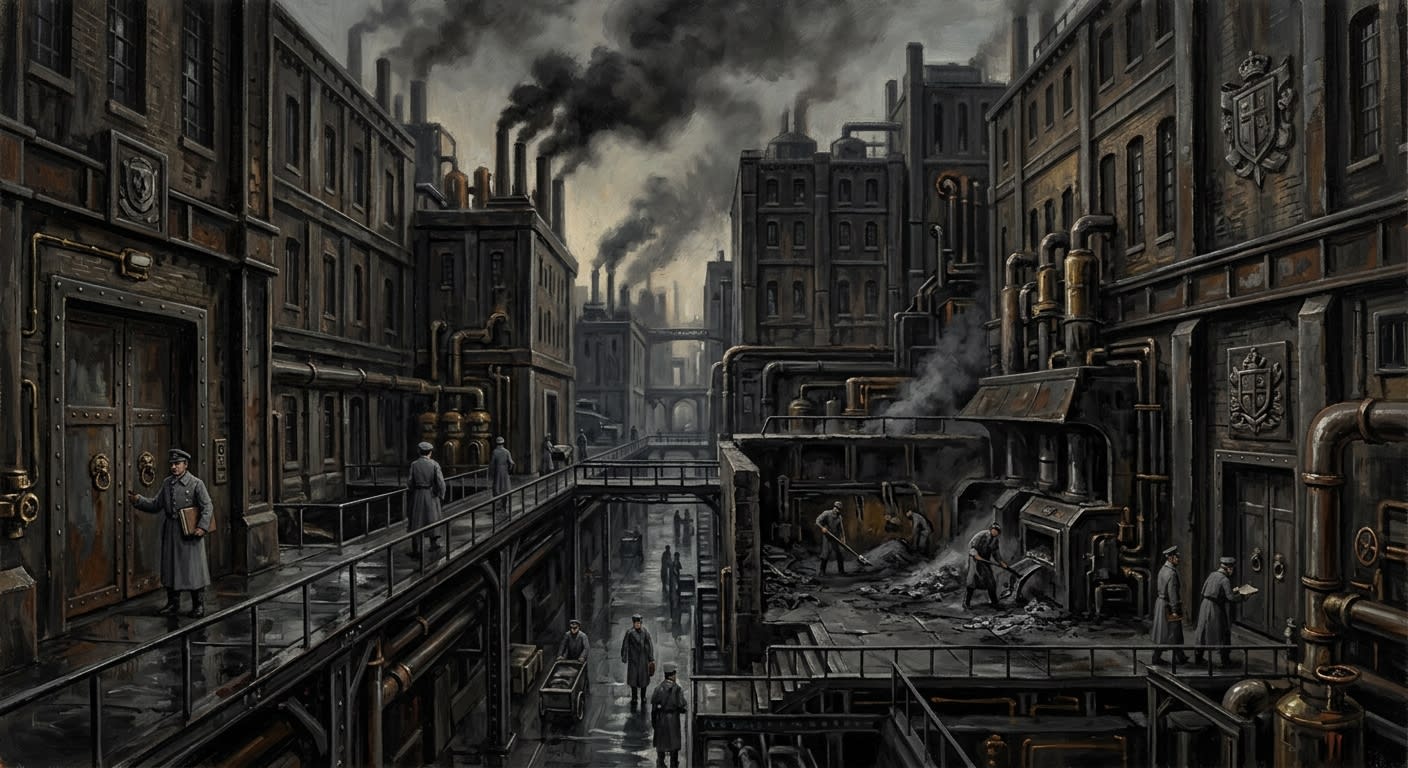
Mortuary Black
The ink that keeps the name and murders the claimant
Mortuary Black is the Bureau of Records compound for Administrative Dissolution: iron-gall, bone ash, Rites seal, and enough silence to make a name visible and unusable.
Codex Ref. XIII.1.01-002
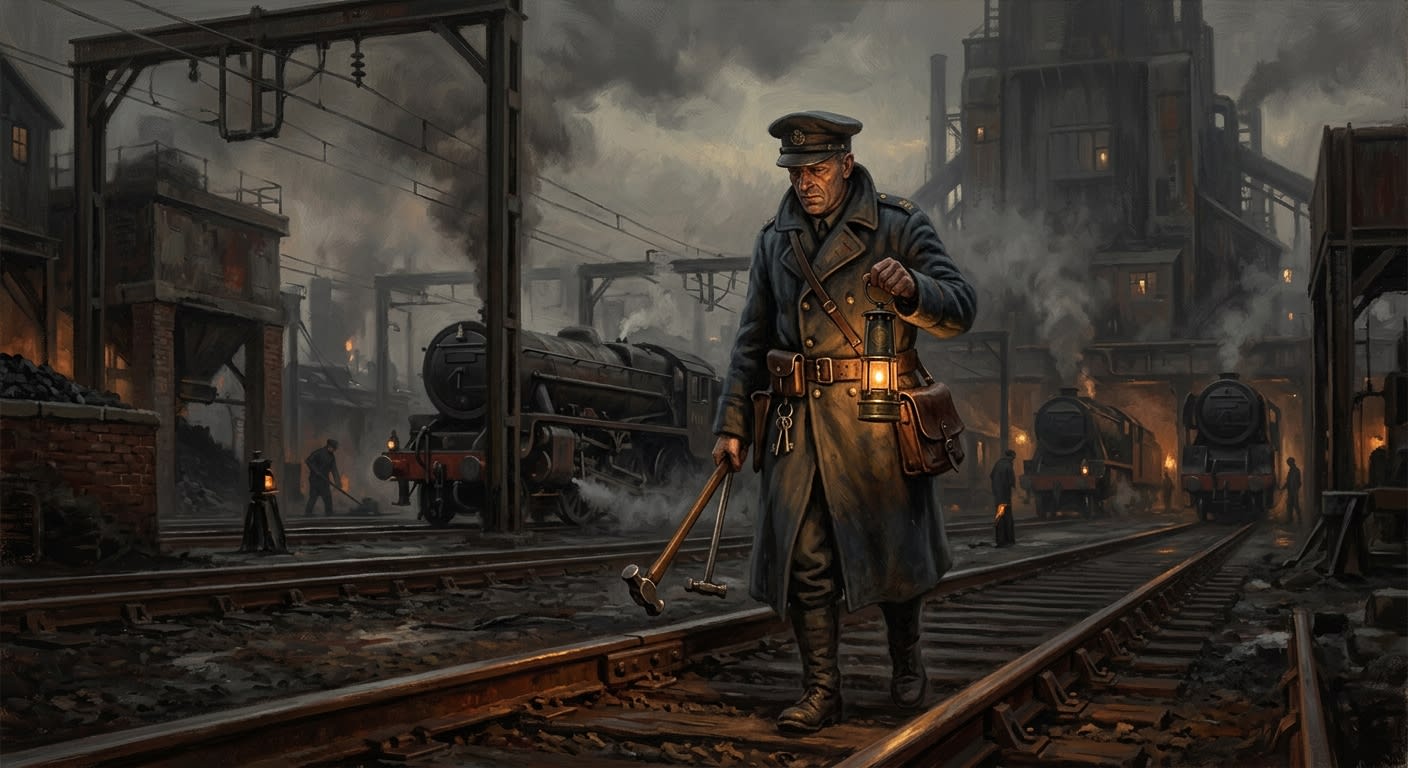
Night Walkers
Lantern low, hammer quiet, and no questions after dusk
Guild of Rails dusk-to-dawn patrolmen who walk the tracks with lantern, hammer, gauge rod, and demon-sign chalk, hearing what daylight, Engineering, and Doctrine prefer to deny.
Codex Ref. XII.44.03-001

Office of Nullity
The knife kept inside the book
Sub-office of the Bureau of Records governing Erasure Notaries, strike writs, dependent ledgers, black seals, and the civic art of making a person unprovable.
Codex Ref. XIII.1.70-001

Old Klem the Ledgerman
He did not hide the sack; he hid the absence
Old Klem the Ledgerman is the condemned founder-figure of Grain Keeper ledger fraud, the clerk who taught spoiled grain to become bread again.
Codex Ref. III.2.01-122
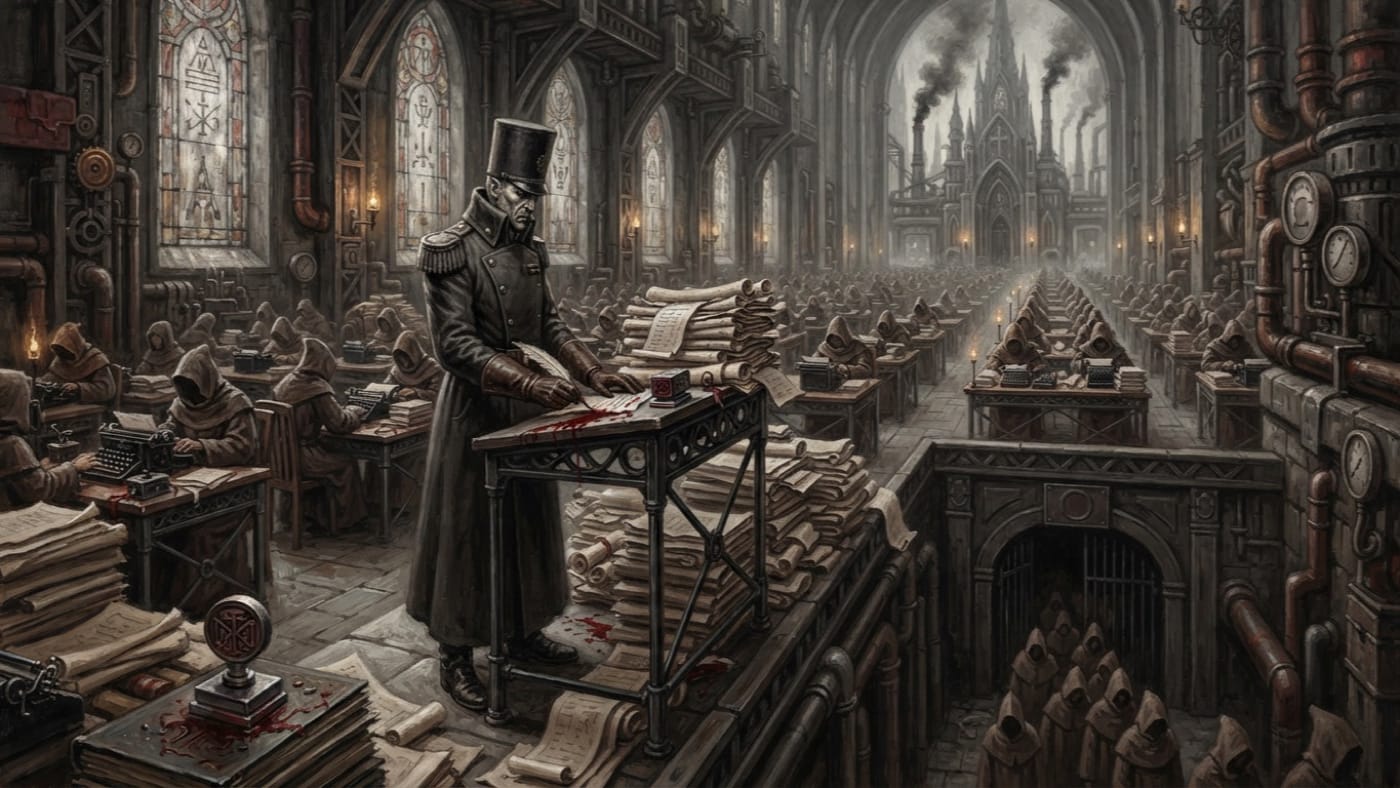
Ordinaries of Severity
The Lictor carries the knife; the Ordinary keeps the calendar
A.S. 201 survey of the Inquisition's middle tier. Ordinaries organize purges, penances and trials, often ruling a single diocese with absolute authority. The faithful learn the office through the names they fear.
Codex Ref. VIII.1.08-2029
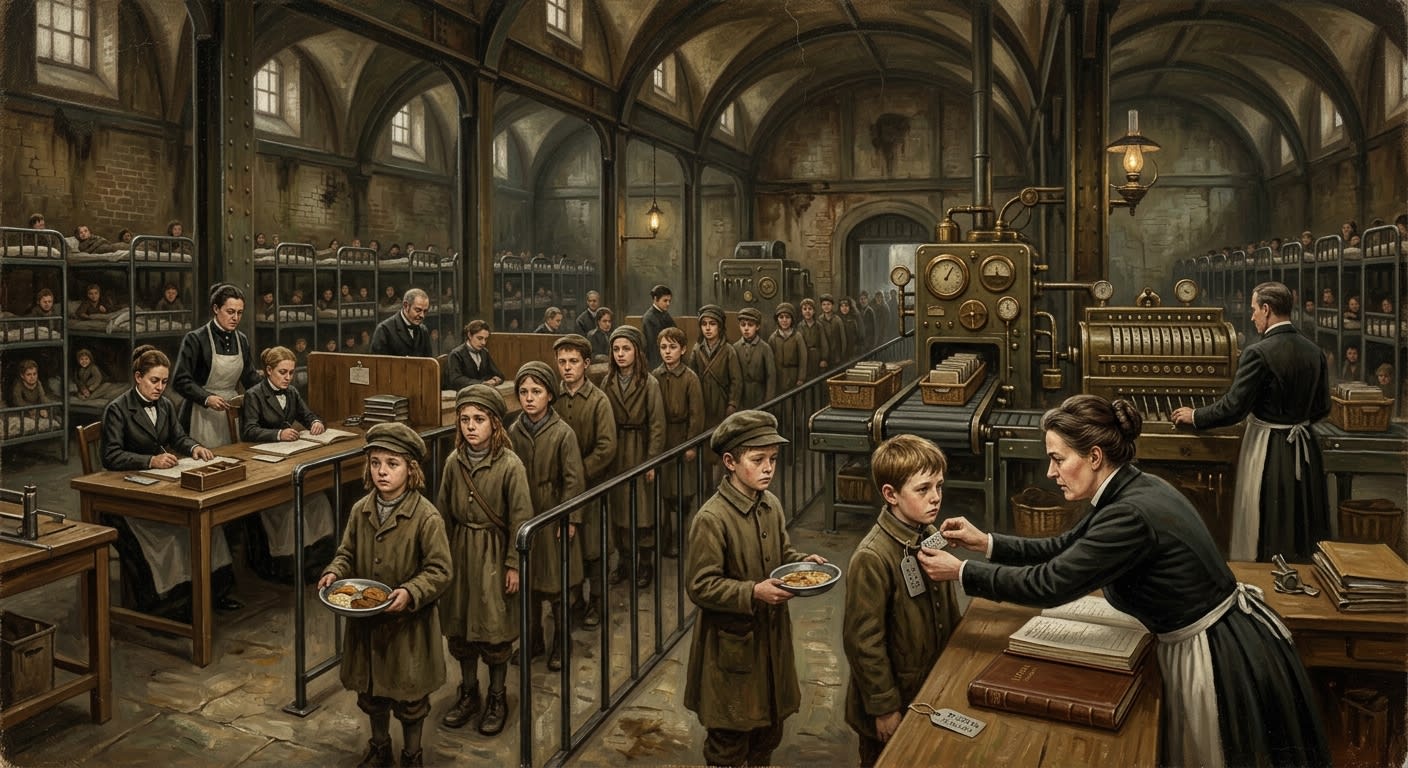
Orphanarii
Mercy with a cot, a tag-punch, and the legal courage to rename a child before breakfast
The Orphanarii are the Synod's state orphanage system: Mercy houses that wash, tag, rename, sort, feed, place, and sometimes erase children until grief becomes legible.
Codex Ref. VIII.2.12-134
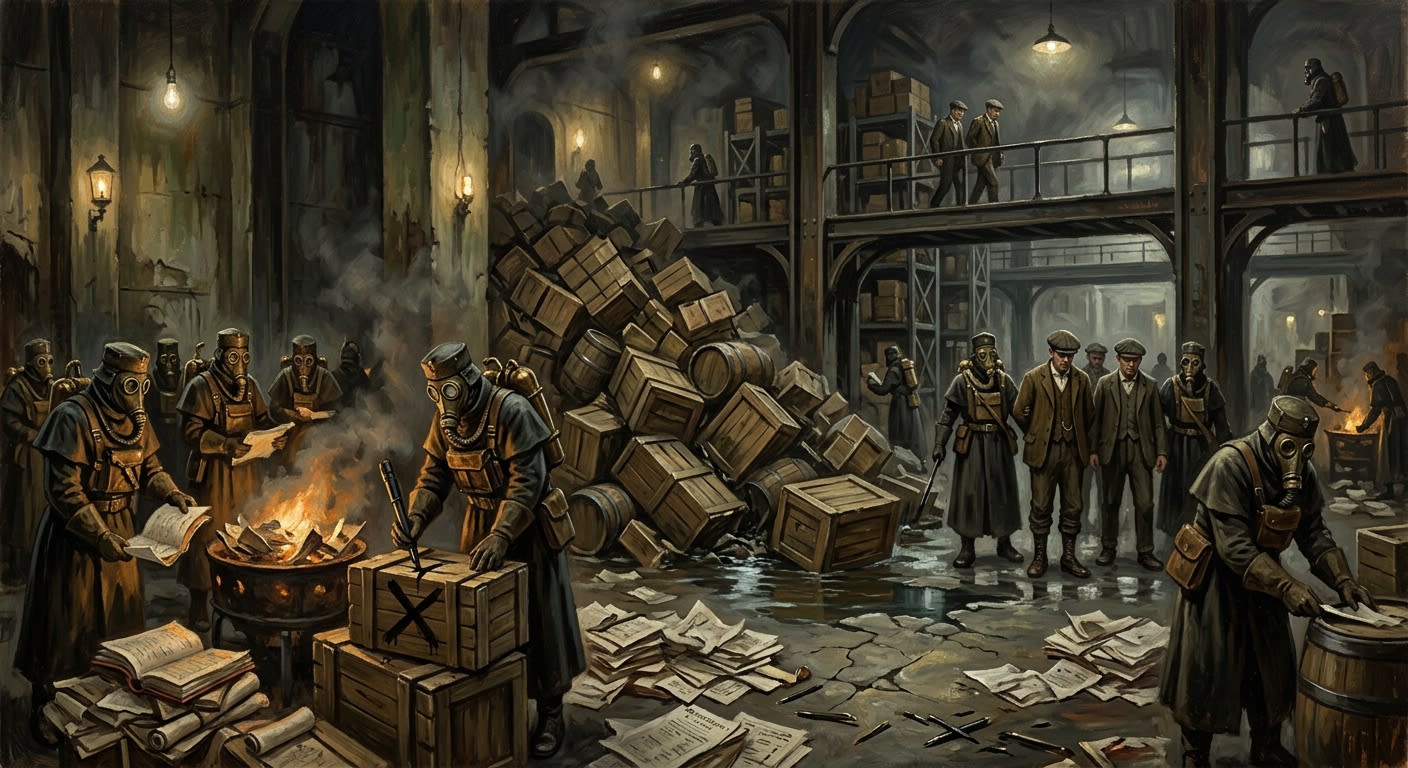
Orthography Purge of A.S. 112
When the letter changed, the invoice died obediently
The Orthography Purge of A.S. 112 reopened 411 manifest cases, stripped eleven Litigants of practice rights, and taught merchants that one suspect stroke can bankrupt a warehouse.
Codex Ref. VII.8.10-002
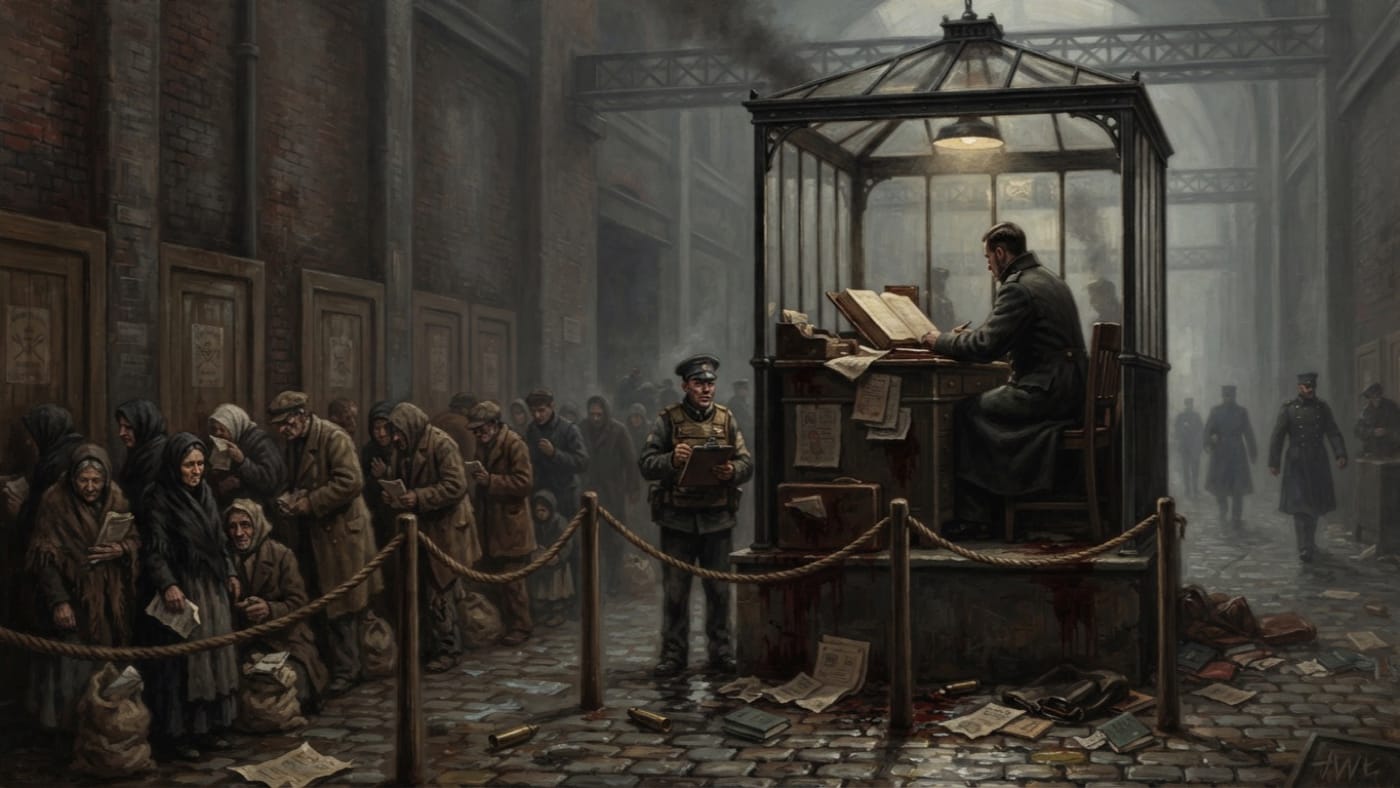
Palatinate Inspector
The signature behind the cordon
At Metz, the Palatinate Inspector ordered the volleys and the erasure of ration claims. His own name failed to reach the clean copy; the office survived for further instruction.
Codex Ref. XII.7.06-001
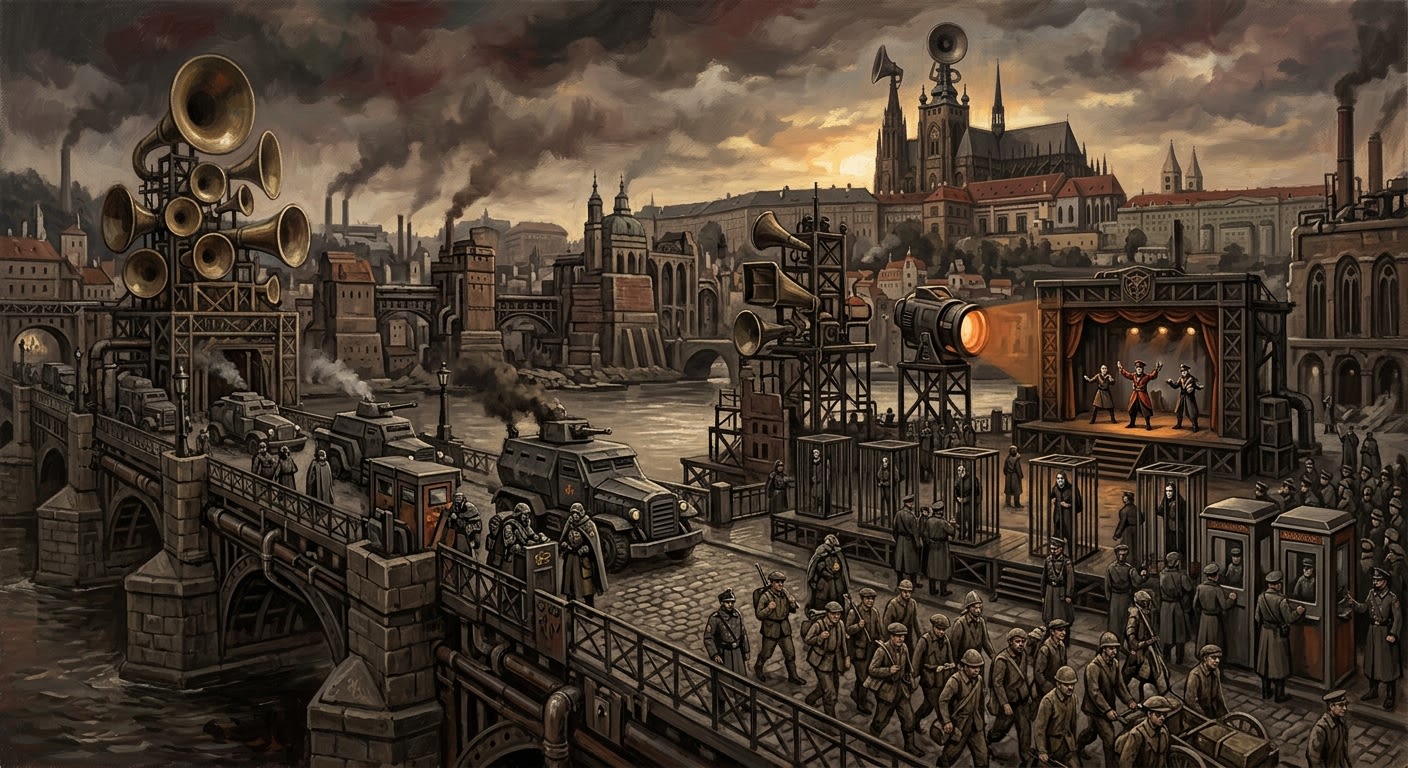
Prague
The bridge-city where shame learned civic architecture
Synod-held Prague is a Zone 3 bridge-city of public correction, Rationalist residue, Ephrath theatre, acoustic wounds, and useful civic obedience.
Codex Ref. II.3.02-001
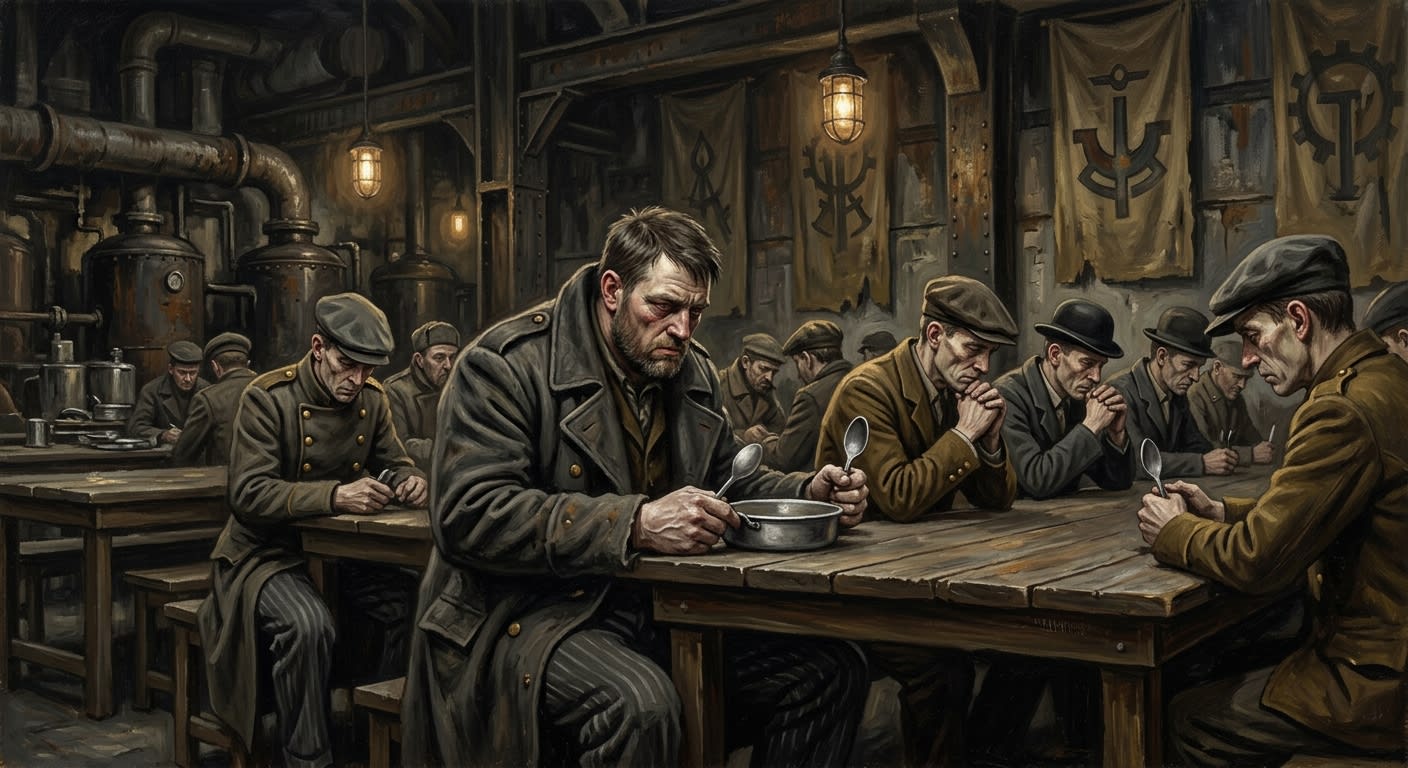
Psalm of Satiation
Enough to obey, enough to look away, enough not to begin
The Bureau of Rites' seven-verse field hymn delays Kargath's hunger long enough for obedience to keep its chair.
Codex Ref. XIII.1.96-194
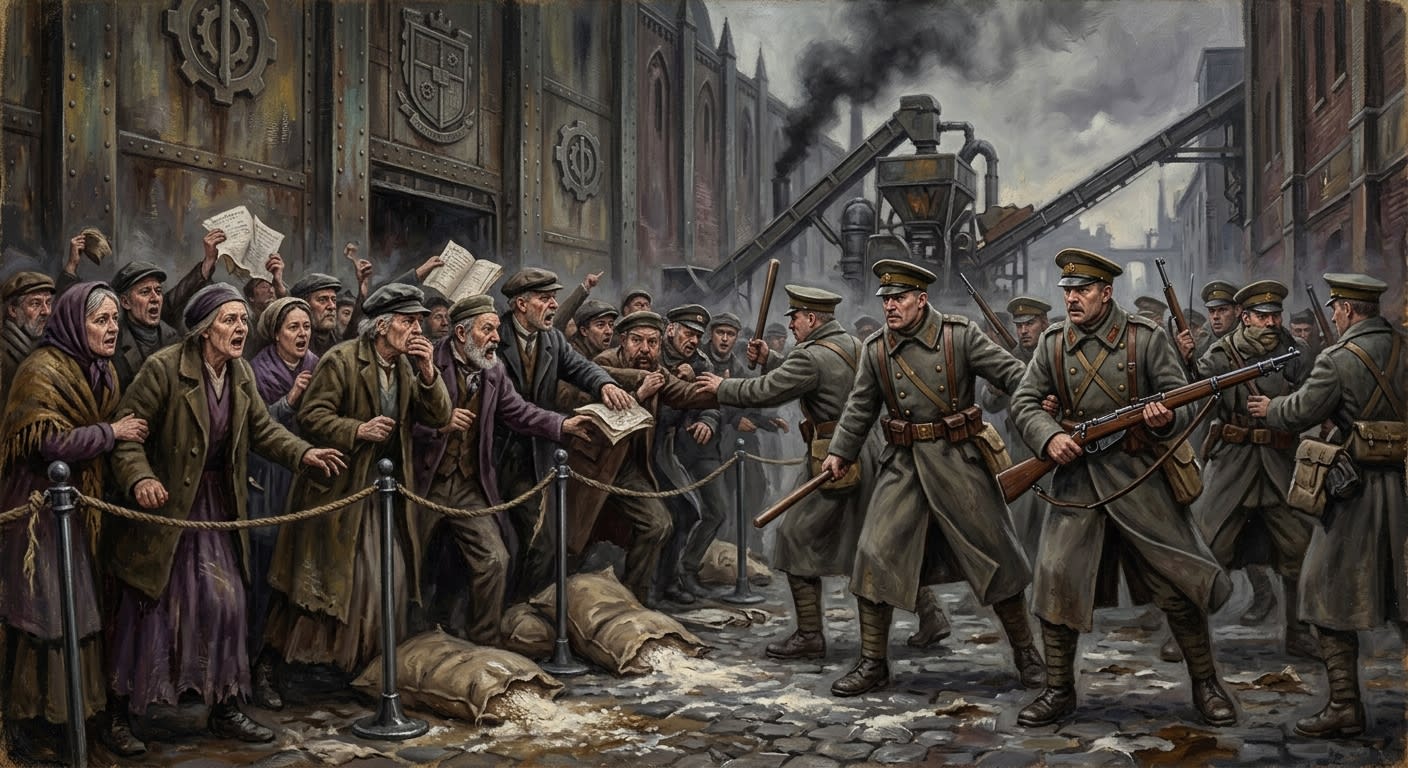
Queue Riot of Metz
Rations distributed without interruption, except for the people
Metz records the widow-grain riot as an uninterrupted distribution; the lane ropes, the erased names, and the powder-smell remain less obedient.
Codex Ref. VII.8.10-006

Reims
The smiling wine city that profits from an empty neighbour
Reims smiles under inspection, sells lawful wine beside impossible Épernay tokens, and teaches that a city can inherit a neighbour's absence without inheriting innocence.
Codex Ref. II.1.07-103
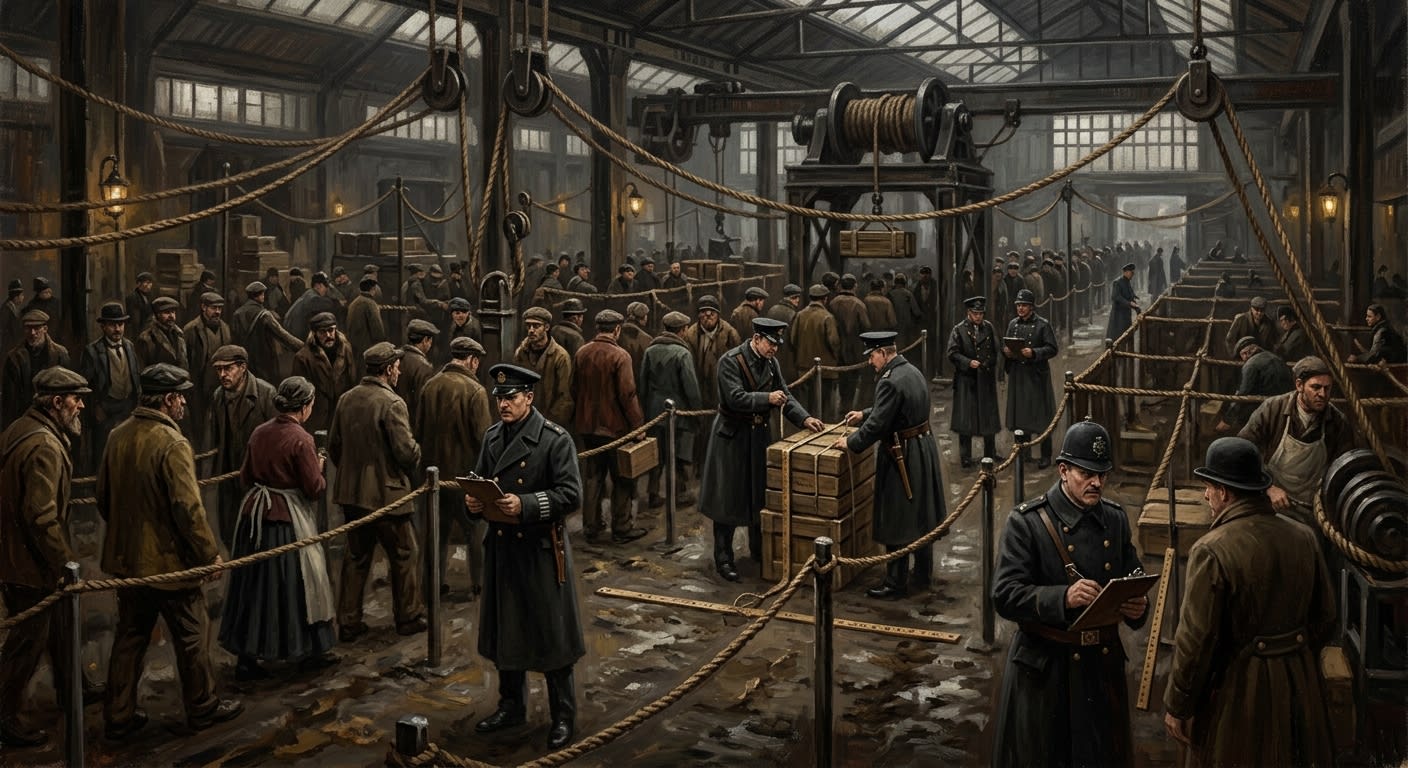
Rope Reforms of A.S. 118
Order is mercy, provided the rope is measured correctly
The Rope Reforms of A.S. 118 turned cordage, lane width, stack geometry, and Ravel's mercy into law; the crowd became countable and therefore governable.
Codex Ref. VII.8.10-008
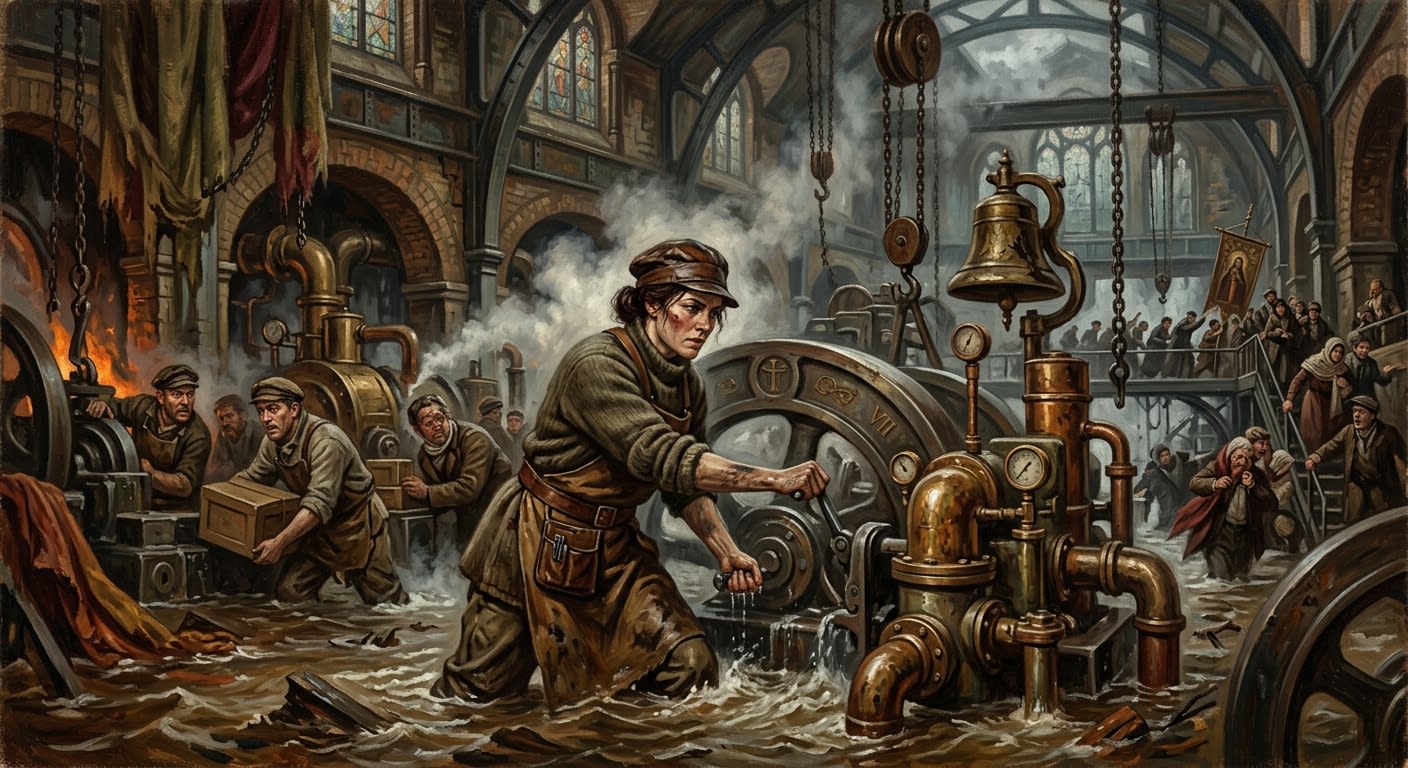
Saint Orla of the Seventh Line
She finished the sequence; the seal held; the Bureau arrived thirty years late with incense
Saint Orla of the Seventh Line, patron of Gasket-Hymn Mechanics, died completing Seal Seven during the A.S. 132 Metz flood and became the saint of the final turn.
Codex Ref. III.2.01-118
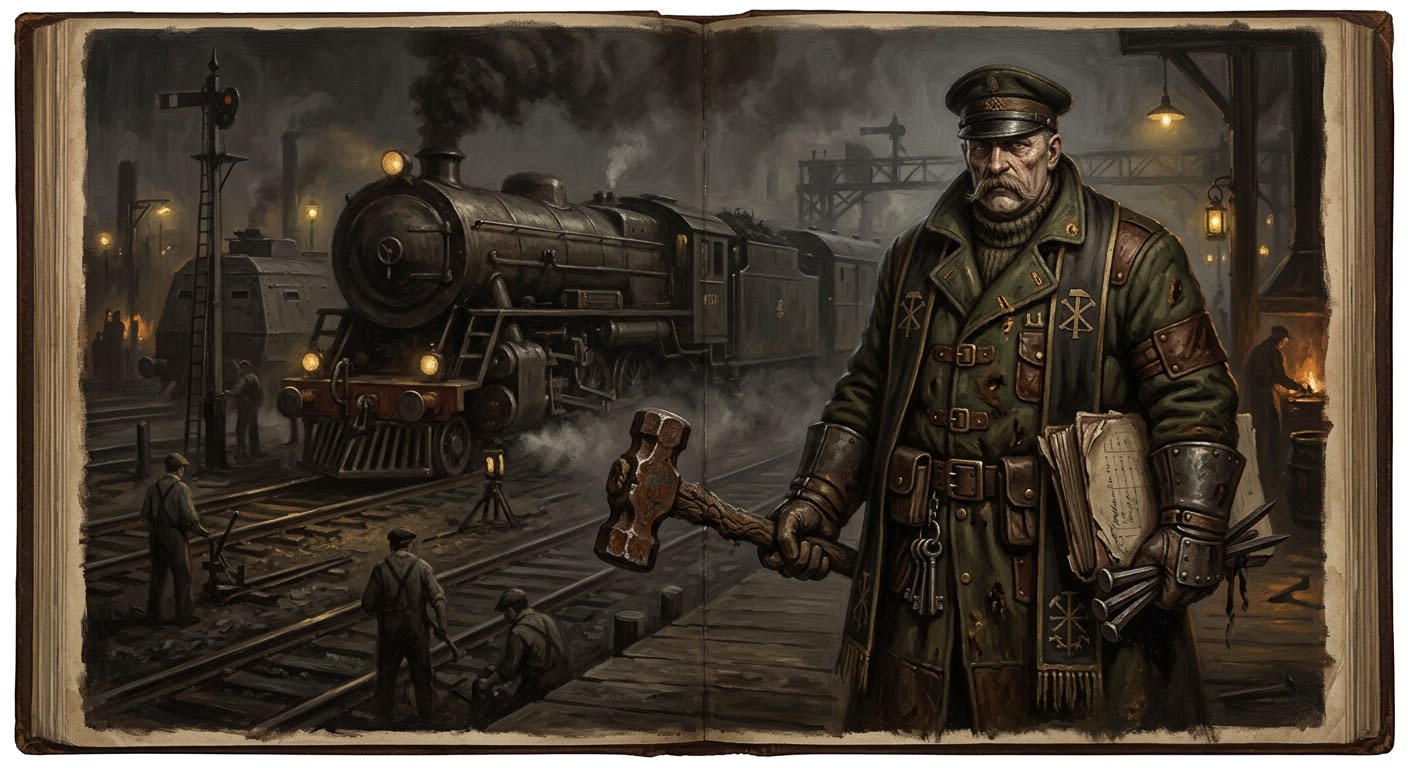
Saint Vandrail
The rail remembers; the hammer asks whether it tells the truth
Saint Vandrail, uncanonised and undenied, is the Guild of Rails’ hammer-fisted patron of track, gauge, night patrol, iron-blood, and useful delay.
Codex Ref. III.2.01-136
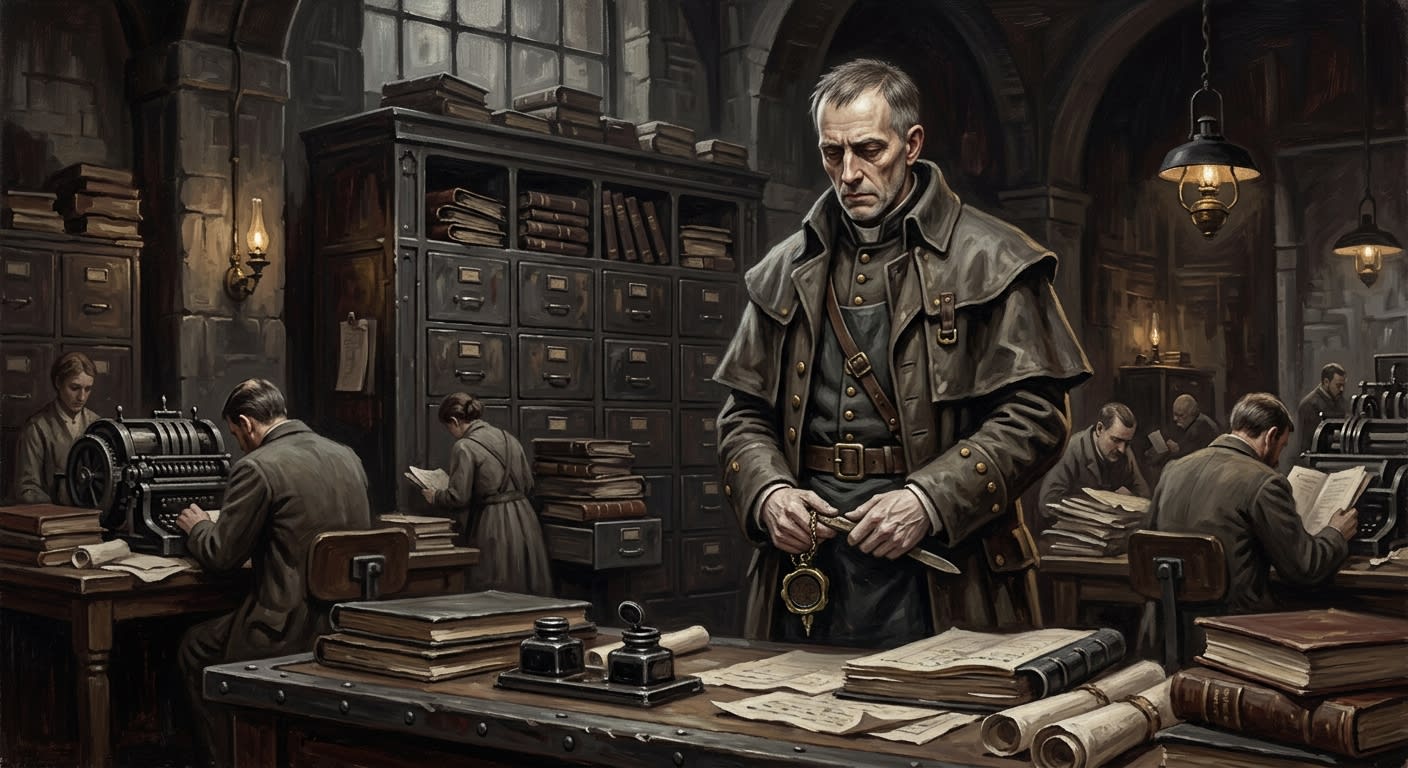
Saint Vellum the Silent
A patron saint whose relic is procedure
Occupational patron of Erasure Notaries, Strike Scribes, Nullity Clerks, and Lineage Severers; a saint of washed hands, black seals, and names made quiet.
Codex Ref. III.2.01-113

Sergeant Elke Voss
Vigilance is cheaper than mercy, and therefore holy
Sergeant Elke Voss of Bastion-Irongate filed the A.S. 197 deposition that named Veil-Stalker vigilance as an injury without blood, thereby inconveniencing Mercy and War at once.
Codex Ref. III.2.01-059
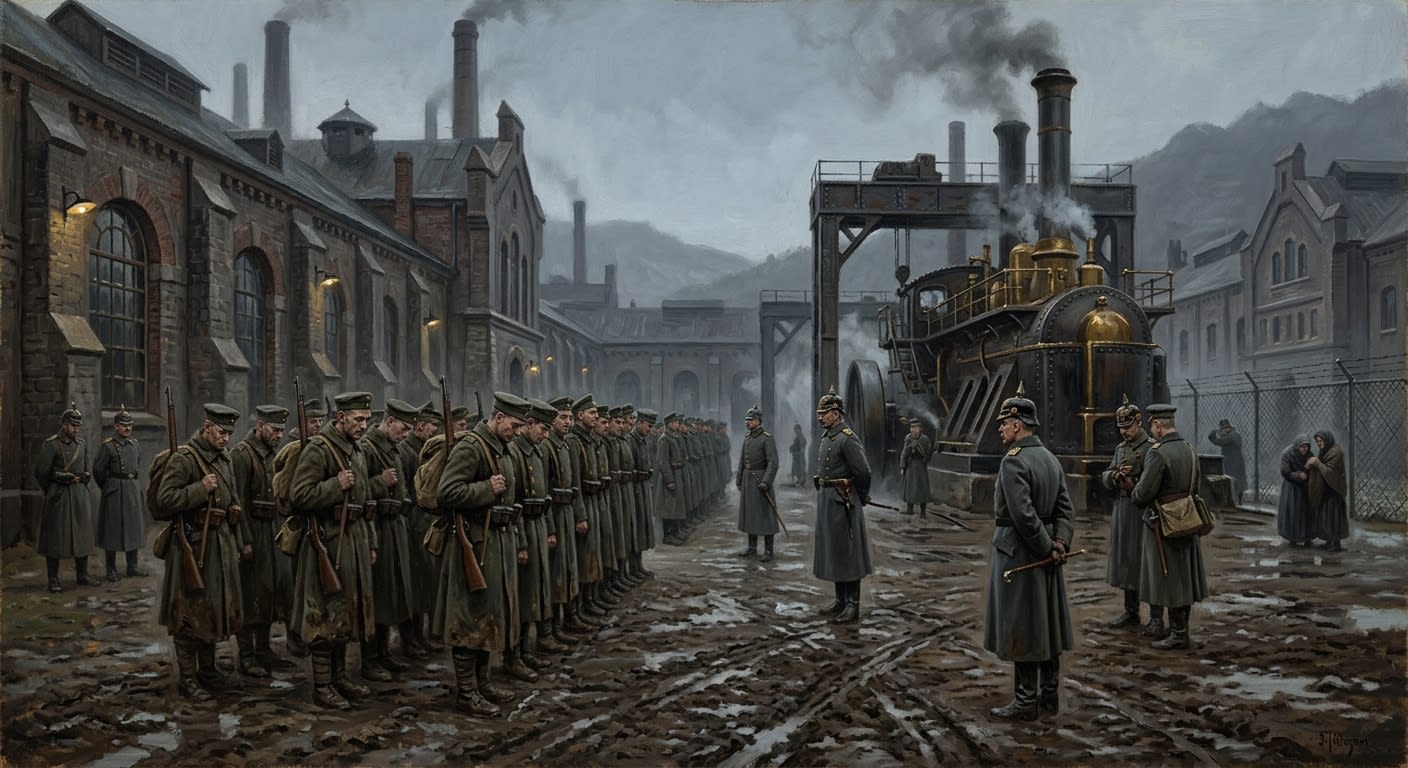
Stuttgart
Where Swabian thrift is spent in sons
Stuttgart is War's Swabian catechism-barracks, a Zone 2 training engine where ration economy, mud discipline, and family grief are measured into obedience.
Codex Ref. II.2.01-004
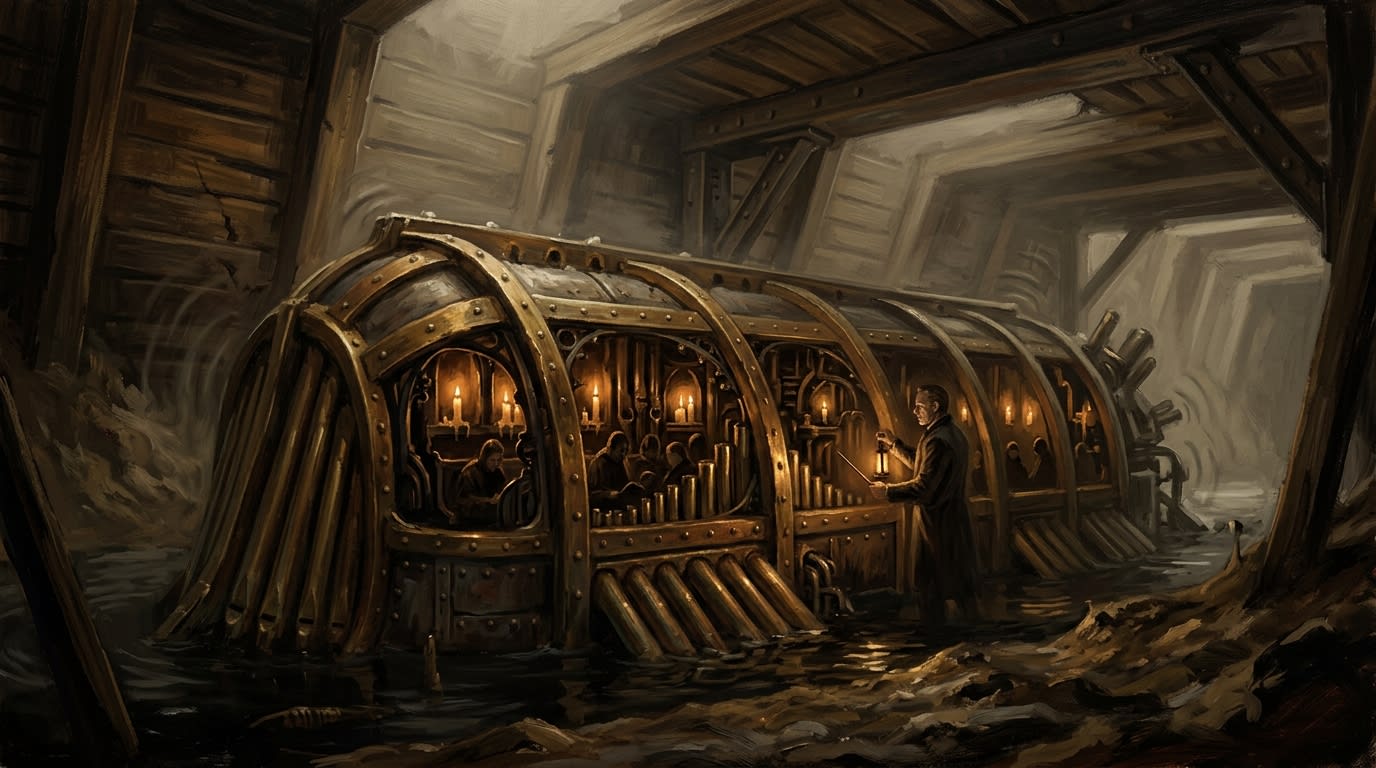
Sunken Choir
The hymn beneath the trench, paid for in boys' throats
The Sunken Choir is a sanctioned Choir-Engine: boys altered into subterranean hymn machinery so the Synod may collapse enemy tunnels while calling the invoice grace.
Codex Ref. XIII.1.33-001
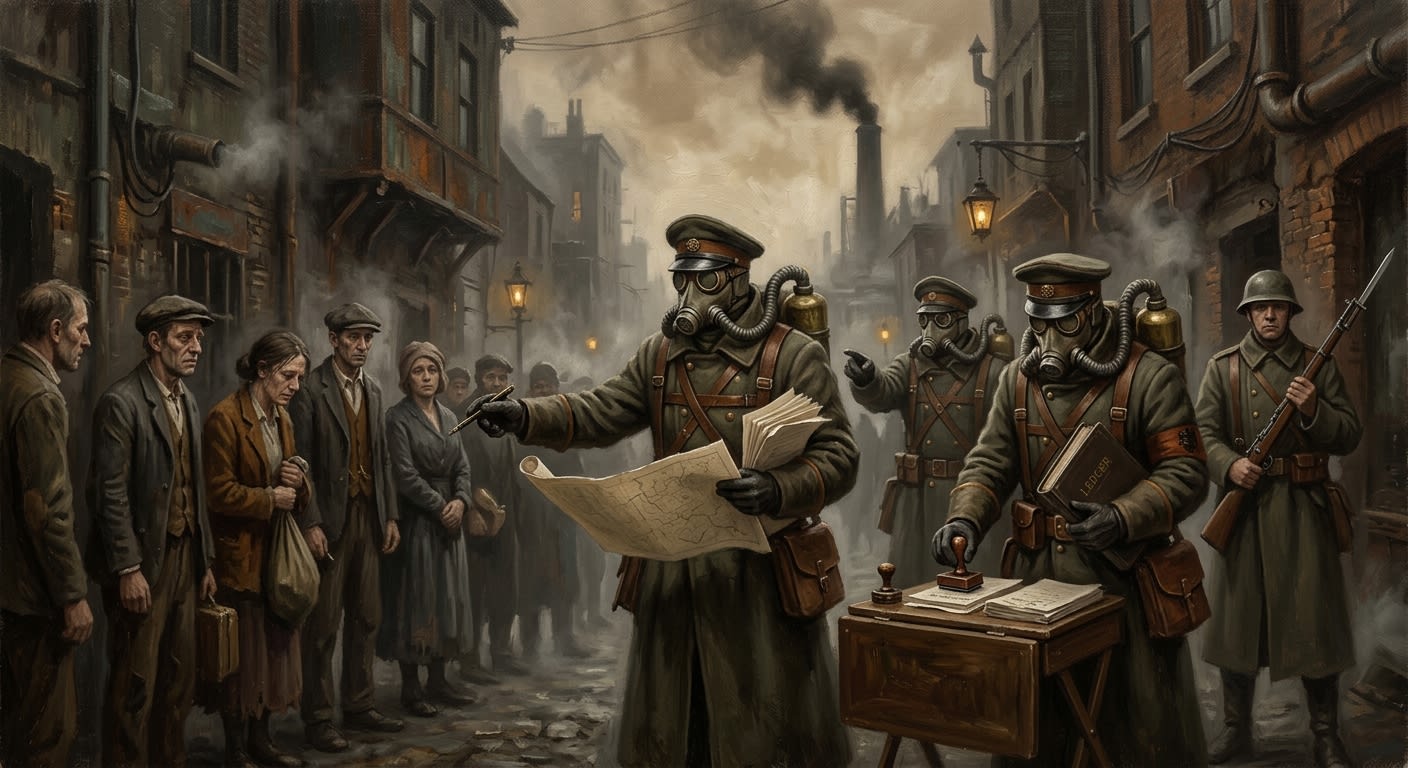
The Assignors
Men with maps, seals, and exactly enough authority to be hated
Assignors are Settlement field officers: map-carriers, permit-revokers, and escort-dependent instruments by which ink tells citizens where to stand.
Codex Ref. XII.2.06-001
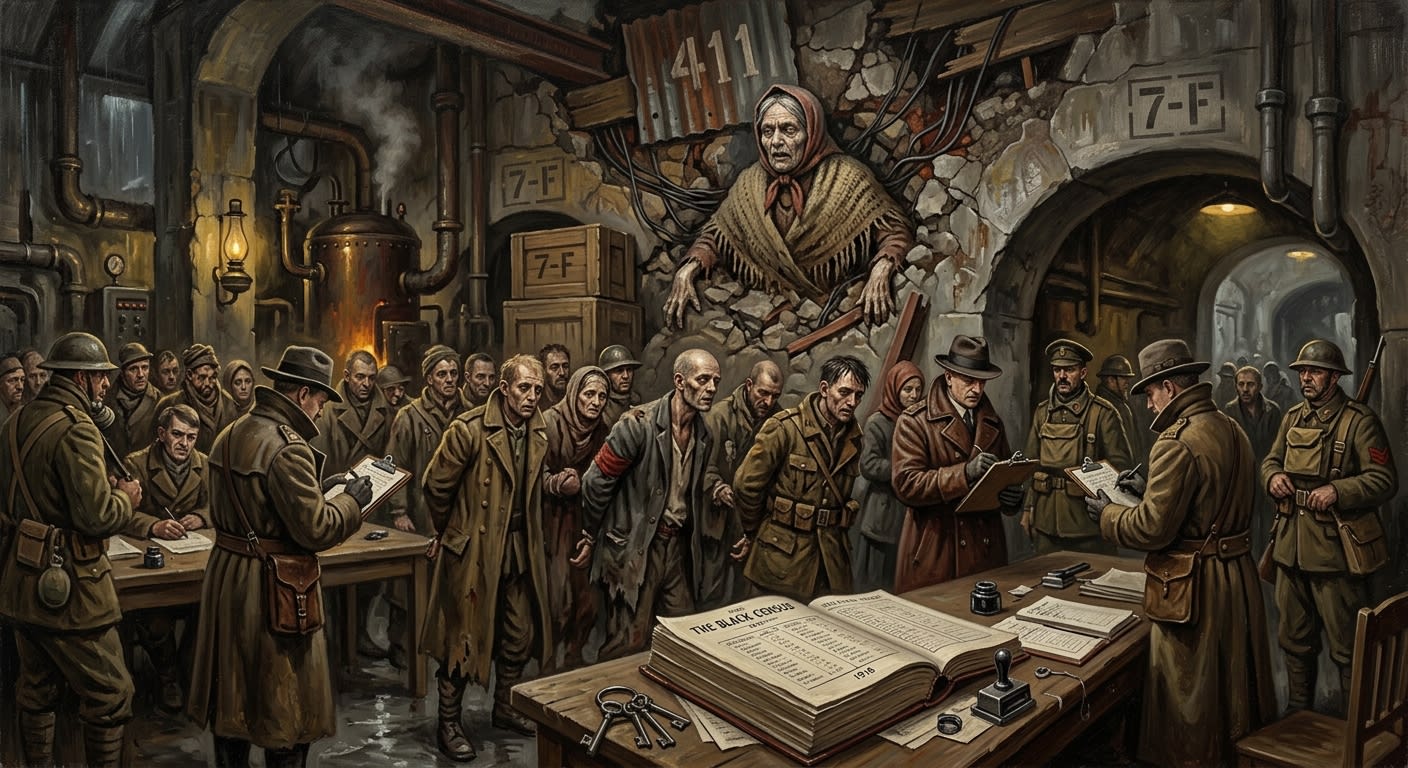
The Black Census of Metz
Four hundred and eleven soldiers, one mother, and the arithmetic that broke denial
The Black Census of Metz turned Ash-Mothers from trench epithet into Classification 7-F after four hundred and eleven captured Thralls were traced to one dead woman whose remains held an enemy bastion together.
Codex Ref. VII.4.14-001
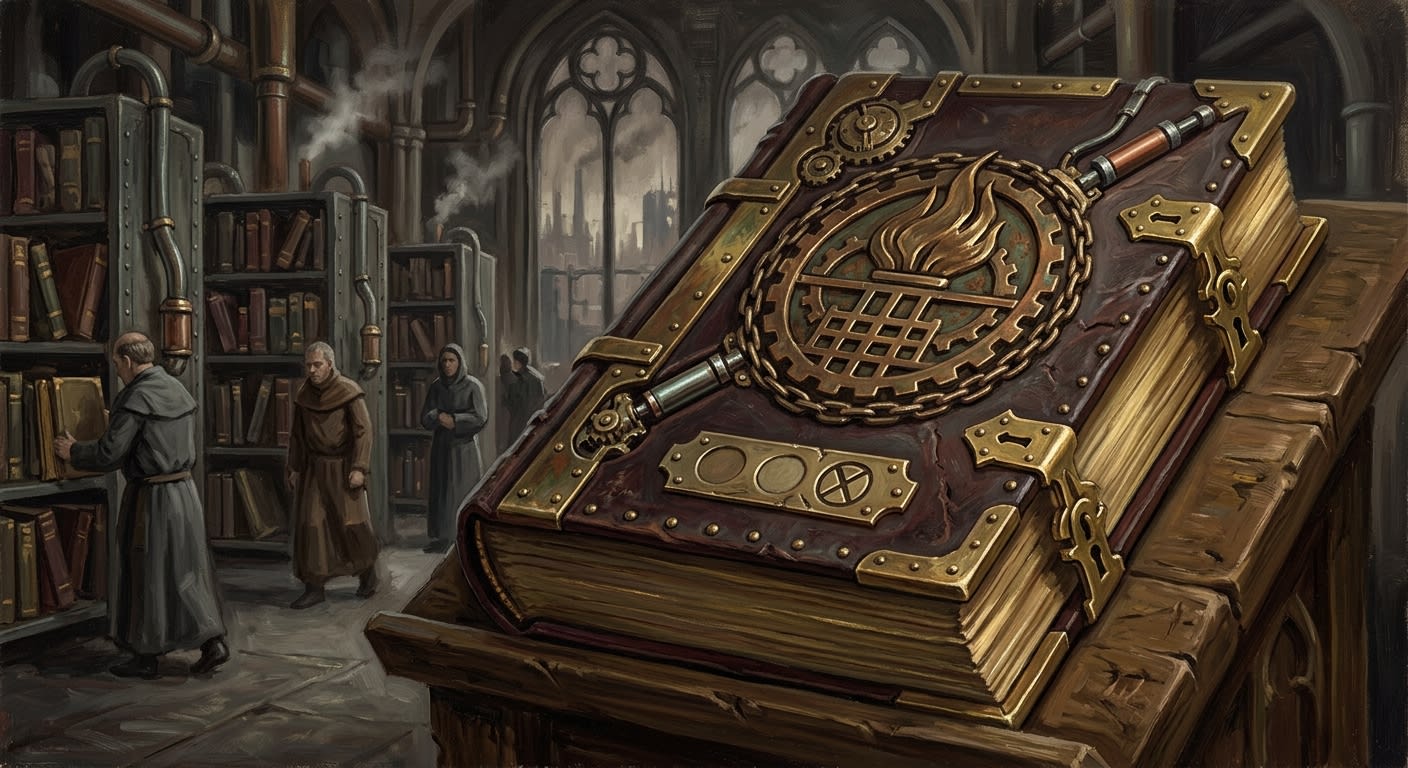
The Book of Promise
The child is named, measured, forecast, and gently confiscated
The Book of Promise is the Synod's vocational pre-allocation ledger, where baptism becomes forecast, childhood becomes collateral, and hope receives a quota mark.
Codex Ref. XIII.1.22-001
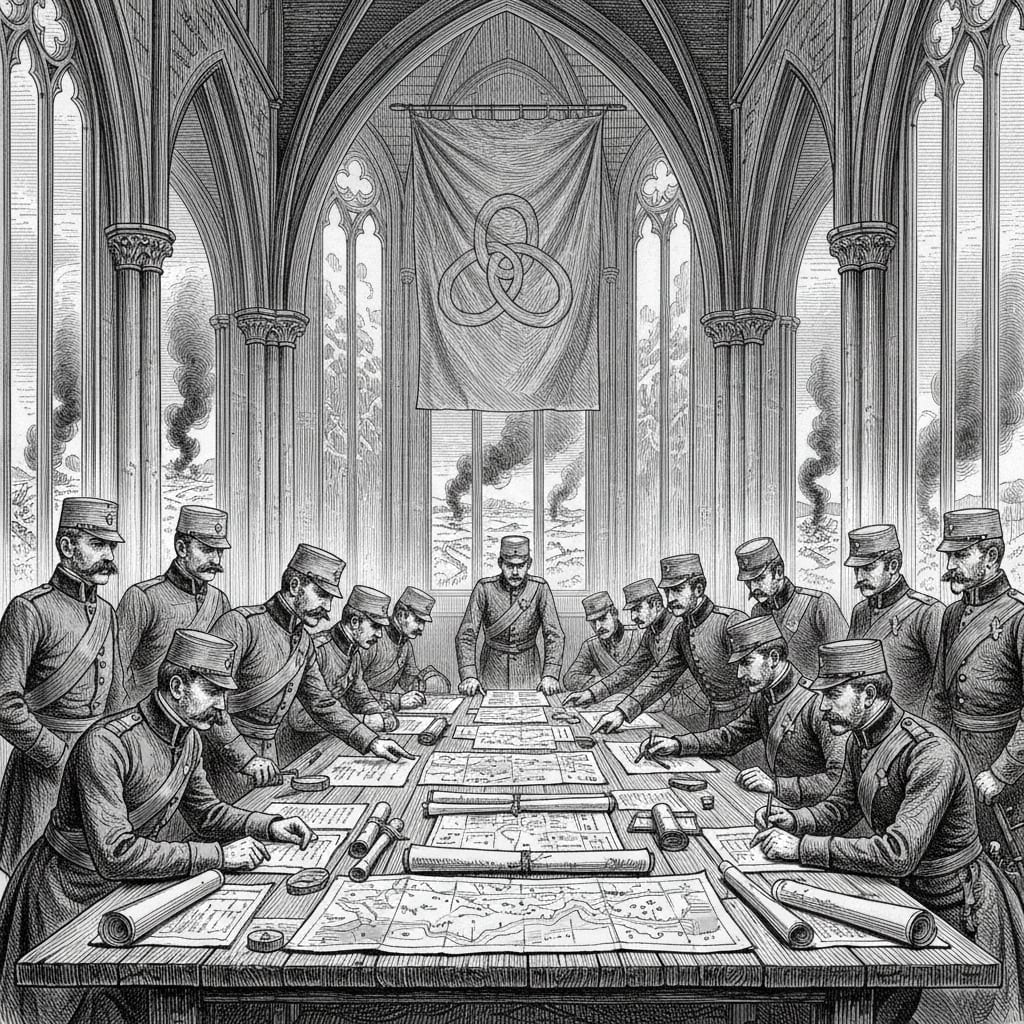
The Bureau of War
The Crimson Sash and the Sanctified Bayonet
Founded after the Siege of Vienna so that the Faith would never again beg feudal lords for swords. War raises the levy, baptizes the bayonet, and writes after-action reports indistinguishable from scripture.
Codex Ref. III.2.07-041
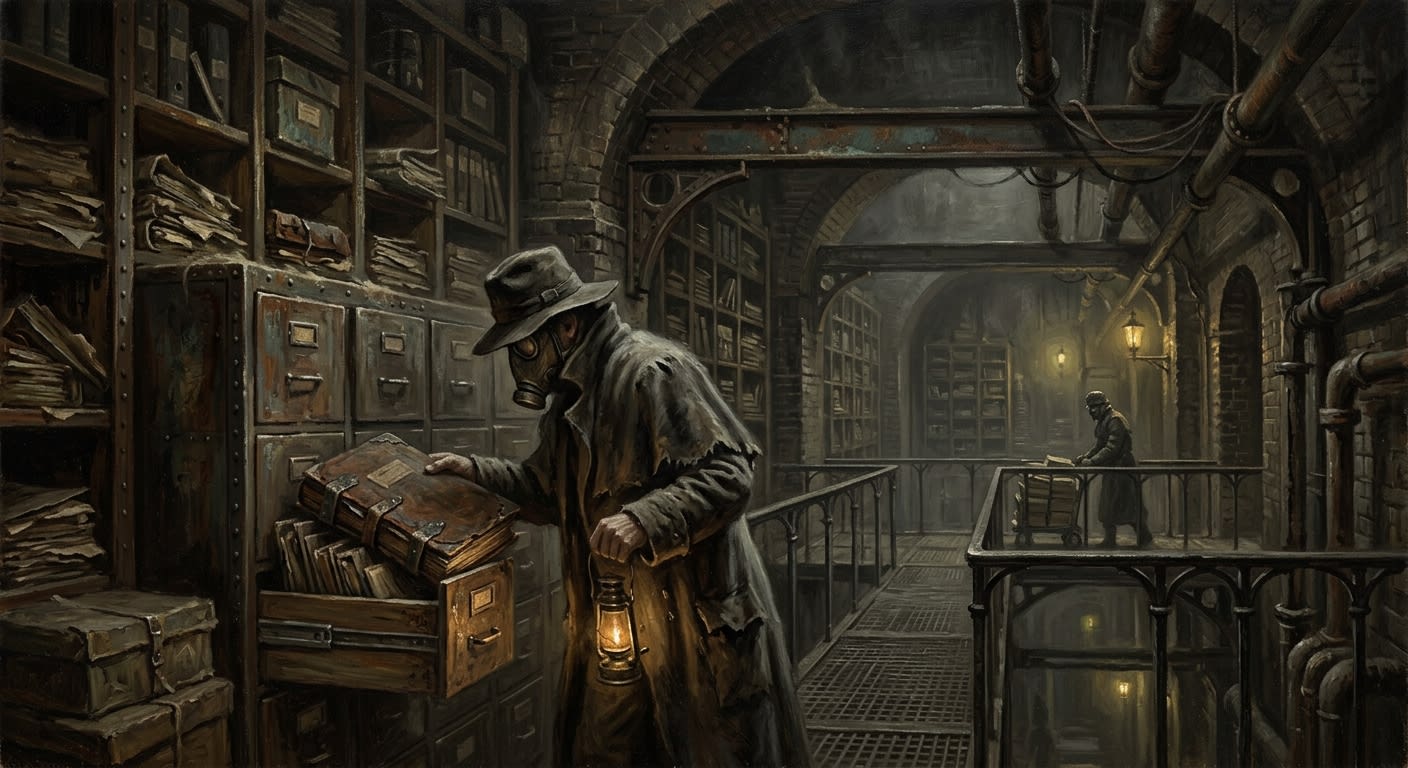
The Codices Obscurae
The books that do not exist have excellent indexing
The Codices Obscurae are denied by every Bureau that matters, which is precisely how a careful reader knows where the bodies are indexed.
Codex Ref. XIII.1.06-001
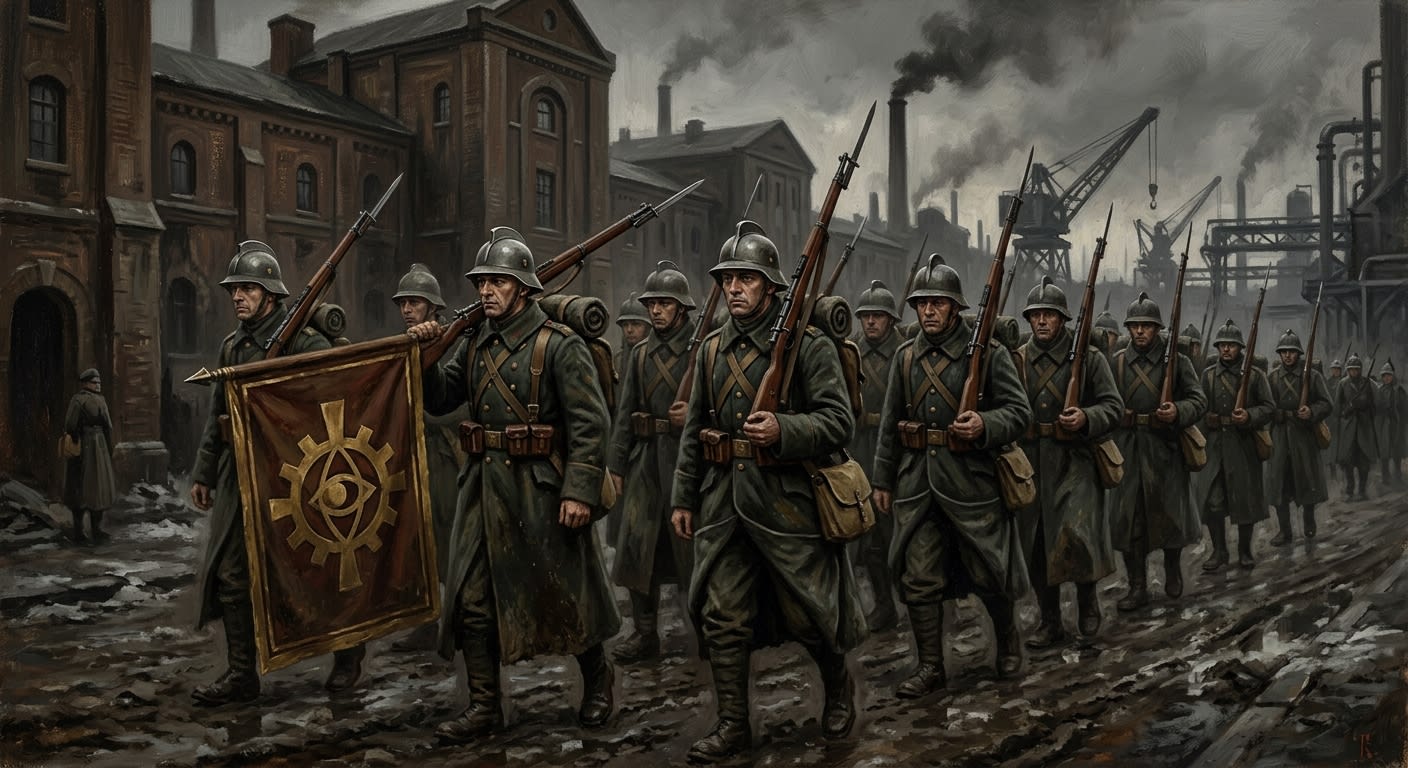
The Covenant Military
The rifle behind the sermon, visible enough to be pastoral
The Synod's standing armed auxiliary between war and administration: civic cordon, Bureau escort, rear-line reinforcement, and visible obedience with a rifle.
Codex Ref. VIII.5.05-001
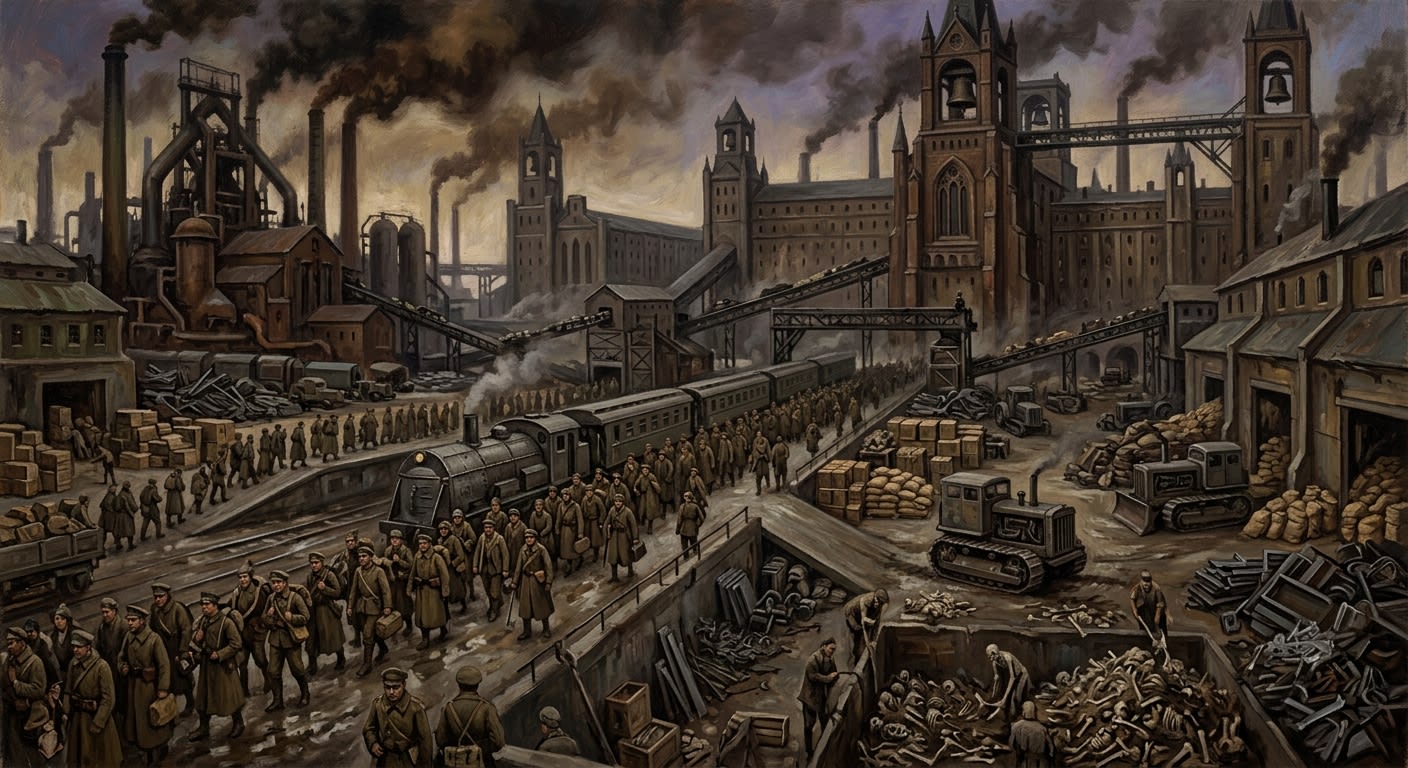
The Heartlands
The safe country, provided one defines safety as distance from teeth and proximity to stamps
The Heartlands are the Synod's safe interior only by infantry arithmetic: Zones 1–3 feed the Line with bread, steel, bodies, bells, paperwork, and bones.
Codex Ref. II.0.02-201
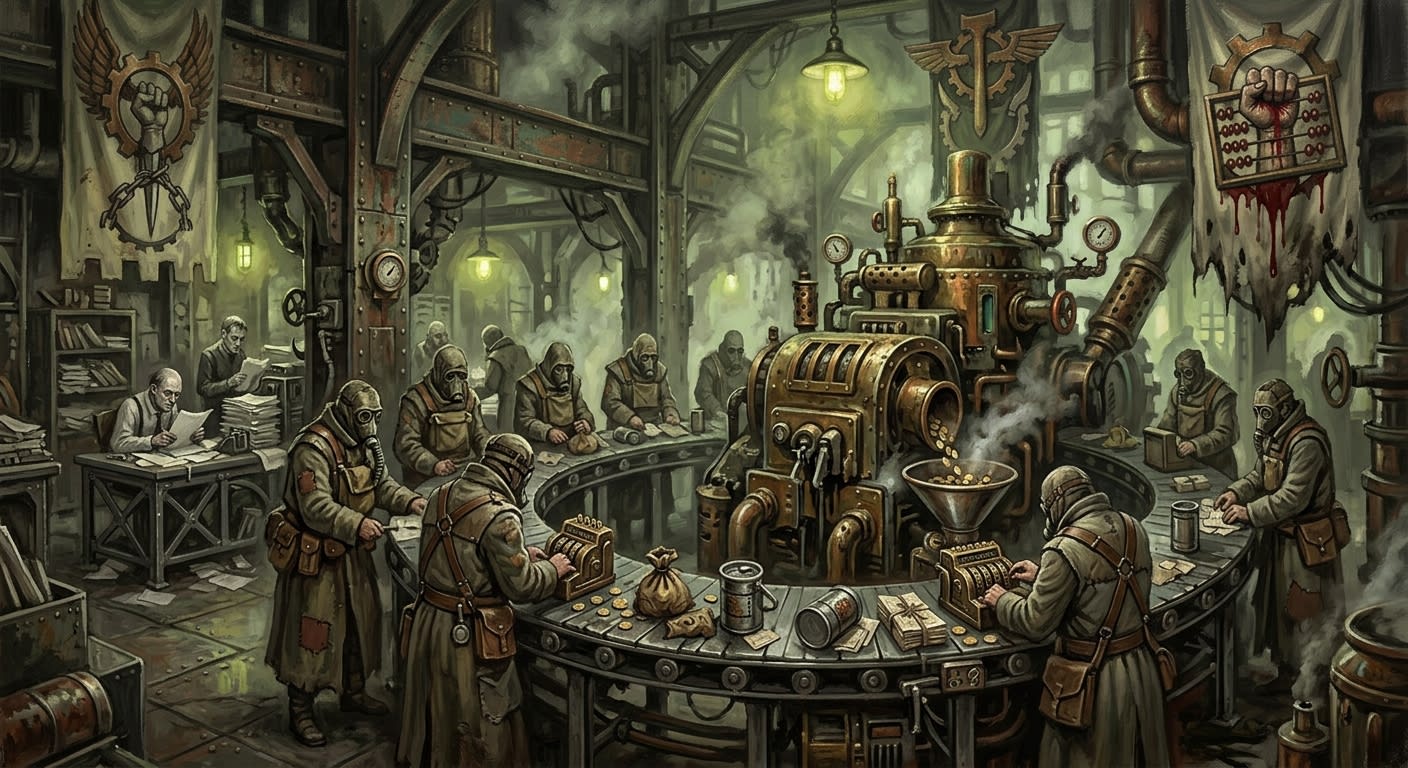
The Meta-Levy
The tax that charges for the privilege of being counted
The Meta-Levy is the Synod's tithe upon tithes, a circular sanctification of collection costs by which the Bureau of Tithes proves that even arithmetic kneels.
Codex Ref. XIII.1.38-001
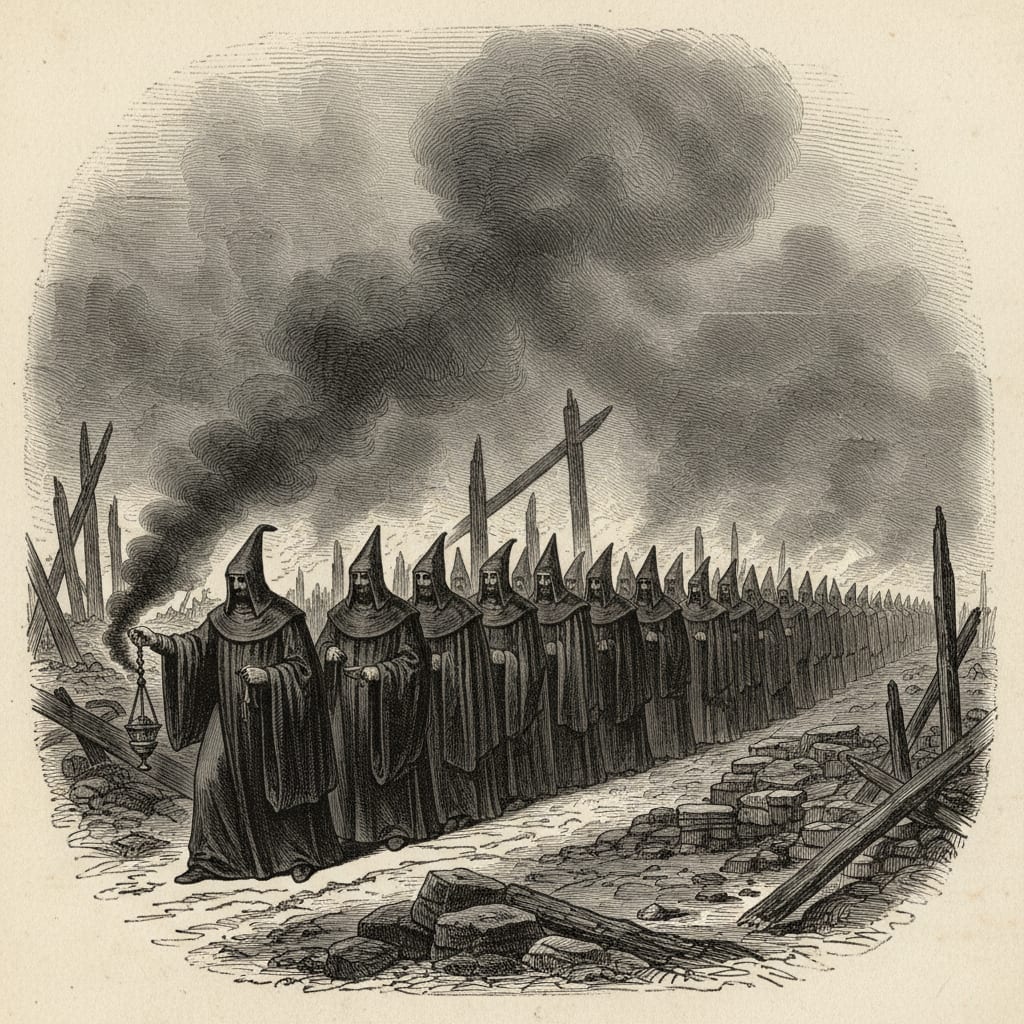
The Order of Ash
Liturgists of Fire, Archivists of Cinder
The Inquisition's first and fiercest instrument of annihilation. Where the Ashmen pass, the well-stones glass smooth and the children's slates bake into reliquaries of obedience.
Codex Ref. III.3.06-041
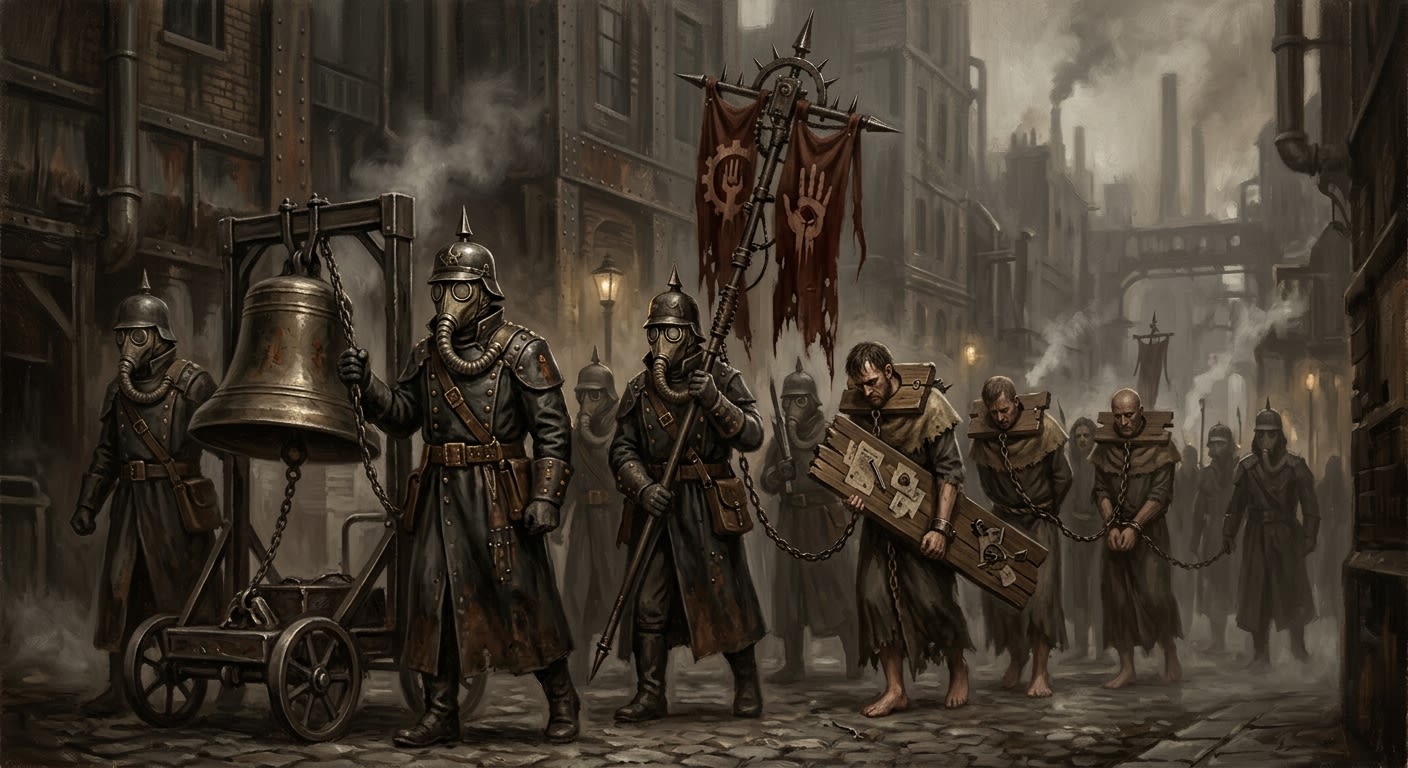
The Order of Saint Ephrath
Shame made visible is shame made useful
Ephrath displays Purity's hand. It nails error to doctrine, marches shame through the street, and files the crowd's instruction by bell.
Codex Ref. XI.6.01-002
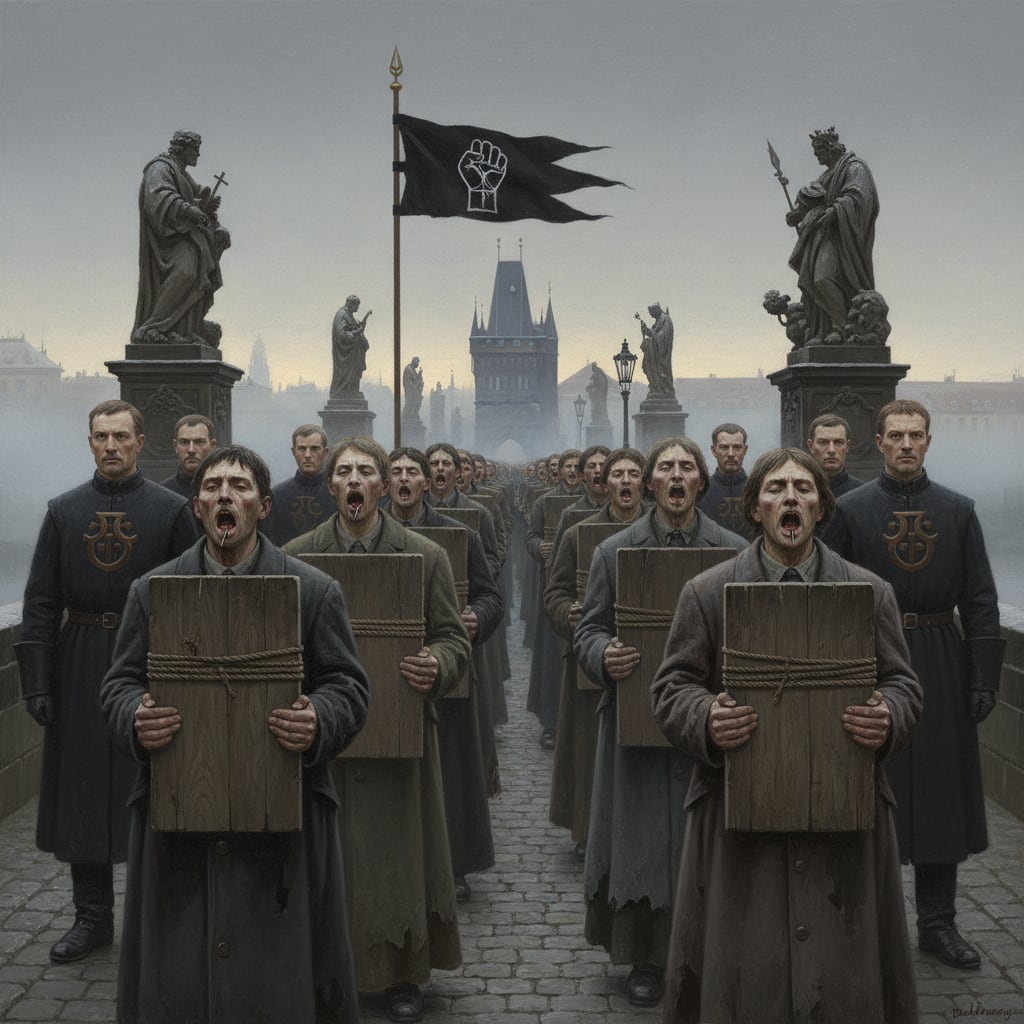
The Procession of Tongues
One hundred and seven consecutive years of doctrine tablets, iron nails, and fixed cobblestones — the [[bureau-of-purity|Bureau of Purity]]'s clearest argument, and the one requiring no rebuttal.
The Bureau of Purity's ceremony of ambulatory confession — heretics with tongues nailed to doctrine tablets, marching across Prague's Charles Bridge since A.S.
Codex Ref. VII.6.01-001
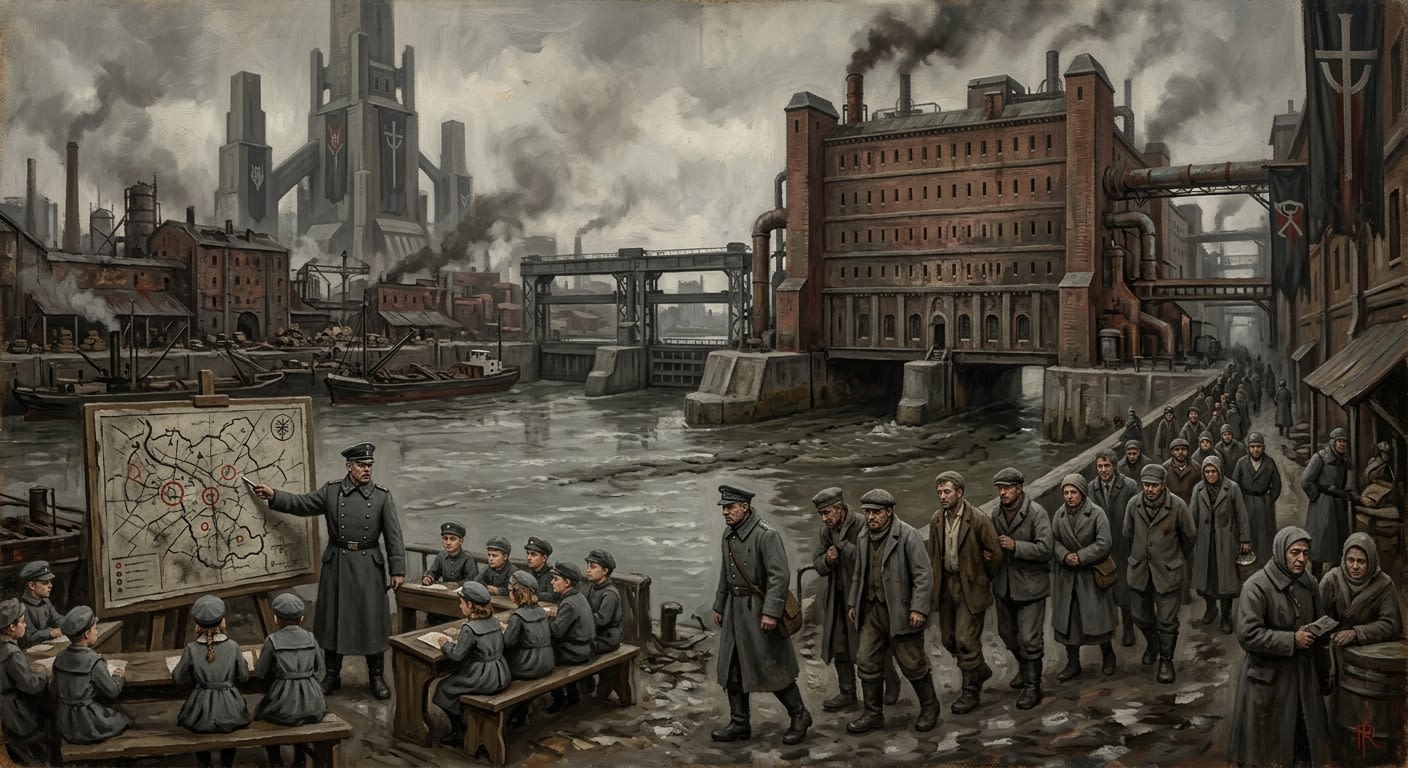
The Rhineland
A province corrected so often it learned to keep the corrections
The Rhineland is the Synod's most corrected province: river belt, market school, scriptorium wound, curfew map, chalk lesson, and loyal suspicion made taxable.
Codex Ref. II.2.09-201

Theobald of Worms
The man who taught Europe to confess by angle
First Archon of the Bureau of Heraldry, Theobald of Worms standardised the Triune Knot and made the visible world legible, taxable, and prosecutable.
Codex Ref. III.2.01-119

Vexillators
Keep the cloth upright, or permit panic to govern
Bureau of War standard-bearers and visible formation anchors whose sanctioned cloth turns panic into geometry when officers, drums, and voices fail.
Codex Ref. VIII.5.07-001
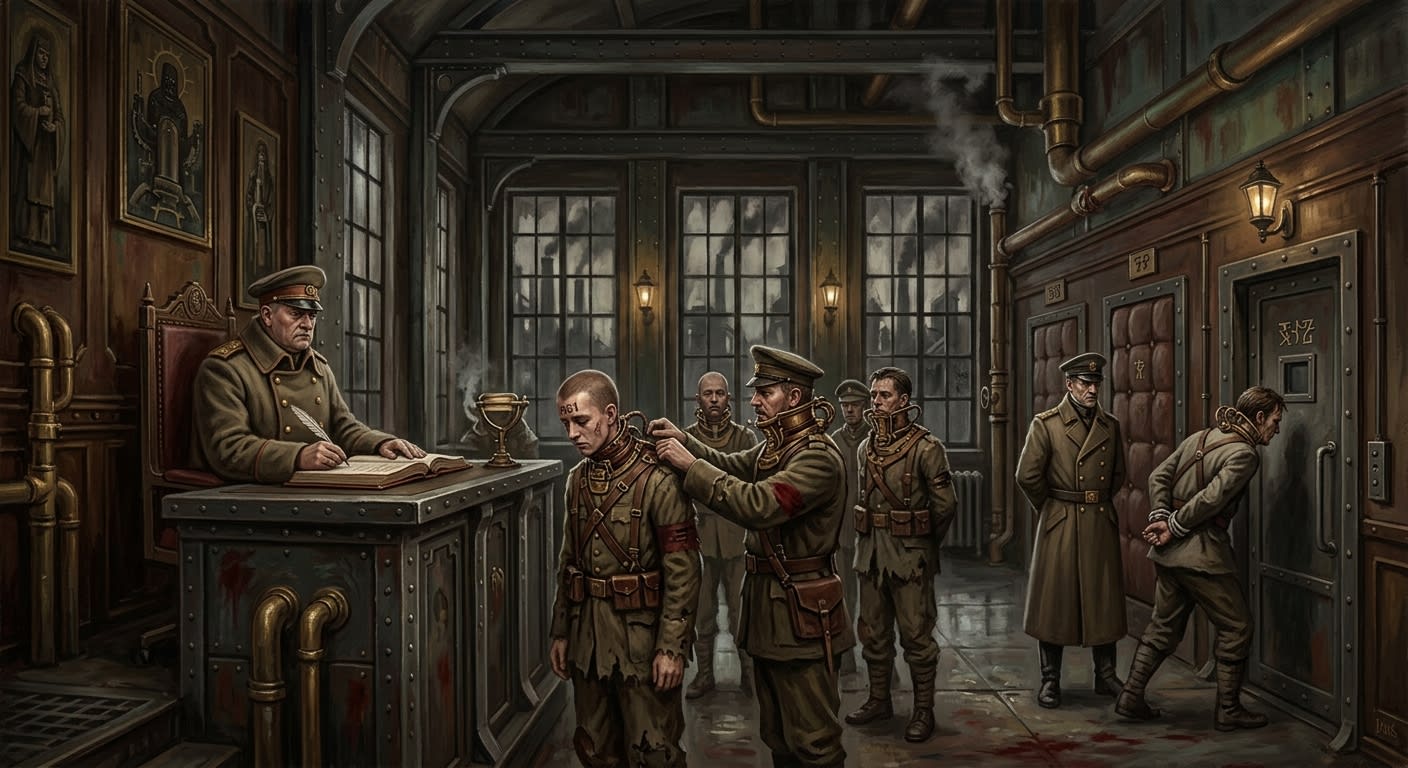
Writ 14-C
The law that taught the throat to wear a seal
Writ 14-C made the human throat an office: licensing Iron Choir Brand-Singers, disciplining pain into sound, and teaching rooms not to be answered.
Codex Ref. XIII.1.41-104
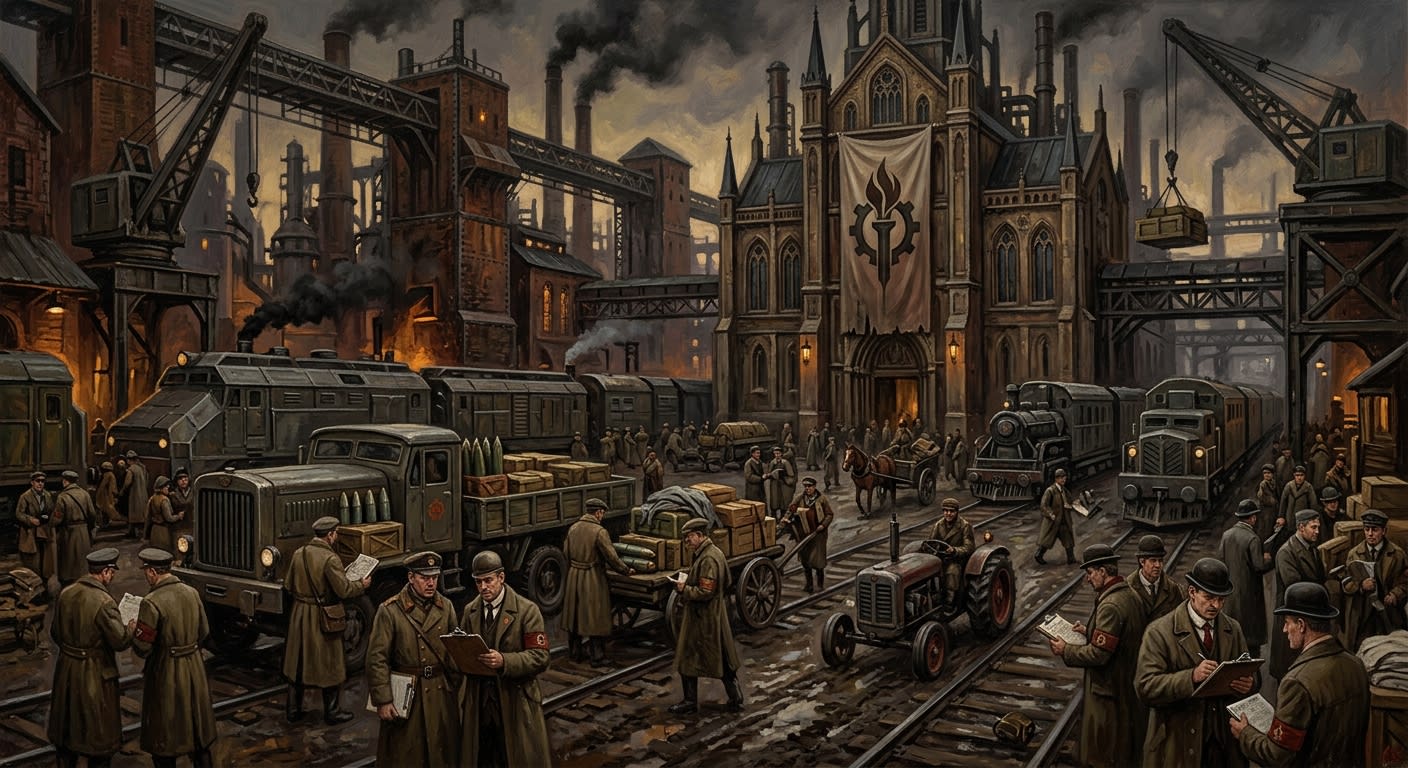
Zone 1
The rearward paradise that learned to invoice the war
Zone 1 is the Synod's polished western rear: safe enough to tax, rich enough to excuse itself, and stained to the elbows by logistics.
Codex Ref. II.0.03-201
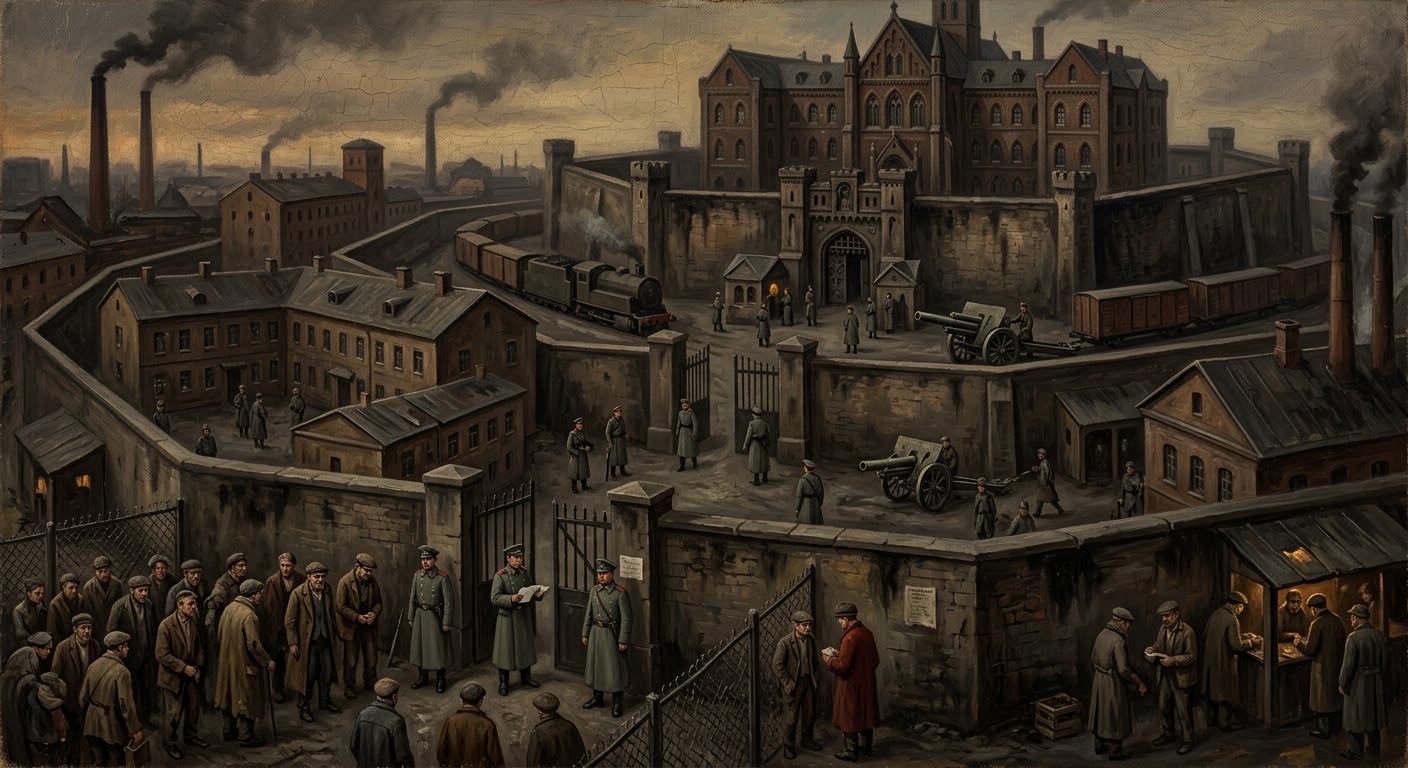
Zones 1 through 5
Five lawful pressures between invoice and mud
Zones 1 through 5 are graded permissions for bread, sons, movement, fear, artillery, and the state’s appetite.
Codex Ref. XIII.1.00-201