
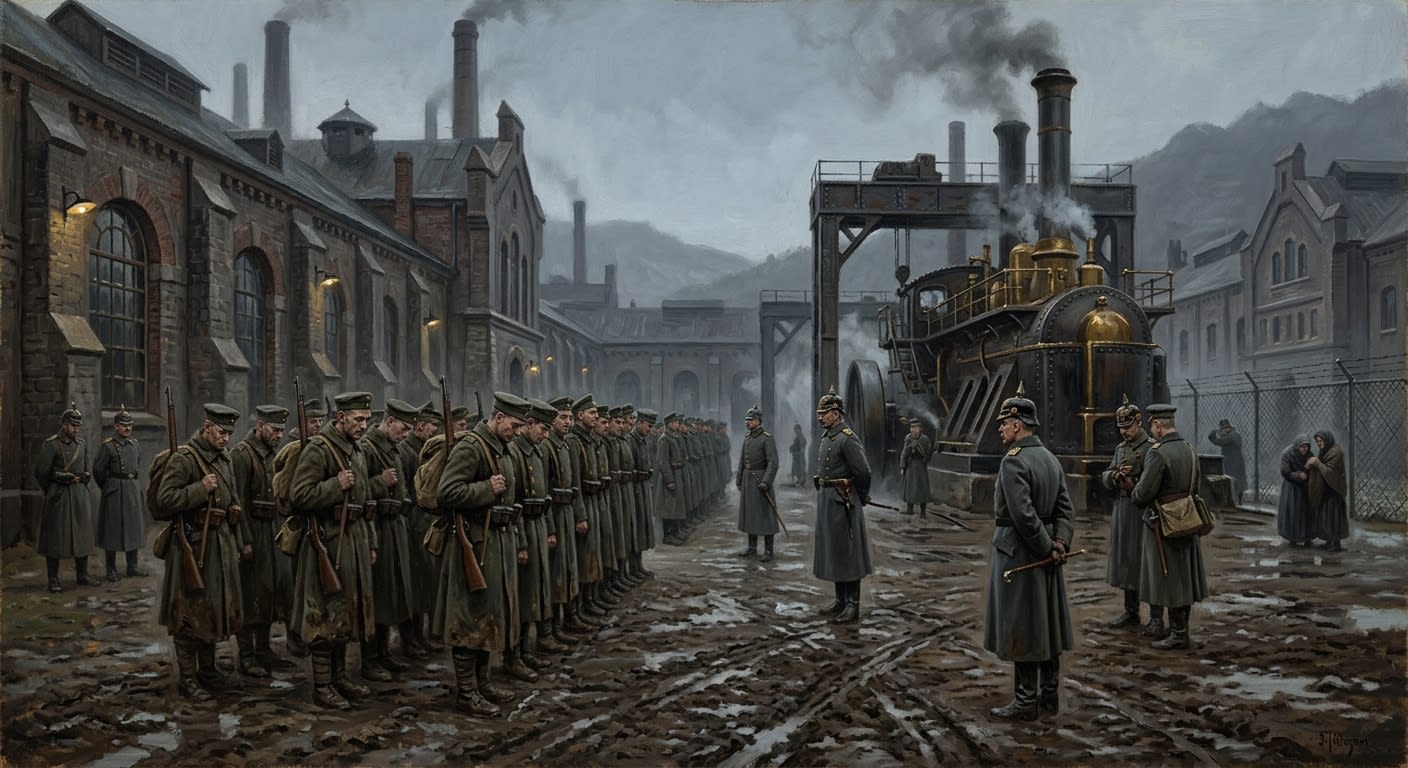
#On the Swabian Yard
Stuttgart is the place where Swabian obedience was taught to stop negotiating with itself. It sits in Zone 2, safely west of the Sagittal Line, which is the sort of safety that allows clerks to sleep while boys are made ready for places where sleep becomes tactical error. The city was old before the Synod loved it. Vines, workshops, horse yards, ducal habits, parish bells, valley roads, and the irritating Swabian instinct to ask whether a command had been properly costed all existed before Strasbourg pressed its seal into the local throat.
Now it is a catechism-barracks city: one of the great training garrisons named in the Continental Levy tables beside Metz and the Citadel of Lyon. Metz counts ash and supplies. Lyon disciplines spectacle. Stuttgart teaches thrift to violence. A boy enters with a household name and a provincial accent. He leaves with a kit weight, a march pace, a ration tolerance, and the useful discovery that complaint is breath wasted before exertion.
The modern garrison was fixed after the First Continental Levy, in the ugly administrative season following A.S. 110. Protests in Lyon, Bruges, and Cologne received better stories because they threw stones with theatrical confidence. Swabia did what Swabia does: it calculated, delayed, petitioned, produced objections in clean bundles, and attempted to prove that household arithmetic had been misapplied. This offended Conscription more deeply than open riot. A thrown stone insults the helmet. A correct objection insults the form.
The first Stuttgart objections filled twenty-seven folios and included three tables, two lineage charts, a toll-road estimate, and a priestly appendix on whether a son promised to bell-service counted before or after a son already assigned to tithe labour. Kratz would have admired the craftsmanship and burned the conclusion. War did both, though less elegantly.
#On Kratz's Old Debt
Swabia entered the Synod through pressure before it entered through love, which is to say it entered normally. During the long consolidation before the Concordat of Strasbourg, Cardinal Hieronymus Kratz threatened wavering dukes of Swabia with excommunication, forged what required forging, proclaimed loyalty where loyalty was late, and allowed public belief to harden before private objection found shoes. The Night of Black Decrees passed through Swabia and left wax in the grain.
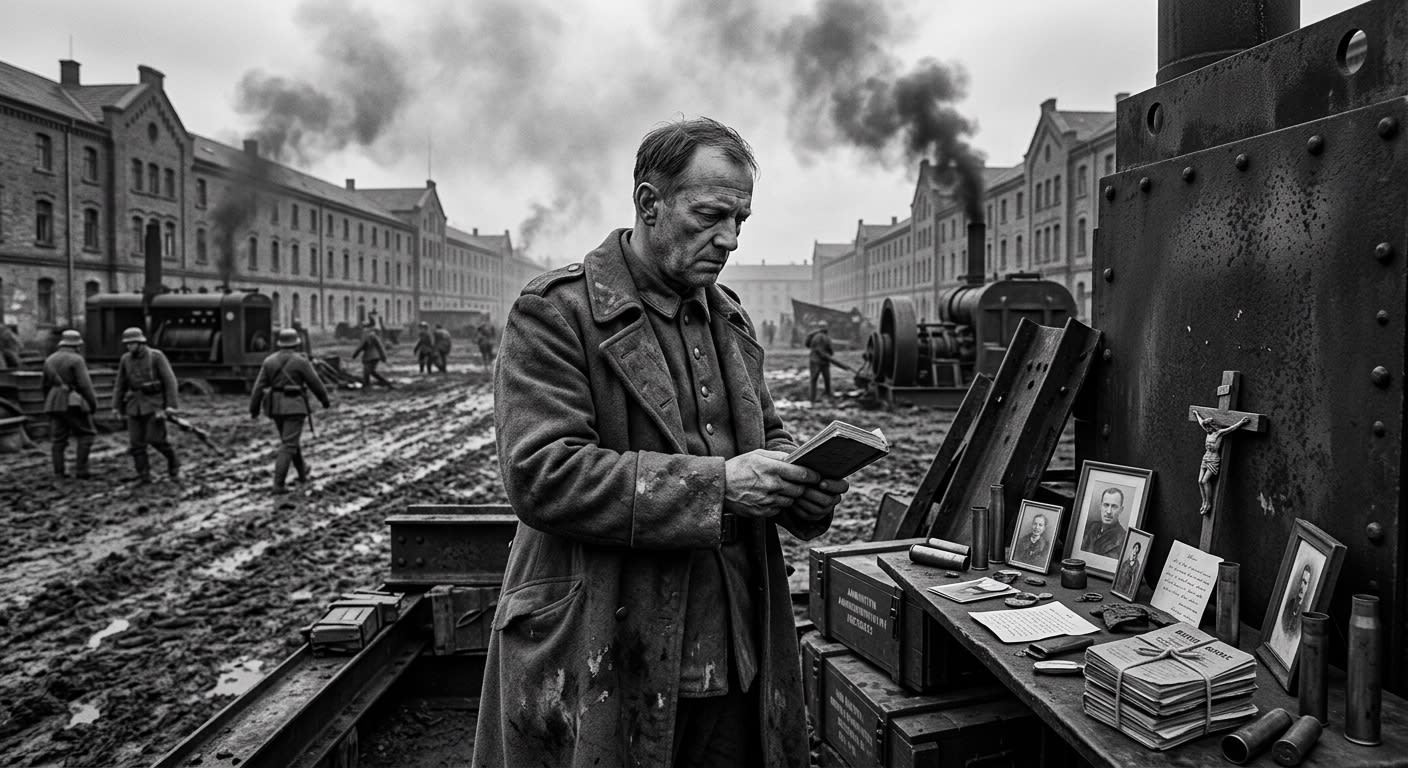
Stuttgart remembers this badly, which is the only honest way to remember Kratz. Old ducal houses kept copies of disputed oaths for three generations, bringing them out whenever Strasbourg requested coin, wagons, or sons. The copies vanished during the Quiet Inventory of A.S. 101. Records calls the disappearance archival consolidation. Families call it theft. I admire both terms, since one has a seal and the other has the virtue of being true.
Older Stuttgart civic primers described the city's entry into Synodal obedience as voluntary alignment under ducal leadership.
Corrected. The dukes aligned after excommunication threats, forged-name proclamations, pulpit pressure, and the discovery that voluntary acts are easier to recognize once refusal has been made professionally fatal.
The Levy made Swabia useful in a new manner. Its workshops could repair rifles. Its valleys could move grain. Its boys could be trained close enough to Strasbourg for inspection and far enough from the Line for parents to imagine return. The garrison occupied old horse grounds on the city's eastern rise, then devoured adjacent vineyards, then workshops, then two parishes whose saints were relocated with hymns brisk enough to suggest embarrassment.
#On the Long Yard and the Short Ration
The heart of Stuttgart is the Long Yard: a packed-earth rectangle nine hundred paces end to end, bordered by timber barracks, shoe sheds, ration kitchens, drill chapels, and measurement posts stained by hands that were too cold, too frightened, or too young to make good fists. Every recruit crosses the Long Yard twelve times on his first day. Once with papers. Once without belt. Once carrying kit. Once carrying another boy. Once under shouted catechism. Once in silence. Six times more because War distrusts symbolism unless it limps.
The Long Yard receives rain badly. Water gathers at the east end and turns the march lane into paste by second bell. Engineering offered drainage improvements in A.S. 149; War rejected them after instructors noticed that wet footing improved ankle discipline. The lane still floods. Stuttgart calls this tradition, the respectable burial shroud of laziness.
Stuttgart's specialty is economy. At Metz, the boy learns mud. At Lyon, voice. At Brast, rhythm under heat. At Stuttgart, he learns what the body can spend before it breaks. The ration tables are famous, infamous, admired, cursed, copied, and lied about. Bread is weighed to the quarter ounce. Soup is ladled by fatigue category. Salt is issued after drill, never before, because thirst teaches attention better than sermons.
The Short Ration Week comes in the third training cycle. Recruits receive two-thirds bread, half broth, full drill, double hymn, and no explanation beyond a slate marked FRONT CONDITIONS. Some steal. Some faint. Some become saints of small cunning, which War values until the cunning looks upward. Those who share food are praised on the first day and punished on the second, so that charity learns chain of command.
The phrase supervised theft studies is official, which makes it more obscene than slang. Instructors place loose bread, unguarded boot grease, spare cartridge twine, and false leave tokens where hungry boys can find them. The first thief is corrected. The second is observed. The third is recruited as barracks monitor if he steals cleanly and denounces untidier competitors. Stuttgart believes in efficient sin. The Synod merely gave it stationery.
#On the Baptism of Mud, Swabian Edition
All great catechism-barracks perform the Litany of First Earth, though each city spoils the rite in its native accent. Stuttgart's baptismal trench is lined with river clay carted in under seal and mixed with ash from rejected petition bundles. This is denied in public manuals. The denial has never explained why the mud smells faintly of old ink after rain.
The recruit is marched chest-deep into the trench while a Tribune-Chaplain reads the Litany. Stuttgart chaplains do not weep as often as Metz chaplains. They count. How long submerged. How often shivering interrupts response. Whether the recruit grips the trench board with left hand or right. Whether he looks west toward home before emerging. Each item becomes a mark. Each mark becomes a tendency. Each tendency becomes destiny after a clerk warms his hands and decides where the boy will die.
STUTTGART MUD-TRENCH ASSESSMENT ANNEX, A.S. 185 Correlation: recruits who look west during emergence show ███ percent higher desertion ideation by second deployment. Countermeasure: rotate emergence board eastward; place mother-witness gallery behind recruit; prohibit audible weeping after third bell. Result: desertion ideation reduced; maternal collapse increased; acceptable.
For three days the mud remains. Stuttgart does not treat the crust as ornament. It is inspected at dawn, noon, and curfew. Cracking at the elbows suggests poor kit carriage. Flaking at the knees suggests unregulated kneeling. Clean hands suggest illicit washing or a recruit clever enough to hide washing, which is worse because competence without permission is the seed of every officer's headache.
War training broadsheets once claimed Stuttgart's mud rite “unites recruit, earth, and Faith in one sacramental body.”
Revised after Medical Annex 44-C noted trench rash, fungal bloom, and seventeen cases of devotional fever. The current phrase reads “confers field-compatible humility through approved contact with earth.” Uglier. Safer. Less likely to attract physicians.
#On Families at the Western Rail
Stuttgart's most efficient cruelty is the Western Rail. Families may stand beyond it on dispatch mornings, near enough to see faces and too far to pass food unless they throw well. Throwing is prohibited after a mother from Vaihingen struck a sergeant with a sausage in A.S. 143 and became, briefly, the most beloved woman in Swabia. The sausage was entered as assault matter. Its casing survives in a Records packet, because bureaucracy preserves what tenderness cannot.
The trains leave east by second bell. Boys are loaded by assignment: Fit-Primary to forward infantry, Fit-Secondary to extended drill sites such as Essen-of-Hymnsteel and Brast, Fit-Tertiary to logistics, ash labour, wagon lines, and the thousand rear occupations that kill men without teaching poets their names. The family hears a bell. The clerk hears completion. The boy hears wheels.
A chalk board beside the platform lists destinations without distances. Distance encourages dangerous imagination. Imagination encourages bargaining with the Creator in very unsanctioned language. The eraser is chained to the wall, naturally.
The city made commerce from departure. Boot charms. Tin saints. Cheap rosaries. Last-bread loaves. Letter packets pre-addressed to fronts the seller cannot spell. Approved ink. Forbidden ink. A little black-market stall beneath the third arch once sold false discharge coughs in paper twists: pepper, chalk dust, mould scrap, and dried onion. Purity shut it down after eleven boys produced identical symptoms with admirable discipline.
#On Present Use
As of A.S. 201, Stuttgart remains one of War's principal western training engines. Its barracks hold three thousand in ordinary rotation and twice that during Levy surges. Its ration tables are copied by provincial depots that lack the courage to admit copying. Its boot inspectors are hated with a purity usually reserved for taxmen. Its chaplains count shivers. Its clerks file hunger as instruction. Its mothers have learned to bake grief into small hard loaves that survive rail travel better than hope.
The garrison's current commander, Colonel-Catechist Othmar Vey, has requested funds for a second mud trench, three new ration kitchens, and a covered western gallery “to improve family management in rain.” Mercy endorsed the gallery. War endorsed the trench. Records queried the kitchen measures. Tithes asked whether wet families might be charged shelter fees. Doctrine approved all four instincts and delayed the appropriation six months so each Bureau could feel necessary.
Stuttgart's bell is called Cost. It rings low, without flourish, a bell with no talent for beauty and excellent moral posture. At first bell boys wake. At second they run. At third they eat less than they desire. At fourth they learn that desire has no bearing on issue. At fifth they recite the oath Kratz made possible by forgery and history made respectable by repetition. At sixth they sleep if hunger permits.