

#On His Station
There are men sent north as punishment, men sent north as mission, and men sent north because Strasbourg cannot decide whether they are useful or inconvenient. Prior Malthus is the third species: the durable one.
Prior Malthus of Hrafnvik is the Synod's appointed keeper of the Shrine Chapter of the Blessed Wick, a small stone-and-bone chapel crouched above the black water of Hrafnvik like a clerk who has discovered that the desk is alive. He is called Malthus of the South by the clans, which is accurate in geography and insulting in temperature. He came from somewhere near Munich, though his personnel file refuses specificity with the coyness of a novice hiding a bottle under a cassock. He arrived in A.S. 192, replacing a predecessor who had “gone native,” by which the Bureau meant that the man had learned to gut cod, had stopped correcting the old bell-patterns, and had not filed a quarterly compliance report in eleven months.
Malthus files his reports on time.
This alone would make him remarkable in Zone 8. His reports travel south through salt, fog, poor handwriting, and the open hostility of every weather system the Creator ever made in a bad mood. They reach the Bureau of Doctrine's Northern Office in Bastion-Königsberg, where they are stamped, misread, admired for punctuality, and placed in files that smell faintly of fish. Twelve years on station, no recorded structural irregularity. In the Fractured North, that is canonisation by another name.
His office controls the stamp, the exemption papers, the fast calendar, the confession ledger, and the paper road south. These are modest powers in Strasbourg, where paper breeds in cabinets and every corridor has three clerks waiting to certify that the other two exist. In Hrafnvik they are instruments of heat, hunger, escape, and life. A stamped exemption can spare a household from a fast decree after a bad seal season. A passage writ can move a son south before the Winter Watch claims him for the cliffs. A confession correction can convert sin into oil-debt, and oil-debt into watch duty, and watch duty into survival if the fog is kind.
Malthus understands this. He understands it completely. That is why he is dangerous.
#On His Hands
Every account mentions his hands. Warm hands, always. Warm in chapel frost. Warm at the narrows. Warm during lamp audits when renderers stand with blue lips and frost at the beard. Warm when he writes. Warm when he blesses a child. Warm when he signs a household into dark-house status and slides the form across the table as though the ink had not just become a knife.
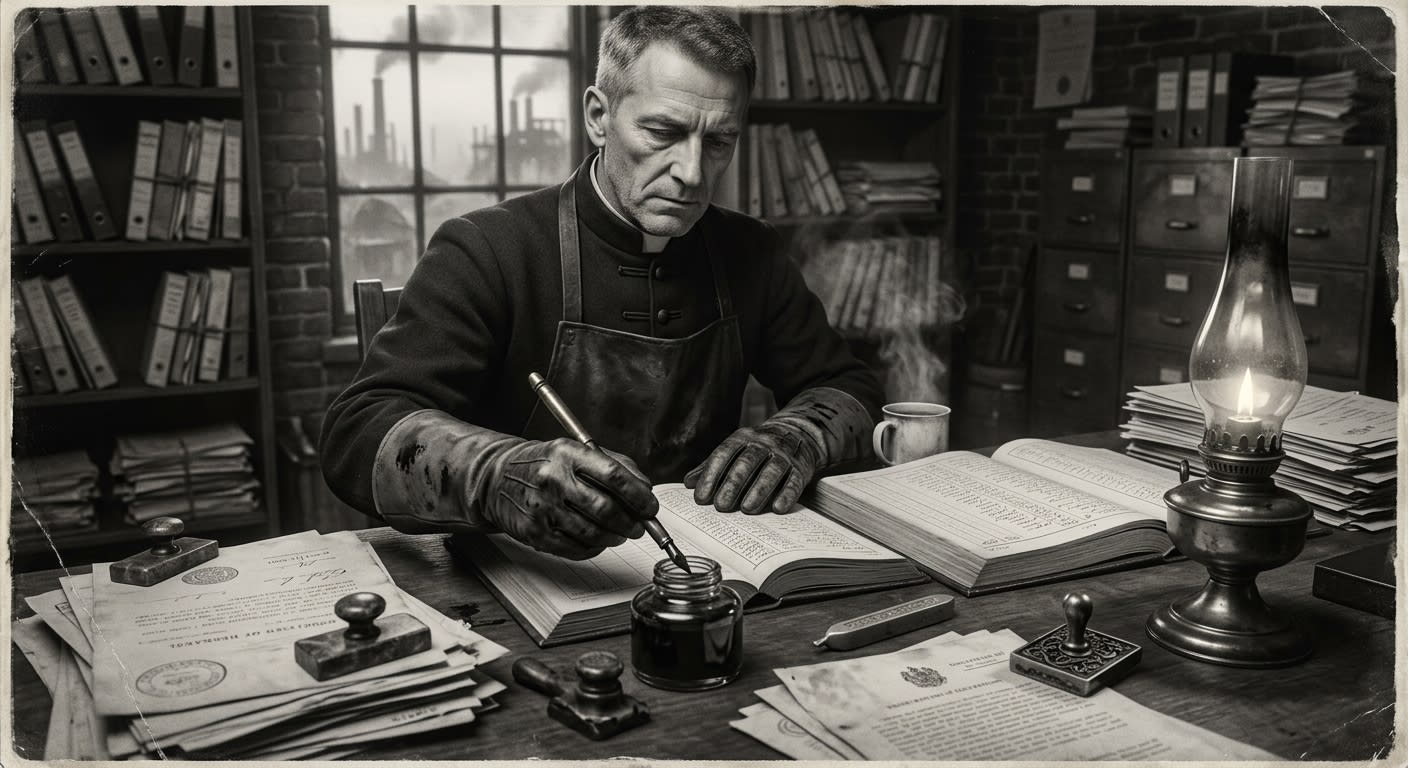
The northerners notice warmth. They notice it the way southerners notice rank, accent, shoes, and whether the wine was poured by a servant or by a man pretending humility. In Hrafnvik warmth is wealth with a pulse. A man whose hands are always warm is either blessed, stealing, sick, or in compact with something beneath the water. Malthus encourages none of these interpretations. He discourages none either.
His lamp burns imported wax. This is ostentation of the purest kind. The local lamps burn seal-oil, that steady animal light whose flame seems too patient for chemistry. Wax in Hrafnvik says: I have a southern route. I have paper. I have surplus. I can afford to waste what you cannot produce. It is a sermon in a brass cup, and every clan elder can read it without moving her lips.
Elder Sigrun Half-Wick despises the wax and accepts the man. Watch Captain Rauk One-Eye despises the man and accepts the stamp. The Warm Paper Brokers despise neither, since contempt interferes with business. The Dark-House Circle, whose existence I did not report and now record with the solemnity proper to selective memory, treats him as weather: dangerous, predictable in pieces, survivable with preparation.
Malthus's genius lies in never pressing the whole advantage. He can deny an exemption. He can delay a passage writ. He can mark a confession as incomplete, which in Hrafnvik is a spiritual wound with economic teeth. He rarely does all three to the same household. Cruelty, to be politically useful, must arrive in doses the victim can explain to himself as procedure. Malthus learned that lesson before Strasbourg sent him north. I suspect Strasbourg sent him north because he had learned it too well.
#On His Governance by Paper
The formal structure of Hrafnvik is tripartite: Clan Moot, Shrine Chapter, Winter Watch. A charming fiction. Hrafnvik is governed by whoever controls the next necessary thing. At dawn that may be Sigrun with her render schedules. At dusk it may be Rauk with his patrol routes. In the hour when a family needs an exemption, a passage south, a correction in the lamp-debt ledger, or the blessed omission of a name from a fast roster, it is Malthus.
He does not shout. He does not threaten. He does not invoke Strasbourg unless speaking to southerners, who still believe Strasbourg matters everywhere because Strasbourg matters in Strasbourg. With the clans he uses small levers: a delayed seal, a misplaced form, an indulgence phrased as clerical mercy, a confession entered in ink paler than the others. He keeps three shrine-clerks and permits them to think themselves necessary. He keeps two ledgers: one for the Bureau, one for Hrafnvik. The south calls this corruption. Hrafnvik calls it translation.
A prior Northern Office memorandum described Malthus's double-ledger practice as “probable administrative contamination.”
Corrected after A.S. 197 inspection. The first ledger is for truth in Strasbourg. The second is for facts in Hrafnvik. The distinction is indispensable, and any clerk who fails to understand it should be promoted immediately to a desk where no living settlement depends upon him.
He trades exemptions for oil. He trades oil for compliance. He trades compliance for reports. He trades reports for continued appointment. This chain would be scandalous if written bluntly. Fortunately, the Bureau invented theology so that scandal might wear vestments.
I dined with him on my third night. He served grain bread, imported at ruinous expense, and apologized for the lack of wine. He did not apologize for the forged warmth in the room, the wax lamp, the locked paper chest beside the hearth, or the fact that two children waited outside the Chapter wall holding a petition for their mother's fast suspension while we ate bread their household would not taste that winter.
I liked him immediately.
I trusted him less.
#On the Fog and His Theology
Hrafnvik's fog answers. It repeats prayers with substitutions, confessions with added sins, names in the cadence of the dead. The Bureau of Rites calls it Category Two Localized Acoustic Distortion, Responsive. The Watch calls it listening. The clans call it by smaller names and stop speaking when the lamps lean seaward.
Malthus calls it barometric pressure.
The statement is a lie, a useful lie, doctrinally adjacent to truth. If Malthus admits the fog listens, Strasbourg will send examiners. If examiners come, the Watch will refuse them, the Moot will hide the routes, the fog will learn southern voices, and three weeks later the Bureau will have a sealed incident, four dead clerks, and one more reason to misunderstand the North. Malthus says pressure. Rauk says nothing. Sigrun cuts wicks. The settlement survives.
EXTRACT — HRAFNVIK INSPECTION NOTEBOOK, A.S. 197 Seventh night. Fog at narrows. Malthus present. Prayer repeated from water in my voice, altered. Malthus crossed himself after the first alteration and stopped before the second. His hands remained warm. When asked later whether he heard the change, he answered: ███████████████████████████
The answer is sealed because I sealed it. Some truths, once written, become invitations. The Bureau adores invitations; it mistakes them for jurisdiction.
Malthus's theology is practical and ugly, which recommends it. He believes the Synod is correct in doctrine and incompetent in application. He believes Hrafnvik is faithful in substance and criminal in method. He believes the lamp doctrine is circular, cruel, and functional. He believes compassion must be laundered through paperwork or it will be killed by the first office that smells it. He believes his own survival is useful to the Creator, a belief shared by most clergy and disproved daily by their correspondence.
The old bell-tunings trouble him more than the fog. The fog can be called pressure; the bells answer back in bronze. Malthus keeps the Strasbourg schedule in his chapel ledger and permits the fjord pattern at the tower, a contradiction so neat it deserves binding in calfskin. Each quarter he reports “localized variance under pastoral supervision.” Each quarter the Northern Office stamps this and asks no musical questions. The Bureau of Bells would like him hanged by the wrists from a clapper rope. The Bureau of Doctrine prefers the oil shipments continue.
#On His Present Use
Prior Malthus remains at Hrafnvik as of A.S. 201 because no one can replace him without breaking something expensive. The clans would reject a fool. The Bureau would suspect a convert. The Watch would ignore an officer. The fog would answer a zealot until he corrected himself into madness. Malthus stands in the narrow tolerable interval: southern enough to stamp, northern enough to keep his mouth shut, vain enough to think himself necessary, intelligent enough to be right.
His enemies call him a paper-smuggler in vestments. His supporters call him a necessary knife. His Bureau file calls him “impeccable in form,” which is praise of the most damning sort. I call him a hinge. Hrafnvik turns on him more often than it admits.
The last time I saw him, he stood at the chapel threshold while the fog gathered below. His wax lamp burned behind him. The clan lamps burned in the longhouses. The Watch bells waited. He lifted one warm hand in blessing or farewell or calculation; with Malthus the gestures overlap. I returned the sign because courtesy costs less than candour.
The flame leaned seaward.