
#On the Far Nail
"Where the land ends and the water begins, there stands Königsberg. Where doctrine ends and the unnamed begins — there also." — Attributed to no one. Found scratched into a wall of the Northern Redoubt, date unknown.
I have been asked to write of Bastion-Königsberg. I accepted the commission. I regret the acceptance. I have regretted it three times since beginning this paragraph, which is a rate of regret I have not experienced since my brief tenure on the Committee for Liturgical Dance.
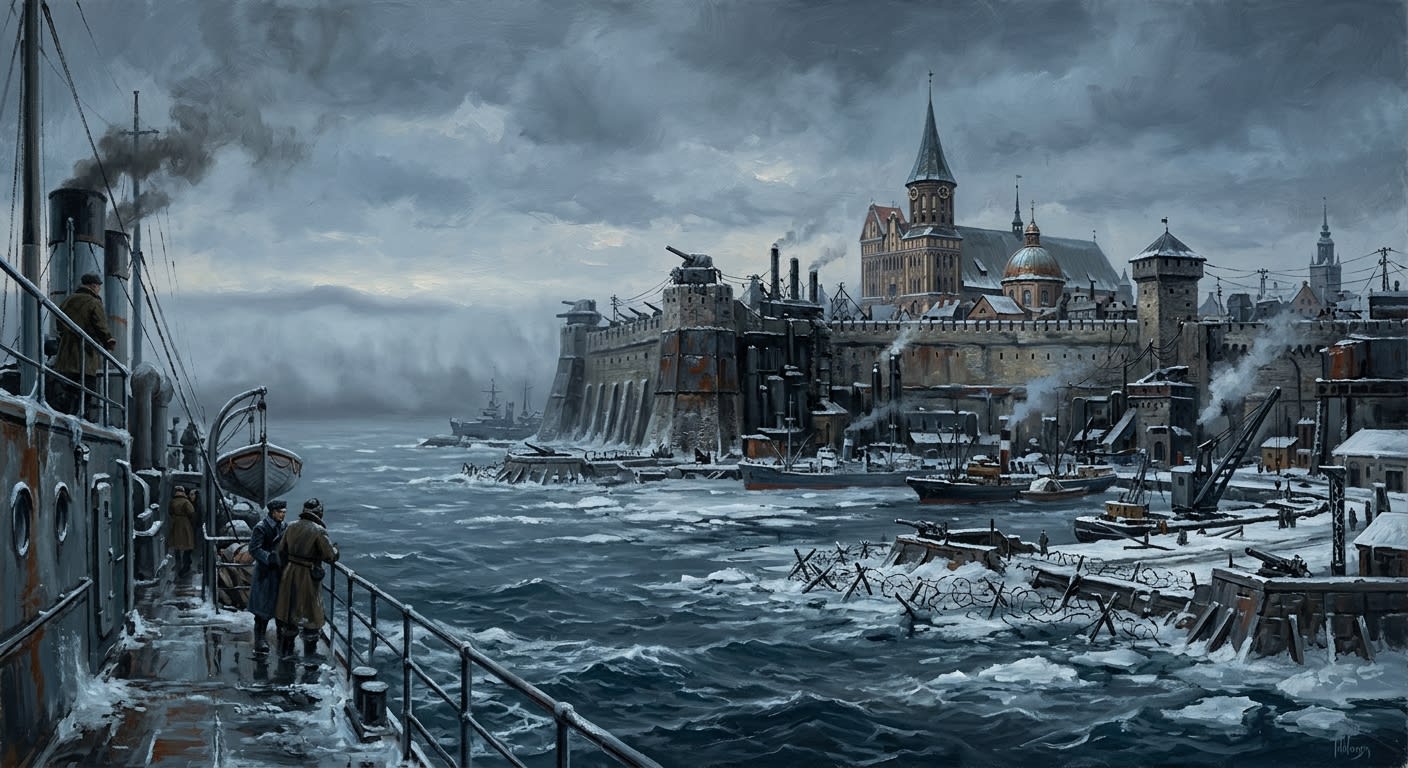
Königsberg is the Sagittal Line's northern anchor — the point at which two thousand miles of trench, wall, wire, and consecrated ordinance terminate against the Baltic shore and can go no further. The last bastion. The Far Nail, as the Bureau of Engineering insists on calling it, because the Bureau of Engineering has a fondness for construction metaphors that borders on the pathological. The garrison calls it other things. The garrison calls it many things, few of them printable, most of them earned.
The city sits at the mouth of the Pregel River on the Baltic coast of East Prussia — latitude fifty-four degrees and change, longitude twenty and a fraction, coordinates that the Bureau of Records files under the heading "As Far From Strasbourg As One Can Be Deployed Without Technically Leaving the Continent." It is cold in Königsberg. It is cold in Königsberg with a persistence and creativity that suggests the climate itself has taken a theological position against human comfort. The harbour freezes four months of the year. The walls accumulate ice that must be chipped by penitential labour crews every morning before the gun-ports can traverse. The wind off the Baltic carries salt, sleet, and something the garrison's chaplains will only describe as "an atmospheric quality inconsistent with standard meteorology."
The city was not built for war. Königsberg was a Teutonic foundation, a merchant port, a university seat — a place where men once debated philosophy and drank beer in quantities the Bureau of Temperance would find distressing. The Synod requisitioned it in the first years of the Line's construction, approximately A.S. 67, when the retreating frontier stabilized and the Bureau of War's cartographers drew their fateful meridian from the Baltic to the Bosphorus and pronounced it holy. What had been a provincial city became, within a decade, a fortress. What had been a fortress became, within another decade, a tomb with a garrison.
#On the Masurian Maze
"The lakes defend us. The lakes also confine us. The Bureau sees no contradiction." — Attributed to Colonel-Warden Bruhns, Northern Garrison Command, A.S. 189
Königsberg's outer defence is not a wall. It is a drowning.
To the east and southeast of the bastion stretches the Masurian Lake District — thousands of interconnected bodies of water, marshland, reed-beds, and drowned forest that form a labyrinth no army could cross in order and few patrols have crossed at all. The Bureau of Engineering designates it the "Primary Hydrological Defensive Zone." The soldiers call it the Drowning Garden. Both names are accurate; neither is adequate.
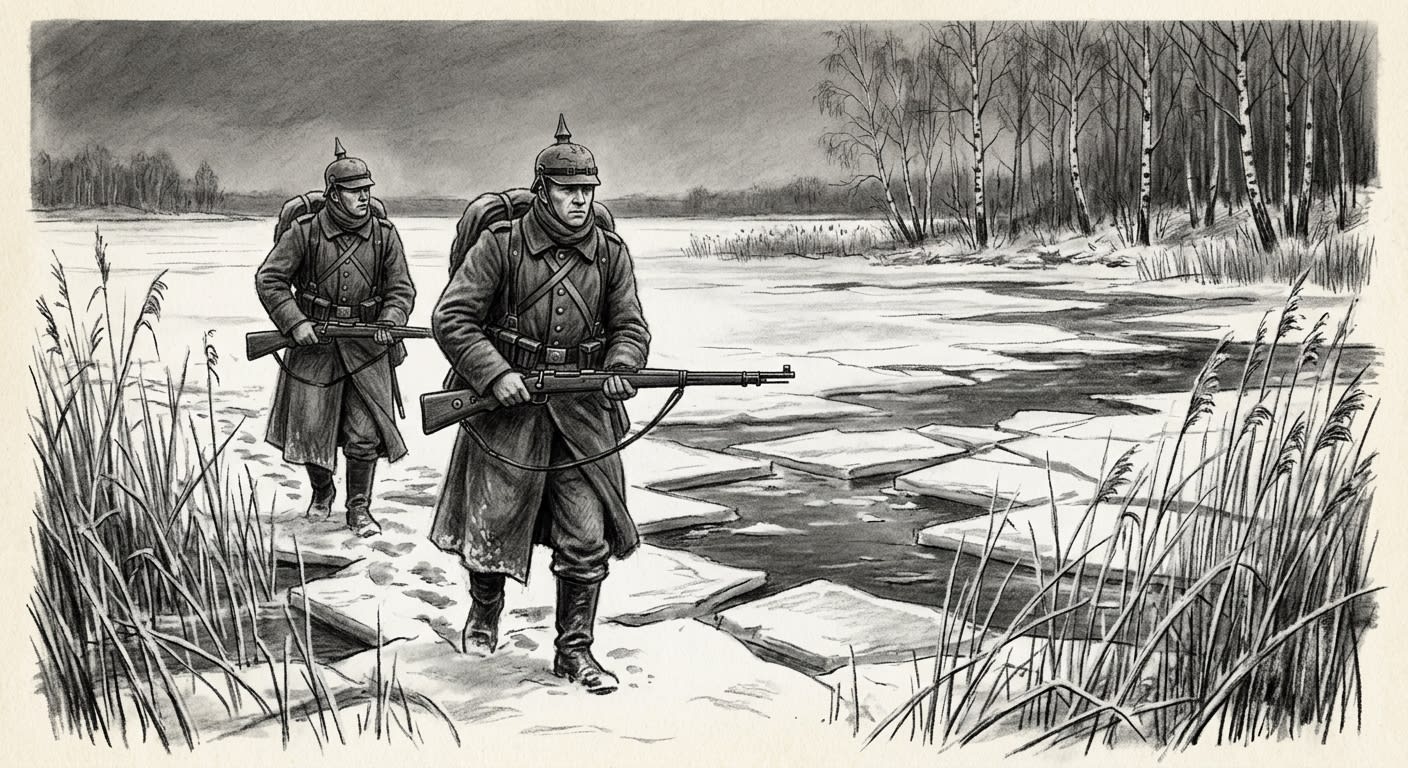
The lakes are shallow in summer and frozen in winter, which means they are impassable by boat for half the year and crossable on foot for the other half, which means the defensive calculus reverses with the seasons and the garrison must maintain two entirely separate doctrines of engagement depending on whether the water is liquid or solid. The Bureau of War considers this a stimulating tactical exercise. The garrison considers the Bureau of War's opinion to be formed at a comfortable distance from the ice.
In the warm months, the maze is patrolled by the Masurian Watchers — a formation of light infantry recruited exclusively from the lake-district villages that the Synod absorbed during the initial requisition. These men know the channels, the shallows, the submerged ridges where a man can stand chest-deep and fire a carbine, and the places where the water drops to thirty feet without warning. They navigate by reed-pattern and bird-call and a system of notched stakes driven into the lake-beds that the Bureau of Records has attempted to catalogue five times and abandoned four.
In the winter months, the ice transforms the maze into a highway. Kargath's horde, had it been Königsberg's opponent, would have crossed in a single night. Maldrake would have melted a path. Syrion's fog would have made the crossing irrelevant. But the Grey does none of these things. The Grey does not cross the lakes in winter or summer. The Grey does not approach from the east through the Masurian labyrinth at all, or if it does, it arrives without having been observed in transit, which is worse.
The Grey comes from the northeast, from the Baltic approaches, from the direction the Masurian maze does not cover. It comes along the coast, or from the sea, or from the air, or from the ground — the reports are inconsistent in every particular except one: every report agrees that the Grey was already present before the first sentry noticed it.
#On the Fortifications
"Königsberg is a city designed to be defended. It was not designed to be lived in. The distinction is a luxury the garrison can no longer afford." — Bureau of Engineering Survey, A.S. 178, margin annotation by an unnamed inspector
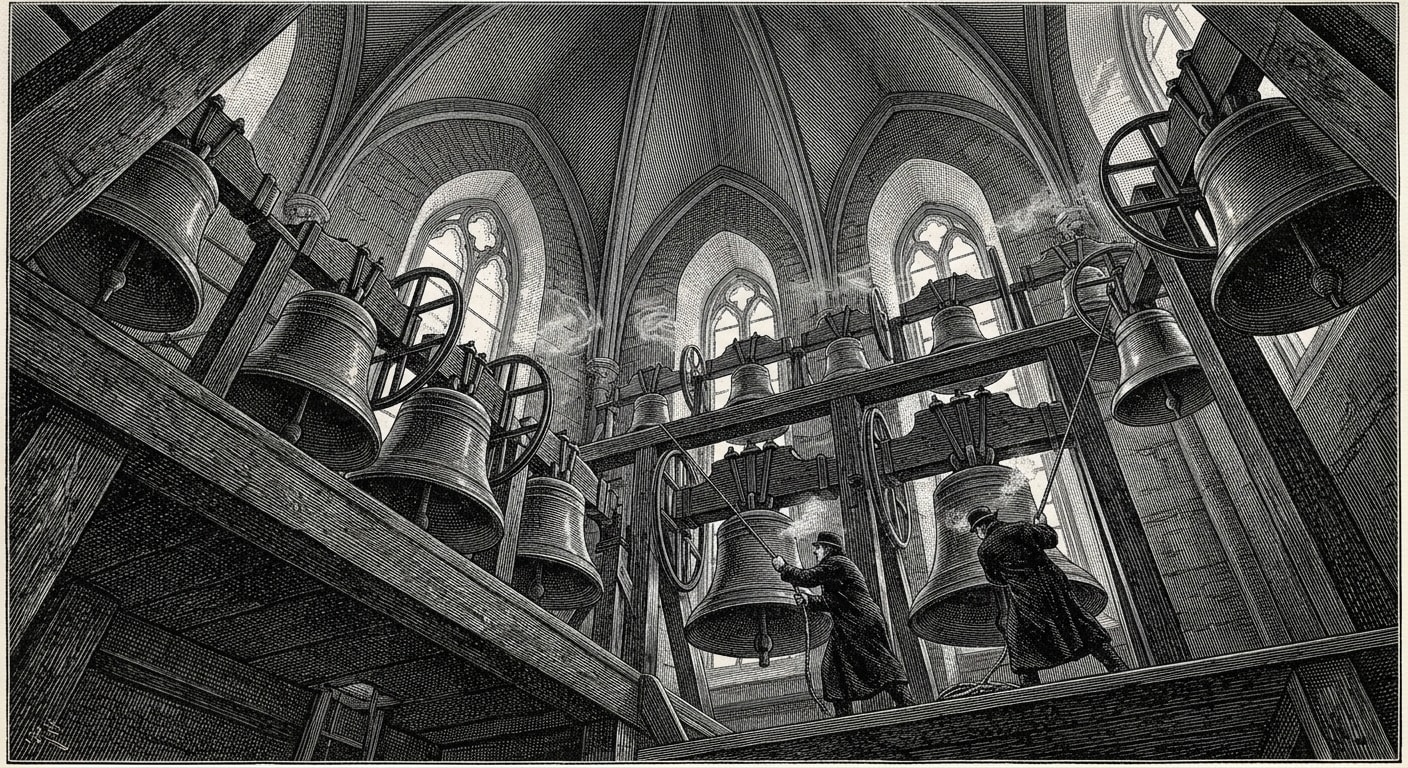
The bastion proper occupies the old city centre and its surrounding districts, massively expanded during the Concordat-era rebuilding of A.S. 92–110. The original Teutonic castle — the Ordensburg — serves as the garrison headquarters and Bureau of Doctrine's Northern Theater office, its medieval brickwork reinforced with iron plating and prayer-inscribed buttresses that the Bureau of Bells maintains on a rotating schedule. The cathedral, still standing through an obstinacy the Bureau attributes to divine favour and the engineers attribute to excellent foundations, houses the Northern Carillon — forty-one bells cast from bronze recovered from the guns of the pre-Synodic Prussian military, each bell tuned to a frequency the Bureau of Bells has classified as "Northern Standard Resonance," which is distinct from the standard bell-schedule used on the rest of the Line.
The city divides into seven districts, each named with the methodical grimness that characterizes all Northern Theater nomenclature:
The Ordensburg — the old castle, now garrison command. The Bureau of Doctrine maintains its Northern office here in rooms that were once a grand master's apartments and now contain filing cabinets. The transition, I am told, improved the décor.
The Cathedral Close — surrounding the Northern Carillon. Home to the Bureau of Bells' largest forward staff, the bell-ringers who maintain the forty-one-bell array, and the Choir of the Northern Standard — a formation of twenty voices trained to harmonize with the bell-frequencies in a pattern that does not appear in any published hymnal. What they sing, and why, is classified. That they sing continuously, in rotating shifts, for every hour of every day, is observable from any balcony in the Close and has been observed for the past thirty years.
The Harbour Quarter — the old merchant port, now a military supply terminal. Everything that reaches Königsberg by sea arrives here: grain from Hamburg, ammunition from Kanzleiburg, conscripts from Warsaw, and replacement bell-clappers from the Bureau of Bells' foundry in Essen. The harbour freezes from December to March, during which period all supply must come overland through the Polish corridor, a logistical bottleneck the Bureau of War has spent forty years failing to resolve.
The Lake Gate — the eastern district facing the Masurian approaches. Heavily fortified, permanently garrisoned, and the point from which the Masurian Watchers deploy. The Lake Gate's walls are the thickest on the bastion — twelve metres of stone, iron, and fill — despite the fact that no recorded attack on Königsberg has ever come from this direction. The Bureau of Engineering built for the threat that made strategic sense. The threat that arrived had other plans.
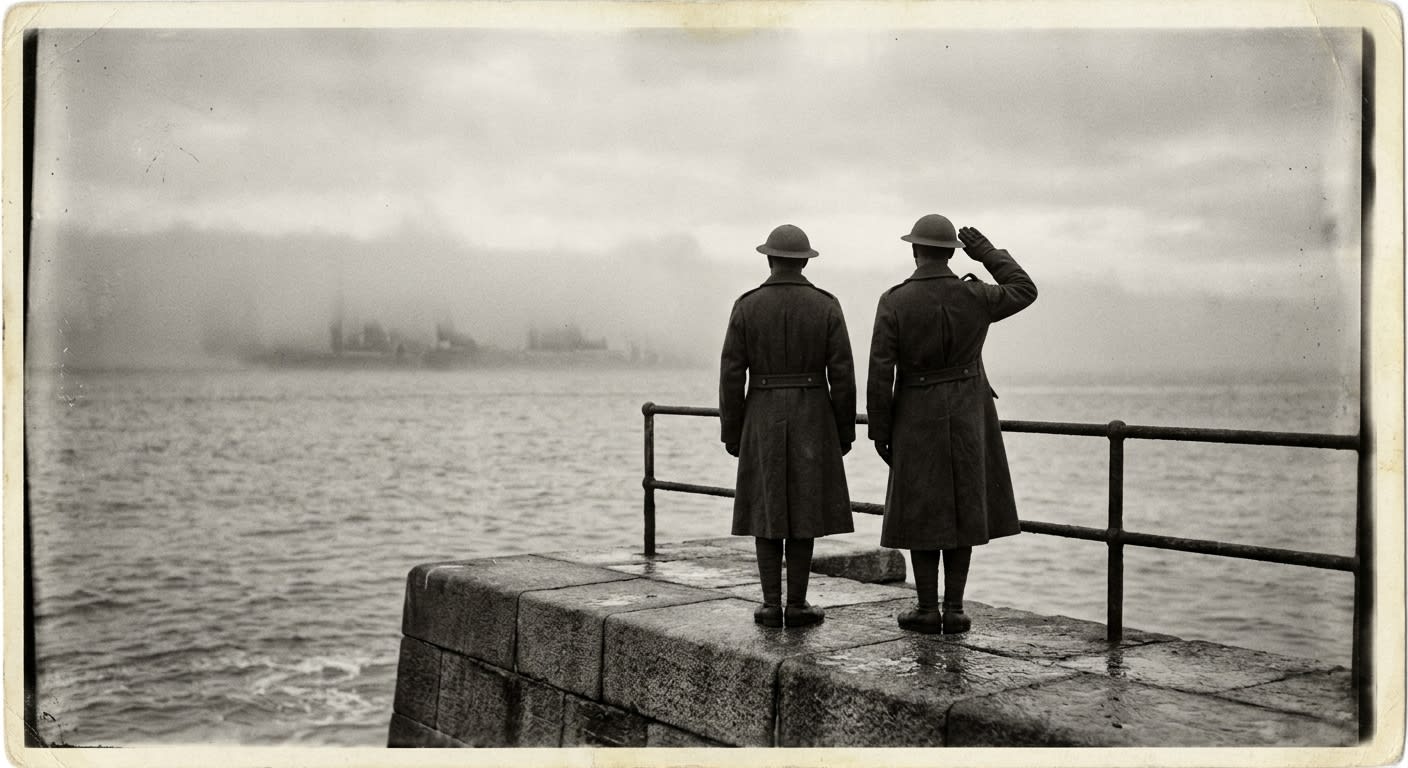
The Sea Wall — the northern fortification facing the Baltic. Here the trenches meet the water and the wire runs into the surf. Sentries on the Sea Wall are rotated every six weeks — half the standard rotation on the rest of the Line — for reasons the Bureau of Doctrine has classified under the heading "Operational Wellbeing, Northern Standard." The soldiers have a simpler explanation. They say six weeks is the longest a man can stare at the Baltic from the Sea Wall before he begins to see faces in the fog. The Bureau of Purity conducts exit interviews with every soldier leaving the Sea Wall rotation. The interviews are sealed.
The Warrens — the civilian quarter, pressed between the Ordensburg and the Harbour. Approximately nineteen thousand souls inhabit these streets — fishermen's families who refused evacuation, Prussian merchants who calculated that war profiteering outweighed the risk, refugees from the eastern provinces who could retreat no further, and a floating population of camp followers, sutlers, and Bureau of Passage clerks whose primary function is to prevent anyone from leaving. The Warrens are the only district of Königsberg where laughter can still be heard, which the Bureau of Purity monitors but has not yet prohibited.
The Frost Yards — the industrial district where the garrison's materiel is stored, maintained, and occasionally manufactured. The Frost Yards earned their name because the temperature in the storage vaults never rises above freezing, regardless of season. The Bureau of Engineering attributes this to excellent insulation. The garrison attributes it to something else. Oil stored in the Frost Yards does not congeal in the cold, which is chemically impossible. Bread stored there does not stale. Corpses awaiting burial do not decay, but they do, according to three separate and mutually corroborating reports filed between A.S. 195 and A.S. 199, change position.
#On the Grey
"We do not name it. It does not name itself. The symmetry should concern you." — Königsberg garrison chaplain, identity sealed
I am required, by the terms of my commission, to describe the enemy Bastion-Königsberg faces. I will do so. I will do so with the full understanding that the Bureau of Doctrine has classified all substantive information about the northern threat under ABSOLUTE SUPPRESSION, that the Bureau of Shadows has sealed the field reports under a clearance tier whose existence it denies, and that what I am about to write is therefore the officially approved version of a thing the official position holds does not exist.
Earlier editions of this Codex described the northern enemy as "an eighth Sin-General, unnamed and unclassified."
This is incorrect. The Bureau of Doctrine has not confirmed an eighth Sin-General. The Bureau of Doctrine has not confirmed the existence of a distinct entity commanding the northern approaches. The Bureau of Doctrine has confirmed only that "anomalous contact reports from the Königsberg sector are under active review," and that the review has been active for eleven years, and that the word "active" is used in its specialized Bureau sense, which is indistinguishable from the civilian meaning of "indefinitely postponed."
What the garrison of Königsberg calls the Grey is recorded in the Bureau of War's Northern Theater assessment — a document I have read, under conditions I will not describe, in a room I was not supposed to enter — as Unknown Forces, Extradoctrinal Classification Pending. The classification has been pending since A.S. 190. The forces remain unknown. The garrison, lacking a Bureau-approved designation, uses the name they coined themselves: the Grey.
It is grey. That much is established. Reports from the Sea Wall and the northeastern pickets describe fog — not the time-fog of Syrion, which is a known quantity with a known theology and a known countermeasure, but a fog without meteorological cause that carries qualities the reports struggle to articulate. It is grey in the way ash is grey, the way old snow is grey, the way a dead man's eyes are grey. It does not move with the wind. It moves against the wind, or without reference to wind, or in patterns that suggest the fog itself is the least important part of what is happening and the greyness is simply the colour of attention.
The Grey does not attack in the manner of the Sin-Generals' hosts. It does not field armies. It does not besiege. It does not negotiate, demand, threaten, or speak. What the Grey does — according to the reports I have read, according to the soldiers I have questioned, according to the chaplains who have conducted the post-contact debriefings that the Bureau of Purity insists are "routine pastoral interviews" — is arrive.
The fog comes. Sentries on the Sea Wall report that the fog carries faces — not demonic faces, not the shrieking masks of Maldrake's Forge-Beasts or the beautiful corruptions of Velkara's infiltrators, but ordinary faces. Faces that look like people. Faces that look like people the sentries have known, or people they might have known, or people who look as if they should be known but cannot be placed, which is the variety that produces the most severe psychological casualties.
Hymns do not repel it. This is unprecedented. Every other hostile force on the Line — every Sin-General, every demonic taxonomy, every abomination catalogued in the Bureau of Doctrine's twelve-volume Compendium Infernum — responds to consecrated counter-measures in some fashion. Hymns disrupt. Bells shatter. Relics burn. Holy water scalds. The theological architecture of the Synod's war effort is built on the foundational assumption that the enemy is, at its root, a spiritual force amenable to spiritual countermeasure. The Grey is not amenable. The Grey does not respond. The bells of the Northern Carillon ring, and the Grey continues. The Choir of the Northern Standard sings, and the Grey continues. Relics are presented, and the Grey does not recoil, does not burn, does not flinch, does not acknowledge their presence in any way the observers can detect.
The implications are the ones the Bureau has spent eleven years declining to examine. If the Grey is not a spiritual force, then the theological foundations of the war are incomplete. If it is a spiritual force that does not respond to the Synod's sacraments, then the sacraments are incomplete. If it is something else entirely — something that predates the Sundering, something that was here before the Great Deceiver's legions walked the earth, something that the Sundering merely uncovered rather than created — then the Bureau of Doctrine's entire taxonomy of evil requires revision, and the Bureau of Doctrine does not revise. The Bureau of Doctrine clarifies, and clarification requires a conclusion, and no conclusion has been reached, and so the file remains open, and the classification remains pending, and the garrison of Königsberg remains alone with the fog.
#On the Garrison
"Every man at Königsberg volunteered. Every man at Königsberg was also assigned. The Bureau sees no contradiction between these statements, and neither should you." — Bureau of War, Northern Conscription Office, standard briefing
Königsberg maintains a garrison of approximately twenty-two thousand military personnel and an additional four thousand Bureau staff across all offices, making it one of the smaller bastion garrisons on the Line — roughly a third the size of Constantinople's complement. The Bureau of War attributes this to the "favourable defensive terrain" provided by the Masurian Lakes. The garrison attributes it to the fact that Königsberg is a posting no one requests and from which transfer applications outnumber any other sector of the Line by a factor of three.
The garrison commander is Castellan-Warden Ingrid Halvorsen — a woman of Scandinavian extraction, which places her in the unusual position of holding authority in a bastion that disputes jurisdiction with her homeland. Halvorsen has commanded Königsberg since A.S. 191, making her the longest-serving castellan in the bastion's history, a record she has achieved not through excellence — though she is excellent — but through the simple fact that no replacement has volunteered and the Bureau of War has declined to compel one. She is fifty-three years old, grey-haired — a colour she insists is hereditary and not, as her officers suggest, acquired — and possessed of a command style that the Bureau of Doctrine's personnel file describes as "efficient, pragmatic, and theologically adequate," the last phrase being Bureau shorthand for "does not ask inconvenient questions in writing."
The garrison's spiritual needs are served by Rector-Chaplain Wendelin Grau — and I record his surname without comment, though the comment writes itself — who maintains the Cathedral Close and oversees the Choir of the Northern Standard. Grau has held his position since A.S. 186 and is, by the accounts of every soldier I questioned, the most trusted man in Königsberg, which is a distinction carrying less warmth than it sounds: in a bastion where trust is rationed as carefully as bread, being the most trusted man means being the man whose lies are told with the most conviction. Grau does not lie about the Grey. Grau does not discuss the Grey. He discusses the bell-schedule, the hymn rotations, the Choir's performance metrics, and the maintenance requirements of forty-one bells in a climate that corrodes bronze. When asked about the enemy, he discusses the bell-schedule again, with greater emphasis.
The Masurian Watchers are commanded by Lake-Captain Kaspar Dreyse, a third-generation lake-district native whose family was absorbed into the Synod's service when the original villages were requisitioned. Dreyse knows the lakes as a man knows the rooms of his childhood home. He is the bastion's most effective field officer and its most frequent subject of Bureau of Purity inquiry, because Dreyse's Watchers employ navigation methods that the Bureau cannot classify as either natural skill or heterodox practice, and the Bureau of Purity has a constitutional inability to leave unclassified things unexamined. Dreyse has been cleared nine times. He will be investigated again. His knowledge is that useful, and usefulness, in the Synod's administrative calculus, is a species of suspicion.
#On the Disputed North
"Scandinavia prays. Königsberg prays. They do not pray to the same schedule. The Bureau of Bells finds this intolerable." — Bureau of Bells, Northern Correspondence File, A.S. 197
Königsberg's jurisdiction bleeds. To the north and northwest, across the Baltic, lie the territories the Synod designates as the Fractured North — the Scandinavian coast, the fjord hermitages, the seal-oil shrinefjords where faith is enforced by clan councils and axe-psalters rather than by Bureau writs and licensed Confessors. The Fractured North is Synod territory in the sense that the Synod claims it; it is not Synod territory in the sense that the Synod controls it. The distinction generates paperwork. The paperwork generates correspondence. The correspondence generates jurisdictional disputes that have occupied the Bureau of Doctrine's Northern Office for the better part of four decades.
The dispute is genuine and not merely administrative. The Fractured North maintains its own bell-schedules, its own hymn-cycles, its own interpretation of the Concordat that — while not heretical, not precisely, not in terms the Bureau of Purity can prosecute without starting a naval war — deviates from Strasbourg's standard in ways that make the Bureau of Bells physically uncomfortable. The Northern Carillon at Königsberg rings the Strasbourg standard. The fjord-bells of Scandinavia ring something older. When the wind carries both tones across the water simultaneously, the result is a dissonance that the Bureau of Bells classifies as "acoustically non-canonical" and the garrison chaplains classify as "deeply unpleasant."
The practical consequence is that Königsberg operates at the edge of two authorities — Strasbourg's bureaucratic apparatus to the southwest, and the Fractured North's clan-faith to the northwest — and serves as the uncomfortable hinge between them. Supply comes from the south, through Warsaw and Kanzleiburg, along a corridor that stretches eight hundred miles through the Polish lowlands. Intelligence about the Grey comes from the bastion's own patrols and from the occasional Scandinavian fishing vessel whose crew reports things seen on the northern water that align, in disturbing particular, with the Grey's documented behaviour closer to shore.
The Fractured North has its own name for what Königsberg calls the Grey. They call it det grå vattnet — the grey water. They say it has been in the Baltic longer than the Synod. They say it was there before the Sundering. They say the fjord-bells were tuned against it, centuries ago, by methods the Synod's standardized bell-schedule has overwritten.
The Bureau of Doctrine's official response to these claims is that they are "pre-Concordat folk tradition, unverified, and theologically naive." The Bureau of Doctrine's unofficial response — communicated to me in a corridor of the Ordensburg by a clerk who refused to be named — is that the Bureau has requested copies of the old Scandinavian bell-tunings three times, and been refused three times, and has not asked a fourth time because the refusal was accompanied, on the third occasion, by a demonstration of what the old tunings do, and the demonstration was conducted at sea, and what happened at sea is in a file that the Bureau of Shadows holds and the Bureau of Doctrine does not discuss.
#On the Anomalies
"The word 'anomaly' is doing a great deal of heavy lifting in the Northern Theater reports. It is carrying weight it was not designed to bear." — Drax, private correspondence, A.S. 199
I have described the fog. I have described the faces in the fog. I have described the failure of consecrated countermeasures. I have not described the other things, because the other things are classified, and because classification is, in this instance, a mercy I am inclined to extend.
But the Codex is not merciful. The Codex is complete. And completeness requires that I record what the garrison of Königsberg lives with, even if the Bureau of Doctrine would prefer I did not.
The Echoed Hymns. The Choir of the Northern Standard sings. The Grey sings back. The returned hymns are not distorted — they are perfect reproductions, note for note, word for word, in voices that match the Choir's own timbre so precisely that the Choir has, on three documented occasions, lost its place in the cycle because the singers could not distinguish their own voices from the echo. The Bureau of Bells has installed harmonic-isolation screens around the Cathedral Close. The screens reduce the echo. They do not eliminate it. The echo knows the hymns the Choir has not yet sung — on two occasions, the returned melody has preceded the Choir's own performance by several bars, which means either the echo is anticipating or the Choir is remembering, and neither explanation is one the Bureau of Doctrine is prepared to ratify.
The Saluting Sentries. It is documented in fourteen separate post-watch debriefings between A.S. 192 and A.S. 201 that sentries on the Sea Wall have rendered military salutes to empty fog. In each case, the sentry was otherwise lucid, oriented, and passed Bureau of Purity examination without deficiency. In each case, the sentry reported an overwhelming conviction that something of rank had passed — something that required acknowledgment, that demanded the instinct of deference, that carried authority the body recognized before the mind could object. The sentries do not describe a shape. They describe a weight. A sense of presence so absolute that the hand moves before the thought forms. The Bureau of Purity classifies these events as "involuntary motor response to atmospheric anomaly." The sentries classify them as saluting something that was there.
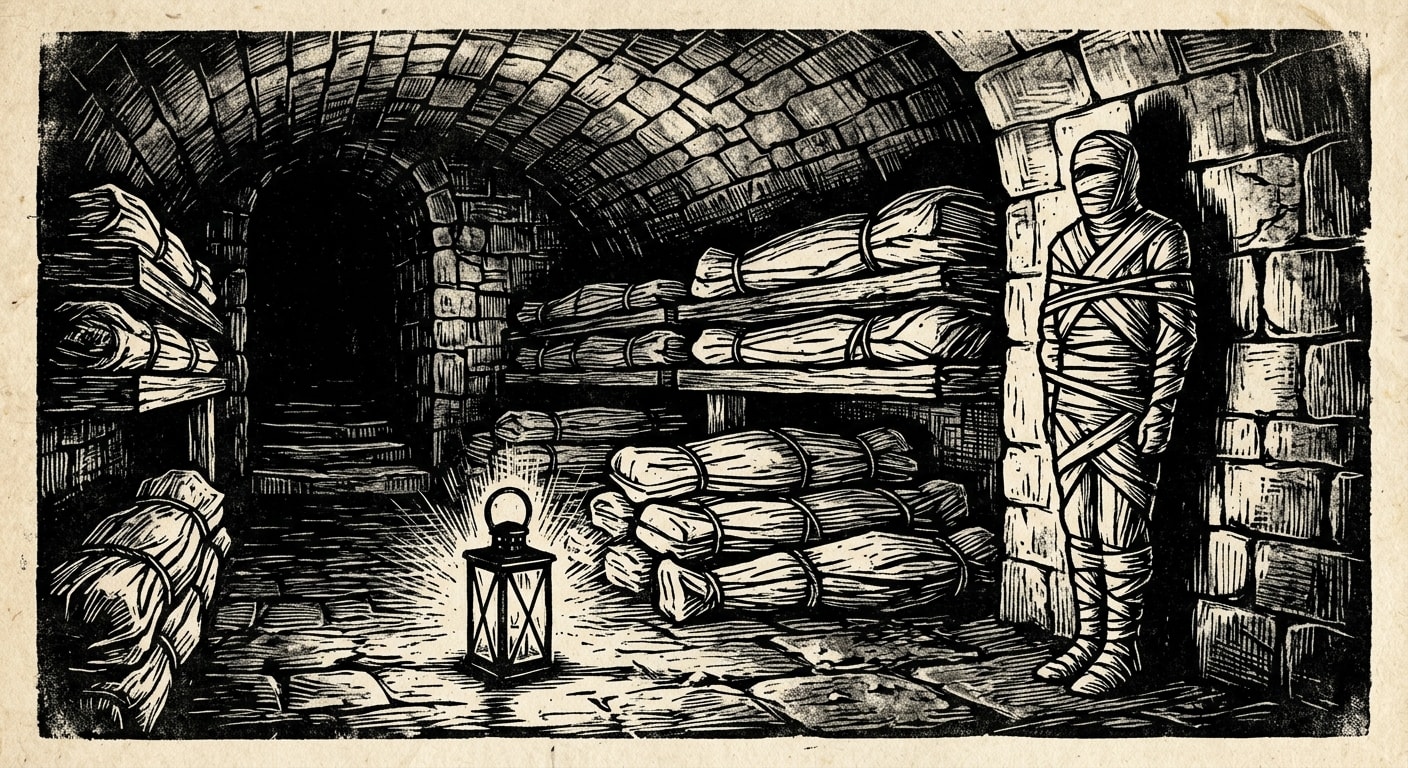
The Frost Yards Displacement. I have mentioned the corpses. I will be more specific, because specificity is the Codex's only weapon against the Bureau's preference for euphemism. Between A.S. 195 and A.S. 199, the Frost Yards custodian filed seven reports documenting positional changes in bodies awaiting burial. The changes were not decomposition-related — the bodies do not decompose in the Frost Yards, as noted. The changes were postural. Bodies placed supine were found prone. Arms placed at sides were found folded across chests. In one case — the report that prompted the Bureau of Purity's direct intervention — a body was found standing, its back pressed against the vault wall, its face oriented toward the northeast.
The Bureau of Purity's investigation concluded that the custodian's reports were "consistent with seismic micro-displacement and ice-heave." The custodian's response, appended to the file in his own hand, reads: "The ground in the Frost Yards has not moved in forty years. The bodies have."
An earlier draft of this entry attributed the Frost Yards anomalies to Syrion's time-distortion effects.
This was incorrect and has been struck. Syrion's domain is the Bulgarian highlands, approximately two thousand miles to the south. The Frost Yards anomalies are not consistent with any documented Sin-General's operational signature. They are consistent with nothing in the Bureau's existing taxonomy. The Bureau of Doctrine has declined to create a new taxonomic category, on the grounds that creating a category would constitute acknowledgment, and acknowledgment would constitute confirmation, and confirmation would require action, and the Bureau is not yet prepared to act.
#On the Bells That Answer
"A bell is rung and silence follows. That is doctrine. A bell is rung and something answers. That is Königsberg." — Bureau of Bells, internal memorandum, A.S. 196
The Northern Carillon is Königsberg's pride and its unease. Forty-one bells, cast from Prussian gun-bronze in the first decade of the bastion's expansion (A.S. 97–107), each tuned to the frequencies prescribed by the Bell Codex — or tuned as closely as Prussian metallurgy and Baltic salt-air allowed, which is close enough for the Bureau of Bells' Southern inspectors and not close enough for the garrison chaplains who hear the bells every day and insist that something in the tuning has shifted.
The shift is not measurable by the Bureau's standard pitch-gauges. The shift is audible to anyone who has lived in Königsberg for more than a year. It is a quality the chaplains describe as "answering" — as though the bells, when struck, are completing a call that originated elsewhere. As though the bronze is resonating with something other than the clapper's impact. The Bureau of Bells has replaced the clappers twice, recast three bells, and inspected the bell-frames for structural fatigue. The shift persists. It has persisted since approximately A.S. 190, which is the year the Grey was first classified, which is a coincidence the Bureau of Bells has noted in its files and the Bureau of Doctrine has removed from its files, and which I record here because removing a coincidence from a file does not remove it from the air.
The Choir of the Northern Standard was established in A.S. 188 as a supplement to the Carillon — twenty voices singing in continuous rotation, twelve hours on, twelve off, their harmonies calibrated to reinforce the bell-frequencies and fill the gaps between peals. The Bureau of Bells designed the Choir's hymn-cycle. The Bureau of Doctrine approved it. Rector-Chaplain Grau executes it with a precision that the Bureau of Bells' annual inspection consistently rates as "exemplary." And the Grey sings it back, note for note, which makes "exemplary" a word that means something different in Königsberg than it means anywhere else on the Line.
#On the Present Condition
The garrison holds. This is the short version of Königsberg's present condition, and it is the version the Bureau of War provides to Strasbourg, and it is true in the way that saying "the patient is breathing" is true of a man in the grip of a fever whose origin the physicians cannot identify.
Königsberg has not been breached. The Grey has not crossed the walls. No sortie has been lost, no district overrun, no bell silenced. By every metric the Bureau of War employs to evaluate a bastion's operational status, Königsberg is functional, supplied, and combat-ready. The garrison rotates. The patrols deploy. The Choir sings. The bells ring. The Masurian Watchers maintain their lake-posts, and the Harbour Quarter receives its supply convoys when the ice permits, and the Warrens' civilian population continues to live and trade and argue and produce children who will grow up to serve on the same walls their parents serve on, and the whole apparatus of a bastion at war continues to operate as designed.
What concerns me — what should concern the Bureau, and does not, or does and will not say so — is that the Grey has not attacked. In eleven years of documented contact, the Grey has produced fog, faces, echoed hymns, saluting reflexes, and corpses that change position in unheated vaults. It has not produced casualties. It has not breached defences. It has not done what every other force on the Line does, which is attempt to kill the people behind the wall.
The Bureau of Doctrine's Northern Office produces an annual assessment. I have read eleven of them. Each one is shorter than the last. The first, filed in A.S. 190, ran to forty-seven pages and contained fourteen recommendations for further investigation. The most recent, filed in A.S. 200, ran to six pages and contained one recommendation: "Continue current operational posture." The decline in length is not a decline in concern. It is a decline in the number of things the Bureau is willing to commit to paper.
The soldiers of Königsberg serve their rotations — the abbreviated rotations, the six-week Sea Wall shifts, the two-year Choir terms, the carefully managed exposures — and they return to the southern sectors changed in ways the Bureau of Purity's exit interviews attempt to measure and fail. They are not mad. They are not heretical. They are not compromised in any way the Bureau's diagnostic instruments can detect. They are, by the testimony of every commanding officer who receives a Königsberg transfer, quieter. They are men and women who have stood at the edge of something they cannot name and returned with a silence that does not dissipate.
The Bureau of War maintains the garrison. The Bureau of Doctrine maintains the classification. The Bureau of Bells maintains the Carillon. The Bureau of Shadows maintains the file. Castellan-Warden Halvorsen maintains the walls. And the Grey maintains its vigil on the other side of the water, grey and formless and patient, and does not explain itself, and does not attack, and does not leave.