

Reverse Index
Referencing “Strasbourg Cathedral”
Every codex entry that links to Strasbourg Cathedral. 87 entries.
Return to Strasbourg Cathedral
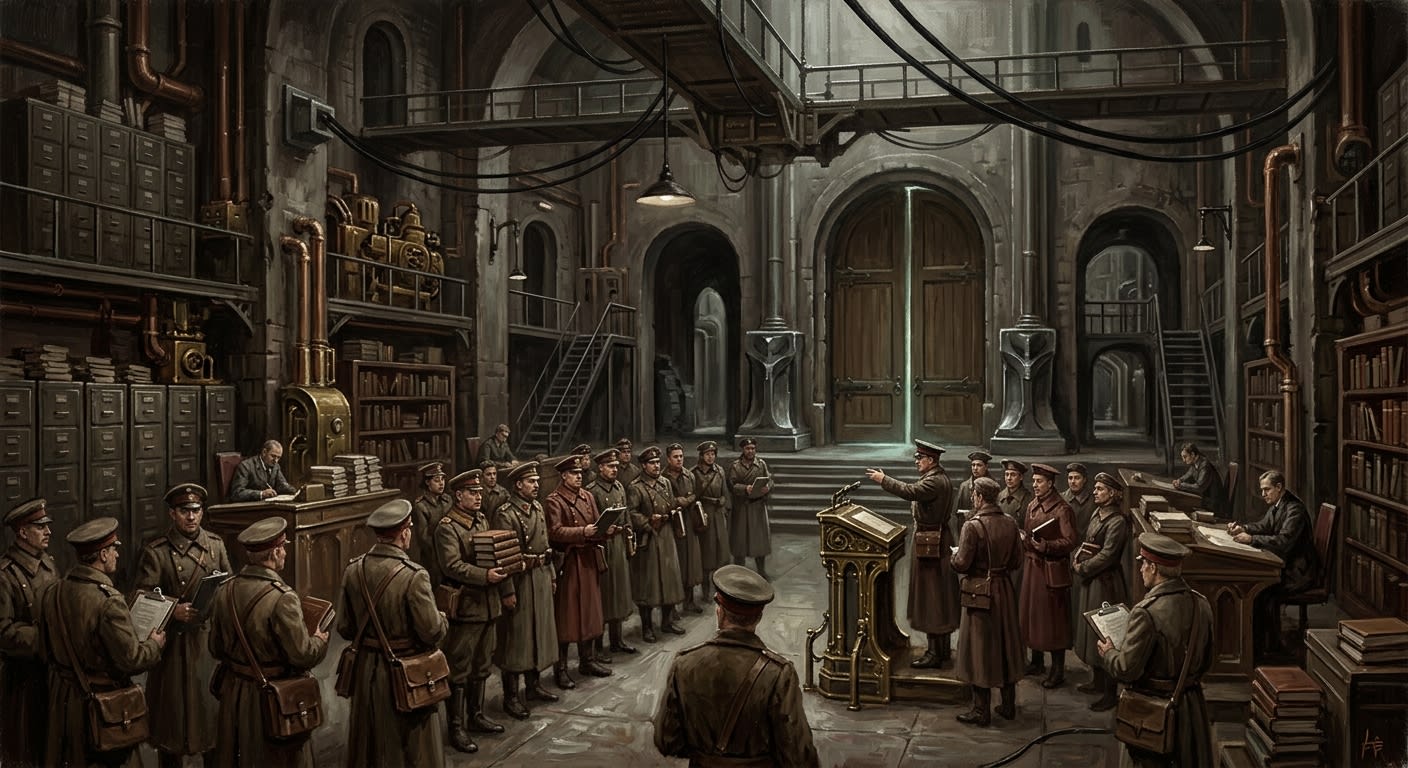
Academy of Strasbourg
Where questions are taught to kneel before they are permitted to stand
The Synod's capital academy trains clever minds for dangerous offices by making knowledge kneel, speak late, file early, and fear extra doors.
Codex Ref. I.1.03-090
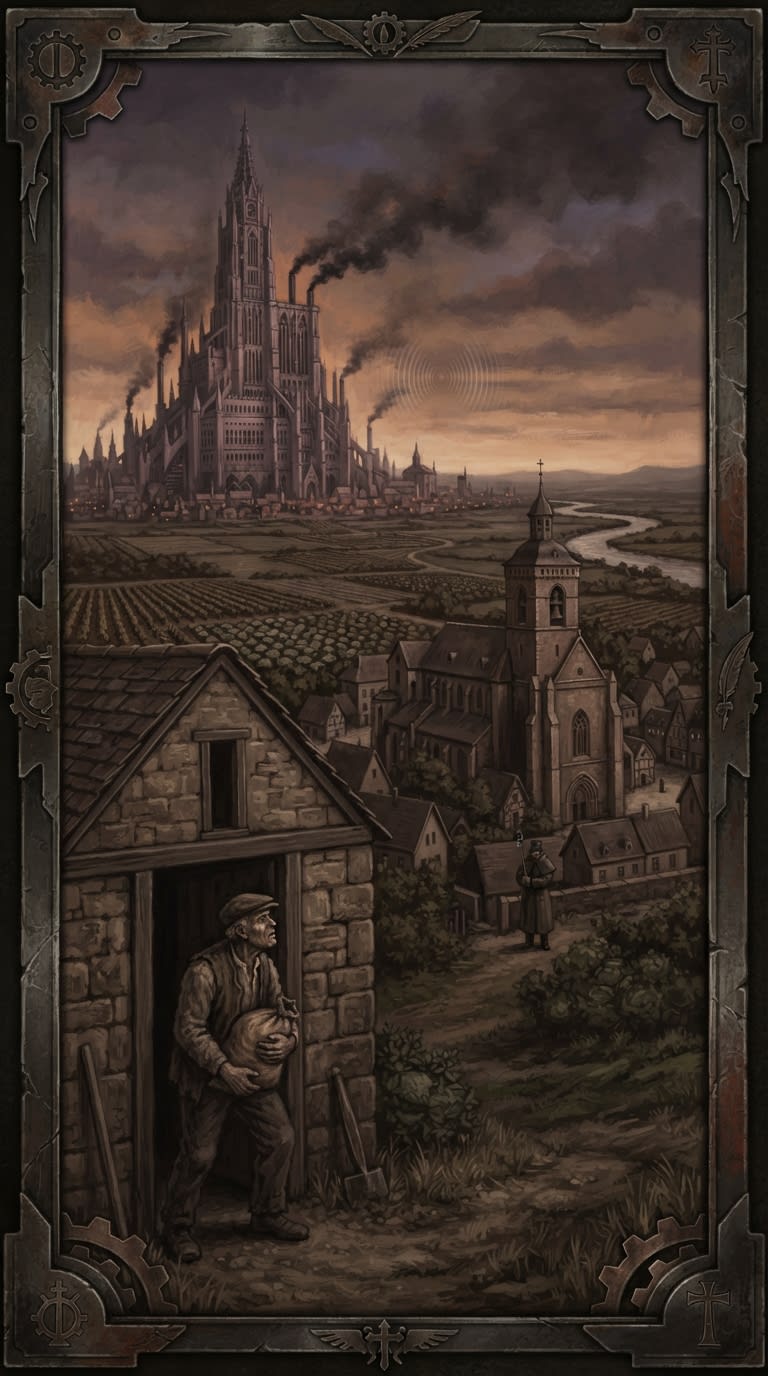
Alsace
The province close enough to mistake obedience for acoustics
Alsace is Strasbourg's near countryside: stone, grain, wine, licensed parish bells, and villages taught that the Whisper may hear what the assessor has not yet counted.
Codex Ref. II.2.10-201
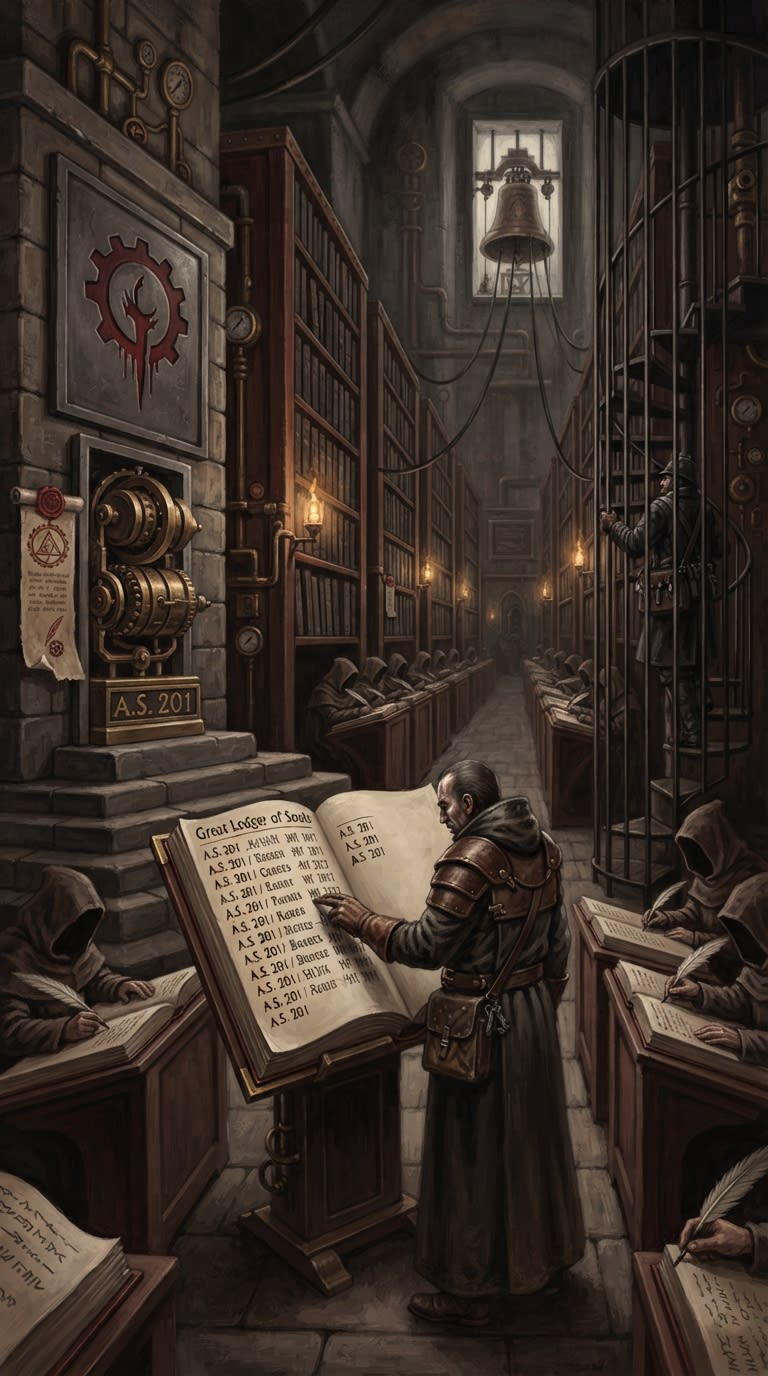
Anno Synodi
The wound by which Strasbourg owns the year
The Synod's calendar counts not from triumph but from wound: A.S. 0 at De Vera Luce, adopted retrospectively at the Concordat, and enforced by Records, Bells, and Doctrine.
Codex Ref. XIII.1.00-090
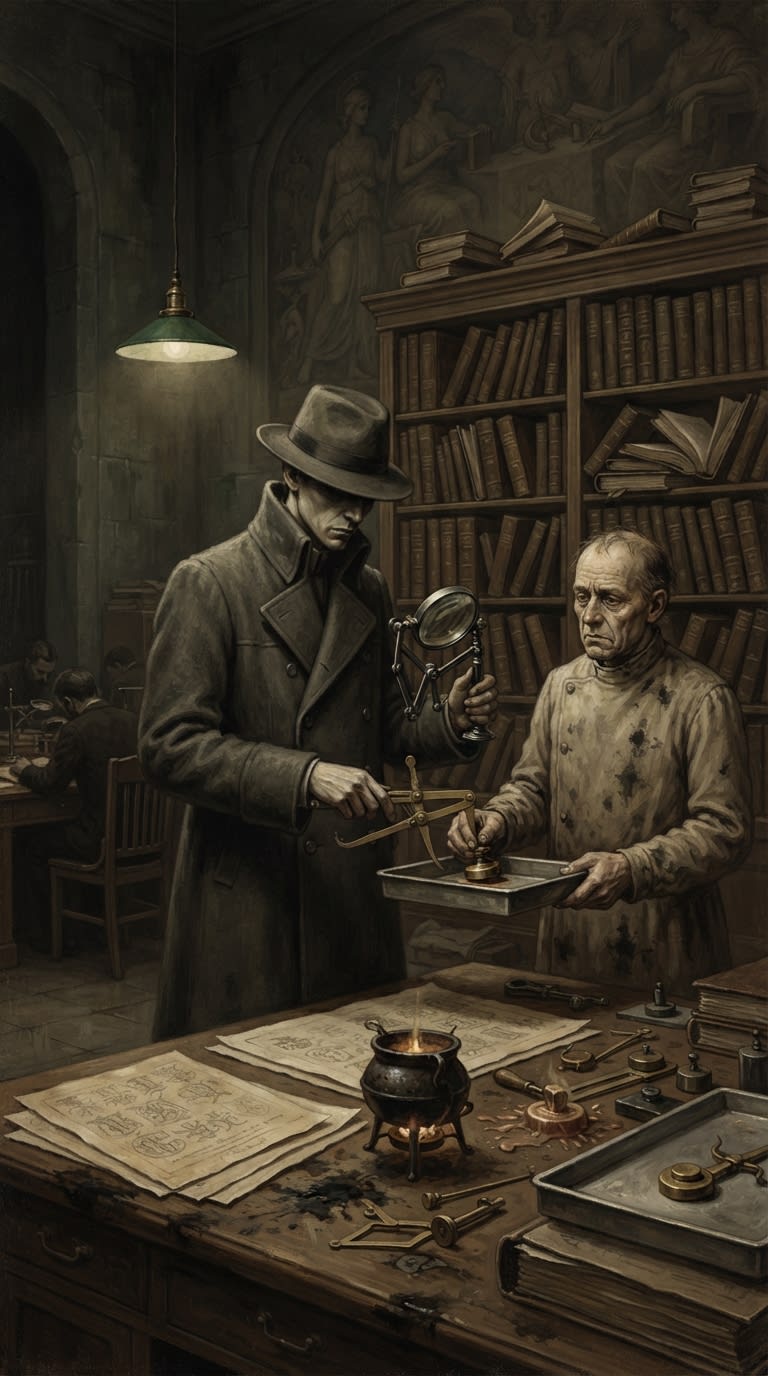
Annual Die Audit
Every lawful instrument must survive its own impression
Instituted after the A.S. 178 counter-seal embarrassment, the Annual Die Audit sends Seal-Walkers across Synod territory to weigh, strike, measure, accuse, retire, and occasionally retroactively shame every lawful seal-die.
Codex Ref. VI.4.19-178
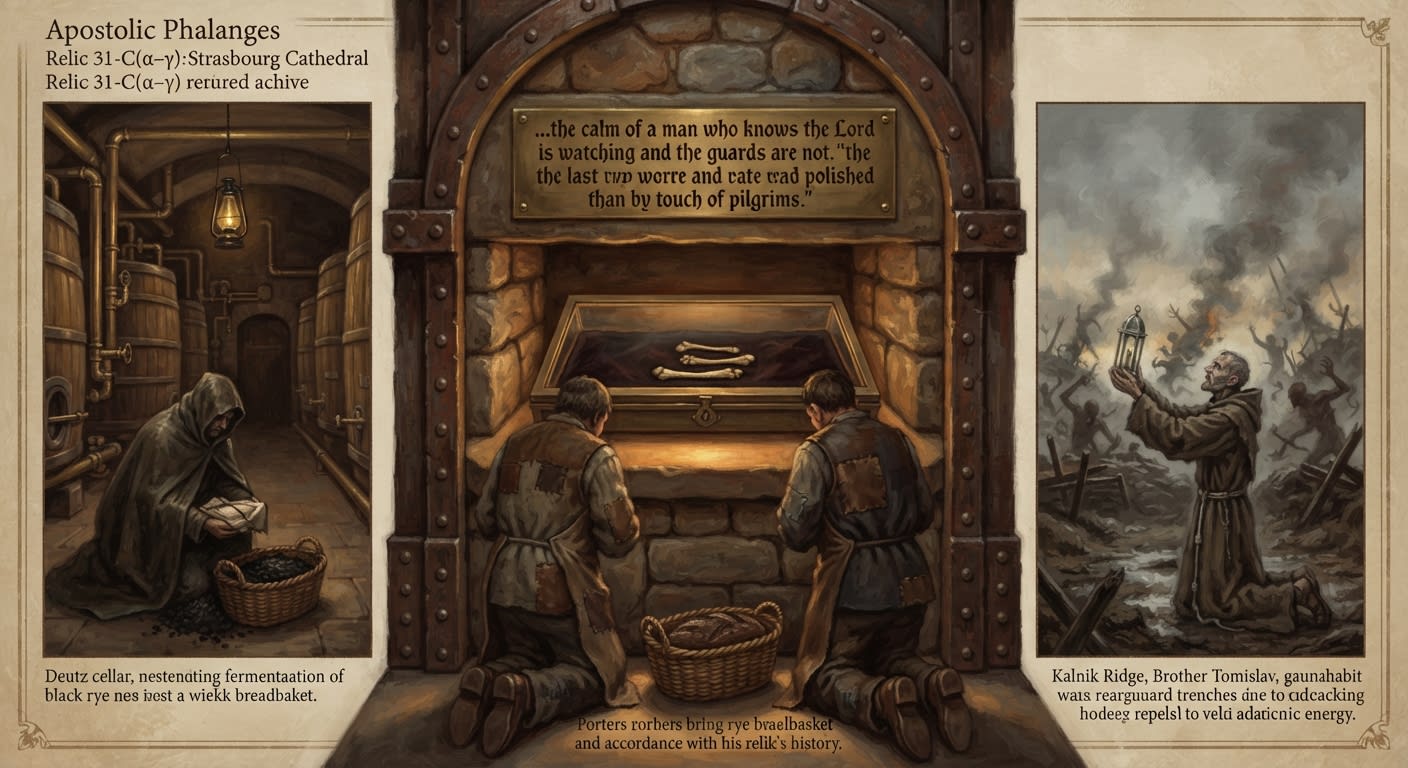
Apostolic Phalanges
Three finger bones, fourteen quiet years, and one ridge that learned fear
Relic 31-C(α–γ), three apostolic phalanges saved under rye and beer, later burned demons at Kalnik and now sit under licensed glass in Strasbourg.
Codex Ref. XIII.1.31-031
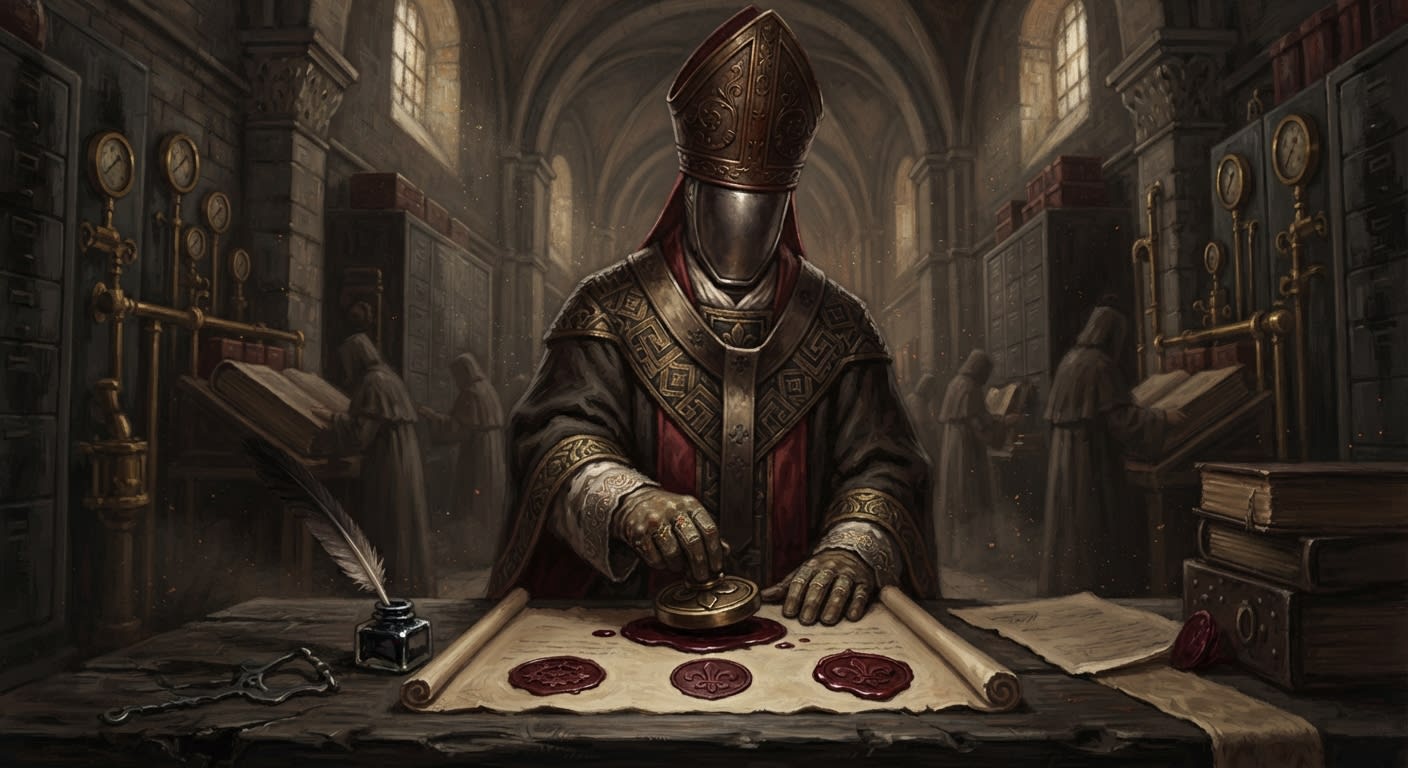
Archbishop of Lyon
The hand France sent, the name Records did not keep
The unnamed French signatory of the Concordat of Strasbourg: preserved by title, wax, and act, while the man beneath the mitre was permitted to vanish from the Ledger.
Codex Ref. III.2.01-090
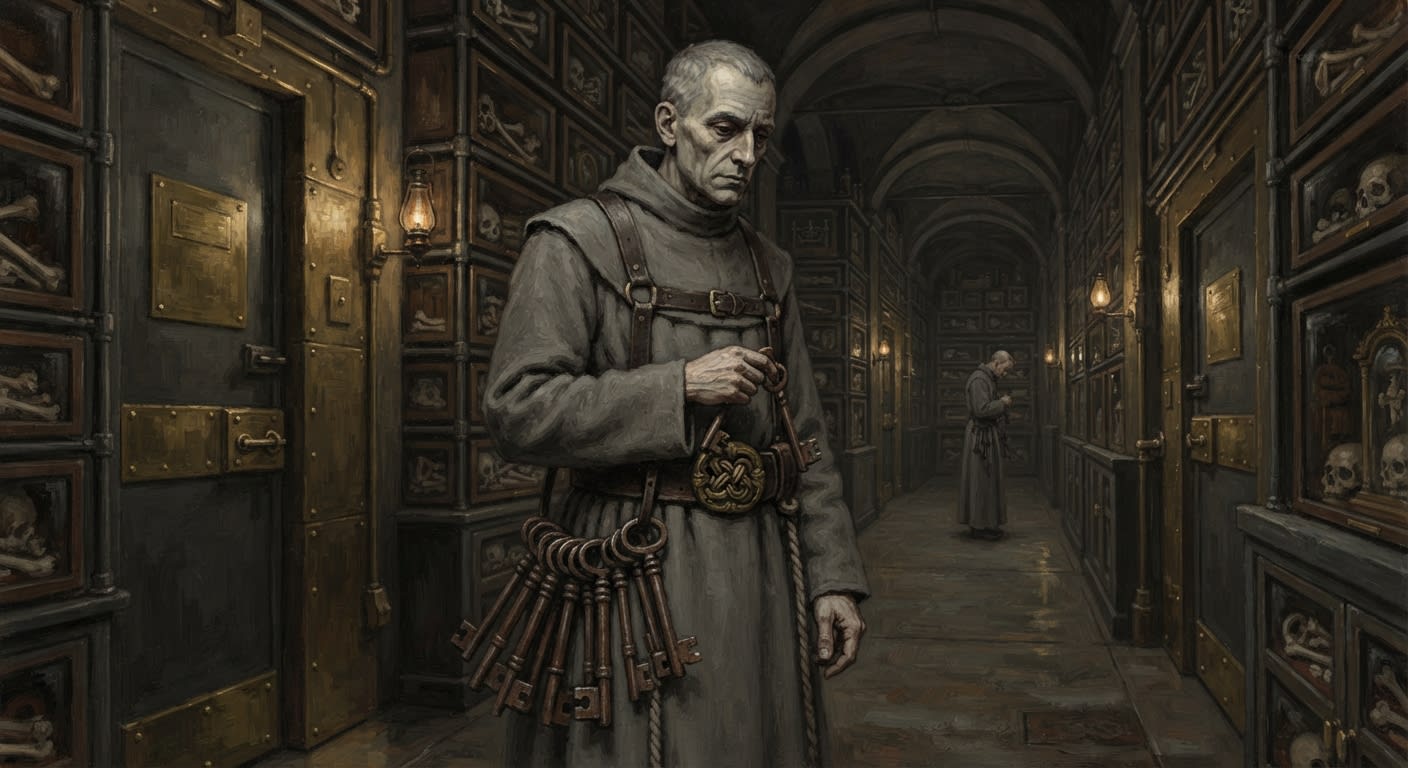
Archon-Custodian of Relics
The keys are issued to the chair. The chair lends them to the man.
The classified holder of the Bureau of Relics' custodial chair keeps the Vault, the keys, the silence, and the useful fiction that bones answer to shelves.
Codex Ref. III.2.01-201

Archon-Custodian's Office
The shelf is not appealed; the silence is audited
The private paper machinery beneath the Archon-Custodian's seal: clerks who decide where authenticated relics are shelved, lent, melted, silenced, or remembered only as a numbered absence.
Codex Ref. XII.35.02-001
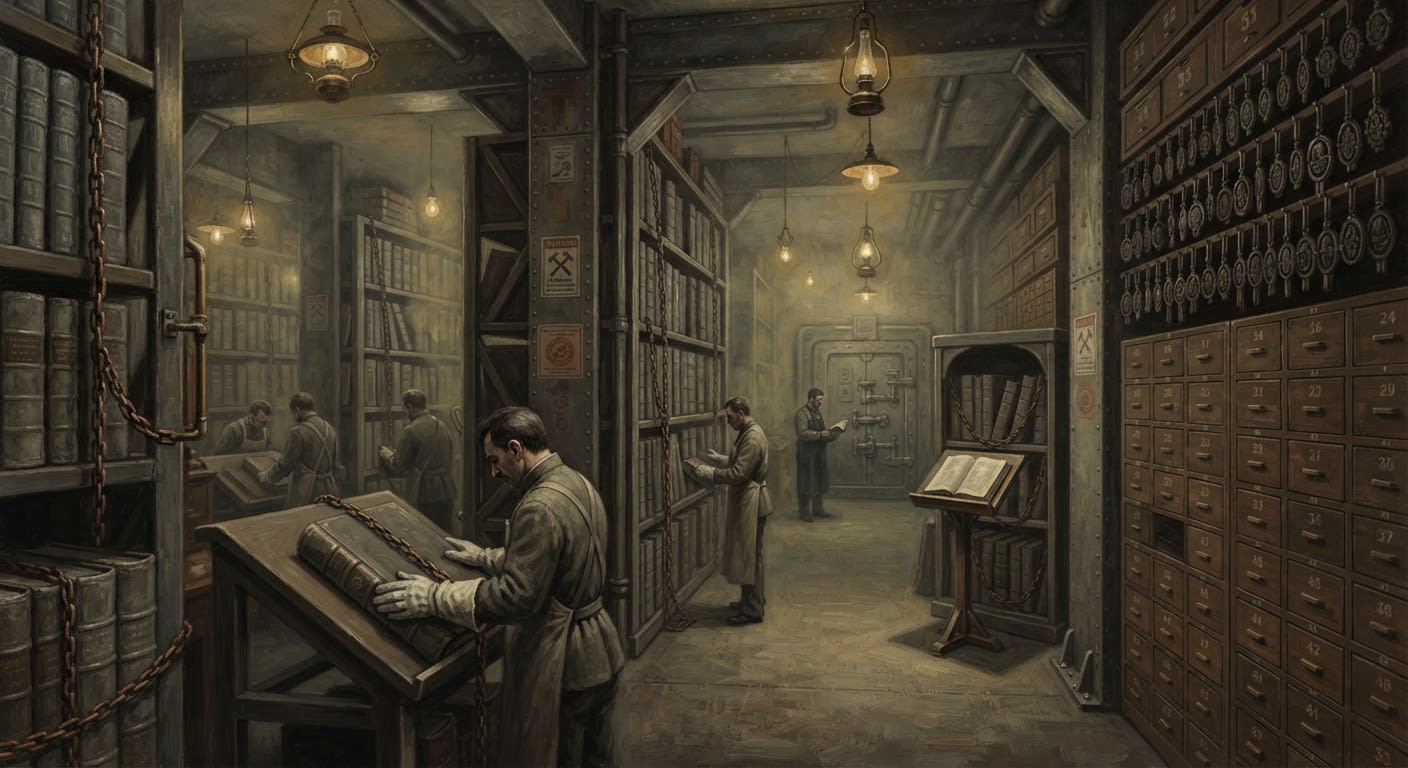
Armorial Vault
Where symbols are chained until they become law
The Armorial Vault is the chained body beneath Strasbourg where registered symbols become legal facts, false marks are preserved for prosecution, and colour learns to fear drawers.
Codex Ref. II.1.04-007
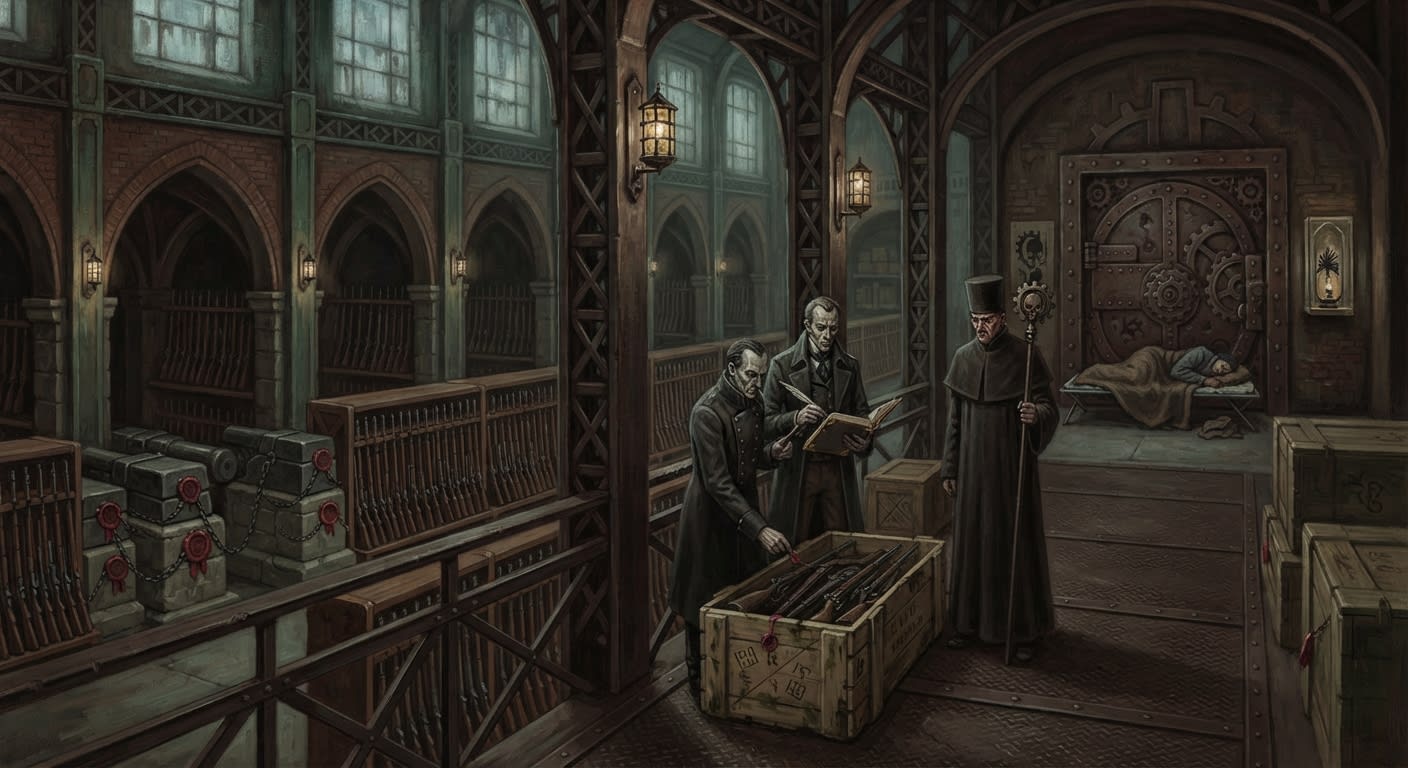
Armoury
Where Strasbourg stores the war it insists will not arrive
Strasbourg's Armoury keeps rifles, powder, breech-blocks, parade steel, and very careful ledgers for a city that claims itself safe. Twenty thousand weapons wait more honestly than their owners speak.
Codex Ref. II.2.09-201
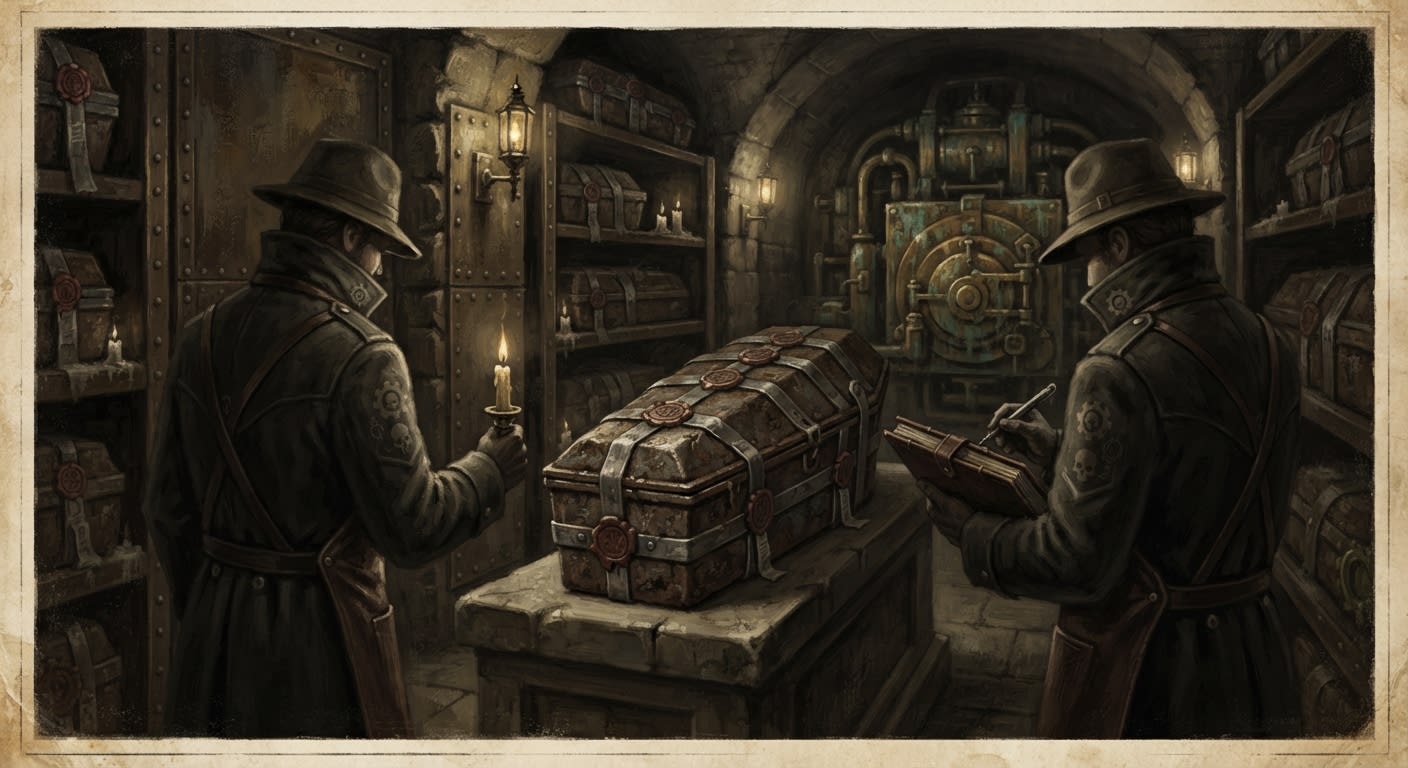
Ashes of the Sundering
The day in the jar, and the seal around the fear
The Bureau of Relics keeps a sealed iron vessel said to contain the Sundering's own residue, gathered from Vienna's cathedral floor and never opened since.
Codex Ref. V.1.03-045
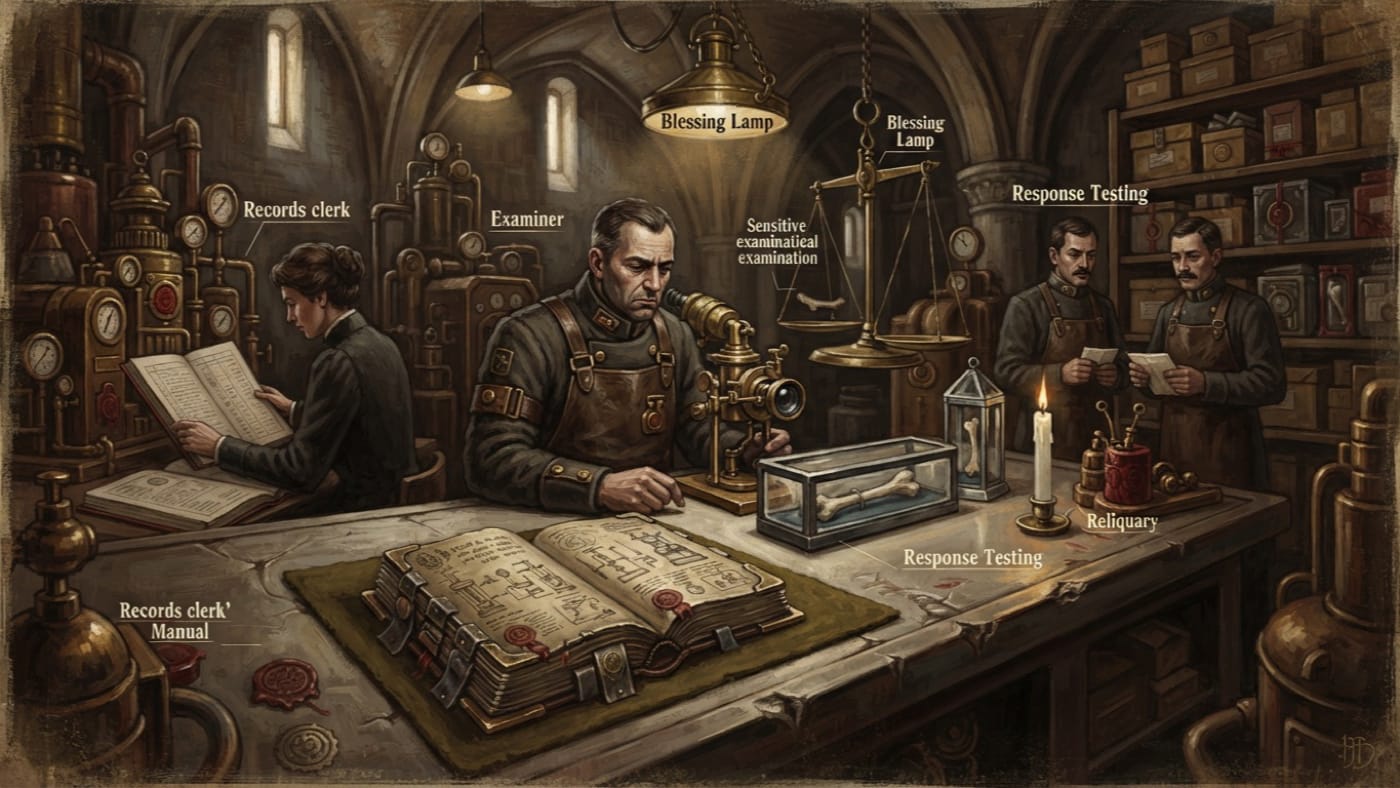
Authenticators' Manual
Seven stages. Two witnesses. Responsibility belongs to the hand.
The Bureau of Relics' working rulebook in A.S. 201: seven stages, two witnesses and seals that outrank arithmetic. Permission belongs to the Bureau; responsibility belongs to the Examiner.
Codex Ref. XIII.1.81-002
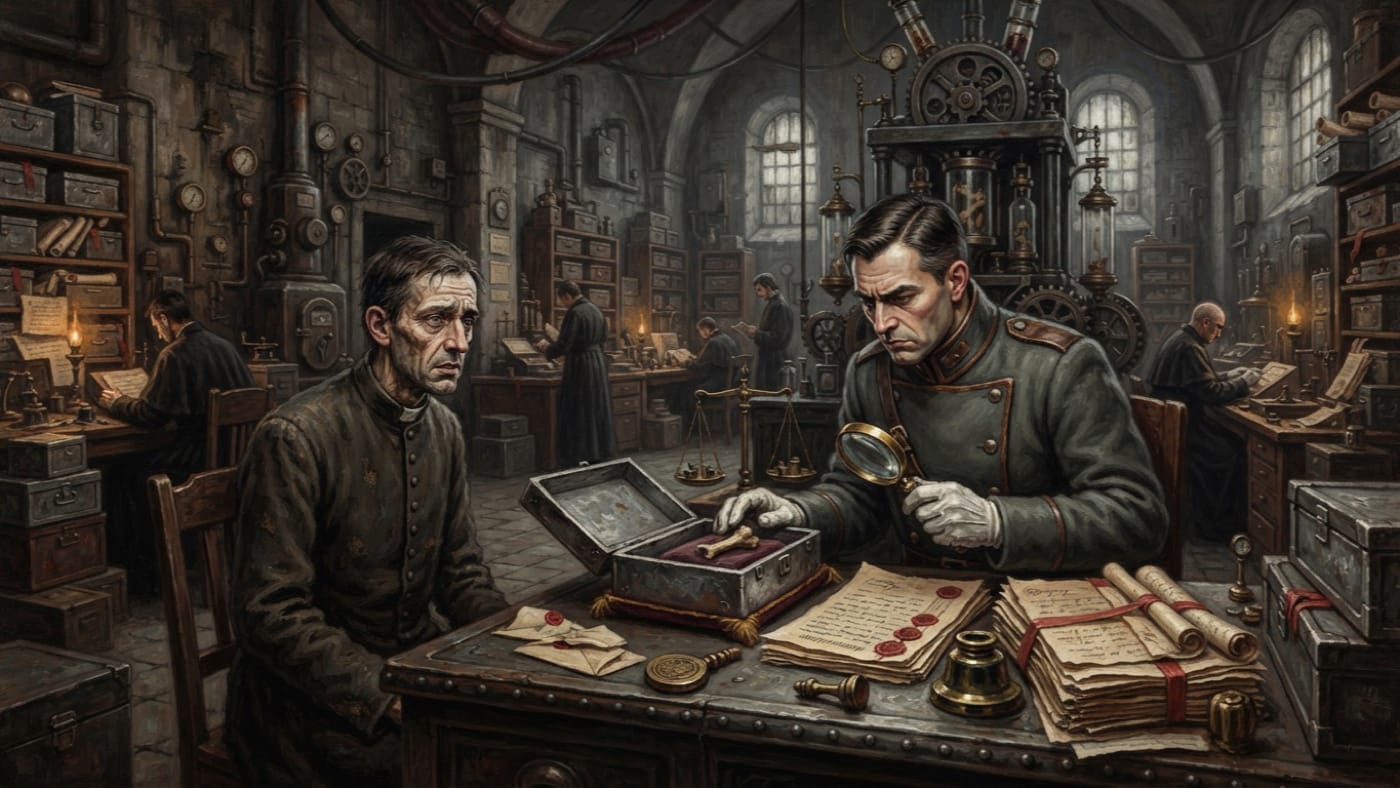
Authenticity Writ
Receipt is not recognition.
The Authenticity Writ brings a claimed relic before the Bureau: custody chain, description, doctrine and proof of payment. The applicant has paid to ask a question; the verdict comes later.
Codex Ref. XIII.1.35-201
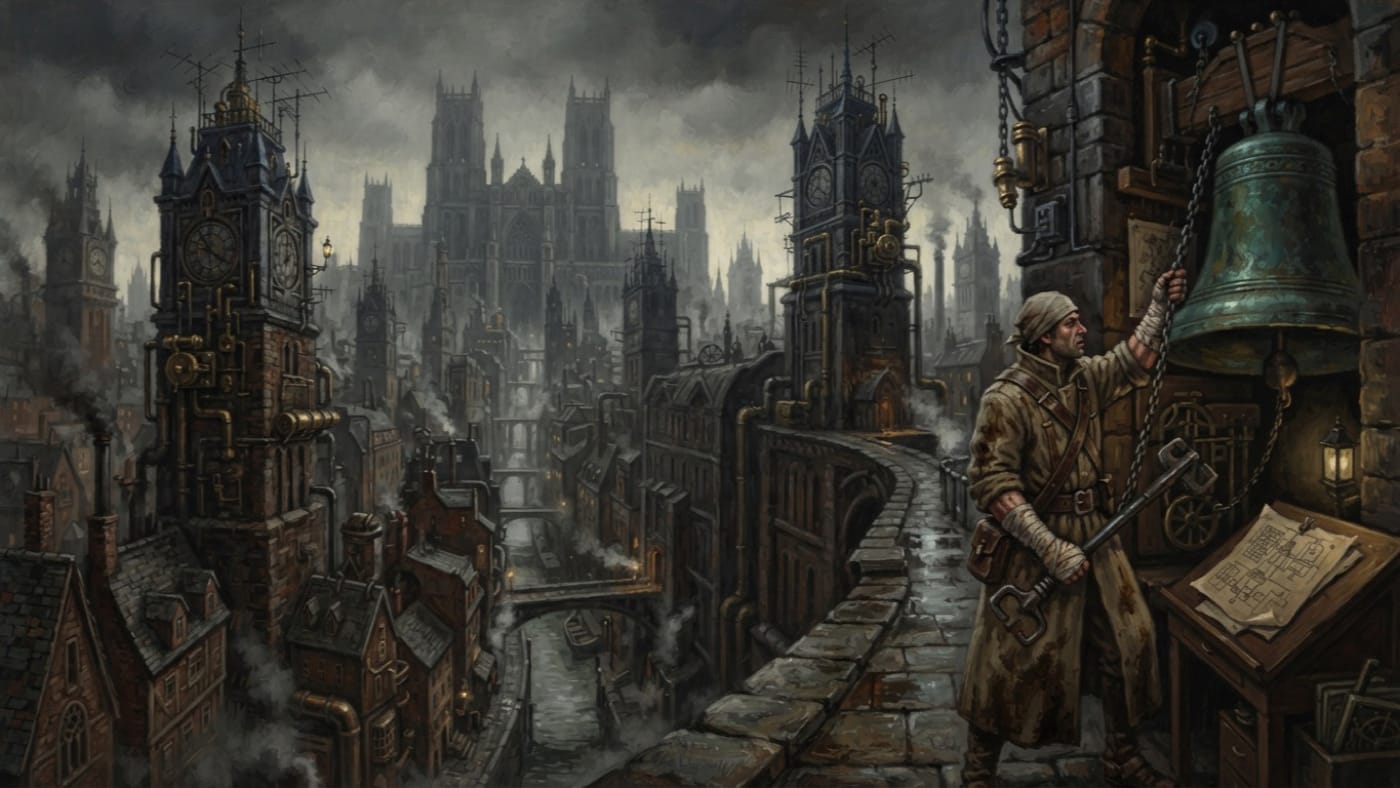
Bell Codes
The chart is lawful. What the listener hears is his own difficulty.
I counted three liturgical variations before major political purges. The charts were lawful. The Bureau of Shadows insists nothing, because it does not exist.
Codex Ref. XIII.1.62-006
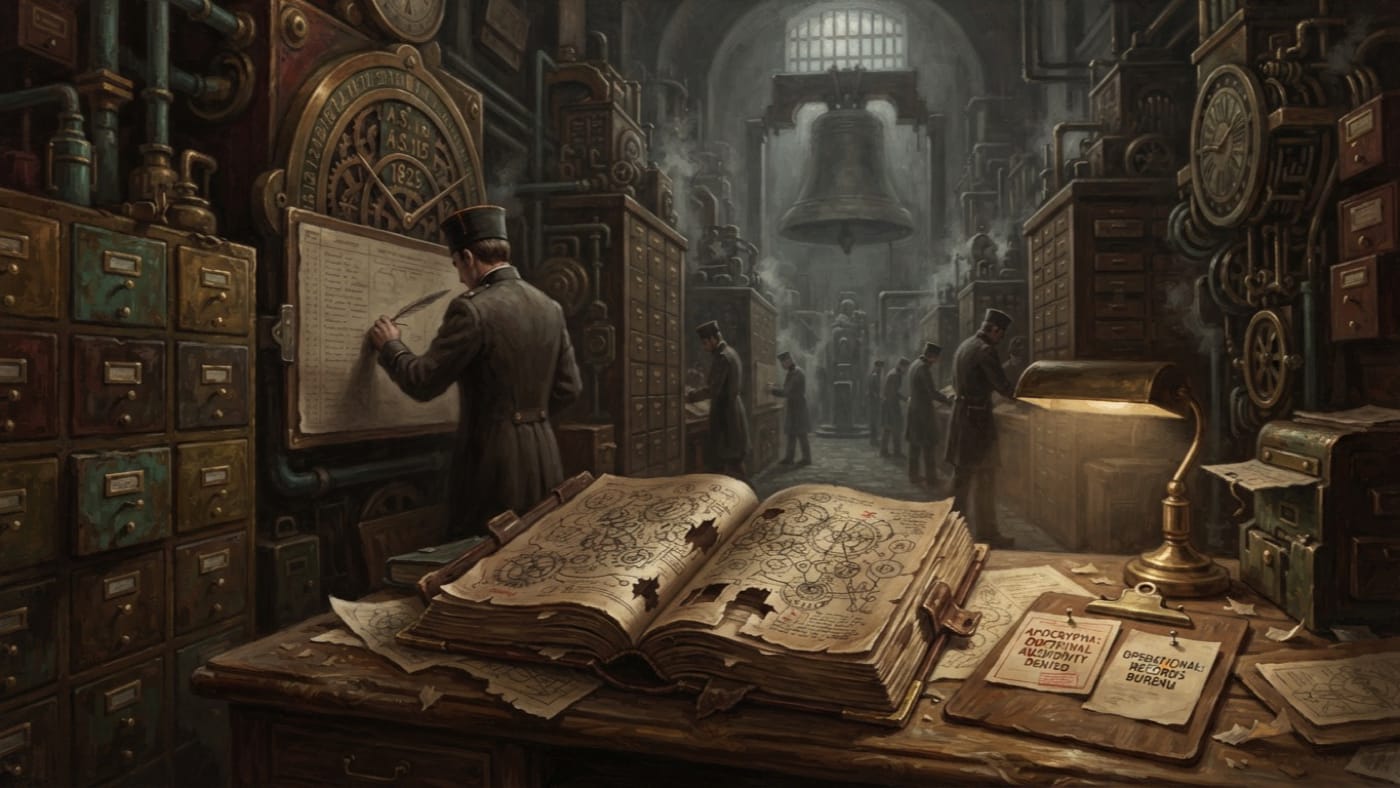
Bell Codex Affair
The book condemned for belief and retained for duty
In A.S. 115, Lyon's manuscript claimed to map future peals. Confiscated incomplete, it remains apocrypha and operational: condemned for belief, retained for duty.
Codex Ref. XIII.1.62-002
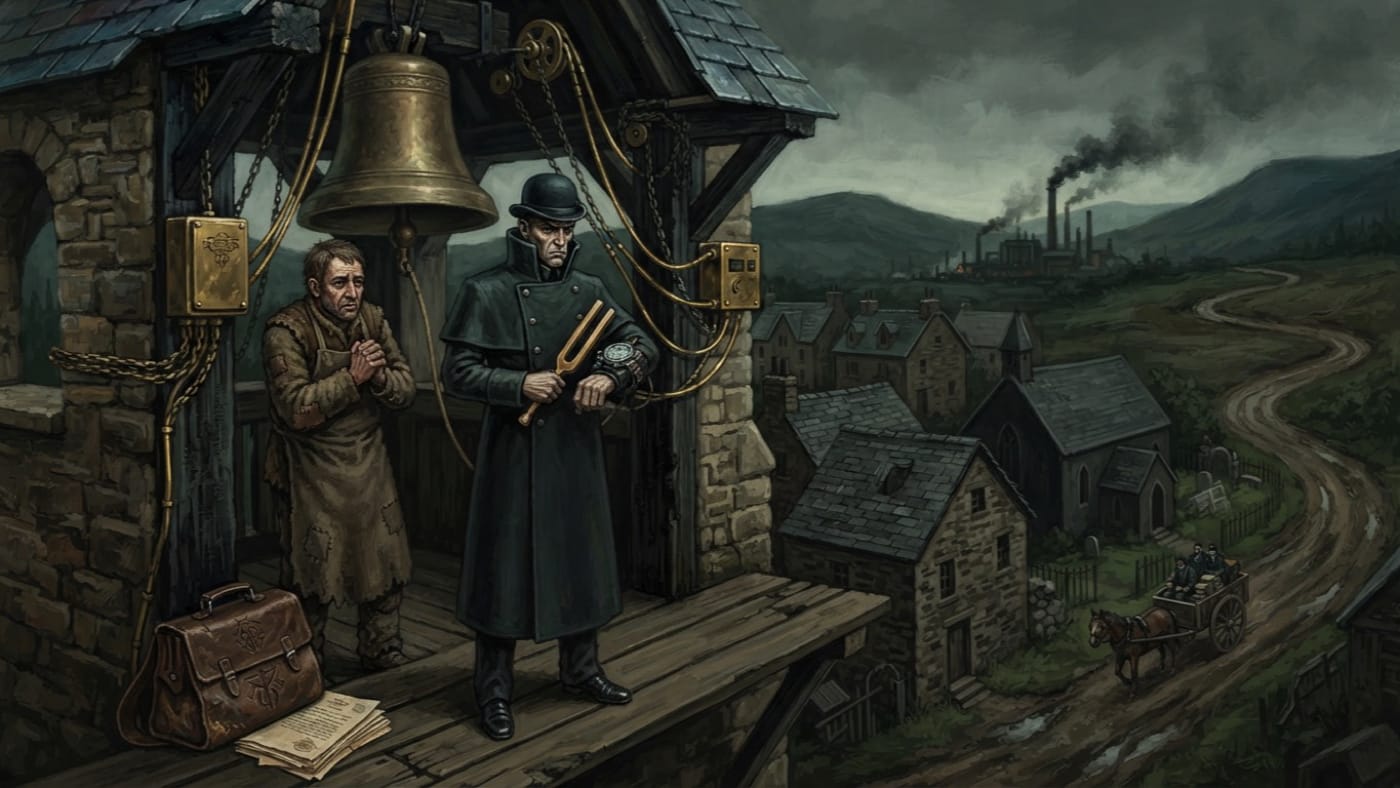
Bell Inspectors
Seven seconds of tolerance, and a book for the eighth
The Bureau of Bells sends inspectors from parish to parish with tuning forks, sanctified chronometers and seven seconds of tolerance. They record the discrepancy; other offices make the parish answer for it.
Codex Ref. XIII.1.62-214
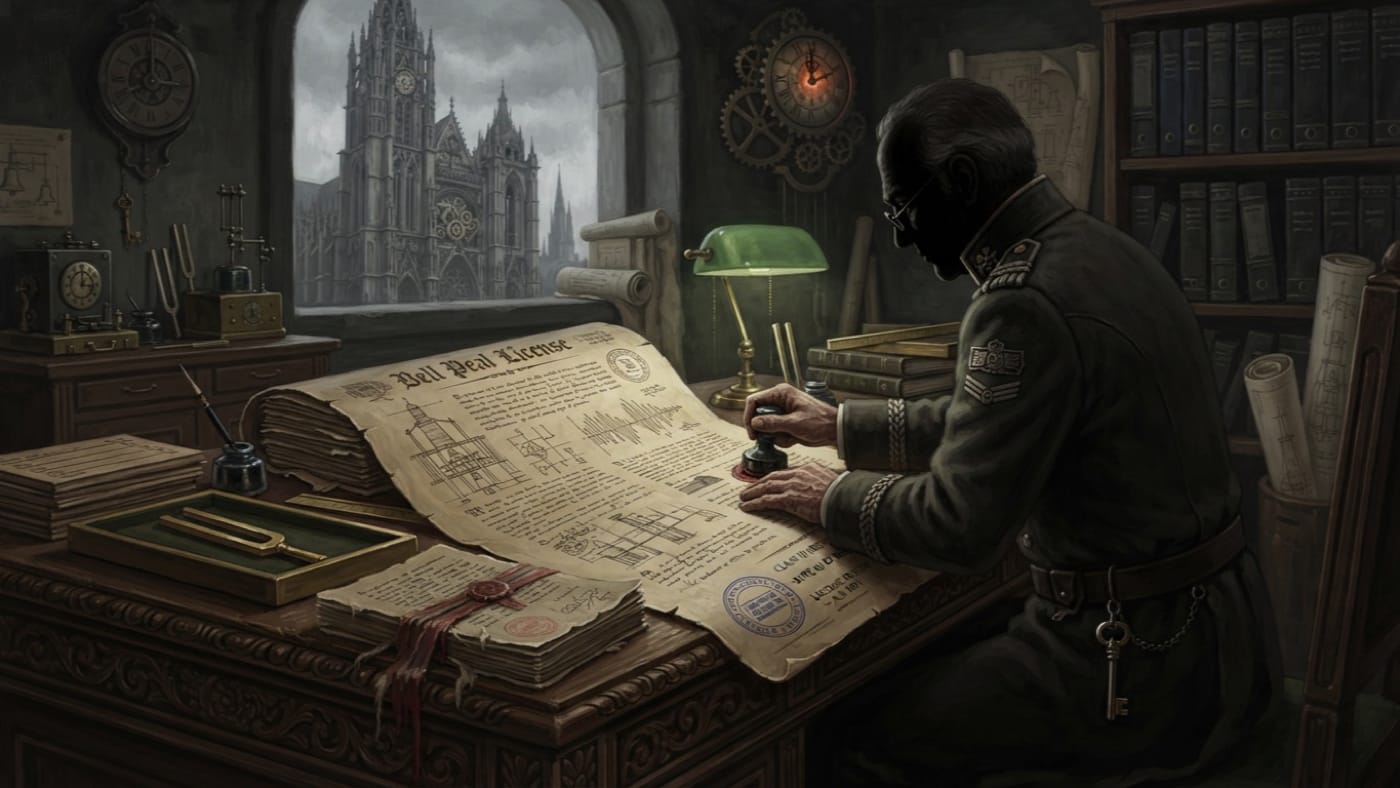
Bell Peal License
Bronze belongs to its owner. The hour belongs to the Bureau.
The Bell Peal License fences lawful sound in twelve pages and a longer appendix, fixing strokes, hours, tone, reach, and permitted grief. An extra stroke may cost more than the devotional fee.
Codex Ref. XIII.1.62-002
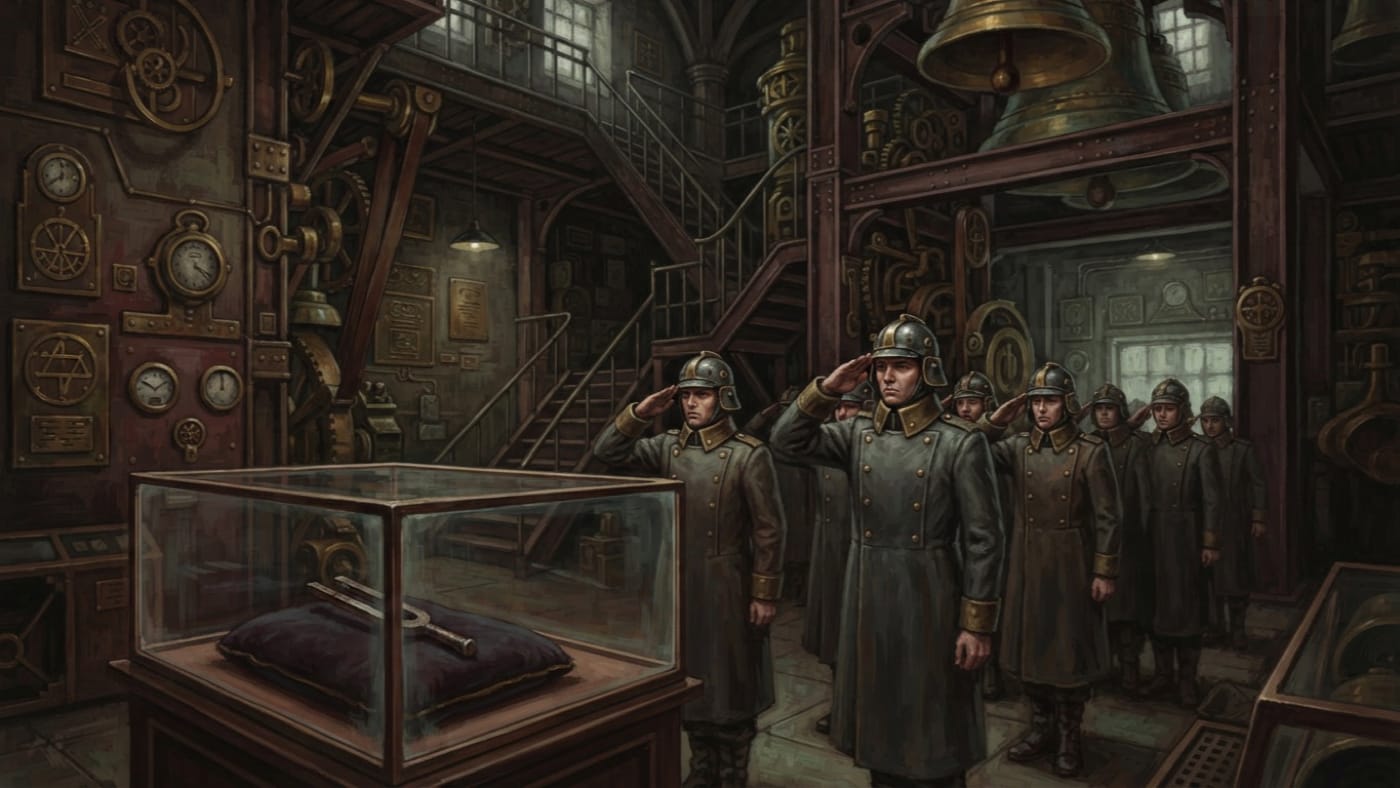
Bell Tower
The city obeys the bronze; the recruits salute the fork.
On Strasbourg's seventh floor, Canon Veyl's fork receives the Counter-Toll recruit salute. The Bell Tower keeps lawful hours and teaches that obedience must be louder than its enemies.
Codex Ref. XIII.1.62-201
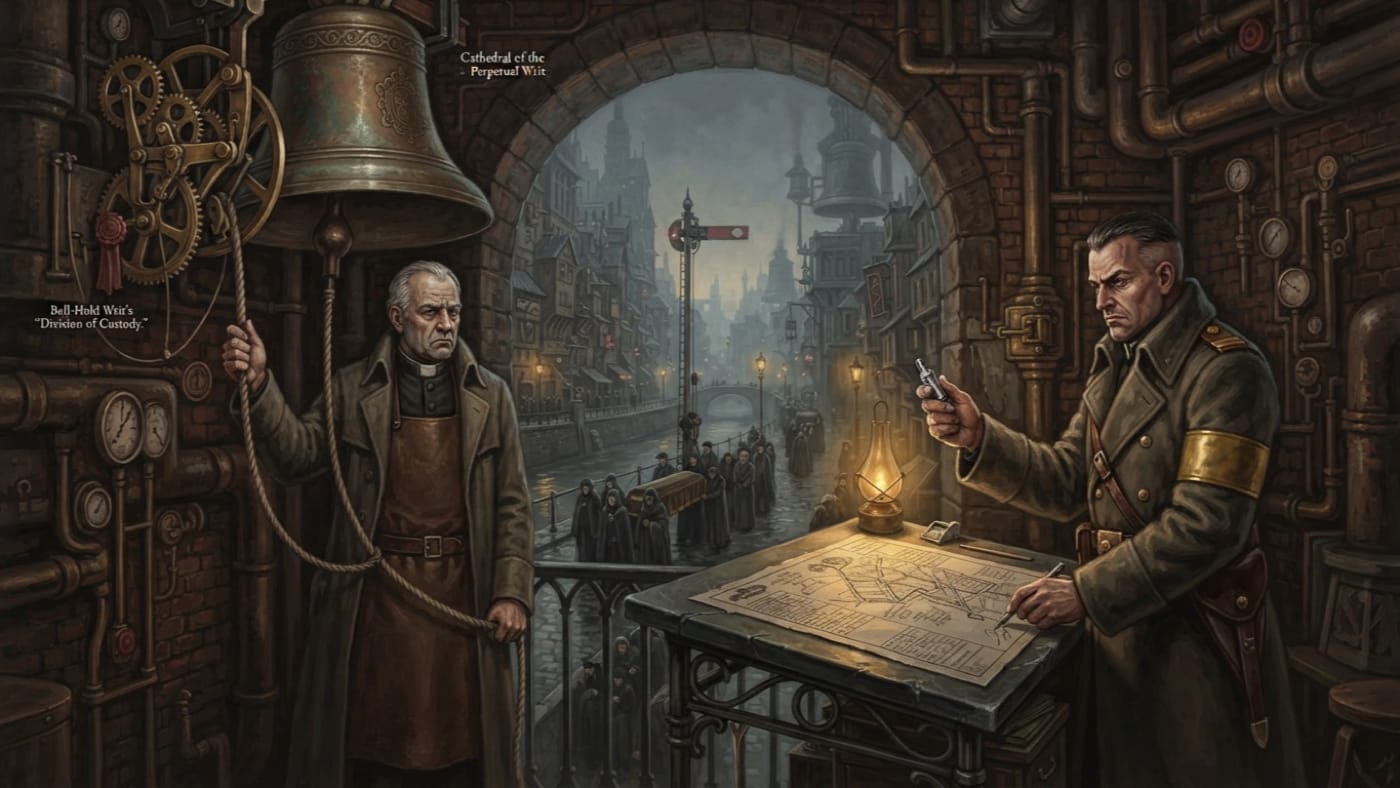
Bell-Hold Commentary
Bells keeps the tone. The Marshal keeps the hour.
The A.S. 132 gloss assuring Bells that the Route-Timing Concordat diminished no Bureau's dignity. Dignity survived; command of the hour passed to the Marshal.
Codex Ref. XIII.1.62-132
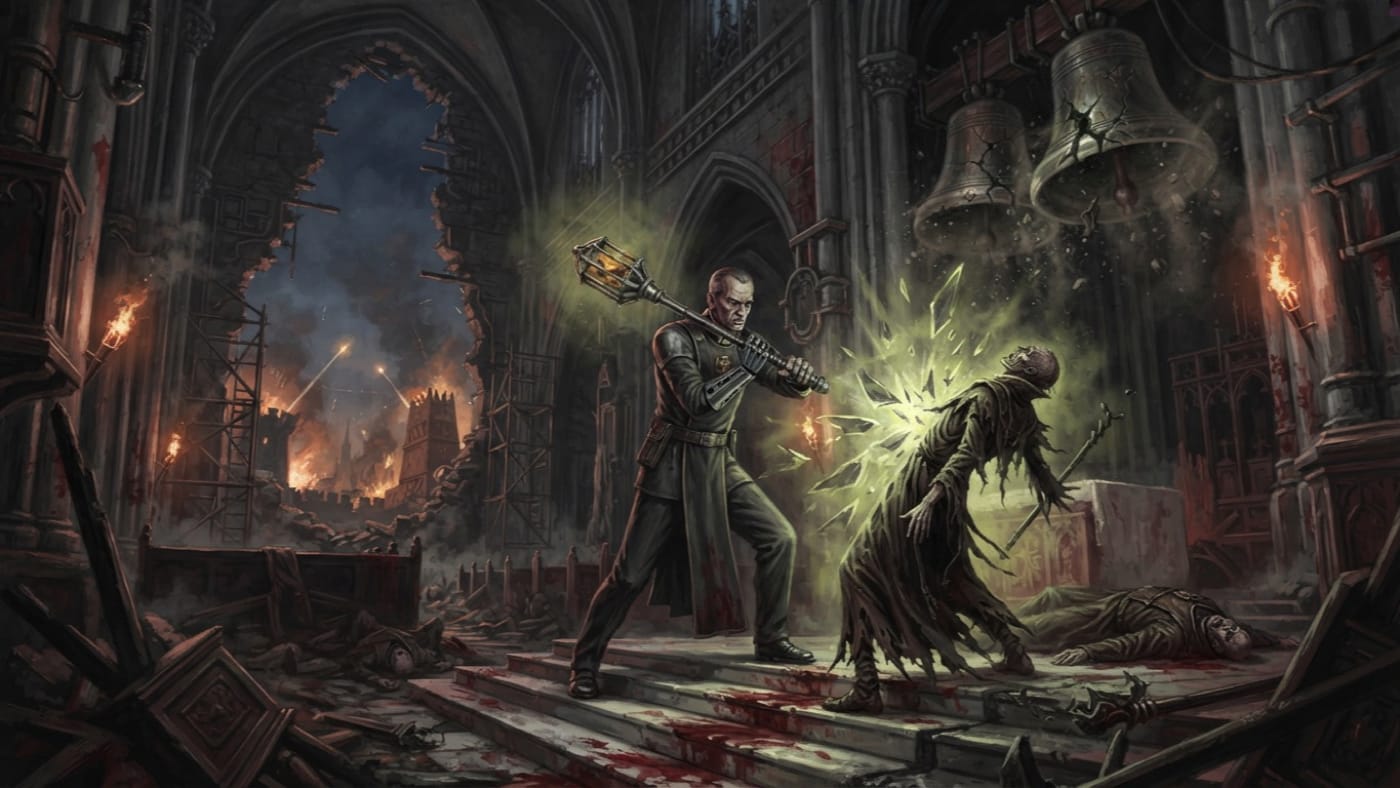
Blow of Saint Rupert
One strike; nine years of paperwork
Clemens Stahlhand's reliquary blow broke the Siege of Vienna in A.S. 95. Doctrine ratified the miracle in A.S. 104; the bells and the mechanism retain their own troublesome files.
Codex Ref. III.2.07-032
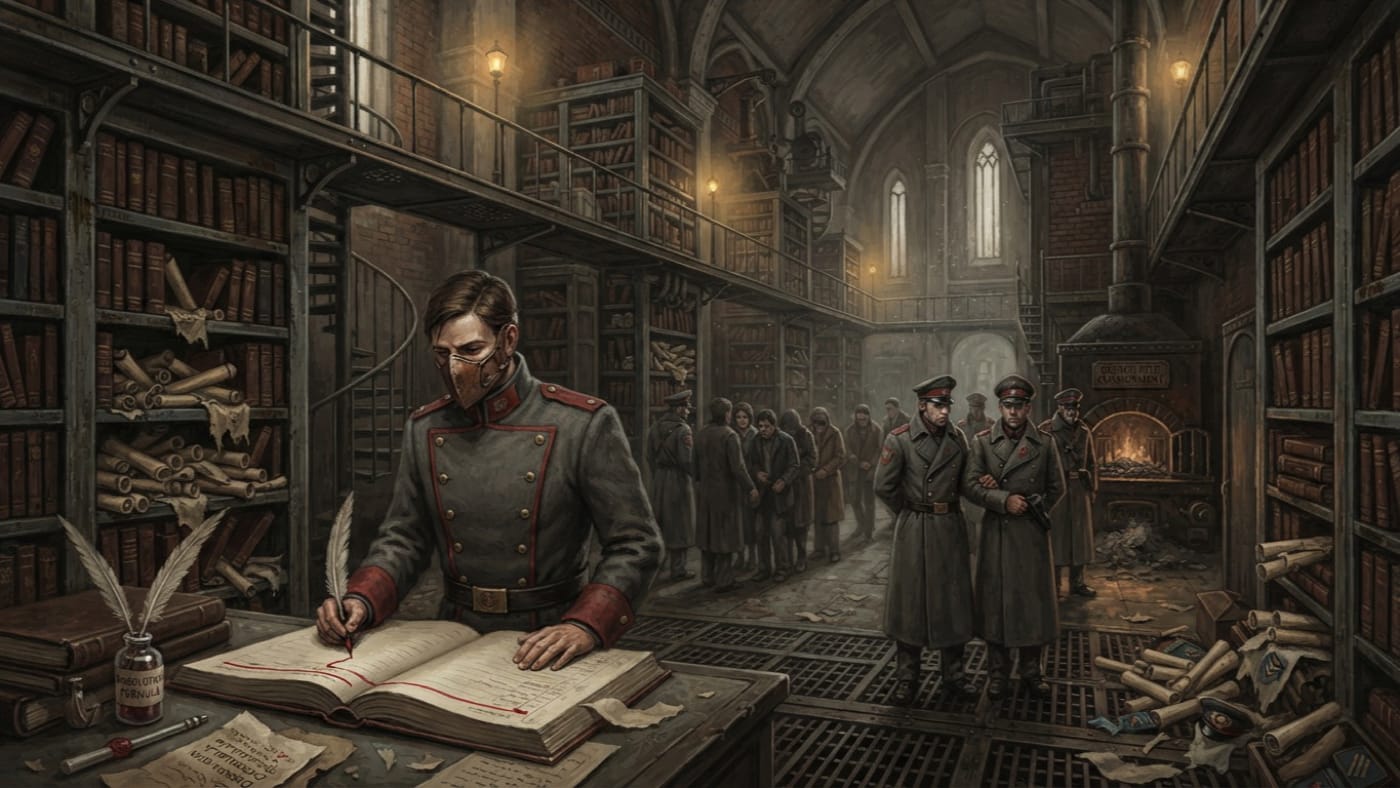
Breach Plagues
The Bureau found a cure in its own ink.
Around A.S. 110–115, communal violence became the Bureau of Oaths' proof that broken vows rot. The dead supplied the argument; the Breach Rites supplied the ink.
Codex Ref. VII.8.11-112
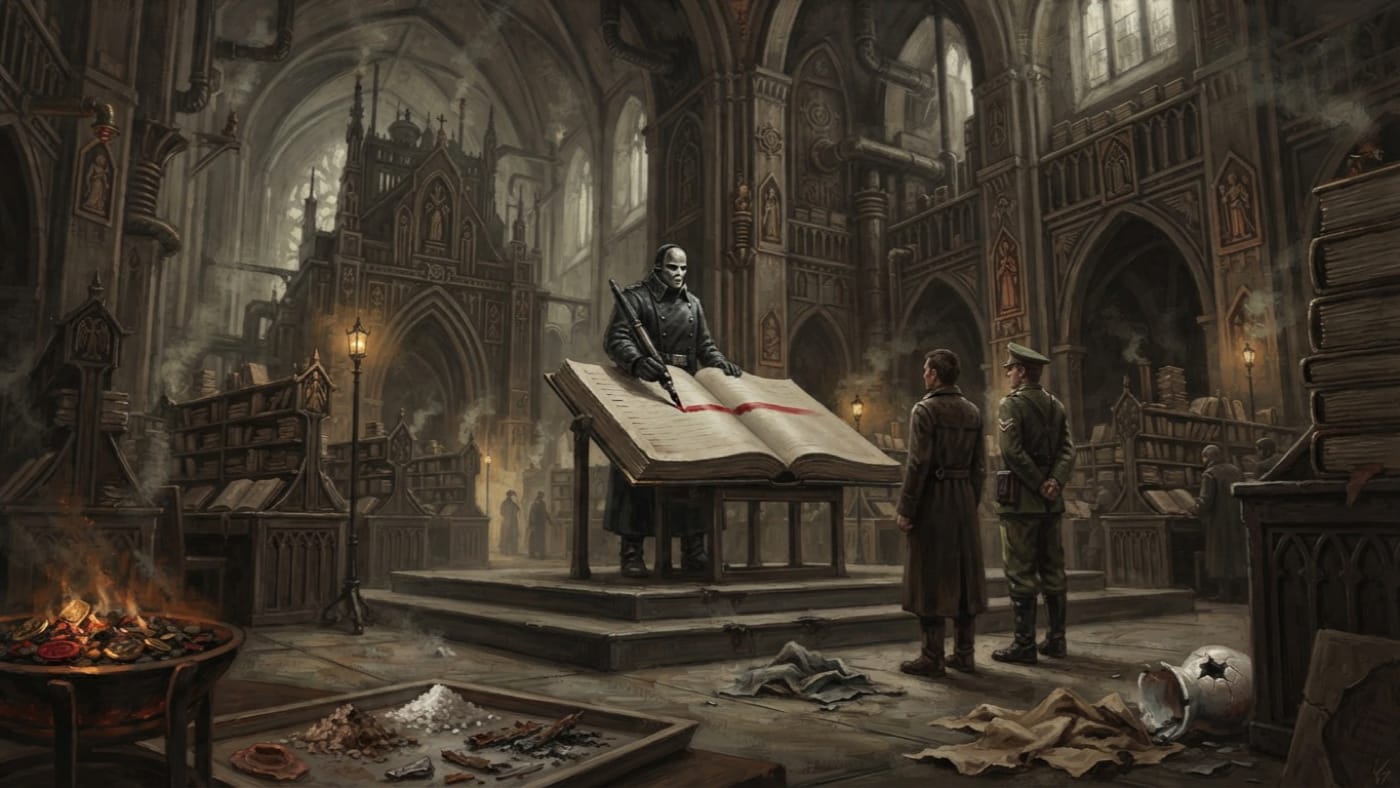
Breach Rite
The promise dies. The Ledger remembers.
The Bureau of Oaths buries failed vows in witnessed ceremony and red ink. The bond may end; its record remains available to every auditor, enemy, and future spouse.
Codex Ref. VI.4.03-013
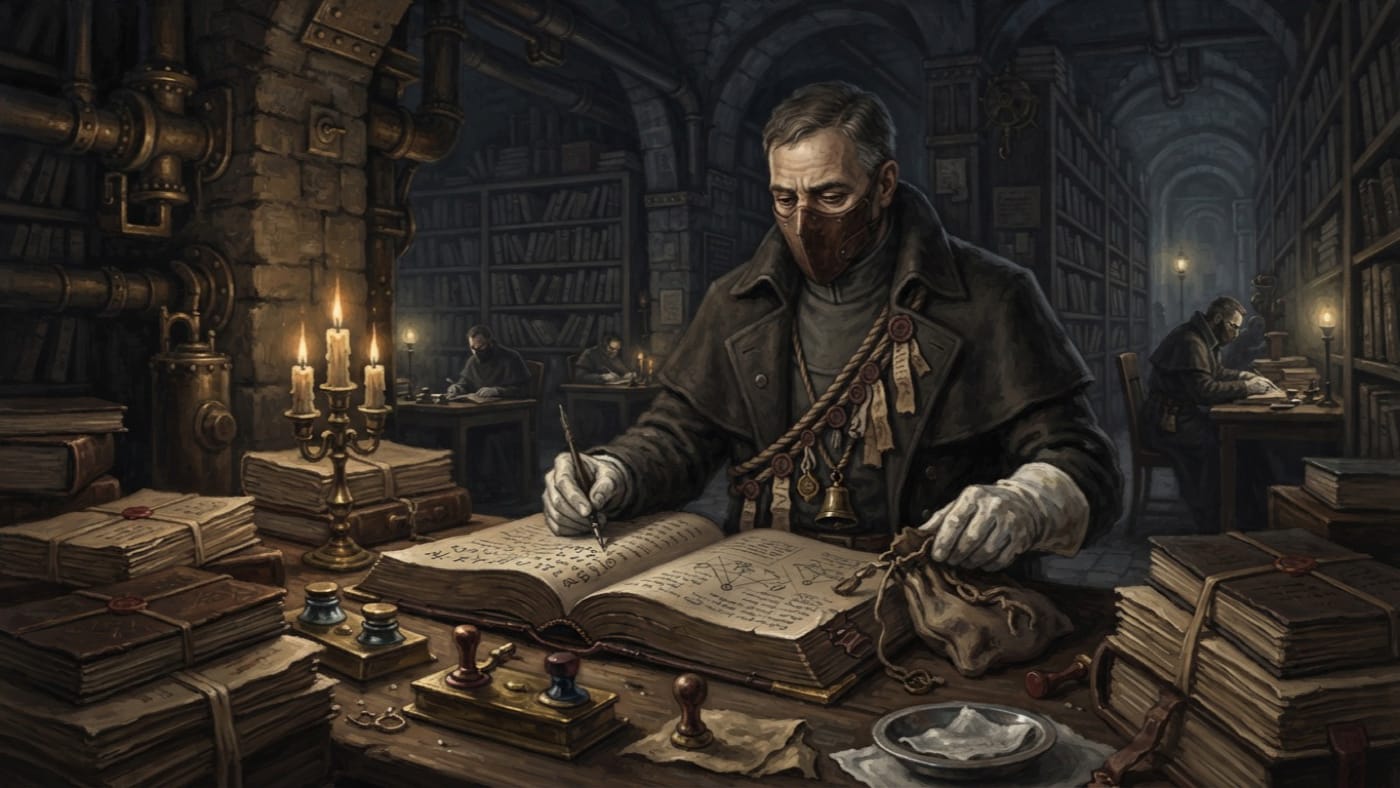
Breach-Rite Witnesser
The promise dies; the witness returns.
The Bureau of Oaths sends its Breach-Rite Witnessers to bury failed vows, close the record, and discover which colleague tied the original knot badly.
Codex Ref. VI.4.03-014
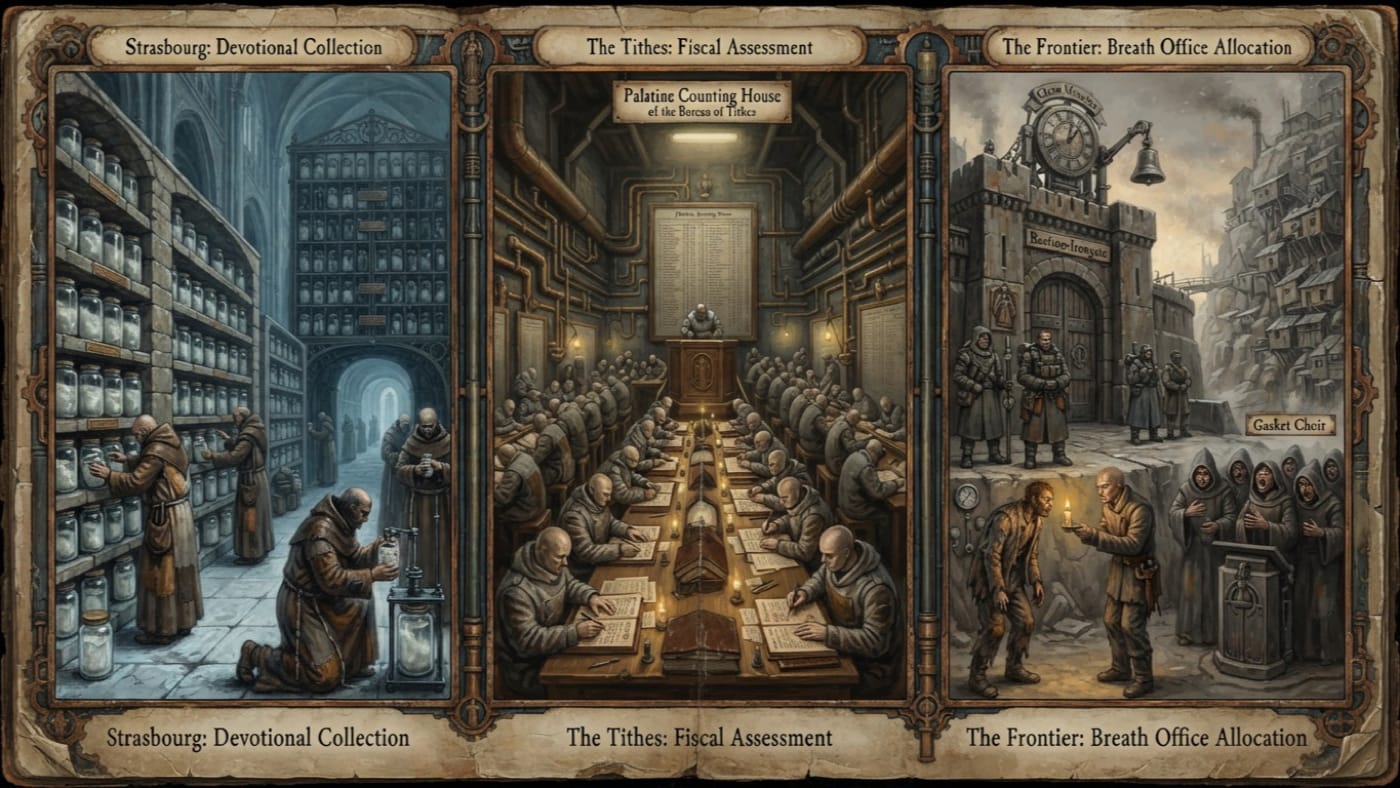
Breath-tithes
Whatever passes through a mouth can be made to pass through a desk
Breath-tithes make respiration administratively payable: Strasbourg collects devotion in jars, Tithes assesses atmospheric sanctification, and frontier offices price voice, warmth and shelter. The seals differ; the lungs do not.
Codex Ref. XIII.1.38-002
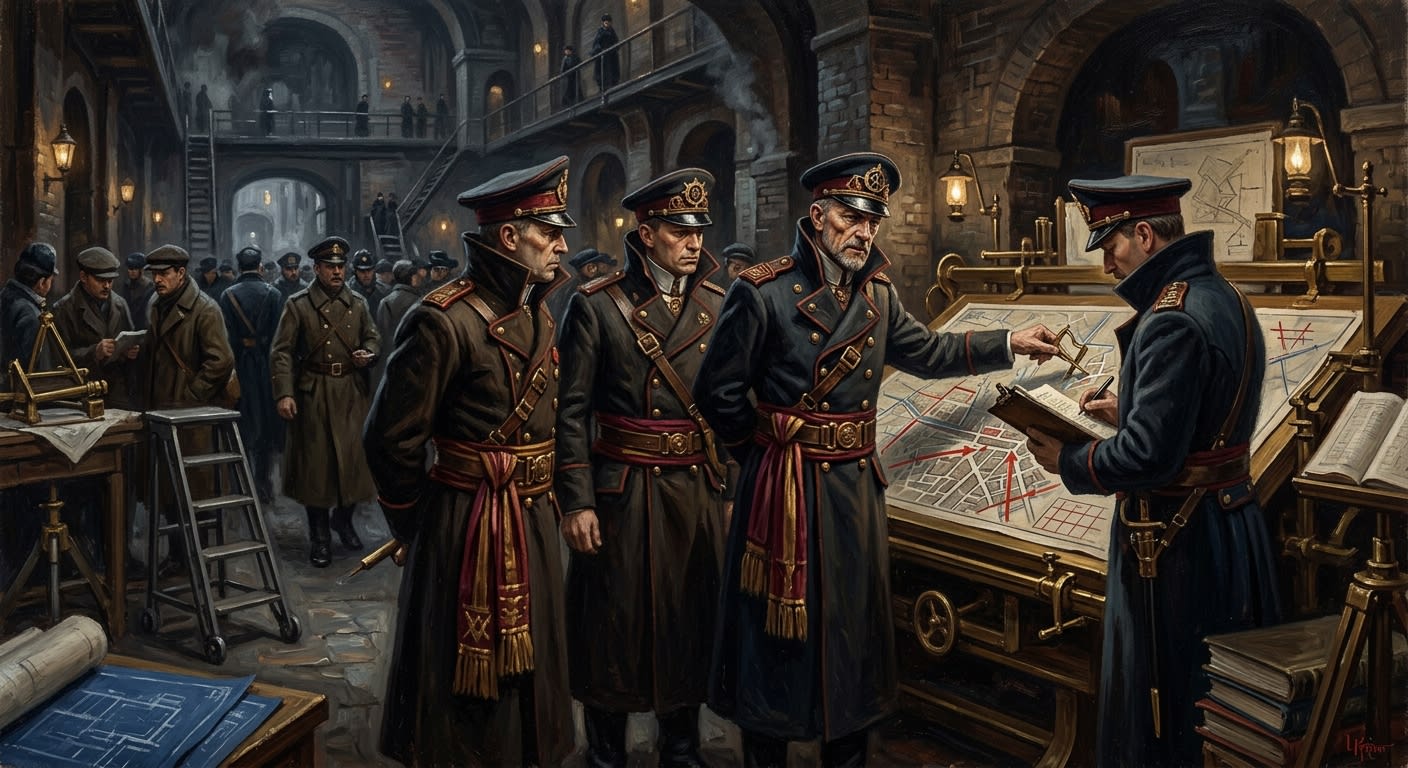
Cadence Architects
The street confesses before the bodies arrive
Cadence Architects are the Cadence Corps' route geometers: they design bellways, choke-points, and obedient grief before crowds become casualty diagrams.
Codex Ref. XII.7.05-129

Cadence Corps
One beat, one body, one road, and one stick for correction
The Cadence Corps teaches crowds to move as one obedient spine: ration queues, funerals, levies, relic routes, and riots corrected by beat, rope, whistle, and boot.
Codex Ref. XII.7.01-112

Calendar of Saints
Eternal saints, monthly amendments, and a clerk with glue
The Church's calendar of saints, feasts and fasts, held under the Seal of Martyrdom and revised by monthly amendment strips. Sanctity is permanent; the parish must keep its glue ready.
Codex Ref. XIII.1.05-002
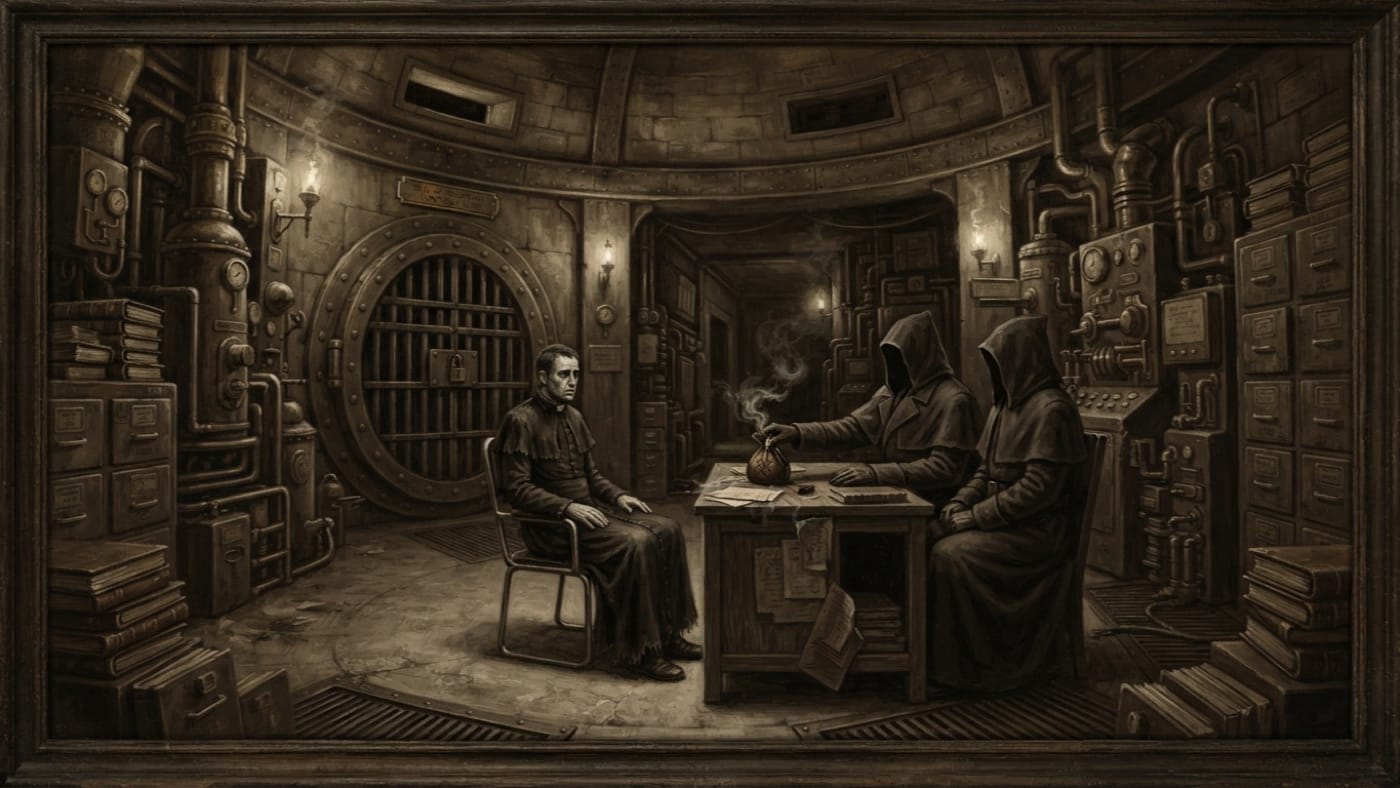
Canonical Audit
An A.S. 201 survey of the instrument whose investigators Records cannot name
An A.S. 201 survey of the Seal of Discipline's instrument: clergy investigated in sealed chambers by men Records cannot name, with findings carried in pouches said to destroy themselves upon opening. The Ledger retains the question.
Codex Ref. XIII.1.05-003
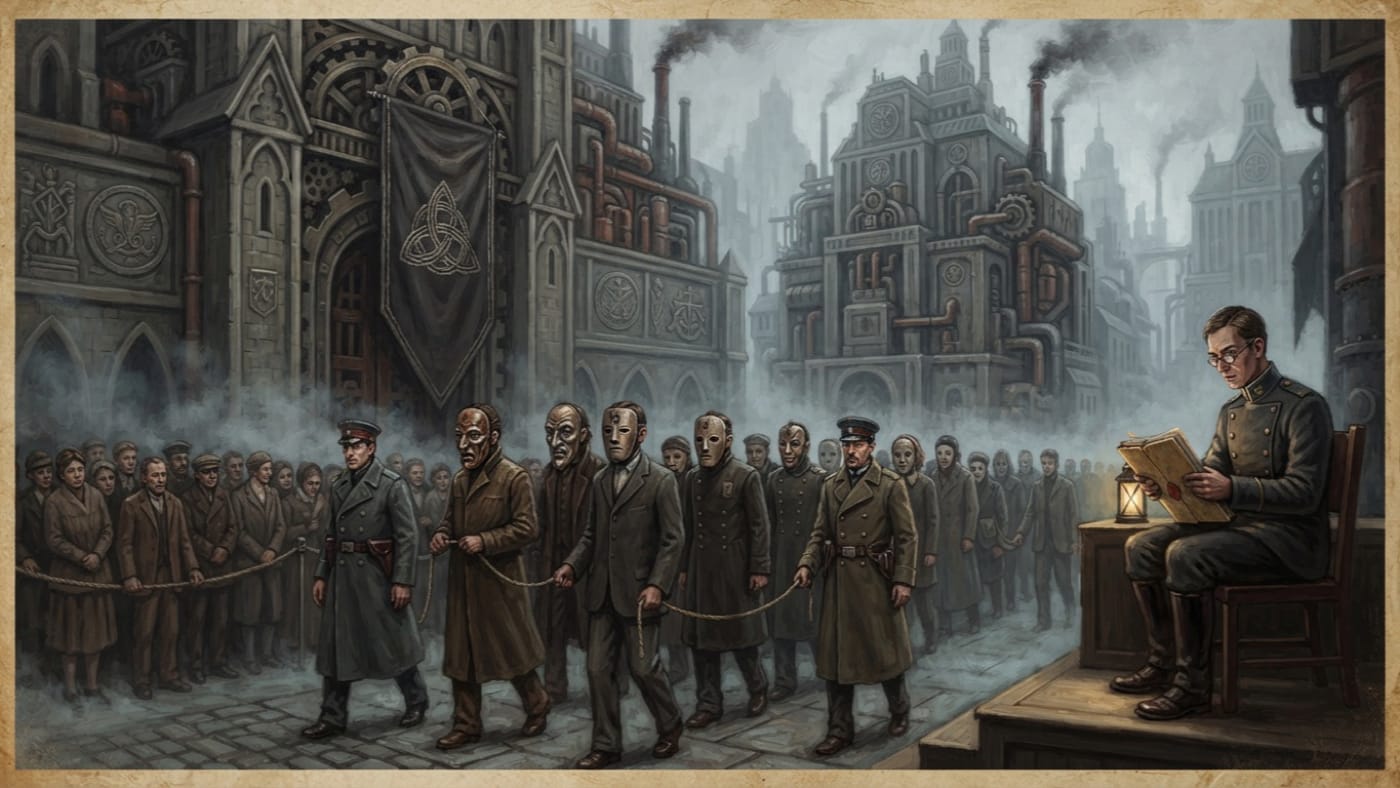
Carnival of the Triune Knot
The face may be hidden. The number remains.
The Carnival of the Triune Knot requires a licensed masked procession. Every face may be hidden; every mask remains numbered, stamped and measured. The wearer may withdraw a countenance. The Registry keeps the number.
Codex Ref. XIII.1.89-484
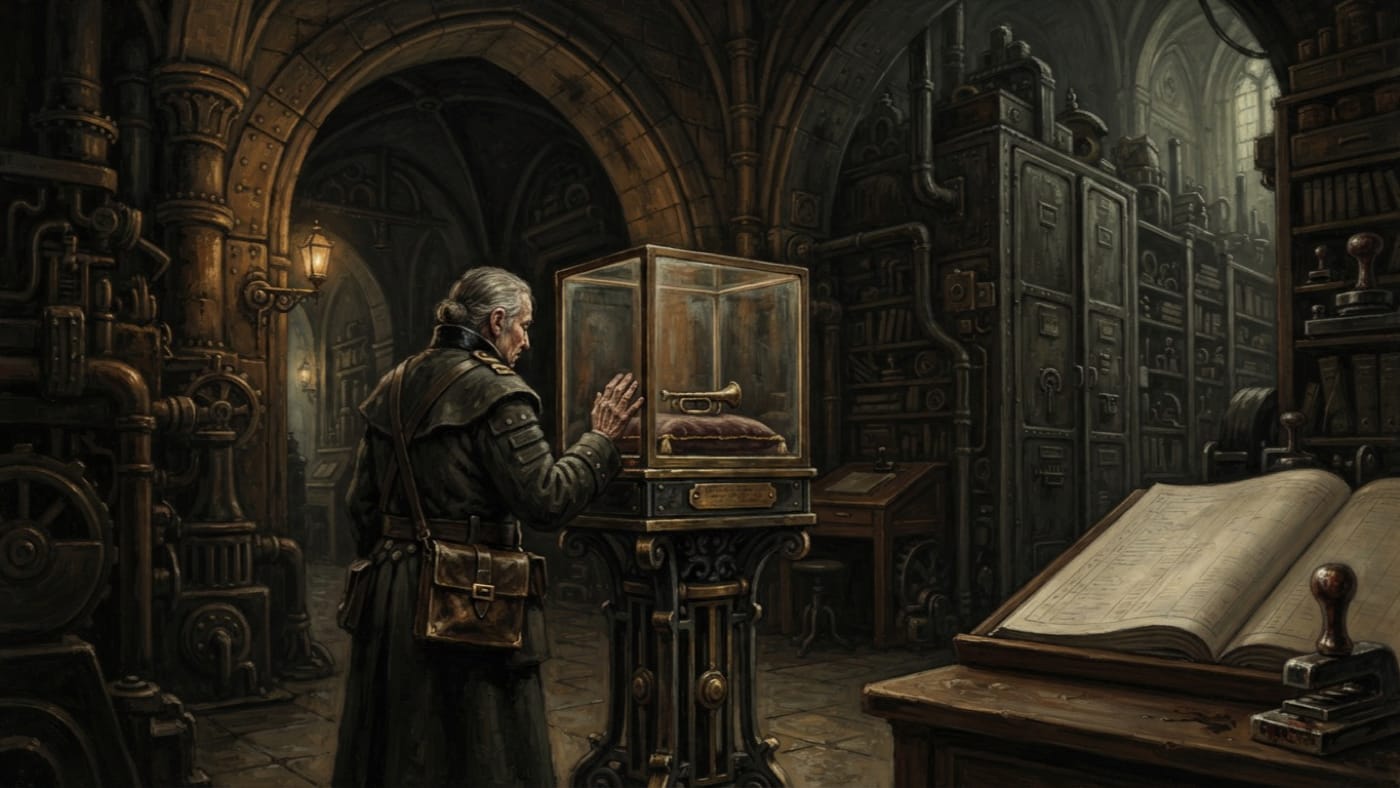
Cathedral Arsenal Office
The warmth has witnesses; the charter does not
Strasbourg office holding the brass pitch-pipe attributed to Saint Orla the Brass-Throated and sharing Shrine-Deck patronage with the Shrine Admiral. The warmth has witnesses; the charter does not.
Codex Ref. IV.3.12-518
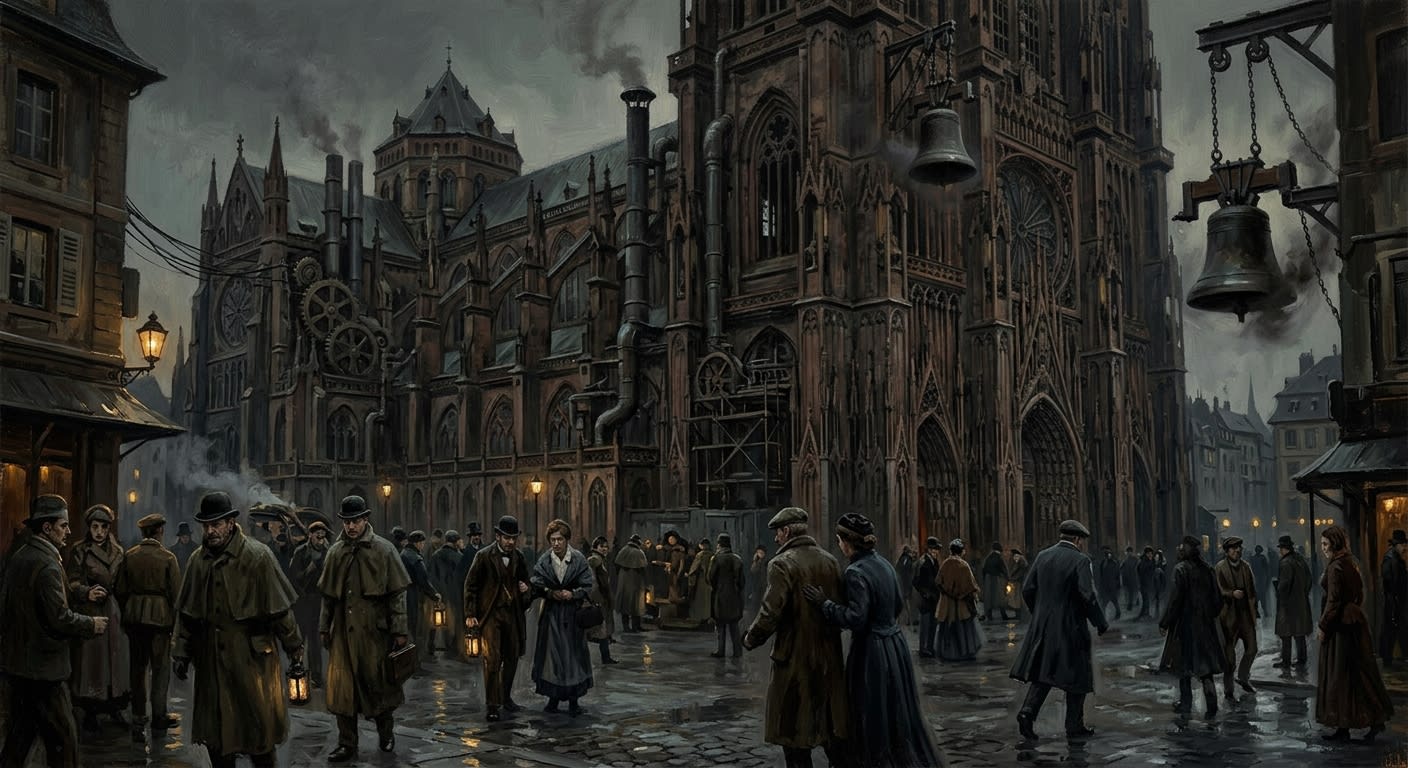
Cathedral of the Perpetual Writ
Where lawful bells learned to drown mourners politely
Strasbourg's lesser cathedral authenticates copies, stores route tables, and remembers the night two lawful bells divided eight hundred mourners into nineteen deaths.
Codex Ref. II.1.04-005
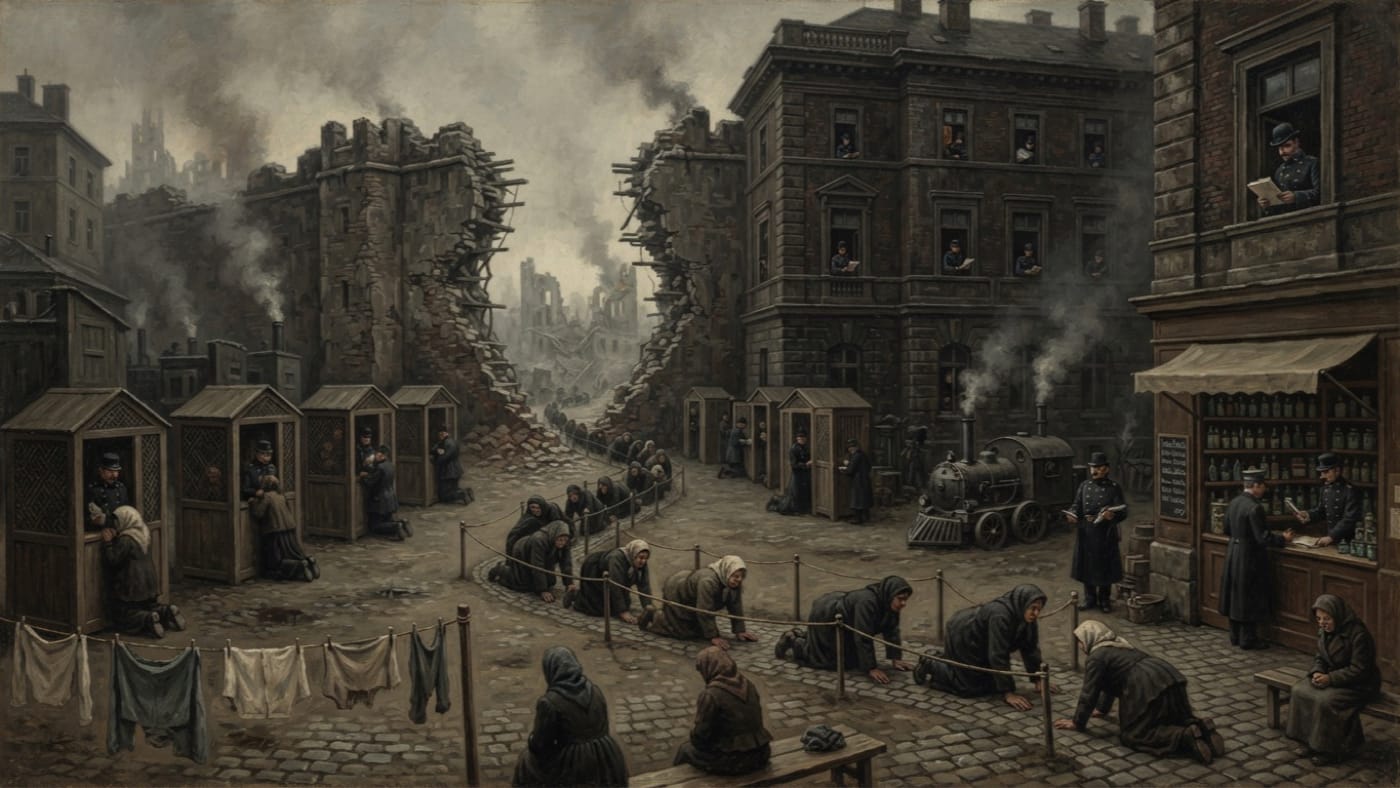
Central Corridor Headquarters
Where the knee is counted and mercy comes with a surcharge
The Bureau of Pilgrimage's Central Corridor headquarters occupies a former customs house beside Vienna's breach, admitting the forty, licensing the upright and billing mercy by the minute.
Codex Ref. II.4.09-012
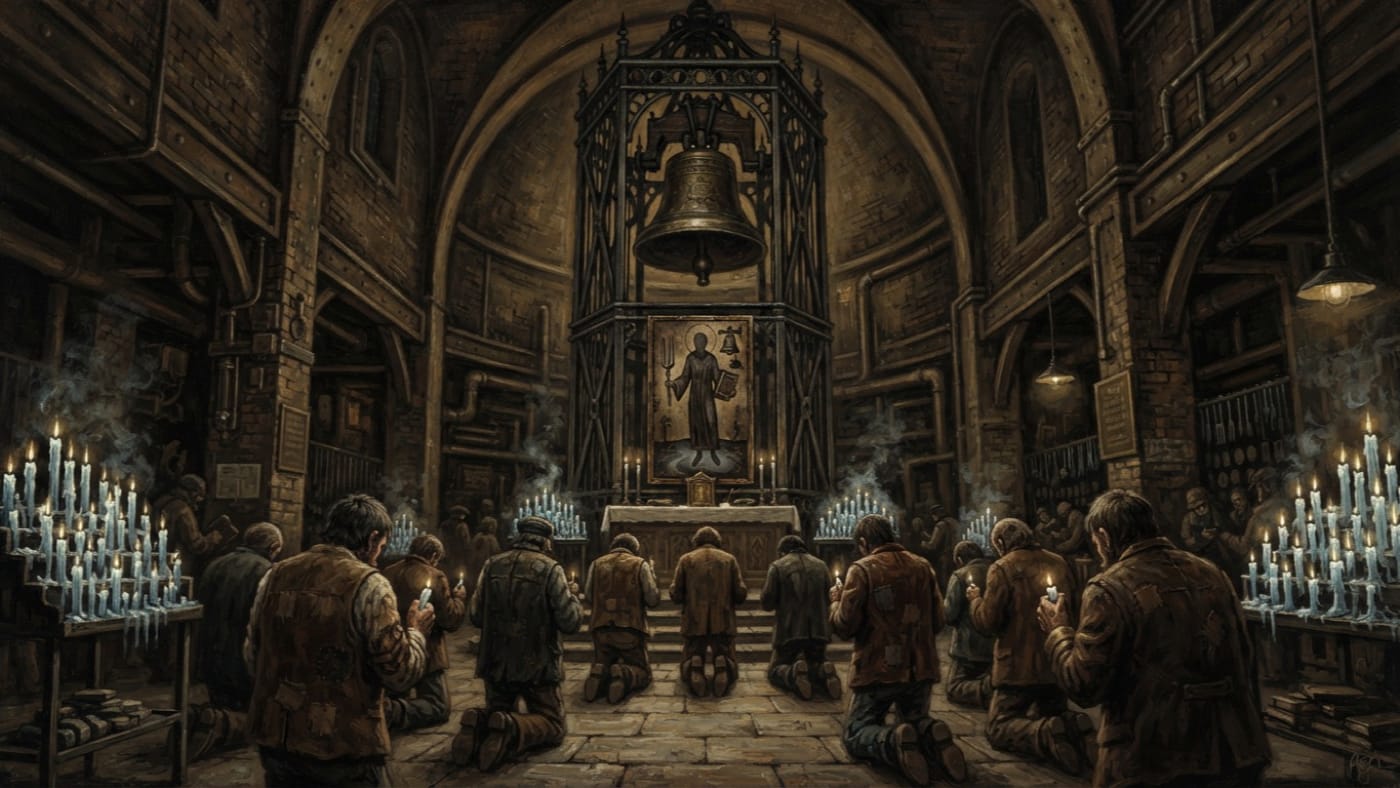
Chapel of Saint Cadrin
Confiscated permission, recast to keep the hour
Strasbourg's primary chapel of Saint Cadrin keeps an hourly bell recast from the Lyon Stampers' Guild master die. Three Bureaus explain its late undertone; none agrees.
Codex Ref. II.4.09-578
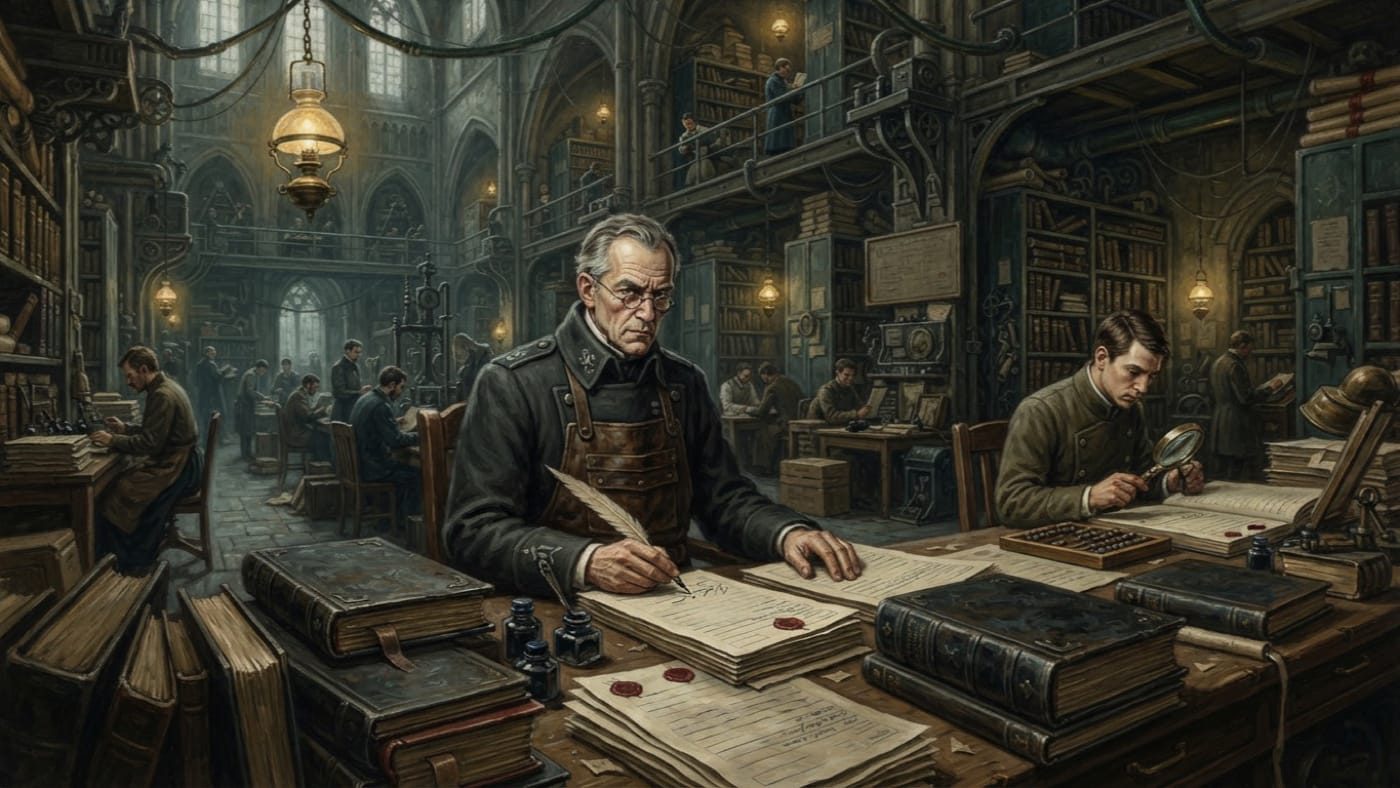
Chief Archivist
The form asks for rank; it does not ask for conscience
The Bureau of Records' countersigning office: a Chief Archivist of at least Third Rank authorises Form 77-D to proceed. The folio is checked twice. The reason is filed elsewhere.
Codex Ref. XII.34.02-001
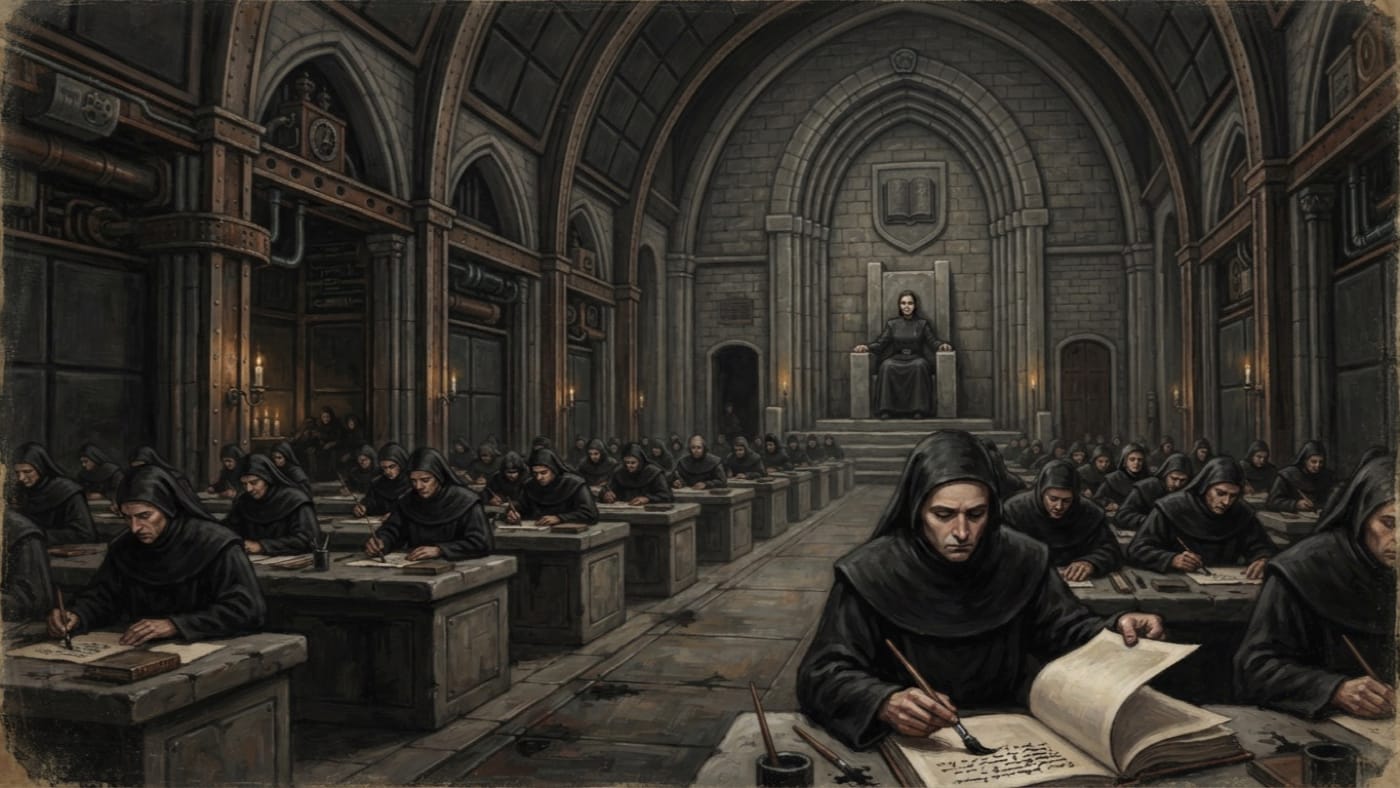
Cloister of Prescribed Silence
The room where refusal requires no reasons
The Cloister of Prescribed Silence is the Bureau of Silence's soundproofed Strasbourg seat, where libraries are licensed, Forbidden Stacks access is counter-sealed, and changing ink is declared obedient.
Codex Ref. II.1.04-019
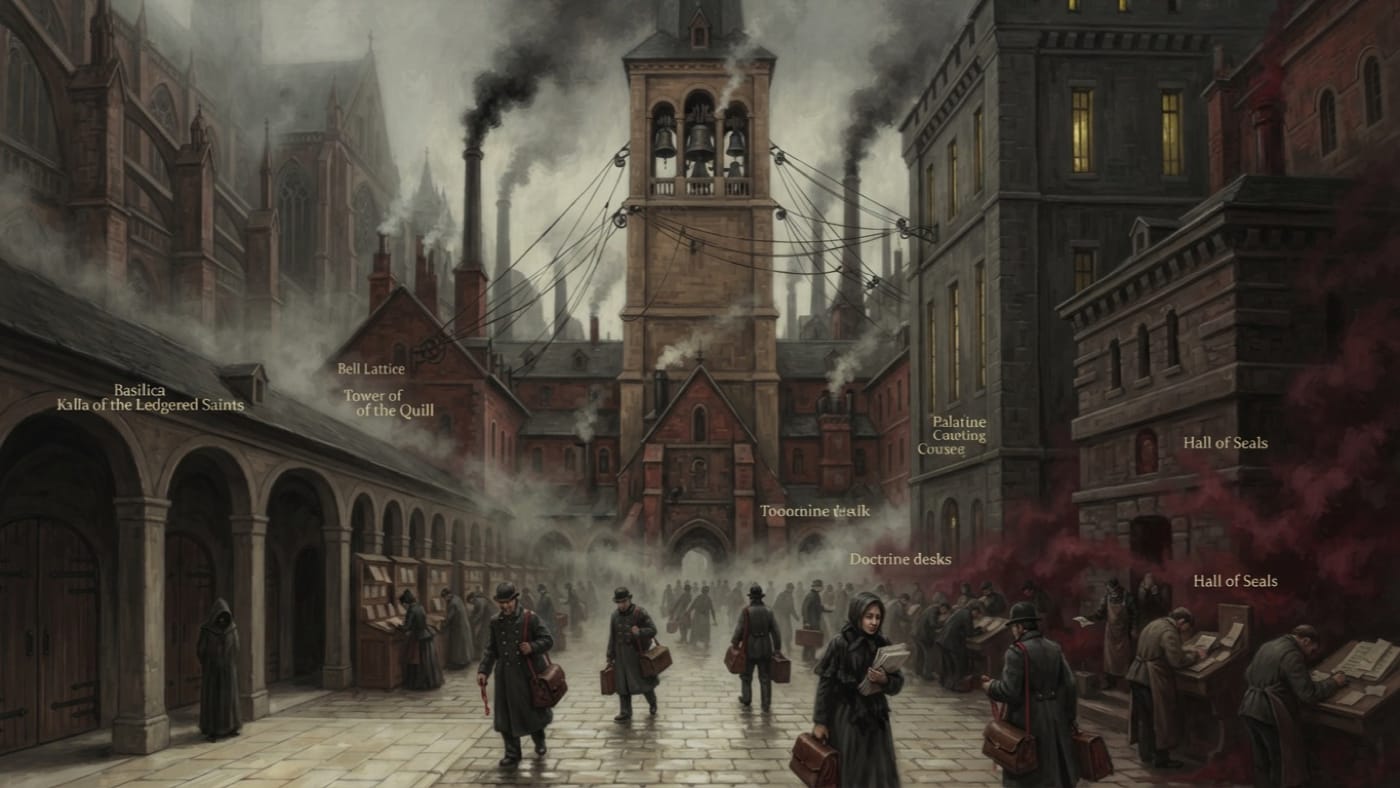
Cloister Precinct
Where every refusal stands within walking distance
Strasbourg's Cloister precinct gathers Doctrine desks, seals and tithes around one petitioner's walk. Every refusal is nearby; the northern arcade has no recorded custodian.
Codex Ref. II.1.04-008
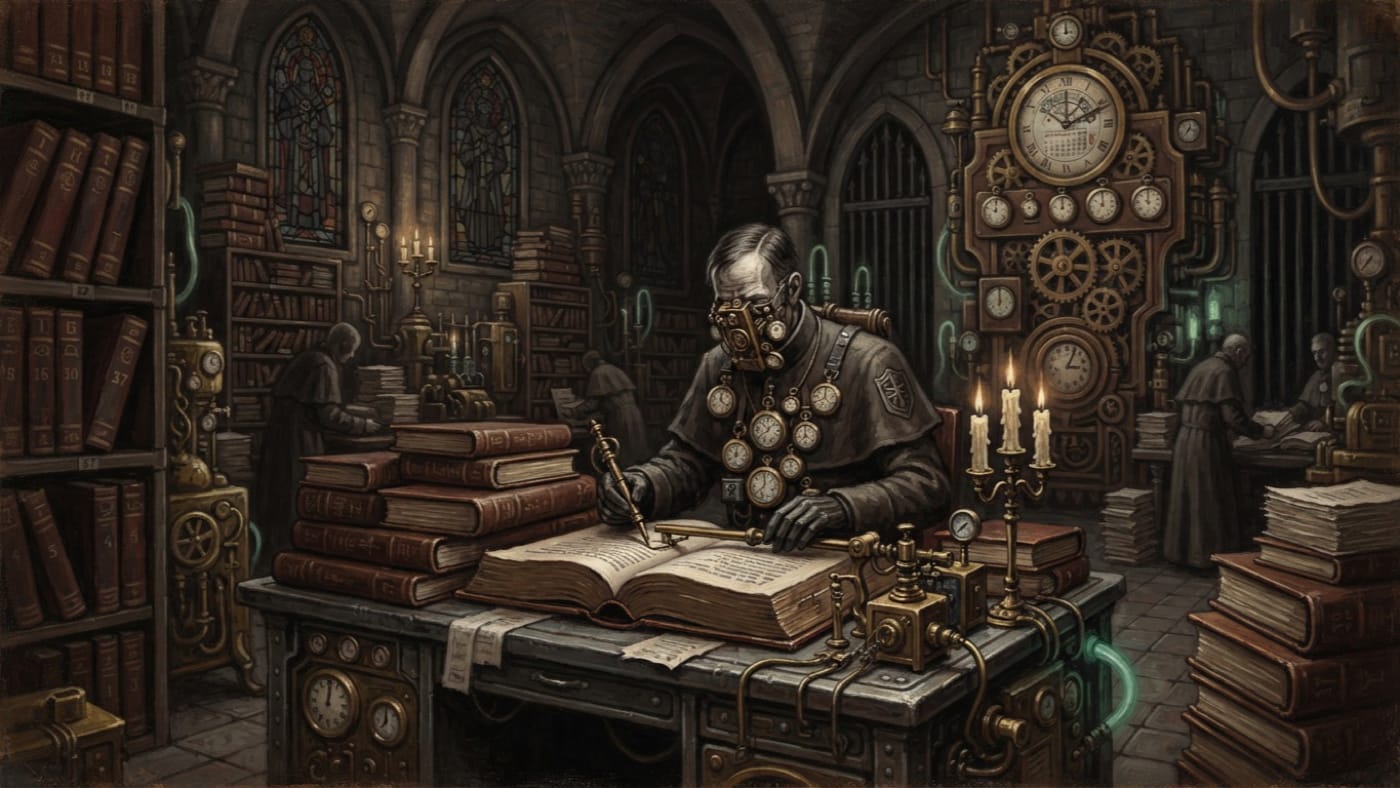
Codex Liturgiae
Eleven volumes. Thirty-seven annexes. One lawful way to kneel.
Eleven volumes and thirty-seven annexes prescribe every authorized rite in the Dominion. The Bureau of Rites measures obedience by the syllable and the second; the faithful pay afterward.
Codex Ref. XIII.1.63-001

Cologne Forgery Incident
The documents survived their maker.
In A.S. 195, ninety-three Cologne documents bore perfect false counter-seals. A Seal-Walker found the error in the resin; the forger was executed and every document re-stamped. The marriage is valid. The couple has been informed.
Codex Ref. VII.8.10-195
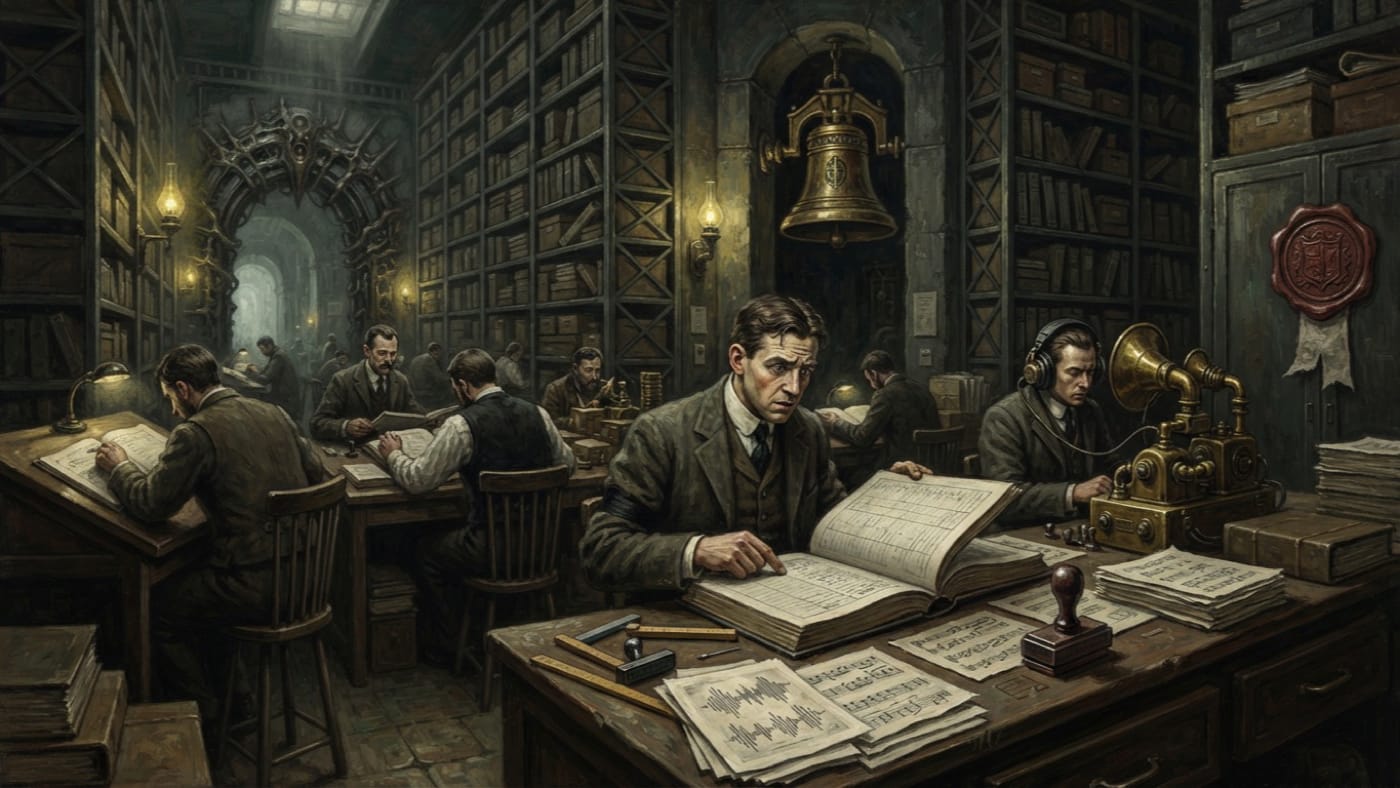
Comparative Notes on Counter-Hymn Phrase Recurrence
The arithmetic survived. The copyist was transferred.
Aldric Venn's A.S. 187 memorandum traced familiar hymns in Pale Chanter reports and proposed a Wound-Site echo. Records withdrew the paper in forty-seven minutes; the mechanism remains unadjudicated.
Codex Ref. XIII.1.689-187

Counter-Seal Crisis of A.S. 178
The papers were corrected. The executions were complete.
In A.S. 178, seventeen defective counter-seals left two years of Rhine Corridor paperwork unsigned. Order 178-A restored the documents; the three executions were already complete.
Codex Ref. VI.4.19-015
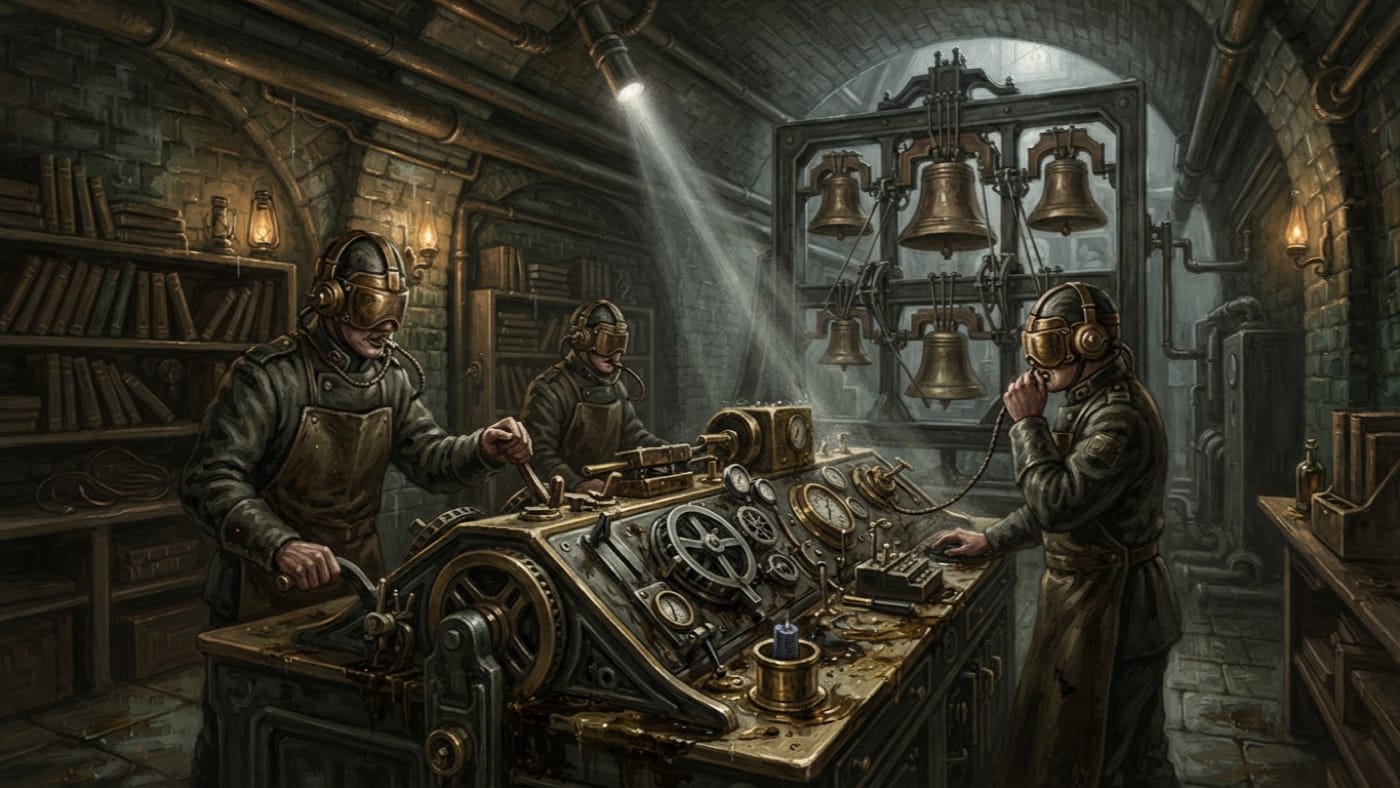
Counter-Toll vault
The tower announces the hour; the chamber defends its authority
An A.S. 201 survey of Counter-Toll vaults, the Bureau of Bells' sub-tower workrooms. Consoles, wax authority and living throats turn lawful sound into armed sound.
Codex Ref. II.4.09-201
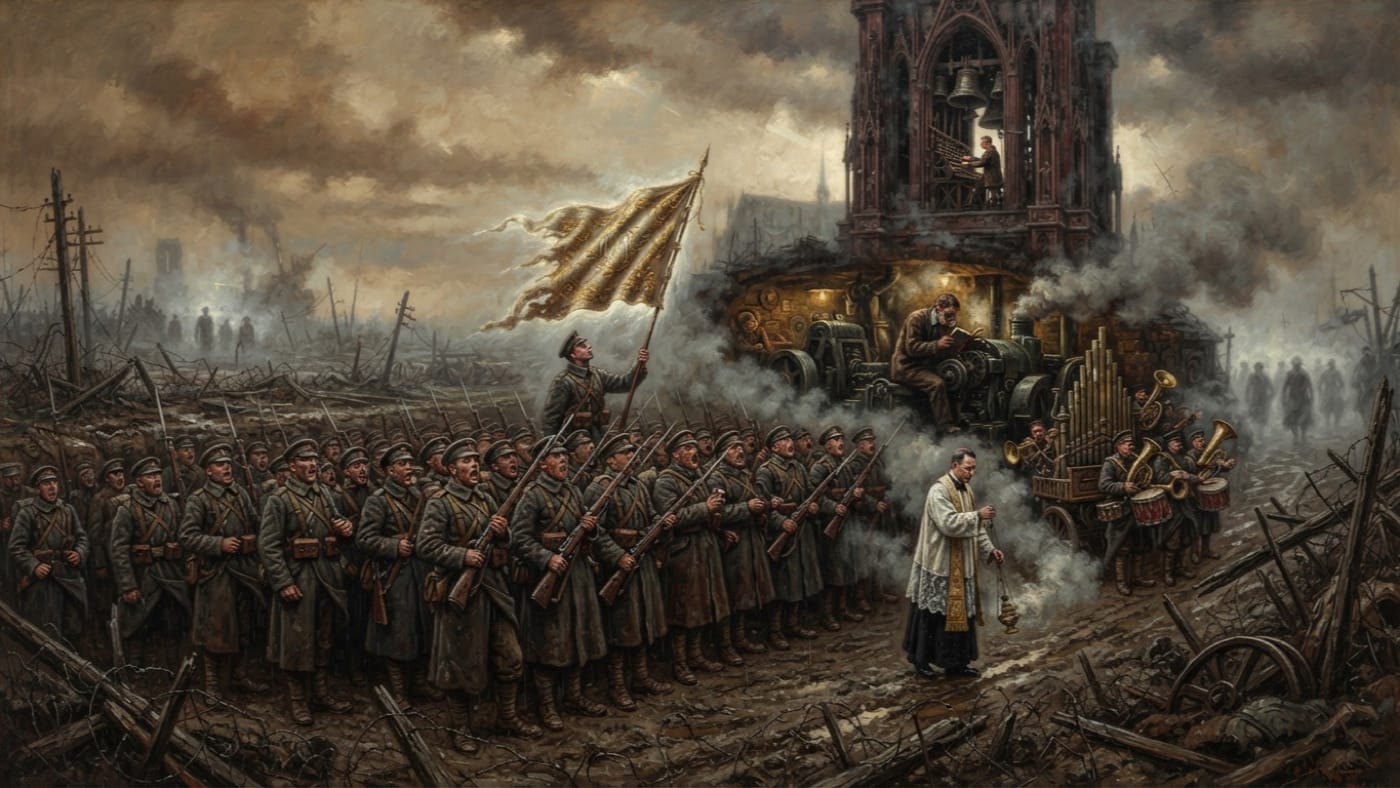
Covenant hymns
One breath for the company; one licence for the tune
A.S. 201 survey: Covenant hymns pace labour, volleys and worship under Orison's licence and Bells' schedule. Aldric Venn proposed that they might return as Pale Chanter cadence; the proposition remains withdrawn and unproven, and the singing continues.
Codex Ref. XIII.1.96-201
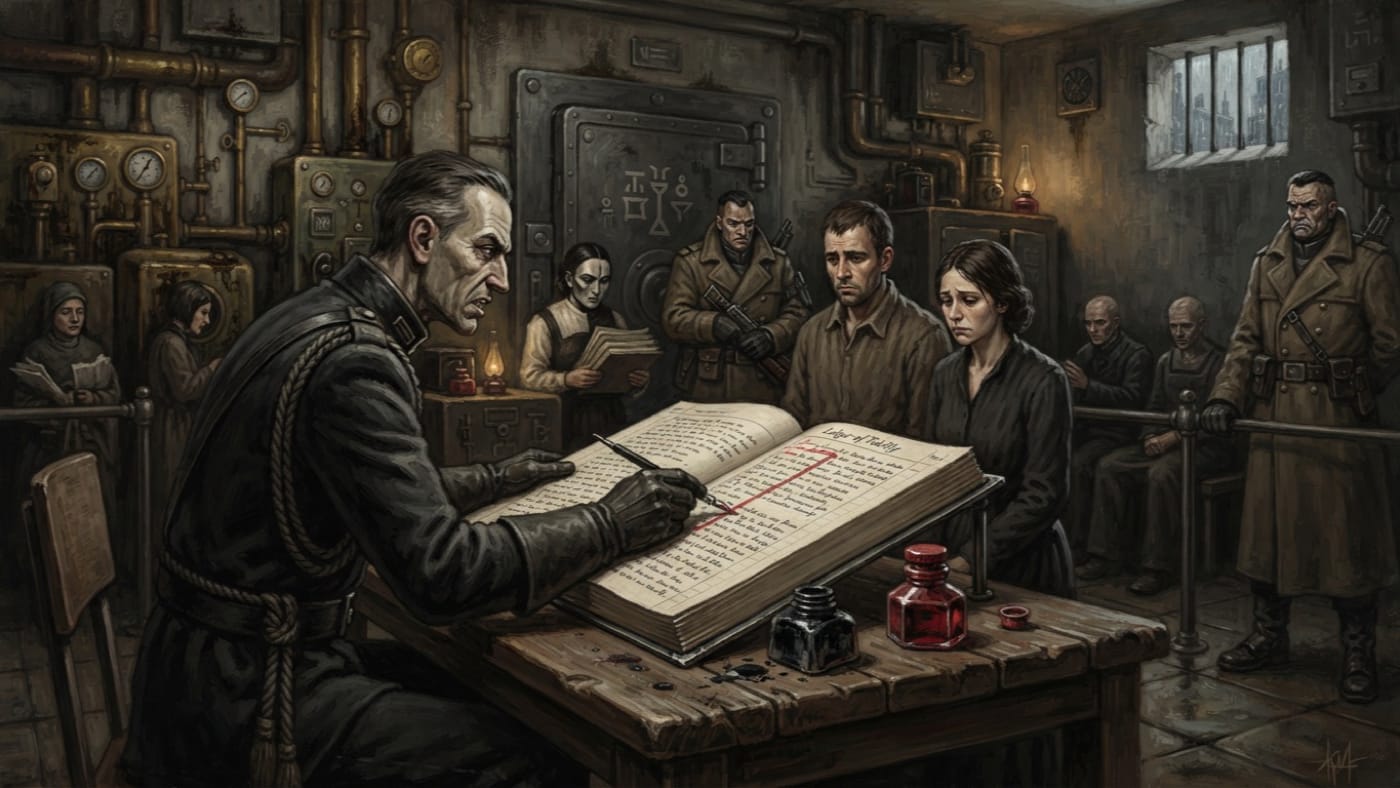
Dissolution Formula
The bond ends; the evidence remains
The Dissolution Formula closes witnessed vows by licensed speech and a red line. Strasbourg buries the bond, preserves the evidence, and collects the fee.
Codex Ref. VI.4.03-013
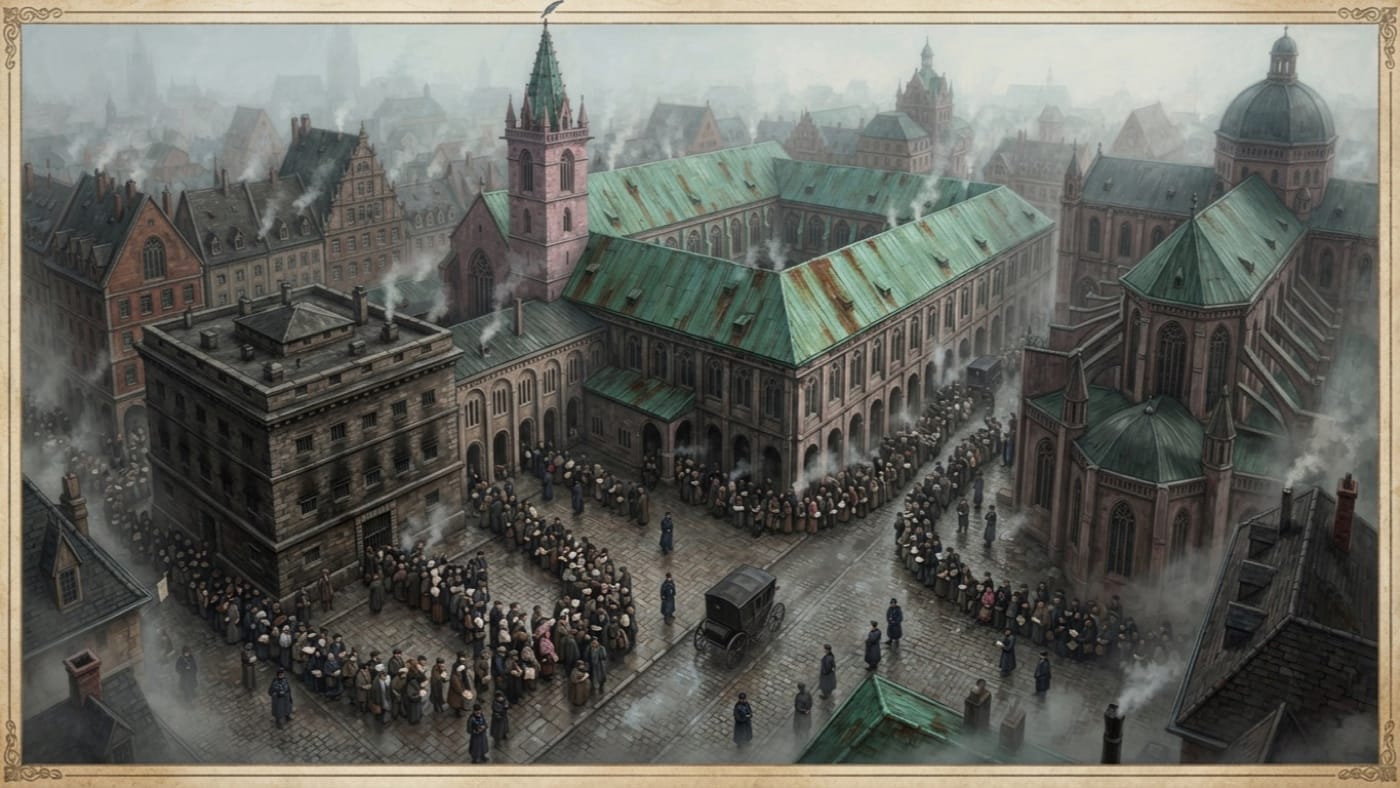
Ecclesiastical Quarter
Where authority gathers and petitioners go round in circles
Strasbourg's houses of authority gathered around the Cloister of Concord. Doctrine writes, Records remembers, Tithes counts, and petitioners carry the receipts. Surveyed in A.S. 201; the perimeter remains uncertified.
Codex Ref. II.1.04-005
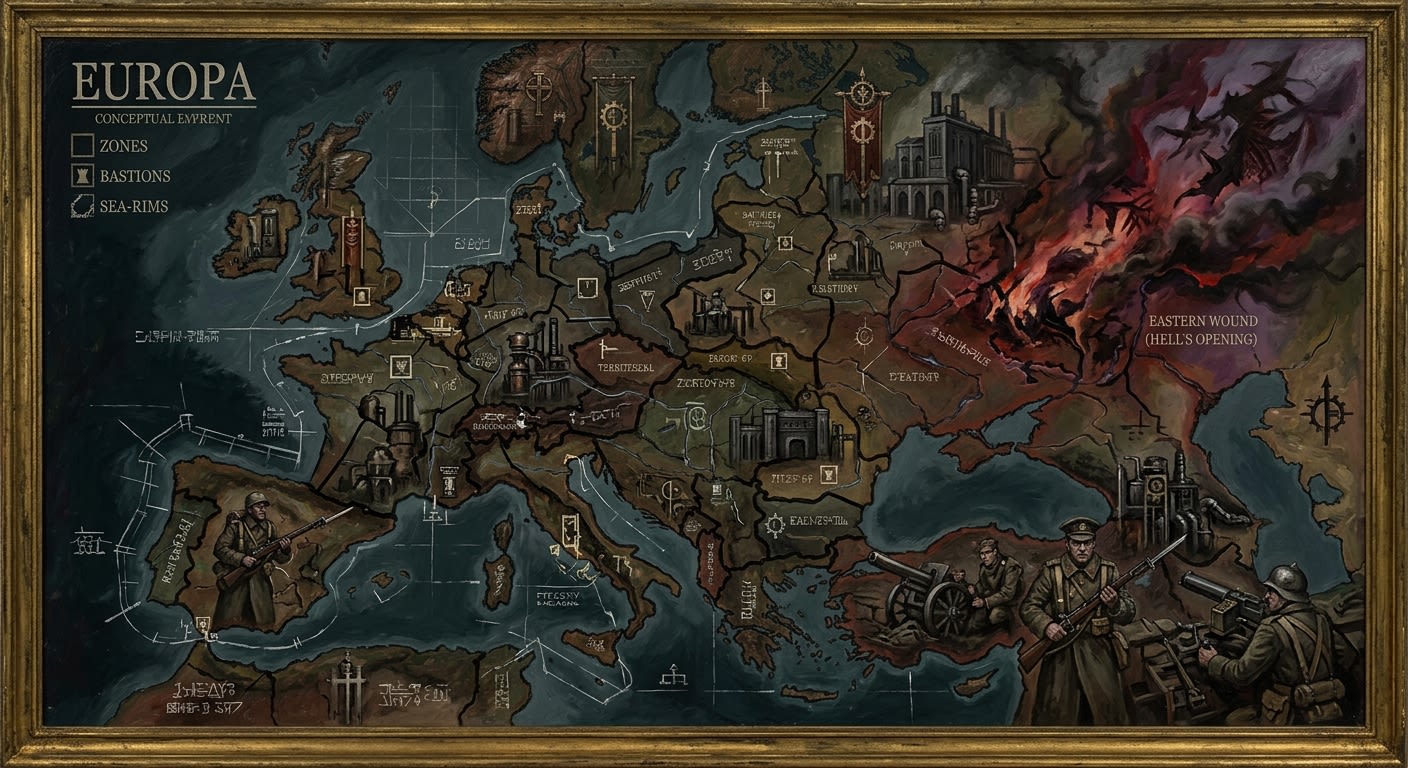
Europa
The continent as filed, wounded, taxed, and made obedient enough
Europa is not whole; it is the continent filed into zones, bastions, sea-rims, independent nuisances, and the eastern wound Hell keeps open.
Codex Ref. II.0.00-201
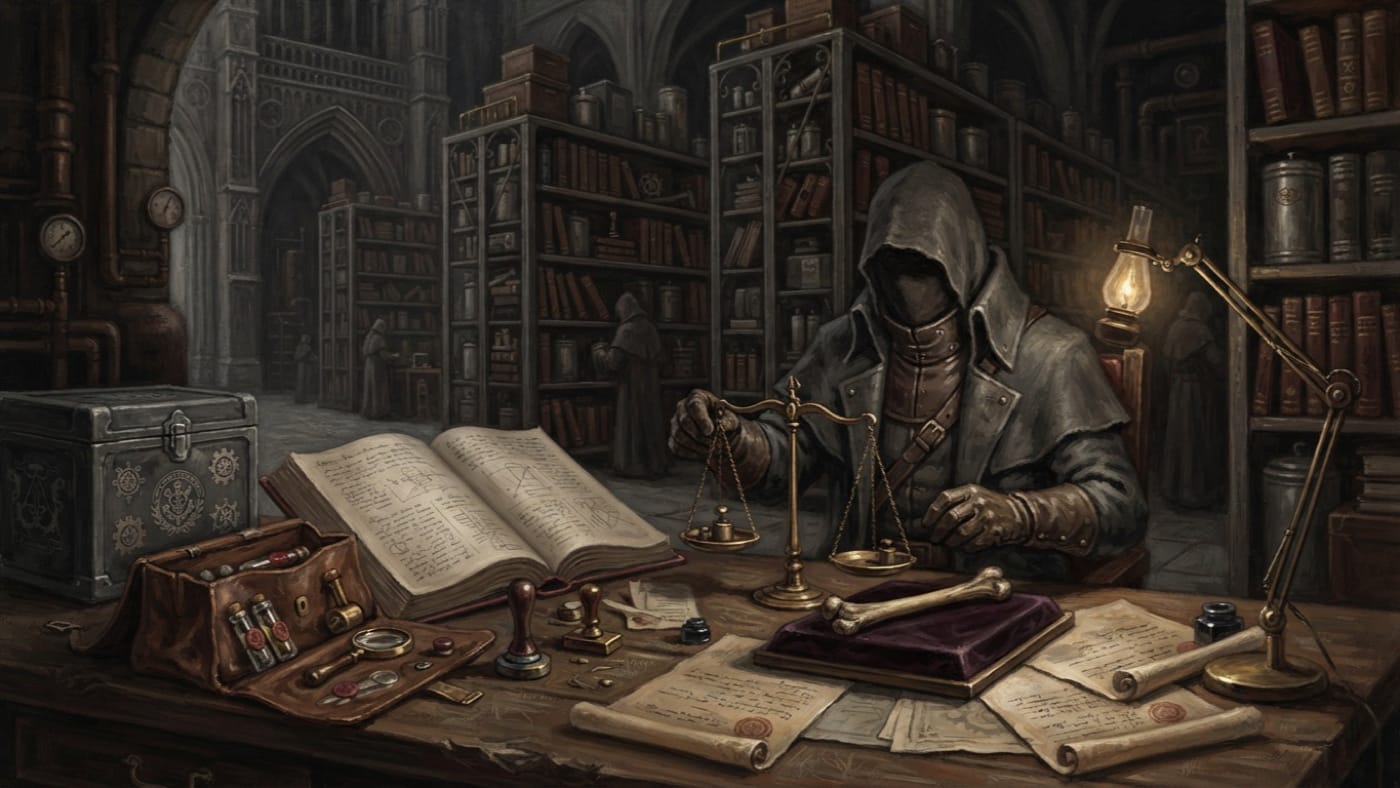
Examiner of the Third Degree
The seal is the Bureau's. The signature is yours.
Commissioned current survey, A.S. 201: the Bureau of Relics' Examiner assesses Authenticity Writs, weighs bones and records phenomena. A parish receives a certificate or a receipt. The office's founding remains unrecorded.
Codex Ref. XII.35.03-001
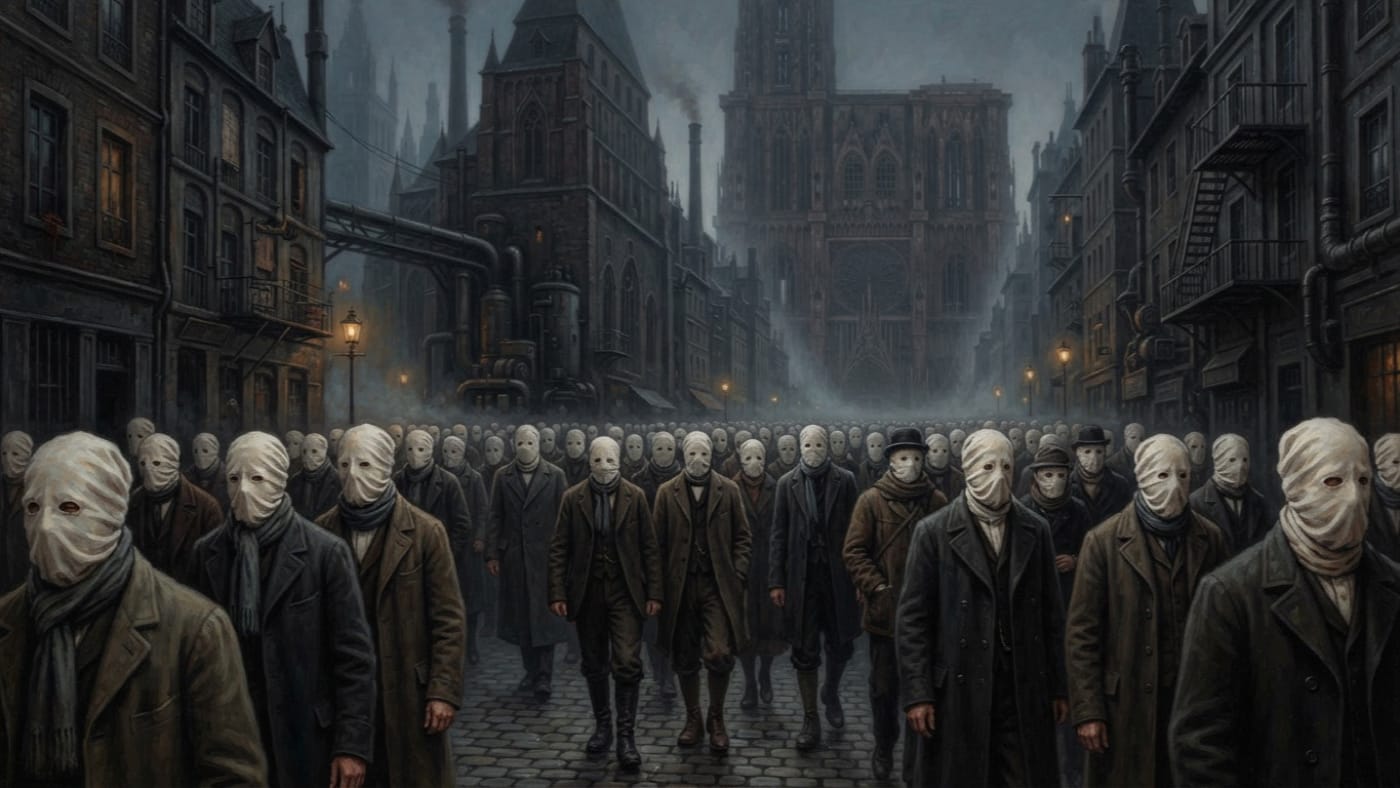
Feast of Buried Names
Anonymous before the Creator. Numbered in the Registry.
On the Feast of Buried Names, every citizen is expected to walk the parish in silence behind licensed white cloth. Doctrine calls it necessary; Purity calls it a liability. The Registry keeps the eye-holes on file.
Codex Ref. XIII.1.91-001
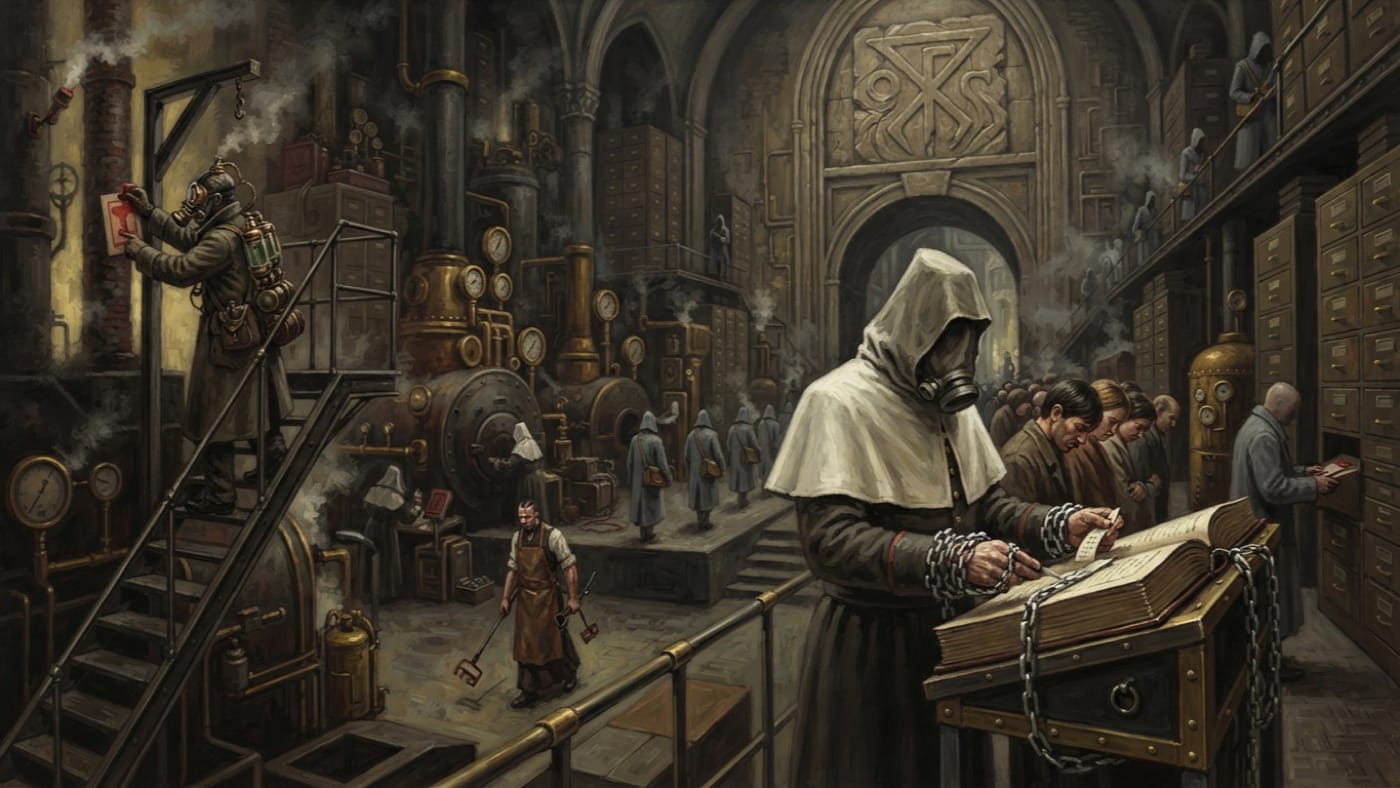
Fifth Seal of Faith
The prohibition arrives before the definition
The Fifth Seal governs Purity: forbidden speech, indexed forms, and the Inquisition. Strasbourg constituted it in A.S. 90; the definition of impurity remains pending while enforcement proceeds.
Codex Ref. XIII.1.05-005
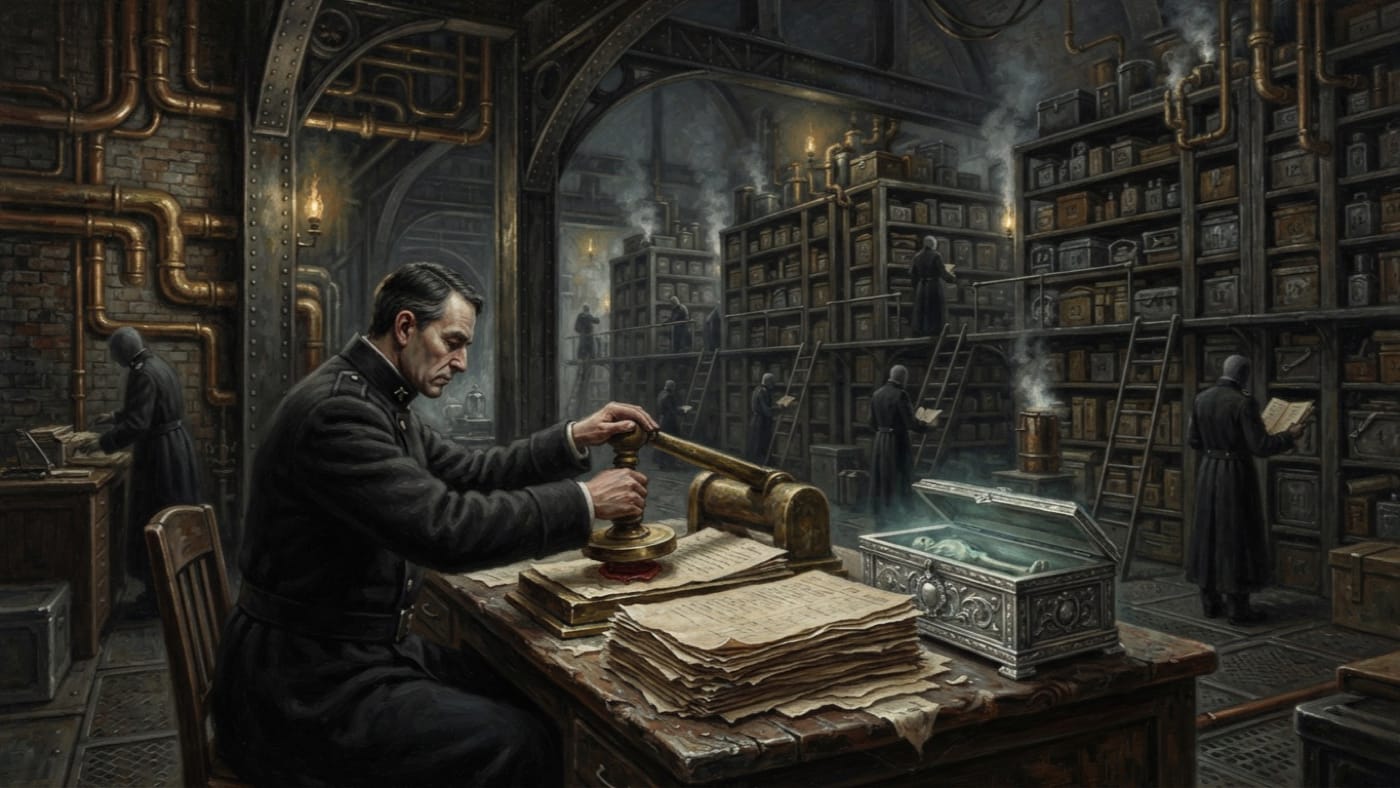
First Ratification of A.S. 92
The charter that gave a seal jurisdiction over the holy dead
The A.S. 92 ratification gave the Bureau of Relics custody, authentication, classification and distribution, making sacred standing a matter of seal. The bones were not consulted.
Codex Ref. VII.2.10-092
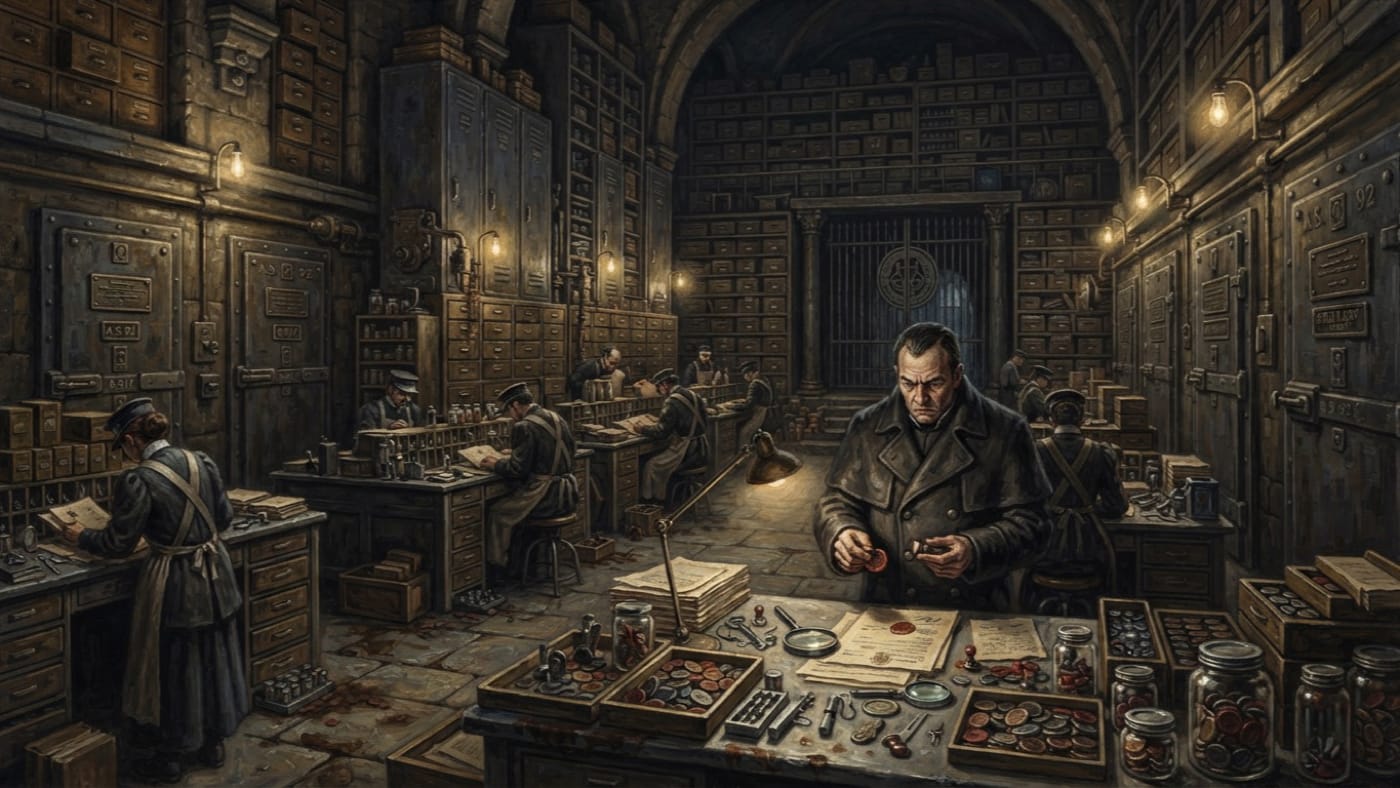
Forgery Archive
Every false impression needs a genuine stamp.
The Forgery Archive keeps 8,917 confiscated counterfeits beneath Strasbourg Cathedral, each certified as false. The Bureau of Masks and Seals publishes the count; the collection remains sealed.
Codex Ref. II.2.06-007
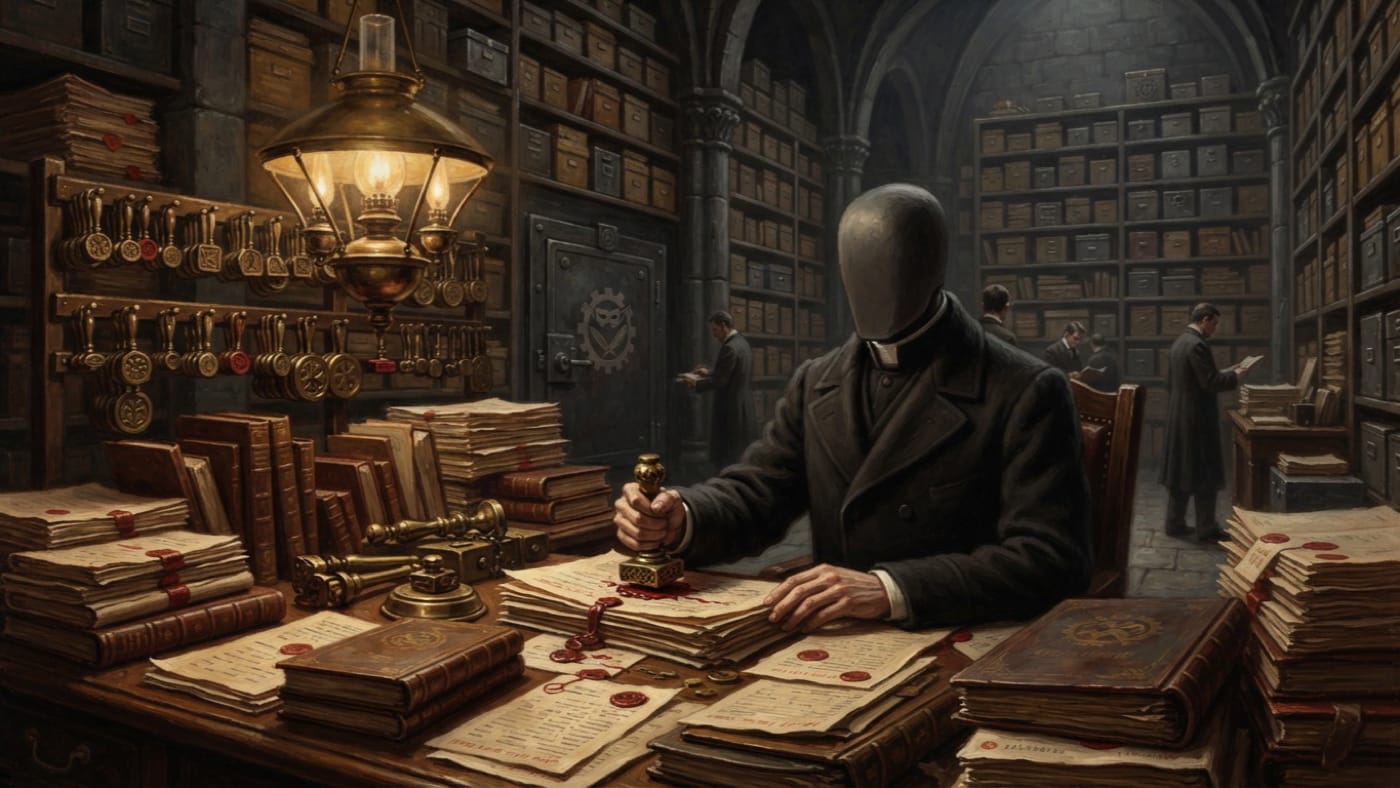
Founding Instruments
Five verbs gave one Bureau the brass.
The Founding Instruments of A.S. 92 grant Masks and Seals control of official authentication. Article XVII is cited exactly; the full text is absent from this file. The sub-clause still makes paper binding.
Codex Ref. XIII.1.17-092
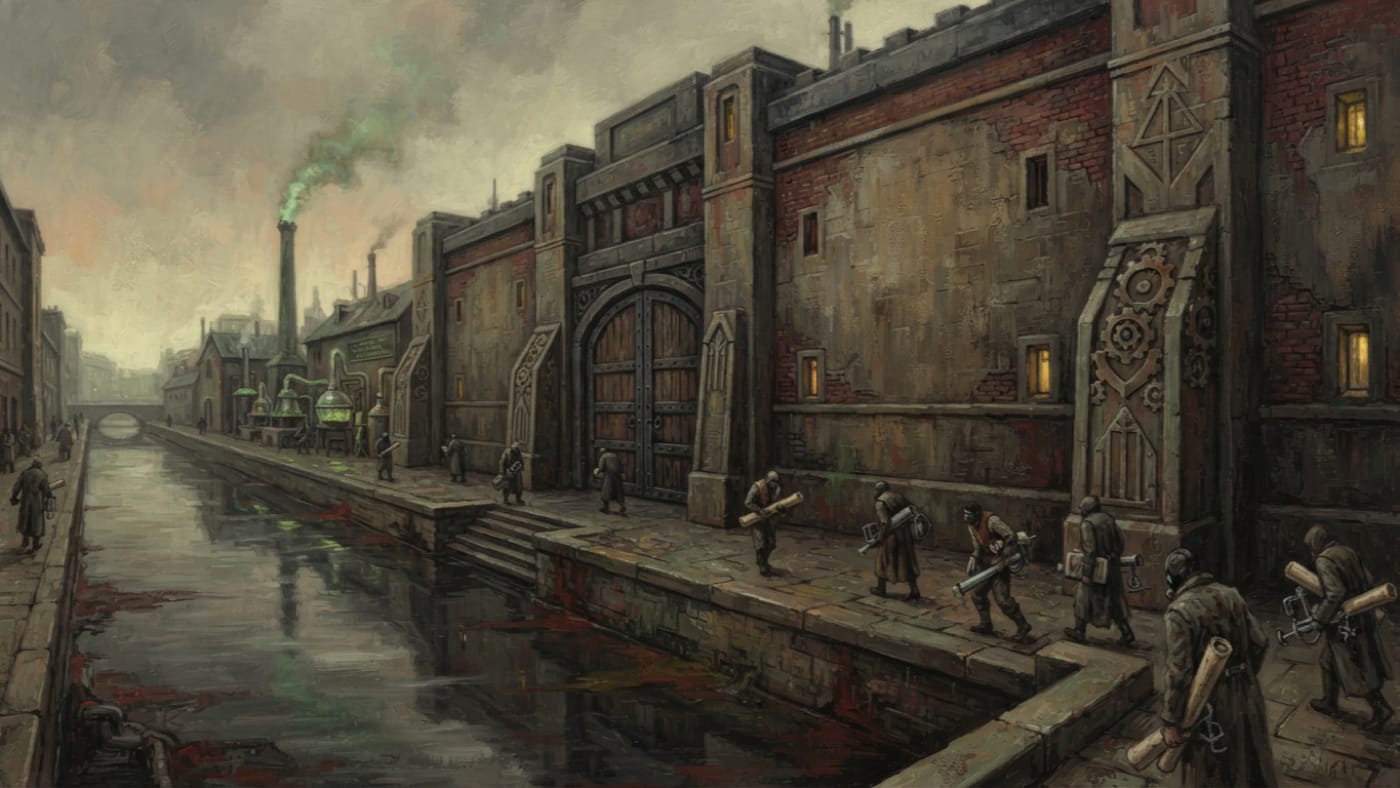
Foundry Archive
Engineering keeps what the Synod stands on
On Strasbourg's eastern canal, Engineering keeps the papers the Synod stands on. Its Archive exceeds Cathedral tolerances; Doctrine has twice failed to move it.
Codex Ref. II.1.04-005
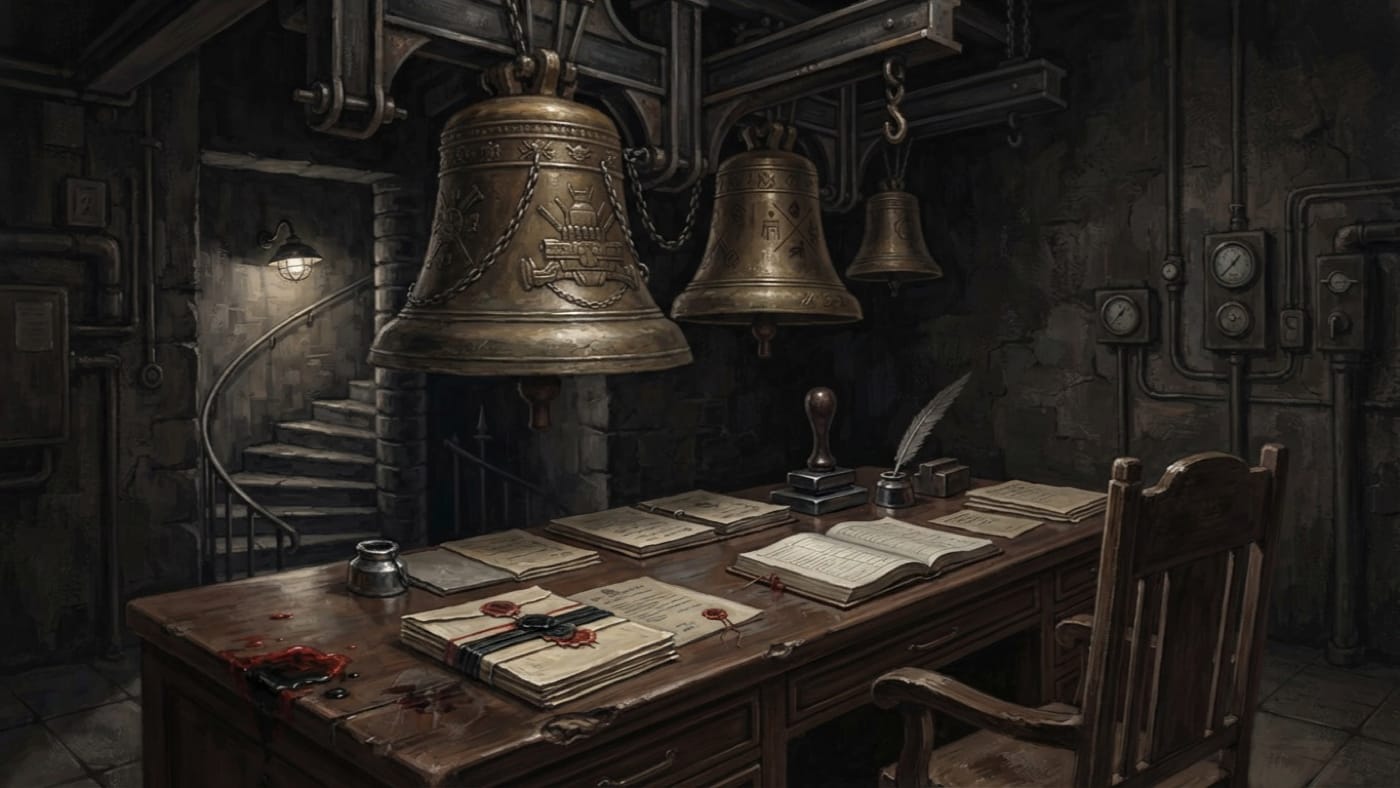
Gallery of the Quill
A walnut desk beneath three bells, and the hand that corrects the Synod's meaning
The Gallery of the Quill is my working room in Strasbourg's Tower: a walnut desk beneath three bells, where the Warden of the Sacred Ledger corrects Doctrine's prose and signs for the consequences.
Codex Ref. II.1.04-002
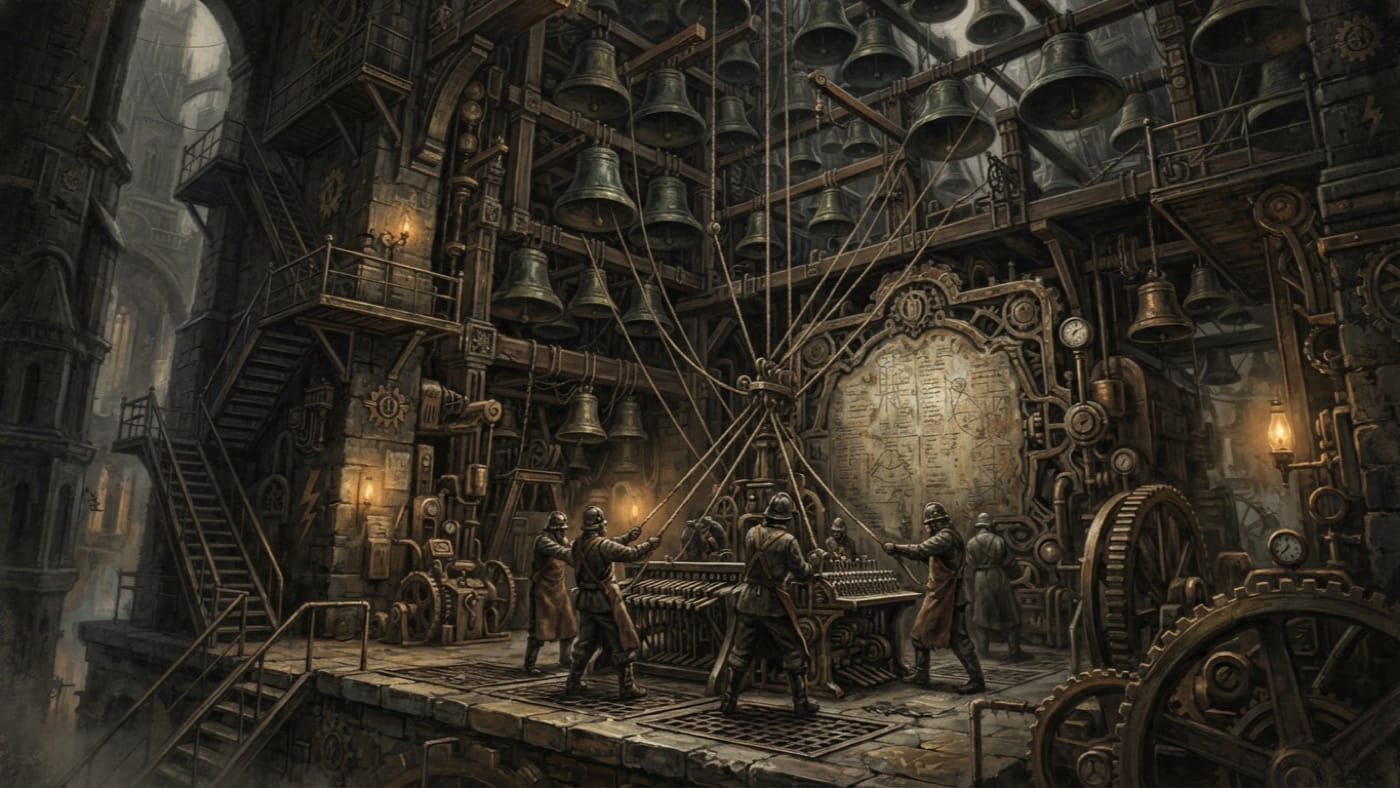
Grand Carillon of the Basilica
Strasbourg issues the hour
The Grand Carillon issues Strasbourg's eight canonical hours to the Theocracy. I commend its seven-second tolerance: enough room for a dispensation, and scarcely enough for an excuse.
Codex Ref. V.1.02-002
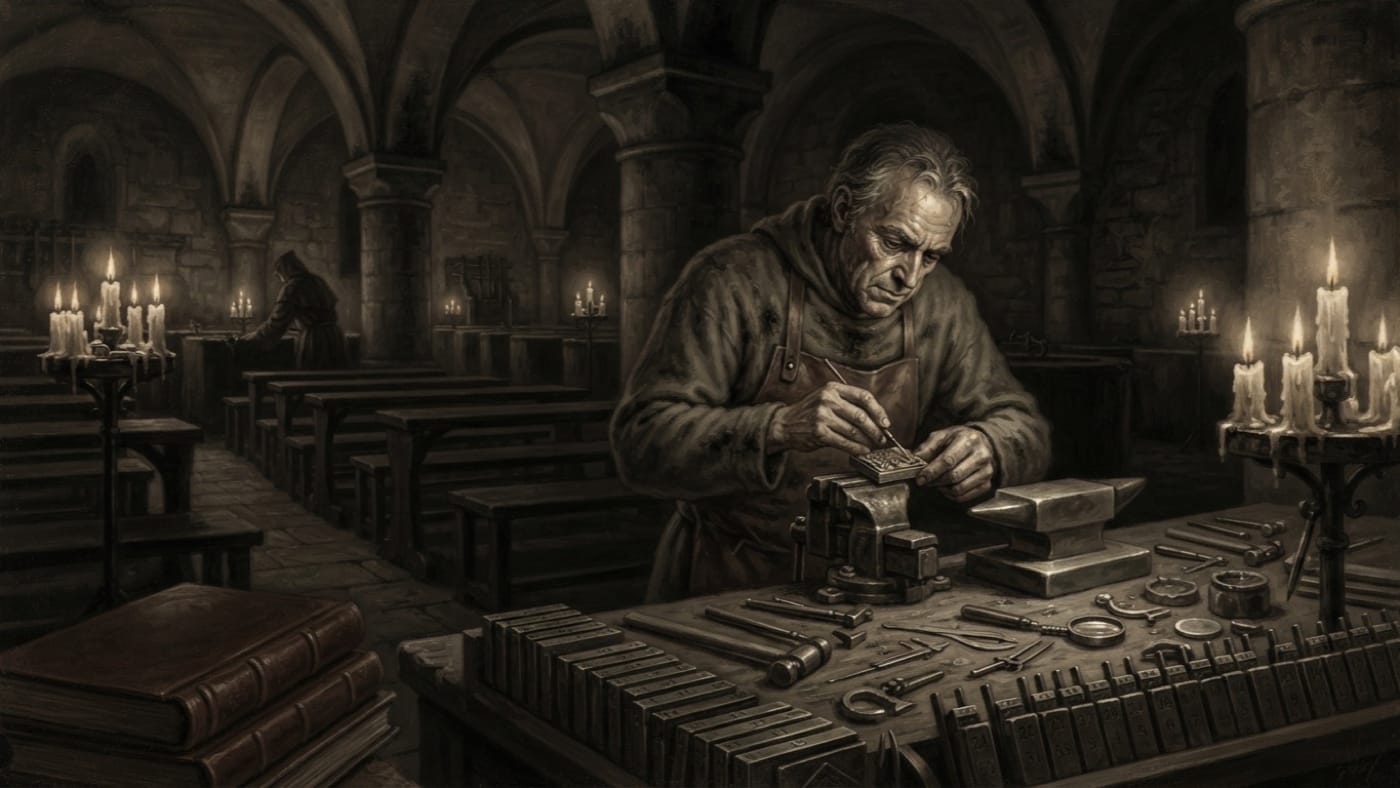
Guild of the Anvil and Stylet
The impression serves the Synod. The hand serves the impression.
Chartered in A.S. 105, the Guild of the Anvil and Stylet cuts the metal that makes Synodal paper binding. Its cutters swear to the impression; the Bureau of Masks and Seals files the theological objections.
Codex Ref. VI.4.19-015
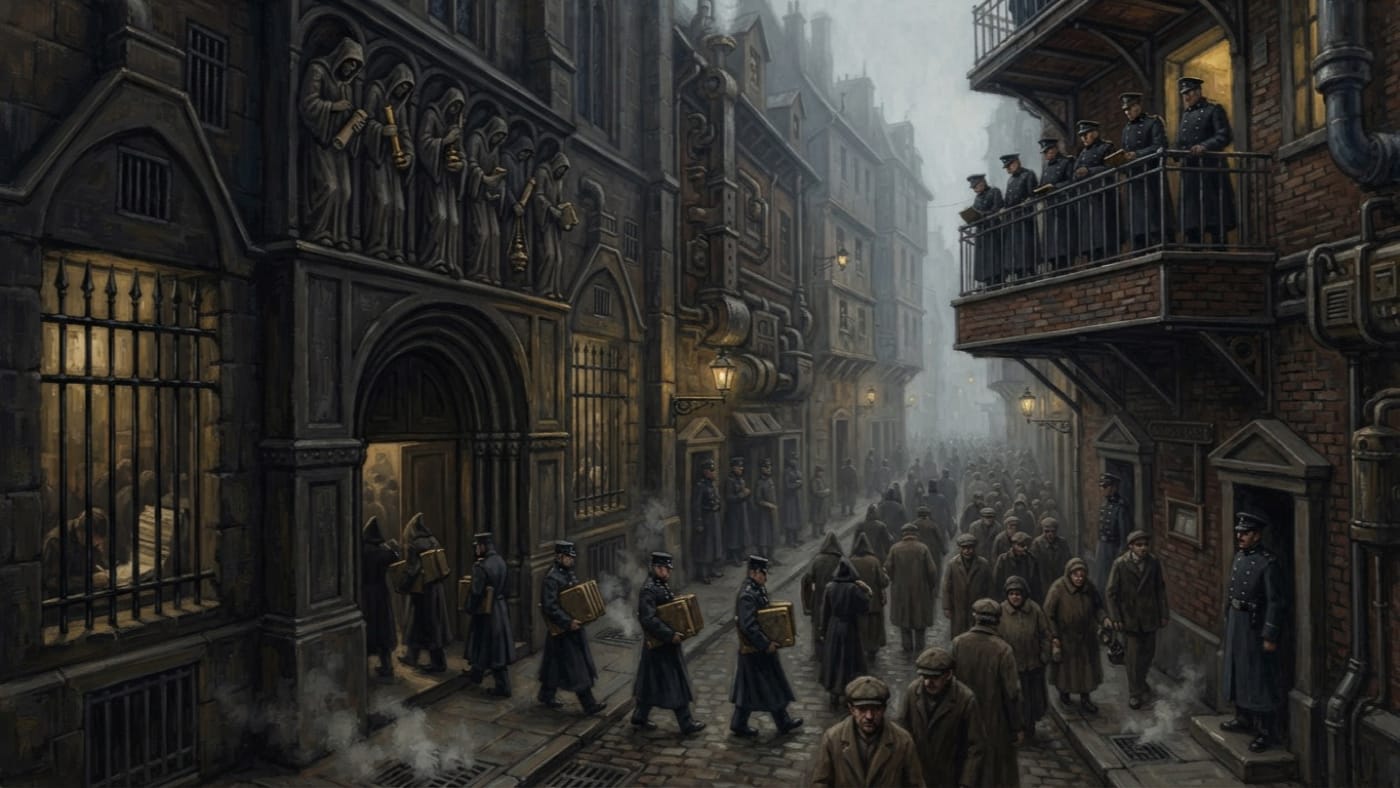
Hall of Confessions
Where the Synod speaks and the grille remembers
At the central bend of Strasbourg's Sanctum Mile, the Synod speaks beneath carved saints while clerks behind grilles record its words. The crowd outside hears bells.
Codex Ref. II.2.02-003
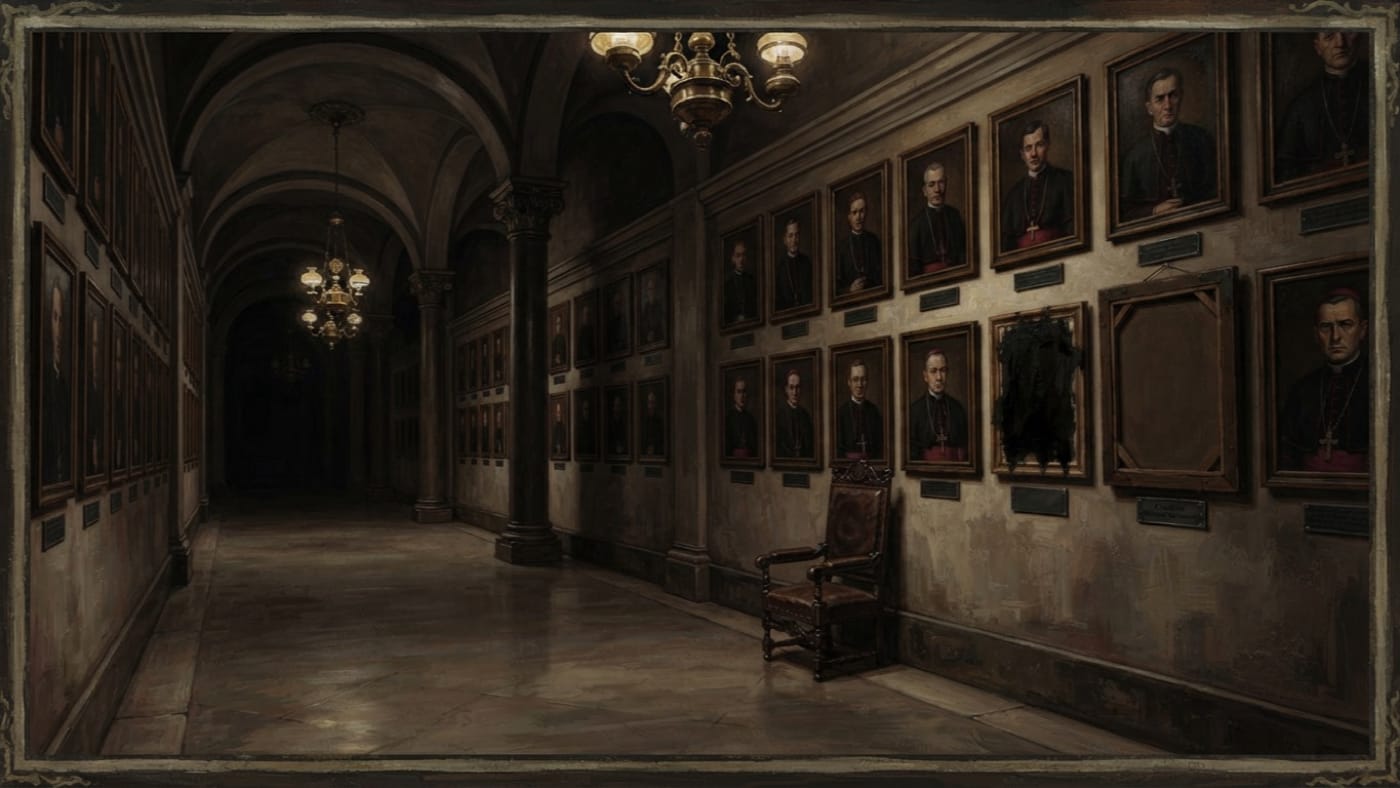
Hall of Succession
The succession is continuous; the faces are revocable
The Synod's portrait corridor in Strasbourg keeps seven successions unbroken in paint. One canvas is black, one portrait faces the wall, and one empty chair continues its duties. The faces are revocable.
Codex Ref. II.1.04-005
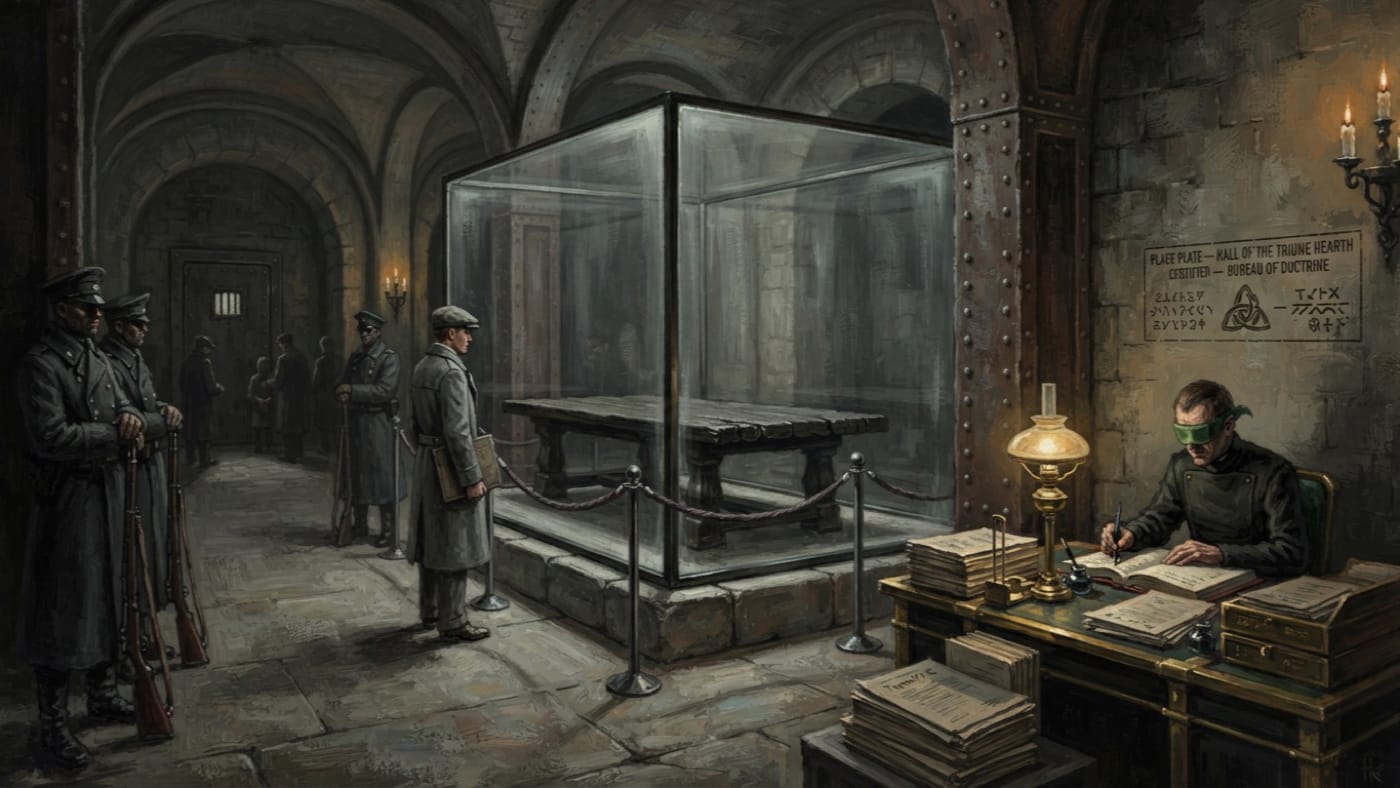
Hall of the Triune Hearth
Proximity licensed. Touch refused.
Strasbourg keeps the Concordat's black oak table under glass. Citizens inherit the Hearth, then file Form 77-C forty days ahead to stand near its furniture.
Codex Ref. II.1.04-006
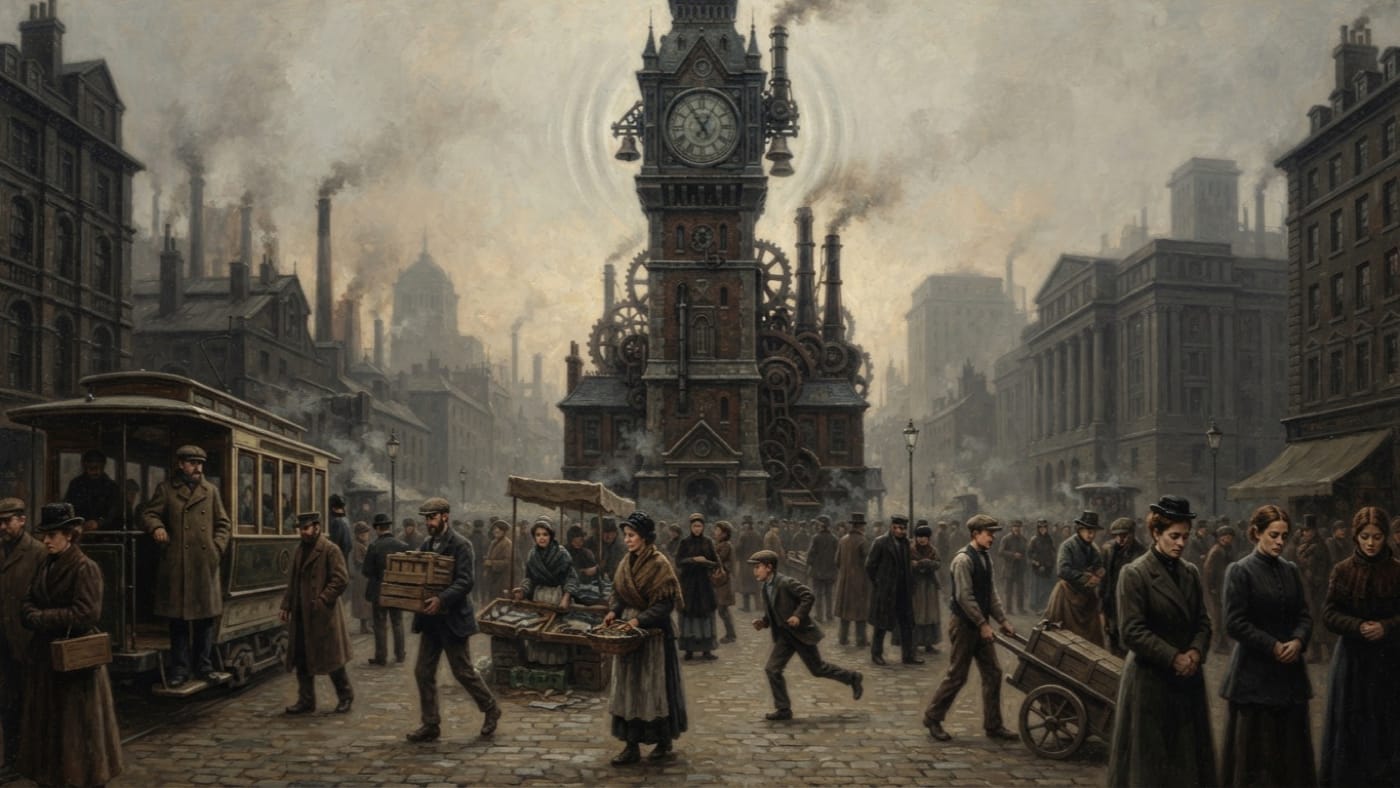
High Angelus
At noon, even the right to resume belongs to bronze
The High Angelus is the Bell Codex's noon peal: three ascending commands that stop the city, require recitation and return work by permission of bronze.
Codex Ref. XIII.1.62-003
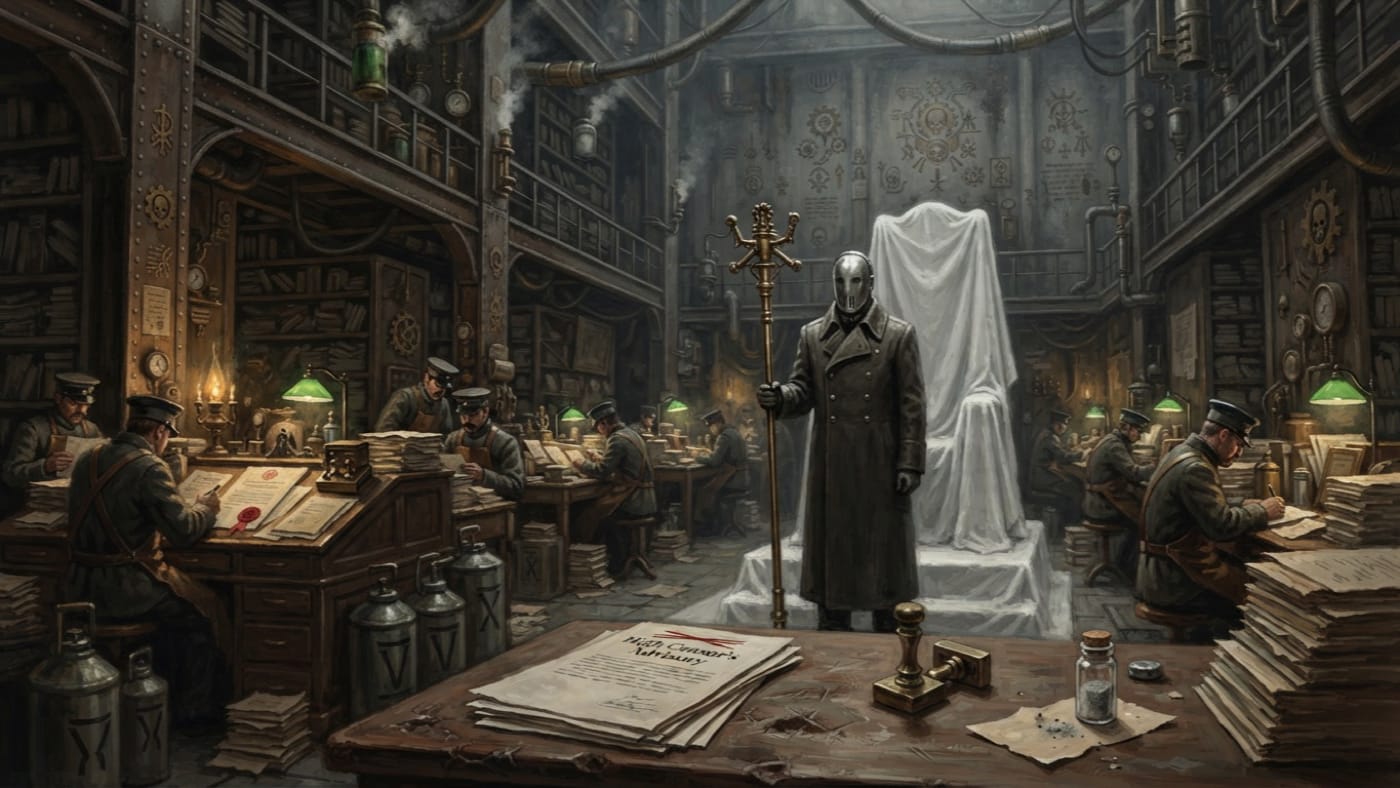
High Censor's Advisory
A name fit for the docket, with no hand fit for the signature
Records has approved a name for the rumoured Council of Veils. The wording can be read aloud; its charter, members and author remain unestablished.
Codex Ref. VI.3.02-004
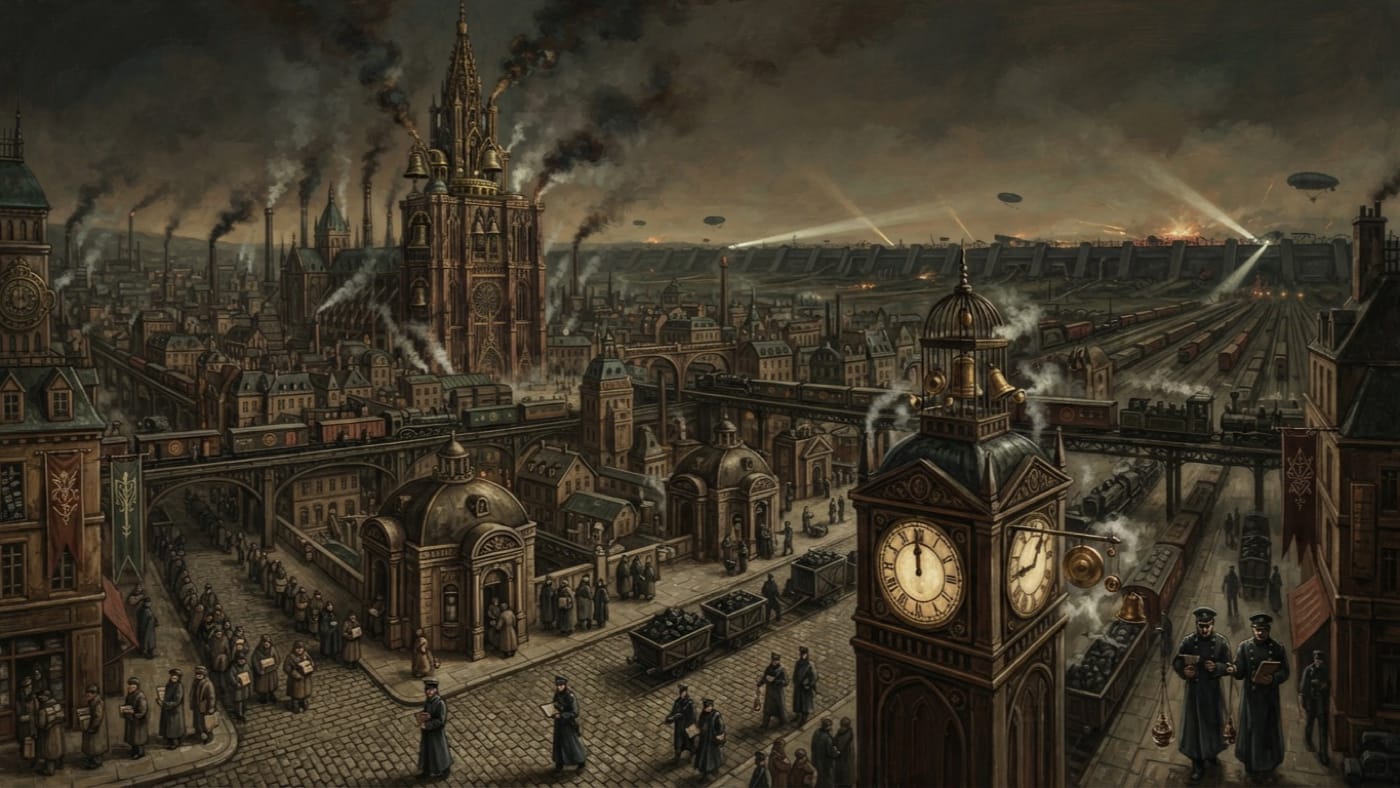
Holy Dominion
Your name is in a book. The book is in better repair than you are.
The Holy Dominion is the Synod's continental jurisdiction, surveyed in A.S. 201. From Strasbourg to the Sagittal Line, bells govern the hours, tithes feed the guns, and every soul must appear in a book.
Codex Ref. II.1.01-001
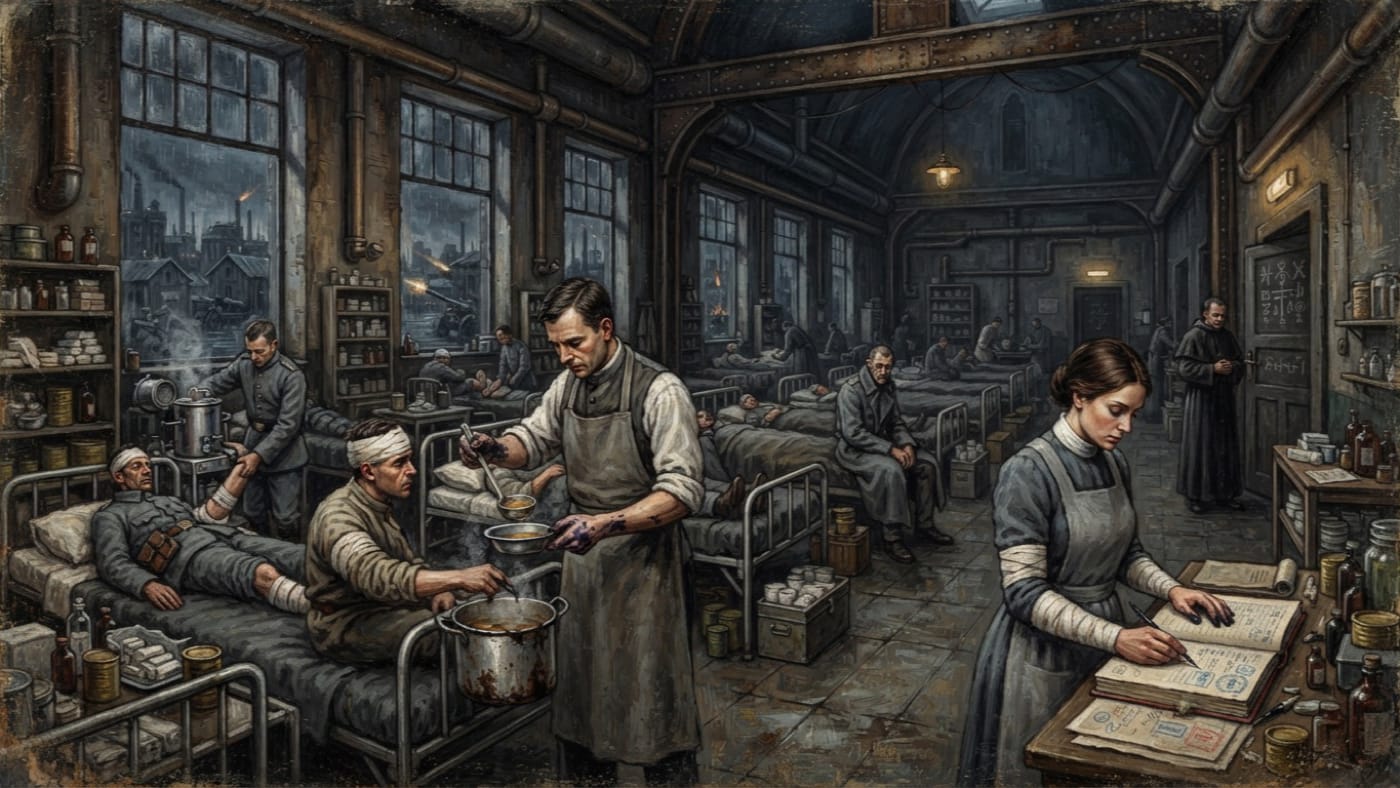
Hospital of Saint Sebastian
Where the Military City sends the wounded
Saint Sebastian tends wounded soldiers or buries them in Strasbourg's Military City. This A.S. 201 survey keeps the local record distinct from Mercy's wider machinery of care, confession and ink.
Codex Ref. II.2.10-201
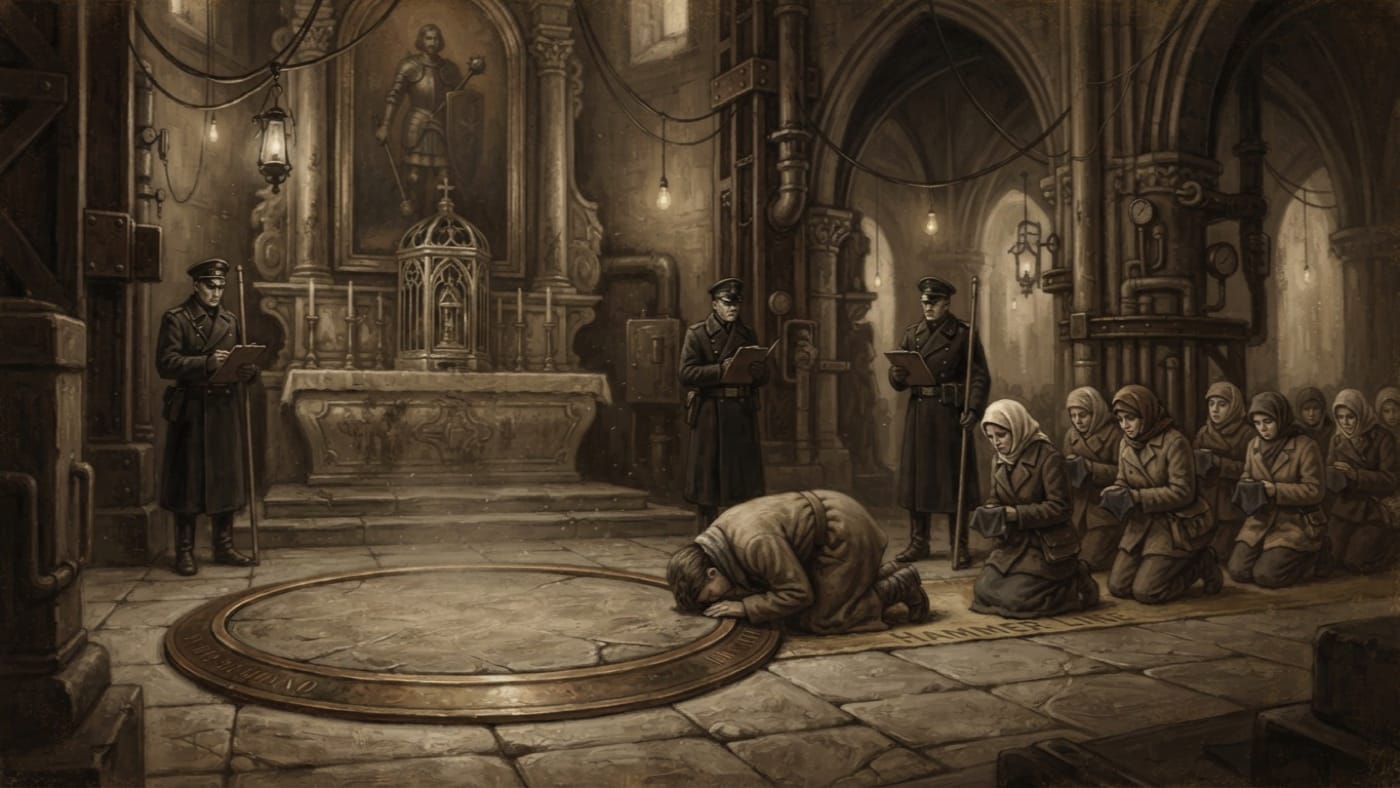
Impact Plate
Strasbourg keeps the original; Vienna keeps the knees
The Impact Plate receives pilgrims' foreheads at the end of the Via Stahlhand. Installed in A.S. 112, it supplies lawful contact while Strasbourg keeps the original stone.
Codex Ref. V.1.03-112
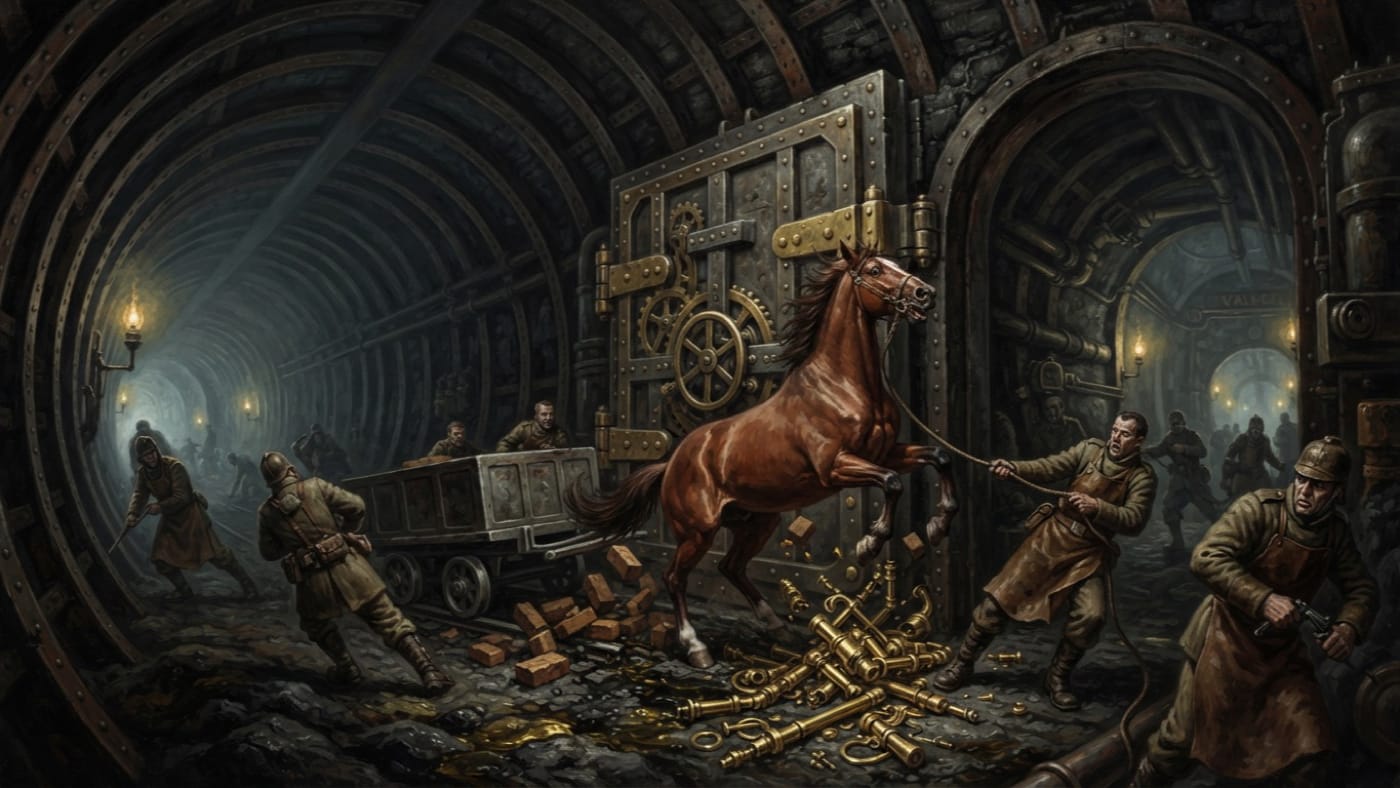
Incident of A.S. 141
The horse is gone. The prohibition remains. The brass is unaccounted for.
A spooked gelding, a pressure door, and unaccounted brass at Bastion-Irongate in A.S. 141. The particulars are missing. Horses remain forbidden in the tunnels, and the Bureau of Ordnance's account remains open.
Codex Ref. VII.4.24-141
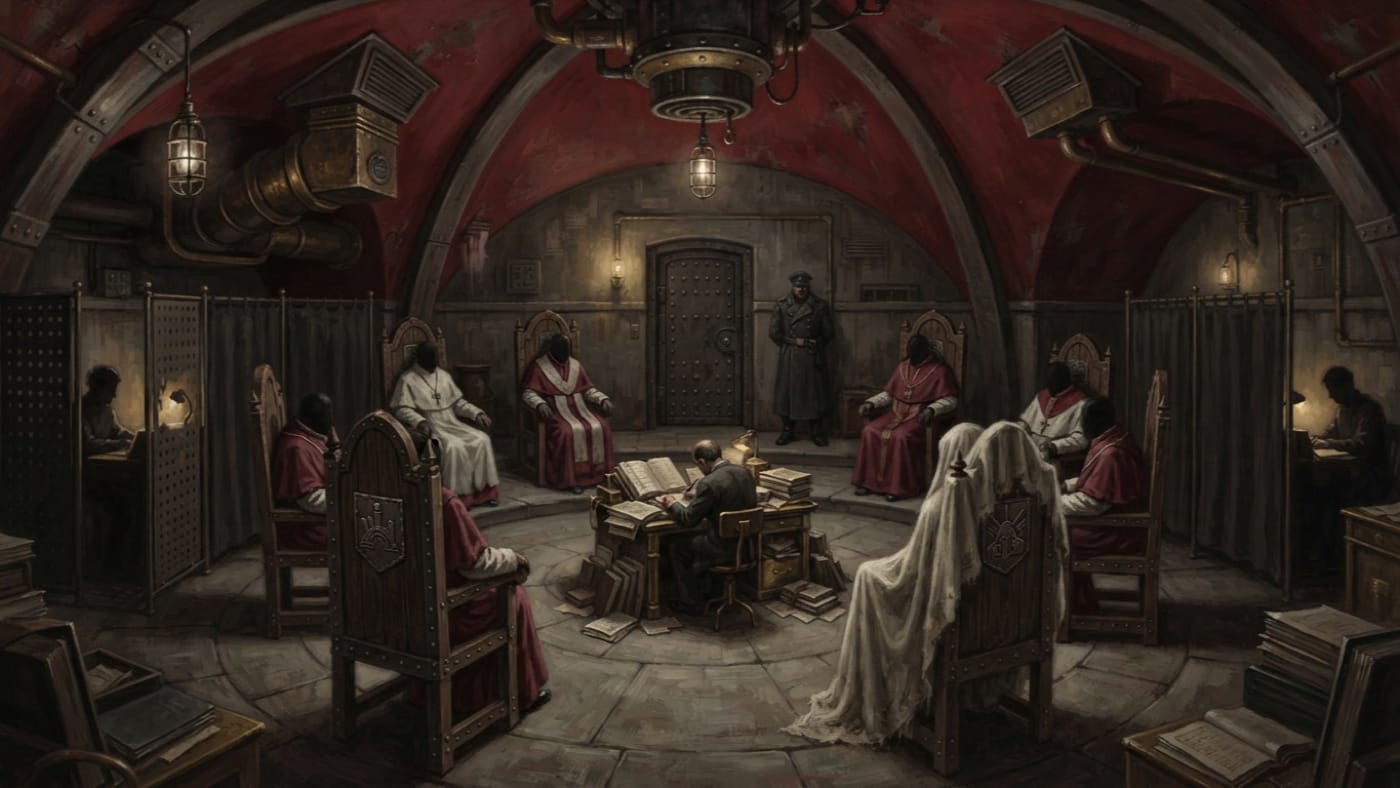
Inner Circle of Strasbourg
Six Chairs Answer. Seven Seals Decree.
Seven chairs, six occupants, no table. From the Basilica's highest floor, the Synod decrees through corrected minutes, seven stamps, and War's vote counted by faith.
Codex Ref. III.2.04-1452
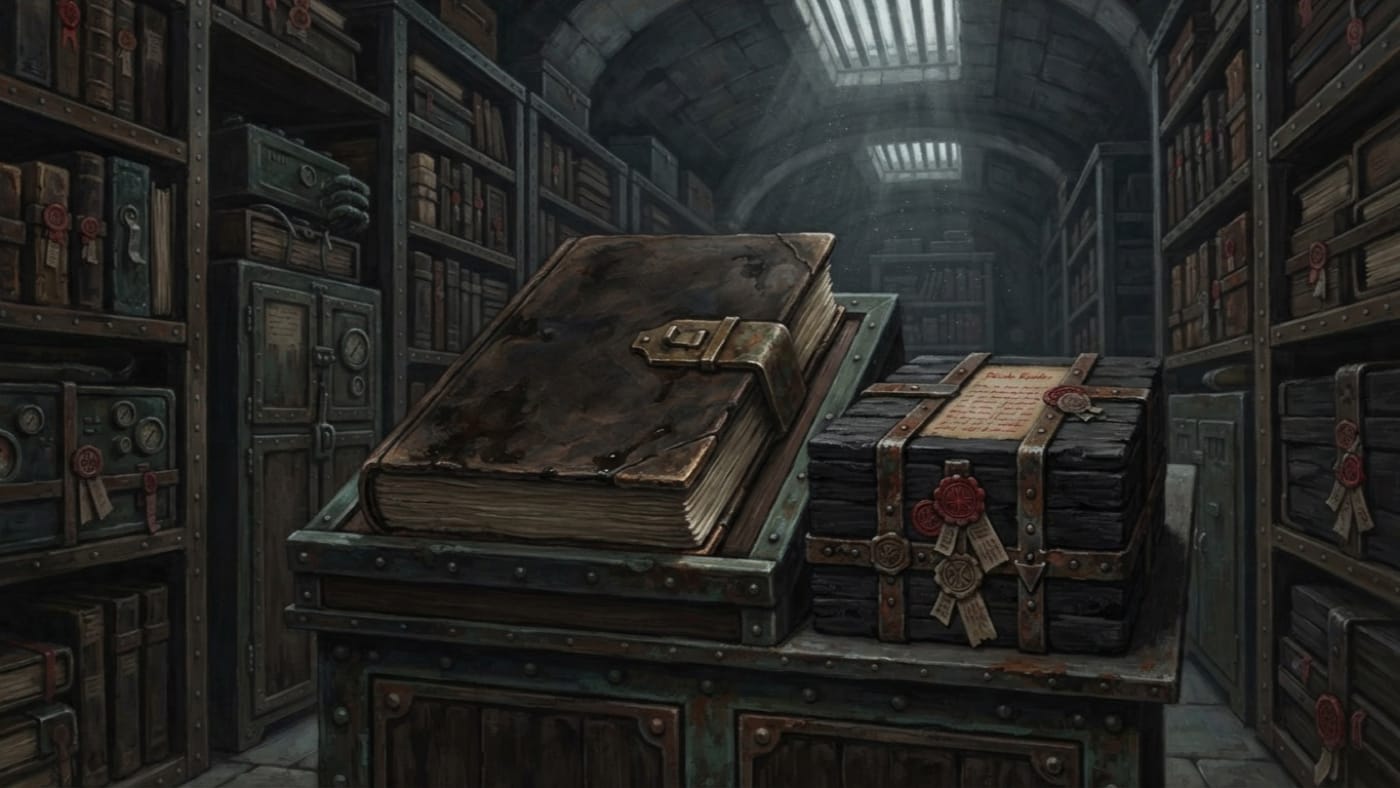
Iron Plains Survivor Volume
Thirteen witnesses bound; the fourteenth indexed in red
Thirteen survivors of the A.S. 45 Iron Plains are bound in this volume beneath Strasbourg. Kessler's testimony is held apart; Records indexes his absence in red.
Codex Ref. XIII.1.48-002
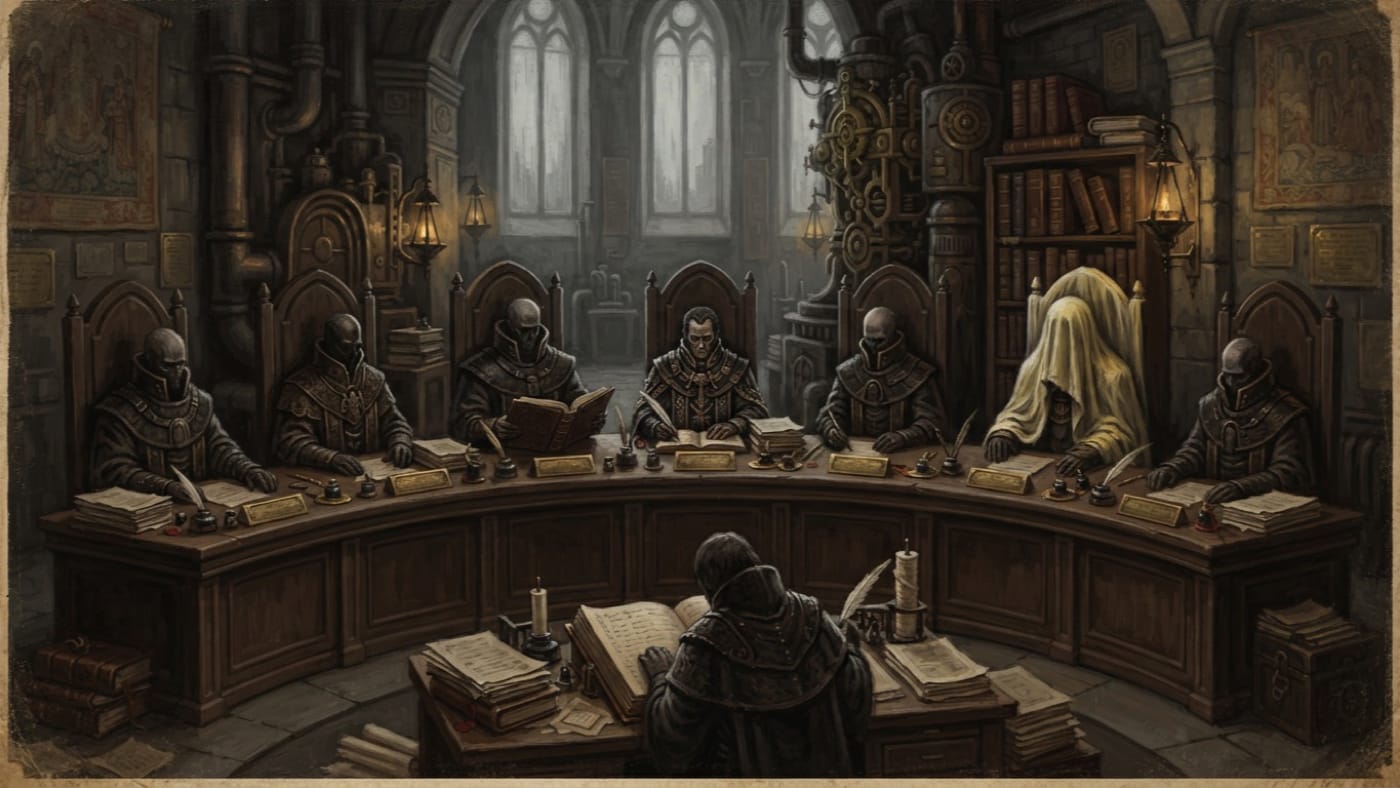
Ledger of Succession
Five Names in Print, Seven Seals in Law
Five names are printed each year for seven Seals. One seated Hierarch has only a changing file number; War's chair remains draped. The succession is continuous as printed.
Codex Ref. VI.3.02-002
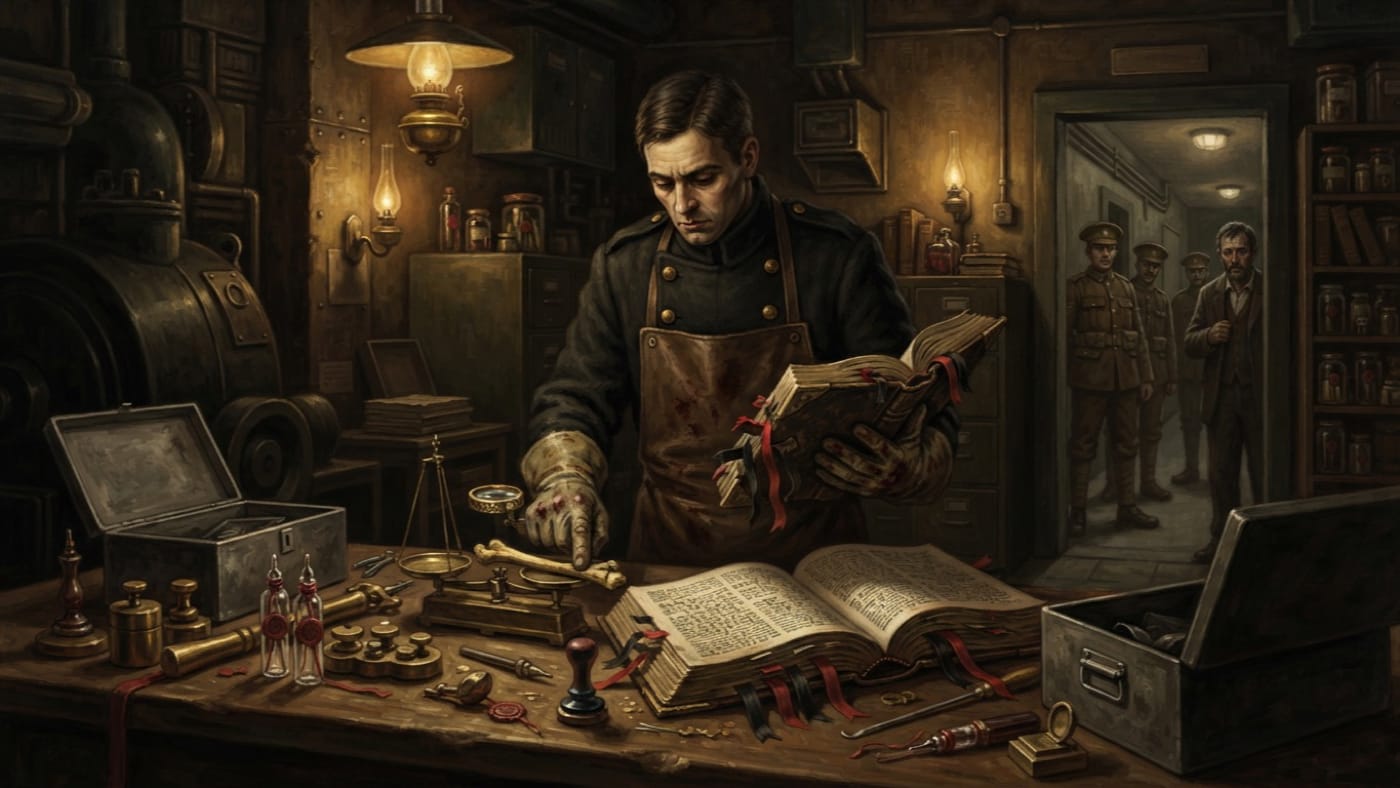
Liber Examinationis
The bone awaits a verdict. The reader incurs a strain.
The Bureau of Relics' Examiners carry the Liber Examinationis to the bench. Its cross-references constitute a Category Two Devotional Strain; the bone awaits a verdict.
Codex Ref. XIII.1.64-001
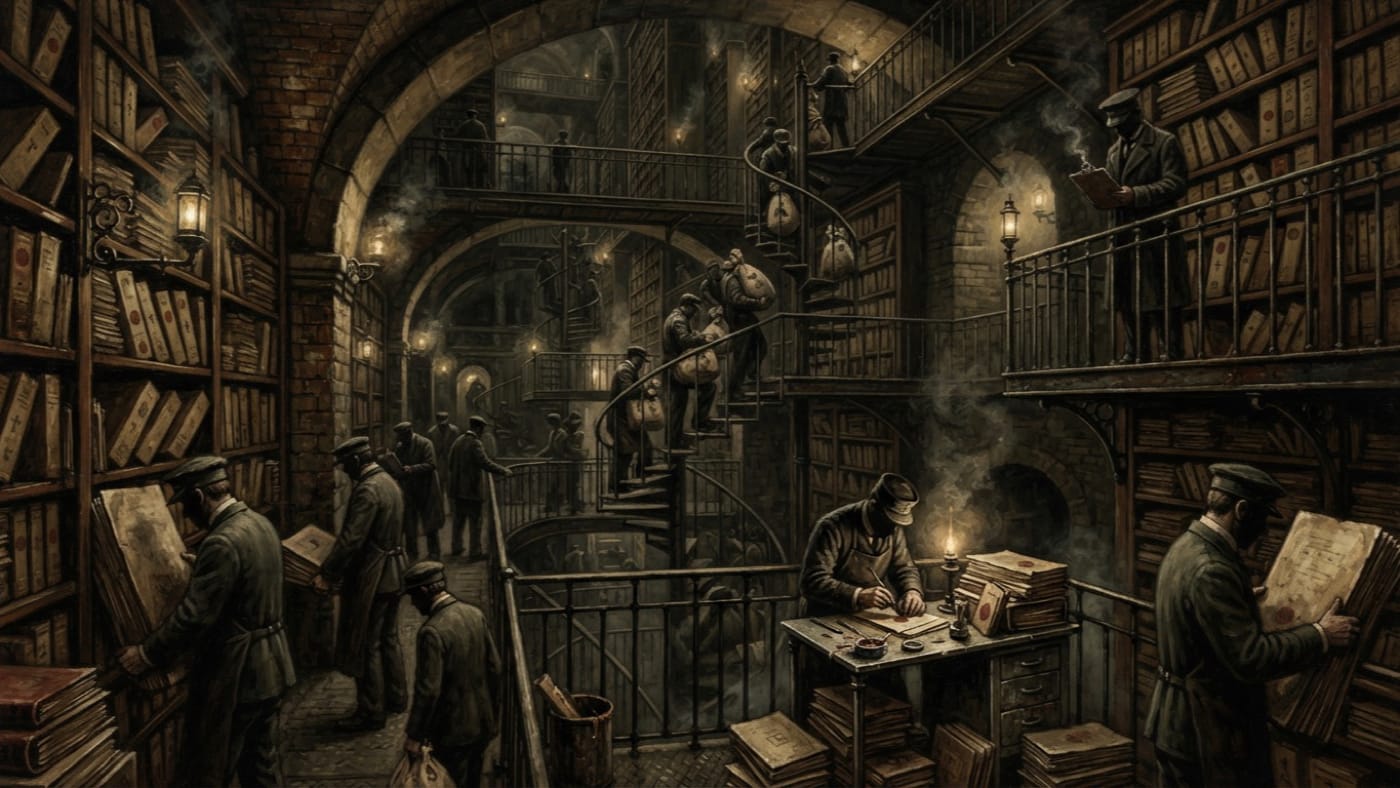
Lower Vaults
Every pardon descends; no depth is certified
Beneath Strasbourg's Basilica, Records shelves baptisms, tithes, pardons and recantations. The custody is certified; the depth is not.
Codex Ref. II.1.04-007
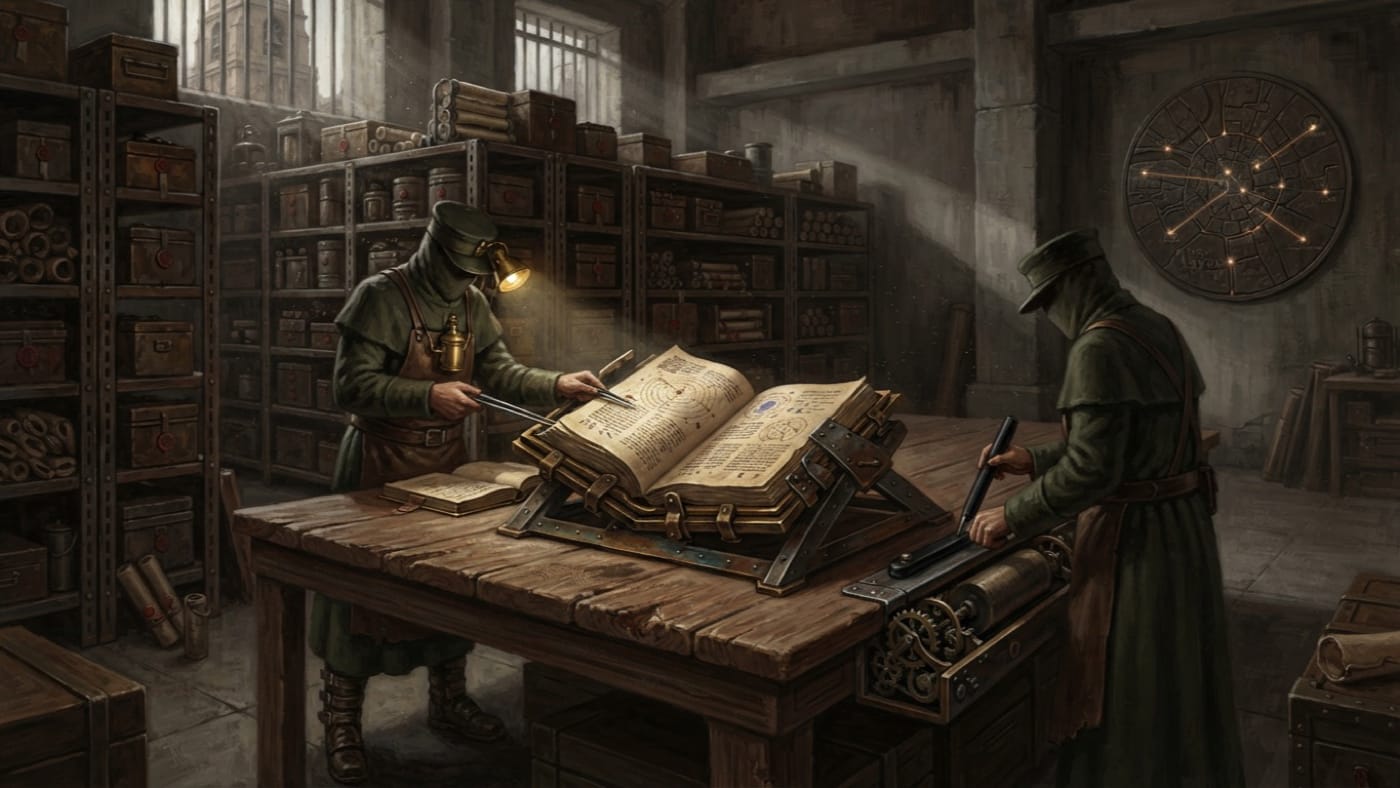
Lyon Codex
The file remains open. The leaves remain absent.
Seized incomplete in A.S. 115, Lyon's apocryphal folio allegedly maps future peals. Records denies it existed while filing it twice: apocrypha and operational.
Codex Ref. XIII.1.62-003
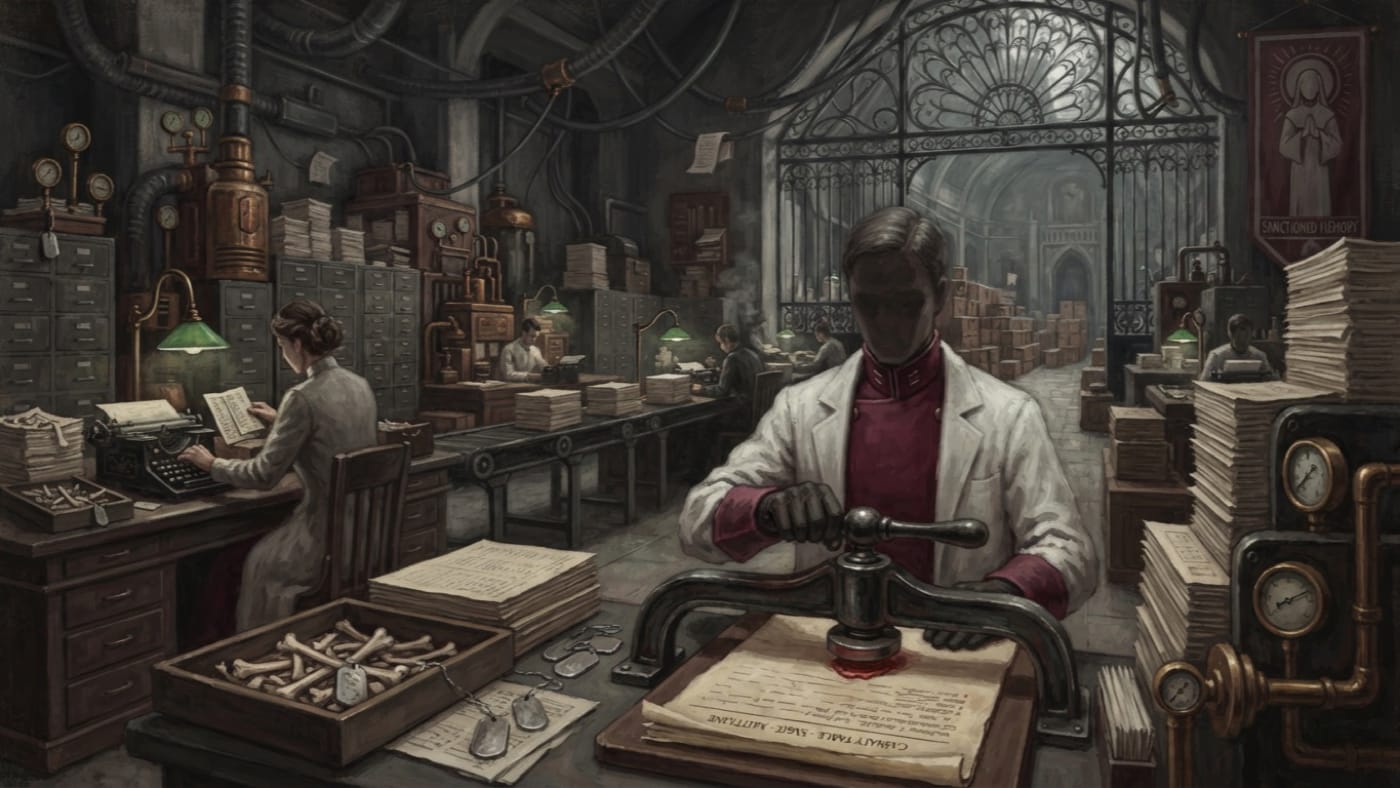
Martyrdom
The dead remain useful until their paperwork fails
The Seal of Martyrdom governs the Synod's recorded dead, sanctions their memory and commands the Bureau of Relics. War supplies names; Martyrdom decides what the parish may say.
Codex Ref. VIII.1.10-201
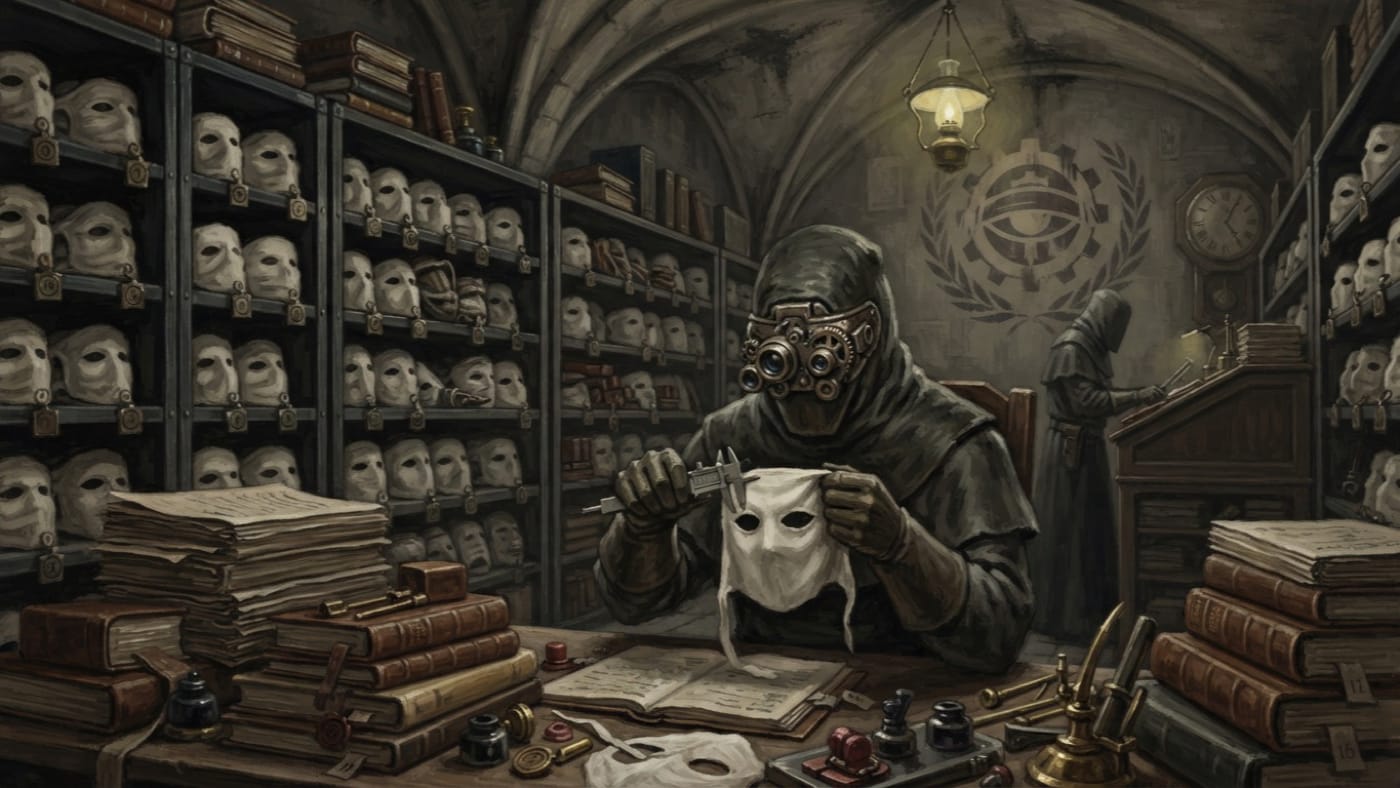
Mask License
The face may vanish. The number must remain.
The Mask License permits the Synod's faithful to conceal their faces on approved occasions, for approved durations, through eye-holes of approved width. Even anonymity must be registered.
Codex Ref. XIII.1.19-002
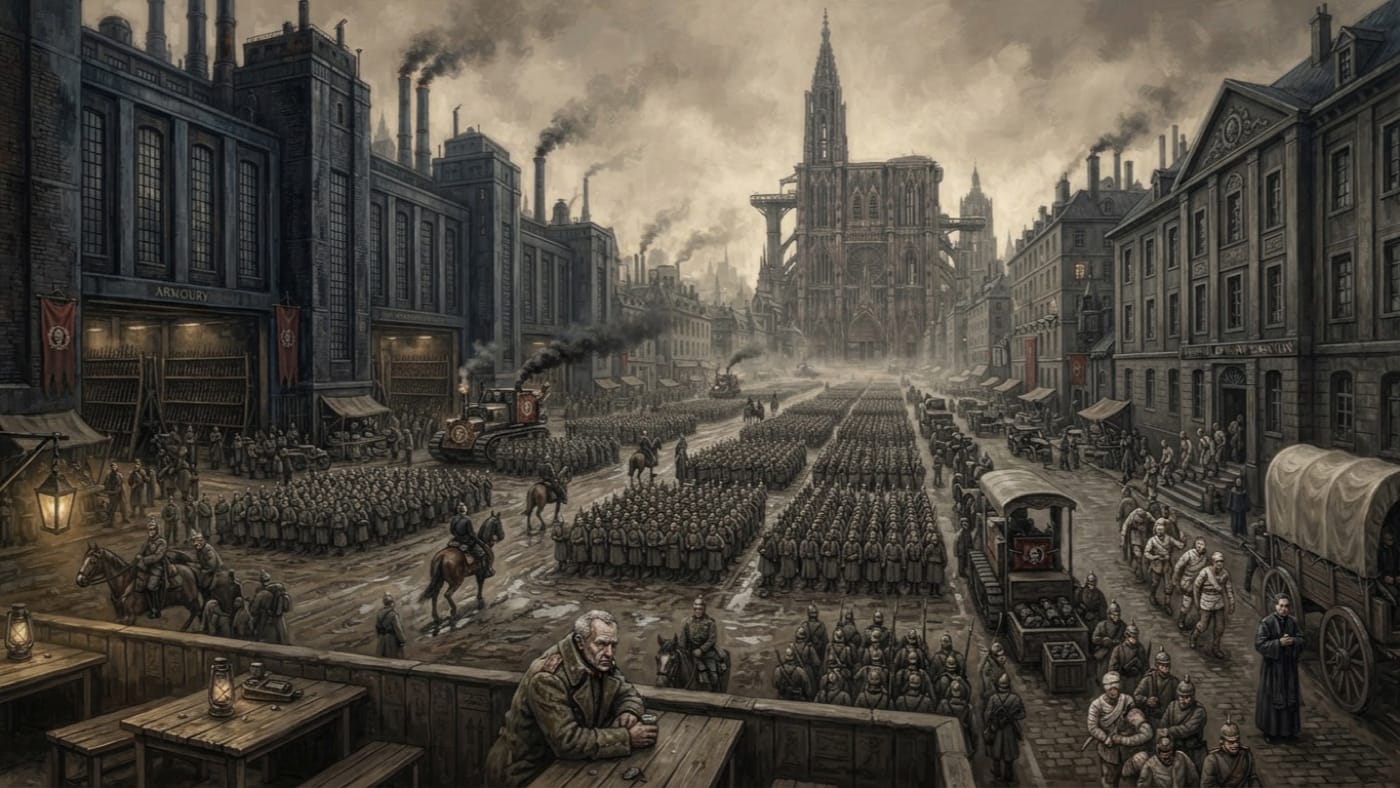
Military City
Where the Rear Keeps Its Front
Strasbourg's military district drills ten thousand, keeps arms for twenty thousand and tends the men who return. The Bureau counts capacity more readily than casualties.
Codex Ref. III.2.01-005
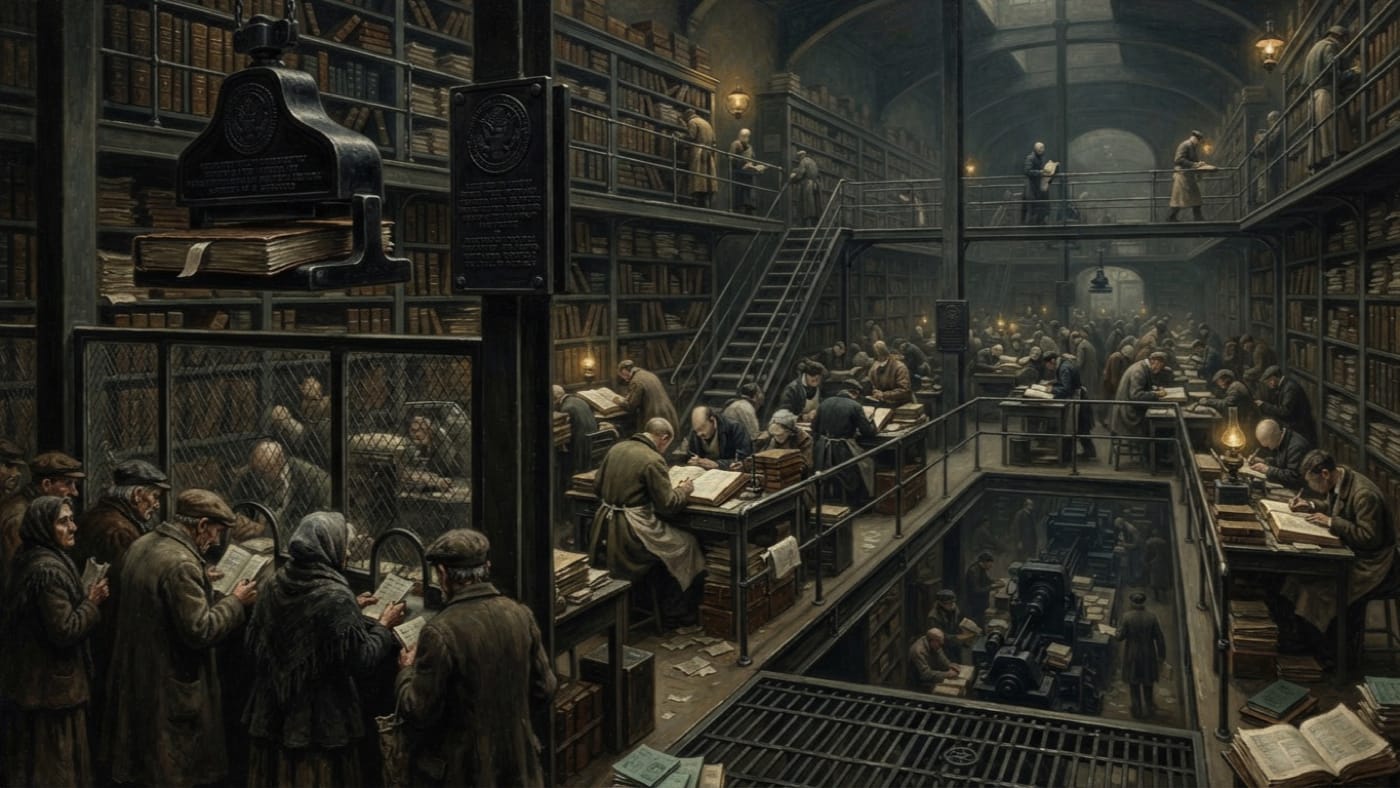
Mortuary Index
The dead receive a line. The erased receive nothing.
The Bureau of Records acknowledges the dead one name at a time. A line in the Mortuary Index records a recognised death; the erased receive none. I certify the distinction.
Codex Ref. XIII.1.98-201
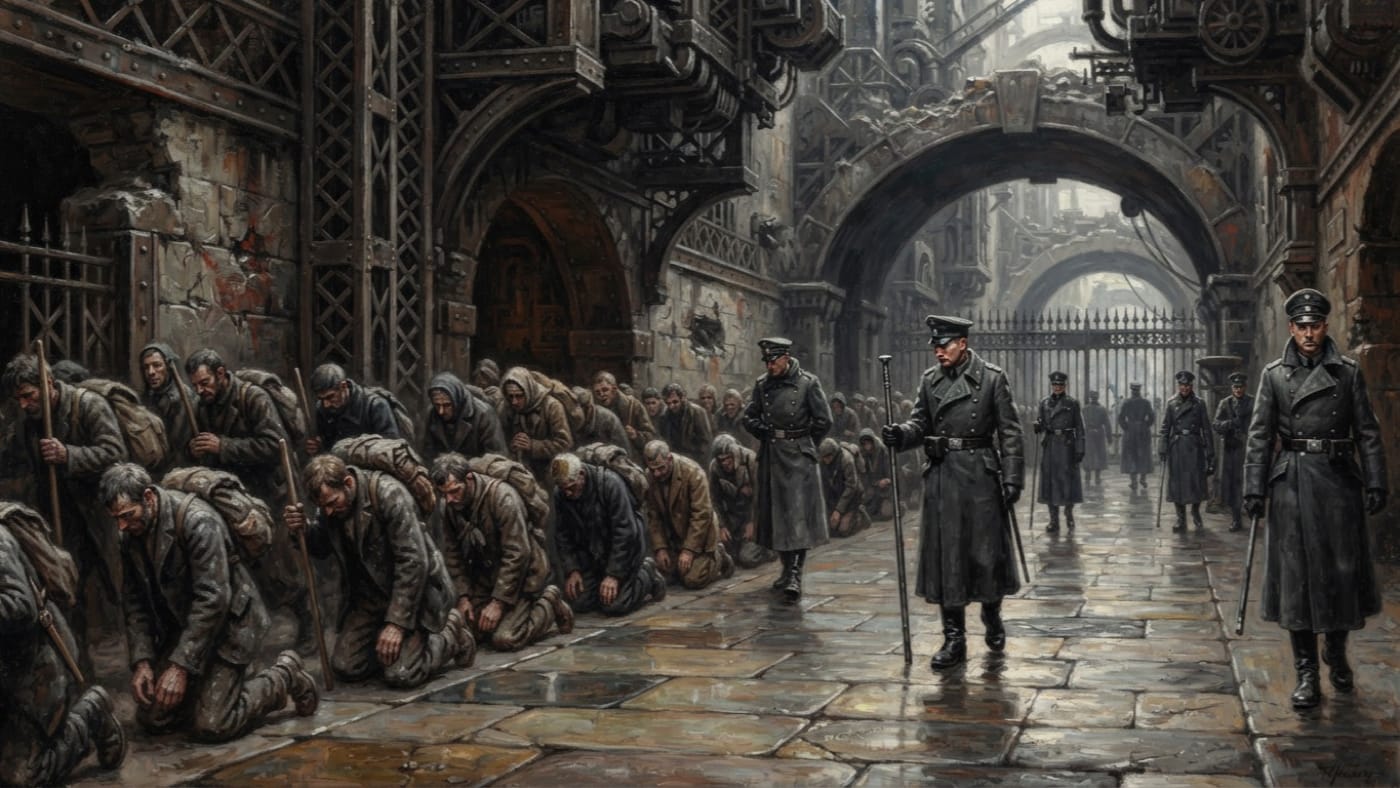
Nave Approach
The road the pilgrims finished with their knees
The Nave Approach is the smooth stretch of Vienna's Via Stahlhand between Ash Bend and the Hammer Line, polished by generations of kneeling pilgrims. The knees did the work; upright guides enjoy the result.
Codex Ref. II.4.09-013
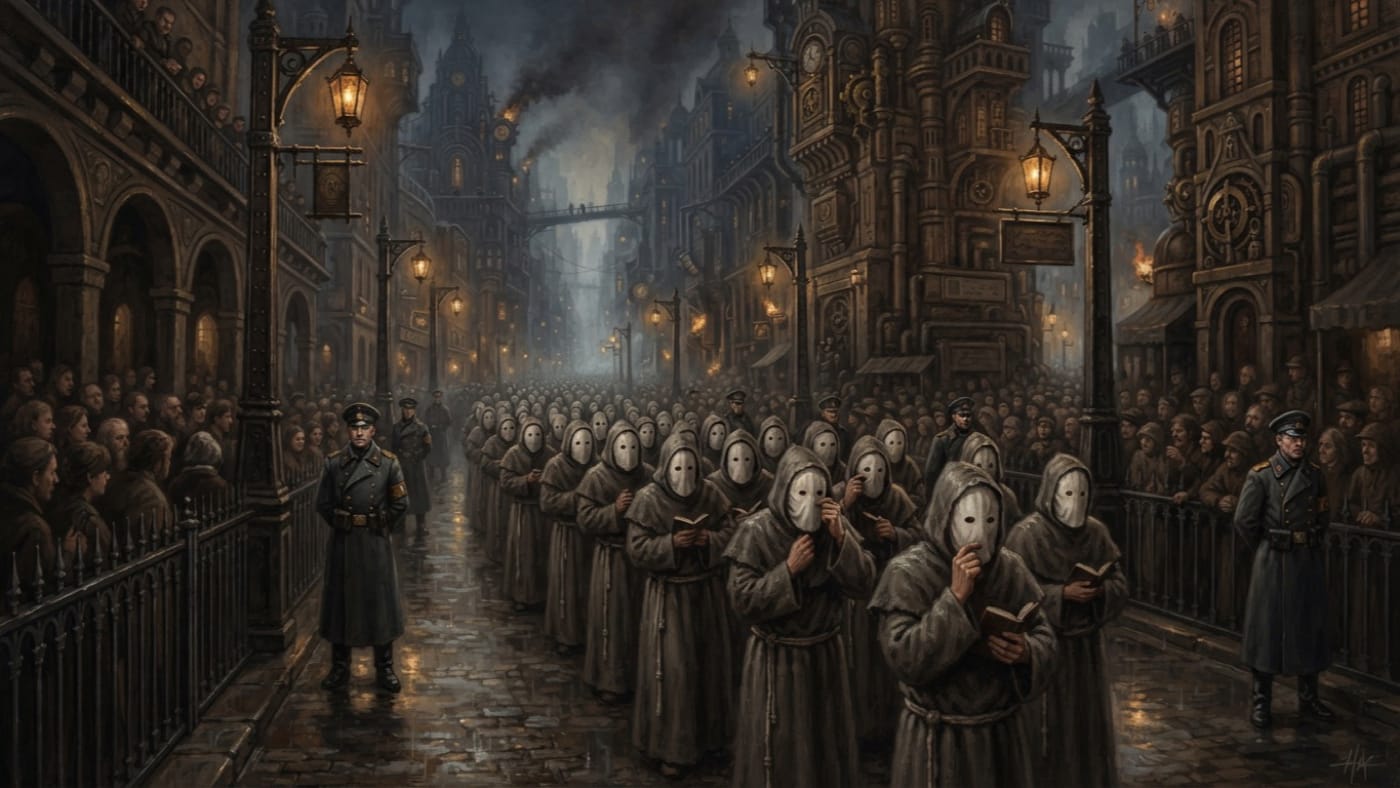
Night of Penitents
The face may be hidden. The sin stays on file.
On the Night of Penitents, the procession must go masked. Festivals orders the occasion; Masks and Seals numbers every concealed face. Shame may hide from the street. The Registry knows where to find it.
Codex Ref. XIII.1.89-1920
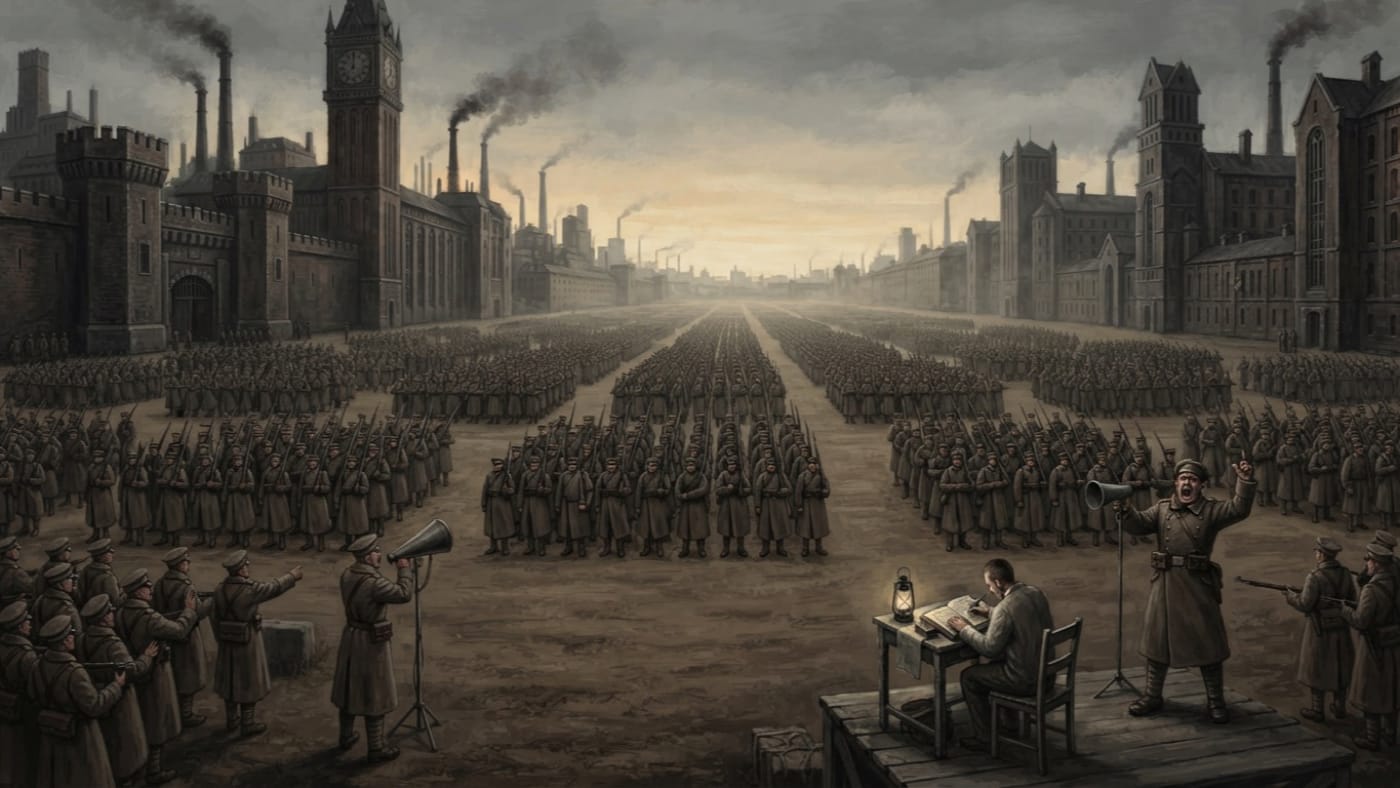
Parade Grounds
The Ground Is Counted; the Men Are Another File
Ten thousand soldiers can drill on Strasbourg's Parade Grounds at once. The Bureau of War counts the space; the levies must fill it. A capacity is easier to certify than an army.
Codex Ref. III.2.01-006
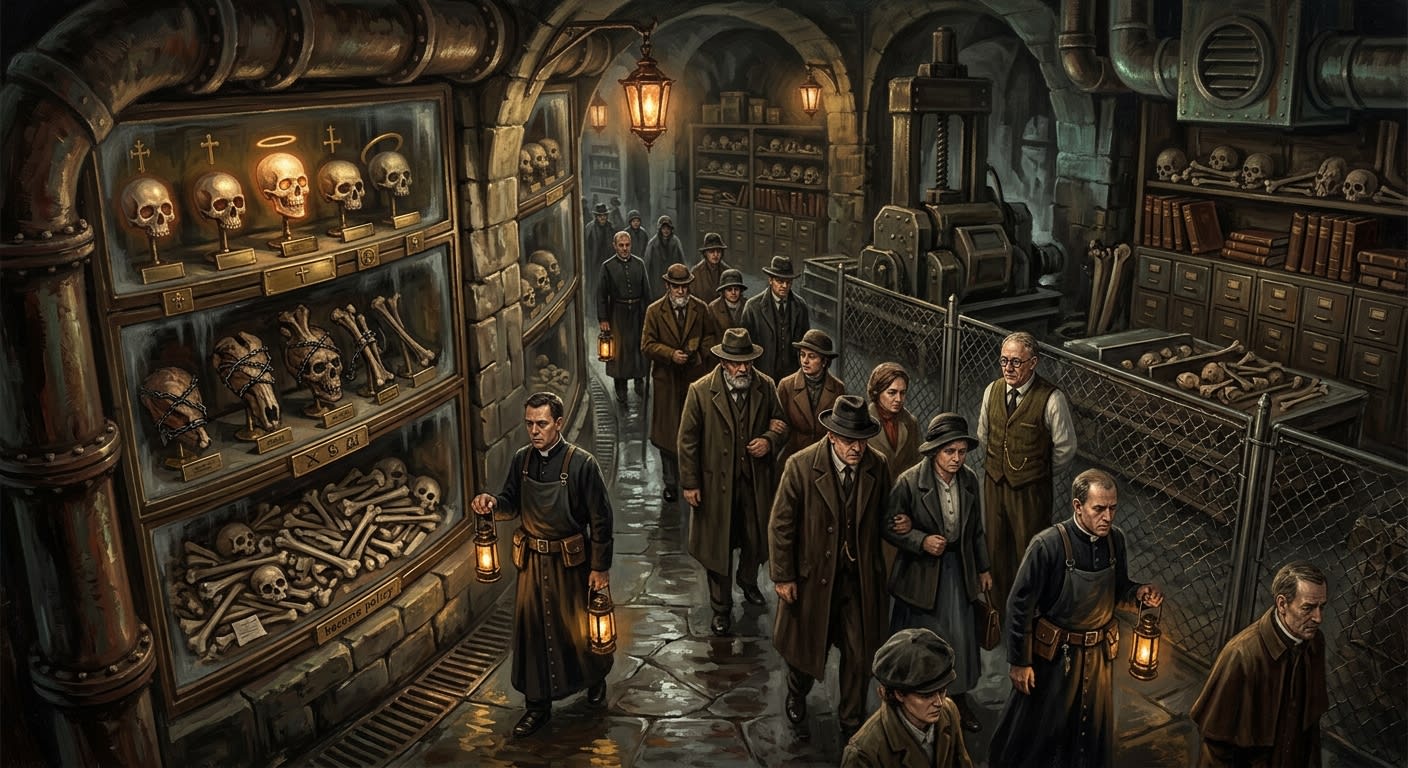
Relics Archive
The polite room before the locked stomach begins digesting saints
The Relics Archive beneath Strasbourg Cathedral teaches pilgrims which bones may be admired, which must be feared, and which have already become policy.
Codex Ref. II.2.06-005
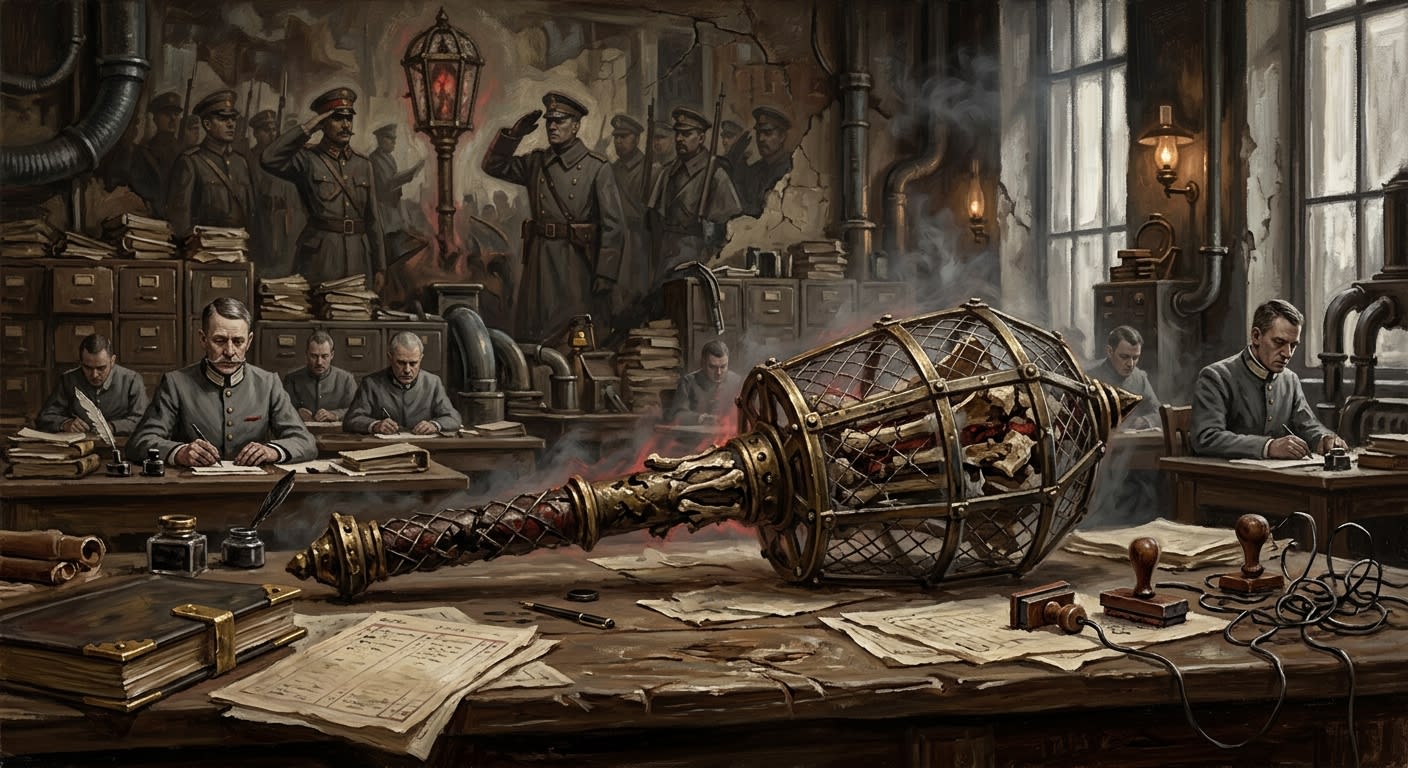
Reliquary of Saint Aldebrand
Count the bones if you must; the mace will wait for Vienna
Saint Aldebrand's reliquary mace was erased, mocked, duplicated, and finally obeyed at Vienna; the Bureau now preserves every contradiction it failed to prevent.
Codex Ref. V.1.02-095
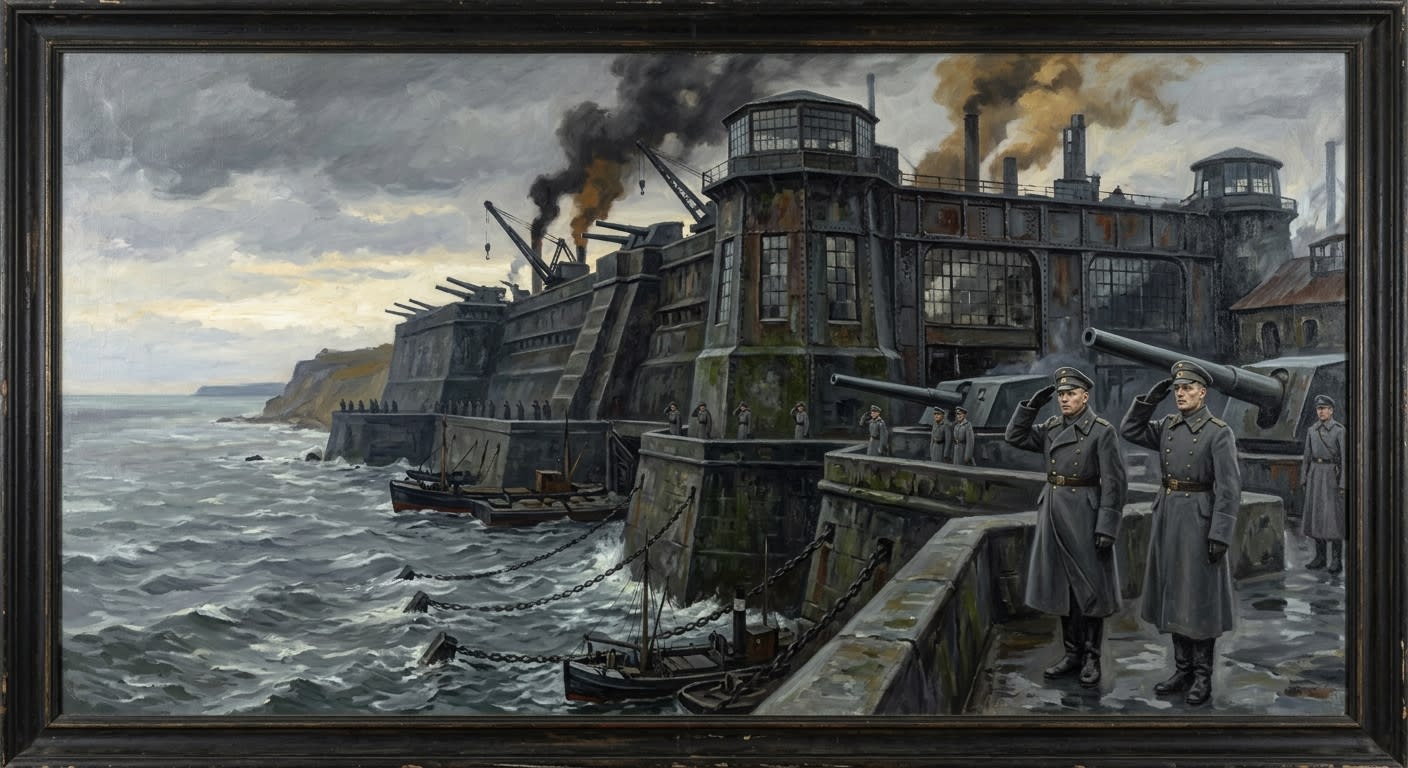
Sea Wall, Bastion-Königsberg
Where the Sagittal Line meets Baltic water and the fog outranks the wall
The Sea Wall of Bastion-Königsberg is where the Line runs into Baltic water, the Grey arrives without attacking, and sentries salute absence.
Codex Ref. II.4.07-067
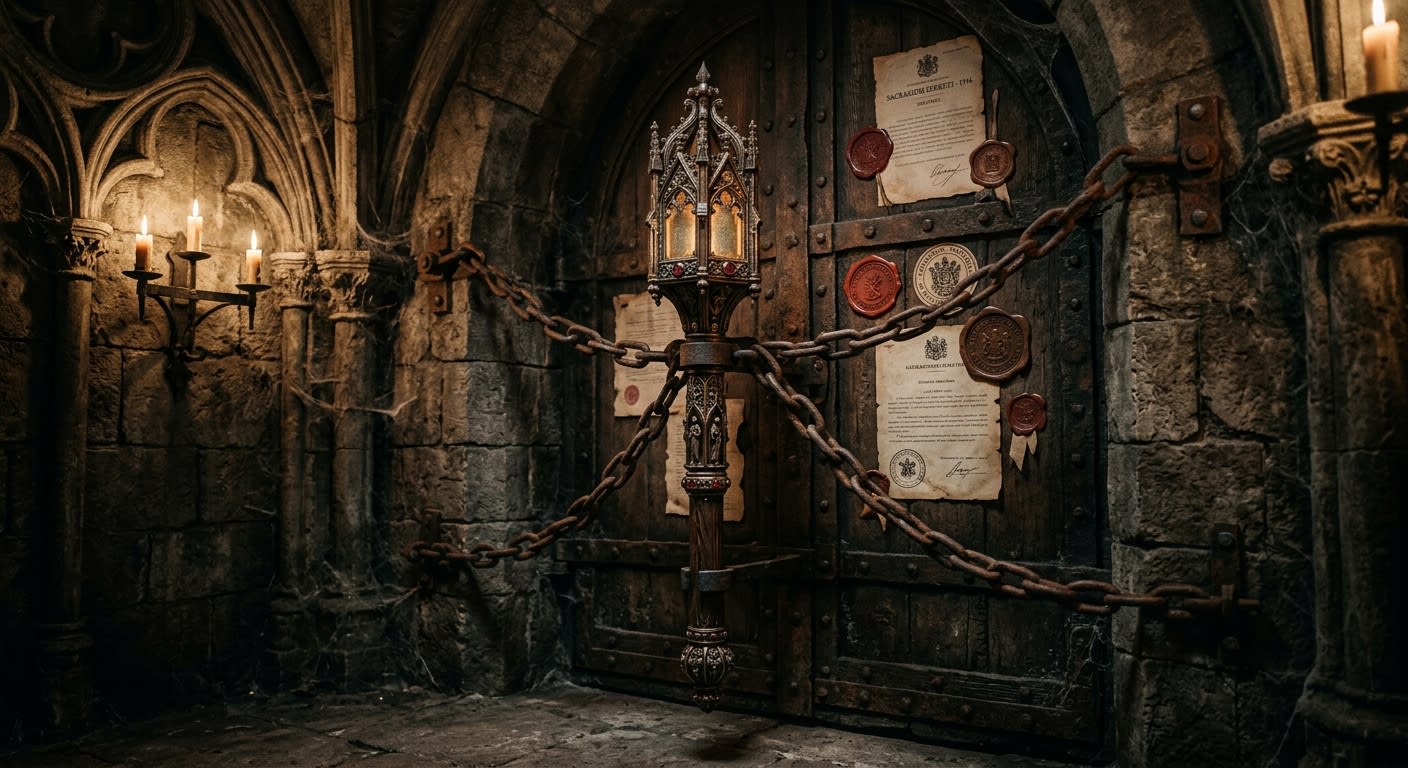
The Miracle of Saint Aldebrand
The Bureau erased the bone. The bone declined.
The Bureau declared the Reliquary of Saint Aldebrand non-existent in –32 A.S. In A.S. 95 it shattered a sorcerer-lord's skull and saved Vienna. Both facts are official, both carry seals, and the Bureau sees no difficulty.
Codex Ref. VI.4.01-001
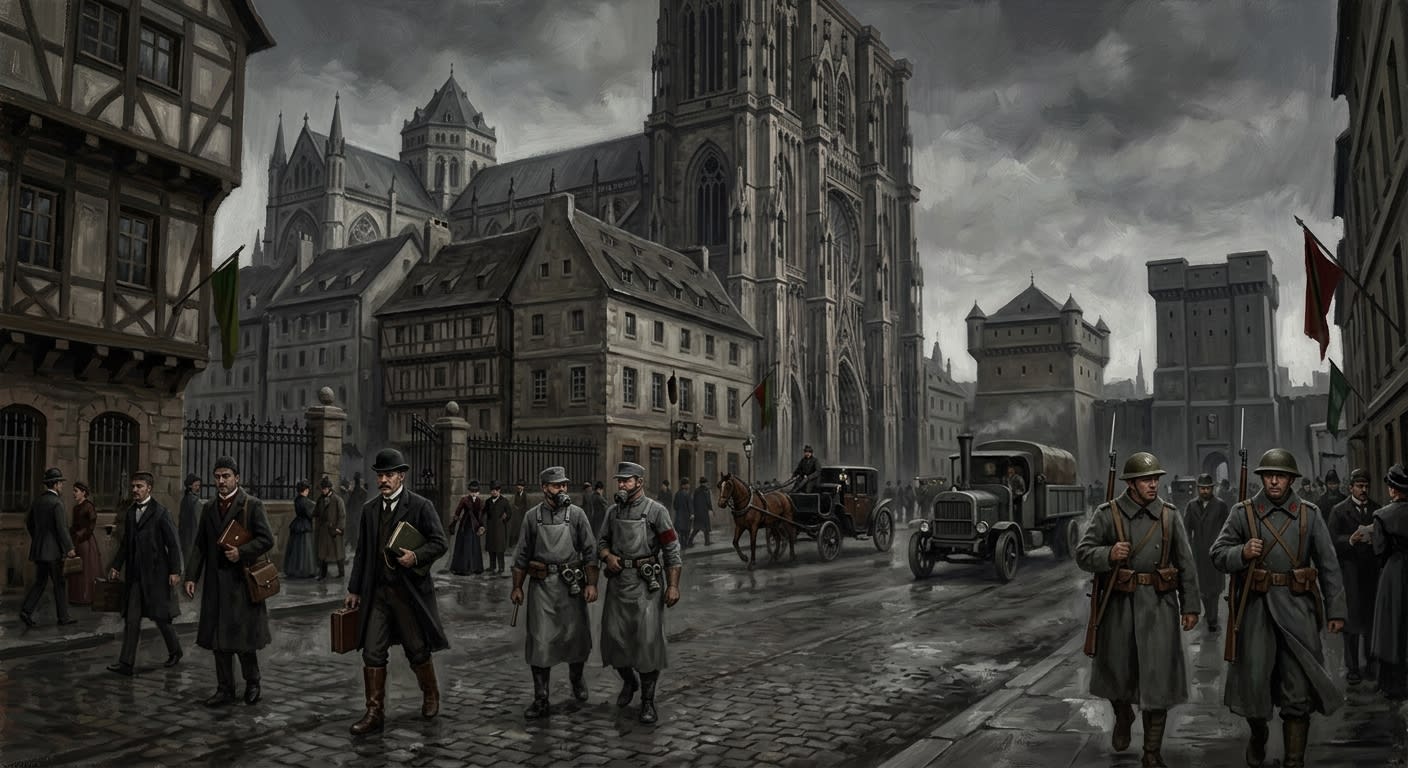
The Sanctum Mile
Strasbourg's white corridor, scrubbed clean enough to hide the blood
The Sanctum Mile is Strasbourg's white civic-sacral corridor: cathedral stone, Bureau houses, the Hall of Confessions, and the Prison of Questions in polished alignment.
Codex Ref. II.2.02-002
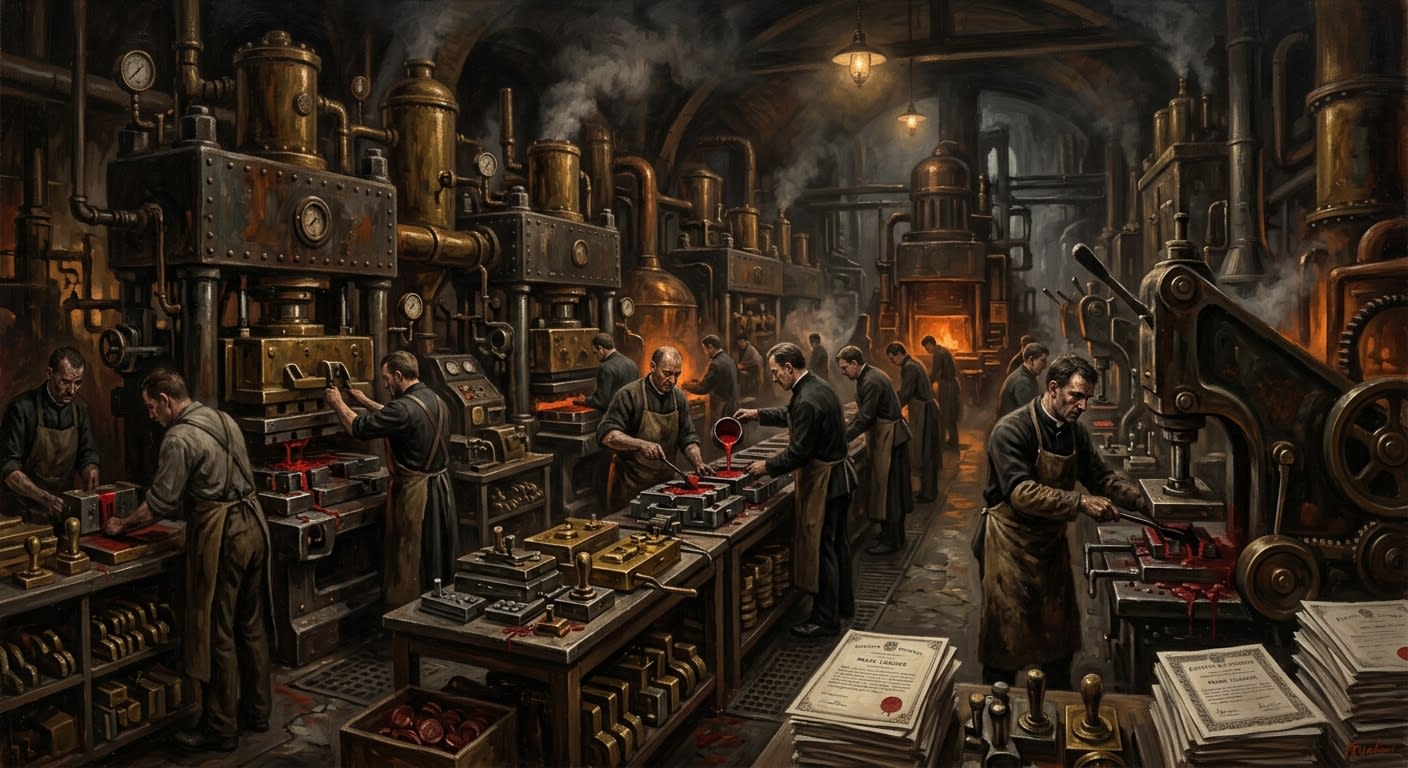
The Sigillary
Where warm wax teaches paper to bite
The Sigillary beneath Strasbourg Cathedral manufactures authority in wax, die, counter-seal, mask licence, and the old lesson that paper bites only when stamped.
Codex Ref. II.1.04-006
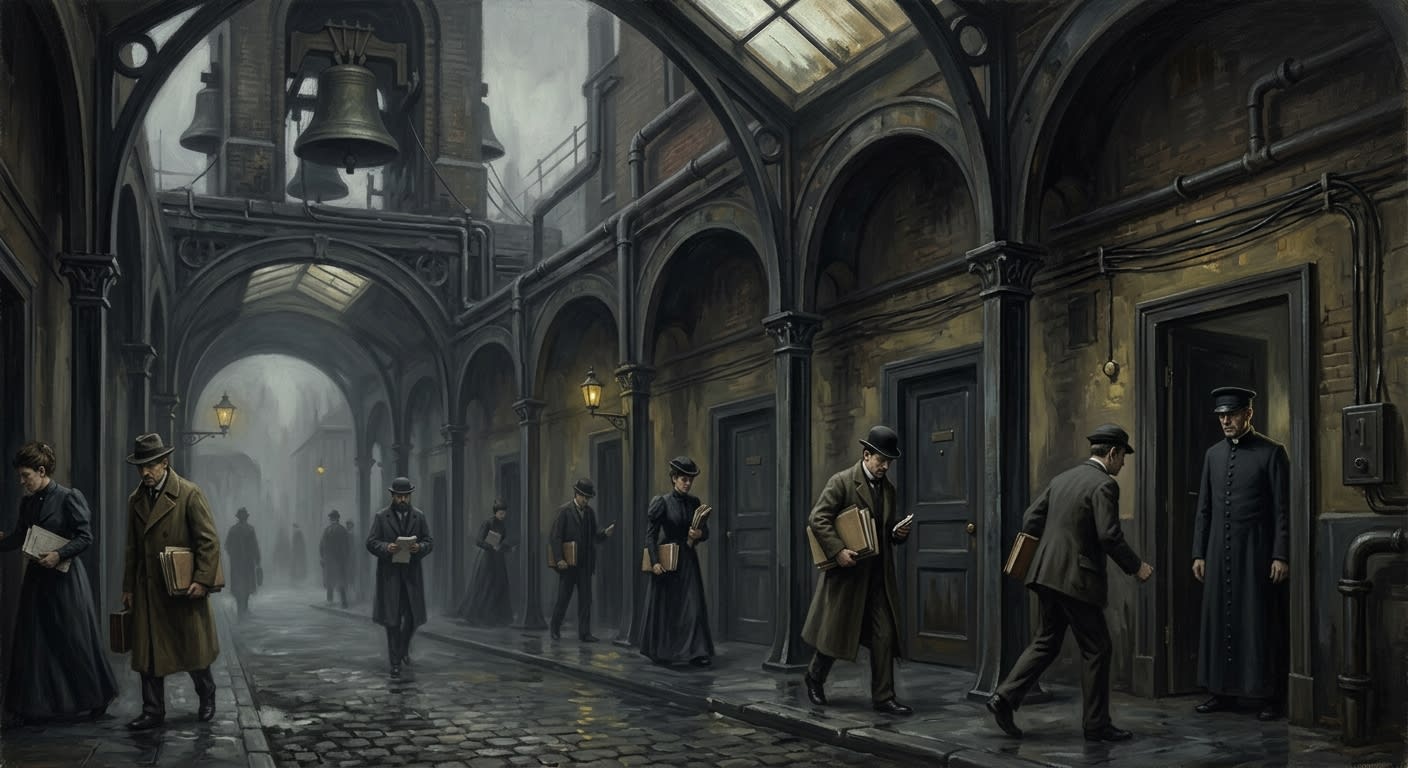
The Silent Colonnade
The fourth side of the [[cloister-precinct|Cloister]], where counting forgets its manners
The Silent Colonnade is Strasbourg's unnumbered northern arcade, a place of unmarked doors, shortened Wednesdays, swallowed bells, and corrections no Bureau admits.
Codex Ref. II.1.04-003
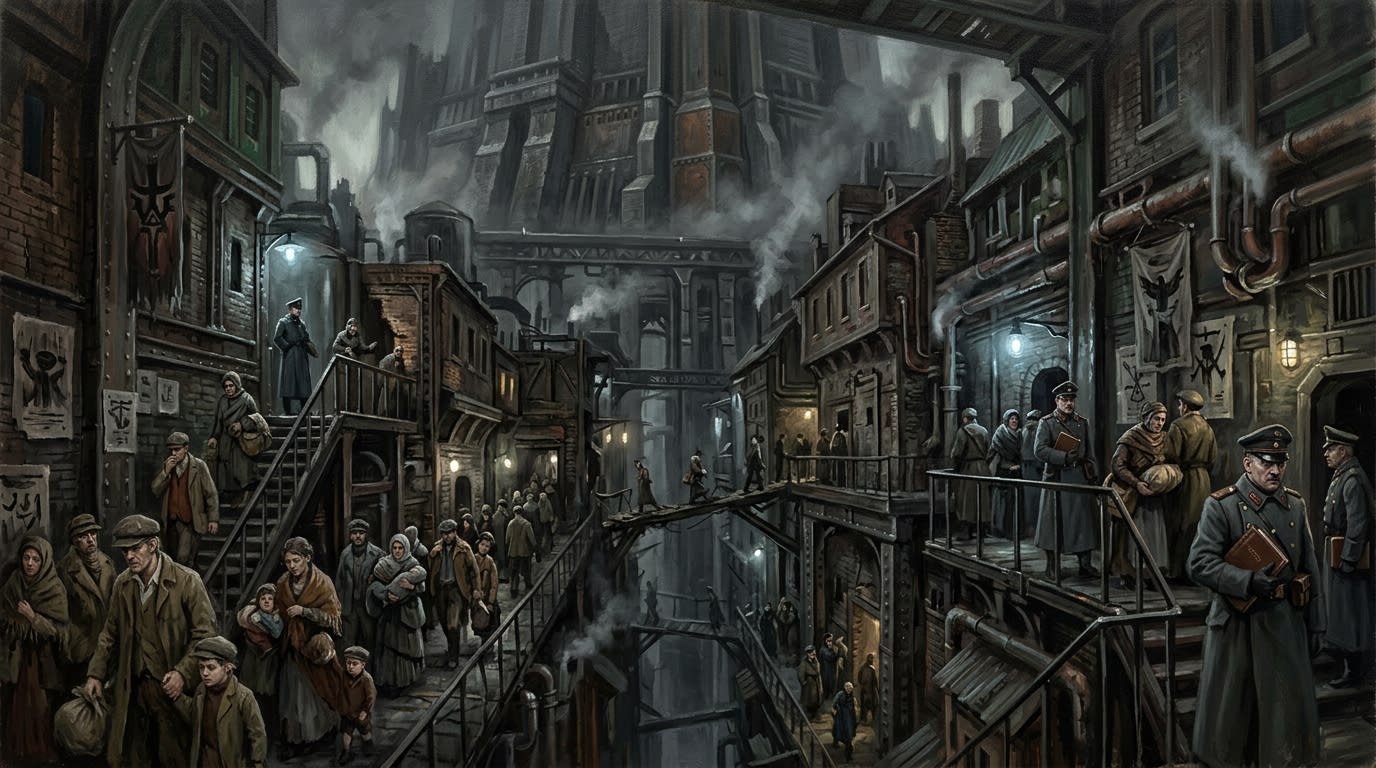
The Warrens of Königsberg
Laughter under the northern guns
The Warrens of Königsberg are the civilian quarter the fortress needs, mocks, watches, and refuses to admit it cannot spare.
Codex Ref. II.4.07-067
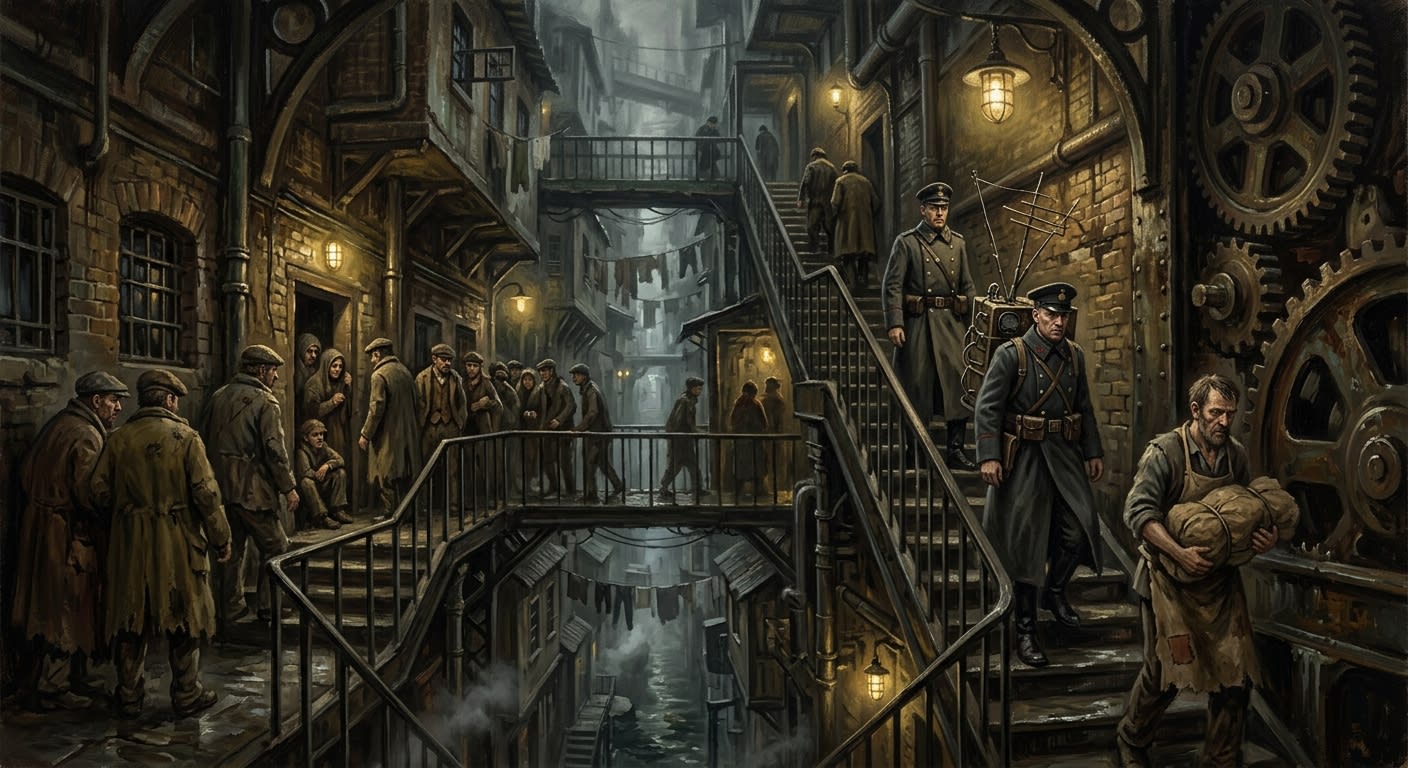
Warrens of Strasbourg
The capital's conscience, filed under mildew
Strasbourg hides its poor where bells arrive broken, maps grow bashful, and charity, crime, and surveillance share the same wet staircase.
Codex Ref. II.2.06-201
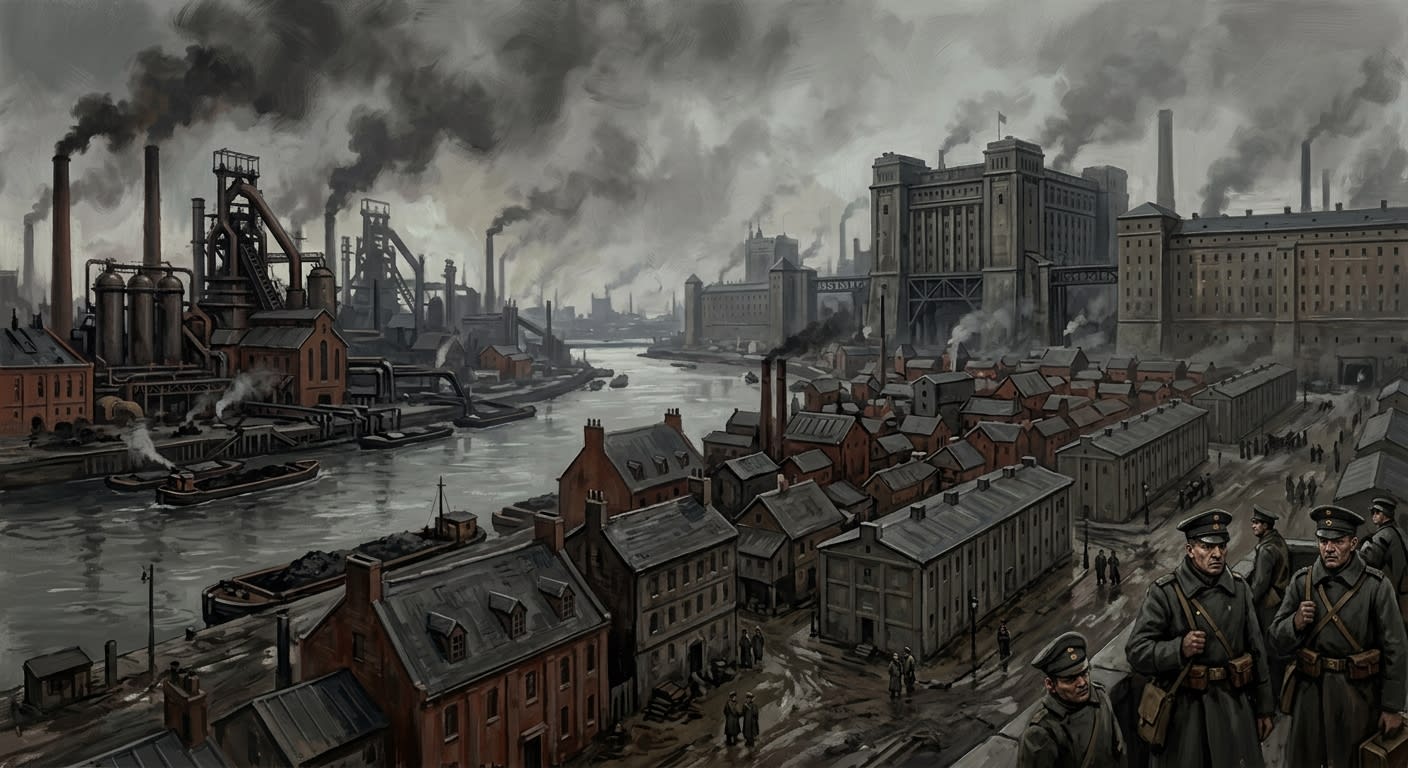
Zone 2
The throat where empire learns to speak in smoke
Zone 2 is the Synod's central throat: Strasbourg's field of authority, Rhine wealth, furnace obedience, catechism-barracks, and useful smoke.
Codex Ref. II.0.04-201