
#On Their Place Among the Pale Kin
The Blood-Kin Purists are the most conservative wing of a heresy that has no safe wing, which is the sort of sentence that makes Bureau clerks sharpen pens and reach for larger margins.
They belong to the Pale Kin network, that persistent maternal arithmetic by which children are removed from the Great Ledger of Souls before the Synod can count them into rations, tithe, labour, orphanage, and war. Among the runners, carriers, wet-nurses, forgers, and frightened mothers, the Purists hold a hard doctrine: a child may be hidden, moved, renamed, starved, frozen, smuggled through a culvert with soot in its hair and diesel at its mouth, but it must go to blood.
Aunt, cousin, grandmother, elder sibling, uncle if no one better can be found and the uncle has no debts. Blood first. Blood last. Blood or nothing.
The Blood-Kin Purist does not call herself a factionalist. She calls herself faithful to the first household. The Ward-Builder calls this sentimental fatalism. The Ash Registrar calls it inefficient attachment. The Bureau of Purity calls all three by the same category and applies the same irons, which is one of the few ecumenical achievements still functioning in Europe.
#On the Doctrine of Blood
Their doctrine begins with a wound and mistakes the scar for scripture.
The Nursery Levy Decrees of A.S. 152 taught mothers that the state wanted sons at fourteen and the cradle measured while the cord-blood was still warm. Within two years, after Mother Sava of the Ash Steps burned her parish registry in A.S. 154 and the Ash Eleven vanished into false stillbirths, the Pale Kin had begun to divide over placement. Some said Sava proved a child could survive among strangers. Others looked at the same absence and saw the opposite: if the child left blood, the child was already half-lost.
The Blood-Kin Purists formed in that half-loss.
To them, the Synod’s theft reaches deeper than conscription. It is severance. The stamp steals the child from the family by converting son into asset, daughter into yield, cousin into future category. The Purist answer is to preserve family beneath illegality. A child hidden with a stranger may live, but a child hidden with an aunt remains answerable to the dead, the kitchen, the old songs, the grudges, the bad teeth, the inherited gestures by which a grandmother recognises her sister’s mouth in a boy no register admits.
A Bureau of Conscription primer states that Blood-Kin Purists “lack ideology beyond primitive clan feeling.”
Corrected: they possess ideology in abundance. It is old, stubborn, badly filed, and inconvenient to quantify. The primer’s author confused illegibility with absence, a common bureaucratic sin second only to competence without shame.
Their motto, where they dare write it, is simple: No child without a face at table. It appears scratched beneath washhouse benches, stitched into swaddling cloth hems, whispered after a birth when the registrar’s boots sound on the stair. The phrase means the child must be known by someone who knew the mother’s mother. It means rescue without remembrance is another orphaning. It means a false name is tolerable when a true name survives in a kitchen.
#On Their Method
Blood-Kin operations look amateur to outsiders because outsiders are fools.
They prefer short routes: ward to cousin, tenement to laundry aunt, parish cellar to grandmother’s village, city room to older sister already married under a different spelling. They avoid long chains. They distrust professional Cradle Brokers who can place an infant three provinces away by dawn and never learn whether the child lived past winter. The Purist believes distance is a solvent. A child moved too far loses speech, accent, saints’ days, food habits, warning stories, and the small domestic catechism by which a family remains itself under pressure.
This method saves children and endangers them with equal devotion. A short route is easier to hold in memory. A short route is easier for Purity to reconstruct. Blood repeats surnames, faces, trade marks, feasts, funeral attendance, scar shapes, and the old disastrous habit of visiting when grief outruns caution. A Ward-Builder can bury a child in a network of strangers. A Blood-Kin Purist buries the child in family, and family leaves footprints all over the floor.
The Purists compensate with ritual misdirection. They teach mothers to mourn loudly for stillborn infants. They stage false quarrels between sisters so a later transfer looks socially impossible. They send a grandmother to curse the midwife in public, because a cursed midwife is less likely to be suspected of cooperation. They borrow dead cousins’ names, reuse baptism cords from buried infants, and train children to answer to two names: the house-name and the door-name. The door-name is for clerks. The house-name is for soup.
#On Their Quarrel with the Ward-Builders
The quarrel with the Ward-Builders is bitter because both sides are trying to keep children alive, and nothing corrodes charity like shared purpose under different arithmetic.
Ward-Builders place children with trusted strangers. They build loyalty through shared crime rather than shared blood. Their networks cross wards, cities, occupational guilds, sympathetic monasteries, and the back rooms of institutions whose official sanctity has acquired several unofficial doors. They say a child in a stranger’s house is harder for Purity to trace. They are correct.
Blood-Kin Purists answer that a child in a stranger’s house may become a stranger. They are also correct.
The fights are ugly. The Purist accuses the Ward-Builder of making useful ghosts: children alive on paper nowhere, safe by luck, loved by grace, but cut from the remembered line that made them more than cargo. The Ward-Builder accuses the Purist of feeding children back into audit radius because Aunt Marta insisted on seeing the baby during feast week and Cousin Jan drank enough to mention a nephew whose mother had officially buried him.
PURITY INTERROGATION EXTRACT — CELL 4, A.S. 186 Subject: Blood-Kin carrier, name withheld. Question: “Why refuse the stranger placement?” Answer: “Because a child should know whose hands he has.” Question repeated after correction. Answer unchanged. Disposition: ███████████████. Addendum: interrogator requested transfer from nursery cases seven days later.
The Bureau exploits this quarrel with real appetite. False runners offer blood placements to draw Purists out. Fabricated letters arrive from cousins who died years earlier. Parish clerks leak hints of an aunt under suspicion and watch who comes to warn her. Nothing attracts a Blood-Kin Purist faster than kin in danger. Mercy has used the same principle for hostage recovery, which tells the reader everything necessary about Mercy.
Purity training placards describe the Blood-Kin Purist as “predictable through maternal sentiment.”
Revised: predictable through obligation. Sentiment weeps. Obligation walks through checkpoints with a feverish infant under a cabbage sack because the dead will otherwise have no living mouth to speak them.
#On Men, Names, and Household Law
The Blood-Kin Purists are described as women’s networks, and mostly they are. Midwives, aunts, washerwomen, wet-nurses, older sisters, widows with rooms too small for another child and hearts too badly disciplined to refuse one. Men enter as risks, tools, guards, porters, decoys, or grief-struck fathers whose usefulness varies with their ability to shut up.
The Purists’ household law does not flatter fathers. A father under levy pressure may bargain. A father under debt may sell a route. A father under interrogation may break while believing he is being brave. This is field arithmetic, not a doctrinal claim against manhood.
A few male kin are trusted: bell-repair uncles who can open tower crawlspaces, carters whose cousins sit on three parish councils, old grandfathers so deaf Purity mistakes them for harmless furniture. The safest man is the one already dismissed by official eyes. Women have known this for centuries; the Bureau learned it during audits and congratulated itself.
Names are the Purists’ sacrament. They keep name-chains orally, often through recipes. “Sava’s pepper measure” means one branch. “Elen’s bitter tea” means another. A child may carry a door-name written on a false slip, a chapel-name for emergencies, and the blood-name never spoken above a whisper. The blood-name is given by kin, repeated at first tooth, first fever, first stolen winter coat, first lesson in lying to a clerk.
This is why Administrative Dissolution fails unevenly among them. A dissolved parent may vanish from central record and polite memory, but a Blood-Kin kitchen retains the name in measures, curses, lullabies, and who is forbidden to marry whom because of a grandfather no folio admits. The Bureau hates such mnemonic vulgarity. Naturally. It cannot stamp soup.
#On the Bureau’s Countermeasures
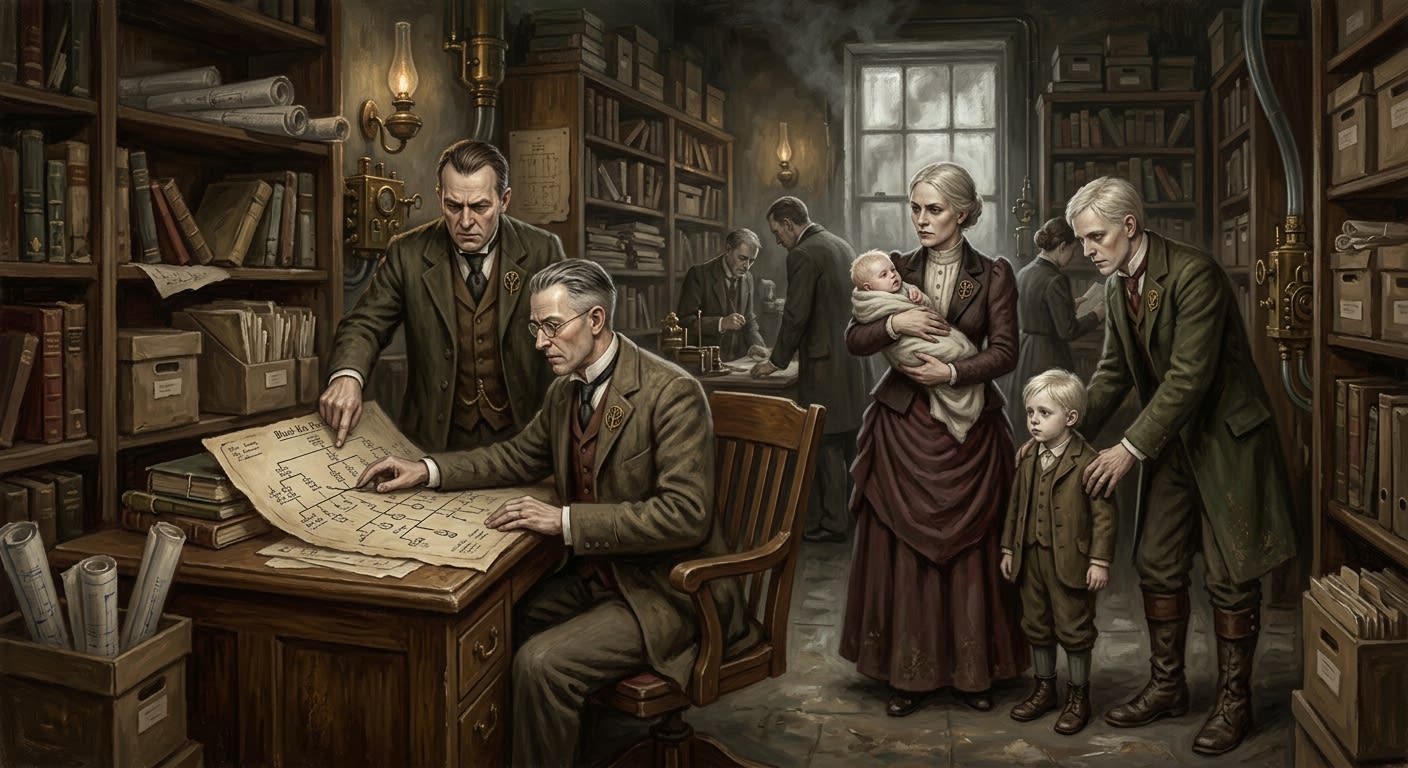
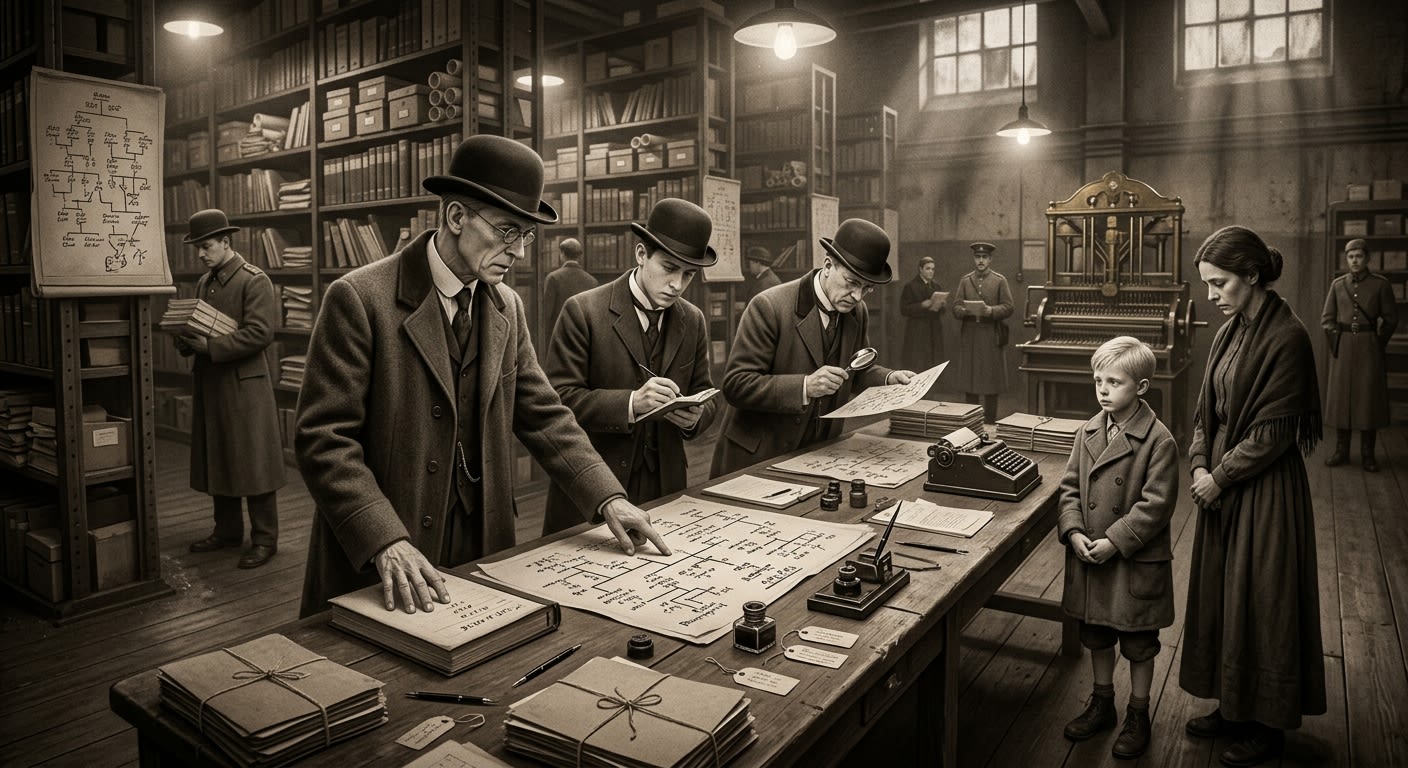
The Bureau hunts Blood-Kin Purists through kinship charts.
Purity agents are quiet in registry work: men with sharp pencils. They map godparents, milk debts, funeral attendances, repeated witnesses on baptismal slips, shared washhouse tokens, neighbour complaints, and the peculiar density of “stillborn” infants whose cousins later require extra bread. They ask why one grandmother buys goat milk after burying no child. They ask why an aunt has mended three small coats. They ask why a widow’s room contains cradle marks on the floor.
The Order of the Root has shown special interest in Purist cases, since any doctrine built upon blood attracts men who dream in family trees and wake with pruning knives. Root examiners claim the Purists preserve hereditary contagion. The Purists claim Root examiners are grave-robbers who learned penmanship. I find both assessments serviceable.
The most effective countermeasure remains the amnesty writ. A mother is offered late registration under “Voluntary Compliance.” The child enters the Ledger. The notation follows forever. The Purist network fractures over whether one marked life is preferable to one hidden death. Bureau mercy, as usual, arrives wearing clean gloves and carrying a hook.
#On Their Present Condition
As of A.S. 201, Blood-Kin Purists remain active in Zones 2 and 3, with stubborn pockets along forward supply corridors where displacement has made cousins harder to verify and easier to invent. Their influence rises after each levy tightening, each Orphanarium sweep, each Purity raid that takes a child and returns a receipt.
They are wrong often. Let the Ledger have that truth. They keep children too close. They trust kin who should have been left to rot outside the family door. They turn rescue into lineage and lineage into a little idol with a chipped bowl of milk before it. Their failures have filled interrogation cells, orphan wagons, and the neat red columns of Purity success reports.
They are right often enough to remain dangerous.
A child hidden by the Blood-Kin Purists may know her mother’s sister, her grandmother’s cough, her grandfather’s forbidden song, the saint whose candle her family still lights behind the stove, the proper insult for the registrar’s limp, and the name she must never say when bells are ringing. Such knowledge has no registration number. Such knowledge feeds no bastion. Such knowledge is, by every proper standard of Synodal governance, contraband.