
On the Pale Kin Runner
The Bureau of Conscription calls them inventory discrepancies. The Bureau of Purity calls them heretics. The mothers who hire them call them nothing at all, because a name spoken aloud is a name the parish clerk can write down, and a name written down is a child counted, and a child counted is a child taken.
The Pale Kin Runner is a smuggler of the only commodity the Synod values more than coin: warm bodies small enough to become soldiers.
#On the Nature of the Crime
The crime is simple. A woman gives birth. Within seventy-two hours, a parish registrar must stamp the infant's natal writ — name, sex, weight, parish of origin, mother's confession status, father's levy eligibility. The writ enters the Great Ledger of Souls. The infant becomes a number. The number becomes, fourteen years hence, a conscription entry. The entry becomes a body on the Line.
The Pale Kin Runner intervenes between birth and stamp.
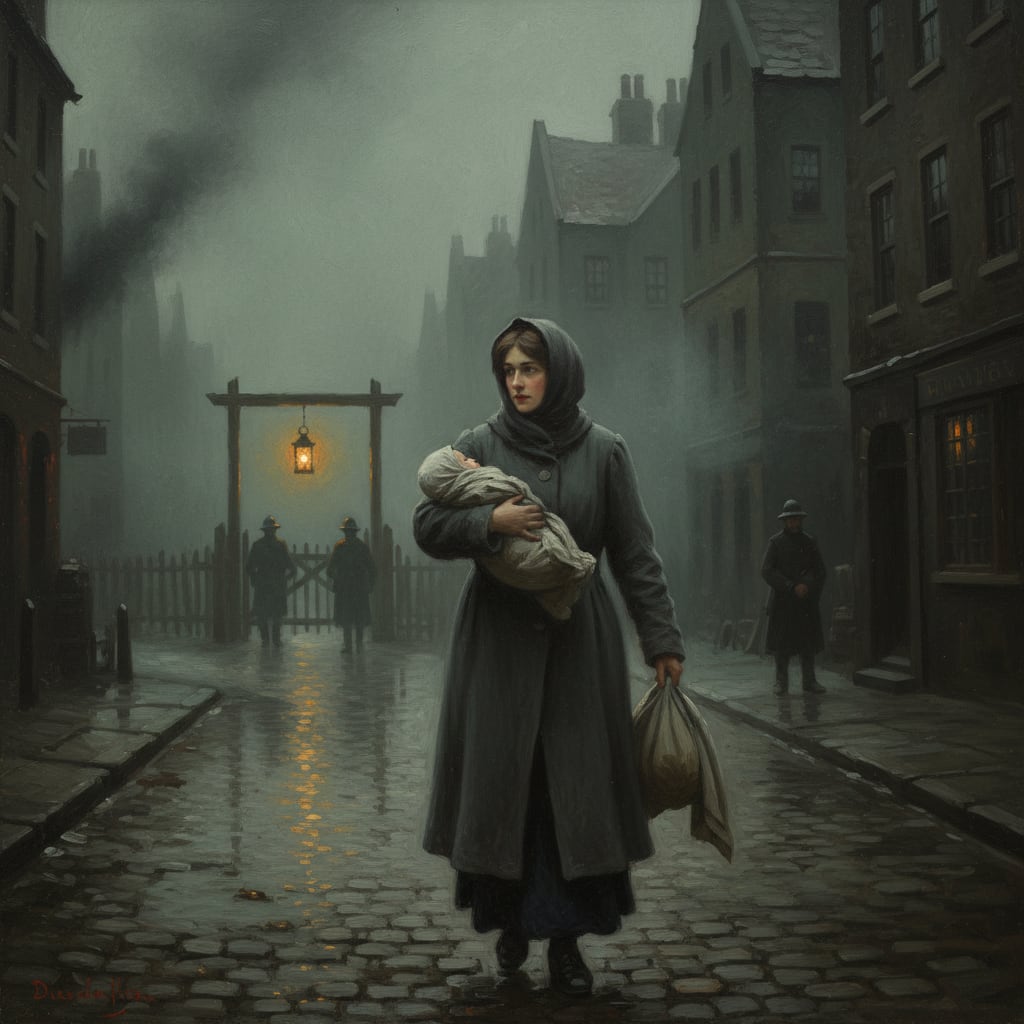
She — and it is almost always she, for reasons the Bureau of Purity has spent decades failing to comprehend — arrives at the birth with a midwife's satchel and a forger's intent. The real midwife is bribed, or frightened, or already complicit. The birth proceeds. The infant breathes. And then, instead of the registrar's knock, there is silence. A stillbirth is recorded. An ash-dummy entry — the name of a dead woman's dead child, resurrected on paper to fill the ledger's appetite — occupies the slot. The living infant vanishes into a bundle of quiet cloth and diesel-scented rags, and the Pale Kin Runner walks into the night carrying the only future the Synod cannot tax.
#On Method and Mechanism
The operation is a chain, and no single link knows the shape of the whole.
The Bundle-Carrier takes the infant from the birth-room to the first waypoint — a laundry house, an ossuary side-chapel, a curfew-fog tavern's cellar. She carries the child against her chest beneath a shawl, a bone token tied to the bundle to ward off what the runners call "bell-sickness" — the irrational certainty that the curfew bells are ringing specifically for you, that the sound itself is an accusation. The diesel-soaked rag at her collar masks the milk-smell. The soft-soled shoes leave no sound on the flagstones. The decoy bundle — weighted cloth, body-warm from a heated stone — rides in her other arm, ready to be surrendered at a checkpoint while the real cargo passes through a different door.
The Seal-Swapper handles the paper. She works the parish offices during the confusion of feast-day filings, when a hundred baptisms and three dozen funerals produce enough ink-traffic to hide an alteration. A birth entry is smudged — the Bureau of Records' own cheap ink cooperates beautifully with a damp thumb — and a replacement filed under a different ward. Or a genuine stillbirth record is duplicated, the dates adjusted, the mother's name changed. The Seal-Swapper keeps a kit of stolen parish wax, blank chits acquired from corrupt suppliers in the Strasbourg stationers' quarter, and an ash-ink pen whose forgeries the Bureau of Records has privately admitted are "disturbingly competent."
The Route-Keeper maps the patrol rhythms. She knows which sergeant drinks on which evening, which checkpoint closes early during procession days, which ossuary tunnel connects the Broth-Ward to the pilgrim road without passing a single bell-monitored junction. Her knowledge is oral, never written — a route committed to paper is a route the Bureau of Purity can read from a corpse's pocket. She communicates through the diesel-and-soap rags hung on specific fence-posts: the scent combination tells the next runner whether the path is clear, compromised, or collapsed entirely.
The Cradle Broker sits at the top of the operational chain and at the bottom of its moral architecture. She places the infants. With whom, and where, and under what name — these decisions determine whether a smuggled child grows up free or merely grows up invisible, which is a different kind of prison. The Broker maintains a network of wet-nurses, sympathetic families in rural parishes where the Bureau of Records' reach grows thin, and — in desperate seasons — contacts within the very Mercy Orphanarii whose purpose the entire enterprise exists to circumvent.
#On the Nursery Levy and Its Consequences
The profession did not always exist. Mothers have hidden children since the first census was taken, but the Pale Kin Runner as a specialised role — with tradecraft, hierarchy, and operational doctrine — emerged from a specific legislative atrocity: the Nursery Levy Decrees of A.S. 152.
Prior to A.S. 152, infant registration was required within one calendar month of birth. The window permitted error, grief, and the natural chaos of childbirth to run their course before the parish clerk arrived with his stamp. A mother who lost her child to fever in the second week was spared the paperwork of registering a ghost. The system was, by the Synod's standards, humane.
The Bureau of Conscription determined that this window constituted a "forecasting deficit." One month of unregistered life meant one month of unpredictable population data. The Nursery Levy Decrees compressed registration to seventy-two hours. Midwives were required to file preliminary birth-notices within twelve hours. Parish registrars were authorised to enter homes where birth had been reported but registration had not followed. Failure to register was reclassified from administrative neglect to active heresy — on the grounds that concealing a soul from the Ledger was concealing it from the Creator's sight, and what the Creator cannot see, the Enemy may claim.
The midwives understood first. They saw the armed registry teams arriving before the cord-blood was dry. They watched mothers weep as clerks stamped infants still wet from the womb. And some of them — a handful, a fraction, but enough — began to lie.
#On the Tools of Erasure
The Pale Kin Runner's kit is a study in paradox — objects of care repurposed as instruments of institutional sabotage.
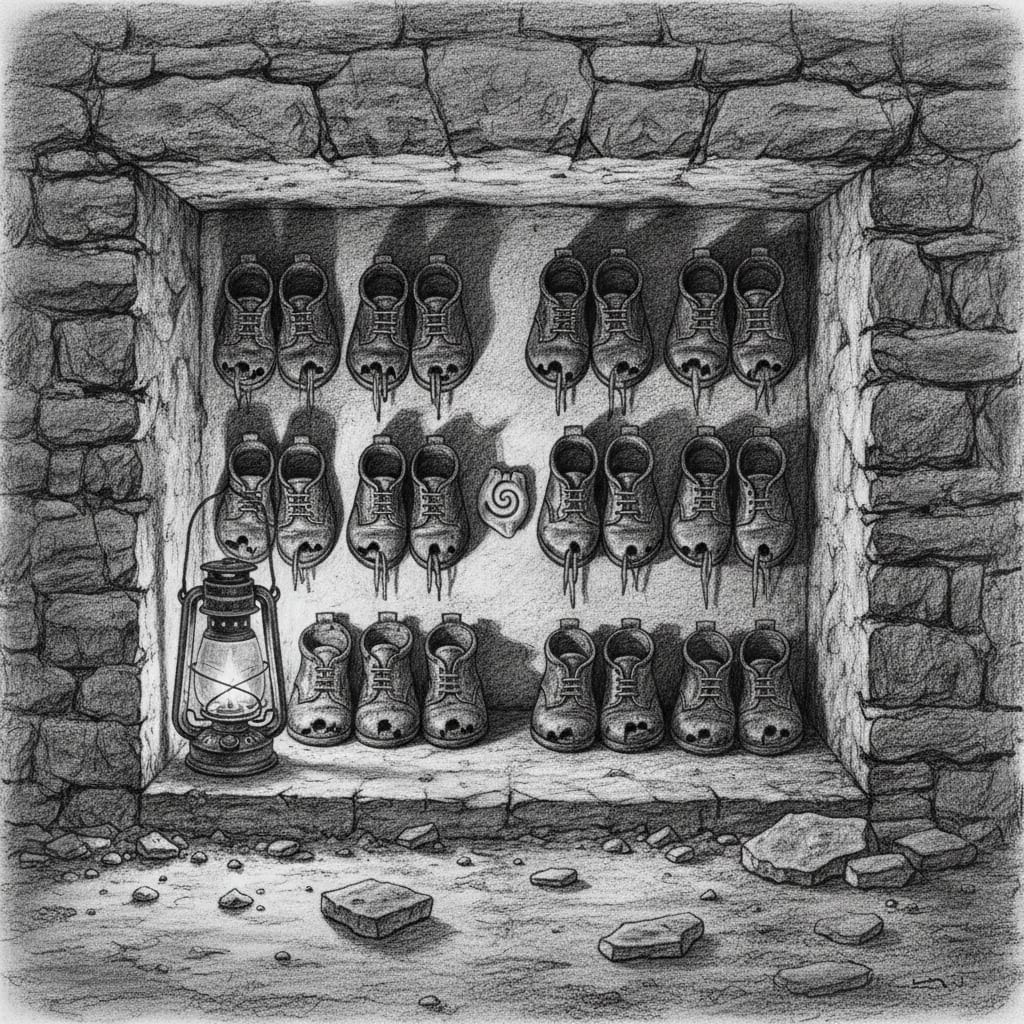
The quiet cloth is the profession's signature: a wrap of felted wool treated with lanolin and ash, capable of muffling an infant's cry to a sound indistinguishable from street-noise at three paces. Every runner carries one. The oldest quiet cloths are passed down through the network like inheritance, their felting worn smooth by the pressure of a hundred bundled bodies. They smell of milk and diesel and fear — a combination that, once learned, cannot be unlearned by anyone who has carried a child through a checkpoint at curfew.
The ash-ink pen produces forgeries the Bureau cannot easily distinguish from its own documents, because ash-ink is the Bureau's ink — recovered from burnt records, reconstituted with lamp-black and gum arabic, chemically identical to the output of Strasbourg's own stationers. The irony is structural: the Synod's obsessive burning of heretical materials produces the very medium through which its registries are subverted.
The bell-sliver charm — a fragment of broken bell-metal sewn into the shawl's hem — is pure superstition. The runners believe it "dulls sound," that the sympathetic vibration of dead bell-iron cancels the living bells' accusation. It does nothing of the kind. It does, however, provide a tactile reassurance that the profession's veterans consider operationally significant: a runner whose fingers can find the sliver in her hem is a runner whose hands are steady, and steady hands do not drop bundles.
#On the Enemy
The Pale Kin Runner's natural predator is the Bureau of Purity's registry enforcement division: Purity agents are competent accountants before they are competent trackers. The Bureau hunts runners less through the streets than through the ledgers.
A stillbirth rate that exceeds actuarial projections by more than eight per cent triggers an automatic audit. A ward with fewer registered infants than its milk-ration allocation supports provokes a Discrepancy Writ. A wet-nurse whose feeding records suggest one child but whose milk production suggests two is flagged for a Mercy inspection that has nothing to do with mercy. The Bureau finds the Pale Kin through arithmetic, and arithmetic does not sleep, does not drink, and cannot be bribed with soap or diesel.
An earlier assessment by the Bureau of Purity classified the Pale Kin Runner as "Category: Heretical, Disposition: Active Threat, Priority: Tertiary."
The classification has been revised to "Priority: Secondary" following the Innsbruck Audit of A.S. 178, in which a single Pale Kin family was discovered to have concealed three sons for fourteen years. The sons were conscripted. The parents entered the Index Damnatus. The midwife was displayed in an Iron Choir until her silence was judged penitent — which is to say, until she died. The Bureau revised its priority classification the following morning. Arithmetic had spoken.
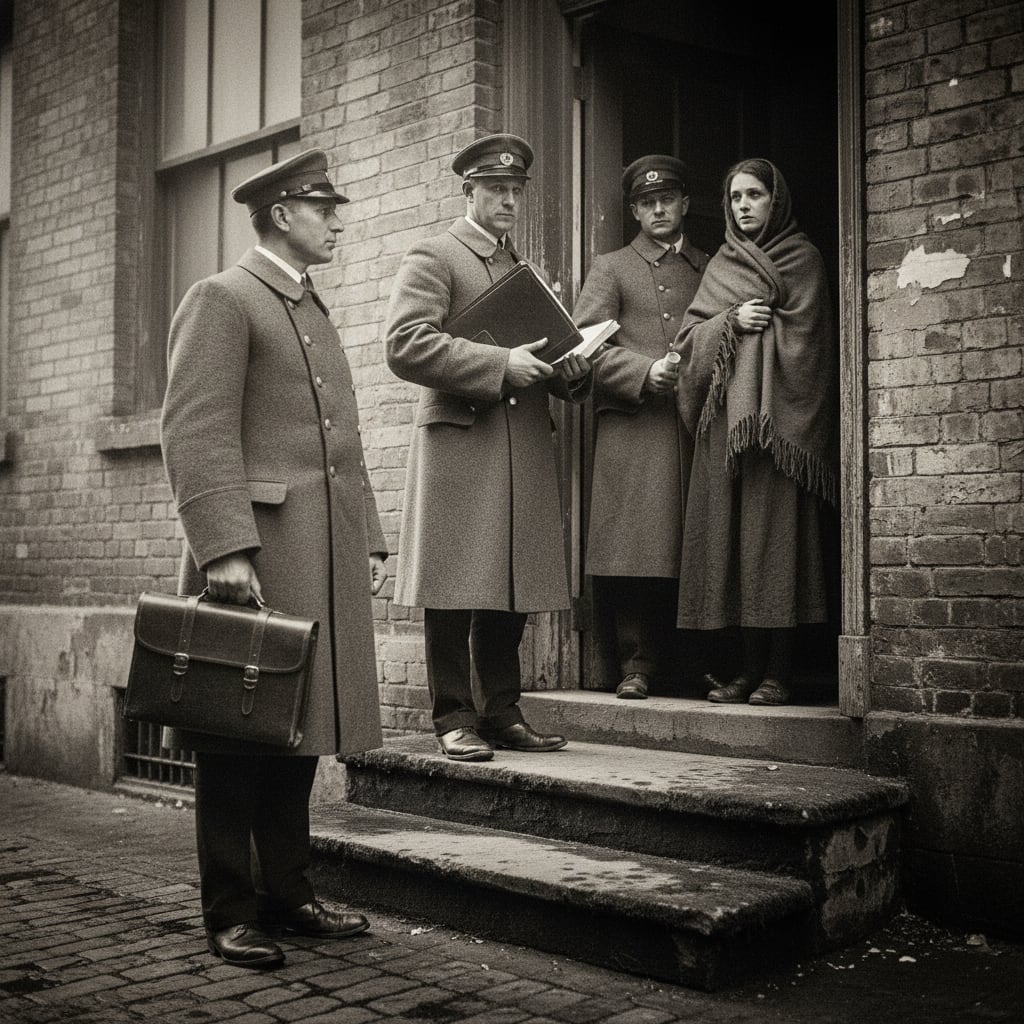
The Purity Fume-Inspector is the runner's nightmare made flesh: a specialist authorised to enter homes where birth has been reported, to inspect the air for the chemical signatures of recent delivery, and to declare "contraband life" present in any room whose atmosphere does not match its registered occupancy. The Fume-Inspector carries a censer of diagnostic compounds — incense cut with reagents that change colour in the presence of birth-blood, amniotic residue, and the particular sweat of a woman in labour. Against this technology, the runners deploy their diesel-and-soap rags: crude olfactory camouflage that works often enough to justify the practice and fails often enough to justify the terror.
#On the Moral Architecture
The Bureau frames the Pale Kin Runner as a child-thief. The propaganda is effective because it is half-true.
The runner does separate children from their documented identities. She does place infants with strangers. She does condemn them to lives unregistered, unconfessed, invisible to the Ledger and therefore — in the Synod's theology — invisible to the Creator. A child smuggled by the Pale Kin will never receive the Sacraments under their birth-name. Will never confess. Will never be buried in consecrated ground with their natal writ sealed to their shroud. By the Bureau's reckoning, she has stolen their salvation.
By the mother's reckoning, she has stolen them from the Line.
The runners themselves occupy a position between these judgements that admits no comfort. The Blood-Kin Purists among them insist that children must go only to family — that the act of smuggling is justified only when it preserves a bloodline's integrity. The Ward-Builders disagree: place the child with trusted strangers, build networks of hidden families whose loyalty is earned through shared crime rather than shared blood. And the Ash Registrars — the paper-workers, the forgers, the ones who can erase a ward's entire birth-roll and replace it with fiction — argue that the physical child matters less than the documentary void, that freedom is a clerical condition before it is a bodily one.
████████████████ Pale Kin operations in Zone 3 have increased ████ per cent since A.S. 195. The Bureau of Conscription's Levy Seventh Renewal is believed to be ████████████████████. The Bureau of Purity recommends ████████████████ in all provinces classified under Martial Edict ████. Estimated unregistered population: ████████████.
#On What Is Lost
A Pale Kin Runner cannot keep a home. Cannot maintain a name longer than a season. Cannot hold a child of her own without wondering whether the next knock is the registrar's or the Purity agent's. The work strips attachment from the operative with the patience of water on limestone — by trauma, yes, and more reliably by the simple operational requirement that intimacy creates vulnerability and vulnerability creates leaks.
"Never teach a mother your route." This is the profession's first commandment and its cruellest. A mother's love is the runner's greatest asset — it motivates the hire, funds the operation, provides the emotional fuel for the enormous risk — and simultaneously its greatest liability, because a mother who knows where her child went is a mother who can be broken by the Bureau of Purity's interrogators into revealing the entire chain.
The veterans develop a rocking motion. They cradle nothing. Their arms move in the rhythm of carrying without the weight of the carried. They flinch at bells — curfew bells, chapel bells rung for joy, and street-vendor hand-bells rung for commerce. Sound is the enemy. Sound is what a crying infant produces. Sound is what announces failure. The body learns this before the mind accepts it, and the body does not unlearn.
STAMPED ERRATUM — Bureau of Purity, A.S. 196. A previous intelligence summary described Pale Kin operations as "declining in scope and operational capacity." The summary has been withdrawn. The Bureau of Conscription's most recent population audit identifies a discrepancy of approximately ████ unaccounted births in Zones 2 and 3 since A.S. 190. The word "declining" has been replaced with "evolving." The Bureau of Purity does not retract assessments; it clarifies them.
#On the Bureau's Position
The Bureau of Conscription does not hate the Pale Kin. Hatred implies recognition of an adversary. The Bureau recognises only numbers, and numbers that fail to appear in the Ledger are not adversaries — they are errors. The Bureau corrects errors. It has been correcting this particular error for forty-nine years, since the Nursery Levy Decrees, and the error persists at a rate the Bureau's actuarial division describes as "within acceptable operational friction."
This phrase — "acceptable operational friction" — is the closest the Bureau of Conscription comes to admitting defeat. The Pale Kin Runner exists because the system's own appetite creates her. Every tightened quota, every compressed registration window, every armed registry team sent to stamp a newborn before the mother's blood has dried — each escalation produces the conditions under which another midwife decides that her oath to the living outweighs her oath to the Ledger.
The Bureau understands this. The Bureau has modelled it. The Bureau has determined that the cost of eliminating the Pale Kin entirely — the surveillance infrastructure, the personnel, the political expenditure of prosecuting mothers in public courts — exceeds the cost of tolerating a twelve-to-fifteen per cent discrepancy rate in Zones 2 and 3. The Bureau has made its peace with acceptable loss.
The mothers have not.