
#On the Paper That Refused Birth
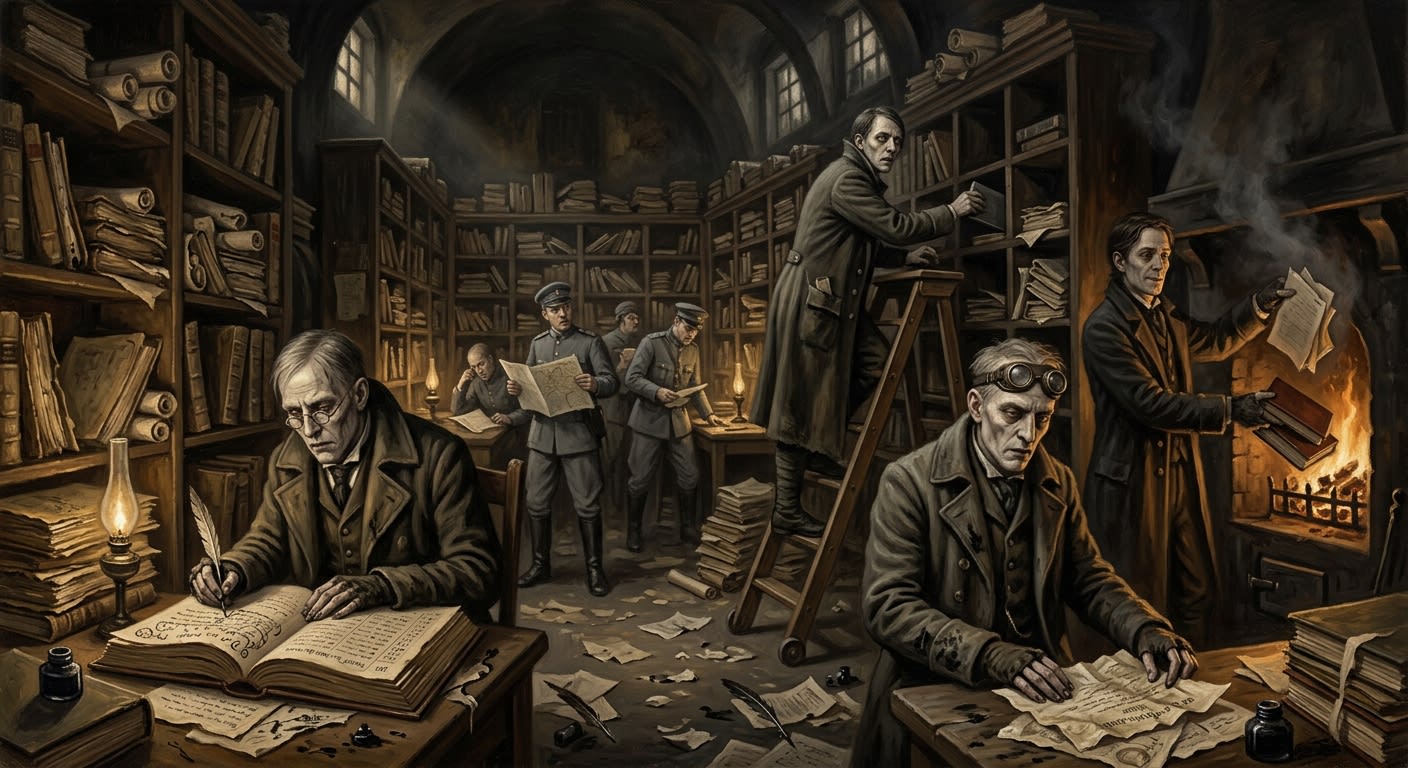
The Ash Registrars are the Pale Kin faction most offensive to the Bureau because they speak its native language and use it with better penmanship.
Among the Pale Kin, the argument over rescue divided into three working heresies. The Blood-Kin Purists insisted that a hidden child must go to family. The Ward-Builders trusted strangers bound by shared crime. The Ash Registrars looked at both arrangements — warm arms, wet cloth, crying mouths, all that noisy mammalian evidence — and declared the body secondary.
Freedom, they say, begins when the document fails.
The phrase sounds obscene because it is nearly true. A child can be carried through six safe houses and still be seized if the birth-roll remains cleanly attached to the mother. Another child can sleep in the same room where it was born and become invisible if the forms have been ruined properly. The Ash Registrar is the person who performs that ruin: smudging, substituting, duplicating, burning, backdating, misnumbering, resealing, and occasionally improving official documents to such a degree that the Bureau of Records must either admire the work or pretend it never saw it.
It usually chooses both.
#On the Ash in the Ink
Their name comes from a material and an accusation.
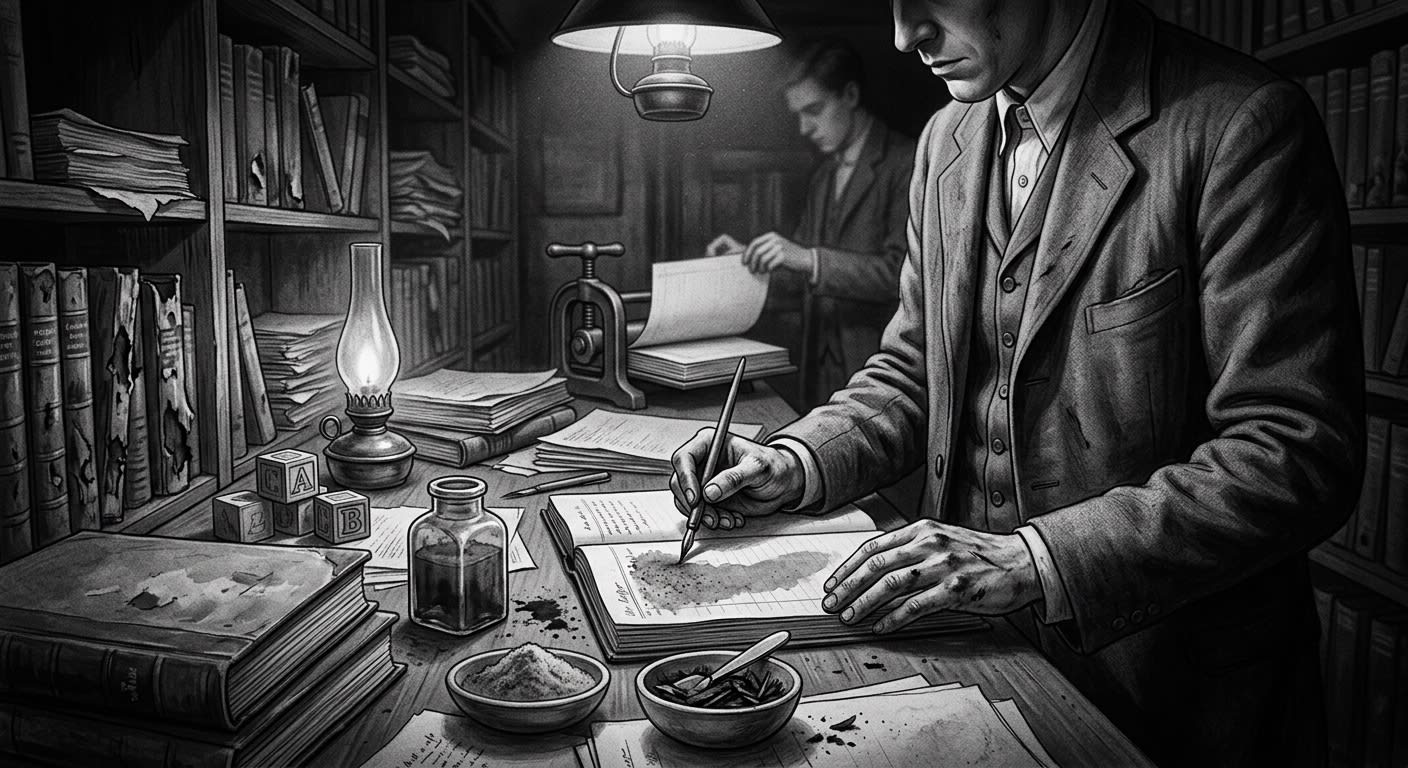
The material is ash-ink: lamp-black, gum, stolen parish binder, and the powdered residue of burnt records. Properly mixed, it mimics cheap Bureau issue well enough to pass first inspection. Poorly mixed, it flakes under candle heat and condemns everyone within three rooms. Ash Registrars argue over recipes with the spite of theologians arguing over grace. Three drops vinegar. No vinegar. Bone ash only from unregistered dead. Never bone ash, because bone remembers. Every profession requires superstition to survive contact with repetition.
The accusation is older. After Mother Sava of the Ash Steps burned her parish registry in A.S. 154, Purity reports referred to “ash-handed midwife accomplices” who returned to the ruin and searched through the char. Those early scavengers learned that a burnt roll was a quarry. Half-legible names could be reused. Dead infants could be reborn as paper shields. Blank margins could be cut, soaked, flattened, and sold as emergency chits. Destruction produced stock.
Bureau of Records Circular 71 described ash-ink documents as “gross counterfeit matter, readily detectable by trained staff.”
Corrected after A.S. 192 testimony: trained staff detected several examples, missed several hundred, and praised three as unusually tidy parish work. The word “readily” has been dissolved in vinegar and shame.
The Ash Registrar’s hands are rarely clean. The stain enters the nail bed. It darkens the thumb crease, marks the heel of the palm, gathers where skin splits in winter. Street children call them soot-priests. Purity calls them document vermin. Records, in private memoranda, calls them “technically accomplished hostile clerks,” which is as close as that Bureau comes to a love poem.
#On Their Doctrine of the Void
The Ash Registrars’ central doctrine is called the void, though never in writing if the writer has sense.
The void is the gap between the living child and the recorded child. It may be made by false stillbirth, by duplicate baptism, by transfer into a dead ward, by misindexed mother, by assigning the infant to a parish that burned three winters ago, by creating a paper child who absorbs the audit while the real child drinks milk in another district. The void is useful absence. Absence draws attention. The void is plausible clerical inconvenience.
This is why Ash Registrars quarrel with the other Pale Kin factions. Blood-Kin Purists trust memory. Ash Registrars distrust memory because memory speaks under pain. Ward-Builders trust households. Ash Registrars distrust households because households eat, gossip, confess, quarrel, and require shoes. Paper has vices of its own, but paper never panics until a human hand touches it.
Their favourite saying is brutal: “Do not move the infant until the form has moved first.” A Bundle-Carrier (Unregistered) hears this and spits. A mother hears it and goes pale. The Registrar shrugs, checks the ink, and asks whether sentiment can survive an audit stamp.
#On Their Tools and Offices
An Ash Registrar’s chapel is any desk with poor light.
The kit is small enough to vanish under a shawl: ash-ink pen; two stolen nibs, one broad for parish hands and one mean little hook for Records annotation; wax crumbs sorted by diocese; seal rubbings on onion paper; salt to age a fold; a brass spoon for heating wax; a dead infant’s baptism tag; a live infant’s silence. Senior Registrars carry parish calendars marked with feast congestion, because paperwork hides best when clerks are tired, priests are drunk on ceremony, and the floor is already littered with legitimate forms.
They do not forge one document when five will do. A false stillbirth needs supporting breath: midwife notation, burial waiver, ration adjustment, milk-token correction, parish death index, Mercy non-intake slip. The genius lies in making each document slightly uninteresting alone and mutually exhausting together. Auditors can smell drama. They drown in tedium.
BUREAU OF RECORDS INTERNAL SAMPLE — ASH REGISTRAR PACKET, A.S. 188 Subject mother: ████████. Filed outcome: stillborn female, three hours. Supporting documents: nine. Contradictions detected: one candle-time mismatch; one priest absent from parish that day; one wax grain from wrong district. Field result: living child recovered? ███. Auditor note: “Whoever prepared this packet understands our review ladder.” Auditor reassigned to agricultural tithe ledgers.
The best Ash Registrars are former clerks, failed seminarians, widowed stationers, copyists dismissed for insolence, and women who learned signatures by watching men sign away their children. They are patient in the particular way of people who have discovered that empire is mostly handwriting.
#On Their Relation to Records
The Ash Registrar loves the Bureau of Records with the hatred of an apprentice surpassed.
Records built the cage. Records numbered the bars. Records trained half the hands now picking its locks. Every ledger method has a shadow method. Every Form 7-NR field has a wound. The projected obligations field can be smudged at the edge and reinterpreted as transfer notation. The midwife filing hour can be made to straddle a feast-day boundary. The preliminary birth notice can be paired with a death note copied from a fever year. The stamp becomes its own enemy when applied with sufficient confidence.
A Records memorandum asserted that Ash Registrars “do not understand authentic filing grammar.”
Revised: Ash Registrars understand filing grammar well enough to write bad grammar convincingly. This is higher craft than neat copying. Any fool may imitate excellence; only a trained enemy imitates mediocrity.
That last point deserves inscription in brass. A novice forger makes documents beautiful. Beauty is suspicious. A real parish file contains impatience, damp, inconsistent pressure, one bored abbreviation, and a blot placed exactly where a tired clerk would drag his sleeve. Ash Registrars call this holy ugliness. I dislike the term. I admire the work.
#On Sava, Shoes, and the First Liberation
The Ash Registrars claim Mother Sava through the burnt registry rather than the eleven shoes.
Blood-Kin Purists hold up the shoes as proof of preserved blood. Ward-Builders hold up the mismatched soles as proof of stranger placement. Ash Registrars point to the parish roll reduced to char and say the liberation happened before any child crossed any threshold. The infants became unreachable when the Ledger lost confidence in its own page.
This theology of paperwork has made them detestable even among allies. It appears to reduce the child to a docket effect. The charge is fair enough to sting. Ash Registrars answer that the Synod reduced the child first. A paper cage must be opened in paper. A flesh rescue without documentary sabotage is a sentimental errand ending at an Orphanarium gate.
They keep tiny reliquaries of ash: pinches from burnt parish offices, char scraped from confiscated rolls, soot from stoves where baptism slips were eaten by flame. Some are genuine. Many are pantry soot blessed by desperation. Relics improve when nobody can afford authentication.
#On Bureau Countermeasures
The Bureau hunts Ash Registrars by admiring them too closely.
Purity beats suspects. Records studies paper. The second method has killed more Registrars. Records examiners build comparison tables of local abbreviation habits, parish wax impurities, turnip-ink dilution, nib width, saint-name preference, midwife punctuality, and the distinctive little lie by which every clerk survives his afternoon. When a document is better than its parish, worse than its district, or boring in a way that looks performed, the file is marked for quiet review.
The Order of the Root has begun attaching kinship questions to document audits, which irritates Records and terrifies Pale Kin cells. A forged stillbirth may pass in paper. A grandmother buying milk may fail in flesh. The modern suppression team combines both cruelties: one clerk at the desk, one Root examiner at the cradle, one Purity guard at the door looking pleased to be the stupidest man in the room.
The Ash Registrars adapt by cultivating badness. They train forgers to misspell local saints, overcharge imaginary burial fees, forget a witness line, and use wax slightly dirtier than regulation permits. They have learned the central law of the Synod: perfection is treason unless issued by Strasbourg.
#On Their Present Use
As of A.S. 201, Ash Registrars are few, hunted, and necessary. A Pale Kin route can survive a dead runner. It cannot survive a clean birth-roll. Blood needs them while denouncing them. Ward needs them while insulting them. Mothers fear them until the form changes, then bless them in low voices and forget the blessing for safety.
Their failures are catastrophic. A bad forgery burns a whole ward. A duplicated stillbirth exposes a midwife. A reused baptism tag pulls a dead mother’s sister into interrogation. A proud Registrar ruins three lives by making the handwriting too fine. The Bureau does not need many successes against them; one seized packet can unfold a parish like a flayed map.
Their successes leave no monument. That is the point. A successful Ash Registrar produces no rescued child in the official imagination, no heroic flight, no sainted mother, no song at the washhouse. She produces a file so dull it sleeps for fifty years. Somewhere behind that file, a person grows teeth, learns lies, steals bread, falls in love under a borrowed name, and never feeds the Line.
The Synod calls this absence.
The Ash Registrar calls it work.