
#On the House Built Without Blood
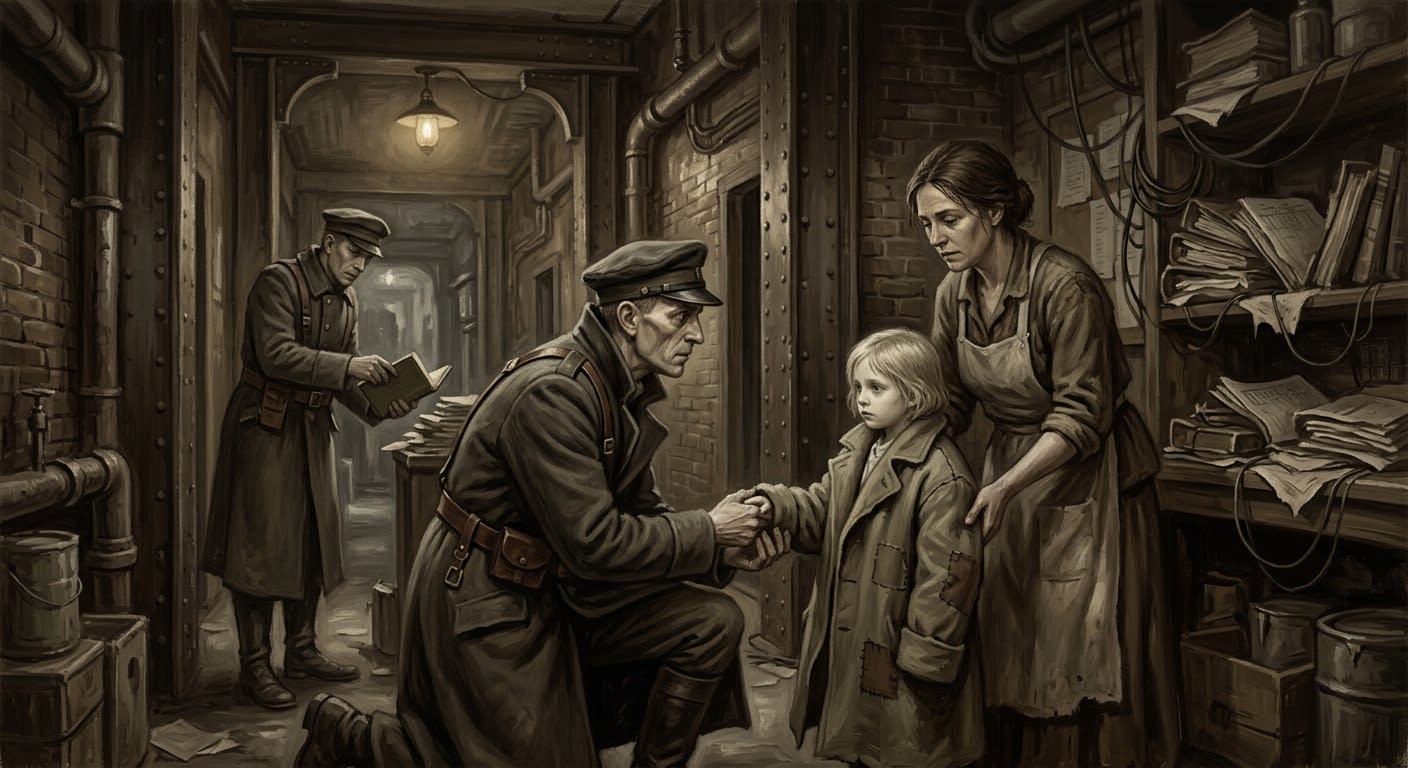
The Ward-Builders are the Pale Kin faction that committed the most unforgivable domestic heresy: they decided family could be manufactured.
Within the Pale Kin networks, after the Nursery Levy Decrees of A.S. 152 and after Mother Sava made eleven infants vanish from levy arithmetic in A.S. 154, the old question opened like a badly stitched wound. Where does a hidden child go? The Blood-Kin Purist answered with kin. The Ash Registrar answered with paper. The Ward-Builder answered with trust purchased by shared danger.
A Ward-Builder places infants with strangers.
Tested strangers, never random ones. Randomness would be charity, and charity without method is a bucket with hymns painted on it. She places them with tested strangers: a washerwoman who hid ration cards during the Innsbruck Audit; a widower whose cellar door opens into an ossuary drain; a baker who sells three loaves for two stamps and never asks why the third loaf is softer; a bell-tower boy who can lie to a clerk with the expression of an altar cherub. Blood is useful. Crime is better.
The Ward-Builders call their placements wards rather than households, because the Synod has made “household” a taxable fiction and “ward” a category with teeth. They steal the word back in the ancient manner of the desperate: by using it until officials grow irritated.
#On Their Origin in Sava’s Shoes
The Ward-Builders claim Mother Sava before anyone else can finish lighting the candle.
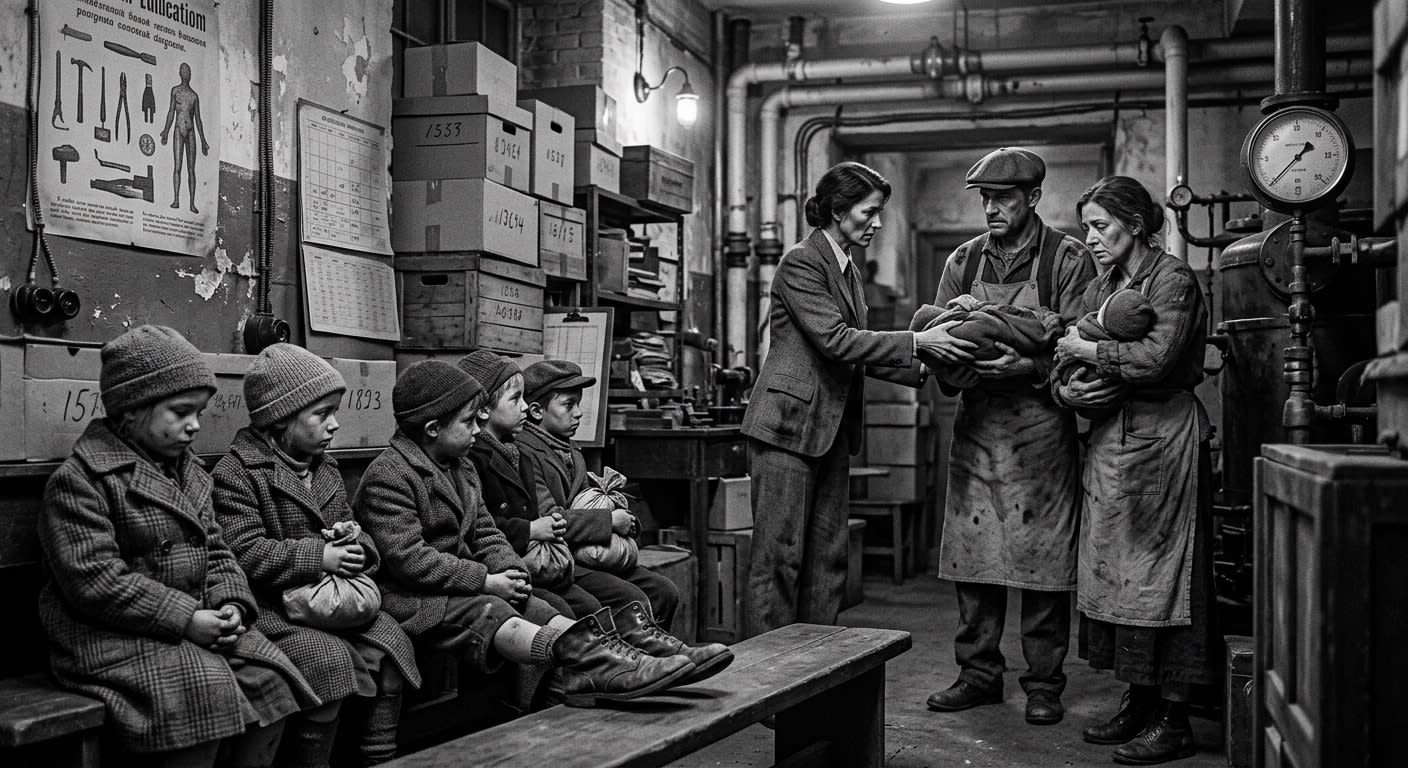
Their argument rests on shoes. When Purity found Sava’s bones in an Innsbruck wall-cavity in A.S. 163, eleven pairs of children’s shoes lay around her, worn and outgrown. The Blood-Kin Purists saw family preservation. The Ash Registrars saw evidence that the burnt registry mattered more than the living route. The Ward-Builders saw mismatched sizes, mismatched repairs, mismatched leather, mud from different streets. They saw dispersal. They saw placement beyond one household’s reach.
They may be correct. Worse, they know they may be correct, and nothing makes a faction more intolerable than partial evidence and devotional confidence.
A Bureau of Doctrine chapel notice described Ward-Builder veneration of Mother Sava as “baseless invention.”
Clarified: the invention has a base. Eleven outgrown shoes constitute poor relic authentication and excellent propaganda. Doctrine’s objection concerns ownership, not evidence.
The first Ward-Builders appear in Purity field memoranda under dull names: “non-kin receivers,” “informal fosterage conspirators,” “secondary cradle concealment hosts.” The words have the charm of wet flour. By A.S. 158, after the Natal Registration Act hardened the parish filing system and made midwife reporting faster, Ward-Builders were already spreading from birth rooms into trades: laundries, bakeries, porter lodges, bell towers, pageant crews, cheap schools, and Mercy-adjacent kitchens where a child could be made visible as someone else’s nuisance.
#On the Architecture of Trust
A Ward-Builder does not ask, “Whose child is this?” She asks, “Who has already damned herself enough to be useful?”
The faction’s genius lies in treating guilt as mortar. A stranger who has committed one punishable mercy can be bound to a second mercy, then a third, until she stands inside a structure of mutual exposure. No member can inform without confessing herself. No family can betray without endangering three neighbours who know which cupboard held the quiet cloth, which parish seal was borrowed, which dead infant supplied the ash-dummy name.
Their wards are small conspiracies disguised as domestic inconvenience. A child becomes “the baker’s sister’s girl,” “the washerwoman’s late cousin’s boy,” “the monastery kitchen brat,” “the pageant captain’s foundling,” “that one with the cough.” Such descriptions are fog for the Ledger. They are also social glue. Everybody knows enough to protect. Nobody knows enough to own.
The Blood-Kin Purist hates this. She hears “nobody knows enough to own” and tastes orphaning. The Ward-Builder hears the same phrase and tastes safety. Ownership, after all, is the first verb the Synod uses before seizure.
#On Their Machinery of Placement
The Ward-Builder works in three movements: softening, seating, sealing.
Softening prepares the receiving house. Food appears first, because hunger is a poor guardian. Then a debt is forgiven. Then a warning is delivered before a raid. Then the question is asked sideways: a child needs winter, can your stove be generous? A proper Ward-Builder never begins with an infant at the threshold. That is how amateurs make martyrs and graves.
Seating places the child inside an existing pattern. If the house takes washing, the child carries linen. If the house bakes, the child sleeps near flour sacks. If the house keeps goats, the child learns to smell like goats, which has saved more lives than several official catechisms. The child’s presence must be annoying in a familiar way. Sudden sweetness draws eyes. Ordinary inconvenience passes inspection.
Sealing binds the house to the network. The receiver learns a door-name, never the full route. A witness from another ward brings milk powder. A third party stores the papers. A fourth teaches the child a cough, limp, accent, or temper suited to the cover story. The Ward-Builder steps back, leaving behind a family made from complicity and chores.
PURITY RAID REPORT — WARD-CELL “LARK,” A.S. 189 Recovered: seven children; three registered under borrowed kin; two registered as servants; one unregistered; one █████████. All receiving adults claimed unrelated ignorance. Cross-interrogation produced fourteen mutually incompatible explanations, none sufficient for conviction under ordinary evidentiary practice. Recommendation: extraordinary classification ████████.
The system works because it refuses the romance of rescue. The Ward-Builder does not promise a mother that the child will remember her. This cruelty is policy. A remembered mother is a route back. A route back is a rope Purity can pull. The mother is given proof of life by token, smell, scrap, or song fragment if the cell permits it; often she is given nothing but the fact that no Orphanarium wagon came.
A Mercy pamphlet accused Ward-Builders of “selling infants into anonymous servitude.”
Corrected for the Ledger: some Ward-Builders have sold infants. Some Mercy institutions have misplaced five hundred children behind clean gates and chapel glass. The pamphlet is withdrawn pending a definition of servitude that will not embarrass its publisher.
#On Their Hatred of Blood Doctrine
Ward-Builders reserve special irritation for the Blood-Kin Purists, because cousin-love has ruined many excellent routes.
They tell the same horror stories in every cellar. Aunt Marta visited during feast week. Cousin Jan drank. Grandmother kept a baby shoe under the stove and showed it to the wrong priest. A father, meaning well — the most lethal phrase in domestic life — followed the carrier and learned enough to break under Purity hands. Blood sings. Blood visits. Blood recognises a nose across a market lane and forgets that recognition has become evidence.
The Ward-Builder answer is hard: a child does not need the original table. A child needs a table no auditor can connect to the mother.
The Blood-Kin Purists accuse them of making ghosts. The charge lands. Ward-Built children grow up with borrowed names, false cousins, saints’ days selected by cover story, and family legends trimmed to fit the lie. Some never learn their birth-name. Some learn it too late and hate the mouths that fed them. Some become runners, which is the nearest thing the faction has to apostolic succession.
Ward-Builders accept the accusation and file it under cost.
#On Bureau Misreadings
Purity long misread Ward-Builders as traffickers. This error comforted everyone. A trafficker can be hated cleanly. A woman who places a child with a stranger for no fee beyond future shelter corrodes the propaganda.
The Bureau adjusted. Current doctrine frames Ward-Builders as social infection: one illegal child produces three illegal loyalties, then nine, then a ward that refuses clean audit. The model is mathematically pleasing and spiritually stupid, which gives it every chance of adoption.
Their most durable enemy carries no pistol. He compares bread, milk, school attendance, washhouse tokens, and the number of beds in a room. The Ward-Builder fights arithmetic by making the household messy: a cousin visiting, a servant lingering, a fever guest, a charity pupil, a pageant child, a novice kitchen-hand. Mess, properly filed, is armour.
The Order of the Root despises them for this reason. Root examiners prefer heresy that grows along bloodlines. Ward-Builders plant kinship sideways, like ivy through mortar, and the Root men keep pulling at family trees while the child is learning to knead dough three streets away.
#On Their Present Condition
As of A.S. 201, Ward-Builders are strongest in crowded urban parishes, forward supply towns, and railway wards where strangers are already ordinary. Displacement has been their abbot. War moves people, and moved people explain everything: an unfamiliar child, a new accent, a name no one heard last winter. Every refugee column is a mobile archive of plausible lies.
Their cells cooperate uneasily with Ash Registrars, whose documents make stranger placement survive first inspection. They quarrel continuously with Blood-Kin Purists, whose kitchens preserve memory at the cost of traceability. They trade routes with Lantern sympathisers, bribe ossuary clerks, and maintain a particular fondness for bakeries, because bread hides population better than prayer.
Ward-Builders have produced failures vile enough to satisfy any censor: children beaten by receivers, children forgotten after panic, children handed to Mercy when rations failed, children grown into adults with no idea which grief made them possible. The faction’s defenders answer with winter counts. So many alive after first frost. So many absent from levy rolls. So many Orphanarium beds empty.
The Bureau calls them child-thieves. The Blood-Kin Purists call them severers. The Ash Registrars call them necessary amateurs. Mothers call them only when every relative is watched.
The Ward-Builder arrives without family resemblance, without a promise of memory, without the comfort of a blood-name carried safely in an old woman’s mouth. She brings a shawl, a route, a stranger’s address, and the most frightening mercy available under the Synod: another table.