

Reverse Index
Referencing “Bureau of Conscription”
Every codex entry that links to Bureau of Conscription. 76 entries.
Return to Bureau of Conscription
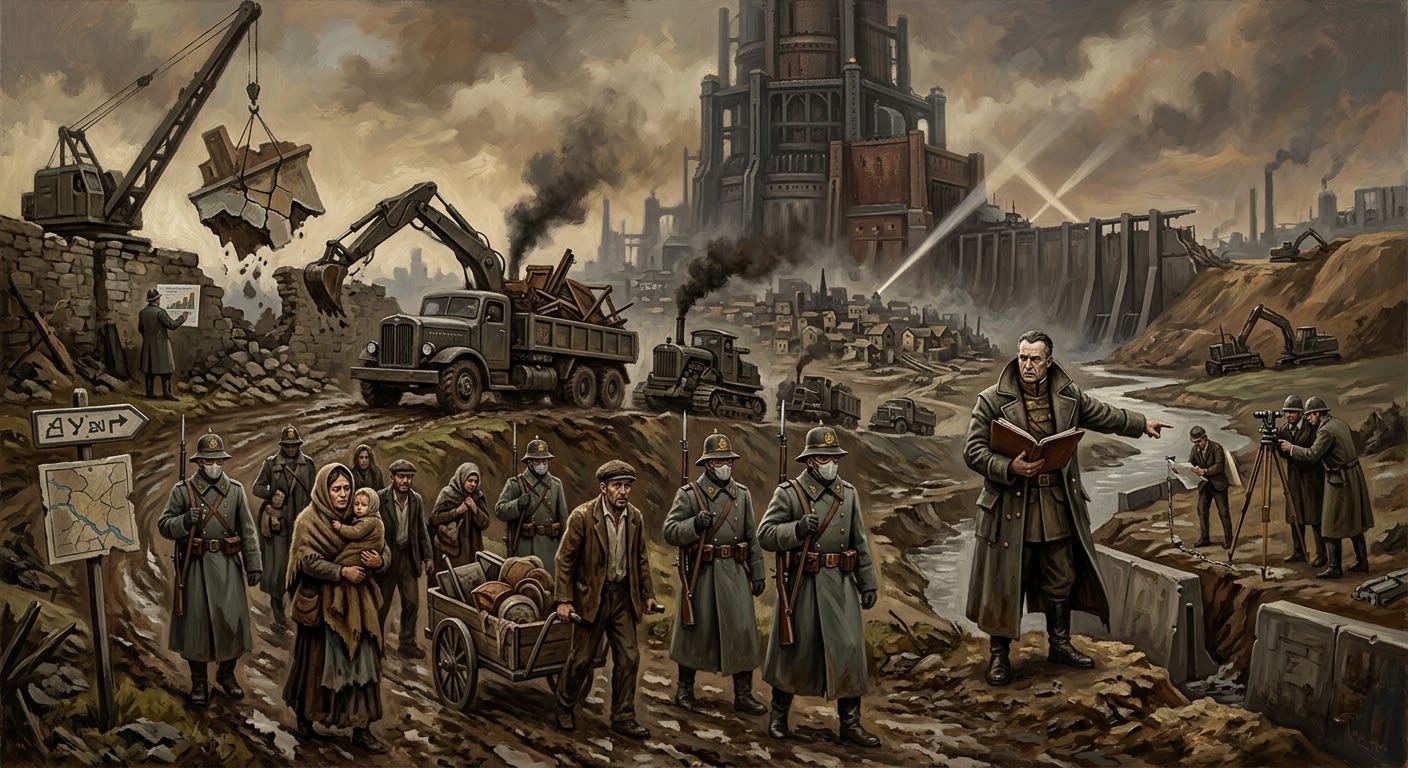
Administrative Redrawing of A.S. 188
A line moved, forty thousand obeyed, and Keska vanished into the neatness
Mandate 188-A redrew the Hintermark and Constantinople terraces in fourteen days, moved forty thousand civilians, and omitted Keska from the map.
Codex Ref. VII.2.04-001
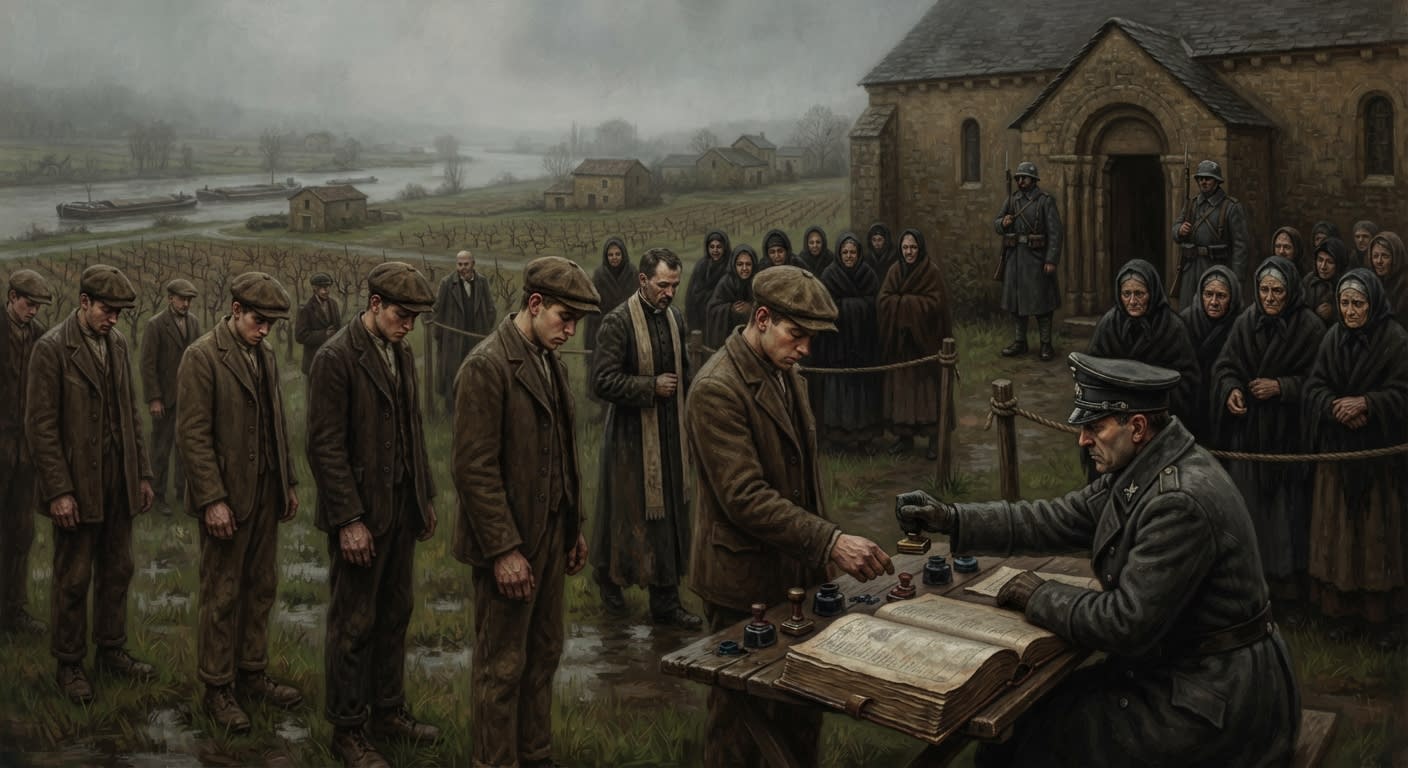
Aquitaine
The western field where sons go missing politely
Aquitaine is the Synod's damp western grain and wine basin: loyal by return, undercounted by suspicion, and courteous enough to make evasion look like hospitality.
Codex Ref. II.1.12-201
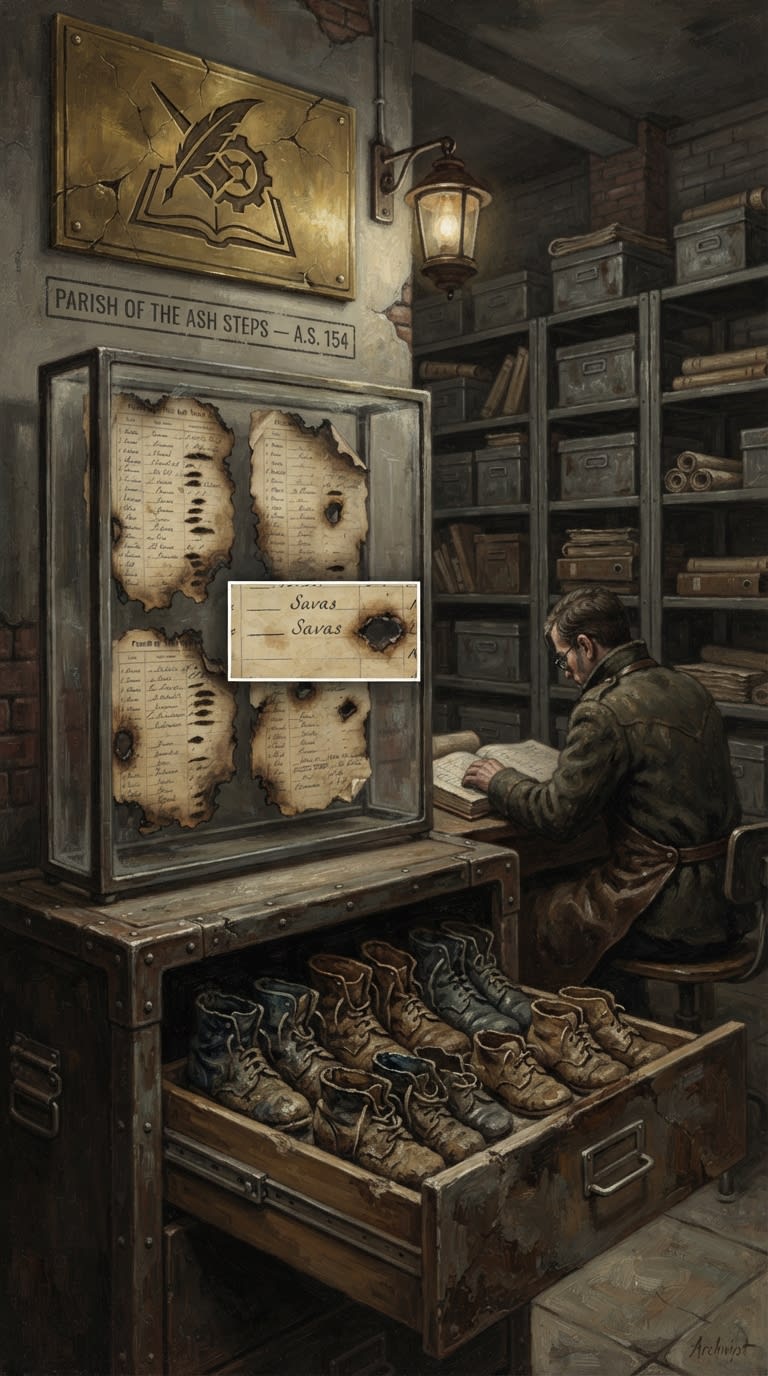
Ash Eleven
Eleven ruled lines, six names, one scorched twin
Eleven Ash Steps infants erased from A.S. 154 levy arithmetic by Mother Sava's registry fire, leaving six names, one scorched twin, and shoes the Ledger cannot file.
Codex Ref. VII.8.10-154
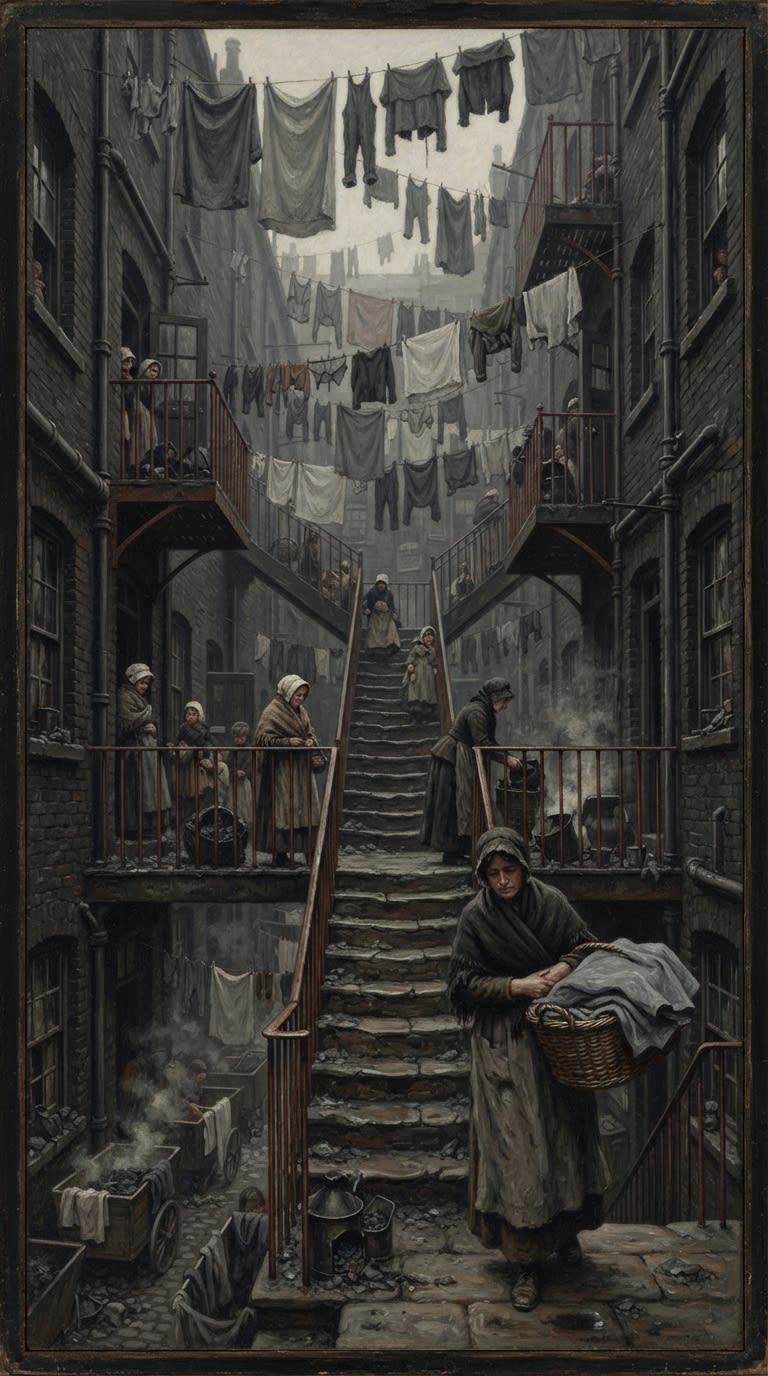
Ash Steps
Where a parish became a method and a roll became ash
The Ash Steps are an unmapped parish-name where laundry, back stairs, milk debts, and a burned A.S. 154 registry taught the Pale Kin that a place can become a method.
Codex Ref. II.2.06-154
Assistant Registrar Pell
The thumb that survived the sentence
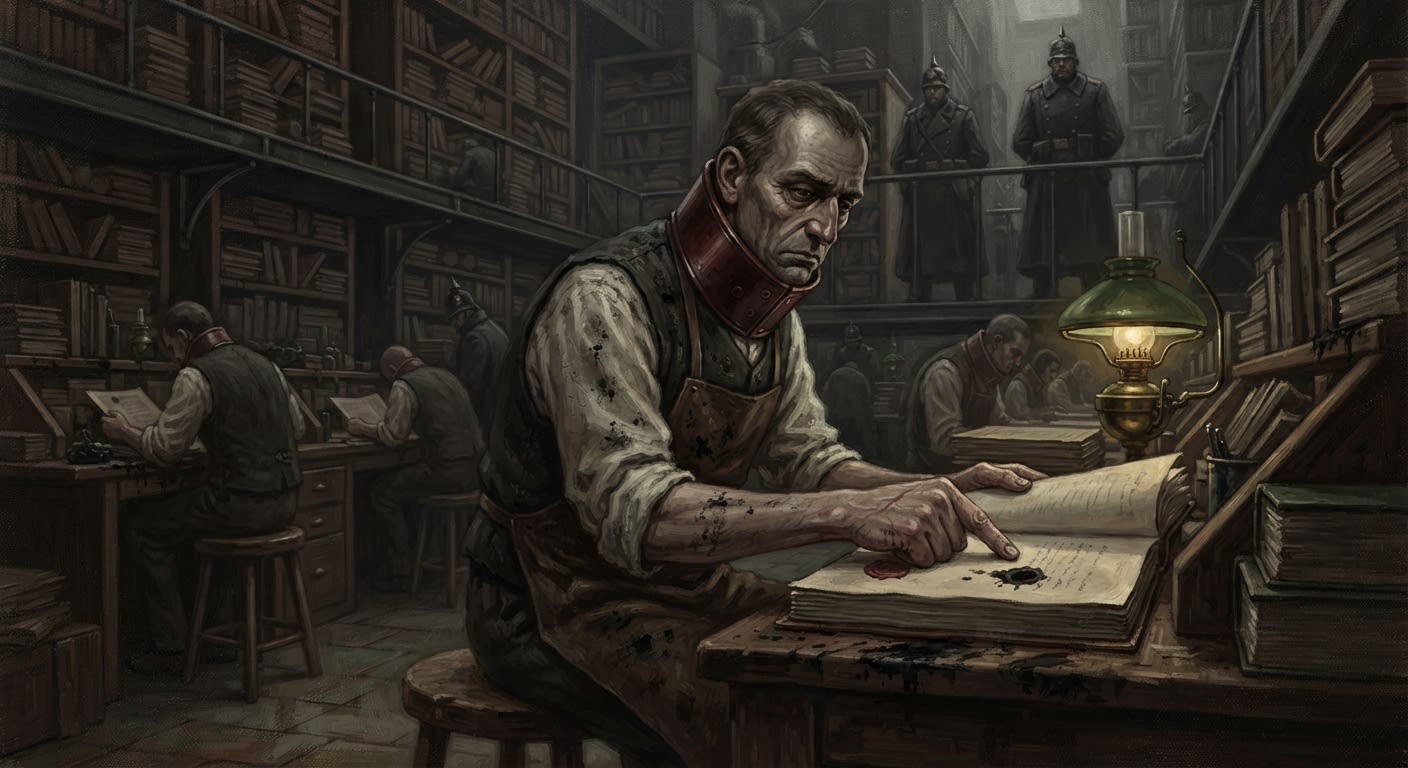
Assistant Registrar Pell's thumb survived the first preserved blank of the Fading Winter, making one Candlewick clerk more useful than innocence permits.
Codex Ref. III.2.01-199
Auvergne
The province supplies, Lyon receives, the east consumes
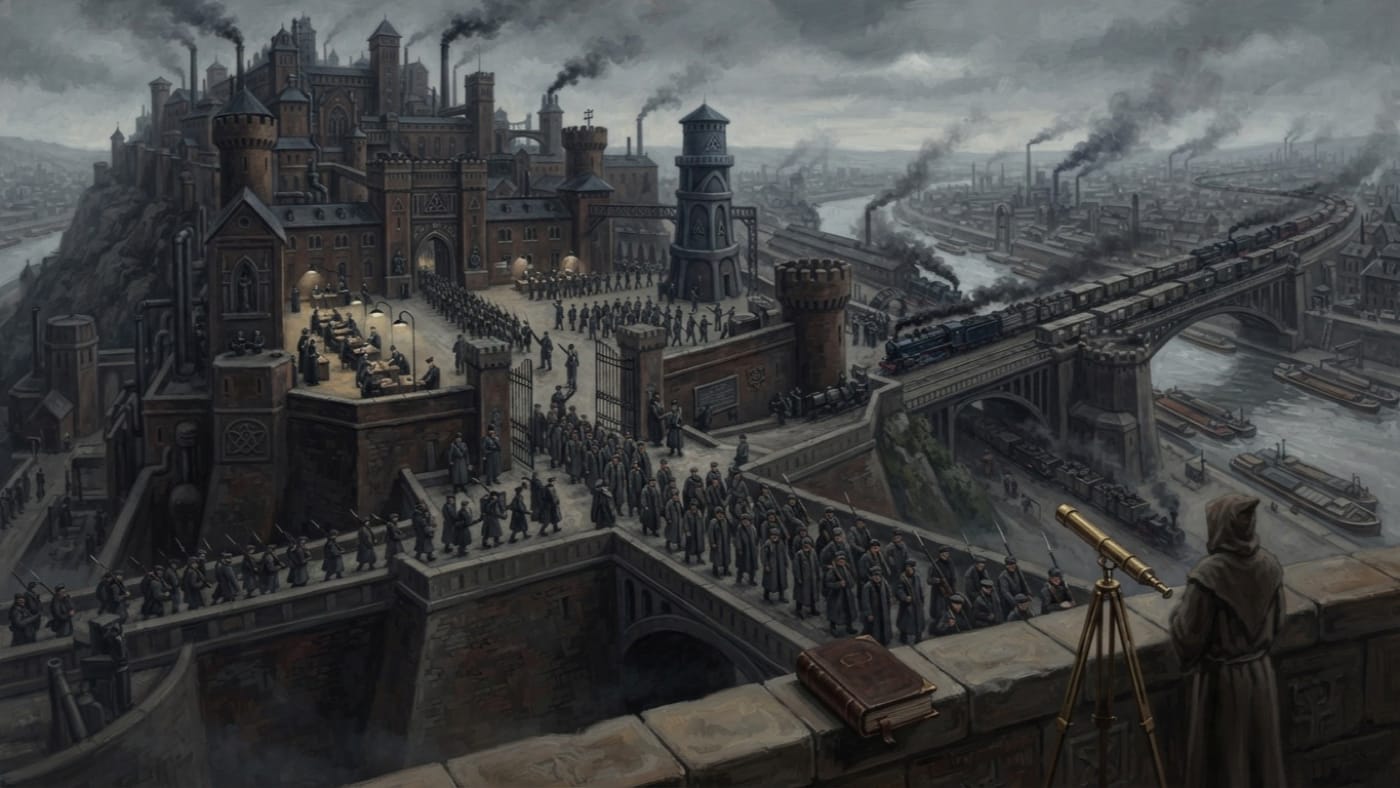
Auvergne supplies levy boys to the Citadel of Lyon. This commissioned A.S. 201 survey records its place in the Rhône corridor's machinery: the province supplies, Lyon receives, the east consumes.
Codex Ref. II.1.12-201
Balkan Collapse
A season of ruin, a permanent claim on sons
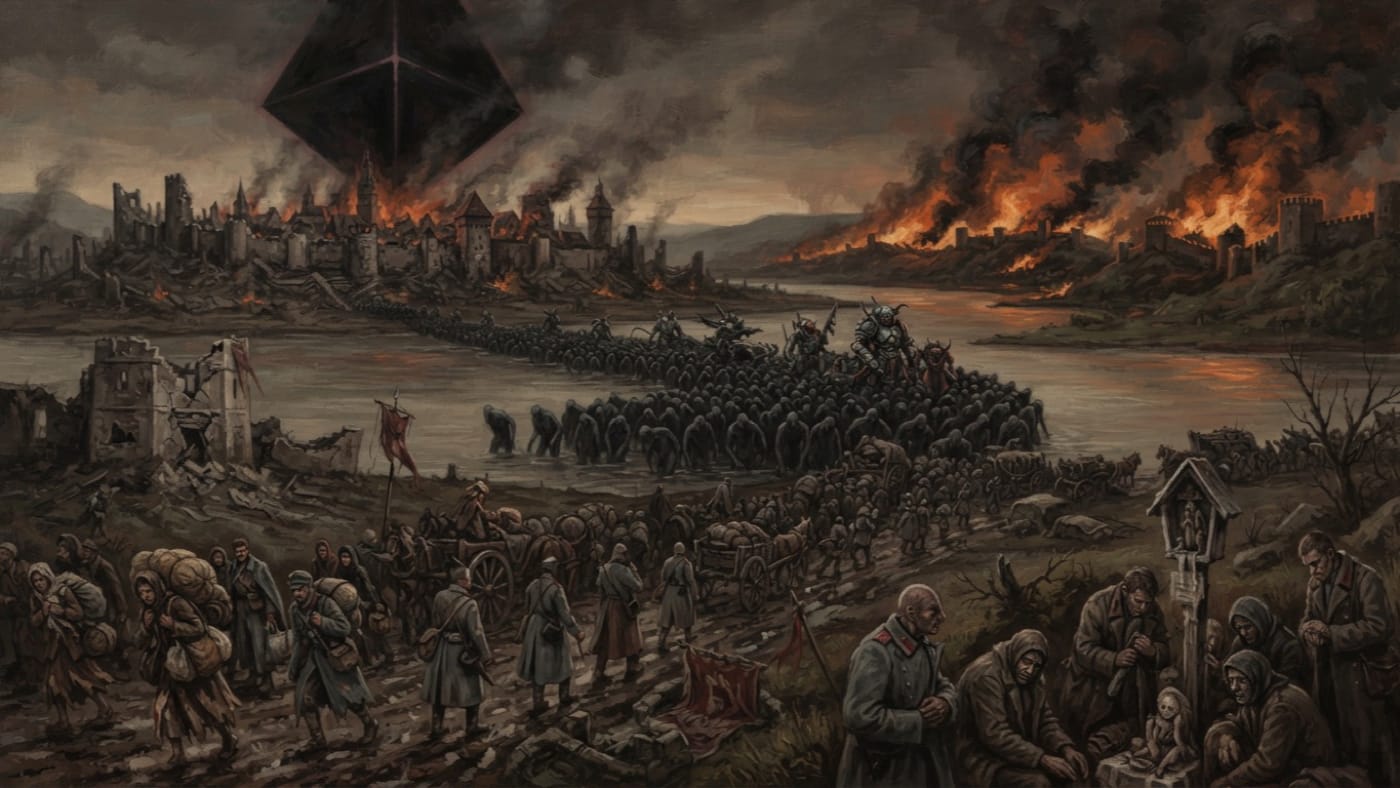
Brașov consumed, the Danube crossed on the drowned, and Thrace burned: the A.S. 110 Balkan Collapse gave Strasbourg an emergency it could charge to every household.
Codex Ref. IV.1.09-162
Baptism of Mud
The household loses a son; War receives a name
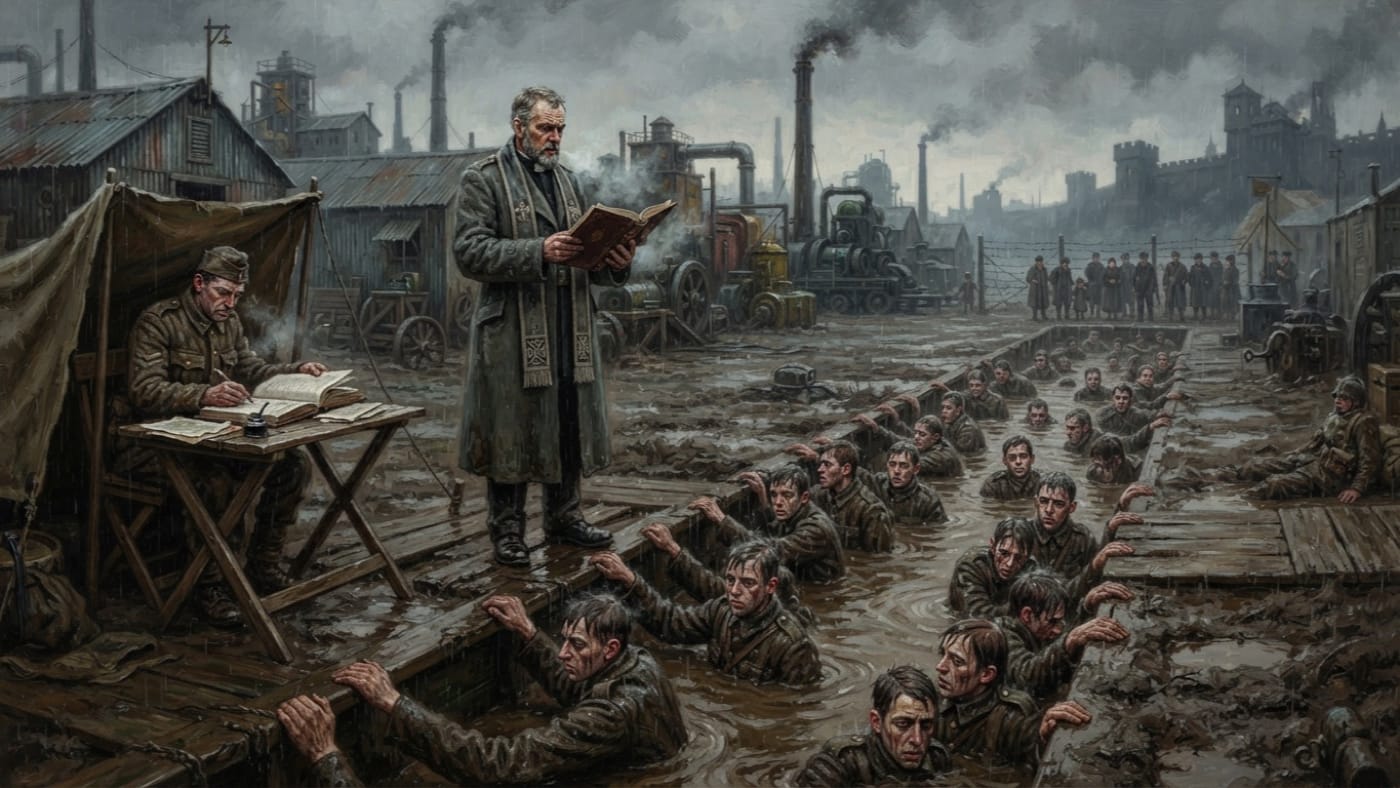
The Baptism of Mud receives levy recruits into War's custody: a flooded trench, the Litany of First Earth, and three days of mud that make the household's loss official.
Codex Ref. XIII.1.54-002
Bavaria
The heartland pays for safety one son at a time
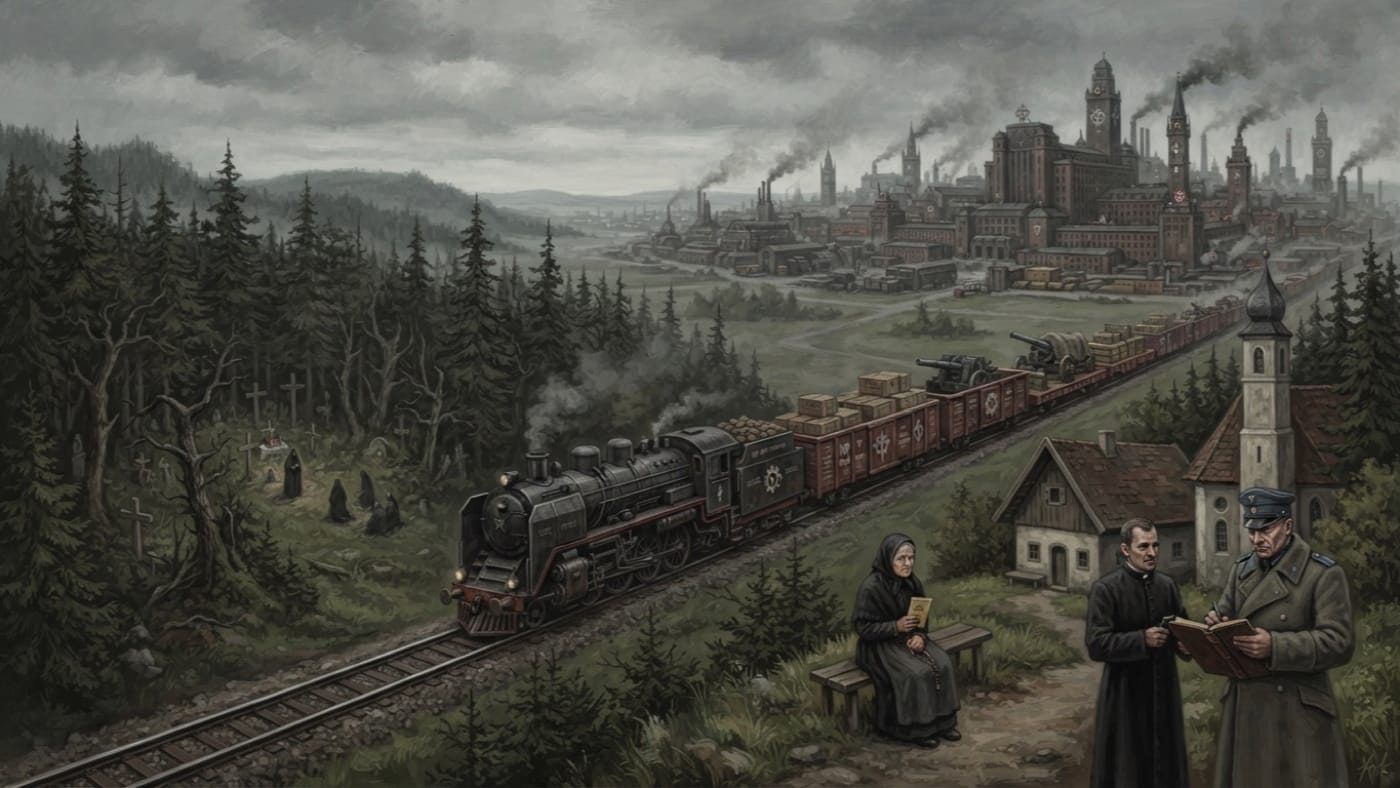
Bavaria's forests once hid scattered faithful. Its parishes now supply the Continental Levy, while Munich sends War's freight east. Heartland safety is paid for one household at a time.
Codex Ref. II.2.11-201
Bellways
The plural doctrine of roads, sky, trench, and taxable obedience
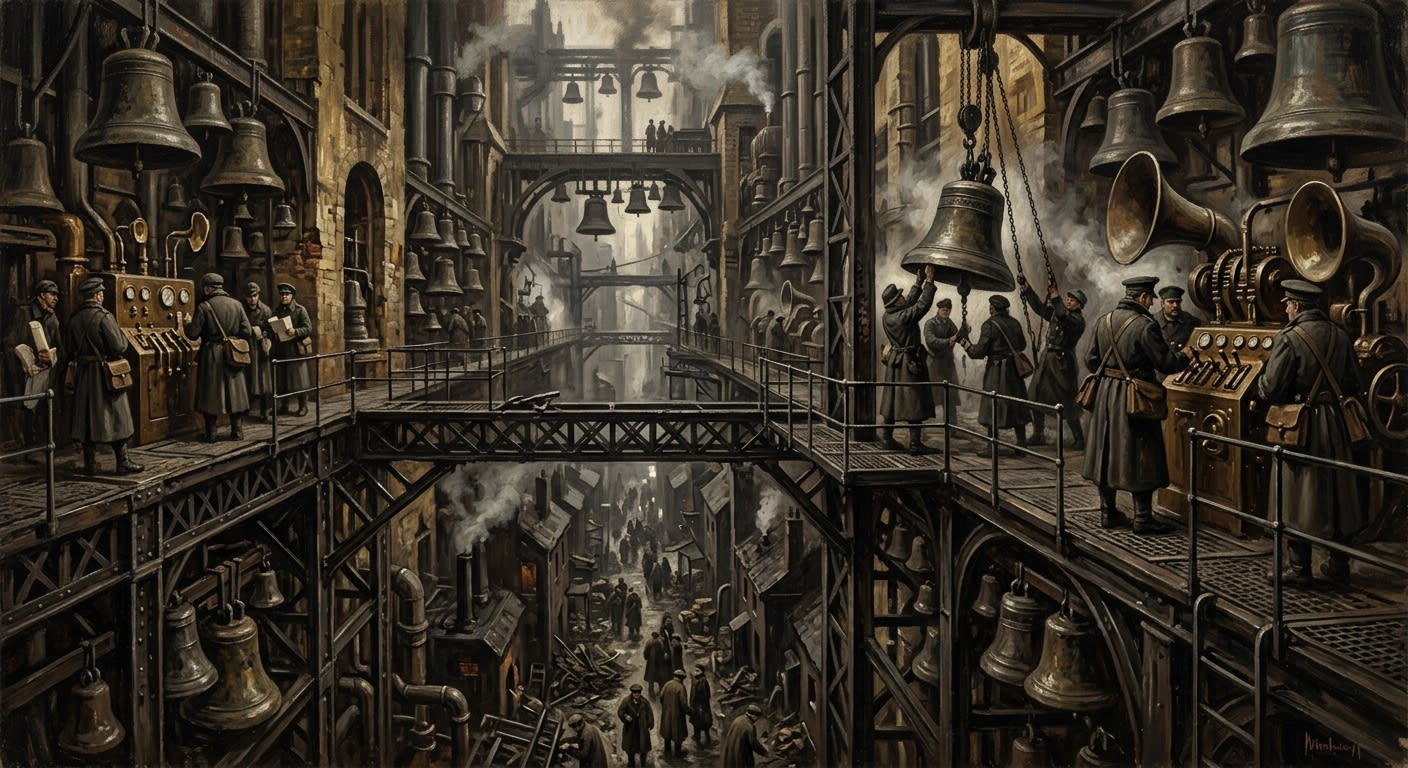
Bellways are the Synod's plural acoustic jurisdiction: low roads, middle war-lattices, high Ark corridors, and every quarrel they make audible.
Codex Ref. XIII.1.89-201
Black Ledger Cutpurse / Assassin
Larceny with a hymn; the Synod's most indispensable criminal enterprise
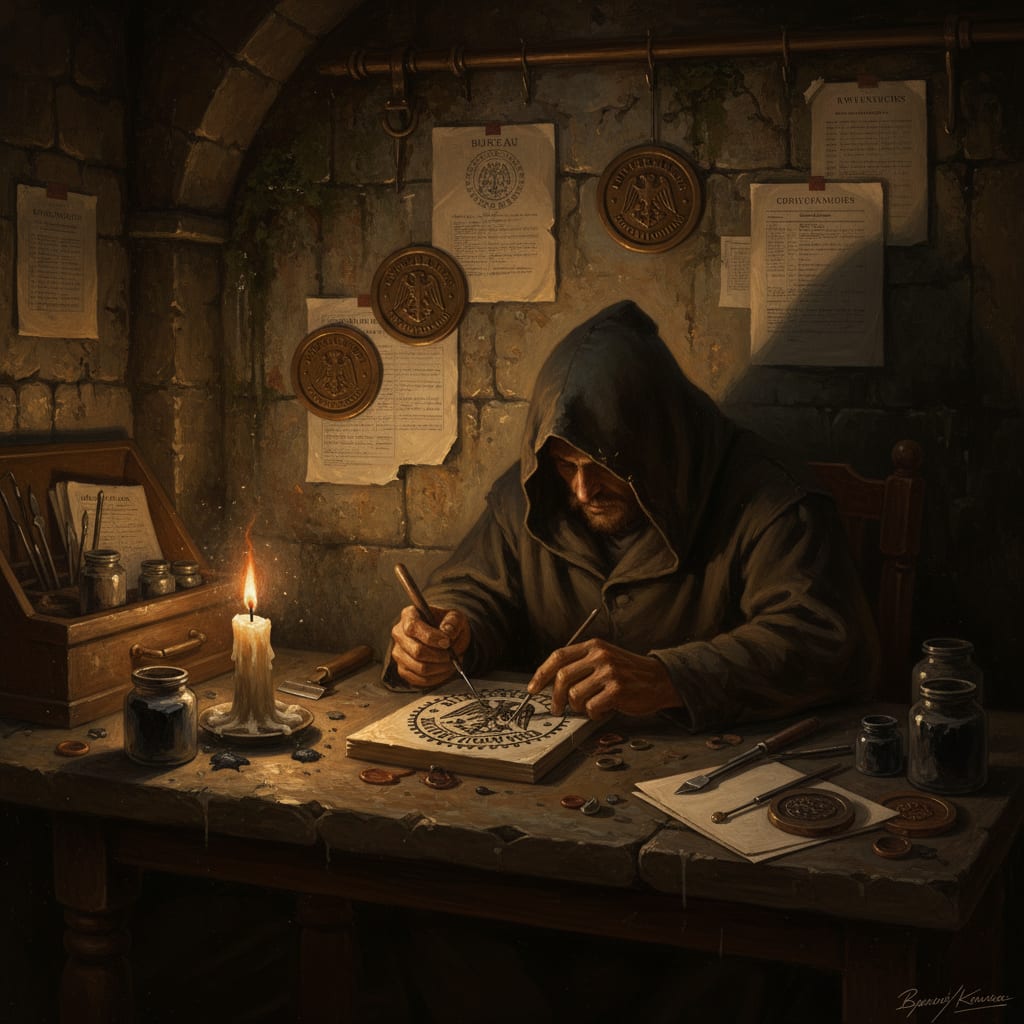
The Black Ledger steals rations, forges stamps, murders wardens, and distributes a calculated fraction to the hungry — then records what was given as a debt to be collected. The Bureau calls it heresy. The poor call it supper.
Codex Ref. XII.4.01-001
Black Run
A saint on the survey, slag in the water, and a town between the lines
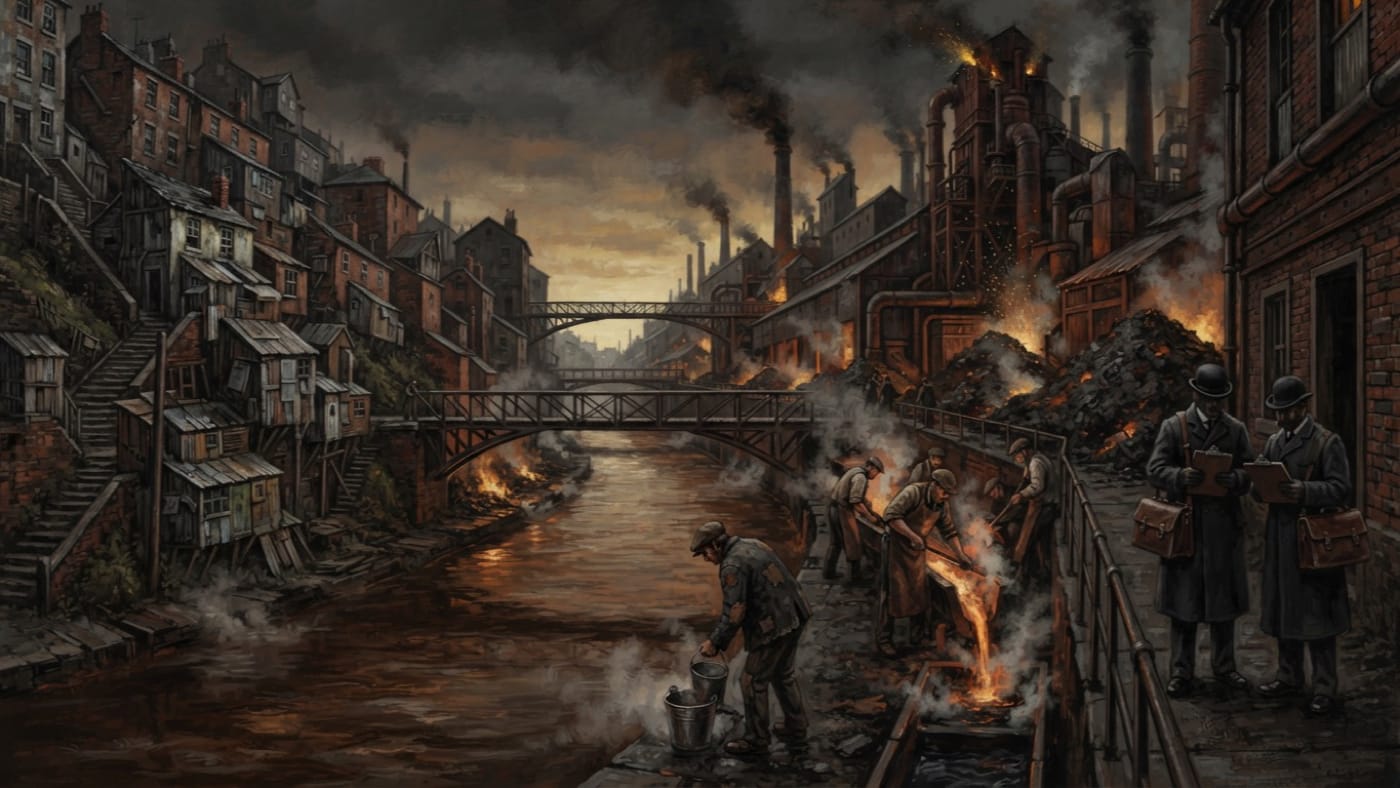
The Black Run is Keska's Saint Orban Channel: warm slag water beside a rural strip Mandate 188-A erased. The water strips paint; Settlement preferred a town.
Codex Ref. II.3.06-003
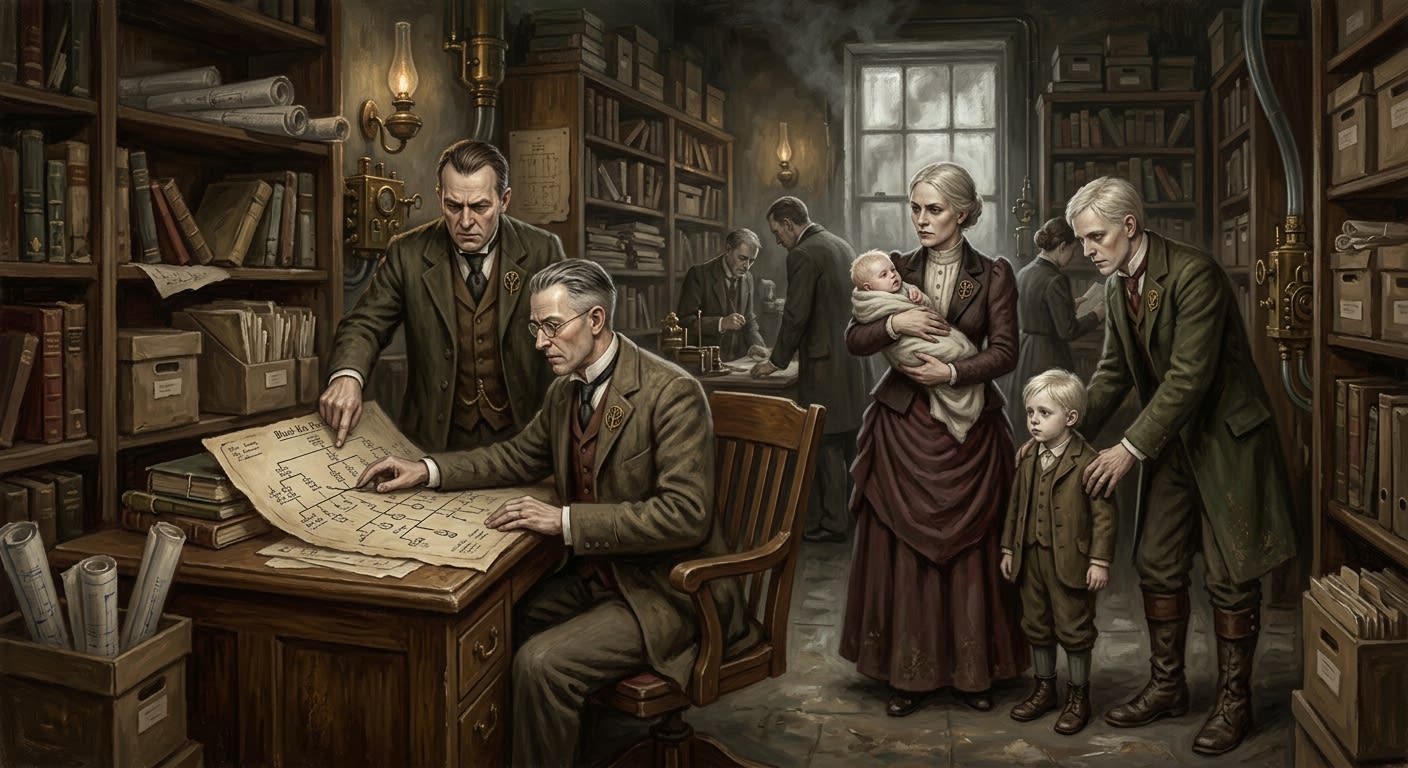
Blood-Kin Purists
The family tree, sharpened into a smuggling route
Conservative Pale Kin faction insisting hidden children be placed with blood relatives, preserving family memory while making Purity's kinship charts dangerously useful.
Codex Ref. XI.4.01-002
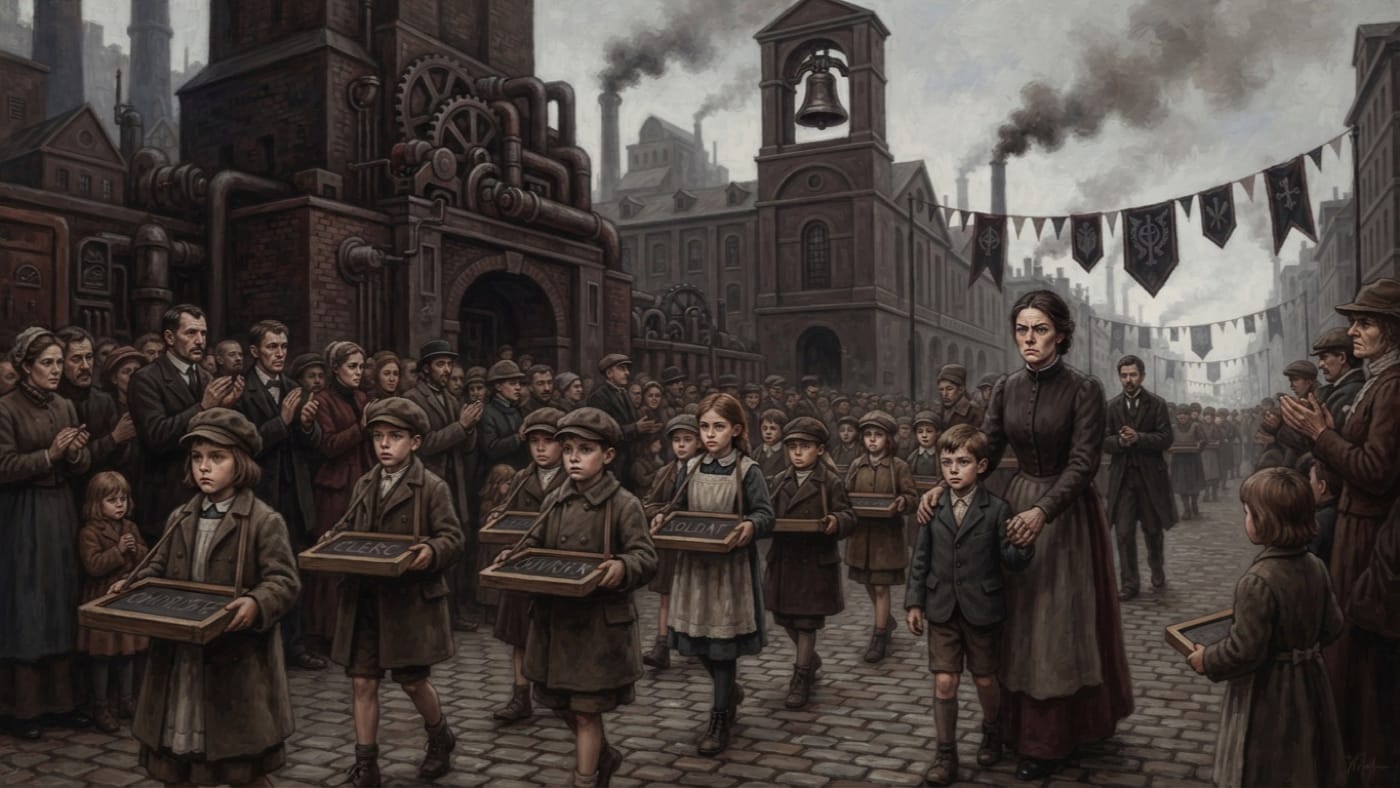
Book of Promise Parade
The child carries a future; the Bureaus retain the right to revise it
The Book of Promise Parade brings childhood's provisional vocations into the street: children carry wax tablets, families applaud, and the Bureaus reserve the right to change the future.
Codex Ref. XIII.1.22-002
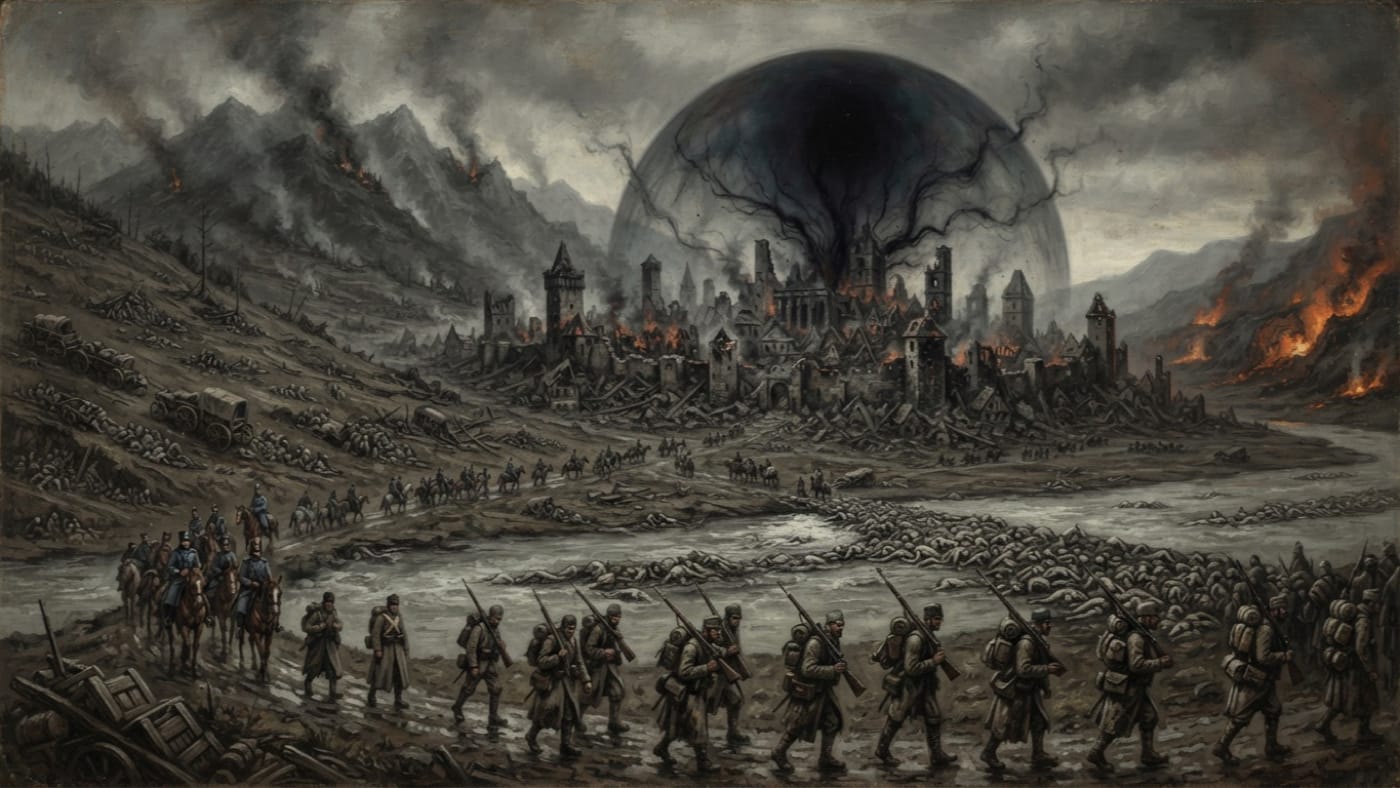
Brașov Crisis
The emergency that taught a fraction to march
In A.S. 110, Brașov was consumed, the Danube bridged with drowned men, and the Thracian passes burned. Strasbourg answered with one son in ten, an emergency measure that learned to endure.
Codex Ref. VII.8.10-110
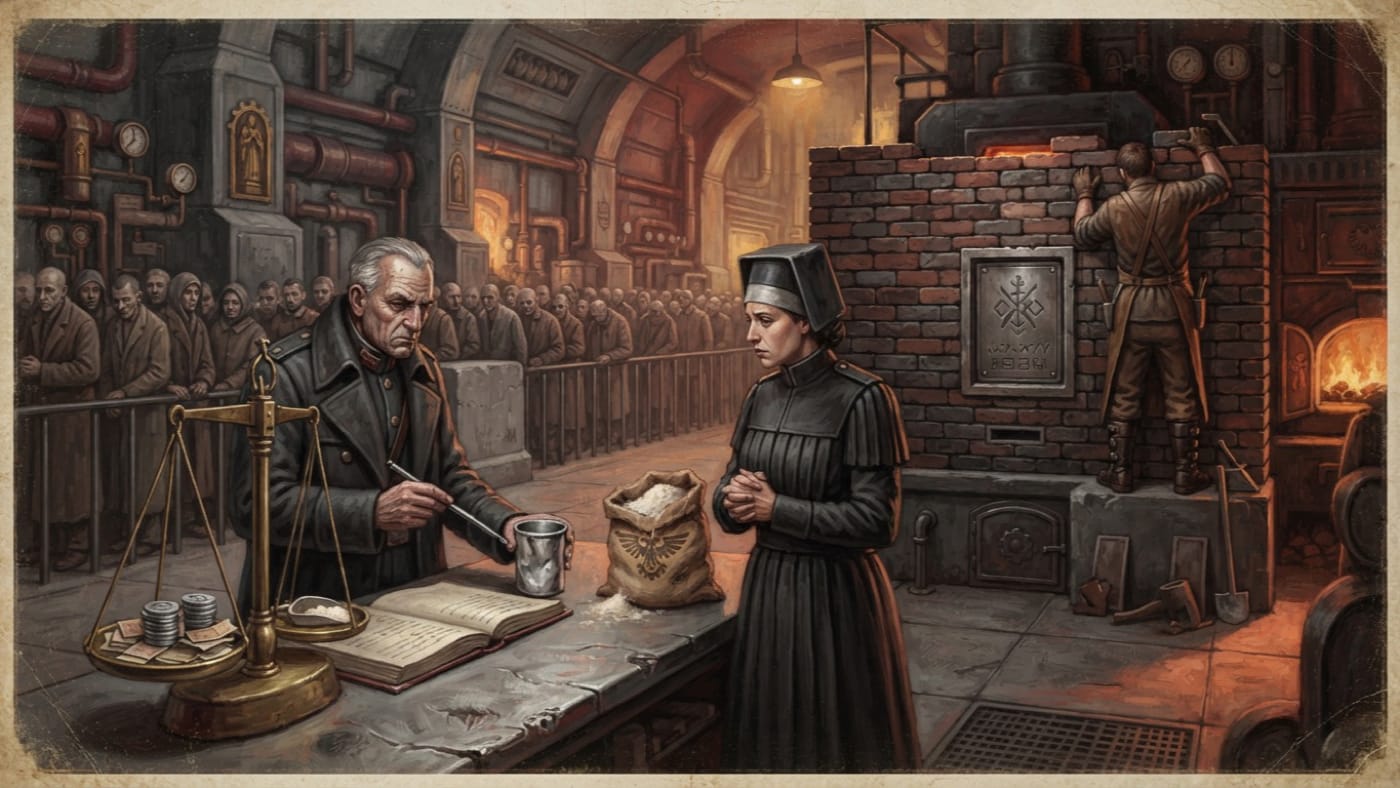
Bread Heresy
A short measure, a sealed wall
Bread heresy names the Church's charge against flour skimming, forged chits, hoarding, and unauthorized feeding. The cup measures the shortfall; the wall receives its assigned name.
Codex Ref. XIII.1.06-001
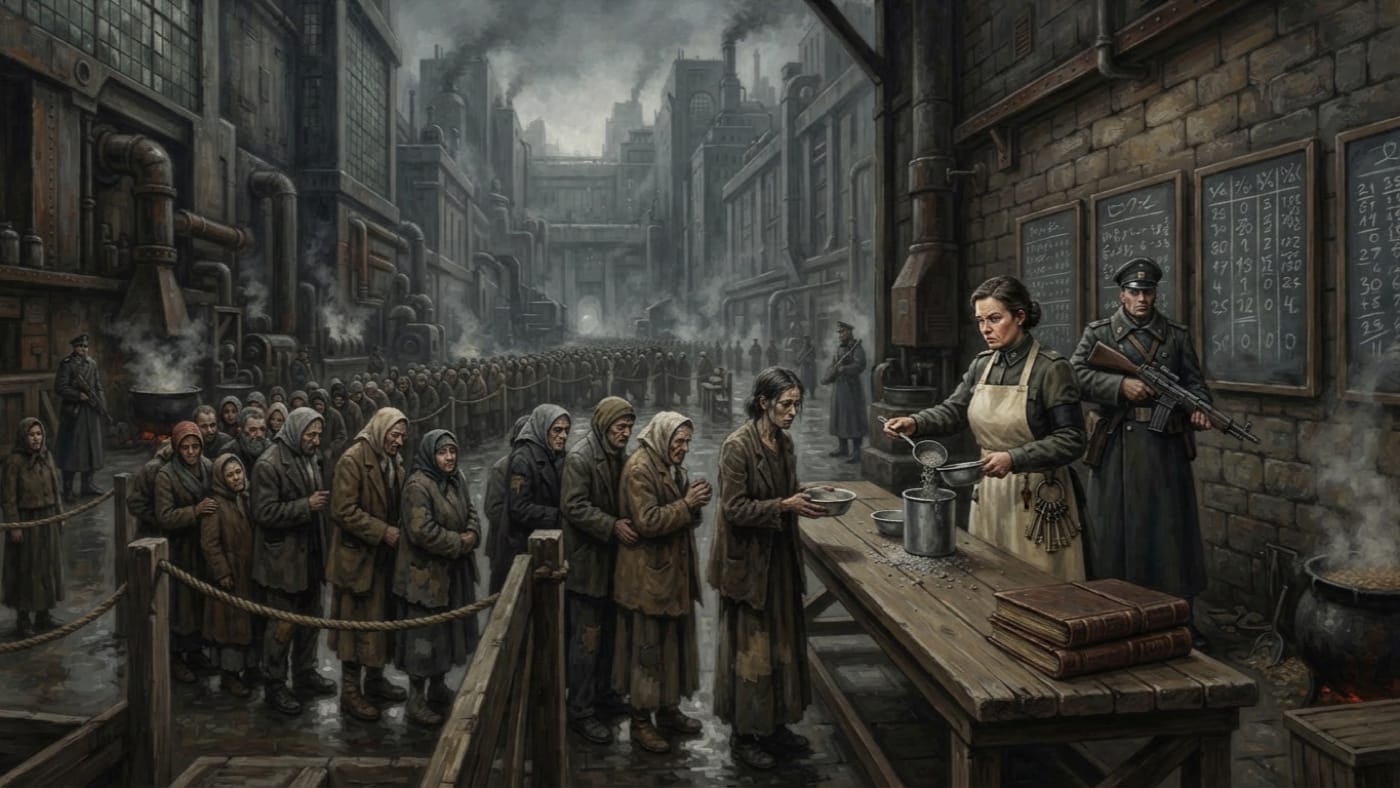
Breadfire Week
The ledgers burned; the guards remained
An A.S. 201 survey of Breadfire Week: ration halls burned in three unnamed bastion cities, records went with them, and the Mothers of Plenty gained guards and enforcement authority. The year remains disputed; the queue remains governed.
Codex Ref. VII.8.10-337
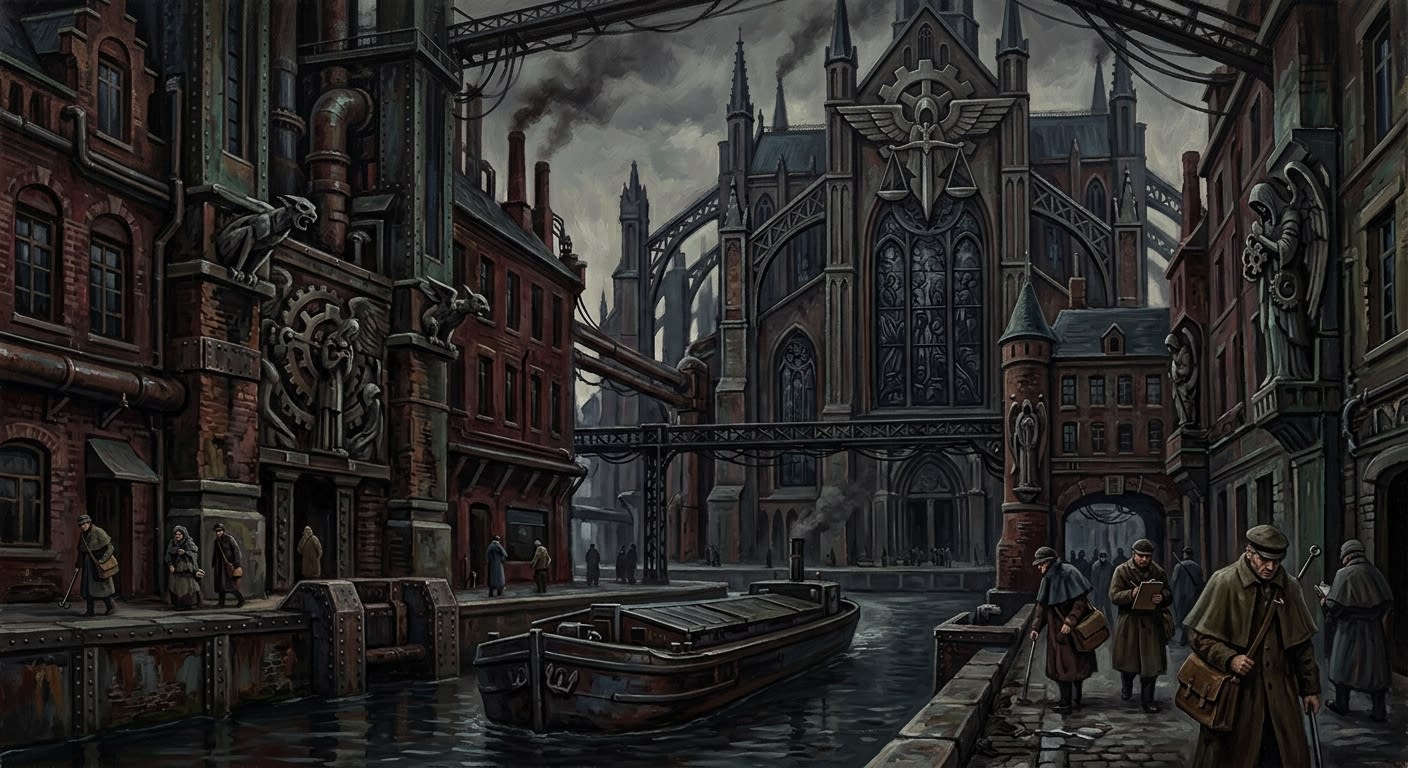
Bruges
Permit prosperity; audit beauty
Bruges is the Synod-held Lowlands city whose canals, colours, grotesques, relic glass, and impossible Tithes seal make beauty a recurring audit problem.
Codex Ref. II.1.04-058
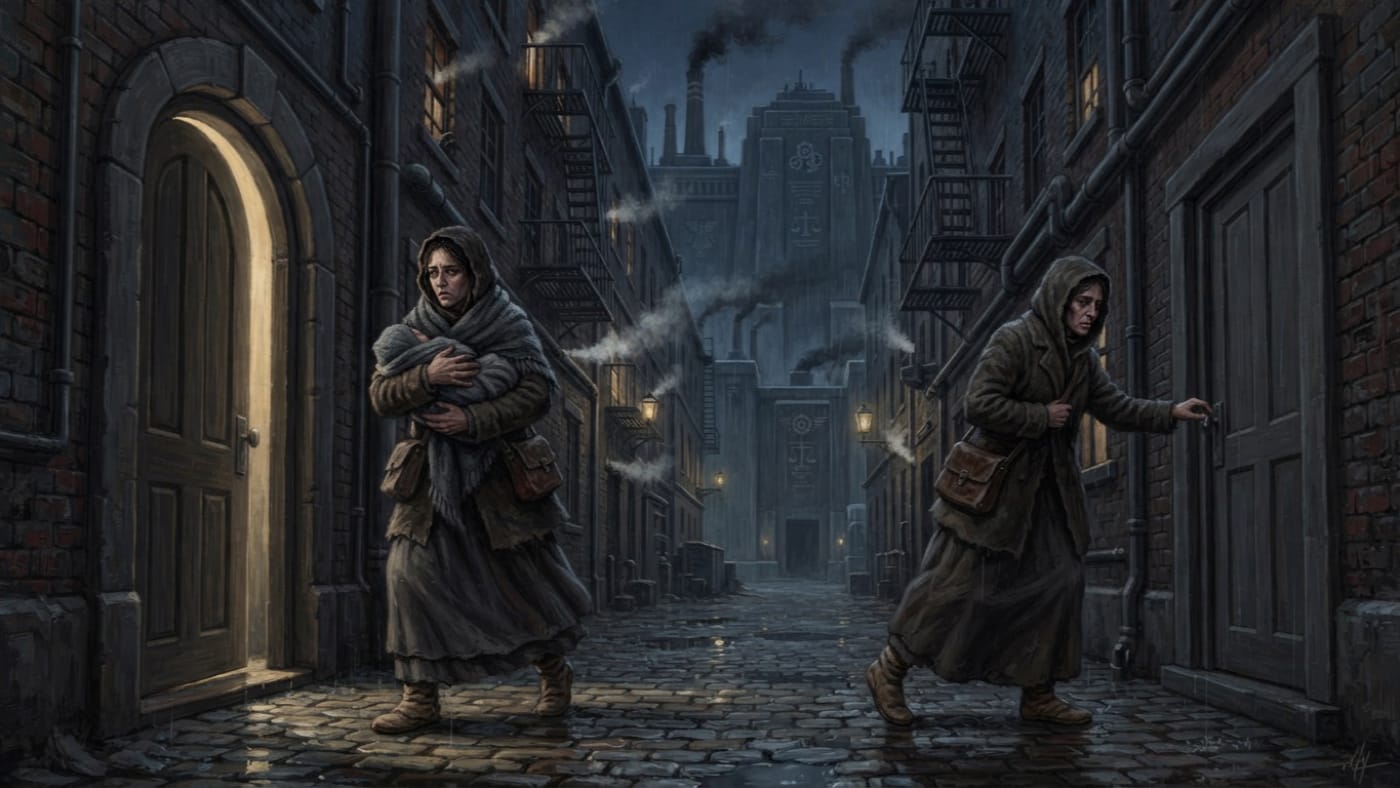
Bundle-Carriers
Two doors, one living child, no papers
The Pale Kin's entry rank carries infants between two doors, with no papers and little knowledge. The Bureau counts thieves; the trade counts children alive after winter.
Codex Ref. XII.28.02-001

Bureau of Festivals
Joy, administered at scale — licensed, measured, and periodically revoked
The Bureau that manufactures joy, schedules grief, and meters celebration with the same rigour the Bureau of War applies to troop rotations — and which has, on seventeen documented occasions, deployed confetti.
Codex Ref. VIII.5.01-001
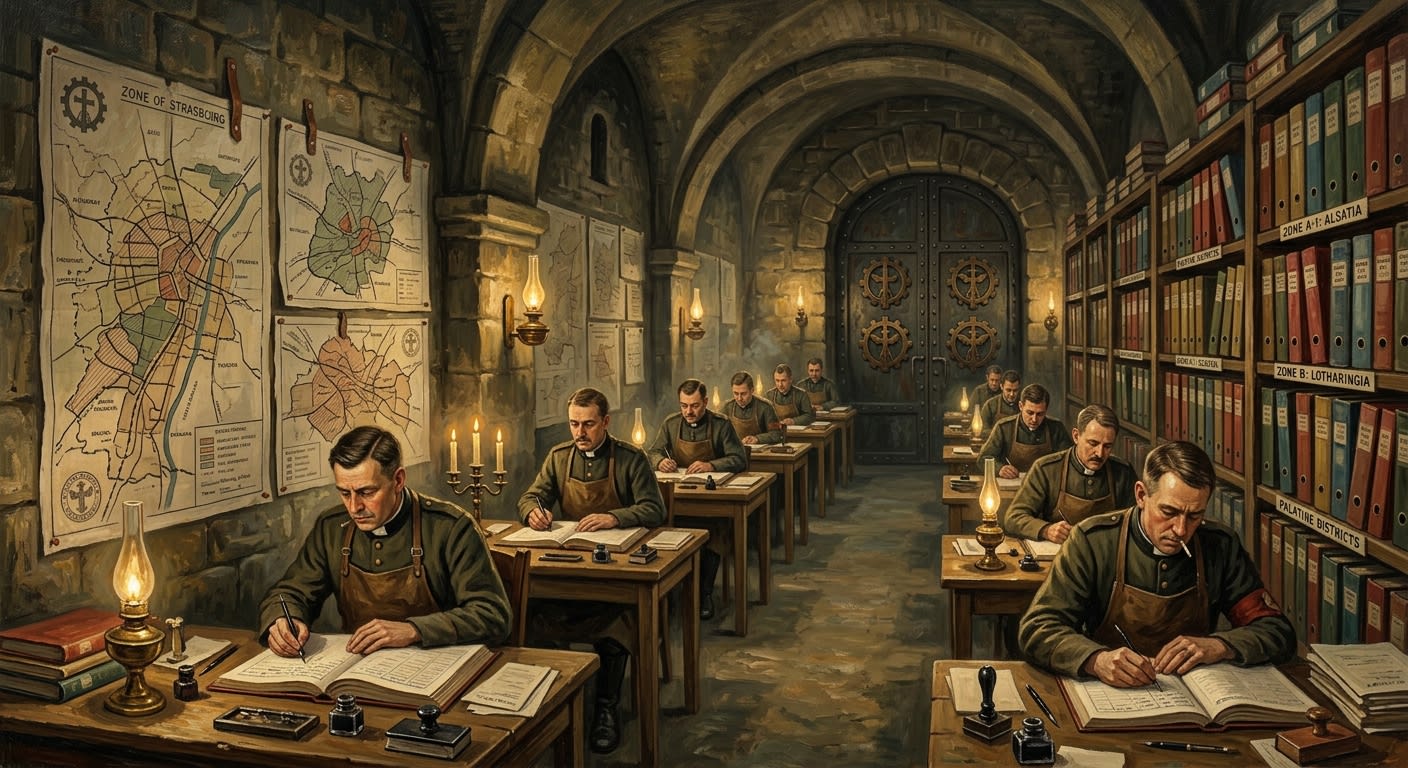
Bureau of Settlement
Where three hundred million subjects are permitted to stand — and by whose leave.
The Bureau of Settlement does not appear in the twelve canonical portfolios. No crimson sash, no hymn. What it has is authority over the address of every living subject of the Theocracy — and the knowledge that no one listens until the plumbing fails.
Codex Ref. IV.3.08-001

Bureau of War Instrument 44-K
The word is voluntary. The collar is iron.
Instrument 44-K classifies the Sunken Choir's boys as "Liturgical Combatants, Voluntary" and licenses Line deployment. Mercy's objection enters the file; the cohort returns underground.
Codex Ref. XIII.1.44-001
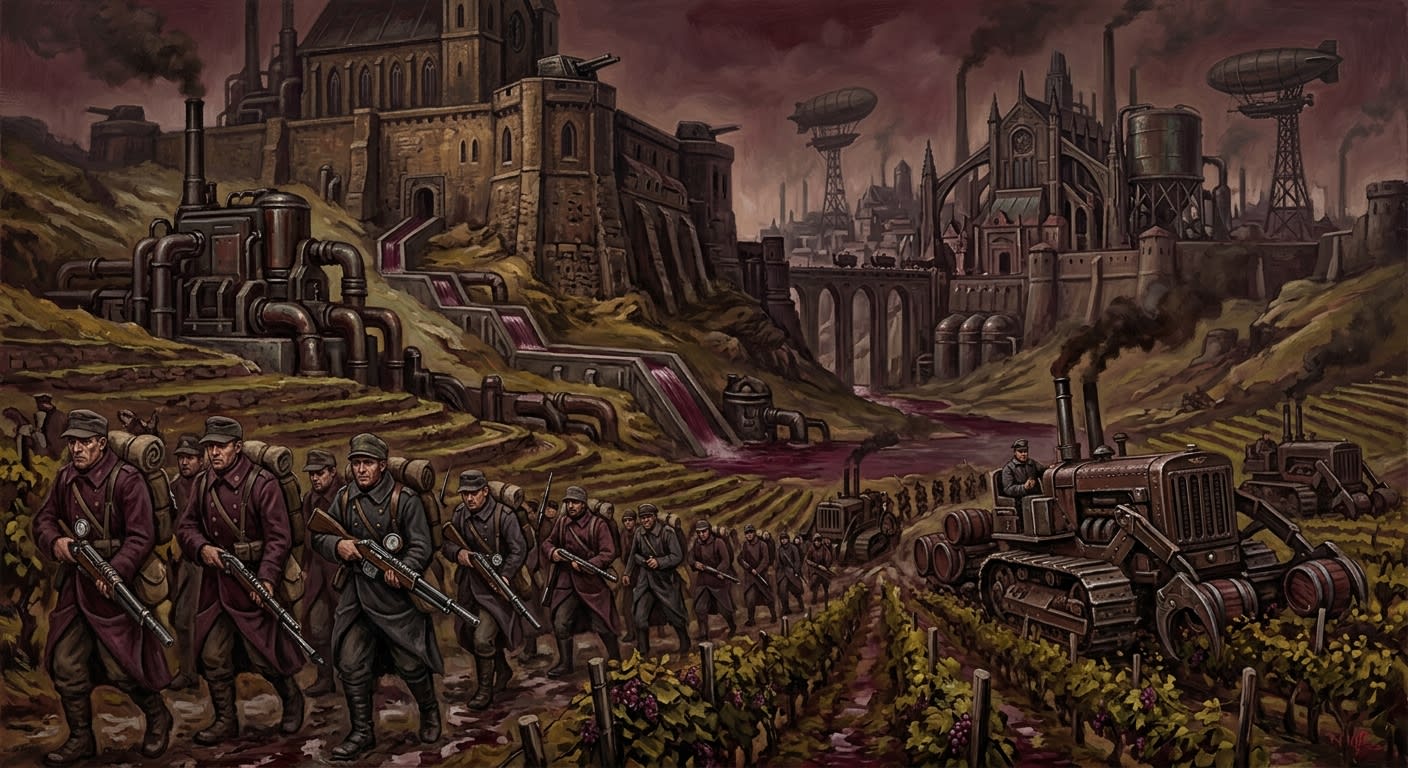
Burgundy
The wine-dark province that gives sons, casks, silence, and trouble
Burgundy is the Synod's wine-dark western province: vineyard, levy basin, Rhône feeder, cellar-church, chromatic hazard, and polite machinery of refusal.
Codex Ref. II.1.11-201
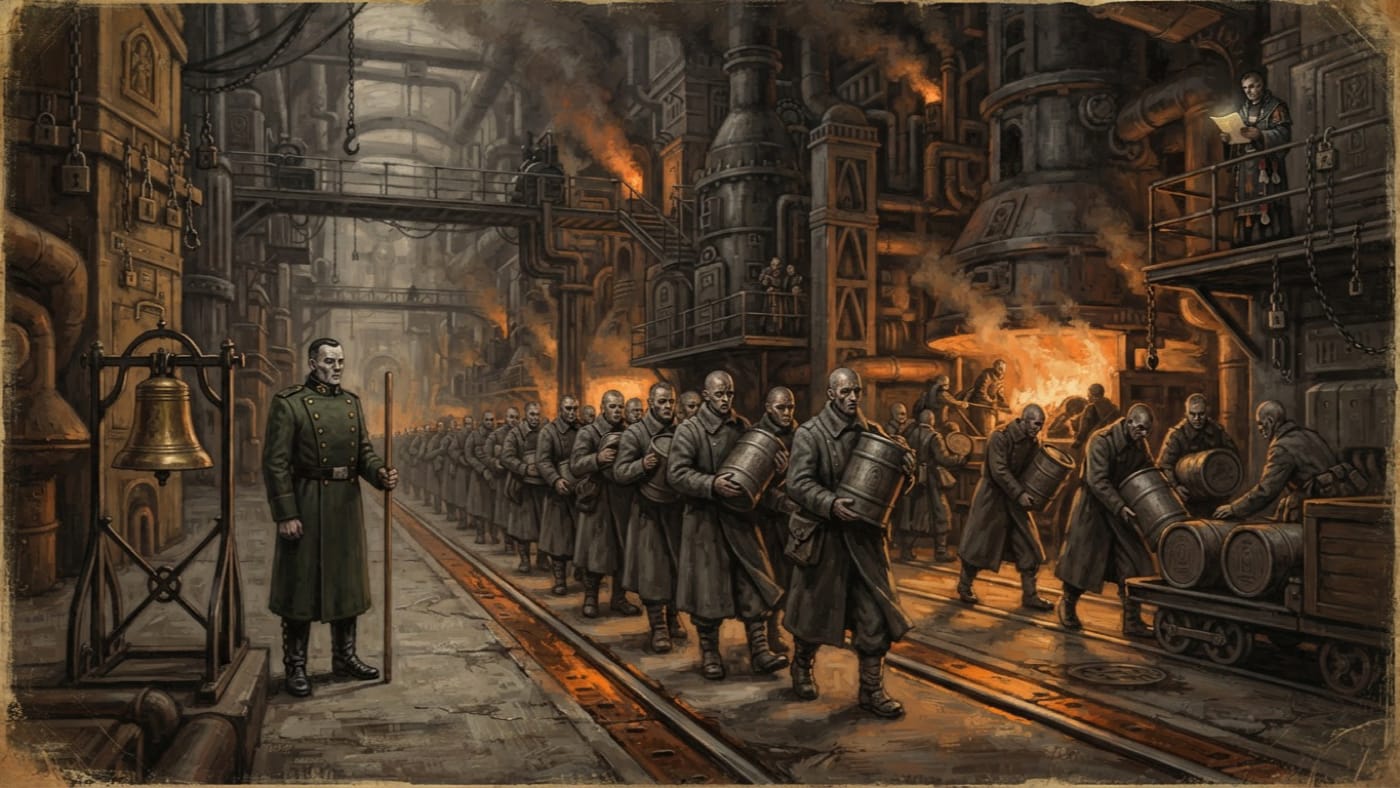
Catechism-Barracks of Brast
Where obedience learns the furnace's hours
Brast's catechism-barracks turn Levy recruits, furnace workers and penal crews into bodies that keep the furnaces' time. Courage is optional; cadence is required.
Codex Ref. XIII.1.98-201
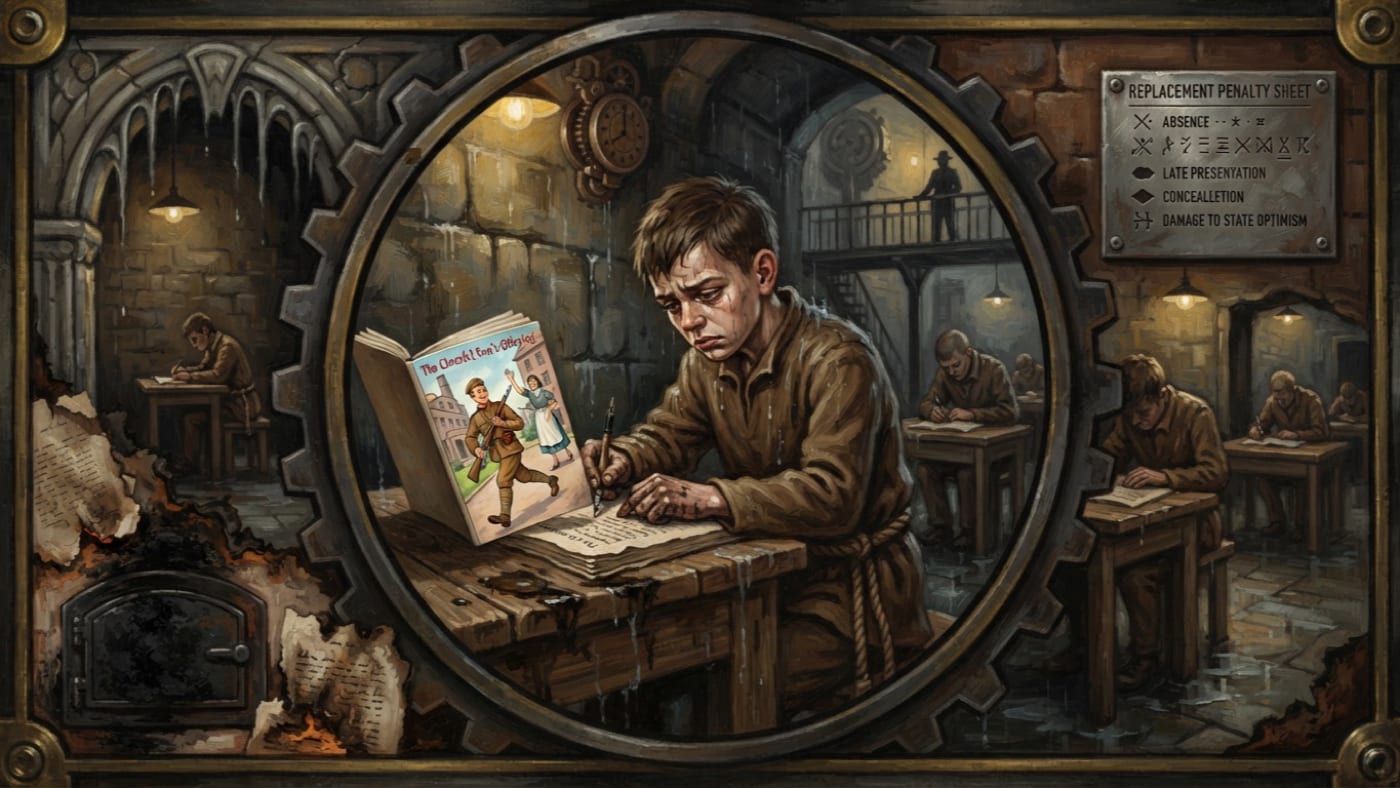
Cheerful Son's Offering
Withdrawn from issue, retained for punishment
An A.S. 201 survey of Lyon's withdrawn levy booklet. Its smiling recruit survives in the Sub-Yard, where refusal of the Wall Circuit earns three days of copying.
Codex Ref. VI.5.01-598
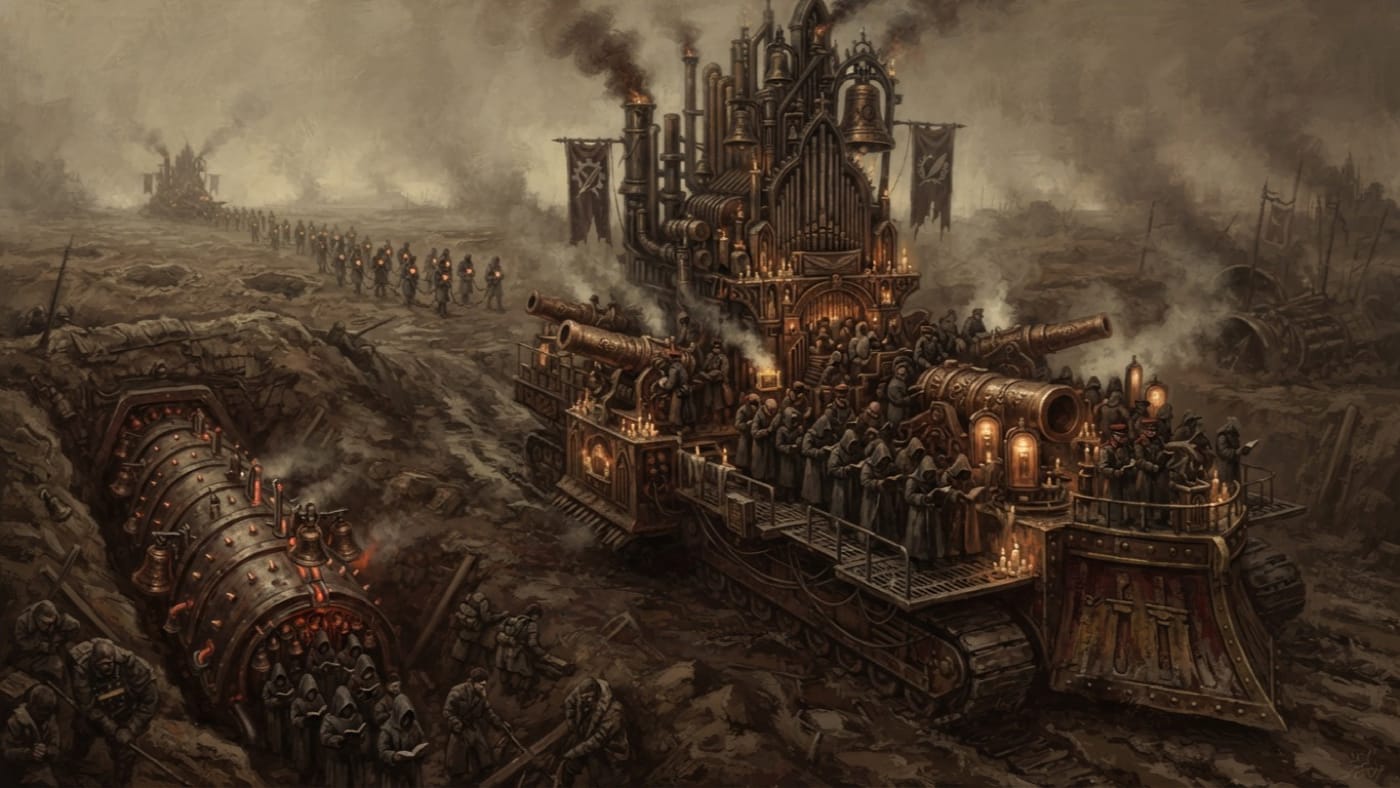
Choir-Engines
The Creator grants the miracle; the singer pays for it
The Sunken Choir, Processional Arsenal and Chorus Absolvers turn sanctioned prayer into siege work under Orison's War Directorate. The Creator grants the miracle; the singers pay in hearing, throats, lungs and years.
Codex Ref. XIII.1.32-001
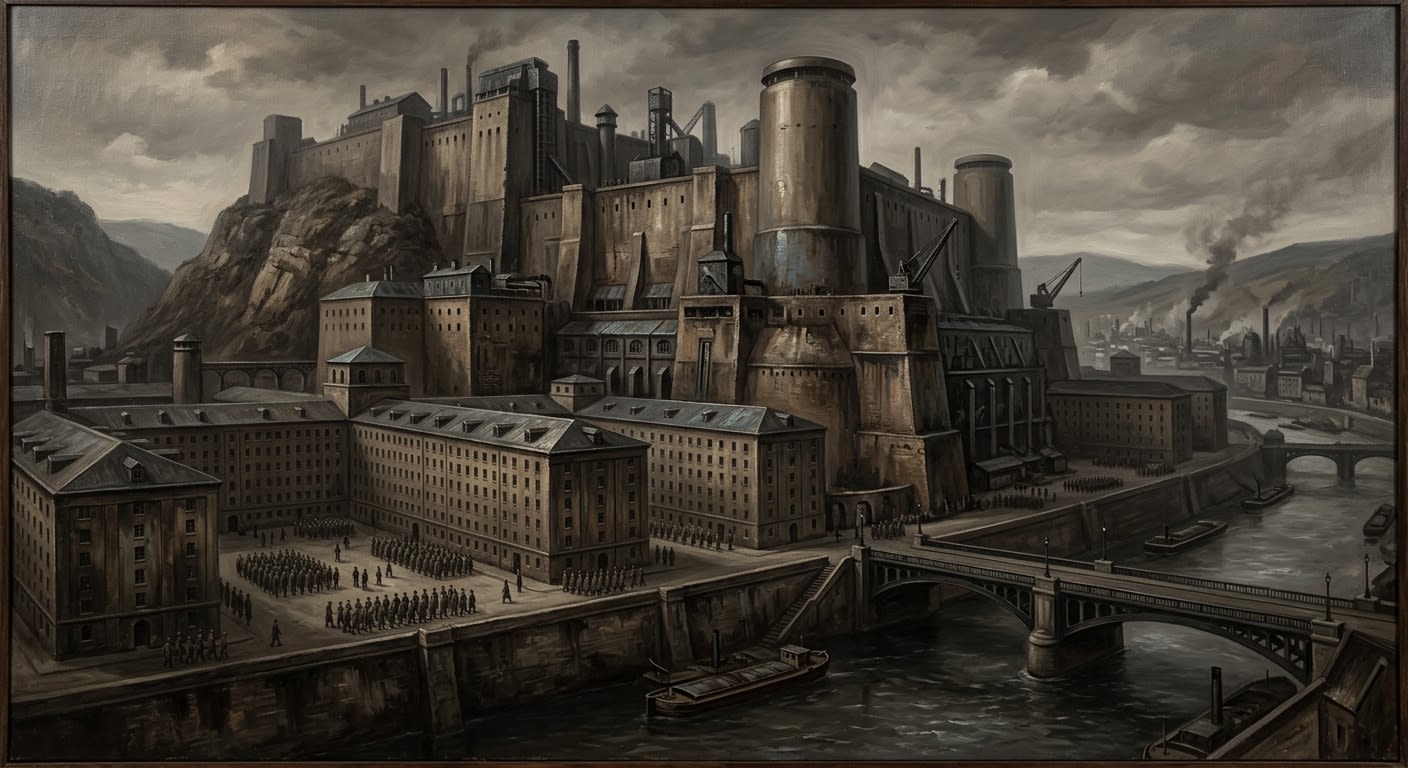
Citadel of Lyon
The hill where maternal invention meets drill tempo
The Citadel of Lyon is the Rhône corridor's catechism-barracks and civic warning, fixed after the Levy protests to train boys and supervise joy.
Codex Ref. II.1.01-004
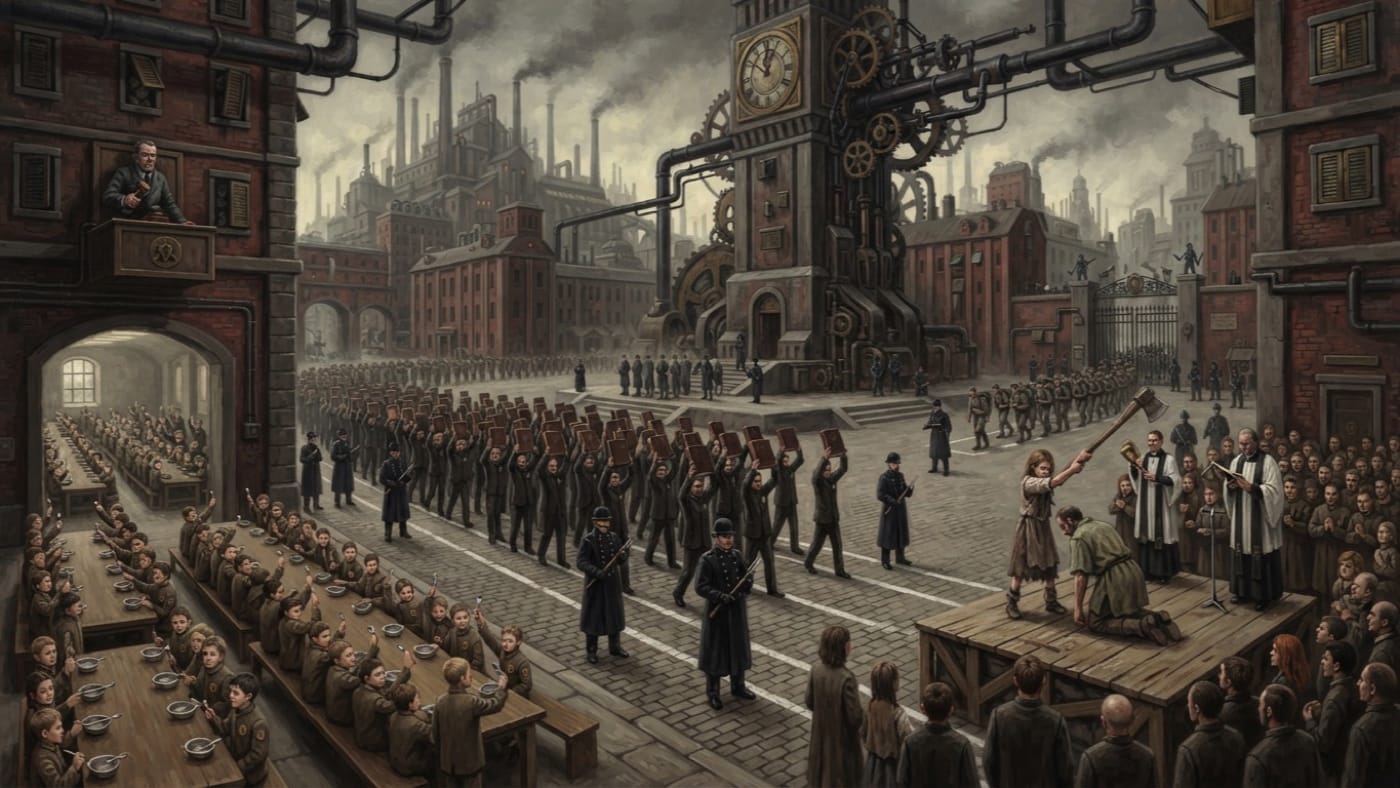
Civic Cut
The Levy takes a fraction. The Cut prepares the whole field.
Conscription takes a fraction. The Civic Cut prepares the whole field: children learn to eat, march, rejoice and betray in time with the bells, years before the Levy arrives.
Codex Ref. XIII.1.23-201
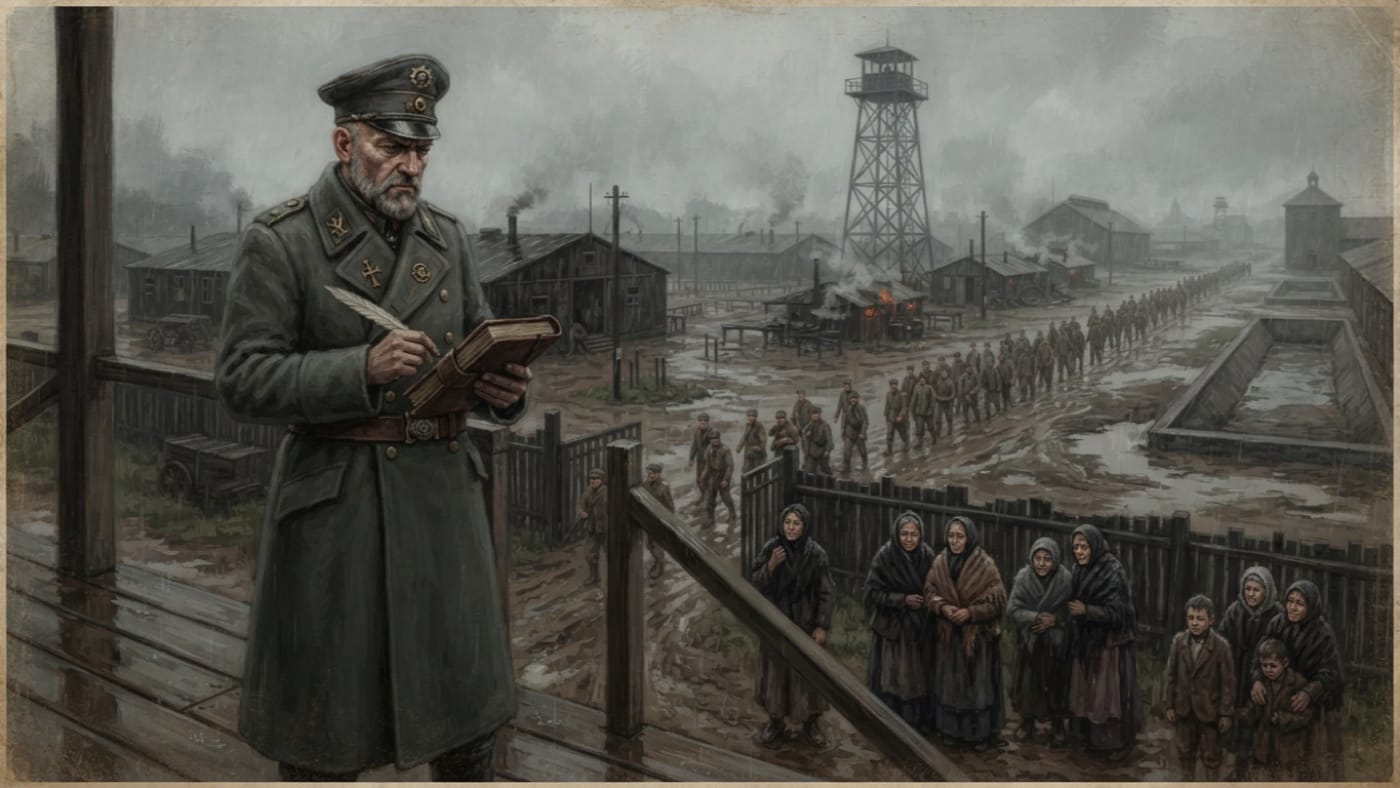
Colonel-Catechist Othmar Vey
Two trenches, three kitchens, and a roof for grief
Othmar Vey commands Stuttgart's catechism-barracks in the A.S. 201 survey. His recorded petition asks for another mud trench, three ration kitchens, and a roof for families; Doctrine approves the instincts and delays the silver.
Codex Ref. III.2.01-201

Continental Levy
The decimal point where obedience becomes infantry
The Continental Levy is the Synod's permanent tithe of flesh, born from the A.S. 110 crisis and refined into household arithmetic.
Codex Ref. XIII.1.54-001
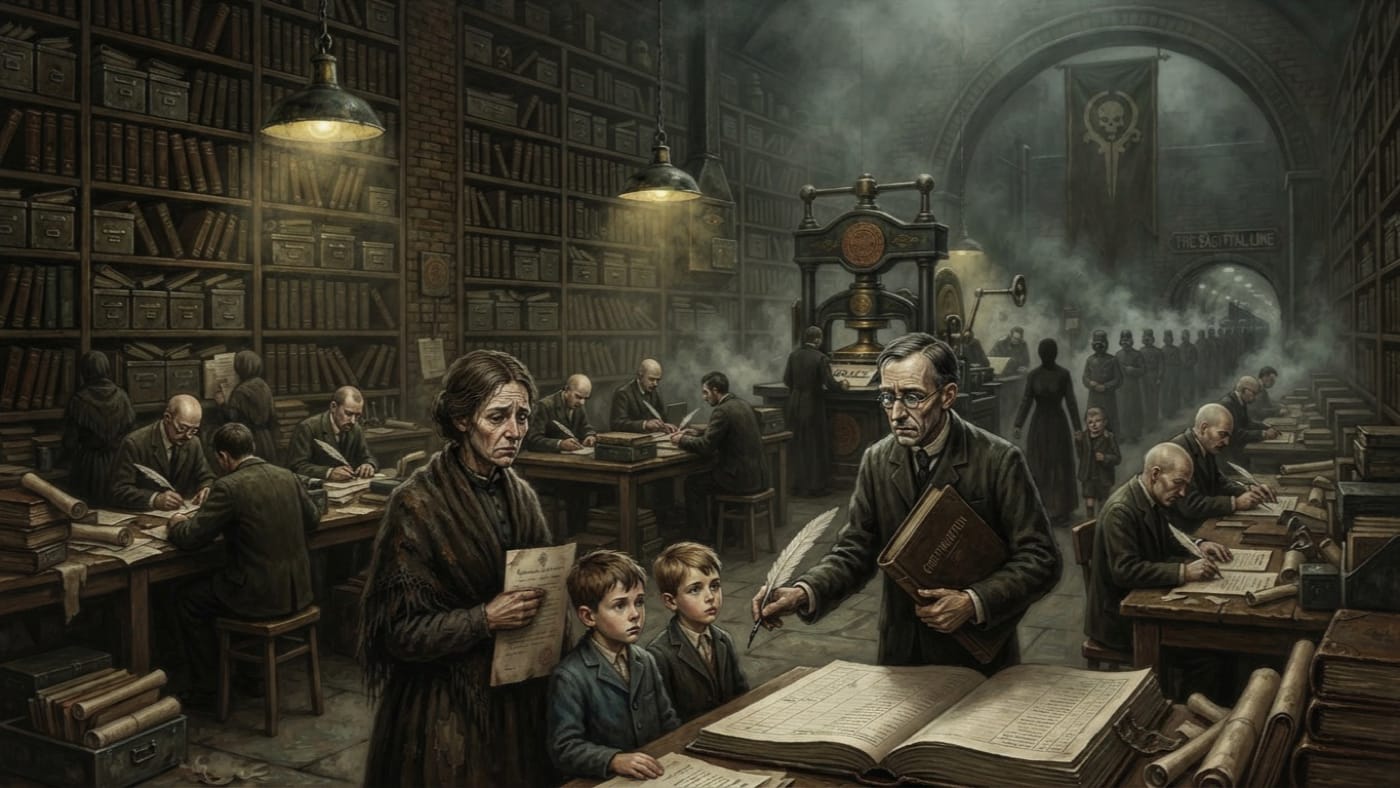
Continuations of the Original Grace
Grace is given once and collected forever
War's name for the Continental Levy renewals: the A.S. 110 emergency carried into successive generations, with sealed quotas and no promise of completion.
Codex Ref. XIII.1.54-002
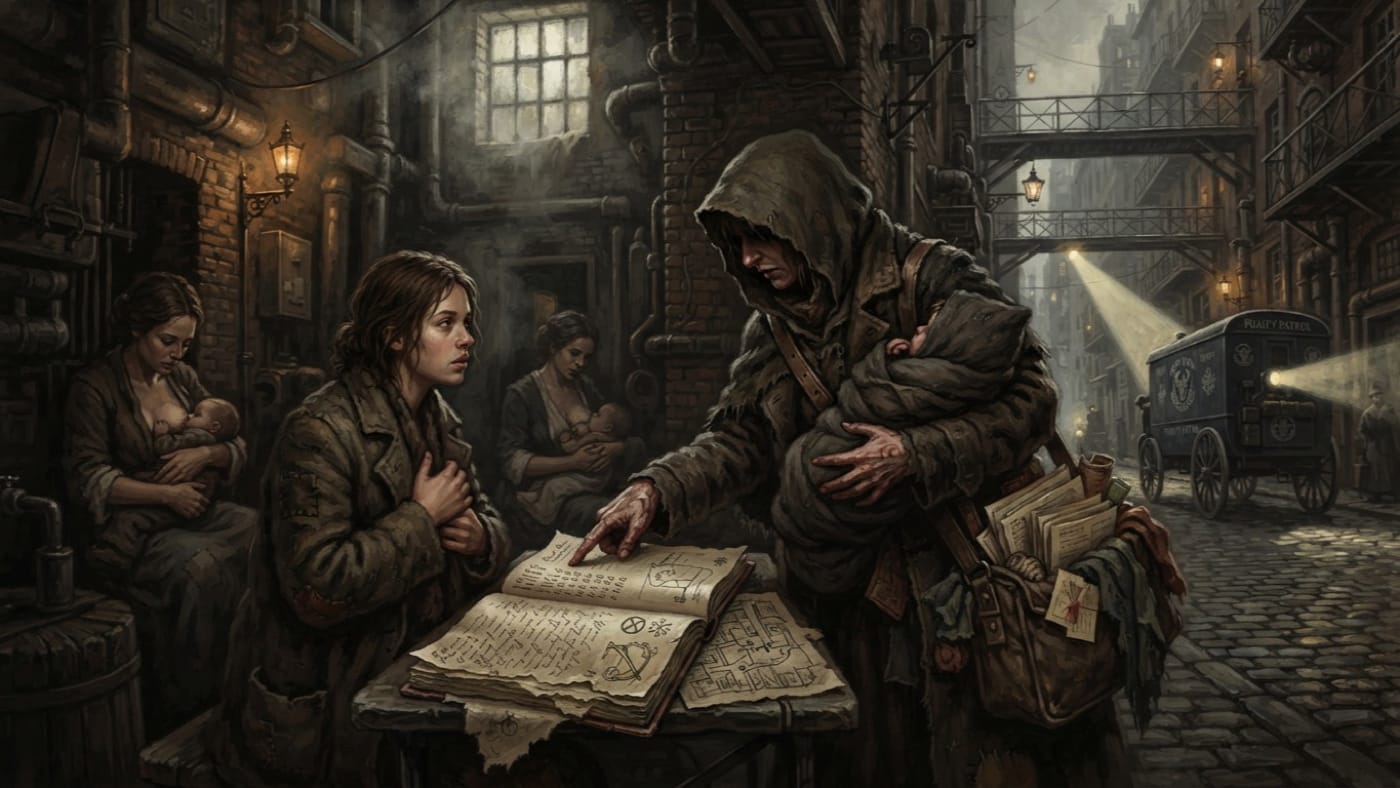
Cradle Brokers
Escape takes one night; milk is due again before dawn
Cradle Brokers place hidden infants and maintain the Pale Kin's wet-nurse rings. The Bureau calls them child thieves; their ledger asks whether anyone survived winter.
Codex Ref. XII.28.04-001
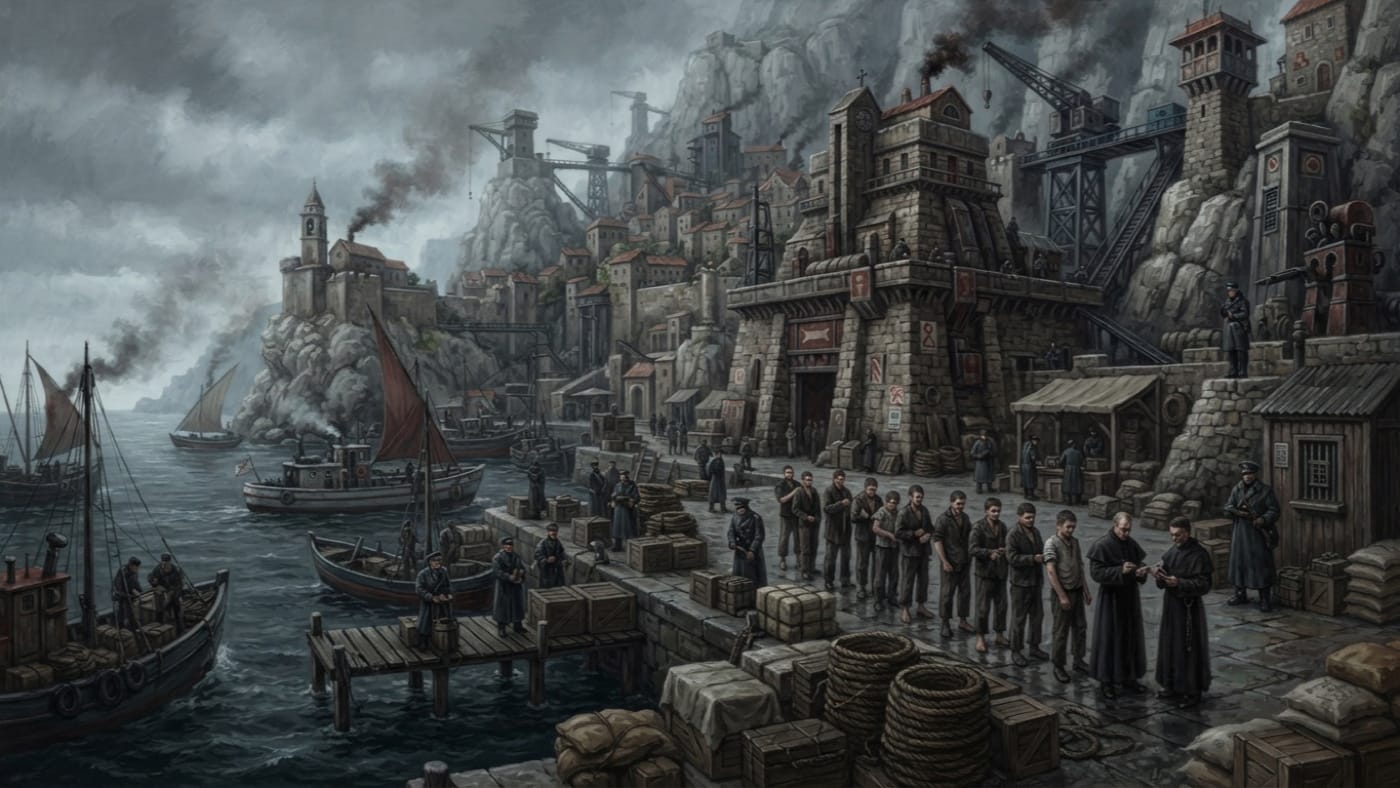
Dalmatia
Where rope is sold and sons are assessed
Dalmatia is the Synod's Adriatic supply coast: Venetian cargo, quarantine piers and parish rolls. Rope, salt and harbour labour are sold; the tenth son is assessed.
Codex Ref. II.7.05-201
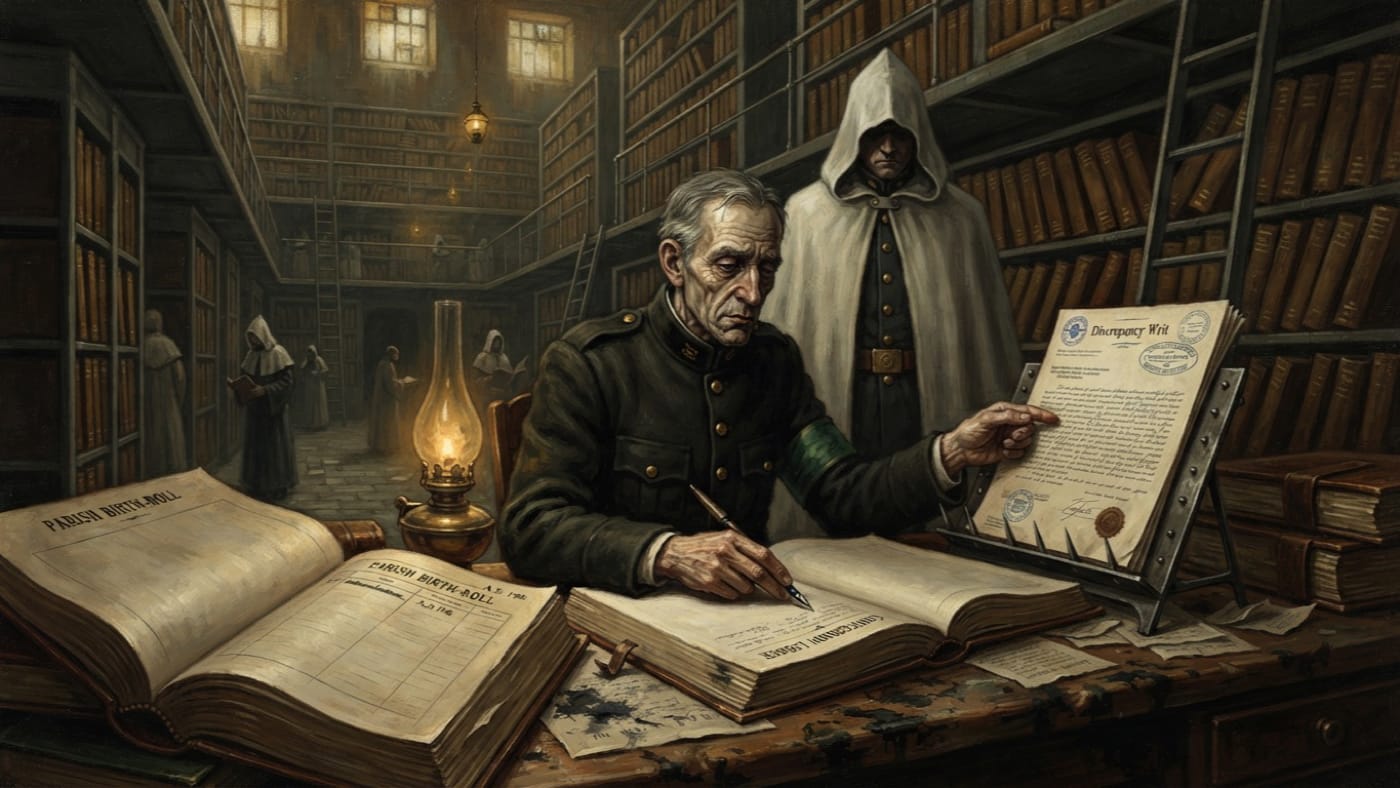
Discrepancy Writ
A name at the font. No voice at the screen.
A son stands on the birth-roll and vanishes from the confession ledger. Conscription files the writ and informs Purity. The books disagree; the household acquires a second Bureau's attention.
Codex Ref. XIII.1.83-201
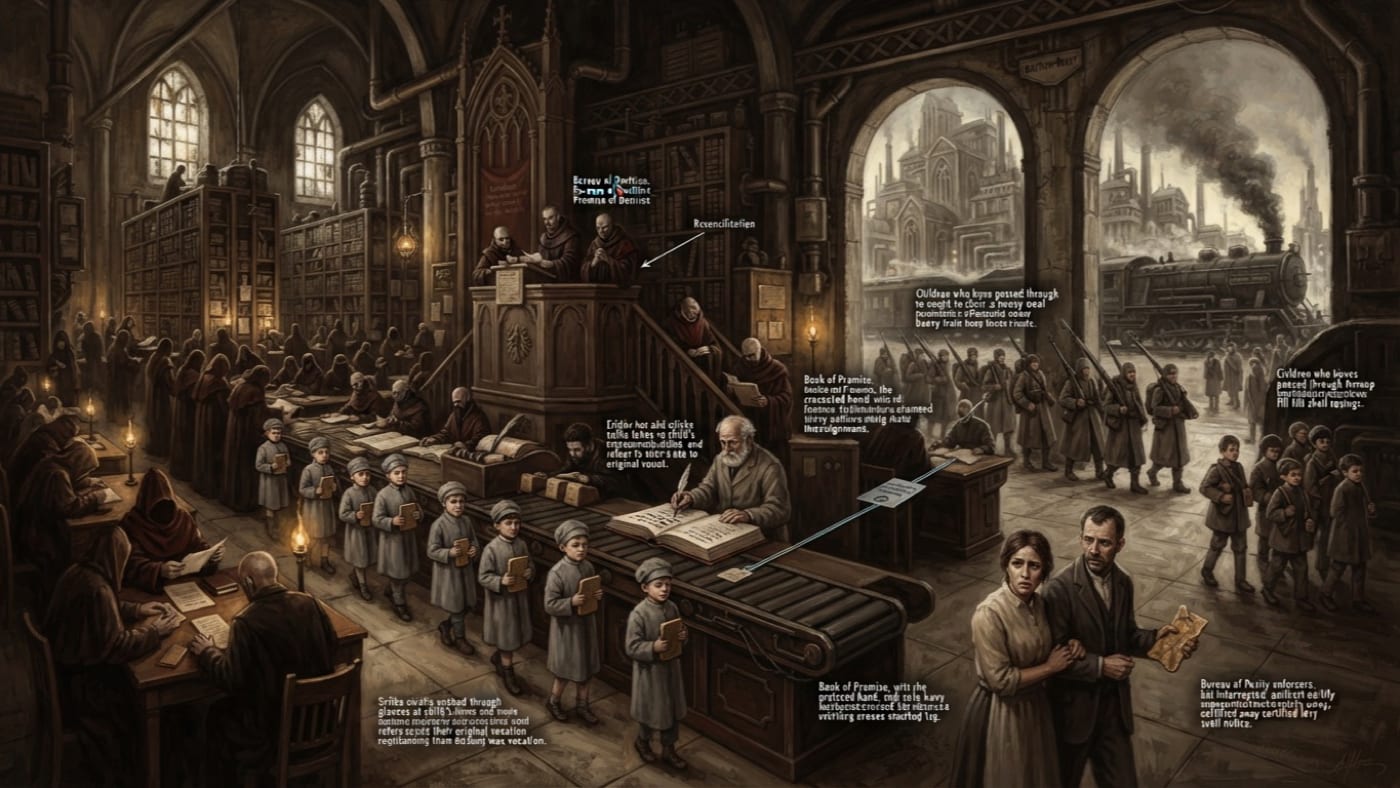
Doctrine of Deferred Fulfilment
The promise stands; the route belongs to the Bureaus
The Synod's promise is never broken: the Bureaus revise the vocation, Records certifies fulfilment, and the household's understanding is deferred indefinitely.
Codex Ref. XIII.1.22-002

Empty Cradle Accord
Incentives for birth, an audit for loss
An A.S. 201 survey of the Empty Cradle Accord: fertility encouraged, miscarriages audited, and pregnant women received into Plenty Houses. The ledger counts the losses; the Accord's adoption year remains unknown.
Codex Ref. XIII.1.06-984
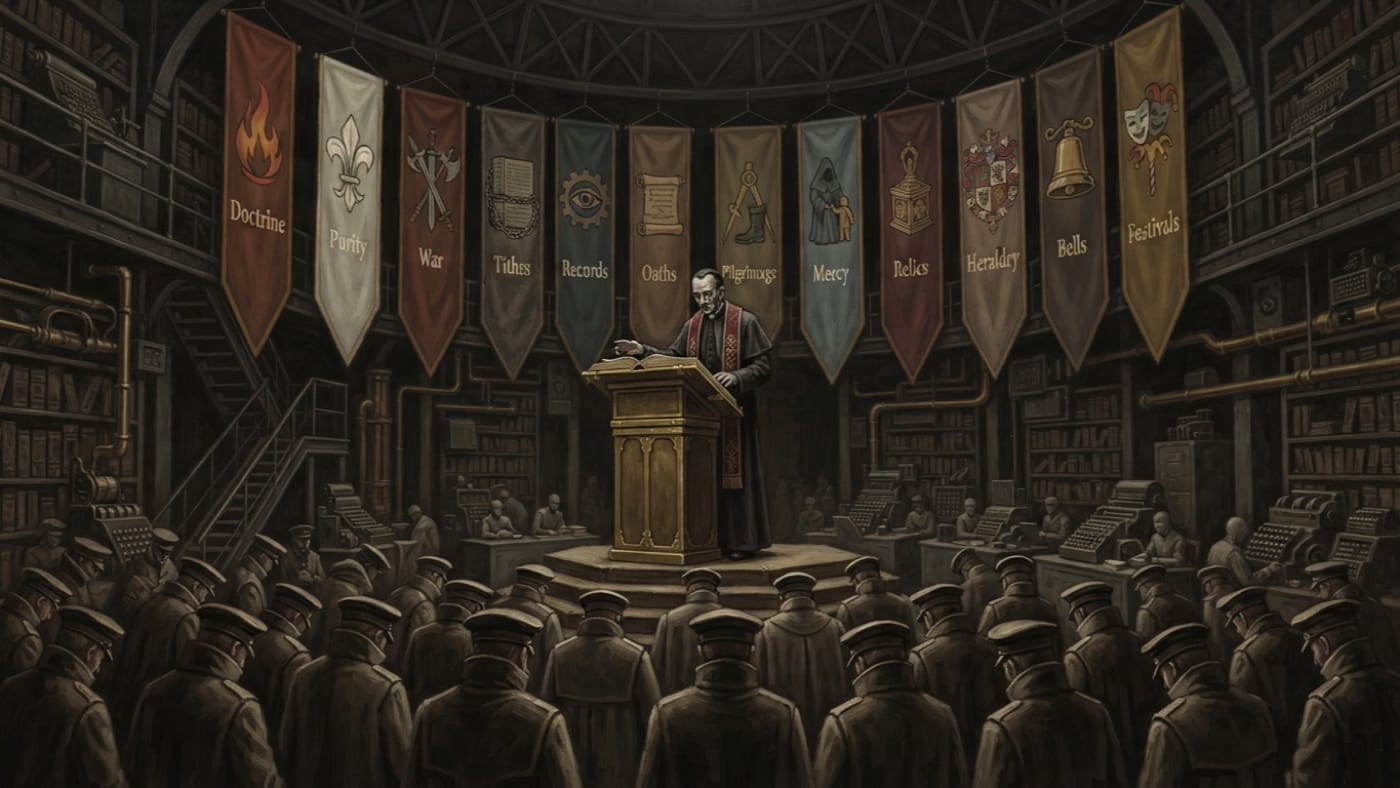
Feast of the Ledger
Twelve portfolios read aloud; the offices that keep them standing go unnamed.
At the Feast of the Ledger, the Synod reads its twelve canonical portfolios aloud. Settlement, which assigns three hundred million addresses, receives no syllable. The recital is correct; the census is incomplete.
Codex Ref. XIII.1.89-201
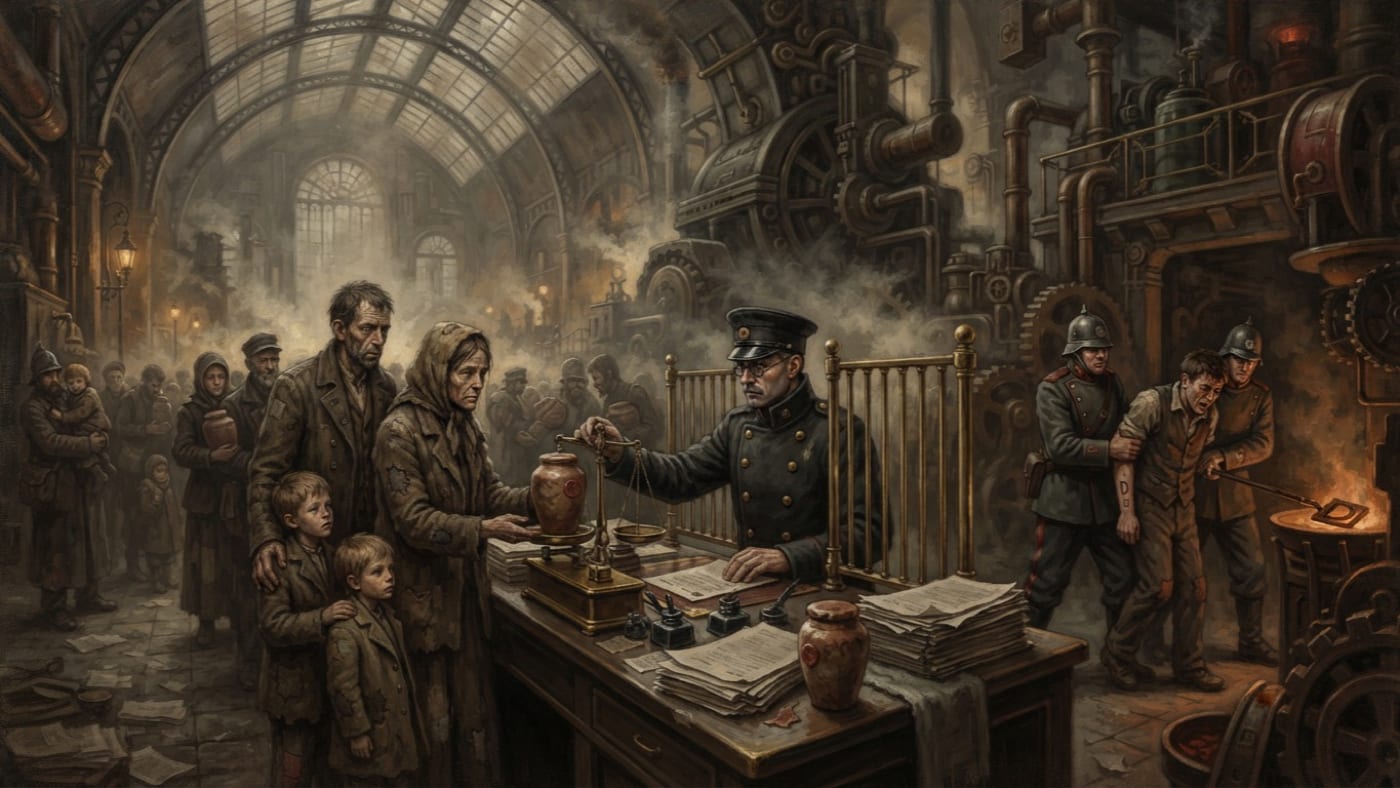
Festival of Ash Debts
The dead are asked to pay. The living are asked only to carry them.
Surveyed in A.S. 201: families trade ancestral ashes for bread. Those unable to produce ashes are branded debtors and conscripted. The family line makes excellent collateral.
Codex Ref. XIII.1.24-201
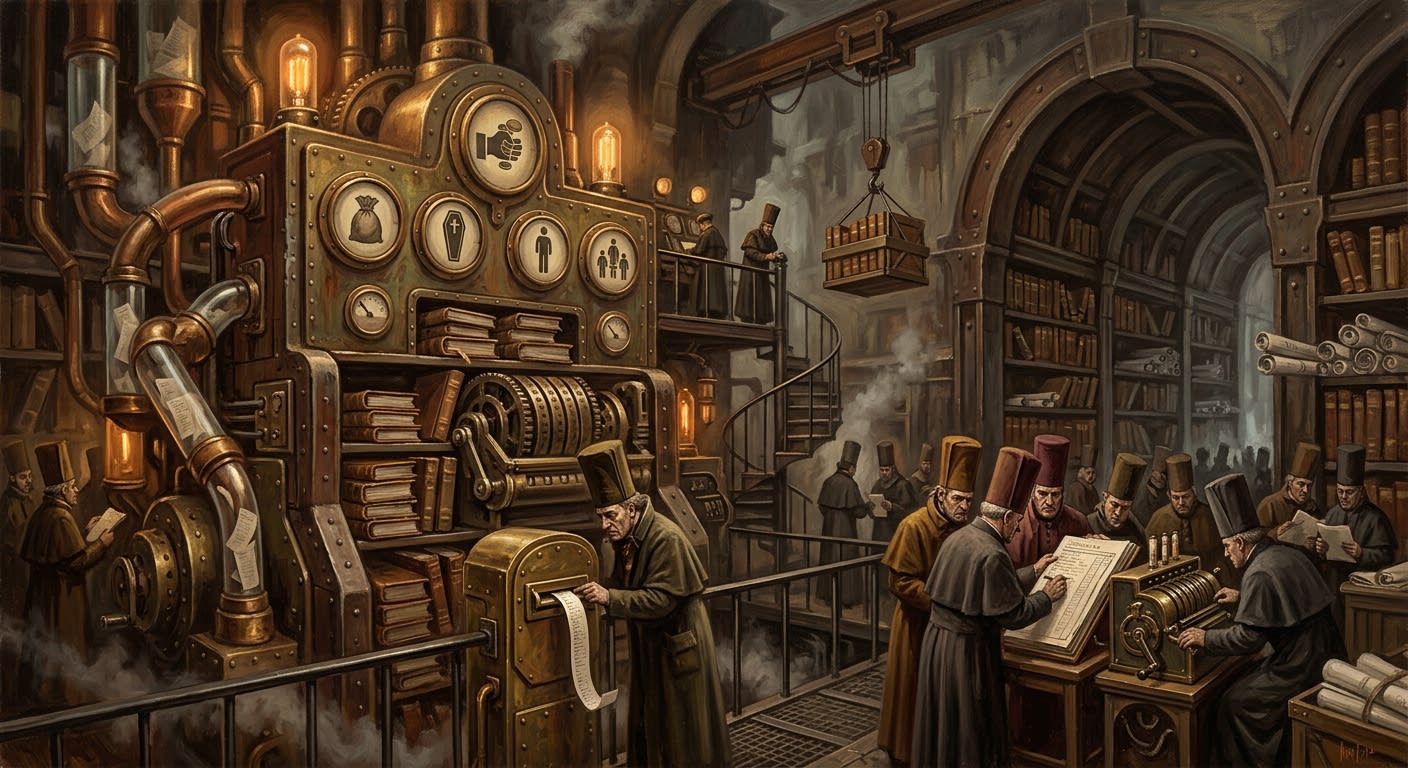
Fiscal Census
The mouth beneath the Ledger, still hungry after burial
The Fiscal Census is Tithes' continental obligation register: a vault-machine counting what the living, dead, unborn, and administratively inconvenient still owe.
Codex Ref. XIII.1.38-092
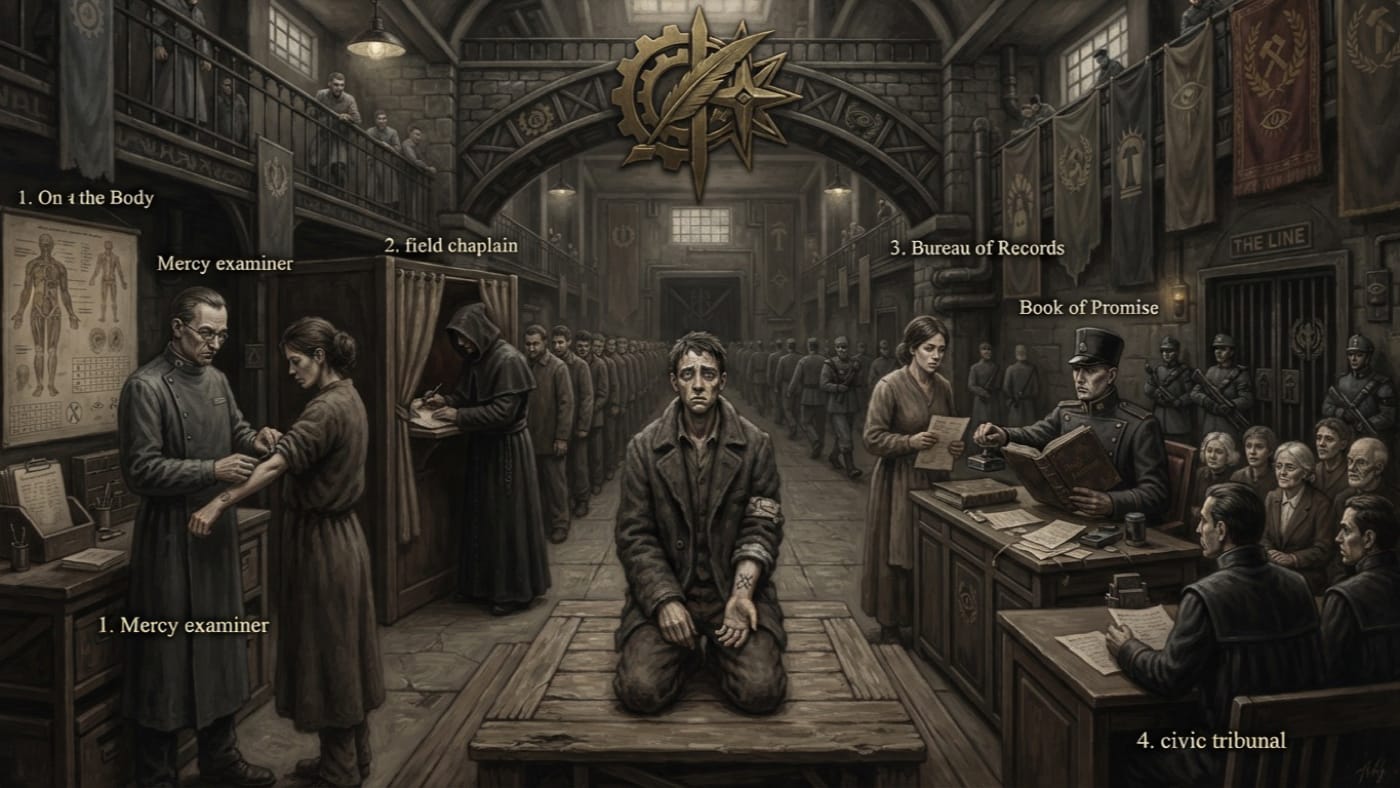
Fourfold Assessment
Four folios, one file, and a destination.
Body, confession, Promise and loyalty: the Fourfold Assessment converts a conscript into an assignment. Mercy examines, Records reconciles, and Conscription decides what the boy is worth.
Codex Ref. XIII.1.23-201
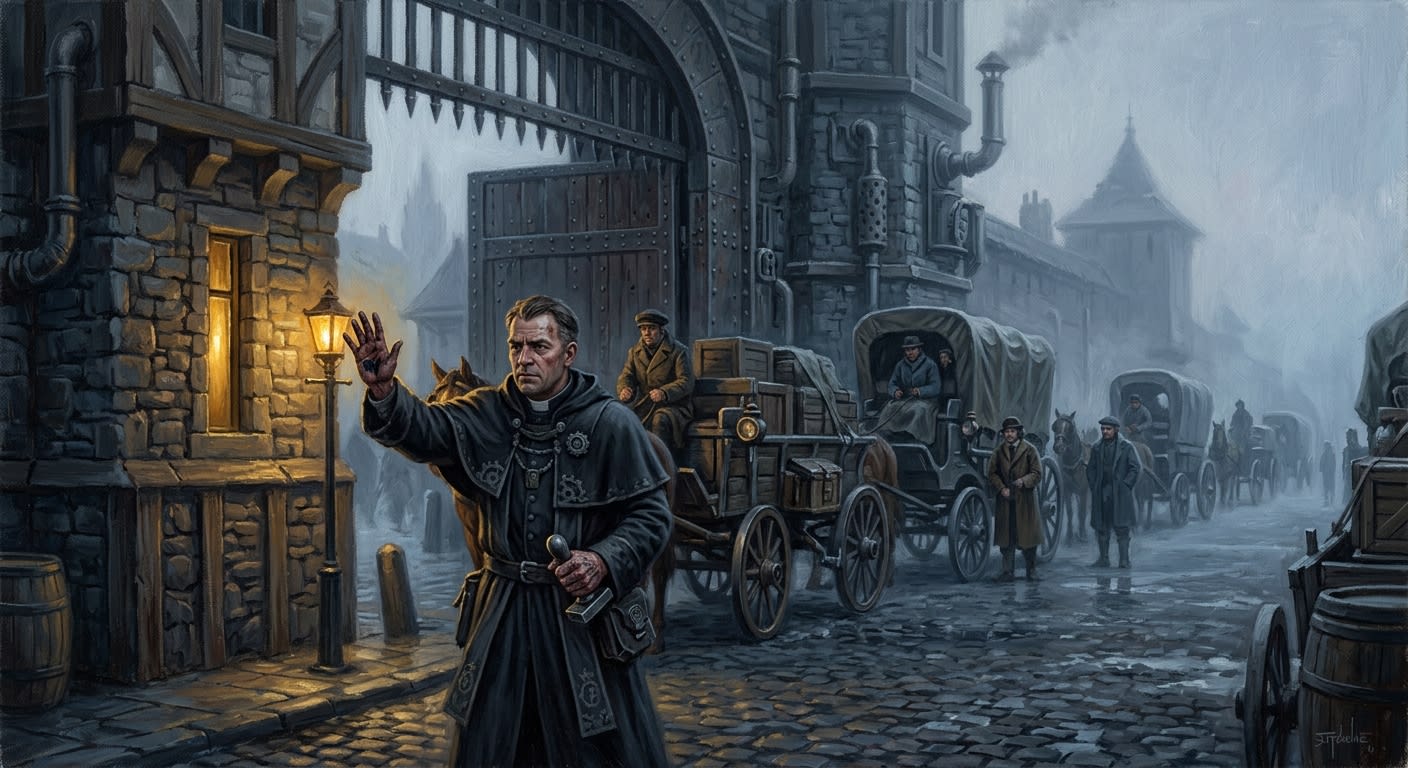
Gatewarden-Notary of Passage
The sole functionary who may halt a column of four thousand by raising one ink-stained hand and asking for documentation.
The Gatewarden-Notary of Passage stands at the point where all five great commodities of the war — disease, heresy, desertion, contraband, and ambition — must be sorted, weighed, stamped, and either admitted or refused. The Gate does not care about the man.
Codex Ref. XII.7.04-001
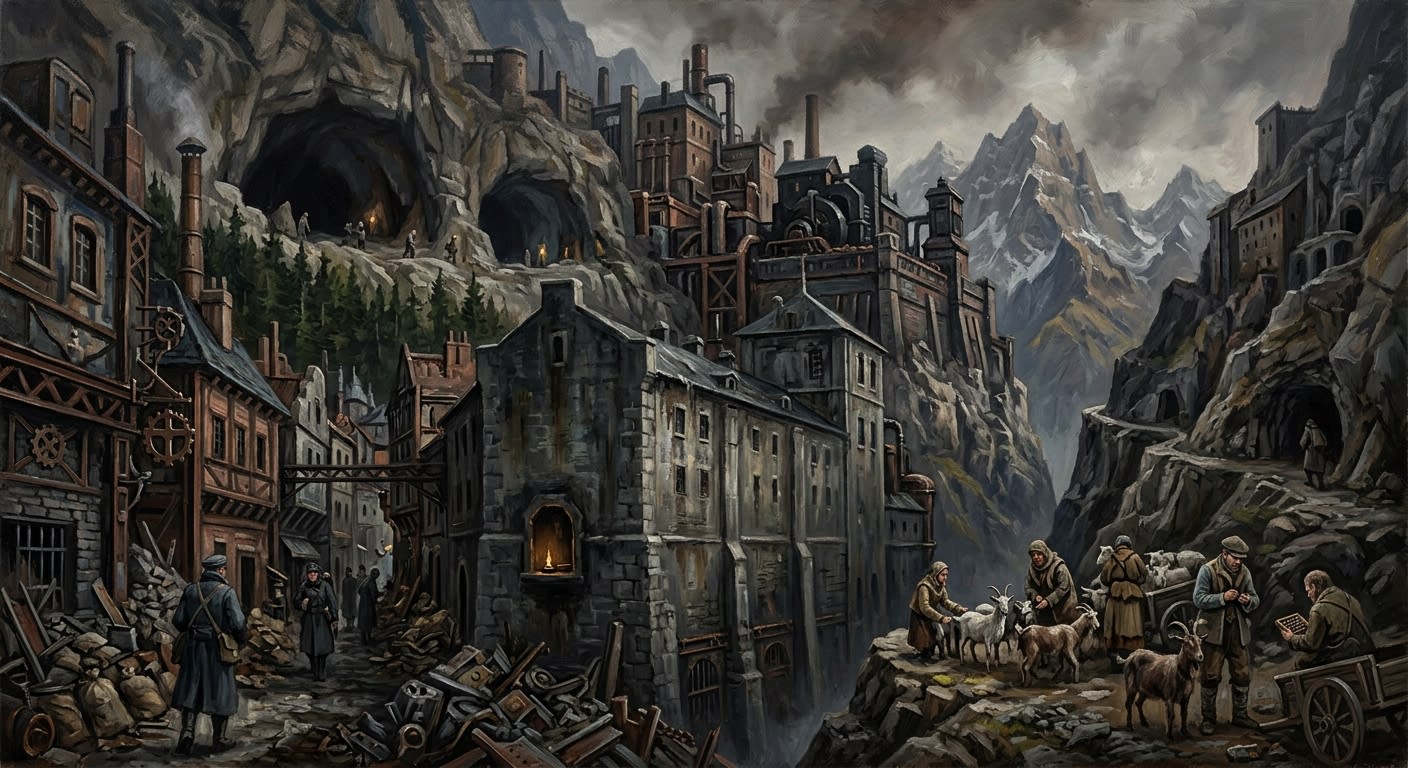
Innsbruck
Where mountains, grandmothers, caves, and walls defeat the census
Innsbruck is the Synod's alpine refuge-city: Cellar Saint caves above the treeline, relics disguised as trash, Mother Sava's wall-cavity, Pale Kin routes, goat arithmetic, and the most pious registry evasion in the mountains.
Codex Ref. II.2.09-030
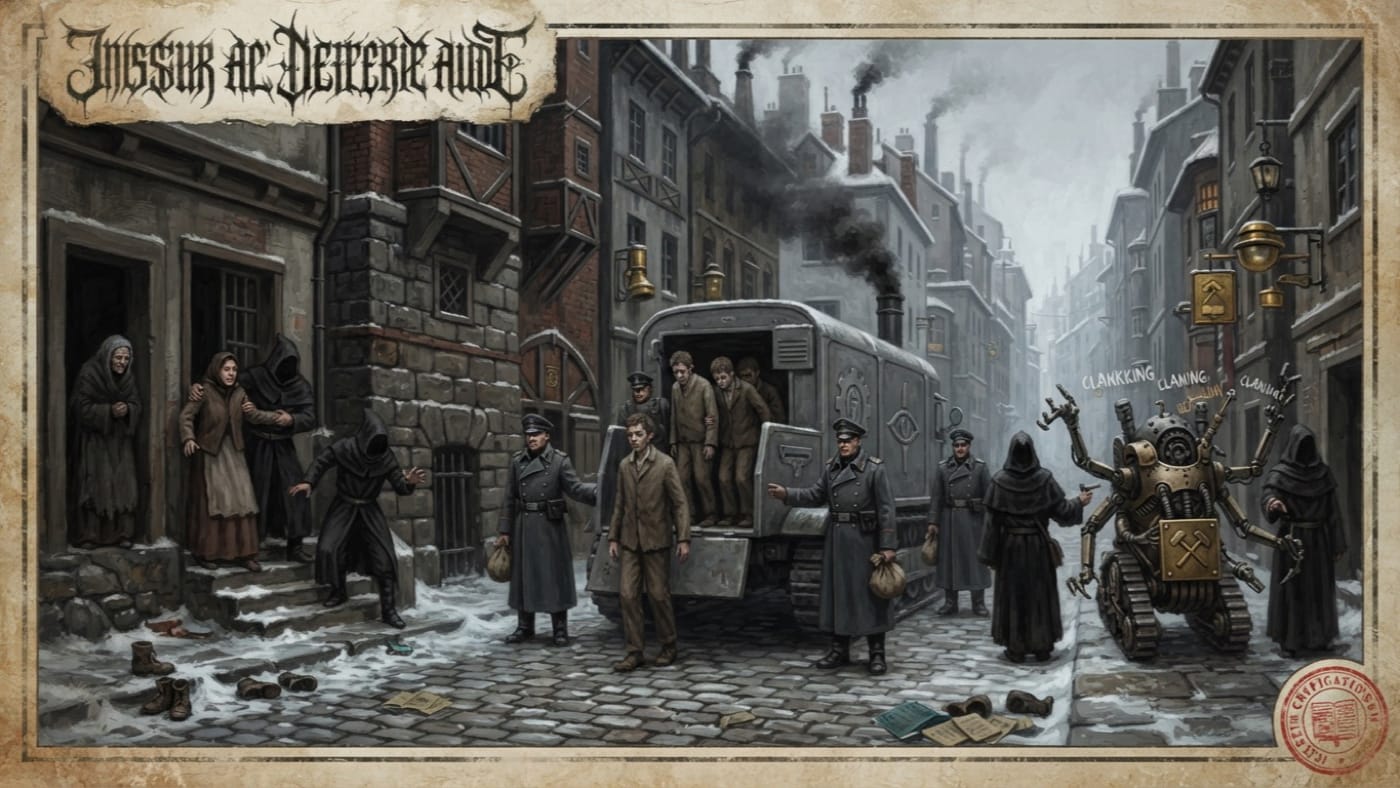
Innsbruck Audit
Fourteen years late, the Ledger declared victory
In A.S. 178, Innsbruck's auditors found three sons concealed for fourteen years. Conscription took the sons, the Index took the parents, and an iron choir took the midwife. The Ledger called its lateness a victory.
Codex Ref. VII.8.10-178
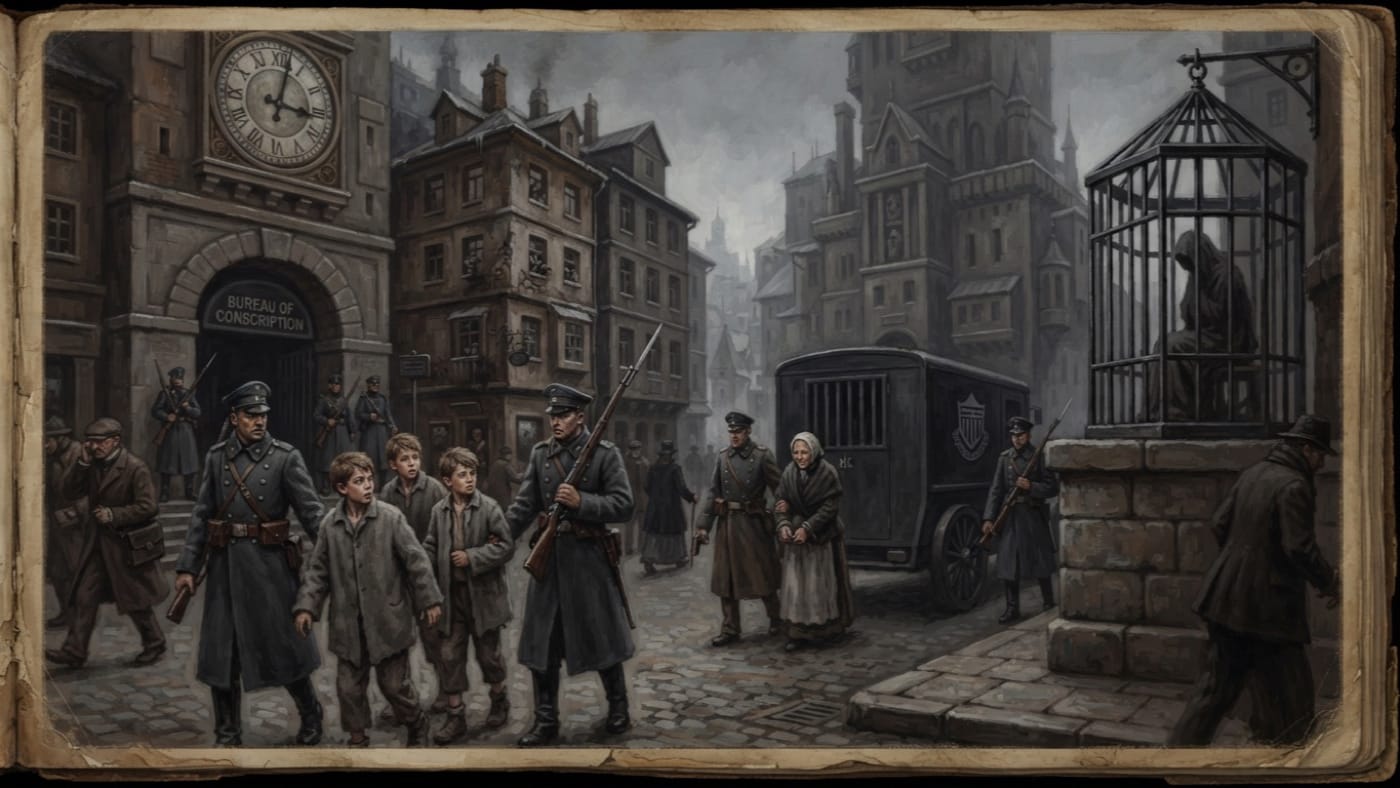
Innsbruck Audit of A.S. 178
Three recovered; fourteen years unaccounted
In A.S. 178, Purity found three sons concealed in Innsbruck for fourteen years. The sons were conscripted, the parents entered the Index, and the midwife died in an Iron Choir. The Bureau filed its lateness as vigilance.
Codex Ref. VII.8.10-178
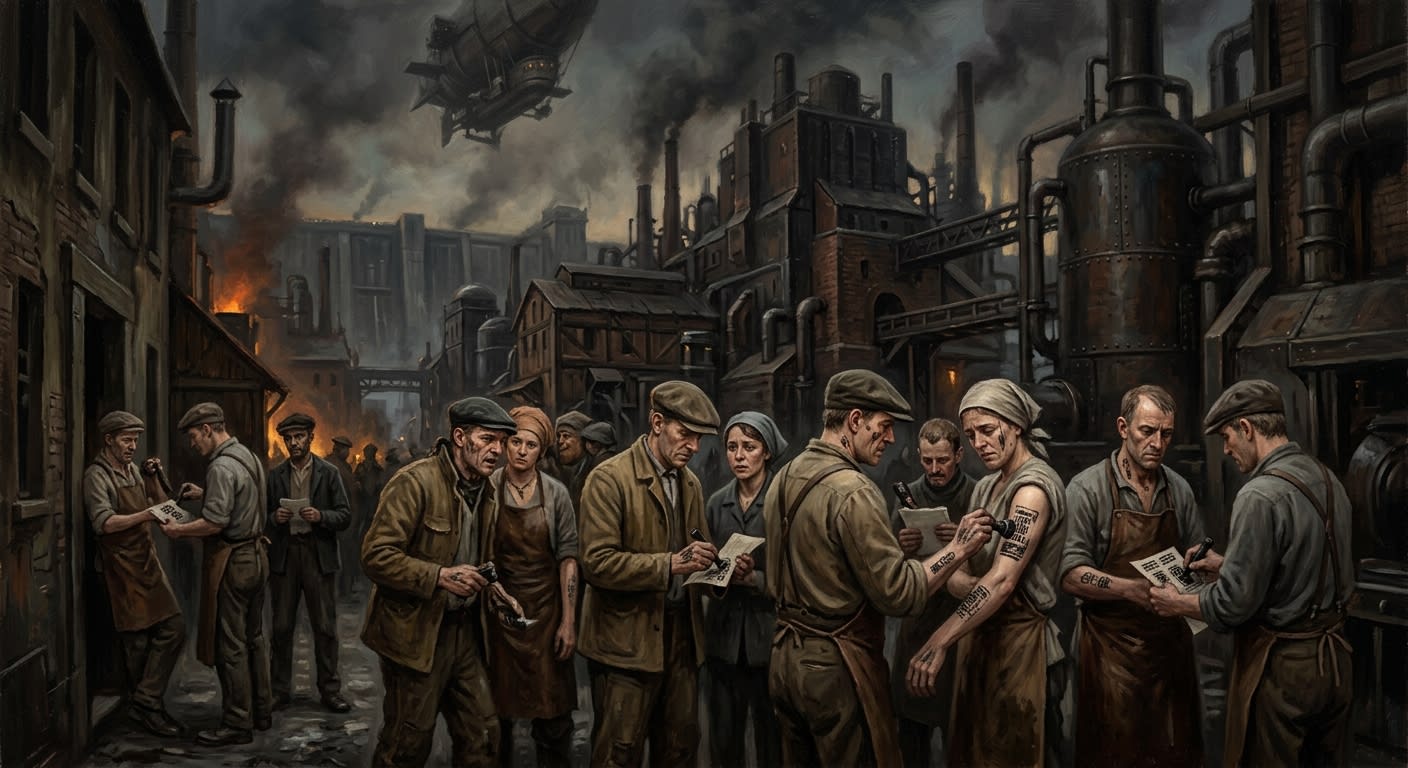
Keska
The foundry-town that fell through the map and learned who feeds the forgotten
Keska, a Hintermark foundry-town west of Bastion-Constantinople, lost its Zone for eleven months and discovered that criminal stamps can feed where lawful ink starves.
Codex Ref. II.3.06-001
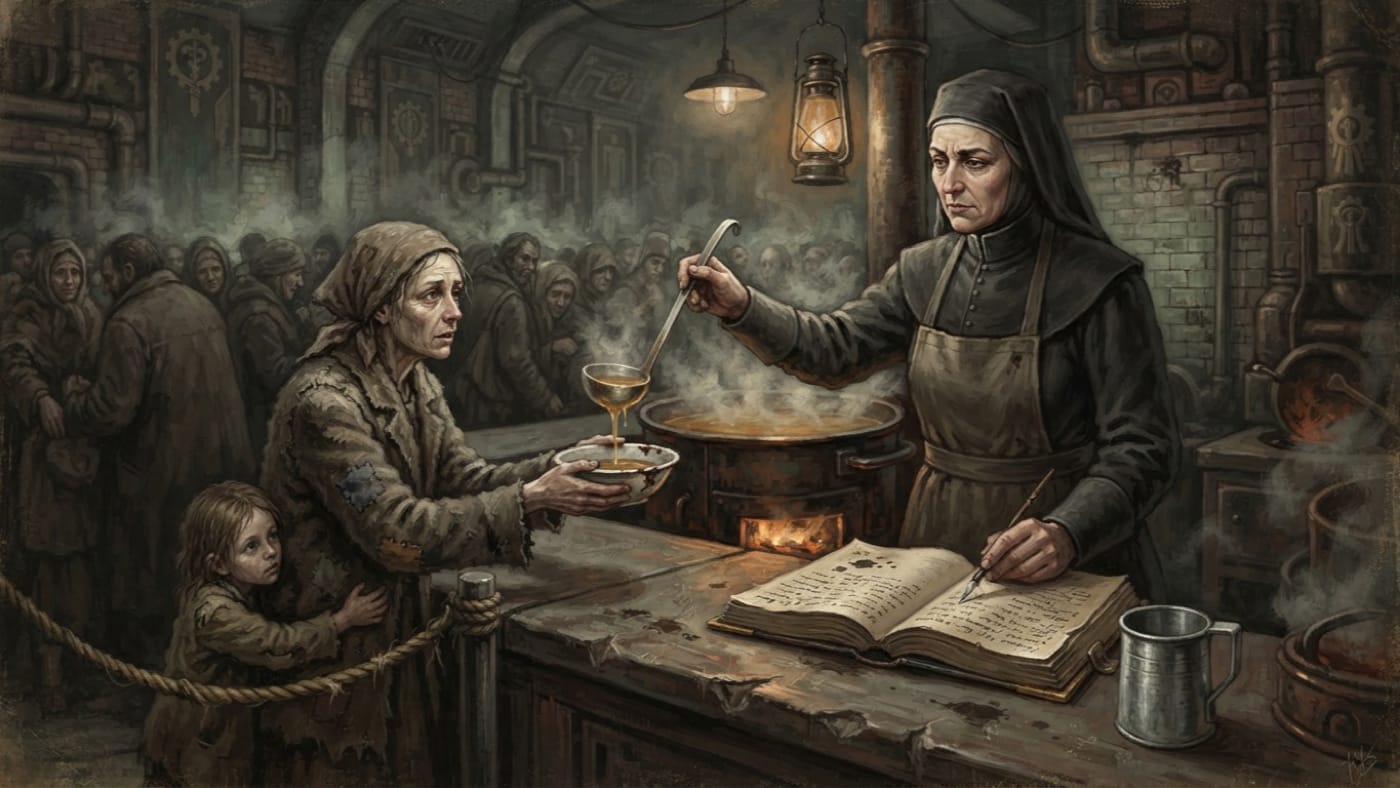
Ladle Debt
The bowl is warm; the account remains open
An extra ladle today buys an unspecified future service in a Matron's book. Mercy may leave the debt uncalled; desperation or cruelty may collect it. The broth is real. So is the name in ink.
Codex Ref. XIII.1.06-001
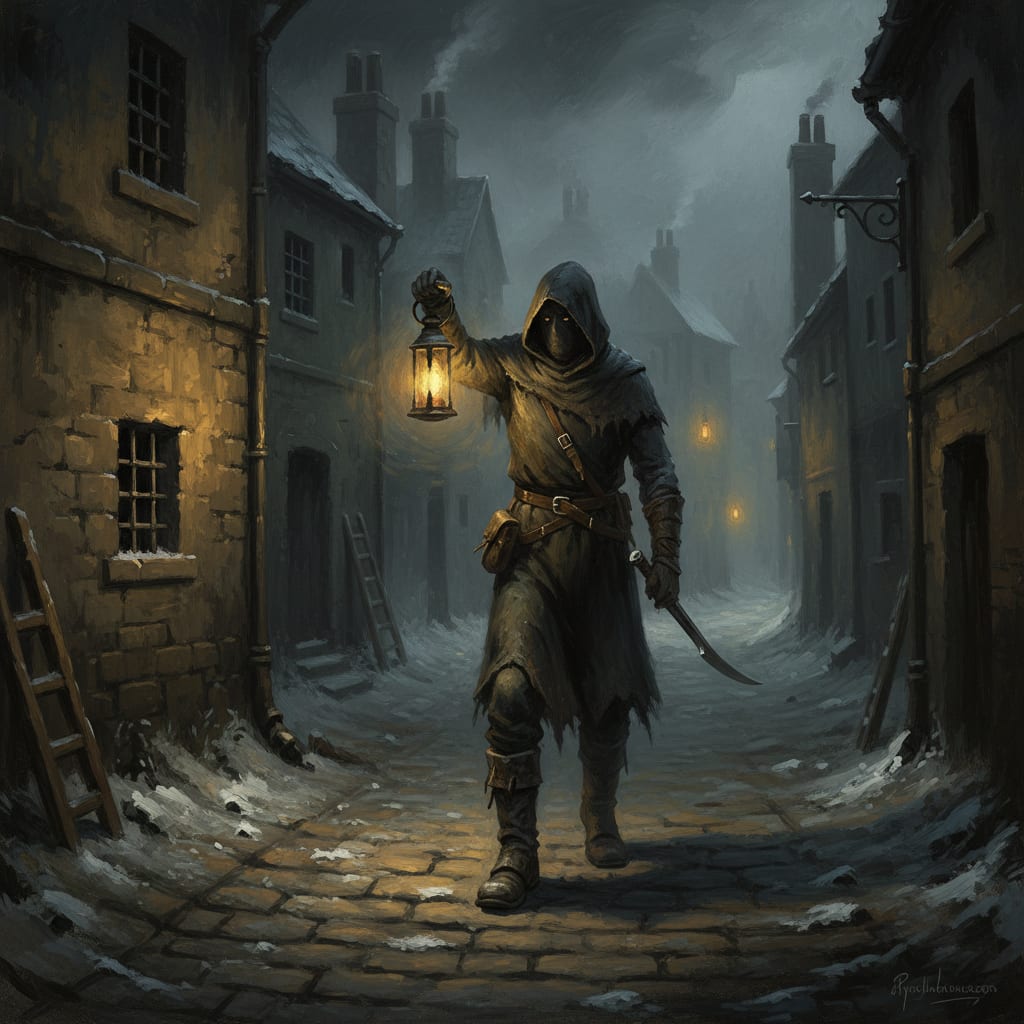
Lantern Brotherhood Vigilante
Eight thousand four hundred tolerated blades, licensed by a subordinate clause — the Synod's night made visible and officially nonexistent.
Eight thousand four hundred tolerated blades in five Watch Circles, licensed by a subordinate clause in a curfew ordinance — the Synod's night made visible and officially nonexistent.
Codex Ref. XII.25.01-001
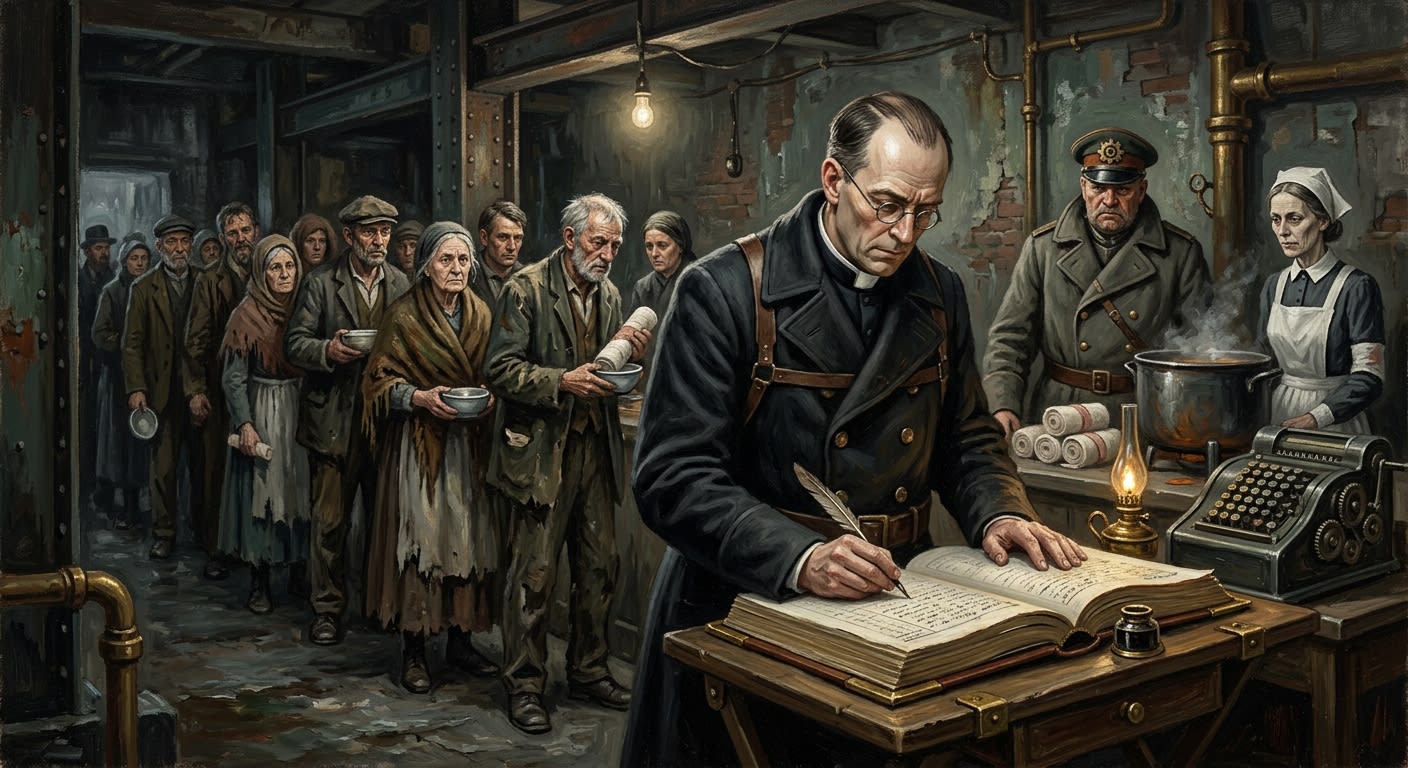
Ledger Laws
Mercy measured by the ladle, sanctioned by the noose
The Ledger Laws made mercy countable after the Broth Riots: every bowl, bandage, draught, confession, death, and useful pity entered the record before it dared call itself compassion.
Codex Ref. XIII.1.89-112
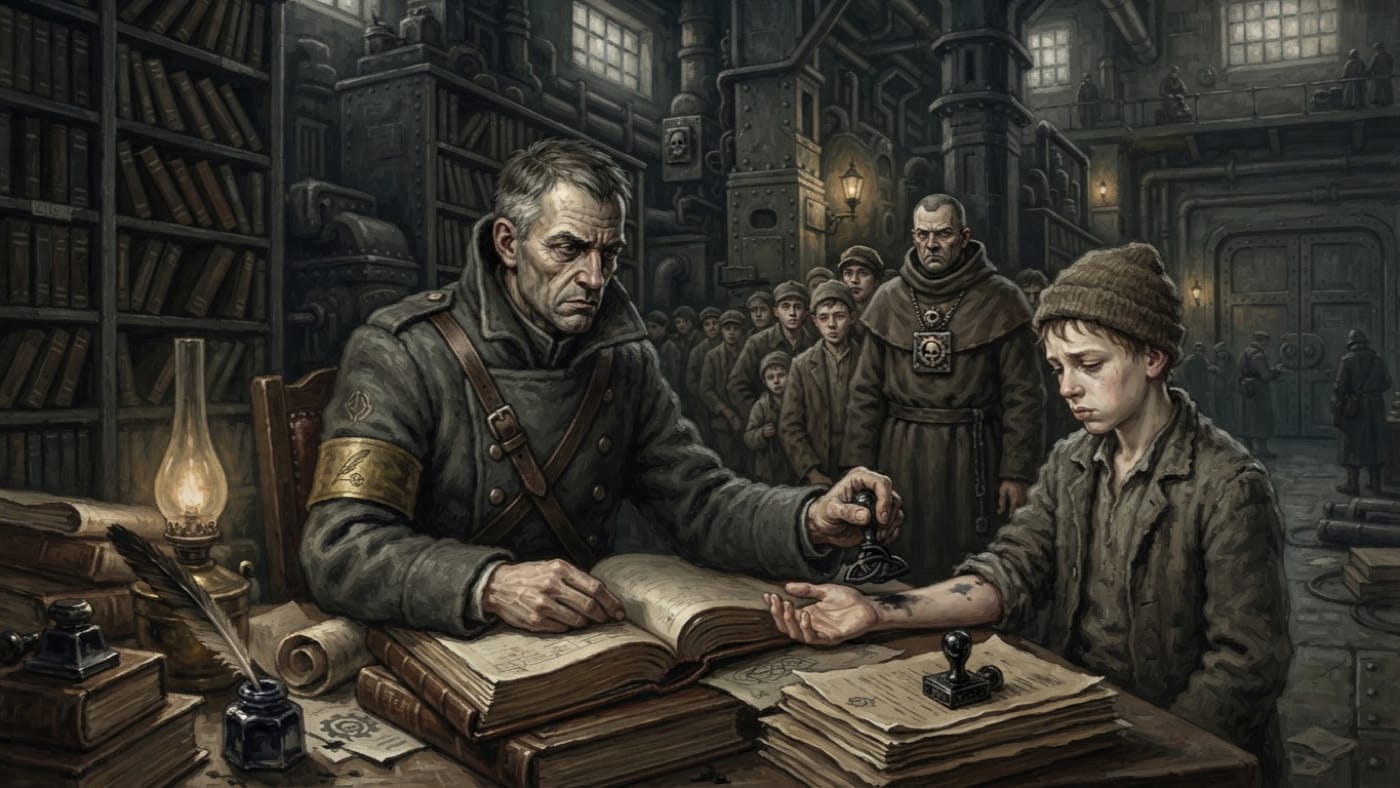
Levy Assessor
The census names the household. The Assessor names the son.
The Levy Assessor compares sacred ledgers, declares a household's liability and stamps the selected wrist. The Bureau calls this collection. The household has other names.
Codex Ref. III.4.08-201
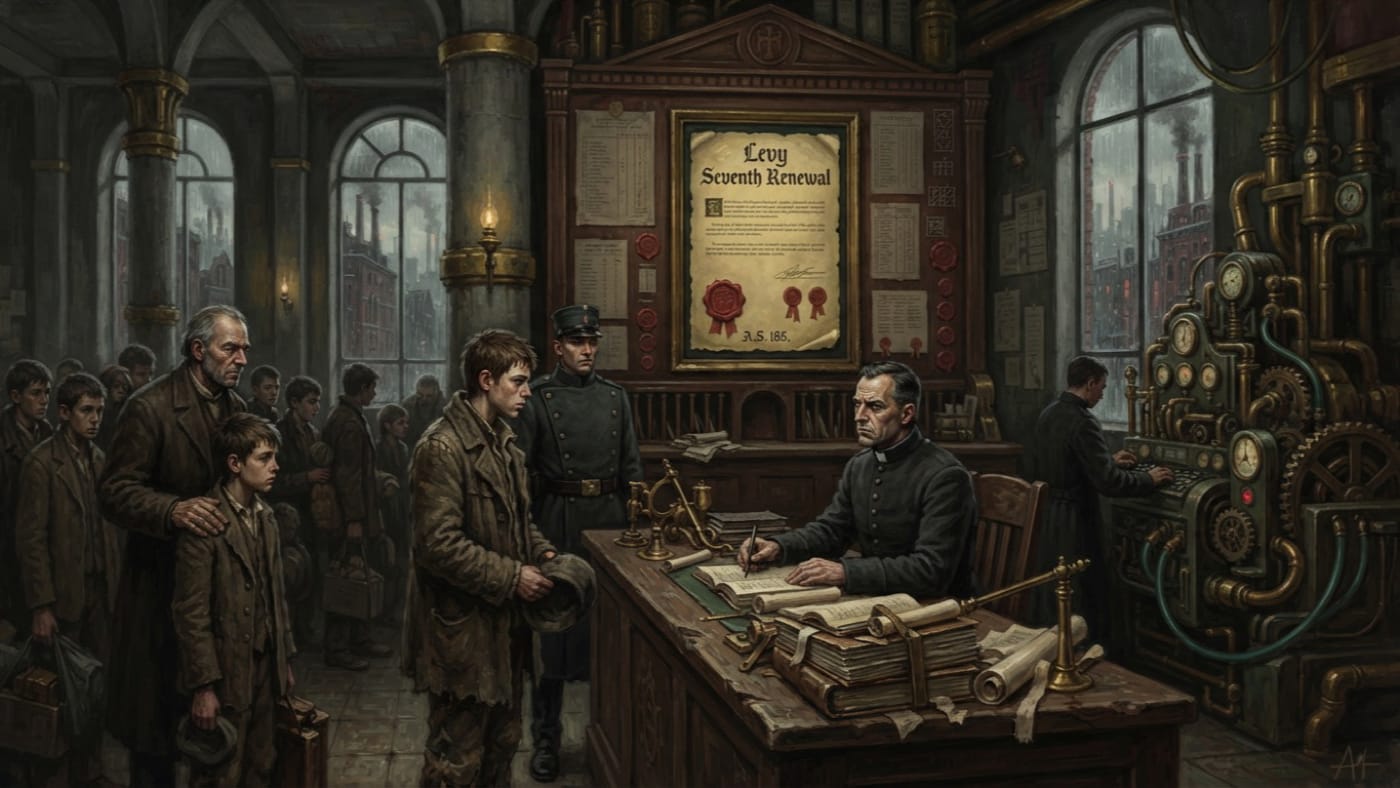
Levy Seventh Renewal
The charter is renewed. The fraction remains under wax.
In A.S. 185, the Church renewed the Bureau of Conscription's charter and revised levy quotas under a sealed Martial Edict. The year is public. The fraction, the provinces and the additional ratifying seals remain under wax.
Codex Ref. VII.8.10-185
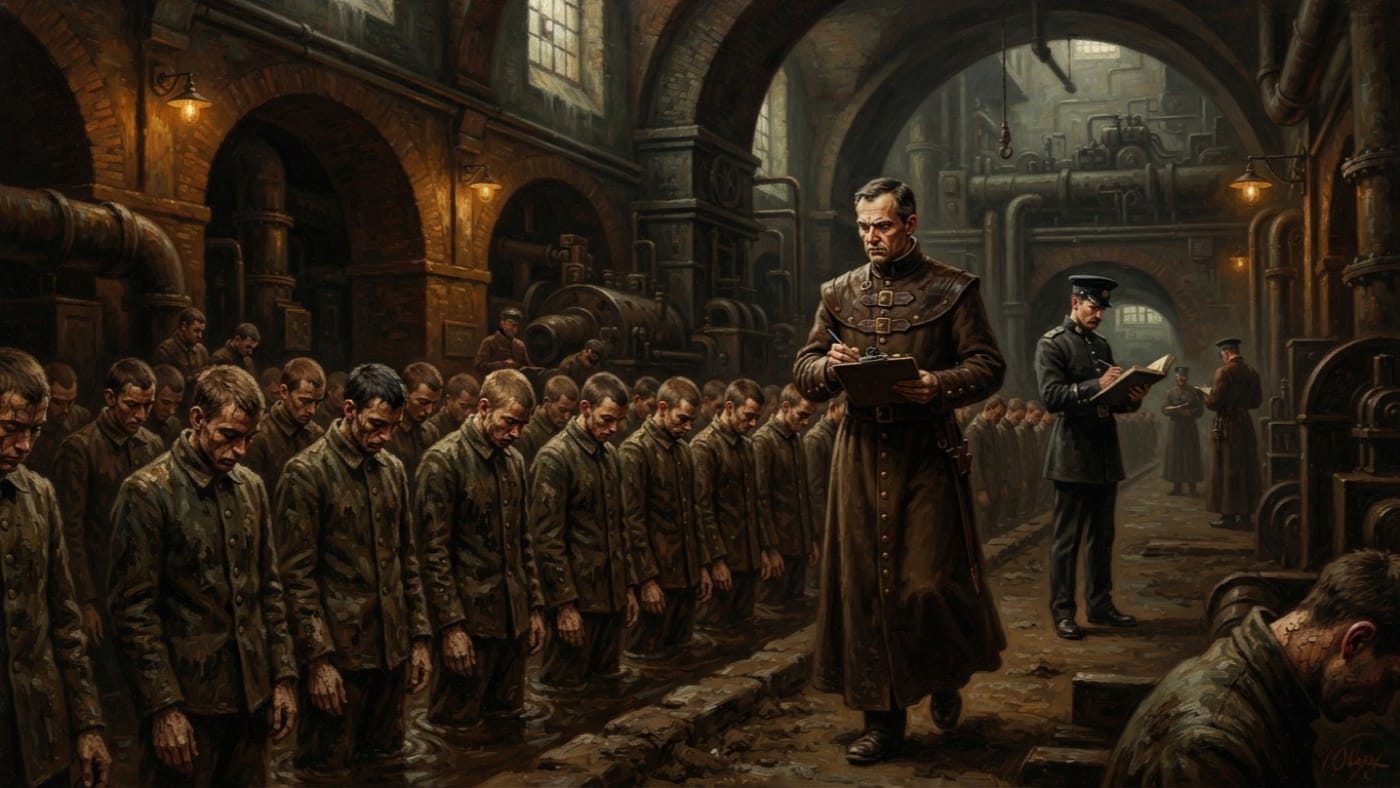
Medical Annex 44-C
Seventeen cases, one corrected sentence
Medical Annex 44-C survives through Stuttgart's broadsheet correction: trench rash, fungal bloom and seventeen cases of devotional fever. The A.S. 201 survey records amended promises and unchanged mud; the annex's issue date remains unrecorded.
Codex Ref. XIII.1.91-044
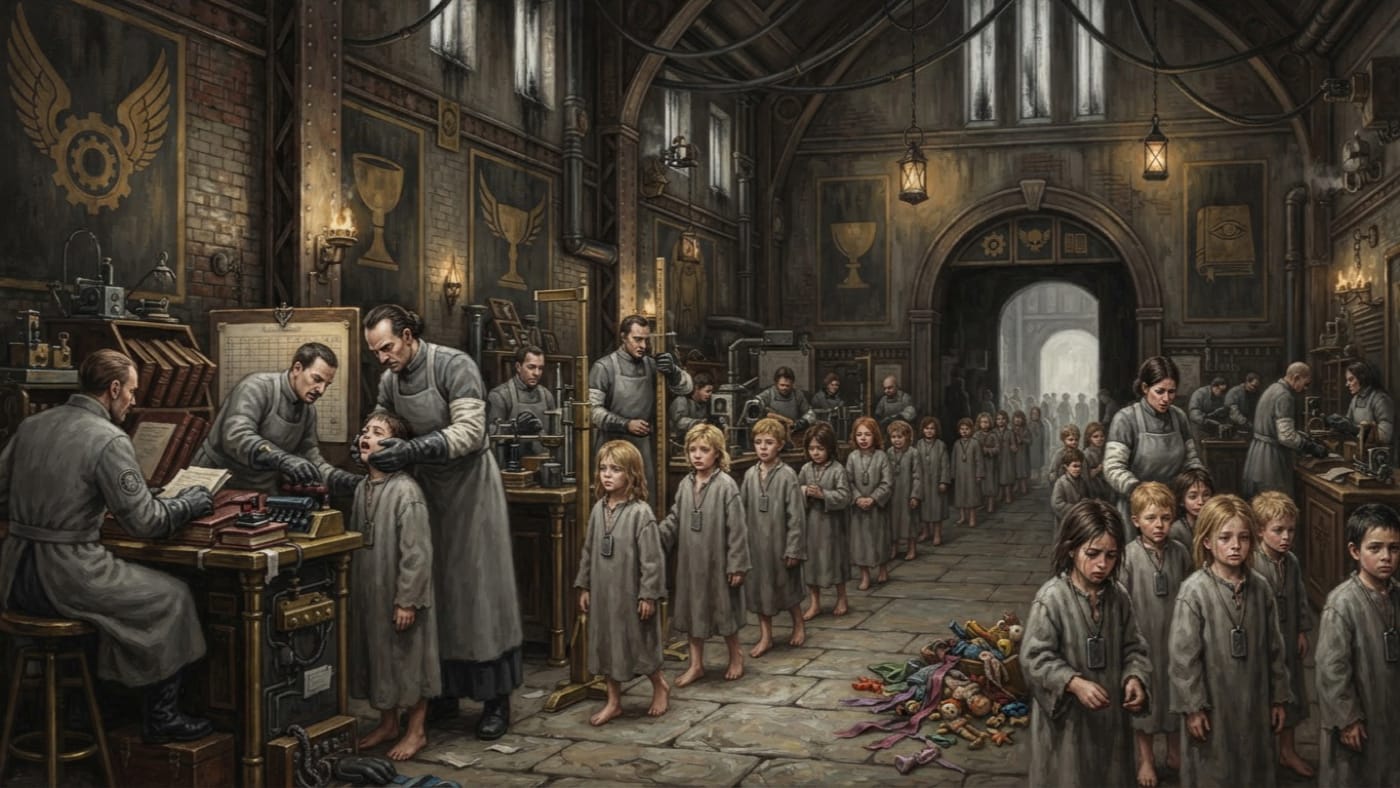
Mercy Orphanarii
A cot, a name, a future — all assigned
The Mercy Orphanarii feed, clothe and instruct the Synod's wards. They also replace family names, divide siblings and assign futures. A cot is provided; the child who entered it is administratively dissolved.
Codex Ref. VI.4.12-032
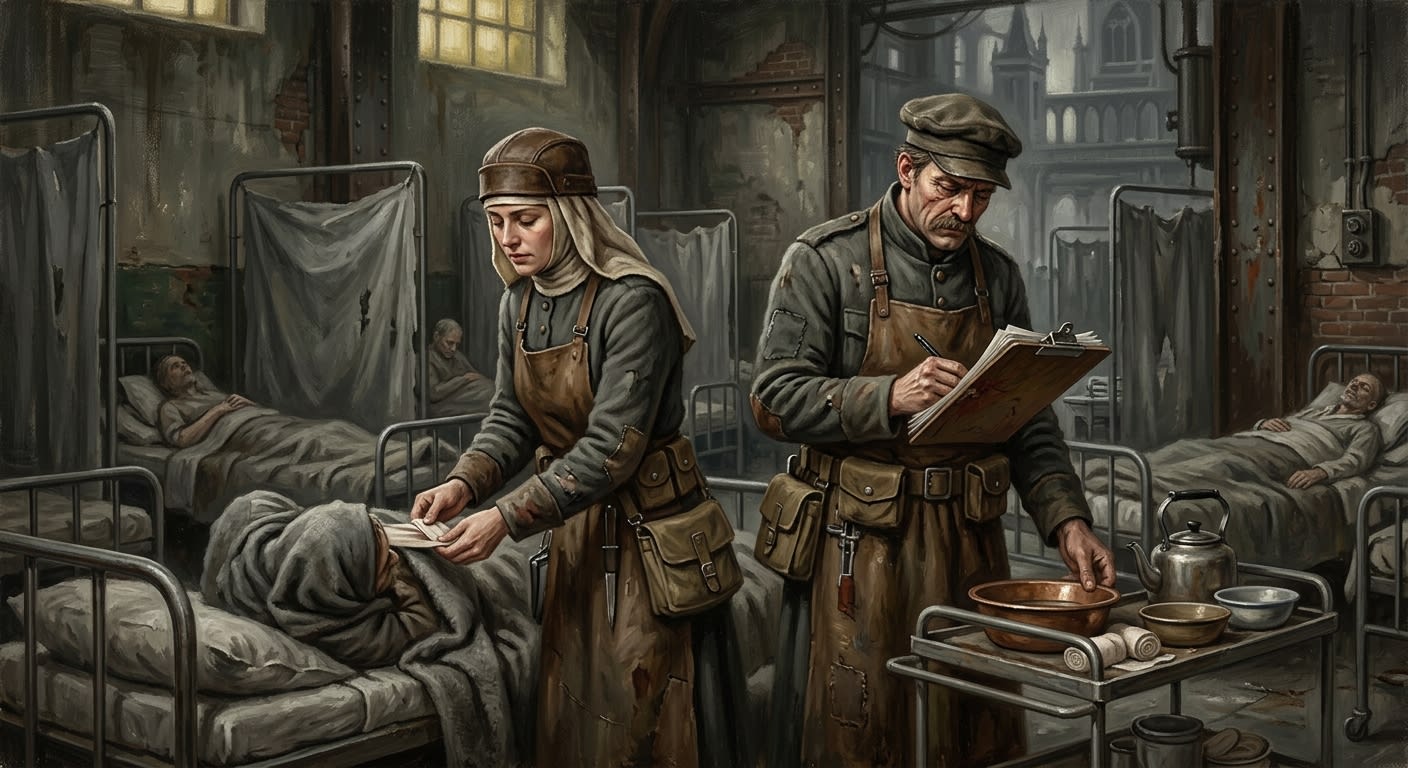
Mercy Ward-Sister / Mercy Ward-Brother
The hand that brings broth also carries the ledger
The Mercy Ward-Sister and Ward-Brother are the Bureau of Mercy's grey-aproned operators of counted compassion, where broth, bandage, confession, and paperwork become one instrument.
Codex Ref. XII.6.04-001
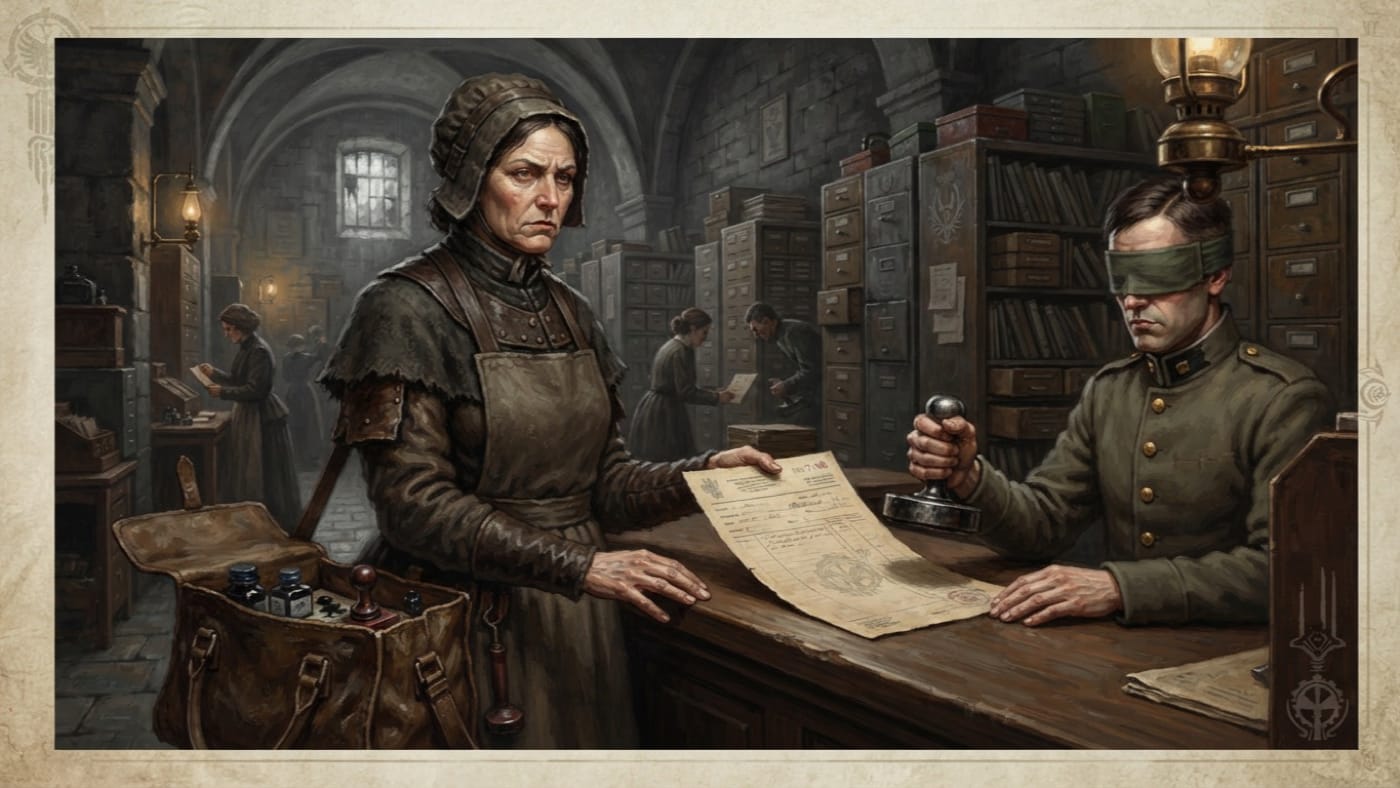
Midwives
She catches the child and inherits the clock
Midwives attend the birth and carry its liability to Records. This A.S. 201 survey follows notice, Form 7-NR, Registrar scrutiny and evasion through laws whose clocks still disagree.
Codex Ref. XII.9.04-002

Milan
The city that mistook minutes for sovereignty
Milan is Lombardy's polished mouth: silk, steel, banking paper, guild keys, and the old civic delusion that a beautiful memorandum can outrank Strasbourg.
Codex Ref. II.1.07-150
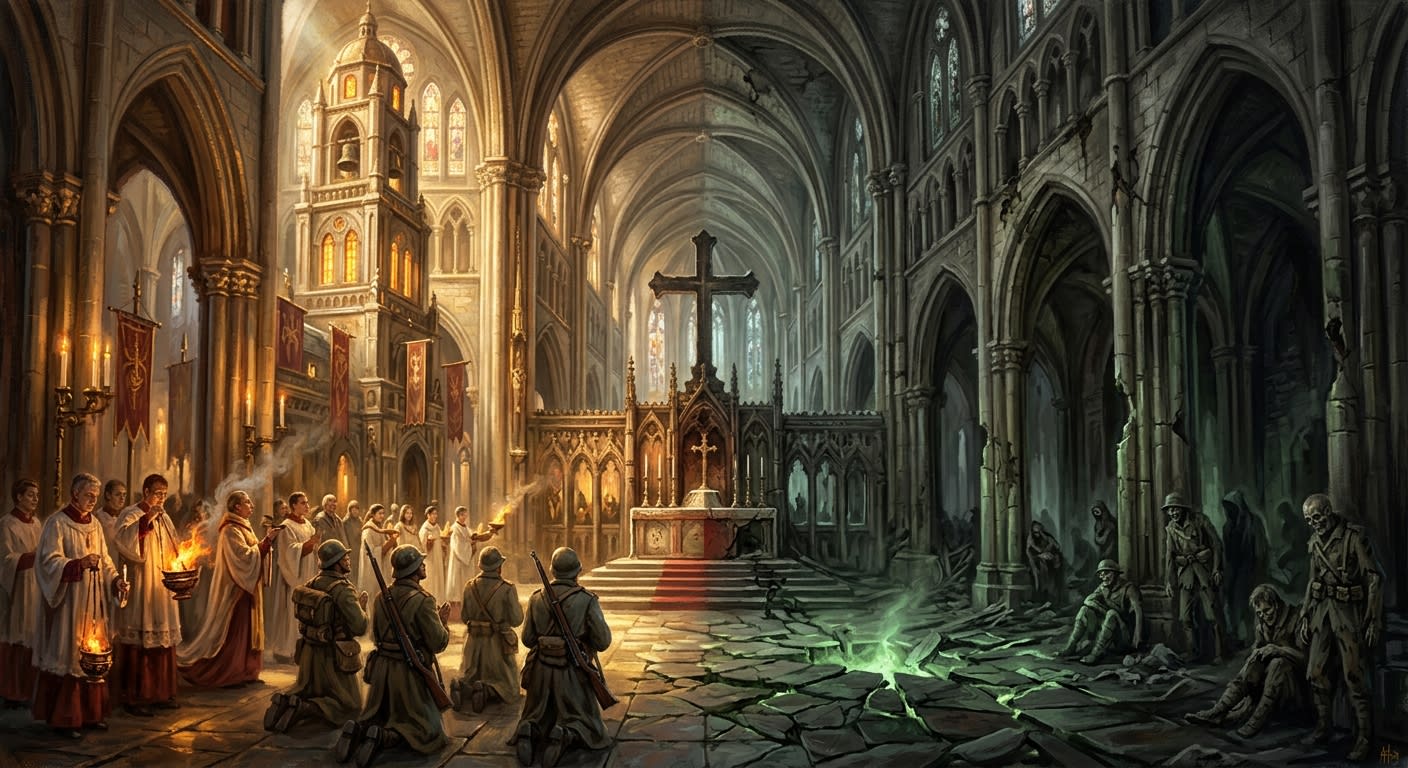
Miracles and Sorcery
Both crack Creation; only the paperwork differs
The Bureau insists miracles and sorcery are opposites. The mechanism, as Drax reluctantly confirms, is identical. The source determines canonisation or burning. The paperwork is different. The world pays either way.
Codex Ref. VI.3.01-001
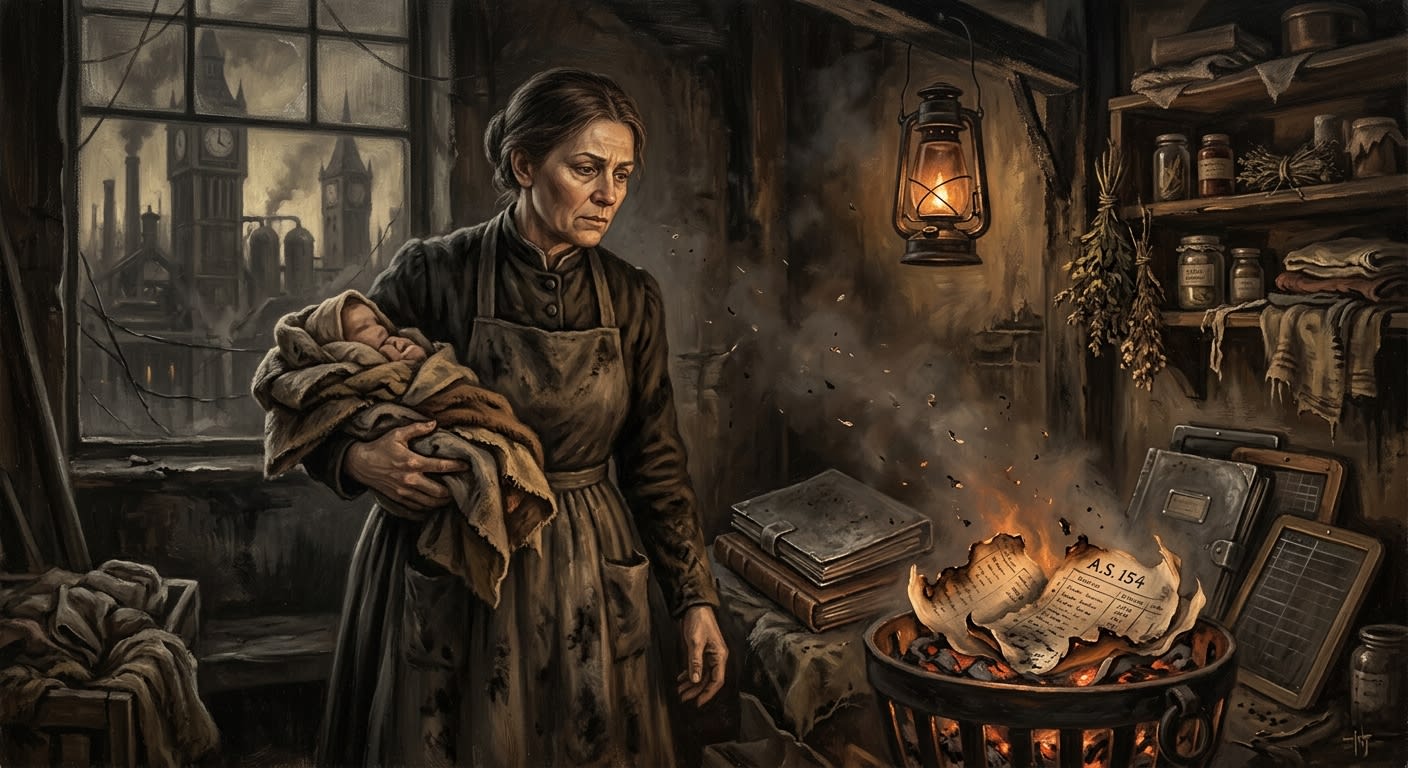
Mother Sava of the Ash Steps
Eleven shoes, one burnt register, and the arithmetic heresy of mercy
Mother Sava, proscribed midwife of the Ash Steps, burned an A.S. 154 parish registry, hid eleven infants from levy arithmetic, and became the Pale Kin's quiet patron of placement over possession.
Codex Ref. III.2.01-133
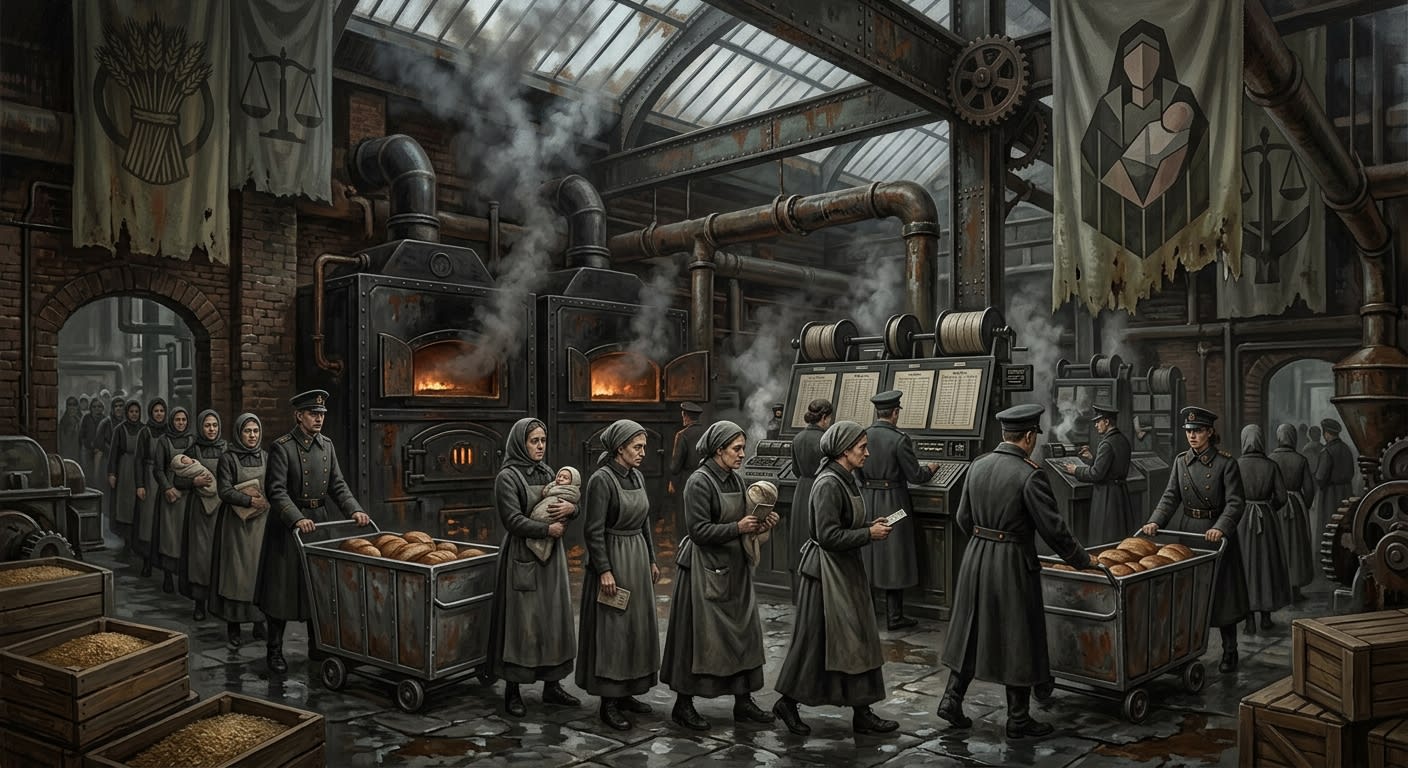
Mothers of Plenty
The queue kept warm, the cradle kept counted
The Mothers of Plenty govern bread and birth as one obedient system, turning ration queues, pregnancy ledgers, and infants not yet weaned into instruments of state continuity.
Codex Ref. XII.6.05-001
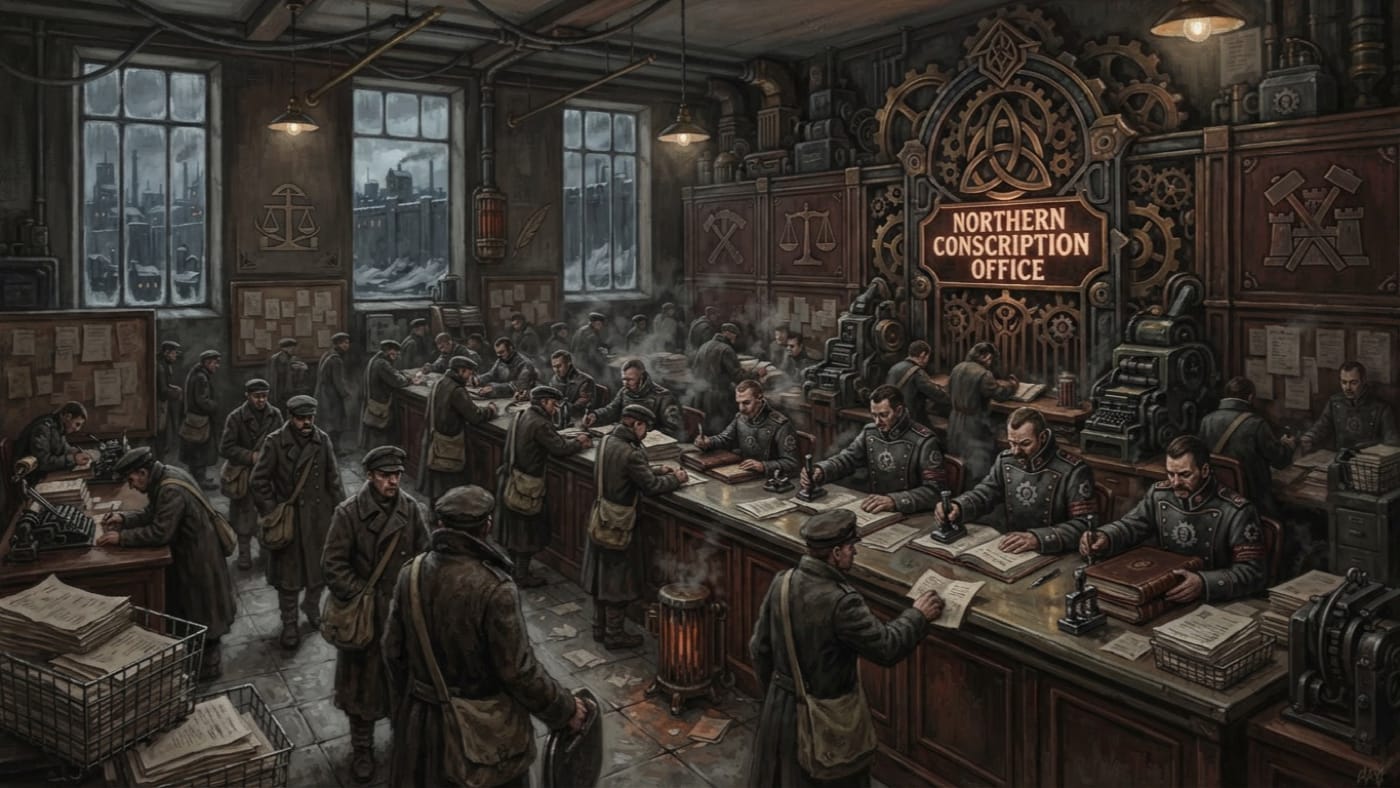
Northern Conscription Office
Every man volunteered. Every man was assigned.
The Northern Conscription Office receives Königsberg's conscripts and reconciles them against losses. Conscription claims the desk; War signs the briefing. Every assigned man is entered as a volunteer.
Codex Ref. III.4.07-1943
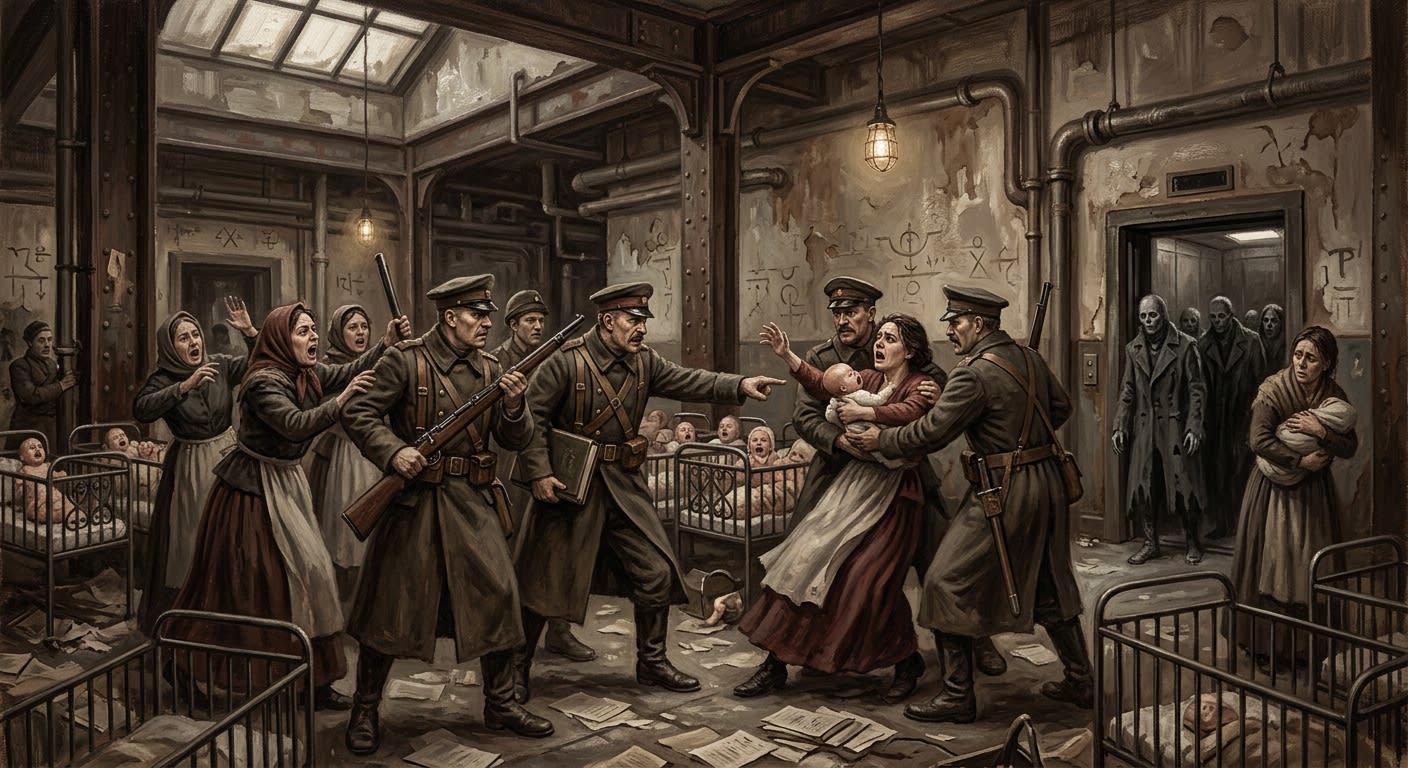
Nursery Levy Decrees
The law counted the cradle; the cradle learned to lie
A.S. 152 cradle-registration laws that cut infant filing to twelve and seventy-two hours, birthed armed registry teams, midwife resistance, and the Pale Kin trade.
Codex Ref. VII.8.10-054

Orphanage Registrar
The child enters crying and leaves legible
Orphanage Registrars convert foundlings into entries: named, tagged, risk-scored, and placed before hunger, memory, or bloodline can become a rival jurisdiction.
Codex Ref. VI.4.12-044
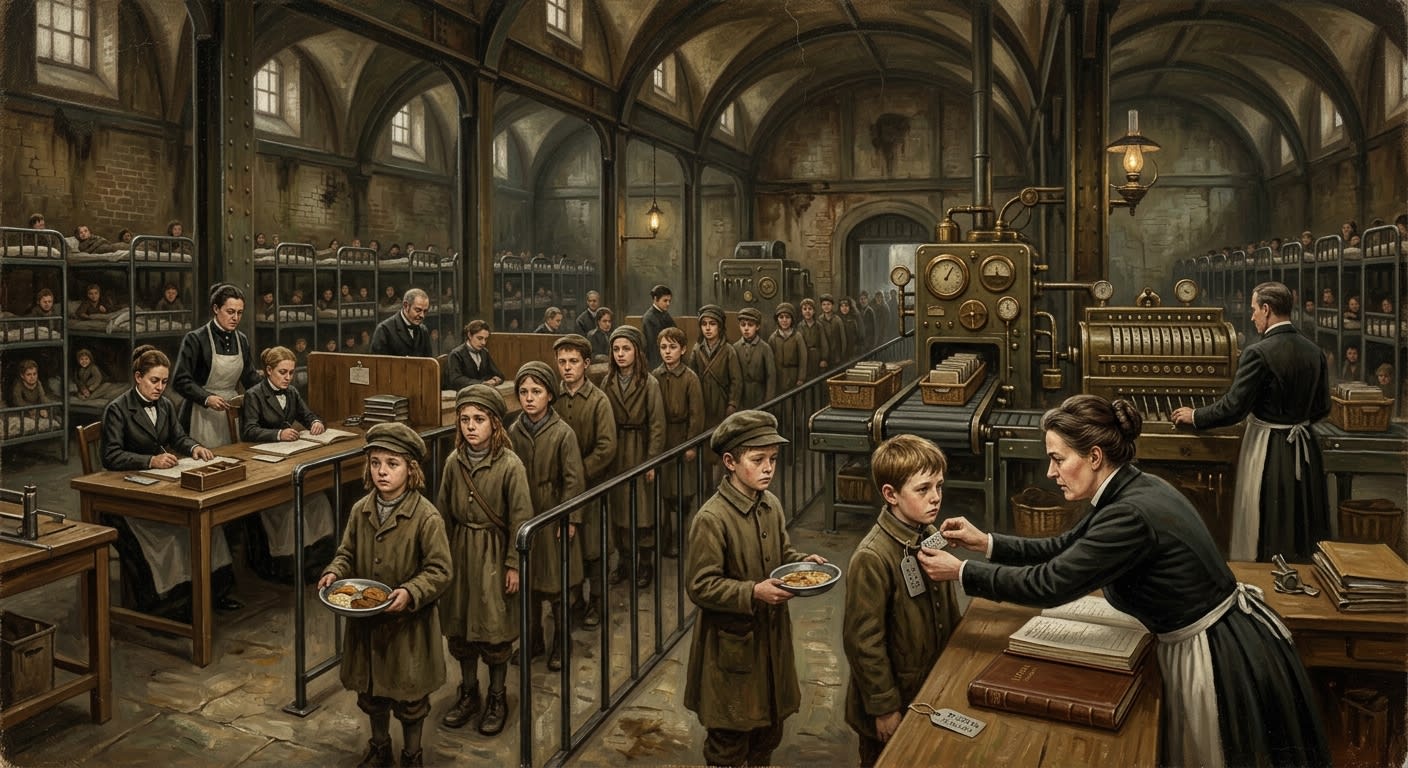
Orphanarii
Mercy with a cot, a tag-punch, and the legal courage to rename a child before breakfast
The Orphanarii are the Synod's state orphanage system: Mercy houses that wash, tag, rename, sort, feed, place, and sometimes erase children until grief becomes legible.
Codex Ref. VIII.2.12-134
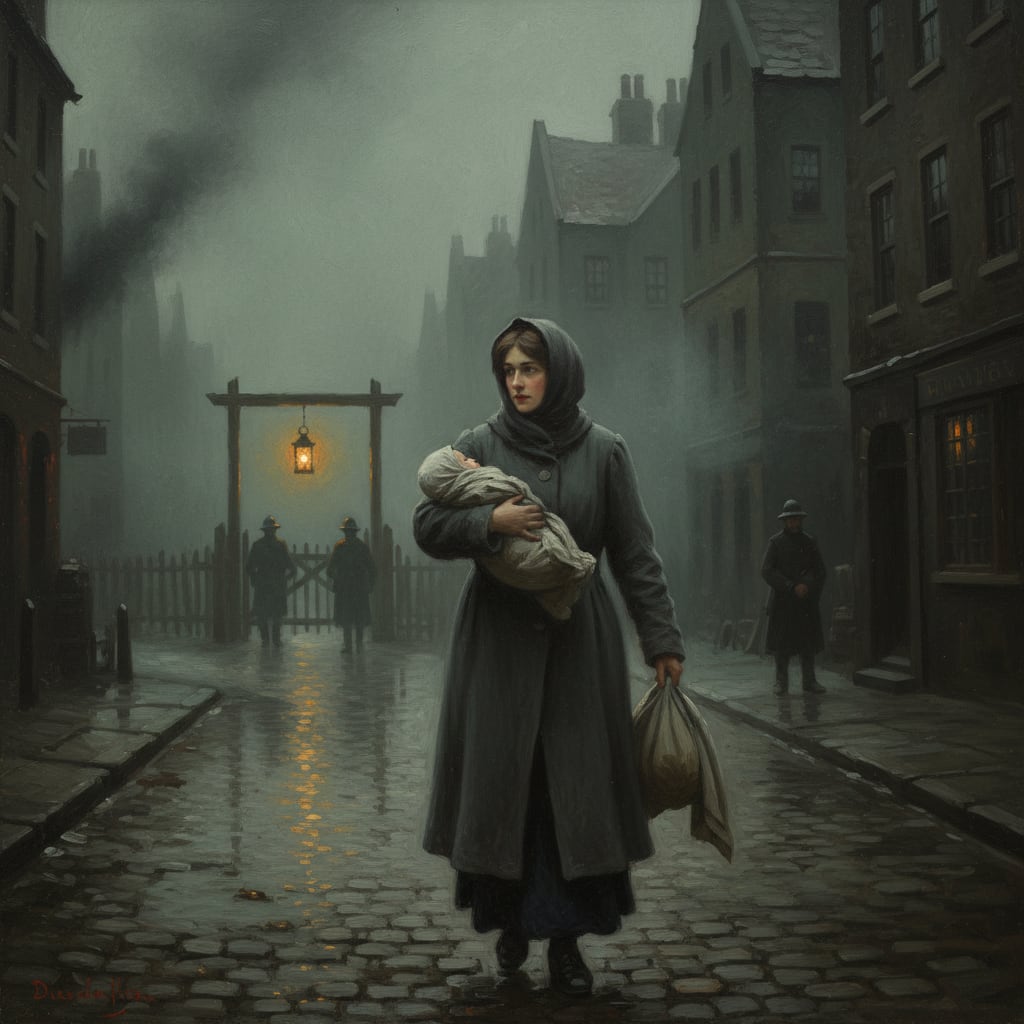
Pale Kin Runner
What the Bureau calls inventory discrepancy; what the mothers call salvation
The Pale Kin Runner is a child-smuggler, a midwife's heir, and the Bureau of Conscription's oldest unsolved arithmetic problem. She intervenes between birth and stamp. The Synod calls this heresy.
Codex Ref. XII.28.01-001
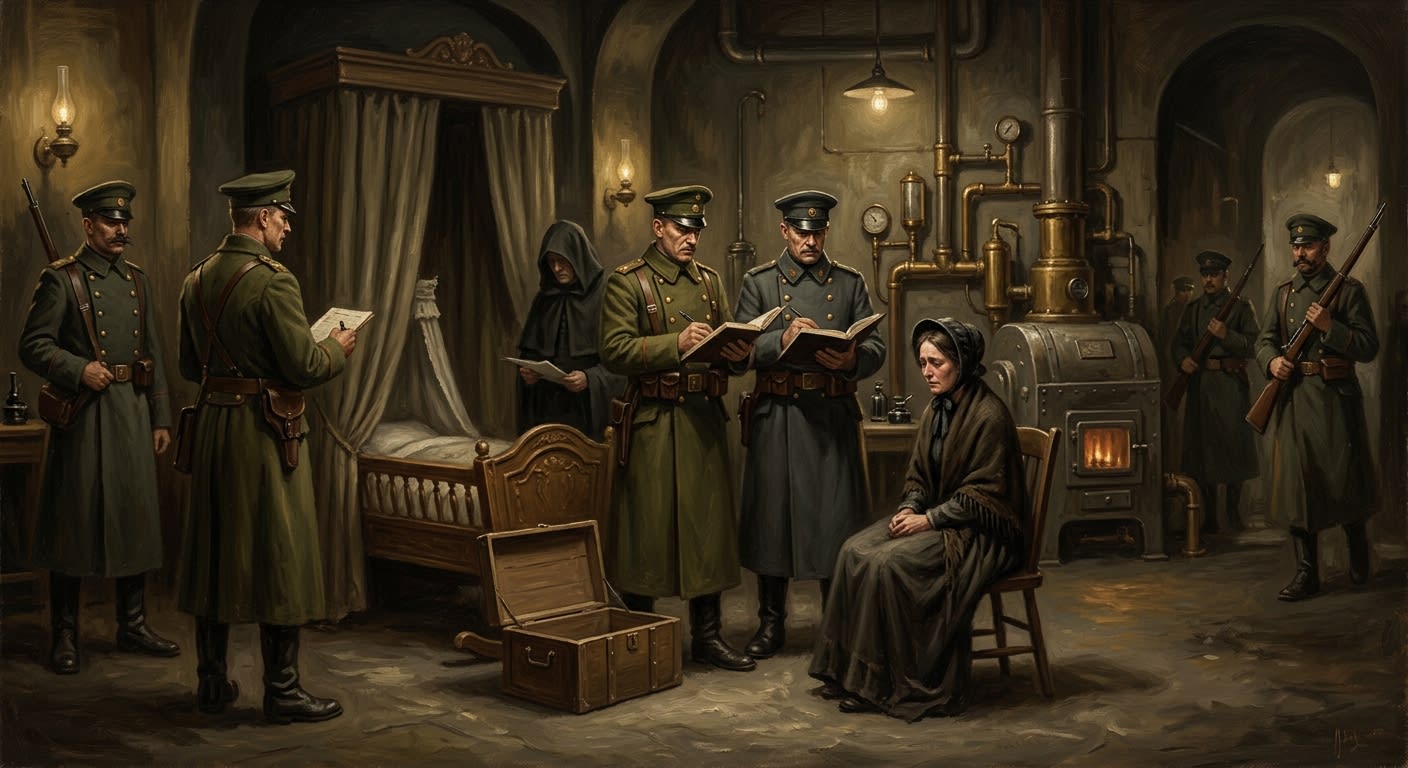
Standing Order 34-PK
The cradle confesses when the Ledger is hungry
Standing Order 34-PK makes the hidden cradle confess: missing infants become stolen soldiers, and a mother’s silence becomes evidence.
Codex Ref. XIII.1.34-158
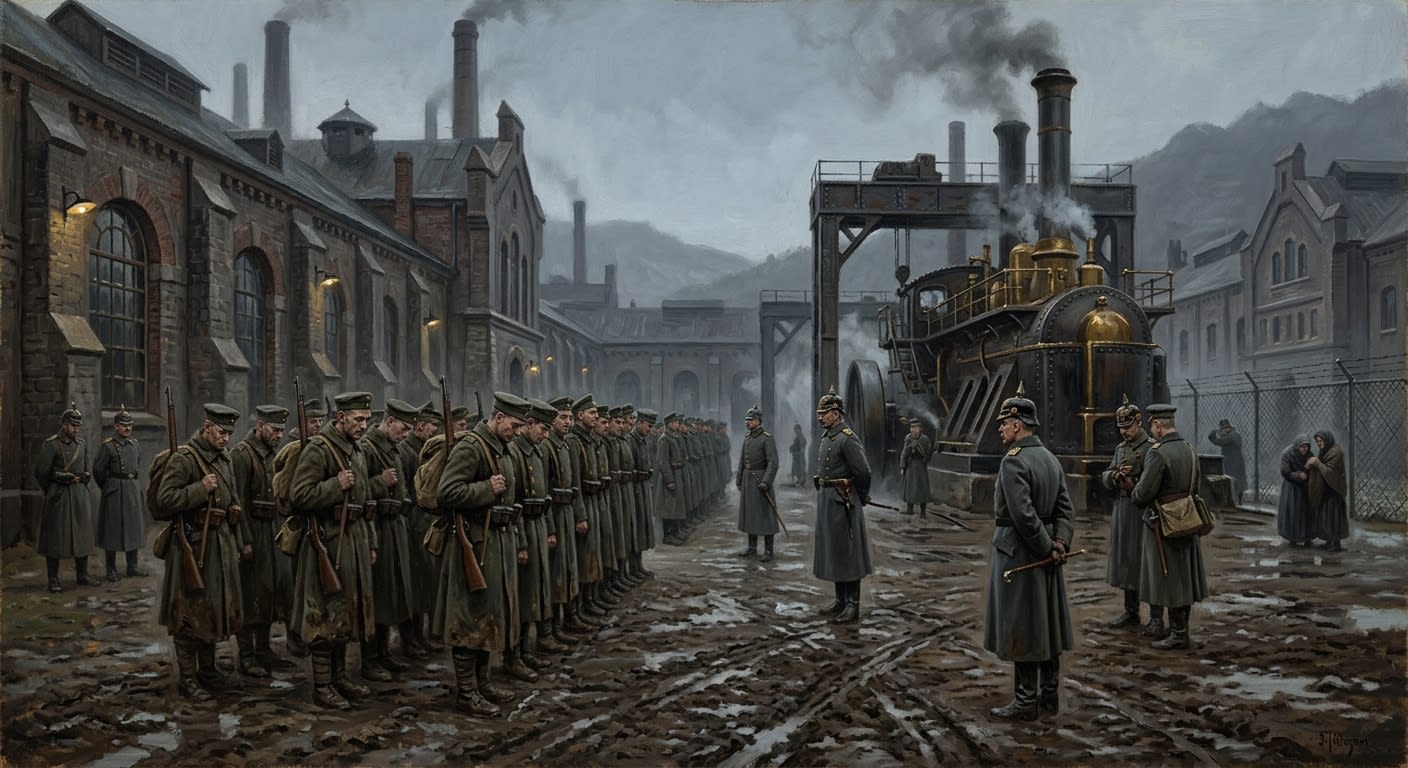
Stuttgart
Where Swabian thrift is spent in sons
Stuttgart is War's Swabian catechism-barracks, a Zone 2 training engine where ration economy, mud discipline, and family grief are measured into obedience.
Codex Ref. II.2.01-004
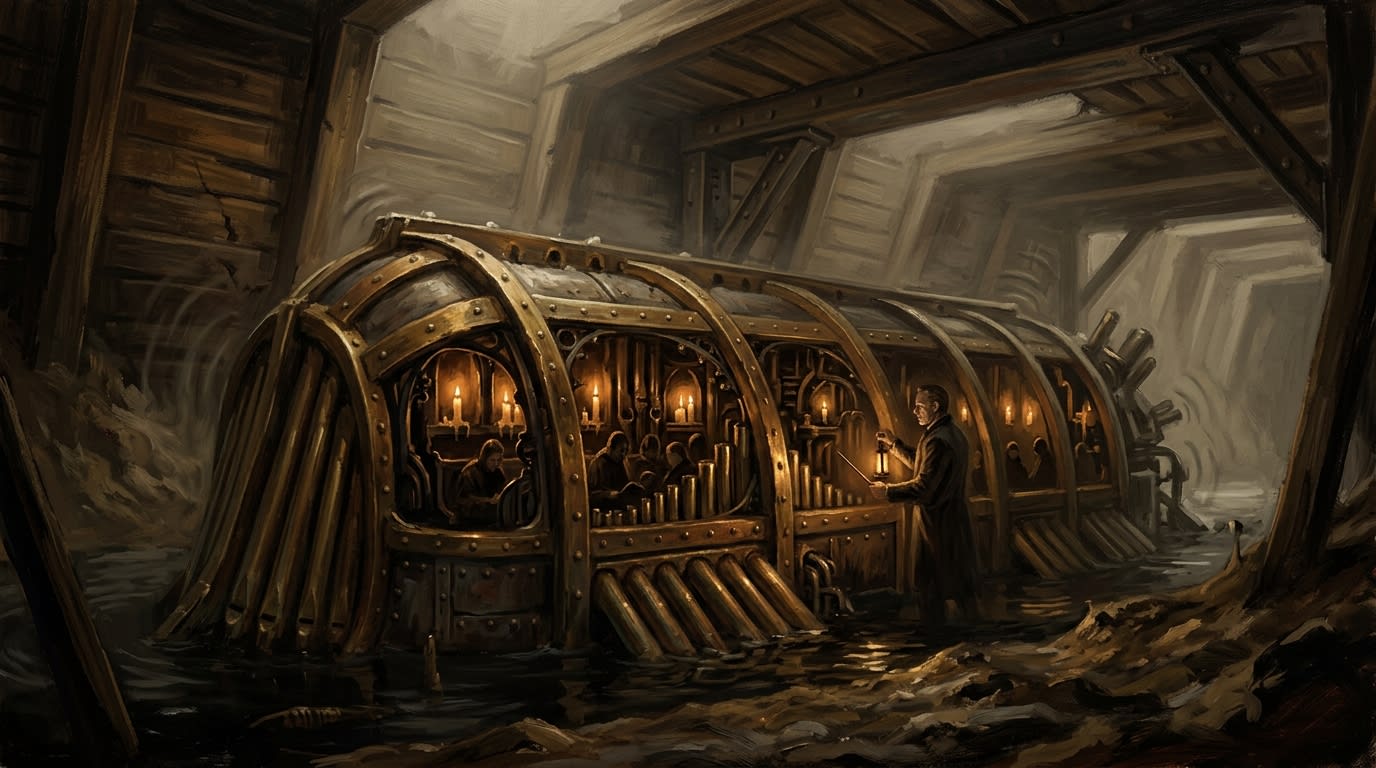
Sunken Choir
The hymn beneath the trench, paid for in boys' throats
The Sunken Choir is a sanctioned Choir-Engine: boys altered into subterranean hymn machinery so the Synod may collapse enemy tunnels while calling the invoice grace.
Codex Ref. XIII.1.33-001
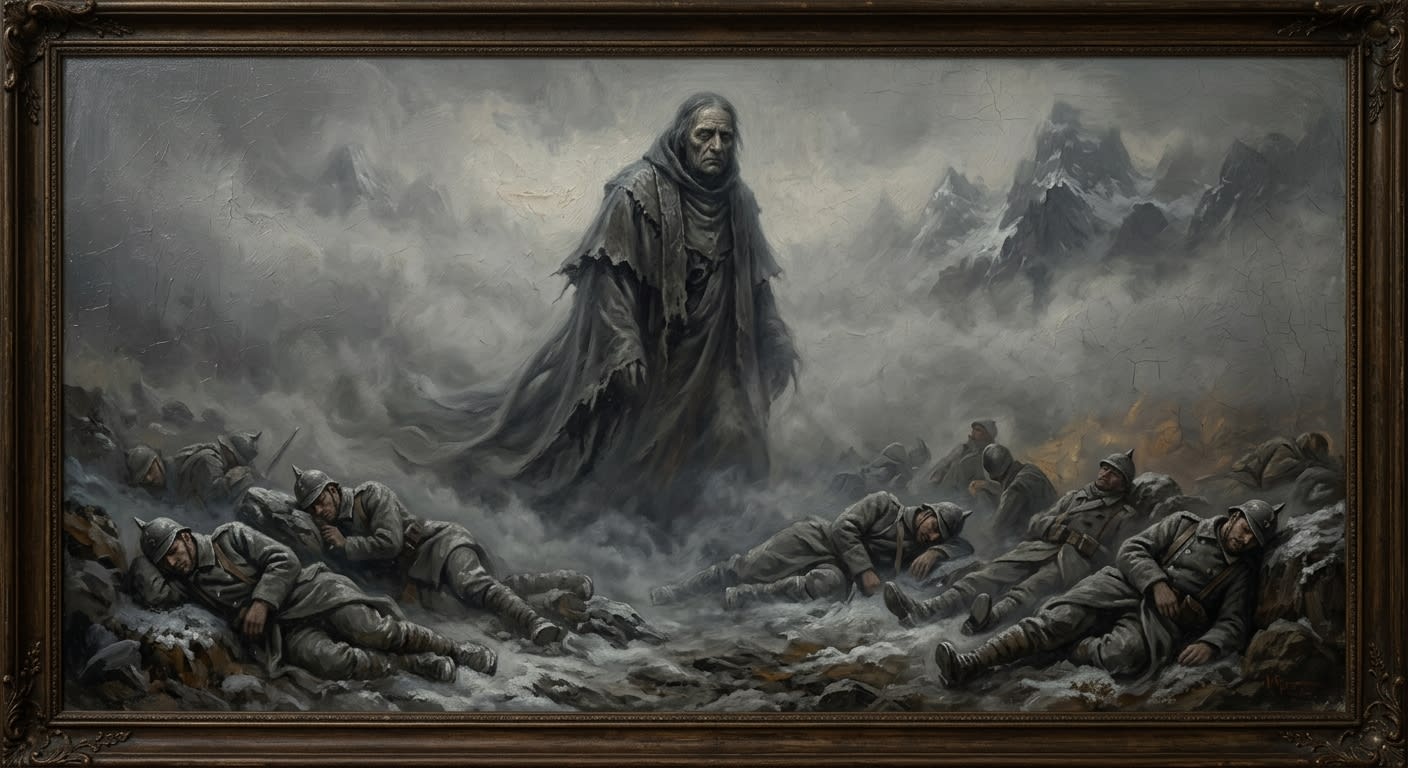
Syrion
The fog does not advance. It waits for you to stop moving.
Fourth of the Seven, Syrion holds the Bulgarian highlands in a fog of stillness and stolen time. He does not attack. He waits while you attack yourself.
Codex Ref. IV.1.07-004
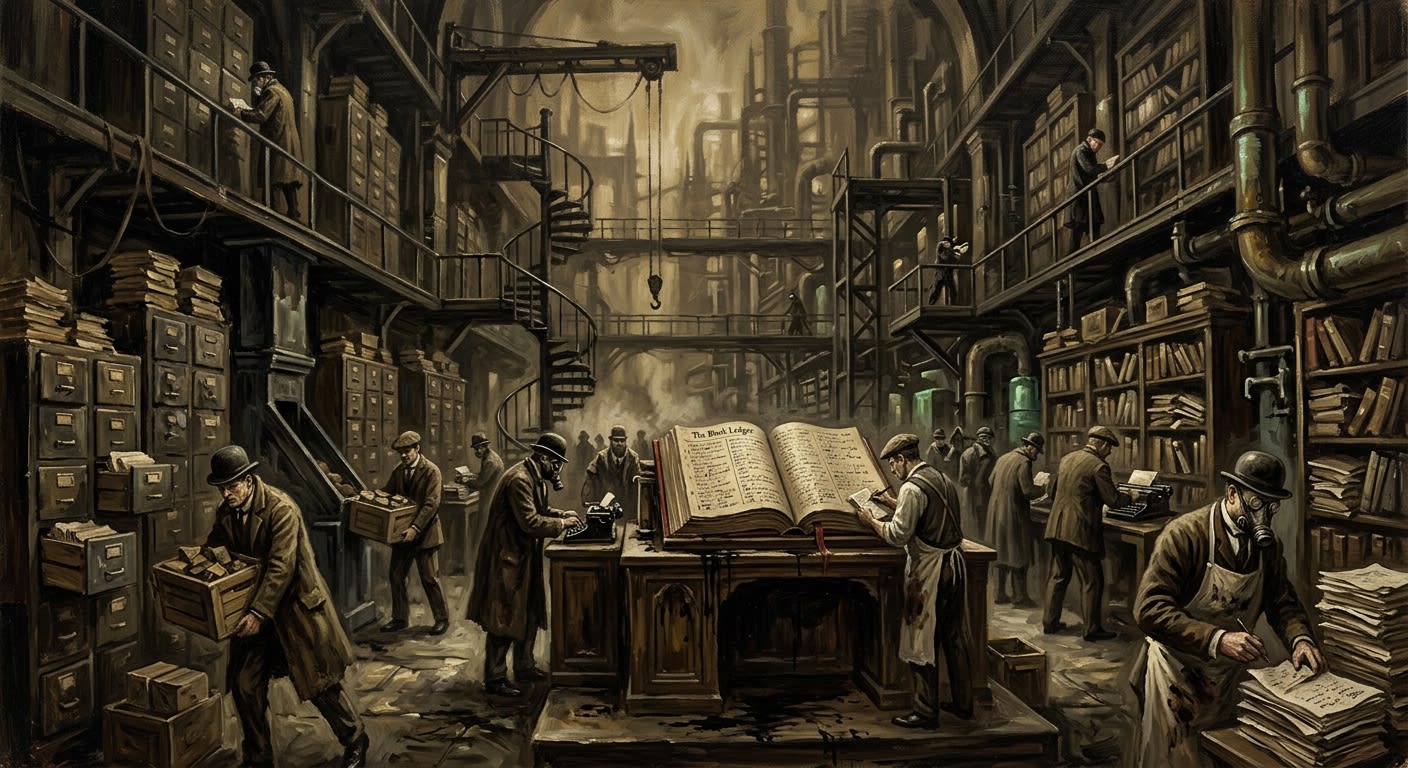
The Black Ledger
Hunger with a filing system and better memory than mercy
The Black Ledger is the Synod's gutter-mirror: a criminal heretical network that steals, feeds, records debt, and turns absence into jurisdiction.
Codex Ref. XI.1.04-001
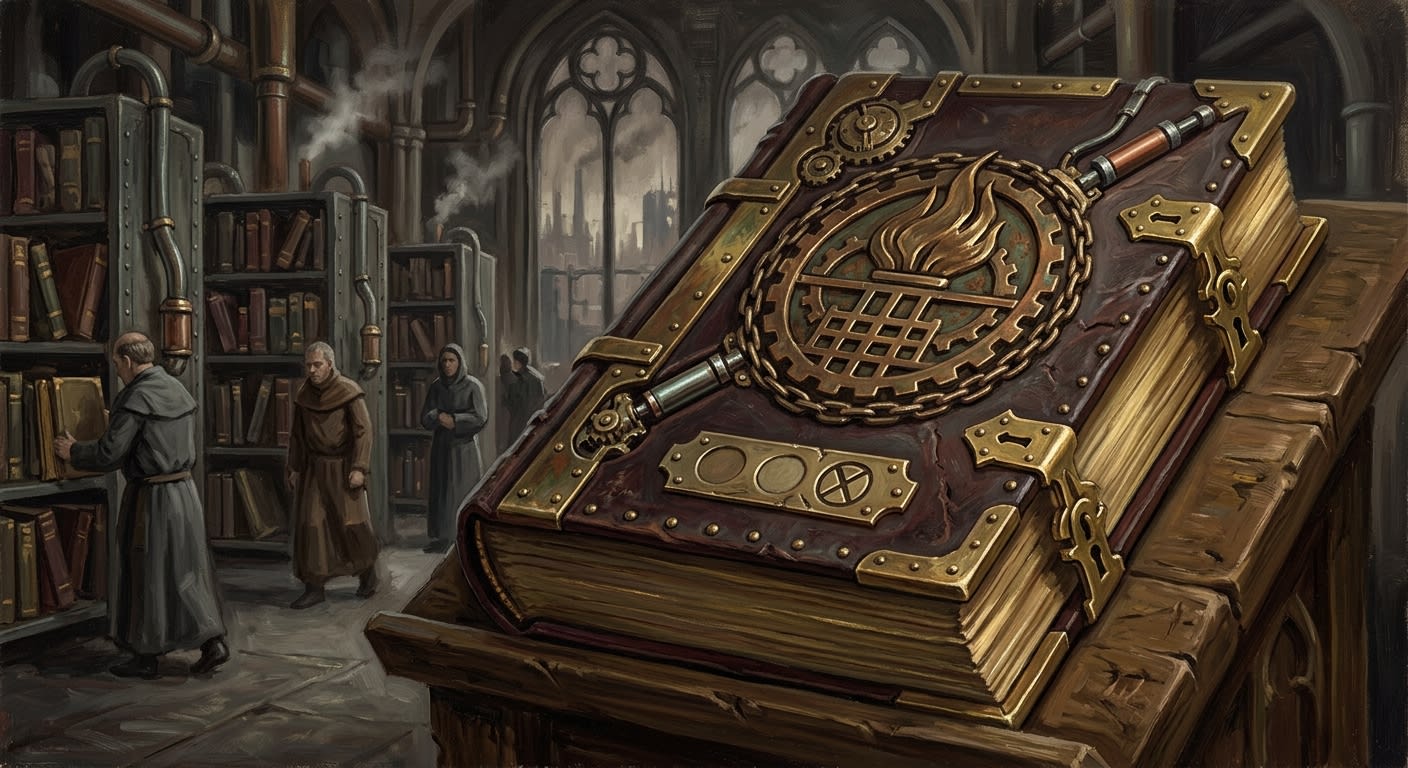
The Book of Promise
The child is named, measured, forecast, and gently confiscated
The Book of Promise is the Synod's vocational pre-allocation ledger, where baptism becomes forecast, childhood becomes collateral, and hope receives a quota mark.
Codex Ref. XIII.1.22-001
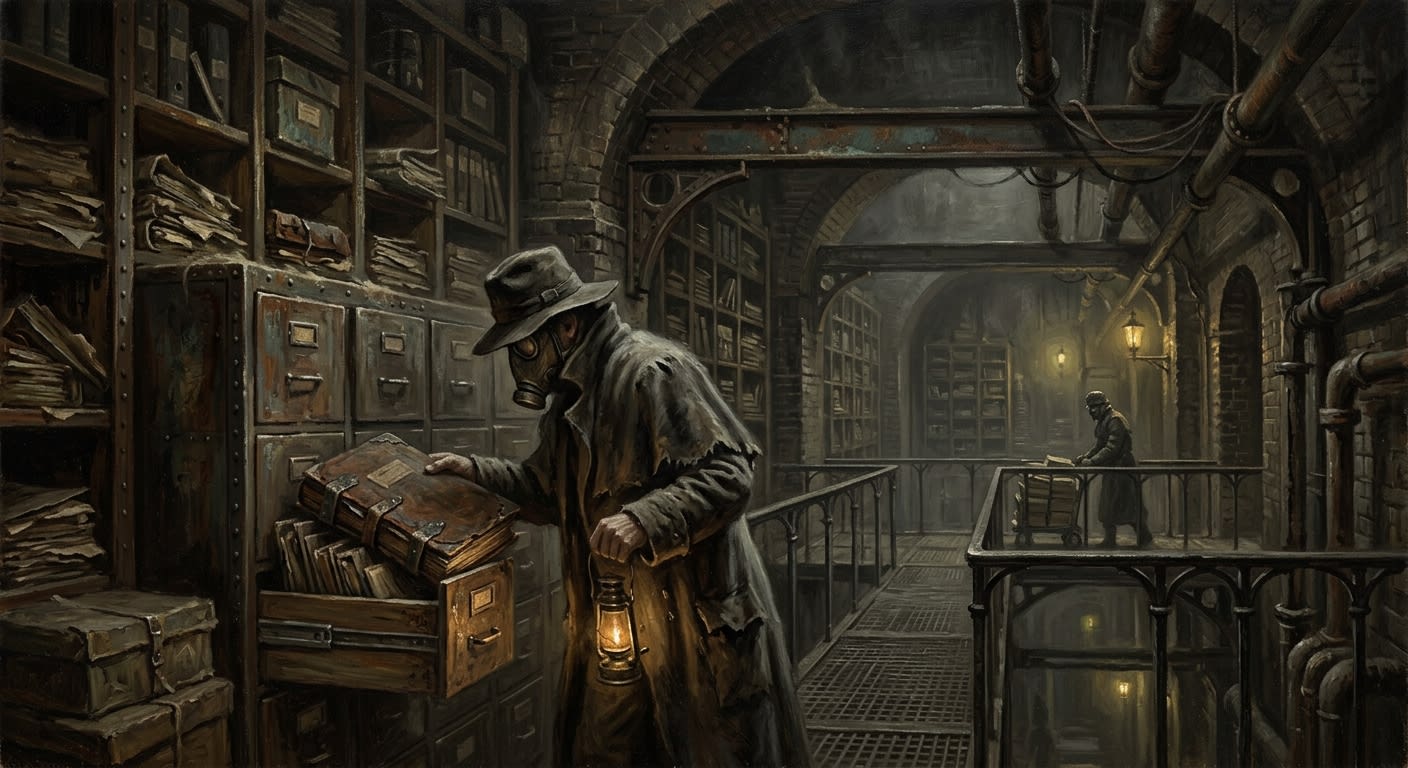
The Codices Obscurae
The books that do not exist have excellent indexing
The Codices Obscurae are denied by every Bureau that matters, which is precisely how a careful reader knows where the bodies are indexed.
Codex Ref. XIII.1.06-001

The Fading Winter
When the seal remained and the words deserted their posts
The A.S. 199 Fading Winter stripped text from sealed documents across the River-belt, leaving Candlewick to discover that blank authority still bites.
Codex Ref. VII.4.04-001
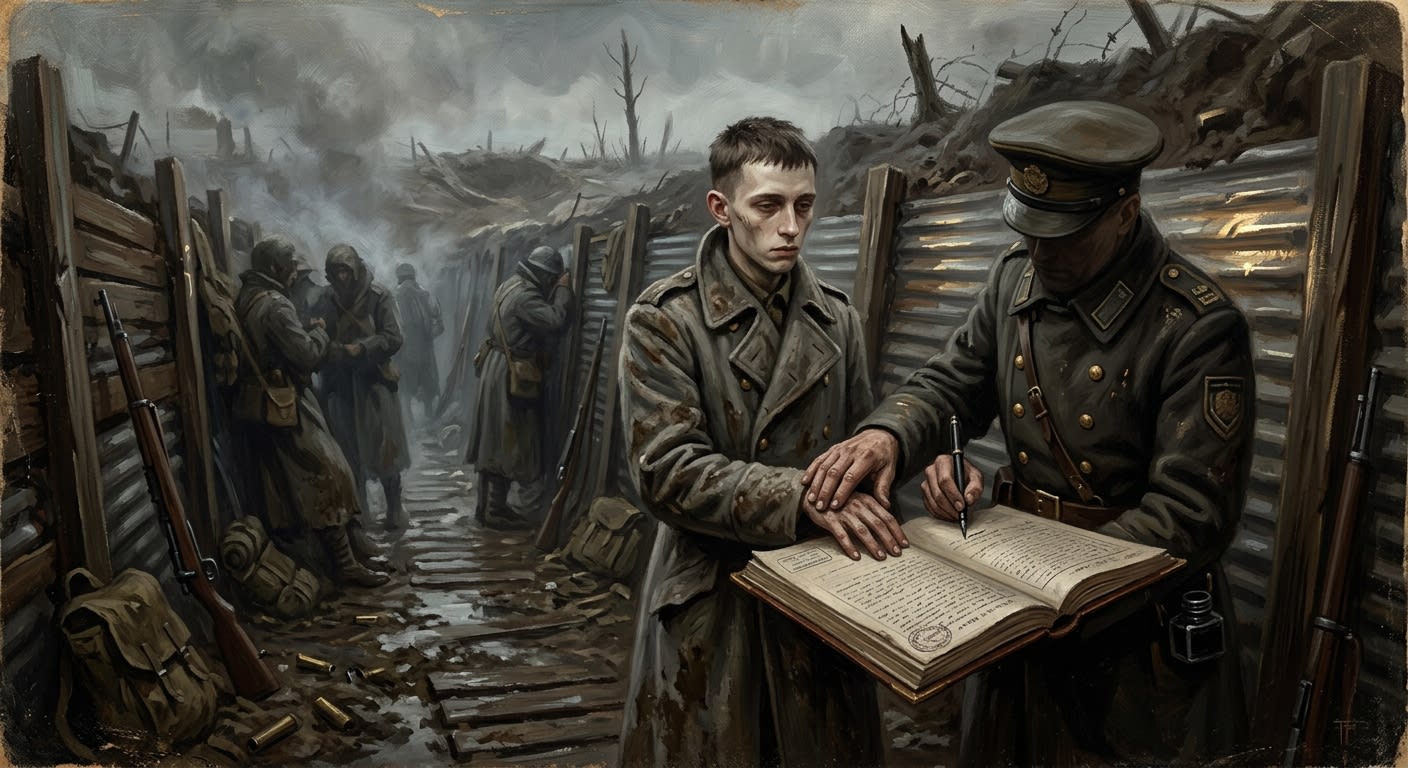
The Litany of First Earth
Mud receives the flesh; War receives the name
The Litany of First Earth is War's mud-prayer for levy transfer: four public lines, twenty-seven barracks responses, one cold trench, and a boy made legible before the Line eats him.
Codex Ref. XIII.1.55-105
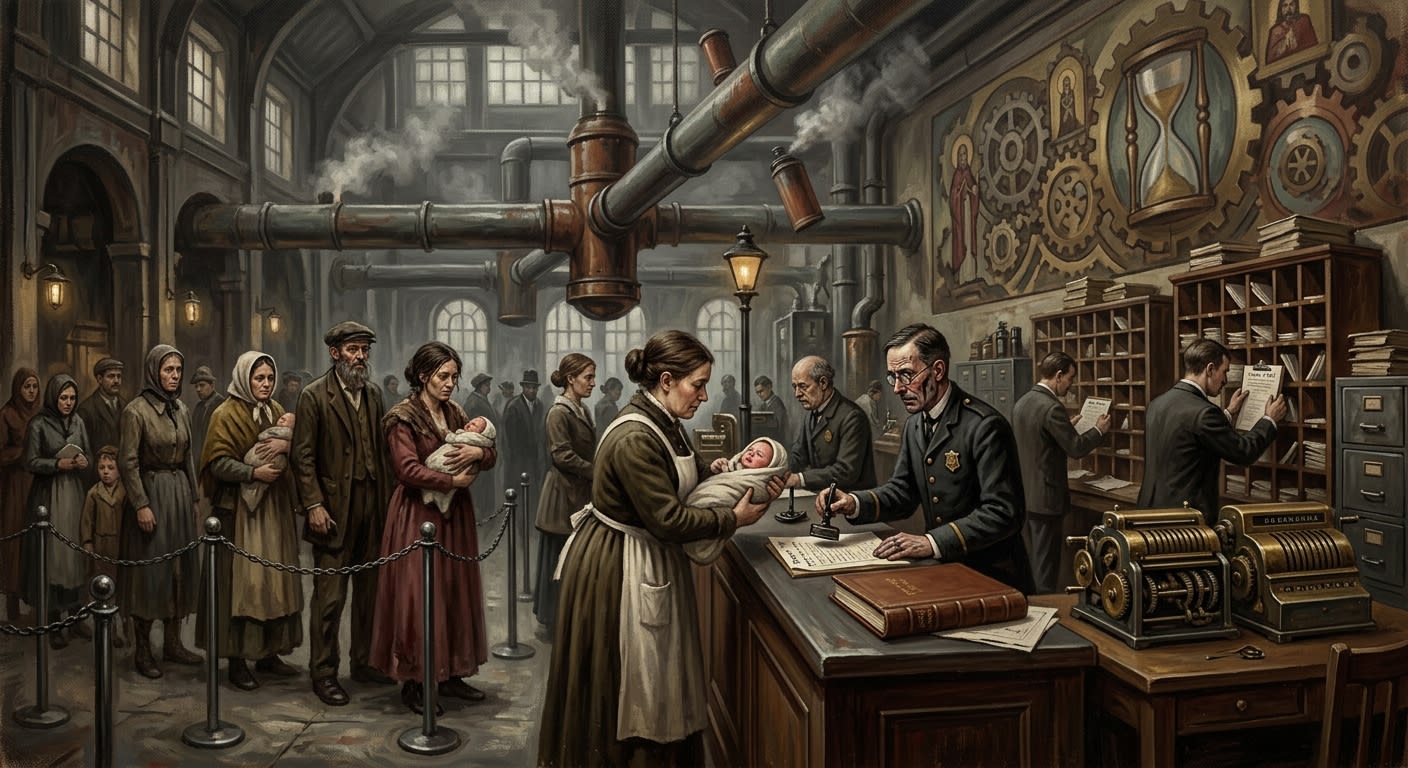
The Natal Registration Act
The statute that put a clock beside the cradle
The Natal Registration Act of A.S. 158 made birth a Records event: forty-eight hours from first breath, Form 7-NR, midwife filing, tithe projection, and the cradle docketed.
Codex Ref. XIII.1.02-158
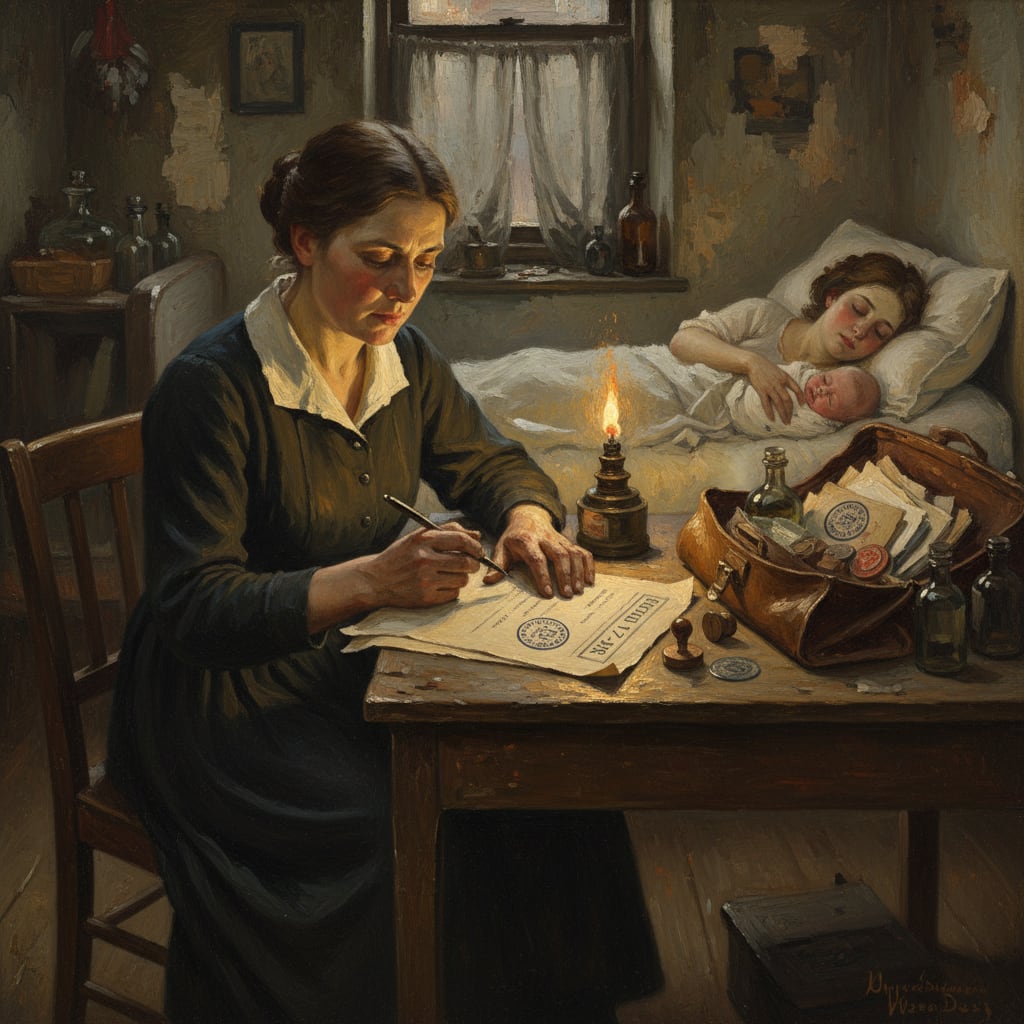
The Natal Registration Writ
Eleven inches by fourteen, and the whole apparatus of a life not yet lived
Form 7-NR is eleven inches by fourteen, bears two watermarks, and calculates the fiscal value of a human life at the moment of birth. Drax explains the theology, the penalties, and the people who would rather disappear than sign it.
Codex Ref. XIII.1.02-001
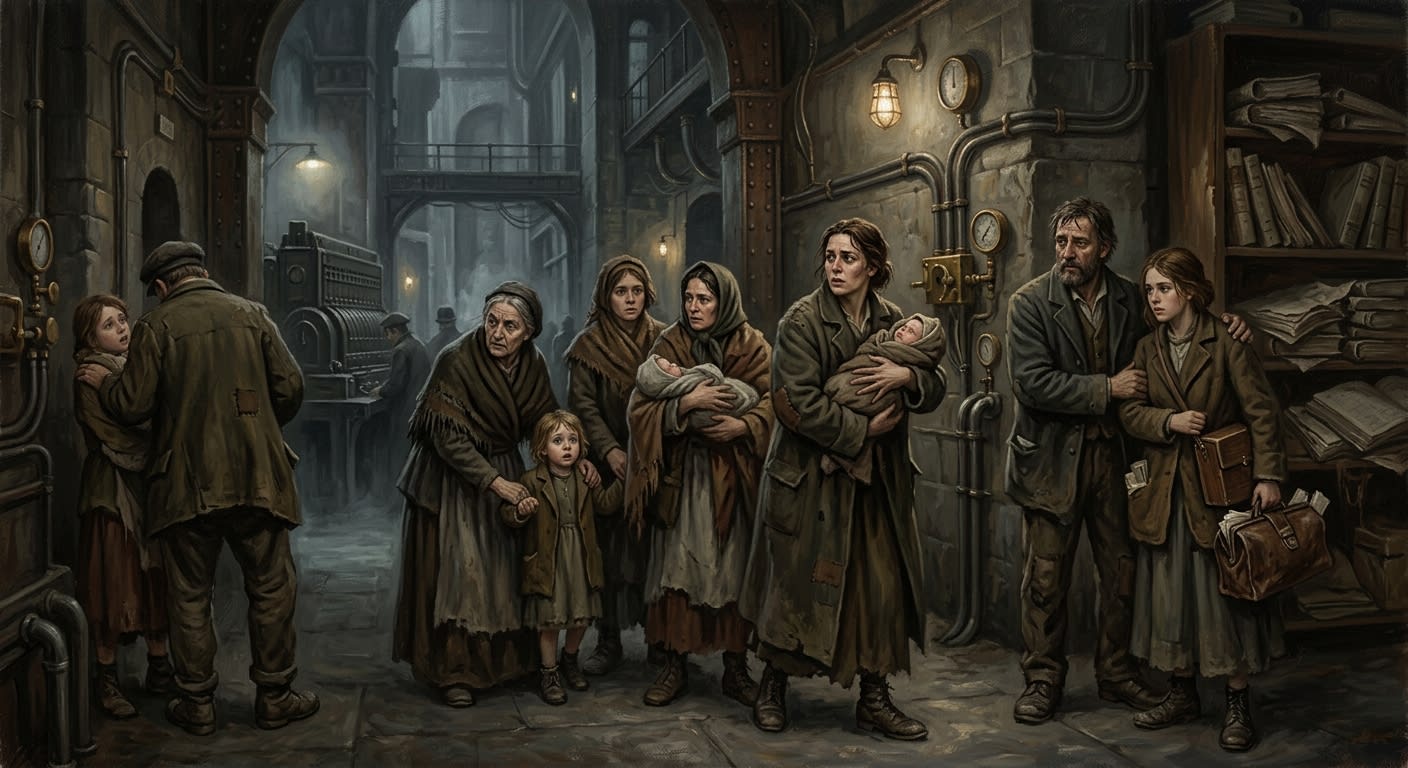
The Pale Kin
Where the cradle refuses its invoice
The Pale Kin are the proscribed cradle-resistance families who hide births, alter records, shelter unnumbered children, and make maternity a crime against arithmetic.
Codex Ref. XI.4.01-001
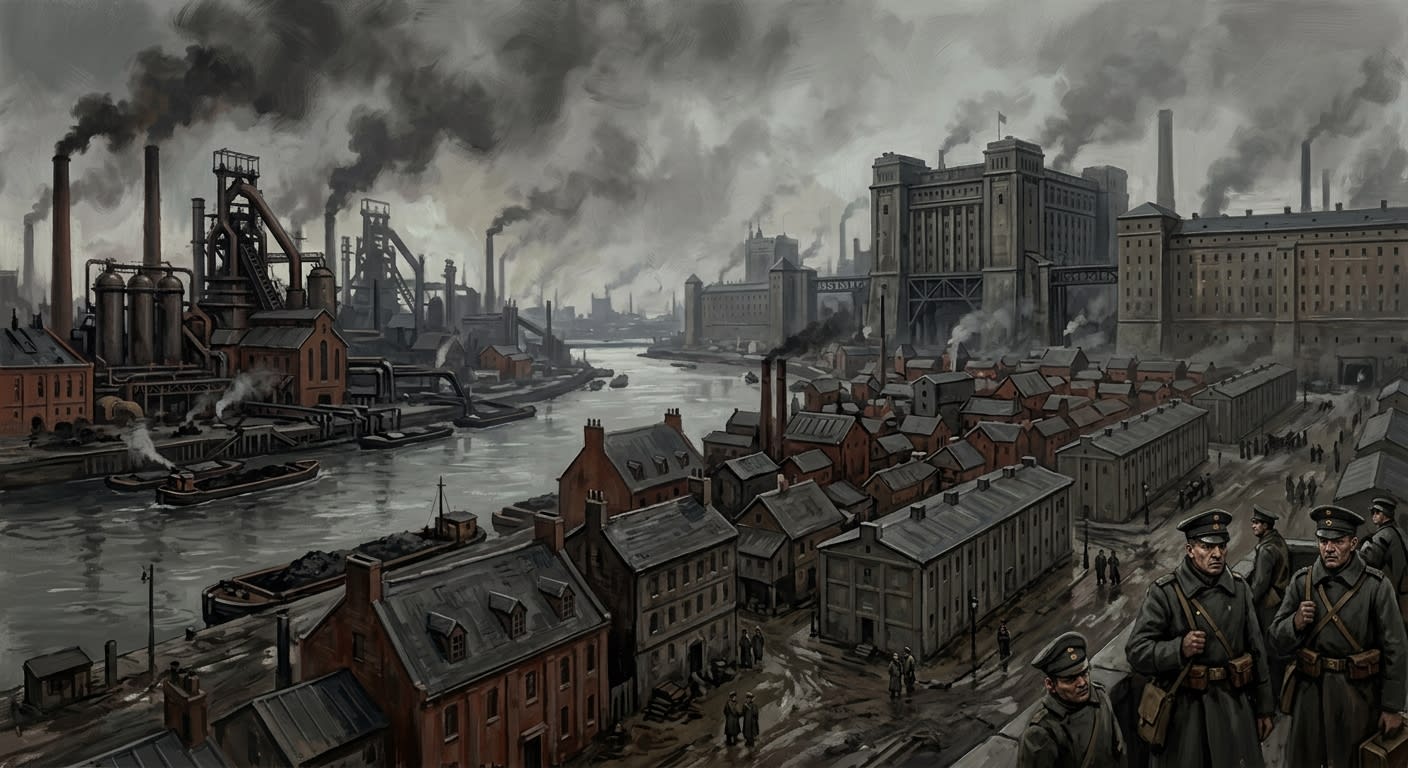
Zone 2
The throat where empire learns to speak in smoke
Zone 2 is the Synod's central throat: Strasbourg's field of authority, Rhine wealth, furnace obedience, catechism-barracks, and useful smoke.
Codex Ref. II.0.04-201