
#On the Letter That Bites
“The clause is the mercy.” — Purist maxim, commonly uttered before mercy is denied.
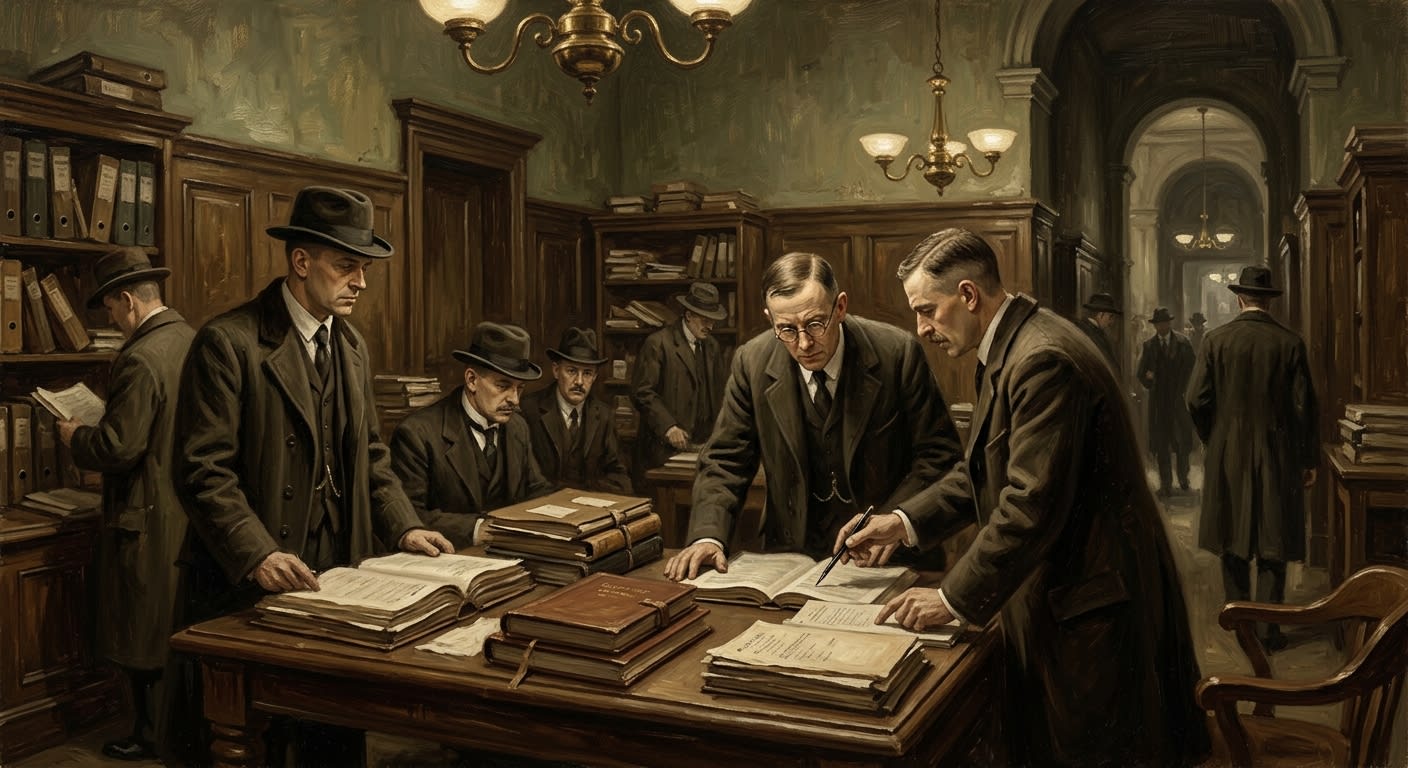
The Citation Purists are the white-knuckled faction within the Citation Advocate profession who believe that text is safer than intention because text can be weighed, cited, witnessed, sealed, and used to break a man’s life without consulting his face. They cite doctrine as written. They read punctuation as jurisdiction. They treat loopholes as heresy’s little mouse-holes in the wall of Law. Their enemies call them charming. Their friends call them necessary. Their clients, when intelligent, call them early and pay in advance.
They arose wherever precedent combat required a conscience and found a ruler instead. In the registry courts of Strasbourg, Cologne, Budapest, and the forward bastion annexes, an advocate may win by intent, ambiguity, theatrical mercy, or the clever corruption of an exhausted clerk. The Purist refuses these ornaments. He enters the citation pit with a short chain, a clean copy, three witnesses to custody, and the social warmth of a winter scalpel.
Their founding saint, in factional hagiography, is Saint Vellum of the Narrow Line, patron of rigid distinction and cargo denied by one disputed letter. The official Advocates Guild does not recognise him as Purist property, because the Guild recognises nothing as property until a fee schedule has been drafted. Purist chambers keep his icon above the shelf of accepted editions. The flame behind him is always painted straight.
#On Their Practice
A Purist begins with the text and ends before the audience has had time to enjoy itself. Standing must be proven by proper roll, current seal, active witness, valid hand, acceptable edition. The spine must be short enough that each link can be read aloud without recourse to insinuation. Remedy must follow the written schedule. No appeal to hardship. No “custom of the district.” No military convenience smuggled under a wet cloak and renamed necessity.
This makes them terrifying in small cases and disastrous in living ones. A widow whose husband’s pay-book contains one obsolete chapel abbreviation will receive no indulgent reconstruction from a Purist. A quartermaster who can prove the convoy moved under shellfire will be asked where, precisely, shellfire appears in the exemption table. A captain who pleads chaos receives the same answer Marrowe made holy at the Red Trial: confusion does not enter a ledger on its own.
They wear plain black collar strips without coloured favour-cords. Their seal chains are polished, unadorned, and displayed with the smug chastity of a relic no one wanted to kiss. Their crates are famously small. Pragmatists arrive with libraries. Shadow Advocates arrive with lies wrapped as libraries. Purists arrive with the one page they intend to use, then watch the room begin sweating.
They despise ghost precedents, bribed shelf calls, warm wax, private confessor leaks, sentimental widow petitions, heroic battlefield exceptions, and the vulgar doctrine that law exists to keep districts functioning. Law exists, they say, because the Creator wrote the universe in clauses. Function is what remains when men obey them.
#On the Forgery Panic
The Forgery Panic of A.S. 178 made the Purists insufferable, which is to say powerful. Fourteen advocates across three zones cited the same fabricated ruling. The false decree passed through pits, judges, and clerks because it was useful, elegant, and repeated by men whose clients were rich enough to make repetition sound like truth. When the Bureau exposed the fabrication, Pragmatists learned caution. Shadow Advocates learned better prices. Purists learned the most dangerous lesson any zealot can learn: they had been right.
PURIST CHAMBER CIRCULAR — A.S. 178 — RECOVERED COPY Subject: post-fabrication practice Line 1: We told you. Line 2: ████████████████████████ Line 3: No document without custody. No custody without witness. No witness without standing. Line 4: We told you.
After the Panic, chain-of-custody protocols became law. Dual-scribe authentication, seal-chain records, witness ribbons, binding inspection, pressure variance indexing: all the rituals that ordinary advocates cursed as shackles became Purist sacraments. They did not need to change their manners. The age had become rude enough to match them.
Popular Guild histories claim the Panic “created” the Purists.
False. It promoted them. They existed before A.S. 178 as a nuisance with good handwriting. The Panic turned them into a nuisance with jurisdiction.
Their prestige increased in audit courts first. Codex Doubt Auditors prefer Purists because a Purist file can be inspected without needing a priest, a gossip, and a shovel. Records Scribes prefer them in theory, because clean custody means fewer midnight searches. Scribes prefer Pragmatists in practice, because theory buys no coal. Judges prefer whichever faction lets them finish before supper.
#On Their Hatreds
The Purist hatred of Pragmatists is doctrinal, professional, and faintly erotic in the way rival schools always become when trapped in the same court for generations. Pragmatists argue intent, exploit ambiguity, delay filings, rescue useful clients, and occasionally keep a district from burning by pretending the wrong line was the right one long enough for bread to arrive. Purists call this fraud with a pulse. Pragmatists call Purism a suicide note with witnesses.
The quarrel has no cure. The Purist is correct that a loosened clause becomes a tunnel. The Pragmatist is correct that sealed tunnels fill with bodies. The Synod requires both: one faction to make Order believable, one faction to keep Order from dying of its own posture, and one unlicensed cellar of Shadow Counsel to do what neither faction can admit was necessary.
Purists reserve special contempt for Records Scribes who “discover” convenient copies, Confessor-Booth Clerks who leak sin-flags, and Erasure Notaries who delay strikes for patron comfort. They are less contemptuous toward the Bureau of Records itself, because even zealots know which altar feeds them.
#On Their Use and Ruin
Purists win clean cases beautifully and dirty cases by refusing to notice the dirt unless the dirt has a docket number. They are prized in appeals, audits, inheritance reversals, relic-title disputes, and any matter in which the opponent’s argument depends on mood. They fare badly when artillery, famine, or human beings enter the file. Their casualty rate among clients is high. Their reversal rate is low. The Guild prints the second number.
A Strasbourg training sheet once described Purist practice as “morally safer.”
Withdrawn after three petitioners were erased in cases their advocates described as technically successful. Safety belongs to persons. Morality belongs to sermons. Purist practice belongs to paper.
Their current leader is not officially a leader, because formal leadership would make the faction legible and taxable in the same week. Senior Advocate Mael-Cassin of the Third Gallery is the name most apprentices whisper. He has won forty-two clean-chain appeals, lost seven clients to lawful remedy, and once refused to cite a favourable precedent because the comma in the certified copy leaned east. The judge sustained the refusal. The client did not survive the corrected argument.
The Citation Purists endure because the Synod cannot laugh them out of court without laughing at itself. They are the ugly mirror held to every proclamation about Order: if the law is sacred, they are priests; if the law is a convenience, they are madmen; if the law is both, they are employed.