
#On the Street Where the Sea Is Stamped
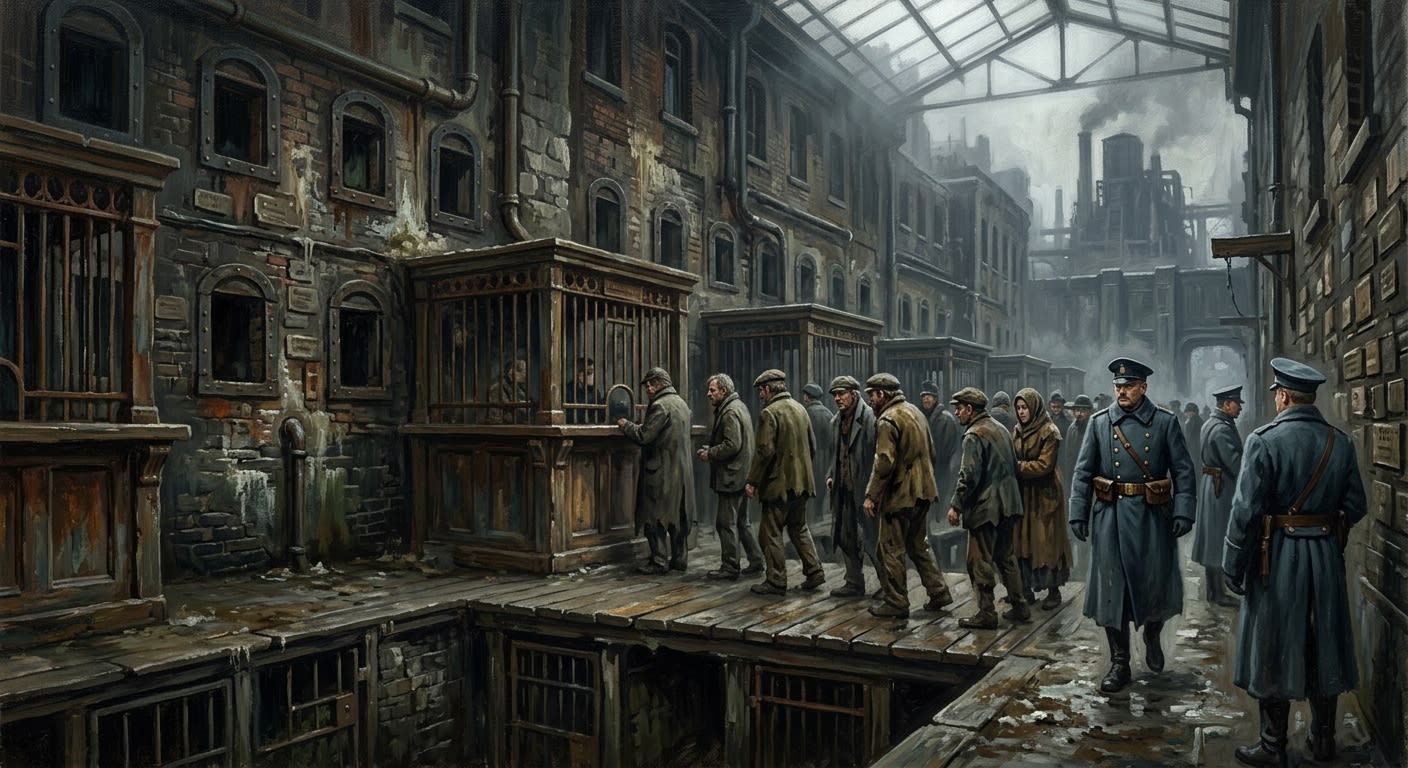
Salt Tribunal Row is the narrow administrative throat of Calais, a damp run of counters, hearing rooms, seal windows, tea-halls, warrant niches, and back stairs set between the upper cliff offices and the lower mouths of the Undertide Pens. It smells of vinegar ink, old rope, wet wool, hot salt-wax, and civic blackmail. One knows a place by what clings to its stones after rain. Salt Tribunal Row retains accusation.
The Row belongs formally to the Salt Tribunal, though the Chalk Redoubt has never produced a jurisdiction simple enough to remain true after noon. Above it the Crownline (Unregistered) issues military commands. Below it the Pens hold what the sea returns. Behind it the Chalk Warrens cough workers, lantern runners, seal porters, and children into its queues. Before it the Net Quays (Unregistered) argue with tide, hunger, and inspectors. At its desks, passage becomes paper.
It is not long. Length would dignify it. The Row runs in a crooked shelf cut into chalk-lime and old quarry stone, roofed in slate too heavy for the walls and braced by iron ribs whose lower bolts sweat orange brine. The public sees a line of sea-pass windows and a tribunal arch. The initiated see intake doors, evidence pulleys, runner slots, flood marks, quiet cells, clerk holes, sealed drains, and a stair whose bottom step is never dry.
#On Its Raising from Cellar, Counter, and Panic
Salt Tribunal Row began below itself. This is common in Calais, where every respectable office stands atop an older embarrassment.
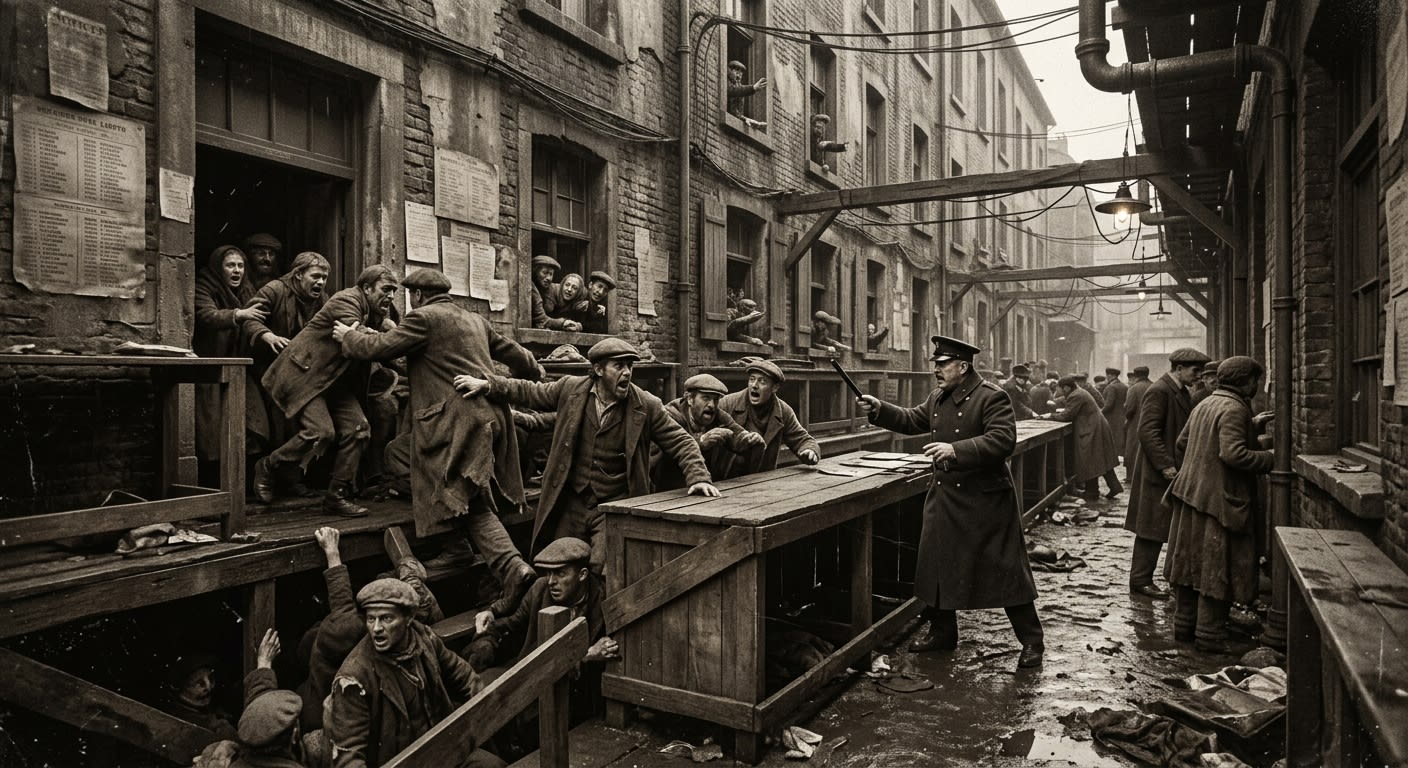
After the A.S. 71 Great Breach, recovered bodies and uncertain objects were carried into old net-drying cellars beneath the future Row. The first chalk notice over the cellar lintel read temporary holding. It has been freshened each decade, which is how the Synod admits permanence without signing the word. Lime barrels, salt sacks, canvas, rope, and frightened sergeants made the first quarantine architecture. The Black Lungs brought up bodies. Clerks demanded names. The sea supplied alterations.
By A.S. 84, when the Salt Tribunal was ratified, the cellars had already taught the street above what it would become. The sea pass needed a counter. The confession abstract needed a desk. The cargo seal needed a press. The detained needed release papers, and the dead needed enough paperwork to keep kin from rioting in useful doorways. The Row rose as a practical chapel to movement: one side for applicants, one side for clerks, the middle for guards, the floor for water.
A commemorative plaque beside the tribunal arch states that Salt Tribunal Row was “laid out in orderly fashion according to Coastal Improvement Plan 84-C.”
Corrected. Plan 84-C regularised what panic, barrels, drowned testimony, and unpaid masons had already arranged. The plaque remains because lies in brass resist weather better than minutes on paper.
The first buildings were low: pass hall, seal room, tide-file closet, quarantine counter, and a magistrate's chamber with a window facing the harbour so the judge could look upon the thing he monetised. Later decades added upper clerks' nests, a salt-wax warming house, the Registrar's Annex, narrow tea-halls for applicants rich enough to wait seated, and a covered arcade where poor petitioners stand in crosswind until their sins are called by docket number.
#On the Public Face and the Hidden Doors
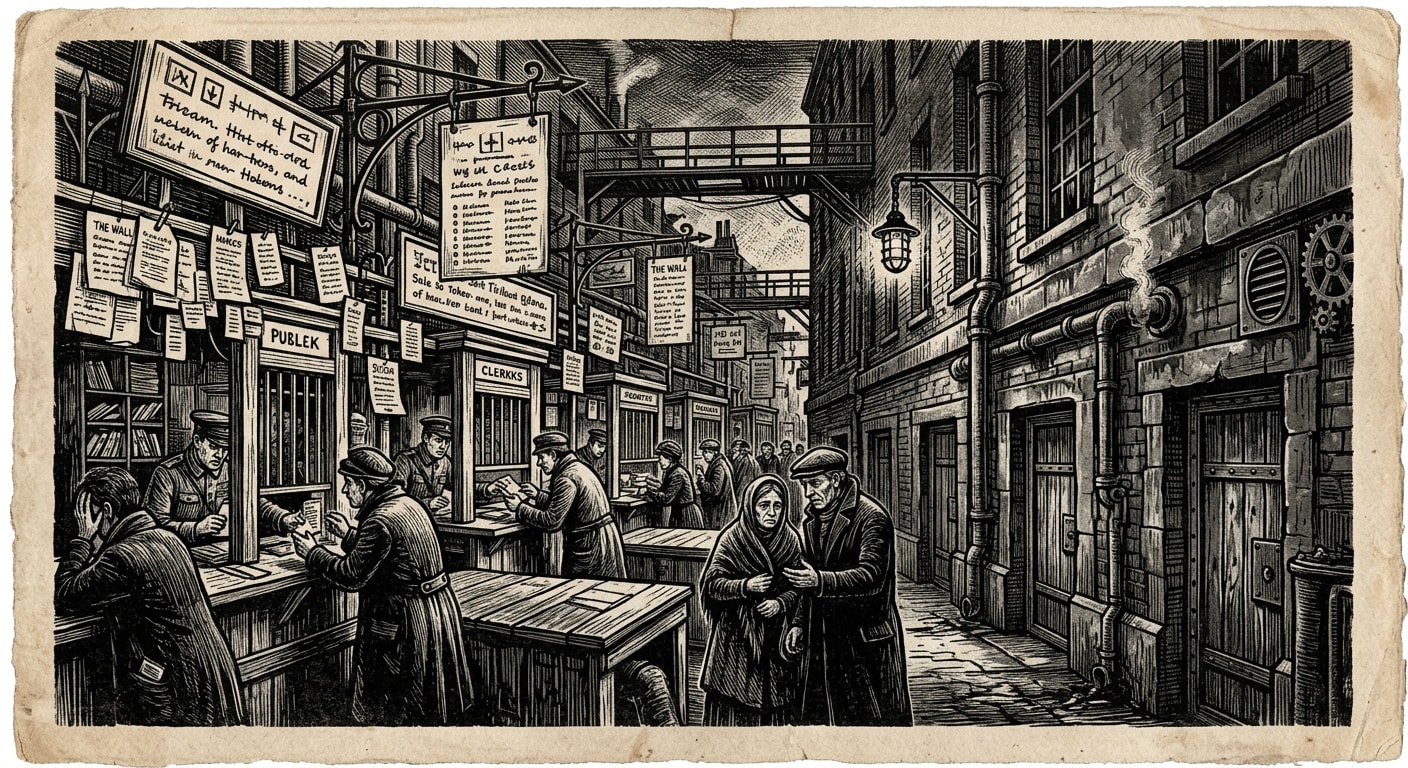
The Row's public face is a succession of windows behind iron grilles. Window One receives pass petitions. Window Two checks confession tickets. Window Three inspects cargo relations. Window Four sells replacement salt-wax at rates posted too small for old eyes. Window Five accepts appeals and rejects them with enviable speed. Window Six is never open. This infuriates the public and pleases the clerks, which may be its entire function.
The tribunal arch stands near the centre, blackened by lamp soot and thumb grease. Applicants touch the left jamb before entering. The custom began as superstition after the A.S. 188 blue-lamp incident (Unregistered), when every lamp on the Row burned blue and harbour water recited six names in a child's voice. Cantor-Major Pell sounded the sealed seventh sequence; the water stopped speaking after the fifth measure. One lamp continued blue until dawn. Seal-Justice Corvin Hald billed the oil as emergency civic illumination.
Behind the public line lie the hidden doors. The first door leads down to the Undertide Pens' public vestibule, a clean arch with a clerk whose office exists to say no visitation. The second opens toward the Net Quays for stretchers, seized cargo, and objects that must not pass through a crowd because crowds insist on having eyes. The third is a narrow runner slit to the Script Wall registers. Slate abstracts arrive before dawn, damp under waxed cloth, bearing names copied from fog.
The fourth door is denied. It descends under the Registrar's Annex to cabinets holding inadmissible chalk rubbings, Unread placards, failed pass identities, and three drowned evidence packets that hum during fog. The denial is robustly worded, which is unfortunate, since the door exists with equal robustness.
#On the Queue as Civic Discipline
Midday belongs to the queues. The Redoubt wakes at dawn for guns, nets, and chalk shifts; by midday the Row has swallowed anyone who wishes to move, trade, appeal, retrieve, release, bury, certify, deny kinship, prove identity, revise identity, or purchase official patience. Applicants carry salt chits, lantern tokens, ration stamps, oath-notes, Iron Crowns from Dover, Synod paper, dock gossip, forged courage, and the dead weight of not knowing which window will ruin them.
The queue sorts Calais more honestly than any census. Chapterhouse messengers pass under awnings. Gunline runners cut through with bell-sealed packets. Licensed traders sweat politely. Quay folk shift from foot to foot, watching the tide-hour expire on documents they paid for yesterday. Warrant widows hold inherited passes in oilcloth. Grey Keel lookouts pretend to sell hot broth from kettles whose false bottoms hold names.
The Row's tea-halls deserve special condemnation. They sit just off the arcade, warm, narrow, and full of applicants who can afford to be anxious while seated. Tea is poured strong enough to tan leather. Each table has a hook for pass satchels and a little brass bell to summon a clerk's boy. The poor see these bells through steamed glass. The boys ignore half of them. Even privilege must learn to wait, lest it mistake itself for sovereignty.
Public etiquette cards describe Salt Row waiting as “shared civic endurance.”
Corrected. Shared endurance would require shared weather. The phrase is retained for school instruction, where children have not yet learned to laugh at stationery.
Voice duty is assigned here as debt conversion. A denied applicant may pay in coin, labour, or night reading. The posted rules call this flexibility. In practice, it feeds the Script Wall with throats drawn from those least able to refuse. A man denied a fishing clearance at noon may kneel in surf-water by midnight, reading names low enough for the sea to touch his boots. Calais is a city of efficient circles. Most tighten.
#On Hald, Yve, and the Clerks Who Do Not Look Up
Seal-Justice Corvin Hald owns the Row without owning its stones. His chamber overlooks the public arch. Its glass is always clean. This detail is obscene in Calais. Salt films every surface within reach of wind, but Hald's window shines because two boys polish it each morning before the pass queue forms, so the petitioners may see, above them, a clear pane behind which judgment can avoid eye contact.
Hald's smile is famous. The mouth warms. The eyes calculate tariff, tide, fog risk, scandal weight, and how much a family will pay to keep a returned cousin out of the taint ledger. He does not need to shout. The Row shouts for him: stamp strike, chain scrape, docket call, bell from Window Five, clerk cough, guard boot, applicant sob swallowed before it becomes disorder.
Registrar Yve (Unregistered) rules the Annex below him. She never looks up. Her desk receives petitions, forged papers, wet envelopes, widow licenses, Diver map demands, Pens release objections, and chalk abstracts from the night readers. She marks, rejects, holds, advances, prices, and files with a hand so economical it approaches theology. Citizens fear Hald. Clerks fear Yve. I respect the clerks' superior information.
The clerks of the Row develop a common posture: bent neck, dry fingertips, damp cuffs, eyes trained to documents until human faces become interruptions. Their apprentices begin as seal porters from the Chalk Warrens, running wax, slates, and docket strips up the Lantern Stair. By their third year they can identify forged salt-wax by smell and genuine grief by its failure to improve the paperwork.
#On the Pens Beneath and the Wall Beside
Salt Tribunal Row rests above the Undertide Pens, and nobody who works there forgets it. The floors knock during storm surge. Drains breathe brine. A bell under the east counter rings when no hand has pulled it. Clerks pause, count three, and continue. This is local discipline: acknowledge the sound only after it has killed someone with status.
Bodies enter below. Release papers exit above. The distance between the two is measured in stairs, fees, medical vocabulary, and whatever Warden-Doctor Voss (Unregistered) has written on a form the family may not see. Some detainees return dry, which alarms the Pens more than soaking. Some whisper names through shut mouths until a Chalk Scribe is fetched. Some leave marks on the release counter where their fingers rest too long. The counter is scrubbed with salt and vinegar. The marks return during fog.
To the east, the Wall sends names. At dawn, runners bring slate abstracts under waxed cloth. The Row compares them to pass requests. A name on the Wall can suspend a sea pass. A half-sunk name can trigger quarantine hold. A repeated name can invalidate an alias. A name in a child's spelling can bring three offices to a halt while everyone pretends tenderness is procedural caution.
ANNEX CABINET INVENTORY — SEAL AMBER Cabinet Three: inadmissible chalk rubbings, A.S. 188–199. Cabinet Four: Unread blank placards seized after low-surf refusal. Cabinet Five: tide-files with names appearing before application. Cabinet Six: █████████████████████████████████ Instruction on fog hum: do not open; do not answer; do not permit Hald to bill the sound.
The Undertide likes the Row. That is not doctrine; it is masonry. During west-hush, water gathers in the mortar seams on the sea-facing side. Lamps gutter blue near the Pens stair. The denied fourth door sweats from its hinges. The building listens back.
#On the Smugglers Who Understand Architecture
The Grey Keel Syndicate understands Salt Tribunal Row because criminals study gates with a tenderness denied to architects. The Row is a pressure system: people in, paper out; bodies below, permits above; names from the Wall, denials to the harbour; bribes through tea-halls, threats through runner slits, mercy under tarred cloth.
Skiff-Sister Lune's Calais brokers work the edges. A kettle seller near the queue passes dock names in steam-code. A porter with a limp carries rejected applications to the wrong ash bin. A tea-hall girl learns which applicant has purchased a Grey Keel route by watching who stops fearing delay. Forged passes do not need perfection; they need to survive one tired clerk, one fog night, one tide-hour, and one guard thinking of supper.
Hald raids the tunnels during audit weeks. Yve rejects clusters of papers that smell too clean. The Row arrests boatmen, widows, boys, and fools. Lune remains rumour wrapped in tar. The Syndicate survives because the Row produces demand with the regularity of a bell. A denied exit is a customer written in advance.
The cruel joke is that Grey Keel sometimes keeps the Row functioning. It removes those the Tribunal cannot release, moves witnesses before quarantine eats them, and returns stolen seal faces when theft threatens general collapse. The Row condemns the Syndicate in public and harvests its usefulness in private. This is hypocrisy only to amateurs. To the Synod, it is supply.
#On the Present Row
A.S. 201 finds Salt Tribunal Row swollen beyond its own ledges. Inland chalkscript after A.S. 199 has multiplied risk holds. Lamp oil shortage has lengthened readings. Longer readings thicken queues by dawn. The Pens are full enough that release hearings now share wall-space with cargo disputes. The tea-halls have raised prices. The poor stand in rain. Hald wants expanded pre-registration authority under the proposed Name Census (Unregistered). Yve wants dry shelves. The shelves will be denied first; ambition outranks mildew.
Commander-Prior Sabelle Morn distrusts the Row and uses it because command without passes becomes shouting at water. Diver-Captain Sain withholds maps from it and sends damaged copies when forced. Pell wants its lamps watched for blue burn. Auvray (Unregistered) wants its clerks removed from reader assignment. The Unread (Unregistered) want its cabinets opened. Grey Keel wants its seals. The public wants passage, release, mercy, bread, warmth, and a line that moves before the tide dies.
The Row gives them numbers.