
#On the Parish Beneath the Hulls
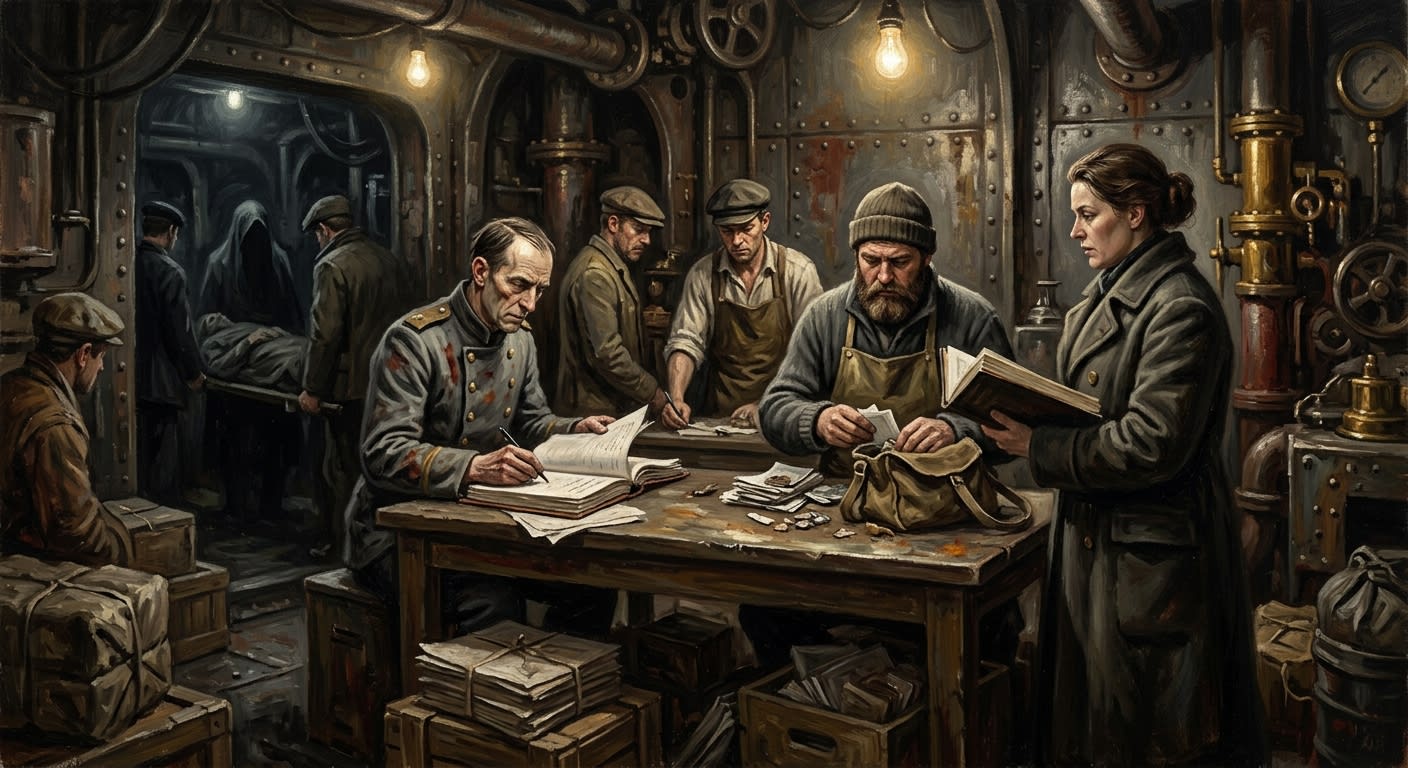
The Grey Keel Syndicate is the unofficial parish of every soul the Black Sea Reliquary Flotilla has misplaced, purchased, drowned, forgiven, or found administratively inconvenient. It operates in the Underkeel Lanes (Unregistered): skiff alleys beneath the platforms, reachable through submerged hatches and marked by chalk that salt should erase and somehow does not. The approved districts of the Flotilla hang above them in chain, incense, tribunal wax, and saintly upholstery. Beneath: rot, tar, secrets, and men who understand that a hull has a shadow even at noon.
The Syndicate moves people and papers without confession receipts, without berth tokens, and without the faintest pretence of legality. This is, in the order listed, heresy, theft, and good seamanship. A man with a valid parish paper may cross the Flotilla by bridge, booth, stamp, receipt, and fee. A man without one goes below and pays Grey Keel. The first route preserves his soul for the Ledger. The second preserves his body for another day. The Bureau prefers the first. The body, vulgar creature, often votes otherwise.
Grey Keel owns skiffs without becoming a fleet, trains hands without earning guild respectability, and prays just enough to interest a prosecutor. It is a procedure with knives: route, paper, silence, payment, denial.
#On Papers That Float Better Than Men
The Flotilla's economy runs on paper because paper floats longer than conscience when properly waxed. Parish papers identify a soul. Berth tokens locate a body. Confession receipts certify that the body's sins have recently been made available to competent clerical appetite. Without these documents, the citizen is Cut-Loose: the same word used for a barge severed from the chain.
Grey Keel sells repair to that severance. Sometimes the repair is a forged paper. Sometimes it is a clean route under three hulls during a bell-change. Sometimes it is the quiet removal of a name from a list before the list reaches Seal-Justice Miran Kest (Unregistered) and grows teeth. The Syndicate does not rescue innocence. Innocence is too expensive and rarely portable. It rescues continuance.
Its papers are crude beside Ledger-Ghost Tamsin's Thessaloniki work and elegant beside the Drift Court's official cruelty. A Grey Keel pass smells of tar because tar hides damp, blood, fish oil, and nervous handling. It is folded twice, never three times; three folds mark Drift Court writs, and an imitation that overeager deserves to burn with its bearer. The best passes include one small doctrinal error in the margin, enough to make a tired inspector sneer and correct rather than ask why the seal came from a booth that storm-reparished last month.
Bureau of Purity reports describe Grey Keel documents as “unsophisticated sailor forgeries.”
Correction. The documents are sophisticated enough to exploit the vanity of officials who expect sophistication to look clean. Dirt is camouflage. So is bad spelling, when placed with reverence.
At the Market of Anchors, where relic fragments are sold as prayer beads and prayer beads as relic fragments, Grey Keel brokers sit near sellers of salt chits and old rope. They do not advertise. Advertising is for men who trust witnesses. A customer presents a need in the form of an insult, a fish price, or a hymn line clipped short after the fourth syllable. If the broker answers with the wrong tide-name, the customer leaves. If the broker answers correctly, the customer still leaves, but now someone follows him under the Saintward steps.
#On Skiff-Sister Lune and the Calais Extension
The name most often attached to Grey Keel is Skiff-Sister Lune, who smells of perfume and tar. The Chalk Redoubt of Calais calls this evidence of at least three capital offences. The Undertide Divers call it a professional credential. Both assessments carry merit, though the Divers' carries more practical experience and fewer polished boots.
Lune's Calais operation works the boat tunnels beneath the Chalk Warrens: forged passes, cave-route guidance, quiet exits, name edits, and downgraded inspections. The Calais tunnels are cousin, not copy, to the Underkeel Lanes; criminal methods travel better than pilgrims and learn faster than doctrine. What begins beneath the Flotilla reappears under chalk cliffs, river locks, bastion ribs, quarantine stairs, and any other place where the Synod has built a gate and called the gate morality.
Lune's authority, if the reports are true, comes from debt rather than fear. Fear makes men run. Debt makes them return. She keeps old obligations in oilcloth packets, tied by hair, twine, bell-cord, wedding ribbon, and once by a strip cut from a child's baptismal robe. This is sentimental only to the illiterate. To Grey Keel, attachment is collateral.
The Syndicate's mercy is real and priced accordingly. It has moved plague witnesses out before Quarantine could lose them permanently. It has ferried children past berth-token seizures. It has carried deserters, traitors, saints' teeth, illegal lenses, warm shards, condemned testimony, and once a sealed packet from a Bureau office that later denied owning sealing wax of that colour. Mercy wrapped in tarred cloth costs three months' wages. Cheap mercy is usually bait.
#On the Black Water Contract
A Grey Keel bargain has three clauses, though only fools write them down. First: the Syndicate moves the named thing, and the definition of named thing is negotiated with priestly attention. A man is not his wife. A wife is not her papers. Papers are not the infant hidden under sailcloth unless the infant has been mentioned and paid for. Second: the customer owes silence. Third: Grey Keel owns the route by which the customer survived, which means Grey Keel owns a small permanent room in the customer's future.
This is why magistrates hate them. Law is broken hourly by every office with a backlog. Magistrates hate Grey Keel because it creates jurisdiction beneath jurisdiction. A tribunal may command the bridges, the booths, the receipts, the chain crossings, and the visible decks. Grey Keel commands the underside: the hatch with rusted hinges, the drip rhythm under the munitions barge, the skiff that passes during the Re-Lashing Mass (Unregistered) while every chaplain is singing structural integrity at men who are losing fingers.
UNDERKEEL RECOVERY LOG — A.S. 200 Found beneath Barge Saint Odran: five berth tokens, two confession receipts, one child's shoe, one waterproof packet containing names already marked drowned, and a Grey Keel chalk-mark drawn on the inner hull where no dry hand could have reached. Inspection diver refused second descent. Replacement diver returned speaking in tide counts.
The Syndicate knows storms better than clerks do. After every reparishing, official maps become devotional fiction until the Knot-Scribes (Unregistered) catch up. Grey Keel moves in that blessed interval. It sells storm-proof papers priced in names, not coin. A name is heavier than silver in the Underkeel. Silver buys bread. A name opens a door, closes a warrant, feeds a blackmail wall, or keeps a dead man useful for another quarter.
#On Suppression, Use, and the Sacred Shape of Hypocrisy
The Bureau could attempt full suppression. The plan has been proposed eleven times in six offices by men whose collars were dry. It would require sealing submerged hatches, searching skiff alleys, replacing half the Seal Row (Unregistered) staff, auditing the Drift Court, questioning the Market of Anchors, and admitting that the Black Sea Reliquary Flotilla contains a second maritime government beneath the first. At the end of this glorious exercise, the Flotilla would stop functioning for nine days. On the tenth day Grey Keel would reappear under another name, with better prices.
Use is cleaner. The Bureau of Shadows watches the routes it can watch. The Bureau of War receives cargo it did not order in forms it can deny. The Bureau of Doctrine (Unregistered) receives testimony that arrived without a travel receipt and pronounces upon it with washed hands. The Drift Court condemns forged jurisdiction while purchasing information from men who sell it by the hatch.
Grey Keel influence is confined to the Flotilla's Underkeel Lanes.
Clarification. Grey Keel influence is confined wherever the Bureau is asked under oath. Elsewhere it has been observed in Calais boat tunnels, Bosphorus reliquary traffic, and the small wet pauses between law and survival.
The Syndicate remains a sin. It also remains a tool. The Bureau has always known how to hold both objects in one hand without dropping either, though it prefers the faithful not stare at the fingers.