
#On the Market That Sells What the Creator Counted First
The Bell-Market of Toledo sells hours. Not bells, although bells hang above it in such quantities that the quarter seems built beneath an iron orchard; not indulgences, although indulgence vendors nest along its edges with the persistence of lice; not labour permits, although every purchased toll smells faintly of sweat. Hours. Matins by the minute. Lauds by the lease. Sext in fractional allotments measured, priced, disputed, stamped, and occasionally misplaced.
It stands west of the rebuilt cathedral precinct, within hearing of the empty jaw-setting of the Relic of Saint Iago and close enough to the Cinder Trials that ash sometimes rides the wind across the awnings and settles on the tariff boards. This is considered good for trade. Toledo has always understood that dread improves margins.
The market's governing fiction is elegant. A bell-hour belongs to the Creator, is administered by the Bureau of Bells, priced under licence by civic factors, recorded by the Bureau of Records, taxed by the Bureau of Tithes, and justified afterward by Doctrine, which is the only sequence in the Synod less efficient than plague.
#On the Founding of the Hour Stalls
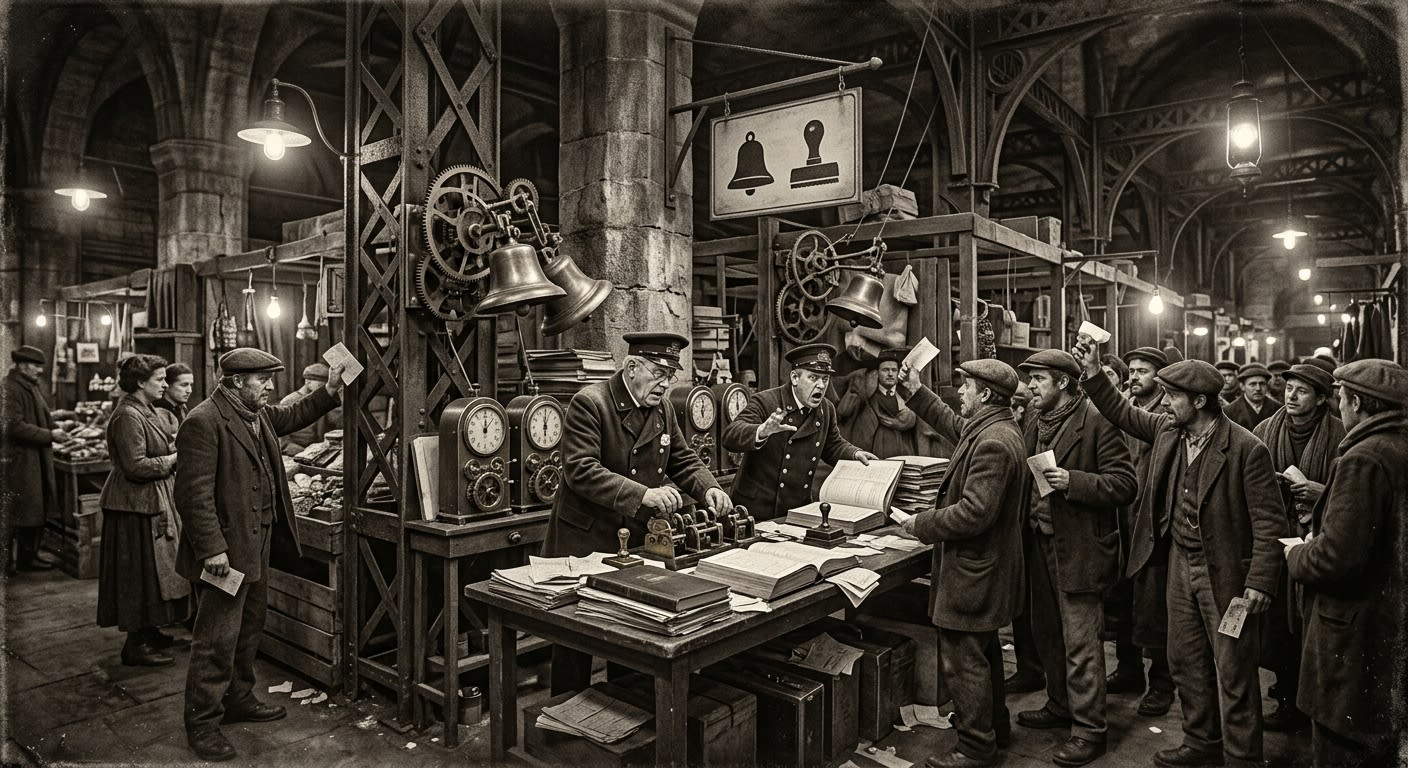
The market grew after Toledo's post-Sundering reconstruction, when the Synod rebuilt the city as a Second-Tier Martyrdom Site and discovered that pilgrims will buy almost anything if the stallholder can point toward a ruin. The first hour stalls were harmless by Toledo standards: a widow paying for an extra toll over her husband's grave; a baker purchasing a dawn bell to bless ovens before feast traffic; a guild leasing Vespers so its apprentices could finish repairs before curfew without admitting the work had been mis-scheduled.
Harmlessness, left unregulated, becomes commerce. Commerce, left unregulated, becomes theology. Theology, left unregulated, becomes a Bureau and starts issuing invoices.
An early civic guide described the Bell-Market as “a spontaneous devotional custom of the people.”
Corrected. The people may have begun it, as ants begin a hill. The Bureau licensed it, roofed it, measured it, taxed it, and placed armed watchmen at the counting tables. Spontaneity ended at the first receipt.
By A.S. 92, the market occupied three lanes beside the west cloister. By A.S. 117, it had acquired its own tariff chapel, where bell-factors swore to respect the sanctity of denominated time while arguing like gutter lawyers over whether a funeral peal counted as public mourning, private benefit, or taxable noise. By A.S. 141, the market's ledgers contained more hourly subdivisions than Toledo had actual hours in a year. The Bureau called this growth.
#On Goods Offered for Sale
A factory may purchase Matins extended by three minutes, allowing its workers to labour under Heaven's rhythm and the owner's lash for just long enough to meet a cloth quota. A farmer may lease one toll of Lauds to sanctify a harvest cart before sending it toward market inspectors who will tax the sanctity by weight. A mother may buy a quarter-peal for a fevered child. A condemned man may purchase a bell to mark his final appeal, if his estate can bear the fee and if the appeal is filed before the rope performs its office.
The stalls are arranged by canonical hour. Matins has the cleanest awnings because dawn buyers are sentimental and overcharged. Lauds smells of grain, tallow, wet rope, and petitions folded by women who have not slept. Sext is busiest, since merchants adore a holy noon. Vespers draws artisans, mourners, and lovers pretending to be mourners. Compline is expensive because darkness makes cowards generous.
No buyer owns an hour. That would be heresy. The buyer leases audible participation in the ordered rhythm of Creation as interpreted through a municipal bell schedule and billed at rates revised each Advent. The distinction matters only to theologians, litigants, and men too poor to purchase what they need. The poor call it buying time. They are punished for accuracy in other contexts, but tolerated here because vulgar phrasing speeds queues.
#On the Oversold Sext
In A.S. 163, the Bell-Market oversold Sext by seventeen minutes.
This sentence appears comic until one spends time with the casualty appendix. Three bell-factors sold overlapping noon extensions to a textile house, two grain guilds, a funeral confraternity, a fever ward, and a procession of penitent armourers seeking relief from an audit. Each sale was individually licensed. Each stamp was valid. Each clerk's arithmetic was correct within his own column. The columns, when placed beside one another, committed blasphemy.
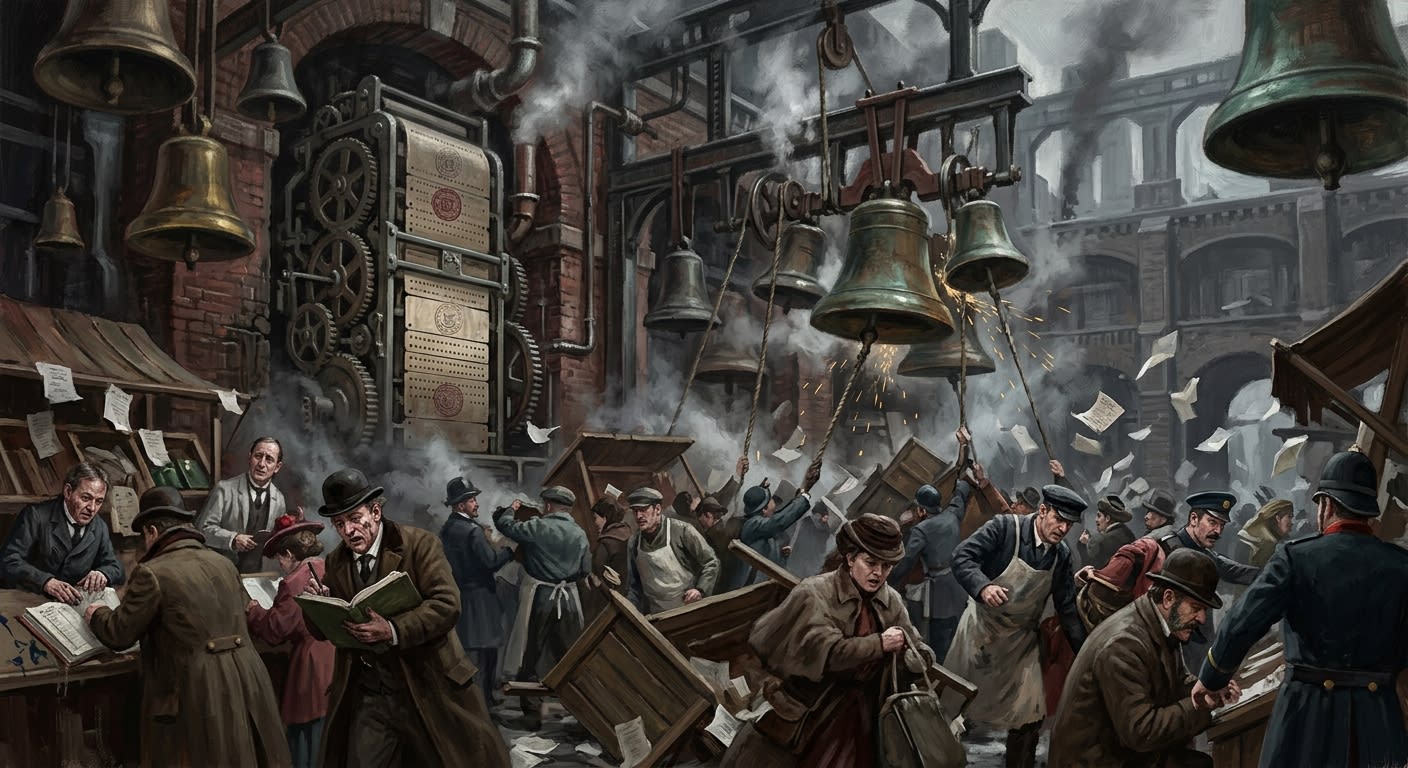
At noon, Toledo received seventeen additional minutes of Sext for which no place existed in the day's liturgical body. The cathedral bells struck, stopped, struck again, and then continued in a tone witnesses described as square. Shadows held their positions while mouths moved. Water poured upward from three fountain spouts and then apologised by falling. In the forecourt ash pit, a fracture pattern formed before the bell rang Ninth and spelled, according to two ash-readers, “EARLY.” They were reassigned separately.
BUREAU OF RECORDS — TEMPORAL MISALLOCATION FILE, A.S. 163 Subject: Toledo Sext surplus, seventeen minutes Recorded casualties: ███ direct, █████ administrative Unrecorded interval: 12:00 + excess segment Witness note: “My brother answered a question I had not yet asked.” Disposition: interval erased; witnesses corrected; bells retuned under guard
The hour had no place to exist. Records erased it.
That sounds simple, which is how Records prefers atrocities to sound. The erasure required cross-correction of baptismal entries, death certificates, factory tallies, trial dockets, kitchen fires, two premature births, one rope drop, and an invoice from a cobbler who insisted he had repaired the same boot twice and deserved payment for both repairs. He was denied the second payment. The boot, one hopes, treasured the memory.
Popular retellings say the market “created an extra hour.”
Corrected. It created seventeen minutes without lawful placement. An hour has dignity. Seventeen illicit minutes are a clerk's crime wearing a bell-rope.
#On Governor-Praelate Alaricus and the Modern Stalls
Governor-Praelate Alaricus did not abolish the market. Do not be childish. Abolition is what young reformers demand before they encounter payroll. He audited it, trimmed the most predatory grief rates, moved famine ration queues away from Sext speculation tables, and forbade bell-factors from selling deathbed Compline twice to the same family on grounds of “shared bedside acoustics.” This last reform caused outrage among the factors, which recommends it.
The market returned the insult by becoming orderly. Its present stalls bear slate boards, brass numerals, and public tariff bands. The Bureau of Pilgrimage sells guide tokens. The Bureau of Bells posts auditors in blue-black robes with tuning forks chained to their wrists. Records clerks sit behind wire screens, entering each purchased toll into ledgers bound in pale calfskin that has acquired a reputation for twitching during Advent.
#On the Buyers
The buyers reveal the city better than its monuments do. The monuments lie upward. The buyers confess sideways.
At the Matins stalls stand factory masters with clean gloves and shift rosters. At Lauds, farmers bring seed sacks and parish debts tied in string. At Sext, merchants stand shoulder to shoulder beneath the tariff chapel's painted clock-face, each pretending that sanctified timing has nothing to do with beating rivals to the gate. At Vespers, widows purchase mourning peals and sometimes haggle with the calm ferocity of women who have already paid the larger price. At Compline, the sick are represented by cousins, neighbours, nurses, priests, and the occasional creditor hoping the bell will extend breath long enough for a signature.
The market has its own criminals. Toll-shavers scrape minutes from the edge of licensed peals by bribing junior ringers. Echo-brokers sell claims on residual sound in alleyways where bells rebound from stone. Compline widows form informal pools to purchase shared deathbed tolls, an act Mercy praises when photographed and Tithes prosecutes when itemised. A boy once sold “silent Matins” to foreigners from Antwerp: no bell, no schedule, no effect, perfect margins. I admire him. He was beaten, naturally, by men with poorer imaginations.
#On the Bells Themselves
The market's bells hang in three tiers above the counting hall. The lower tier is municipal bronze, cracked, patched, and wholly too proud of having survived Rationalist shelling. The middle tier belongs to guilds and confraternities, each bell bearing donor names polished by fingers and invoice disputes. The upper tier is sealed behind iron grilles and rung only by warrant. No guide agrees how many upper bells exist. This is either piety, security, or inventory failure.
During ordinary trade the lower bells speak constantly: single tolls, half peals, clipped markers, extension calls, curfew warnings, audit chimes. The sound makes the market's air granular. Visitors leave with headaches and a strange conviction that someone has been counting their ribs. This sensation fades after confession or wine. Wine is cheaper.
The upper bells are different. Their ropes descend through locked shafts to a chamber below the tariff chapel, where authorised ringers work behind curtains so petitioners cannot see which rope moves. A rumour claims one upper bell was cast from Rationalist cannon taken after Toledo's fall. A second rumour claims it was cast from the nails of coffins opened during reconstruction. The Bureau denies both and permits both in pilgrim pamphlets. Denial is a legal status; marketing is a sacrament.
#On the Present Condition
As of A.S. 201, the Bell-Market prospers with the vulgar health of a holy bad idea. It survived the A.S. 185 famine because Alaricus prevented grain queues from becoming time auctions. It survived three Bureau of Bells inquiries because every inquiry discovered irregularities too profitable to close. It survived my last inspection by producing ledgers so neat that the ink seemed frightened.
The seventeen lost minutes remain erased. Every year, on the anniversary of the oversold Sext, the market closes at noon for precisely no time at all. The shutters stay open. Trade pauses. No bell marks the observance. Clerks dip their pens, look at the clock, and resume when they feel the absence pass.
Pilgrims still come. Factories still buy Matins. Farmers still lease Lauds. Widows still haggle at Vespers with coins warmed in their fists. Above them the bells hang like authorised throats, waiting to sell the next permitted wound in the day.