
#On the Forecourt Pit
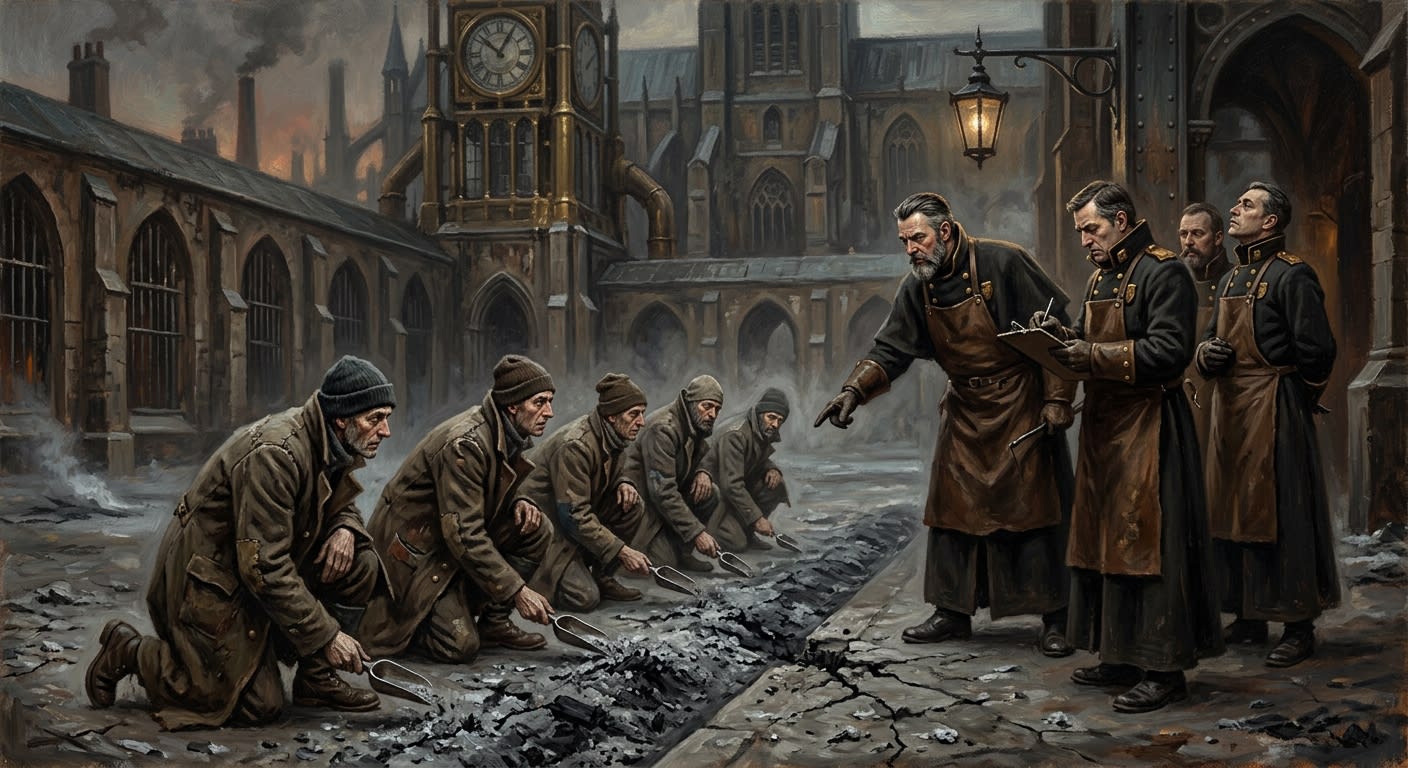
The Cinder Trials of Toledo are judicial theatre conducted in ash, heat, hymn, and cracking crust. The condemned kneel in a shallow pit in the rebuilt cathedral forecourt while grey ash is poured over them by measured increments, each layer accompanied by a psalm, a docket reading, and the sour patience of clerks who know that judgement, like plaster, must be allowed to set.
At Ninth Bell the hardened surface cracks. The Bureau of Doctrine reads the pattern as verdict.
The Trials began within the first decade after Toledo's post-Sundering reconstruction, when the Synod found itself in possession of a martyrdom site, an obedient population, a surplus of ash-language, and a shortage of punishments sufficiently local to taste authentic. Ordinary pyres would have been vulgar. Toledo had already burned once. Repetition without refinement is for amateurs.
#On the Ash
The ash is said, officially, to be sifted from the ancient reliquaries of Saint Isidore. The phrase does a heroic amount of work. It suggests holiness without specifying proportion; it invokes the relic without exhausting it; it allows Toledo to sell dread by the handful while the Bureau of Relics keeps the full inventory where no local magistrate can make theological soup of it.
The Bureau of Engineering contends the ash is pulverised pumice with a pinch of relic dust. The Bureau of Records files both explanations, because Records knows that contradiction, once archived, becomes two forms of truth billed to separate departments. Local petitioners whisper that the first pit received a pinch of tower-ash from the final burning of the Relic of Saint Iago. The Bureau denies this. The surcharge at the forecourt gate suggests the denial has value.
A pilgrim handbook once described the Trial ash as “pure Saint Isidore residuum.”
Corrected. No authorised ecclesiastical process uses pure first-class residuum upon minor heretics, debt frauds, oath-breakers, forged indulgence sellers, or men who have been rude to tax assessors. Sanctity is infinite in doctrine and finite in procurement.
The ash is warmed before use, never flamed. Fire belongs to Toledo's old martyrdoms: Father Clemente, the final tower, the women with oil, the walls that learned to scream under Colonel-Prefect Grimal's guns. The Cinder Trials prefer heat without blaze. They punish by smothering, drying, weighting, sealing. The condemned do not become torches. They become documents.
#On the Procedure
A Trial begins at Sext with the washing of the pit. The pit is shallow enough for spectators to see the face and deep enough for the condemned to understand geometry as theology. Four ash-bearers enter from the south cloister, each carrying a lidded copper bowl. Two hymn-clerks stand behind them with the Cracked Penitential. The presiding reader wears a veil of grey linen and carries a slate knife, used to mark each layer with a short incision before the next bowl is emptied.
The first layer covers the feet. This is called the Grounding. The second reaches the knees. This is called the Submission. The third seals the hands against the ribs, if the condemned has been granted the mercy of tied hands rather than iron pins. This is called the Clarification, because all Synod cruelty sounds gentler after a clerk has named it.
At each increment, the docket is read: name, correction-name if applicable, charge, prior confession status, tithe standing, relic proximity restrictions, permitted last objection. Most last objections are short. Ash dries the tongue. The reader records the objection anyway, for the Ledger loves even useless speech when it can be placed in a column.
At Ninth Bell, the ash crust is tapped with the slate knife. Sometimes it cracks in branching lines. Sometimes in rings. Sometimes a single split runs from throat to navel with a decisiveness that pleases the crowd more than it should. Doctrine maintains a table of recognised verdict forms: Repentant Fracture, Obstinate Seal, False Tongue Crescent, Hidden Accomplice Spur, Empty Ash, and the rare Mercy Cleft, which has resulted in release exactly seven times and rearrest six times before sunset.
#On Saint Isidore's Inconvenient Generosity
Saint Isidore's name clings to the rite because his reliquary carried war-light at Kalnik Ridge, where Brother Tomislav raised the casket and Maldrake's vanguard recoiled. A saint who made Wrath flinch is naturally attractive to judges. Judges adore force that arrives with precedent.
The theological difficulty is that Saint Isidore's relic defended the desperate at Kalnik; in Toledo, his ash judges the bound. The Bureau resolves the difficulty by announcing that protection and judgement are twin offices of sanctity, which is the sort of sentence that sounds profound until one notices it permits whatever the Bureau was already doing.
A Toledo cathedral guide once claimed Saint Isidore personally instituted the Trials in a vision to three ash-readers.
False. The earliest authorised Trial register names no vision. It names a forecourt committee, four procurement orders, one dispute over pumice weight, and an argument about whether Ninth Bell fractures should be drawn before or after the accused expires. Saints suffer many indignities after death; committee authorship may be the worst.
The Bell of Saint Isidore is not rung during the Trials. This prohibition is wise. The Bell carries its own debts, its own fracture, its own civic appetite, and Toledo has no need to invite a mobile relic-bell into a pit already crowded with ash, petitioners, and opportunistic theology.
#On the Ash-Baths and Other Misreadings
The Cinder Trials should not be confused with the Ash-Baths of Toledo, although the Bureau of Mercy has laboured heroically to make the confusion profitable. The Baths submerge fevered patients in hot ash under the pretence of sweating corruption from the flesh. Survivors are paraded as living reliquaries until collapse, after which Mercy calls the death a graduated cure and sends the family a linen bill.
The Trials are at least honest enough to be punitive. A condemned heretic kneels in the forecourt knowing the ash means accusation. A fever patient in the Baths is told the ash means treatment. I will take a knife over a spoonful of honeyed poison. The knife, at least, respects the appointment.
TOLEDO FORECOURT REGISTER, APPENDIX NINE Case: Widow's ash substitution, A.S. ███ Charge: private ash introduced into official Trial bowl Result: fracture pattern read “DEBT PAID” in three hands; all three ash-readers denied recognising the script Disposition: widow transferred to █████████████; bowl melted; clerk reassigned to bell-market hour reconciliation
Governor-Praelate Alaricus tolerates the Trials because Toledo expects them, because pilgrims pay to witness them from the upper galleries, and because any ruler who attempts to abolish an inherited cruelty discovers how many citizens have built their virtue around attending it. He has, to his credit, moved ration disputes out of the forecourt docket. The Bureau of Tithes objected. Naturally.
#On the Reading at Ninth Bell
No one outside Doctrine knows whether the fractures truly form words. I have seen one Mercy Cleft, two False Tongue Crescents, and an Empty Ash whose surface remained smooth after three taps and caused the presiding reader to faint into the bowl. The crowd liked that last one best. People prefer theology when it injures an official.
The official teaching remains simple: ash remembers fire; fire remembers martyrdom; martyrdom remembers truth; truth, under Synod custody, may be read by licensed personnel at the appointed bell. The accused may object before the Silencing layer. After that, the ash speaks.