
#On the Thing Unnamed
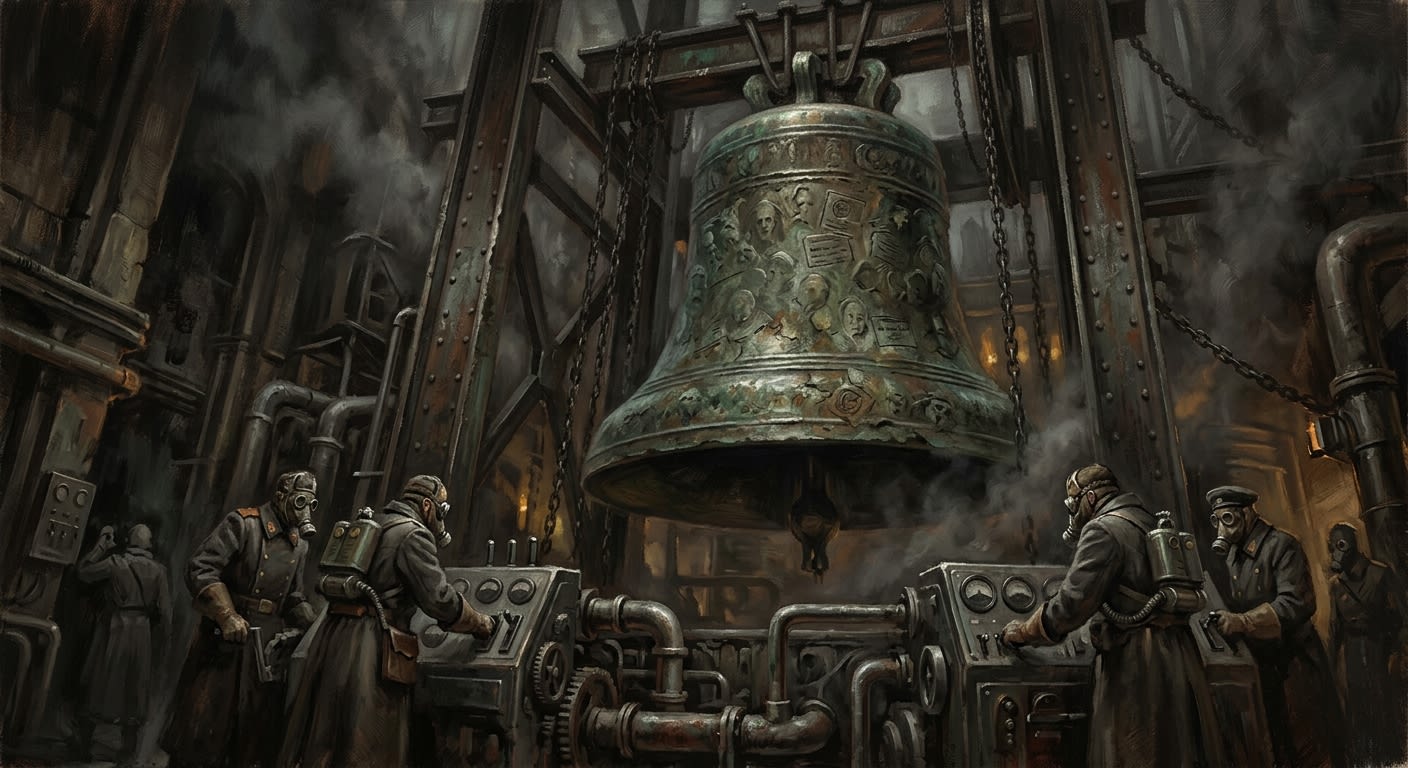
The Bell of Names is the highest sanctioned miracle in the Synod's present scale of permitted catastrophe. Public documents do not name it. Sermons do not teach it. Bell primers used by novices omit the rung on which it hangs, leaving a blank interval between the Cathedral Act and “Reserved Operations.” This is pedagogically elegant and morally rancid, a combination for which the Bureau of Doctrine has often been praised by itself.
It is a bell only because the word “bell” is cheaper than describing the instrument. Some exemplars are bronze. Some are reliquary frames holding no visible metal. One confirmed account from the eastern marches describes a stone arch made to ring by seventeen choirboys beating their palms bloody against its inner face until the masonry remembered a tone. The name is functional rather than architectural. If it can be struck, if it can summon the register of a city's living and dead, if it can spend years as coin and memory as wax, the Bureau may call it a bell.
The common error, repeated by minor theologians with clean cuffs and no useful scars, is that the Bell of Names restores what has gone wrong. It does not restore. It revises. Restoration is the return of a damaged object to an earlier state. Revision is the correction of the record so that damage never had permission to exist. The difference matters. Ask a mother who remembers nursing an infant long dead. Ask a veteran who swears he fought in a battle unwritten before dawn. Ask the undertaker whose ledger balances and whose cellar contains three coffins he cannot explain.
#On the Ladder of Cost
Miracles alter Creation by contract. Sorcery alters Creation by theft. This is the Declaration of A.S. 23 (Unregistered) stripped of its velvet cuffs. Both bend the world. Only one arrives with receipts.
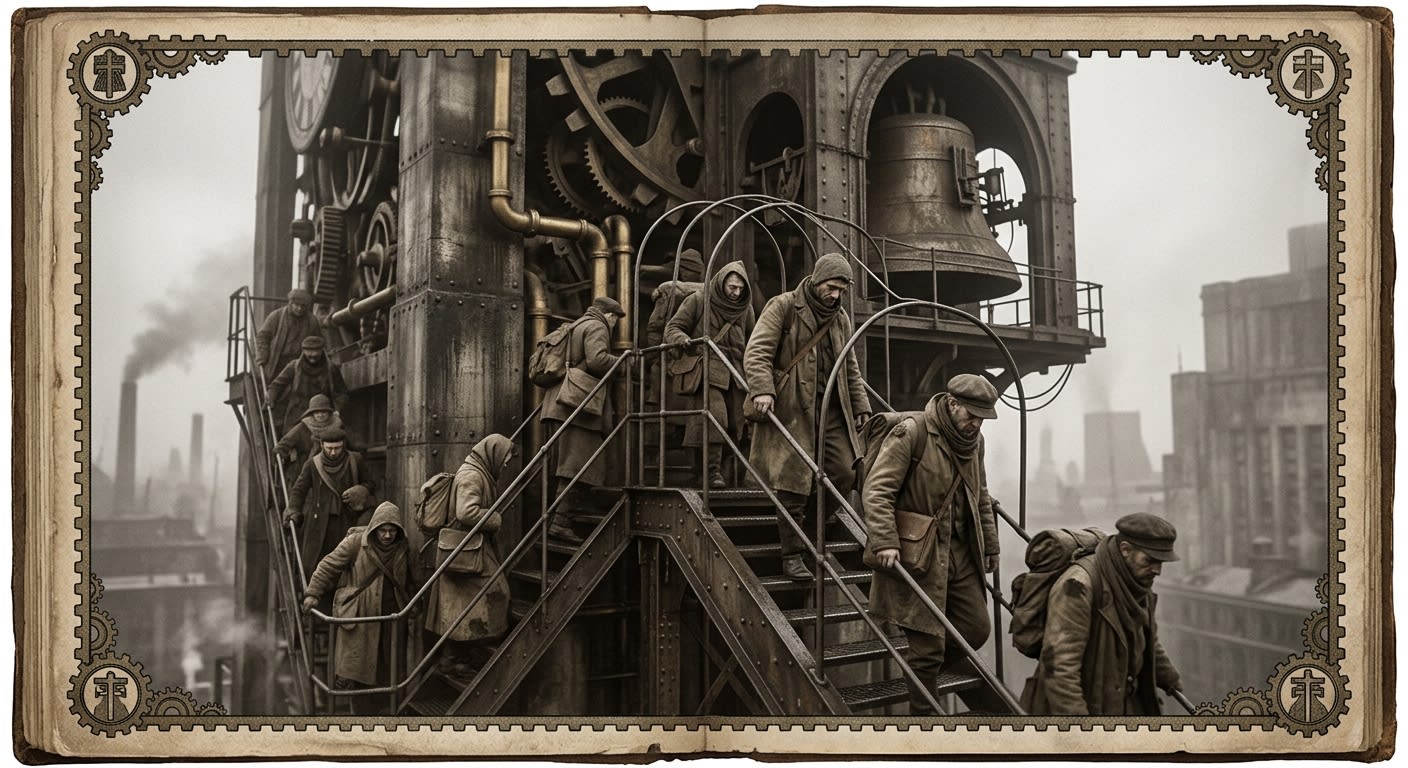
The simplest miracle shifts hunger from a marching company to some clerk behind the lines who suddenly finds tomorrow gnawing his stomach today. A bell-hour grants courage and buys it with marrow-deep fatigue. A relic flashes bright and takes a face from memory in payment. A Processional Working spends a district's fasting bodies to halt a plague tide for a week. A Cathedral Act trades years from volunteer choirs so mud parts under an army as if stone had been laid beneath it.
The Bell of Names stands above these. It does not borrow discomfort, courage, or memory from one soul. It debits a city.
The transaction begins with enumeration. The Bureau of Records prepares civic rolls under triple seal: living, dead, disputed, unborn if pregnancy registers are available, and absent if absence remains legally attached to household tithe. The Bureau of Bells provides tone architecture. The Bureau of Rites consecrates the striking apparatus. The Bureau of Orison and Song licenses the choir that will carry the names from ink into air. Doctrine reviews the petition and pretends the review could end in refusal.
At the peal, the city pays in aggregate life. One citizen loses a week. Another loses three years. An old woman dies at breakfast with bread in her mouth and no wound upon her. A child who would have reached sixty-seven reaches forty-nine. The ledgers distribute the loss with a fairness so inhuman that clerks call it mercy to avoid vomiting on the page.
The memory revision follows. A night is rewritten. An invasion that entered the east gate did not enter. A massacre in the tannery quarter becomes a false alarm. A bridge that burned stands damp and whole at dawn. Men who died during the unwritten interval may return as legal survivors, legal corpses, legal impossibilities, or household burdens under review by Records. The Bureau prefers cases one and two. Cases three and four produce correspondence.
#On the Night Corrected
No Bell of Names event may be described in public annals. This protects the faithful from scandal, the enemy from intelligence, and the Bureau from comparison between editions. The internal ledgers are less shy.
I have read one such ledger. I will not provide the city. That omission is not modesty; it is survival with a seal on it. The ledger occupied seven volumes. The first listed names before the peal. The second listed names after the peal. The third reconciled households. The fourth reconciled graves. The fifth recorded memory variances. The sixth recorded lifespan debits. The seventh contained nothing but signatures from officials certifying that the first six volumes were incomplete in no material respect. The seventh was the most dishonest book and had the finest penmanship.
Earlier training memoranda described the Bell's effect as “temporary civic disorientation following high-order grace.”
Deprecated. The approved restricted phrase is “collective mnemonic replacement with mortality debit.” The old phrase made annihilation sound like a dizzy spell in church.
In the corrected city, mothers woke remembering children who had died five years before and were now alive in their rooms, older by the appropriate interval, carrying habits acquired during years nobody else had lived with them. Men remembered battle service in a militia action erased from the dawn bulletin. Two widows ceased to be widows. One widower became married to a woman buried under his own certificate. A street of seventeen houses remembered a fire. The houses did not. Their residents carried burn scars in perfect contradiction to the plaster.
A butcher recalled selling meat to soldiers from a regiment that Records insisted had never passed through the city. The regiment's paymaster arrived three days later with receipts. The receipts bore the correct seal and dates from the unwritten night. The paymaster had no face in three household memories and a very memorable moustache in nine. Records classified the discrepancy as “stable enough.”
LEDGER EXTRACT — RESERVED OPERATION, CITY NAME SEALED Household 44-L: infant recorded dead A.S. ███; infant present after peal; maternal memory continuous; paternal memory absent; cradle shows five years of wear acquired overnight. Household 91-C: three brothers listed living before peal; two listed living after peal; fourth brother appears in memory of all neighbours; no birth record. Street Shrine: saint's niche empty before peal; occupied after peal by jawbone warm to touch; inscription reads ████████████████████. Instruction: do not reconcile by public census.
The Bell did what the petition requested. The city survived the night. Its walls stood. Its central cistern remained clean. The enemy breach was absent from all useful records. The price emerged slowly, which is the Bureau's favourite form of mercy. Funeral rates rose over the next thirty years. Midwives reported small babies with old eyes, a phrase Mercy struck from its forms after the third quarter. Apprentices collapsed at benches. Grandmothers outlived sons they remembered burying and sons they remembered raising, sometimes the same son.
#On Names as Fuel
A name is more than a label. A label hangs from a bottle. A name binds a soul to its permissions: child of this mother, debtor of that ledger, penitent of that parish, citizen of this jurisdiction, sinner under this seal. The Synod understands this better than its critics, which is why its critics keep disappearing into paperwork and the Synod keeps finding them there.
The Bell consumes names by ringing them all at once. The choir does not pronounce every syllable. The civic roll does. Ink answers bronze. Bronze answers breath. Breath answers whatever part of Creation still remembers the first naming of things and has not yet learned to ignore Strasbourg.
This is why the Bureau forbids casual reference. Speak of a ration miracle and one imagines bread. Speak of a relic flare and one imagines light. Speak of the Bell of Names and one begins, if one has a functioning terror, to ask whether a city is a congregation or a granary. The answer is yes. That is the scandal.
The unlicensed sibling is the commonest minor residue. A family wakes with a brother no record supports. He has a bed, a scar, two enemies, and half the parish ready to swear he stole pears at nine years old. Records hates these cases because everyone is sincere. Purity hates them because sincerity obstructs prosecution. Doctrine loves them briefly, then discovers they cannot be preached without questions.
The unauthorized saint is rarer. A shrine remembers a martyr nobody executed. Pilgrims arrive with stories. Candles light badly or too well. The Bureau of Rites convenes panels, authenticates nothing, suppresses everything, then quietly stations a donation box nearby in case grace insists.
#On the Bureau's Refusal to Say Bell
The ban on public naming is jurisdictional hygiene. Cowardice would be simpler and cleaner. Once the public knows a Bell can rewrite a night, every bereaved district will petition for one. Every besieged city will demand one. Every bishop with a riot in his square will ask whether a single peal might correct the inconvenience. The miracle would become policy, and policy, as any well-fed devil knows, is appetite with stationery.
The Bureau has denied eleven petitions since A.S. 90 under the phrase “insufficient civic necessity.” Three cities later fell. One plague crossed two provinces. One governor-praelate cursed the denial in writing and was praised for frankness in one file, reprimanded for impiety in another, and quoted anonymously in a third. Contradiction is cheaper than confession.
The Bell of Names is unavailable for ordinary military reversal.
Clarified. No event involving the Bell may be called ordinary after the petition passes second review. Before approval, all requests are ordinary, excessive, premature, or hysterical. After success, the same request becomes providentially singular. This is not inconsistency. This is sequence.
A public doctrine of the Bell would also disturb the dead. The Synod depends upon graveyards behaving like archives: sealed, indexed, occasionally visited by weeping parties who do not request amendments. The Bell turns graves into provisional claims. A tomb may contain someone who now remembers escaping. A living man may carry the legal weight of a death certificate. A widow may receive pension arrears for a husband standing beside her at the payment grille. Tithes has nightmares about this. I know. I have read their memoranda and savoured them.
#On Permitted Terror
There are men who argue that the Bell of Names should be destroyed, its frames melted, its rites burned, its choirs dispersed into silent monasteries where no two may hum the same note. The argument is attractive, morally perfumed, and useless. A world containing Maldrake, Kargath, the Grey, the Confession Echo, and the patient eastern dark cannot afford to discard a weapon merely because it is monstrous. We would have to discard half the Synod and most of my office furniture.
Cleanliness is the wrong question. It is filthy. The proper question is whether filth under seal may be made to serve the preservation of Order. The answer, reluctantly recorded and magnificently administered, is yes.
The Bell must remain unnamed, guarded, petitioned against itself, and used only when the alternative is a city becoming a corpse with street names. Its operators must be watched. Its ledgers must be audited by people who dislike miracles and fear bells. Its survivors must not be told enough to make theology at kitchen tables. Its dead must be counted twice, once as fact and once as correction.
The faithful imagine grace as light falling through cathedral glass. Sometimes grace is an iron mouth taking thirty years from a city so that dawn may arrive with acceptable memories.