
#On the Ration Shipment
“Two seals entered. Dust testified.” — Registry (Unregistered) schoolroom tag, forbidden to be funny.
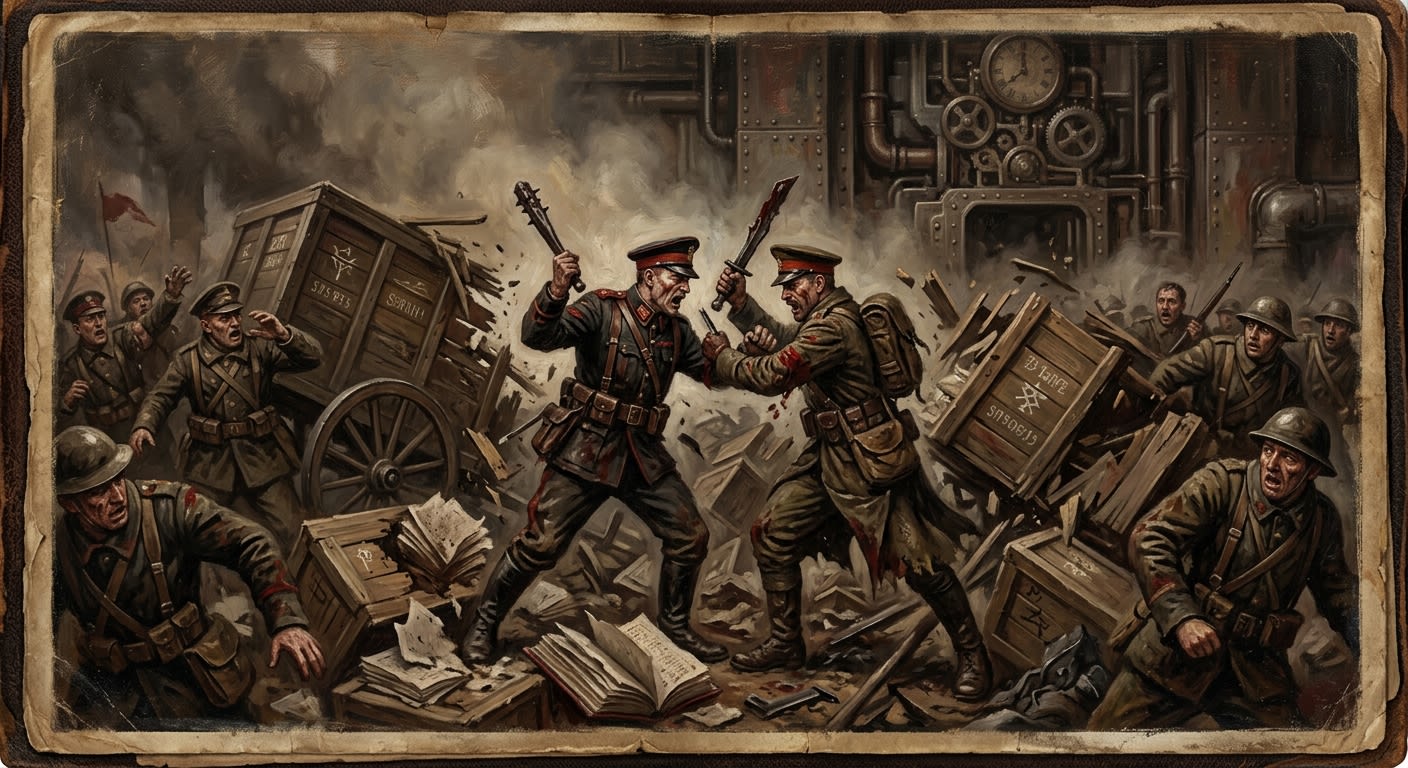
The Duel of Broken Seals occurred in A.S. 131 at a forward bastion whose public name has been withheld by that limp departmental cowardice by which every office claims local morale would suffer if the truth were allowed a street address. The coordinates exist. I have seen them. The ink around them is pious and nervous.
Two captains contested a ration shipment: grain, salt, boot-leather, lamp-fat, powder allotment, coffin-nails, and the smaller luxuries that keep soldiers obedient enough to die in rows. Each captain arrived before a Registry clerk with a claim packet. Each packet bore a seal-impression authenticating rightful allocation. Each captain had witnesses. Each captain had a Citation Advocate. Each captain, at the start, had a company that believed bread would follow law.
Poor things.
The shipment had come west under emergency chain from a Zone 3 depot, halted in mud behind the forward magazines, then entered disputed custody after a convoy clerk died with the secondary receipt folded under his tongue. This is not unusual. Clerks die. Receipts travel in disgusting places. War is, at its root, the discipline of making inventory survive the body.
#On the Claims Presented
The first captain claimed prior assignment by route seniority. His company had held the outer drainage trench for nine days under intermittent shelling, which entitled them under Clause 14-F to first replenishment if losses exceeded ration tolerance. His advocate built a clean spine: watch roster, casualty sheet, powder expenditure, trench-weather declaration, quartermaster counter-stamp.
The second captain claimed emergency need by exposure and immediate readiness. His company was scheduled to relieve the first and had already drawn ammunition under assumption of receipt. Without food and lamp-fat, the relief would fail. Without relief, the trench would collapse. His advocate’s spine was shorter and meaner: movement order, relief bell notation, Surgeon’s fatigue certificate, gate log, and a seal impressed on wax dark enough to make the clerk hold it twice.
Both seals were valid at first inspection.
The presiding clerk ordered comparison under lamp-light. This was proper. The Bureau of Records requires lamp comparison when two seal-impressions authenticate mutually exclusive claims of military supply. The lamp was fetched. The curtains were pulled. The advocate for the first captain requested witness proximity. The advocate for the second requested bevel notation. The clerk, showing an admirable desire to remain alive, granted both requests and touched neither seal with bare skin.
Then both impressions crumbled.
They crumbled instead of cracking or softening. Wax, ridge, counter-ridge, bevel memory, thread-set mark: all fell into grey-red dust in the comparison tray. The dust did not blow when the clerk breathed. This detail appears in three depositions and one terrified chapel note. Dust that refuses breath is already filing a petition.
REGISTRY COMPARISON TRAY REPORT — A.S. 131 Seal A: authenticated prior to lamp exposure by route mark, quartermaster hand, and wax batch. Seal B: authenticated prior to lamp exposure by relief order, gate hand, and wax batch. Lamp applied: standard court lamp, wick trimmed. Observed result: simultaneous particulate collapse. Clerk utterance: ███████████████ Dust response: none.
#On the Classifications
The Bureau of Engineering was asked for material explanation because the Synod, in its mercy, sometimes permits men with gauges to speak before men with censers. Engineering classified the failure as material fatigue: heat exposure, wax impurity, seal-press stress, convoy vibration, and possible poor storage beside lamp-fat. A tidy basket of causes. A basket placed over a snake when guests arrive.
The Bureau of Doctrine classified the collapse as judgment.
Records accepted both classifications and filed them beside each other, because contradiction inside a folder becomes harmony by pressure of binding. Engineering received permission to revise wax custody handling. Doctrine received permission to preach. The captains received neither.
Early barrack tellings claim the seals “melted.”
Corrected. They crumbled into dust under lamp comparison. Melting suggests excess heat, incompetence, and repairable handling error. Dust suggests the document chose death.
Both captains were declared heretics for counterfeit loyalty. Observe the phrase. They were not charged with counterfeit seals alone. A forged seal is a crime. Counterfeit loyalty is a diagnosis. The distinction widened the pit beneath them from disciplinary failure to spiritual treason, and once treason entered the room, ration law folded its hands and sat down.
#On the Burial Beneath the Wagons
The companies were condemned together. This is the part junior clerks stumble over, because junior clerks retain vestigial instincts about proportion. The captains argued. The advocates argued harder. The men in the companies, many of whom had never seen the seals before the duel and would have eaten whichever ration sacks were handed down, were declared dependent bodies of the counterfeit claim. Dependency is a beautiful word. It turns innocence into rope.
Execution by burial beneath the supply wagons was selected after a brief jurisdictional quarrel. A firing squad would have consumed ammunition reserved for the contested shipment’s escort. Immurement in ordinary wall-space would have required Mason availability. Penal transfer would have left the companies alive, which would have left them talking. The wagons were present, heavy, sanctified by use, and already under dispute. Procedure loves convenience when convenience arrives with wheels.
The burial trench was cut beside the wagon line. Men were bound in company order: officers first, sergeants next, clerks by packet custody, soldiers by roster. The wagons were rolled over planks while the condemned recited, shouted, cursed, prayed, or maintained the stupid silence soldiers use when discipline has eaten the last useful part of their fear. The shipment settled unevenly. One wheel cracked. The quartermaster asked whether the cracked wheel had become evidence. No one answered him.
A Rites priest performed the shallow office for condemned dependents. A Records clerk counted heads until the earth covered mouths. Doctrine marked the event as correction completed before Vespers. The contested flour remained dry.
#On the Third Company
The ration shipment was redistributed to a third company that had filed no claim. This detail made the incident immortal among Ledger-Duellists, for it proved the central superstition of paper combat: the cleanest claim may be the one never entered.
The third company accepted the shipment under protest, or gratitude, or terror. The surviving receipt contains all three signatures and no useful difference between them. Their captain ordered the seal wrappers burned unopened. This was illegal. It was also intelligent, a union of qualities rare enough that I mention it with professional tenderness.
Within a month, forward Registry courts adopted additional comparison trays, duplicate lamp logs, and a rule requiring contested seal-impressions to be separated by two hand-spans before light examination. Engineering called this best practice. Doctrine called it reverent interval. Records called it Form 22-R/Seal-Auxiliary, because Records can make even fear sound like furniture.
Later advocate lectures describe the third company as “rewarded for humility.”
Withdrawn. The third company was rewarded for absence from the file. Humility had no standing, no advocate, and no stamped petition.
#On Its Use in Instruction
The Duel of Broken Seals now defines the profession’s canon of authentication failure. Citation Runners study it before they are allowed to carry wax packets. Junior Advocates recite the five fatal stages: duplicate claim, mutual authentication, lamp comparison, material collapse, spiritual escalation. Erasure Advocates study the companies, because dependency transformed two officers’ paper failure into mass condemnation faster than any Black-Stamp could have travelled from Strasbourg.
The Office of Nullity keeps a dust sample under restricted custody, or says it does, which is functionally identical where training is concerned. Students are not permitted to touch the vial. They are permitted to look at the label and feel their stomachs perform useful doctrine. The label invokes Saint Vellum the Silent, because every profession prefers its panic with a patron.
The event also corrected the ritual arrogance of advocate culture. Before A.S. 131, an advocate with a clean seal would display it like a relic-fragment at feast. After A.S. 131, clean seals were held away from lamps until required, named softly, and watched for signs of theological fatigue. The best advocates learned to attack the custody chain before touching wax. The worst learned to speak loudly while assistants moved incriminating trays out of sight.
The profession improved. This is not praise. The gallows also improves when a rope is replaced.
#On the Dust
The dust remains the unresolved witness. Engineering insists it was wax failure. Doctrine insists it was judgment. Records insists the matter is closed. War insists the punishment restored order in the sector, which is War’s way of saying the next ration line stayed quiet. Tithes asked whether the redistributed shipment generated a fresh levy entry. It did.
No demon was named. No saboteur was produced. No quartermaster was convicted. No seal-press maker was immured, though three were audited so thoroughly that one entered voluntary silence and another married a widow in another province under a reduced name. The case’s horror rests in this absence. If the seals were forged, no forger was found. If the seals were true, truth itself declined comparison.
A.S. 131 gave the Registry Courts a parable with teeth. Two captains brought proof. Proof became dust. Dust became doctrine. The wagons moved on.