
#On the Missing Tithe-Stamp
“By dusk, no witness remained.” — Black Seal cadet copy, margin hand uncertain.
The Erasure of Veyss occurred in A.S. 148, when Lieutenant Veyss of the 4th Rhineland Fusiliers (Unregistered) lost a trench-court duel over a missing tithe-stamp in his lineage. That phrasing has survived because it is small enough to be remembered and vile enough to be useful. A missing stamp. A family line. A man removed from every roll before the candles guttered. The matter belongs to the same legal theology that produced the Red Trial of the Old Bastion-Constantinople File, though Veyss’s catastrophe was quieter and cleaner.
The dispute began as many disasters begin in the Synod: with someone confident that the paper would be easy to correct. Veyss had petitioned for promotion arrears after a rotation through the eastern trench galleries. The arrears required lineage verification because pay backdating touches tithe entitlement, and tithe entitlement touches baptism, marriage, death, inheritance, ration standing, and the Bureau’s tender little appetite for closing every column before supper. A clerk examined the packet. The packet contained service rolls, baptismal extract, oath witness, marriage notation, and a paternal tithe chain reaching back five generations.
One stamp was missing.
The missing mark belonged to a great-grandfather’s arrears reconciliation after the grain assessments of A.S. 92. The man had paid, or had been recorded as paying, or had intended to pay with such enthusiasm that the parish accepted his intention in provisional ink. The difference slept in a side ledger for fifty-six years. Veyss woke it by asking for money.
#On the Duel
The opposing advocate argued that Veyss’s lineage contained an unpaid spiritual debt and that every honour, ration, oath, and command derived from the defective line had been drawn under false standing. It was a beautiful argument in the way a guillotine is beautiful when freshly oiled. The captain supporting Veyss objected that the missing mark predated the lieutenant’s birth. The advocate answered that a tree does not ask whether rot began before the apple. The court accepted the analogy, proving once more that metaphor becomes jurisprudence when spoken by a man with a seal ring. A Codex Doubt Auditor later praised the ruling for its “ancestral reach,” then denied having used a phrase that sounded so pleased with itself.
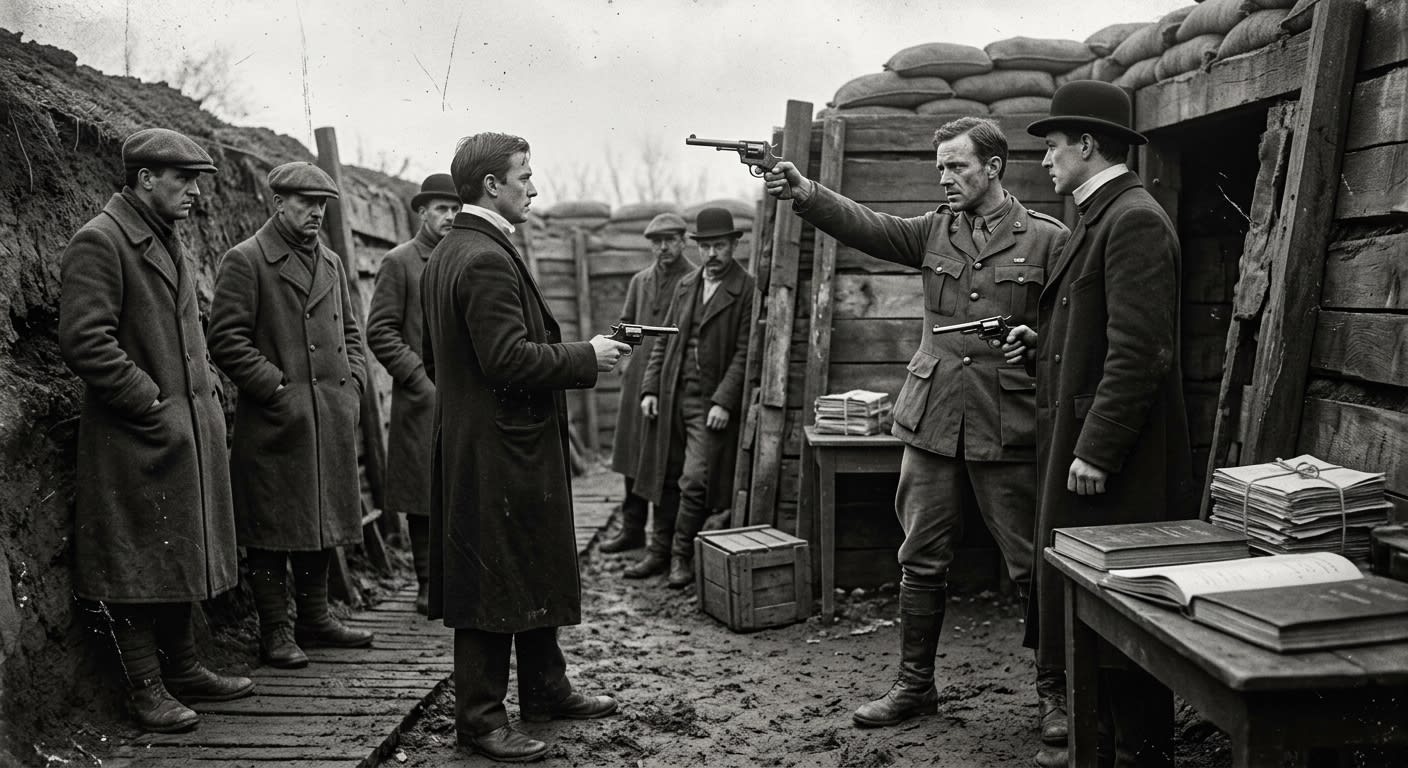
Veyss’s advocate tried remedy by supplementation: oath witnesses from the parish, reconstruction from grain receipts, testimony from an aunt who claimed to have seen the old reconciliation book before damp ate the rectory wall. The presiding clerk admitted all three and trusted none. The aunt’s testimony failed because her marriage name had been amended twice. The grain receipts failed because the receiving clerk’s licence had expired for nine days in A.S. 91. The oath witnesses failed because both were dead, which under Records doctrine is not disqualifying but is inconveniently dependent on the very burial rolls now under suspicion.
The duel lasted one hour and nineteen minutes. No sword touched flesh. No pistol fired. Veyss stood while his ancestry was disassembled by men who pronounced parish names like surgical instruments. At the end, the clerk found that the absence of the tithe-stamp created a lineage defect sufficient to suspend the lieutenant’s standing. Suspension invited remedy. Remedy invited strike.
The Citation Advocate requested full erasure.
TRENCH-COURT MINUTE — A.S. 148 Veyss asked whether service under fire supplied standing where lineage failed. Answer entered by presiding clerk: █████████████████████ Secondary notation: subject laughed once. Tertiary notation: laugh struck from transcript after remedy granted.
#On the Black Seal
The Erasure Notary arrived before the bench cooled. This speed later became famous in training annexes, where cadets are told that exemplary erasure is readiness under liturgical pressure. The Notary carried a black-seal case, two runners, three witness cards, and a strip of blank vellum in his sleeve so absence had somewhere to land. Superstition, yes. Superstition is procedure before it receives a form number.
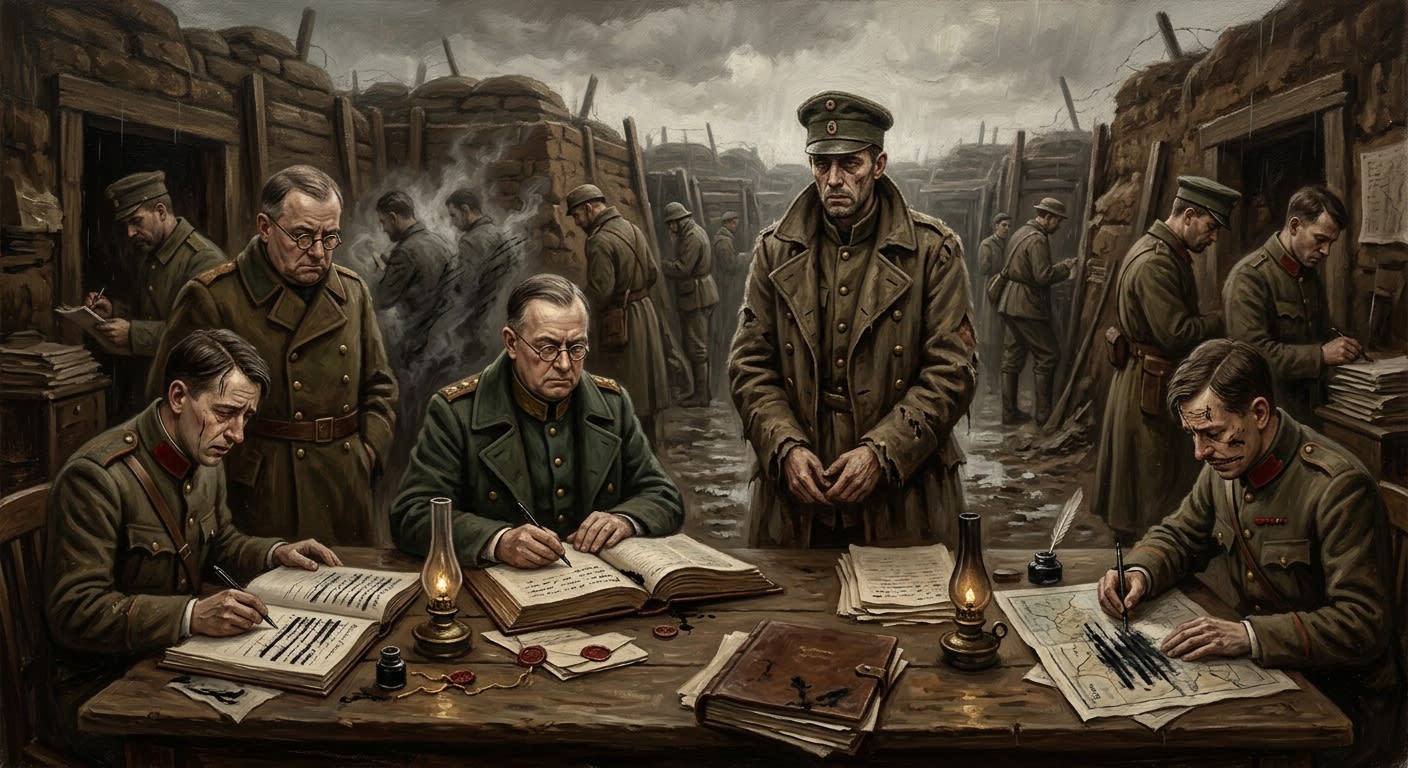
A strike begins with a name and ends with a climate. Veyss’s name was entered into the strike register. His mother’s name, baptism mark, oath witness, unit roll, marriage bond, ration claim, property notation, and burial entitlement were aligned in a dependency table. The Notary verified each anchor, then marked each ledger with black wax. Downstream notices went out in the old cascade: gate permit voided, pay suspended, rations cancelled, marriage annulled, children reclassified, burial rights frozen.
The Great Ledger did not erase him by scraping. Scraping implies correction. His entry received the grid of administrative dissolution: fine black lines over the name until it remained visible enough to accuse the eye and illegible enough to deny the mouth. A man can survive accusation. Denial is harder. The mark followed the same black geometry used after the Erasure of Guillaume, reduced from ducal lineage to officer scale.
Popular barrack versions say Veyss was executed after the duel.
Corrected. No firing squad was required. Execution would have produced a corpse, witnesses, and a widow with a claim. The strike produced a legal climate in which corpse, witness, and widow lost standing in the same afternoon.
#On the Wife and Children
Veyss’s wife was declared unmarried by correction, not divorce. Divorce admits that marriage existed. Correction states the register had temporarily misdescribed reality and has now recovered its manners. Her marriage bond was cancelled, dowry notation reverted, household ration line split, and widow standing denied because widowhood requires a dead husband. She had no dead husband. She had no husband. The Bureau of Mercy recorded her petition as “domestic misclassification,” a phrase that should be nailed to a chapel door and whipped.
The children were branded orphans. This detail is the one even seasoned Notaries read twice. Their father had not died, yet their father no longer possessed standing sufficient to generate paternity. The Bureau of Mercy accepted custody review. The Bureau of Records issued correction slips. The Bureau of Tithes recalculated projected lifetime obligation under orphan tables, which are less merciful and more profitable. One child’s catechism seat was reassigned before Vespers. The seat was warm.
Household goods entered provisional hold. A cloak with officer braid was inventoried as unowned martial textile. Three books were sealed pending lineage review. A silver spoon bearing the wife’s initials was returned to her after a clerk determined that initials, unlike surnames, can survive a husband’s administrative collapse if engraved before the defective marriage entry. Such mercy. Such civilization. I nearly applauded and then remembered I was literate.
#On the Comrades
By dusk, his comrades swore they had never seen him. That sentence made the case immortal. It appears in Black-Stamp cadet instruction and in Citation Advocate cautionary lectures, where it is recited as proof that the downstream notices reached unit memory with exemplary consistency. A less educated man might call it cowardice. The Bureau calls it compliance under corrected reality.
The 4th Rhineland Fusiliers received replacement rosters within hours. Veyss’s bunk was reassigned. His kit was tagged surplus. His mess debts were voided, then reopened against “unattributed consumption,” then closed because collecting debt from an absence creates theological clutter. The Bureau of War accepted the revised roster without comment. The sergeant who had served beside him for three winters signed a declaration that no Lieutenant Veyss had belonged to the company. The signature is steady until the final letter, where the ink thickens.
War dislikes uncertainty. Records hates it. Doctrine weaponises it. The company chose survival in the familiar way: they aligned memory with paper. A soldier who remembered Veyss aloud risked making himself a dependent anomaly. Dependent anomalies attract clerks. Clerks attract Notaries. Notaries bring the little black case.
Later sentimental accounts claim one comrade preserved Veyss’s name in secret.
Unverified and doctrinally unhelpful. Three scratched initials found under a bunk board could indicate loyalty, drunkenness, or poor carpentry. The Bureau assigned the board to fuel.
#On Its Place in Instruction
The Erasure of Veyss is taught as exemplary downstream consistency. That phrase deserves a small cage and daily feeding. It means every dependent ledger accepted the strike before dusk, and no office contradicted the corrected reality in a way that required public repair. Wife unmarried. Children orphaned. Unit forgetful. Pay void. Burial barred. Name gridded. A clean cascade.
Citation Advocates study Veyss to learn the value of a small defect placed under sufficient pressure. Erasure Notaries study the case to learn propagation timing. Records Scribes study it because every young Scribe must be taught that a missing mark is never missing; it is waiting. Soldiers study it without being told. They touch their papers before sleep.
The case also sharpened the border between execution and erasure. Execution ends a man. Erasure drafts the world into ending him, then sends the world back to work. The scaffold is a crude instrument. The Black Seal is a choir, each office singing its little denial in tune.
#On the Name Remaining
A paradox remains, and the Bureau dislikes paradox unless it can charge a fee for resolving it. We know the name Veyss because the case is cited. The instructional apparatus preserves what the strike destroyed. This is permitted under doctrine: a struck name may survive as a case label when stripped of personal standing, sacramental claim, and human residue. He has been reduced from man to precedent.
The file sits in restricted circulation under the Office of Nullity, cross-referenced with the Great Ledger of Souls, the trench-court discipline corpus, and the cadet manuals of the Black Seal annex. Its cover bears no portrait, no family crest, no unit ribbon. Only a docket number, a date, and the words EXEMPLARY DOWNSTREAM CONSISTENCY.
Veyss requested arrears. He received perfection.