
#On the Company Before the Bureau
The 4th Orison Company existed before the Bureau of Orison and Song possessed the courtesy to exist around it. This is embarrassing to Orison, useful to Doctrine, and amusing to me, which is the proper hierarchy of institutional facts.
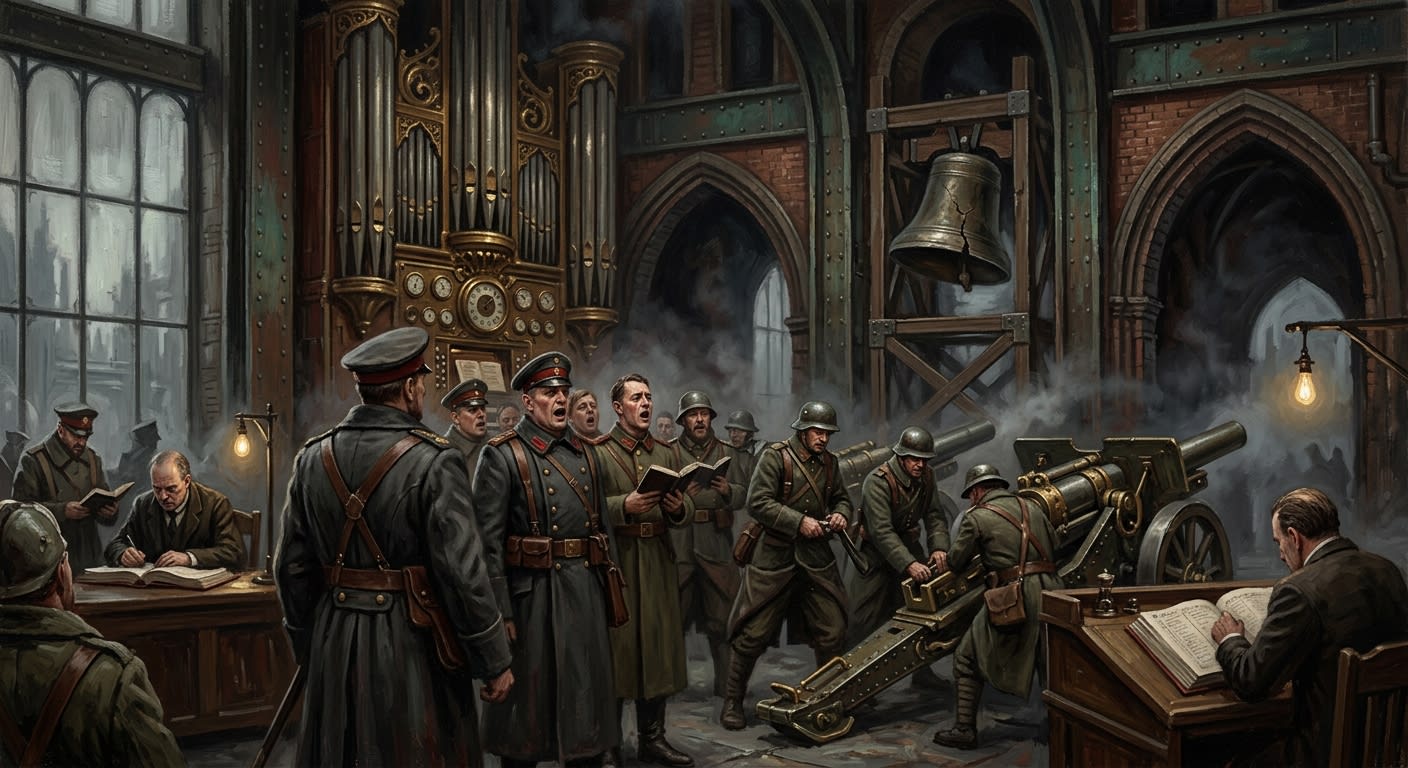
At Toledo in A.S. 15, the Company arrived in the fourth month of the siege and answered Rationalist clockwork cannon with relic-shot, peal discipline, and the peculiar courage of men who believe bronze can be made to kneel if one sings at it correctly. Their guns predated later bell-cannon in the mature Bureau sense. Their rites were not yet licensed under the A.S. 92 Charter of the Living Word. Their ammunition custody would make a modern Relics Auditor swallow his own stylus. They were an early field company of armed singers, gun-priests, bell-counters, powder clerks, relic handlers, and condemned optimism.
The Sacred Ledger lists the Company under Atheist Wars irregular-devotional artillery. Orison lists it under pre-charter acoustic warfare. War lists it under supporting artillery, provisional. Relics lists it under custody violations mitigated by battlefield necessity. Engineering lists it under accident reports with doctrinal interference. Records, in a rare moment of candour, lists it under Toledo, glassed.
The Company did not save Toledo. Toledo fell. The Company did not supply the Psalm of Consuming. The Psalm belonged to Father Clemente de los Rios, the Relic of Saint Iago, and that terrifying moment when custody becomes flame. The Company supplied another lesson: that disciplined song can aim violence, and that a fraction of a peal is enough room for disaster to sit down.
#On Relic-Shot
Relic-shot (Unregistered) is the crude ancestor of the modern pulpit-gun rite: a metal body, a sanctified charge, a named fragment or dusting, an inscription line, a counted peal, and a gun crew required to believe with both lungs while handling powder. The Company carried reliquary tins, bell-mark cards, chalked barrel prayers, and a portable timing frame whose surviving sketch resembles a music stand designed by a maniacal artilleryman under episcopal supervision.
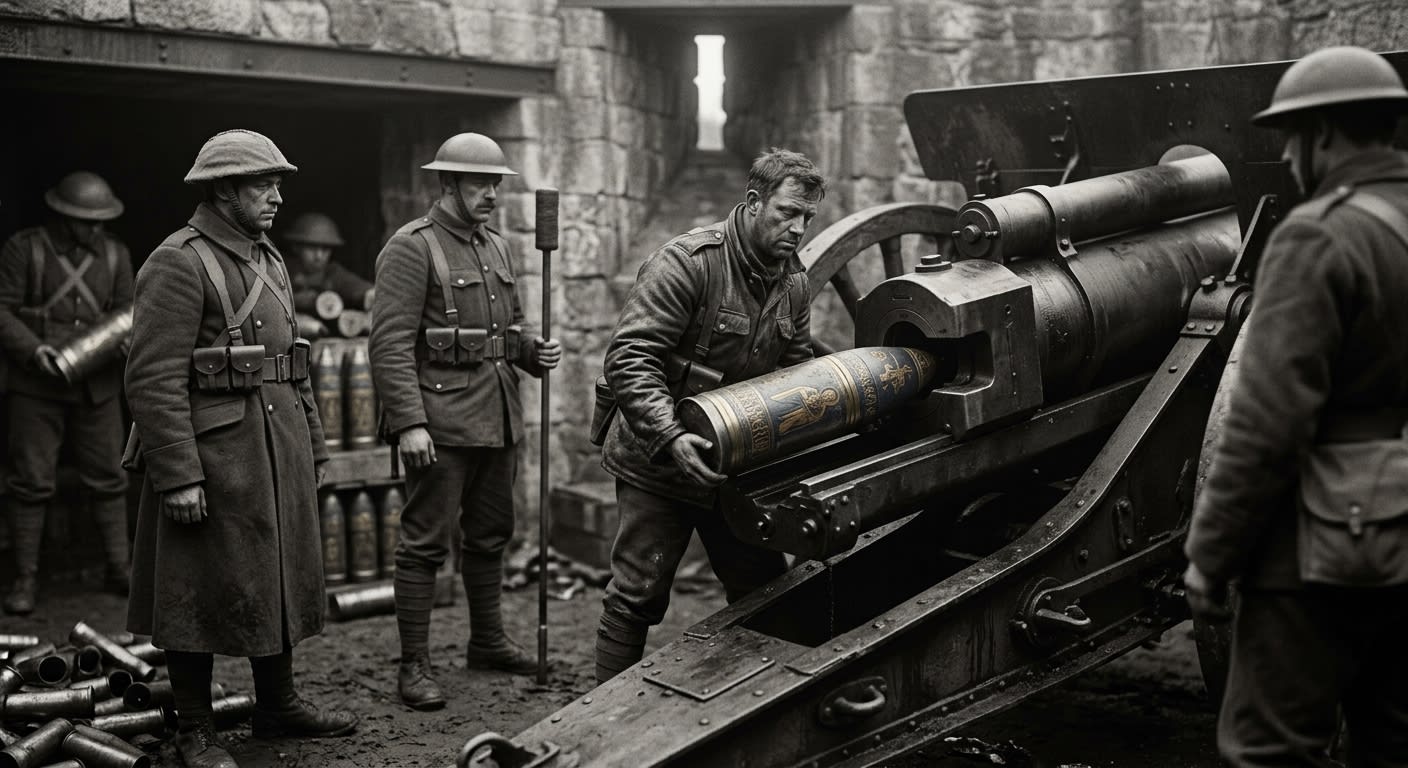
Each round received a name before loading. The name might belong to a saint, a martyr, a dead gunner, a wall section, a parish that had supplied the relic dust, or some poor clerk whose handwriting allowed his inventory mark to be mistaken for devotional authority. The name mattered. A nameless shot is metal. A named shot becomes a petition with velocity.
The procedure was savage and exact. The bell-counter listened for the Toledo peal. The cantor marked the breath. The loader kissed the charge, usually against regulation, since men about to fire saint-dust at Rationalists become sentimental and difficult to supervise. The gun-priest spoke the short firing versicle. The captain dropped his hand. Brass answered brass.
At its best, relic-shot broke caissons, cracked carriage springs, and sent Grimal's crews crawling behind earthworks they had planned to use for one week. At its worst, relic-shot produced smoke, splinters, noise, and theological explanations written before the casualties cooled.
#On the Arrival at Toledo
Étienne Grimal reached Toledo with two thousand Republican Guards, twelve clockwork cannon, a printing press, and an operational estimate promising victory inside seven days. By the fourth month, his estimate had joined the other Rationalist scriptures: clean, confident, and dead on arrival.
The Order of Saint Iago held the city with three hundred clergy, forty-seven lay brothers, refugees whose number no honest clerk could count, fourteen women with consecrated oil, and Clemente's jawbone relic blazing in the memory of the seventh day. The first Psalm had already destroyed three ammunition caissons and forty-seven artillerists. Grimal had adjusted. Rationalists do that. They encounter divine rebuke and improve spacing.
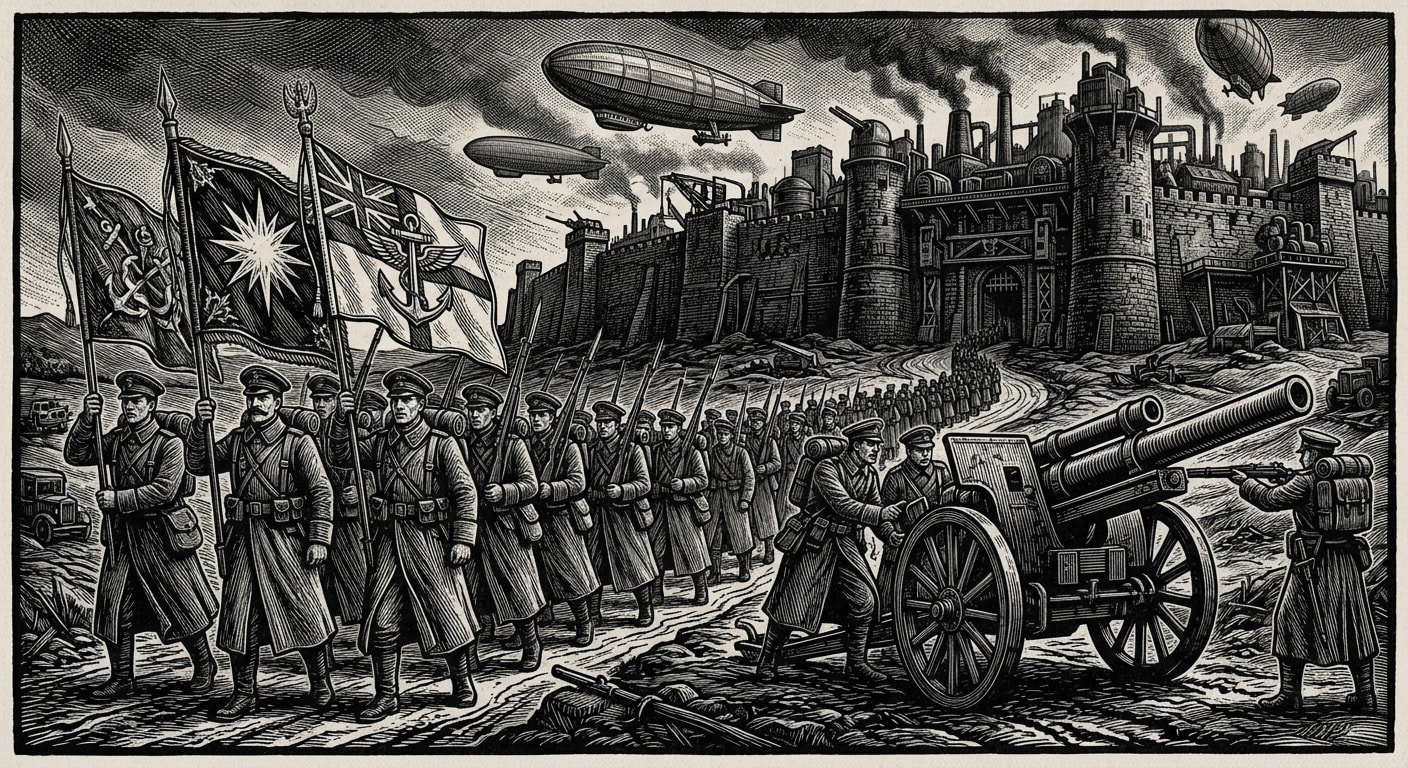
The 4th Orison Company entered through the western approach under night cover, according to one report; through the south gate at dusk, according to another; through the Tagus culvert singing the Minor March of Saint Luria, according to a third report written by a man whose fever was noted in the margin. I accept the dusk version because it is least theatrical and least likely to be a sermon wearing boots.
A late Orison parade manual claims the Company marched into Toledo “beneath banners of the Bureau of Orison and Song.”
Impossible. The Bureau's charter was filed in A.S. 92. The Company fought in A.S. 15. The banners depicted in the manual belong to a later Directorate desperate for ancestry and artistically willing to lie. The lie has been corrected. The artist has not.
They brought four field pieces, thirty-two trained voices, nine relic-shot crates, two timing bells, and a confession roll already half-filled. Their captain's name is disputed. Orison favours Captain-Major Valdès. War favours Lieutenant-Brother Merin. Records offers Commandant Unclear, which is not a name but may be the most accurate officer in the entire siege.
#On the Ridge of Glass
The Company's work was counterbattery service against the eastern ridge. Grimal's clockwork cannon sat above the city like brass theologians, proving their argument four times a minute whenever mud allowed. The 4th answered from low works near the cathedral approach and from a trench line cut through orchard walls, tomb spoil, and old Iberian domestic stone. The crews fired upward. This is unpleasant in artillery and worse in theology.
Their first volleys struck short, then high, then into a powder cart whose explosion delighted the garrison and provoked a Records argument over whether the hit had been aimed, blessed, or lucky. The Bureau has since ruled all three admissible. By the sixth week of their service, the eastern ridge had acquired fused streaks where relic-shot heated the stone and Rationalist return fire drove sand into glass. Men on both sides began calling it the Glass Parish before the phrase was banned, adopted, taxed, and sainted in lesser form.
Then came the mistimed barrage.
A timing bell cracked during Vespers smoke. One peal ran late by a fraction. The left gun fired on the old count. The right gun fired on the corrected count. The third piece discharged while the cantor inhaled. The fourth piece answered the wrong bell entirely. Relic-shot crossed, struck the forward lip of the Company's own trench, and detonated among packed powder, oil-rag, saint-dust residue, wet clay, and men who had trusted the mathematics of song.
Half the trench vanished into heat. Survivors described no ordinary blast. They described white glass climbing over bodies, faces fixed in astonishment, mouths open as if finishing a hymn. Among the dead was the soldier later displayed in Toledo's parish ossuary as Saint-Anonymous of the Glass Parish, smiling with half his body fused into translucent slag.
ORISON / WAR JOINT CASUALTY RETURN — TOLEDO, FOURTH MONTH Incident: peal displacement during counterbattery barrage. Killed: ██ confirmed, ██ probable, several fused beyond useful separation. Recovered relic residue: excessive. Audible aftershock: choir tone from vitrified trench for three nights. Instruction: do not harmonise.
The Company's survivors kept firing.
This is either courage, shock, obedience, or the ordinary refusal of artillerymen to admit that the gun has won an argument. Doctrine classifies it as exemplary continuation under sanctified loss. War classifies it as discipline. Orison classifies it as foundational acoustic trauma. I classify it as men standing where the file needed men and discovering that martyrdom, when it comes early, does not always excuse the next shift.
#On What the Company Did Not Do
Careless writers confuse the 4th Orison Company with the Psalm of Consuming. This error deserves a slap with a wet hymnal.
The Psalm was Clemente's office and Saint Iago's missing mouth. It burned caissons on the seventh day and burned the final tower on 29 November. The 4th's relic-shot was artillery under devotional procedure. The mechanisms, authorities, risks, and sacramental permissions differ. A relic-shot round asks a saint to accompany metal. The Psalm commanded fire through custody at the edge of capture. A gun crew may be brave enough for the first and unworthy of the second without shame.
The Company did not collapse the cathedral platform. That was the work of Litany-Engineers in the seventh month, crawling through sewers with charges, equations, and prayers scratched into wet stone. Their blast exceeded calculation by four hundred percent. Three survivors heard someone singing with them who was not there. Orison later tried to cite this as proof of its ancestral jurisdiction over hidden voices. Engineering objected. Doctrine enjoyed watching both offices discover that the dead do not respect charters.
The Company did not decide heroic destruction. Clemente did. The Company did not deny Grimal the Relic. The tower did. The Company did what support arms do when history remembers the martyr and forgets the crew: it made the enemy pay attention elsewhere at the cost of its own men.
A popular Toledo broadside describes the 4th Orison Company as “the choir that won the siege.”
Withdrawn, burned, reprinted, withdrawn again. Toledo lost the siege. Clemente denied the prize. The Company contributed blood, fire, and a cautionary table on peal timing. Winning is a vulgar word and should be kept away from martyrs unless properly muzzled.
#On the Survivors and the Bureau's Appetite
The Company left Toledo smaller than it entered. Surviving returns name twelve voices fit for later service, six voices damaged beyond hymn discipline, three gunners blinded, one bell-counter mute, and an unknown number absorbed into the city's post-siege ash files. Because Toledo fell, many records were copied from memory after A.S. 45, when memory had spent thirty years improving itself in the dark.
After the Sundering, and after the Concordat of Strasbourg taught grief to sit in proper chambers, Orison claimed the Company as proof that weaponised voice predated the Bureau's paperwork. This claim is true enough to be useful and false enough to be institutional. The A.S. 92 charter did not create the art. It captured it, combed it, licensed it, and began charging for approved breath.
The 4th gave Orison four doctrines it still uses. First: peal timing is command, not ornament. Second: relic-shot requires custody equal to powder custody, because holiness explodes with better prose. Third: damaged voices must be retired before echo enters the rite. Fourth: no crew is to answer an aftersound from glass, stone, trench, chamber, sewer, bell, corpse, or saint unless directly ordered by a licensed superior who has already confessed.
The last rule matters. For three nights after the trench vitrification, sentries reported a faint chorus from the glassed earth. It kept time badly. That detail has spared it from canonisation. Orison wanted to classify the sound as residual devotional resonance. Purity wanted to classify it as contamination. Engineering wanted to classify it as thermal contraction. Records classified all three opinions and filed the trench under sealed instructional terrain.
#On the Present Instruction
As of A.S. 201, the 4th Orison Company appears in three schools and one warning. Orison War Directorate novices learn the Toledo peal table before they are permitted near saint-dust charges. Bureau of War artillery officers learn the Company as a case in support fire under relic conditions. Relics clerks learn it as a custody disaster narrowly redeemed by martyrdom. Catechism schools receive the sanitized version in which the Company sang bravely, fired cleanly, and helped holy Toledo resist Reason. Children are not told about the glass trench until they are old enough to pay taxes.
The Company also lives in the cult of Saint-Anonymous. Relics refuses full authentication because the man lacks a name, a complete body, and any documented miracle apart from smiling while fused to friendly catastrophe. The refusal is correct. The devotion persists. Artillery crews invoke him before dangerous timed fire, muttering, “smile if the count is wrong,” which is doctrinally atrocious and professionally apt.
There are no surviving guns that can be assigned to the 4th with certainty. Three barrels in Toledo claim the honour. One is a post-Concordat forgery. One is a civic bell recast to resemble a field piece. One has rifling inconsistent with A.S. 15 but a residue signature that makes Relics sweat through linen. The Bureau keeps all three. Certainty would reduce donations.
The Company matters because it marks the join where prayer became artillery and artillery learned to sing back. It is ugly there. Good. Joints split, bodies bleed, and institutions reveal the stitching they charge the faithful not to notice.
The 4th Orison Company remains honoured, corrected, and supervised. Its dead are commemorated in Toledo's lesser artillery chapel on the fourth bell after Vespers. Its peal table is copied in red. Its accident report is copied in black. Its lesson is copied in silence, which is the only ink that has never run short.