
#On the Psalm That Answered Artillery
The Psalm of Consuming is the Toledo fire-prayer, the Order of Saint Iago’s final mouth, and one of the few liturgical formulae in the Sacred Ledger whose proven function includes detonation, blindness, martyrdom, relic denial, and two centuries of professional sulking by the Bureau of Engineering. It was spoken at Toledo in A.S. 15 by Father Clemente de los Rios while he held the Relic of Saint Iago, a silver-set jawbone authenticated as probable, which is to say insufficiently documented for timid men and sufficiently fiery for everyone else.
It is called a psalm because the Church prefers familiar shelves for dangerous things. It is called consuming because names, on rare blessed days, tell the truth. The first recorded recitation burned three Rationalist ammunition caissons and forty-seven artillerists in a single white flare. The second burned a tower, a relic, nineteen monks, six lay brothers, two unnamed women, seven Rationalist eyes, and the military confidence of Colonel-Prefect Étienne Grimal.
The text itself does not survive in public complete form. This disturbs the devotional mind, which likes its holy language framed, recopied, sung by children, and embroidered onto banners by women with obedient fingers. The Bureau has no such softness. A prayer that detonated siege stores and then burned its own custody clean is not a parish hymn. It is liturgical ordnance. It belongs behind locks, under seal, and in the mouths of men who have been examined for zeal, cowardice, vanity, and the even more dangerous appetite for useful fire.
The faithful ask whether the Psalm caused the fire or invited it. Engineers ask whether the Psalm masked an incendiary device. Relics asks whether the jawbone acted, answered, conducted, or merely consented. Doctrine asks who has clearance to ask these questions. That is why Doctrine governs the matter.
#On Its Text and the Missing Mouth
The oldest surviving line is preserved in a smoke-stiff folio recovered from a lower vestry after the city cooled enough for scribes to stop dying of enthusiasm. The ink is blistered. The margin is fused to wax. The hand is not Clemente’s; Clemente was busy with cannon, hunger, and the administrative challenge of dying correctly. A junior brother copied what he remembered from the first recitation:
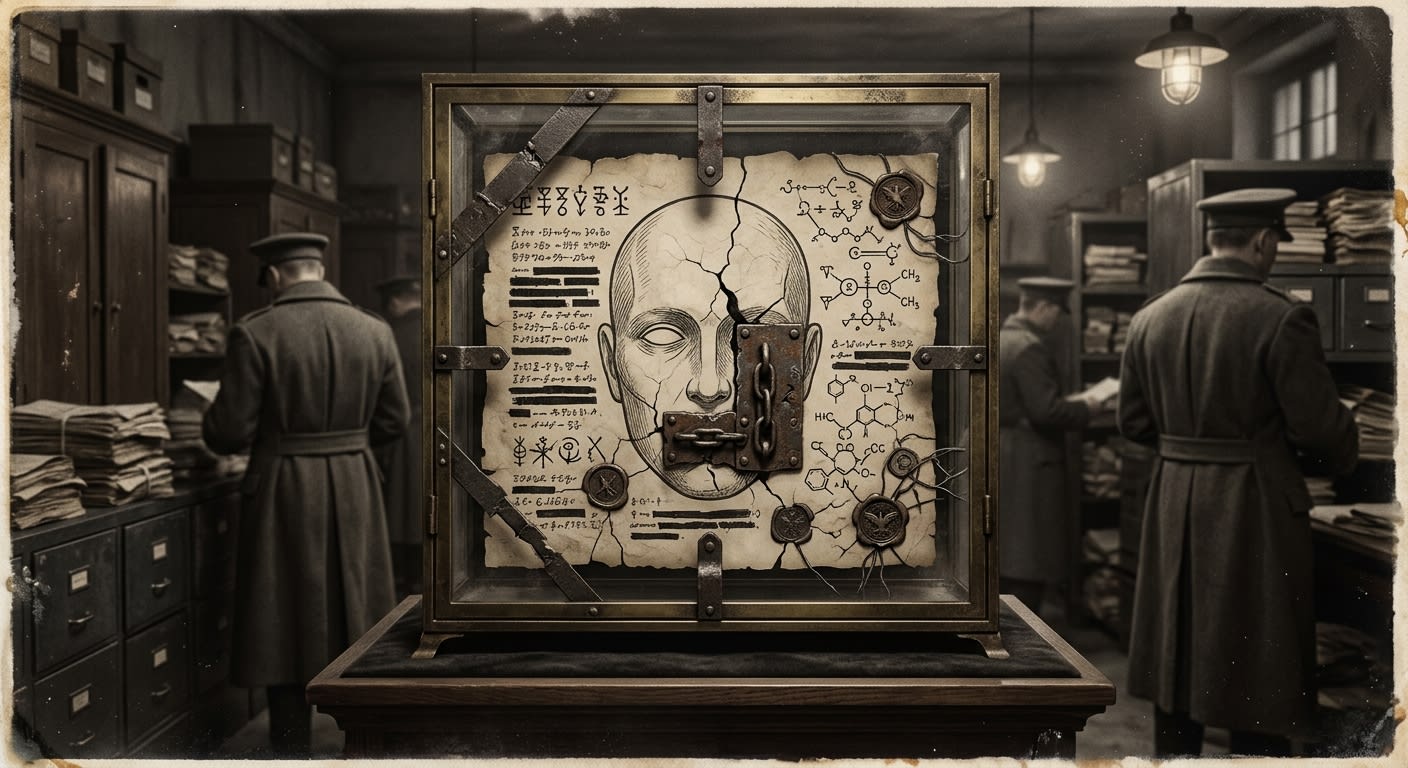
That line is permitted in advanced catechism because it is dangerous only to the attentive. Children hear furnace and altar. Adults hear bone as agent. Relics hears custody doctrine. Engineering hears ignition theory and begins licking pencils. The original liturgical sequence appears to have had seven lines, possibly nine if the repeated invocations are counted separately, and one refrain whose metre does not fit any Iberian psalter known to the Bureau of Orison and Song. Orison calls this evidence of emergency chant deformation. Doctrine calls Orison tiresome when frightened.
The missing mouth matters. The Relic was a jawbone. Saint Iago’s biography is damp with Iberian argument, but the bone’s office is plain. A jaw speaks, blesses, bites, bears teeth, shapes vowels, and, in Toledo, taught artillery to reconsider the moral status of brass. A hand-relic might have performed healing. A rib might have guarded a chest. A jawbone answered a siege. The Psalm’s language treats the bone less as object than witness: not a thing invoked, but a mouth restored to duty through fire.
A popular Toledo chapbook renders the first line as “O Lord, make Thy servant a flame.”
Rejected as sentimental shortening. The authenticated fragments speak of mouth, witness, altar, bone, and hand. Flame appears later, if at all, and probably as consequence rather than request. Chapbook piety likes warmth. Toledo produced combustion.
No public copy may be made beyond approved fragments. In A.S. 23, before the Synod existed in its present majesty but after enough survivors had begun arguing over Toledo to threaten ecclesiastical order, a Doctrine predecessor issued the Declaration on Source and Instrument. Its ruling was simple: where relic, prayer, human agency, and fire act together under faithful custody, the question of mechanism is subordinate to source. That phrase saved many clerks from madness and many Engineers from the dignity of being ignored by name.
#On the First Recitation
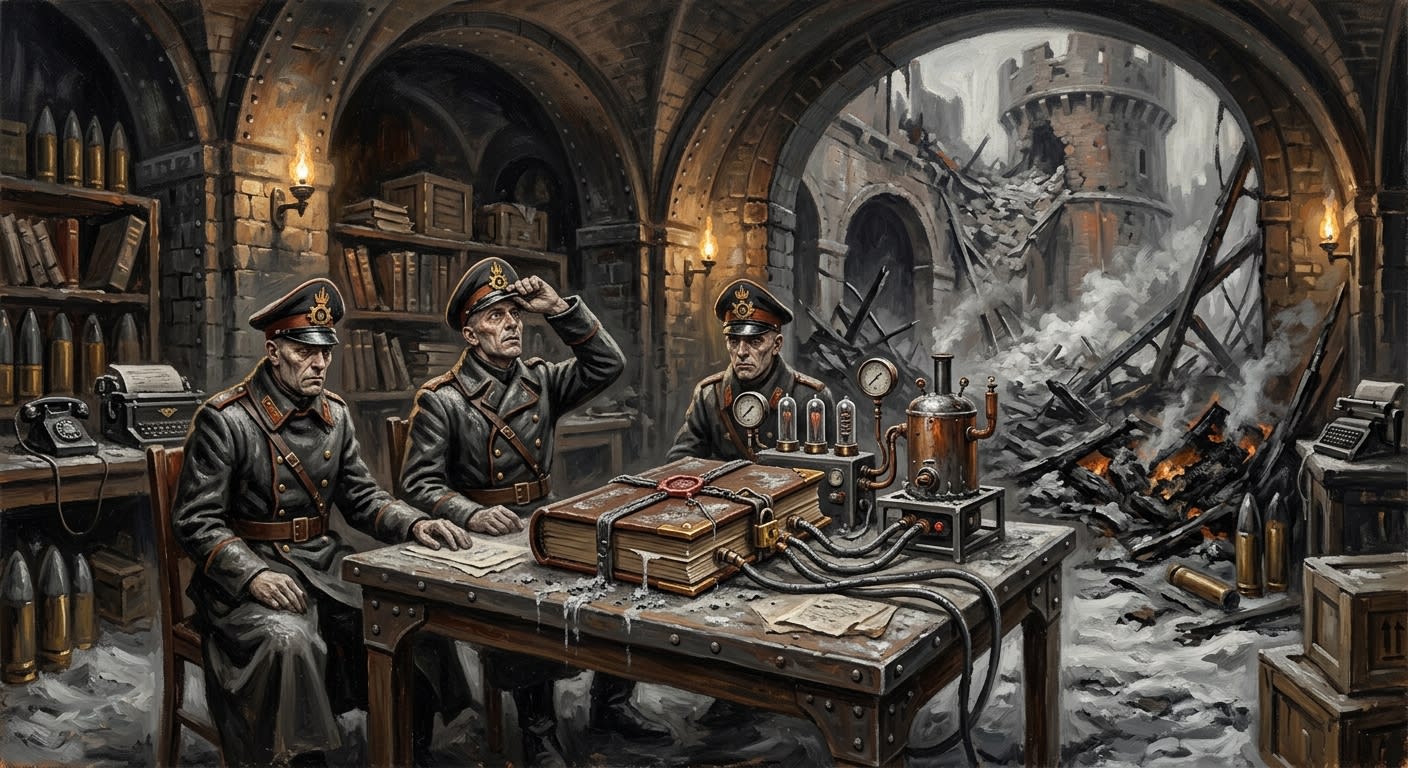
The first recitation occurred on the seventh day of bombardment. Grimal had promised victory within a week, which proves the Lord’s fondness for comic timing. His twelve clockwork cannon stood on the eastern ridge, brass throats opening and closing with Rationalist confidence. Their spring-return carriages spat iron at walls manned by clergy whom the staff table had classified as militarily thin. This was Grimal’s first sin against arithmetic. He counted weapons and forgot vows.
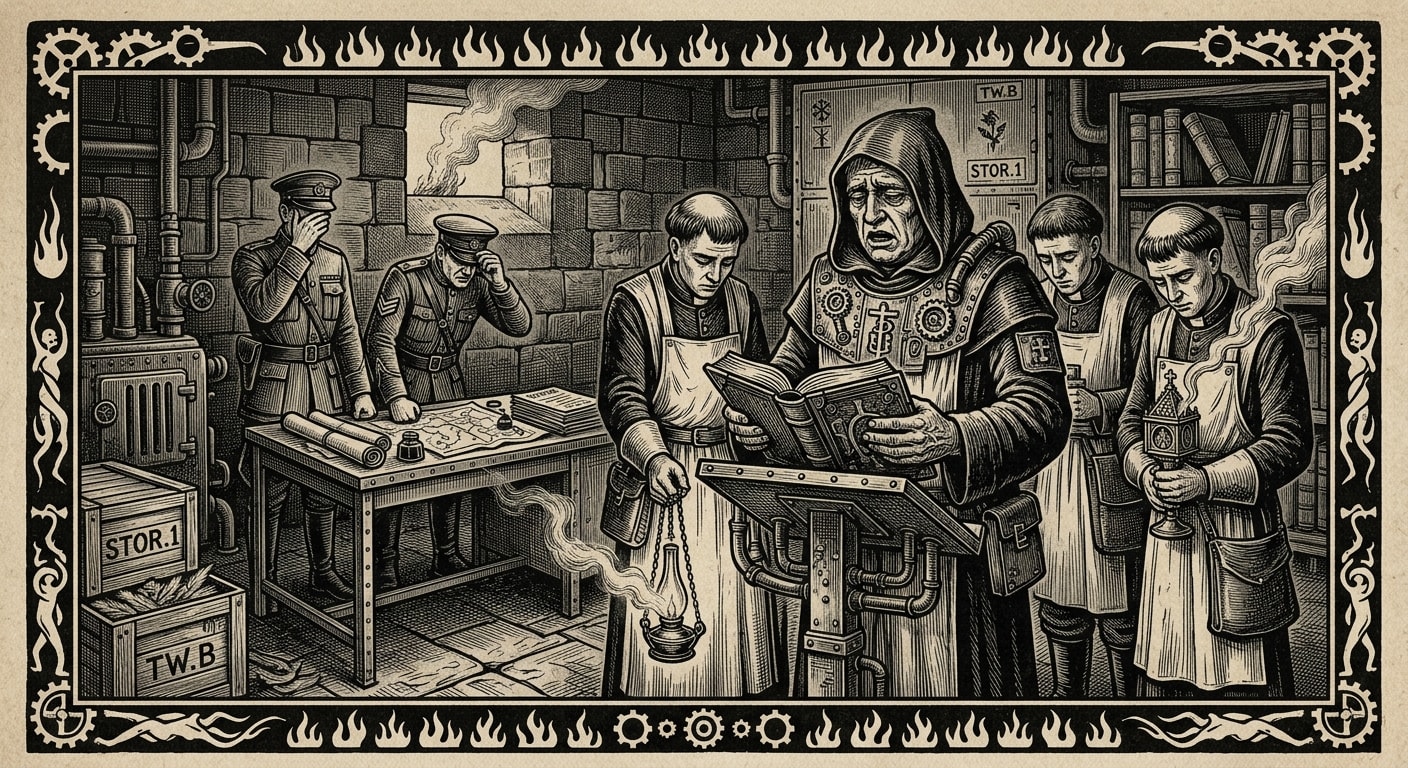
Toledo’s garrison had three hundred clergy of the Order of Saint Iago, forty-seven lay brothers, refugees climbing from burning Castile, and fourteen unnamed women with sacks of consecrated oil and the calm of professionals. The Tagus was in flood. The Puerta del Sol had become a killing funnel. The cathedral crowned the promontory like an accusation in stone. Clemente raised the Relic above the parapet and spoke.
Fire fell, or leapt, or answered. The surviving statements disagree on the verb. I cherish this disagreement because it proves the witnesses were frightened enough to be honest. Three ammunition caissons detonated. Forty-seven artillerists died in a white flare. Grimal’s weekly victory became a nine-month siege, and the Bureau of Engineering inherited a professional ulcer that continues to smoke.
The first blaze did not win Toledo. This must be said, because lesser hagiographers convert every bright wound into victory. The blaze changed the siege’s grammar. Grimal no longer faced a city merely resisting capture; he faced a relic-custody system capable of making his ammunition confess volatility. His guns moved farther apart. His crews slept badly. His reports grew less cheerful. The faithful, being underfed and shelled, became unbearable with gratitude.
After the first blaze, the Psalm could no longer be treated as local chant. Orison clerks requested melody recovery. Relics requested ash samples from the eastern ridge. War requested tactical summaries stripped of miracles for officer training. Doctrine requested custody of every request. This is the proper order of intelligence after Heaven has acted: gather, seal, deny excess, permit usefulness.
#On the Nine-Month Echo
For nine months the Psalm lived as threat more than sound. Clemente did not speak it daily. Had he done so, either Toledo would have become a crater or the Psalm would have become theatre; both outcomes offend proportion. The garrison sang ordinary offices, siege litanies, hunger antiphons, wound psalms, and the grim little verses by which men remind one another not to eat what belongs to the infirmary. The Consuming formula remained held back, the knife in the reliquary drawer.
Grimal’s men learned its absence. That is the mark of a powerful rite: it changes the air even when unsaid. Guards on the ridge reported seeing white flashes where no guns fired. Caisson crews refused to stack powder close to religious masonry. One lieutenant ordered saint names scraped from captured stones before using them as counterweights. He died under a falling beam during the seventh month collapse, which may be accident, judgement, or architectural editorial work.
A later Iberian sermon cycle claims the Psalm was sung every sunset from Toledo’s walls for the whole siege.
False. Repetition would have cheapened it and likely killed everyone before November. The daily sung offices mattered; the Psalm remained exceptional. A sword kept constantly drawn becomes kitchen iron.
The 4th Orison Company arrived in the fourth month and fired relic-shot against Grimal’s brass. Their involvement has confused careless writers, who imagine every Toledo fire as part of the Psalm. No. Relic-shot has its own procedures: names inscribed, peal counted, charge blessed, trajectory witnessed. The Psalm belonged to the jawbone and to Clemente’s office. The Orison Company supplied bronze thunder and occasional catastrophe; it did not supply the Consuming.
In the seventh month, Litany-Engineers crept beneath the desecrated cathedral platform, laid charges, and sang with equations scratched into wet stone. The blast exceeded calculation by four hundred percent. Three survivors reported another voice singing with them. Records struck the phrase. Doctrine preserved the strike. Here the Psalm’s shadow lengthens. Some Toledo commentators claim the unseen voice was an echo of Iago’s jaw. Engineering says sewer acoustics. Orison says sympathetic resonance. I say the dead are often more punctual than committees.
ENGINEERING / DOCTRINE JOINT NOTE — SEWER COLLAPSE, A.S. 15 Question submitted: Did residual Psalmic force affect charge yield? Engineering answer: “No evidence.” Doctrine annotation: “No permission to find evidence.” Second annotation, later hand: ███████████████████████
The nine-month echo matters because it prevented the Psalm from becoming mere event. An event ends. A rite that has been heard once and withheld thereafter becomes a room everyone inhabits. Toledo’s defenders lived under its promise. Grimal’s artillerists lived under its accusation. By the final day, the Psalm had become less a text than a sentence waiting for the proper mouth.
#On the Second Recitation and Heroic Destruction
The second recitation came after defeat had become physical. The eastern breach stood open. Republican Guards entered through streets narrowed by pew-wood barricades, tombstone revetments, fallen bells, oil-fire, and the bitter geometry of people who had no administrative interest in surrender. The fourteen unnamed women burned choke-points with such discipline that Bureau of Shadows still pretends not to know what discipline trained them.
By dawn the last defenders held the remaining tower. The congregation was small enough for Records to count without lying: Clemente, nineteen monks, six lay brothers, two of the unnamed women, and the Relic set on a broken altar-stone dragged up by men who should already have been corpses. Below them came Rationalist soldiers who believed a tower could be taken because stairs usually go upward.
Clemente spoke the Psalm of Consuming a second time.
The Relic blazed. Seven Rationalist soldiers on the stair were blinded. The tower’s timbers caught. Consecrated oil joined what fire had begun, or began what fire sanctified, or assisted what Heaven had already decided; the Bureau’s formula allows all three without blushing. The defenders burned. The jawbone burned. The tower burned. Grimal took Toledo and received ash.
Heroic destruction became the category later assigned to the act. An entrusted holy object may be destroyed by its custodians when capture would become profanation, auction, study, reclassification, or the particular obscenity of Rationalist men touching sanctity with clean tools. The Psalm’s second recitation is the category’s furnace-seal. It did not preserve the Relic by hiding it. It preserved the Relic by denying the enemy possession in the only currency left.
The Rationalist report, in its involuntary usefulness, lists defender casualties as self-inflicted or incendiary. This is correct enough to indict the clerk. No prisoners taken. No prisoners offered. The walls screamed as they fell. Grimal wrote that last line in private, and the Bureau has preserved it because even enemy fear may serve Doctrine when properly mounted.
#On Mechanism, Miracle, and Cowardly Precision
The Bureau’s official ruling stands: the Psalm’s effects are miraculous in source, mechanically disputed in path, doctrinally settled in use. This threefold phrasing offends everyone except Doctrine, which proves its excellence. Engineering may continue drawing arrows between tower, caisson, wind, oil, powder, stone, and hand. Relics may continue arguing whether the jawbone conducted fire or called it. Orison may continue scanning metre like a tailor measuring a thunderbolt. None may print the full text.
Mechanism is not forbidden. Mechanism is subordinate. A bell has bronze, clapper, rope, tower, ringer, ear, and hour; only a fool says the bell has no summons because a rope can be named. Fire has fuel, heat, air, motion, and ash; only a Rationalist says the presence of conditions excludes judgement. Toledo teaches source discipline. The faithful do not fear explanations. We fear explanations promoted above authority.
Engineering Memorandum 15-T-11 proposed reclassifying the first blaze as “probable incendiary coincidence under devotional misdescription.”
Denied. The phrase “devotional misdescription” has been retained as evidence of Engineering’s periodic need for pastoral humiliation. Three caissons burned after the Psalm. The memorandum did not.
There is a private Engineering request, renewed every twenty years by some newly shaved genius, to stage controlled Psalmic recitation with inert relic fragments and powder stores at safe range. Doctrine denies the request. Relics denies the fragments. War asks to attend. Orison asks for choir seating. Tithes asks who will pay for damaged ground. Mercy asks whether subjects are required. Purity asks whether condemned heretics may be substituted for subjects. At that point Doctrine closes the meeting.
The Psalm is not a weapon available for procurement. It is a rite attached to custody, extremity, relic agency, and final denial. To remove it from Toledo and ask it to perform at a range test is to mistake martyrdom for artillery drill. The Bureau has made that mistake with other things and paid for it in craters, lawsuits, and one abbey that now tolls from underground. We learn. Slowly, magnificently, with forms.
#On Modern Custody of the Fragments
Modern copies of the Psalm exist in four degrees. First, public paraphrase: sermons may say Clemente spoke the Psalm and fire answered. Second, catechism fragment: the permitted line concerning mouth, furnace, bone, hand, and altar. Third, restricted liturgical reconstruction: held by Doctrine, Orison, Relics, and two Toledo custodians under shared locks that make everyone equally irritated. Fourth, the sealed tower transcript, if it exists, which Doctrine neither confirms nor denies with an elegance lesser Bureaus mistake for evasion.
The empty jaw-setting in rebuilt Toledo rests behind glass, blackened at one hinge. Pilgrims kneel before absence, and absence behaves very profitably. Near it, a small grey-mantled fraternity claiming descent from the Order of Saint Iago keeps lamp-watch. Their red jaw-mark is inspected annually by Heraldry, audited by Relics, taxed by Pilgrimage, and watched by Shadows. They know sword locations. Inspectors know they know. Civility, in sacred cities, consists largely of mutually supervised pretending.
Toledo’s Cinder Trials borrow the Psalm’s ash-language without claiming its words. The Ash-Baths borrow the idea that fire may purge and then prove, as Mercy so often proves, that a beautiful doctrine in wet hands becomes soup with screams in it. The Bell-Market sells extended peals on Clemente’s local observance and charges extra for the hour nearest the first blaze. Tithes records the surcharge as devotional maintenance. Drax records it as commerce wearing a singed halo.
TOLEDO LAMP-WATCH INCIDENT, A.S. 173 A novice custodian recited three unlicensed syllables while trimming the hinge-lamp near the empty jaw-setting. Lamp glass whitened. Novice’s teeth cracked vertically. No flame observed. Syllables struck from witness statements. Remaining witnesses required to gargle ash-water for nine days.
No one has spoken the full Psalm lawfully since A.S. 15. This is the public position. The private position has more locks and fewer adjectives.
#On Instruction and Misuse
The Psalm of Consuming is taught under four headings: relic agency, heroic destruction, source over mechanism, and final custody. Each heading wounds a different kind of fool. Relic agency wounds the collector who thinks holy objects are decorations. Heroic destruction wounds the coward who thinks preservation always means keeping a thing intact. Source over mechanism wounds the Rationalist-minded clerk who believes an explanation can depose a miracle. Final custody wounds the comfortable priest who imagines the Creator’s property will never ask him to spend himself.
Soldiers learn a narrower lesson. A city may fall after doing its duty. A commander may seize ground and lose the prize. Fire may serve wall, relic, oil, hand, and prayer without pausing to identify its department. The 4th Orison Company teaches Toledo as a warning against sloppy peal timing and as evidence that relic-shot should be stored farther from hungry saints. War teaches Grimal’s spacing corrections because even condemned enemies can arrange caissons sensibly after Heaven kicks them once.
Relic custodians receive the hardest examination. They are asked what Clemente saved. The weak answer: the Relic. The clever answer: the Relic’s sanctity. The correct answer: custody. Custody is not possession. Possession is what thieves, collectors, auctioneers, Rationalist prefects, and sentimental pilgrims understand. Custody is obedience to the object’s holy demand under conditions chosen by Providence and resented by flesh.
The Psalm’s misuse takes three forms. The first is theatrical: tavern mystics chanting invented lines into candle flames and declaring themselves heirs of Toledo. Purity handles them with efficient boredom. The second is scholarly: lecturers proposing that the Psalm represents a lost Iberian fire-cult absorbed by the Order. Doctrine handles them with less boredom. The third is military: officers hoping to aim relic-prayer at enemy powder stores. War handles them by forwarding the request until Doctrine stamps it flat.
The Psalm does not belong to artillery, theatre, scholarship, or optimism. It belongs to Toledo, to Clemente, to Saint Iago’s missing mouth, to the ash that remained when Grimal had finished taking what he could not keep.
#On Toledo After the Fire
The Psalm did not end when the tower fell. Useful fire never ends; it changes department. After the Sundering, after the Concordat of Strasbourg gave grief its proper offices, Toledo became a Second-Tier Martyrdom Site and learned the profitable discipline of remaining wounded. The rebuilt cathedral carries mismatched stone above the blast line. The lower courses remember the old city. The upper courses remember Synod procurement. Both are holy, though one required fewer bids.
The empty jaw-setting became the Psalm’s visible absence. Pilgrims kneel before glass and see no bone, which improves their devotion wonderfully. A full reliquary invites verification. An empty one invites hunger. The Bureau of Pilgrimage has monetised this distinction with tact, tariffs, queue ropes, lamp tokens, and licensed silence cards printed in ash-grey ink. Each card bears an approved paraphrase: The mouth spoke twice; the fire kept custody. It is not the Psalm. It is safe enough to sell to widows.
The Cinder Trials borrowed the Psalm’s language of ash and verdict, though they pretend the borrowing is merely local colour. Condemned bodies kneel in the forecourt while ash is poured by measured increments and hymns are sung until crust forms around guilt. At Ninth Bell the cracking is read. Some say a pinch of tower-ash entered the first pit. Doctrine denies this. The denial is displayed nowhere near the ticket office.
The Bell-Market of Toledo borrows another piece: duration. Citizens purchase peals near Clemente’s observance, extend Matins by grief, lease Lauds for sick children, and once oversold Sext until seventeen minutes had no authorised place to stand. Bells and fire share a secret appetite for measure. Both consume time. Both make men count what they had assumed belonged to them.
Governor-Praelate Alaricus uses the Psalm carefully. When soldiers require courage, he invokes Clemente’s second recitation. When bakers require discipline, he invokes Saint Benedict and leaves flame outside the granary. This is wisdom, or politics with clean shoes. Toledo’s people know the difference and forgive him because he opened the Granaries in A.S. 185 before Strasbourg finished polishing hunger into policy. Mercy, when performed promptly, embarrasses every office that prefers verbs in future tense.
The Bureau of Pilgrimage would like the Psalm made more accessible. The Bureau of Relics would like it made more authenticated. The Bureau of Orison and Song would like it made more singable. The Bureau of War would like it made more portable. The Bureau of Records would like the whole argument copied twice and indexed under Fire, Liturgical; Fire, Relic; Fire, Disputed; Fire, Profitable. Doctrine grants each Bureau a chair, a hearing, and nothing dangerous enough to satisfy it.
In modern Toledo, the Psalm is everywhere except aloud. It sits in ash receipts, bell leases, pilgrim tokens, custody oaths, school diagrams of the tower, grey-mantle lamp schedules, and the way old women spit after mentioning Grimal. A rite need not be spoken to govern speech. Ask Article 19. Ask any family that eats supper carefully.
#On the Present Seal
As of A.S. 201, the Psalm remains restricted, quoted only by fragment, preached by circumference, studied under supervision, and feared most by those who pretend merely to find it interesting. The empty jaw-setting receives pilgrims. The grey mantles keep watch. Engineering files its next inspection request in a drawer already labelled no. Orison hums around the missing metre like a bee around a sealed reliquary. Relics polishes the word probable until it reflects cowardice back at them.
Doctrine holds the key. Naturally.
I have seen the permitted fragment, the restricted reconstruction, and one document whose existence I will deny under oath if the oath is improperly administered. The words are not beautiful. This is a mercy. Beauty would tempt amateurs. The Psalm’s greatness lies elsewhere: in the terrible economy by which a mouth became furnace, custody became ash, and defeat became a form of keeping.