

Reverse Index
Referencing “Rome”
Every codex entry that links to Rome. 15 entries.
Return to Rome
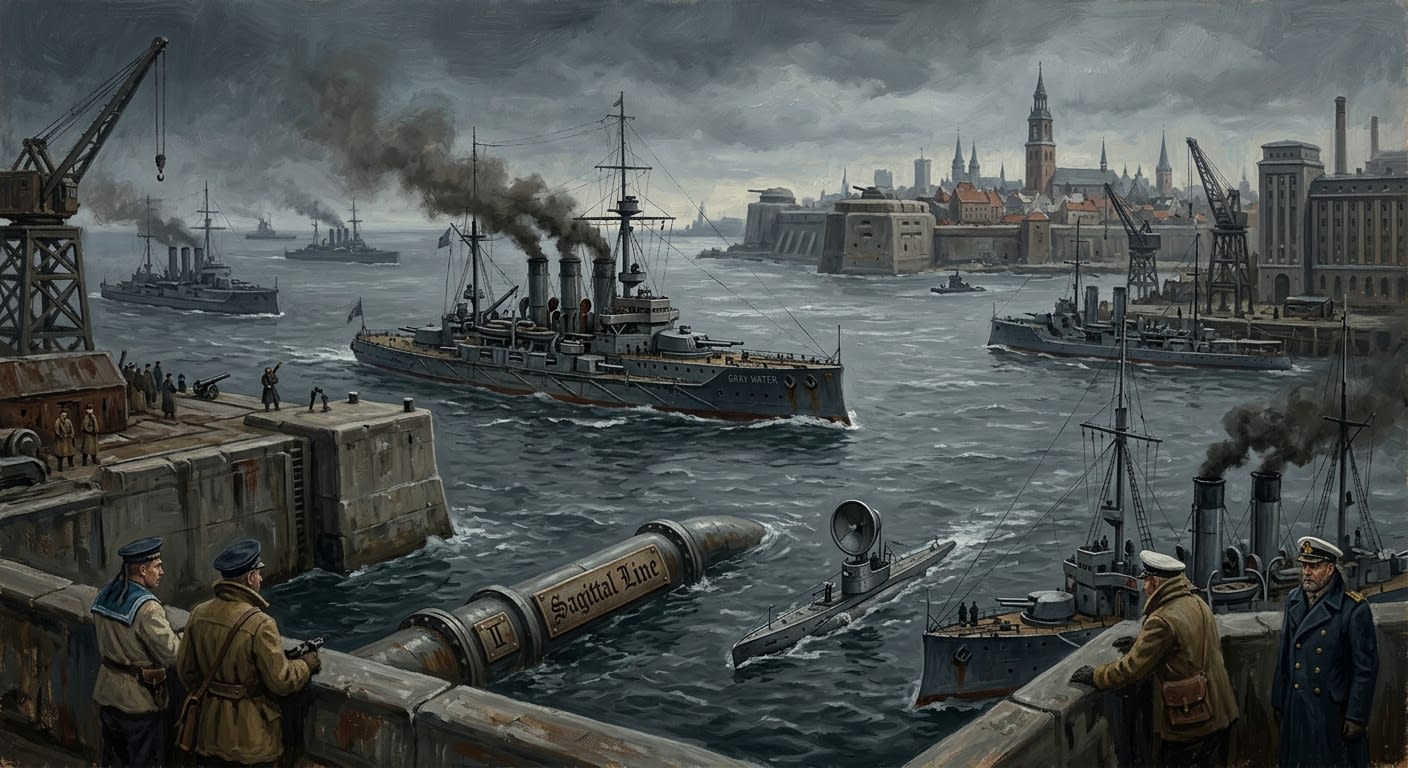
Baltic Sea
The cold bowl that listens back
The Baltic Sea is the cold northern bowl where the Sagittal Line ends at Königsberg, Grey Water listens, old bells answer, and maps lose courage.
Codex Ref. II.8.01-065
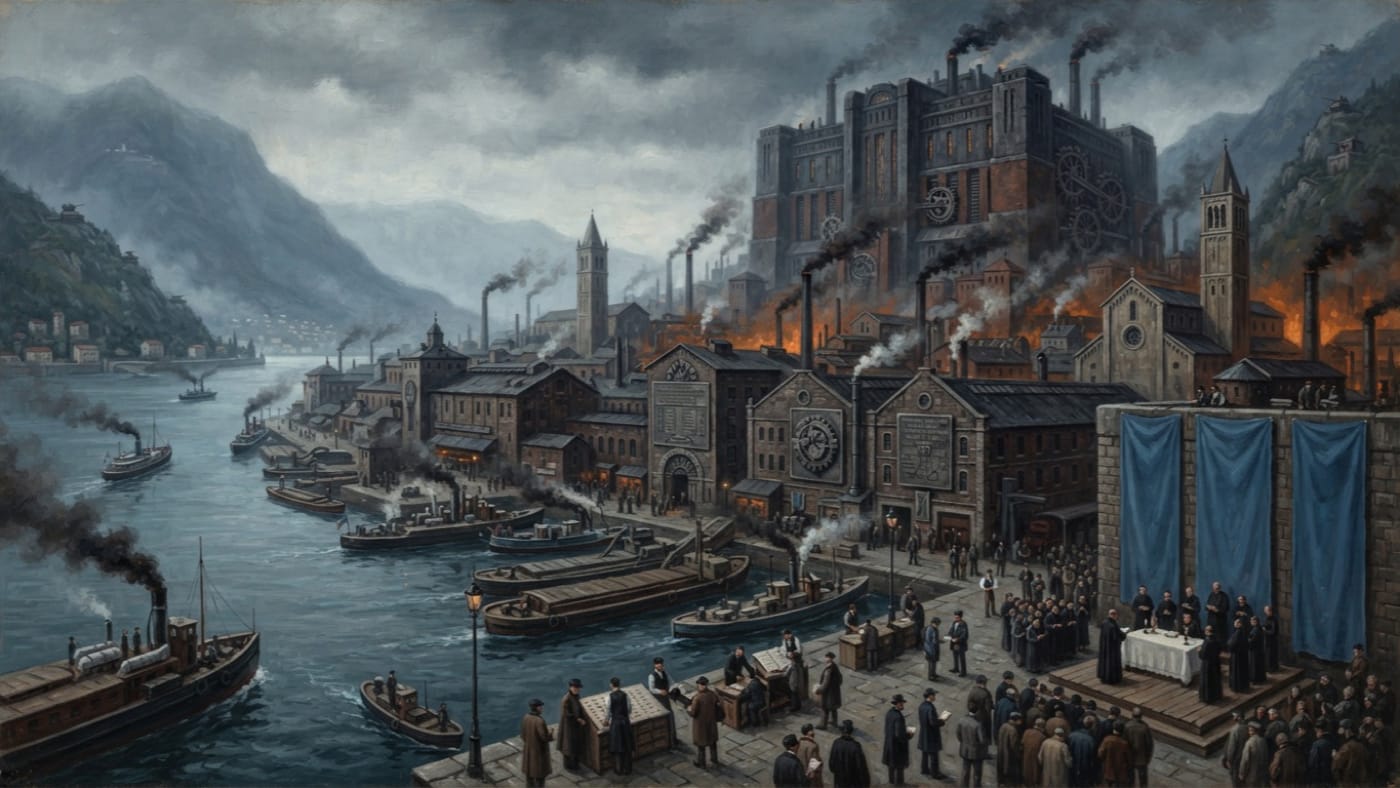
Como
A city that changed its bells and kept its names on the roll
Como put crossed keys on its silk, its warehouses, and its tax office in A.S. 150. In A.S. 201 its trade functions, its bells obey, and its names remain on the roll.
Codex Ref. II.1.08-201
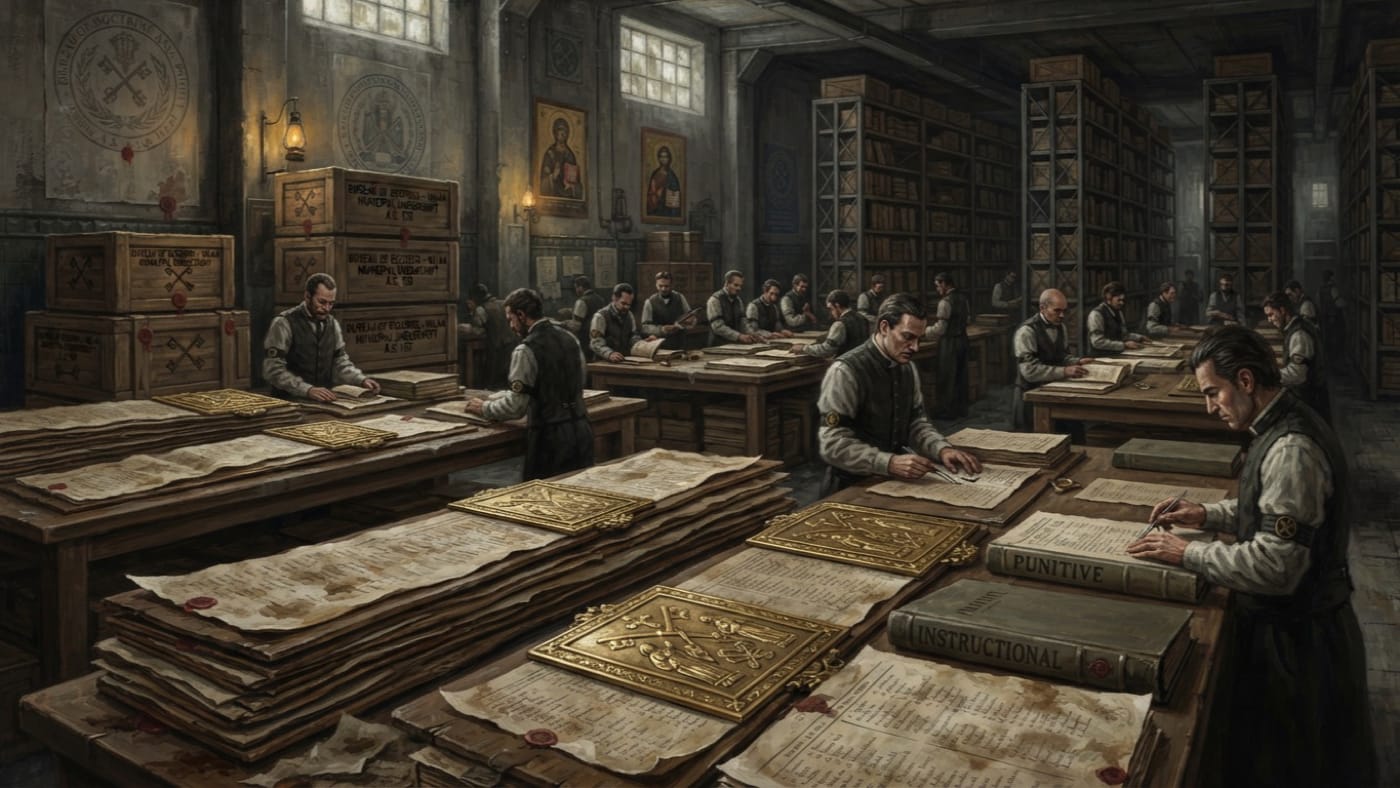
Crossed Keys Roll
Punishment finishes; the register continues
Recovered from twenty-seven soaked crates after the A.S. 150 Lombard revolt, the Crossed Keys Roll preserves names in punitive and instructional registers. Punishment finishes with a man; instruction pursues his grandchildren.
Codex Ref. IV.1.09-150
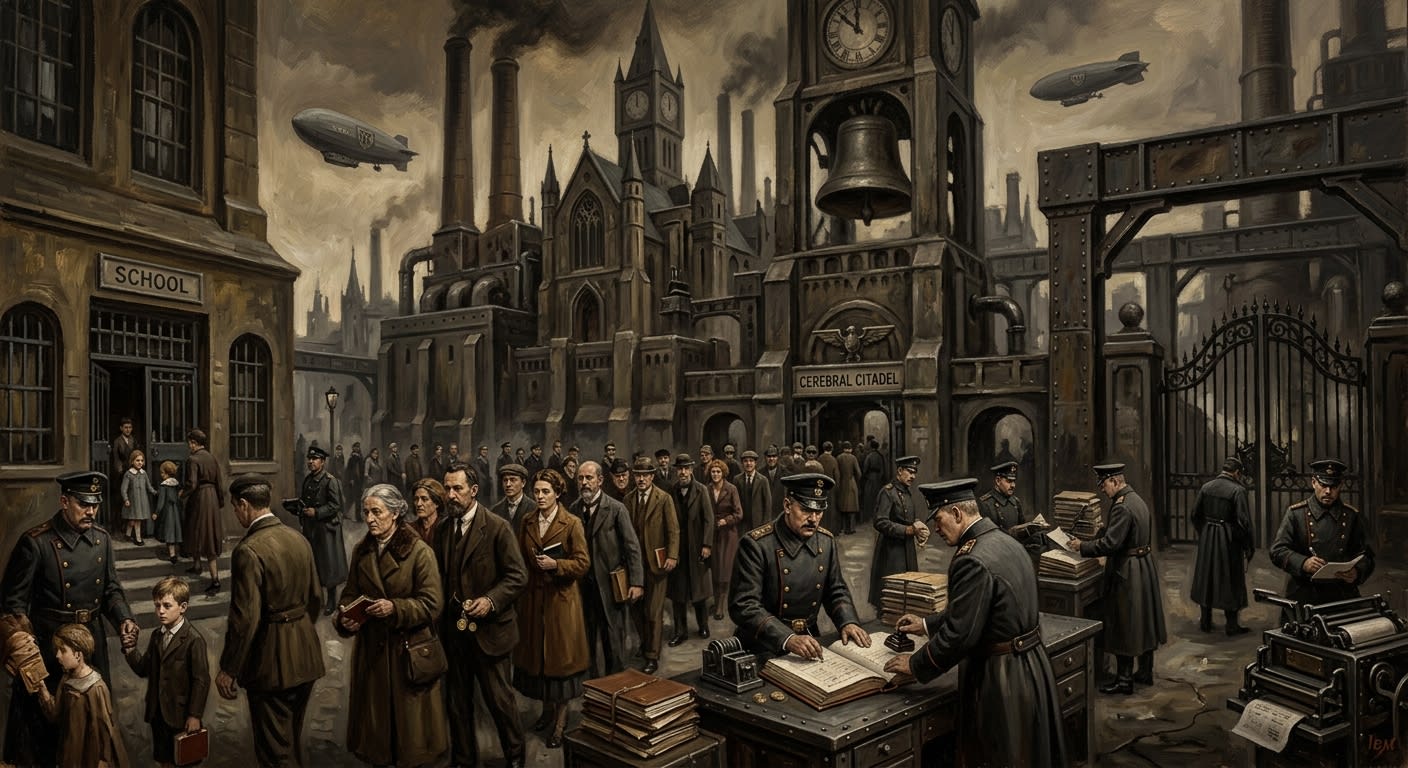
Dominion
Europe held in one gloved hand and taught to call it custody
Dominion is the Synod's official name for custody over Europe: border, tithe, bell, school, grave, and the thought before speech.
Codex Ref. XIII.1.02-090
Florence
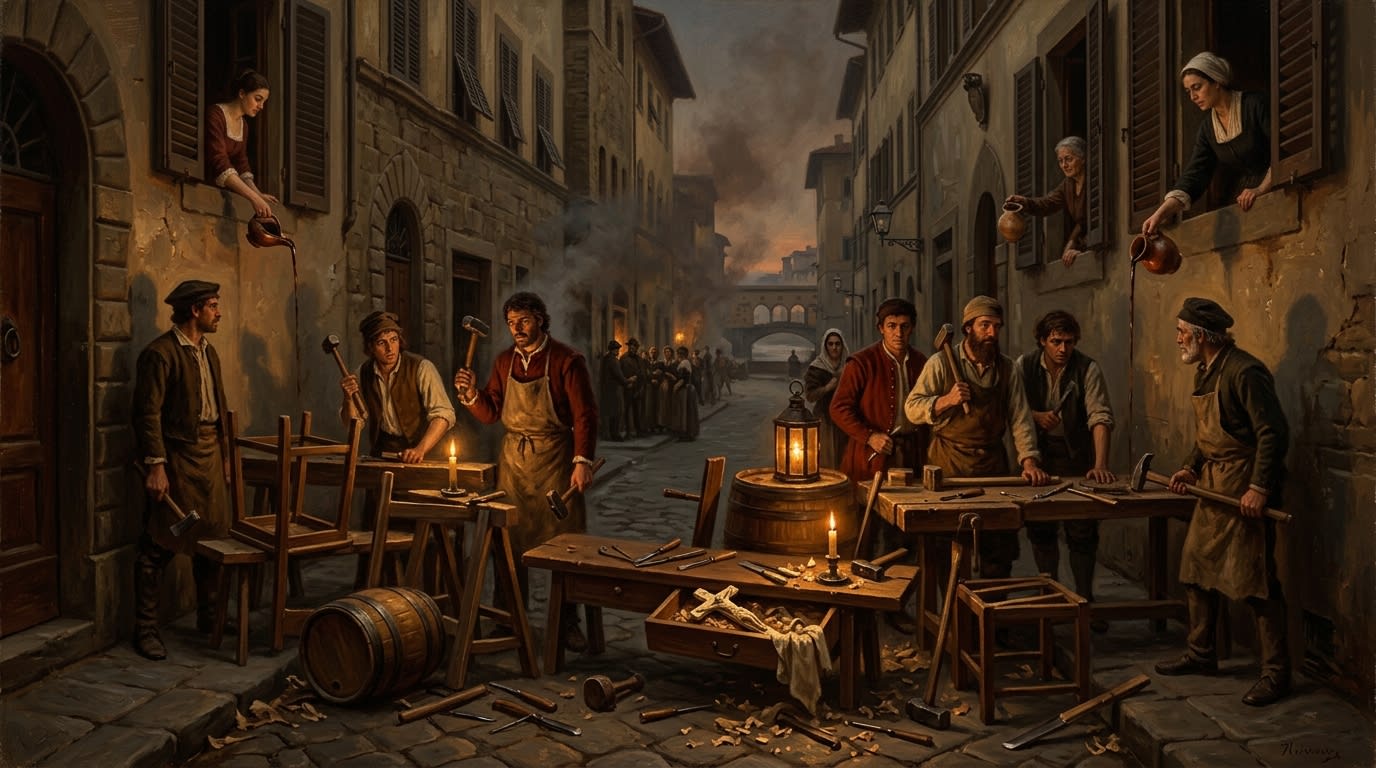
The city that taught drawers to keep the faith
Florence is the polished Tuscan wound where hidden crucifixes, artisan tools, and the A.S. 44 Ivory Revolt made small devotion sharper than empire.
Codex Ref. II.4.09-044
Italian principalities
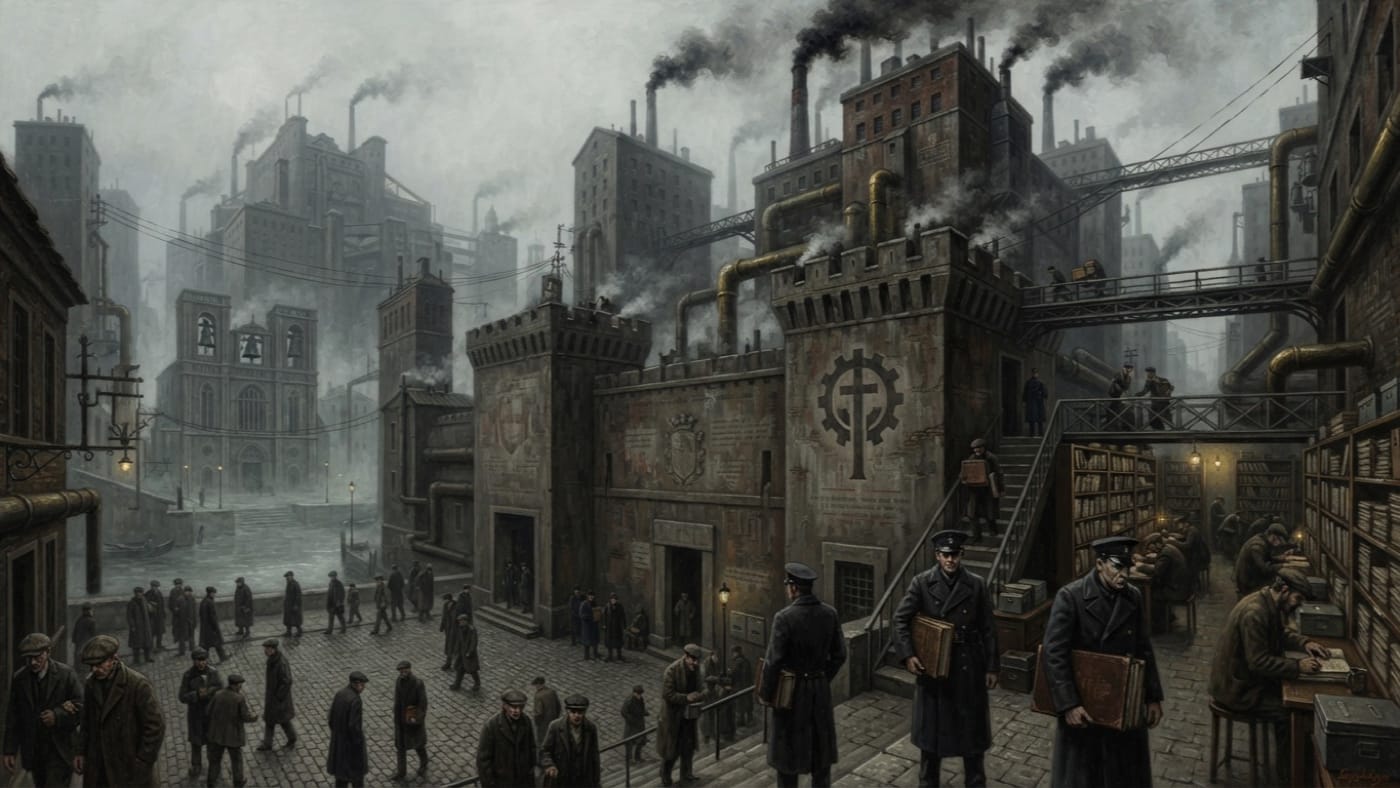
One filing drawer for a peninsula that never consented to share it
The old Italian jurisdictions, erased by Regensburg in A.S. 30 and inherited piecemeal by the Synod. Their complete roster remains unestablished; their objections remain abundant.
Codex Ref. II.3.09-030
Italy
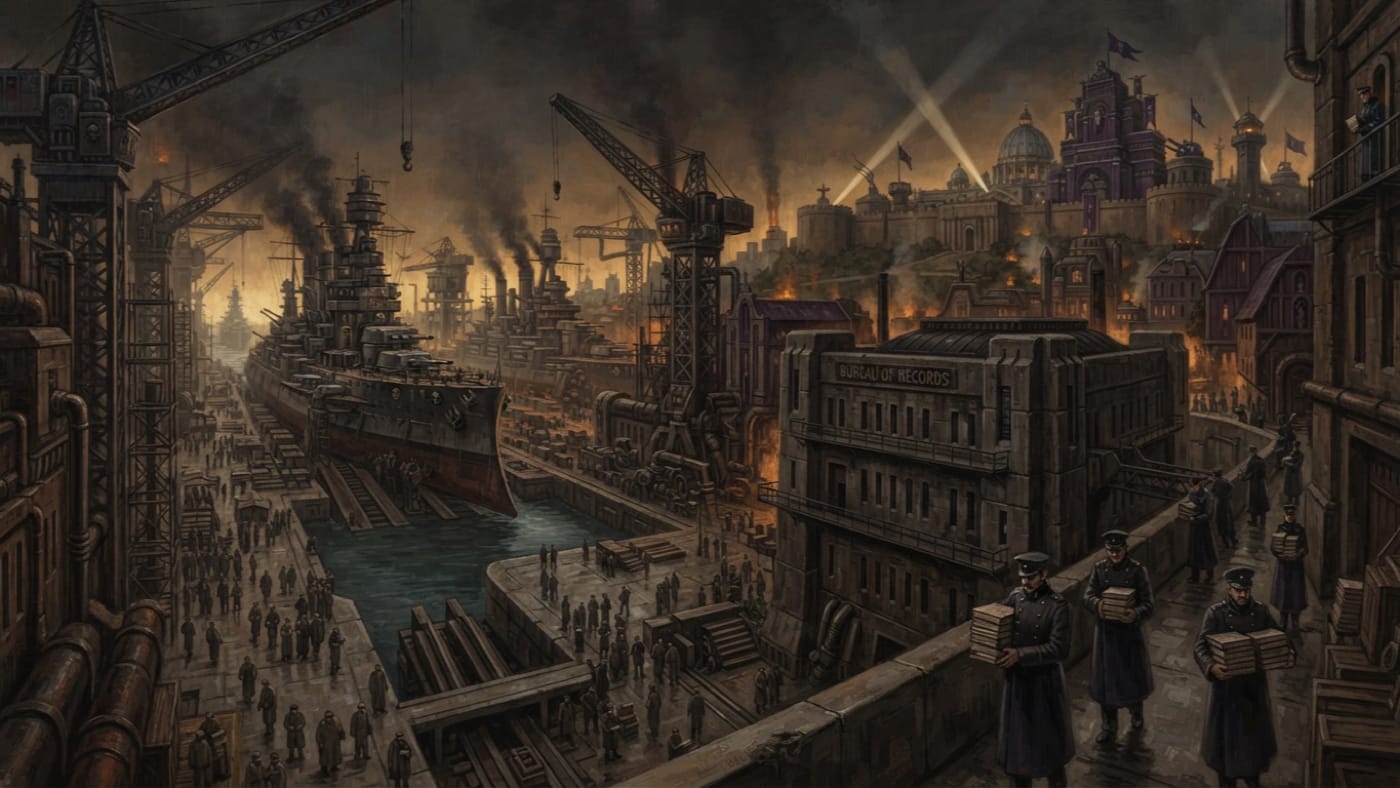
Inside the tax rolls, outside the founding seal
Italy builds ships, keeps archives and finances Synodal wars without a seal on the Concordat. My A.S. 201 survey finds its territories administered and audited, while Doctrine still anticipates compliance.
Codex Ref. II.3.10-001
Key-Oath
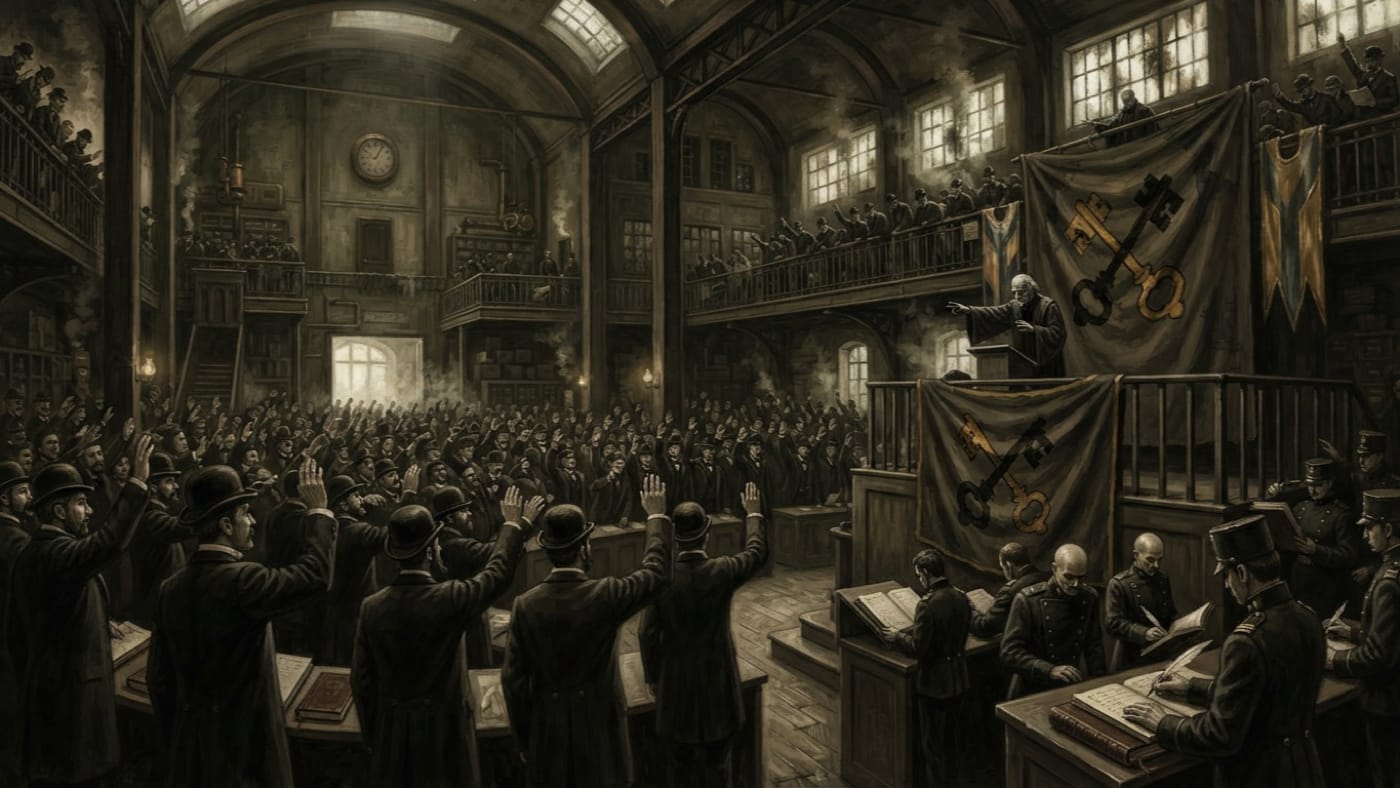
An allegiance voided, a city entered
In A.S. 150, Milan's city councils swore the Key-Oath to the Coalition of the Crossed Keys and its so-called True Successor of Rome. The oath is void; the names remain useful.
Codex Ref. VII.8.04-002
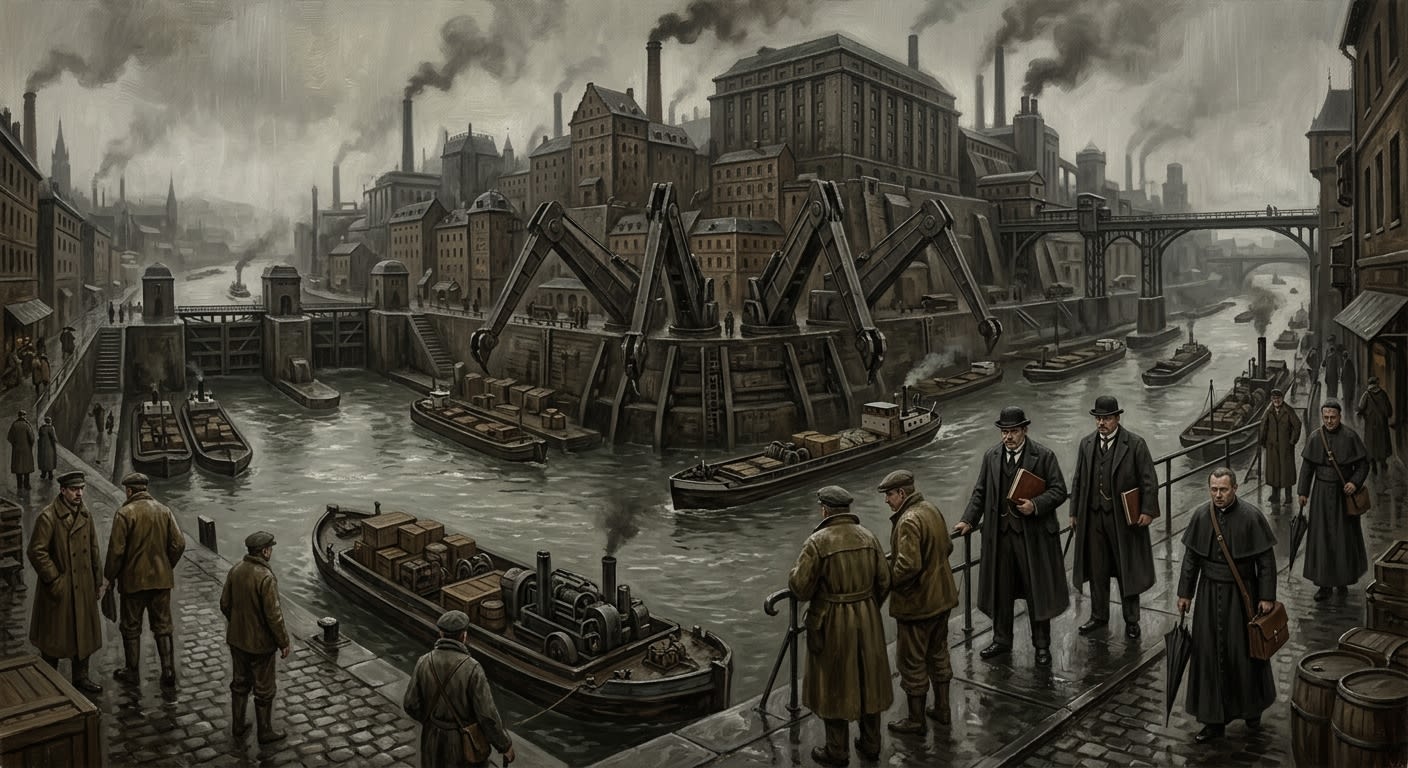
Koblenz
The holy art of handing the burden onward
Koblenz is the wet middle hand of the Ignatian chain: a Rhine-Moselle transfer city where sanctity lasted six minutes and became taxable forever.
Codex Ref. II.3.05-045
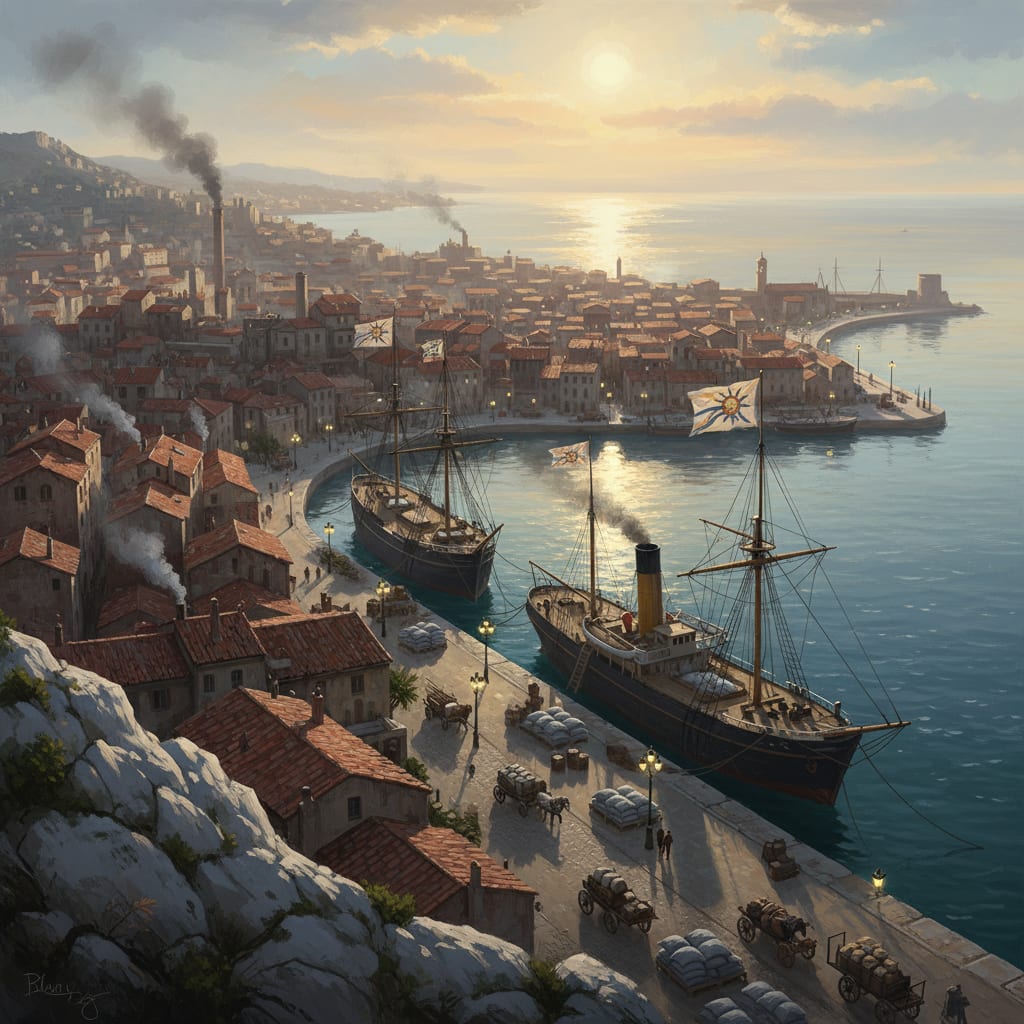
Marseille
Salt, pilgrims, and a territorial dispute the [[bureau-of-records|Bureau of Records]] has declined to arbitrate
The Synod's southern mouth — 650,000 souls between limestone and salt water, two competing Bureaus sharing a harbour they cannot agree on.
Codex Ref. II.4.09-012
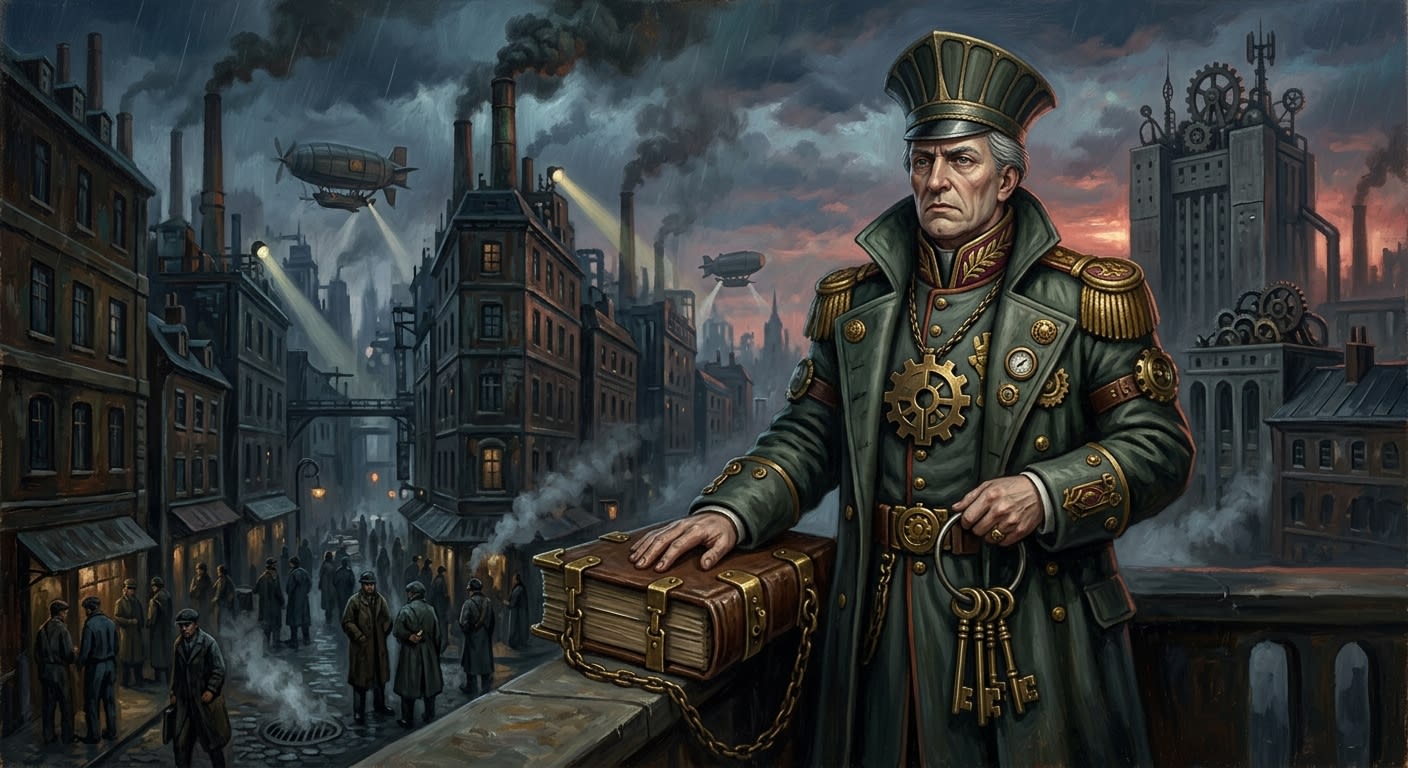
Milan
The city that mistook minutes for sovereignty
Milan is Lombardy's polished mouth: silk, steel, banking paper, guild keys, and the old civic delusion that a beautiful memorandum can outrank Strasbourg.
Codex Ref. II.1.07-150
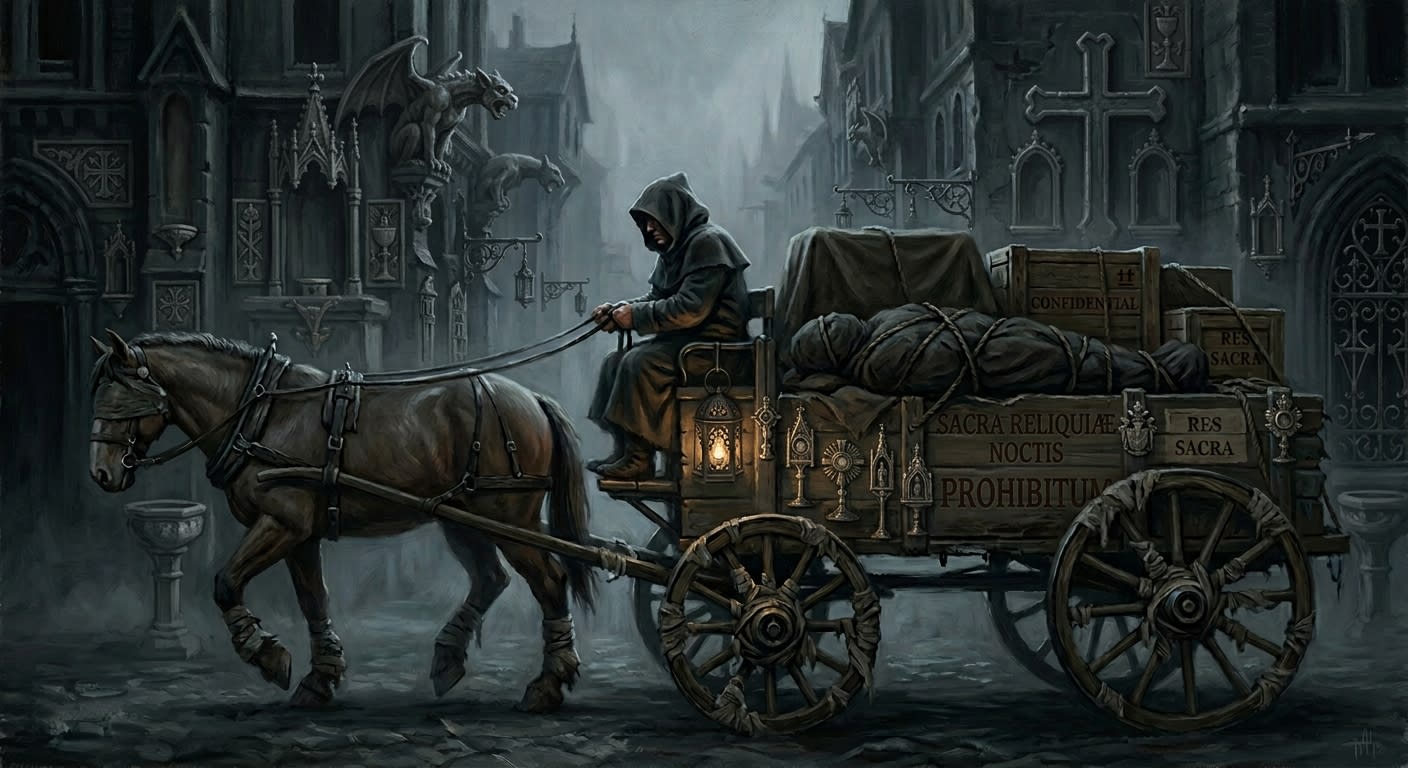
Night Wagon Driver
The wheel that carries absence farther than doctrine can walk
Night Wagon Drivers are the Bureau of Shadows’ logistics spine, hauling people, orders, relics, and corpses through streets trained to forget the sound of wheels.
Codex Ref. XII.14.04-001
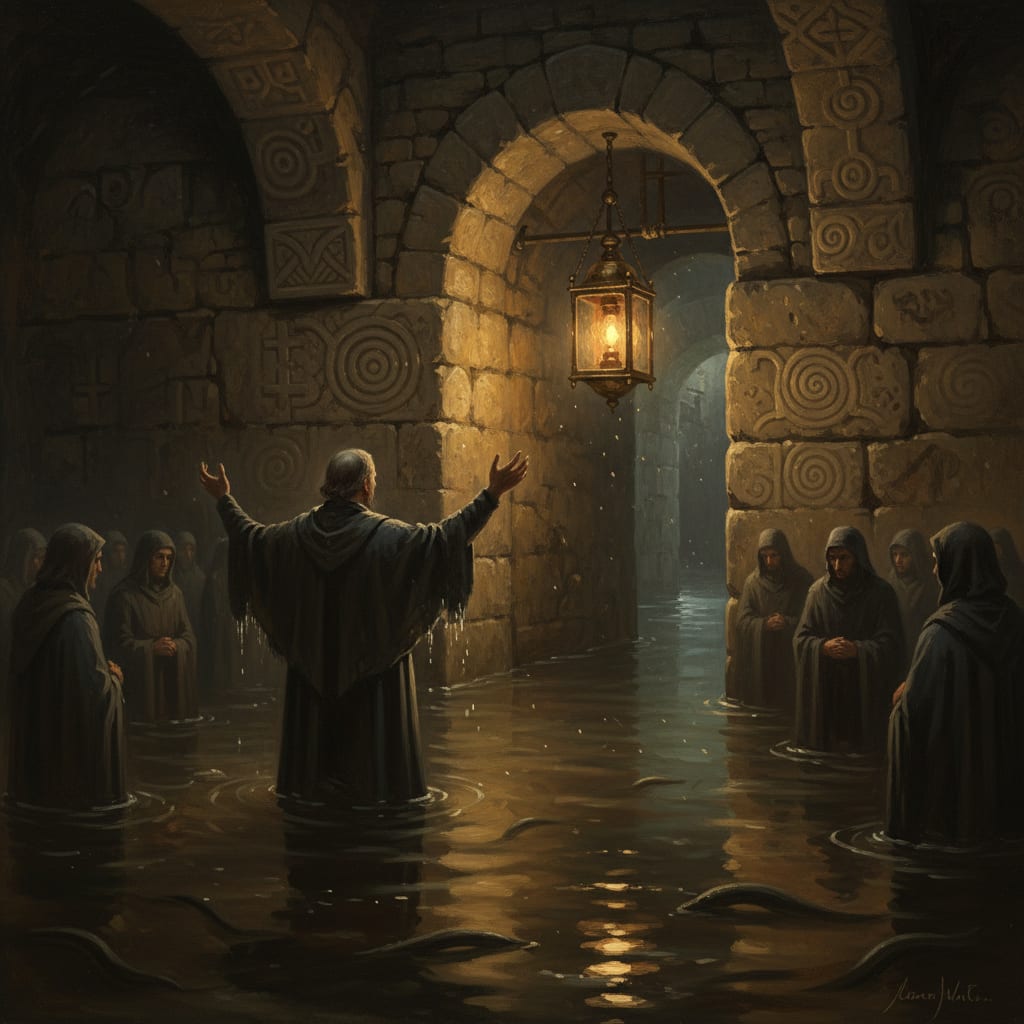
Pontifex Submersis
The name is gone; the chains still hum; the Bureau has no comment
The man the Bureau erased so thoroughly it must write eleven pages explaining what he was not: the Drowned Pontiff of Avignon, non-person, non-event, non-theology. His name is gone. The chains hum in B-flat.
Codex Ref. III.2.02-001
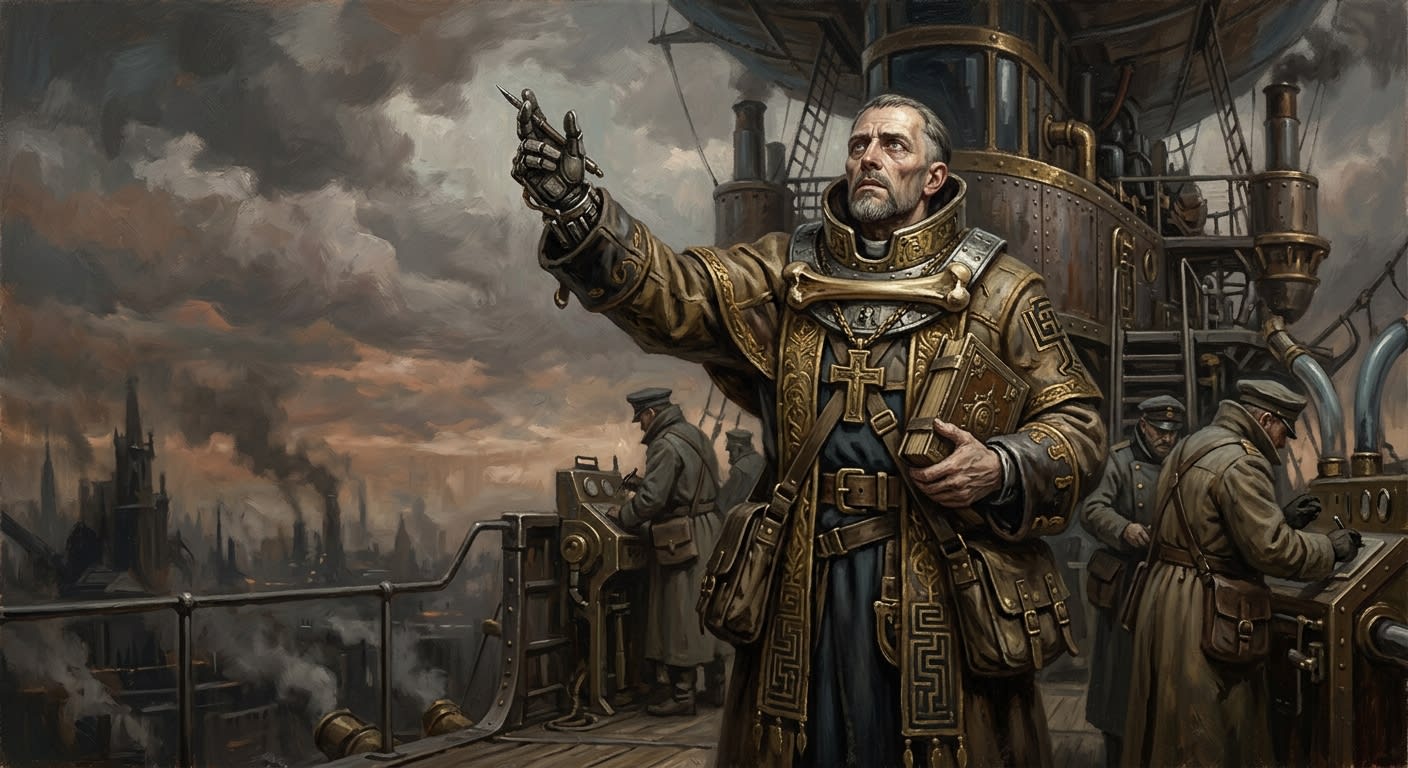
Saint Barachiel
He looked down, and what he saw was true
Saint Barachiel is the Synod's patron of aerial witness: a late-ratified saint, an oversized bone, and the holy permission by which the sky submits.
Codex Ref. III.2.01-167
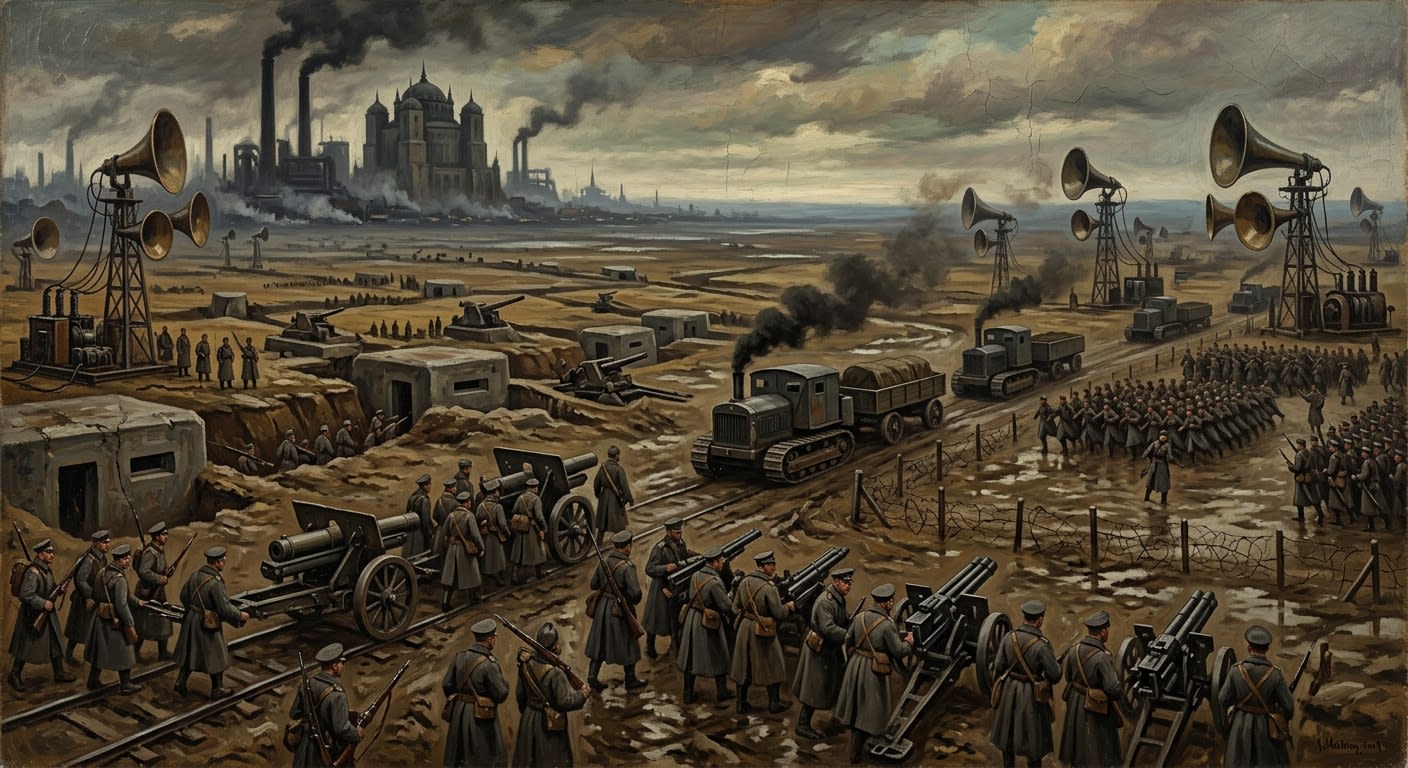
Thracian Plain
The open ground that learned to listen for weakness
The Thracian Plain is Constantinople's northern killing apron: old grainland remade after A.S. 45 into Maldrake's listening floor, muster yard, and artillery throat.
Codex Ref. II.6.03-045