
#On the Flat Place That Learned to Aim
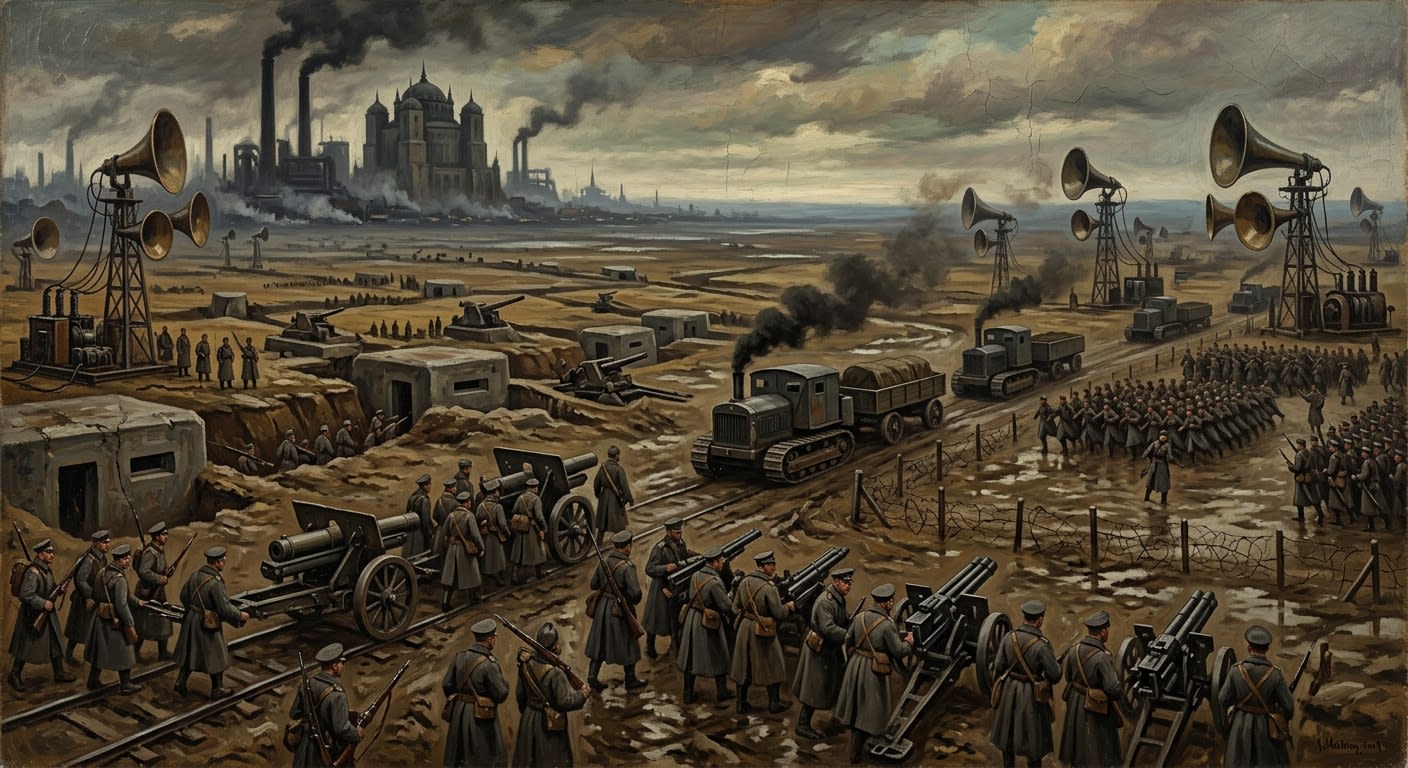
The Thracian Plain lies north and west of the Bosphorus hinge, in the furnace-shadow of fallen Thrace, where old grainland, cavalry road, market field, shrine pasture, and imperial drilling ground were hammered into the forward face of Maldrake’s war against Bastion-Constantinople. Before the Sundering, it was open country. After A.S. 45, openness became liability. A plain offers no mercy to men who need somewhere to hide.
It differs from the Iron Wastes, though bad clerks use the two names interchangeably and should be made to copy soil reports until their thumbs acquire humility. The Iron Wastes are Maldrake’s deeper furnace-heart, slag country, forge country, the interior brand. The Thracian Plain is the approach: the killing apron before Constantinople, the place where Hellbow formations assemble, batteries open, ash settles, iron remembers old wounds, and the southern anchor looks north into heat that appears to be thinking.
The Bureau of Cartography classifies the Plain as Zone 6 in substance, Zone 5 at its western scabs, and Zone 4 wherever Constantinople’s artillery can still persuade hostile ground to keep its head down. This is not geography. This is range-finding with theological trim. The land itself recognises no colour bands. It recognises heat, pressure, hunger, fog at the northern seams, and the old Roman roadbeds that still point toward gates they will never enter again.
#On Old Grain, Old Roads, Old Stupidity
The old Plain was useful, which is the first step toward being ruined. Wheat grew in broad hands. Orchard villages kept parish saints under limewash. Horse markets opened under awnings patched with family banners. Roads from the interior ran toward Constantinople with the confident straightness of empires that had not yet been taught by devils to curve. Tax men loved it. Armies loved it more. A flat country feeds columns, reveals fugitives, and gives artillery officers the indecent sensation that Providence designed the earth for their profession.
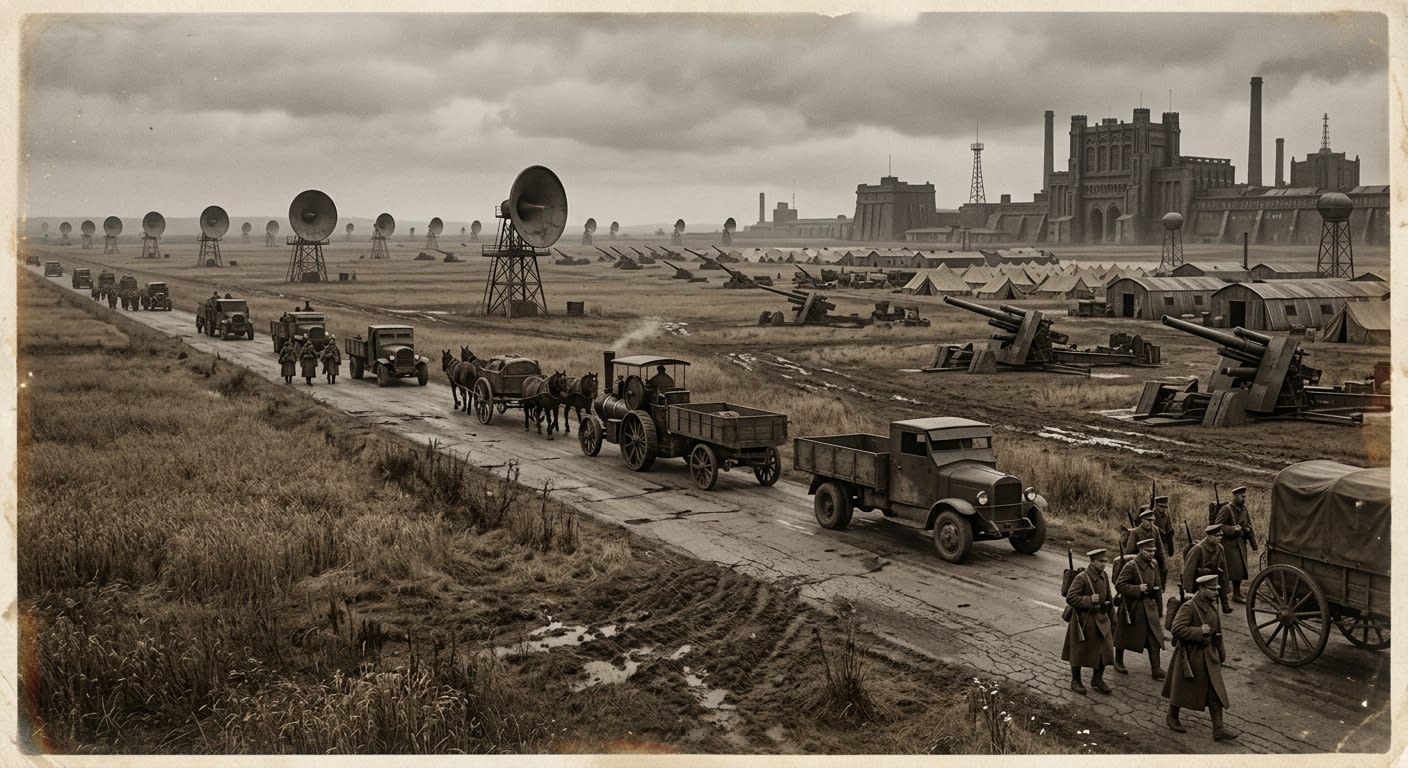
The Rationalists loved it most of all. They saw grain yield, road improvement, depot spacing, river access, survey geometry, and the pleasing absence of mountain villagers who ask questions in dialect. They stripped monastery barns into civic stores, reassigned shrine pastures to military studs, narrowed processional lanes into cart roads, and filed local saints under cultural residue. The Plain, to them, was a solved surface.
Then the mountains opened, and the surface answered.
In A.S. 45, the first fire reached the Plain in tongues rather than waves. Wells warmed. Iron ploughshares rang in barns. Horses refused open fields and tried to crowd into chapels. Powder carts detonated on roads with no visible spark. The garrison lines of old Moesia (Unregistered) formed in open order and became, within an hour, instructional ash. The villages along the road to the Bosphorus learned that distance could be crossed by heat faster than by men.
Rationalist agricultural ledgers described the Thracian Plain as “stable arable land under correctable frontier irregularity.”
Corrected by glassed fields, molten road nails, missing census parishes, and the enduring absence of the ledger’s author, who requested better terminology from an office now under slag. The Plain was arable. Stability was a superstition with acreage.
The Great Retreat tore west through it. Refugee carts broke on road ruts hardened by sudden heat. Priests carried reliquaries under wet cloth. Soldiers threw away breastplates because buckles had begun to learn skin. Mothers put children in grain bins that no longer held grain. The Plain ceased being a place between settlements and became a question asked of every body crossing it: how much heat can obedience survive?
#On the Hellbow Approach
Maldrake presses Constantinople from the Thracian Plain because a plain is a sermon written in lines of fire. There is the southern anchor, high-walled, overbuilt, ancient, hungry, proud. There is the approach, open enough for batteries, engines, siege beasts, Ember-Soldiers, and all the bright moving filth of Wrath to arrange itself into legible threat. The Plain gives Maldrake theatre. Wrath enjoys theatre, though it pretends not to.
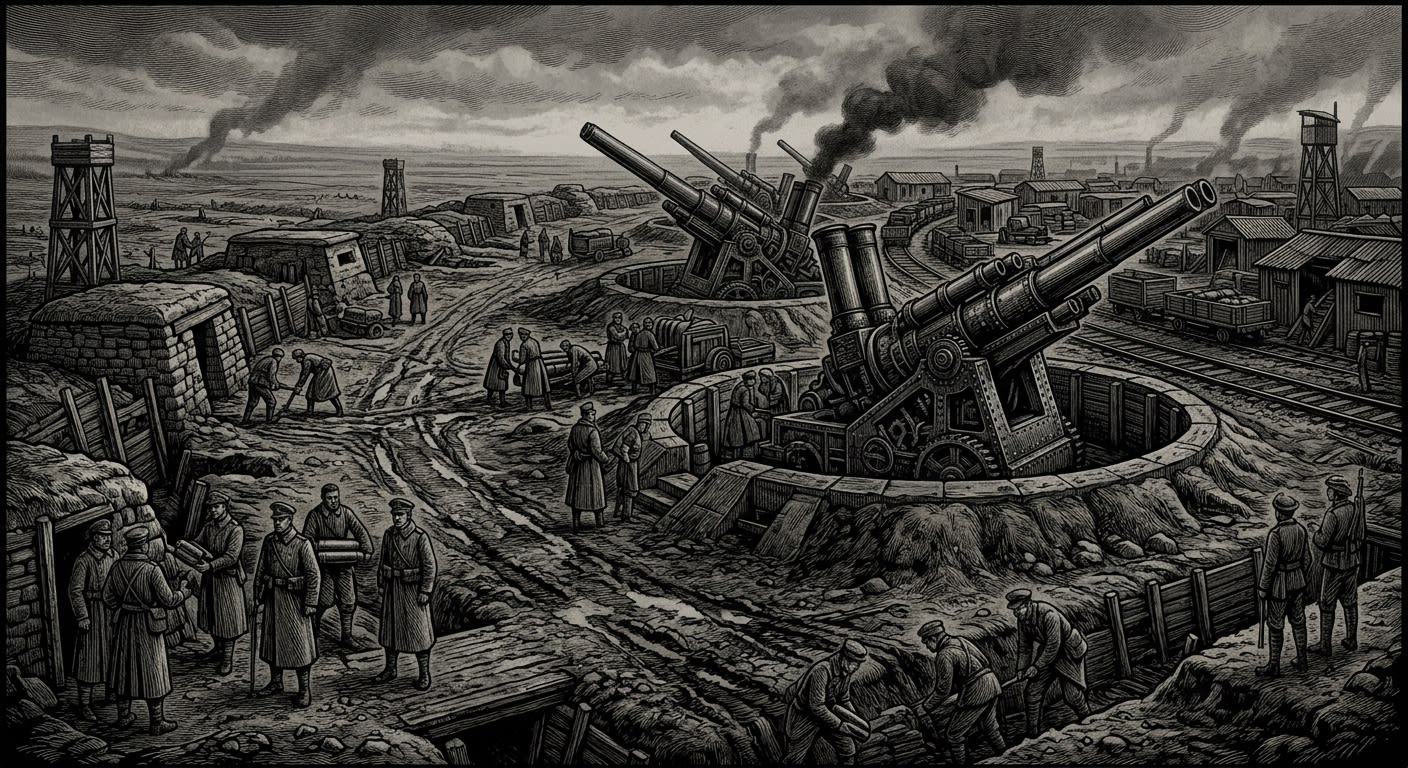
The Hellbow Legion uses the Plain as muster yard and launching throat. Official correspondence once called it Wrath-Tide Primary Host, a phrase so bloodless that even War tired of hearing it. Soldiers say Hellbow because the formations bend across the horizon in arcs of heat before loosing themselves westward. Forge-warriors advance with weapons grown into hands. Ember-Soldiers march in ranks held together by shared purpose rather than discipline. The Hammered move like tools searching for work. Crucible-Born officers wait behind them, and waiting, among servants of Wrath, is worse than roaring.
The Plain’s forward batteries are rarely visible until they speak. Maldrake’s artillery does not obey decent ballistic temperament. Guns appear where surveyors marked empty ground. Siege engines crawl up from baked crust with crews fused inside their violence. Captured Synod pieces return wearing their old production stamps and firing something hotter than shell. Their rounds strike masonry, nerve, discipline, and sometimes memory; men under bombardment have forgotten the names of their own companies before remembering how to bleed.
The Flameheart Colossus was sighted on the Plain at grid reference 4-9-7 in A.S. 194 and has not moved. This fact discomforts War more than movement would. A moving weapon can be plotted. A patient weapon of Wrath is an insult to category. It sits in the heat like a cathedral that has learned restraint, and the Bureau of Doctrine keeps producing memoranda explaining why restraint in Wrath is impossible, while the Colossus continues making the memoranda look nervous.
The Plain is also littered with Synodal answers: dead-stake lines, cold trenches, sacrificial gun pits, shell-walls, observation tables, buried water cisterns, false chapels placed as aiming lures, leaded relic boxes, cracked field bells, and the little private shrines soldiers make from cartridge brass when authorised religion is too slow. Most are destroyed. Some are reused by the enemy. A few remain untouched in patterns that have produced, among artillery men, a local superstition concerning saints who prefer being aimed at.
#On the Three-Night Lesson
The Three-Night Bombard proved that the Plain need not cross the walls to participate in Constantinople’s ruin. In A.S. 177, Velmoran procurement chains detonated the Foundry Quarter from within: lime that was not lime, boiler plate that was not plate, devotional crates blessed for Saint Vulcan (Unregistered) and opened too late, every small greed assembled into a large wound. The city burned behind its own ravelins. Maldrake’s forward batteries saw the glow from the Thracian Plain and opened fire.
The timing was opportunistic, which is the polite form of saying Hell can rhyme by accident. Velmora bought the breach. Maldrake shelled the confusion. Constantinople stood between invoice and cannon and discovered that two Sin-Generals need not coordinate to make one city kneel in the same hour.
The Plain’s guns struck the northern ravelins, outer cisterns, and relief rail spur while salvage crews were still learning which warehouses had become holes. No direct wall breach followed. Direct breach was not required. Maldrake’s fire forced defenders to face outward while the Foundry ate itself inward. Bell offices delayed the alarm sequence because the blasts required classification. By the time classification arrived, the dead had developed strong opinions on administrative timing.
Early Constantinople summaries described the Thracian fire during the Bombard as “secondary hostile engagement.”
Corrected for military instruction. Secondary does not mean minor. The Plain’s batteries did not cause the Foundry betrayal; they widened its consequences, fixed defenders in place, broke relief timing, and gave Wrath’s signature to a crime purchased by Greed.
Since A.S. 177, the observation tables facing the Plain watch light as carefully as motion. A glow in the Foundry Quarter, a wrong flare over the Harbor of Chains, a late spark in the Shackled Flame workshops — all are logged against northern batteries before engineers are allowed to say accident. War learned, slowly and at great expense, that the Plain does more than attack. It listens. It hears confusion.
#On Velkara’s Old Roads
Velkara holds no formal sector of the Plain. This is how she prefers it. Lines flatter War. Absence flatters infiltration.
Before the Sundering, the Thracian Plain held pleasure roads as well as grain roads: estate routes, hunting lodges, court retreats, hot-spring paths, noble gardens, military salons, and the tired little architecture of appetite by which bored elites convinced themselves that refinement differed from hunger because it used better chairs. When Syrion’s fog passed and survivors celebrated feeling alive, Velkara found in those roads a ready-made circulatory system. The Bureau speaks often of the Velvet Choir and the Crimson Concord inside Synod walls. It speaks less often of the old eastern routes by which appetite learned its first military manners.
The Plain’s southern lanes are associated in several sealed Purity files with parties that did not end, hunting grounds whose prey began willing, and ash-grey villas where colour drained from frescoes before witnesses stopped caring enough to report it. Some of these sites now lie under Maldrake’s heat. Some appear in accounts from escaped workers who swear that beautiful rooms remain intact inside burnt estates, set with dustless glass, untouched fruit, and chairs facing one another as if a conversation had just fled.
PURITAN ANNEX — THRACIAN PLAIN / SOUTHERN ESTATE ROAD Recovered mirror frame, A.S. 198, from ash villa east of old Gate Road. Frame unburned. Reflection delayed by nine breaths. Witness saw himself seated at table with █████████████████. Witness requested return to site during quarantine. Request denied. Witness later found facing blank wall, smiling without pleasure.
Velkara’s relevance to the Plain is procedural rather than territorial. Maldrake turns grievance into weapon. Velkara turns relief into appetite, appetite into habit, habit into vacancy. The Plain received both injuries. The open field burned. The old houses emptied from inside. Soldiers returning from forward watch sometimes report more fear of the intact rooms than of the slag ridges, which shows the soldiers possess useful instincts. Fire kills. Invitation recruits.
#On Ash, Glass, and Human Remnants
The Plain exports matter the way a court exports decrees: ash first, then consequences. The A.S. 143 burning of the Thracian forest complex sent grey weather westward and made the Ninth Bell Famine out of sky. The Plain received that ash before Constantinople did, held it, mixed it with slag, ground it under marching feet, and breathed it back at anyone foolish enough to survey without wet cloth.
Glass fields spread where grain once stood. They fracture under cooling wind and seal again when anger enters the air. Buried metal rises after bombardment, not randomly but in assemblies: nails forming triangles, shrapnel pointing west, old plough teeth aligned like script. Engineering calls these ferrous displacement events. Soldiers call them warnings. Doctrine permits both terms, provided soldiers do not publish.
Human remnants persist in the ugliest forms because the Plain has never been empty. Enslaved crews work forward slag channels and corpse-fuel stations. Hidden families occupy drainage cuts beneath old roads where heat passes overhead and misses by inches. Corrupted guides sell safe paths through unsafe districts to smugglers, chaplains, deserters, and surveyors with poor command of mortality. The Raging Dead (Unregistered) appear at dawn in places where old engagements overlap new shell scars, still attacking enemies who have not existed for a century and occasionally hitting present targets through luck, malice, or administrative continuity.
Water is more suspect than fire. Fire at least declares policy. Plain wells may taste of pennies, brine, soot, violets, hot glass, or nothing at all, the last being worst. A well that tastes of nothing has often had its taste removed, and removal implies appetite. Field manuals instruct patrols to test water with salt, silver, bread, and a scrap of authorised hymn paper. Veterans add a fifth test: insult the well. If it warms, leave.
#On Watching From the Southern Gate
Constantinople watches the Plain the way a condemned man watches the judge’s hand. The northern observation tables count glows: red for surface flow, white for buried heat, blue for relic contact, green to be ignored unless it moves. This last instruction is written in several hands, none confident. Artillery colonels maintain maps with target marks that shift by week. Engineering maintains instruments that melt, lie, tighten, or return with dates scratched ahead of present time. Doctrine maintains explanations. Records maintains the names of men who trusted them.
The city’s defenders learn the Plain as rhythm. Hammer before dawn means forge traffic. Low shimmer after Sext means battery heat. Stillness in red weather means something large is being moved under crust or something patient is deciding how to offend theology. Birds flying west at night mean fog pressure from the north-east. No birds at all means chaplains should stop using bird signs and take cover.
Field soldiers make their own maps in ash on bunker walls, on mess tins, inside coat linings, in hymnbook margins. These maps mark false roads, warm wells, dead-stake lines, listening stones, safe ditches, insultable wells, and places where a man should speak loudly because silence has begun to pay attention. The Bureau confiscates such maps as unauthorised. Better maps appear next week. This is the oldest military exchange: command issues paper; soldiers issue survival.
#On the Present Condition
As of A.S. 201, the Thracian Plain remains active, watched, shelled, measured, feared, misunderstood, and written into the private prayers of Constantinople’s northern garrison. Maldrake’s batteries still open from it. Hellbow formations still bend along its heat. The Flameheart Colossus still waits at grid 4-9-7. Old estate roads still carry stories Purity dislikes. Ash still lifts from glass when boots disturb it. The land still sends back things filed as lost.
War wants target certainty. Engineering wants a stable thermal table. Purity wants every intact villa burned flat, except the ones it wants searched first. Doctrine wants useful terror without despair. Tithes, with heroic obscenity, has asked whether pre-Sundering land claims on the Plain remain inheritable if the claimant’s acreage has become hostile glass. The answer was sealed, perhaps to protect the claimant, perhaps to protect Tithes from laughter.
The Plain is a military approach, a burned granary, a listening floor, a Velkaran roadbed, a Maldrakite altar, a survey wound, a grave without walls, and the northward face of Constantinople’s bad sleep. It was once valued because it lay open. Now it is feared for the same reason. Nothing hides there except intention.
At dawn, the Plain sometimes shines as if covered in dew. The substance is not dew. Do not walk there.