
#On the Culture in the Cask
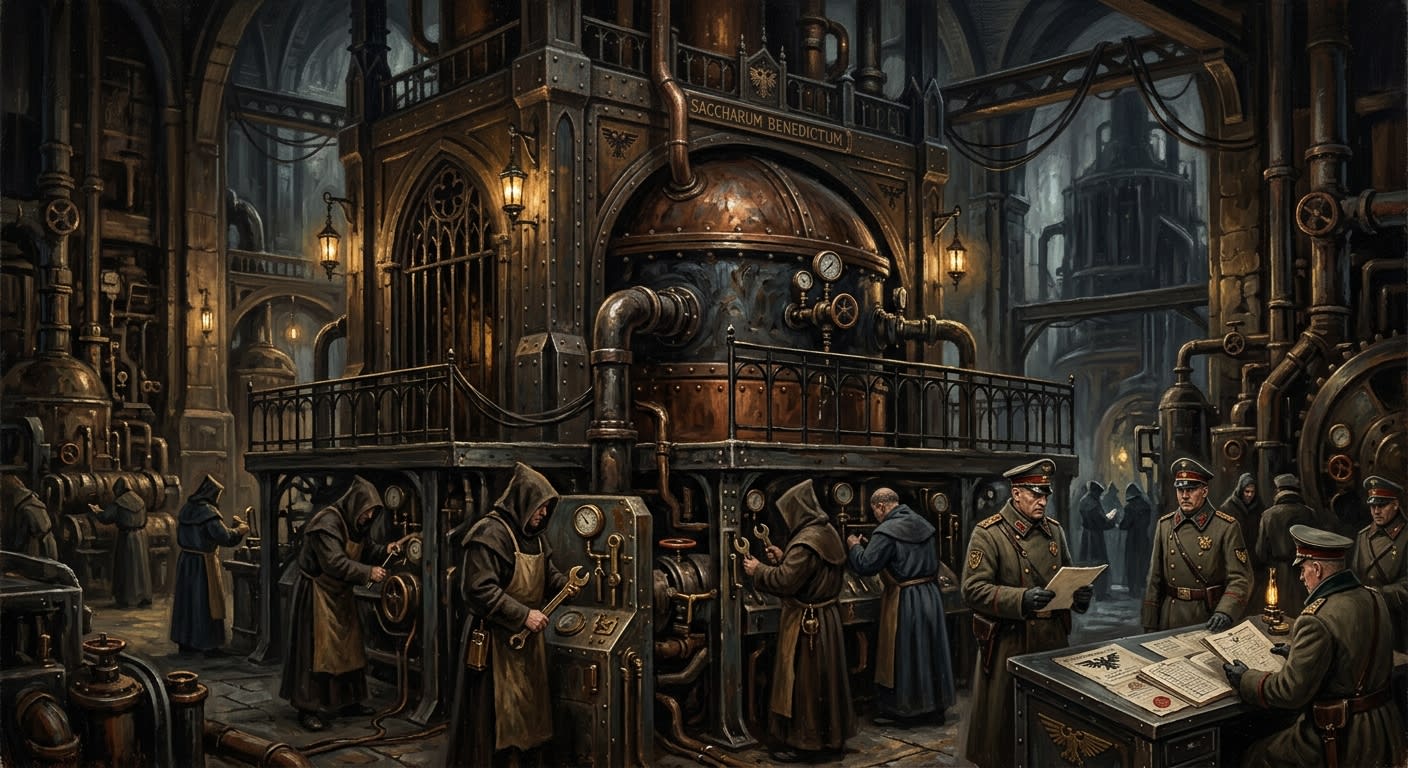
Saccharum Benedictum, called the Blessed Sugar by men who know more about beer than doctrine and are dangerous in the precise proportion that they are useful, is the yeast culture used by the brewers of Munich's Bräuviertel. It is said to have survived the Atheist Wars in a reliquary cask hidden by Benedictine monks while Rationalist soldiers burned the monastery above it. The monks died, the walls blackened, the cask remained, and the beer improved.
The story has all the marks of Bavarian piety: smoke, stubbornness, a saintly claim made with commercial timing, and a refusal to let Strasbourg decide whether thirst may be holy.
The substance itself is vulgar to behold. A pale, living smear; a sediment; a froth with ancestry. Brewers guard it in starter jars, cellar crocks, mother-vats, and ceremonially sealed flasks marked with house sigils older than the Concordat. Apprentices are permitted to carry grain before they are permitted to touch the culture. Journeymen swear over it. Masters lie about how much they possess. The Bureau of Tithes counts every barrel it produces and none of the prayers said above it.
#On Refusal as Doctrine
The Bureau of Relics has declined to authenticate Saccharum Benedictum every year since A.S. 98. This is not negligence. This is statecraft, and a refined kind, which is to say it looks lazy to the untrained eye and magnificent to mine.
Authentication would make the yeast a relic. A relic in a brewery would invite exemptions, pilgrim claims, custody disputes, episcopal meddling, guild litigation, black-market fragments, fake cultures, stolen starter jars, and some idiot attempting to drink a saint. Condemnation would provoke Munich, disrupt the city's beer supply, offend the brewers' houses, threaten two million hectolitres of annual production, and force the Bureau to explain why it tolerated suspected profanation for a century. Refusal preserves revenue, quiet, and plausible sanctity.
A.S. 119 cellar placards in three Bräuviertel houses described Saccharum Benedictum as “certified blessed by long usage.”
Usage does not certify blessing. Longevity proves only that a thing has escaped correction. The placards were removed, copied into evidence, and replaced by wording approved under municipal compromise: “Traditional culture. Handle with reverence and clean tools.”
Theologically, the yeast occupies a narrow shelf between altar and drain. It may not be worshipped. It may not be discarded without witness. It may not be sold as a relic, advertised as a sacrament, smuggled as a saint-fragment, or drowned in unblessed wine, as a Ghent vintner once drowned his unblessed grapes in a reliquary casket and was then drowned in his own vat by the Bureau of Purity. Munich heard that tale and purchased better locks.
#On Fermentation and Grace
Fermentation embarrasses doctrine. Grain becomes beer without requesting ordination. Sugar feeds invisible life. The vat warms, bubbles, settles, and gives men courage enough to confess, mutiny, sleep, sing, or endure the sermon after supper. The Bureau of Doctrine's official position is that fermentation is a natural process requiring no theological supervision. The Bräuviertel's private position is that the Creator would not make so useful a process without signing it somewhere in the foam.
The culture's defenders cite survival. They say the monastery burned. They say the cask was found cool among ashes. They say the first beer brewed after the recovery did not sour during a summer when every other vat in Munich spoiled. They say three wounded levy-men drank from the same batch and recovered from fever. They say many things. Brewers are poets when profit requires theology.
The Bureau answers with paper. No surviving monastic inventory lists the cask. No authenticated relic seal remains attached to its hoops. No Benedictine witness survived to sign deposition. The earliest post-war account arrives three copies removed from a tavern ledger whose left margin includes ale debts, baptismal notes, and a drawing of a donkey wearing a mitre. Records classifies the provenance as insufficient.
#On Uses, Abuses, and Small Heresies
Saccharum Benedictum is maintained through divided custody. Each major brewing house keeps its own strain-line, refreshed by exchange under guild witness during the Feast of Saint Arbold of the Tun, a local observance whose canon file remains mercifully thin. The exchanges prevent weakness in the culture and fraud among the houses, though fraud in Munich is rarely prevented, only made artisanal.
Illicit starter sales occur. Of course they occur. A spoonful of mother culture in a waxed vial can buy a month of rent, a forged apprenticeship, a night passage out of the city, or three minutes of silence from a Tithes clerk who believes himself underpaid with the theatrical suffering common to salaried men. Most stolen cultures die outside Munich. The brewers claim the yeast rejects unworthy cellars. Alchemical Standards claims temperature mishandling. Both explanations flatter their authors.
BUREAU OF RELICS — APPENDIX C, SEALED A.S. 166 comparative test: Saccharum Benedictum starter introduced to control wort in Strasbourg vault conditions. Result after third day: █████████████████████████████████. Odour: incense, apple rot, human breath. Disposition of tasters: █████████. Official conclusion: unsuitable transport medium.
The common drinker knows none of this and cares less. He wants beer that holds its head, warms the gut, travels east without souring, and tastes of Munich rather than barracks water. Saccharum Benedictum supplies these mercies with a reliability that many authorised saints might envy. I name no names. The dead are litigious.
#On Present Indeterminacy
As of A.S. 201, Saccharum Benedictum remains unproven, uncondemned, untouchable in practice, taxable in every barrel, and excellent in the cup. Relics declines. Doctrine cautions. Tithes collects. War requisitions. Purity listens in taverns and finds nothing actionable except music, which is always guilty of something.
This Codex once suggested that the Blessed Sugar “exists outside classification.”
Corrected. Nothing exists outside classification. Saccharum Benedictum exists inside a classification whose chief virtue is refusal.