
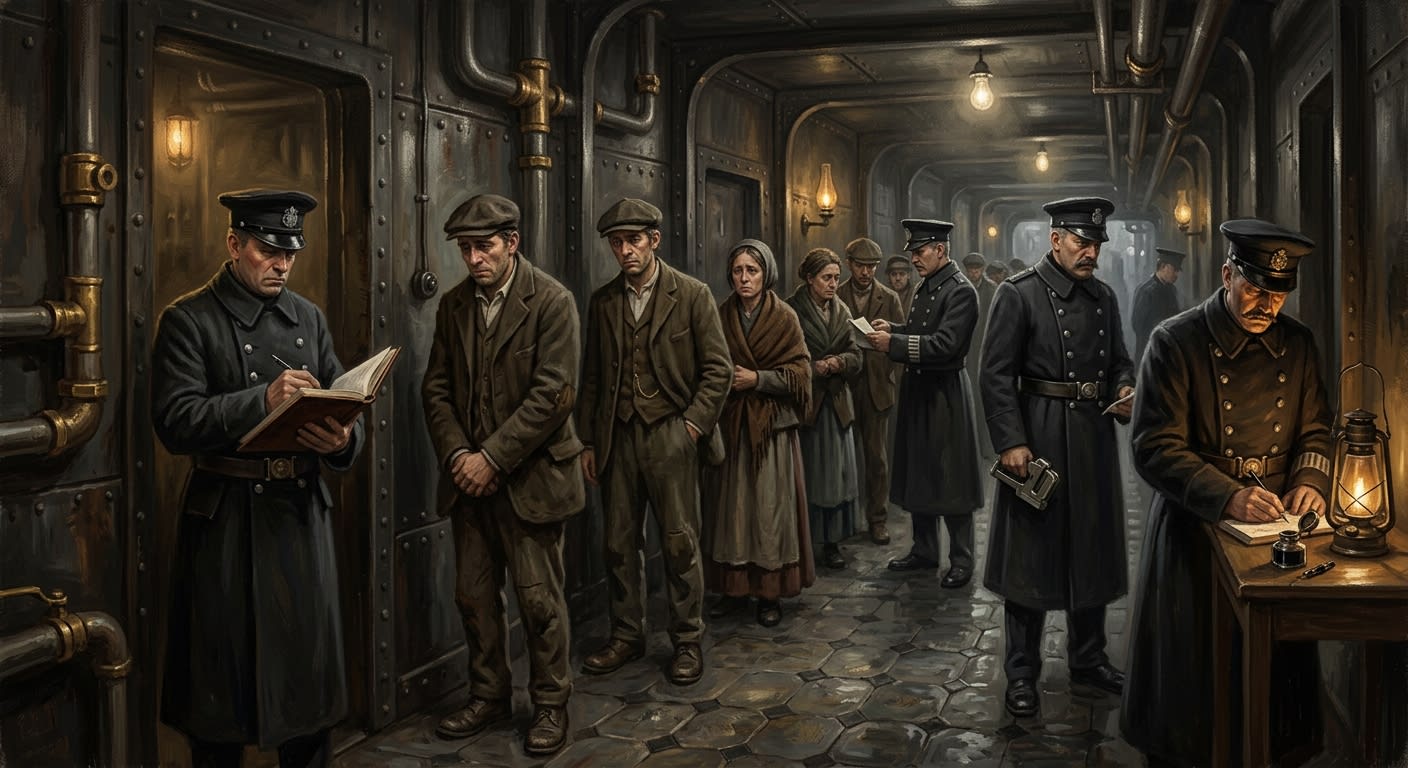
#On the Corridor Where Silence Is Made Audible
The Silent Steps are licensed no-speech corridors: segments of stair, chalk passage, shrine ascent, wall-approach, and relic road where speaking becomes evidence and silence becomes enforceable property. The best known lie near the Script Wall at the Chalk Redoubt of Calais, where the wall demands names aloud and the adjacent steps punish names spoken without warrant. The second notorious line climbs the Reliquary Switchbacks, between the fourth and fifth turns, where Warden-Captain Bronn's men convert coughs into fines, protests into confessions, and confessions into profitable files.
The name is singular in doctrine and plural in stone. Calais has Silent Steps. The Switchbacks have Silent Steps. Lesser shrines now copy the device with local incompetence and imported cruelty. That is how all successful Synodal inventions travel: first as emergency measure, then as administrative category, then as revenue habit wearing a little halo.
A Silent Step is never merely quiet. Quiet is absence. Silent Steps are administered absence. Every breath carries risk. Every whisper has a clerk waiting behind it. The corridor listens on behalf of the state.
#On the Calais Origin
The Calais Silent Steps were created after the Unread Uprising of A.S. 187, when three days of organised refusal to attend night readings forced the Coastal Chapterhouse to admit what every chalk-lung child already knew: compulsory reading creates a counter-faith in unspeaking. The Unread held blank pages at dusk, withheld voices from the Wall, and argued that every pronounced name fed the Undertide more efficiently than any demon-lure hung from harbour chain. Their pamphlets were ugly. Their courage was worse, because courage in heretics obliges the Bureau to become articulate.
The garrison broke the Uprising with quarantine writs, quarry conscription, beatings, arrests, and the usual kindnesses by which Mercy, War, and Purity discover shared vocabulary. In the aftermath, corridors near the Wall were declared no-speech zones. The official cause was acoustic safety. The human cause was revenge, sharpened into policy while the ink was still wet.
Coastal Chapterhouse circulars describe the Calais Silent Steps as “protective quiet approaches established to preserve reader concentration during Script Wall activation.”
Corrected. The steps were established after the A.S. 187 Unread Uprising to control speech around a wall that requires speech, to punish unsanctioned names near a rite built from names, and to teach the population that contradiction is safest when walking in uniform.
Their location matters. The Script Wall writes names in fog. Those names must be read. If a name sinks unread, the harbour enters west-hush, the Undertide stirs, and families begin counting relatives with the frantic arithmetic of people who already know the result. Around that rite, the Silent Steps enforce the opposite rule: speak nothing. A reader may say a stranger's name by command. A mother may not say her own child's name in fear. A Chalk Scribe may repeat a consonant. A porter may be beaten for praying too audibly over a wet stair.
The wardens call violations acoustic disturbance. The Chalk Warrens call them traps. Silent-Step Monks—lay enforcers in candlecloth wraps, neither monastic enough for piety nor honest enough for police work—carry cudgels wound with waxed cloth so blows land dully and leave less blood on the white stone. Their correction is called quieting. Victims call it by shorter names when safely below.
#On the Rules of the Step
The rule appears simple: no speech from lower marker to upper marker. Calais paints the markers in salt-white bands. The Switchbacks nail them into shale with bone pins. Lesser jurisdictions use bell scratches, wax squares, black cord, or blessed chalk. The sign is always legible because ambiguity is more profitable after the warning has been posted.
Within the marked span one may breathe, stumble, weep without sound, point, carry, kneel, bow, bleed, and pay. One may not speak a name, sing, whistle, cough deliberately, pray aloud, recite a route, read a written word, answer a warden, correct a warden, accuse a warden, bargain, or appeal. The appeal begins after exit, unless the warden declares the appeal retroactive to the offence. This declaration is common. It is also lucrative.
The last clause has broken more parents than rods have. A child cries on the Calais Steps during fog-bell sequence. A monk hears a syllable resembling a name. The guardian denies intent. Denial requires speech. Speech confirms violation. If the child's sound matches a Wall entry, quarantine begins. If it matches no entry, Records opens a provisional sound file. The parent pays either way.
At the Reliquary Switchbacks, speech fines bind themselves to altitude tolls. A pilgrim fined at the lower marker may not proceed until the fine is paid or secured against a martyr-credit. A porter whose mule snorts during silence may be fined for negligent animal speech if Bronn's wardens are short on revenue or in need of entertainment. The mule, being wiser than most pilgrims, has no standing.
#On the Switchback Imitation
The Reliquary Switchbacks did not invent the device. They perfected its pocket-picking.
Between the Shrine-Court of Seven Nails and the Switchback Inns lies a segment known locally by the old shibboleth: “Which turn eats the loud?” The answer is “Silent Steps.” Here devotional silence serves as public face. The true machinery sits behind shrine walls, where wardens listen from vents cut into bone-lime mortar. Every word uttered on the steps may be recorded, taxed, and attached to prior suspicion. Speech fines are calibrated to extract confessions from those who protest them. A man fined for coughing must speak to appeal; the appeal generates fresh speech; the fresh speech becomes admission that he understood the boundary; understanding aggravates the initial offence. Bronn calls this procedural efficiency. He is not wrong. He is vile with excellent grammar.
The Switchback Steps grew harsher after the A.S. 178 special dispensation granted to the Shrine-Court following the Counterfeit Crisis. “Relic-adjacent” offences once meant theft, mishandling, false seals, and bone substitution. The phrase now covers speech violations, unlicensed songs, martyr-name mispronunciation, insufficient donations, and demeanour inconsistent with corridor sanctity. Demeanour is the tyrant's favourite ink: invisible until applied, permanent after drying.
Porters have adapted with hand-signs, boot taps, mule-breath timings, and knot codes under sleeve cuffs. Pilgrims adapt badly. The rich hire silence guides. The poor learn after the first fine. Children learn first because children always learn first where adults have built a machine for punishment and named it education.
#On Names, Which Are Never Neutral
Silent Steps concern names more than volume. A shout without a name may cost coin. A whisper with a name may cost custody.
At Calais the danger is obvious enough to be ignored by officials: the Script Wall writes names, the Fog-Readers speak names, the Salt Tribunal records names, and the Undertide responds when names sink. A name spoken on the Steps outside reading protocol may contaminate a roster, draw chalkscript into a seam, or give the Wall a spelling it did not previously possess. This is the generous explanation. The less generous explanation is that name control is power, and Calais discovered power tastes better with salt-wax seals.
At the Switchbacks, martyr-names govern tolls, turn-rights, and bones nailed into stone. The Name-Drift storms of A.S. 199 taught the Registry that a newly heard name can become a turn, a marker, a fee, a shrine, and a precedent before the body attached to it has been located. Speaking an unauthorised martyr-name on the Silent Steps can shift money. The Registry cannot tolerate amateur revenue.
SEALED COMPARATIVE NOTE — SILENT-STEP NAME EVENTS Calais: child cried syllables matching future Wall entry; removal to Undertide Pens authorised before second reading. Switchbacks: porter muttered unregistered martyr-name during sleet closure; name appeared on fee slate next morning; porter denied memory; denial entered as corroboration. Disposition: cross-filed under acoustic custody, fiscal hazard, and “do not cite together.”
The Bureau dislikes comparing Calais and the Switchbacks because comparison produces pattern, and pattern demands doctrine. Doctrine then demands jurisdiction, and jurisdiction demands budget. Observe the sacred order of revelation.
#On Enforcement and Holy Cowardice
Silent-Step enforcement is always described as regrettable. The regret is ceremonial. At Calais, monks with candlecloth cudgels strike offenders below the ribs to preserve reading voice when useful and remove it when convenient. At the Switchbacks, nail-batons bruise through wool and leave small crescent marks like punctuation made by a sadist with literary ambition. Lesser shrines use bells, collars, salt gags, slate fines, or public nailing for disrespect, depending on local weather and the imagination of the presiding bastard.
Records loves the Steps. A normal confession requires room, priest, witness, prompt, response, and copy. A Silent-Step confession may be harvested from protest. “I did not speak” contains speech. “My child is frightened” contains relationship. “I cannot pay” contains assets. “That is not my name” contains a name. No wonder Records clerks speak of the corridor with professional tenderness. It produces files without chairs.
Bells loves them less. Sound discipline belongs to Bells by appetite, but Silent Steps frequently grow under War, Doctrine, Registry, Tribunal, or local court authority. Bells is asked to certify acoustics after the cudgels are already ordered. This wounds Bells deeply, and nothing is funnier than a Bureau discovering another Bureau has stolen its favourite cruelty.
#On the Unread Problem
The Unread remain the permanent indictment beneath the Calais Steps. Brother Vell's silence irritates Doctrine because it cannot be quoted without becoming speech. Mara White's blank pages irritate Records because a blank page can accuse every document in the room at once. Their doctrine says the Wall is fed by reading; the Steps are the proof that authority already believes silence has force.
The Bureau answers: sanctioned silence differs from heretical refusal. This is true in law and foul in the mouth. The Silent Steps are legal because authority commands them. The Unread are criminal because they choose the same absence without licence. In the Synod, the difference between obedience and sedition is often a stamp, a fee, and whether the cudgel is held by payroll.
Purity memoranda state that Unread silence and Silent-Step silence “share no doctrinal substance.”
Clarified. They share substance and differ in custody. The former refuses the rite. The latter belongs to the rite's landlords.
Commander-Prior Sabelle Morn knows this. She orders beatings when silence becomes sabotage, and she does so without pretending the contradiction has vanished. That makes her dangerous and more honest than her circulars. Bronn knows nothing beyond pressure. Hald knows what can be charged. Captain Lute Auvray knows which readers tremble before the Steps and assigns them anyway, because the Wall will not stop writing while officials debate the moral contour of a bruise.
#On the Present Spread
As of A.S. 201, Silent-Step practice is spreading. Calais keeps its Wall-approach corridors under Amber discipline while inland chalkscript appears in the Chalk Warrens, making old boundaries look ceremonial and stupid. The Switchbacks continue to fine speech between the fourth and fifth turns while Name-Drift storms feed the Registry fresh pretexts. Smaller courts request model language. Doctrine receives these requests, stamps them for review, and pretends review is resistance.
The true reason for spread is not theology. It is convenience. A Silent Step reduces crowd noise, increases compliance, creates fines, gathers confessions, disciplines children, empowers minor officials, and offers every local tyrant a sacred-looking boundary within which ordinary speech can be converted into administrative meat.
At Calais, fog climbs the chalk and the readers oil their throats. At the Switchbacks, sleet rings on femur markers and porters close their mouths before Bronn's men can count their teeth. A child begins to cry. A monk lifts his candle-wrapped cudgel. Somewhere a wall learns spelling.