
#On the Refusal to Read
The Unread are the heresy of Calais that begins with a closed mouth. This would make them dull, if silence were only absence. Calais has spent enough blood learning otherwise. In Calais, where fog writes names on the Script Wall and the sea beneath the chalk listens like a creditor, silence is action, weapon, refusal, infection, prayer, and, on several expensive nights, manslaughter.
Their proposition is simple enough for a dock child and dangerous enough for the Bureau to surround it with committees: the readings feed the sea. Every name spoken at the Wall steadies the mechanism that summons the Undertide. Every reader is bait. Every lantern is a hook. The Synod has told Calais that voice prevents drowning; the Unread answer that voice teaches the water whom to want.
The Bureau condemns the doctrine as treasonous speculation. The Bureau also forbids private comparison of reading density with Undertide movement, impounds true chalkscript rubbings, seals roster archives, and drowns inconvenient reports in cabinets under the Salt Tribunal. To the vulgar eye this resembles fear. To the trained eye it resembles policy wearing fear’s coat.
#On Brother Vell and the Blank Page
Brother Vell (Unregistered) leads, or is said to lead, the Unread from the chalk-wet margins of the Warrens. He cannot speak. The loss of his voice has four approved explanations and nine street ones. The Salt Tribunal says punishment. The Divers say Cave System Bravo. The Unread say offering. The Bureau of Purity says nothing with such force that one hears hinges closing.

Vell communicates by sign, chalk-mark, gaze, and the unbearable discipline of withholding the one thing Calais spends most freely: breath. Men who have watched him preach describe no speech, no bell, no chant. He raises a blank page. The crowd grows still. A city trained to read fog suddenly reads paper without words and discovers, to its own alarm, that absence has grammar.
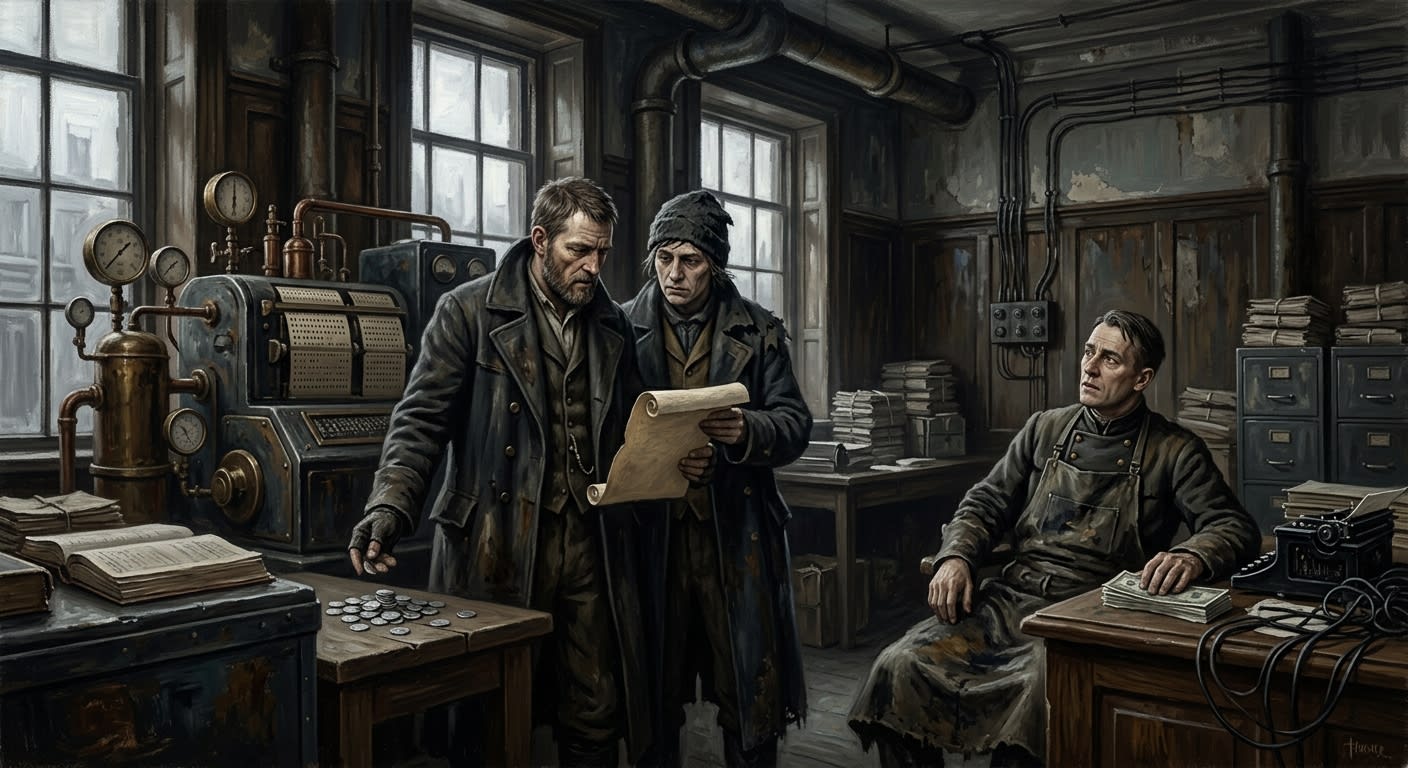
Mara White carries those pages through the Chalk Warrens and along the approaches to the Silent Steps. She keeps sheaves of paper from which every line has been erased with vinegar and ash. Some pages bear pressure marks where old writing once stood. Some bear salt stains. One confiscated leaf, held under lamp in A.S. 199, sweated the name of a drowned scribe backward until the examining clerk fainted onto the evidence table and improved the ink with his nose.
The Unread sign is a hand held before the mouth, palm outward, three fingers chalked white. The street calls it the Shut Blessing. The Bureau calls it Signal 18-U, because even rebellion must be made clerk-shaped before it can be beaten efficiently.
#On the Doctrine of the Hook
The Unread argument has three teeth. First: the Undertide gathers during readings. This is observable, which is vulgar of it. Divers report tapping inside the chalk during active voice duty. The Teeth breakwaters hum when multiple names sink. Lanterns draw shapes near the harbour mouth; bell-sequences repel them only after they have come close enough to hear. Sound saves Calais from what sound has summoned.
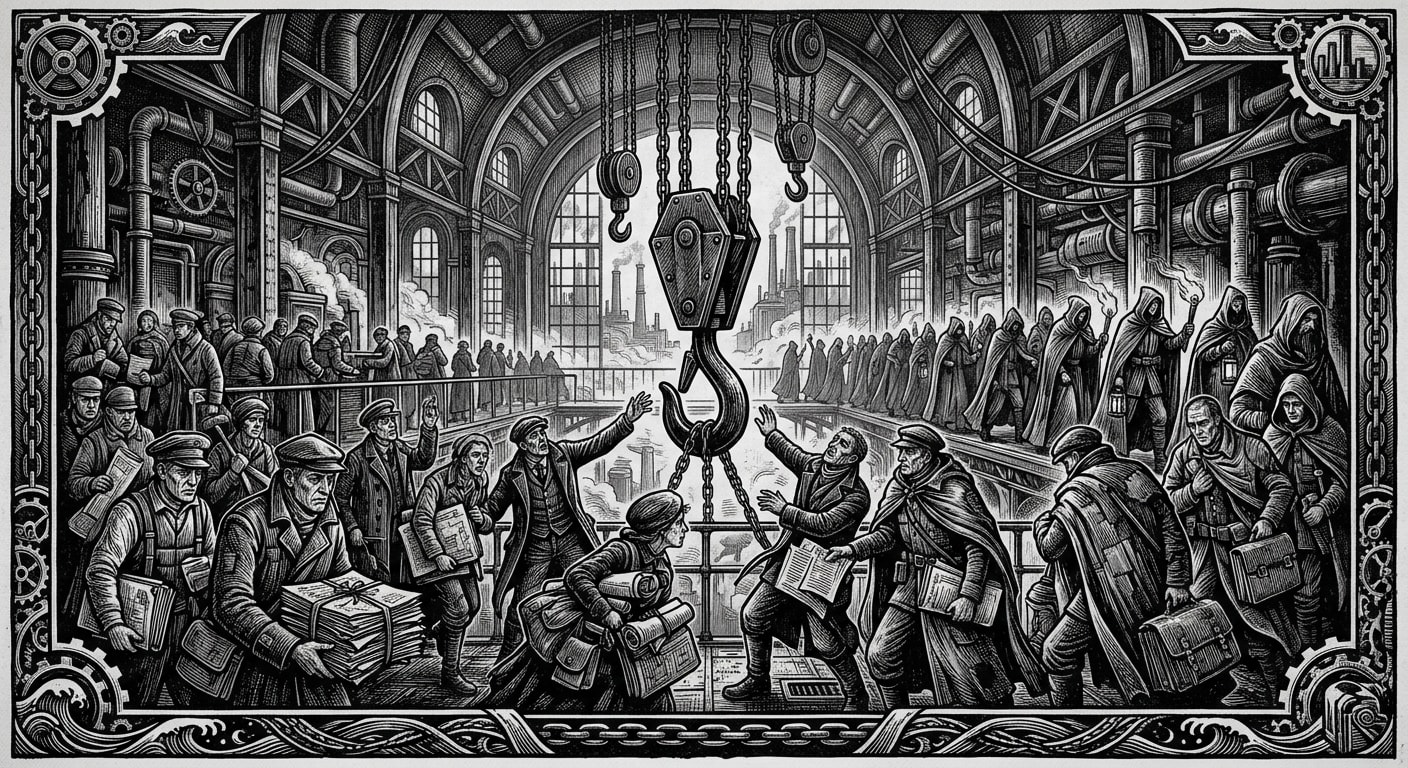
Second: names that are not read do sink, and disaster follows, but disaster also follows mass readings. The Unread claim the difference is one of scale. A sunk name feeds a mouth. A fully read night feeds a route. The first takes a skiff, a diver, a child with salt in the lungs. The second teaches the Undertide how to climb toward the next district.
Third: inland chalkscript began after the suppression of refusal. In A.S. 199, names appeared on Warrens doorframes three hundred yards from the cliff, in rooms where no fog should have entered unless fog has learned to bribe lodging officials. The Bureau attributes this to spread phenomena under Amber status. The Unread call it proof that the Wall follows the voice. Commanders call it a reason to request oil. Strasbourg sent praise for vigilance, which burns poorly.
Coastal sermons once described the Unread as “cowards who fear duty at the Wall.”
Corrected. Cowards run from danger. The Unread stand near the danger and refuse the approved response. This is worse than cowardice. Cowardice is administratively familiar.
The doctrine is called the Hook because Vell’s earliest chalk mark was a curved line under a name, like a fish-hook driven through a syllable. “A name spoken is a hook lowered,” one pamphlet says. “A hook returned is called rescue. A hook swallowed is called policy.” The prose is crude. The accuracy is irritating.
#On the Unread Uprising of A.S. 187
The Unread Uprising (Unregistered) began without shouting, which offended every security office assigned to anticipate riot. Three hundred workers in the Warrens failed to present for fog reading support. Forty-two registered readers placed blank paper over their mouths at dusk. Lantern-bearers turned their lamps toward the harbour instead of the chalk. Two Chalk Scribes (Unregistered) entered no names, only vertical strokes, one for each person standing silent beside them. By second bell, the Wall had written thirty-one names. By third, nineteen had sunk.
The harbour entered west-hush before midnight. The Gunline Choir struck Sequence Three. The Teeth answered with chewing sounds. No major breach followed. This fact is central to Unread recruitment and a plague upon Bureau argument. If the night had killed half the district, Purity would have won forever. If nothing had happened, the Unread would have won. Calais, being Calais, chose ambiguity and made everyone pay rent inside it.
Commander-Prior authority responded by quarantine writ. Wardens sealed the Warrens approaches. The Salt Tribunal suspended sea passes for households marked by refusal. Purity took organisers. War conscripted strong backs to quarry service. Silent Steps were cut into law afterward: no-speech corridors near the Wall and between the Undertide Pens, the Reader’s Wicket, and the chalk. Calais answered a silence heresy by manufacturing licensed silence. The irony is so large one could mount guns on it.
AFTER-ACTION NOTE — UNREAD DISTURBANCE, A.S. 187 Detained: ███ Transferred to quarry service: █████ Voices removed under Purity warrant: ██ Names appearing in fog within seven nights of detention: █████████████████ Recommendation: expand reading roster; restrict blank paper; create silent corridors to prevent unsanctioned silence.
#On Cells, Signs, and Small Treasons
Unread cells do not resemble conspiracies in the theatrical sense. No black altar, no grand oath, no fool with a dagger and a speech. They are kitchens, net rooms, chalk laundries, lamp cupboards, tunnel mouths, widows’ benches, and dormitory corners where someone does not sing the required line at the required time. Their strength lies in subtraction. A missing reader. A lamp turned half an inch. A name copied with one letter left pale. A blank page slipped between roster sheets. A child taught to cover his mouth when the fog bell strikes.
They recruit among the Chalk Warrens because the Warrens pay the voice tax most heavily: lantern runners, Wall support families, seal porters, quarry descendants, failed readers, Brine Sisters’ cousins, Grey Keel hangers-on, the kin of people taken to the Pens and returned as rumours. They recruit among Divers because Divers know the sea listens. They recruit among Salt Tribunal clerks because clerks know which cabinets hum during fog. They recruit among the bereaved because grief will join any doctrine that offers an enemy with an address.
Common marks include the white palm before the mouth, erased-page scraps folded into salt packets, three chalk dots under lintels, and the Hook beneath a written name. The Hook is prosecuted as sedition when found inside Wall perimeter. Outside perimeter it is prosecuted as pre-sedition, a category invented after A.S. 188 by a Purity assessor with a productive hatred of margins.
The Unread also practice name withholding. They keep private names from registration. Mothers nickname children with sounds difficult to render in the Triune Alphabet. Lovers exchange names only in rooms lined with wool. Dock gangs use hand taps instead of calls. The Bureau calls this anti-Records contamination. The street calls it keeping one piece of yourself dry.
#On the Salt Tribunal’s Interest
The Salt Tribunal hates the Unread with the special purity of an office whose revenue has been insulted. The readings feed the sea-pass system: every name copied becomes evidence, every evidence line becomes tide-file, every tide-file becomes condition, delay, tariff, denial, exception, and fee. A blank page is doctrine and lost income in one treasonous sheet.
Seal-Justice Hald (Unregistered), whose smile is famous and should be quarantined, classifies Unread activity as passage sabotage. He is not entirely wrong, which must irritate him because correctness acquired by accident has no tariff. Unread cells forge no passes as a rule; forgery accepts the system’s hunger and feeds it false meat. Instead they conceal names from applications, sand down family marks from boat timbers, smuggle erased papers into archive bundles, and occasionally pay the Grey Keel Syndicate to move people before the Wall learns them.
The Tribunal answers with speech fines, pass holds, witness compulsion, name seizure, and the elegant cruelty of refusing departure because a household has not produced enough voice. One A.S. 196 docket charged a woman for “insufficient audible grief” at a reading in which her husband’s name appeared twice and sank once. The second appearance was read by her six-year-old son. The boy developed salt cough by morning. The fee was upheld.
Tribunal notices describe Unread enforcement as “the protection of public safety through voice compliance.”
Amended for clarity. It is also the protection of tariff flow through terror of water. The Bureau of Doctrine recognises both interests, one publicly and one with better penmanship.
Purity wants arrests. Records wants clean rosters. Bells wants intact timing. War wants no breach. The Tribunal wants payment before all of them. In this, at least, Calais possesses administrative unity.
#On the Theology of Silence
Silence is not innocent in Synodal law. Standing orders after the Schism of the Unspoken already classified delayed amen and collective hesitation as communicable behaviour. Calais sharpened the doctrine. An ordinary silence may be grief, sickness, fatigue, discipline, awe, stubbornness, or a man choosing not to waste speech on fools. An Unread silence is refusal in the presence of an active name. The difference lies in witness, fog, and whether Purity has arrived with ink.
The Bureau of Doctrine argues that voice is owed because names are communal property under hazard. A name on the Wall is no longer private; it belongs to the city until read, copied, sealed, and either survived or drowned. The Unread answer that a name commanded into danger is not protected by being spoken. It is spent.
Priests in Calais have developed counter-homilies: voice as charity, reading as rescue, name as rope. Serviceable metaphors have fingerprints on them. The Unread reply by bringing families to the Wall after readings and pointing at the surf-line where low names force readers to kneel. “If name is rope,” Mara White wrote on a slate before her A.S. 200 detention, “why is the rope wet?” The slate was confiscated. The phrase remains in chalk on fish crates, privy walls, and one Warden’s boot sole.
The Pens complicate all doctrine. Those returned too wet often know names not yet written. Some cannot say east. Some answer to a name spoken the previous night by a stranger at the Wall. If the reading saves, what has it saved them into? If refusal kills, why do certain refused names reappear inland, pale and patient, as though waiting for a better audience?
#On Suppression and Survival
Suppression has been continuous since A.S. 187 and successful in the way sweeping is successful during ashfall. Every quarter Purity breaks a cell. Every quarter blank pages return. Vell is arrested in rumour twice a year. Mara White has been detained, released, detained, transferred, sighted in three districts, and declared administratively silent. Administrative silence differs from death by allowing the file to remain useful.
Methods are predictable because institutions become stupid through repetition. Search for blank paper. Restrict chalk. Audit reading rosters. Rotate readers away from kin. Tax lantern oil. Arrest sign-makers. Beat corridor whisperers. Offer remission for names. Plant informants in Brine Sister washrooms and Grey Keel tunnel queues. Confiscate private wall rubbings. Publicly insist no private wall rubbings matter.
The Unread survive by being useful to people who do not believe them. A mother may not accept the Hook doctrine, but she will accept an erased pass if her child’s name appears too often near the surf. A Diver may laugh at Vell’s blank pages, then ask an Unread runner to carry a private name inland. A Tribunal clerk may condemn silence by day and hide a roster by night because his brother works the low chalk. Survival does not require converts. It requires accomplices of convenience.
#On the Present Murmur
As of A.S. 201, the Unread are broken, dispersed, watched, infiltrated, underfed, periodically beaten, and still present at every fog bell. Their pages appear under doors before readings. Their Hooks appear on lintels after inland chalkscript. Their children learn hand signs before catechism and deny doing so with angelic incompetence. Their doctrine has not conquered Calais. It has done something worse. It has made the approved explanation sound rehearsed.
Commander-Prior Sabelle Morn despises them and reads their reports. Captain Lute Auvray punishes roster refusal and quietly tracks nights when refusal coincides with lesser movement. Cantor-Major Pell strikes the sequences and keeps his own tables. The Salt Tribunal prosecutes. The Grey Keel profits. The Undertide listens.
If the Unread are wrong, they are killing people by withholding rescue. If they are right, Calais has built a city around a dinner bell. The Bureau has selected the orthodox answer. Orthodoxy, blessedly, requires fewer evacuations.