

Reverse Index
Referencing “Wagon Quays”
Every codex entry that links to Wagon Quays. 16 entries.
Return to Wagon Quays
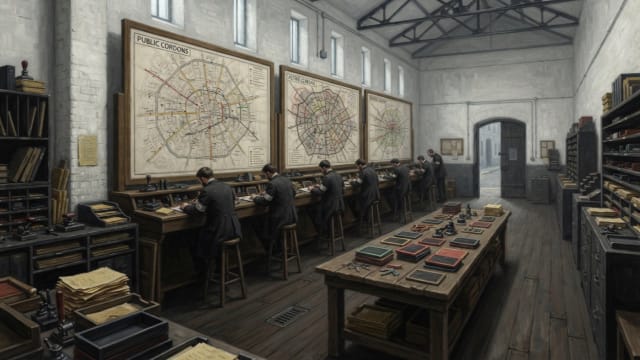
Chapterhouse of Marrowgate
Where three maps teach safety to become jurisdiction
In this A.S. 201 survey, I record Salvius's whitewashed Chapterhouse: three cordon maps, confiscated names, and the office where safety acquires jurisdiction.
Codex Ref. II.2.06-201
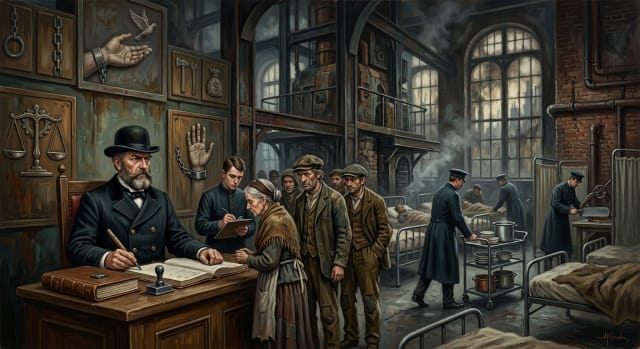
Civic Triage Tribunal
The court where wounds learn their price before they heal
Marrowgate's Civic Triage Tribunal turns beds, saws, broth, labour, debt, and death into rulings; mercy enters only after allocation.
Codex Ref. XIII.1.88-083
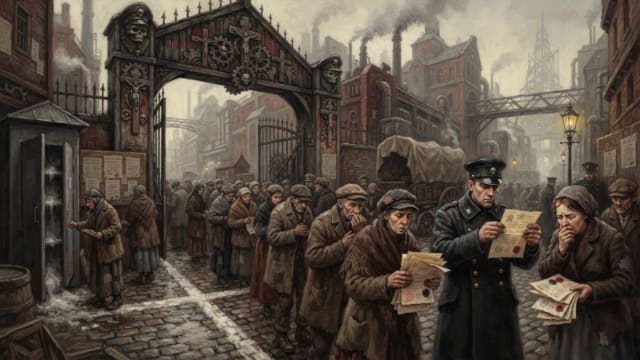
Clean Papers (Marrowgate)
The gate accepts the finding; the fever does not
Marrowgate's clean papers certify who may cross a line. The fever keeps its own account; genuine wax and forged seals have both certified a lie.
Codex Ref. XIII.1.20-003
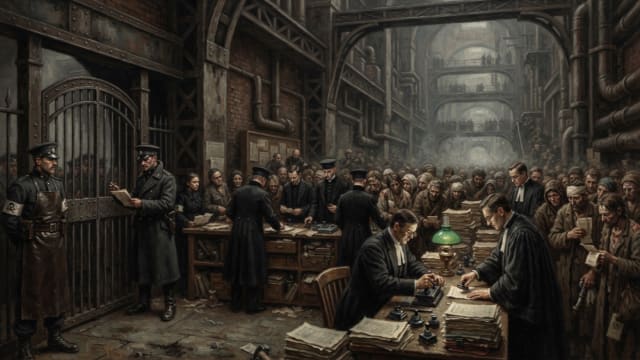
Joint Mandate (Civic Triage, A.S. 92)
Two authorities over one patient; the clauses remain out of reach
Marrowgate's Tribunal charter was amended into the A.S. 92 Joint Mandate and revised in A.S. 187. The dates survive; the clauses remain outside this office's evidence.
Codex Ref. XIII.1.88-092

Lime Men
Ash on the stones, bread in the fire
At the Second Ravelin, the Lime Men whitewash, scatter ash, burn suspect rations, hook corpses and inspect mouths. Cleanliness keeps a soldier's hours.
Codex Ref. VIII.5.02-201
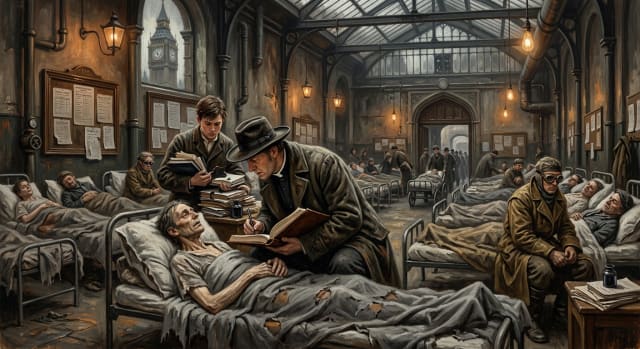
Lull of Names
The plague year when silence became a breach and the bedside became a bureau
The Lull of Names was the A.S. 78 plague-year catastrophe in which deaths in the southern wards outran transcription, birthing Standing Order 22-C and the Deathbed Confession Harvester corps.
Codex Ref. VII.8.10-022
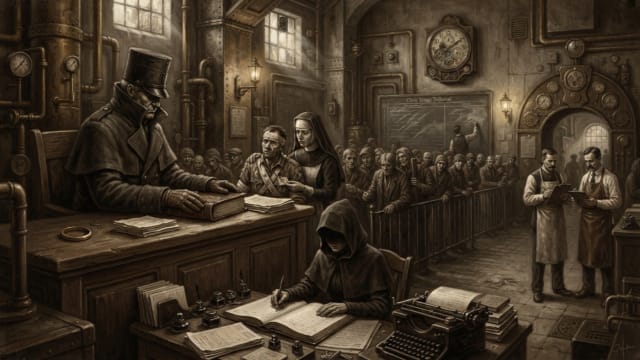
Magistrate-Physic Toma
The bench where a wound becomes an account
Magistrate-Physic Toma presides over Marrowgate's Civic Triage Tribunal, where beds, surgery and debt become rulings and Clerk Vessa makes them endure.
Codex Ref. III.2.01-201
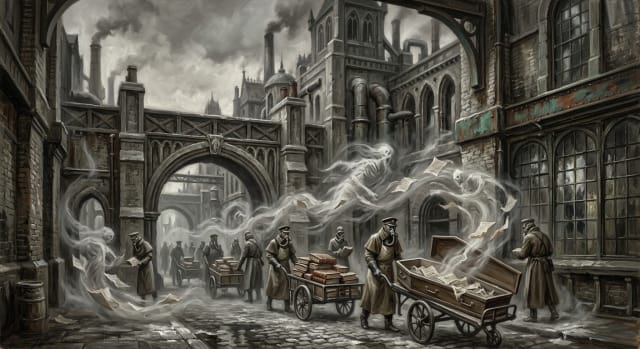
Marrowwind
The dead file amendments in lime and breath
At Marrowgate, chalk wind carries the voices of the dead, corrects fraudulent ledgers, and proves that a corpse with paperwork remains a witness.
Codex Ref. XIII.1.20-001
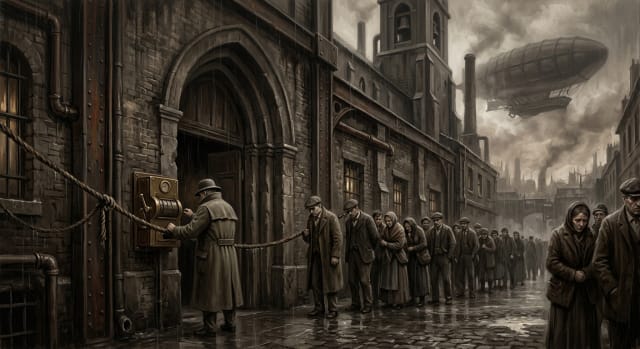
Mercy Line
The rope where grief learned its tariff schedule
The Mercy Line began as a left-hand rope outside Saint Morin's chapel in A.S. 157, where grief discovered that even mercy could be accelerated.
Codex Ref. II.2.06-157
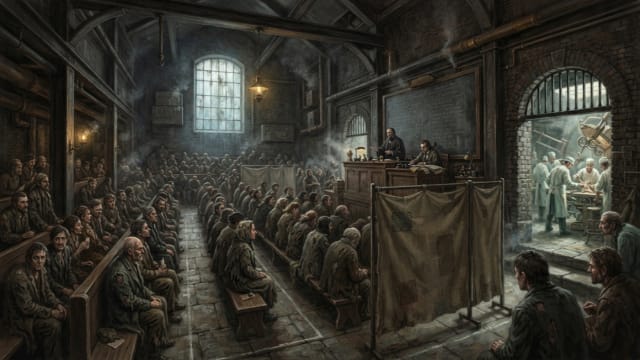
Notary Row Tribunal Hall
Where Marrowgate's beds are sentenced
An A.S. 201 survey of the Civic Triage Tribunal's hall, where petitioners await rulings within earshot of surgery and sight of the allocation boards.
Codex Ref. II.2.06-201
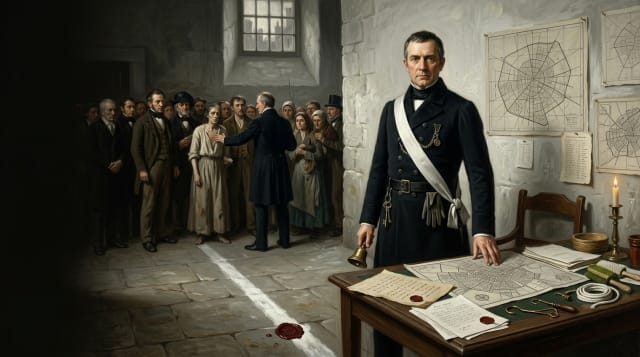
Prefect Salvius
The man who made cleanliness a border with teeth
Prefect Salvius commands Marrowgate's clean lines, proving that hygiene becomes jurisdiction the moment a frightened city applauds the rope.
Codex Ref. III.2.01-201
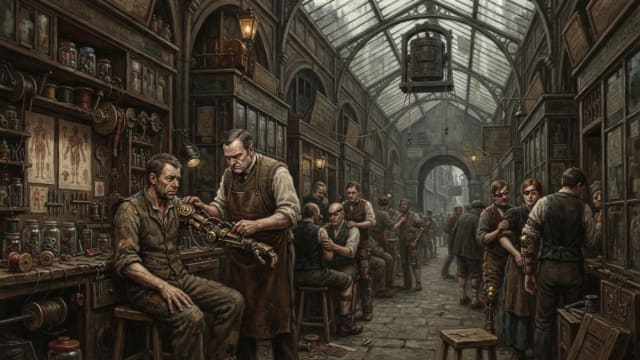
Prosthetics Arcade
An affordable fitting, a lifetime of adjustments
In Marrowgate's covered arcade, an affordable limb returns a patient to work; the maintenance contract ensures he keeps paying for the privilege.
Codex Ref. II.2.06-201
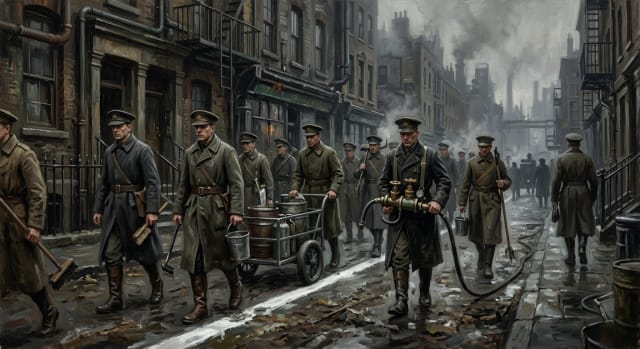
Sanitation Chapter
The clean line is a border, a sermon, and a threat
Mercy calls it sanitation; Marrowgate calls it the office that paints a white line and makes obedience look like hygiene.
Codex Ref. VIII.2.10-078
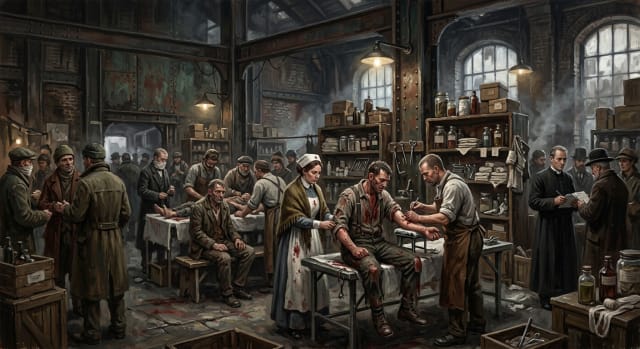
Stitchmarket
Where unlawful mercy learns to keep receipts
Marrowgate rationed lawful mercy until crime opened a clinic, priced the bandages, and learned to forge the city better than its clerks.
Codex Ref. XII.31.06-201

Wagoners’ Brotherhood
The hands that keep Marrowgate moving
Marrowgate depends on the Brotherhood's wagons and road knowledge; a threatened slowdown and disputed lost cargo reveal the power held at the lane mouth.
Codex Ref. XII.31.07-201
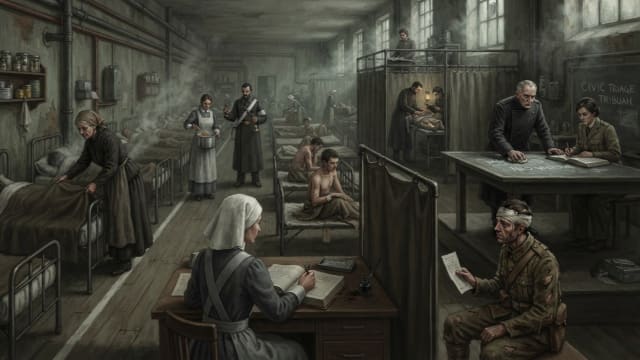
White Ward of Marrowgate
Where the file is admitted before the patient
An A.S. 201 / 1911 CE survey of Marrowgate's primary infirmary complex, where confession receipts precede treatment, beds expire by the hour, and the file is admitted before the patient.
Codex Ref. III.3.07-201