

Reverse Index
Referencing “The Armorial of the Faithful”
Every codex entry that links to The Armorial of the Faithful. 19 entries.
Return to The Armorial of the Faithful
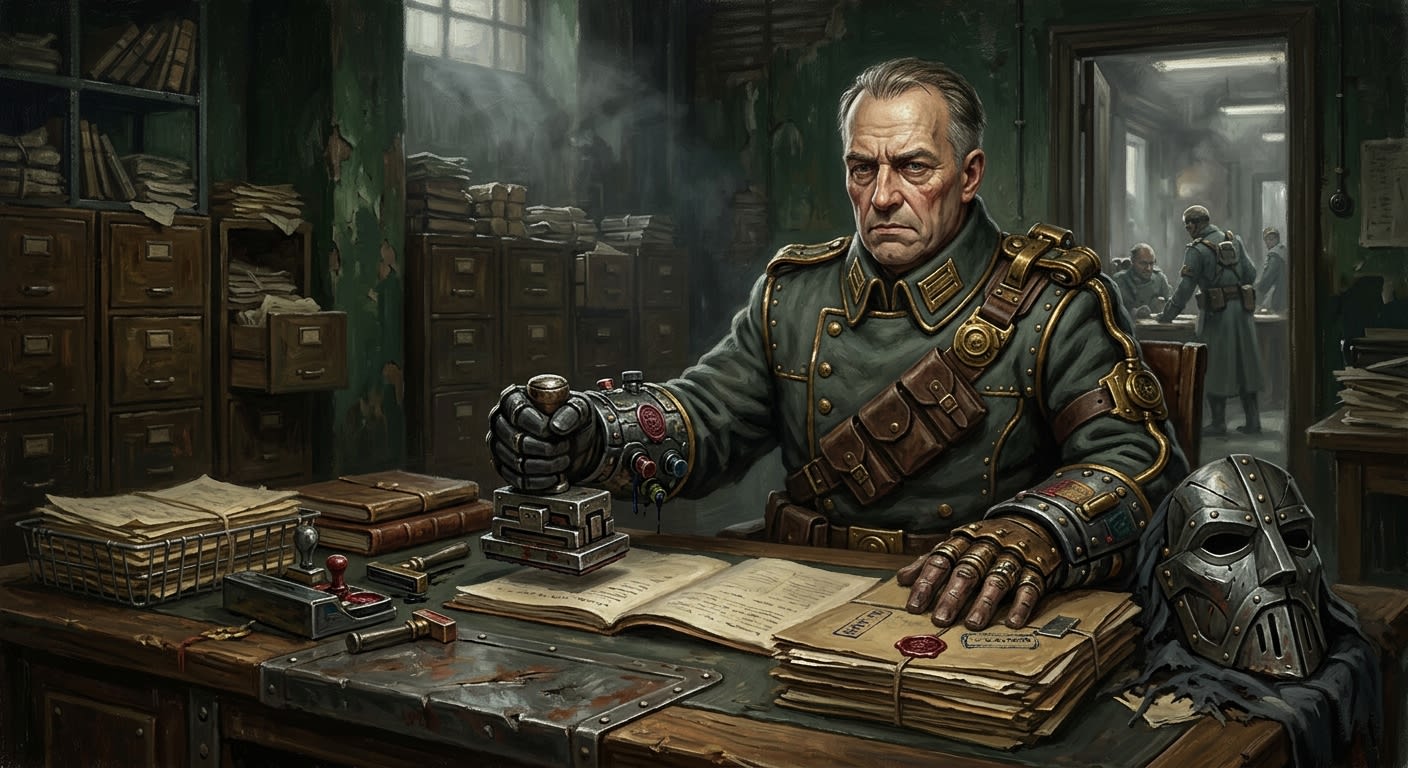
Archon Casselius of Mainz
The man who hears treason in hardware and measures it correctly
Casselius of Mainz holds Heraldry and Masks and Seals in personal union, deciding what may be seen, stamped, licensed, and punished.
Codex Ref. III.2.01-017
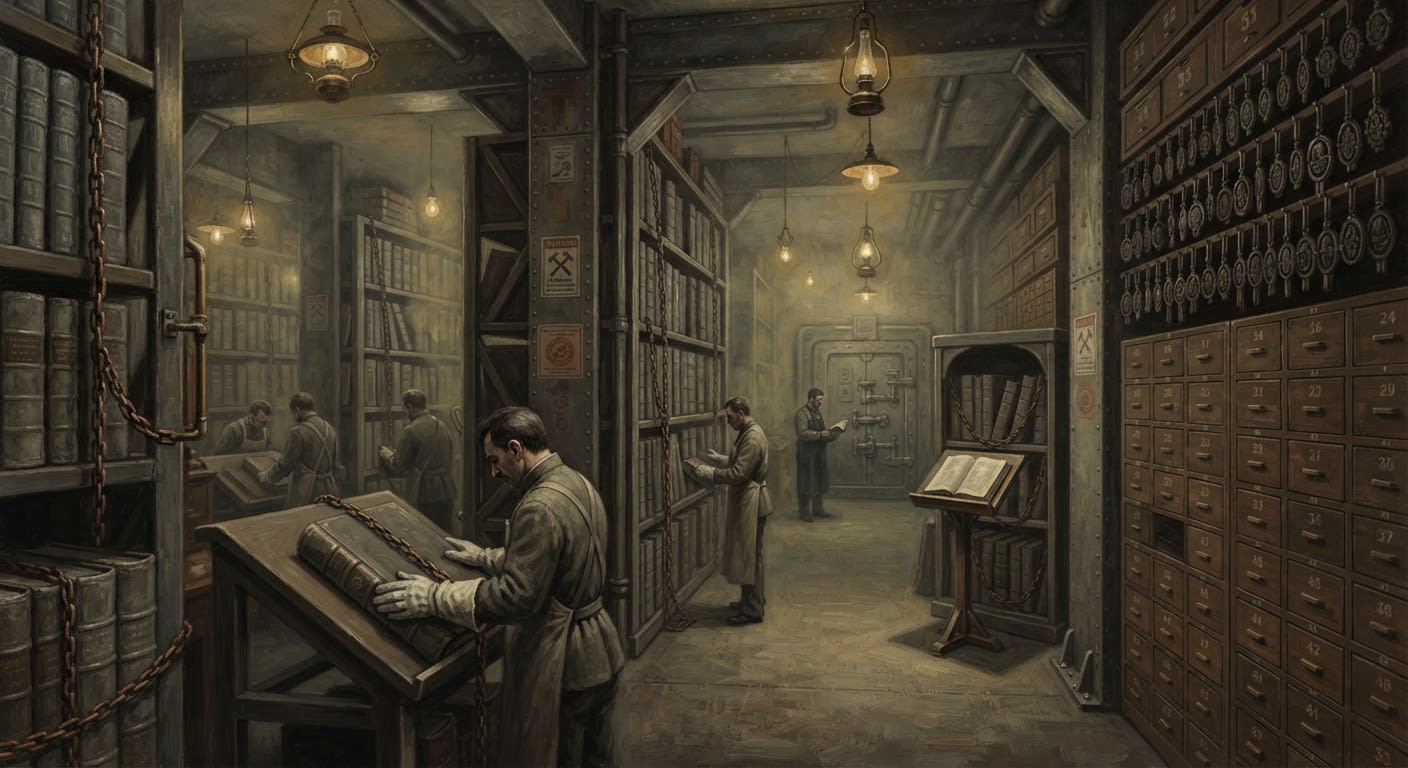
Armorial Vault
Where symbols are chained until they become law
The Armorial Vault is the chained body beneath Strasbourg where registered symbols become legal facts, false marks are preserved for prosecution, and colour learns to fear drawers.
Codex Ref. II.1.04-007
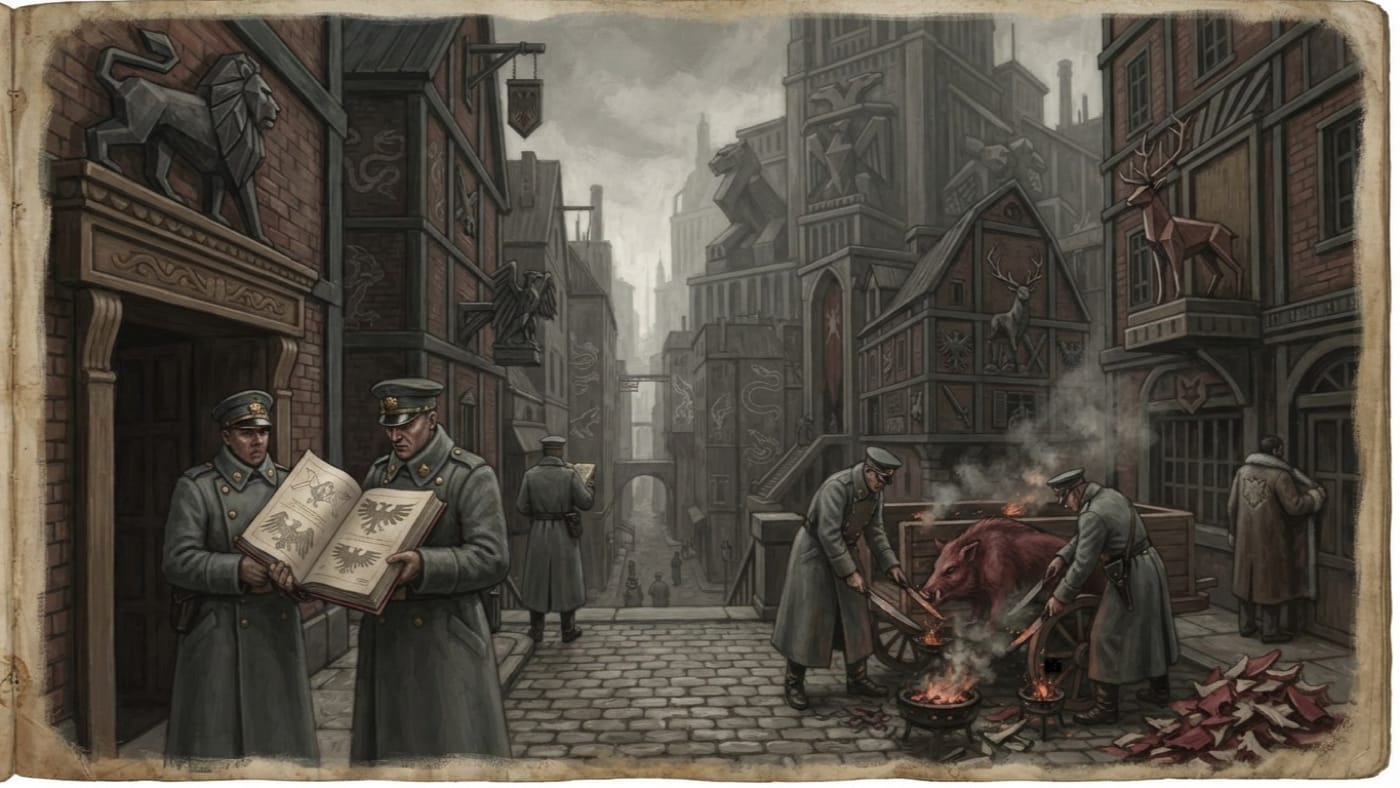
Chancellery of Permitted Animals
The family borrows its beast on terms
Heraldry's Chancellery decides which beasts may appear on lawful crests. Lions, eagles and stags survive as geometry; wolves and serpents are erased. The bear remains under review.
Codex Ref. VIII.1.03-005
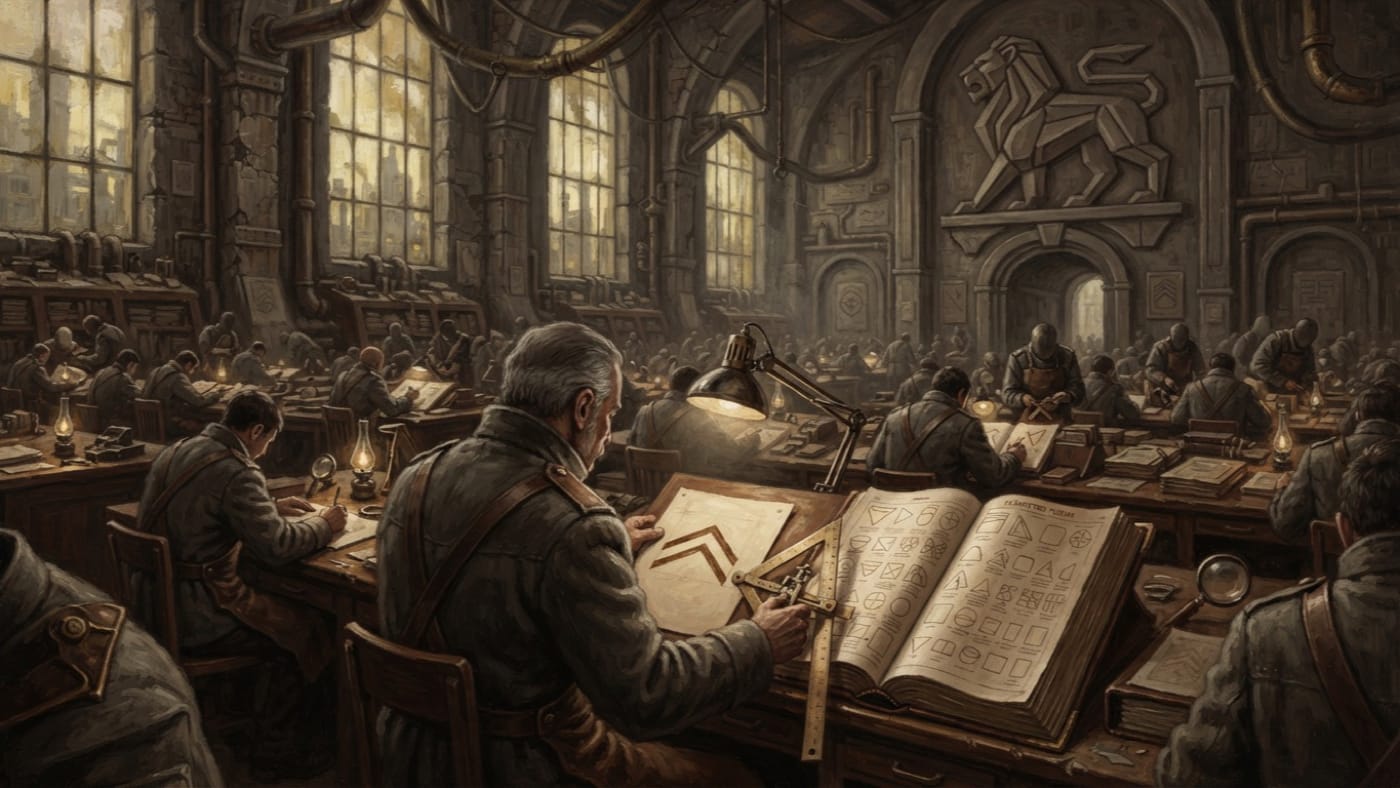
Chancellery of Permitted Forms
Even a corner must petition for absolution
Heraldry's geometry office licenses every bend, circle and corner before display. A lawful shape still requires the right surface, occasion and Armorial entry.
Codex Ref. VIII.1.03-006
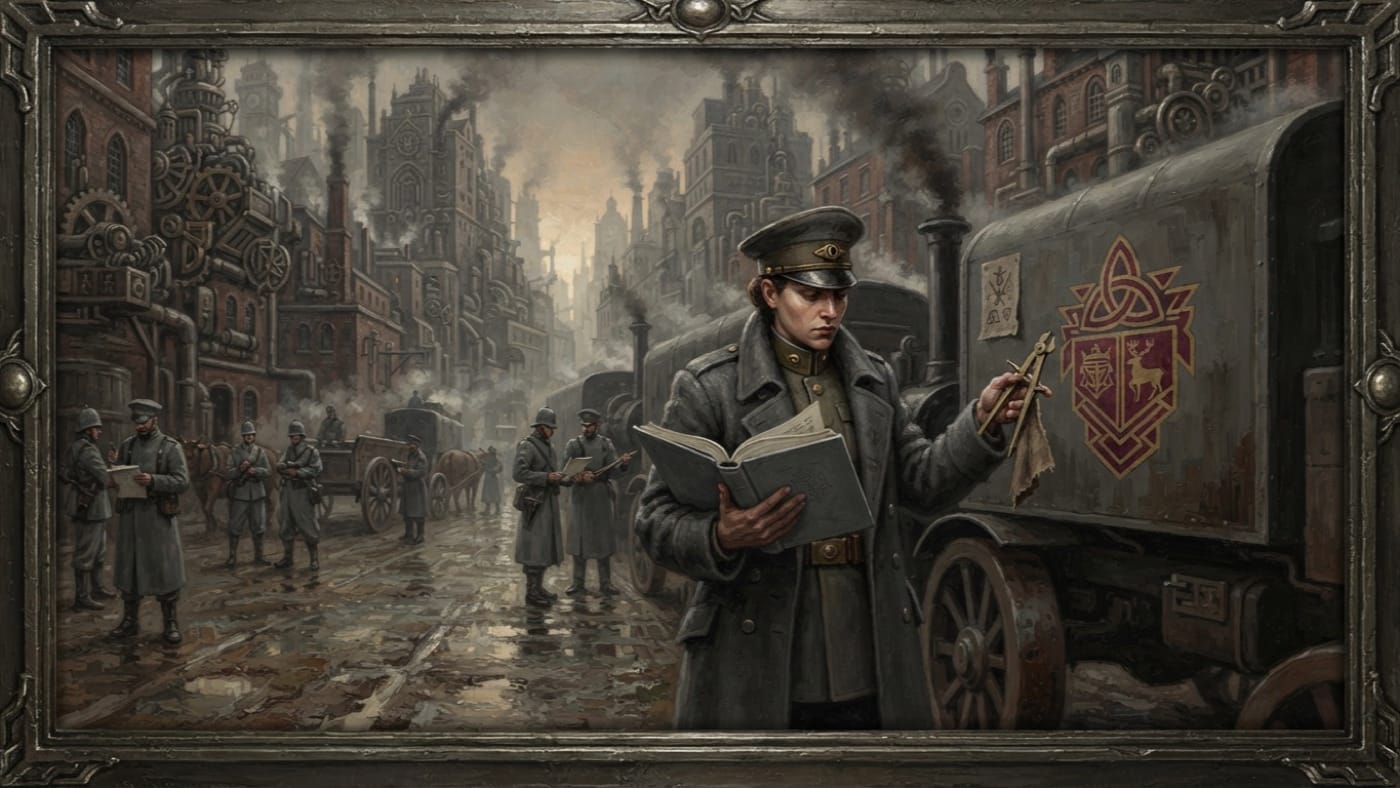
Chromarch Codex
The law arrives late and remains binding
The Chromarch Codex teaches Sigil Inspectors what loyalty may look like: permitted symbols, colours and geometries, corrected quarterly and binding before the district receives its copy.
Codex Ref. VIII.1.03-003
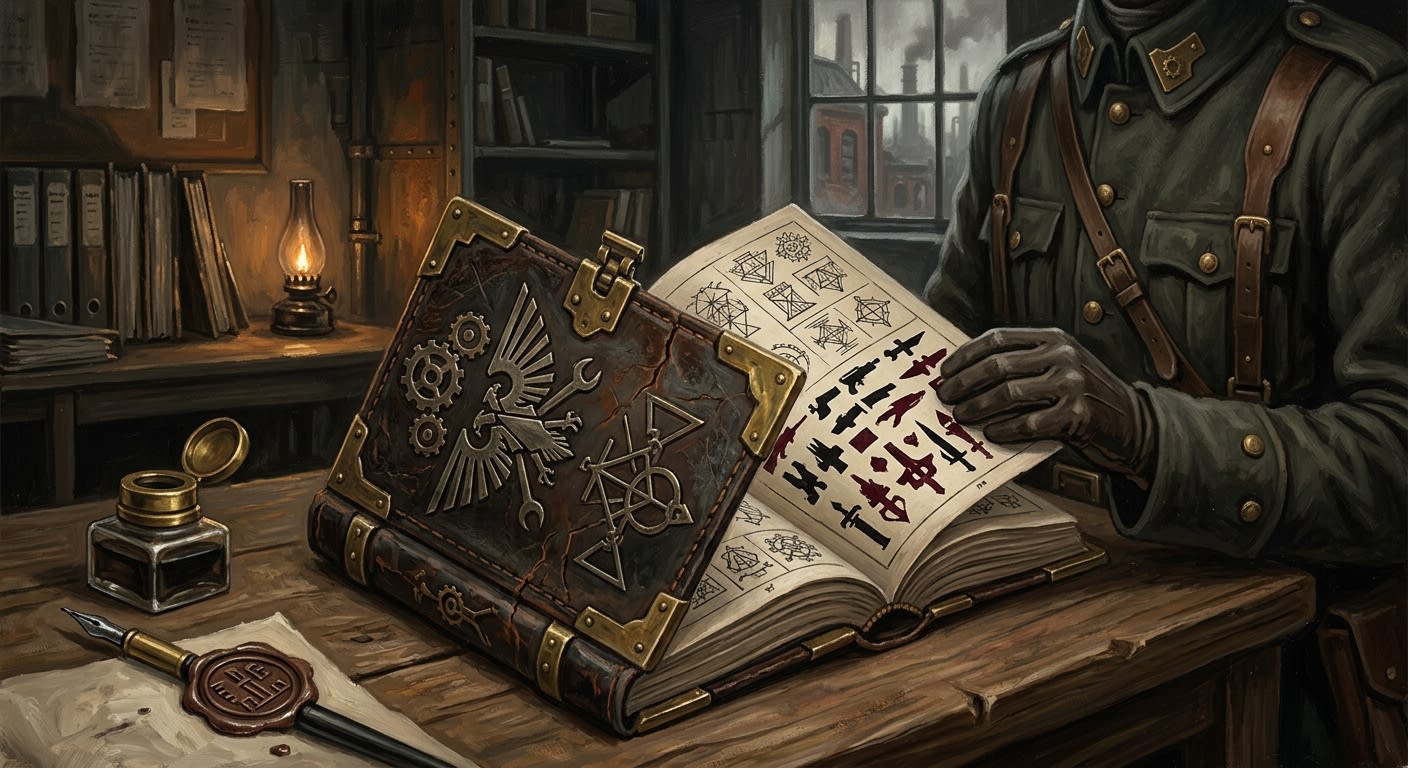
Codex of Permitted Symbols
The little book that makes walls guilty
Pocket abridgement of the Armorial carried by Sigil Inspectors, where lawful shapes are licensed, colours are weaponised, and mercy is a counterfeit edition.
Codex Ref. XIII.1.82-001
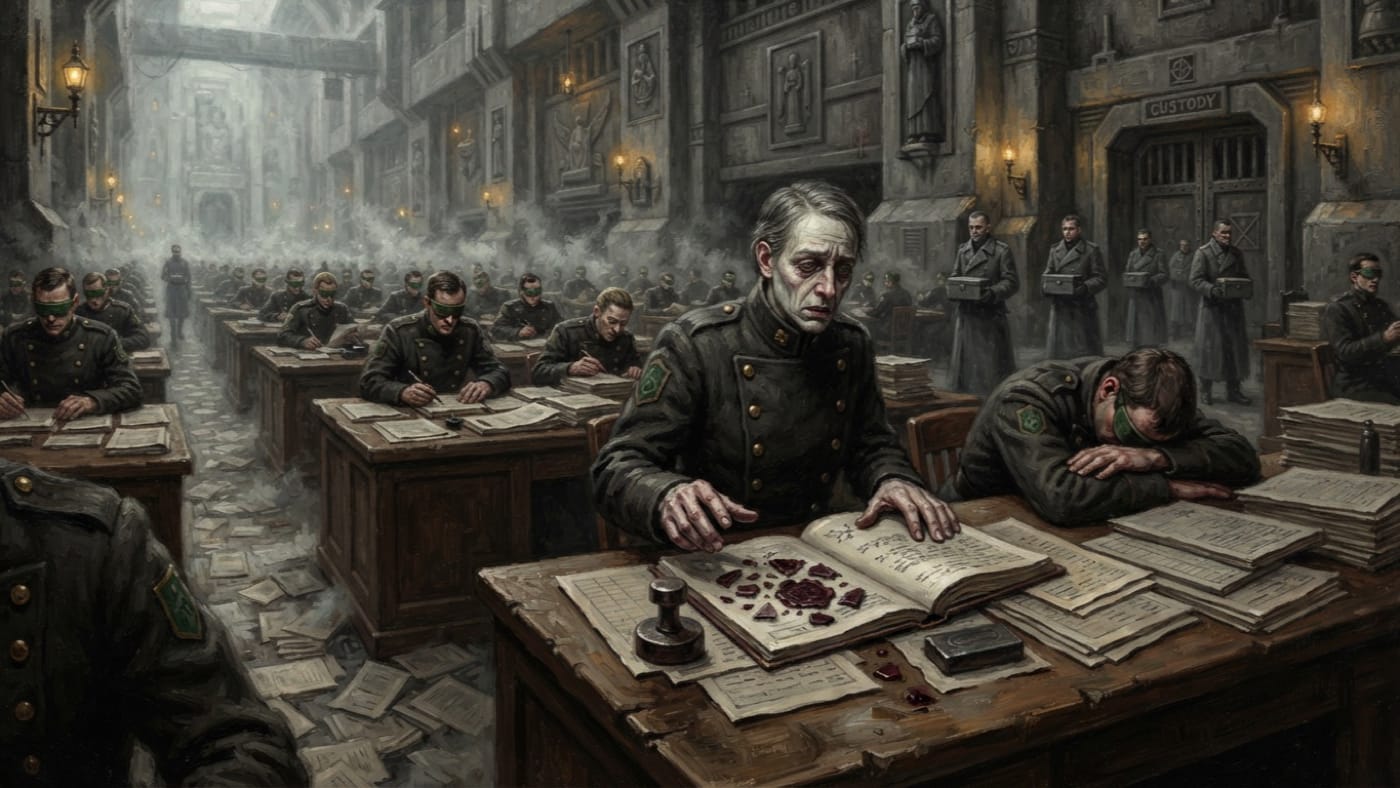
Counter-Seals
A clerk's certainty is the Court's preferred key
The Shadow Court's counter-seals reportedly revise a document's origin and the reader's assent. Under Directive 77-C, suspect wax is broken before reading and seal geometry must never be copied.
Codex Ref. XIII.1.25-002
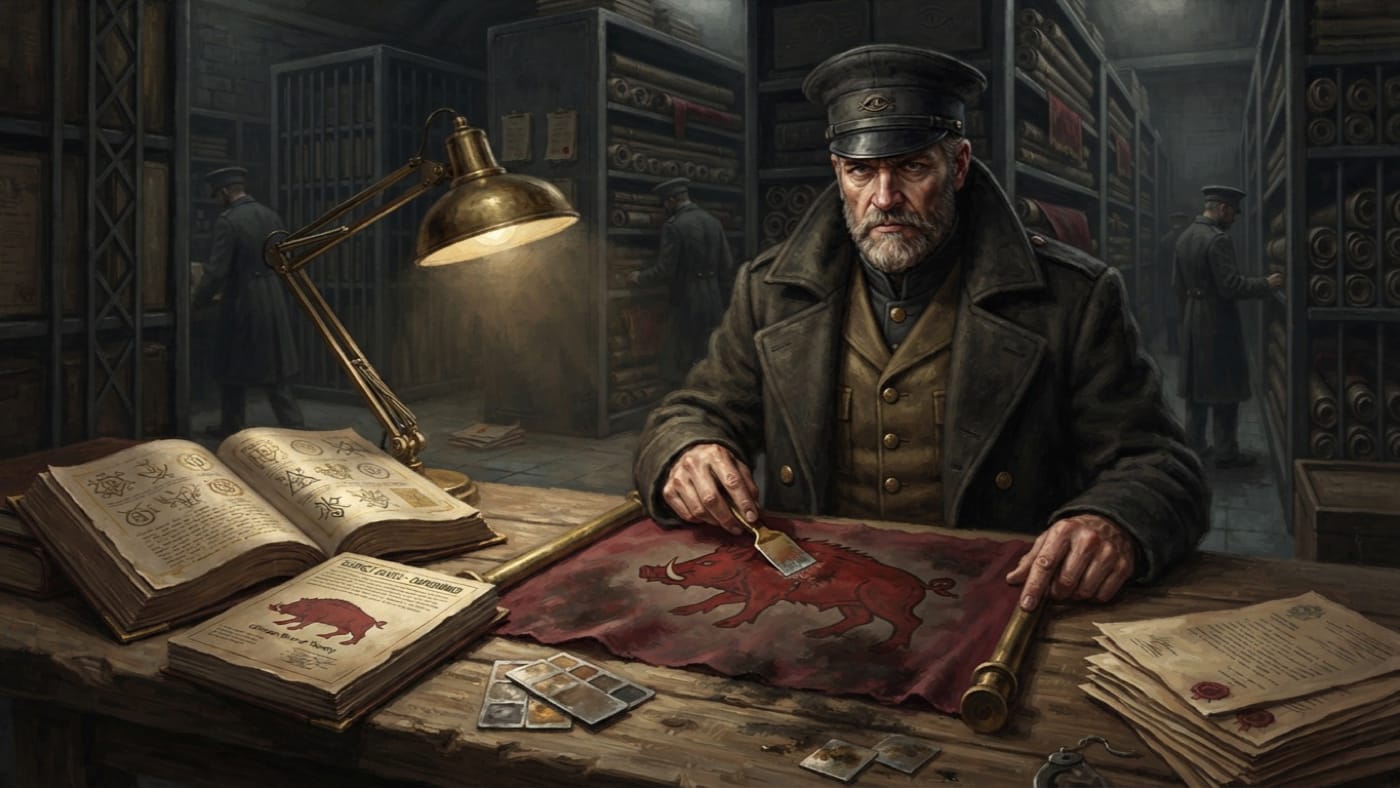
Crimson Boar of Saxony
The picture that outlived its guild and earned a sentence
A dead Saxon guild's red boar returned on convoy banners at Essen in A.S. 106. Eighty-seven died. Heraldry condemned the device by name in A.S. 108 and kept a banner to teach Inspectors what to scrape.
Codex Ref. XIII.1.82-002
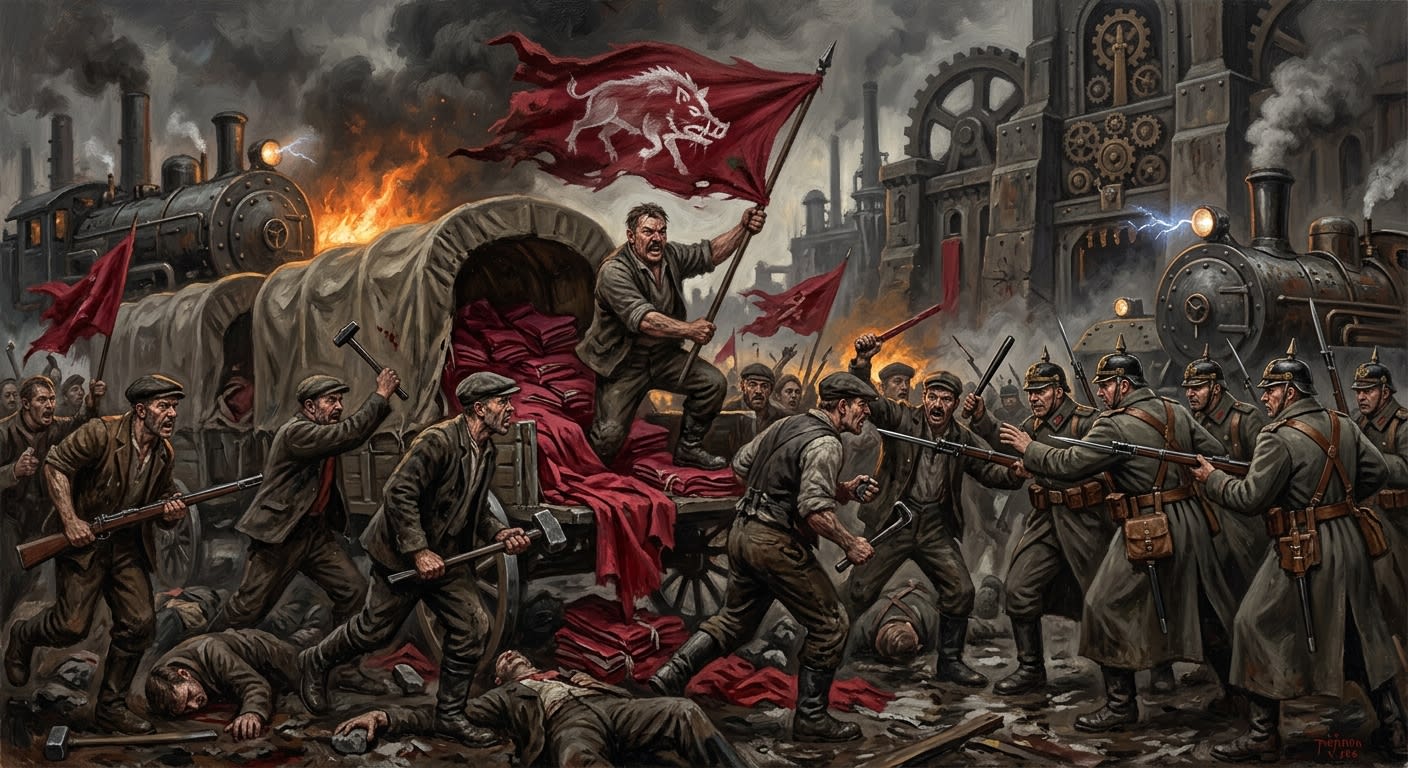
Crimson Gate Riot
Eighty-seven dead because a painted boar remembered too well
A.S. 106 Essen gate riot in which the crimson boar of a dead Saxon guild turned convoy cloth into command, killing eighty-seven and birthing the Beast Proscription.
Codex Ref. VII.8.10-033
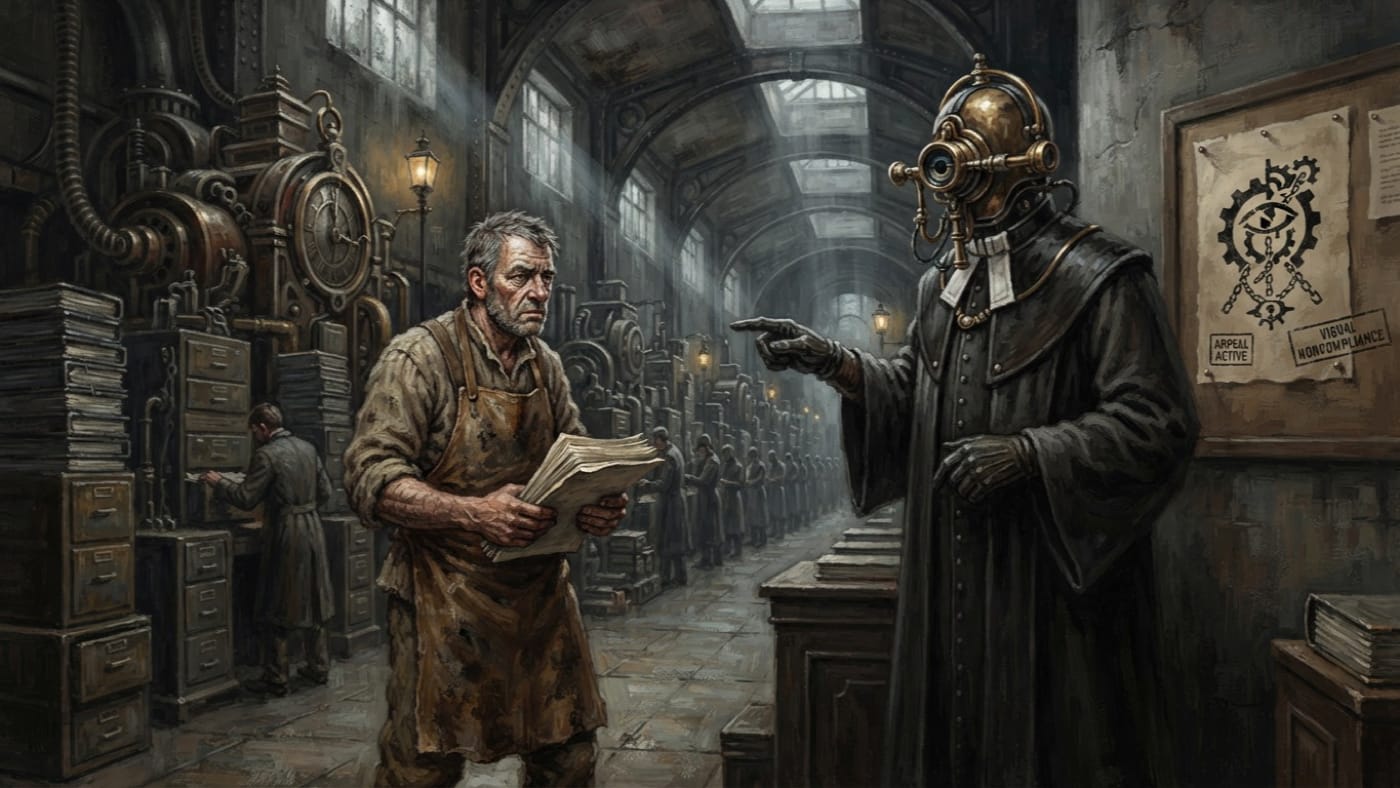
Ewald Fenn
The cooper whose doorbell became doctrine
Ewald Fenn, cooper of Mainz, lost a doorbell to Casselius and appealed a stamp he could not read. The Bureau calls this visual noncompliance; his appeal remains active.
Codex Ref. III.2.01-201
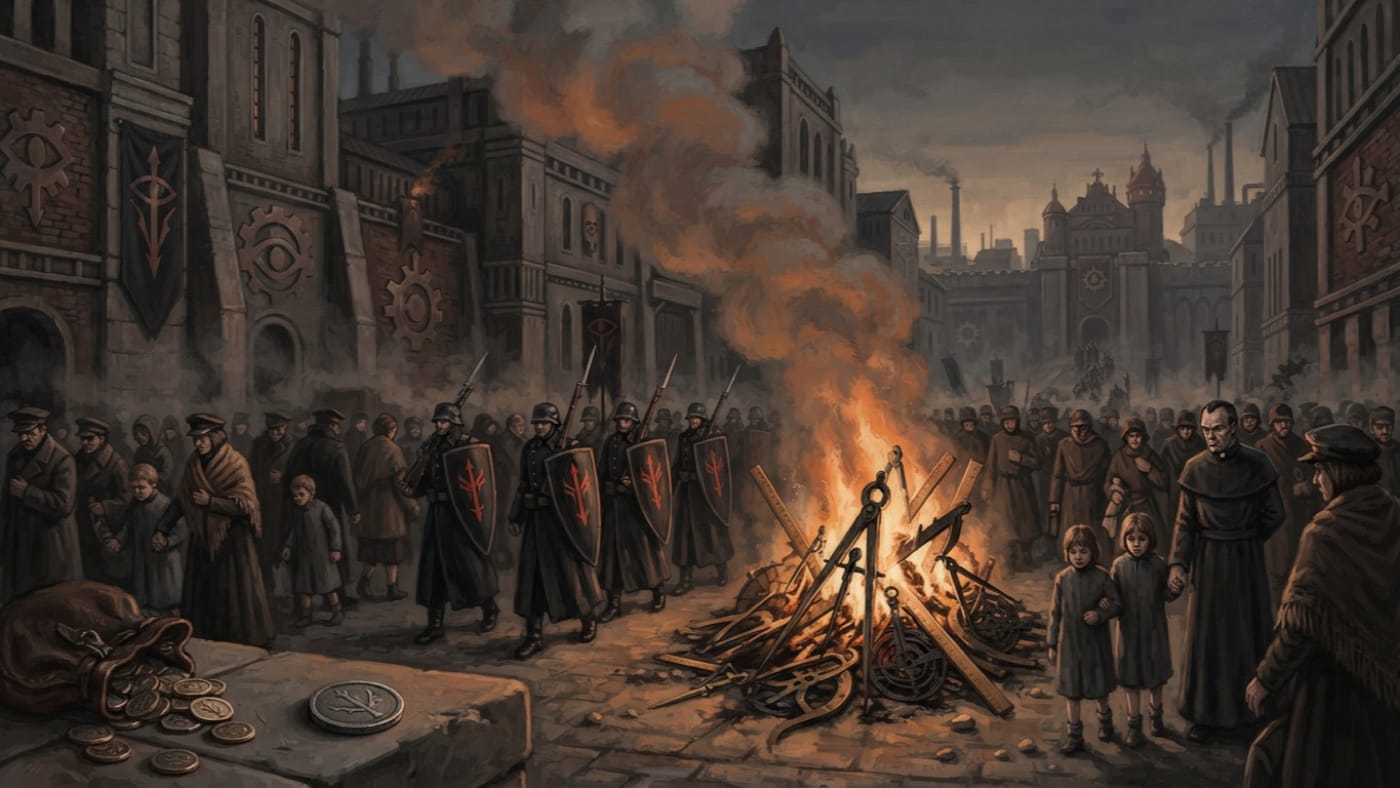
Flaming Sword
Permission has weight, and obedience has smoke
The Flaming Sword carries Synodal authority on coinage and lends its name to Strasbourg's burning of Rationalist instruments. I record its public uses; the emblem's origin remains unproved.
Codex Ref. XIII.1.03-001
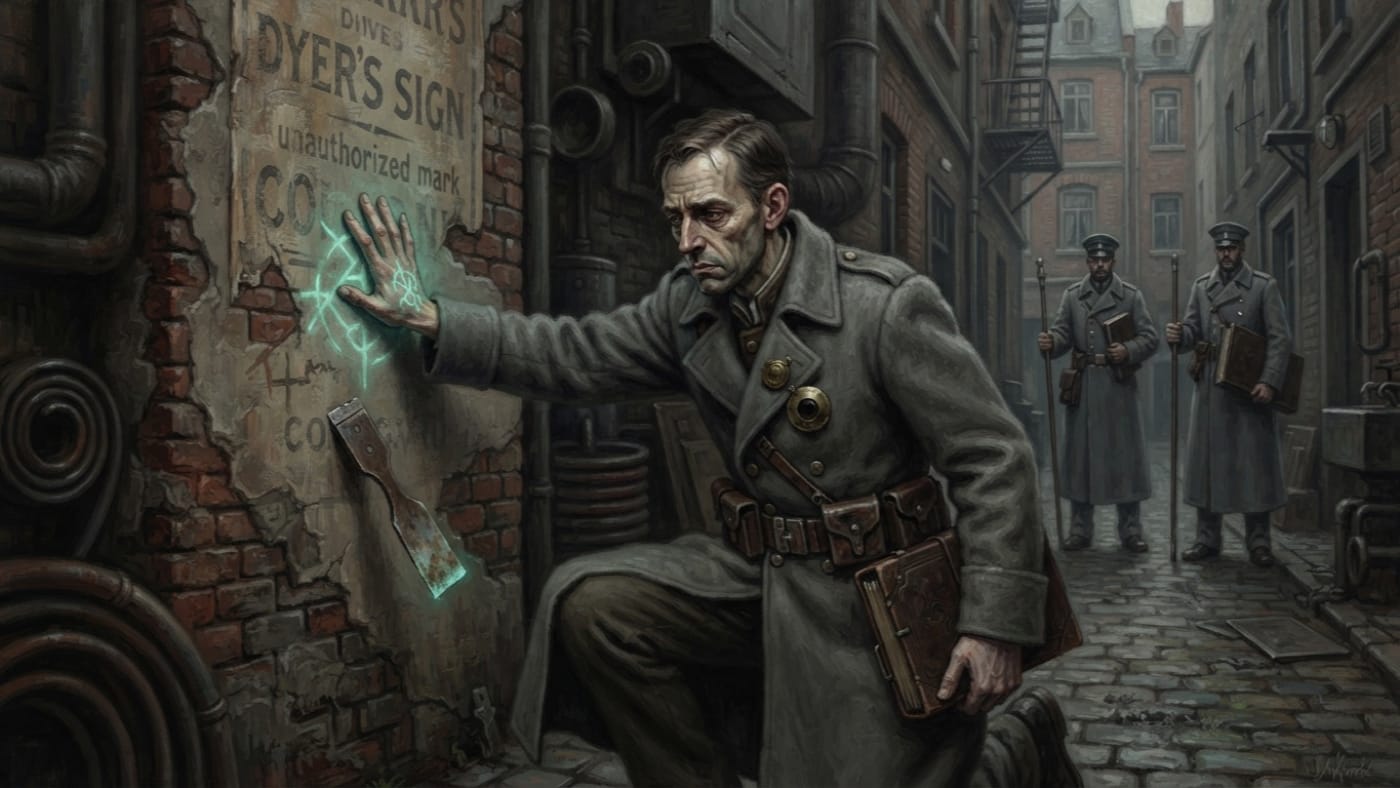
Inspector Marn
The inspector whose hand became a surface
Inspector Marn survives in Report 44-K: his blade began copying a sign onto his palm. The Bureau took the wall and filed the household as evidence; his subsequent condition remains unentered.
Codex Ref. III.2.01-044
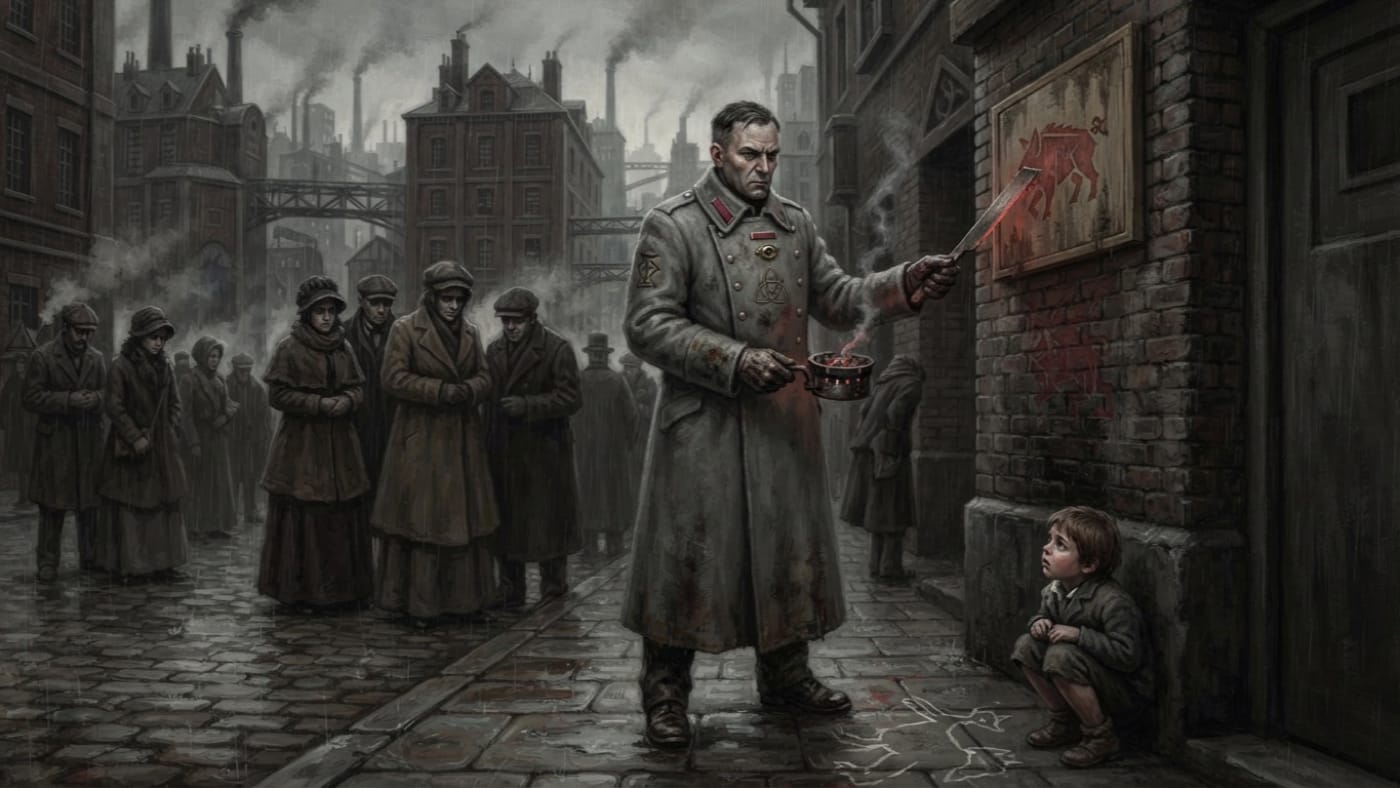
Inspectorate
A decree is ink, and ink needs legs
The Inspectorate of Visual Compliance carries Heraldry's judgments into the street. Its licensed examiners measure a crest, issue a citation, and heat the blade; even a child's chalk animal must answer to the register.
Codex Ref. VIII.1.03-002
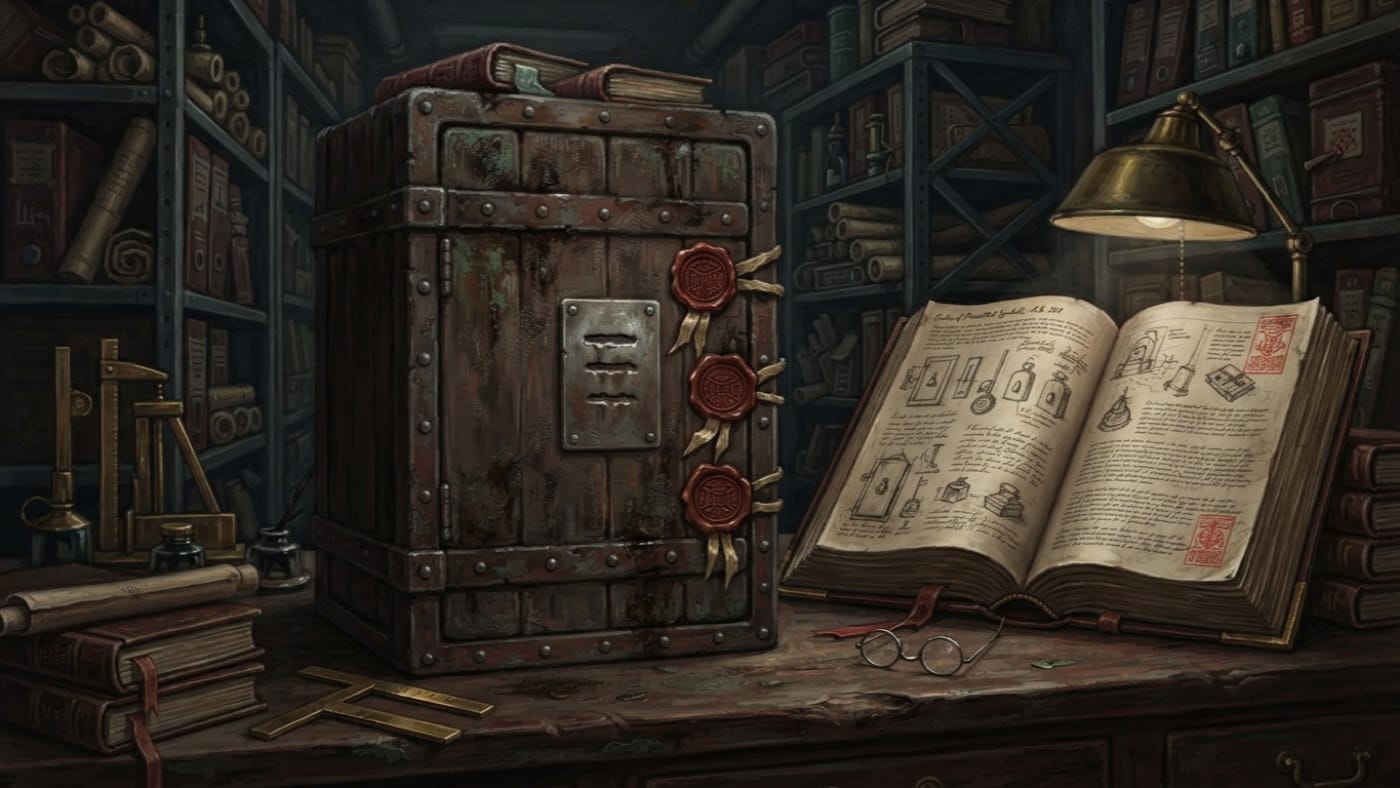
Mainz chime-mark affair
Three marks, six pages, and an appeal still waiting
At the A.S. 201 survey, Fenn's doorbell remains under three seals and his appeal stays active. Casselius made three descending marks a case; the Codex made one paragraph six pages.
Codex Ref. VII.8.10-201

Sigil Inspector
The man who tells the world what it is allowed to look like — and scrapes the rest
The Bureau of Heraldry tells the world what it is permitted to look like. The Sigil Inspector is the man who walks the world and checks — codex in hand, swatch at the hip, blade heated to scraping temperature.
Codex Ref. XII.43.01-001
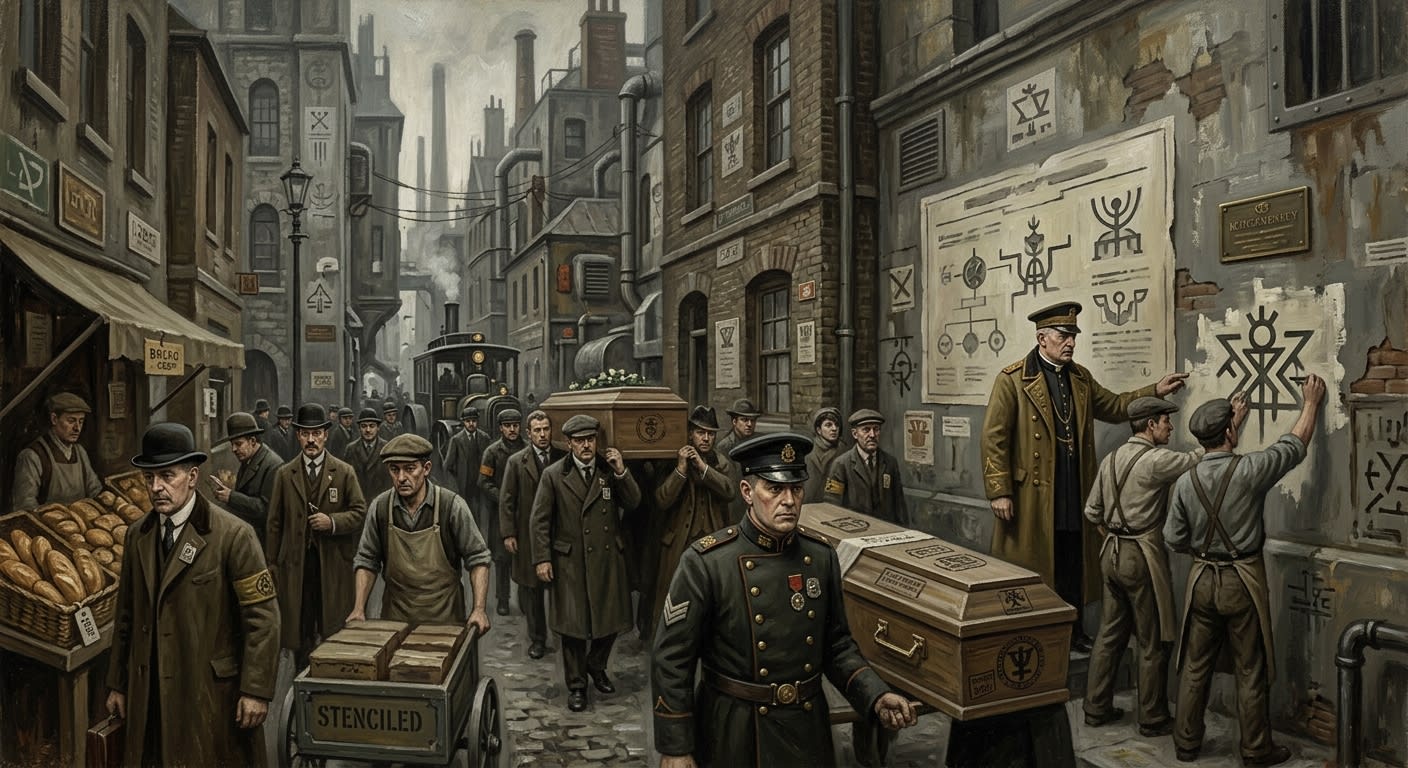
Standing Order 14-C
Every surface shall confess before speech begins
Standing Order 14-C teaches walls, bread, badges, coffins, and brows to confess: no lawful surface remains visually unclaimed.
Codex Ref. XIII.1.14-090

The Bureau of Heraldry
The grammar of loyalty, measured in ink and iron
The Bureau of Heraldry controls what the Synod is permitted to look like. Every crest is a sentence. Every unregistered symbol is a rebellion not yet named.
Codex Ref. VIII.1.03-001
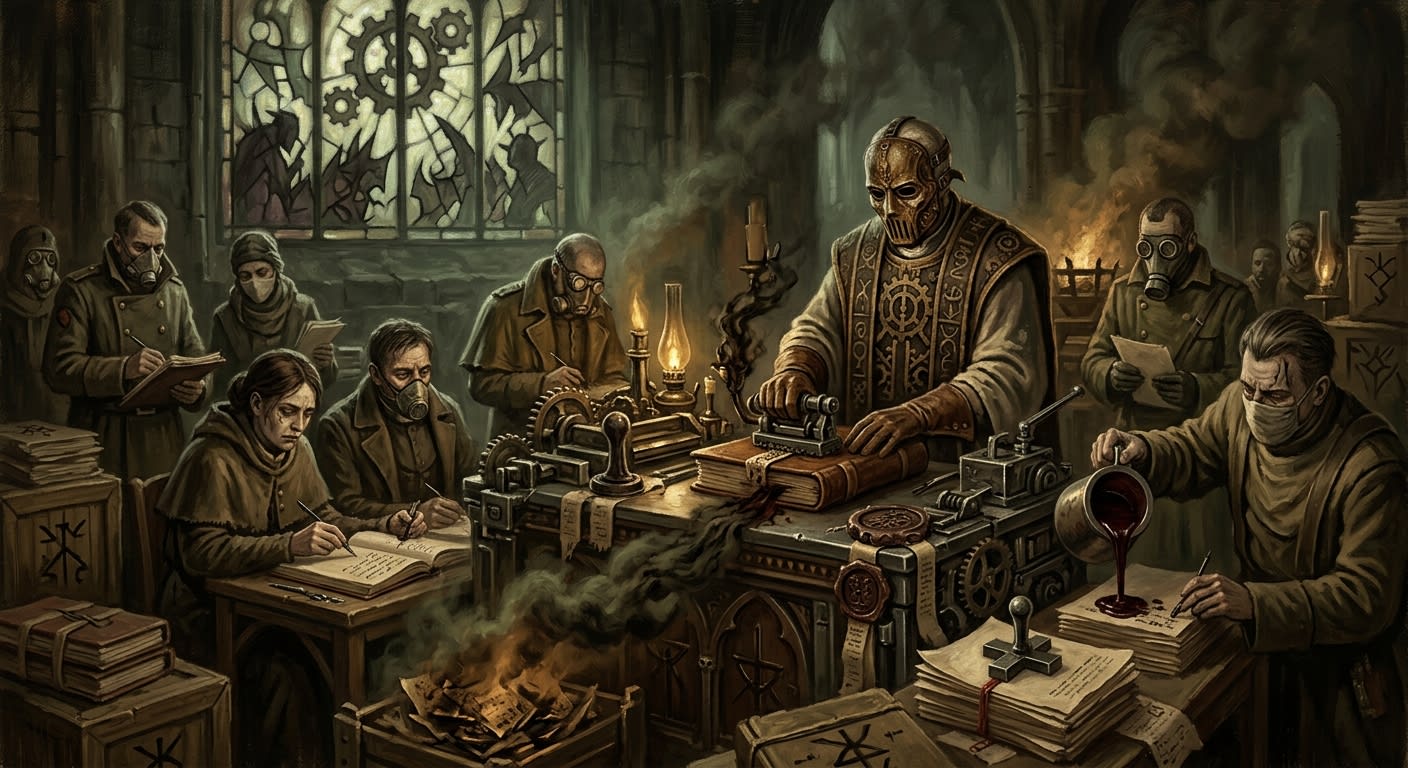
The Mock Liturgy
Hell learned our responses and improved the paperwork
The Shadow Court's parodic sacramental apparatus turns worship into damnation-paperwork: counter-seals, unhymns, inverse rites, and choices that bind.
Codex Ref. XIII.1.25-001
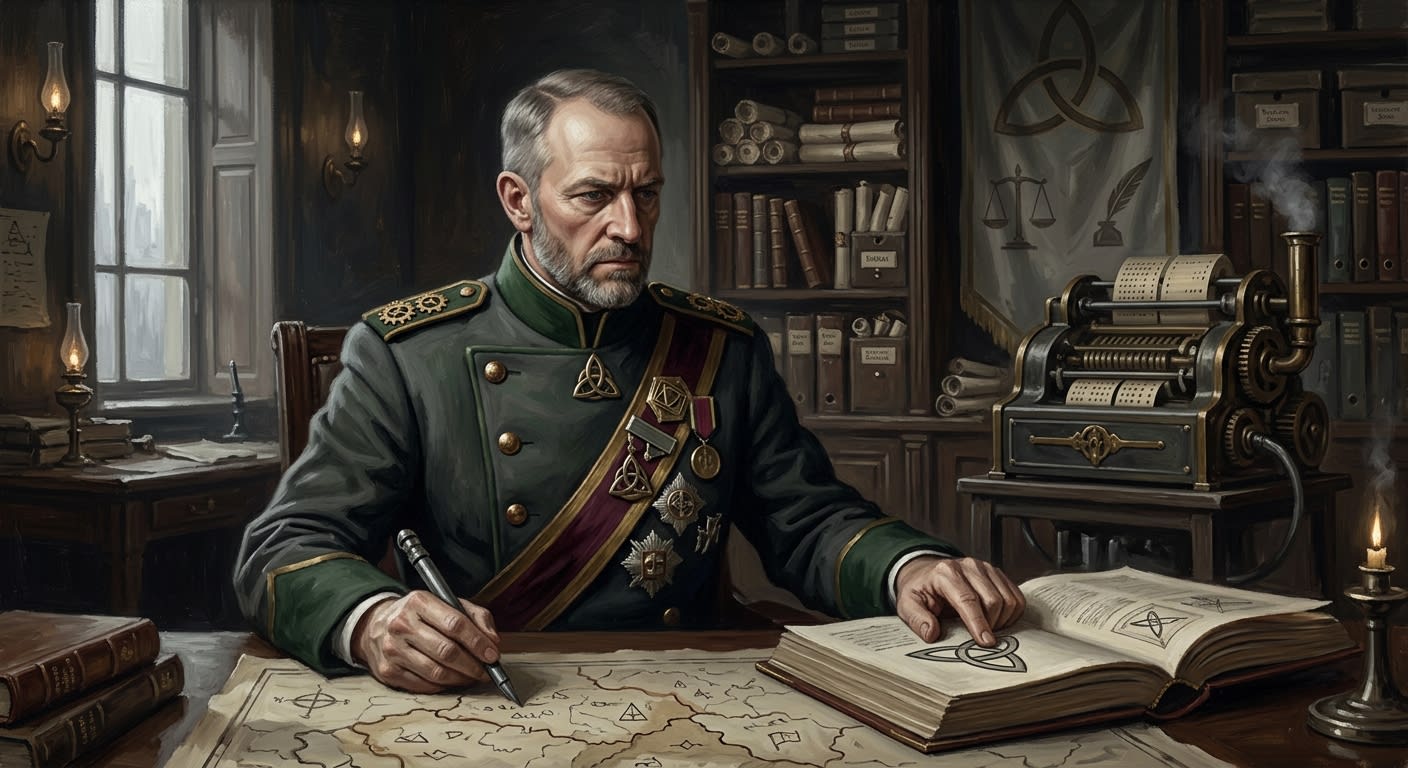
Theobald of Worms
The man who taught Europe to confess by angle
First Archon of the Bureau of Heraldry, Theobald of Worms standardised the Triune Knot and made the visible world legible, taxable, and prosecutable.
Codex Ref. III.2.01-119