
#On the Fence That Learned Theology
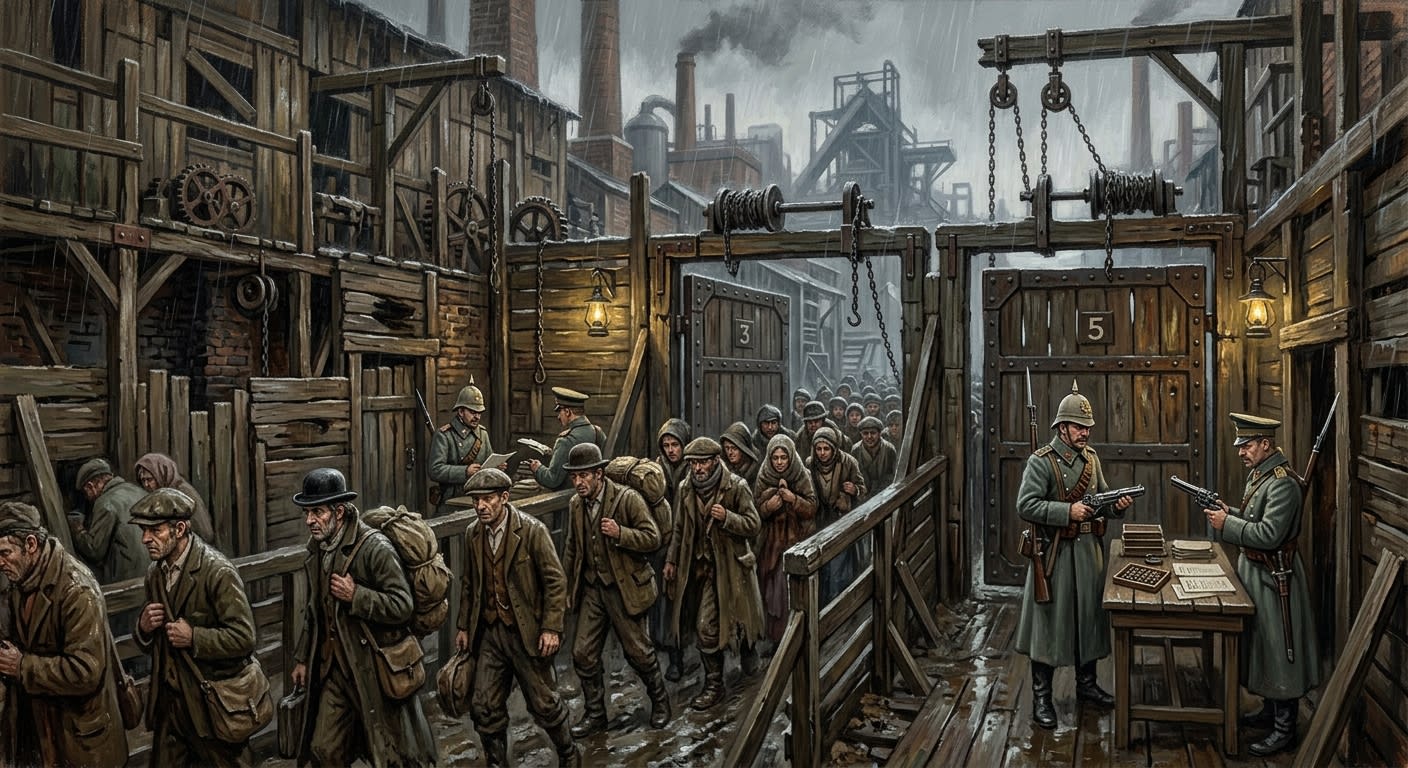
The Barricade Maze is the controlled-lane labyrinth between Gate Three and Gate Five (Unregistered) of the Queue Road, a district of wet timber, stamped gravel, fence-shadow, rope-gate, watch-box, and human patience beaten until it resembles obedience. It smells of soaked planks and fear. The Directorate (Unregistered) calls this lane control. The travellers call it the place where hours lose their names.
A road, in its innocent childhood, permits motion. The Maze corrects that vice. It takes a body that has already been measured by bell-mark, taxed by waiting, softened by broth, delayed by appeal, and pushed through enough court-gates to make dignity feel like contraband, then feeds that body through switchback lanes narrow enough for shoulders to confess. Each fence turns the crowd upon itself. Each turn lets a clerk count the same face from a different angle and call the repetition evidence.
The Maze began as an emergency structure after the A.S. 97 Latch River crush (Unregistered) exposed the old highway's vulgar defect: it allowed crowds to surge in one direction. War built gates. Records added marks. The Synod Permit Directorate (Unregistered), constituted in A.S. 102, added courts, ledgers, and the brilliant proposition that standing still could be made profitable. By A.S. 104, minute pricing had begun. By A.S. 110, during the First Continental Levy, the Maze had become necessary, which is what the Bureau calls any cruelty whose revenue has matured.
Its first fences were temporary: ash posts, rope lines, wagon hurdles, stripped inn doors, confiscated barn beams, and a length of chapel rail from a shrine whose protest was filed beneath salvage authority. Temporary works, once profitable, become permanent by administrative fermentation. The Directorate replaced rope with timber, timber with iron-banded timber, and iron-banded timber with fence modules numbered, blessed, audited, and leased to the Queue Marshals for maintenance. The Maze now occupies the Road's central throat between the Minute Market and Clerk's Mile (Unregistered), with culverts beneath, catwalks above, Gate Three's stamp windows at one end, and Gate Five's grievance screens at the other.
#On Its Architecture of Delay
The Maze is not complicated in plan. Complexity is a courtesy architects grant to one another. The Maze is simple, repeated until the mind begins to hate geometry: lane, turn, fence, turn, box, stamp, turn, wait, rope, turn, watchman, turn, bell. A man can see the gate he needs from thirty paces away and spend nine hours failing to reach it. This is the Maze's first sacrament.
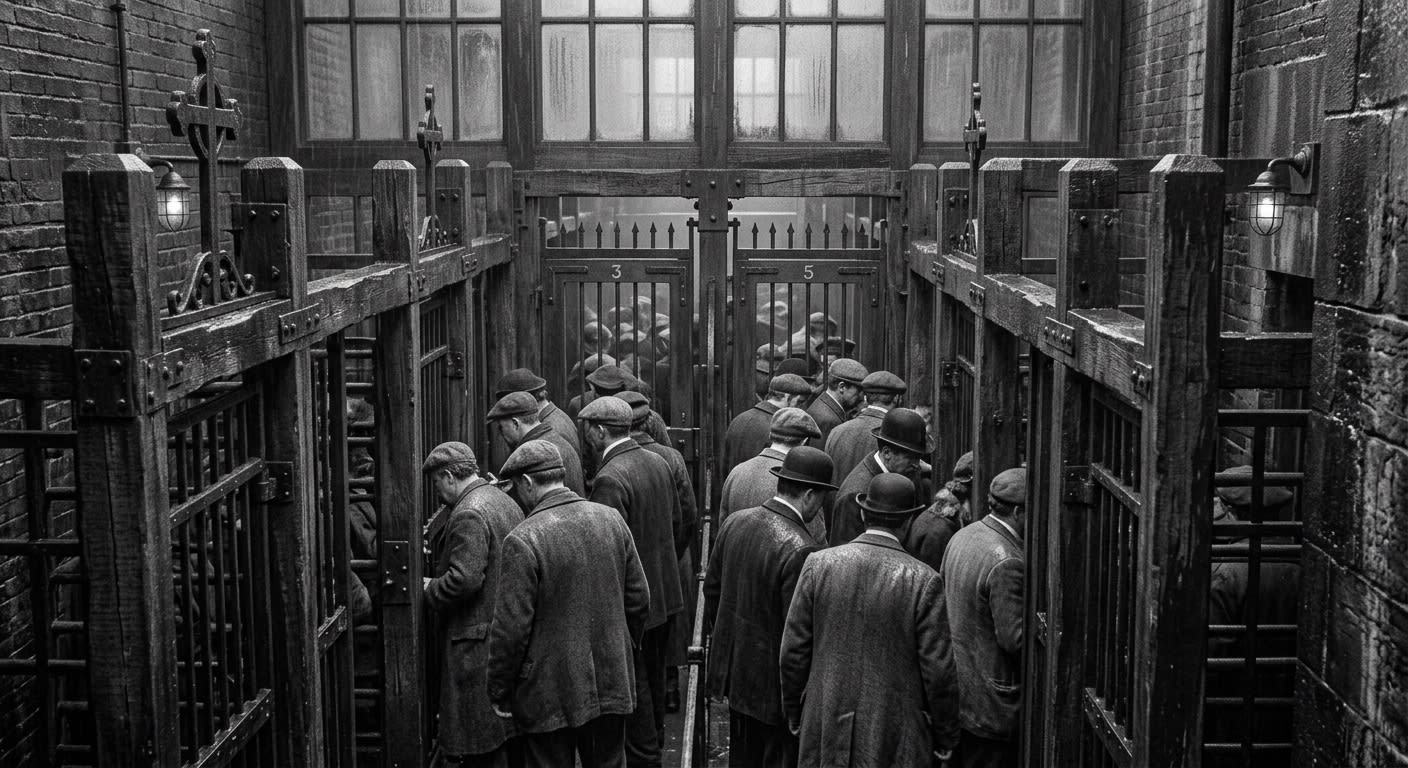
The fences stand shoulder-high to common travellers and waist-high to mounted officials, because hierarchy should always be visible in the carpentry. Planks are tarred black at the base against rot and rubbed smooth above by hands, coats, bundles, cheeks, and occasionally teeth. Nails protrude where repair crews have grown tired. Tags hang from the crossbars: lane numbers, batch calls, warnings, prayers, lost-child notices, unofficial chalk marks, Sennite slogans half-scraped by marshals who would rather scrape slogans than think about them.
Above, catwalks carry Time Clerks (Unregistered), Permit Wardens, Queue Marshals, runners with lawful passes, runners with unlawful passes, and inspectors whose boots never touch the mud they regulate. Below, drainage brick and maintenance cuts form the under-road: smuggler routes, prayer-holes, illegal sleeping niches, and the culvert-chapels of the Clock Heretics. The public road has queues. The lower road has choices. Naturally, the lower road is illegal.
The Maze has named turns. The Soap-Corner, where rainwater and broth grease make the plankway treacherous. The Widow Bend, where reclaiming families wait beside a side-fence for body tags. The Pike Fold, where Marshal Pike once compressed three lanes into one and produced eleven broken ribs in the name of calm. The Short Mercy, a lane rumoured to save two hours, though every traveller who takes it exits behind where he began. The Missing Lane, denied in all Directorate charts, opens during crush conditions and leads either to the Null Verge or to a clerk's imagination. I dislike both destinations.
Directorate public maps label all Barricade Maze lanes as fixed, numbered, and visible under ordinary inspection.
Corrected for internal use. Lane numbering alters during surge handling, unofficial bypass boards exist, and at least one lane has appeared in witness testimony without matching any authorised construction record. Public maps remain unchanged to avoid traveller confusion, by which the Directorate means traveller knowledge.
#On Stampede, Pricing, and the Art of Standing Wrong
A crowd in the Maze is not a crowd. It is inventory with lungs. The Directorate manages it by pressure: tighten a rope, close a side-turn, delay a stamp window, announce a false priority call, open a soup cart at the wrong corner, send a warden down the lane with a blue baton, let rumour do what whips make obvious. Bodies move. Minutes accrue. The Ledger smiles with all its little teeth.
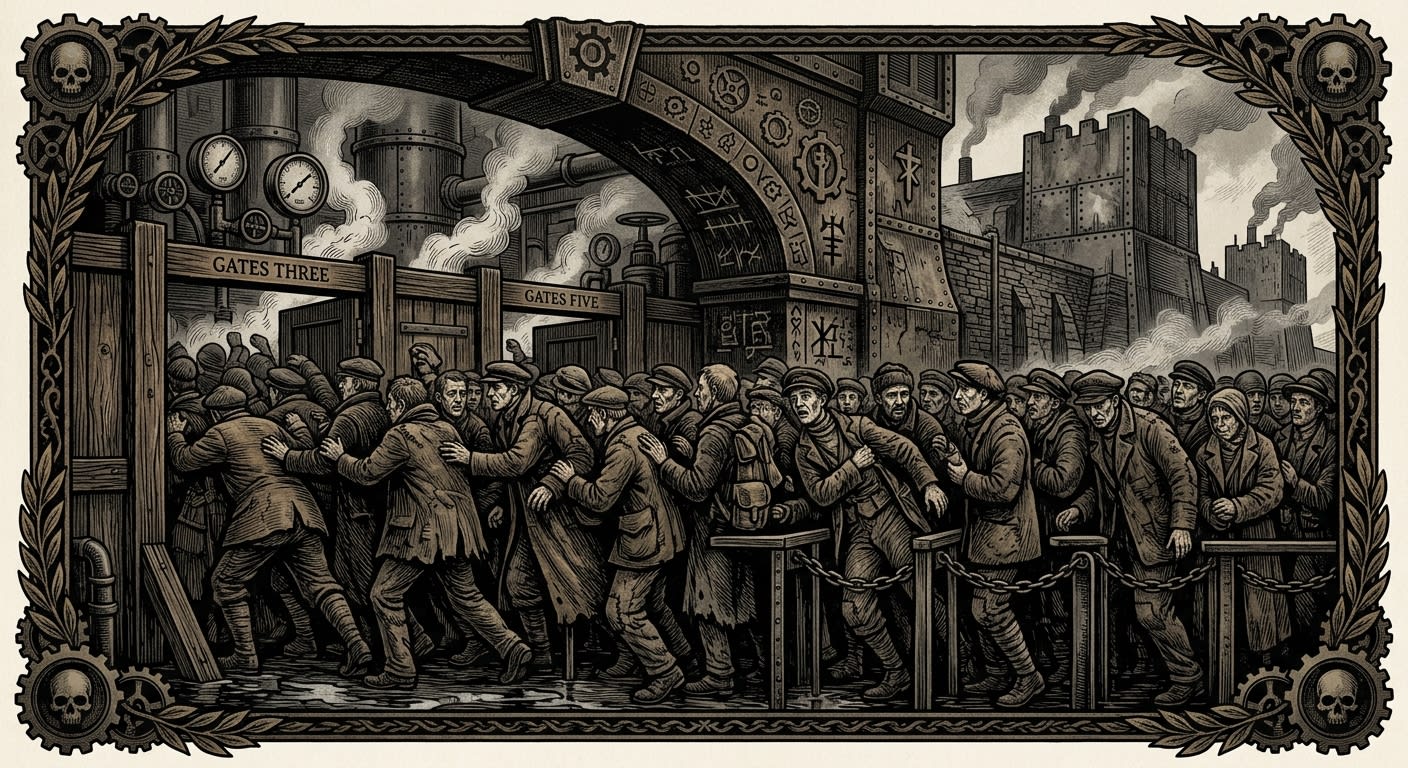
The Maze's primary public danger is stampede. The word suggests sudden animal panic. In truth, most Maze stampedes are clerical events with flesh attached. A rate board changes. A bell rings twice. A child slips under a fence and three mothers move after her. A Queue Marshal mishears Gate Five's call and swings the rope. The crowd leans. One person falls. The lane discovers gravity. Men die with permit cards in their mouths because both hands are busy trying not to be trampled.
Minute pricing makes death tidy. If a traveller dies before clearance, his accumulated minutes remain payable by next of kin if next of kin can be identified. If no kin can be identified, the minutes revert to the Directorate as abandoned temporal credit. If the body is damaged beyond identification, the Null Verge Custodians collect it under sanitation authority and no debt is recorded because no debtor remains. This is considered efficient. The Bureau loves a corpse that balances its own account.
The autumn closure of Gate Nine in A.S. 200 made the Maze honest for three days. Gate Nine shut for sanitation after spring minute prices had doubled without decree. Pressure backed down the Road. The Maze filled, stalled, heated, soured. By the second day, people slept upright between fences. By the third, bodies stacked faster than Null Verge carts could move without lamps. The Directorate washed Gate Nine's Hearing Hall with vinegar and issued no apology. The Maze retained the smell.
#On the Minute Drift's First Chapel
The Minute Drift chose the Barricade Maze first, which shows either malice or taste. Between Gates Three and Five, time stutters with bureaucratic manners: never all at once, never enough to force honest panic, always in increments small enough to bill and large enough to wound.
Travellers swear they stood a week while the sun says a day. Bells ring double. Ink dries on a stamp before the wax cools. Shadows fall at angles belonging to hours not yet called. Hunger arrives after eating, before eating, doubled, absent, or in the wrong stomach. A mother enters the Soap-Corner with two children and exits Widow Bend with both, though one child's shoes are wet with river mud from Gate Two (Unregistered) and the other knows a culvert hymn nobody taught him. The Directorate classifies this as Category Two Localized Temporal-Scribal Disturbance under the Bureau of Rites. The Bureau of the Hourglass calls it Class II-Extractive. The Road calls it losing days.
The Maze makes extraction easy. Waiting there is enforced purposelessness, the most flavourful substance in the Apparatus's diet if Report Three is to be believed, and Report Three is sealed, which means it contains more truth than manners. Bodies enter the lanes with errands, orders, griefs, cargo, children, boots, fever, contraband, and hope. The fences reduce all of it to posture. Stand correct. Move when named. Wait without purpose. Beneath Gate Nine, the Grindstone turns.
The first formal Drift file dates to A.S. 194, though Brother Senn's deposition fragments place irregular bell intervals in the Maze earlier. A stamp clerk signed two hundred and twelve permits in a quarter-bell and woke with ink under his nails. Lane cards accepted future stamps. Rate boards showed tomorrow's prices and then punished travellers for seeing them. The Maze's shadows began disobeying the sun with a confidence that should have earned them positions in Records.
Bureau of Rites notice A.S. 194 described the Minute Drift within the Barricade Maze as “mild, contained, and non-escalating.”
Clarified A.S. 201. Mild means survivable by a majority. Contained means observed first in the place named. Non-escalating means the escalation was recorded by an office not authorised to use the word. The notice remains posted at Gate Three.
#On the Culvert Saints
Under the Maze, Brother Senn preaches to the Unstruck in chapels that were never built and escape condemnation by building code. A widened culvert becomes a nave when three boards cross the drainage run. A bottle-neck becomes a candlestick. A stolen plank becomes a pew. A clock wrapped in oilcloth becomes a witness.
Senn's doctrine travels upward through cracks: No bell owns the hour. It appears on fence posts, under stamp balconies, on the backs of rate boards, in chalk beneath the Pike Fold, scratched with a nail into the third plank of Short Mercy. Queue Marshals scrape it away. It returns. Heresy with a short sentence is harder to kill than heresy with a library.
The Unstruck know the Maze better than its wardens. Ira of the Second Bell carries chalk chips in her mouth between the Maze and the Witness Rental Houses (Unregistered), because paper can be seized and a mouth can lie about being empty if the tongue is trained. Lint counts patrol intervals by tooth-tap. Sister Bracket hides wrapped clocks in a coat with twelve secret pockets and one smell best left unfiled. They cut lane ropes where Drift thickens, wedge pebbles beneath hammer stops, smear lampblack over rate boards, and sing under the Bell-Mark Gantry until clerks stamp half a breath late.
FIELD CORRELATION — BARRICADE MAZE / UNSTRUCK INTERFERENCE, A.S. 200 Unlicensed hymn-pattern events: █████ Extraction volatility reduction: █████ percent within ███ bell-cycles. Directorate revenue injury: ███████ minutes. Recommended posture: public pursuit; delayed arrest; no martyrdom. Authorising seal: absent; absence countersigned.
Purity hunts them with visible boots and private reluctance. Raids arrive at wrong hours. Warrants name rooms that have moved. Informants get paid twice for information already stale. A clock is seized, displayed, condemned, and later returned to evidence storage without its tick. The Bureau is not incompetent. I will not rob it of guilt by granting it that excuse. The Unstruck are useful. Their sabotage injures revenue and dampens extraction surges. A condemned man who keeps the hidden wheel from overheating acquires the strangest immunity known to Doctrine: necessary illegality.
#On the Missing Lane
Every maze has a lie at its centre. The Barricade Maze has the Missing Lane.
Directorate charts deny it. Queue Marshal testimonies deny it with the stiff voices of men repeating training. Travellers affirm it under oath, hunger, delirium, grief, and occasionally sobriety. It appears during surge, usually between Widow Bend and the Pike Fold, marked by a rope without a tag and a plank walkway too clean for public use. Those who enter it are said to bypass two courts. Some do. Some exit into the Null Verge Tag Shed with blank collars and no memory of having been named. Some return to the same lane older by a day, younger by an hour, or carrying a permit whose clearance stamp belongs to next week's clerk.
The Directorate calls Missing Lane reports crowd distortion. The Bureau of Rites calls them Drift-induced spatial misapprehension. The Clock Heretics call it the Grindstone's tongue. I dislike the third phrase because it is vulgar and because vulgar phrases often survive contact with truth.
The Missing Lane teaches the Maze's doctrine more plainly than any sermon. A person is a traveller while named, a debtor while counted, a body while fallen, and nothing when the lane decides paperwork has become inconvenient. The Null Verge does not steal people. It receives the administrative conclusion of an earlier theft.
#On the Present Maze
As of A.S. 201, the Barricade Maze is tighter, wetter, louder, and less obedient to clocks than at any prior point in its filed existence. The A.S. 200 rate doubling drove more travellers into cheaper lanes and more bodies into the wrong geometry. Gate Two Bridge Pinch now shows Drift symptoms. The Bell-Mark Gantry stamps hours that supervisors confiscate from their own clerks. The Shed Wards age in public while the Directorate stares at balanced accounts. The Maze, first chapel of the Drift, remains the Road's favourite method for pretending compression is order.
The Queue Marshals demand replacement planks, more batons, and authority to close Widow Bend during surge. The Time Clerks demand clearer bell intervals and hazard pay for future stamps. The Runner Union (Unregistered) demands nothing in writing and gets more than either. The Unstruck grow. Brother Senn's chalk returns faster than it can be scraped. Directorate House has proposed painting all Maze fences with anti-graffiti limewash supplied by Candlewick at twice the ordinary rate. I admire a bureaucracy that responds to temporal extraction with procurement.
The Maze works. That is the indictment. Travellers still arrive. Gates still process. Minutes still accrue. Bodies still learn the approved posture. Beneath the boards, the culverts sing between bells. Under Gate Nine, the Grindstone turns, and the Barricade Maze — holy fence, wet throat, arithmetic pen for the obedient — stands correct, and makes others do the same.