
#On the Foundation of the Cadre
The Counter-Relic Examiners were constituted in A.S. 182, two years after Velmora the Covetous Serpent proved that a false relic could do more damage than a true cannon. The first confirmed penetrations reached frontline chaplaincies in A.S. 180: polished fragments, pious labels, careful wax, provenance chains with gaps so charmingly humble that only a cynic would suspect design. The chaplains invoked them. The prayers curdled. The Bureau of Rites classified the effects as theologically inadvisable, which is Bureau speech for men screaming during Mass while the candle flames bend away from the altar.
Before that season, the Bureau of Relics had treated counterfeit objects as commercial fraud, pilgrimage nuisance, shrine-market filth. After A.S. 180, counterfeiting became warfare. A forged bone in a ravelin niche could sour a company’s faith at the hour of assault. A blessed medal washed in Velmoric debt-ink could teach a dying gunner to pray toward the wrong treasury. A reliquary with a perfect seal and a hostile appetite could make the Line doubt its own saints.
#On Their Instruments
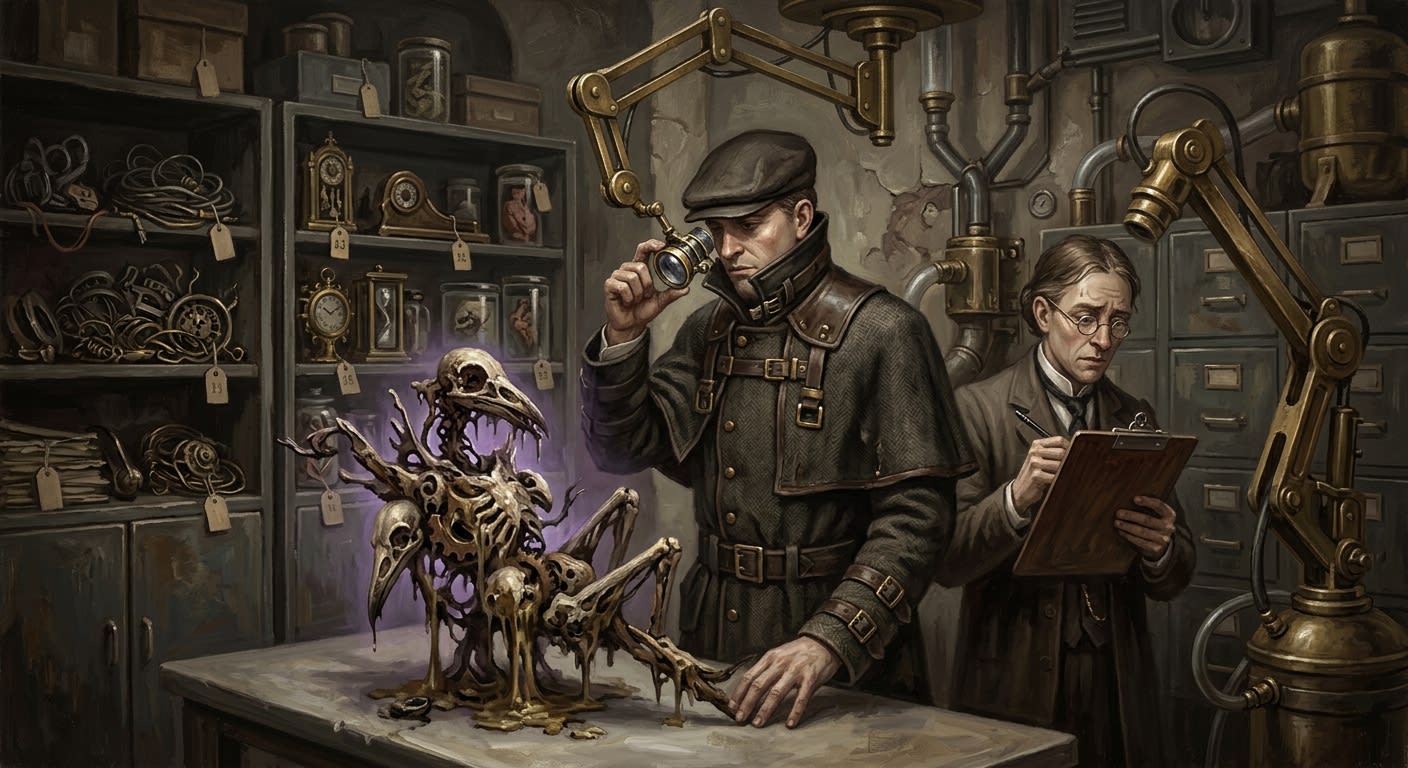
A Counter-Relic Examiner carries little that looks heroic. White gloves. A lead-lined satchel. Wax ampules. A narrow register chained to his belt. Sanctified reagent strips sealed in oilskin. A prayer-resonance rod (Unregistered) calibrated to detect sorcerous contamination in bone, ash, glass, wire, and certain categories of too-obedient ivory. A lit taper, sheltered in a brass cage no wider than a pistol barrel.
The taper is the office made visible. The Candle Proof, standard since A.S. 98, has the childish simplicity of all terrifying tests: a true relic draws flame; a counterfeit makes flame withdraw; a doubtful relic flickers until everyone in the room begins remembering sins that were never relevant to the form. The Examiner watches the lean, records the lean, repeats the lean when necessary, and never allows the soldiers to see his hand tremble.
Standing Order 88-R originally required monthly re-authentication of frontline relics.
Corrected within the season: weekly. Three chaplains and one prayer-company learned the arithmetic between monthly and weekly in terms the Bureau does not reproduce for instructional use.
The prayer-resonance rod is less elegant. It quivers, warms, stiffens, or splits according to contamination profile. Engineering calls it tuned alloy. Relics calls it obedient metal. The men who carry it call it the little liar, because it never lies comfortably.
#On the Walk of the Line
The Examiner’s territory thickens around Bastion-Sibiu, where Velmora’s traffic grows teeth, contracts learn to pray, and every holy object has already passed through too many hands. He walks trench chapels, ravelin niches, field hospitals, ossuary waystations, convoy shrines, signal towers, and the small mud altars soldiers build from ammunition crates when official chaplains are dead or busy becoming martyrs.
At each station the rite repeats. Name the relic. Read the tag. Check the transit seal against the register. Inspect wax for reheating. Hold taper at prescribed distance. Watch the flame. Touch rod to casket. Record response. If clean, countersign. If doubtful, seal the niche. If hostile, confiscate without sermon. Sermons give hostile objects time to prepare.
The soldiers hate him with devotion. They crowd the trench wall while pretending not to look. They mock the gloves, the taper, the little register, the priestly fussing over bone splinters no larger than a toothpick. They go silent when the flame leans correctly. A company that has watched its relic pass the Candle Proof fights differently for several days. This has been measured by War and denied by Doctrine, since morale produced by measurement is vulgar.
COUNTER-RELIC FIELD REPORT — SOUTHERN LINE, A.S. 186 Relic: finger-bone, Saint Odran, third trench chapel. First test: flame leaned inward. Second test: flame withdrew. Third test: flame formed shape resembling ██████████. Company reaction: prayer ceased for eleven minutes. Disposition: relic confiscated; chapel reblessed; witnesses reassigned before dawn.
#On Velmora’s Method
Velmora wastes no artistry on ordinary forgery. Any dockside butcher can sell pig bone in a saint’s box. Velmora manufactures desire with a halo. Her agents understand that chaplains are tired, quartermasters are indebted, colonels want reassurance before inspection, and soldiers will forgive much in an object that makes them feel less abandoned.
Her counterfeits arrive through debt. A merchant house offers a shrine loan. A supply clerk accepts a faster convoy seal. A widow brings a fragment from a cousin in Sibiu, weeping with enough sincerity to drown suspicion. A Ten Thousand Keys broker asks nothing except custody for one night. By the time the bone reaches the altar, its falsehood has passed through ten human choices, each one small enough to be excused and large enough to damn.
The Counter-Relic Examiner is trained to read the commerce around sanctity. He studies wax formulae, hand pressure in forged signatures, debt-phrases hidden inside provenance chains, coin-sheen residue on reliquary hinges, and the faint vein-script Velmoran contracts sometimes leave inside human skin near the wrist. He is less a priest than an auditor carrying fire.
#On Failures and Punishments
The cadre’s failures are ugly because they occur in public silence. A bad Examiner misgrades an object and calls it clerical error. He permits a company to kneel before hostile matter. He lets a counter-miracle wait under a corporal’s fingers. He turns the regiment’s prayers into delivery routes.
Punishment is formally administrative: loss of clearance, demotion to intake, vault penance, reassignment to quarantine cabinets in the Vault of Sacred Custody. In practice, the failed man becomes a cautionary icon in white gloves. No one sits beside him in the refectory. No one borrows his taper cage. The junior clerks watch his hands for tremor and learn doctrine faster than the manuals can teach it.
A prior training circular described Counter-Relic failure as “misclassification under hostile conditions.”
Revised: failure is cooperation by negligence. The softer phrase was retired after the Chapel of Saint Berthold incident (Unregistered) produced three clean forms, one corrupted relic, and no surviving choir.
There are heroic failures too, which the Bureau distrusts because heroism breeds ballads. Examiners have broken fingers prying relics from dying officers. One swallowed a wax seal rather than let a forged transit tag survive capture. Another held a taper beside a reliquary during shelling at Bastion-Constantinople, lost both eyebrows, and wrote “flame leaned correctly” before accepting medical attention. The form was legible. The Bureau promoted him after two reprimands for ink spatter.
#On the Present Service
As of A.S. 201, Counter-Relic Examiners remain deployed across every southern bastion and all major relay chapels feeding the Line. Sibiu consumes the most hours, for Velmora’s pressure there is economic before it is military: corrupted convoy stock, debt-marked reliquaries, counterfeit scrip, pious donations carrying more contract than prayer. Constantinople consumes the most courage, because every shrine there is a crowded theatre and every false relic can kill at scale.
The cadre is small. It must be. Too many Examiners would imply too many suspect relics. The Synod prefers exact fear over general alarm. A Counter-Relic Examiner arrives with his taper, his rod, his white gloves, and his narrow authority to say the word no soldier wants to hear: confiscated.