
#On the Proof Itself
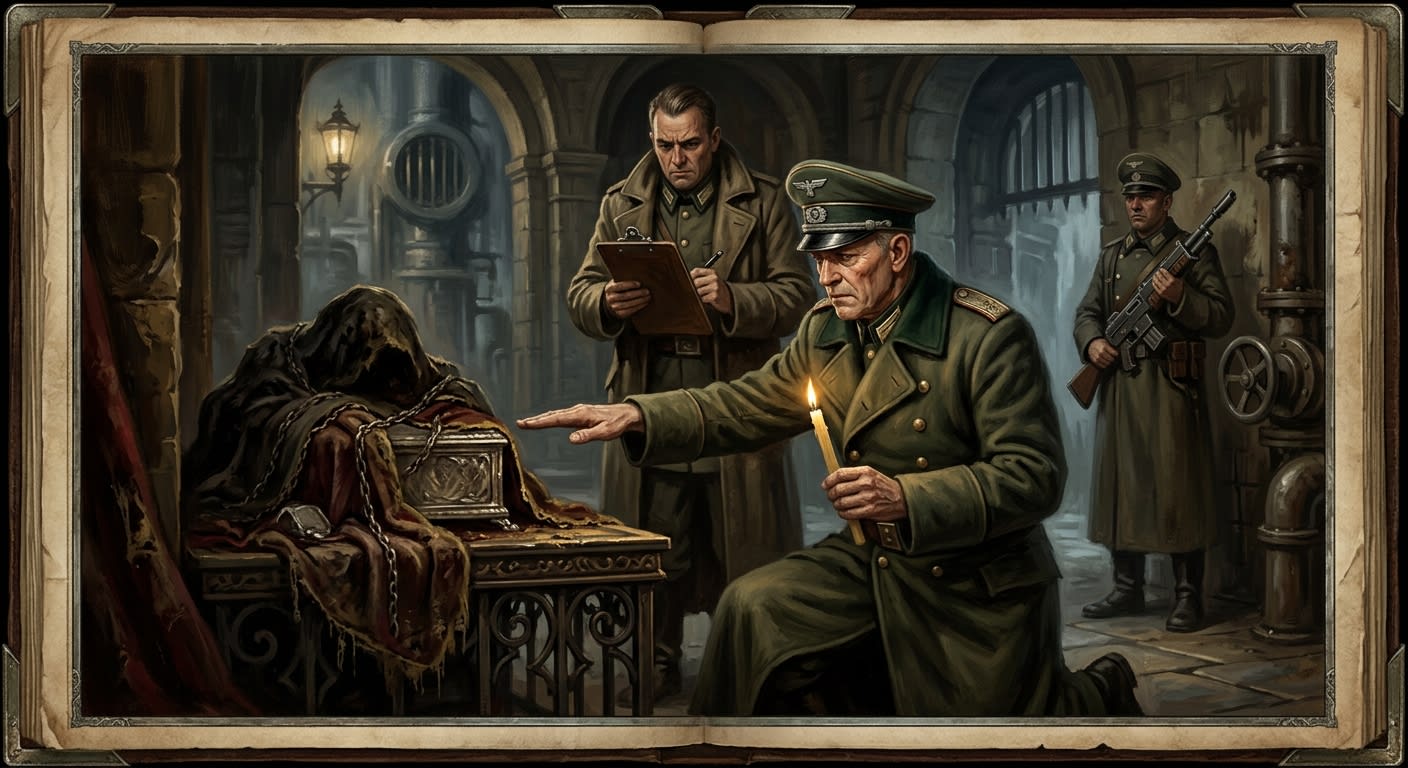
The Candle Proof is the Bureau of Relics’ simplest test, which means it has survived every attempt by clever men to improve it. A relic of genuine provenance, placed beside a lit taper, draws the flame toward itself. A counterfeit or contaminated relic makes the flame withdraw. A doubtful relic flickers in patterns the manual classifies as theologically inconclusive, a phrase that has carried more terror through examination halls than cannon fire through chapel glass.
The test was standardised in A.S. 98, six years after the Bureau of Relics received its first charter and began the sacred work of telling bones what they had always been. The Blessing Lamp may reveal grain, fracture, inner warmth, hostile colour, and all the luminous insolence of sanctity under glass. The Candle Proof is older in spirit and ruder in manner. It asks one question in fire.
Does the holy thing want the flame?
#On Materials and Method
The taper must be clean. Clean, in this context, means free of mourning dye, pilgrimage perfume, household tallow, ration fat, widow-soot, chapel incense residue, and the small adulterations by which merchants prove that commerce is a confession requiring thumbscrews. The wick must be trimmed by a Lamp Hand or an Examiner. The wax is ideally from Candlewick registry stock, though frontier chaplains have used altar stubs, ration candles, funeral tapers, and once, at Constantinople, a birthday candle from a colonel’s confiscated parcel. The record notes the relic passed. The colonel did not.
The object is placed on black cloth or bare stone. Lead is forbidden within the immediate radius unless contamination is already suspected. The Examiner lights the taper, lets the flame settle, speaks the object’s registered name, and waits. Waiting is the actual instrument. Fresh clerks stare too hard. Veterans watch the room around the flame: the gloves, the witness’s breath, the faint recoil of dust, the little shameful eagerness with which frightened men wish the fire to behave.
A clean lean is recorded as assent. A withdrawal is recorded as refusal. Flicker requires repetition, superior witness, and sometimes quarantine. Extinguishment is not failure of wick unless proven by wick audit. A flame that rises straight upward in still air is treated as provocation. A flame that divides is treated as emergency doctrine.
Earlier provincial manuals allowed local priests to perform Candle Proofs for shrine display objects without Relics supervision.
Permission withdrawn after the False Finger disturbances produced seventeen self-certified saints, nine riots, and one parish whose devotional income exceeded its annual tithe declaration by a factor the Bureau of Tithes called spiritually educational.
#On the Candle Year
Every Relic Authenticator enters the Candle Year before receiving the rank of Lamp Hand. First year: provenance, wax seals, custody ledgers, the clerical anatomy of sanctity. Second year: bone, tincture, lens, Lamp. Third year: taper. The order offends apprentices, who imagine the candle crude after the brass and glass. The order is mercy. By the third year, most fools have already been sorted into safer professions such as quarry collapse, tax review, or infantry.
The Candle Year teaches stillness. The apprentice learns to light without shaking, record without poetry, repeat without hope. He learns the four sanctioned explanations for irregular movement: draught, wax impurity, object response, and sin. He learns that draught is overclaimed, wax impurity is underreported, object response is career-making, and sin is easiest to assign after the witness list has been finalised.
The best apprentices become cold. The worst become devout in a manner dangerous to furniture. One kneels every time the taper brightens and bruises his forehead on the table by Epiphany. Another jokes once about asking the candle for lottery numbers and is transferred to ash inventory, where humour has less chance of becoming evidence.
#On Ambiguity
The public imagines the Candle Proof as a neat test because the public is fed neat tests in catechism editions printed for soft minds and softer hands. Lean: holy. Withdraw: false. Flicker: ask a senior. This is sufficient for children, donors, and bishops in procession.
Reality, that tedious heretic, supplies gradations. Some flames lean late. Some bend toward the object and away again, like a judge reconsidering a bribe. Some gutter downward into perfect halves. Some lean toward the Examiner instead of the relic, which produces an hour of silence and later a personnel file. Some refuse the registered relic and favour the packing straw. One shard at Bastion-Sibiu drew the flame so sharply sideways that the taper burned flat across the table and wrote a black line through the provenance chain.
AUTHENTICATION INCIDENT — VAULT ANNEX, A.S. 166 Object: rib fragment, claimed Saint Berthold. Candle result: flame leaned toward fragment, then toward witness, then toward sealed north wall. Wall contents after opening: ██████████████████████████ Verdict: Contaminant. Witness status: retired into silence. Wall restored without memorial plaque.
Ambiguity is where the Bureau earns its candles. A perfect lean gives Relics authority. A perfect withdrawal gives Purity someone to arrest. Flicker creates paperwork, and paperwork is the native climate of doctrine. The Examiner repeats the test, changes wax, adds witness, invokes Notary-Saint Caldre, orders the Lamp, consults the provenance chain, and waits for reality to grow tired enough to file itself.
The manual once stated that repeated inconclusive Candle Proofs should be “resolved by senior judgment.”
Current language reads: “contained by senior judgment.” Resolution proved optimistic. Containment, being a doctrine with cabinets, had better survival.
#On the Front
In rear halls the Candle Proof is cold procedure. On the Sagittal Line it becomes theatre with artillery nearby. A Counter-Relic Examiner enters a trench chapel carrying taper, rod, reagent set, and the authority to take away the object a company has loved for six months. Men who will not flinch under shelling stare at the flame as if it were a verdict from Heaven delivered by a clerk with chapped hands.
At Bastion-Sibiu, the Proof is used against Velmoric insertions: debt-marked reliquaries, forged ward-stones, saint-medals washed in blood-thin coin. At Bastion-Constantinople, it is used in crowded chapels where one failed taper can turn two hundred prayers into suspicion. At relay shrines between them, it is performed in cart sheds, field hospitals, rain, smoke, and the damp smell of soldiers pretending not to bargain with the Creator.
The morale effect is measurable, which means War has measured it and Doctrine has denied the measurement’s theological authority. A passed Candle Proof steadies a company for days. A flicker poisons the mess queue. A withdrawal empties the chapel faster than incoming fire.
#On the Final Authority
The Candle Proof does not make a relic holy. No competent Examiner believes that after the first hundred bones. The Proof catches the relic in the act of being itself. The Bureau then writes down the act, stamps the page, invoices the applicant, and calls the sequence governance.
This is fair. Heaven, when left unfiled, becomes disorderly.